CITY
How to Choose a Riad in Marrakech: The House Behind the Blank Wall
Nine hundred years of courtyard architecture, fifty-five houses inside the Medina walls, and what to look at before booking one of them.
Timence Guide Editors · 31 August 2026
Anyone starting to plan a trip to Marrakech works out quite quickly that the first question is not which hotel to book, but whether to sleep inside the walls of the Medina. The difference is concrete. Inside the walls you go everywhere on foot: the souks, Jemaa el-Fnaa and the monuments are at your door, and in the evening you walk home through the alleys without needing a taxi. What you give up is a car at the entrance and, almost always, a proper pool. Out in Hivernage or the Palmeraie you gain space, greenery and comfort, and the old city becomes a daily outing. And whoever chooses the Medina is not choosing accommodation. They are choosing a house, of a kind that exists nowhere else.
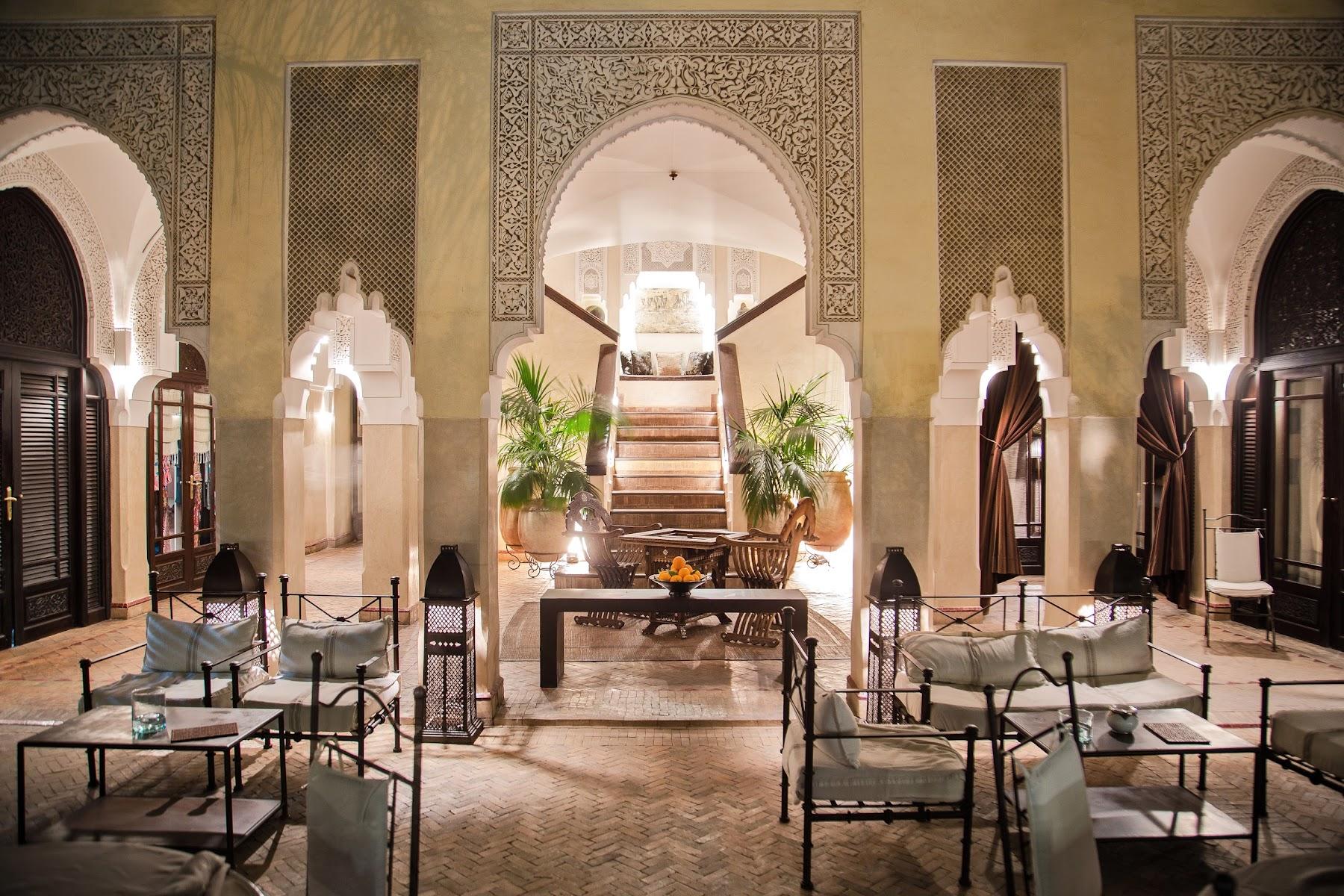
A riad gives nothing away. A blind wall six or eight metres high, ochre like everything else, no windows, no large signs, and a door that could belong to a storeroom. Then the door opens, you cross a corridor that turns a corner, and three steps later the ceiling disappears and there is sky above your head. The temperature drops. You hear water, from a fountain or a basin, and behind the water either low music or a silence that forty seconds earlier, among the mopeds of the souk, seemed impossible. Orange blossom, usually, or jasmine. Somebody arrives with mint tea, or dates, or a cold towel.
Those three steps are where you understand why people sleep this way in Marrakech.
What a riad is
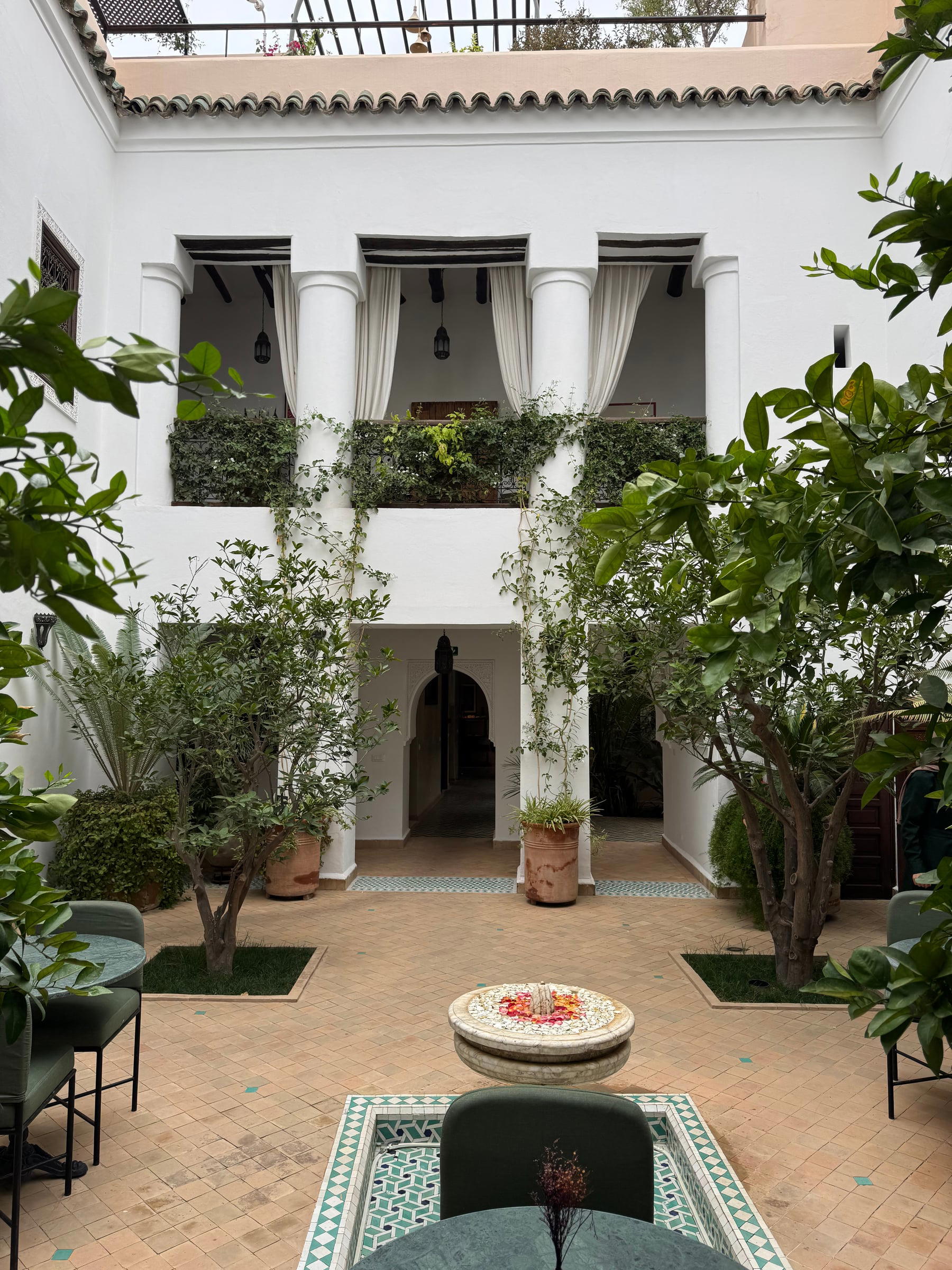
The word is Arabic and it means gardens. A riad, strictly speaking, is a house built around a planted courtyard, divided into four squares by paths that cross at a fountain, with orange, lemon or fig trees and beds of mint and jasmine. If the courtyard is paved and there is no garden, it is technically a dar. The two names are now used almost interchangeably and both take guests, but the distinction says what we are dealing with: a house that put the garden inside.
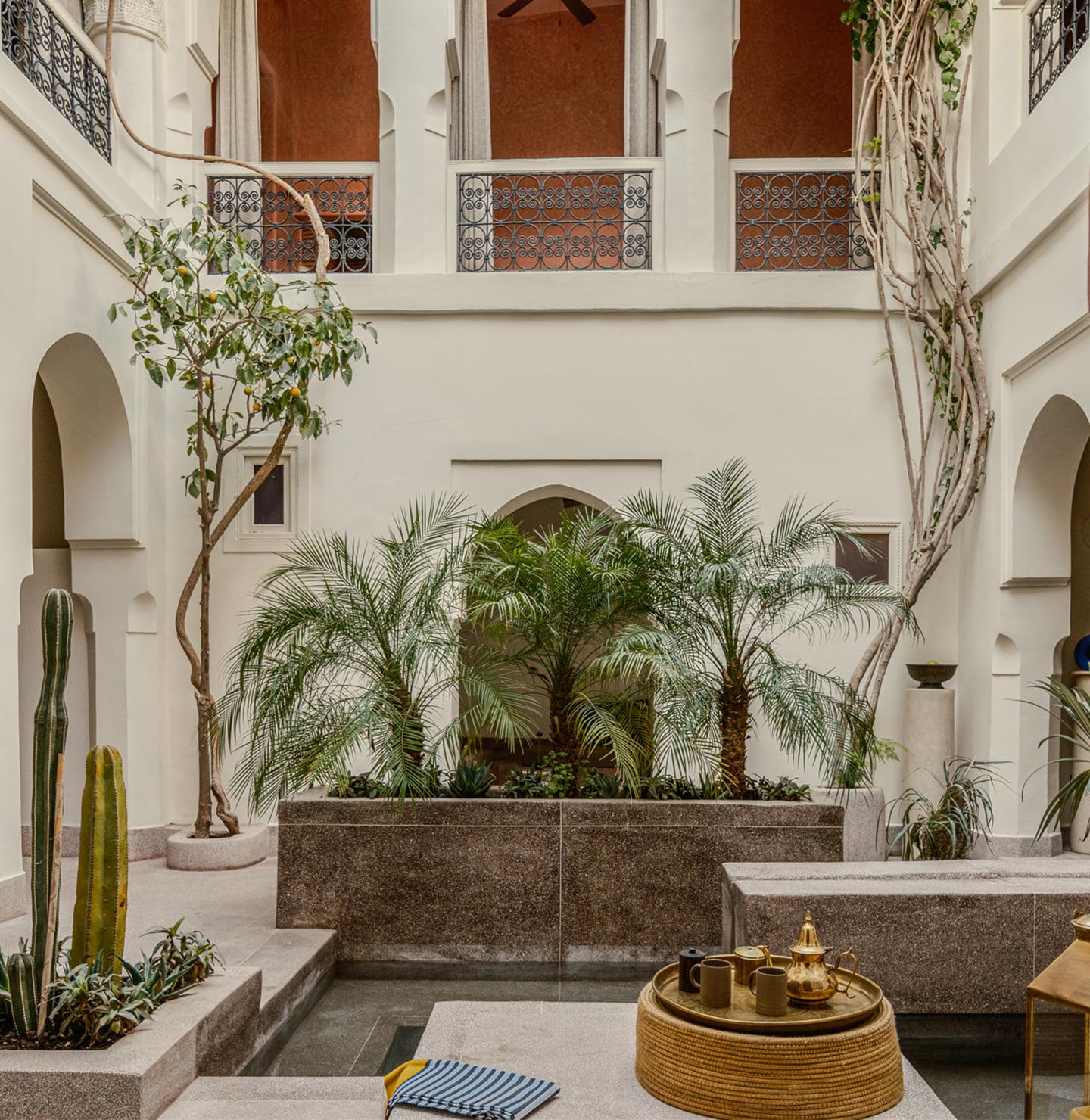
And this city invented it. The oldest documented house of the kind anywhere in Morocco was the palace Ali ben Youssef had built in Marrakech in 1126, four squares of green around water. It was demolished a generation later to make room for the second Koutoubia, and what remains of it is an excavation. Nine hundred years on, the house you will sleep in still works to the same scheme.
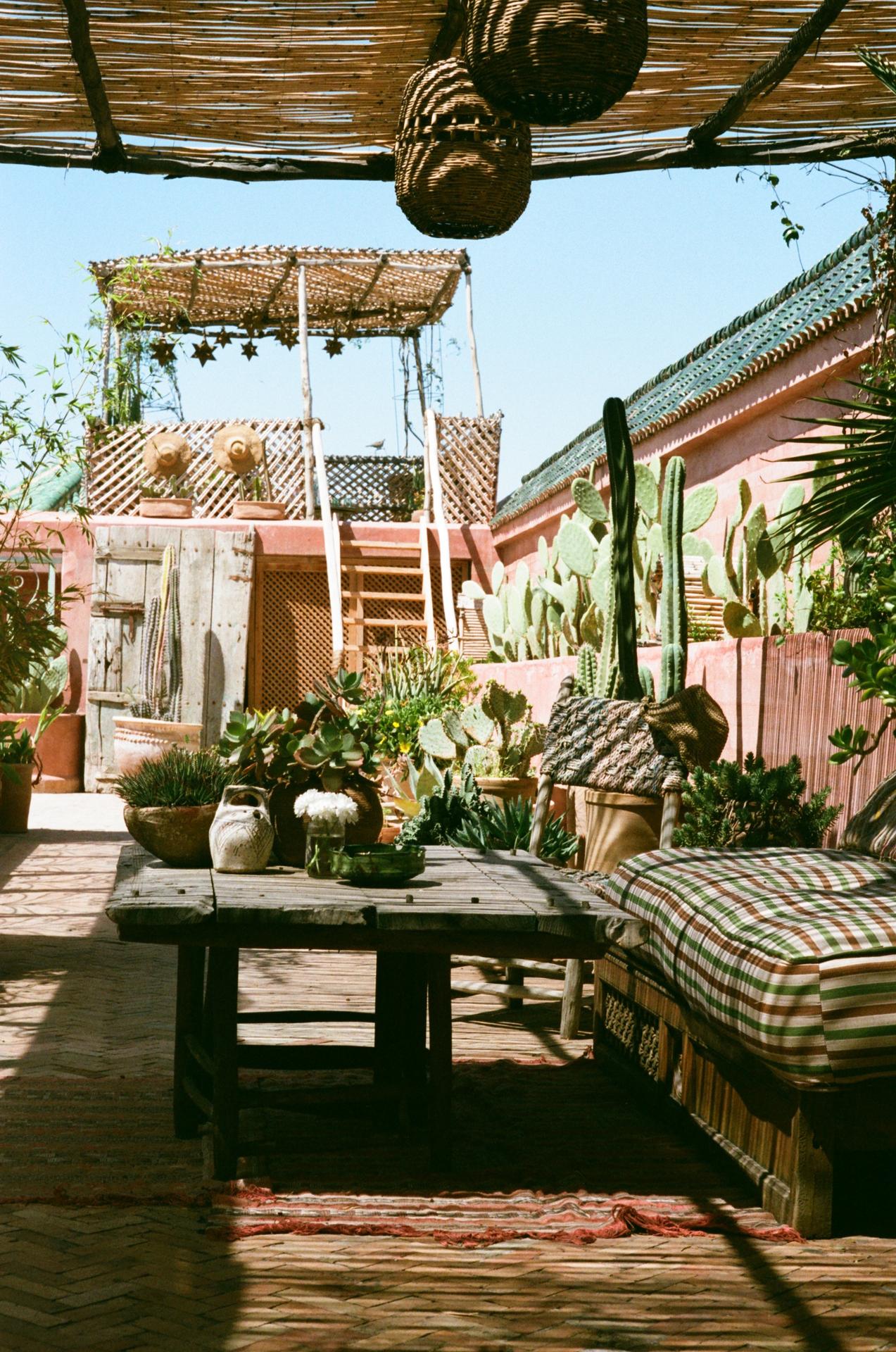
A scheme that faces entirely inward. The facade says nothing because it is not meant to: life happens inside, and the street gets the wall and the door. Every room takes its light from the courtyard, never from the alley. The entrance corridor, the setwan, turns a corner on purpose, so that someone could be received without seeing into the house. And on top of everything sits the terrace, which served as a working roof: it was where the washing was hung and where neighbours talked from one roof to the next.
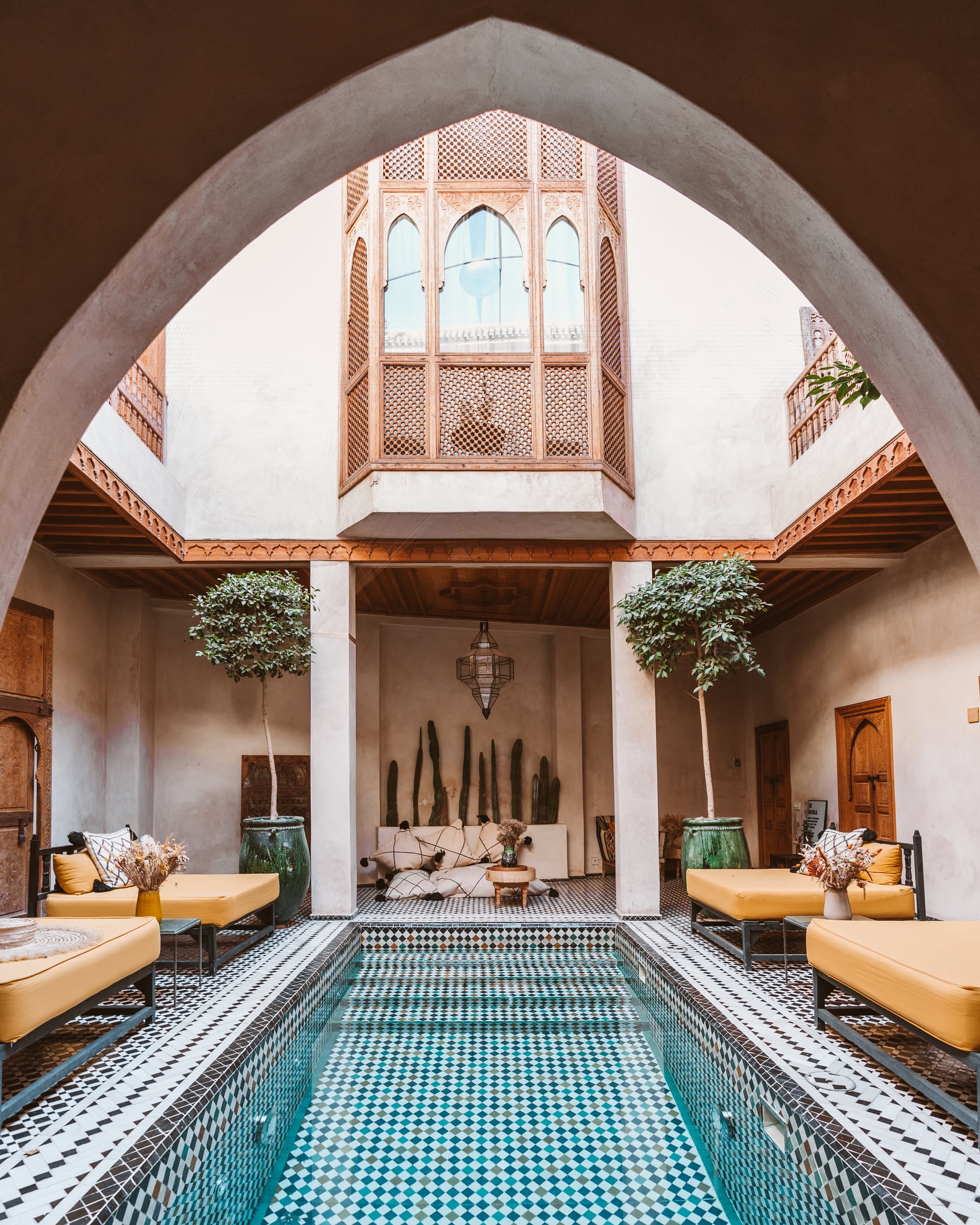
The air is designed too. Walls of earth and lime hold the night's cool into the afternoon, the courtyard shades itself and pulls hot air upward, and the pierced wooden screens that look like decoration are in fact the fan of the system: they narrow the opening, the air speeds up through them and crosses the water of the fountain before spreading through the house. The materials repeat from riad to riad because they have been solving the same problems for a thousand years: zellige cut by hand, bejmat floors laid on edge, tadelakt polished until it turns waterproof, carved plaster, ceilings of Atlas cedar.
One thing is worth knowing in advance, and travellers usually discover it afterwards: the rooms do not connect to one another. To get from your room to anywhere else in the house you cross the courtyard, which is open to the sky. That is the design working as intended, and it is why a riad is a joy in spring and asks for a little planning in the depths of winter.
One last thing that helps: a riad was built for three or four generations of the same family, ground floor and one above, with the best rooms at the far end and higher up. Nearly all the ones that take guests today were private homes until thirty or forty years ago, bought and restored one at a time, and it is no accident that maison d'hôtes only became a legal category in Morocco in 2002. Which is why you will not find two alike, and why choosing takes a few extra questions.
How to choose your riad
Our list of riads in the Medina holds fifty-five houses, and the ones we select are already weighed against the factors that matter. Whether you book from our guide or from any other source, though, there are things worth keeping in mind before you decide, and these are they, in order of importance.
How big it is. The number of rooms tells you in advance what a house can afford to offer you, which is why it is worth looking at first: a six-room house cannot keep a kitchen open all evening, a bar running to its own hours or somebody at the door at night, and a twenty-room house can. The median on our list is nine rooms: twenty-five houses have eight or fewer, five have more than twenty, and the largest reaches forty-one. Under eight rooms a riad behaves like a private house, breakfast arrives when you come down, and in the smallest ones they ask the night before what you prefer and will bring it to your room. Going up in size buys you wider hours and the freedom to pass unnoticed. Two different ways of being inside the same architecture, and it is worth knowing which one you want.
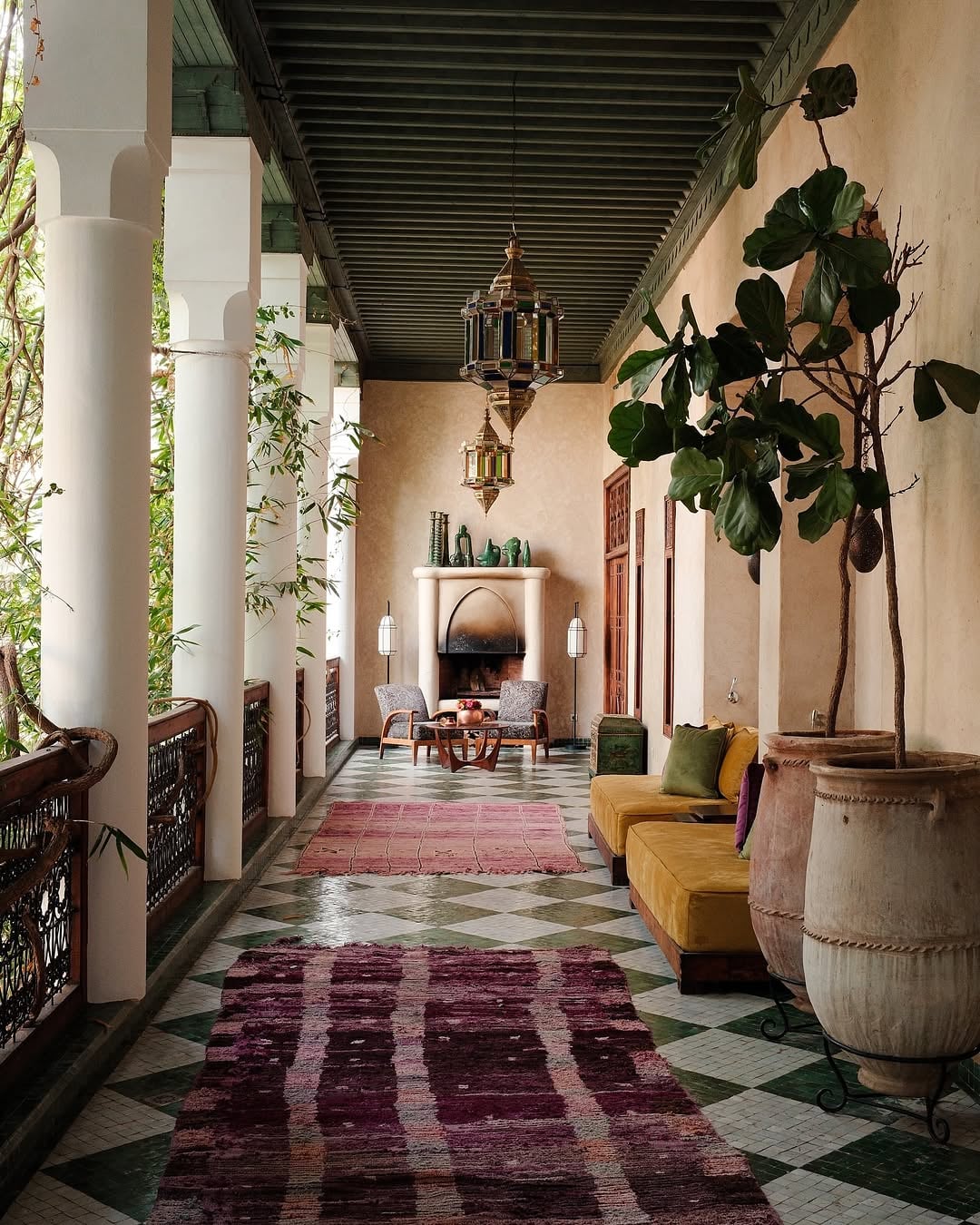
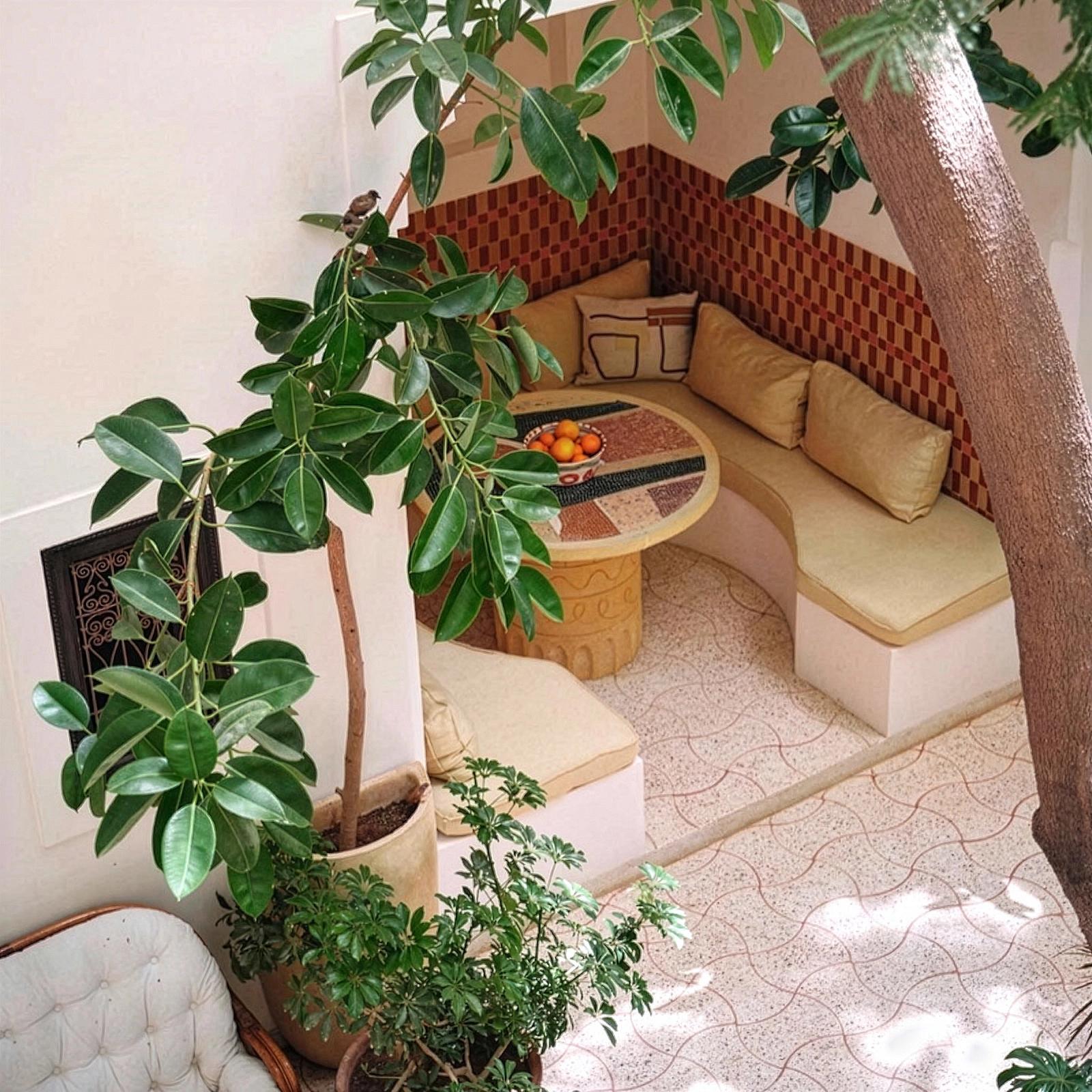
What you eat in the house. The word restaurant is elastic here, so ask in concrete terms. Some riads only do breakfast. Some also have a rooftop restaurant, and dinner above the roofs is a different evening from going down into the street. The small houses generally cover breakfast and at most keep a bar, and when they talk about dinner they mean a table d'hôte, a single menu ordered in advance. Forty-seven of our fifty-five houses have a restaurant of their own. The question to answer is how you like to spend an evening. Some people want to come back, shower and eat at home without going out again. Others treat dinner as half the trip and want a different address every night. Those are two different bookings.
Hammam in the house or out of it. Thirty-four riads out of fifty-five have their own hammam, which means taking the steam twenty steps from your bed, without booking somewhere across the city. If the traditional bath is one of the reasons you are coming, it is a question to ask beforehand.
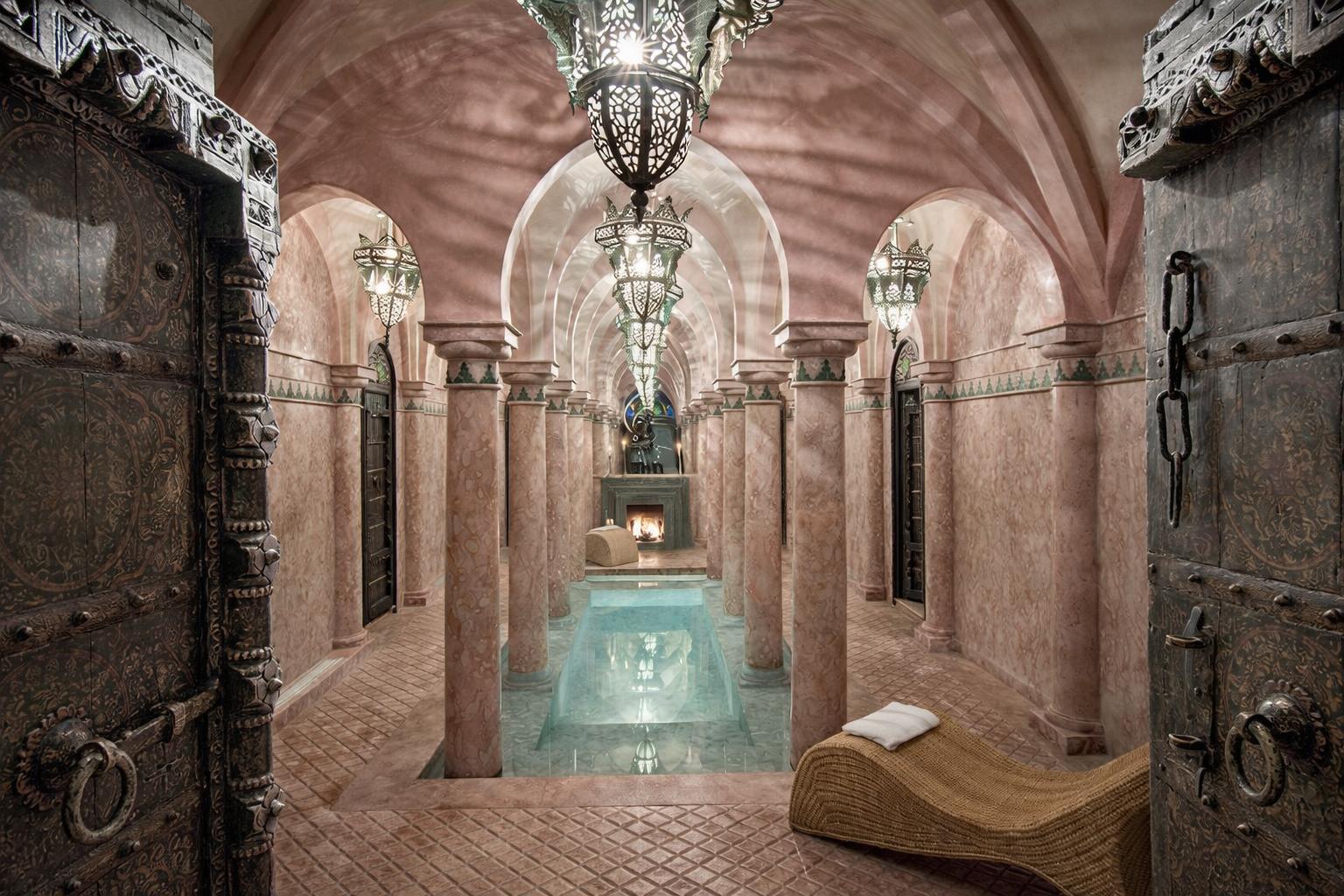
Style, which is not a detail. In Marrakech every house has taken a direction of its own, and this is where you decide what kind of stay you want. Some riads are effectively galleries: Riad Dar des Arts carries the name of the art merchant who lived there with seven daughters, each devoted to a different craft; The Mellah keeps contemporary art alongside hand-cut zellige and camel-leather floors; Riad Jardin Secret has run an artist residency since 2016, and the work stays in the house. Others are pieces of history: La Sultana sits in the Kasbah, inside the UNESCO perimeter, a short walk from the Saadian Tombs and the Royal Palace. Others are signed projects, like the five-room house Romeo Gigli conceived on Riad Zitoun el Jdid. Look at the photographs for this, not for the number of stars.
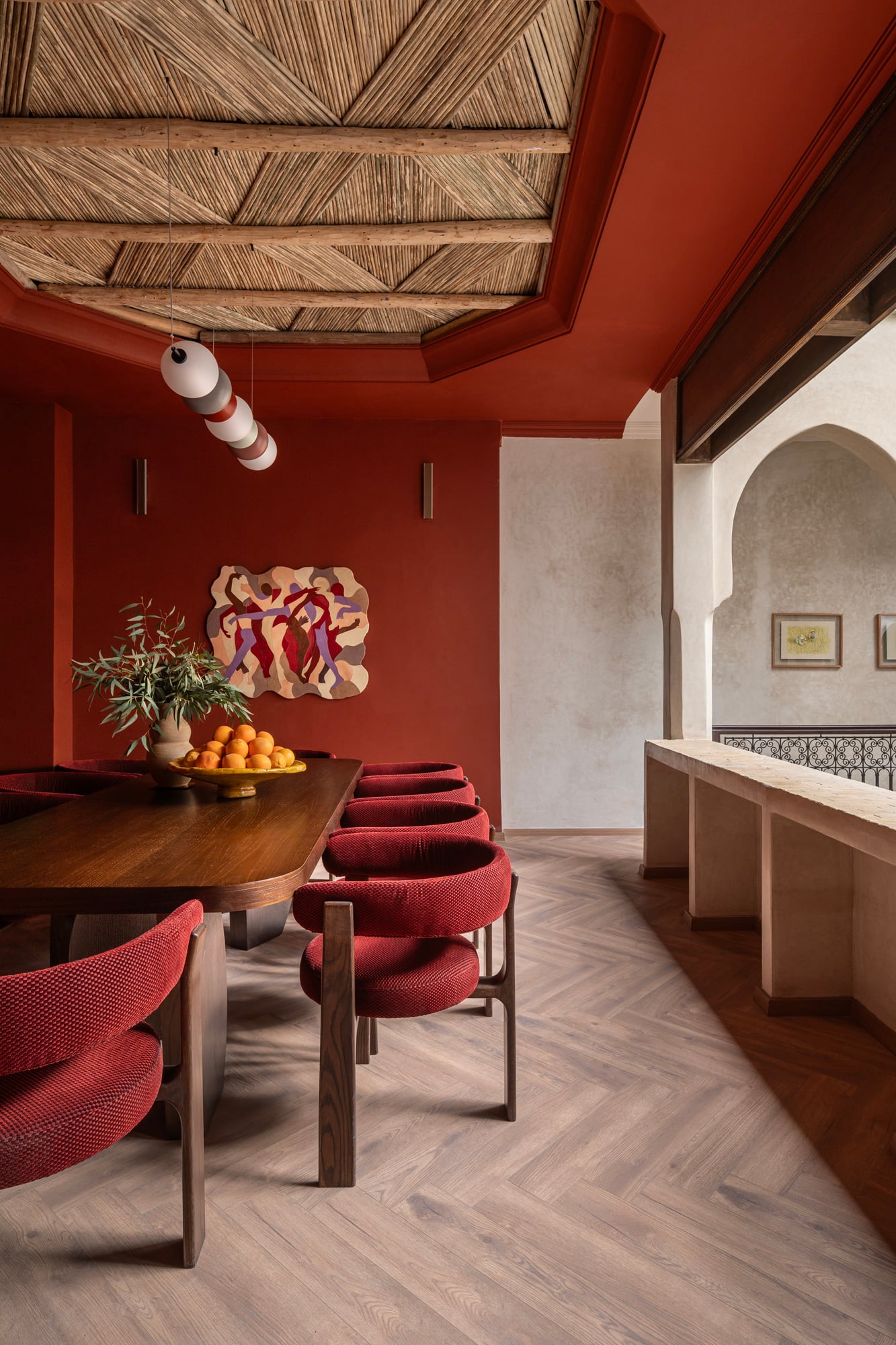
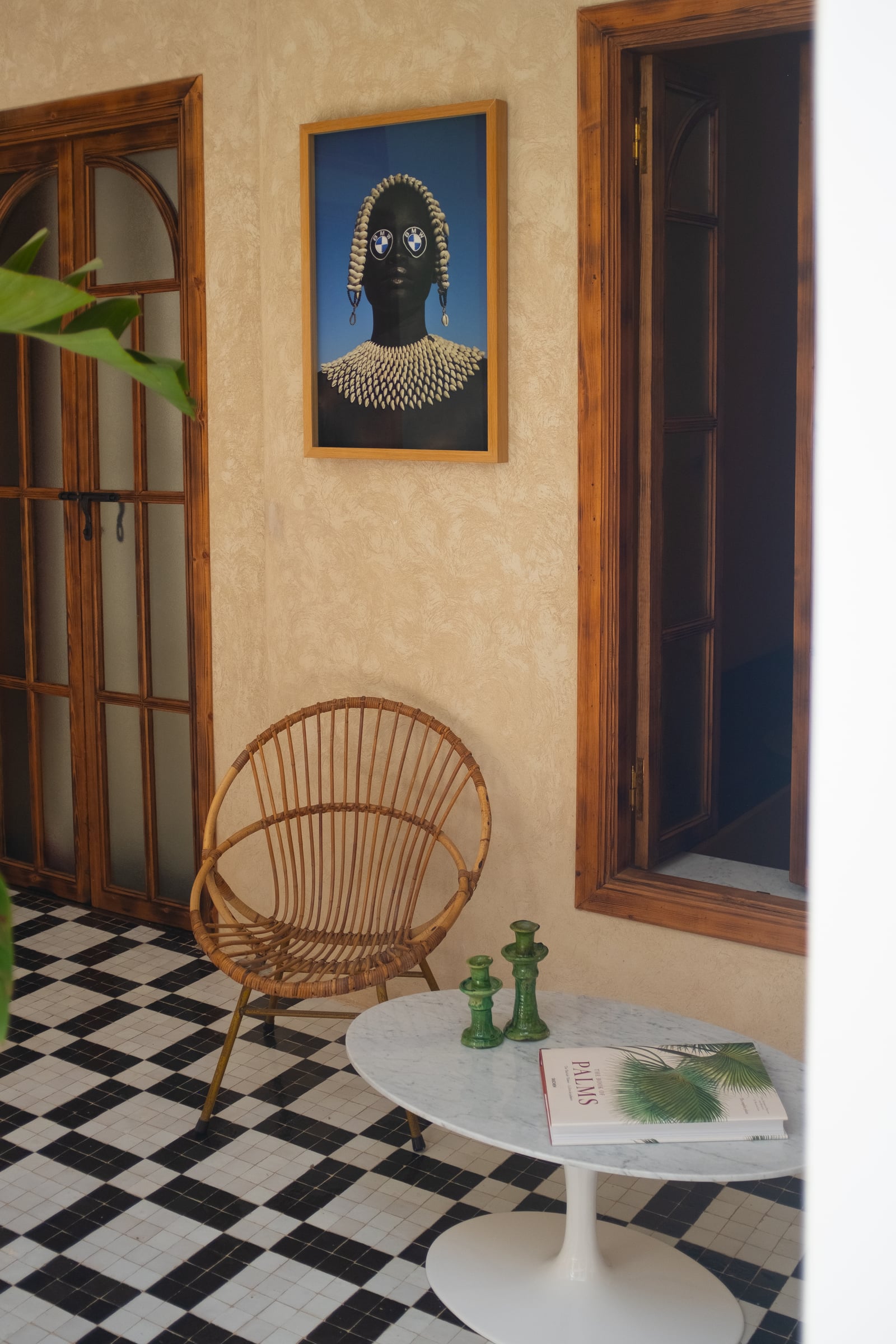
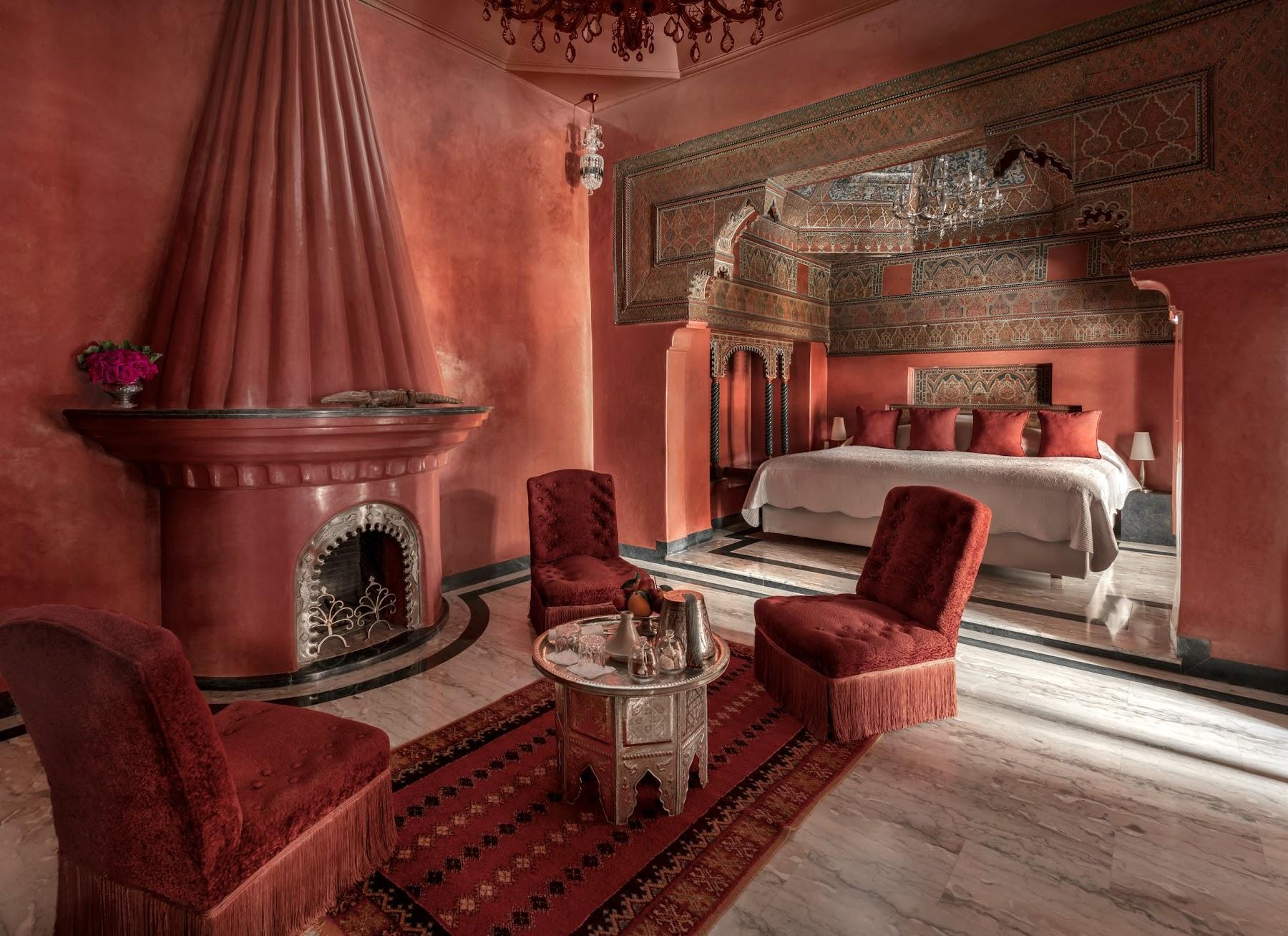
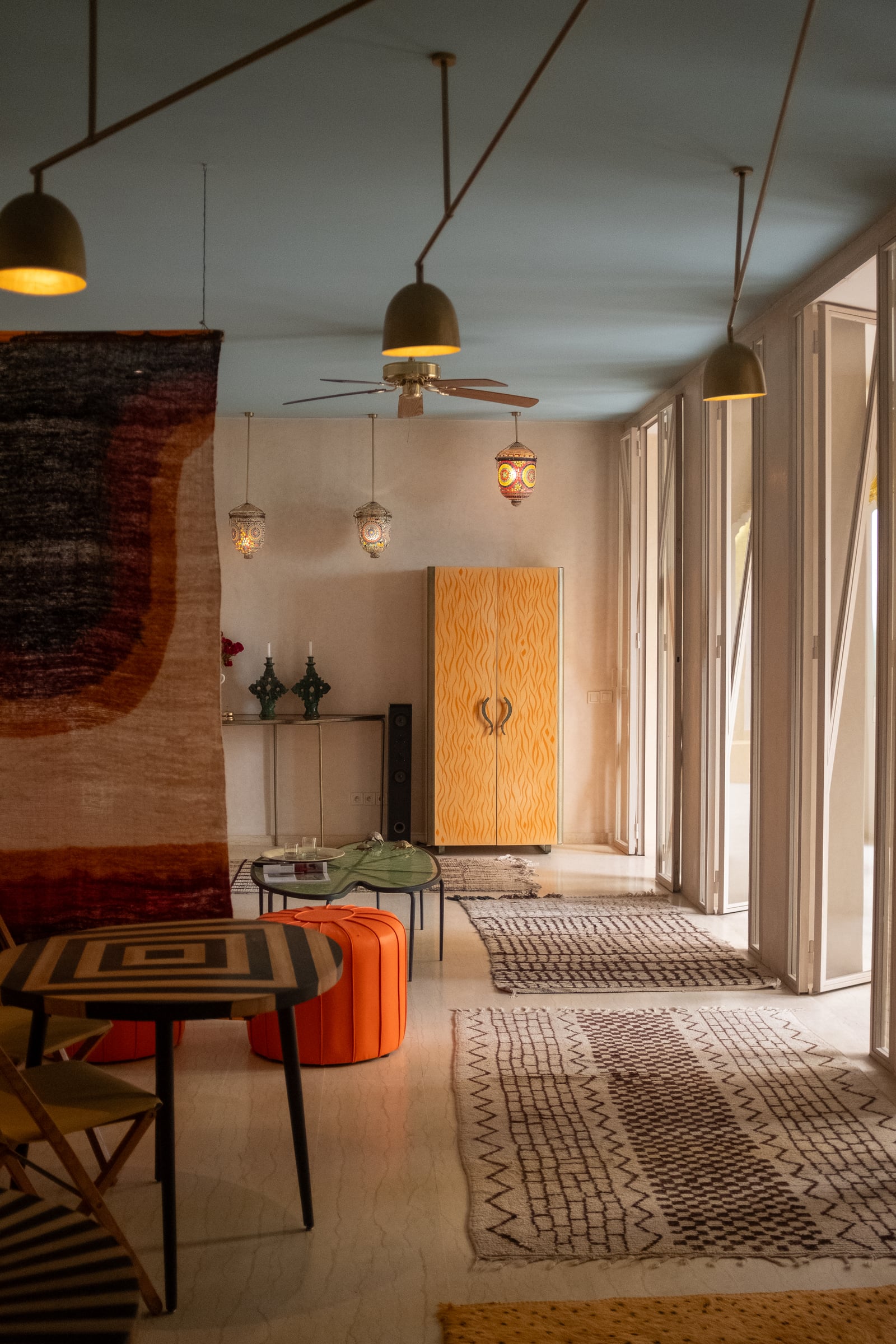
Position, which reads three ways. The first is our own advice and it holds for everyone: take a riad close to the point where the taxi stops. Cars do not enter the Medina except on a few main streets, and the difference between a house two minutes from a square a car can reach and one deep in the alleys is something you feel every time you come back, with the suitcases on the first day and without them for the rest of the week. The second reading is proximity to the monuments: Le Farnatchi is one minute from the Ben Youssef Madrasa and two from the entrance to the souks, The Mellah is steps from the Bahia Palace, Riad Yasmine sits beside the souks and near the Marrakech Museum and the Almoravid Koubba. The third is proximity to the restaurants, and it changes your evenings more than it sounds: sleeping around Place des Épices, as you do at Riad Azzar, puts Nomad, Café des Épices, Shtatto and L'mida a few minutes away on foot.
Have them come and meet you, especially the first time. Nearly all riads keep somebody whose job is exactly this, and if the house is far in they arrive with a handcart for the luggage. By day the walk is one of the good parts of the stay: you cross a stretch of souk, in the morning with the sellers laying out their displays, in the afternoon in the thick of the mopeds and bicycles, then you turn into an alley with a couple of shops, a carpet seller, the door of a restaurant, a cat crossing. The evening is another story: everything shuts, there is little light and there may be nobody about. Write one line to the house when you book, giving your time, and tip whoever walks you in.
If you are travelling with small children, ask first. A riad is a vertical house, with narrow stairs and galleries open onto the courtyard, and six houses on our list are adults only for exactly that reason, while twenty-four welcome families gladly. It is worth asking which floor the room is on.
And if walking is difficult, ask before you book. The upper floors are usually reachable only by the stairs. Ask the house about it directly and in precise terms, and ask whether there is a room on the courtyard level.
The room, not only the house. Ground-floor rooms are darker and the upper ones take the light: if that matters to you, ask for a high floor. And ask what heats the room where you sleep, because in winter the courtyard stays cool and a fireplace in the lounge does not count. That said, in Marrakech the sun governs: even in January, if the house is a little cold, you go up to the terrace, where a T-shirt is plenty and it is often too warm.
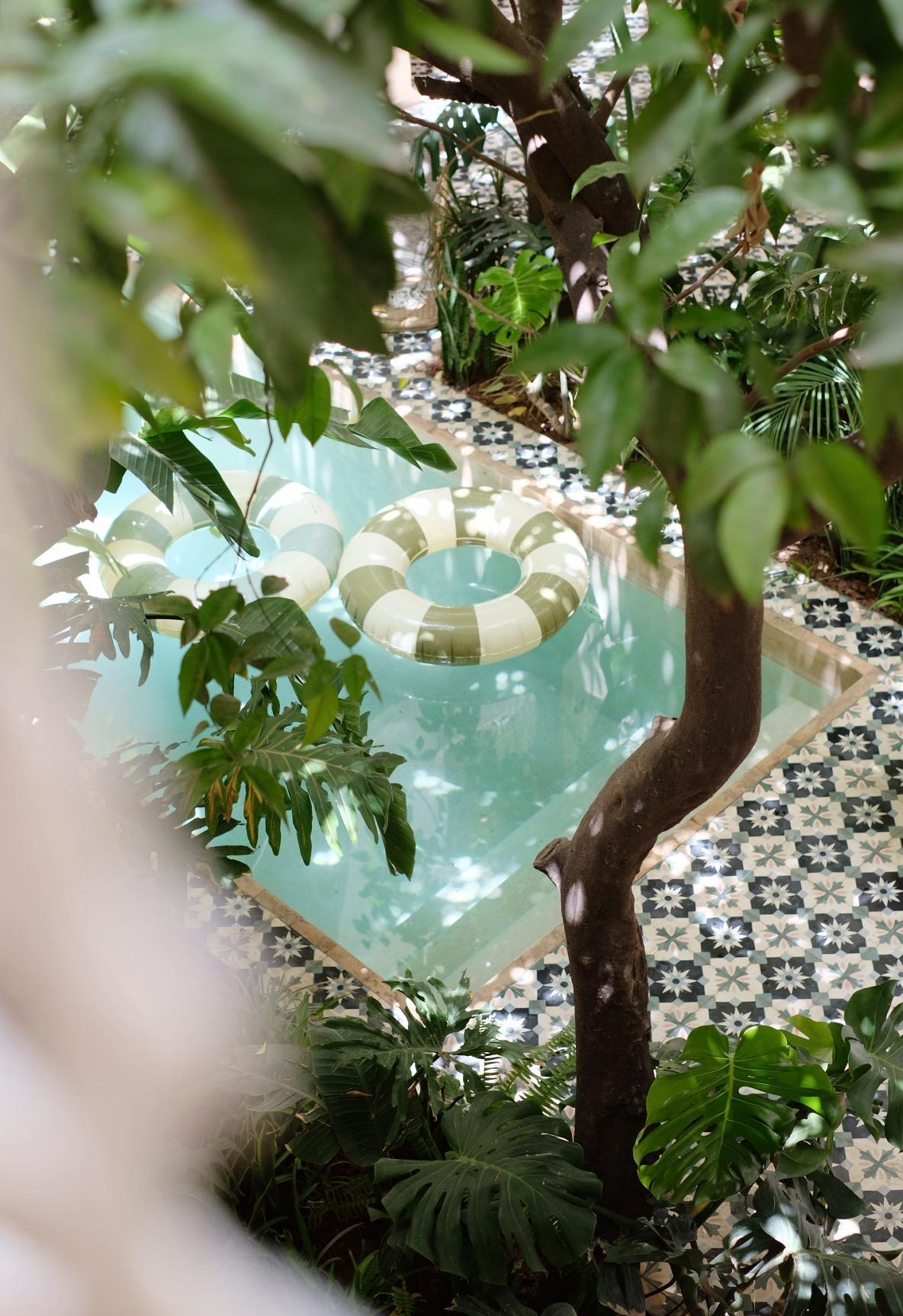
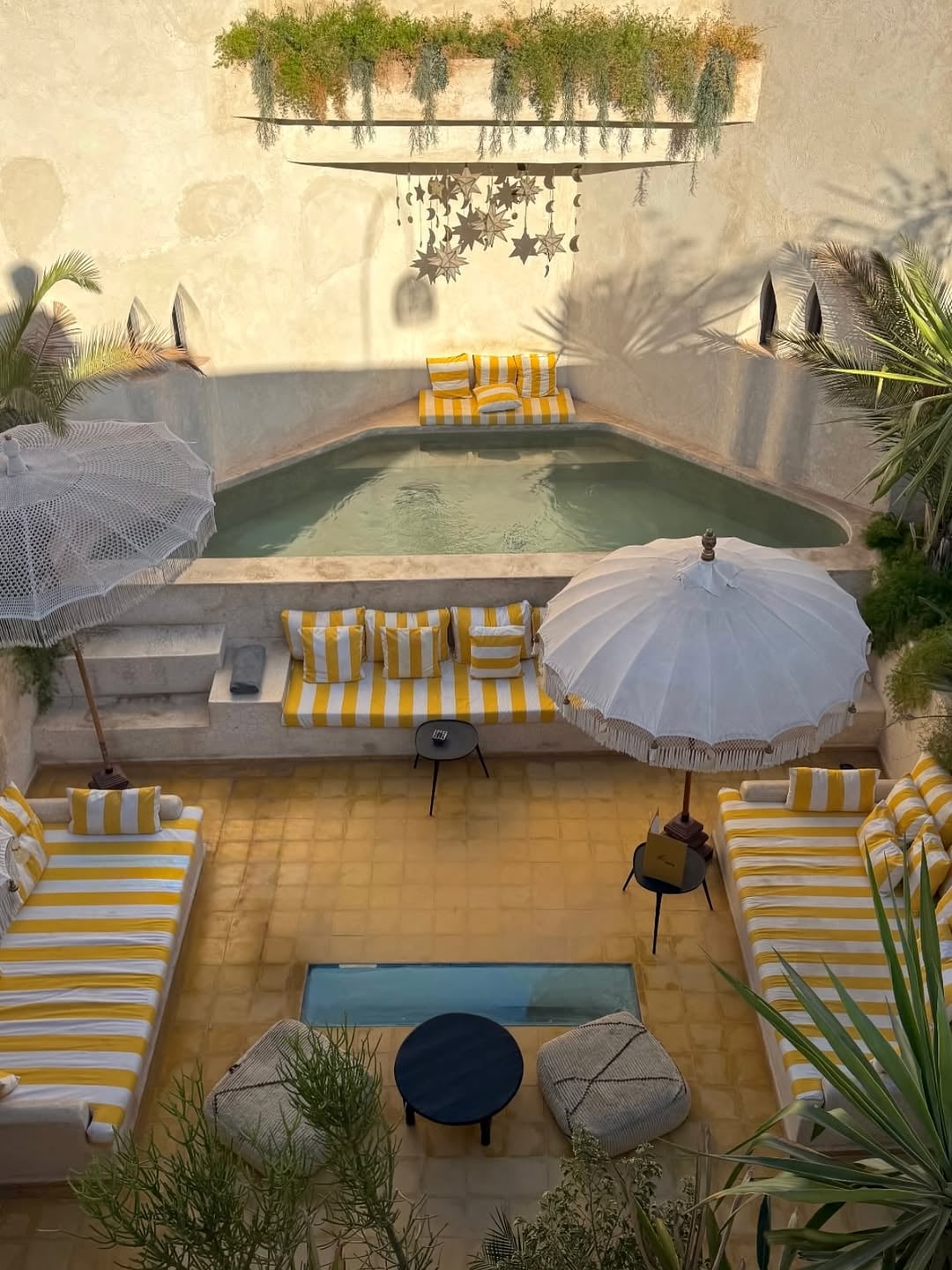
Water, and in which form. Forty-three houses have an outdoor pool, which in a courtyard almost always means a plunge pool of two metres by three, in shade for much of the day and cold: in the hot months that is exactly what you want, and it is the reason the early afternoon happens back at the house and not out in the souks. Ten houses have an indoor pool, which here means covered and heated, and those are the ones to look for if you come in deep winter and swimming actually matters to you: La Sultana heats its own, Riad Yasmine keeps one of each. Eight riads have no water of any kind, which is better known in advance.
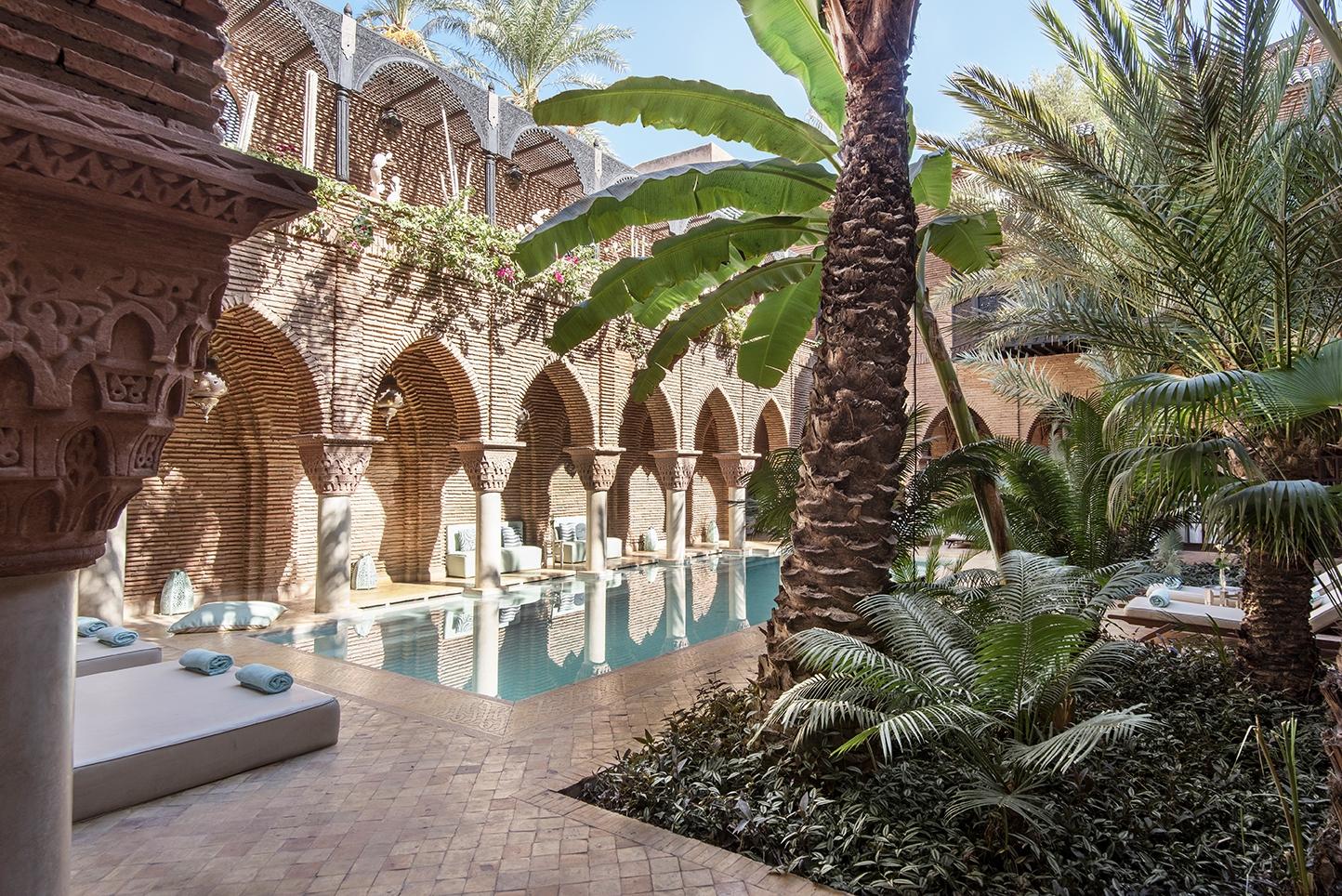
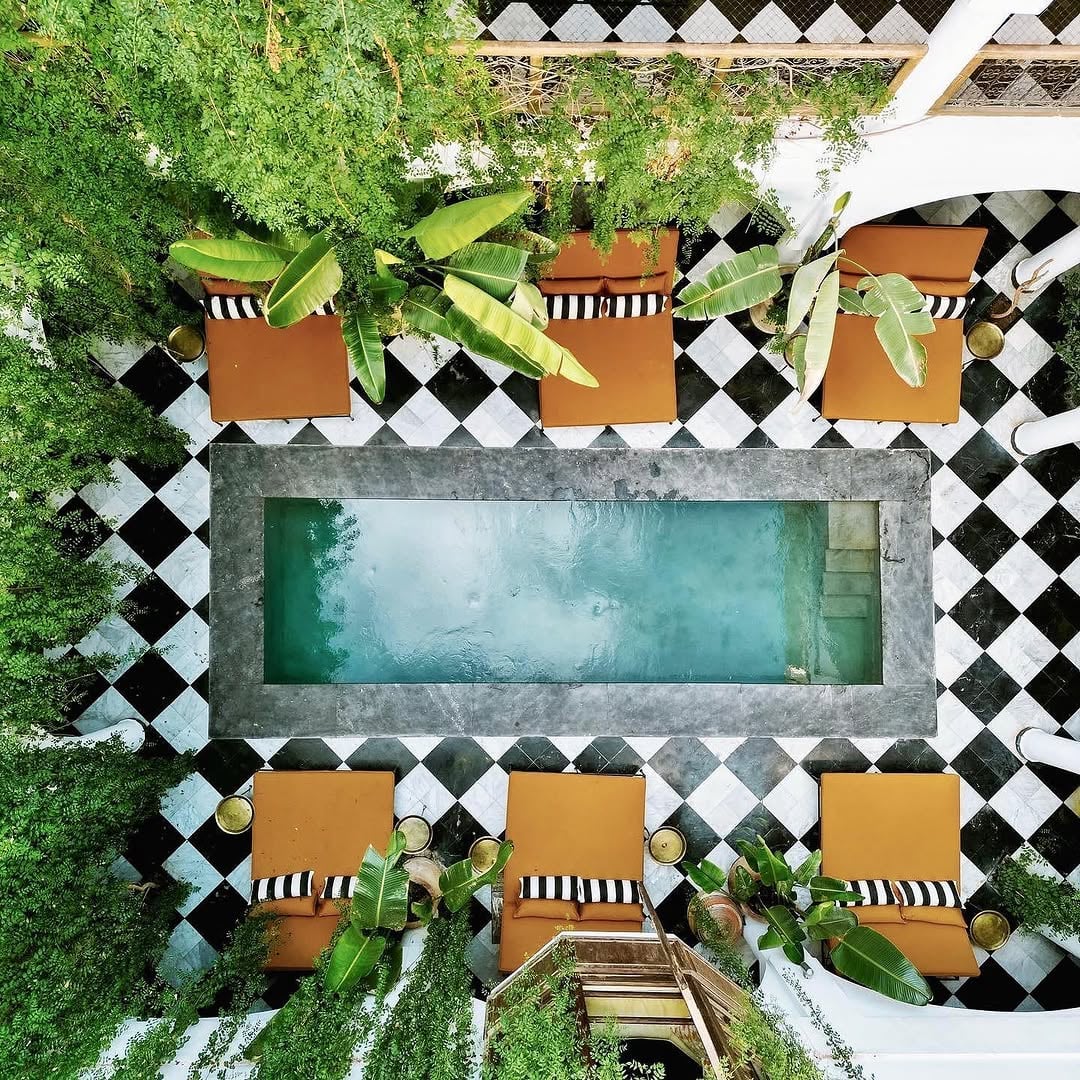
Say what time you are arriving. Fifteen houses have no twenty-four-hour reception. If you land at one in the morning, flag it when you book, together with the hour you expect to reach the door.
And then there is the other version
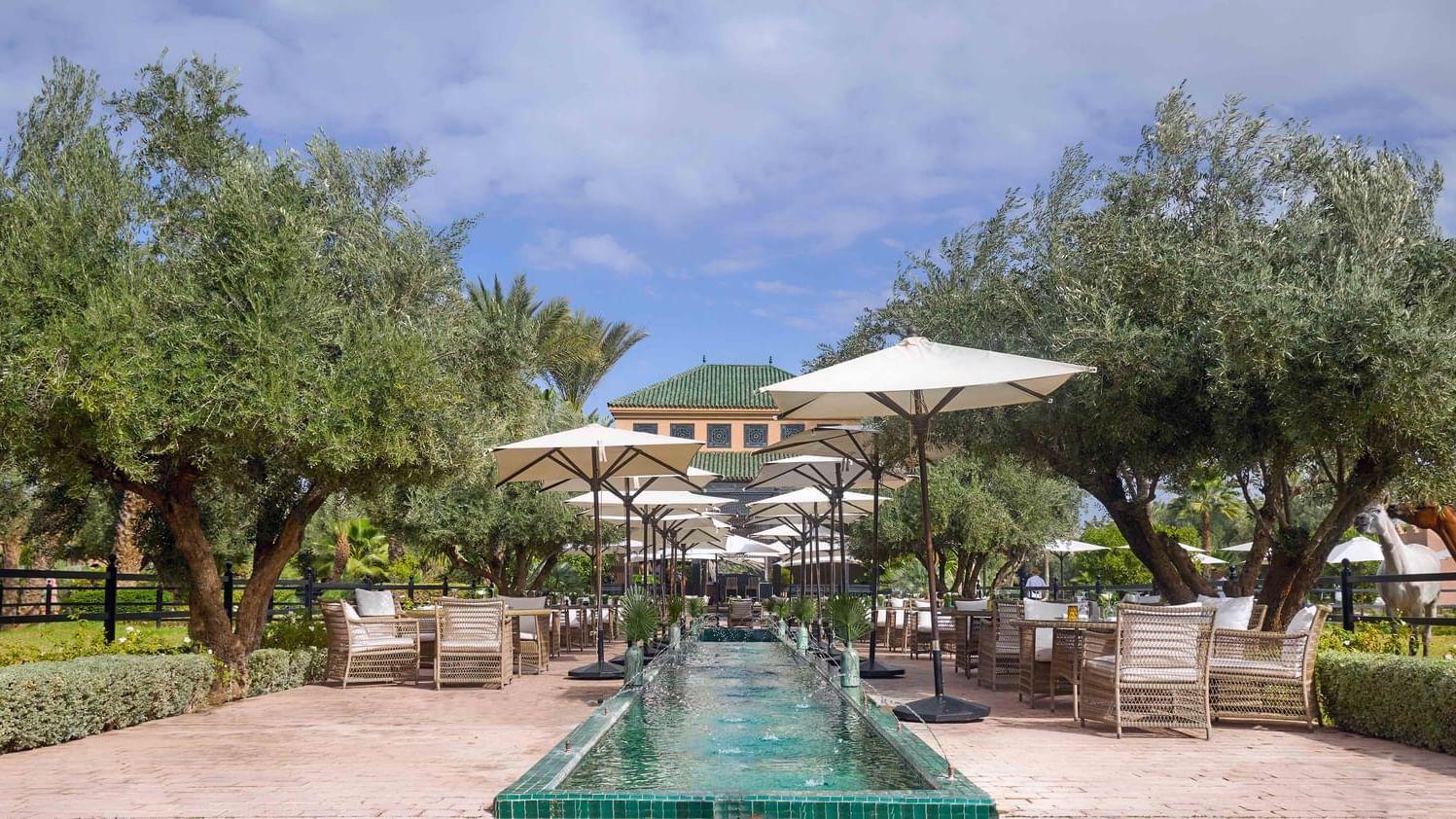
It is worth knowing, because it changes the options: the word riad has travelled into the grand hotels too. Royal Mansour is organised as fifty-three private riads across five hectares, connected by lanes doing the work a corridor does elsewhere, each with its own courtyard, fountain, pool and terrace, from a hundred and forty square metres up to an eighteen-hundred-metre house with four bedrooms and a private hammam. La Mamounia keeps three of seven hundred metres each. Architecturally these are riads in every sense, houses turned in on a courtyard, with two differences that count: the courtyard is yours alone, and a car reaches the door.
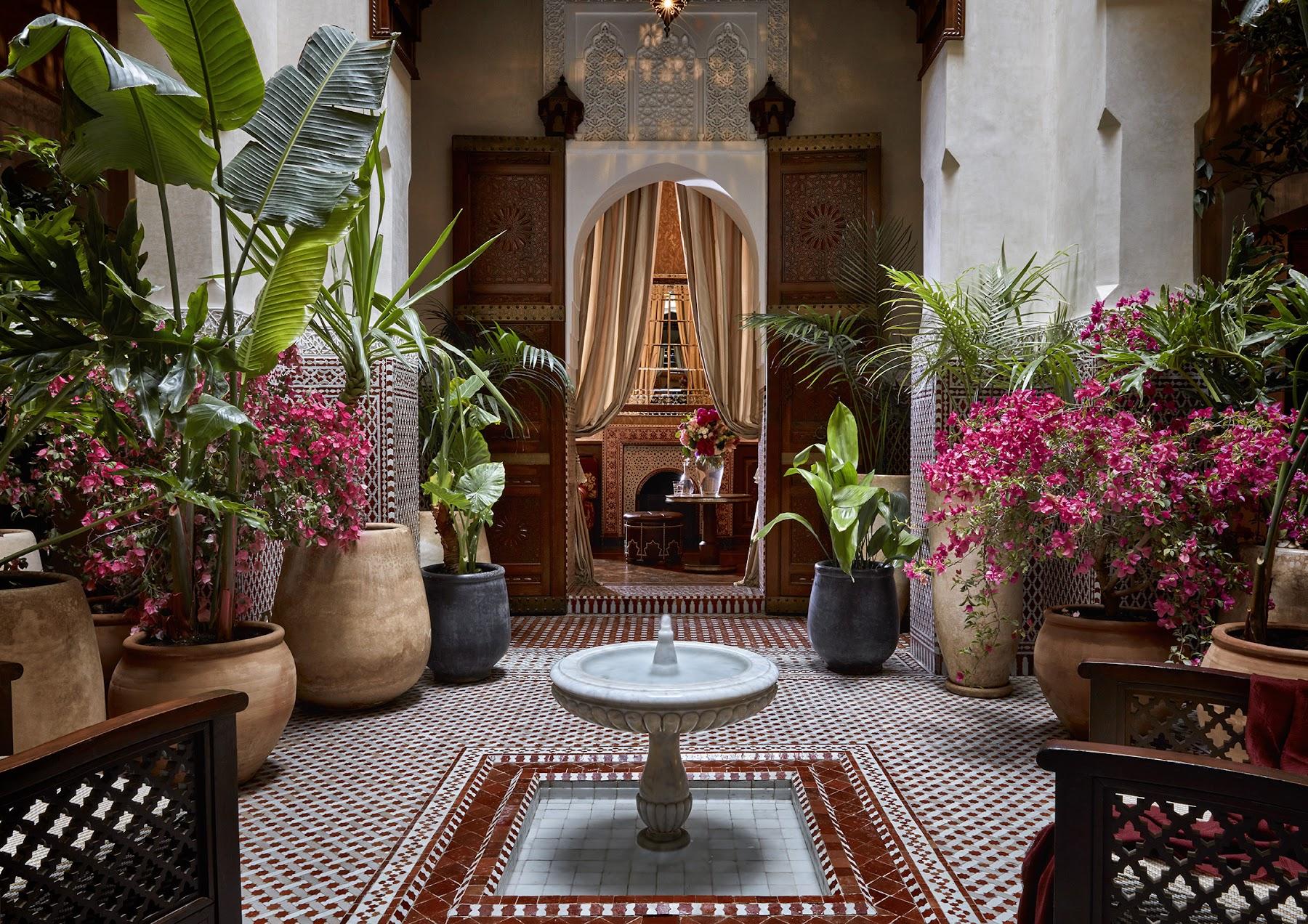
Down in the derbs the original version is the one still on offer, and it is the one we recommend to anyone coming for the first time, and the forms it takes are many. IZZA holds fourteen rooms inside seven old houses joined into one, with five staircases, three courtyards and a ten-metre pool. El Fenn has forty-one, three pools on different levels and thirteen hundred square metres of terrace. Riad Mena & Beyond occupies seven hundred square metres of a former private residence, seven minutes on foot from Jemaa el-Fnaa. Romeo Gigli drew the five-room house that carries his name on Riad Zitoun el Jdid. And Riad Dar des Arts takes its name from the art merchant who lived there with seven daughters, each devoted to a different craft, and keeps a single room at ground level for people travelling alone.
The right hour to understand it
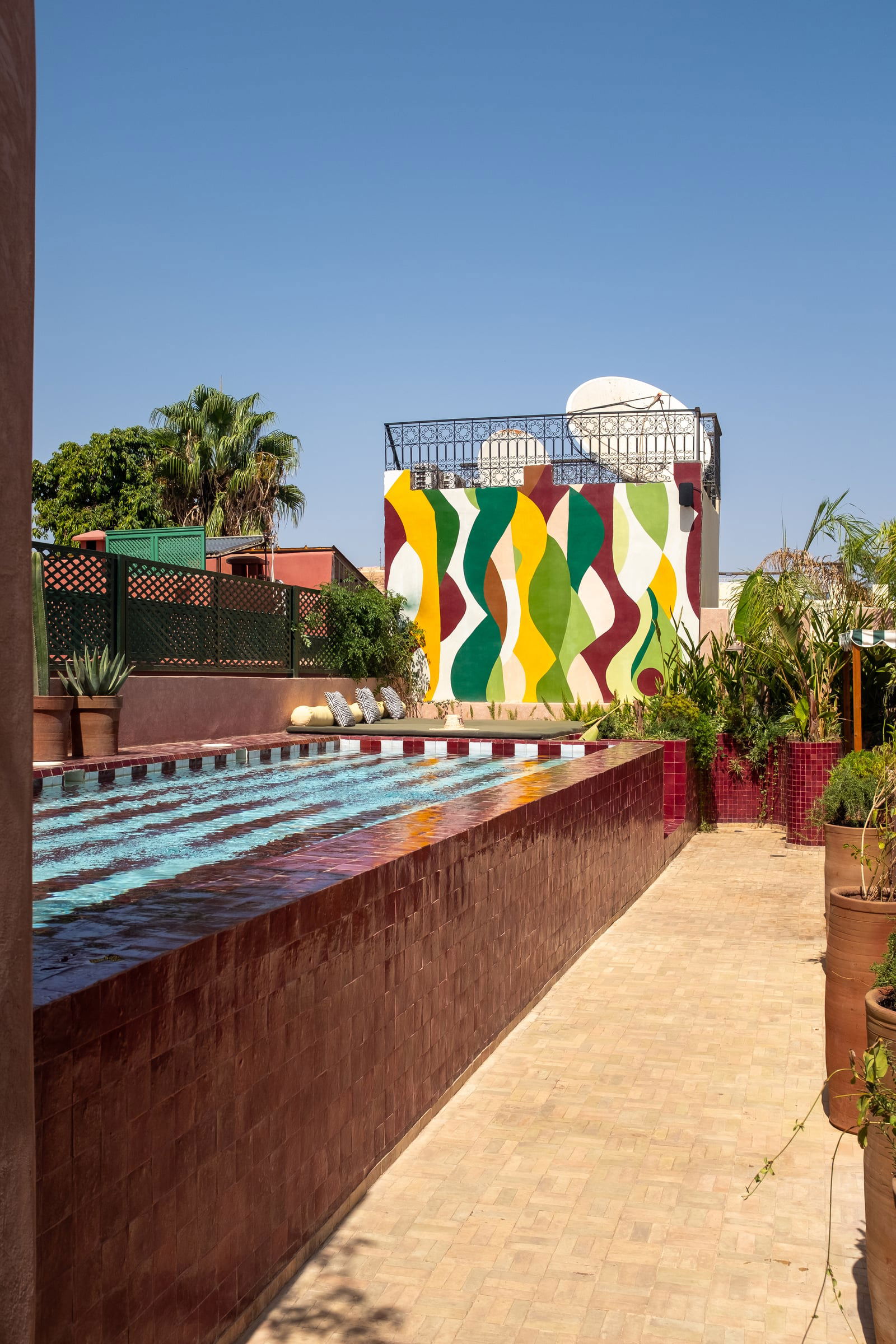
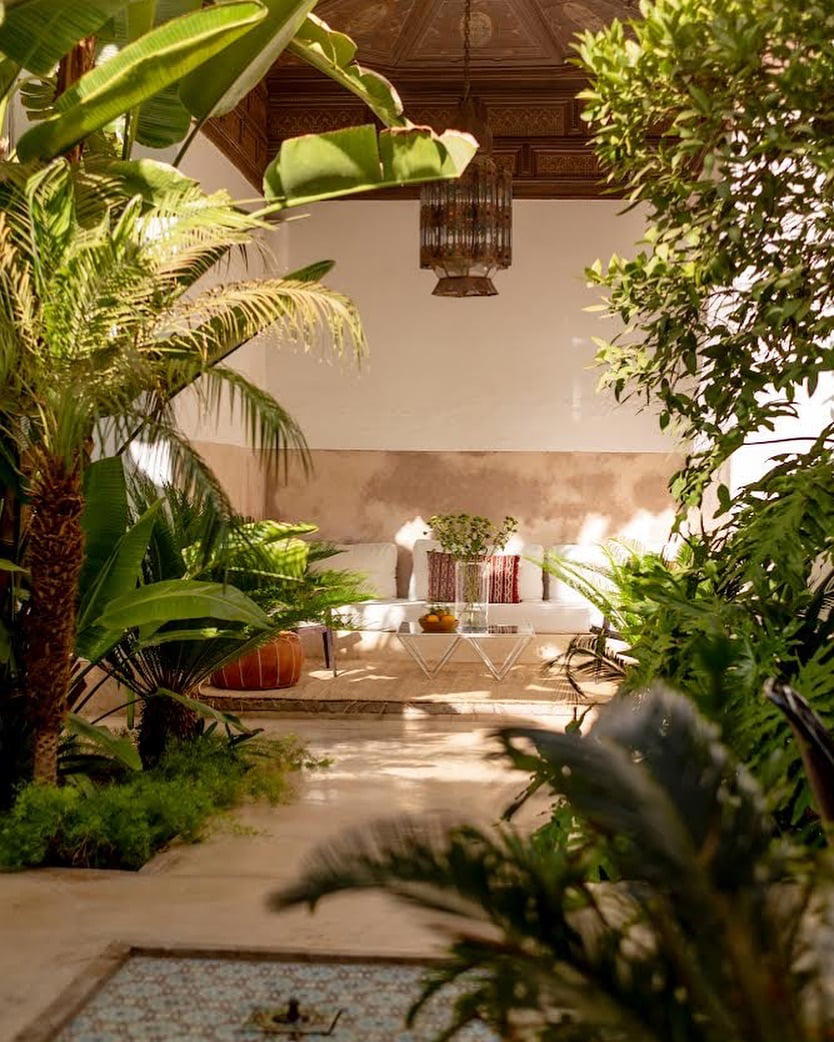
Whichever house you choose, go up to the terrace around seven. That is where a riad explains itself. You will see the roofs of the Medina one beside the next, the neighbours' washing hung out, the satellite dishes, the swallows going over low. If the house is playing music, at a certain point it stops: the calls to prayer have started, arriving from several minarets a few seconds apart and overlapping above the roofs. And then comes that African sunset, the sun dropping over the roofs like an actual ball.
Then you go down, cross the courtyard back to your room, and understand the last thing: behind every one of those blind walls you passed today, without knowing what lay behind them, there is a garden like this one.
You may also like…