CITY
Marrakech in Autumn: What September and October Actually Offer
September is back to school with summer still in the air. October is simply one of the city's best months.
Timence Guide Editors · Updated: 21 August 2026
Restaurants that ran reduced hours through July and August reopen in full by the first week of September, and the hotels that closed for a summer pause open their doors again alongside them. The galleries around Gueliz and MACAAL bring back exhibitions that had closed or slowed for the summer. Residents describe the shift with one word: return.
September is Marrakech's version of back to school: the routine restarts while the air still carries summer. The afternoon still keeps you in the shade until four or five, the heat dry, never humid, and a long lunch is still the easiest way through the middle of the day. October runs on its own terms entirely, already one of the city's best months, not the tired edge of the one before. The two months get lumped together as autumn, but they offer a different city, and the useful question is not whether to visit in autumn. It is which half of it.
A pool that is close to survival gear in August is simply a good afternoon by the end of September. A terrace nobody could sit on at noon in August takes lunch again by October. The city does not change from one month to the next: what changes is how you move through it.
September
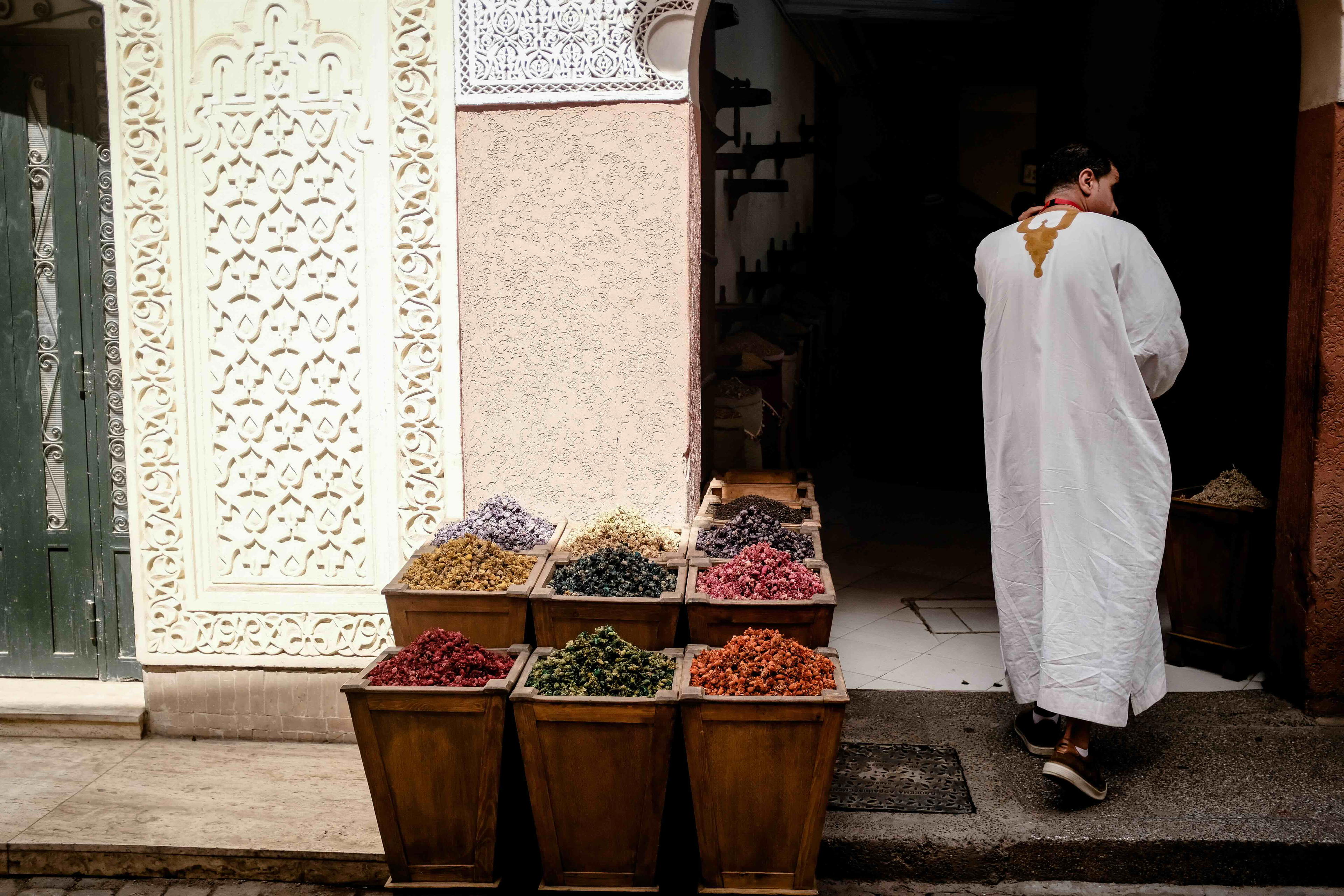
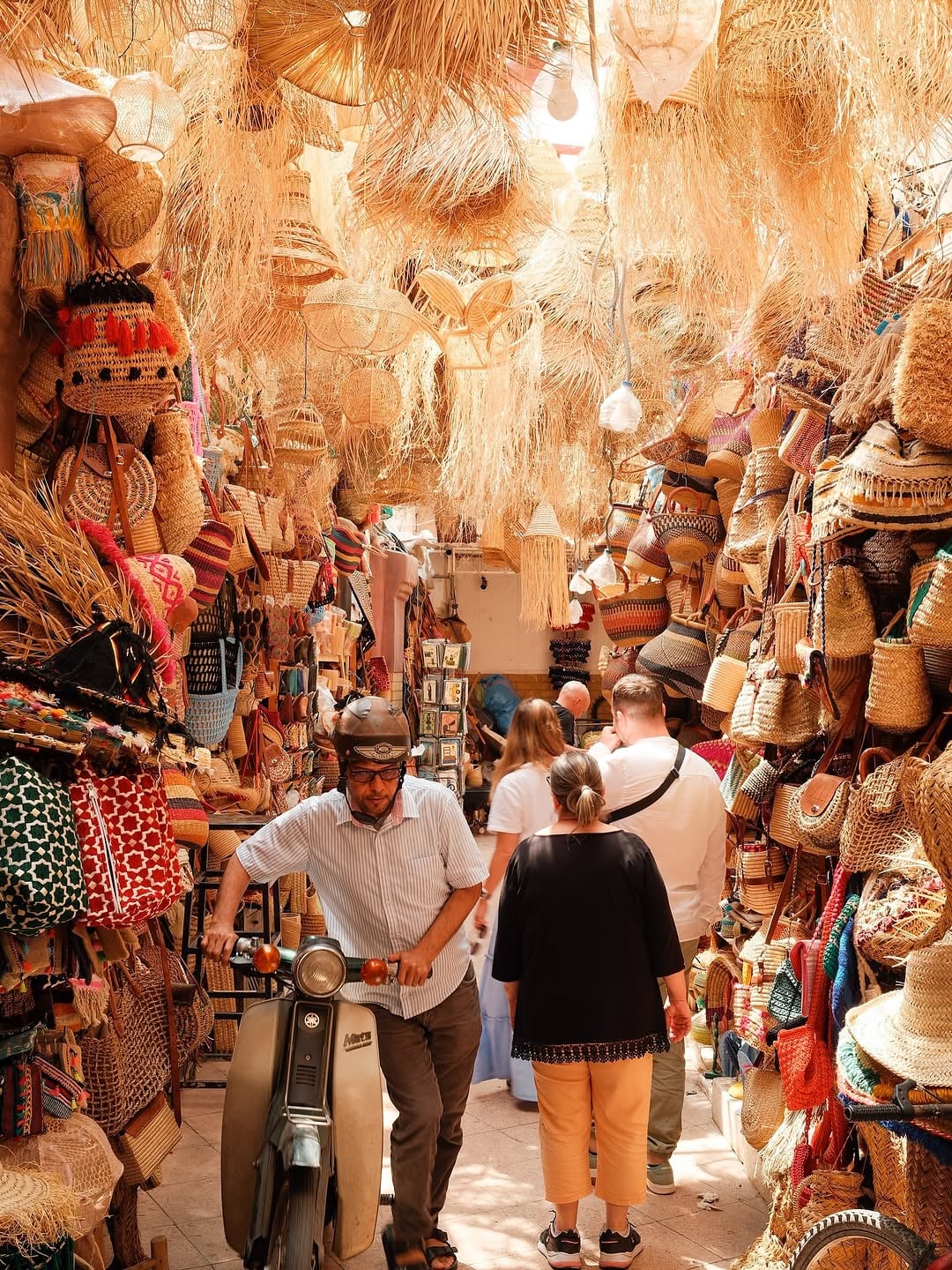
September itself splits in two. The first half still belongs to summer; the second, in the details that matter, already leans toward October. Restaurants, hotels, and galleries that paused or slowed through July and August come back online in roughly that order, and the souks follow a different clock entirely. Through summer they operated quiet for lack of visitors; they start filling now not because the crowds are back yet, but because the artisans are.
Climate and What to Wear
Early September in Marrakech typically runs 31 to 33 degrees by early afternoon, with the first days of the month sometimes pushing higher, and nights settling between 16 and 18 degrees. By a European calendar this still reads as full summer, not its final stretch. The dryness of the air is what makes it manageable: Marrakech's heat carries little of the humidity that weighs down a comparable day on the Mediterranean coast, so the same number sits lighter on the skin than it would in Rome or Barcelona in August. Those 16 degrees after dark are noticeable after a day at 33, but nowhere near cold. A shirt carries you through dinner most evenings, and a very light blazer is insurance, not necessity.
The Flow of the Day
July and August in Marrakech run on three acts: mornings for the medina, afternoons around the pool, evenings for everything the afternoon postponed. September starts to dissolve that structure without abandoning it. Mornings still work the way they did all summer. The afternoon lock-in loosens as the month goes on: the heat holds you in the shade until four or five, no longer demanding a full retreat indoors. Evenings arrive earlier and easier: the city is still bright at six and gold by seven, the aperitif hour, the dinner hour, and the hour spent lingering on a terrace start to overlap, running into each other before anyone notices the join, and Jemaa el-Fna fills back in after six the way it does most of the year. The hammam, which in high summer worked as a genuine cooling mechanism, goes back to being what it is the rest of the year: warmth and pleasure, not relief.
What to Do and See
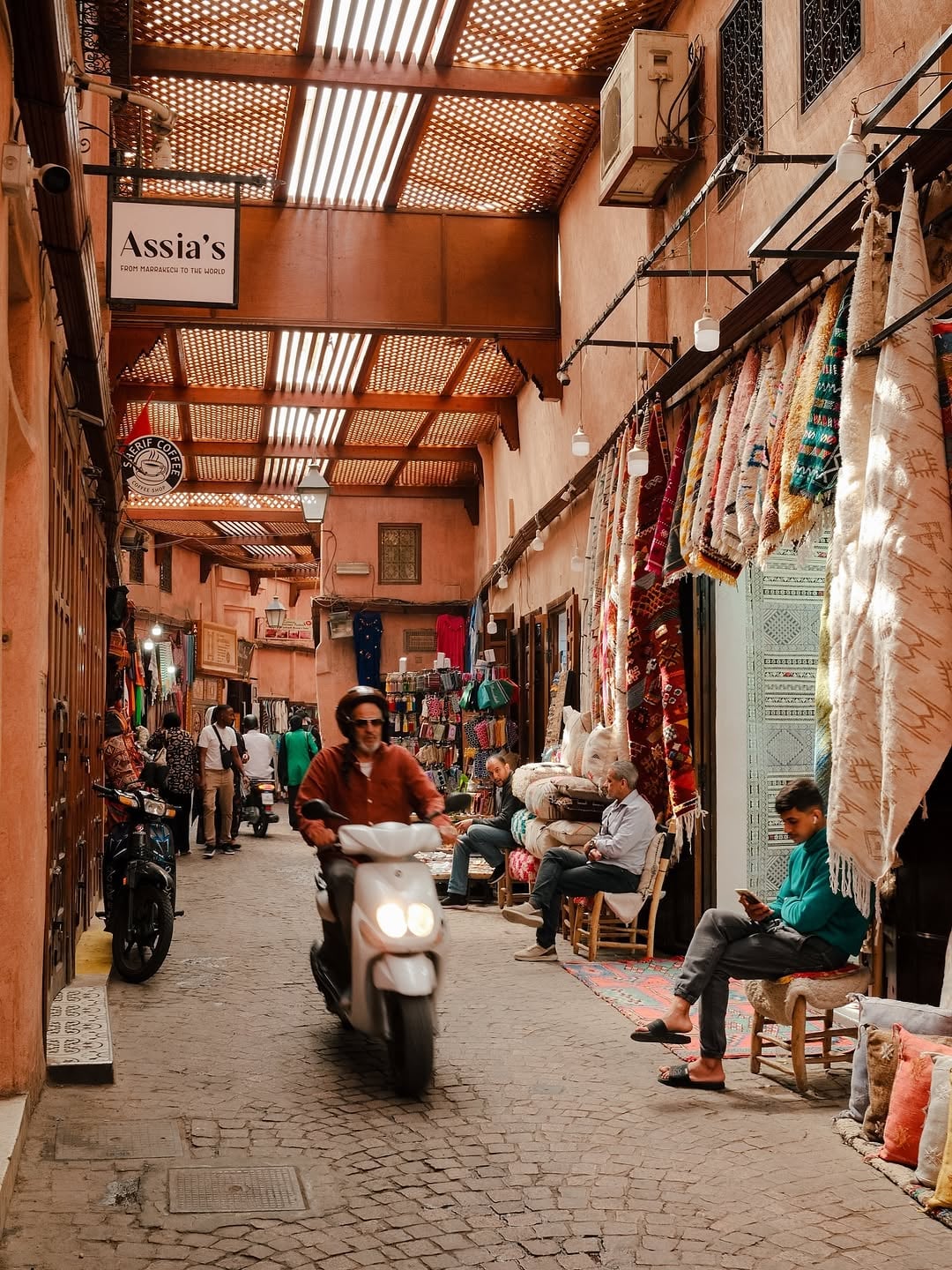
Marrakech in September looks, in most ways, like the same city it was in April: the same medina, the same souks, the same museums. What changes is the intensity, the timing, the light.
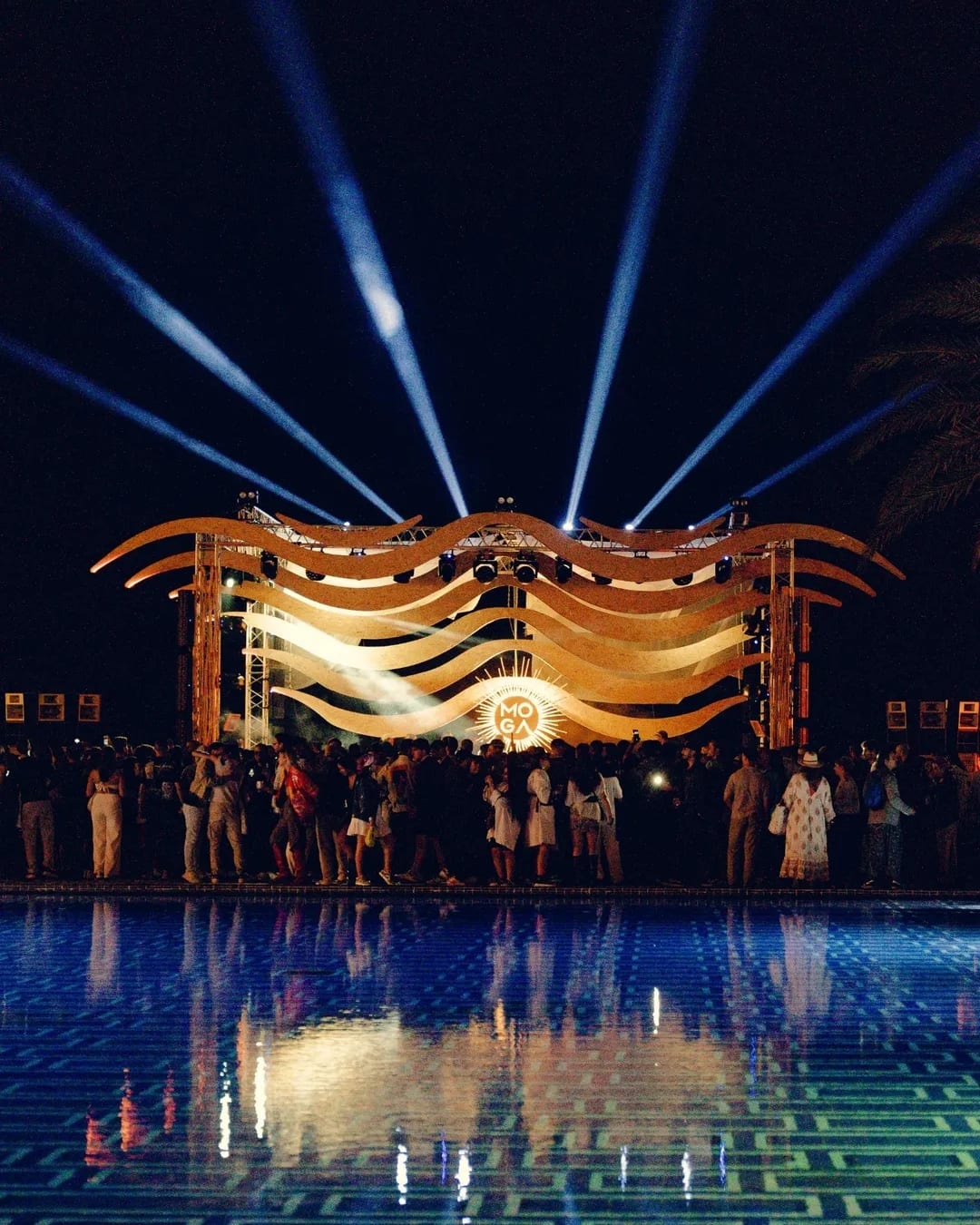
The cultural calendar restarts here, not merely continuing from where it left off. MACAAL, the Museum of African Contemporary Art Al Maaden, typically brings its programming back in this window, and the private galleries around Gueliz reopen or resume full exhibition schedules after a slower summer, the boutiques reopening alongside them. A gallery opening on a Thursday now routinely turns into a dinner reservation somewhere nearby, the two events feeding each other in a way the August calendar could not sustain. The Moga Festival, an electronic music weekend that has become one of the more anticipated dates on the regional calendar, runs from the last days of September into the first days of October and pulls that same crowd west to Essaouira. Several of the names on the lineup are Marrakech-based or play a date in the city the same week, so the festival's reach runs both ways, not just west toward the coast.
Cultural sites that reward unhurried time, Medersa Ben Youssef, the Bahia Palace, the Dar Si Said museum, are best built into the morning or early-evening hours, before the sun is directly overhead. The gardens work on the same clock: Jardin Majorelle and Le Jardin Secret reward that same window, their shade doing in September what the season alone cannot yet manage. A hammam or spa session slots naturally between two of these stops, the pause the walking is asking for. The city runs at a calmer rhythm in September than it will a month later, but book anyway: the best tables and the sunset terraces fill regardless of the month.
The Pools
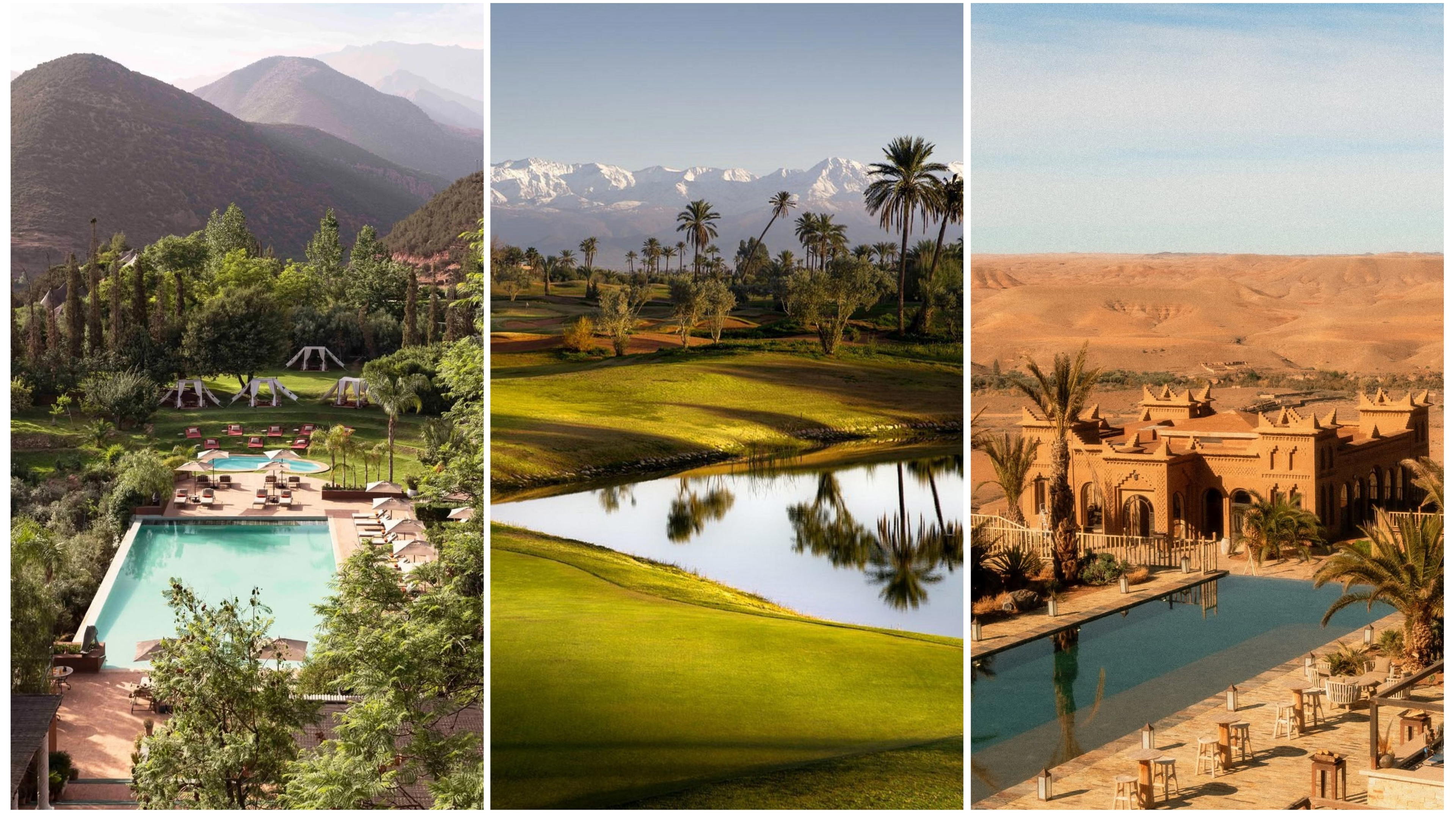
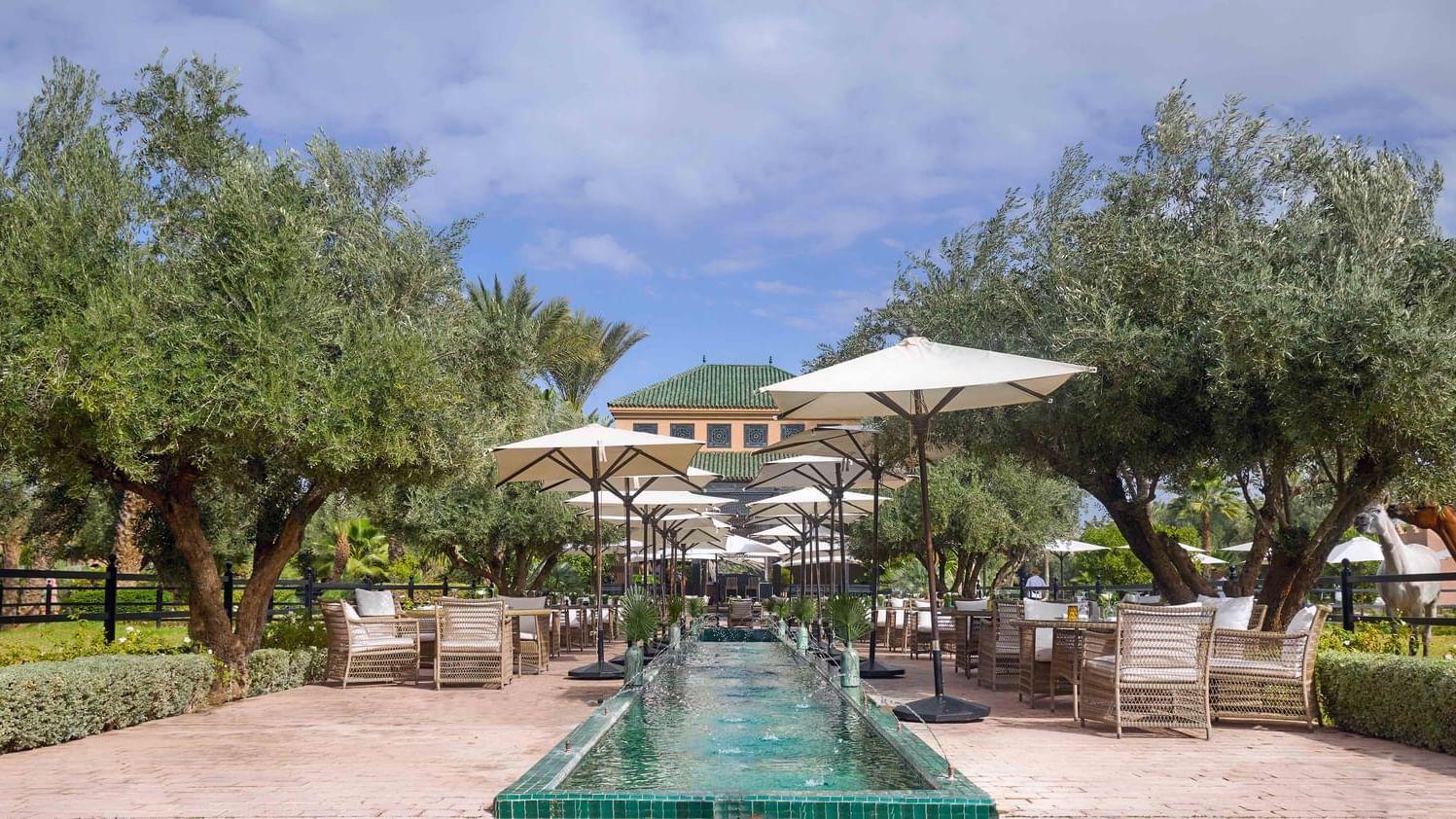
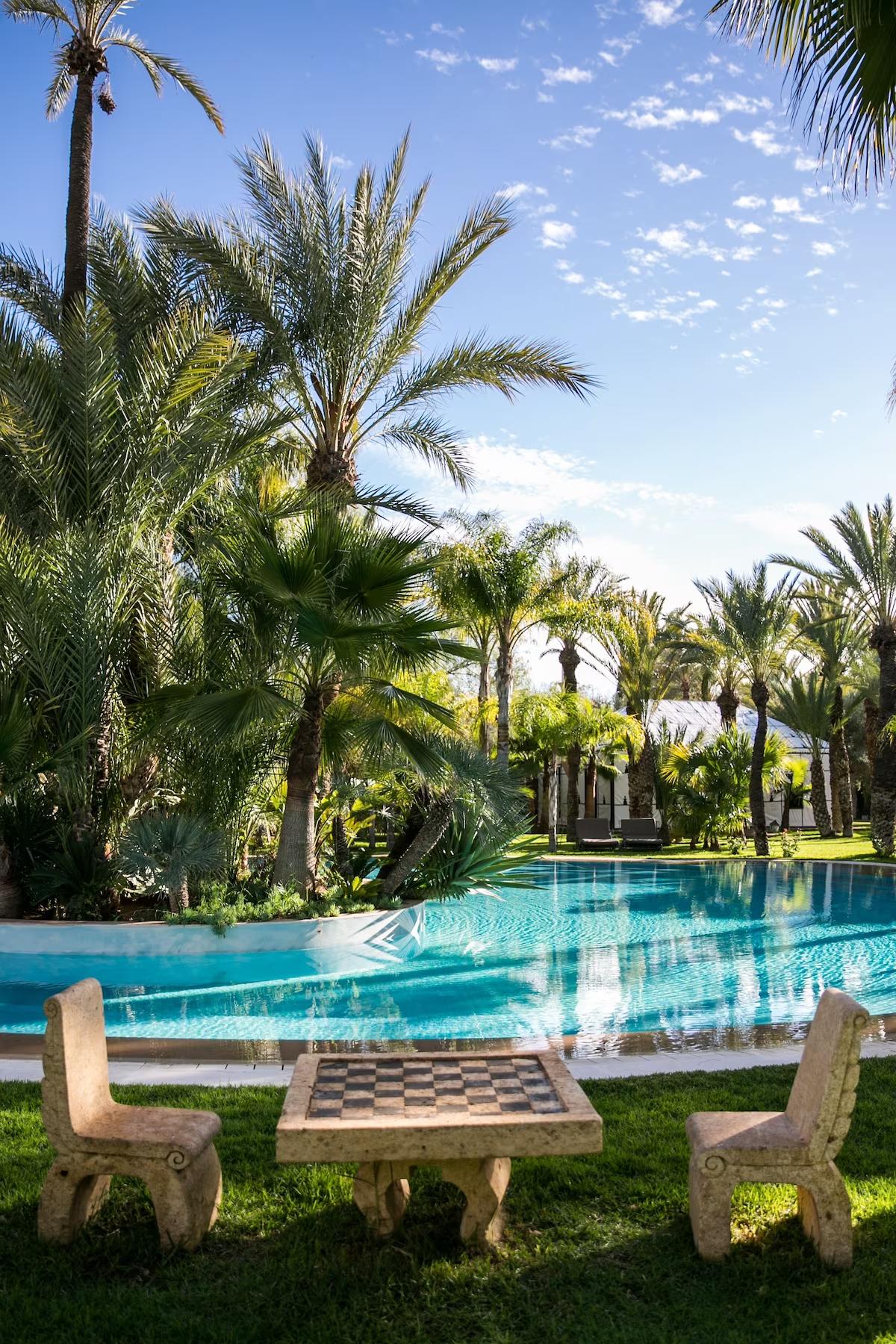
A riad is built around its courtyard, which means most of them have no pool at all, at most a plunge basin two strokes wide set into the tiles. The hotels are where the water is, and Marrakech has a great deal of it, spread across the Palmeraie, Hivernage, and the road south. September is when all of it works at its best: no longer the survival mode of August, when the pool was the only viable plan between one and six, but an afternoon you choose because you want it. The day-pass culture is what makes this work for anyone staying inside the walls. A large share of hotel pools sell access by the day, lunch often included, which means a riad without water of its own is never more than a short ride from someone else's. Of the pools that do this properly, forty are worth the trip.
The Rooftops
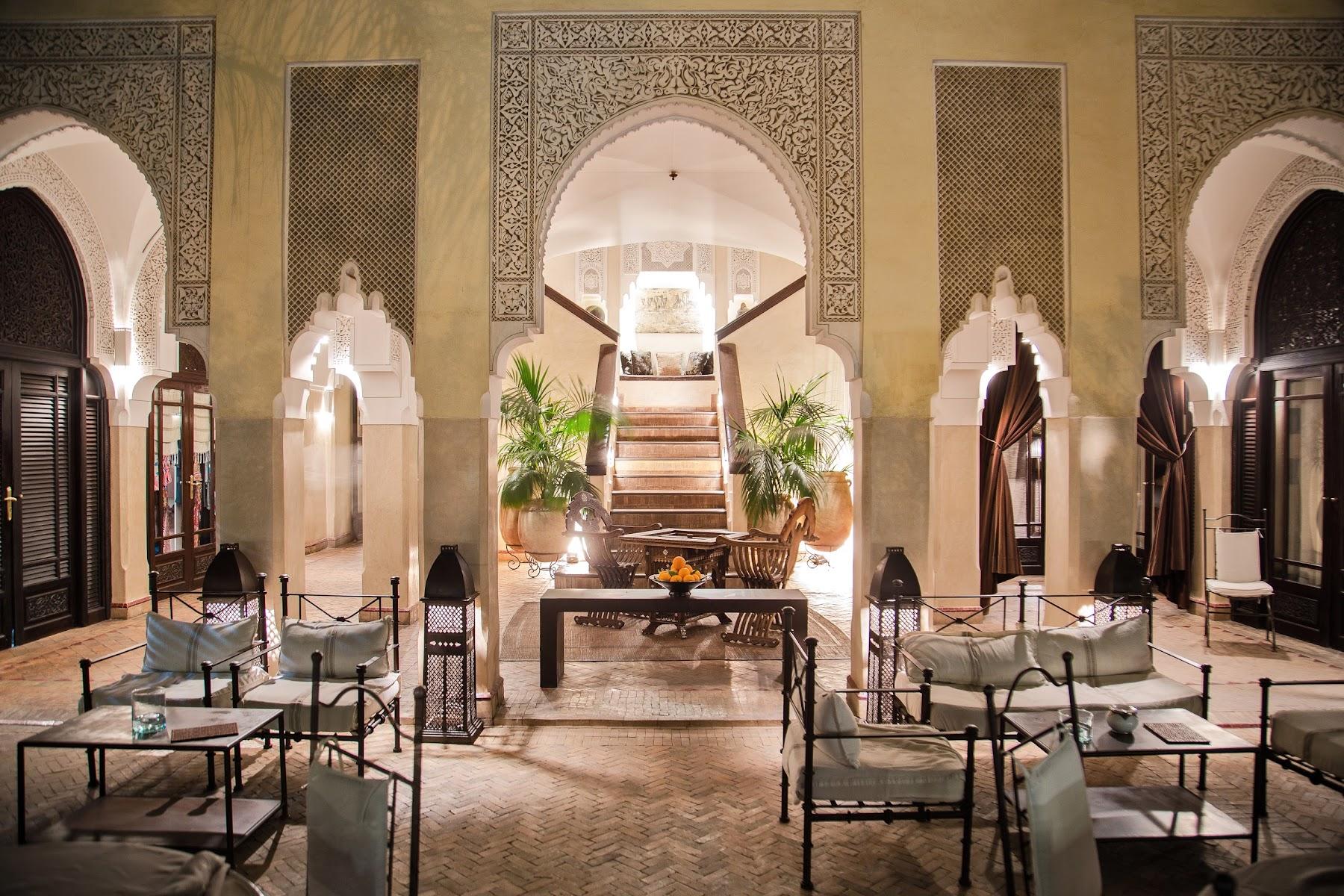
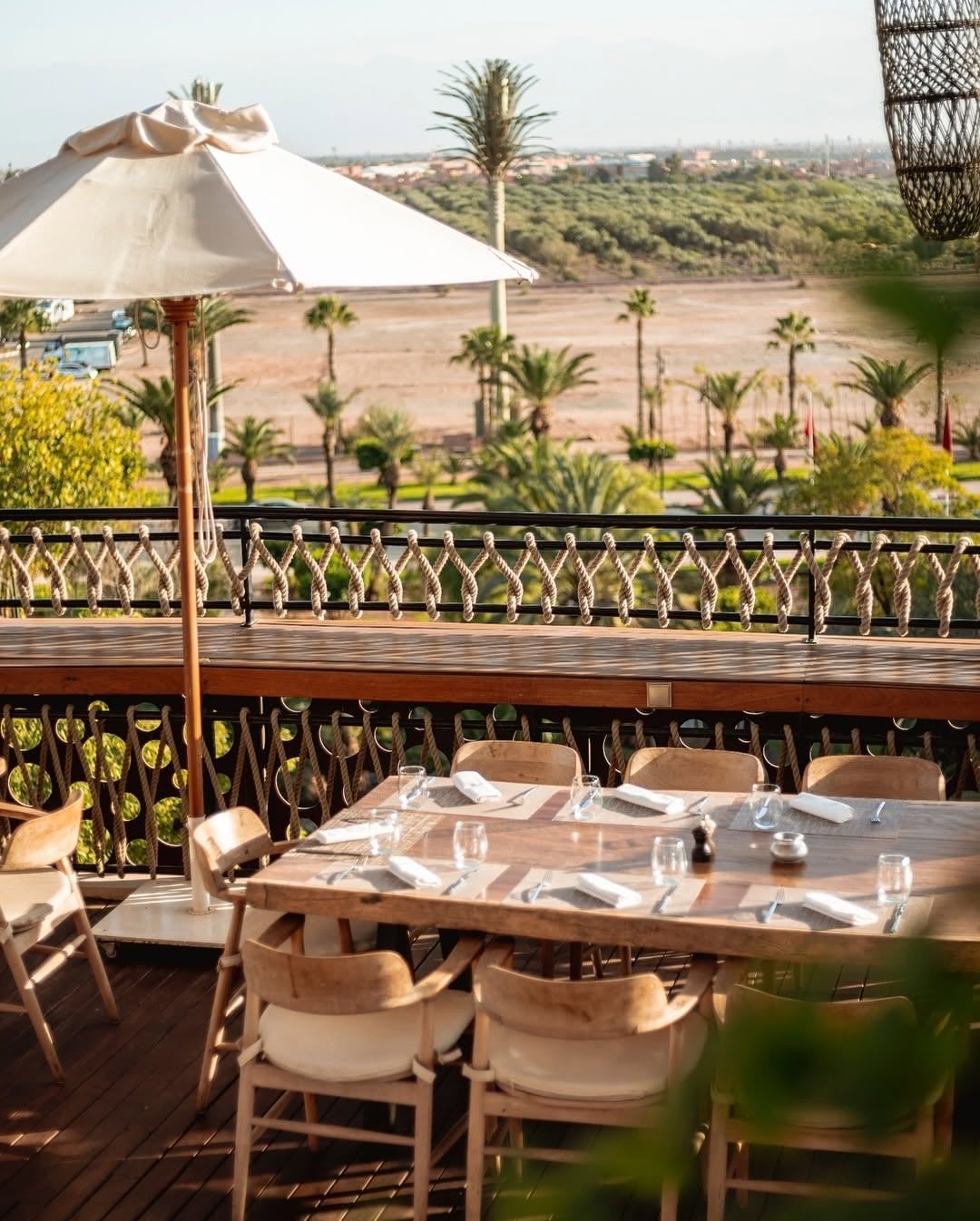
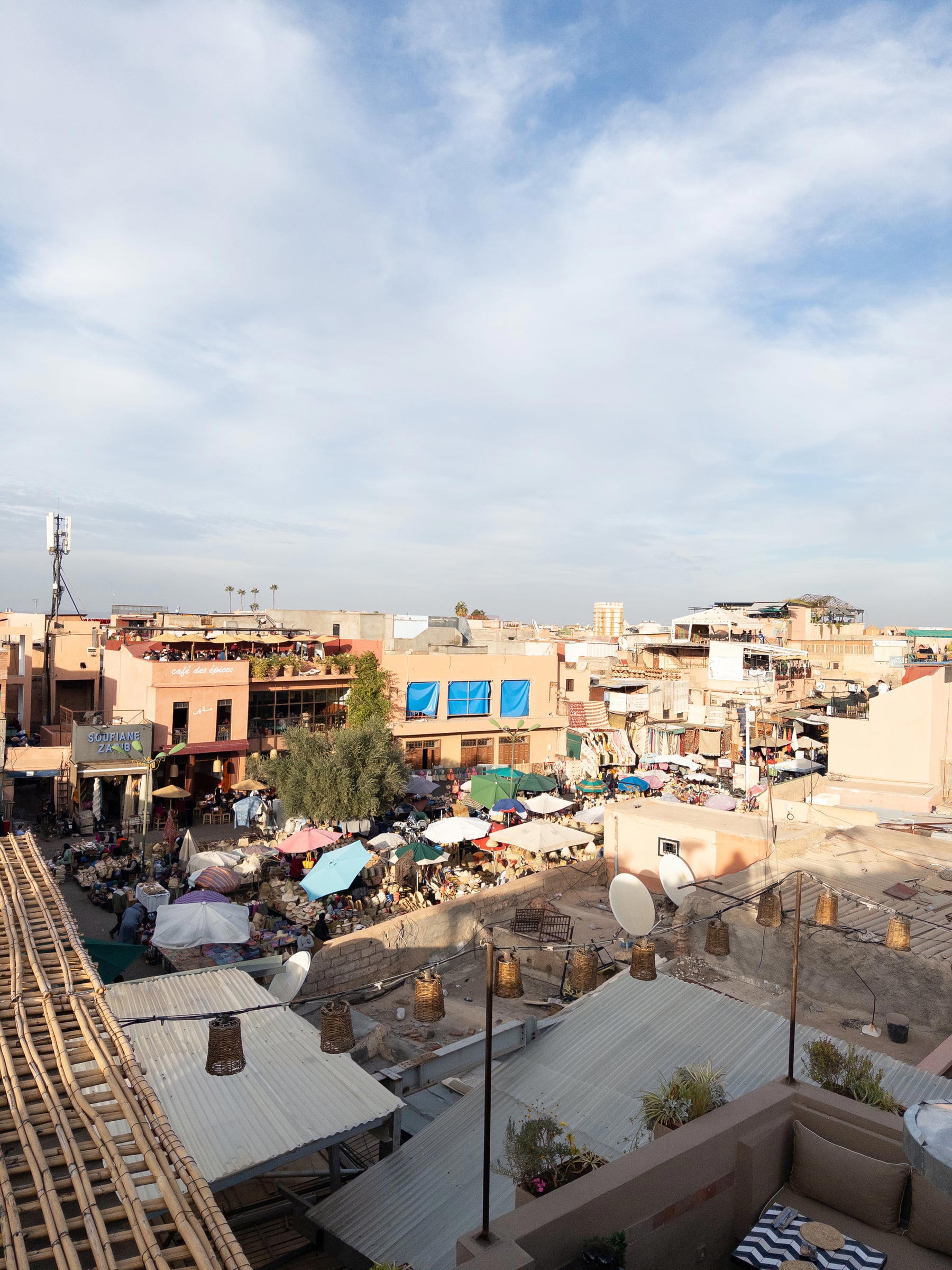
Marrakech is a low city with a high skyline. The medina is two or three storeys of flat ochre roof, and above it the Koutoubia minaret and the Atlas stand clear, which is the whole reason the rooftop exists here and why nearly every riad, restaurant, and hotel with a staircase has put something at the top of it. There are hundreds. Thirty-two are worth booking, and most of those are built for the evening: restaurants and cocktail terraces that wake up once the light starts to change. In September, lunch on one still means chasing the shade, the sun burning overhead the way it has since June. Dinner from eight is where the month gives ground.
Trips Around Marrakech
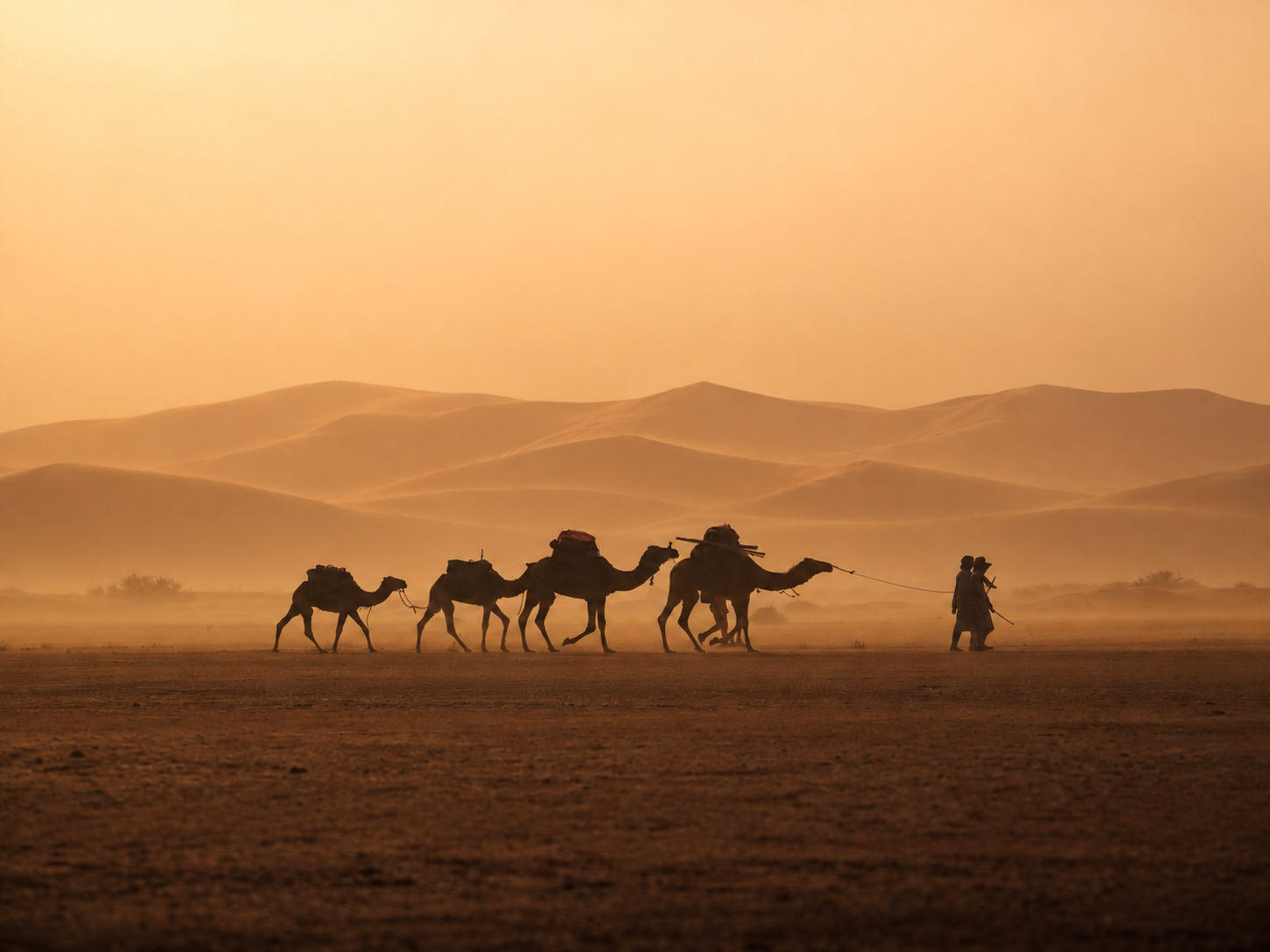
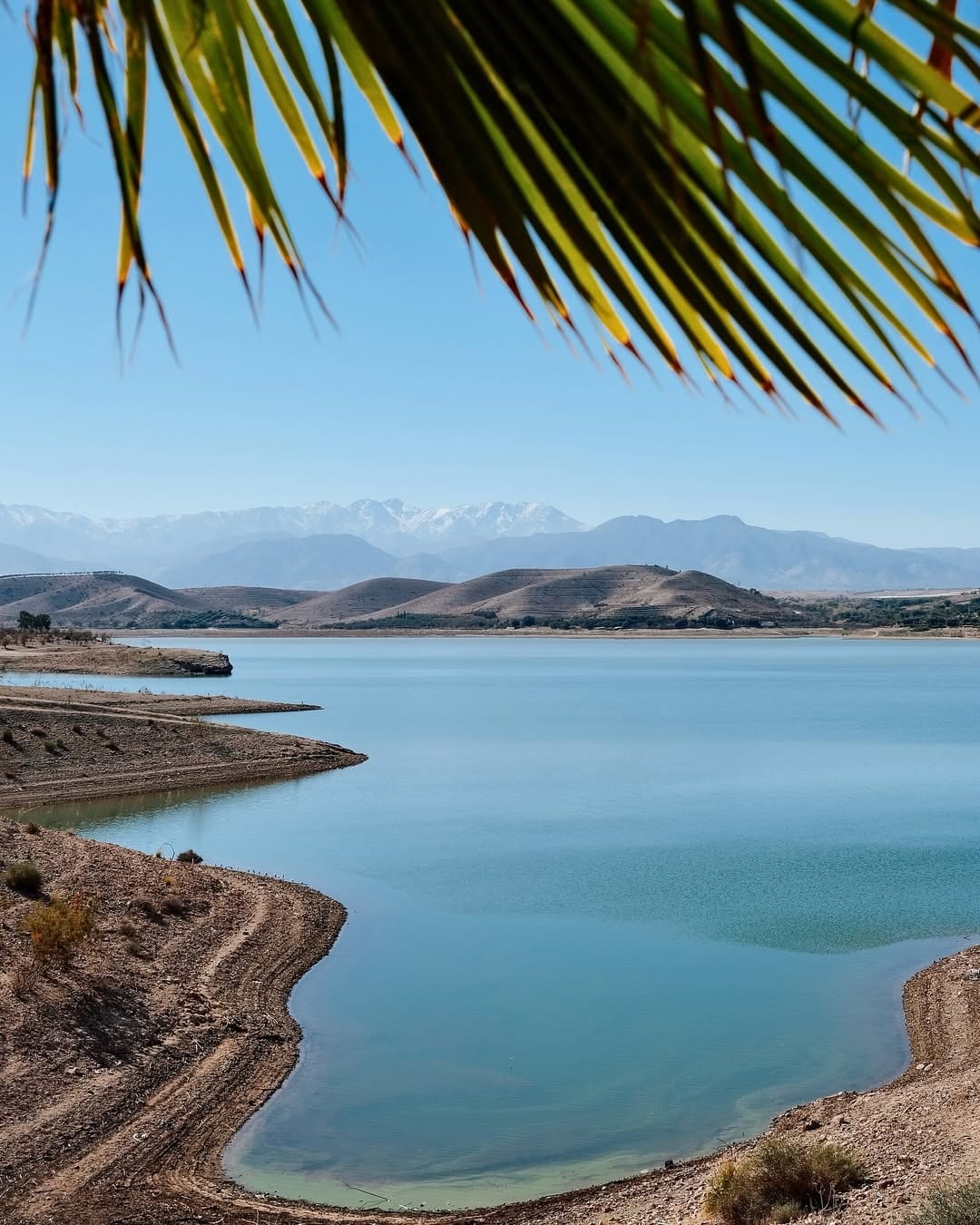
Further out, the Ourika Valley is approaching harvest by late September: the trees along the valley floor beginning to turn, the river running lower but the landscape still green, roadside stalls selling pomegranates and honey pulled straight from the hive. The Agafay plateau is golden and warm without the flattening haze of full summer heat, and the desert camps that run close to capacity in spring have room again for the people who want the plateau without the crowd around it.
Essaouira, reached for the festival or on its own, stops being the alternate universe it was in July and August, the coastal town people fled to because the plain had become unbearable. The wind that made it bracing then has settled into something steadier, the ocean stays the same cool Atlantic it always is, brisk, not warm, and the town works at its own unhurried pace, not as an emergency exit. A single long day covers it. Two or three let the light do more of the work.
October
By October the transition from summer is complete, and what is left is the city at its best. The souks that restocked in September are now fully stocked and fully staffed, the cultural calendar that restarted a month ago is running at full capacity, and none of it depends any longer on getting the timing of the day right. Restaurants are all open, and the evening programme, live music, bars, the late crowd on the terraces, is in full swing. Booking stops being advice in October and becomes a requirement, for sunset terraces and weekend tables above all.
Climate and What to Wear
Daytime temperatures in October typically settle between 26 and 30 degrees, dropping gradually across the month, and nights run 14 to 18 degrees. That is the first real change to the packing: a jacket stops being optional for the evening and the night. The haze that softens every summer view lifts almost entirely, and the same dryness that made September's heat manageable now gives the cooler air a clean edge.
The Flow of the Day
The three-act day that structured July and August, and that September only loosened, is gone by October. Walking the medina no longer has a clock attached to it. Lunch, dinner, an afternoon outdoors, none of it is dictated by the sun anymore. From the ramparts near Bab Doukkala, or from nearly any rooftop in the northern medina, the Atlas Mountains appear with a clarity that the summer haze rarely allows, and the stretch of afternoon that photographers and designers in the city consistently call its best hour now extends across most of the day, not the twenty minutes at dusk that August allows.
What to Do and See
The cultural calendar that restarted in September is now running at full capacity. Gallery openings continue alongside live music events and DJ residencies that extend from city venues out to the desert camps of the Agafay, where the open sky becomes the only architecture the set needs. A visit to Medersa Ben Youssef, the Bahia Palace, or the Dar Si Said museum can happen at any hour of the day without the midday pressure that shapes an April or a July visit. The Marrakech Museum, inside the former Mnebhi Palace near the Ben Youssef Madrasa, runs its collection at the same unhurried pace, without the spring crowd, Easter above all, that compresses the visit into a faster walk than the building deserves. The gardens hold their appeal for the whole day now too, Jardin Majorelle and Le Jardin Secret no longer rationed to the cooler hours the way they were in September.
The Pools
The 26 to 30 degrees that make a terrace lunch comfortable do the same for the water. October is the month the pool stops being a strategy and becomes simply a good afternoon: the day-pass programmes run on exactly as they did in September, but nobody is watching the clock anymore. A swim at four in October is a choice, not a retreat. Where you stay matters less now too, the medina walkable at almost any hour, so a riad deep inside it stops being a heat-management decision and becomes simply where you want to be, whether that means the medina or a villa out in the Palmeraie.
The Rooftops
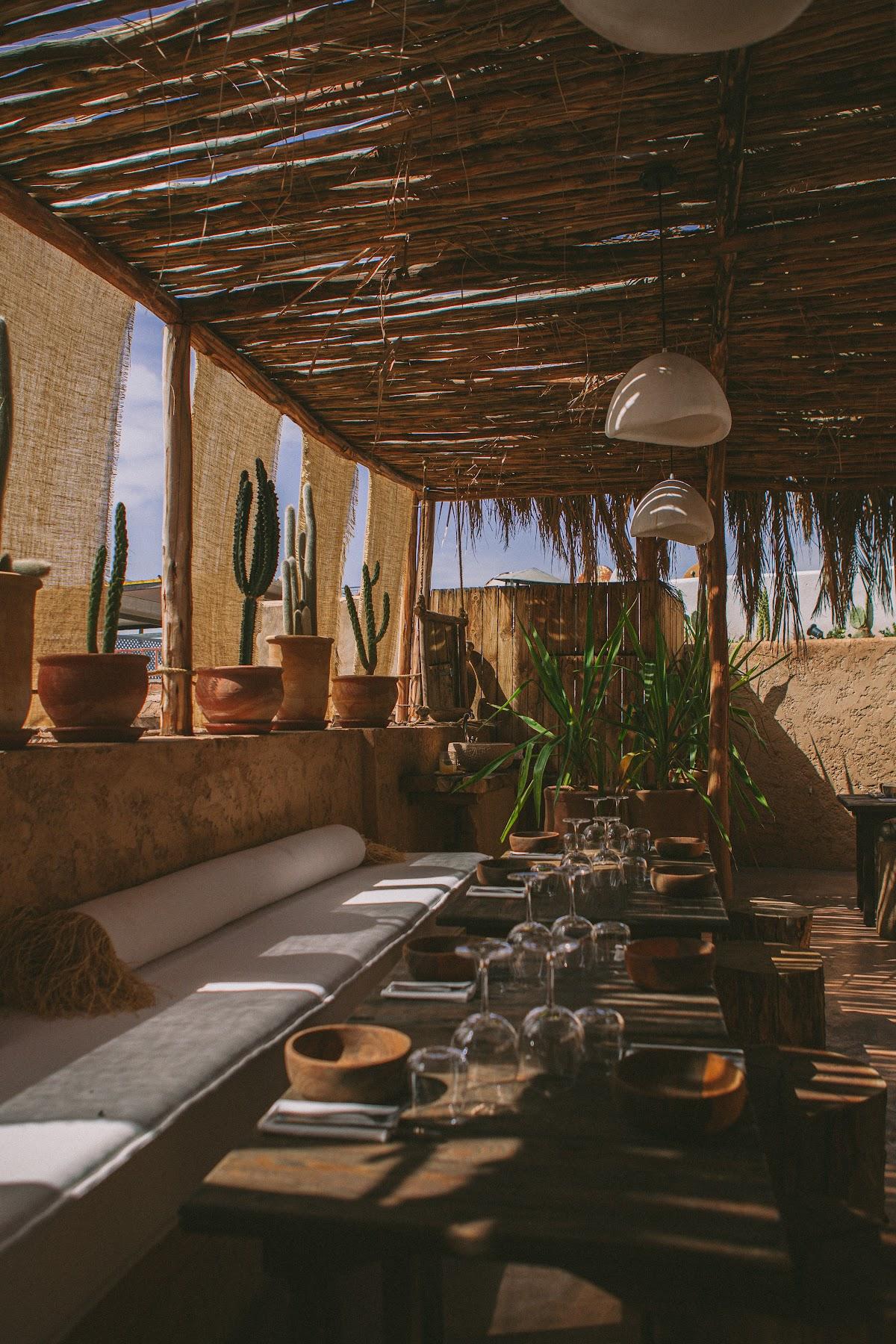
It is warm enough, finally, for lunch on a terrace: the same rooftops that only worked after dark in September start filling at midday. Across the selection the shift is the same, from the spice-souk terraces of the medina to the hotel heights of Hivernage, all of them now running lunch through last call.
Trips Around Marrakech
October is when the territory around Marrakech opens all the way. The Atlas above Imlil clears fully, and the trekking season reaches its strongest visibility of the year, the ridgelines legible in a way the summer haze never allowed. Essaouira, already back to being a normal trip by September, not an escape, holds that same rhythm through October, the wind steady, the port working its own hours regardless of who is watching.
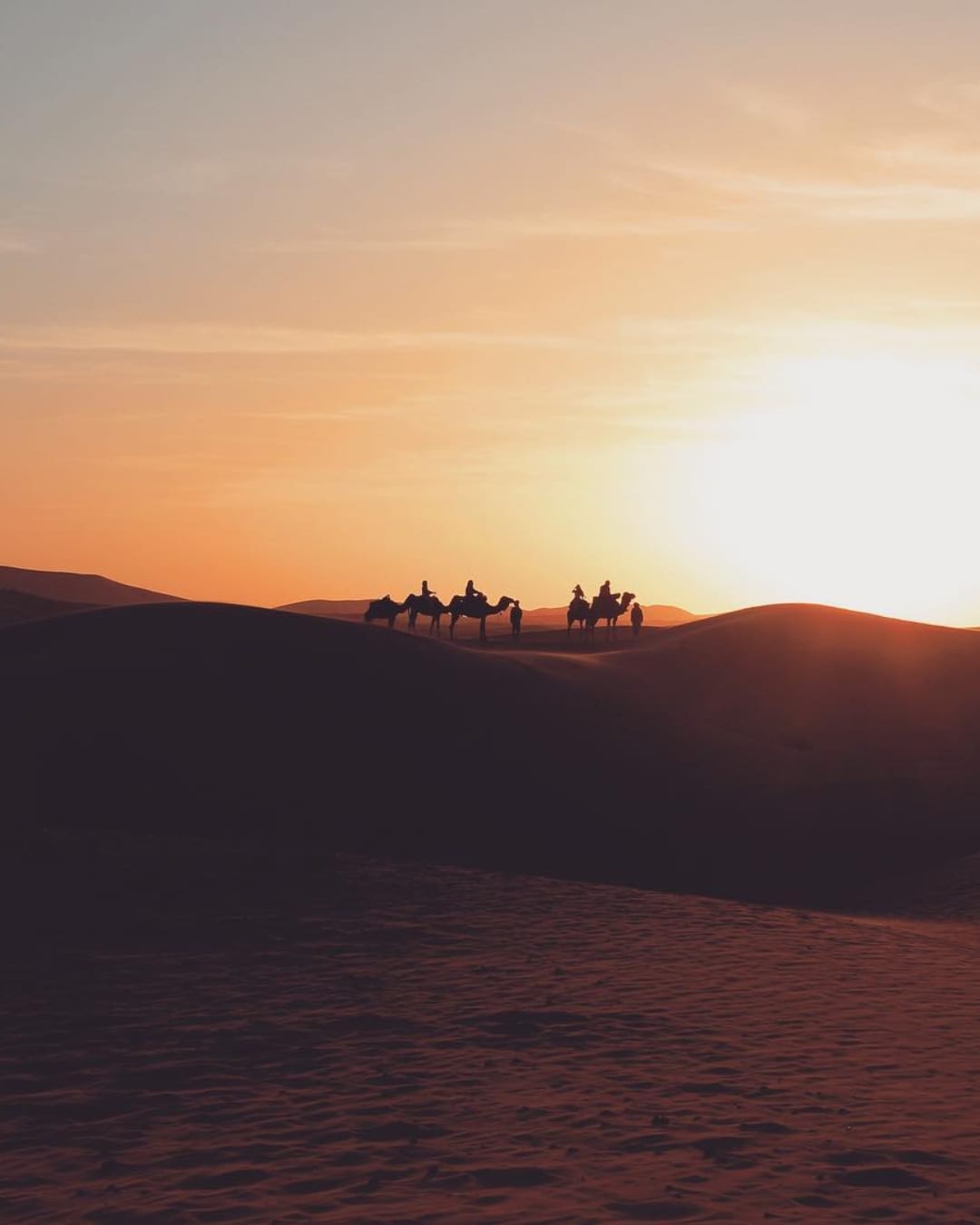
Further out, the road toward the Draa Valley, Merzouga, and the dune sea at Erg Chebbi becomes a landscape worth driving through slowly, not just a string of air-conditioned stops to get through. September already makes the closer Agafay plateau an easy day trip; October is when the longer desert routes become just as comfortable. Under skies that still carry warmth but have lost summer's opacity, the Sahara in October makes one of the more persuasive arguments in the country for staying a few days longer than planned. Camps that run lean through the hottest months start filling their calendars again, the fires lit earlier in the evening now that the desert cools fast after sunset.
Which Month, and Why
October is the month when the days still recall summer and the evenings do not yet recall a European autumn. That is the whole case for it: warmer nights than September's early weeks, a clearer view of the Atlas, and a cultural calendar running at full speed instead of just restarting. Between the two months the calendar runs, in order, through the Moga Festival in Essaouira, the relaunch of MACAAL and the Gueliz galleries, and a steady build of DJ residencies in the city and out in the Agafay desert camps.
September is the return. October is what the return was building toward.
Every one of the city's registers, the hike above Imlil, a slow afternoon by the pool, a morning spent getting pleasantly lost in the medina, a night that starts at a gallery opening, stays fully available across both months. The date on the calendar decides less than which of those you came for.
You may also like…