Slow Luxury Escapes in Marrakech: Three Properties To Know
5 April 2026
Farasha Farmhouse, Berber Lodge, and Beldi Country Club each argue for a different relationship with the landscape around Marrakech, and with the idea of what a stay is for. The medina rewards urgency. Its market logic, compressed alleyways, and navigational demands produce a particular kind of attention that is productive for two or three days and then begins to cost something. The city's other register, the one that asks for less and returns more, lives outside the walls. Within thirty minutes of the medina, another Marrakech begins: olive groves and douar settlements extending toward the Atlas, a quieter agricultural landscape that the city's pace has always pressed against without quite reaching. Three properties have established themselves in this territory as serious arguments for a different relationship with time. Each uses its landscape differently. Each arrived at a distinct design vocabulary. What they share is the refusal to compete with the medina on the medina's terms, and the understanding that slow luxury retreats near Marrakech are not the absence of luxury but a reconfiguration of what luxury asks from the person experiencing it.
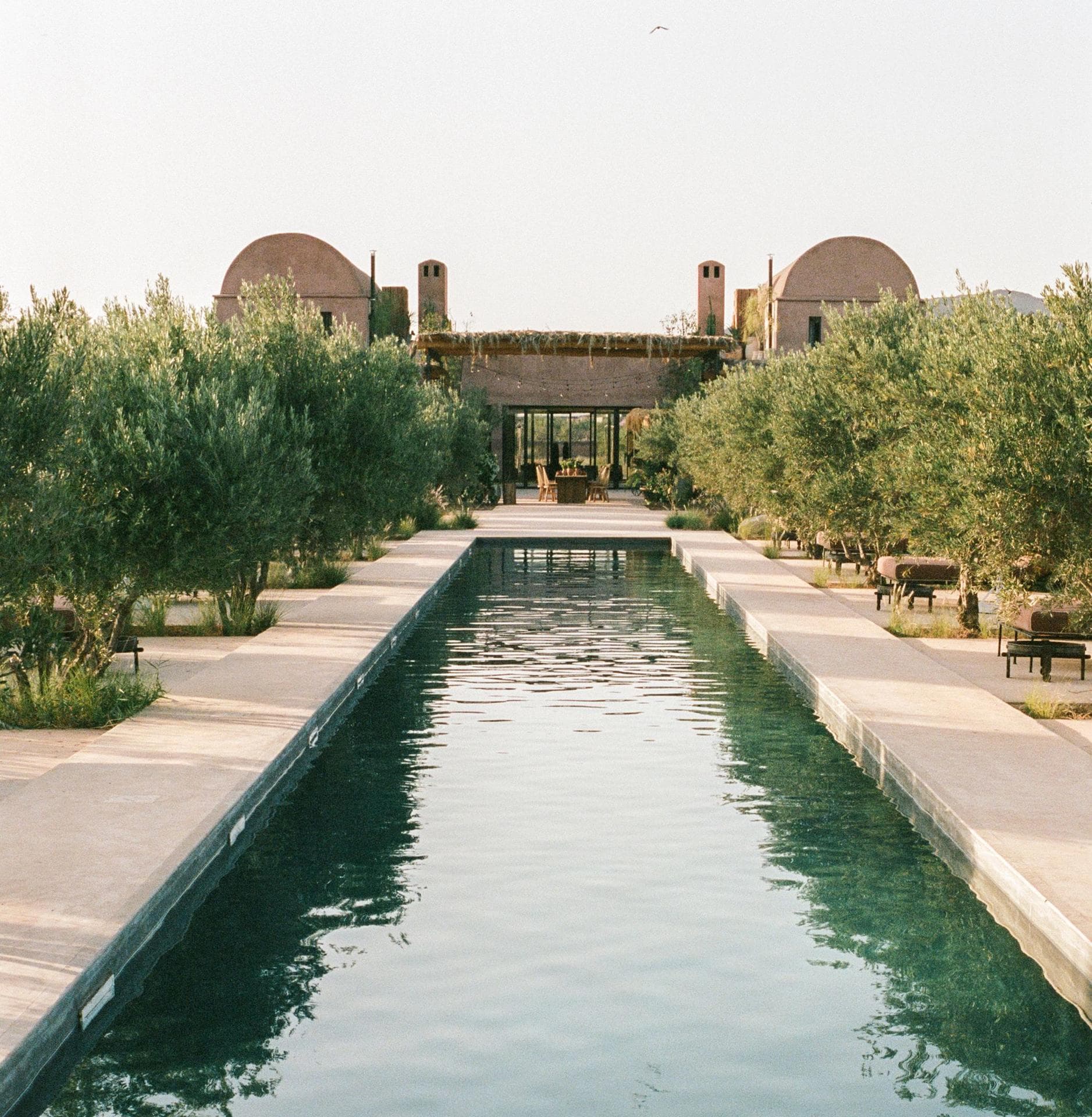
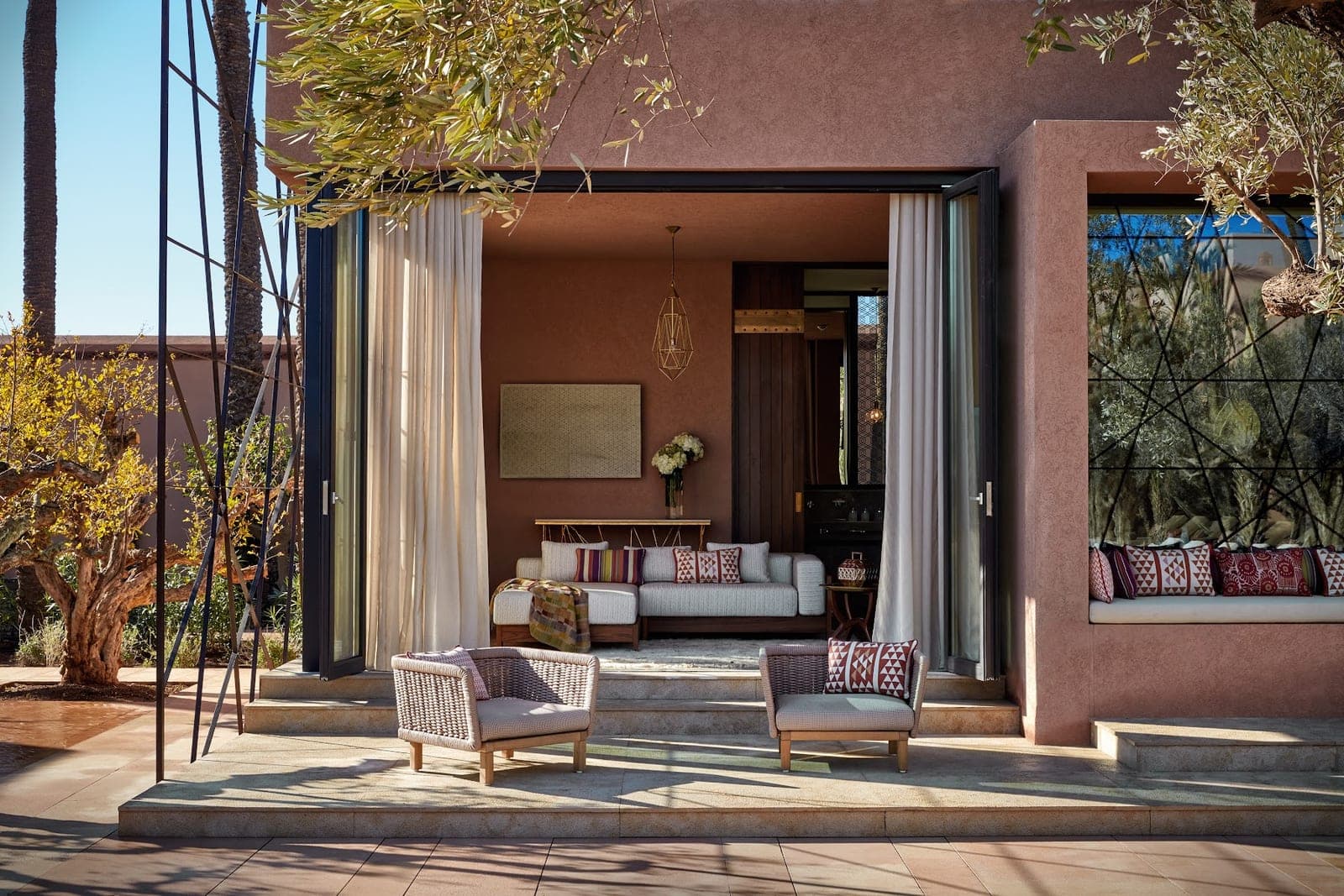
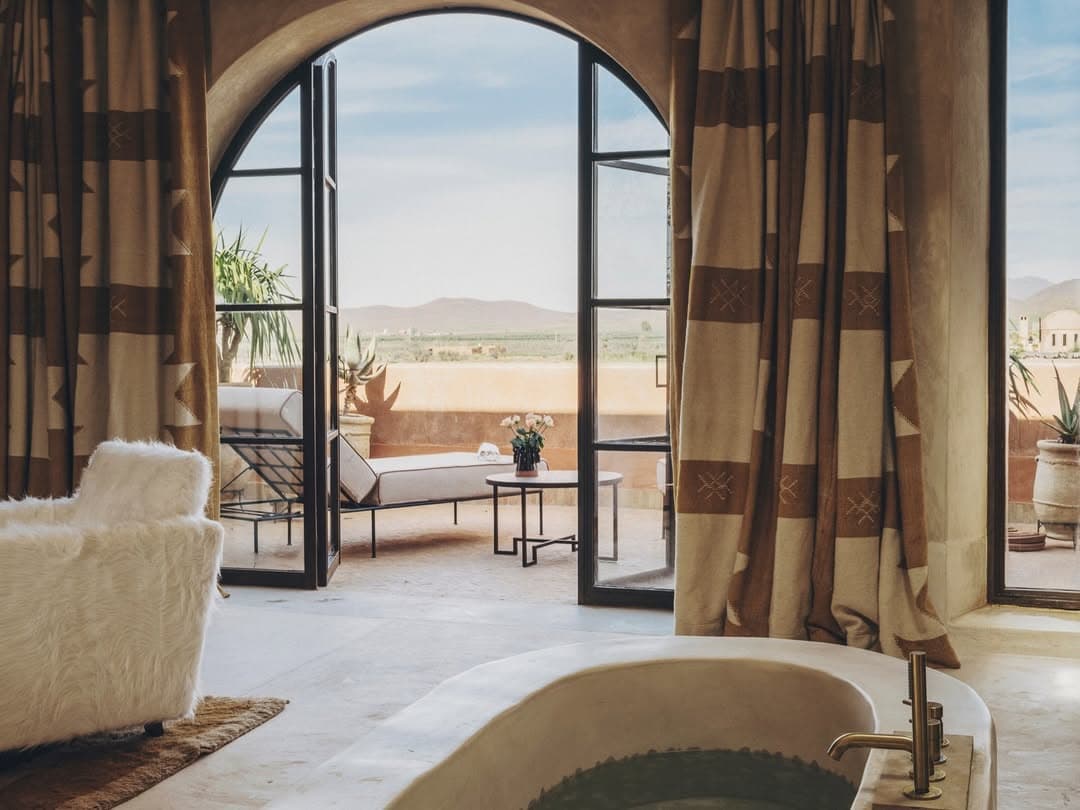
Rosena and Fred Charmoy, a Franco-Irish couple who built their Marrakech life through their events company Boutique Souk, spent years in search of the right property before settling on this site thirty minutes north of the medina on the Route de Fes. The name means butterfly in Arabic. The philosophy Rosena describes as dusty luxury is precise in what it refuses: service choreography, aspirational detachment from place, the kind of hotel experience that could be anywhere. The farmhouse is, explicitly, somewhere. Four hundred and fifty mature olive trees shade a Mediterranean garden designed by landscape architect Marius Boulesteix, who shaped the grounds to follow the landscape's existing logic rather than impose upon it. A 50-metre swimming pool runs along the estate's spine, lined with olives and pointed toward Atlas Mountain views. The architecture blurs the boundary between inside and outside consistently, with rooms positioned across the property so that each has a distinct relationship with the garden rather than a uniform relationship with a corridor. The Mountain Suite runs to 86 square metres with a central sunken bathtub and hammam-style shower arranged for Atlas views. The Private Garden Suite (85 square metres) opens through floor-to-ceiling patio doors directly into a private olive garden. The Private Cottage has tatawi wood ceilings and an ensuite bathroom lined entirely in red zellige tiles. The Leel and Yoom suites open onto rooftop terraces with mountain views in two directions. Each room has its own spatial logic; none reads as a variation on the others. Art by Amine El Gotaibi and Laurence Leenaert from LRNCE occupies the walls; Beni Rugs supply the carpets; ceramics from LRNCE and hand-woven textiles from neighboring artisans give the interiors their material texture. Executive Chef Aniss Meski runs a farm-to-table program from the estate's agricultural gardens, with communal dining at a large shaded table as the default format. The guest that Rosena describes tends to be younger and is looking for authenticity, nature, and a version of luxury that costs nothing in atmosphere while spending everything on quality. The farmhouse makes that version coherent and livable.
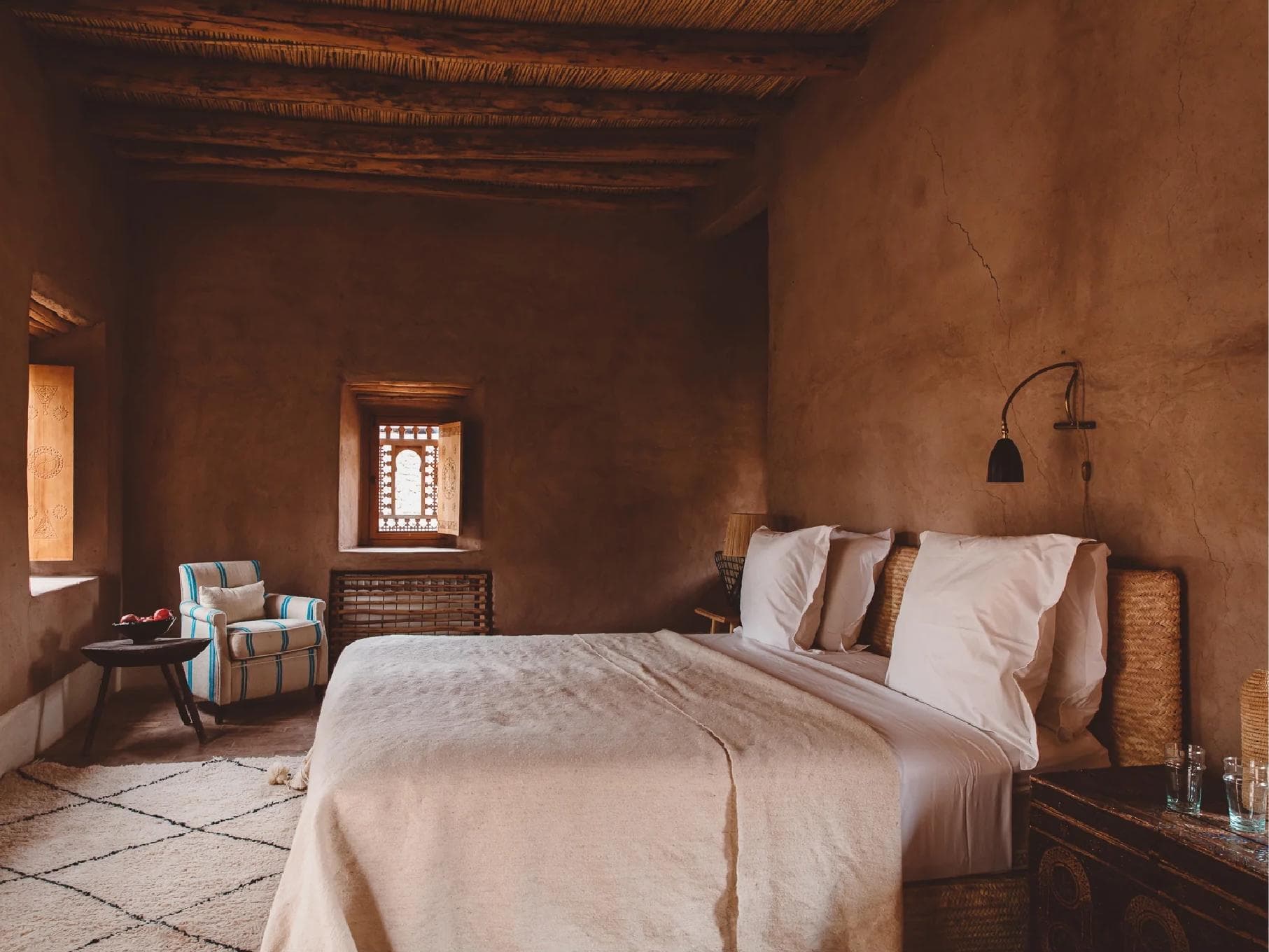
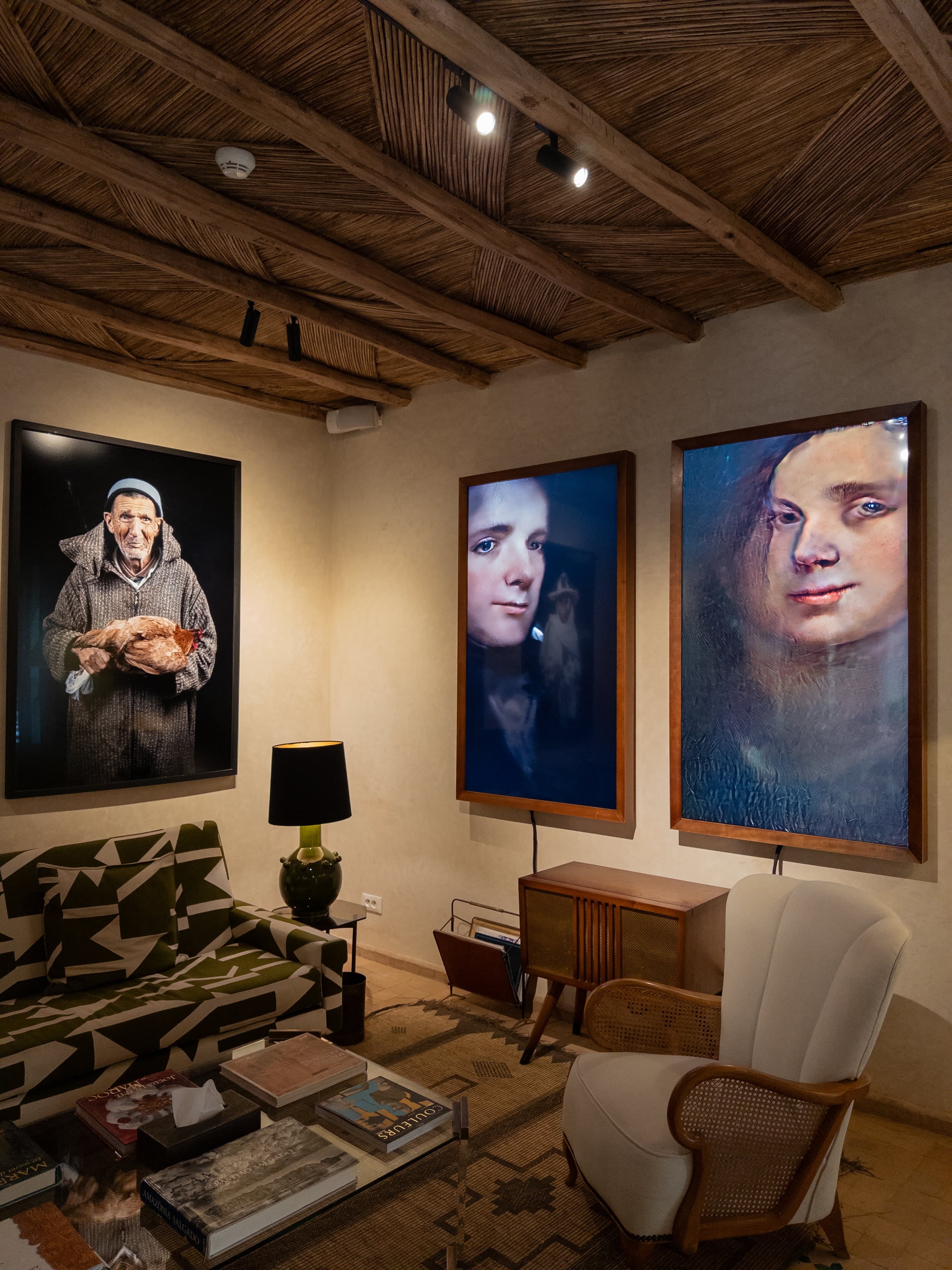
Romain Michel Meniere, a French-Swiss interior designer who moved to Morocco in 2002, built Berber Lodge on a former olive garden in the hamlet of Douar Oumnes, fifteen kilometres from the medina. The collaborators were Karl Fournier and Olivier Marty of Studio KO and landscape designer Arnaud Casaus. The founding premise was stated directly: the lodge was an act of learning, of understanding Berber culture, craft, and architectural method by building within it rather than interpreting it from outside. The construction method is the argument made in material form. Walls were built from adobe bricks made from earth excavated on-site during building; ceilings were framed in eucalyptus, Atlas cedar, and wild bamboo; terra-cotta tiles were fired in neighboring villages to specifications drawn from local tradition. Every old olive tree on the site was preserved and incorporated into the garden design. The building does not impose itself on the landscape. It arrives from it, which is an unusual and difficult thing for a building to achieve, and Berber Lodge achieves it. Nine rooms and the gathering spaces are furnished in a conversation between local craftsmanship and 20th-century design that Meniere navigates with a collector's confidence. Rattan pieces, antique bride's chests, pottery, and hand-woven textiles from the surrounding region share the rooms with resin lamps by Achille Castiglioni, 1960s leather and mahogany armchairs, marble sinks, and brass tables in the manner of Jean Michel Frank. These references are not reconciled so much as placed with sufficient care that the viewer does the reconciling naturally. The combination works because neither register is allowed to dominate. A 20-metre by 7-metre pool sits in the olive grove. An organic vegetable garden feeds the kitchen. The quality most consistently reported by guests is the sense of arriving somewhere that has been here longer than it has been a hotel, a sense that the Berber culture Meniere set out to understand has been absorbed into the physical fabric of the lodge rather than applied to its surface. For guests who want to understand something about the architecture and craft of the pre-Atlas region rather than simply use the landscape as backdrop, Berber Lodge offers that understanding built into the walls.
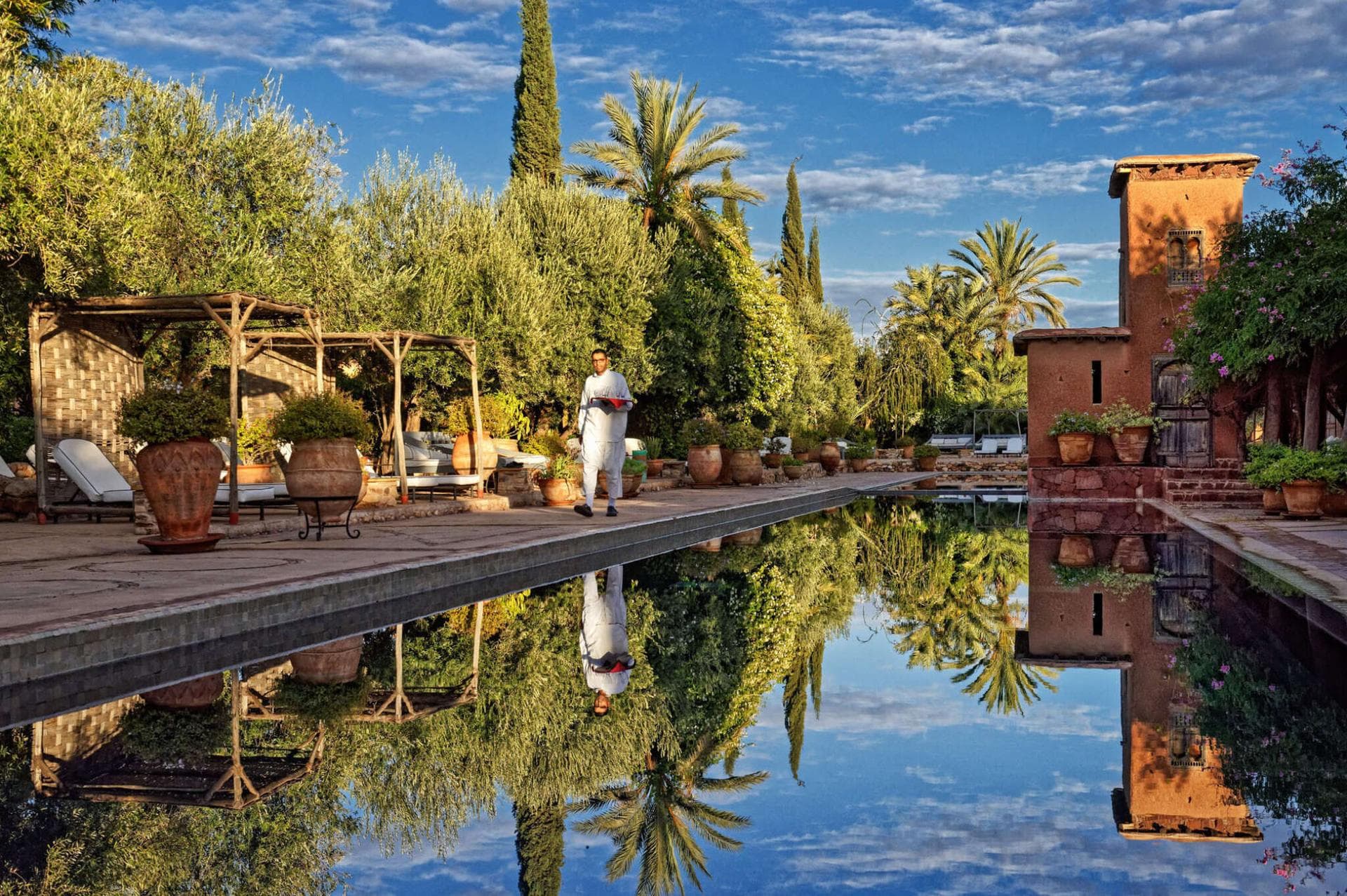
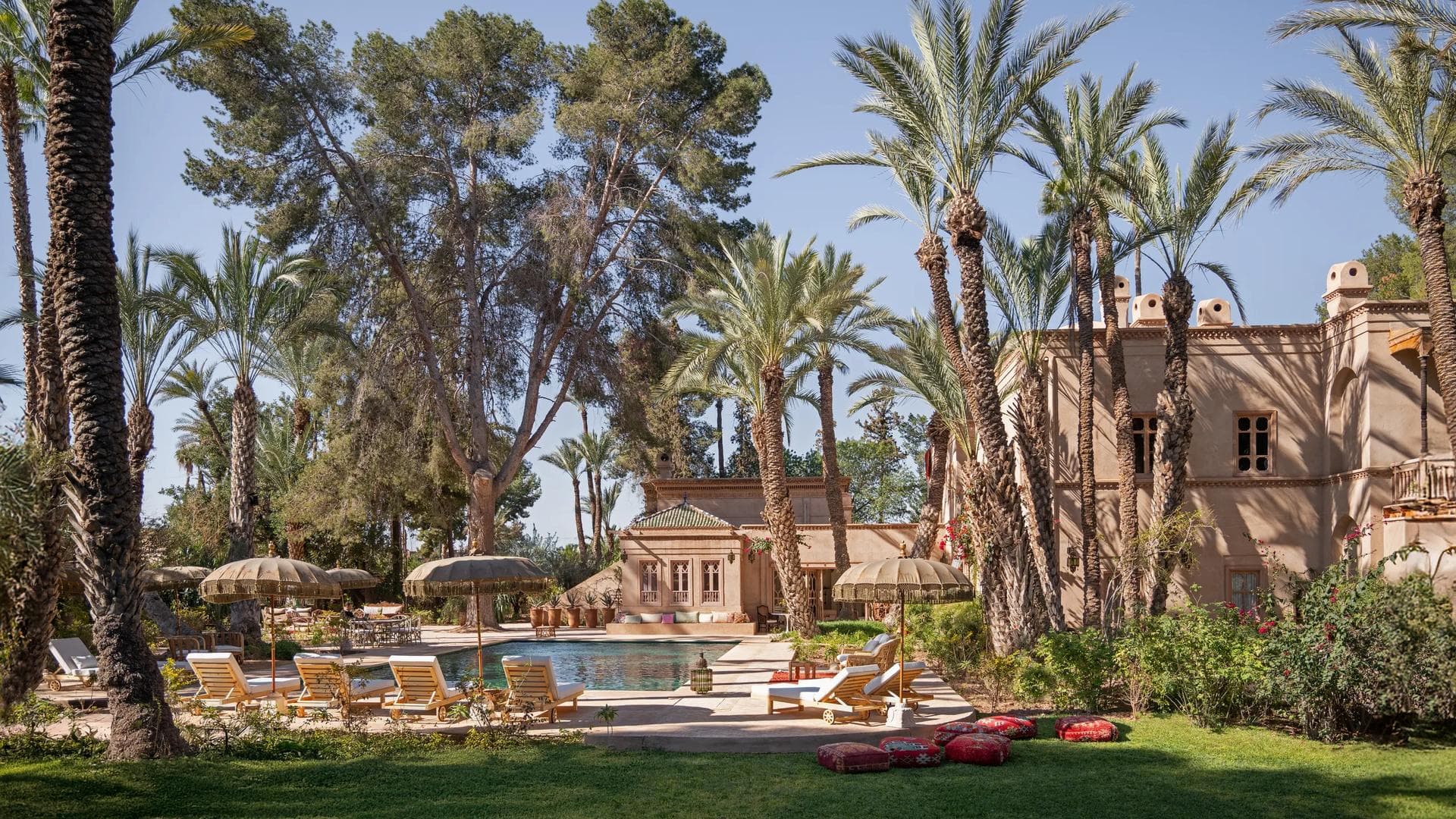
Beldi sits ten minutes south of the medina on fourteen hectares that divide into two distinct garden zones: Beldi Oliviers and Beldi Orangers. The grounds were the founding argument for the property before the buildings existed, and the design honors that sequence. Eighty-two rooms and suites are distributed across the land in the configuration of a Moroccan village, with narrow alleyways, shaded courtyards, and small riads sitting within the planting rather than commanding it. Ancient olive trees, rose gardens, and Atlas Mountain views give the grounds their scale and their mood. The design language moves between Moroccan tradition and French sensibility without forcing a synthesis. The riads and courtyards carry the proportions and materials of the medina, tadelakt, zellige, carved wood, but they breathe in a way medina structures cannot. The result is a domestic culture that feels familiar in its Moroccan vocabulary and released in its spatial logic, which is the closest description of what the combination of countryside and Moroccan craft can produce when the balance is held well. Three heated pools, a spa, a clay tennis court, a padel court, and a home cinema extend the reasons to stay without altering the property's essential hierarchy, which is garden first and amenities second. Two restaurants with Atlas Mountain views operate alongside an artisan showroom, making Beldi function as something between a hotel and a cultural institution. Rose water, argan oil, and locally produced craft products are as present in the daily rhythm of the property as the poolside service. The garden economy, a term for the way Beldi distributes the value of the place across its planted grounds, is what distinguishes this from a conventional luxury hotel. The property also operates as an events venue, and the scale of the grounds allows it to hold weddings and celebrations without that function compromising its identity as a place of retreat. When the event guests leave, the olive trees remain. For guests who want the city within reach and the city's rhythm at a distance, Beldi's ten-minute position is the decisive detail: close enough to reach the medina in the morning, far enough to forget it by evening.
You may also like…