Hotels Where Art Lives: Six Marrakech Stays Shaped by Creative Vision
Timence Guide Editors · 9 April 2026
A curated selection of design hotels in Marrakech where the collection, the space, and the story are inseparable.
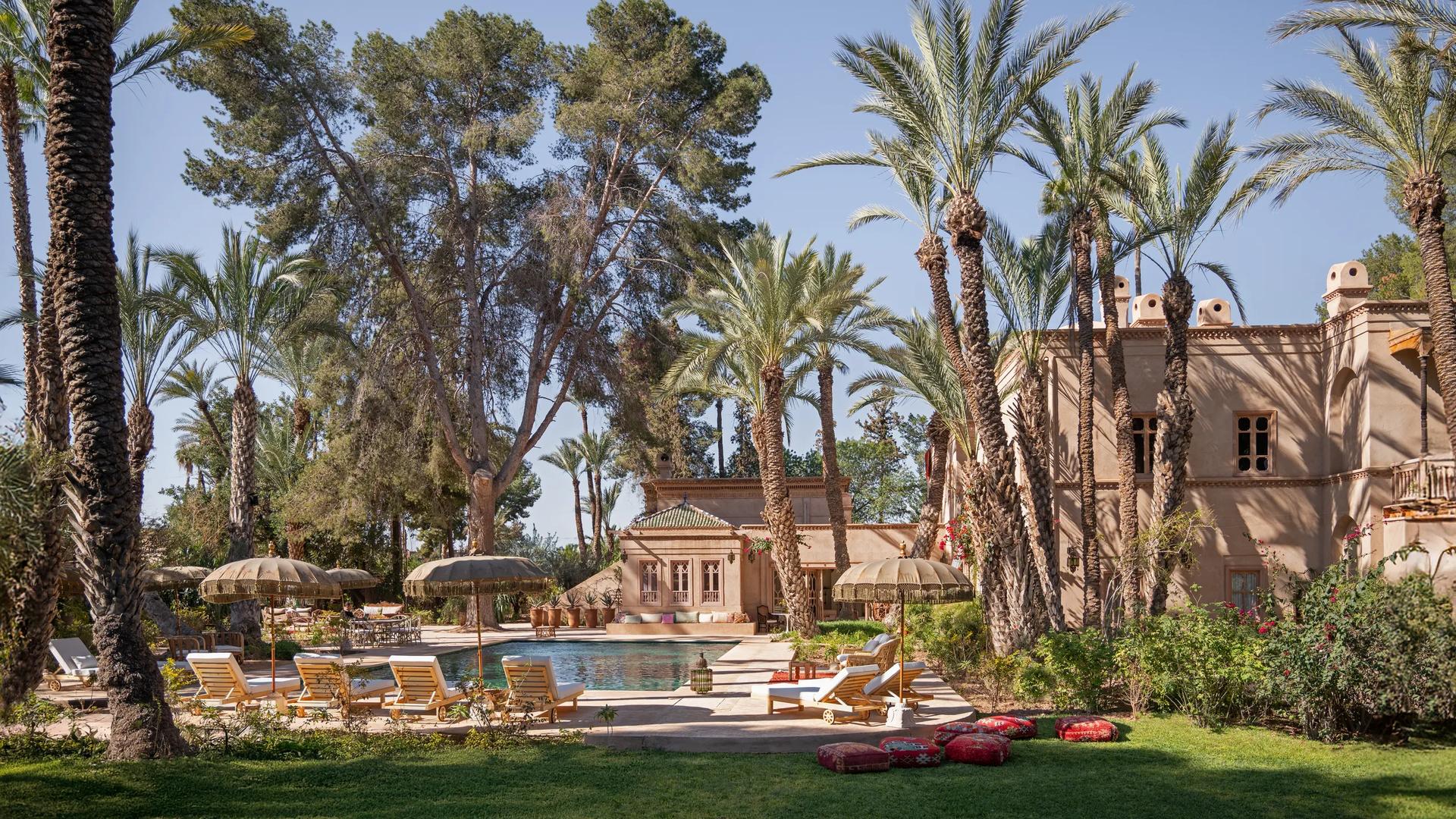
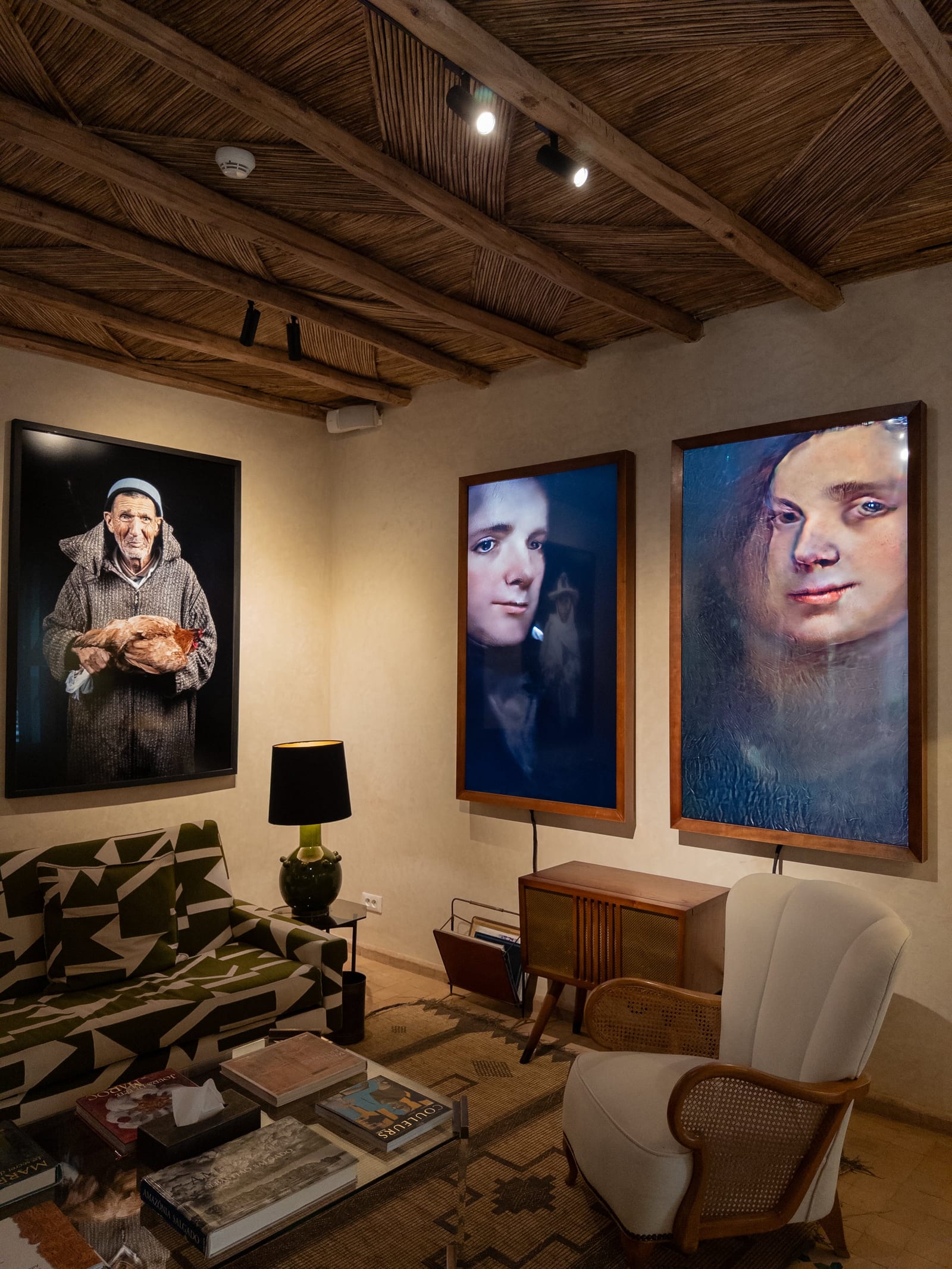
Opened in April 2025, Jnane Rumi is one of the few hotels in Marrakech where the art program was conceived alongside the architecture rather than installed afterward. The property sits in the Palmeraie, occupying one of the oldest houses in the grove, originally designed by Charles Boccara, the Tunisian architect best known for the Marrakech Royal Theatre. Its restoration was a seven-year dialogue involving Boccara protege Nicolas Bode, Belgian creative Jacques van Nieuwerburgh, Moroccan-Dutch designer Mina Abouzahra, and Dutch owner Gert-Jan van den Bergh. The result is an eleven-suite house-hotel that operates as a cultural institution as much as a place to sleep. Under the curatorial direction of Samy Snoussi, the collection rotates between contemporary North African artists including Mous Lamrabat, M'barek Bouhchichi, and Amina Rezki, alongside European voices such as Roberto Ruspoli and Louis Barthelemy. The juxtaposition is never decorative: it is argued. Talks, art tours, and events are open to guests and the public alike, making Jnane Rumi genuinely porous in a way that distinguishes it from the more hermetic retreats of the Palmeraie. The house asks to be moved through slowly, room by room, at the pace of someone who is actually looking.
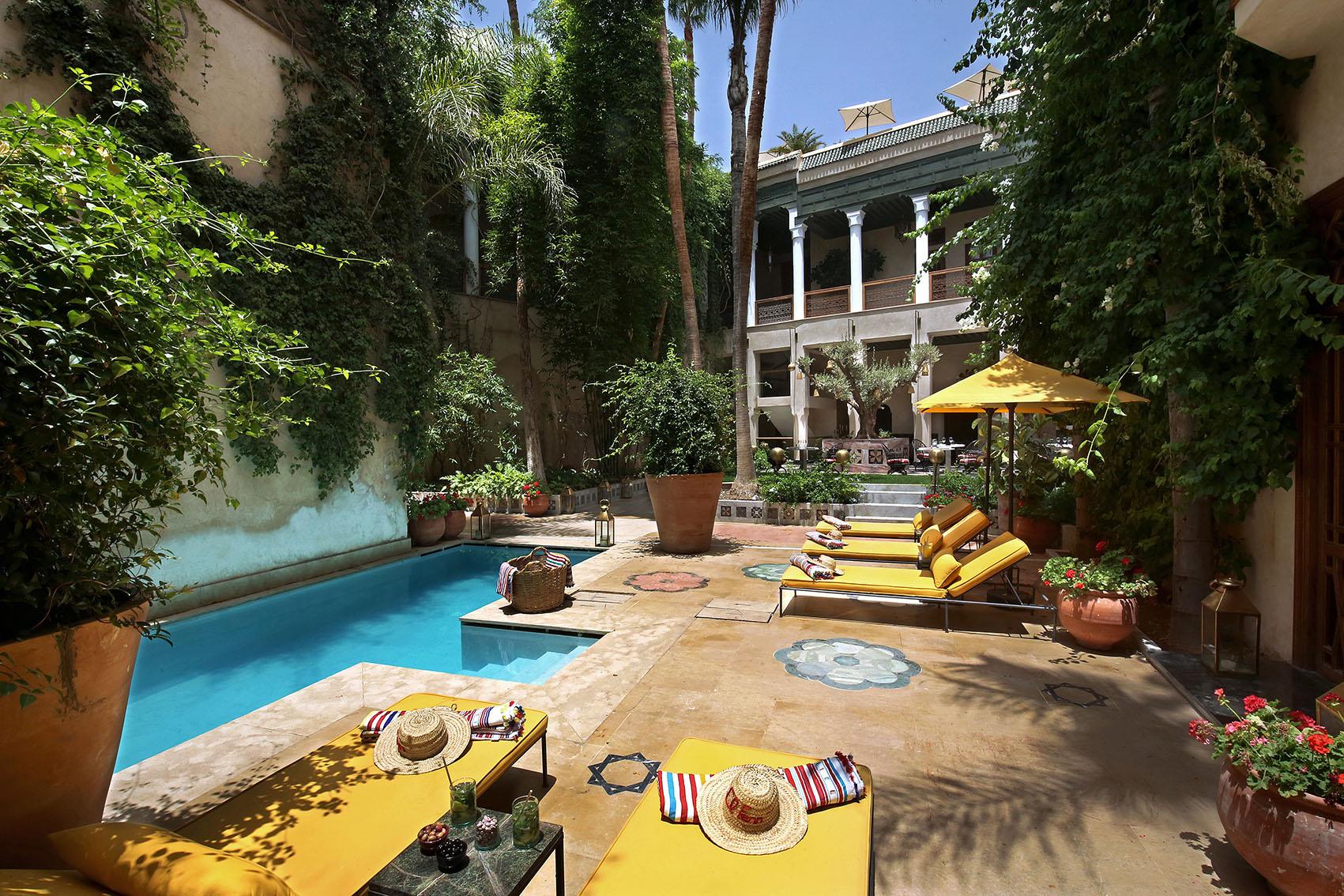
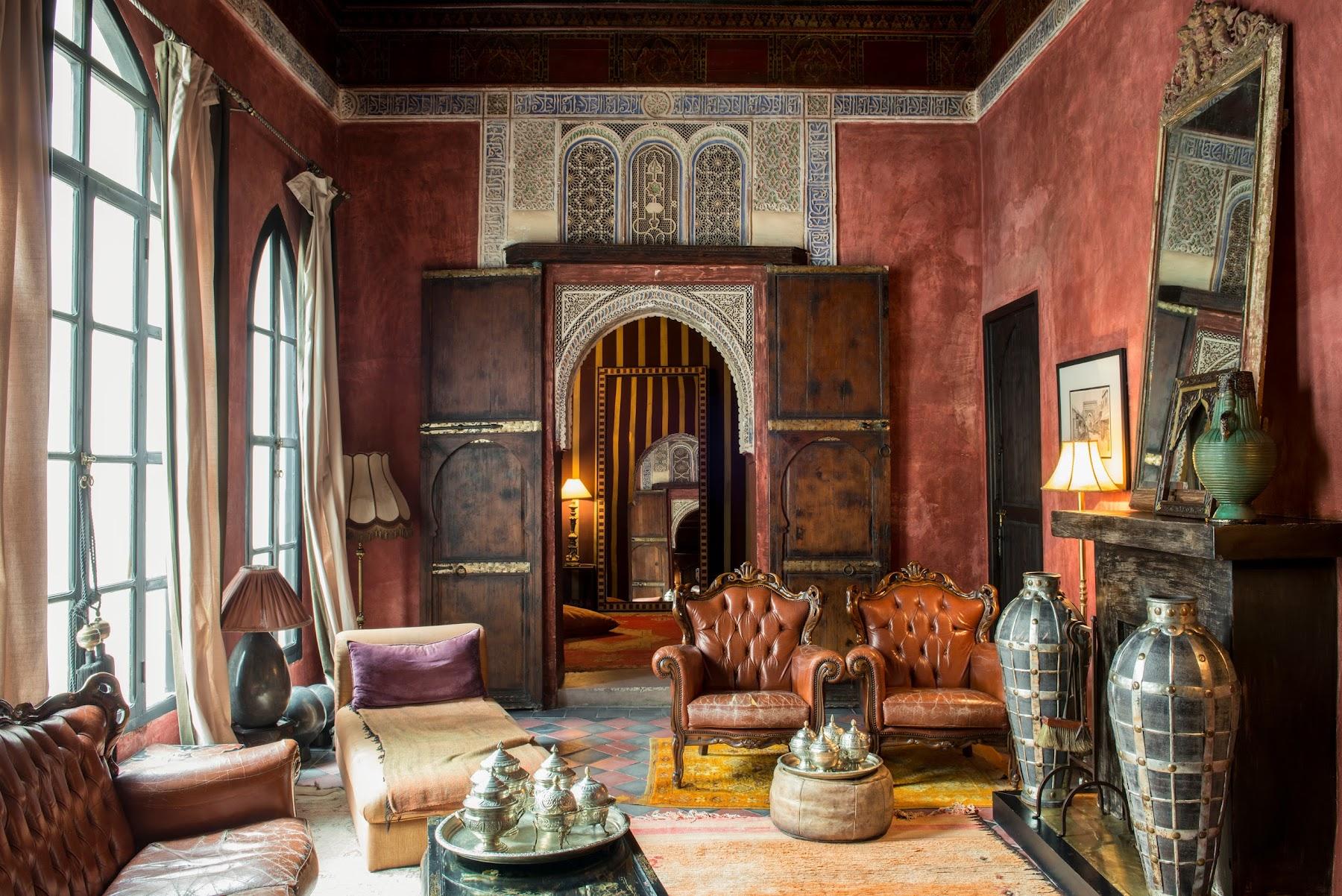
El Fenn means art in Arabic, and when Vanessa Branson and Howell James chose the name for the crumbling medina riad they bought in 2002, they were committing to a program before a single wall was hung. What they discovered was that the original riad came with four adjoining houses. The commitment grew accordingly. Since opening, the hotel has assembled a collection that includes works by Bridget Riley, Antony Gormley, Terry Frost, Leila Alaoui, Frances Upritchard, and Fiona Rae, distributed through bedrooms and common spaces in a way that resists the gallery logic of art kept at careful distance from the body. The design layers are equally considered: hand-carved plasterwork and cedar ceilings, zellige tiles in deep turquoise and terra-cotta, geometric stained glass, and Middle Atlas rugs sit alongside Bauhaus lamps and mid-century Italian chairs. Rolling exhibitions shift the reading of familiar spaces throughout the year. Between 2005 and 2016, El Fenn served as the institutional home of the Marrakech Biennale, and that history informs how the collection continues to be presented, not as lifestyle styling but as something that expects to be seen. The rooftop and the pool are as well known as the collection. They are not separate from the art so much as part of the same argument about how a place can be experienced.
When Cyrielle and Julien, two former Parisians who settled in Marrakech, restored this seven-room riad in the Bab Doukkala neighborhood, they built a residency program into its operating model from the beginning. Since 2015, the riad has hosted artists across disciplines: painters, illustrators, sculptors, musicians, dancers, tattoo artists. The application process is open throughout the year, with a single condition: the work must be in development, not yet finished. The riad is where the thinking happens. The design reflects the same logic. Nothing has been modernized for its own sake. The materials speak clearly and directly: hand-painted ceilings, tadelakt bathrooms, zellige shower surrounds, antiques gathered across years of careful searching. The interiors have the quality of a place where someone has lived and looked closely at things for a long time. The residency program has since extended into Rigotang, a contemporary art gallery founded by the owners in the Sidi Ghanem district, drawing the thread between the riad's private creative life and the city's broader art ecosystem. Staying here places a guest inside that conversation.
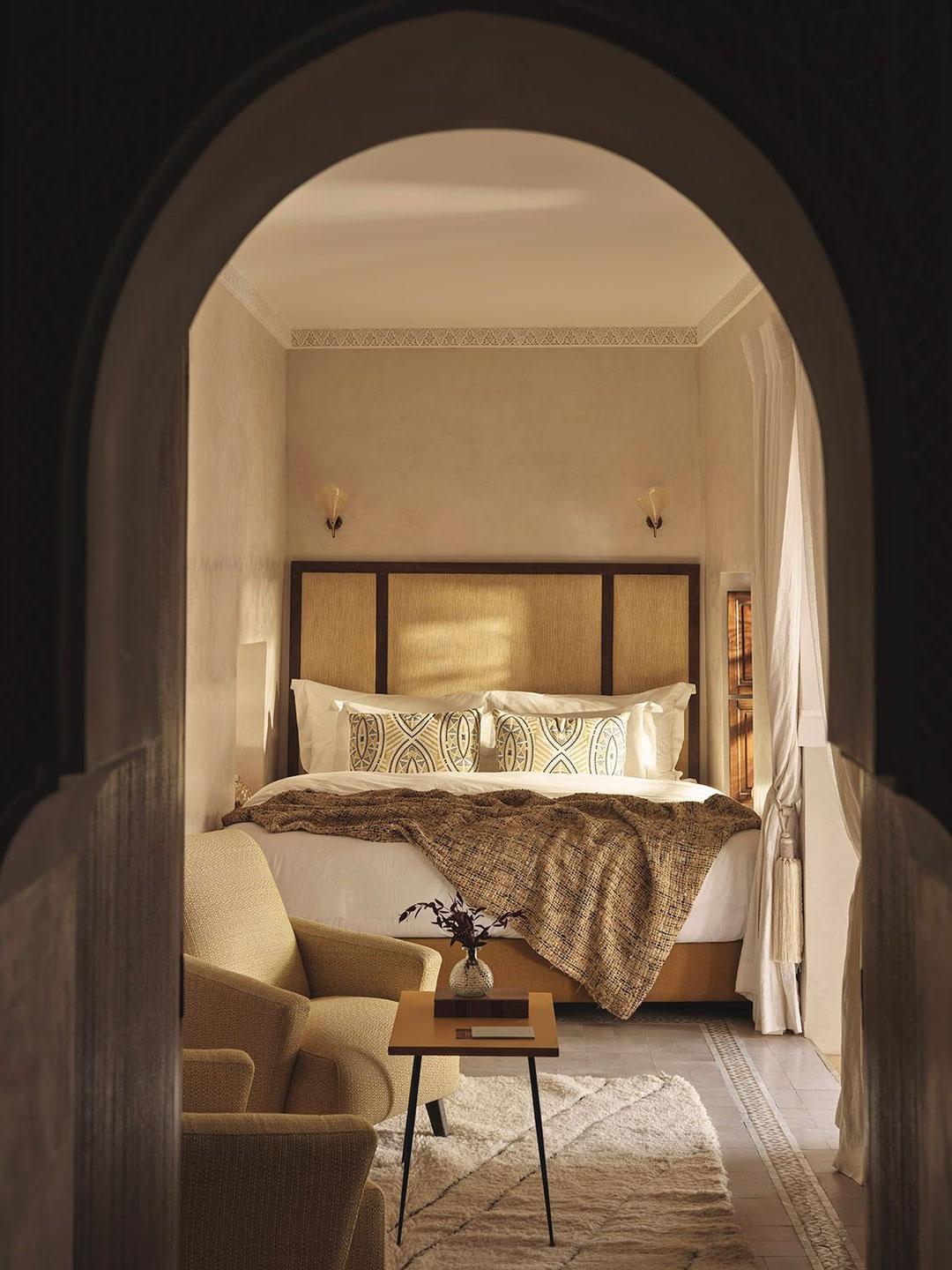
Izza is a tribute to Bill Willis, the American designer whose work in Marrakech during the 1960s and 70s gave interior color and architectural curve a new grammar. The hotel is built from seven merged riads in the north-western medina, a scale that matches the ambition of the collection it houses: over 300 framed works, with a combined value estimated at five million pounds, including one of the largest physical exhibitions of printed NFTs in the world. Architect Amine Kabbaj and London-based designer San Yetlee shaped the interiors around Willis's signature palette of deep blues, ochres, and emerald greens, with arches and curves drawn from the geometric vocabulary of Islamic architecture. The collection is equally layered: prints from Sebastiao Salgado's Amazonia NFT release at Sotheby's; ten works by AI artist Refik Anadol, whose work has been shown at MoMA and the Grammy Awards; screens of moving image by Ethiopian artist Yatreda; and pieces from canonical generative art series by Tyler Hobbs, Dmitri Cherniak, and Monica Rizzolli. Each room is named for a freedom seeker whose life intersected with Marrakech or with the spirit it has long represented: Grace Jones, Jack Kerouac, Cecil Beaton. The digital projections in the hallways shift as guests move through them. The building is never static.
46 Driba Laarida, Dar IZZA, 46 Sidi Ahmed Soussi, Marrakesh 40000, Morocco
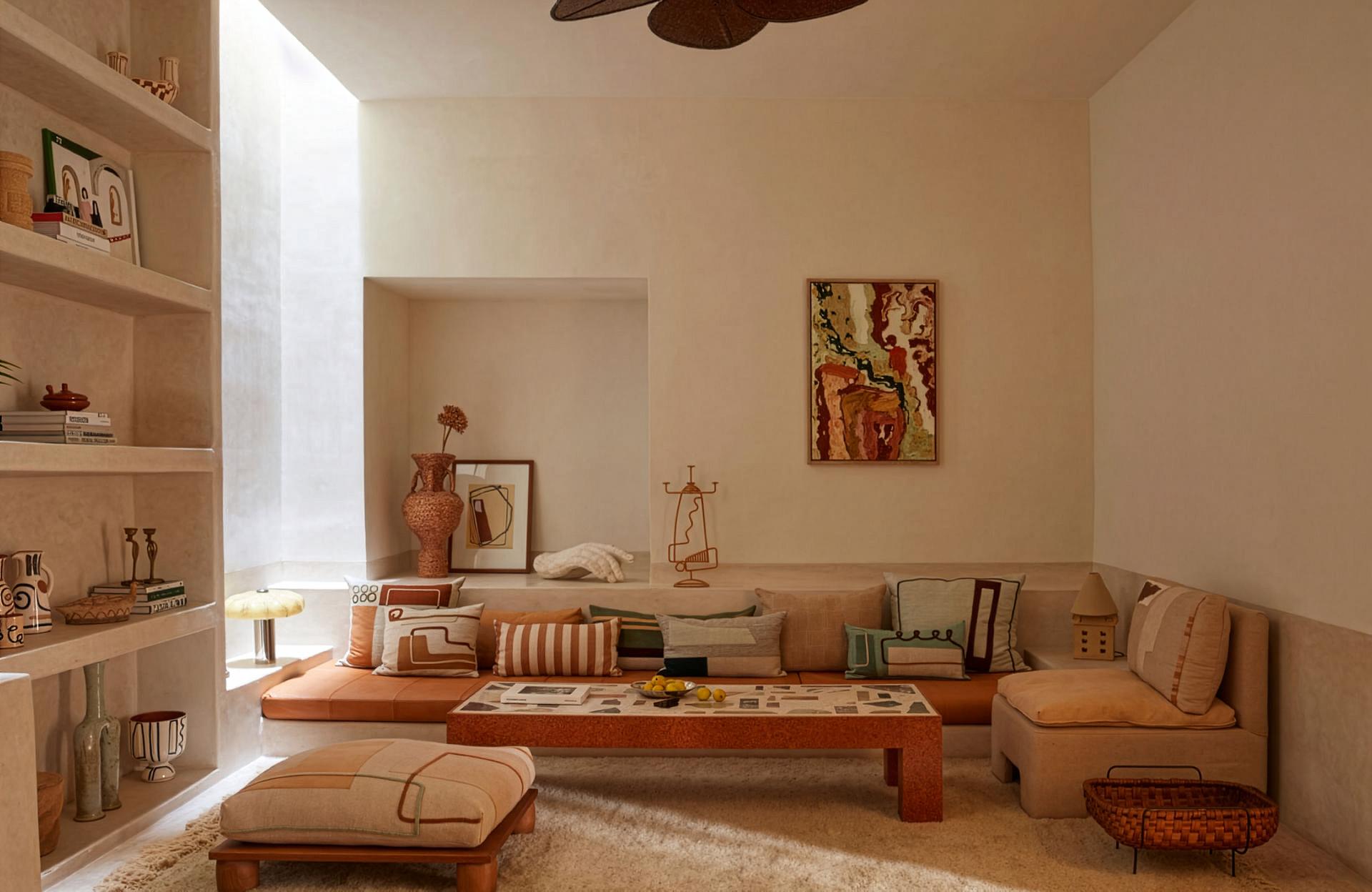
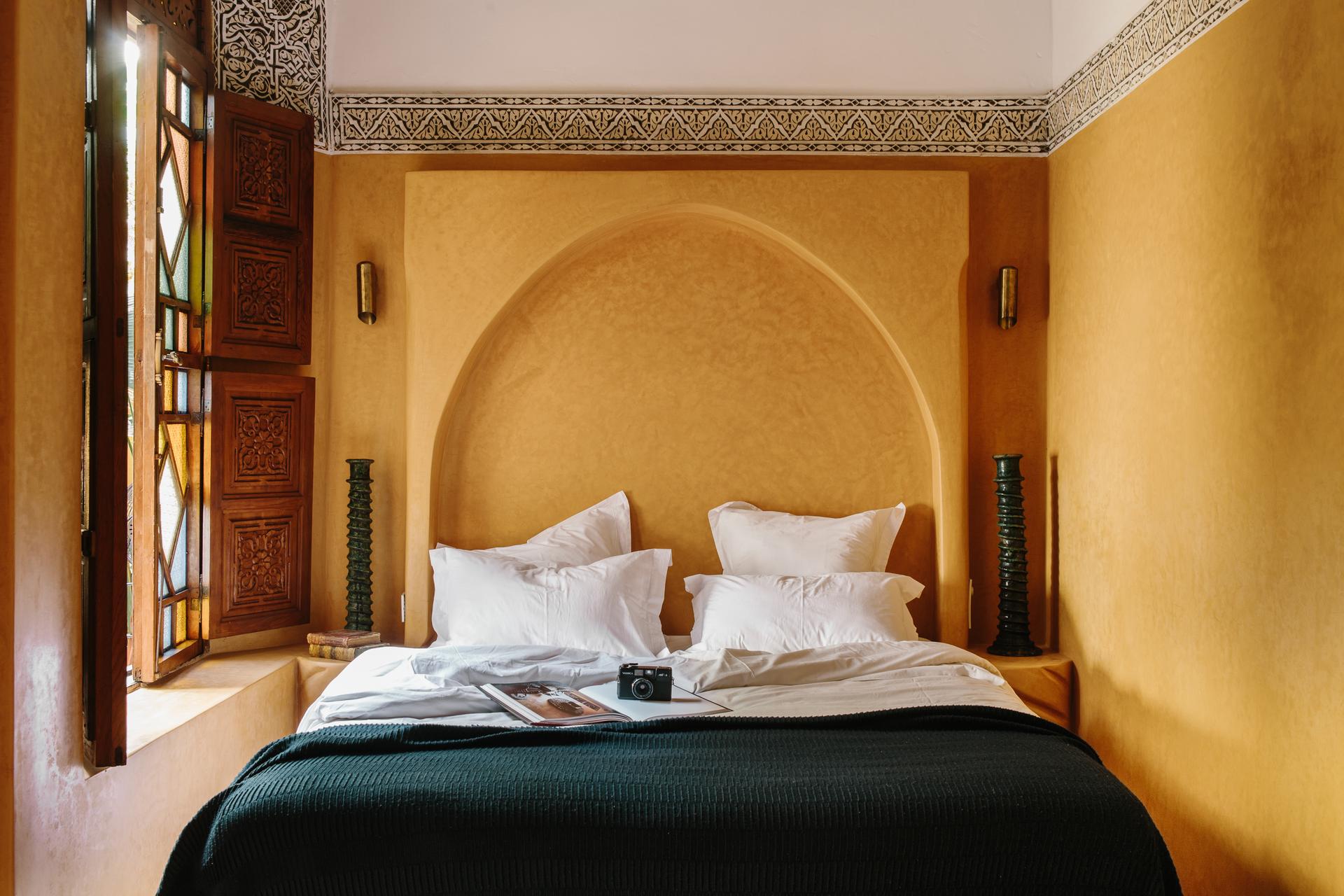
Laurence Leenaert, Belgian artist and co-founder of lifestyle brand LRNCE, and her husband Ayoub Boualam spent three years overseeing the restoration of a five-room riad in the Riad Zitoun Jdid neighborhood, close to Bahia Palace. The riad was originally attributed to Quentin Wilbaux, the Belgian architect and preservationist known for his rigorous approach to medina construction. Working with stained glass artisans in Meknes, potters in Safi, zellige craftsmen in Fes, and carpenters, metalworkers, and plasterers in Marrakech, Leenaert and Boualam oversaw every material decision in the building. The result is a hotel that reads as applied art in the fullest sense of the phrase. Each of the five rooms has its own identity: the Jacaranda suite's arched headboard is clad entirely in zellige tiles; the Cocoon room has a stained-glass window that casts the shower in color at certain hours of the morning; the Bird Nest room is anchored by a bulbous, sculptural fireplace; the Rosemary suite has a hand-carved cedar ceiling. Vintage finds collected over years and LRNCE custom pieces coexist without announcing the seam between old and new. A scented hammam, a roof terrace, and a courtyard pool complete the structure, each as considered as the rooms above.
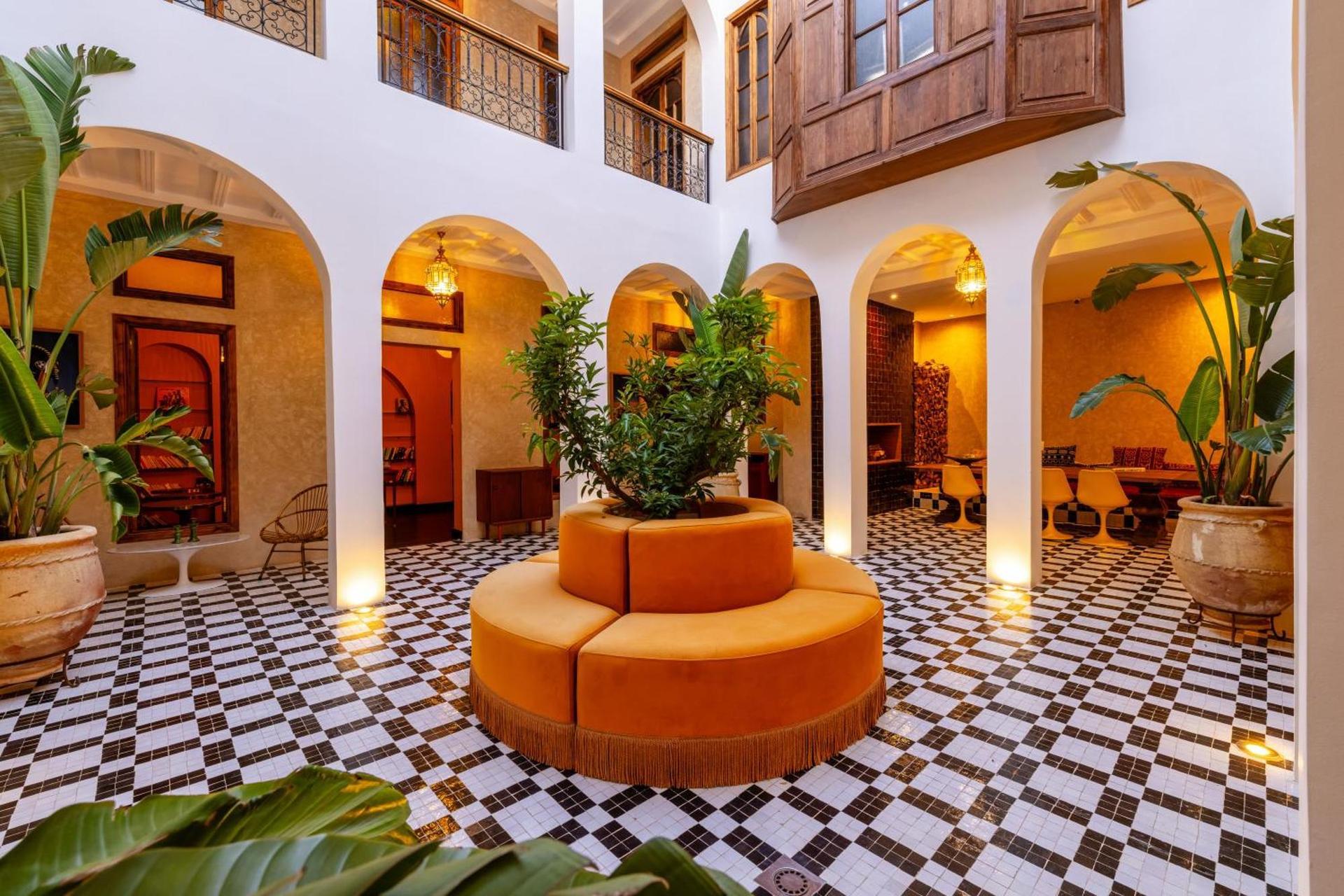
The Mellah is Marrakech's historic Jewish quarter, one of the oldest in Morocco, founded under the Saadian dynasty in 1558. It is a neighborhood of layered histories: Saadian, Alaouite, and twentieth-century lives pressed into the same derbs. French-Moroccan entrepreneur Simo Azzouz restored the hotel that now bears the quarter's name, making a deliberate choice to locate the property's identity within the neighborhood's own story rather than abstracting it into generic luxury. The art is contemporary Moroccan in orientation. Works by photographer Mous Lamrabat and artist Bouchra Boudoua anchor the rooms, each individually conceived with mid-century furniture, hand-cut zellige tiles, tadelakt walls, and brass lighting that changes the quality of the space depending on the time of day. The hotel maintains a well-stocked art and photography library, placing the collection in a readable context for guests who want to understand what they are looking at. The rooftop pool sits a short walk from Bahia Palace, offering a particular kind of vertical orientation: views across a district whose depth only reveals itself gradually, stay by stay.
You may also like…
 Map
MapBEST OF | STAY
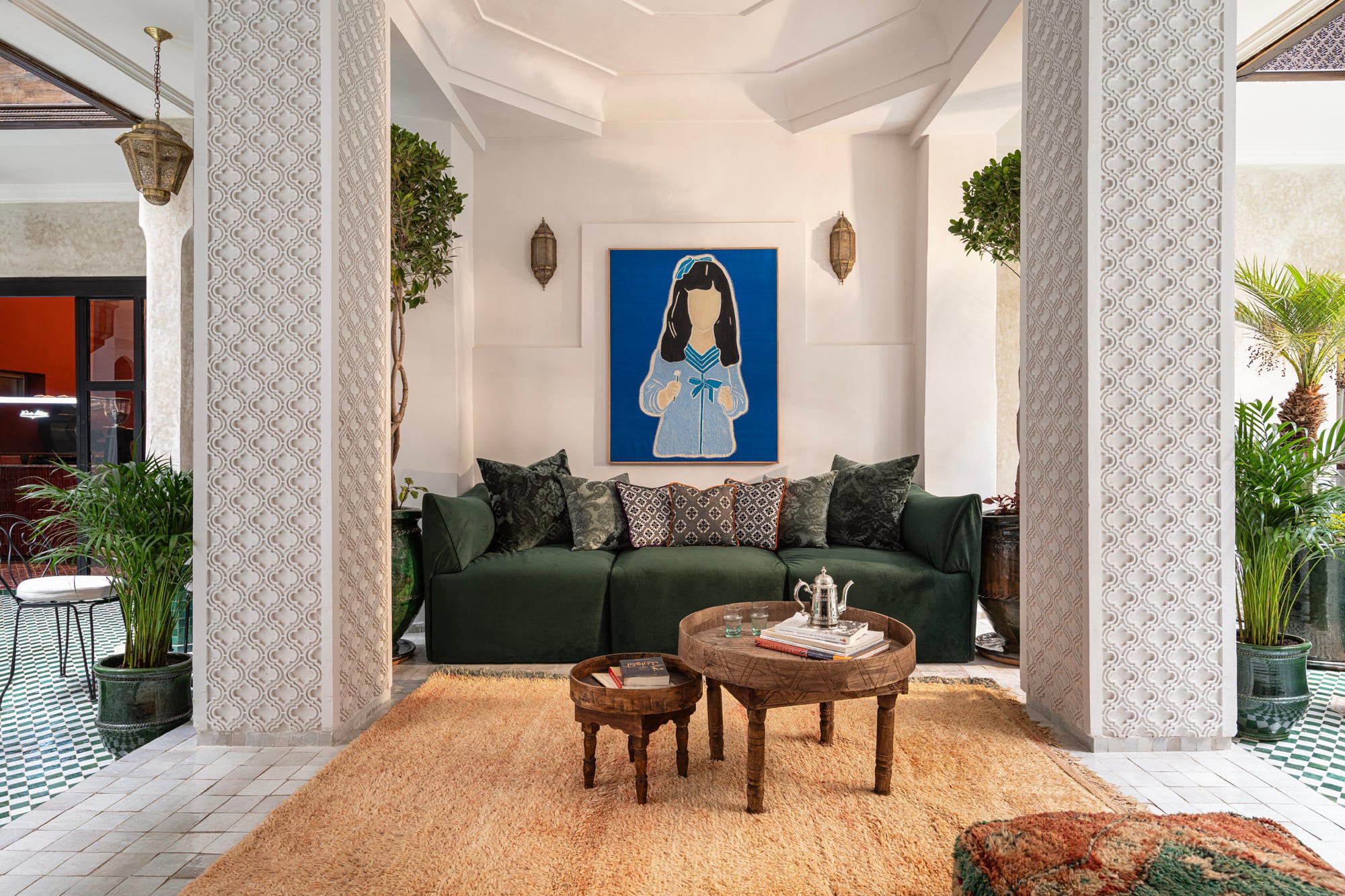
The Best Riads in Marrakech: 55 Addresses in the Medina
STAY
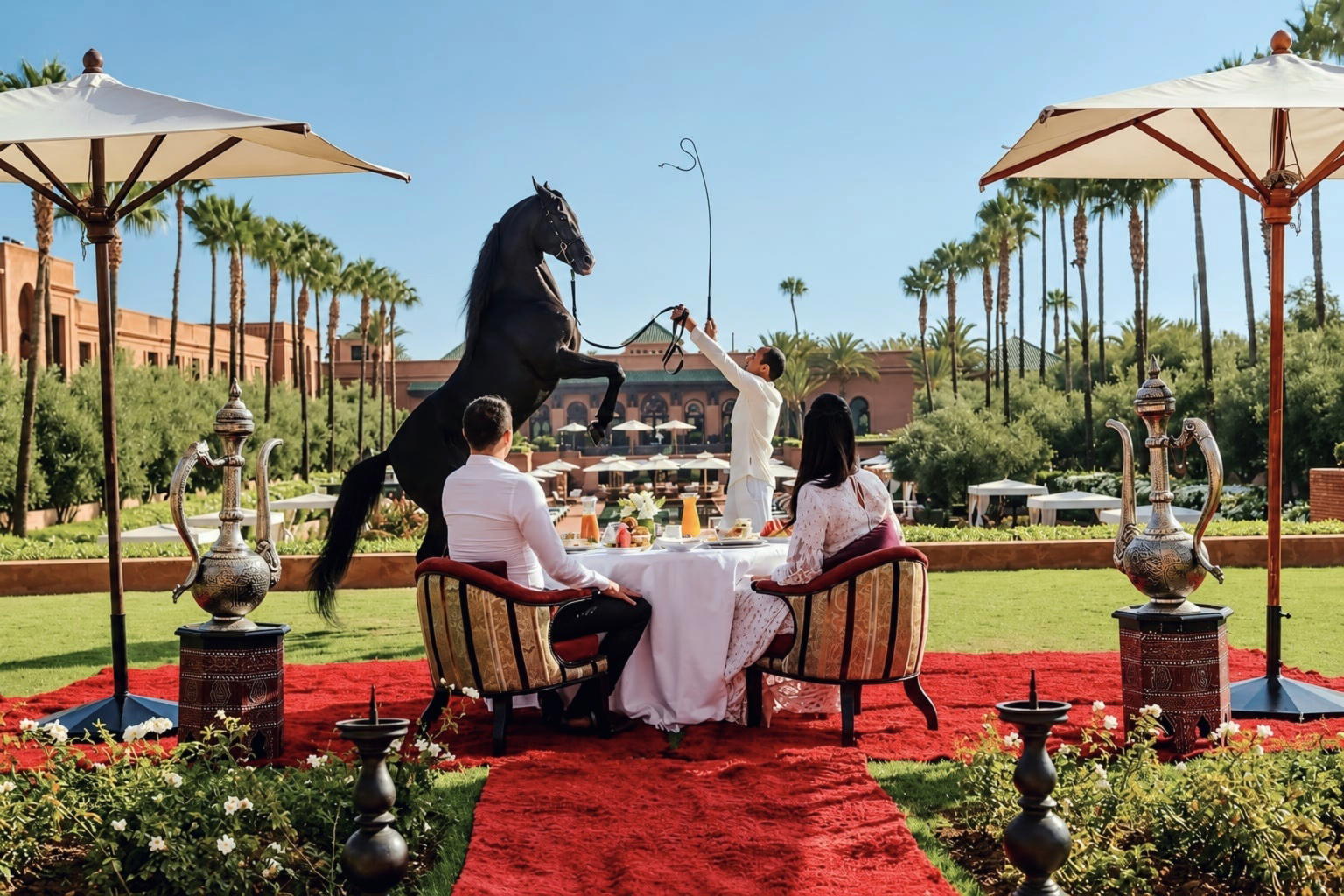
Built around horses, home to Marrakech’s longest pool and Africa’s only Chenot Spa: Selman Marrakech
STAY
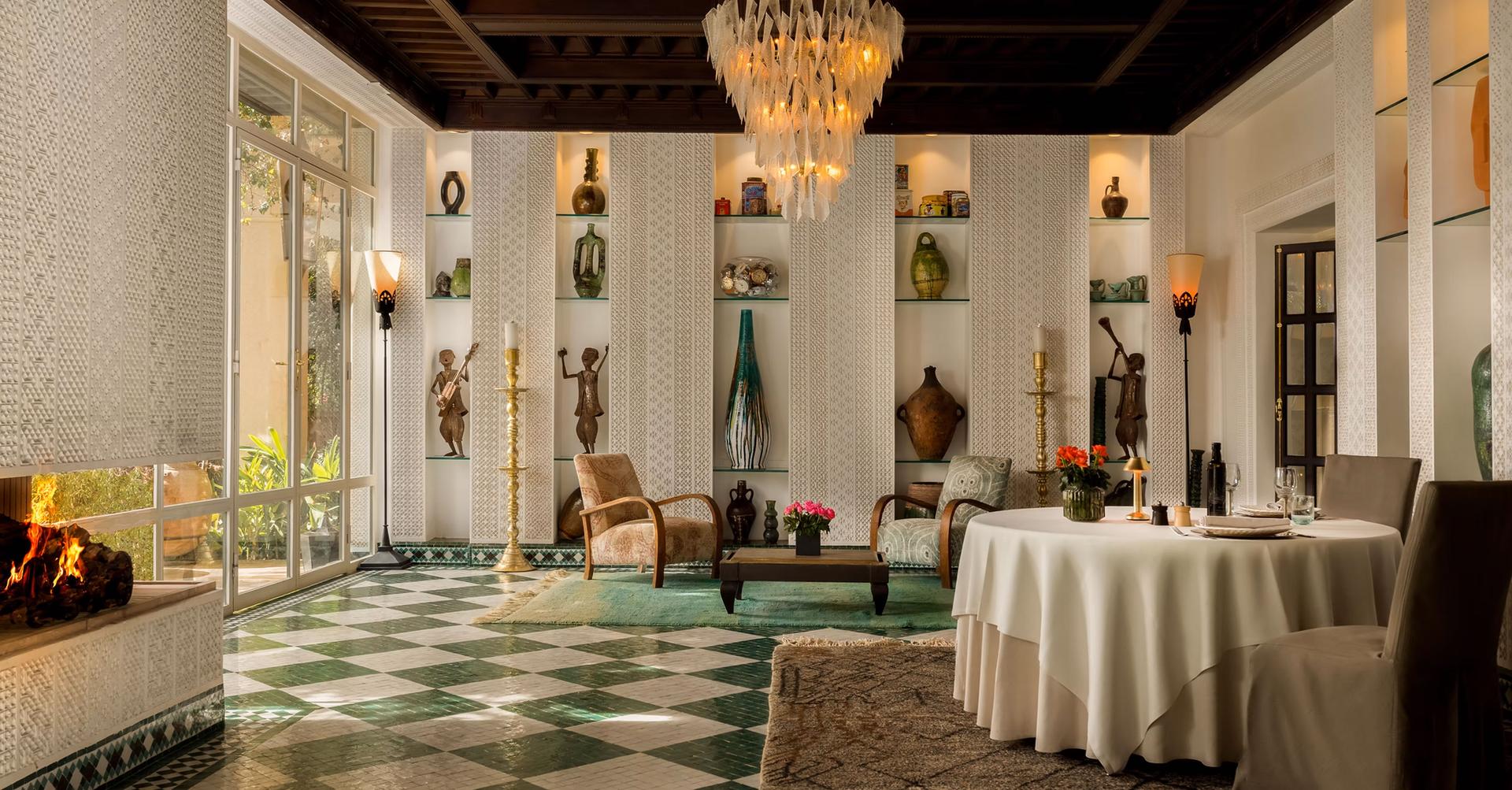
Where to Stay in Marrakech by Neighborhood: Which Quarter Suits Your Trip
STAY