Jnane Rumi Marrakech: A House Returns to the Palmeraie
A villa designed by Charles Boccara, inhabited by a generation of artists and intellectuals, and opened as an eleven-suite retreat in April 2025.
9 April 2026
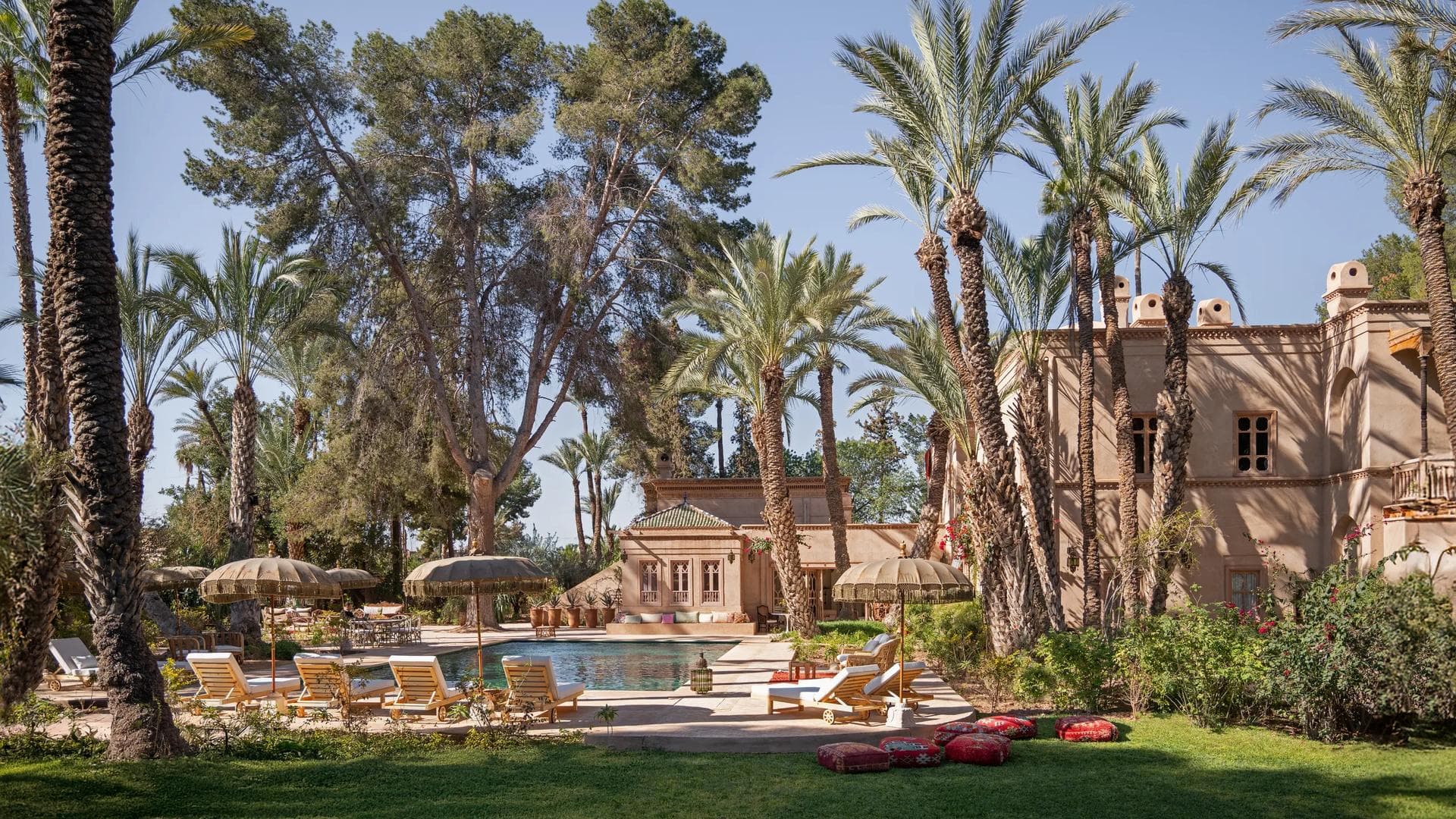
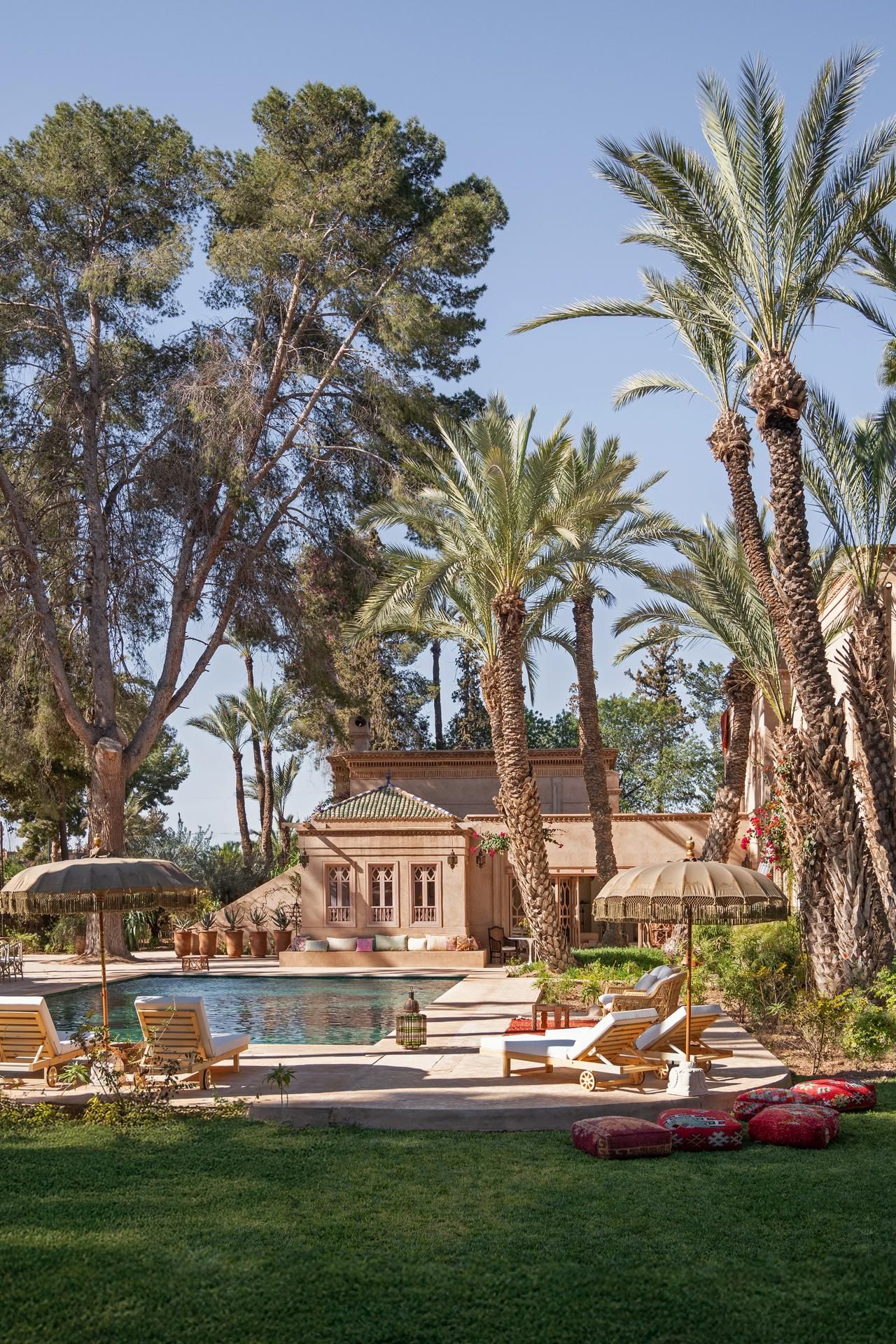
The drive into the Palmeraie follows a familiar rhythm: the city releasing its grip incrementally, traffic thinning, the geometry of the medina giving way to a looser, older landscape. At the end of a private lane in the Triangle d'Or, a gate opens onto something that takes a moment to calibrate. A century-old garden. Over 150 palms overhead. A house that sits in the landscape as if it has always been there and has simply been waiting for the right occasion.
That occasion arrived in April 2025, when Jnane Rumi opened as a house-hotel under the ownership of Dutch entrepreneur Gert-Jan van den Bergh. The house had been built by Charles Boccara, the Tunisian-born architect whose work across Marrakech, including the Theatre Royal, established a vocabulary of forms rooted in North African spatial tradition and entirely his own. Boccara lived in the house for years. After him it passed to Paul Pascon, one of Morocco's most respected sociologists, around whom artists and intellectuals gathered for decades. The house absorbed those conversations.
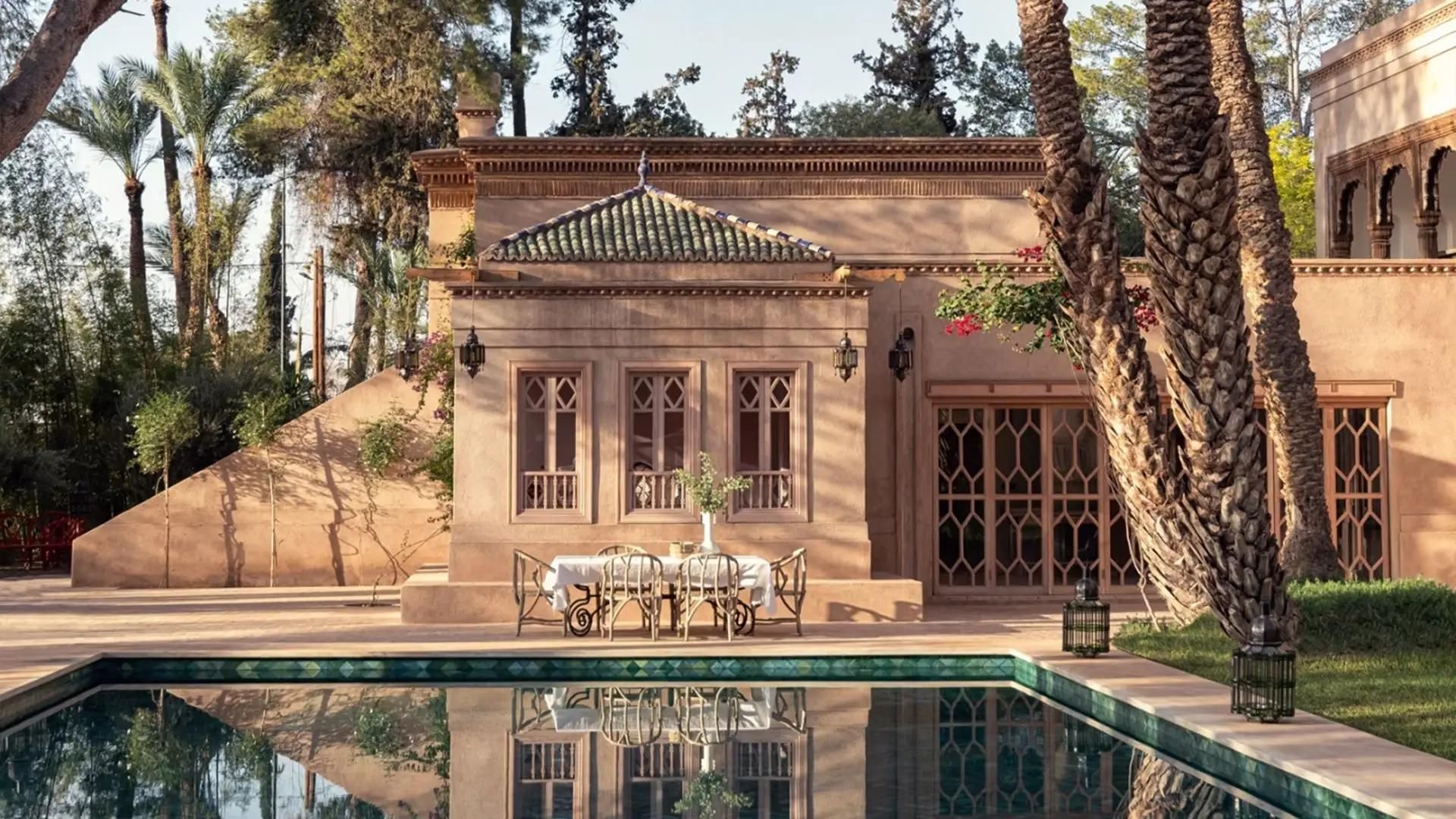
The renovation that transformed it into what it is today engaged a team of four over seven years: Nicolas Bode, an architect trained under Boccara; Belgian creative director Jacques van Nieuwerburgh; Moroccan-Dutch designer Mina Abouzahra; and van den Bergh himself. Their approach was preservation and addition rather than transformation. Boccara's original proportions, his arches and light-handling and material logic, were retained. What arrived alongside was a contemporary art collection, a layer of textiles and ceramics, and a curation of the spaces toward hospitality without the erasure that hospitality so often requires.
The Architecture
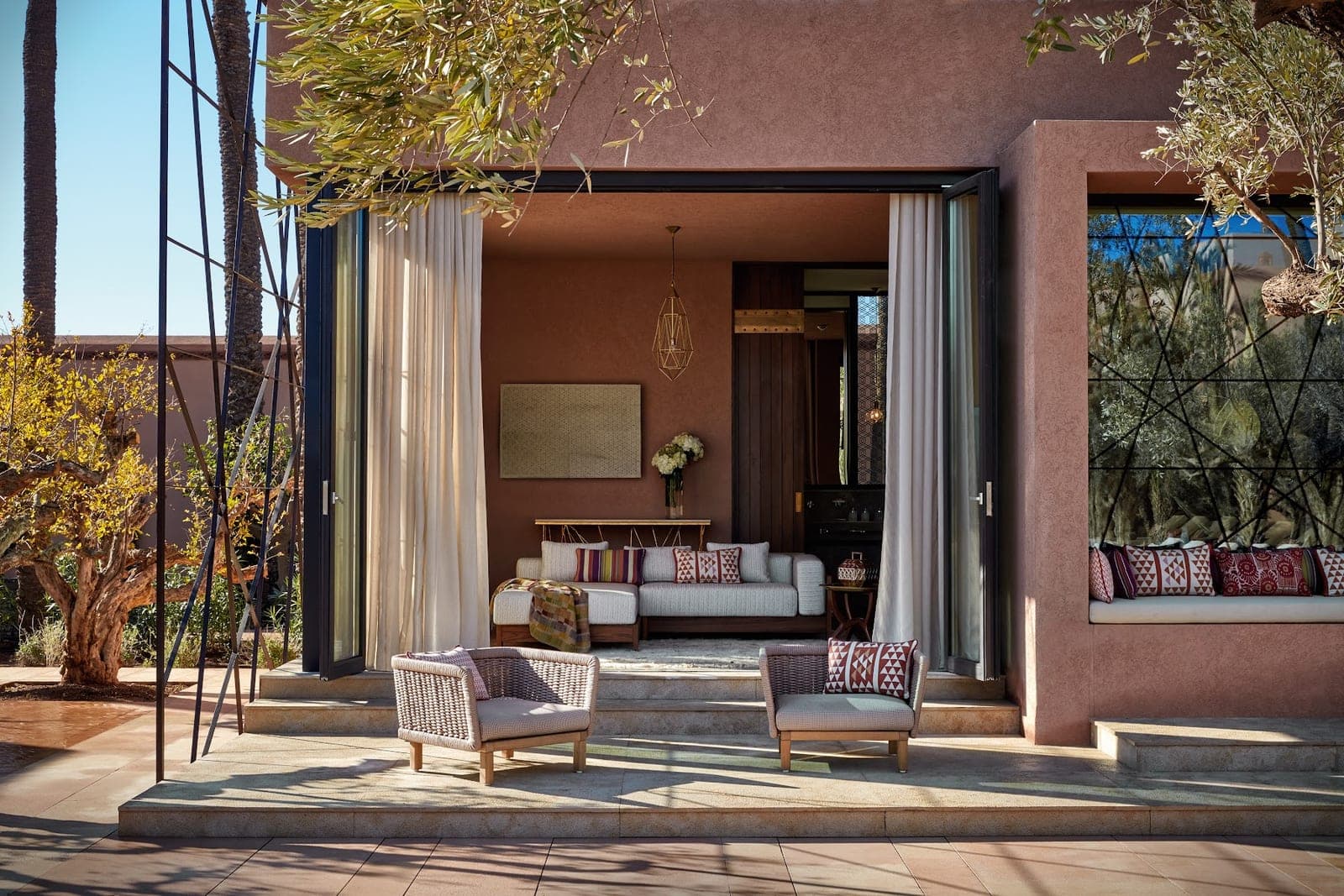
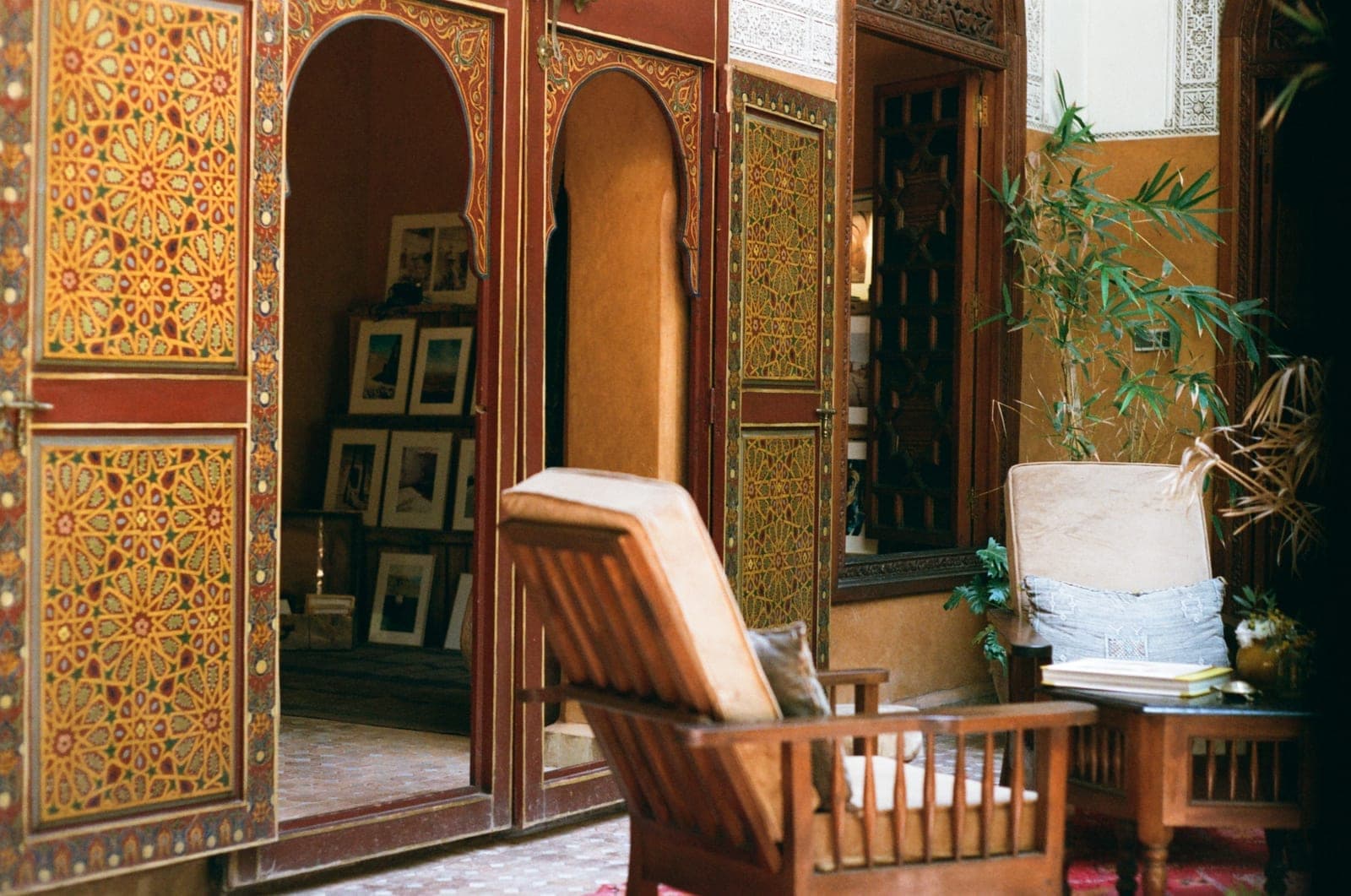
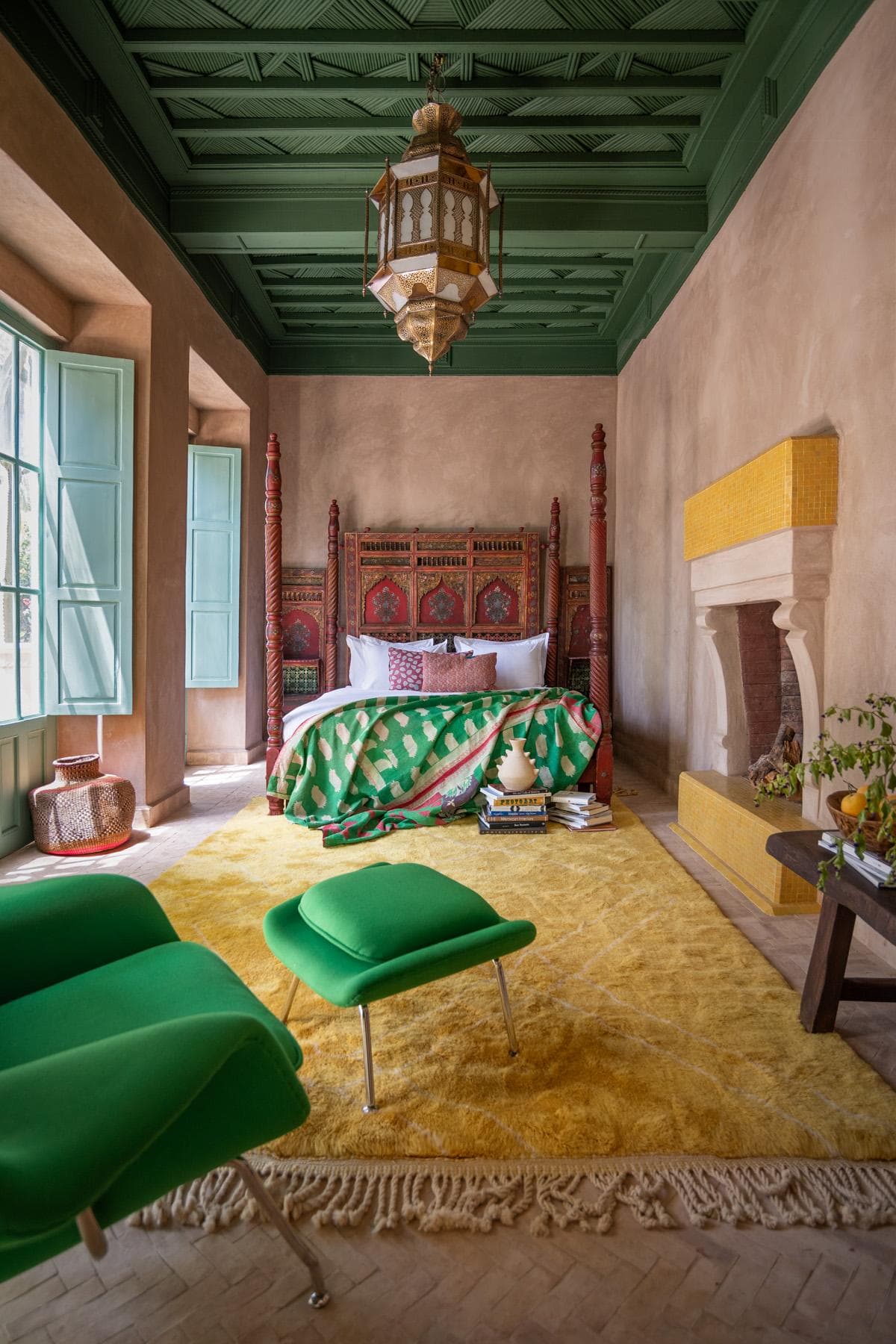
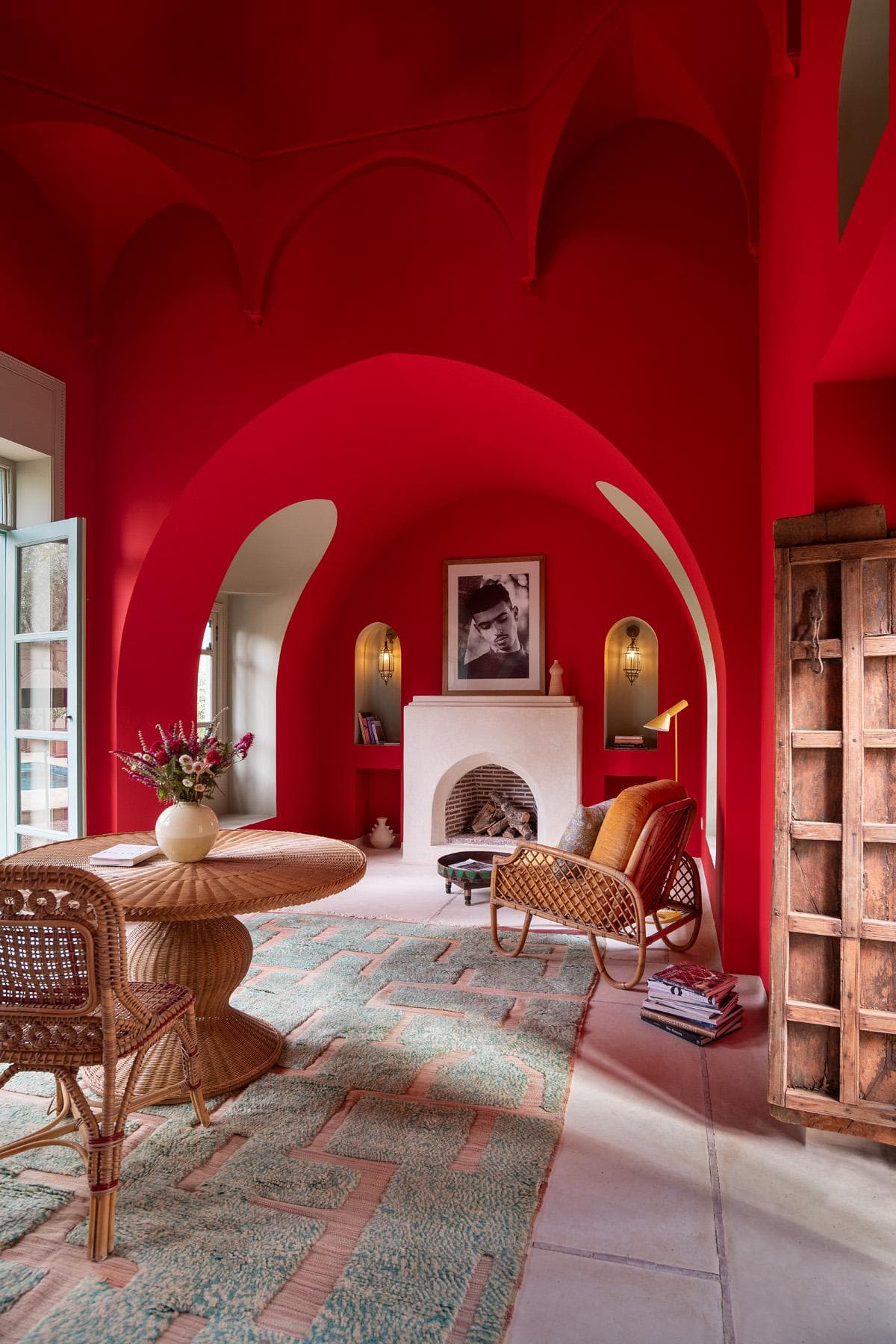
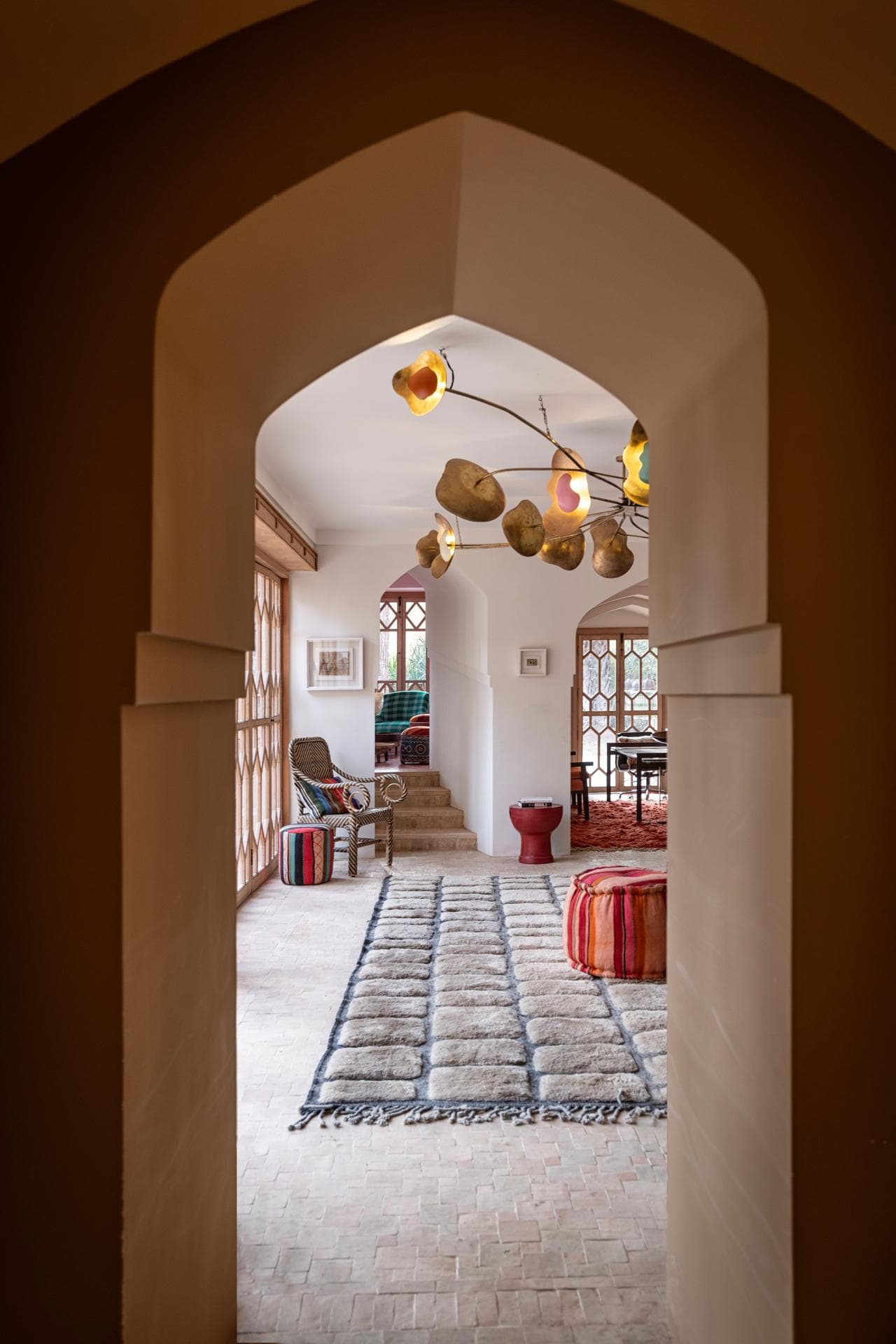
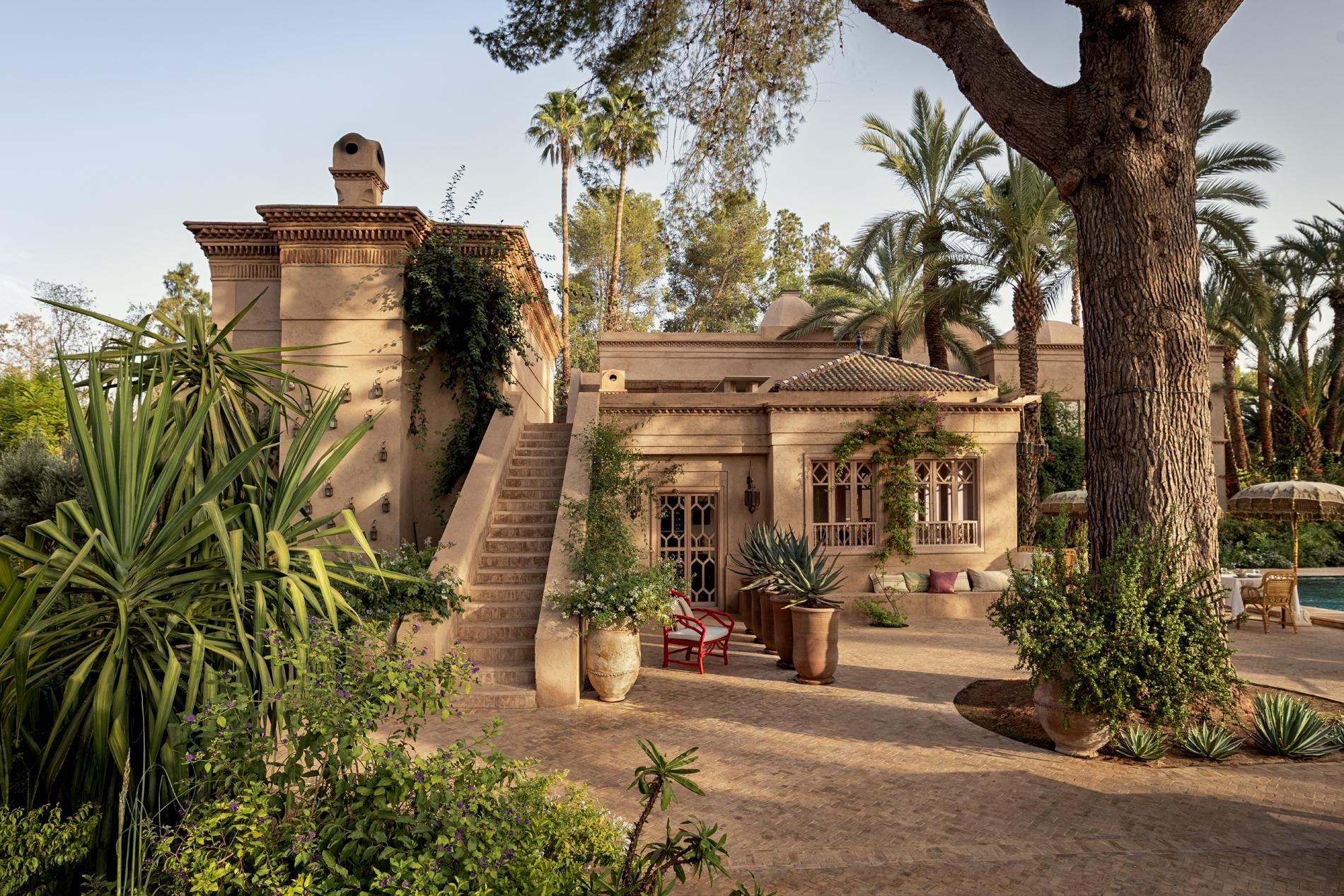
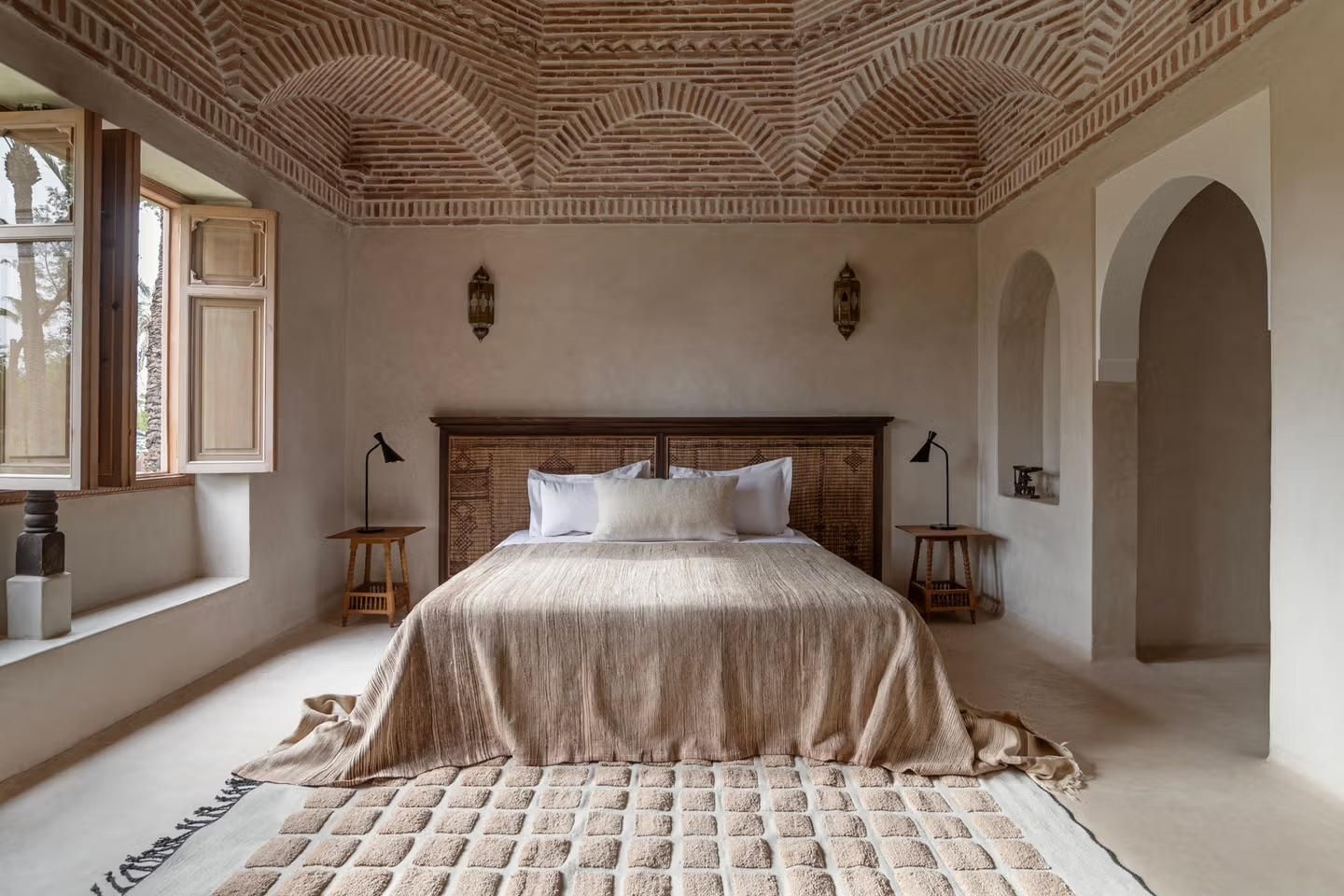
The spatial signature of the main house remains Boccara's: the rhythm of his arches, the transition from exterior brightness to interior shadow, the materiality of a building that uses tile and plaster and wood not as decoration but as structure. The bathrooms carry one of the house's most specific architectural moments, a nine-meter domed ceiling that redistributes a private room into something requiring time to read.
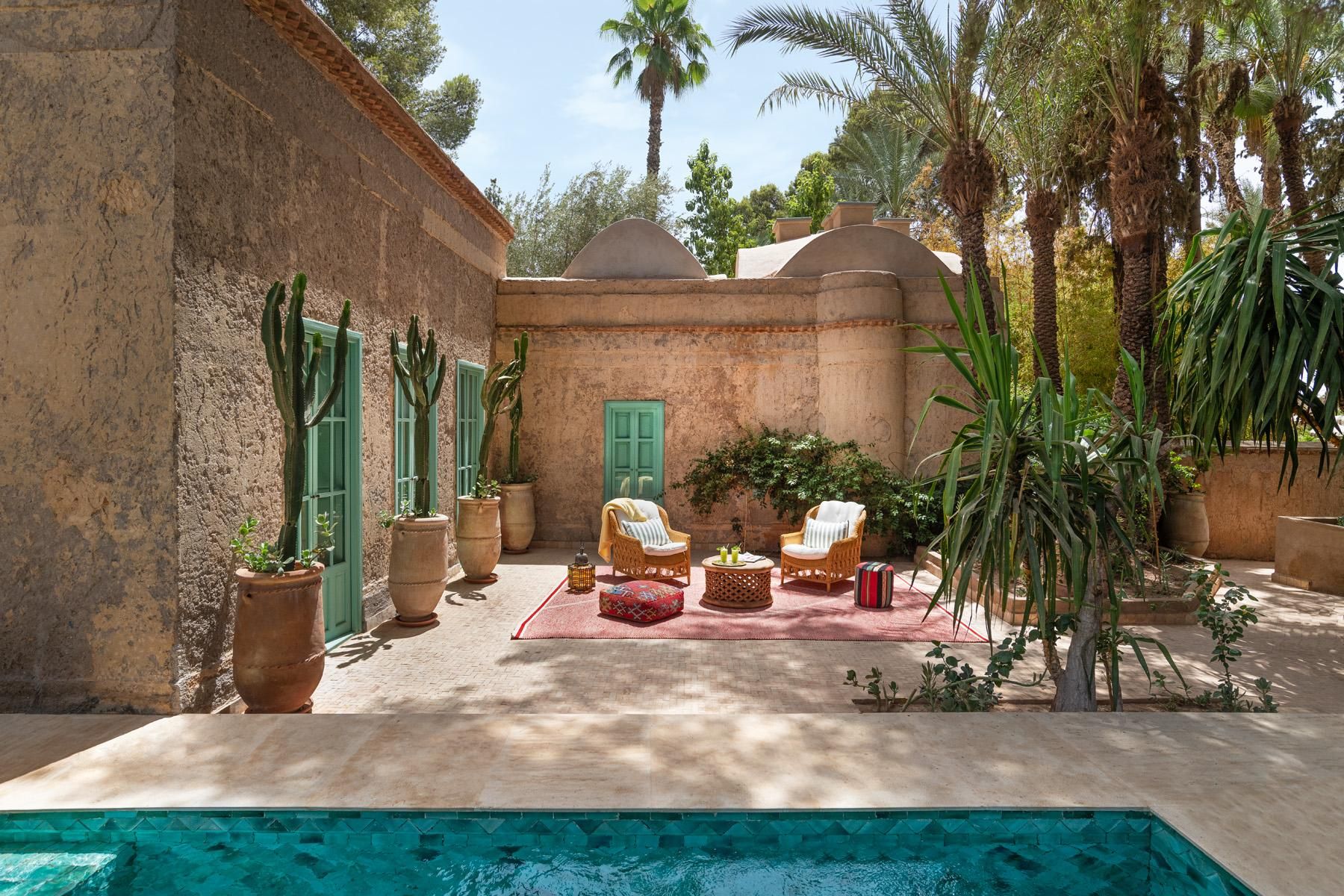
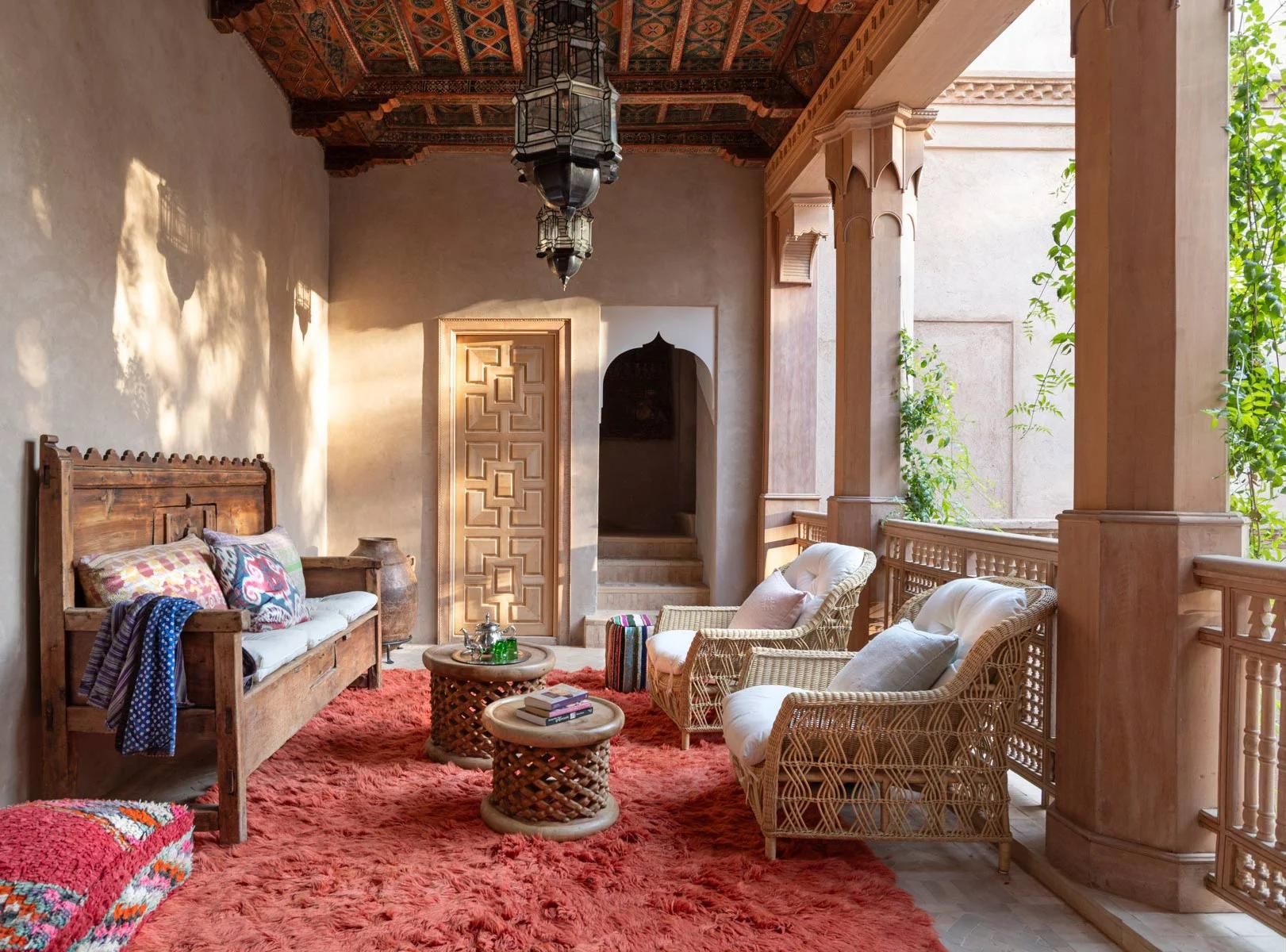
The seven bedrooms in the main house each open toward a private terrace or balcony, less a provision of views and more a condition of belonging to a garden that extends in every direction. A private annex with its own pool, enclosed garden, and salon operates as a residence within the residence. Three smaller pavilions complete the eleven-suite configuration, each positioned at a distance from the main house that allows the garden its full scale.
The Art
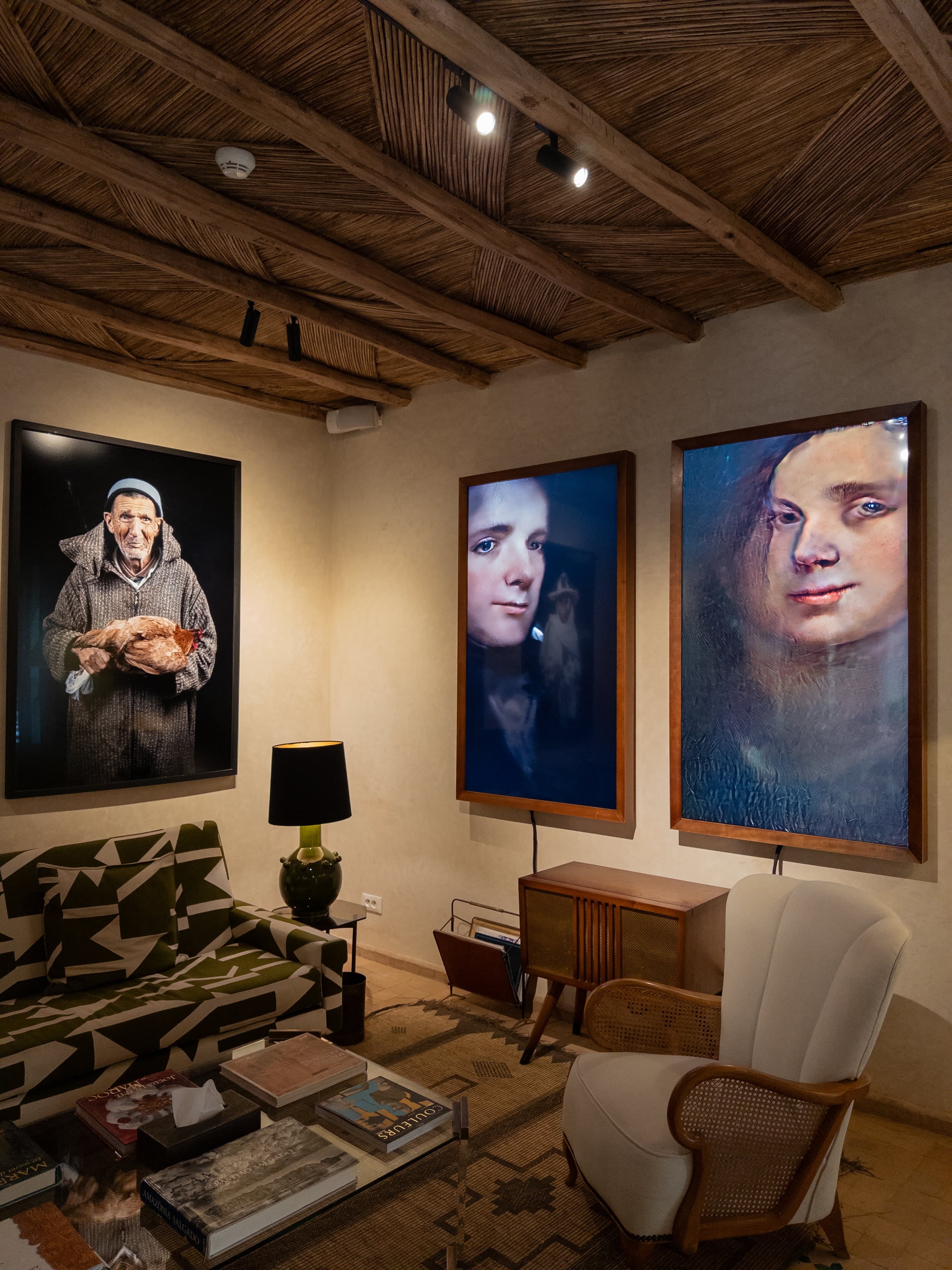
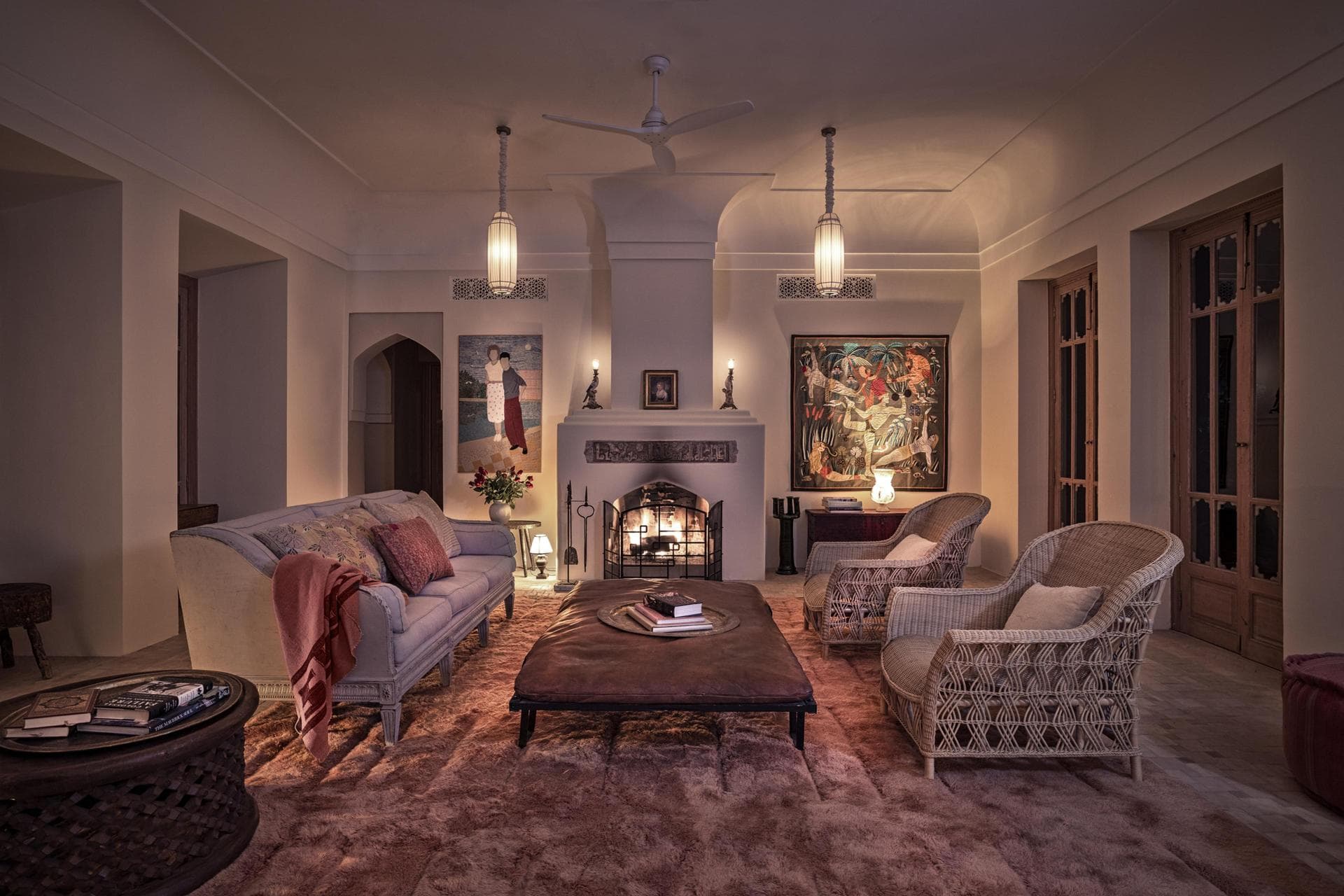
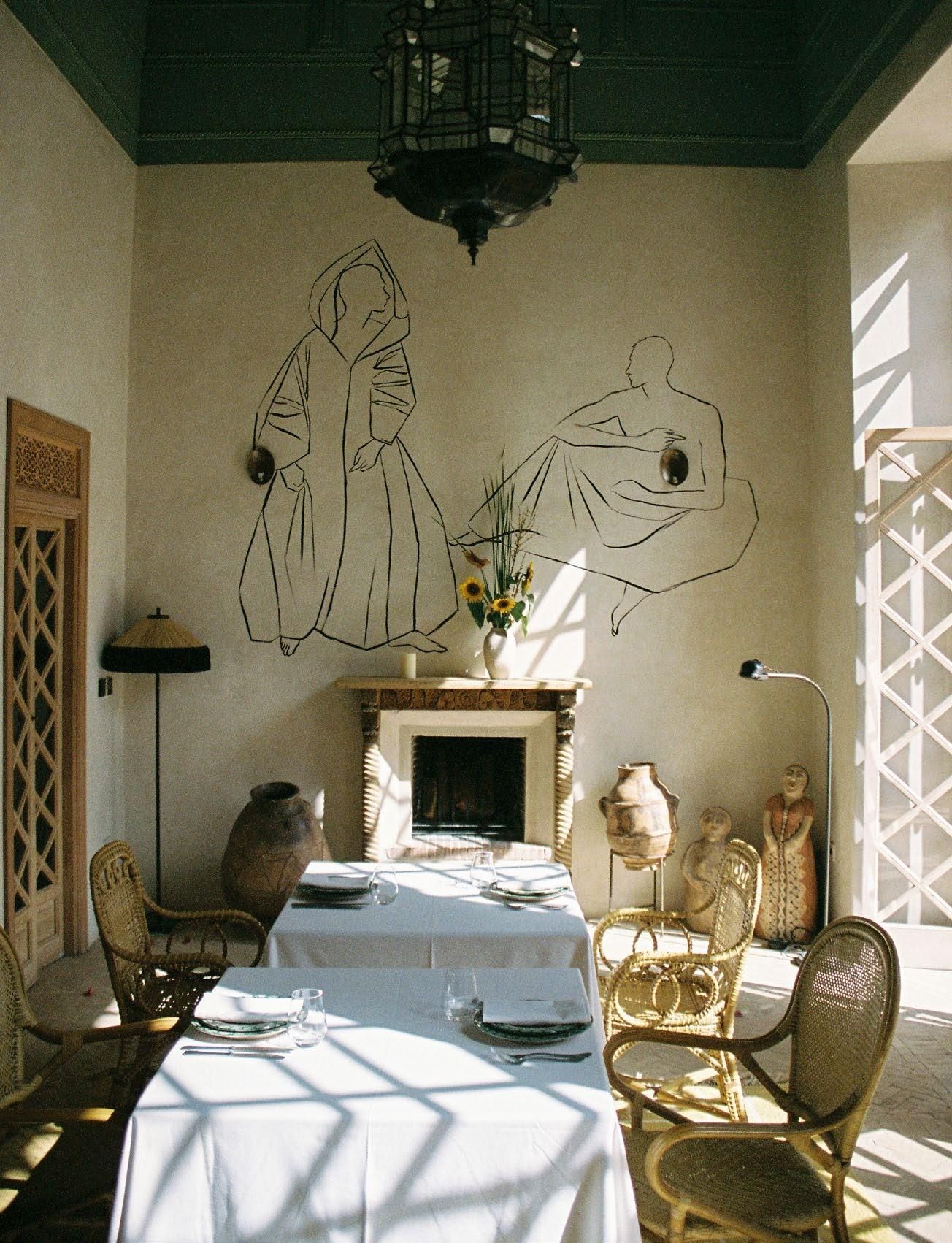
Under the curatorial direction of artist Samy Snoussi, the house holds a collection of contemporary work that moves between North African and European practices: Mous Lamrabat, M'barek Bouhchichi, Amina Rezki, Mo Baala, Roberto Ruspoli. The collection is not installed to be observed in passing. It occupies the same register as the furniture and the same light as the rooms. One does not visit the art at Jnane Rumi so much as live alongside it for the duration of the stay.
The property hosts studio visits and architectural tours as part of its programming, a gesture that reflects the understanding that a house with this cultural history should continue rather than conclude it.
The Garden and the Table
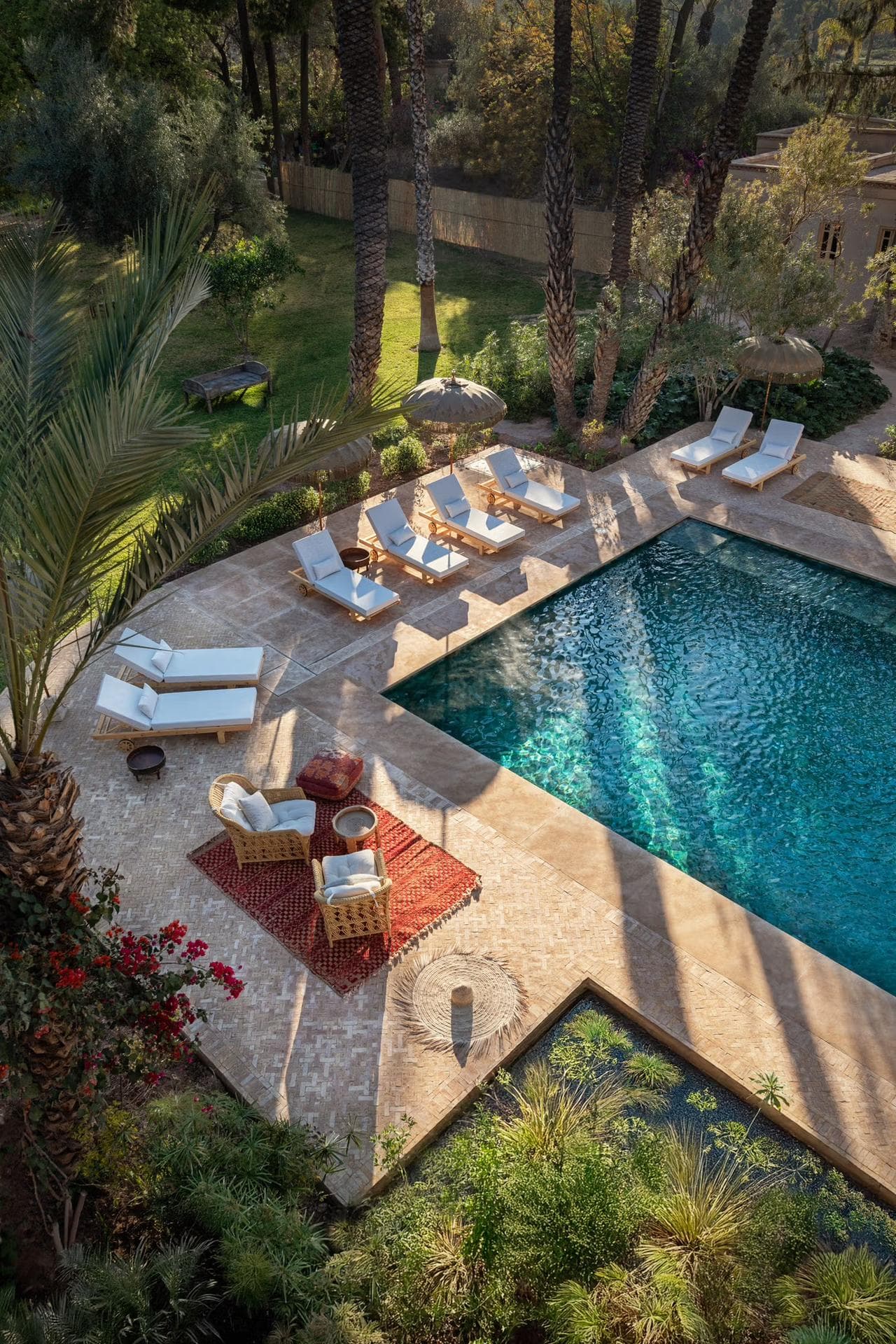
The 13 by 6 metre pool sits among the oldest palms, surrounded by endemic vegetation that requires no landscape design because the landscape is already complete. The gardens move at the pace of a place cultivated across decades rather than installed for the occasion of an opening.
Chef Karin Gaasterland, who built her reputation at Riad El Fenn, runs the kitchen with a sensibility that moves between Moroccan and Western culinary traditions without privileging either. Dining shifts between the communal table inside, private upper terraces, the Pool Bar beneath the palms, and the Rumi Bar, which faces the garden and holds the long hours of a Marrakech evening with the quality of a room designed for exactly that purpose.
The property hosts retreats across several formats, including artist-in-residence programs, yoga and holistic retreats, and culinary sessions built around Gaasterland's kitchen. These are not add-ons but structural elements of how the house understands itself: as a place where time is used rather than simply passed.
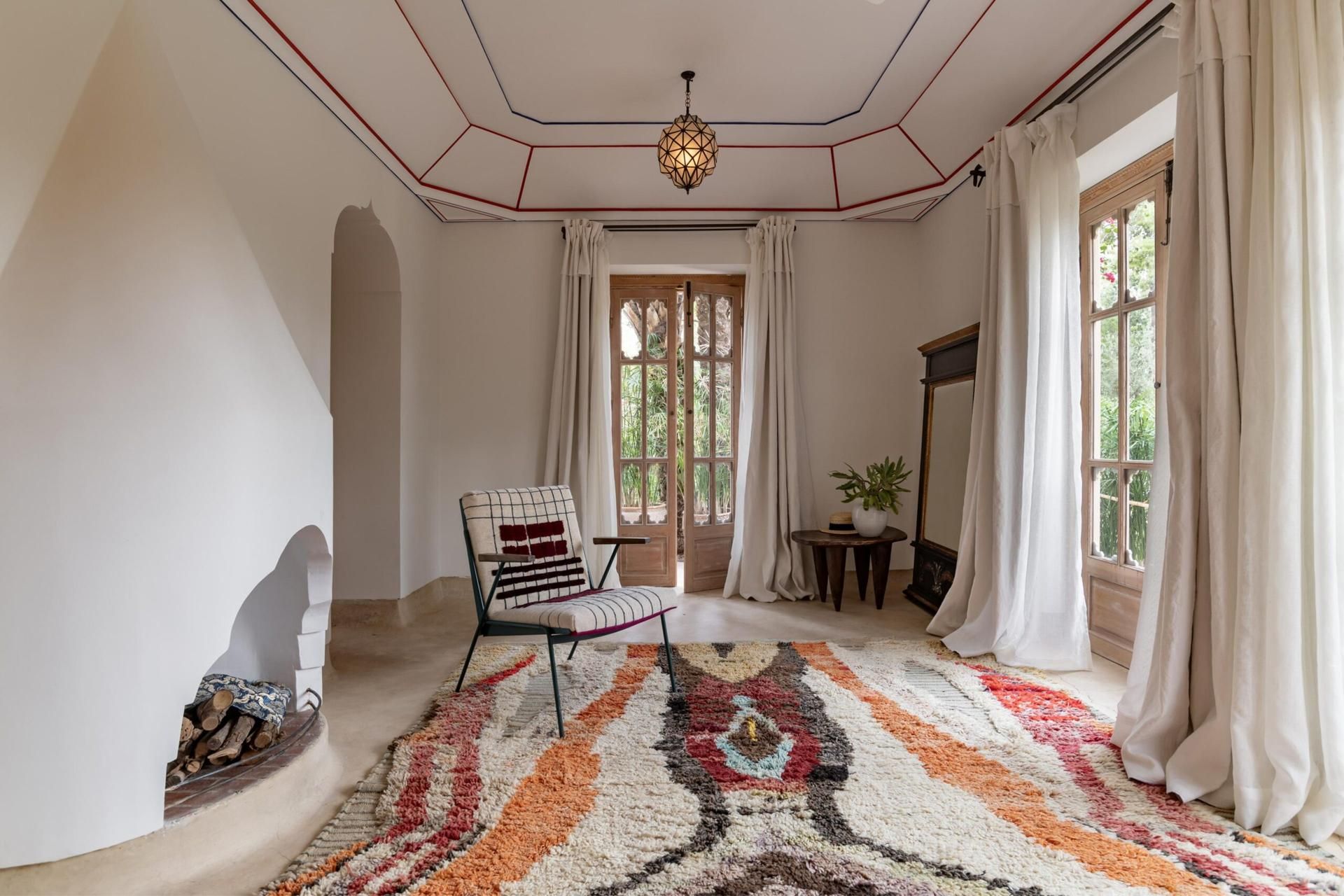
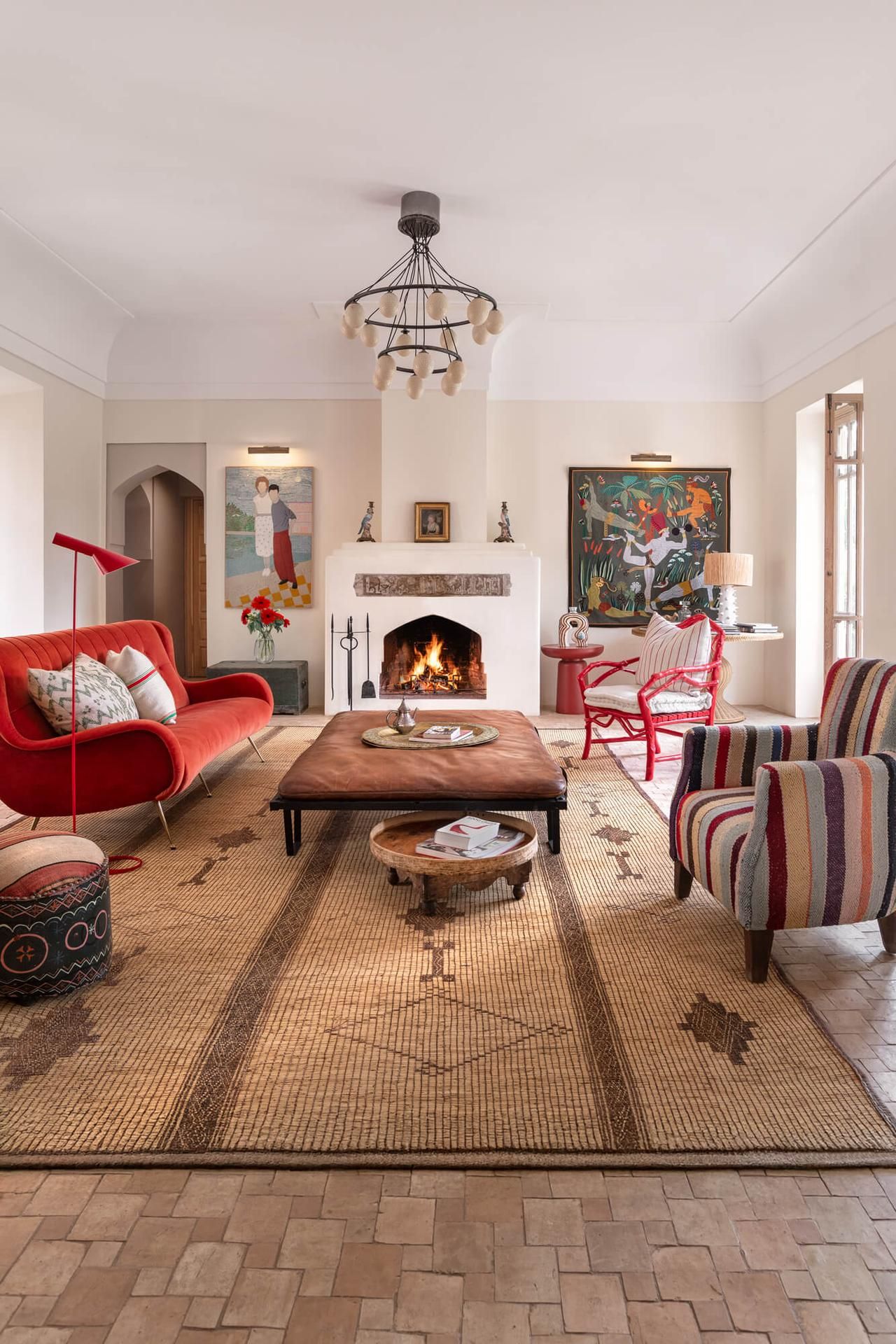
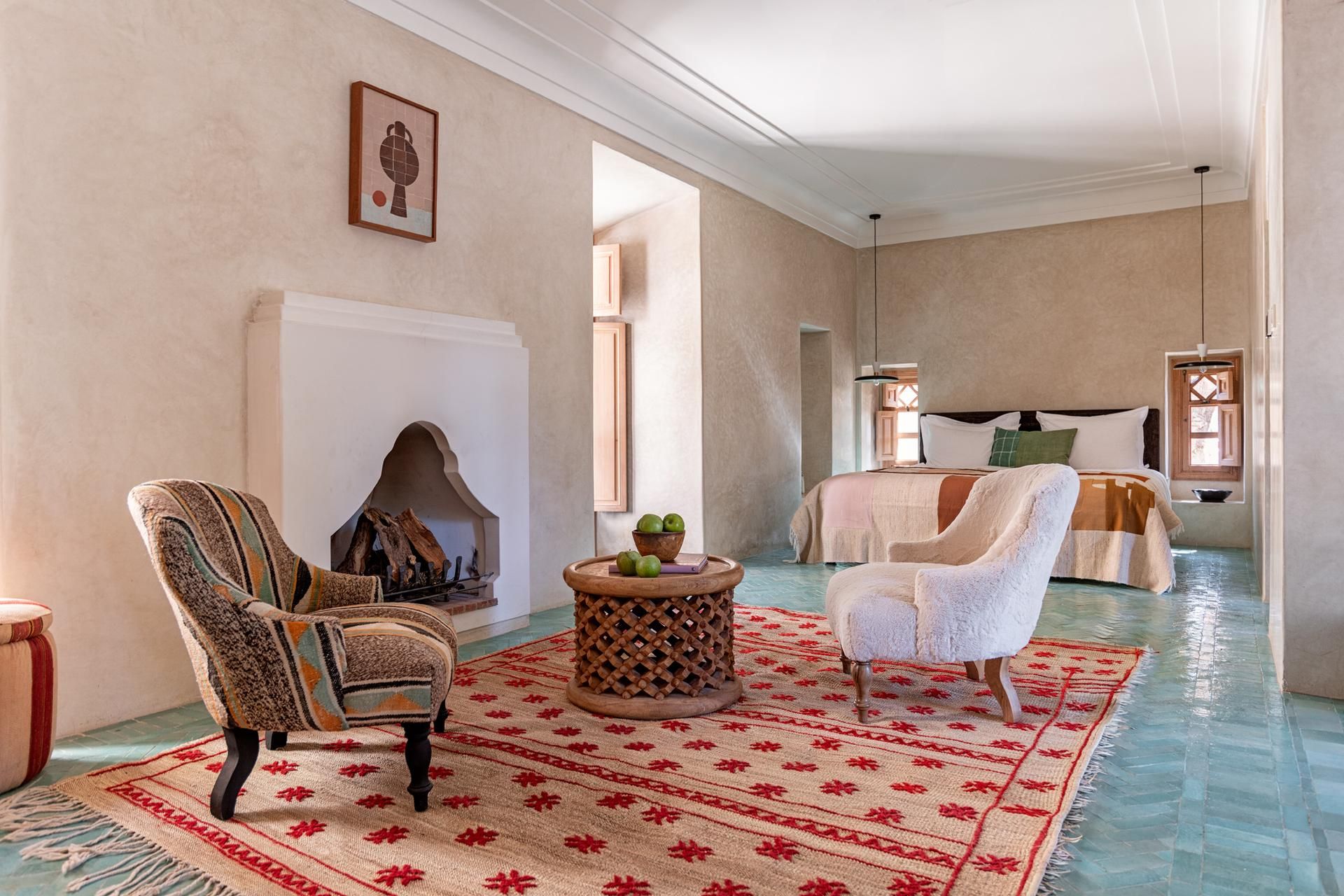
What Jnane Rumi offers is a particular form of continuity. A house that carries its own intellectual and artistic history into the present, built by an architect of consequence and inhabited by figures of consequence, that arrived at hospitality not by shedding that history but by building on top of it. In the Palmeraie, where the offer ranges from resort-scale luxury to private villas with no ambitions beyond comfort, a property with this curatorial and architectural intelligence occupies a position that is genuinely singular.
Jnane Rumi · Hotel
Discover Jnane Rumi→You may also like…