Riad Jardin Secret
A fifteenth-century riad in the Bab Doukkala quarter where anti-modern philosophy, an artist residency, and one of the city's finest rooftops converge behind a single carved door.
5 April 2026
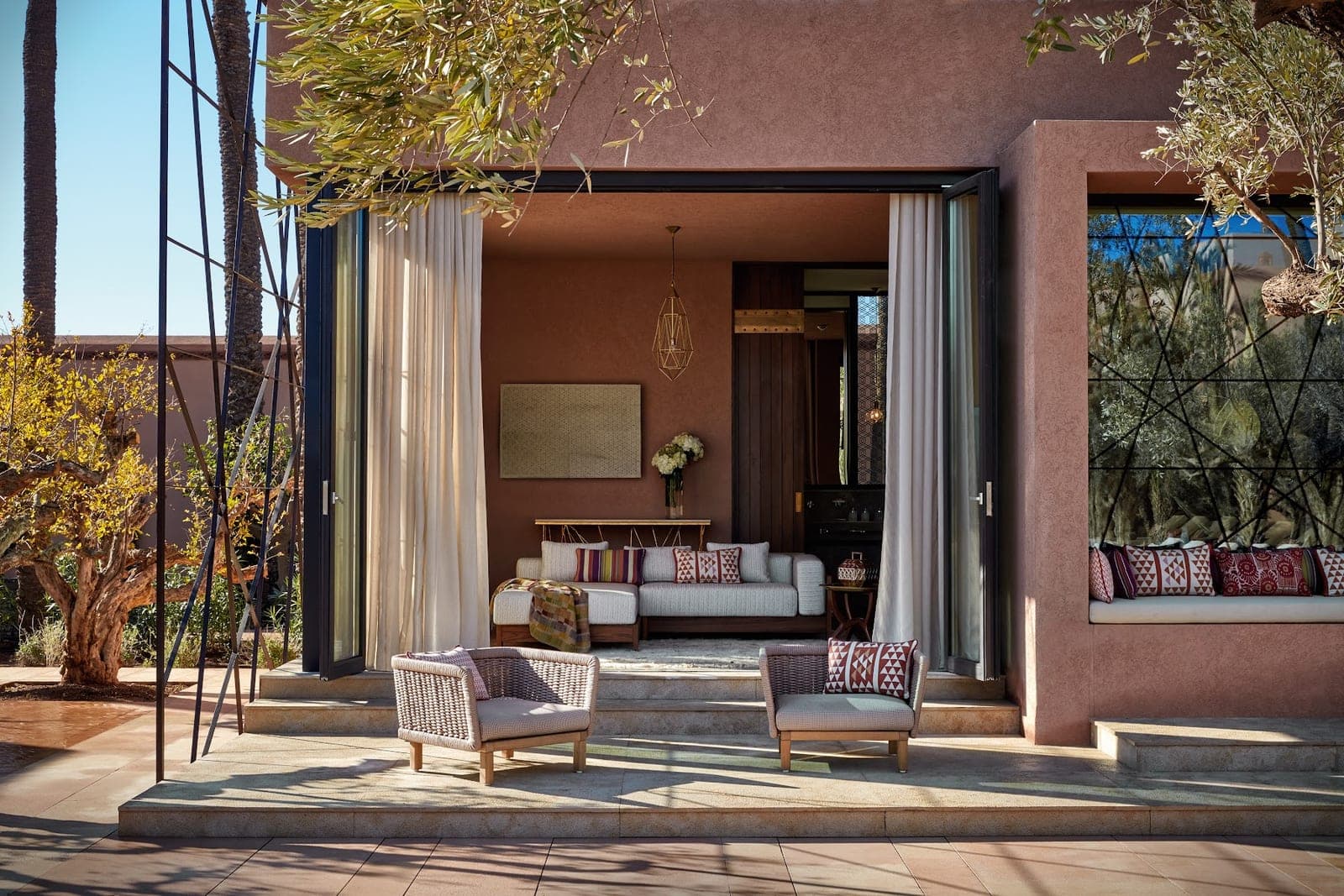
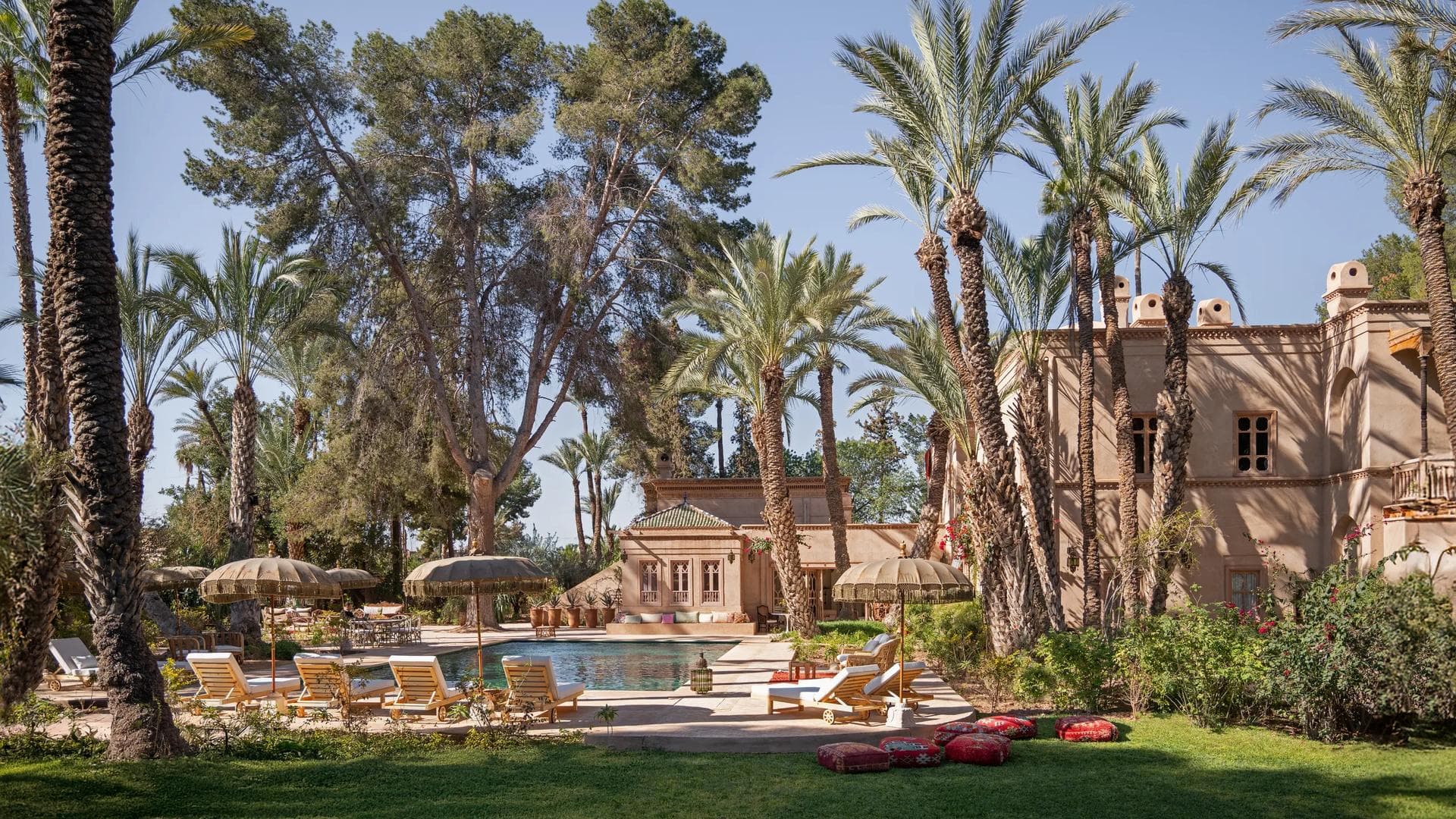
The riad sits in the western Medina, in the district of Bab Doukkala behind the street of Dar El Bacha, ten minutes on foot from Jemaa el-Fna. The entrance is modest, a carved door among other carved doors in the dense fabric of the quarter. Once past the threshold, the density gives way to an internal quietness that belongs to the house itself, a rhythm that moves at the speed of stone and water rather than the hurried cadences outside. The building dates to the fifteenth century, its 16,150 square feet of traditional riad architecture forming the kind of spatial generosity that contemporary construction rarely attempts.
Cyrielle Rigot and Julien Tang arrived in Marrakech from Paris. After months of searching through the Medina's winding pathways, they pushed open two grand cedar doors and found what they now call home. They opened Riad Jardin Secret in April 2015, not as a renovation project aimed at imposing contemporary aesthetics onto historic bones, but as an act of listening. What the structure was already saying, they chose to amplify rather than replace. The result is a space that feels inhabited rather than curated, lived in rather than performed.
Anti-Modern by Conviction
Cyrielle and Julien define their approach as "anti-modern," a term they use with precision. It means the embracing of imperfection created by the passage of time, a dedication to authenticity and the unpretentious, the mystery of the riad's past held in dialogue with the strong artistic personality of its present. This is not nostalgia. It is a position: that what centuries have built deserves to remain legible.
The commitment extends to deliberate absences. There are no televisions. There is no air conditioning. These are not oversights but choices, their way of encouraging guests to adapt to the riad's laid-back rhythm, its slow-life ethos and free-spirited attitude. They hope you read. They hope you sketch. They hope you dream.
Materials and Rooms
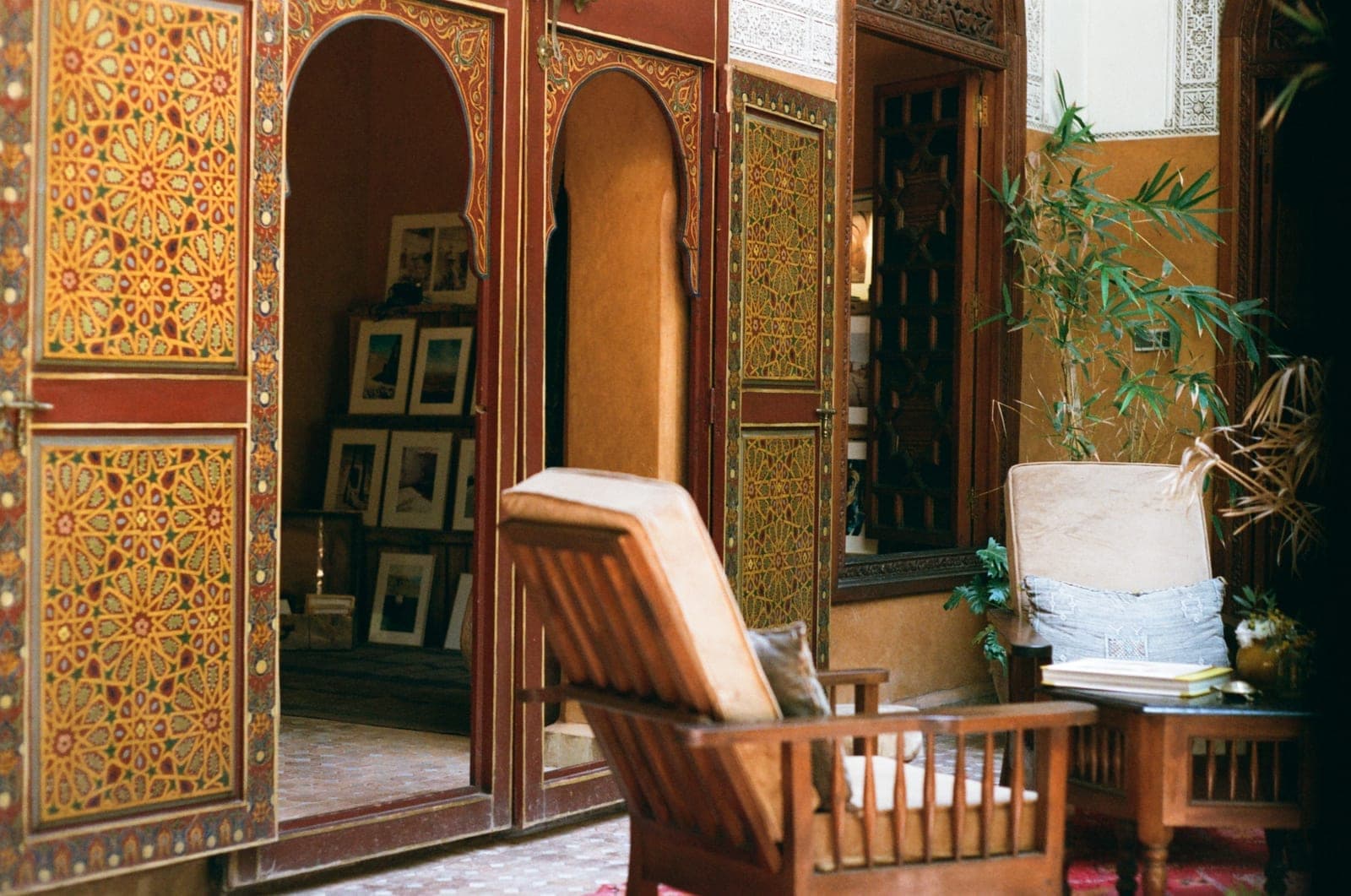
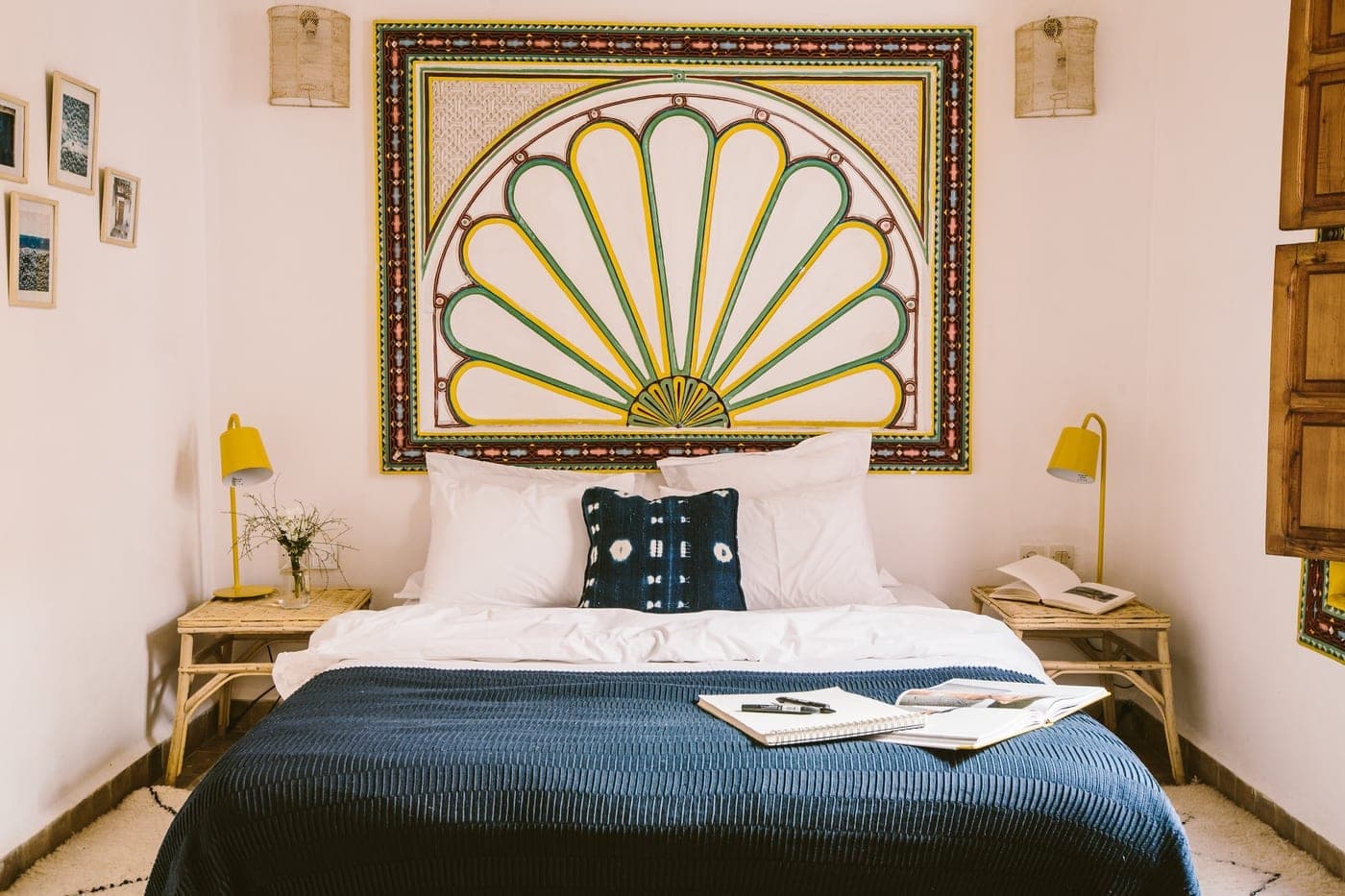
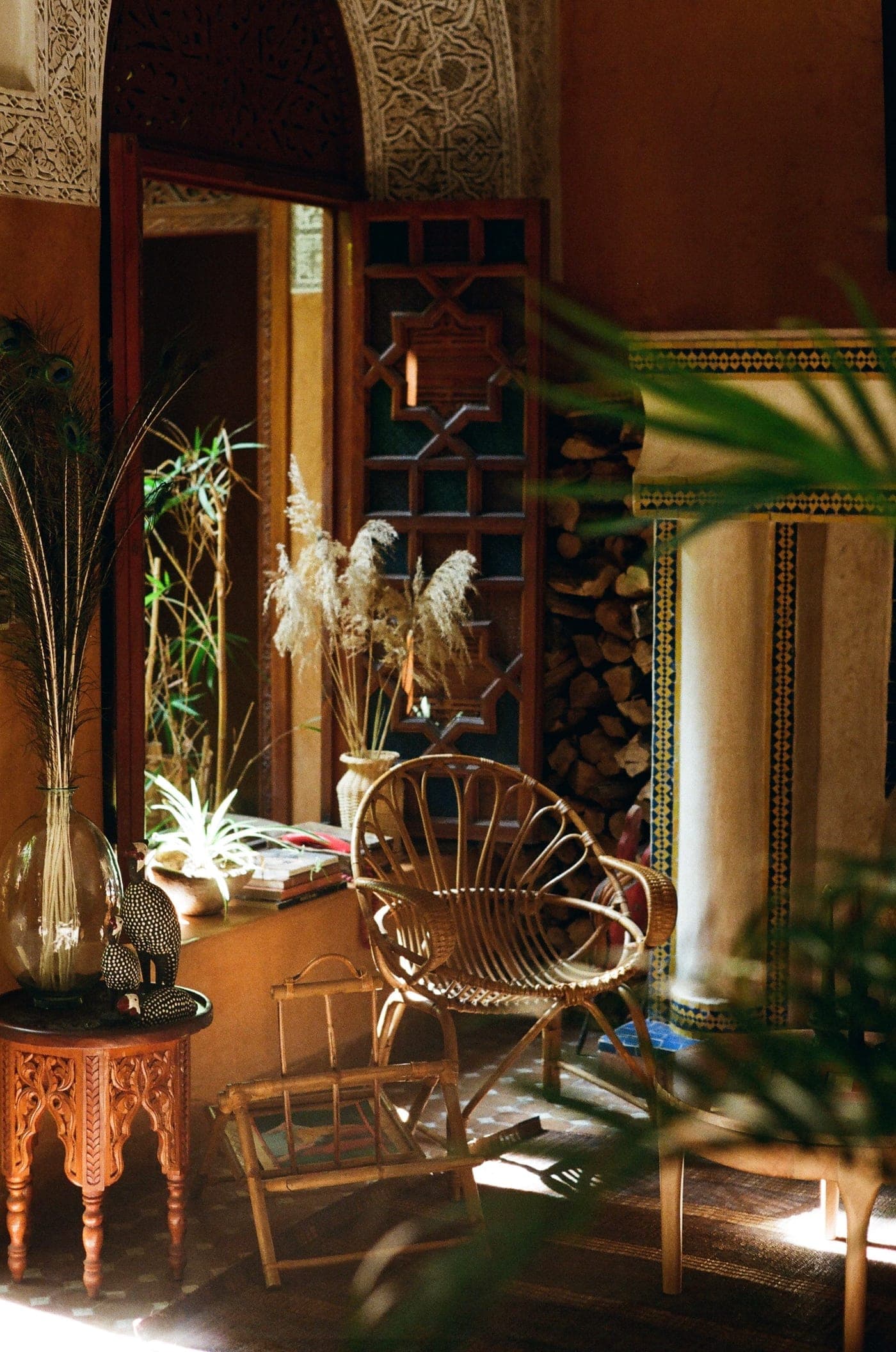
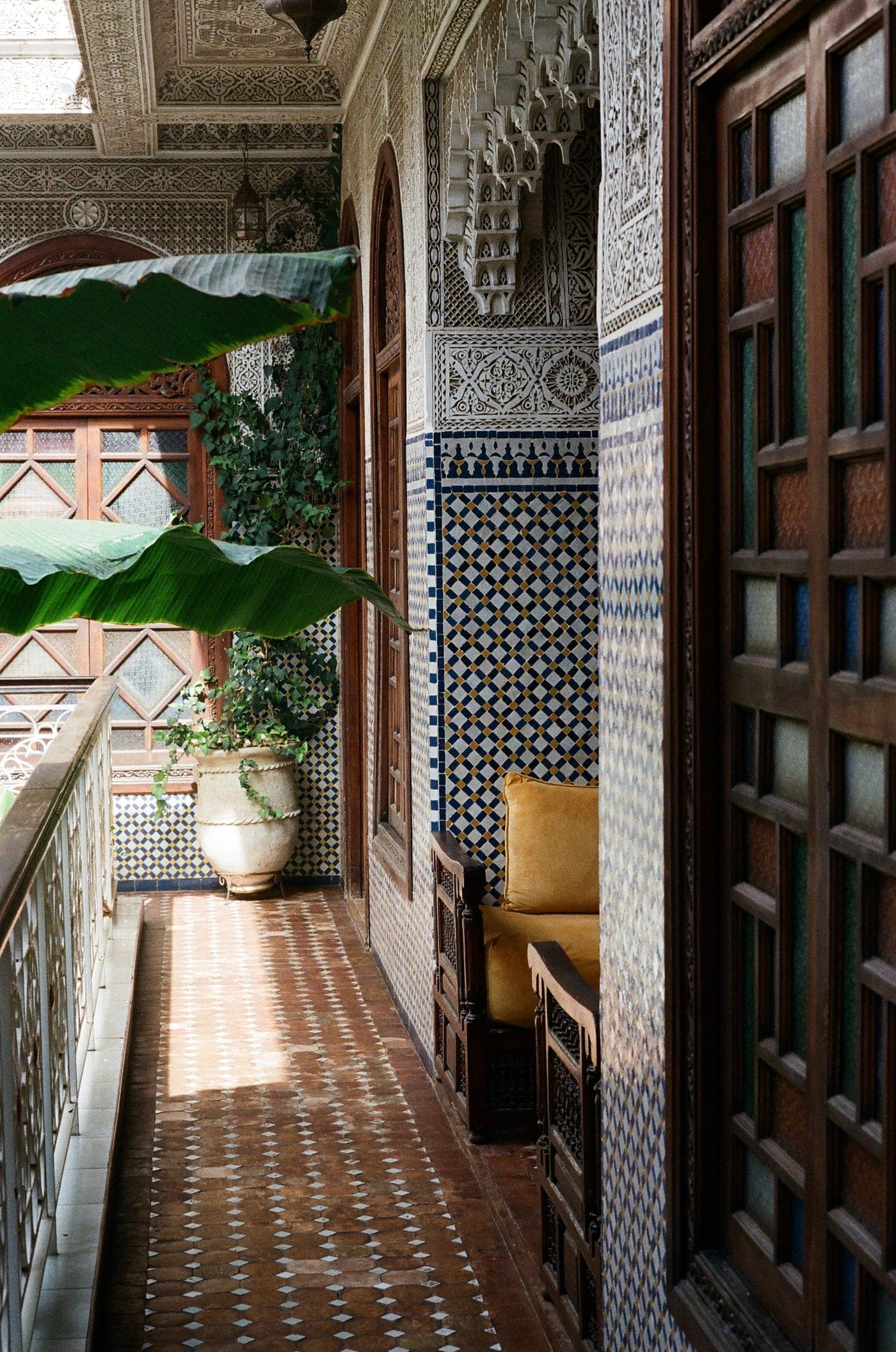
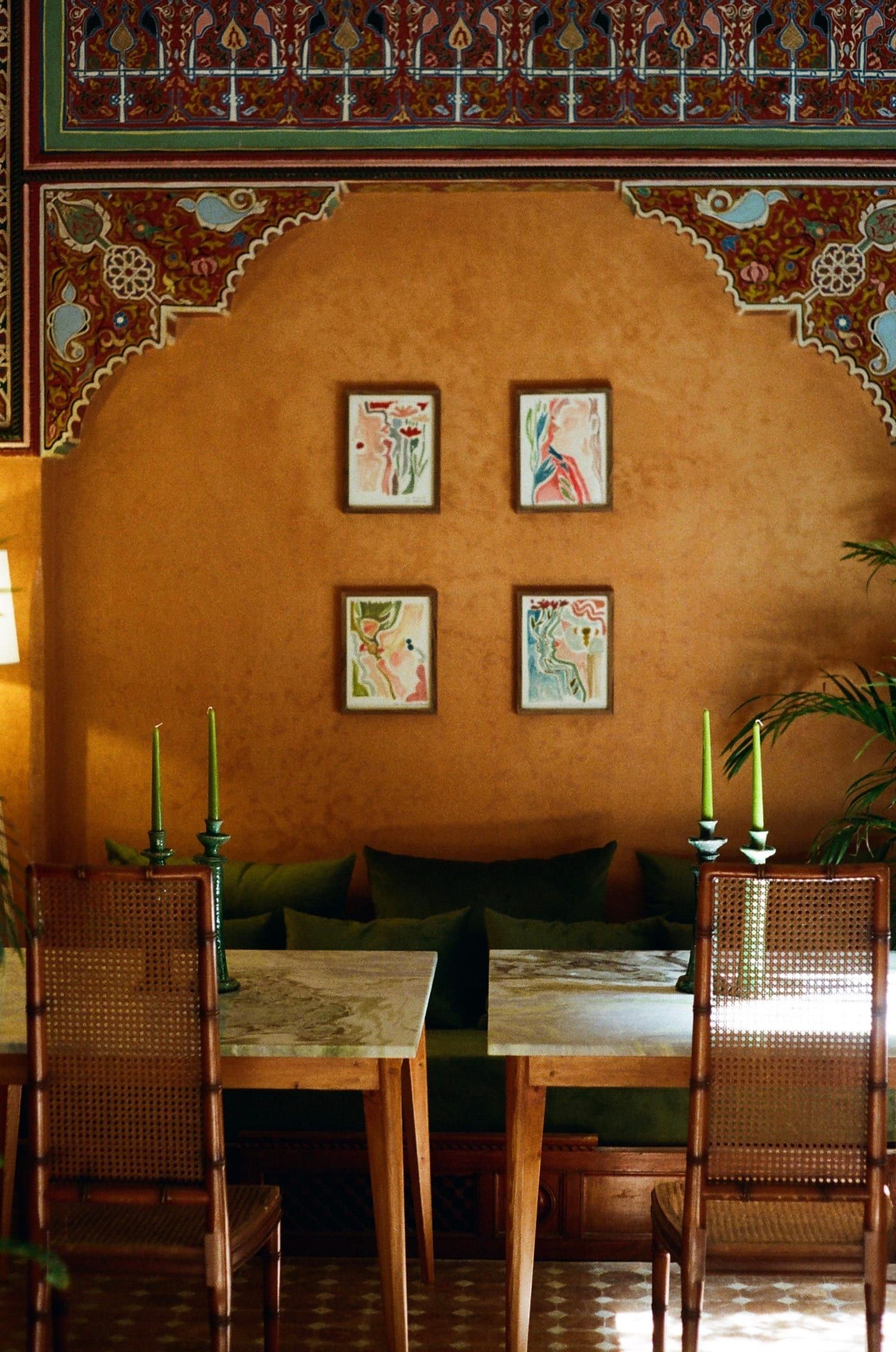
The stucco work on the walls retains the texture of the hands and tools of generations of artisans. The zelliges, those intricate terracotta tiles laid in patterns that repeat but never exactly duplicate, line the courtyard and corridors. The tadelakt, the smooth Moroccan plaster that catches light in particular ways, surfaces throughout, creating areas of softness where the geometry of the tiles becomes too acute. Hand-painted details on certain walls preserve an older language of ornament, motifs that emerge from the logic of each space. Most furniture and objects are sourced from the finest flea markets around Marrakech and from local craftsmen, their careful placement creating what the owners describe as a soulful, thought-provoking sophistication.
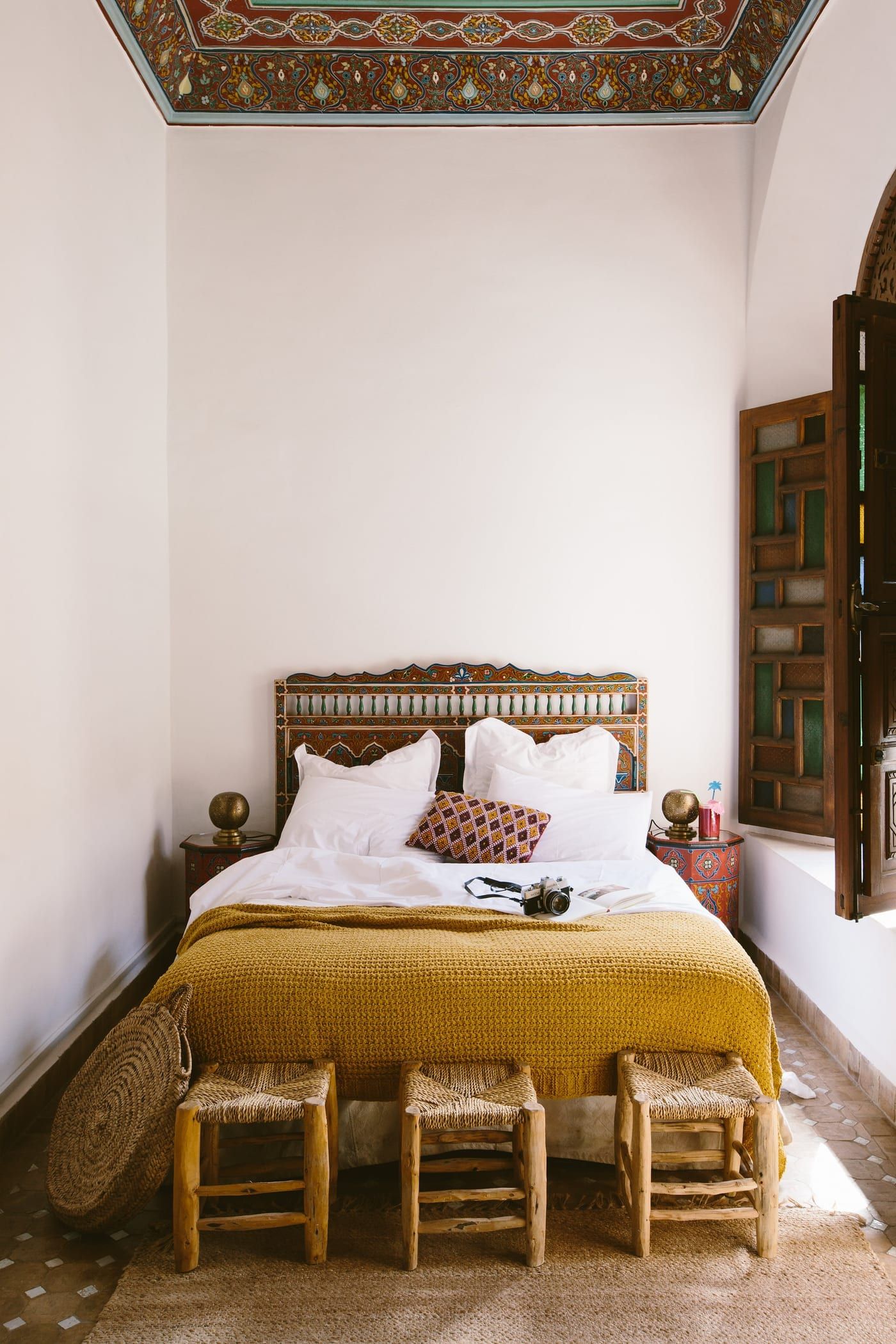
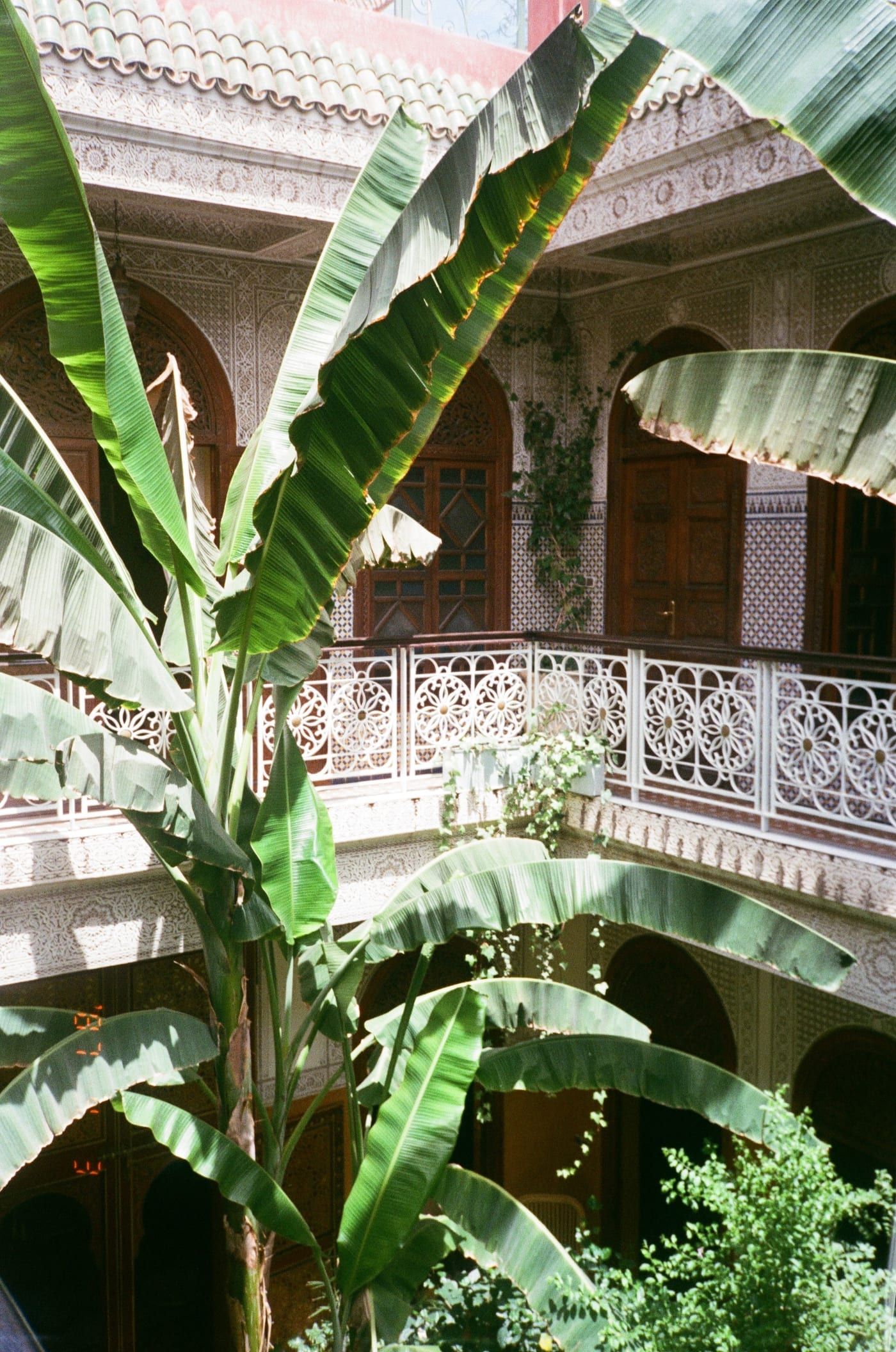
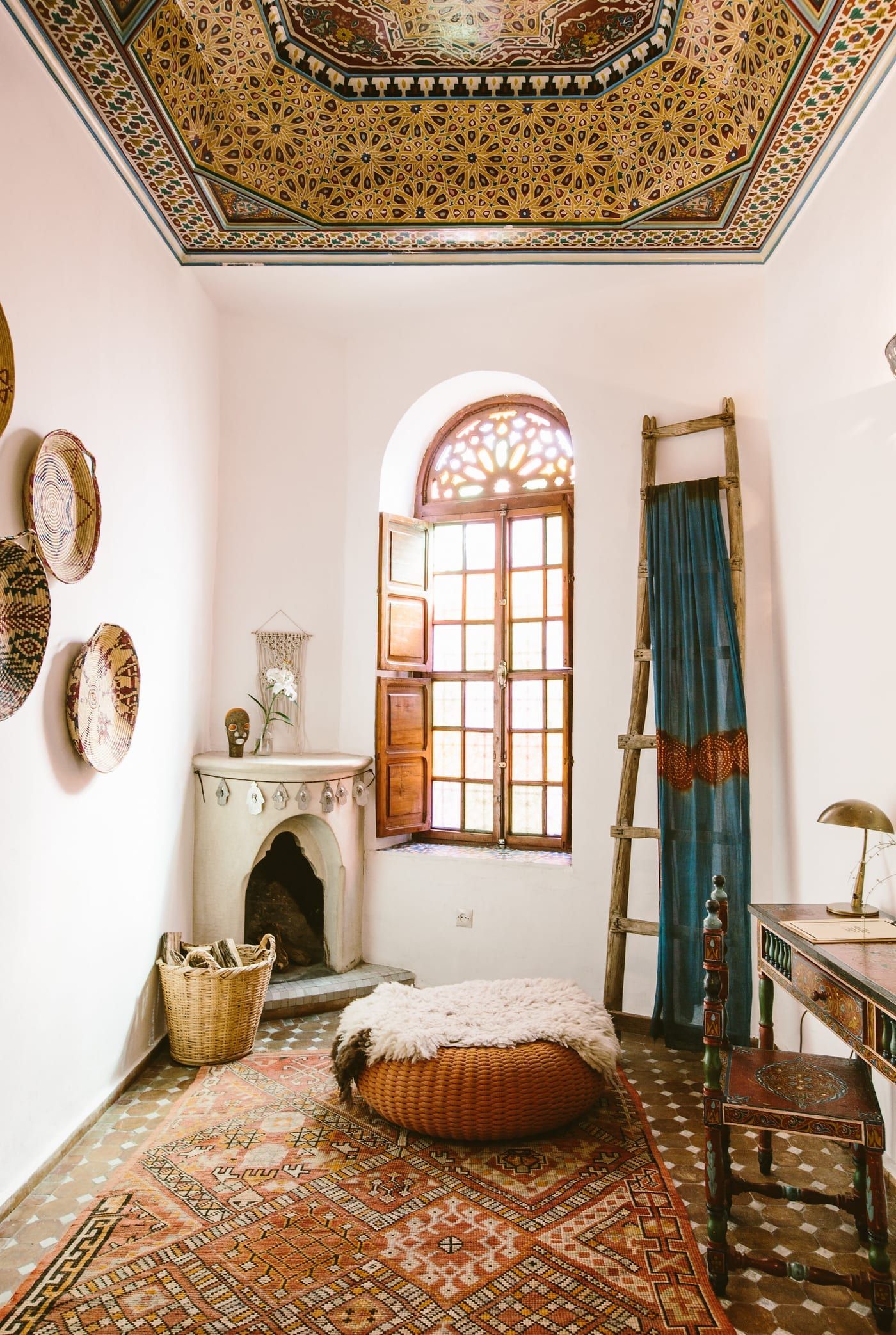
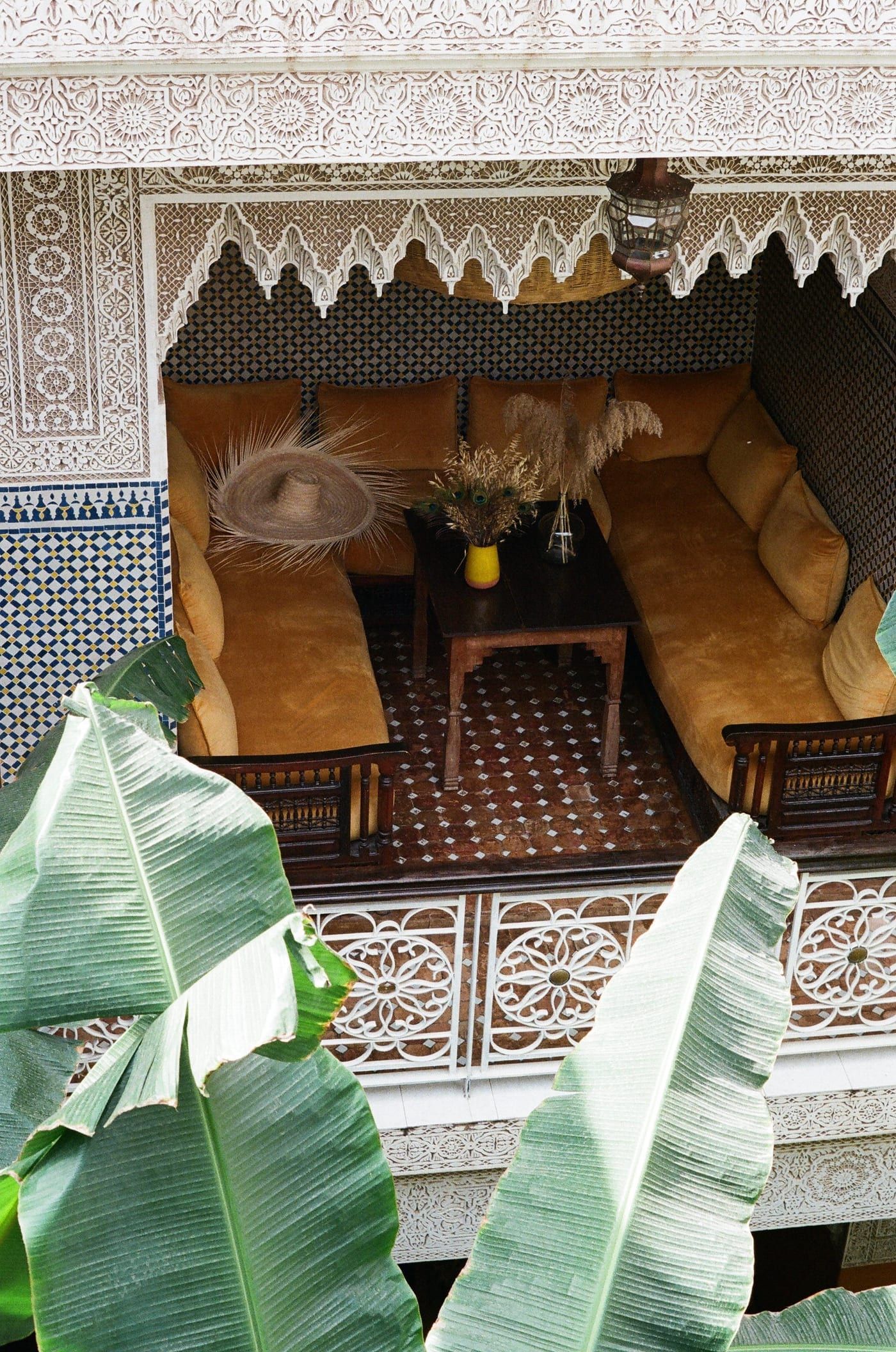
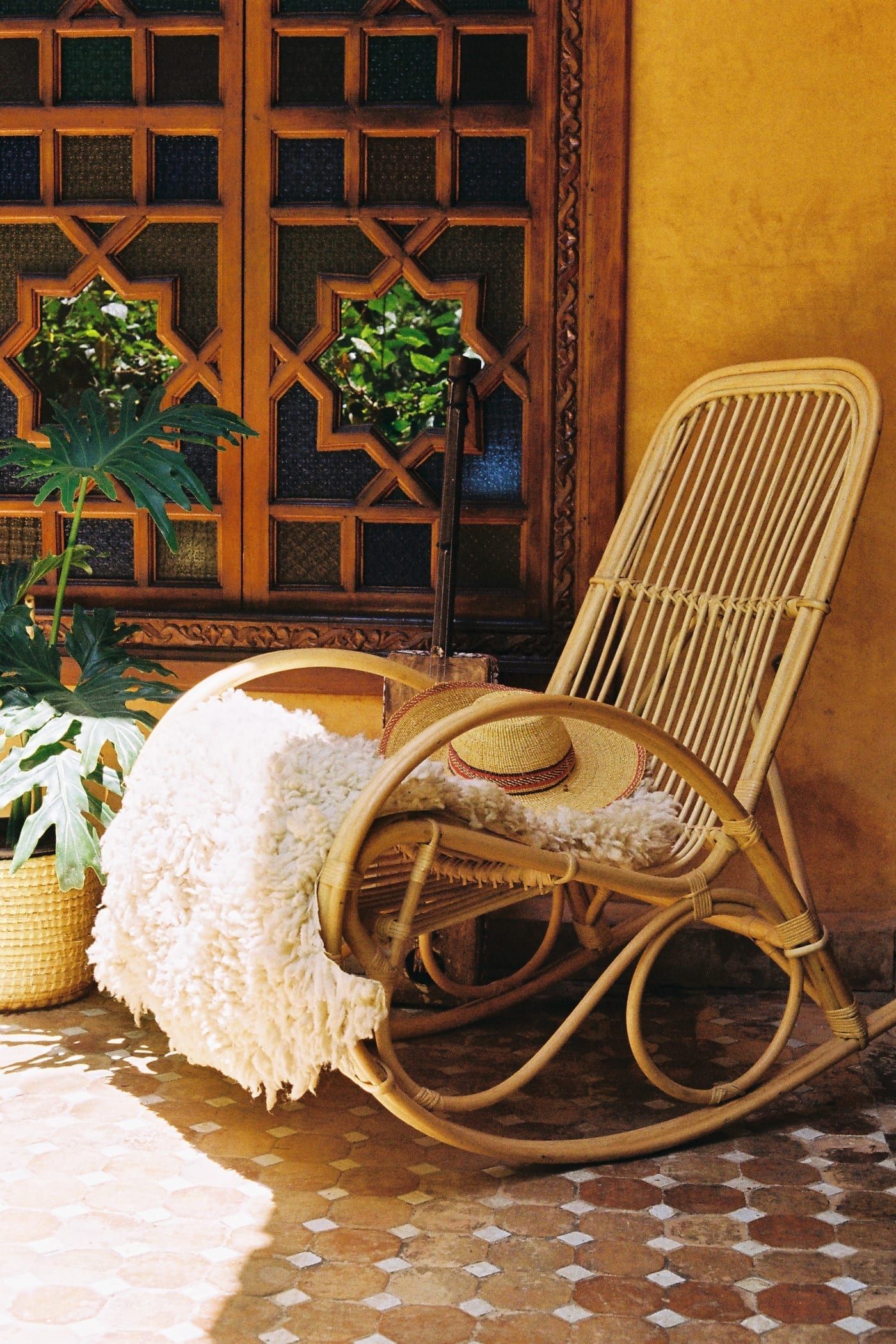
Seven rooms distribute through the riad: five rooms and two suites with fireplace, accommodating a maximum of sixteen guests. Each is shaped by its position in the building. The Beldi Room, at 250 square feet on the main floor, is made entirely of tadelakt with an original ciseled ceiling, and its shower occupies what was once the riad's hammam. The Suite, at 753 square feet, features a grand king bed, an open wood fireplace, and an interconnected second bedroom. The Studio, where artists in residence also work, offers a private balcony overlooking the courtyard and a large adjoining room for creating. Textiles appear where they serve a purpose, not as decoration but as functional elements: runners on the stairs, blankets on seating, curtains that control light without blocking it entirely.
A Legend Behind the Name
Legend has it that the "Secret Garden" was the folly of a rich Marrakchi who built two almost identical riads side by side to house his lovers. One of the women was his favourite, and he dedicated this particular setting to hide the immense love he had for her. The address, even now, is whispered among the initiated like a best-kept secret. Cyrielle and Julien could have smoothed this history into generic marketing copy. Instead they let it remain as context, a reminder that the riad was built for pleasure, for habitation, for the particular desires of someone who understood shelter as a form of art.
The Artist Residency and Galerie Rigotang
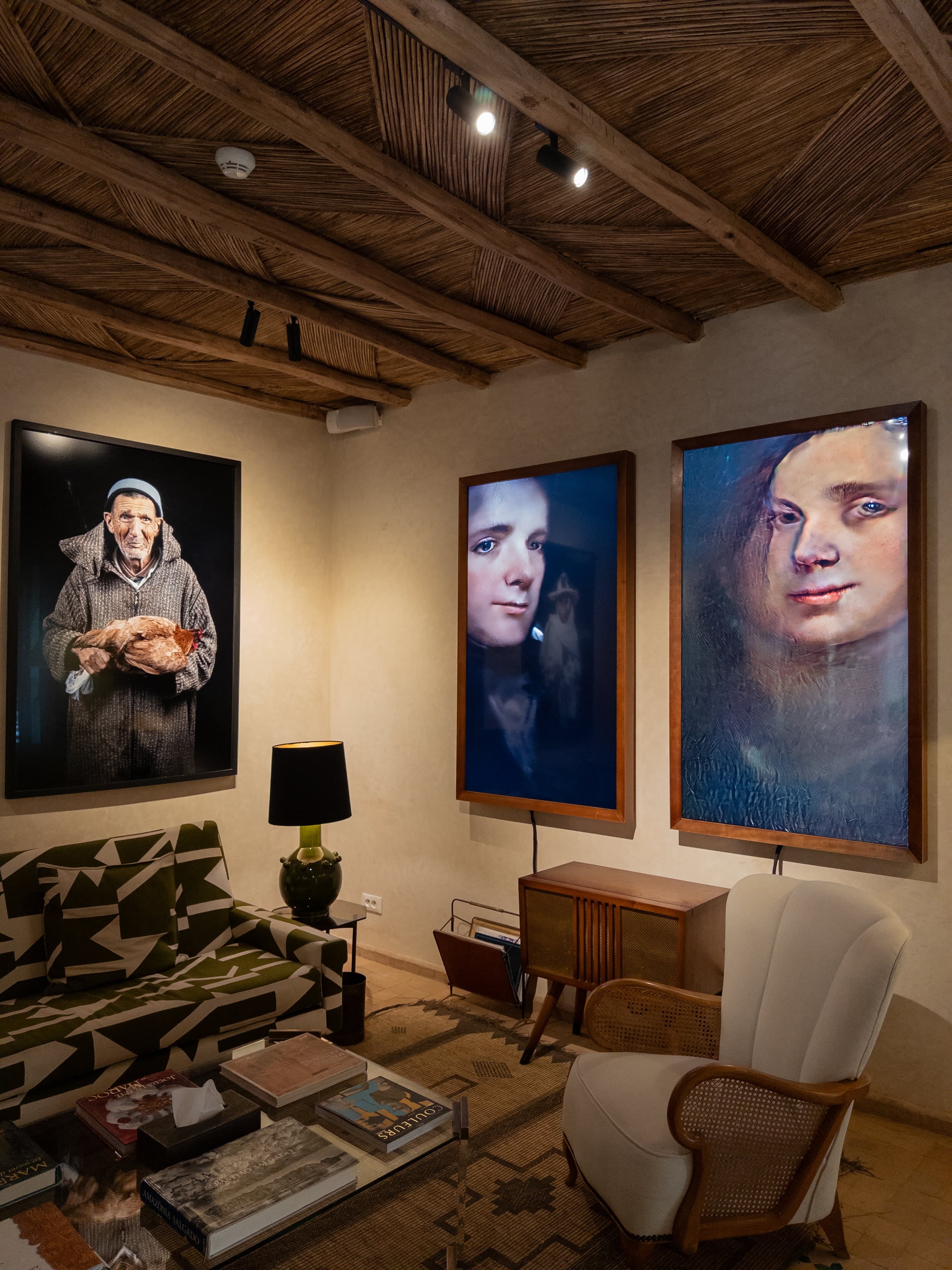
Since opening, the riad has hosted an artist residency programme that welcomes painters, illustrators, photographers, musicians, and other creatives to live and work within the property. The residency is entirely based on sharing: artists receive the opportunity to explore a different culture, experiment with materials, and collaborate with local artisans. Each participating artist donates a work to the riad's growing collection, which remains on display for guests, layering new narratives onto the historic surfaces with each cycle of residence.
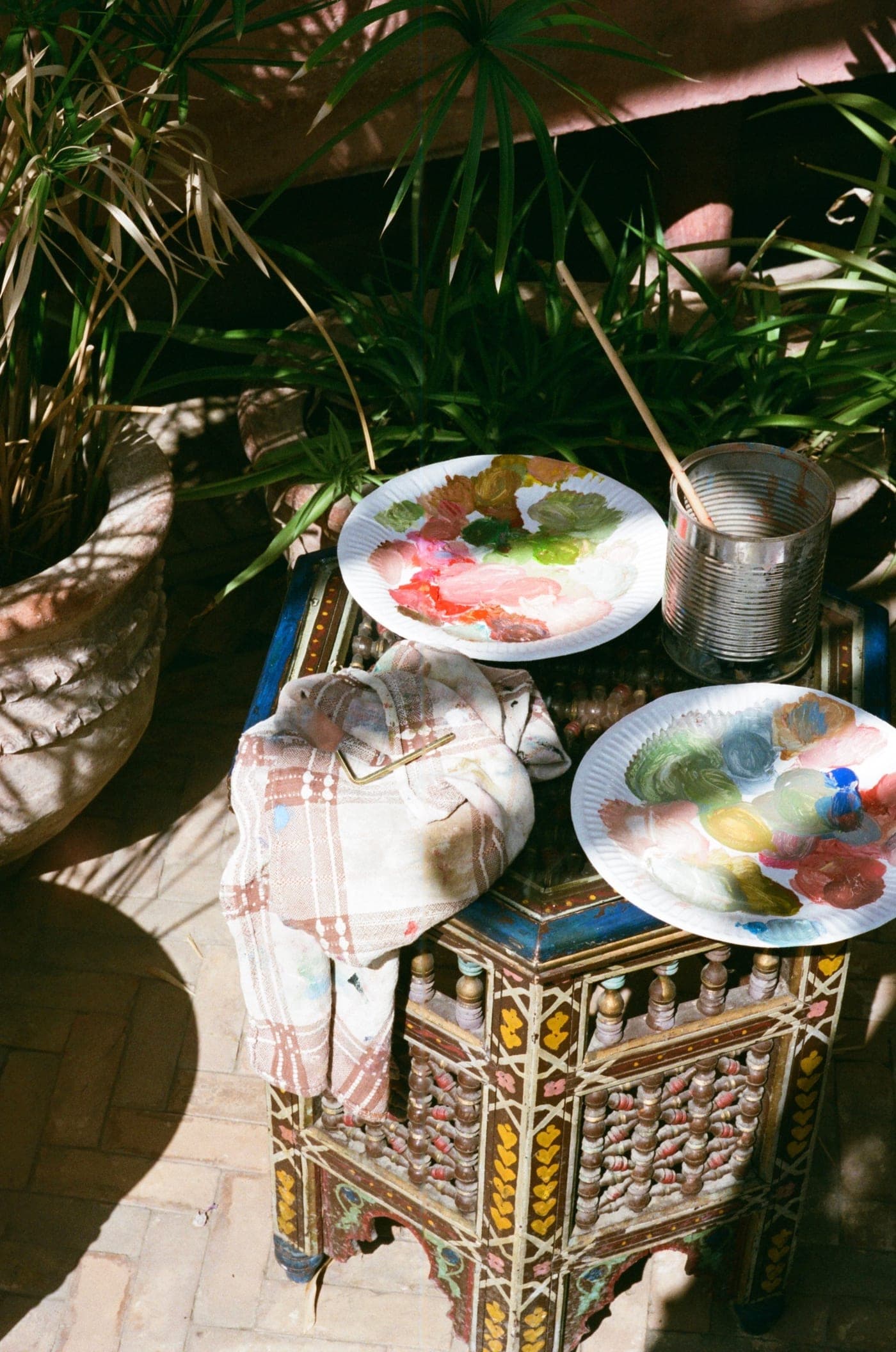
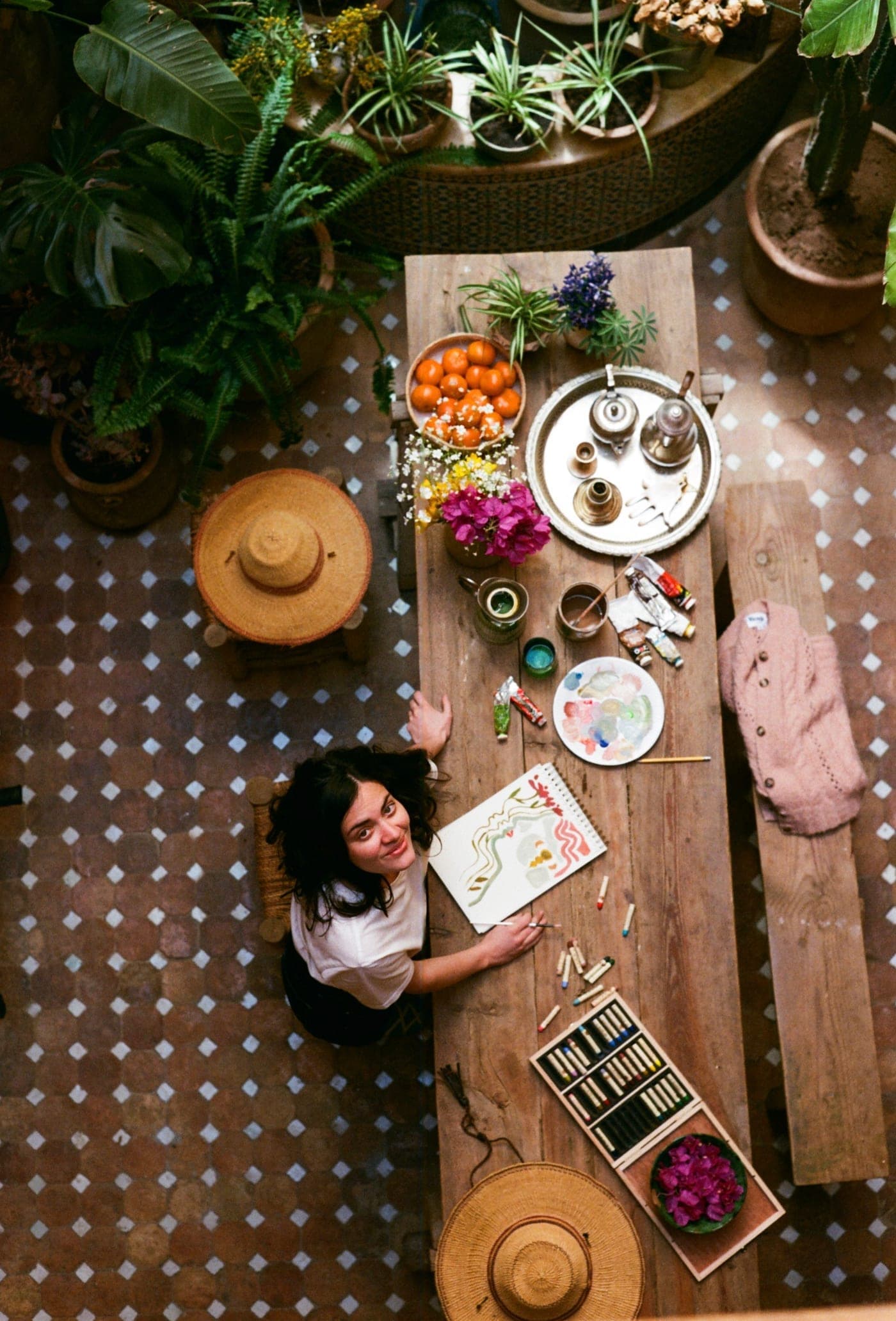
This programme gave birth to Galerie Rigotang, a contemporary art gallery in Marrakech's creative district of Sidi Ghanem. Cyrielle and Julien created Rigot Tang by combining their passions for analog photography and interior design, and the gallery extends the dialogue between art, craft, and hospitality that began inside the riad's walls. Past residents have included painters Stanislas Piechaczek and Julien Bernard, illustrators Marin Montagut and Maia Bunge, and musicians Oracle Sisters, among others. The connection between riad and gallery is structural: one feeds the other, the residency generates work, the gallery gives it a public life, and the riad retains a trace of every artist who passed through.
The Pink Rooftop
The rooftop, which they call The Pink Rooftop, is perhaps the most photographed part of the property, and deservedly so. It holds one of the most coherent views of the Atlas Mountains visible from anywhere in the city. The sun-faded desert hues of the surrounding walls and buildings create a palette that is never jarring. Breakfast is served here from 8:30 in the morning "till when you wake up," everything homemade, fresh, and changing daily. Oatmeal, scrambles, avocado toast, options for vegans and celiacs, prepared with the understanding that healthiness need not compromise taste. Breakfast is exclusively for guests, maintaining the intimate spirit that defines the place.
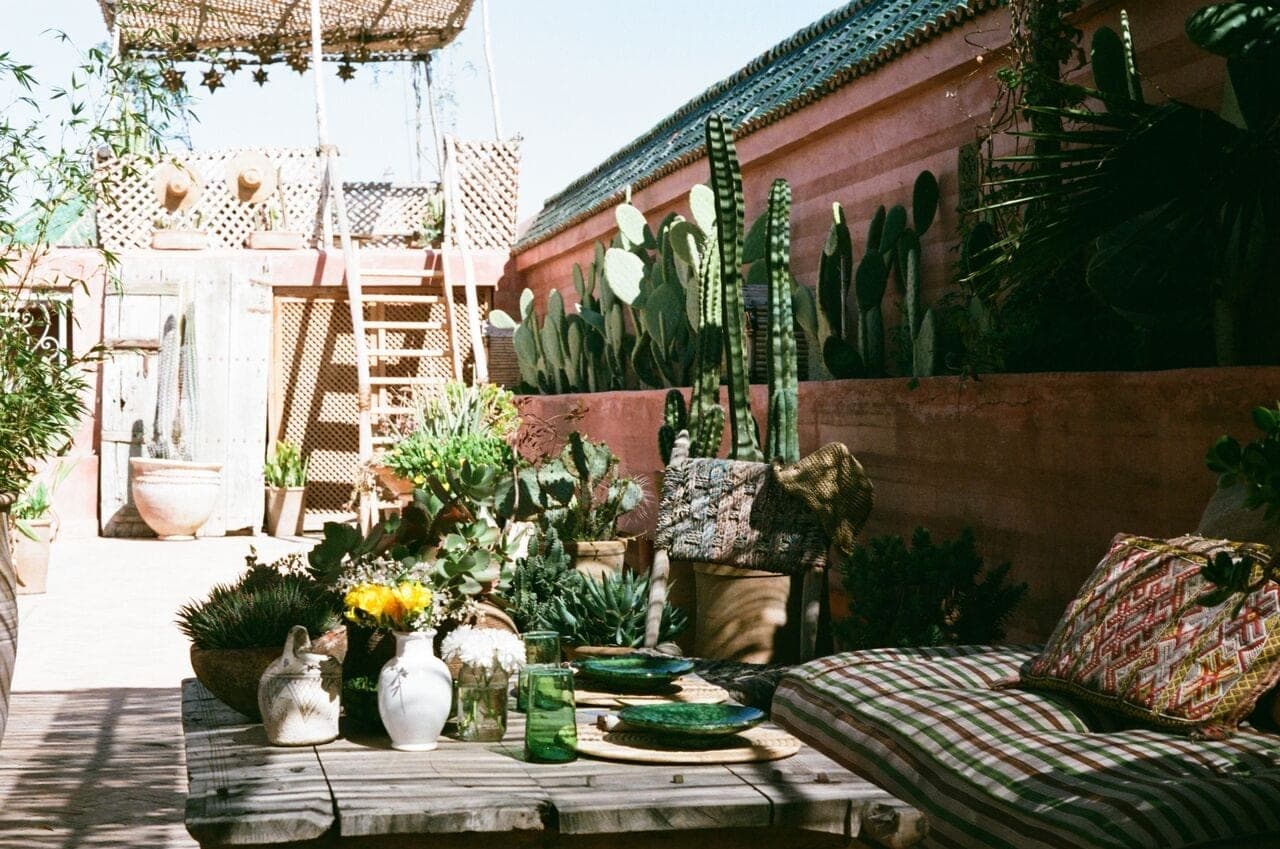
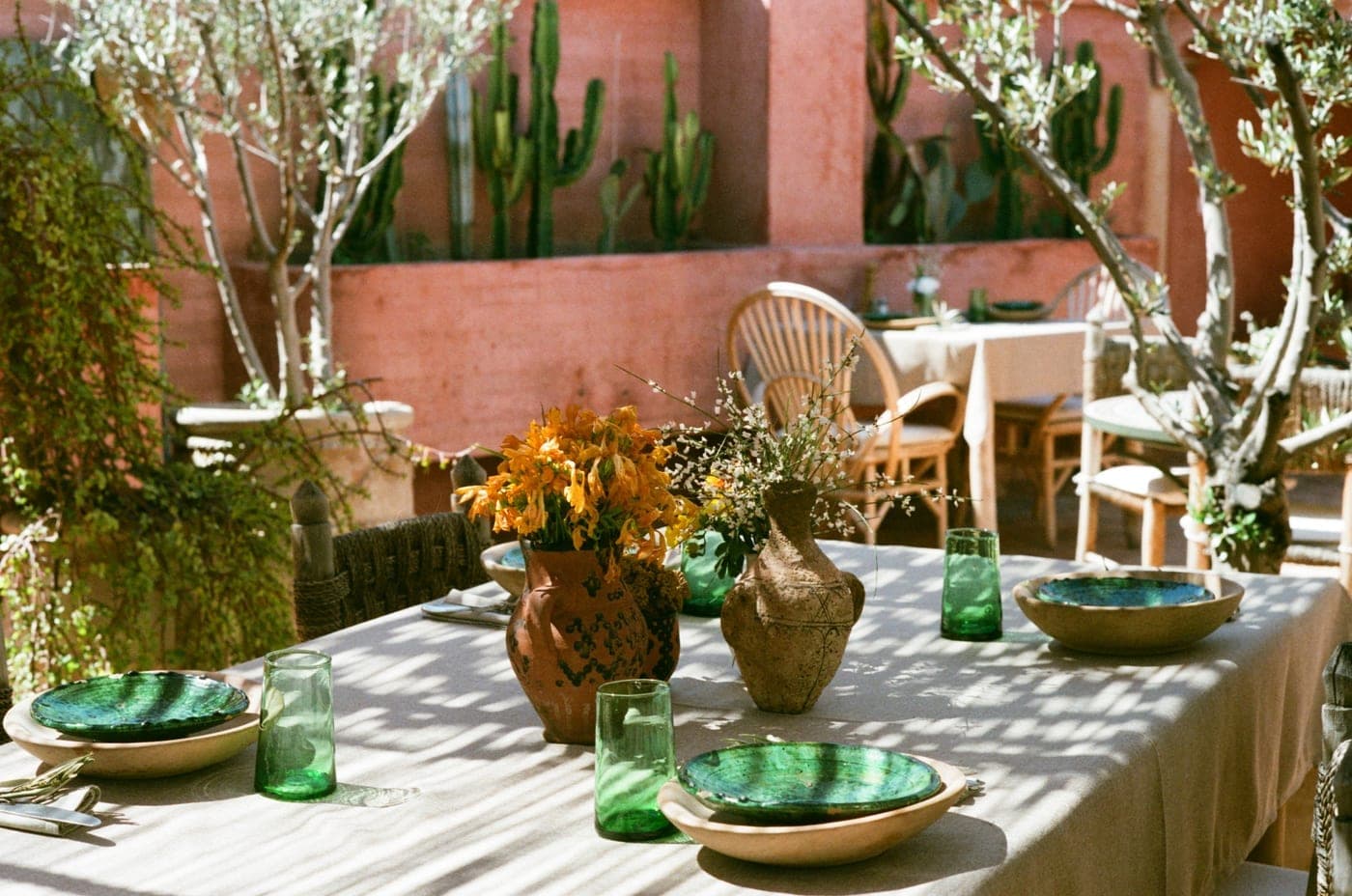
The riad is also committed to sustainability: no air-conditioning, no swimming pool, organic and vegan-friendly food, LED lighting, waste management that prioritises recycling and eliminates single-use plastics. A "Green Team" meets regularly to reduce the property's carbon footprint. These are not marketing gestures but extensions of the anti-modern philosophy, the conviction that less infrastructure, thoughtfully maintained, produces a deeper form of comfort.
Riad Jardin Secret does not try to be everything. It offers the clarity that comes from restraint, the comfort that emerges from discipline, the quietness that settles on a space when everything unnecessary has been removed. Open from September to July, it receives guests who arrive understanding that a riad can be a refuge not because it performs comfort but because it contains it.
Riad Jardin Secret · Hotel
Discover Riad Jardin Secret→You may also like…