Day Trips and Escapes from Marrakech: Six Addresses Beyond the City
8 April 2026
Desert, lake, valley, mountain: six escapes within an hour of Marrakech, from a no-electricity eco-lodge in the Agafay to a regenerative olive farm, a lakeside Ibiza-mood retreat, and Richard Branson's award-winning kasbah in the Atlas.
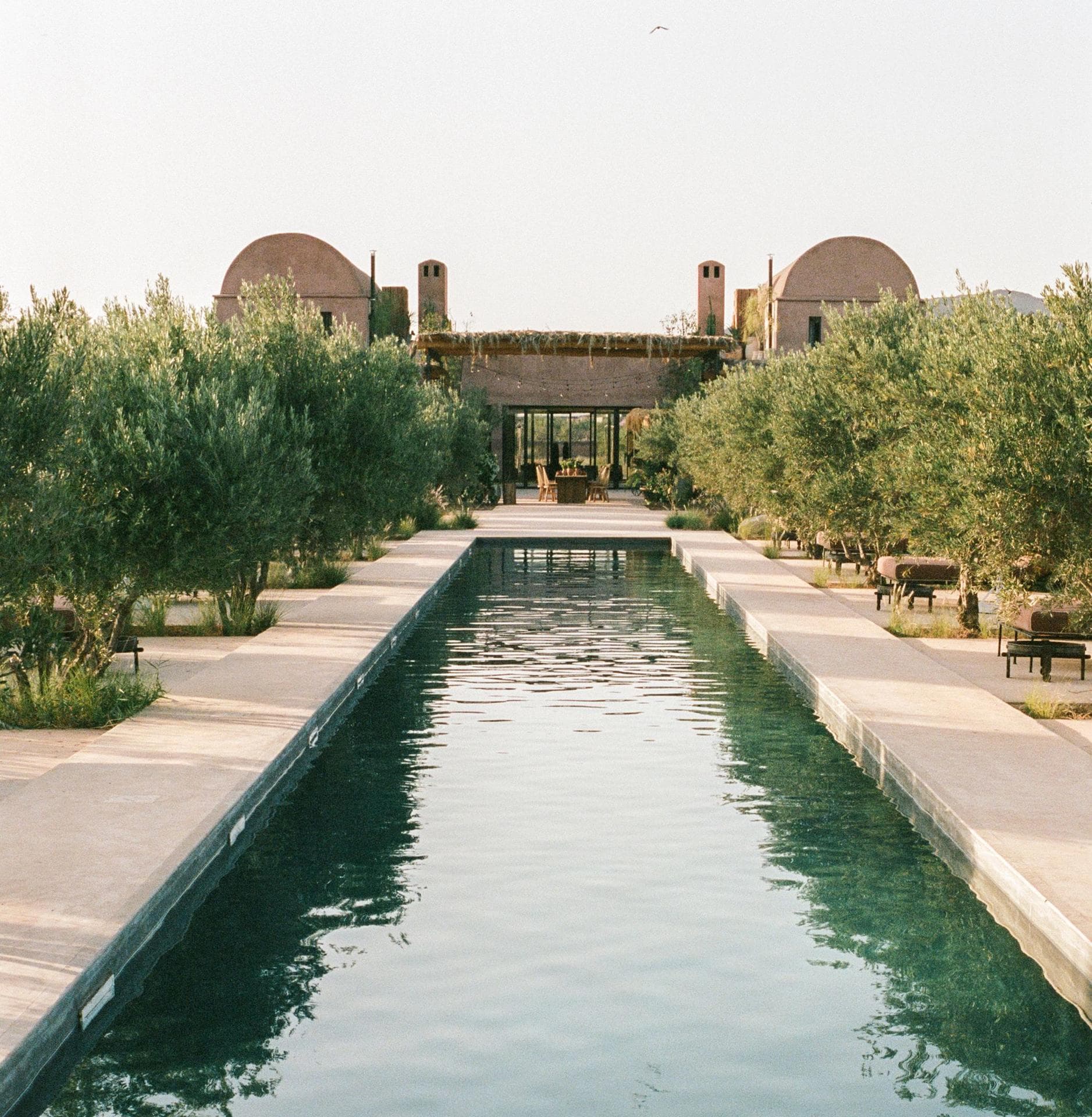
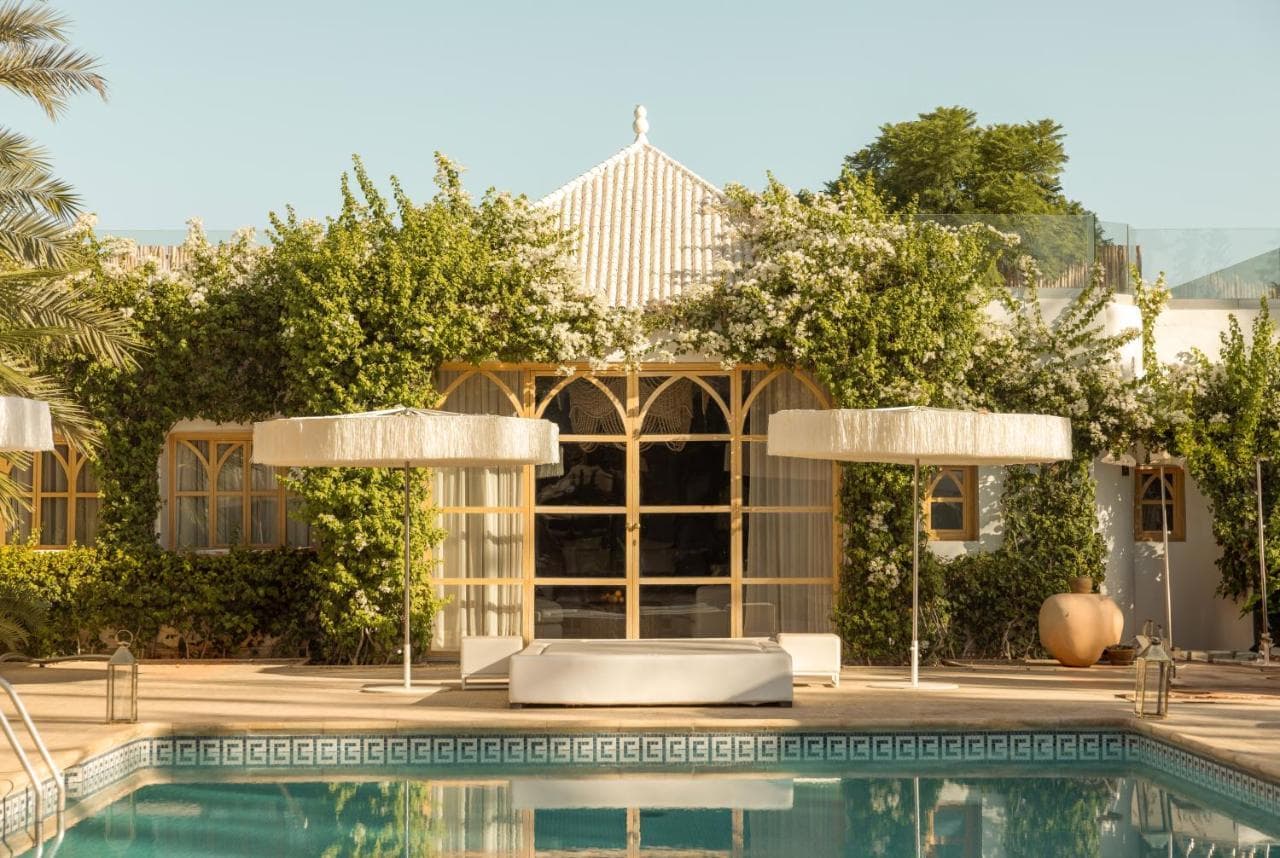
Farasha means butterfly, and the name is a cue to the property's governing logic: transformation through slowness. The farmhouse sits on a plateau between the Atlas and Jbilet mountain ranges, forty minutes from the centre of Marrakech on the Route de Fes, inside 3.5 hectares that were originally the home of French painter Patrice Arnaud. The 450 mature olive trees that frame the property were already there. The regenerative farm that now surrounds them, the seasonal vegetarian kitchen built from what the gardens produce, and the eleven suites that make overnight stays possible: these are the additions. The fifty-metre swimming pool, flanked by shaded daybeds and fragrant shrubs, is the gravitational centre of the day for guests who come for the afternoon. The farm-to-table kitchen sources almost entirely from the property and the surrounding land; meals are seasonal and plant-forward without being rigidly restrictive. Experiences extend from cooking workshops and rooftop sunsets to hiking in the mountains behind the farm and starlight dinners in the olive grove. Farasha is the easiest of these six escapes to reach from the city, and the one that makes the most transparent case for why a day trip and an overnight stay are not the same thing.
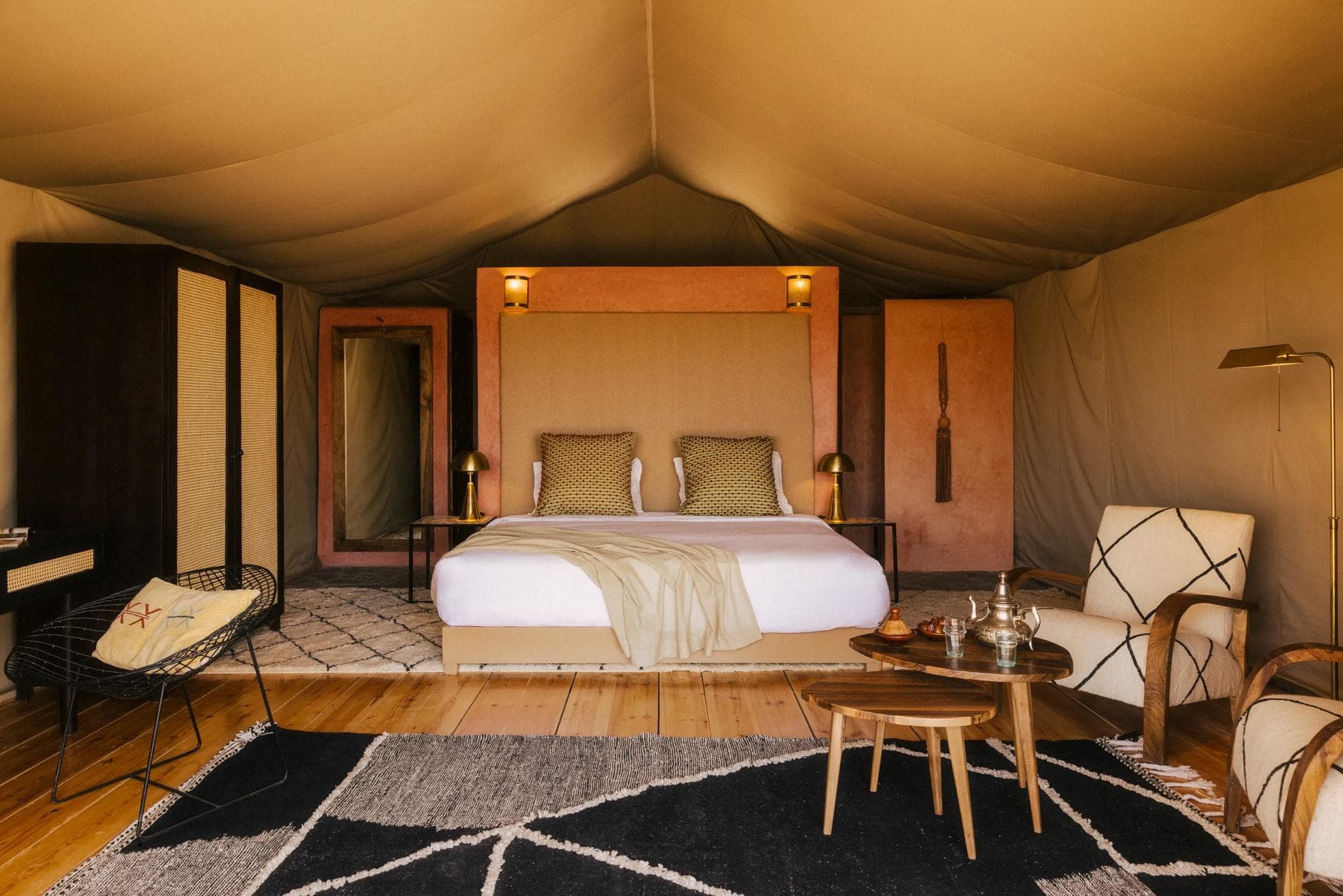
La Pause is the original Agafay escape, open since 2003 and unchanged in its essential logic: you drive thirty kilometres south of Marrakech into the rocky desert that surrounds the lake district, arrive at a property built in pisé and traditional Berber materials, and then the city detaches. There is no electricity and no wifi. Rooms are lit by lanterns and candles. The eight Berber pavilions and glamping tents give the property enough variety to suit different kinds of guests, but the offer is fundamentally the same for all of them: silence, stars, the physical reality of the Agafay landscape, and the particular quality of disconnection that only no-wifi can actually achieve. Camel rides across the Agafay sands at sunset are the most iconic activity, alongside horse riding, mountain biking and quad biking across the rocky terrain. Yoga is available, and the Moroccan breakfast served each morning in the property's outdoor spaces is a slower version of the Marrakech morning. La Pause does not position itself as a luxury experience; it positions itself as a real one. For guests who want to understand what the Agafay actually is rather than what it looks like on an Instagram feed, this is the address that was there first and remains the most honest.
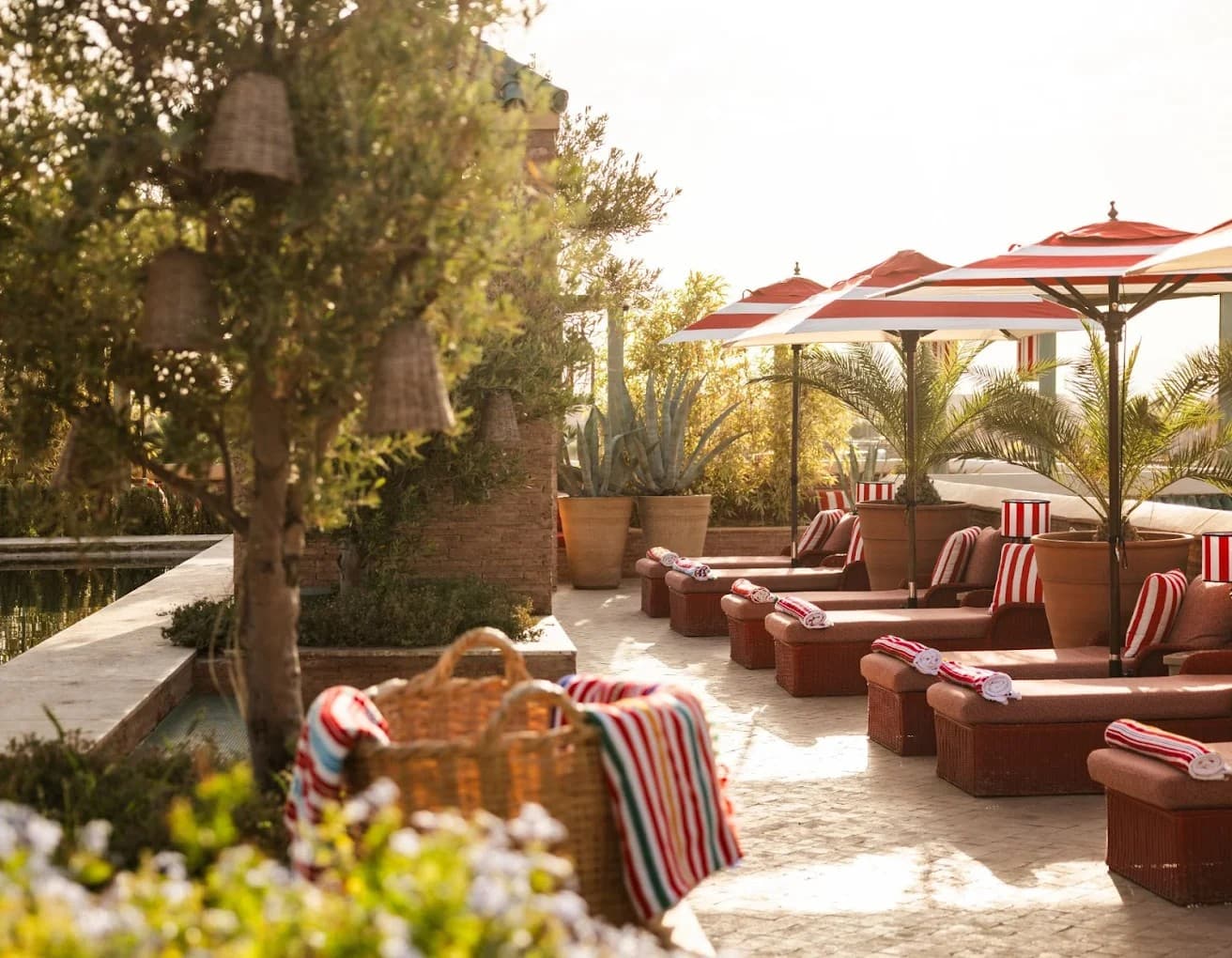
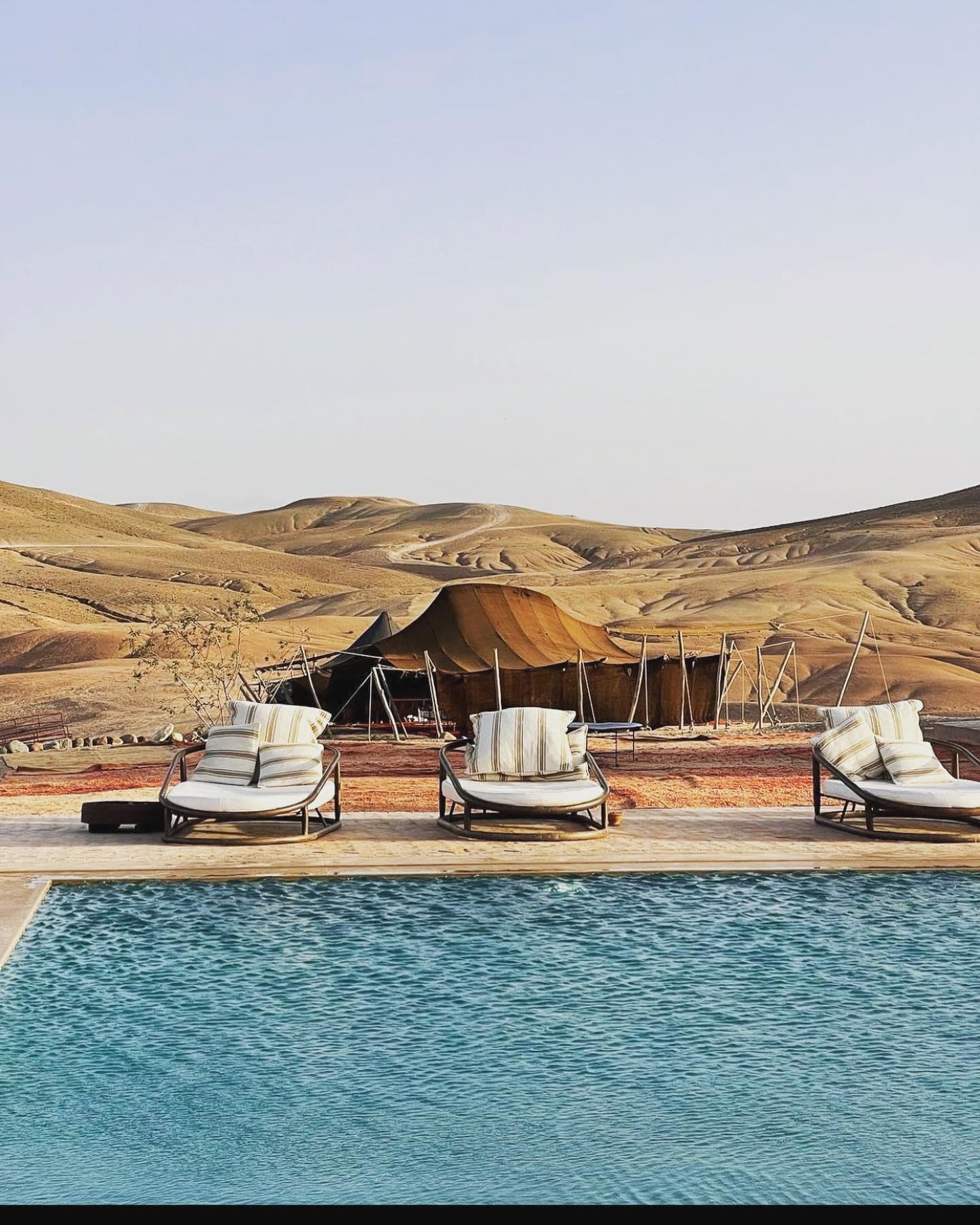
Caravan by Habitas sits in the same Agafay desert as La Pause but occupies a different position on the spectrum between roughing it and luxury. The brand, which operates sustainable camps across several countries, brings its international design and hospitality standards to the Moroccan rocky desert with twenty tented lodges inspired by Berber architecture and fitted with the modern comforts that an eco-conscious hotel group can legitimately justify in an off-grid setting. Solar power, no single-use plastics, composted waste, a carbon offset programme: the sustainability credentials are structural rather than decorative. Two swimming pools anchor the day for guests who want the desert light from a lounger rather than a saddle. A yoga pavilion opens at sunrise for the first session of the day, and a sunset tea ceremony closes the afternoon before the live music and communal dinner at the Olivar restaurant begin. The activities programme covers camel rides, horseback excursions, bicycle tours, and dune buggying for guests who want the landscape to be something they move through rather than observe. Caravan is positioned forty-five minutes from Marrakech, remote enough to feel off-grid and close enough to return to the city for an evening show if the itinerary demands it.
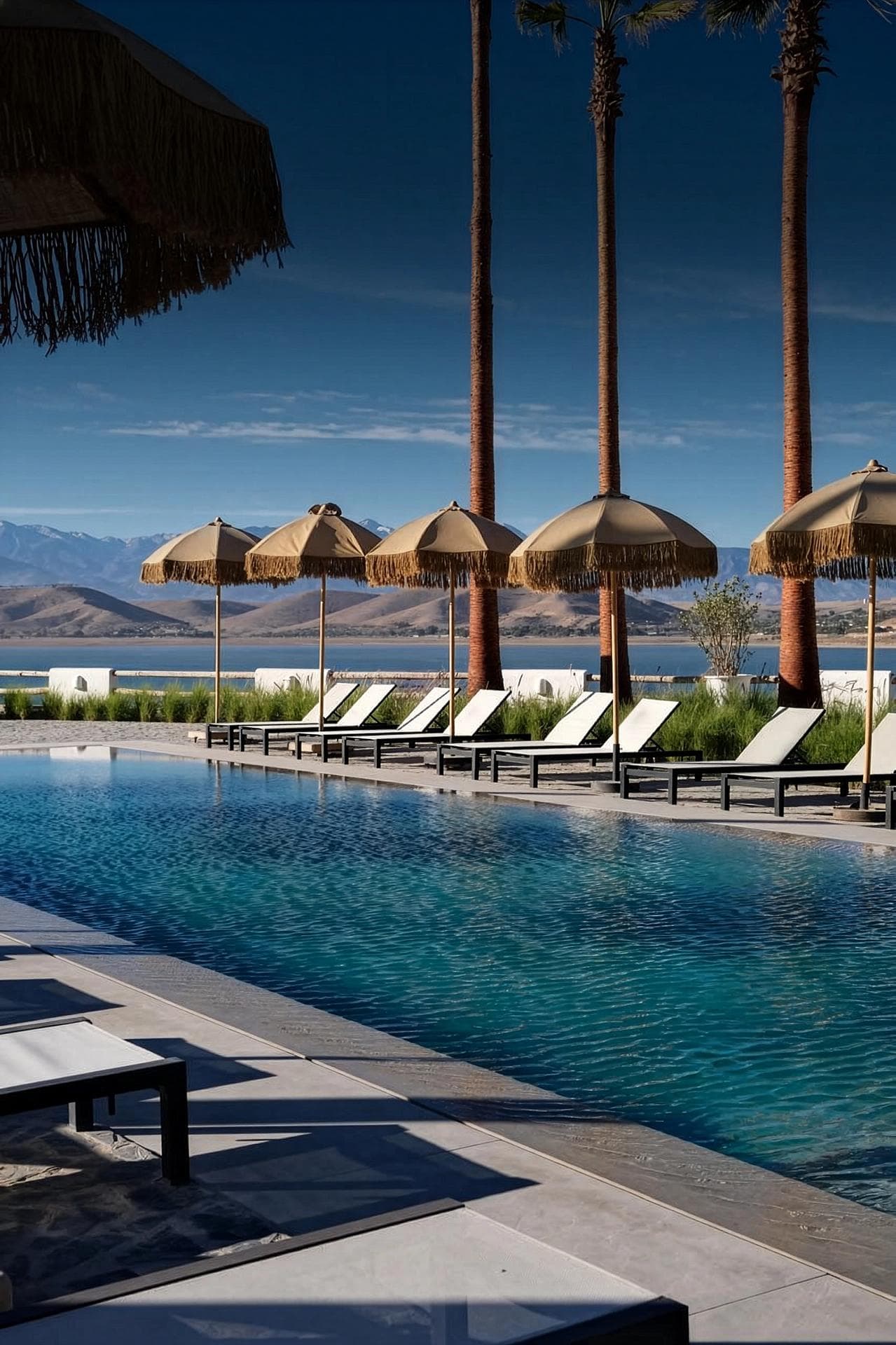
Lalla Takerkoust is a reservoir lake in the southern foothills of the Atlas, about forty minutes from the medina, and it is the kind of place that people who have been coming to Marrakech for years tend to keep quiet about. Pure House On The Lake sits directly on its shore with seven dwellings designed around the idea that silence is a form of luxury. The property considers itself a house rather than a hotel: adults-only, intimate in scale, and built around personalized service rather than the mechanics of a standard hospitality operation. The design is minimalist and deliberate, the kind that reads as effortless but carries considerable intention. The lake is visible from the rooms, from the dining terrace, and from every point in the property where it matters. Candlelit dinners can be arranged lakeside or in the desert beyond, and desert excursions extend the afternoon in either direction: toward the water at sunset, or toward the Agafay landscape that begins where the lake ends. For guests who want the Atlas panorama, the lake, and the particular quality of stillness that only seven rooms can actually sustain, this is the address on the Lalla Takerkoust shore that is built for exactly that.
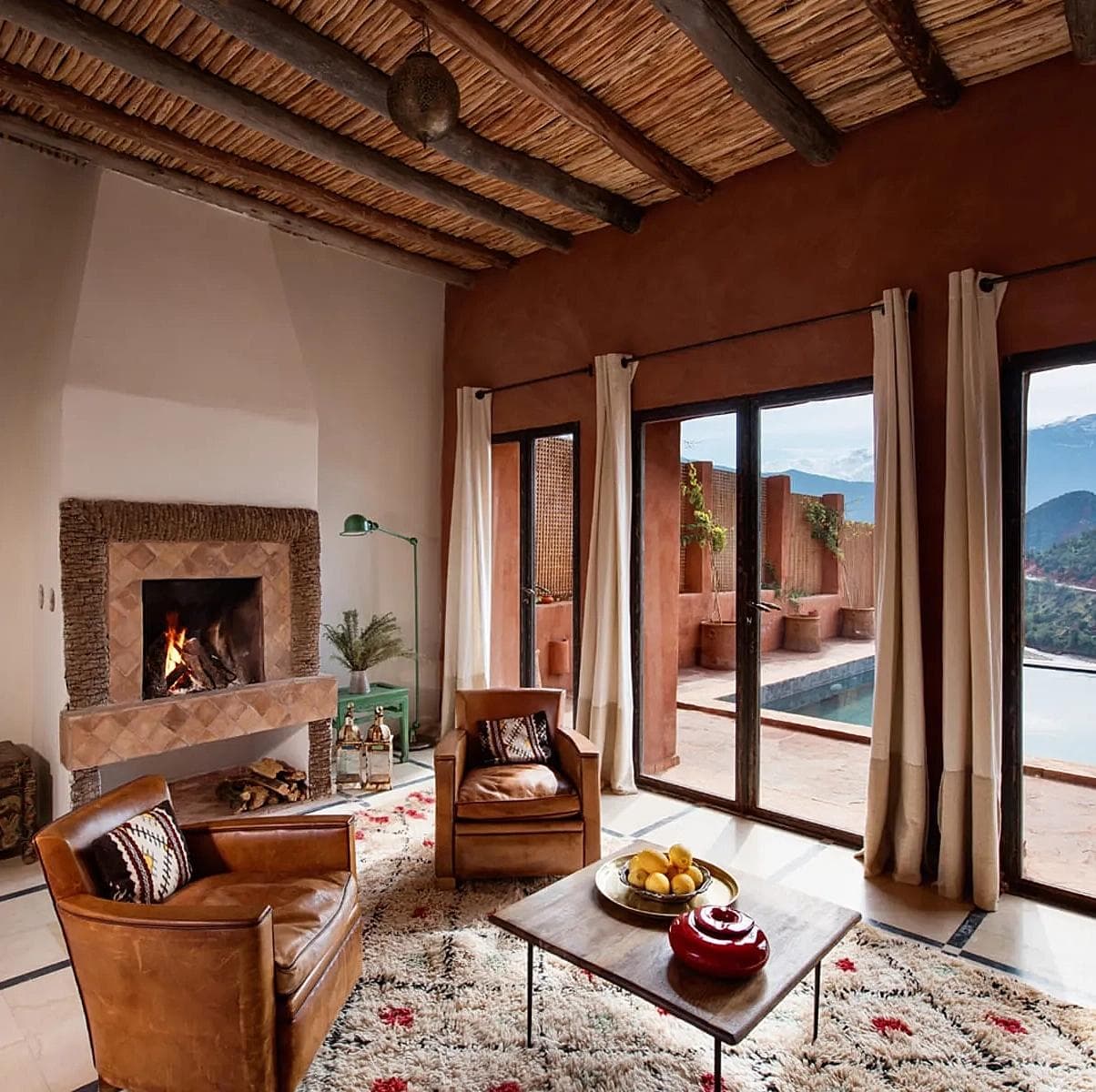
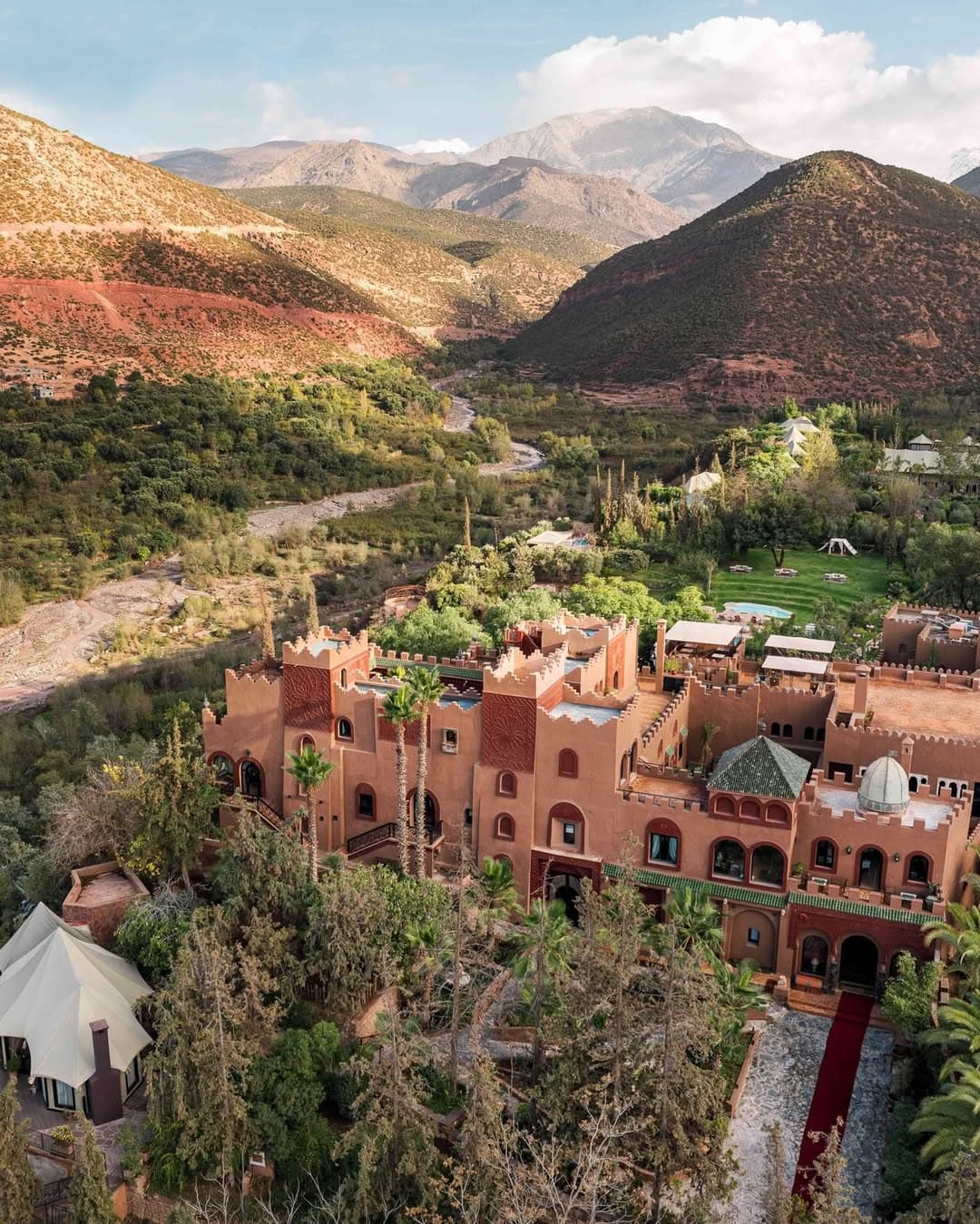
Kasbah Bab Ourika stands on a hilltop at the apex of the Ourika Valley, one of the Atlas's most accessible and most beautiful approaches, with the valley floor visible below and the snow-capped peaks rising behind. The property was built using pisé, the rammed-earth technique that is the traditional Berber construction method in the Atlas foothills, and the material gives the kasbah a presence that reads as grown rather than placed. It is one of the most eco-friendly hotel buildings in Morocco, and the credentials here are architectural as well as operational. Forty-two rooms and suites are distributed between the main kasbah, the garden buildings, the Pool Suites positioned in the most dramatic spots on the property, and a separate Retreat wing for guests who want additional seclusion. The heated pool allows year-round use in a climate that drops significantly below the city at altitude. The restaurant's colonnaded terrace looks down the valley to the olive, orange and lemon groves below. For guests who want to understand the Atlas at close range without committing to a full mountain expedition, Kasbah Bab Ourika offers a complete experience forty-five minutes from Marrakech's international airport.
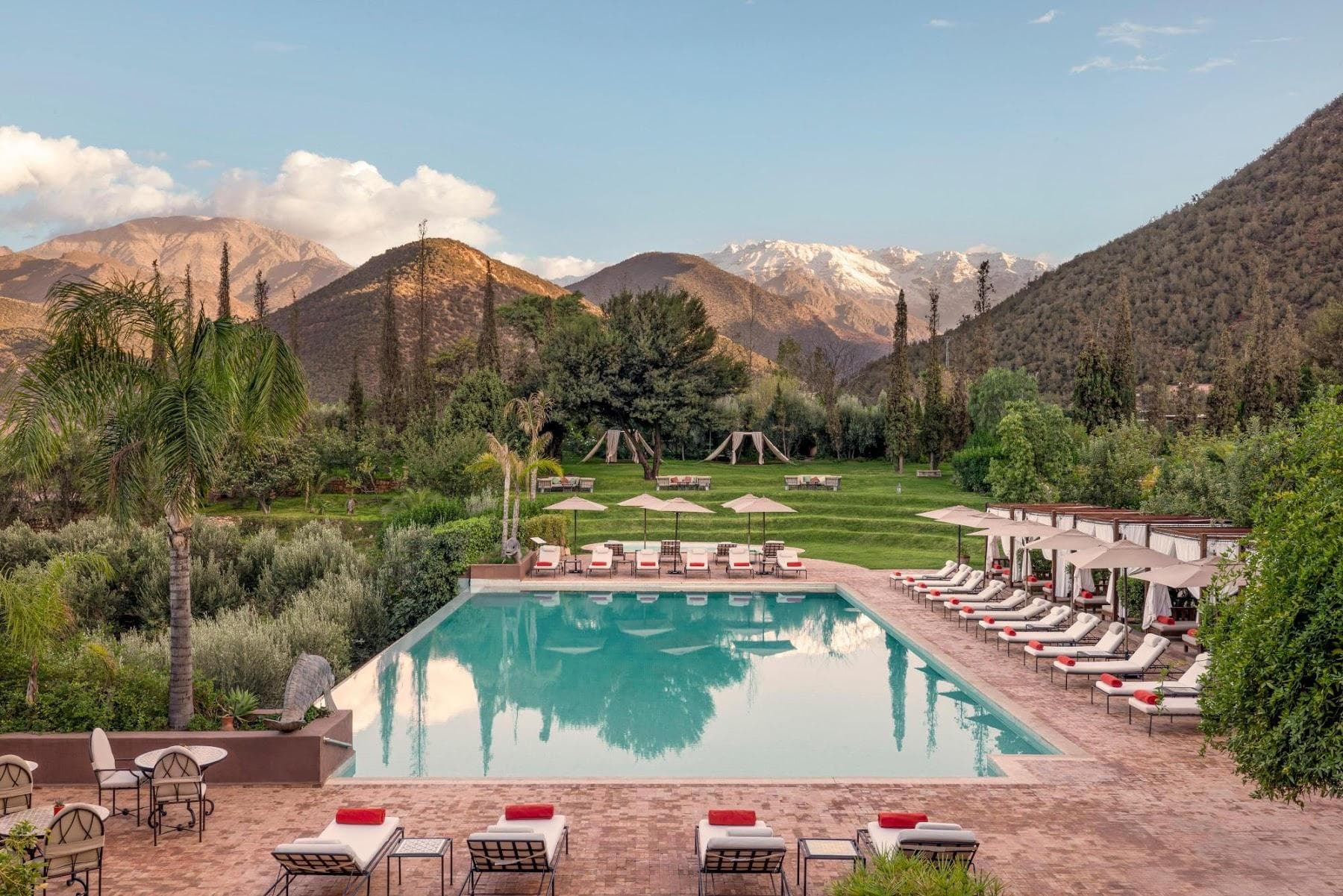
Kasbah Tamadot has a specific origin story. In the late 1990s, Richard Branson's mother Eve was exploring the Atlas Mountains looking for balloon launch sites when she found a property near Asni that she insisted her son buy. The building was originally the private home of antiques dealer Luciano Tempo. After two years of renovation, the kasbah opened as a hotel in 2005, and has been one of the benchmark addresses in the Atlas ever since. The Eve Branson Foundation, named in her honour, commissions new furnishings from local blacksmiths in Asni and artisans in Marrakech, and the resort recruits its entire staff from the surrounding villages of Asni. Forty-two individually decorated rooms, riads, tents and suites occupy the property, some with private pools or hot tubs. The gardens are dense with Moroccan planting; the views from the terraces and upper suites cover the Atlas peaks in one direction and the foothills descending toward Marrakech in the other. Activities include hiking in the mountains above Imlil, cooking lessons in the kasbah kitchen, spa treatments and pool afternoons that become something more when the sky over the Atlas changes colour in the evening. Kasbah Tamadot is the address in this selection that most rewards an overnight stay, and is far enough from the city to justify it at an hour's drive.
You may also like…