Best Pools in the Palmeraie: Nine Addresses for the Perfect Escape
Timence Guide Editors · 7 April 2026
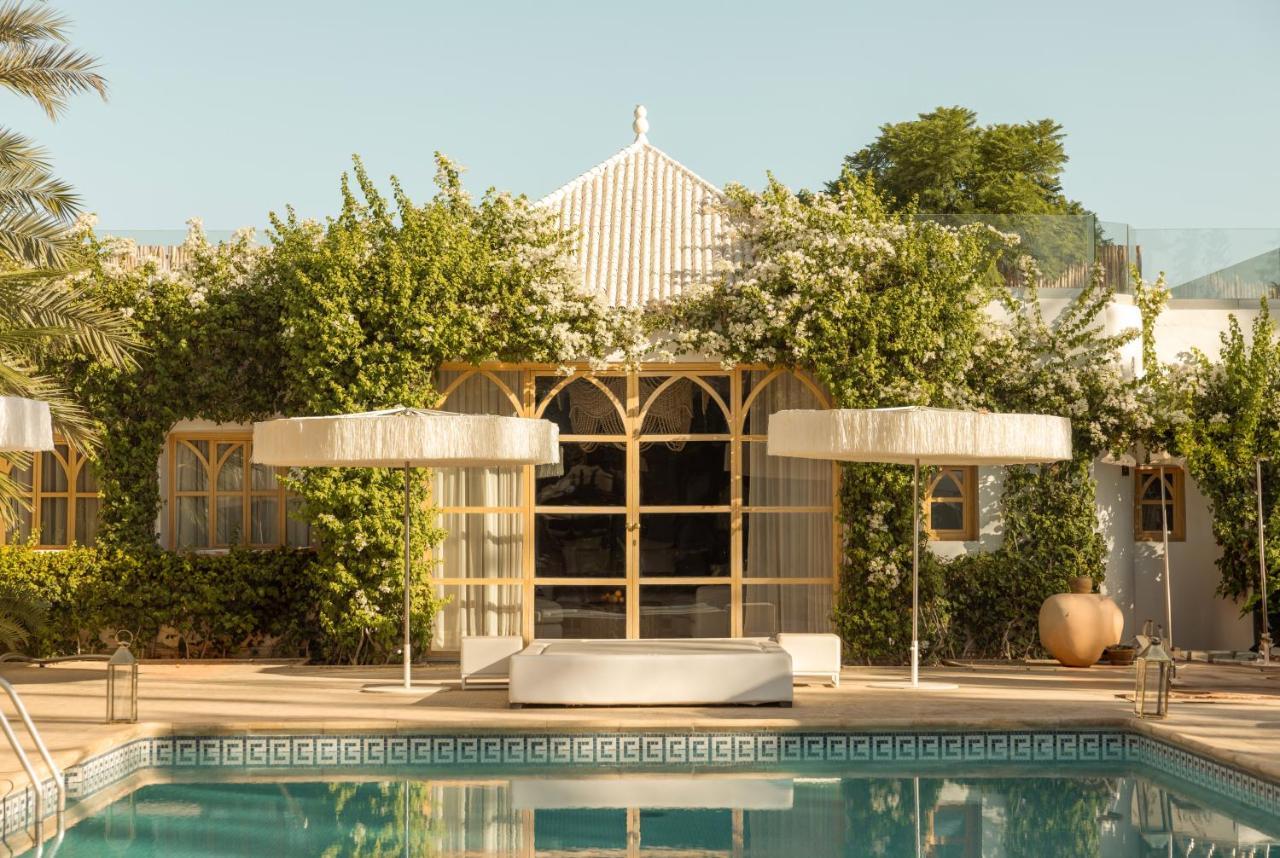
From an eco estate with five garden pools to a 1930s Relais and Chateaux villa, a house-hotel built around a curated art collection, and a bohemian resort transplanted from Saint-Tropez: the nine best pools in the Palmeraie, each with its own soul.
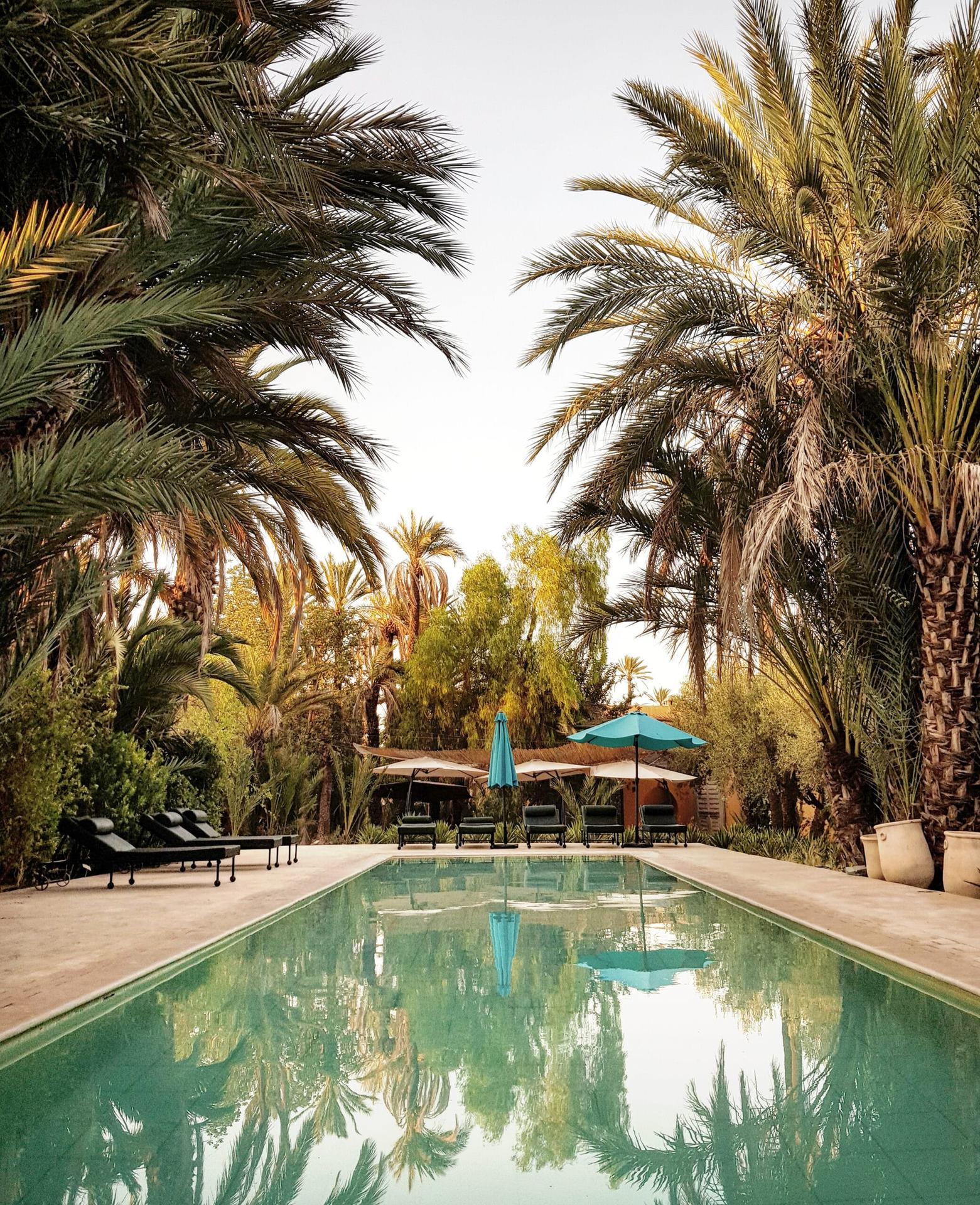
Jnane Tamsna is what the Palmeraie was made for. The nine-acre property sits inside the palm grove as if it grew there, which in some ways it did: the owners, designer Meryanne Loum-Martin and ethnobotanist Gary Martin, have spent decades cultivating a garden that functions as an ecosystem as much as a setting. Twenty-four rooms are distributed across five houses, each with its own pool and veranda overlooking the gardens. The herbs and vegetables on the menu come from the property; the design ethic runs from architecture to kitchen. The interiors layer Moroccan craftsmanship with Middle Eastern furnishings and African textiles, a combination that reads as coherent rather than assembled because the owners live here and their sensibility runs through every detail. Five pools means five different moods across the estate. The philosophy is ecological and intentional, which gives the property a calm that most luxury addresses in the city spend considerable resources attempting to replicate.
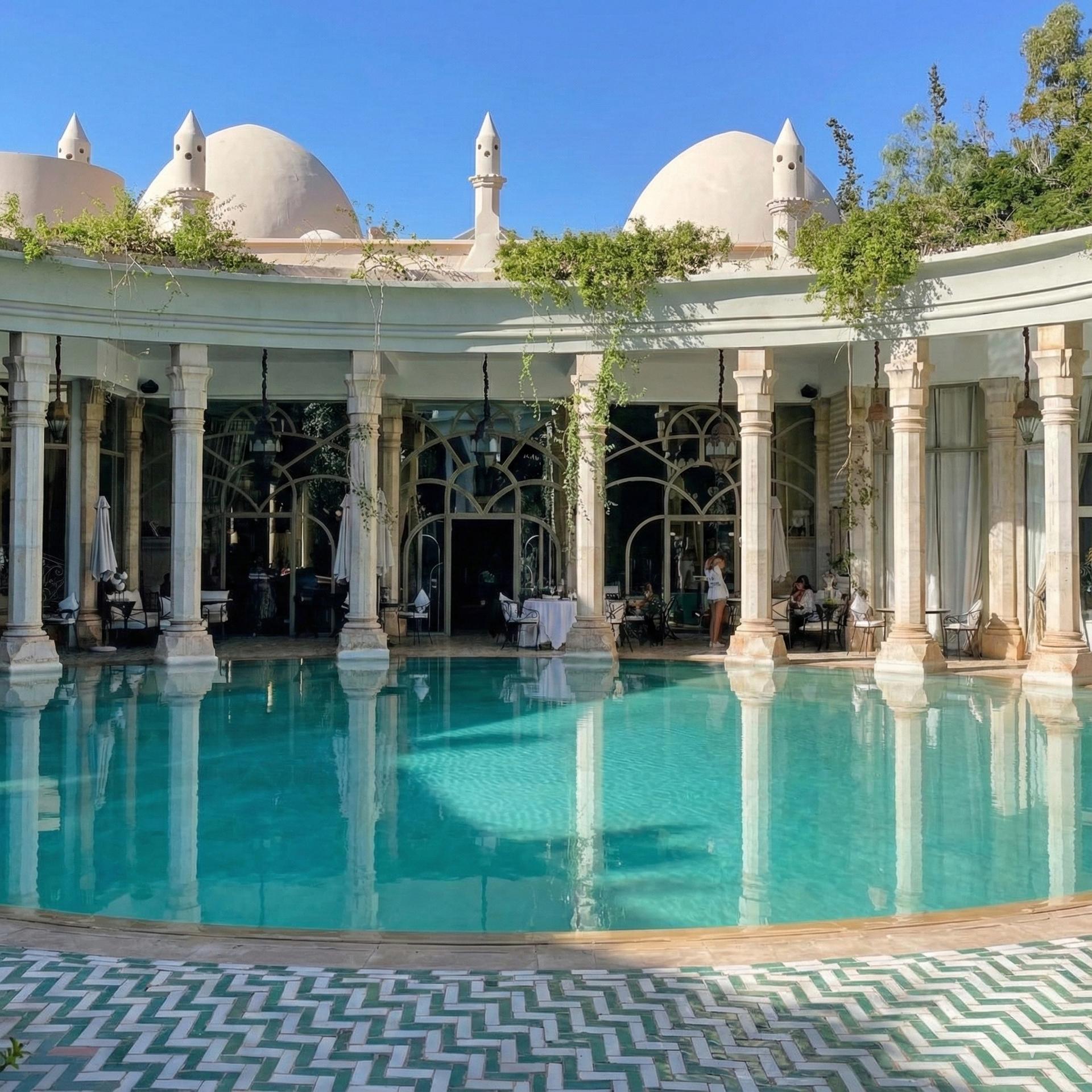
Palais Rhoul has a pool that reads as a set piece: a vast surface of water framed by Greco-Roman columns, set within five hectares of garden, with a baroque interior visible through the arched openings. The glamour here is deliberate and unapologetic. The atmosphere has been compared to Cipriani in its selectness, and the property delivers on that register: a small number of rooms in very large spaces, two outdoor pools, an indoor plunge, and a restaurant with the visual confidence of an address that has decided exactly what it wants to be. The property is positioned in the Palmeraie as one of its most theatrical estates. For guests who come to the palm grove for the full cinematic experience rather than for restraint, Palais Rhoul is the clear answer. The scale of the outdoor pool at the centre of the property, the columns, the baroque decor, the manicured five-hectare setting: it is a version of luxury that makes no concession to minimalism.
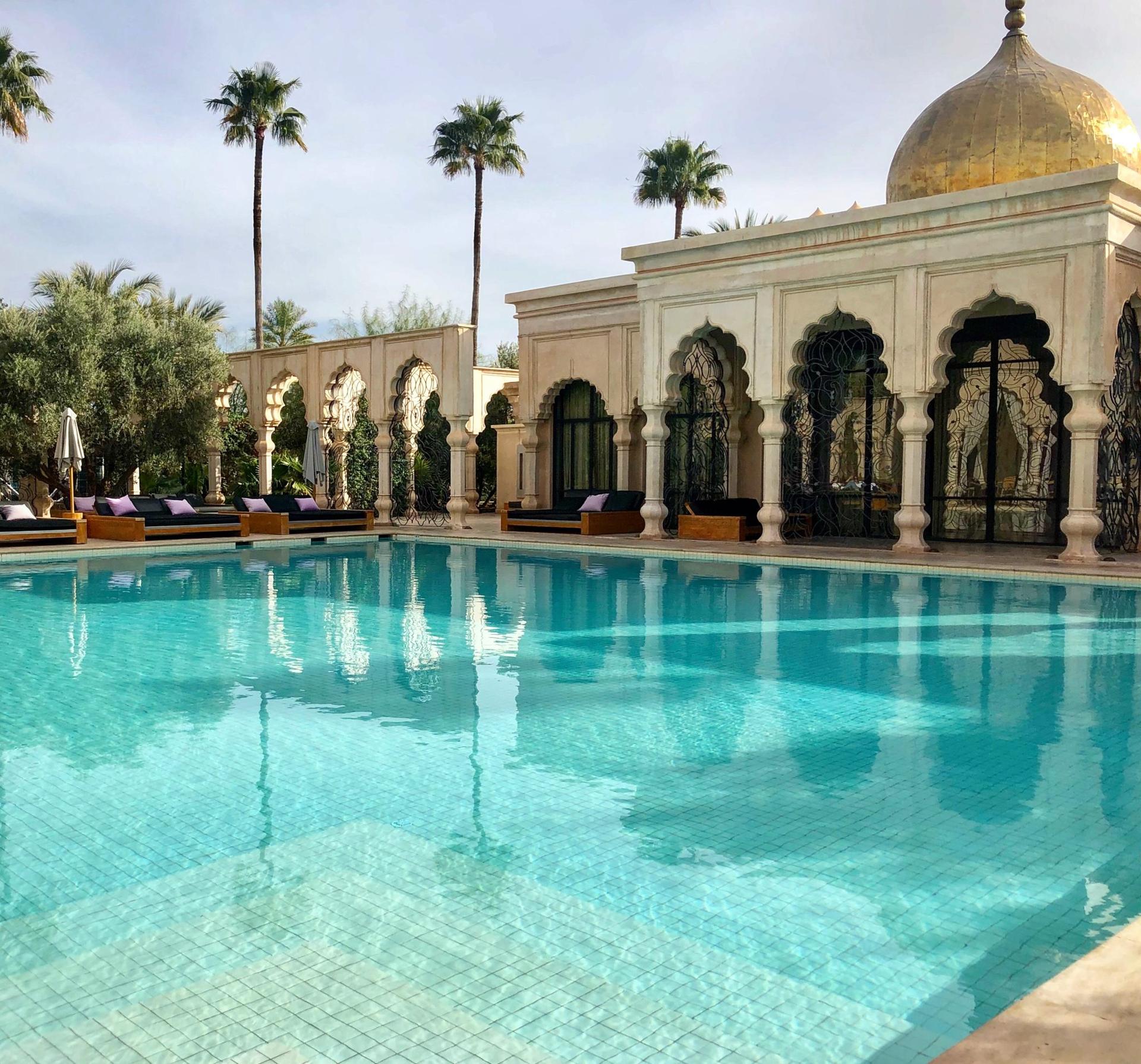
Palais Namaskar is among the most architecturally considered addresses in the Palmeraie. Spread across twelve acres of landscaped grounds, the property combines Asian, oriental and contemporary design with Moorish and Andalusian references in a way that the term "fusion" does not fully describe: the principle is Feng Shui, and the result is a property where water, garden, light and structure feel aligned rather than decorative. Tranquil lakes run between the buildings; exotic gardens border the pathways; almost all of the villas and residences come with private pools or Jacuzzis. The main pool sits at the heart of the resort, surrounded by sun loungers and attended poolside service. The 41 units range from rooms to suites to private pool villas to full Palaces. The Sunday brunch at Palais Namaskar has become one of the most established in the Palmeraie: a proper table occasion with live music and the pool as backdrop. The combination of architectural identity and poolside ease is what makes this address iconic rather than simply luxurious.
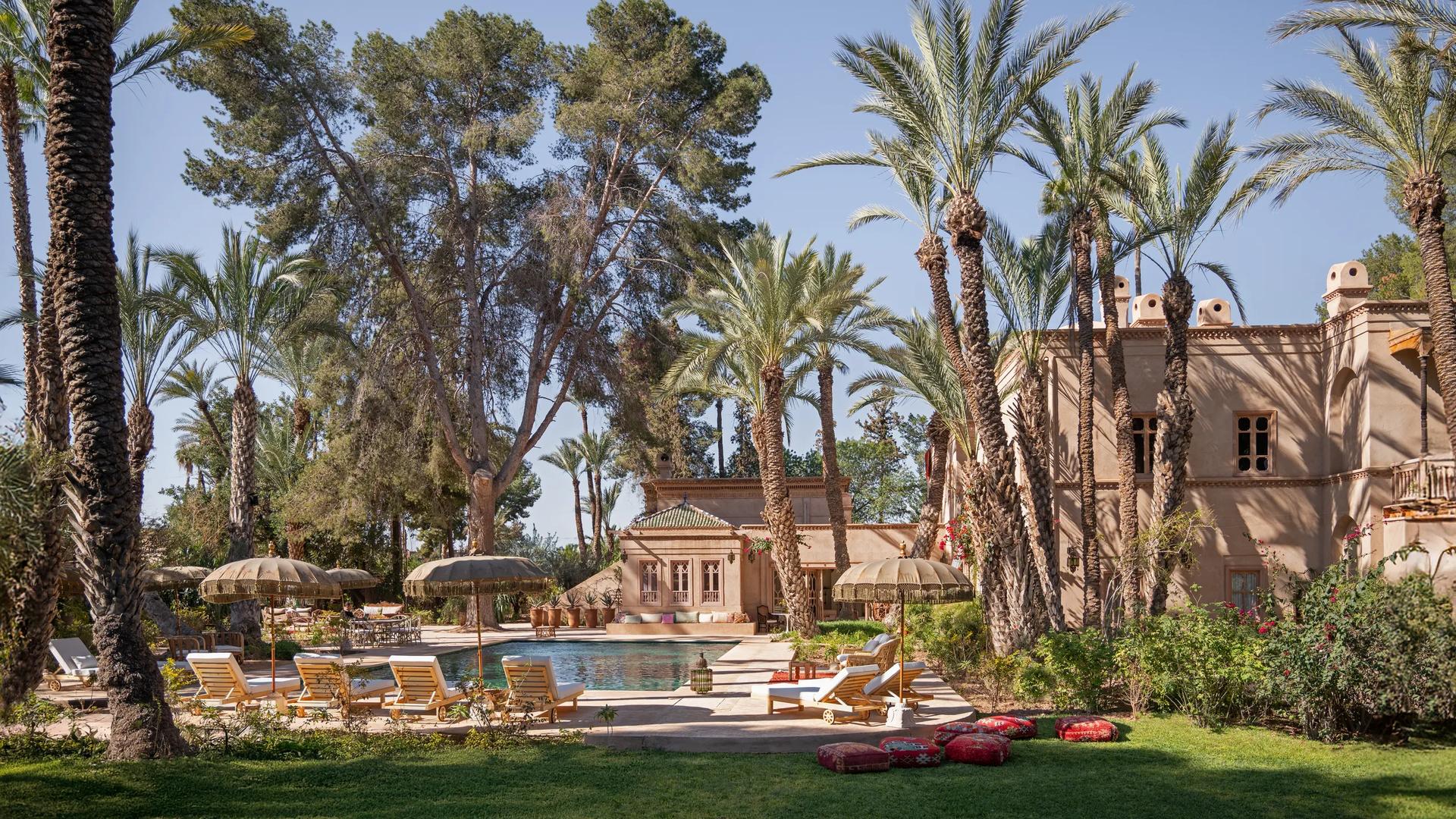
Jnane Rumi opened in April 2025 and is already one of the most discussed properties in the Palmeraie, which for a house-hotel of eleven suites is a notable position. The building is a mid-20th-century private residence designed by Charles Boccara, restored and reopened with a programme that treats art and hospitality as inseparable. The collection was curated by Moroccan artist Samy Snoussi and spans murals, frescoes, tapestries and site-specific installations by Mous Lamrabat, Louis Barthelemy and Roberto Ruspoli. The art is not hung on the walls; it is built into them. The thirteen-by-six-metre tiled pool is the social centre of the property, a proportionally generous space for eleven suites, with a private garden annex that has its own separate pool for guests who want full seclusion. Chef Karin Gaasterland, previously at Riad El Fenn, brings a contemporary Moroccan-French sensibility to long lunches and slow dinners beside the water. Jnane Rumi is what happens when the Palmeraie is approached as a creative proposition rather than a real estate category.
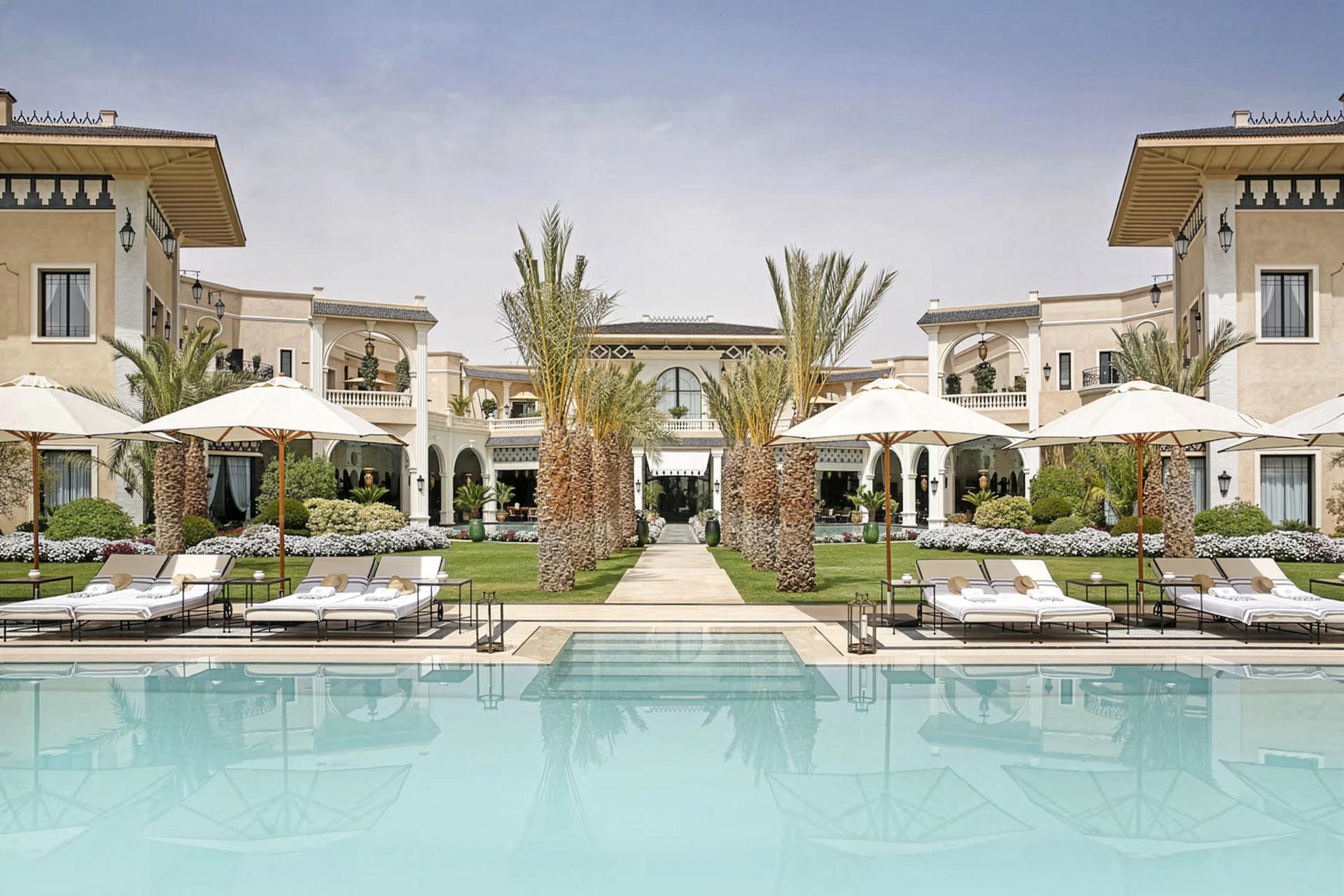
Palais Ronsard is the Relais and Chateaux property in the Palmeraie, a 1930s building reimagined by businessman Aram Ohanian and his wife Adriana Karembeu as a twenty-two-suite hotel with six additional private pool pavilions. Interior architect Gil Dez layered Baroque, Moorish and Art Deco references into spaces that feel simultaneously historic and composed. The frescoes throughout were made by artists trained at the Beaux-Arts d'Aix-en-Provence. The gardens are rose-scented, with century-old olive trees marking the paths between the buildings. The central pool, in lagoon colours surrounded by colonnaded galleries, is the visual anchor of the property. Three restaurants overseen by chef Xavier Mathieu complete the offer: the Pool House for poolside dining, Le Verger du Poete for vegetable-focused meals in the kitchen garden, and the Jardin d'Hiver for formal evenings. Palais Ronsard is the address in the Palmeraie for guests who want the institutional quality of a great hotel alongside the intimacy of a property that still feels personal.
Propriété SALAH 7 ABYAD, Municipalité Ennakhil, Marrakech - Morocco
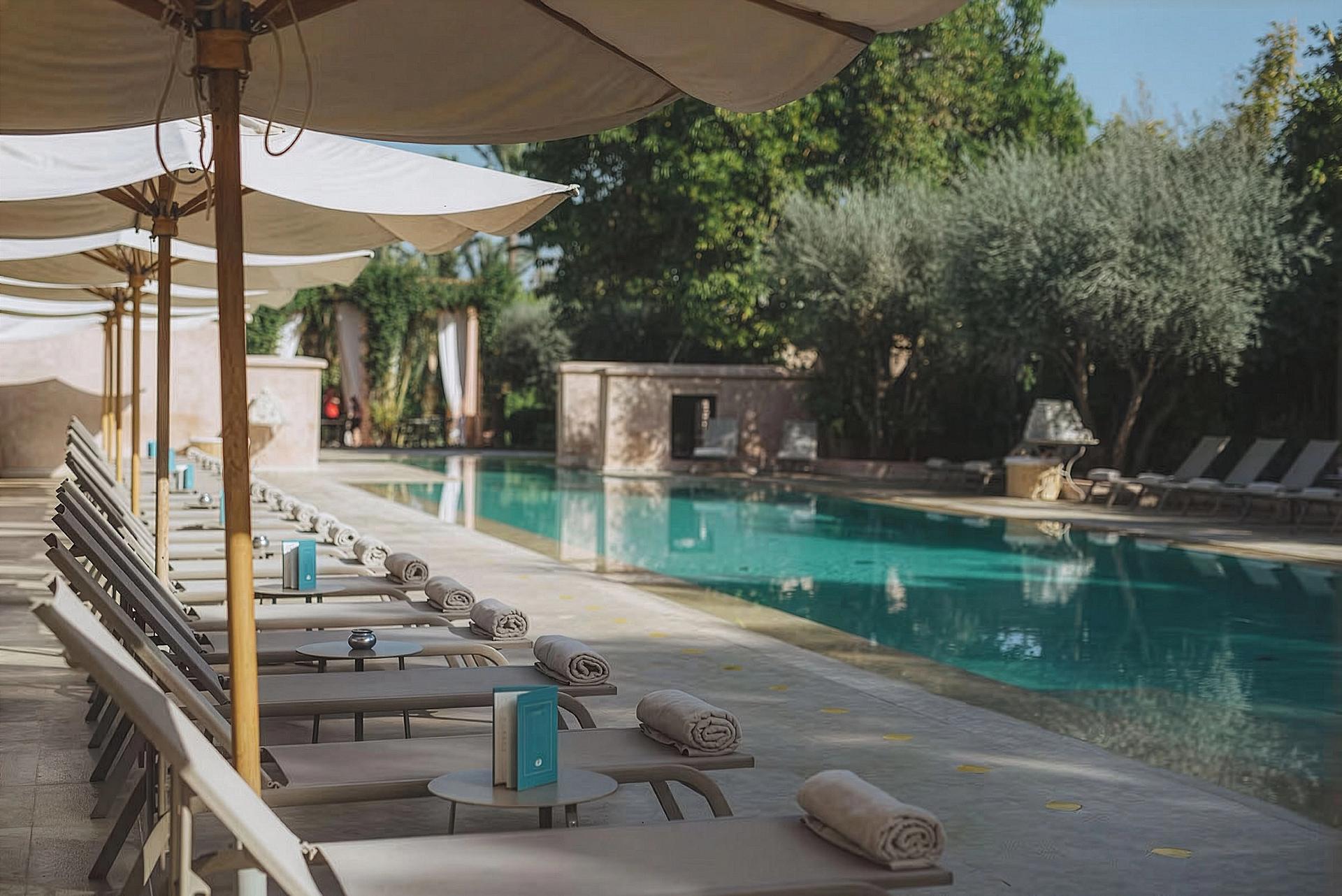
Les Deux Tours was designed by Charles Boccara more than thirty years ago and remains one of his most complete works in the Palmeraie. The three-hectare estate was conceived as a series of villas arranged within labyrinthine Andalusian gardens where water runs along stone channels, through fountains and into hidden pools that reveal themselves as you move through the grounds. The architecture is organic and rooted: this is not a building that was placed in a garden but a building that was designed to grow with one. Forty-four rooms and suites are distributed across the property, with Pool Suites and the Charles Boccara Suite, a private pool residence decorated with period furniture, at the top of the hierarchy. The pool experience at Les Deux Tours is about the passage through the grounds as much as the pool itself: the gardens, the canals, the shade structures and the privacy that comes from thirty years of cultivation. For guests who prize atmosphere over amenity count, this is the Palmeraie address that rewards the most.
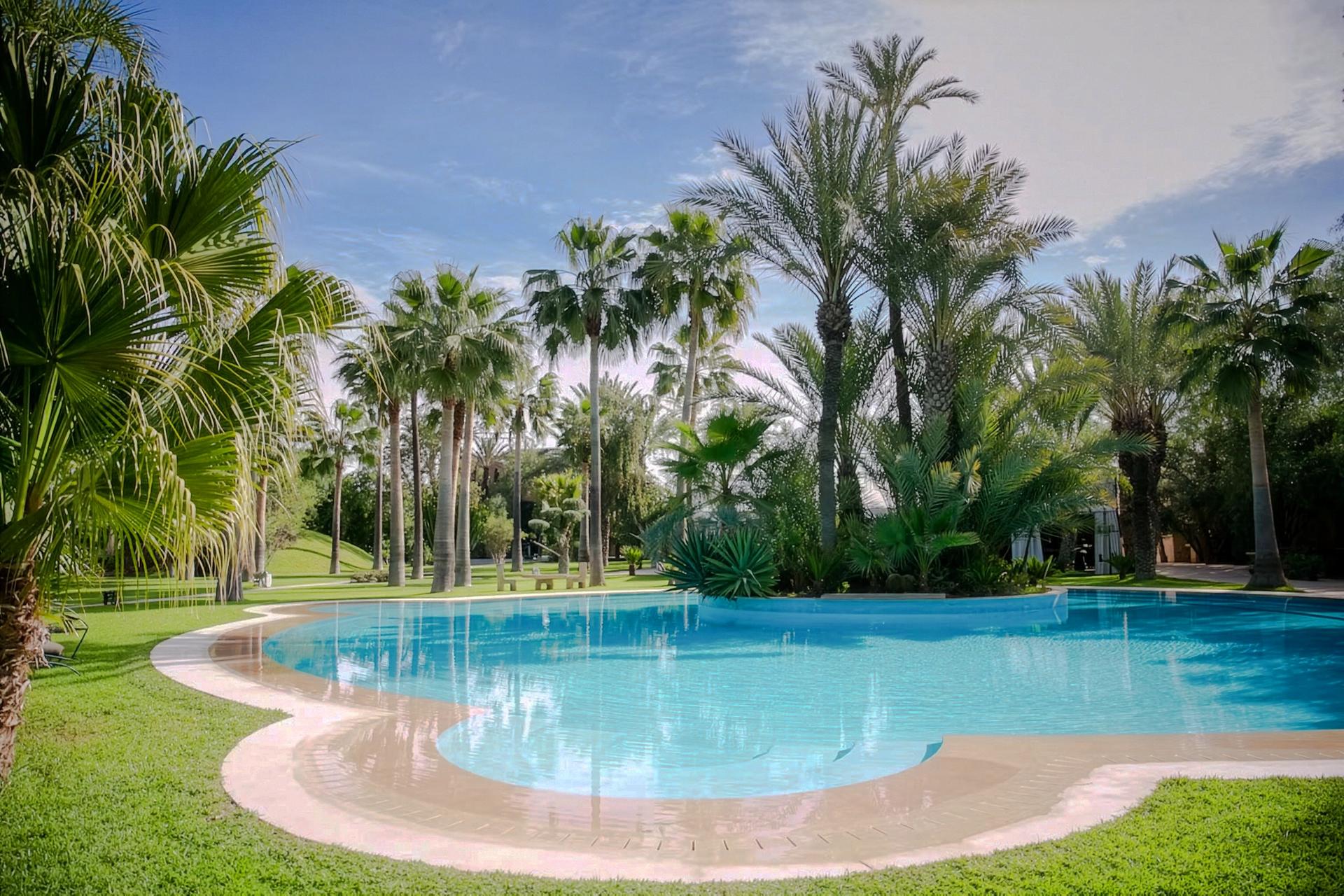
Lodge K was built as a deliberate curiosity: five lodges and three suites designed by Richard Cahours de Virgil as a theatrical homage to different cultural histories. The African lodge pays tribute to African art. The Art Deco lodge celebrates the 1920s. The Egyptian lodge reconstructs a lost civilisation. The Master Lodge, at 230 square metres, is built around a nomadic chef's tent. The Balinese lodge has a private heated pool directly in front of the bed. The property works as a single estate with three pools and grounds planted with palms, cacti, olive trees, bamboo and fruit trees, and as a collection of entirely separate worlds. The spa programme, three pools, and the density of the planting create a retreat logic that suits guests who want the Palmeraie as a full immersion rather than a day pass. The theatrical design is not pastiche: each lodge has been executed with the conviction of an original rather than a reproduction, and the overall impression is of a place that takes its own imagination seriously. Lodge K is the most singular address in this selection and the hardest to explain without simply visiting it.
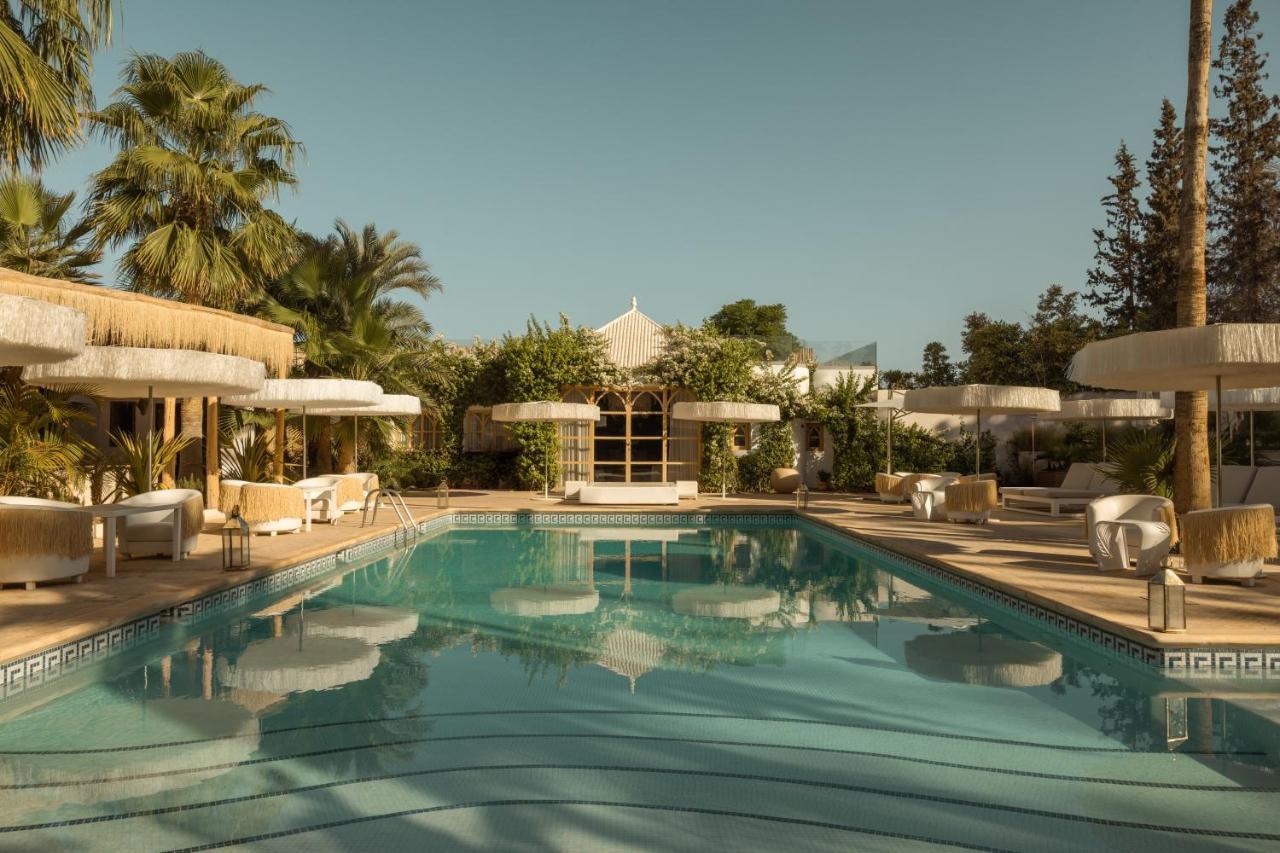
Les Palmiers was founded by Stephanie and Michel Dibenedetto, who also run the Les Palmiers club in Saint-Tropez, and the southern French sensibility is visible in everything: the Mykonos-and-Tulum visual register, the Mediterranean lunch menu, the designer umbrellas and the bamboo forest that creates a mood more Ibiza terrace than Moroccan courtyard. It is a deliberate transplant, and it works in the Palmeraie because the light here cooperates with that aesthetic in a way that it would not elsewhere. Two pools sit within the grounds, surrounded by the bamboo planting and the unhurried infrastructure of a property that wants its guests to stay horizontal for as long as possible. The restaurant serves Mediterranean cuisine with a bohemian character that fits the poolside register. Les Palmiers is the Palmeraie address for guests who want the sun-drenched European resort experience inside the palm grove, without the ceremony that some of the larger properties require.
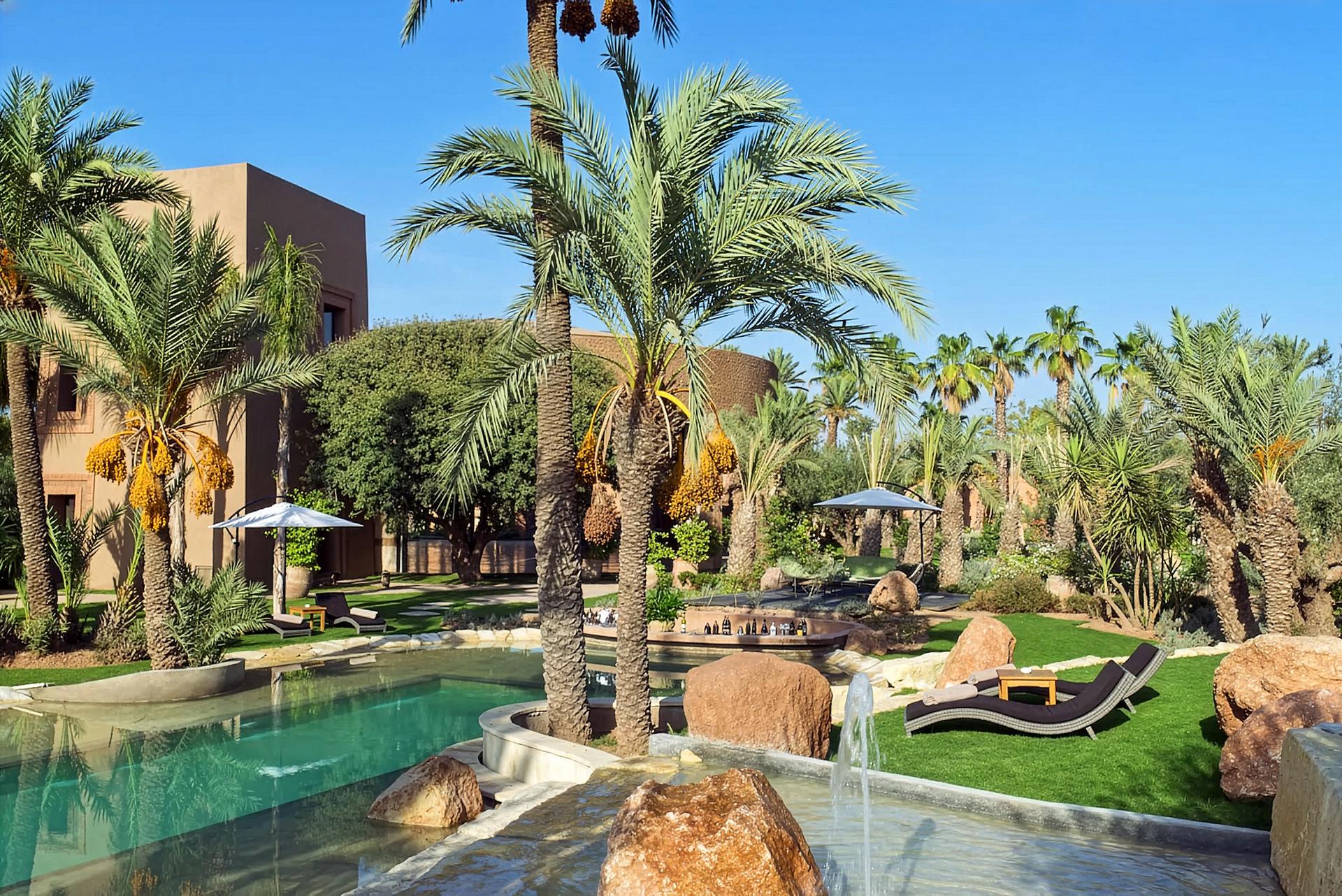
Tigmiza is the most quietly accomplished address in the Palmeraie. The twenty-seven-room boutique hotel sits within two hectares of landscaped garden with three outdoor pools, one of them heated for year-round use, a full-service spa with hammam and steam room, and a level of operational polish that distinguishes it from properties that invest in spectacle over consistency. The rooms are spacious and carefully furnished; the gardens are immaculate; the pace is set by the property rather than by any programme. Golf on a nearby course, cooking classes, bicycle rides and a cinema complement the pool and spa offer. A daily shuttle connects the property to the medina, which solves the practical question of city access without disrupting the property's atmosphere. Tigmiza has built its reputation on returning guests, which in the Palmeraie is the most reliable signal of a property that has understood what its guests actually come for: not the grandest pool in the palm grove, but the most considered one.
You may also like…
 Map
MapBEST OF | ADDRESSES
18 Luxury Spas and Hammams in Marrakech
 Map
MapBEST OF | ADDRESSES
40 Best Pools in Marrakech: Where to Swim Across the City and Beyond
ADDRESSES
Scenti Marrakech: Making a Perfume in a City That Has Always Known How
 Map
MapBEST OF | ADDRESSES