Scenti Marrakech: Making a Perfume in a City That Has Always Known How
Inside the Guéliz atelier where a two-hour workshop turns thirty raw materials and Morocco's olfactory memory into something you carry home.
14 April 2026
The raw materials arrive first. Thirty small vials, arranged in a semicircle on a clean workstation, each labelled with a name that reads like an index of Morocco's aromatic geography: Damask rose from the Kelaat M'Gouna valley, orange blossom from the groves that still surround the city, cedar from the Middle Atlas, musk, ambergris, oud, saffron. Before you have opened a single bottle, the room already smells of something old and precise: the accumulated residue of hundreds of compositions made in this space before ours.
A City Built on Scent
Marrakech's relationship with perfume predates its relationship with tourism by several centuries. The city's position on the ancient trade routes brought frankincense from Arabia, myrrh from Ethiopia, and spices from India long before any visitor arrived looking for a riad. Scent, in Moroccan culture, is not decoration. It is infrastructure, woven into hospitality rituals, religious practice, family life, and the daily rhythm of the home. Orange blossom water poured over the hands at the end of a meal. Rosewater sprinkled in the hammam. Oud burned for guests. Each gesture carries a specificity that most visitors encounter without fully reading.
Scenti Marrakech enters this tradition not as a museum but as a workshop: an atelier in Guéliz where the materials and the methods are made available to anyone willing to sit for two hours and learn to compose. The result is a perfume, yes. But the real product is a vocabulary: the ability to distinguish a top note from a heart note, to understand why rose and cedar hold together, to recognise the structure behind a scent that might otherwise have remained simply "nice."
The Workshop
We sat down at the workstation knowing nothing about olfactory pyramids. Two hours later, we could tell a top note from a base note with our eyes closed. The perfume masterclass works like this: a practitioner, experienced, articulate, unhurried, guided us through the architecture of fragrance, from the pyramid of notes to the role of fixatives, from the interaction between Moroccan and international essences to the logic of blending. The instruction is professional without being academic. You learn by smelling, testing, adjusting, and smelling again.
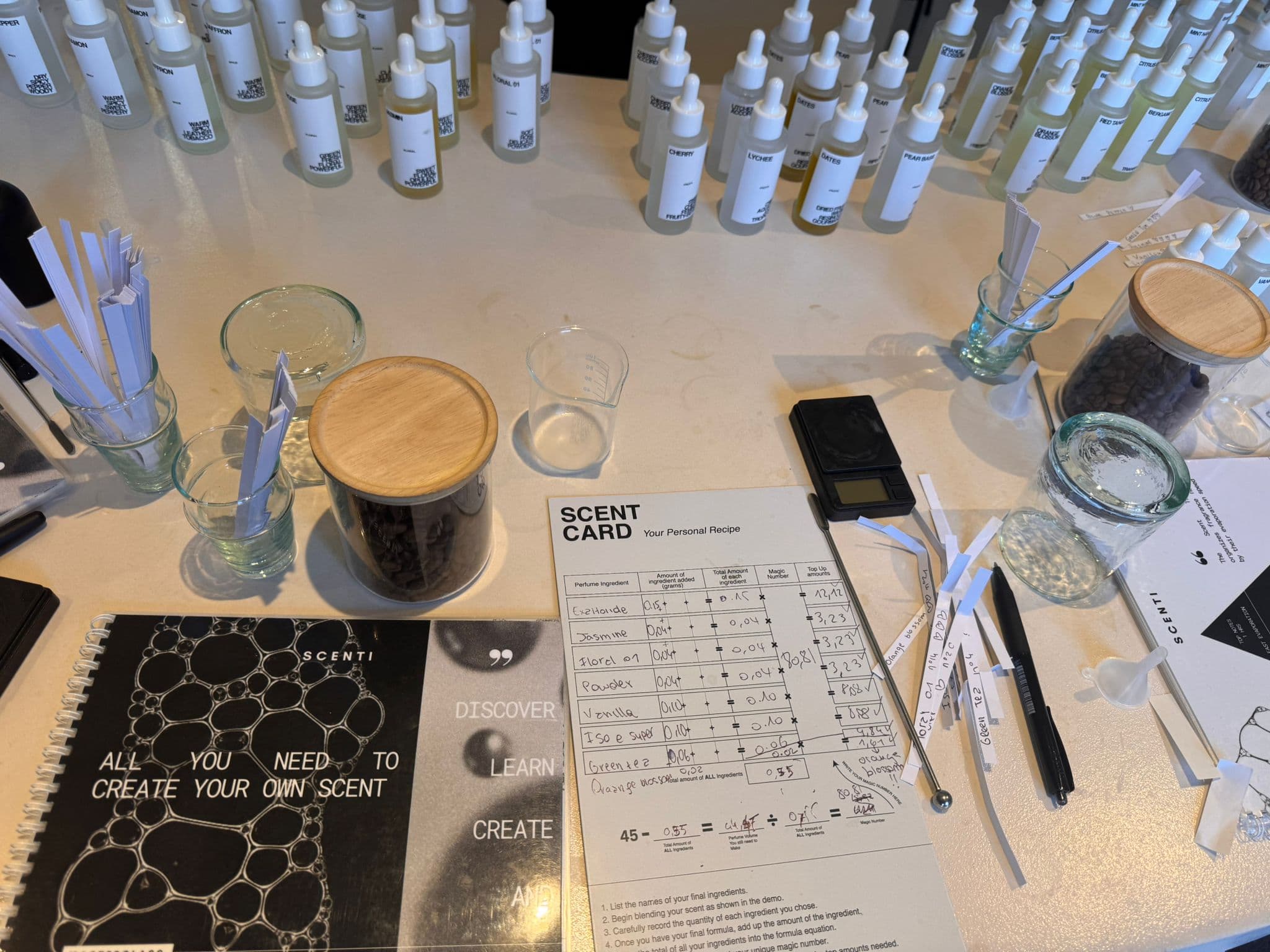
The palette includes over thirty raw materials, both Moroccan and sourced internationally. We built our formula incrementally, guided but not directed: the atelier wants the result to carry the person's preference, not the instructor's. The moment the finished composition is sprayed for the first time is when the experience shifts register: from educational, it becomes personal. That fragrance did not exist before, and it will never exist in quite the same way for anyone else.
Each participant leaves with a fifty-millilitre bottle of their bespoke fragrance and a personalised recipe card. It is not a souvenir. It is something of your own, made entirely from your own choices, in a room that gave you the tools and the vocabulary to make them.
Who It's For
Everyone. We have seen couples working side by side creating opposite fragrances, groups of friends turning the workshop into an afternoon of laughter and discovery, families with teenagers surprised at how absorbing it was to focus on something so delicate. The experience requires no prior knowledge, has no age limit, and works equally well as a romantic date or a group activity. It is one of those rare moments in Marrakech that does not depend on where you come from or who you are travelling with, only on your curiosity and your nose.
The Atelier
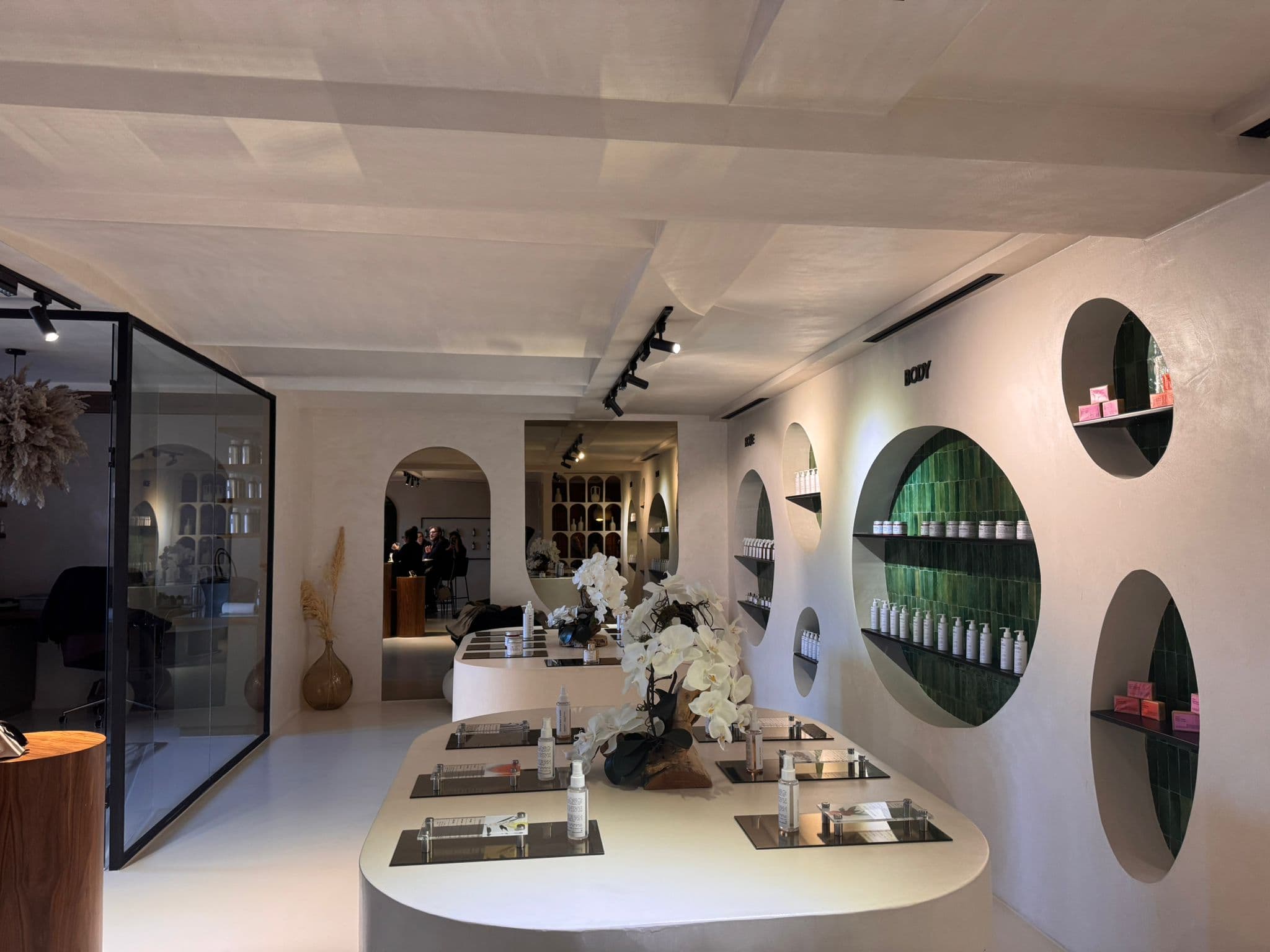
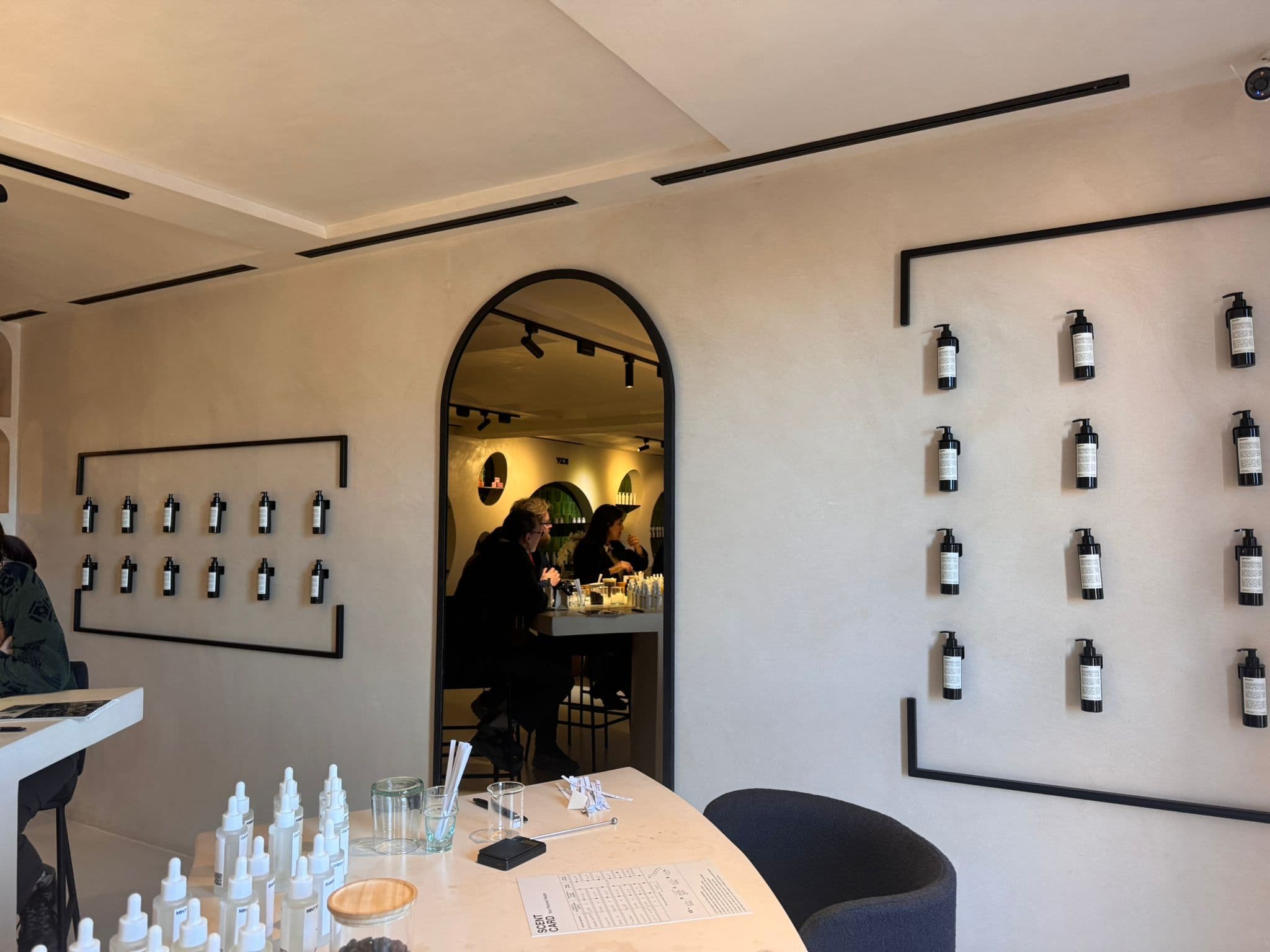
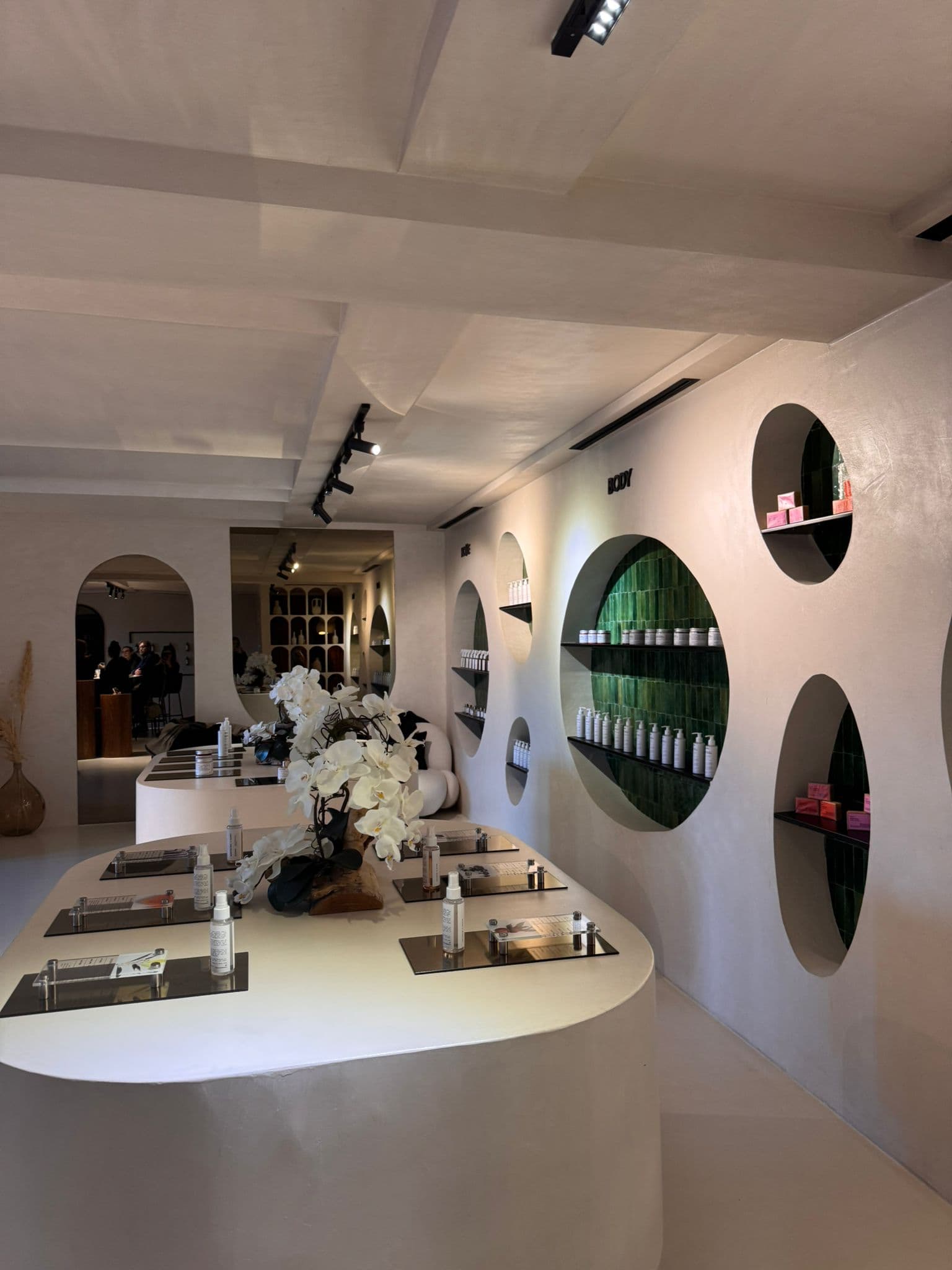
Scenti occupies a contemporary space in the Centre d'Affaires Opéra in Guéliz, a few minutes from the Jardin Majorelle. The design is modern and clean: a deliberate counterpoint to the souk-adjacent perfume shops of the medina, where hundreds of bottles compete for attention and negotiation is part of the transaction. Here, the register is calm, the surfaces uncluttered, the focus directed entirely at the materials and the process. The atelier is open daily from ten to seven.
In a city where scent is cultural currency, where families pass down blending recipes like cooking traditions, and where the souk's spice sellers can identify a visitor's preferences before they speak, Scenti offers something rarer than a product. It offers a grammar. Two hours, thirty materials, one composition that belongs to no one else. In Marrakech, where the relationship between a person and a scent has always been treated as private and precise, the atelier honours that tradition by handing you the tools and stepping back.
2 Angle Rue Hassania et Rue Loubnane, Centre d'Affaires Opéra, Guéliz, Marrakech
You may also like…