CITY
The Palmeraie of Marrakech: The Oasis That Was Engineered
North of the medina lies the only palm grove in Morocco above the High Atlas. It exists because a medieval city went fifty metres underground to find water, and most of that system is now gone.
Timence Guide Editors · 12 April 2026
The road from the medina to the Palmeraie is short by distance and long by character. In fifteen minutes the city's compression releases into something else: olive groves, irrigation channels, enclosing walls at intervals, the occasional palm standing at a height that makes the medina's rooflines look provisional. The Palmeraie Marrakech begins not at a sign but at a shift in the quality of space around you. By the time you arrive, whatever urgency the souks produced has been replaced by something with a different texture.
The origin story is a legend, and it is worth telling as one. Tradition has the grove growing from date stones dropped by Almoravid soldiers in the eleventh century: a landscape born from casual waste, from seeds discarded in passing. The image is good, and on the point that matters it is wrong. Nothing grows out here by dropping seeds. The Palmeraie exists because the water was located, moved, and maintained, and because a medieval city decided that was worth doing.
The Grove Is an Engineering Work
Marrakech sits in a region that receives less than three hundred millimetres of rain a year. There is no river to divert and no rainfall to rely on, so the water was taken from below. The khettara are drainage galleries that intercept the water table at depths of twenty to fifty metres and carry the water to the surface by gravity alone, with no pump and no lifting of any kind. From above you read them as lines of wellheads running in single file across the ground for kilometres, each one a shaft sunk to dig the tunnel and then to keep it clear.
Between the eleventh and the twelfth centuries around fifty of these galleries were cut. The work took more than a million working days and hundreds of specialists: hydraulic engineers, surveyors, levellers, the men who could hold a tunnel at a gradient shallow enough to keep the water and steep enough to move it. An entire quarter of the medina, Dchar Todgha, was built to carry out the undertaking and supervise it technically. That first network watered around twenty thousand hectares, and four dynasties extended it afterwards: Almoravid, Almohad, Saadian, Alaouite. The Palmeraie is not what happened while nobody was looking. It is one of the largest hydraulic works of the Moroccan middle ages.
What Is Left of It
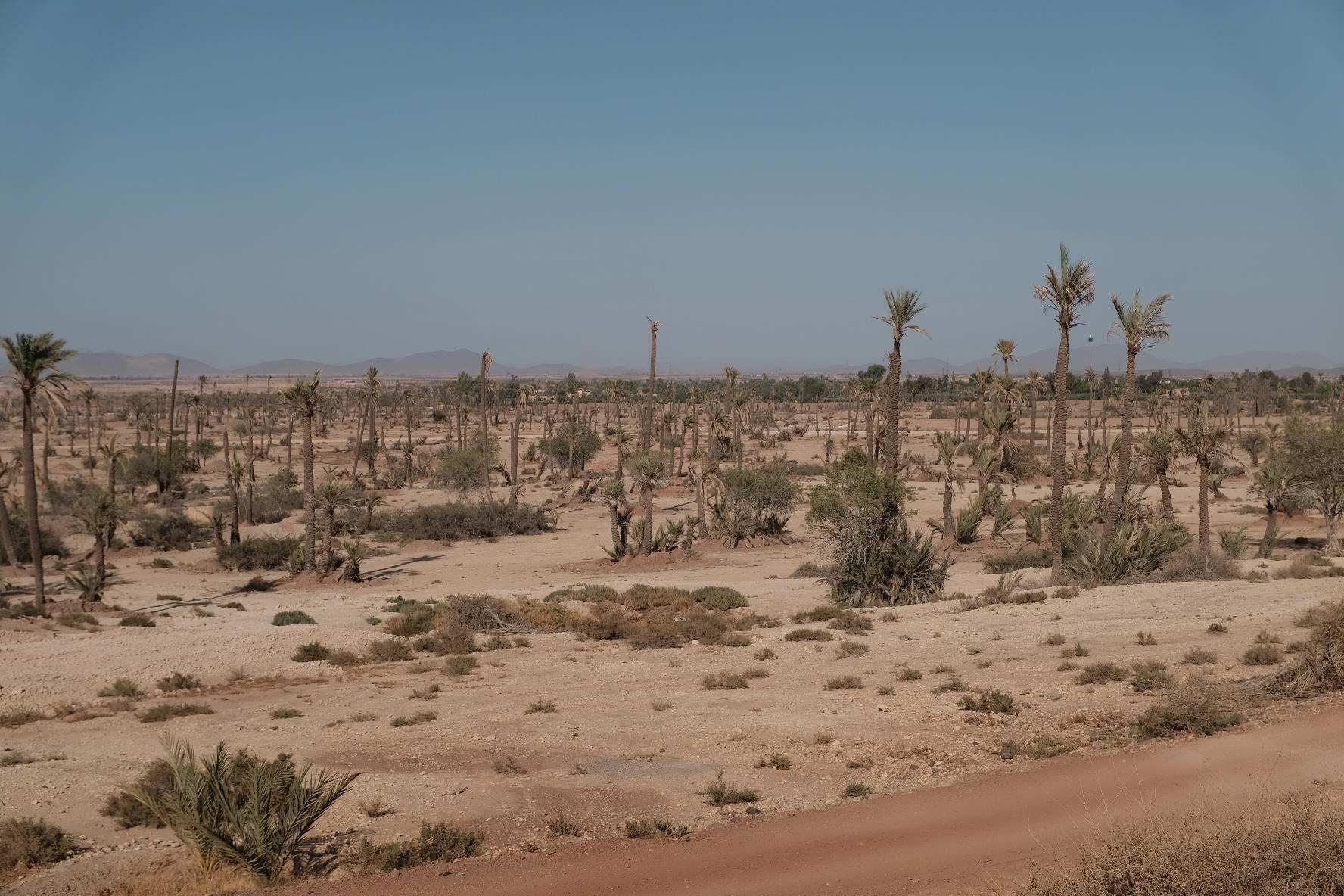
By 1996 a little over six thousand hectares of the great palm grove remained, concentrated to the east, to the north, and above all to the north east of the city. That is the most solid figure in the literature and it is thirty years old. The built edge has advanced a long way since, and nobody has published what the surface is today. The numbers that circulate on travel sites, fifteen thousand hectares and a hundred thousand palms, appear in no primary source at all.
What lies underneath has fared worse than what stands above it. More than eighty per cent of the khettara heritage is destroyed or dry. When Marrakech was founded the water table stood five metres down. It now sits below fifty. Two things did that. Modern pumping, much of it unauthorised and unmetered, pulled the level down faster than the galleries could follow, and once the table drops beneath the tunnel the tunnel is simply a dry corridor. Urbanisation did the rest: to anyone with a plot to subdivide a khettara is an obstruction, and they have been filled in, paved over, and built across.
The scale of the loss is easier to hold in numbers. A census in 1918 counted three hundred and fifty active khettara within fifteen kilometres of the city. In the early nineteen seventies there were still five hundred and sixty seven across the Haouz, five hundred of them alive. Laid end to end, those galleries would have run close to nine hundred kilometres.
The grove's own visitors belong in the account. Already in 1996 tourist and residential development occupied more than four hundred hectares, over six per cent of the whole palmeraie, in subdivisions, hotels, and scattered settlement. Unregulated informal building has since been identified as the second pressure, the one that the conversation about tourism tends to leave out. Both are still running.
Still a Working Landscape
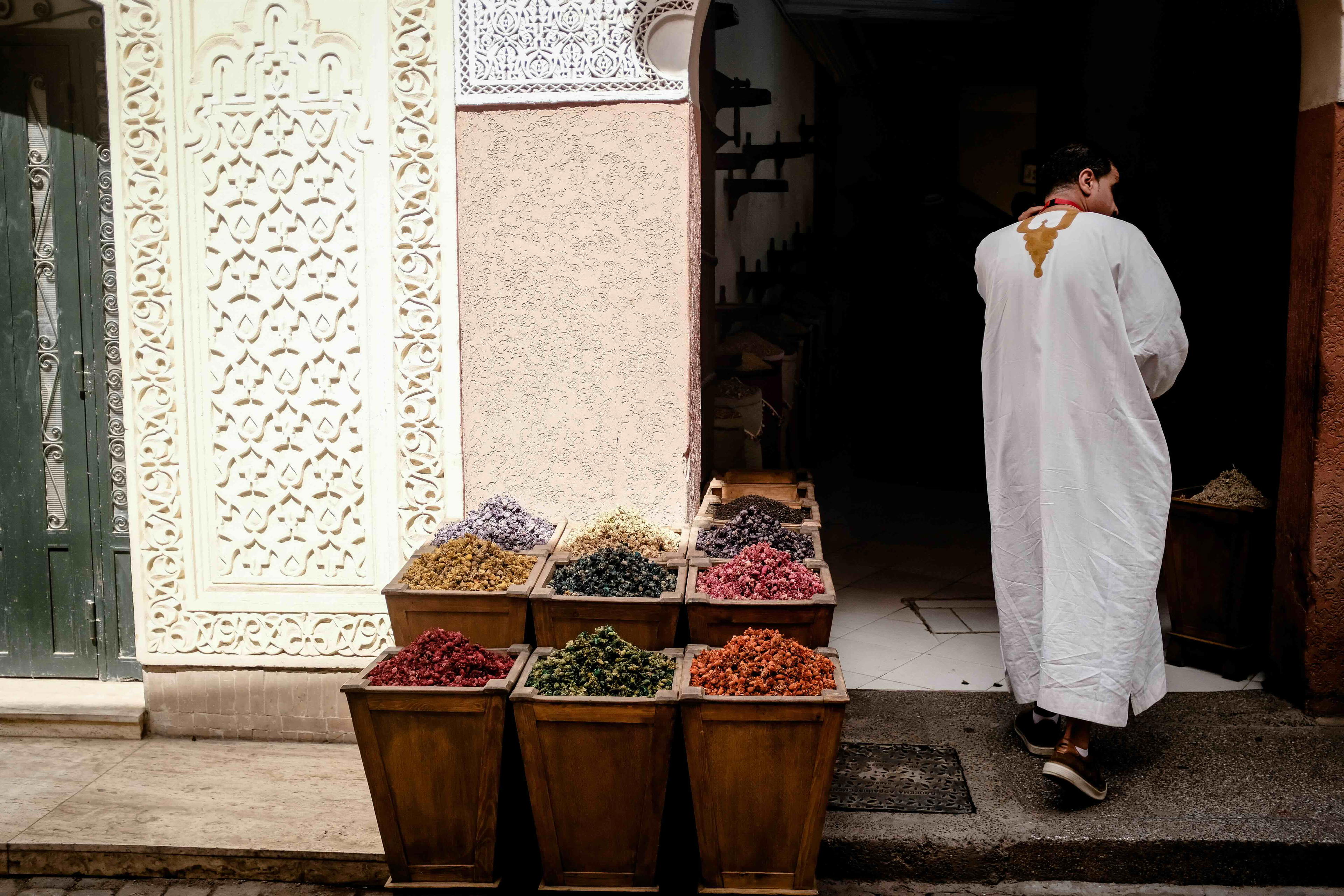
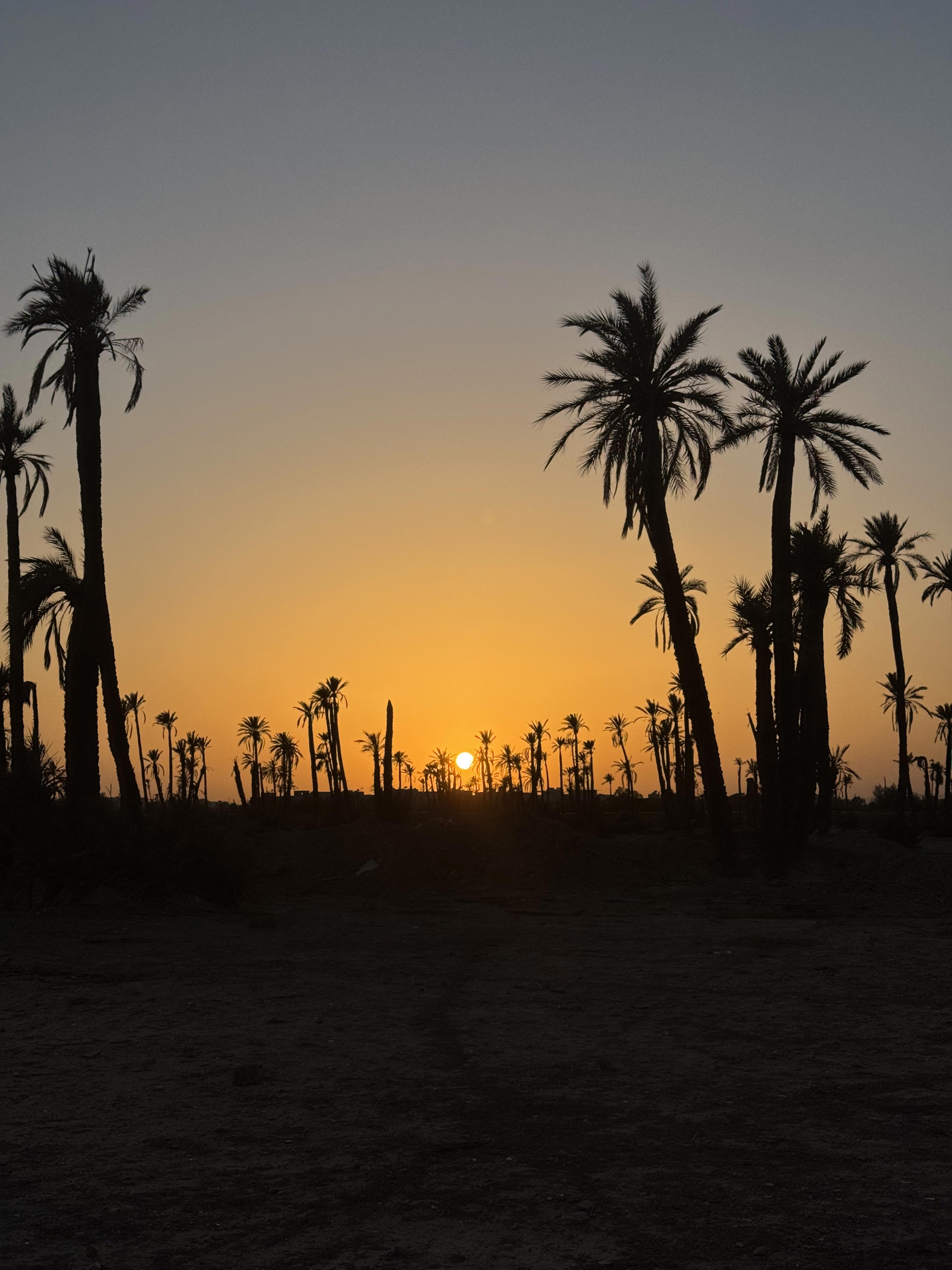
None of this has made the Palmeraie a ruin. It remains the only oasis in Morocco north of the High Atlas, and it still works for a living. It produces dates, eaten mostly where they are grown. Its trunks go into roofing. Its palms are burned as fuel in the ovens that bake the city's bread, heat its hammams, and fire its ceramics. Under and between the palms there are cereals, vegetables, and fruit trees: pomegranate, olive, citrus, feeding the local craft economy alongside the kitchens. And it has always been where Marrakchis go to sit down, which makes it less an escape from the city than the continuation of the medina and its walled gardens on the far side of the ramparts.
A Different Spatial Logic
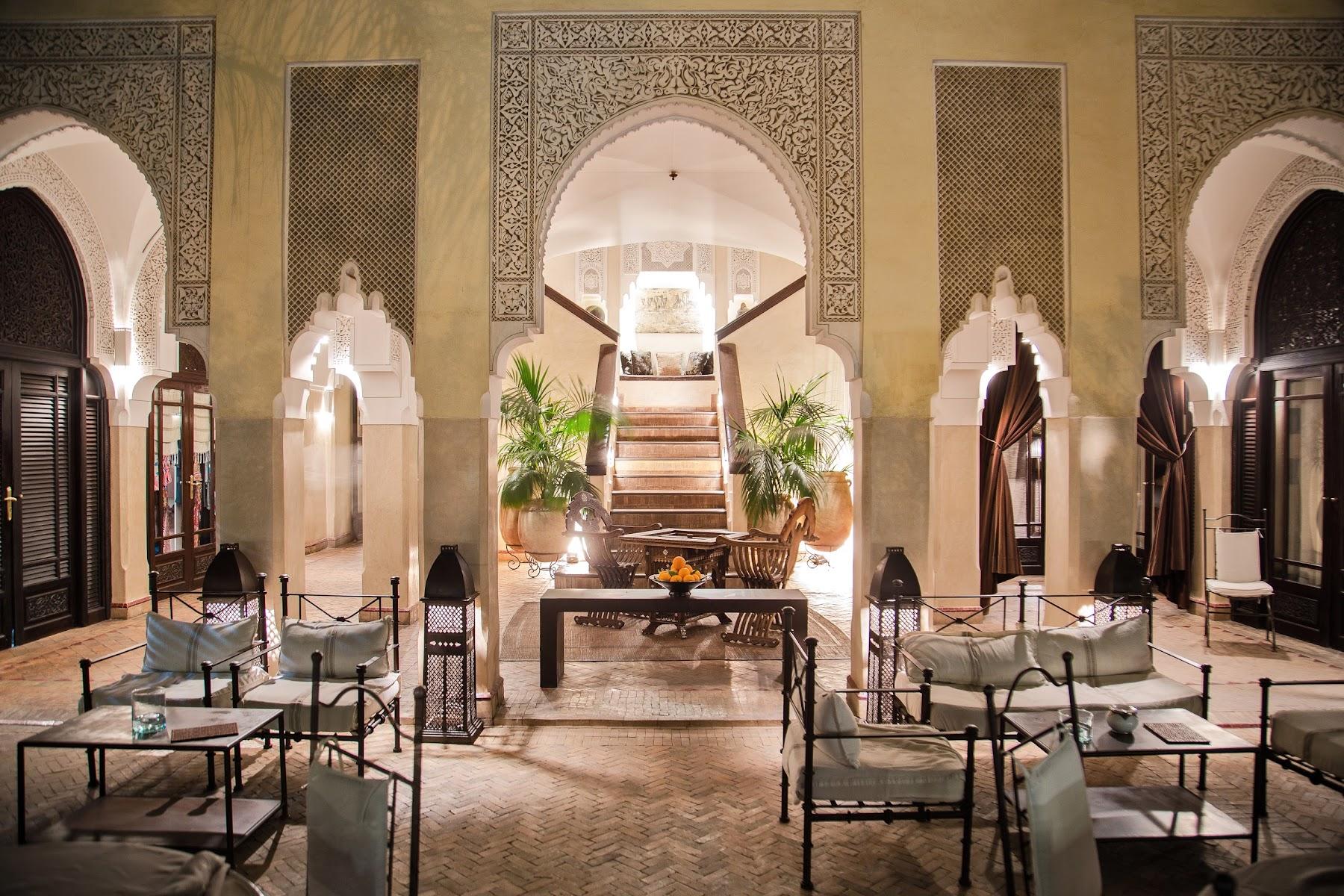
What the Palmeraie offers a visitor, before any venue or activity, is a spatial logic the medina does not. The medina is enclosed and compressed: narrow streets where two people pass with effort, light falling at angles the architecture controls. The Palmeraie inverts this entirely. The sky becomes accessible. The horizon is readable. The distance between one surface and the next is measured in meters rather than centimeters. For guests who have spent days navigating the medina's density, this inversion is not merely pleasant. It is disorienting in a way that creates space for a different kind of attention.
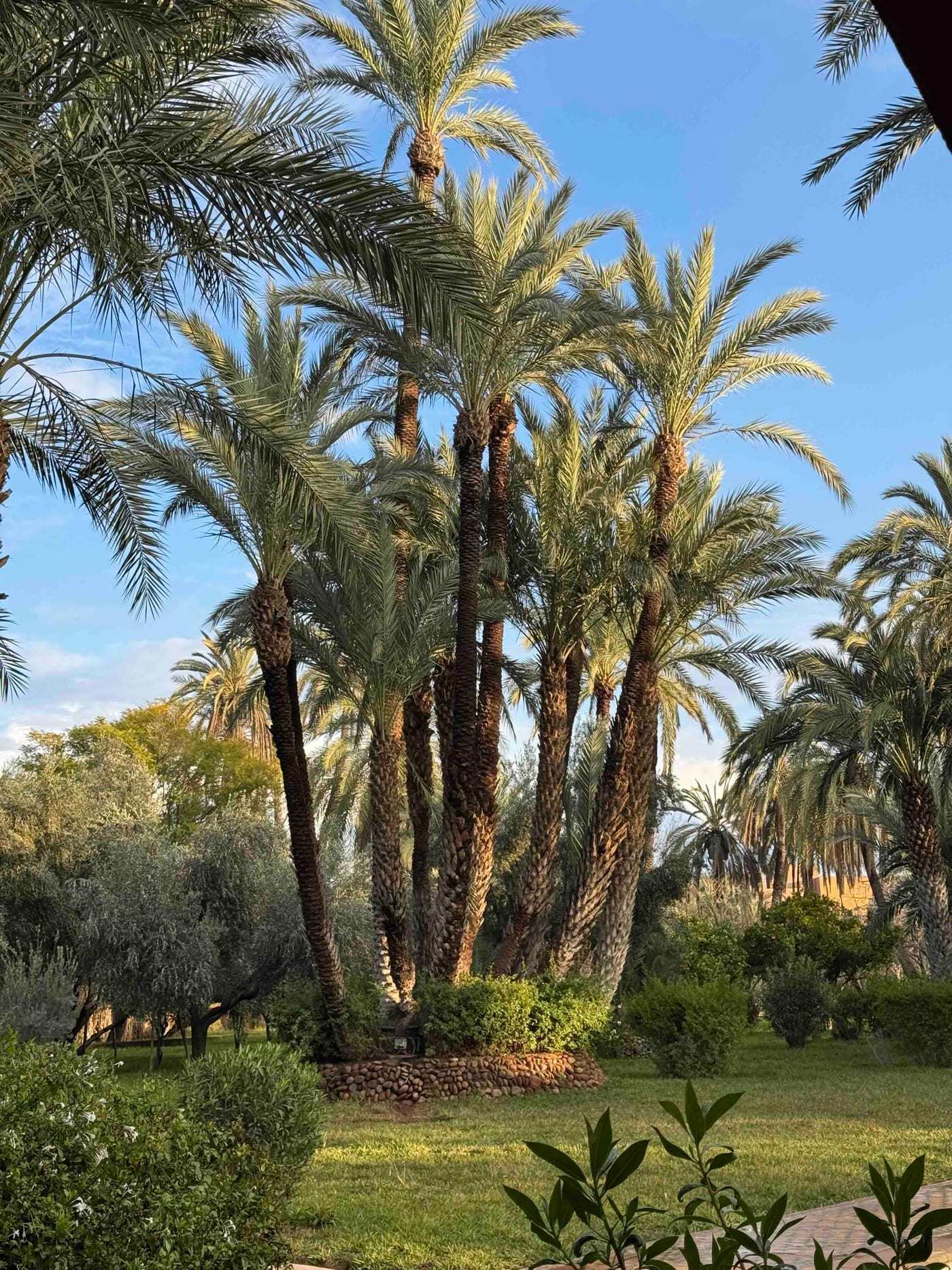
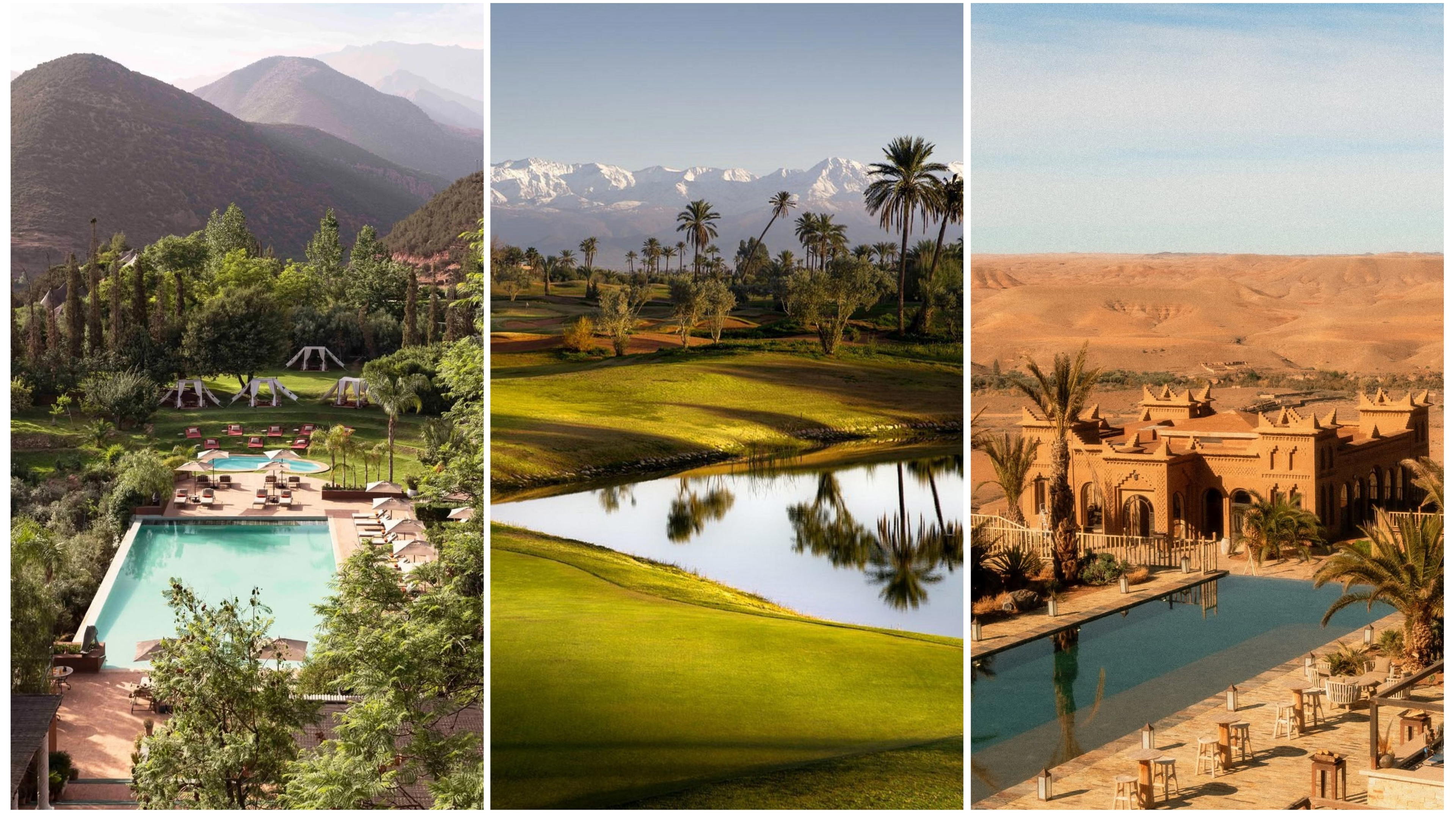
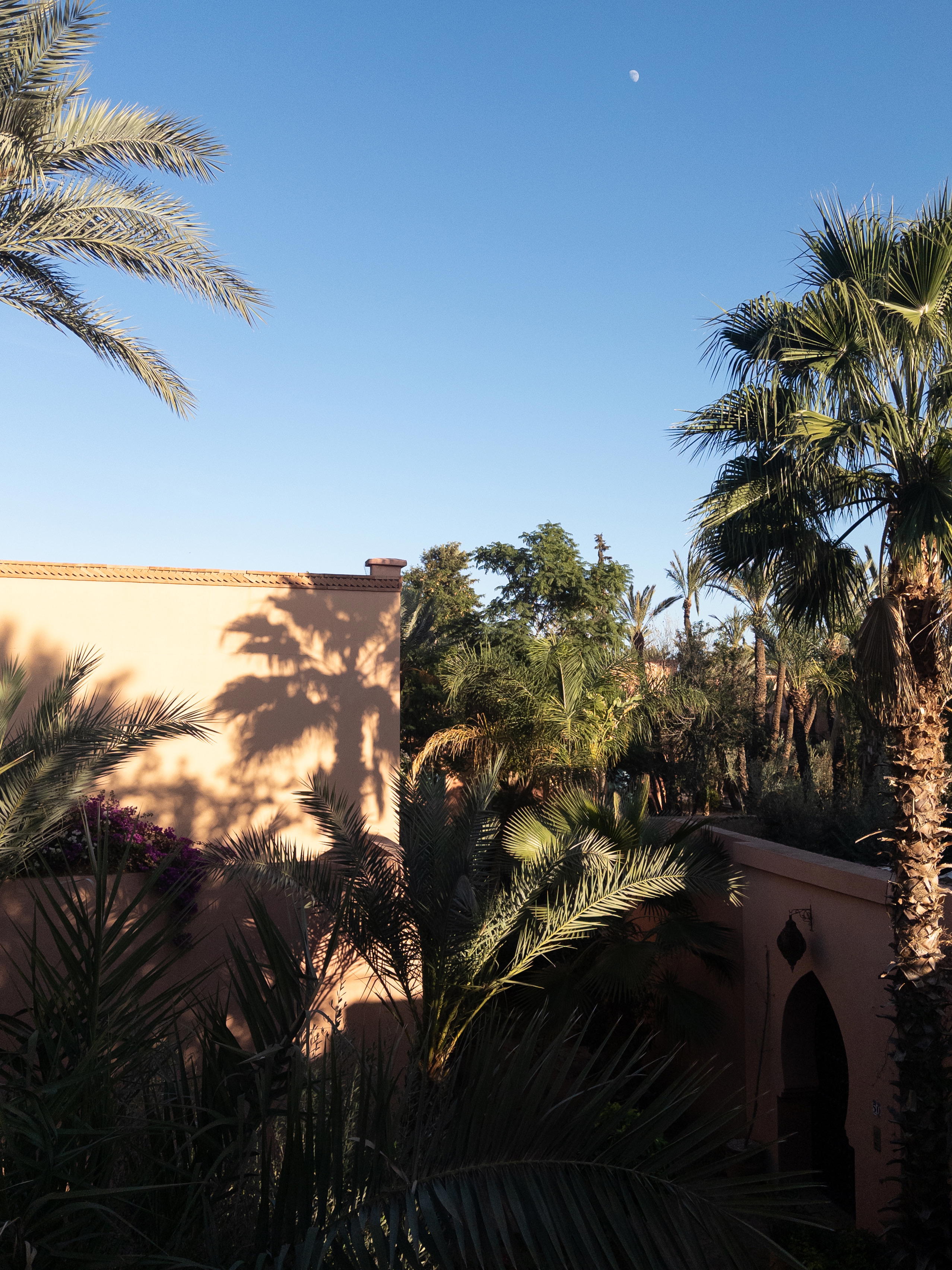
This is where the resorts and private estates that have established themselves in the grove over the past three decades make their case. Properties like Namaskar organize their programming around the openness: gardens that use scale deliberately, pools positioned to make the landscape legible, programming built around the particular silence that large palm-shaded grounds allow. Others, like Ksar Char Bagh, Palais Rhoule, and Palais Ronsard, work in a different register: the private estate logic of enclosed grounds and architectural intention, where the Palmeraie is the perimeter rather than the setting. Jnane Rumi, Jnane Tamsna, and Les Deux Tours develop something closer still to the agricultural character of the land: smaller, more residential, built around gardens and kitchen plots rather than resort infrastructure. What each approach shares is an understanding that the landscape itself is the argument. The buildings are secondary. The grounds are the offer.
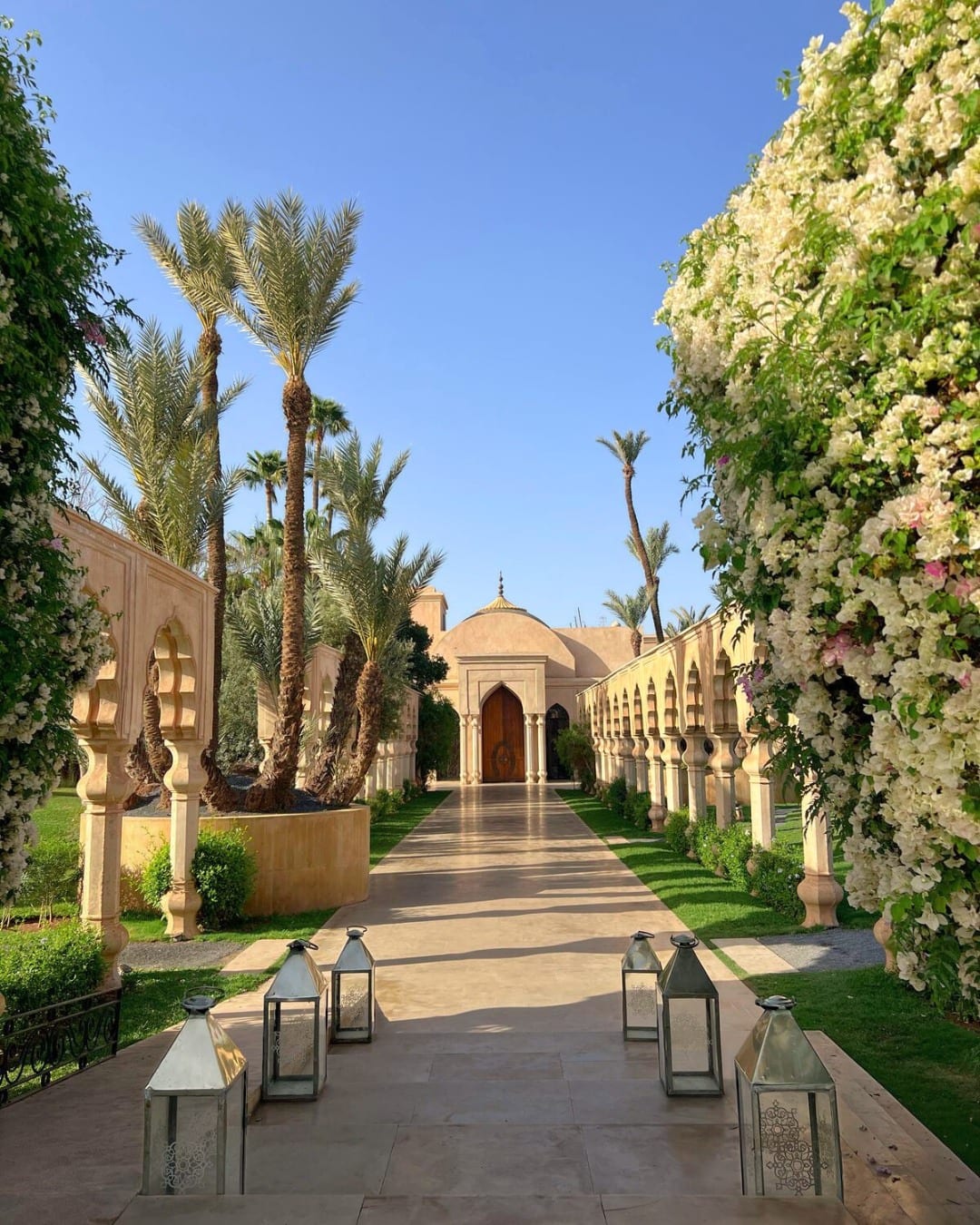
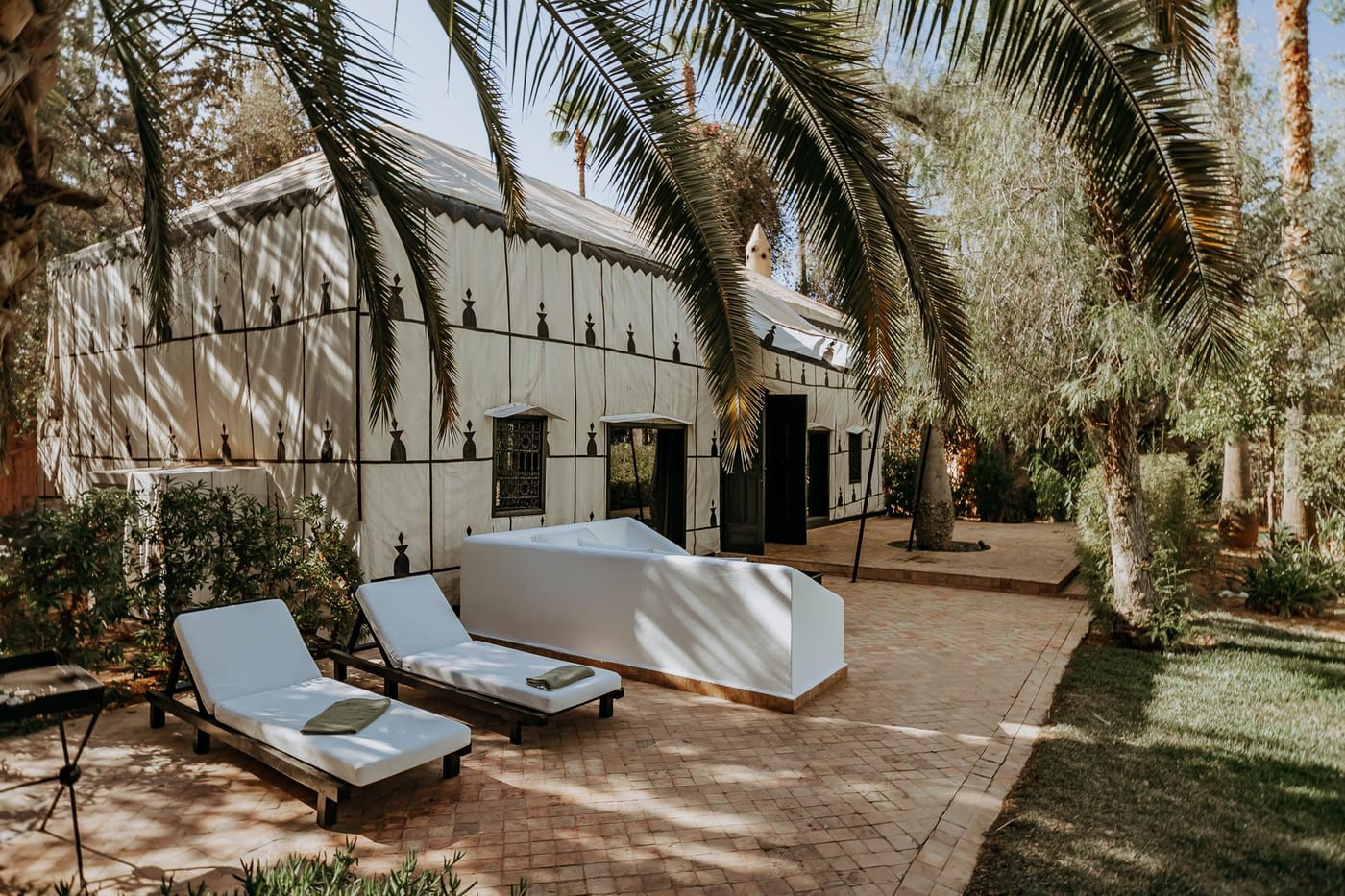
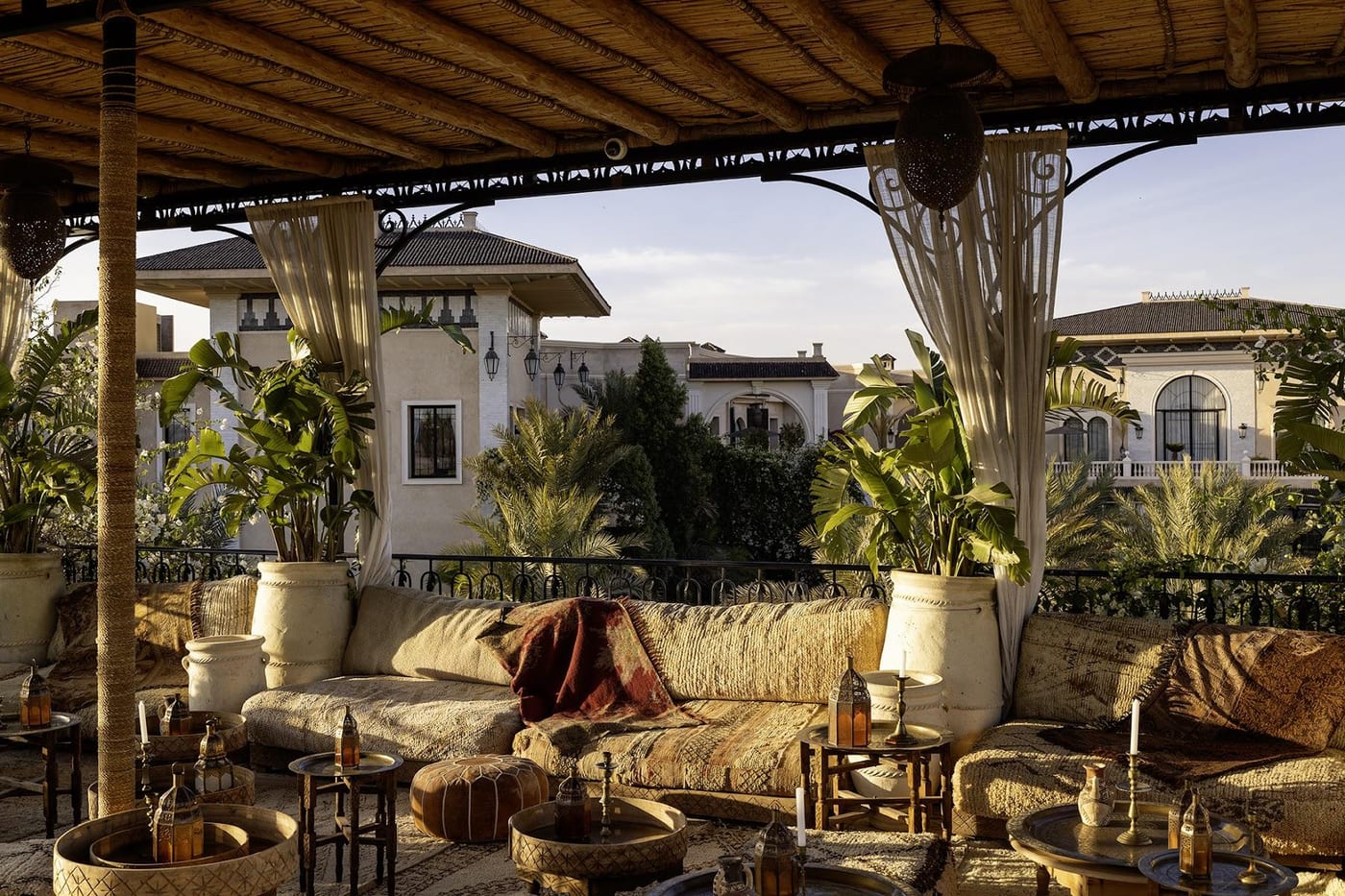
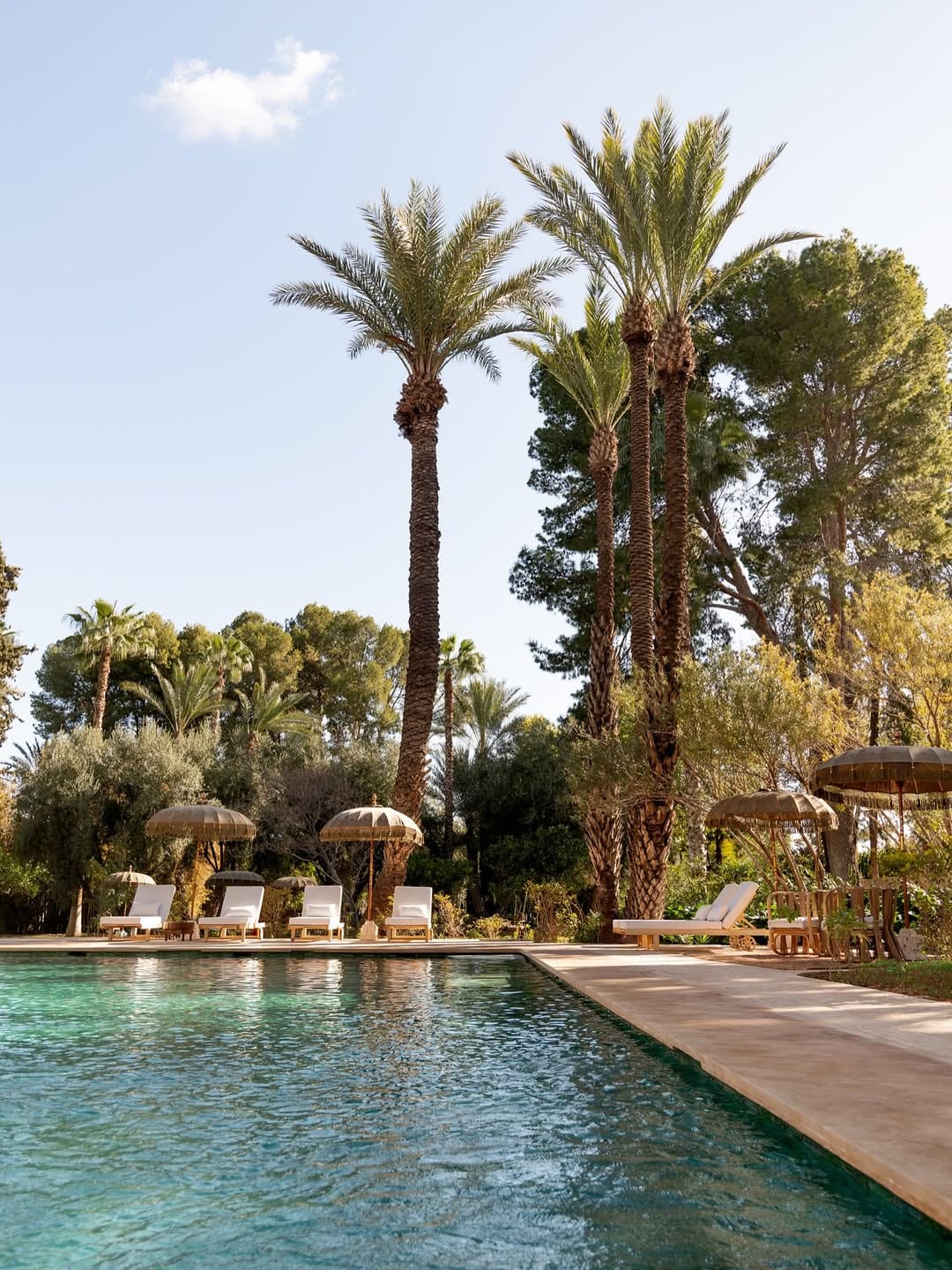
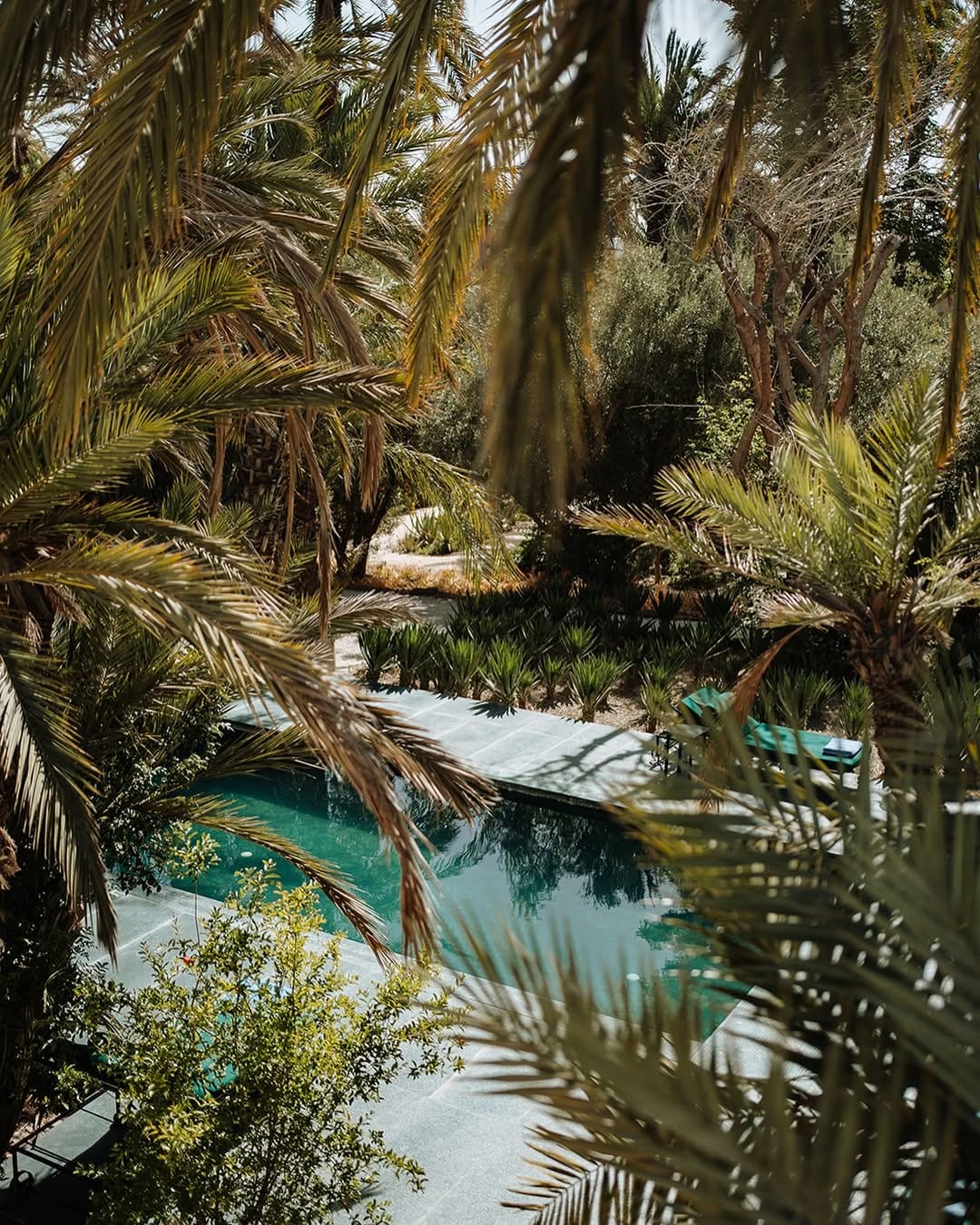
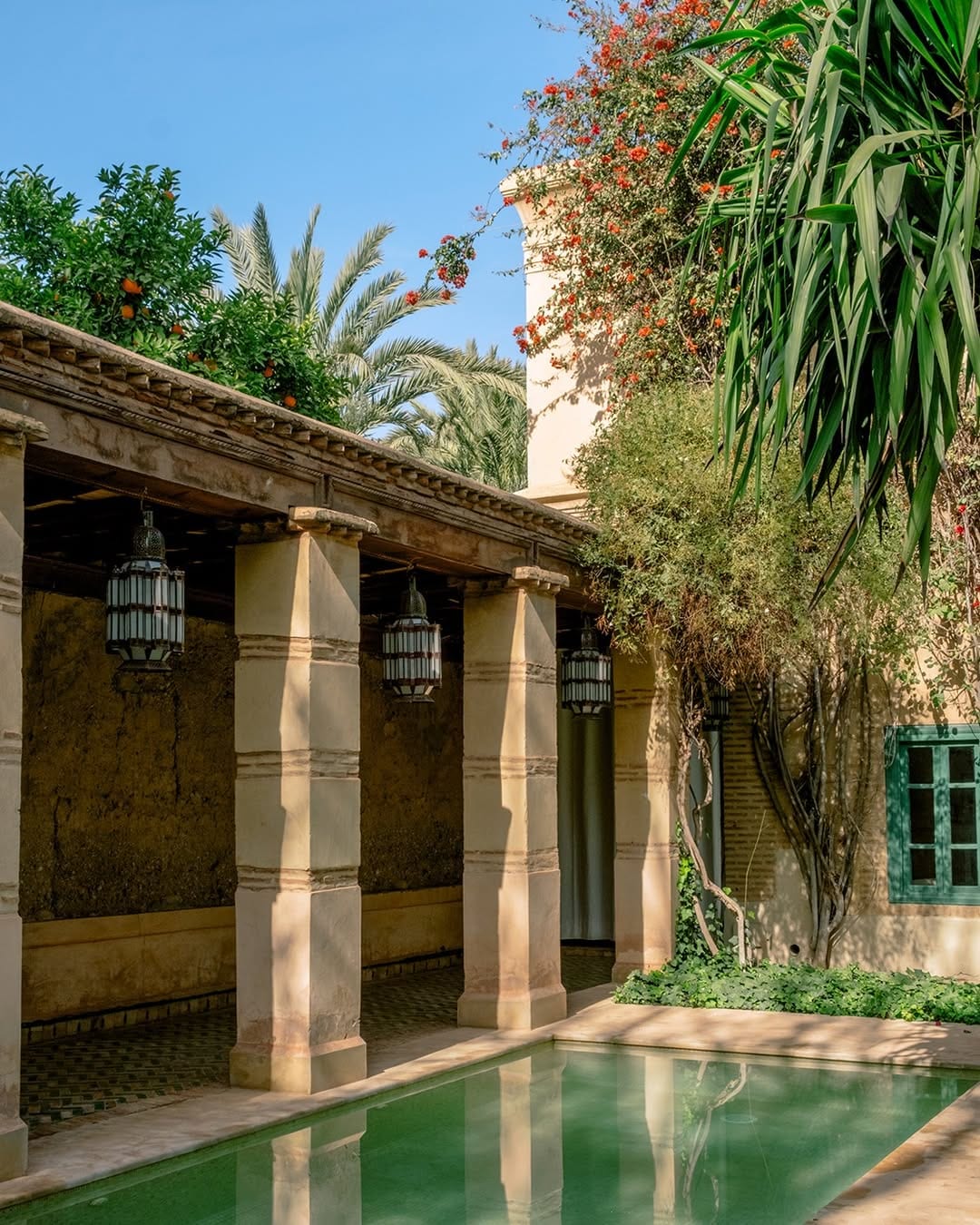
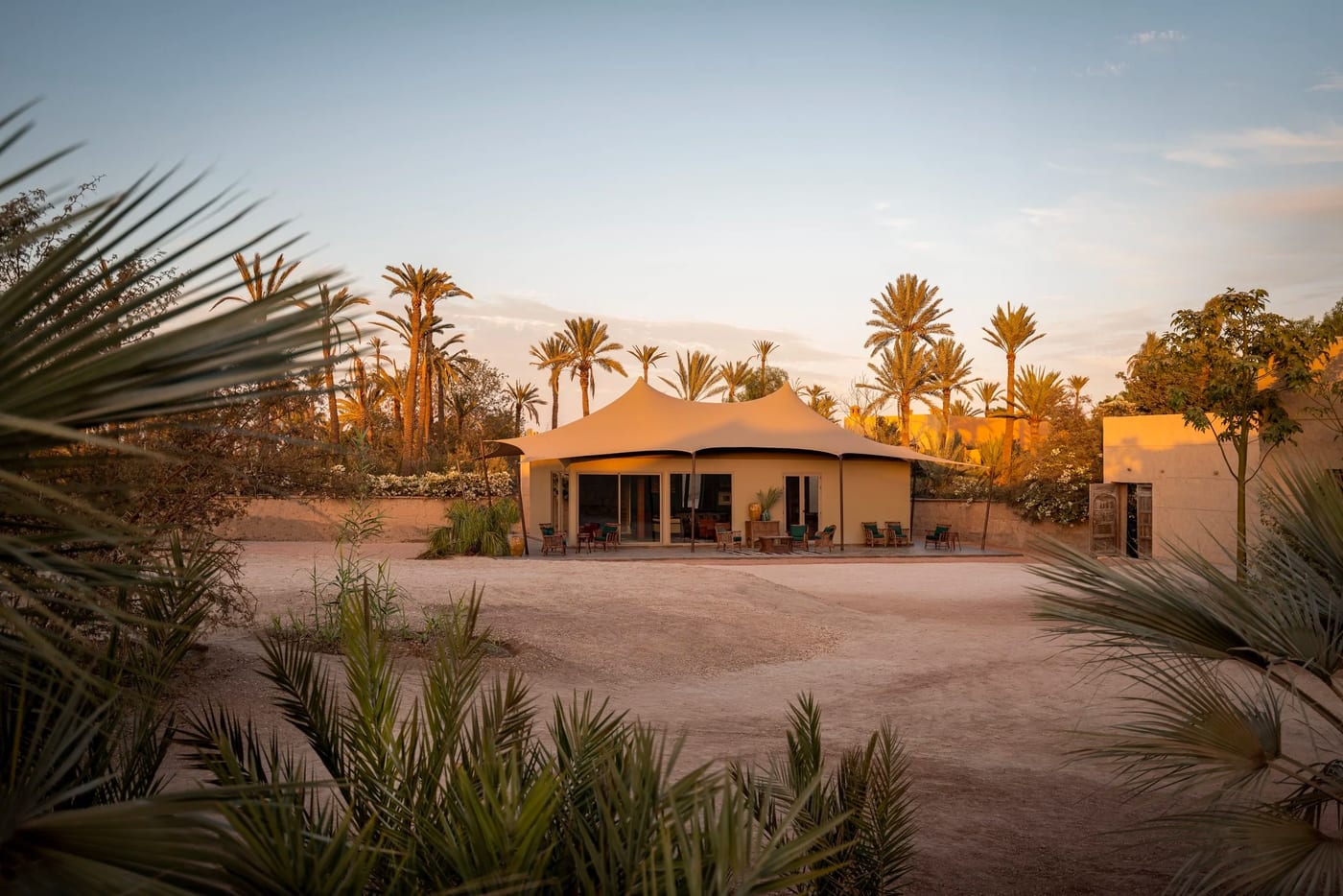
The villas and private compounds alongside them have made the grove one of Marrakech's primary addresses for extended stays. A villa here offers what a medina riad structurally cannot: outdoor space at an agricultural rather than courtyard scale, the kind of garden where a table under a palm is genuinely shaded and genuinely private.
How Time Moves Here
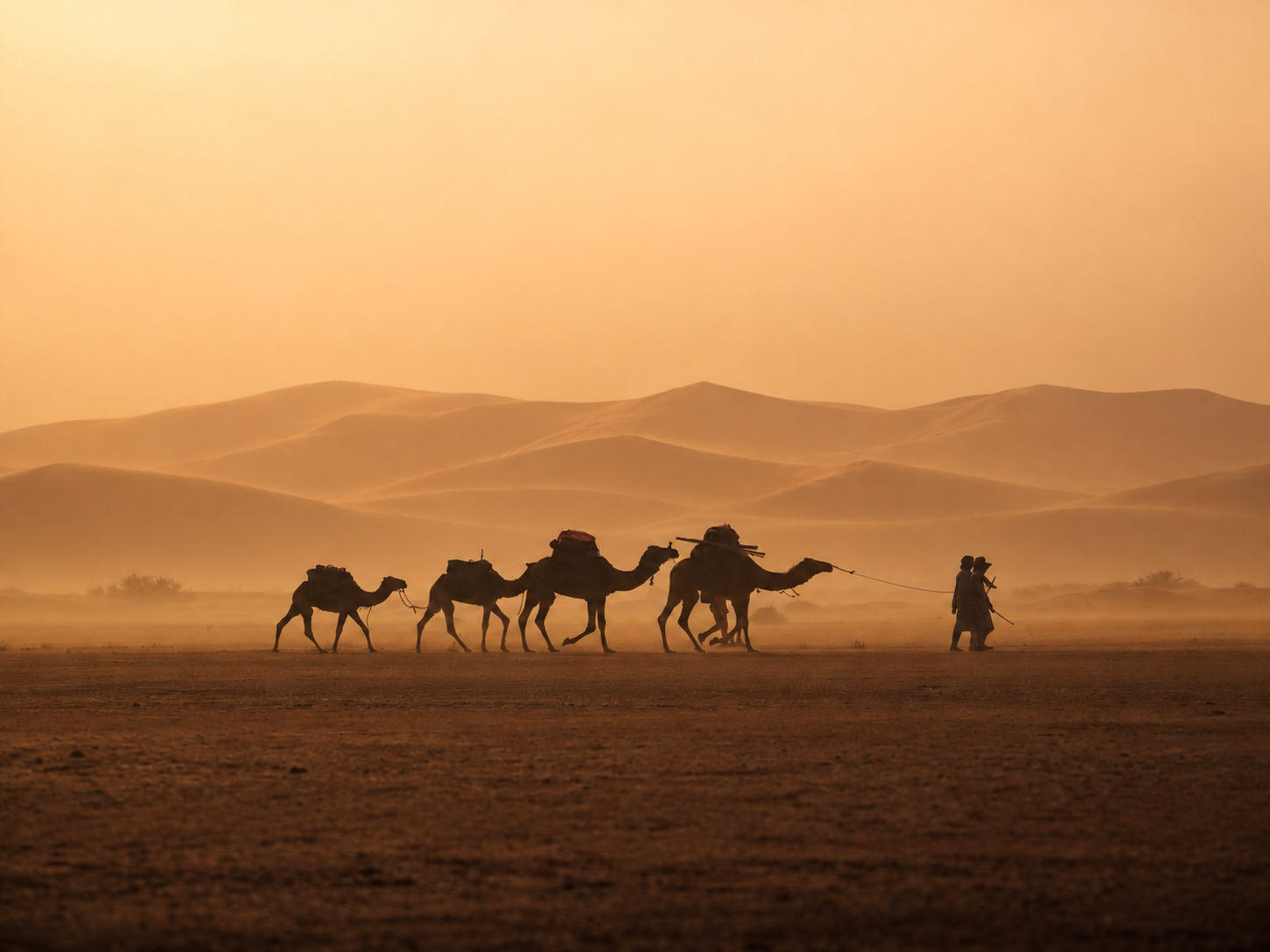
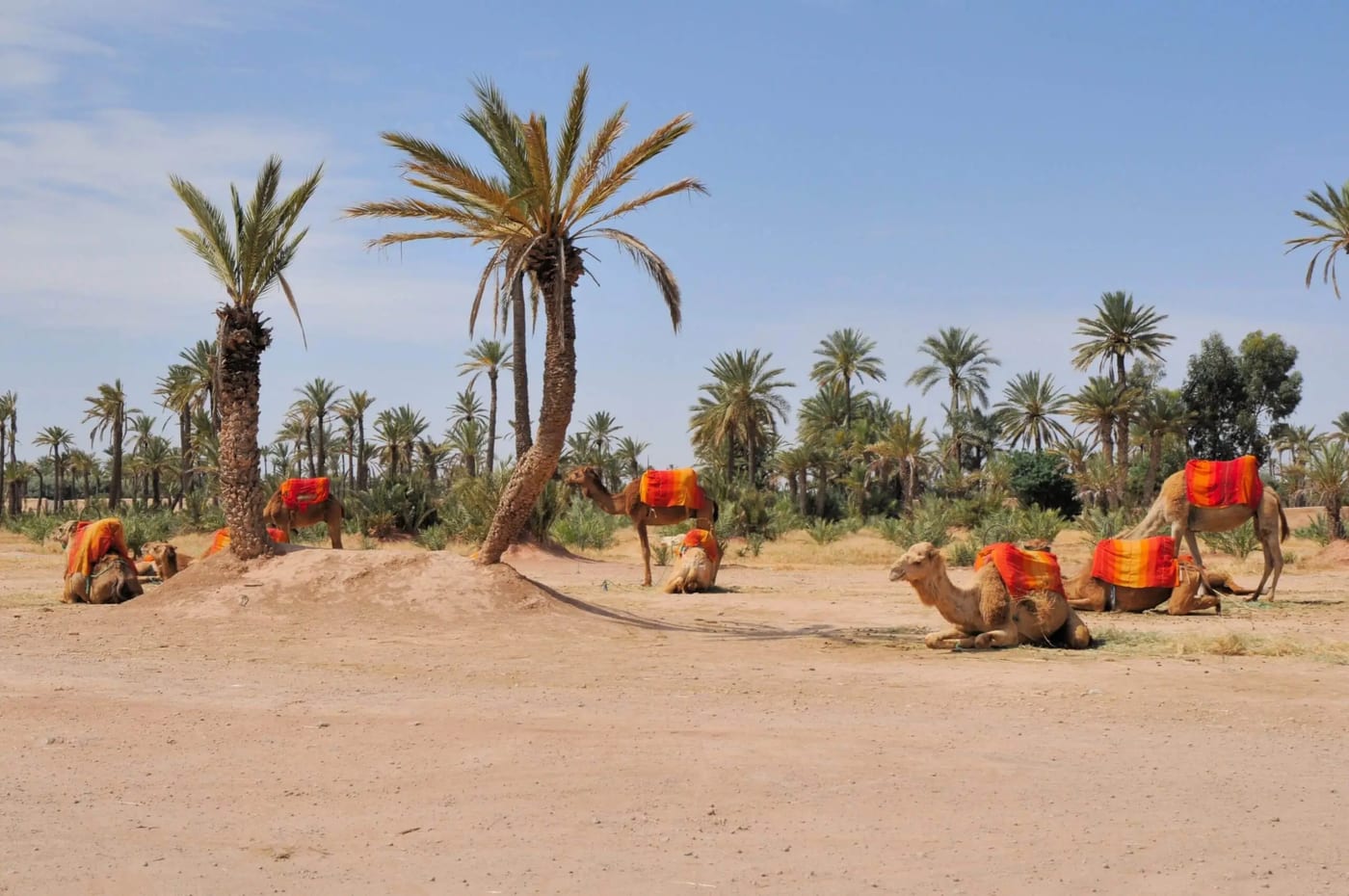
Camel rides, quad biking, and golf organize the more active dimension of a Palmeraie visit. But the more durable offer is less specific. A day here builds around observation rather than appointment: the quality of light through palms at midmorning, the sound of irrigation water against the heat of noon, the temperature shift that a shaded pool terrace creates in the early afternoon. In winter the grove holds a clarity the summer does not, cold nights sharpening the days and the low light catching the upper fronds. In July the shade stops being decorative and becomes the functional reason the place works at all.
The Palmeraie is not an alternative to Marrakech. It is Marrakech read at a different register: the same city expressing itself through open space and agricultural time rather than through medina density and historical compression. The intensity of the souks is only fully legible against the quiet of the grove. The distance between them, fifteen minutes by car, is one of Marrakech's more interesting spatial arguments.
Where to Stay and Swim in the Palmeraie
The grove holds more of Marrakech's large properties than any address outside the medina: resorts with grounds measured in hectares, private estates behind their own walls, and smaller garden houses that keep to the agricultural scale of the land.
Between June and September the pool is the reason most people come out here, and the grove has the room to do them properly: full-length water, mature shade, and terraces that stay usable in the middle of the afternoon.
You may also like…