CITY
Essaouira: A Port Town Built for Traders, Kept by Artists
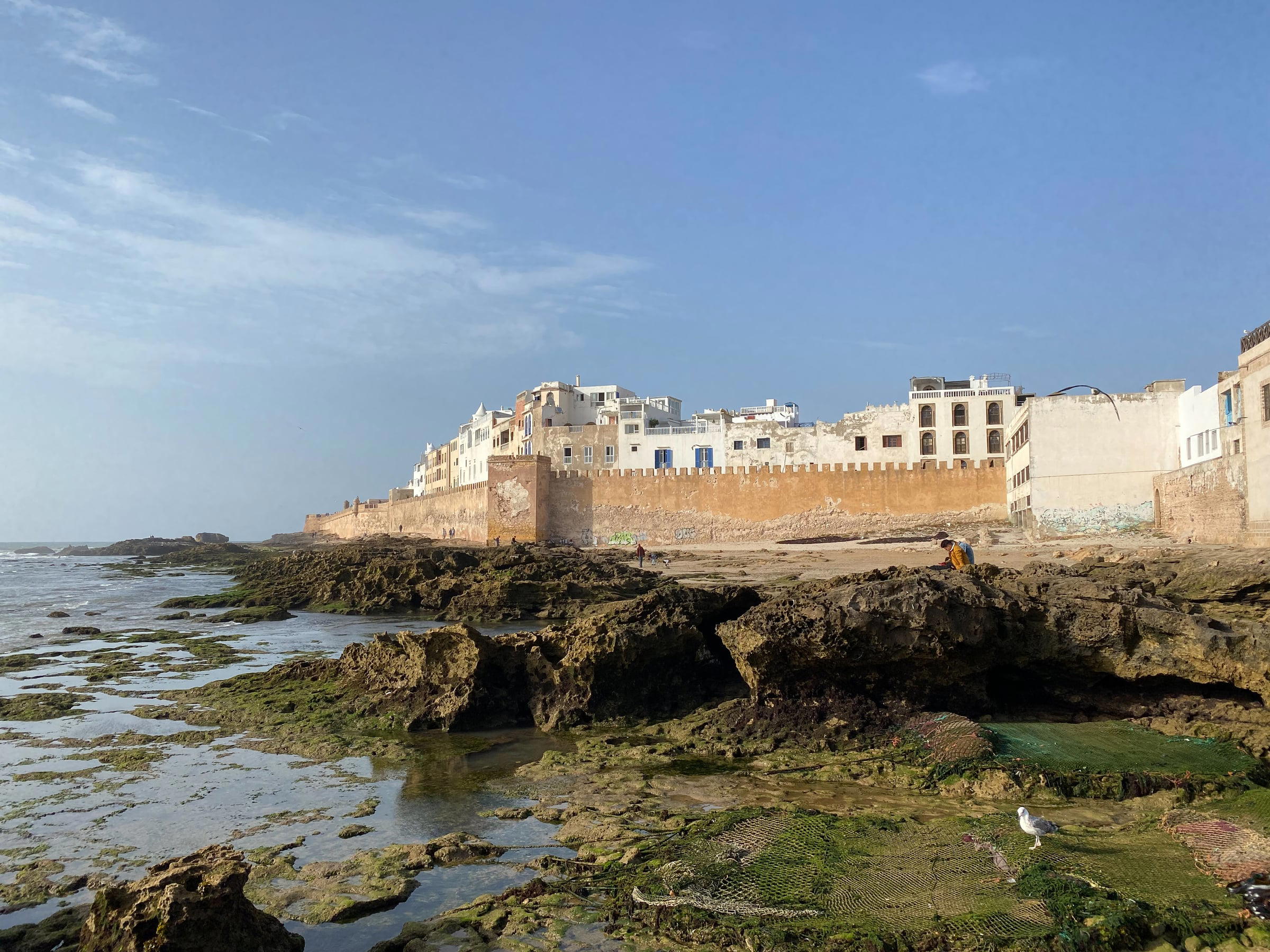
Built in 1764 as a fortress and a foreign trading post, Essaouira became, over the next two centuries, Morocco's artists' town: painters, musicians, surfers and kitesurfers.
Timence Guide Editors · 5 August 2026
In 1764, Sultan Mohammed III handed the design of Essaouira to the French architect Théodore Cornut, who laid it out on a grid, and three years later ordered the European consuls to relocate there: a port drawn all at once, and built for people arriving from somewhere else. By 1867, Jewish merchants made up close to half the population. The town never stopped absorbing whoever passed through. In 1949 Orson Welles shot Othello here and ran out of money twice, and residents stood in as Cyprian soldiers, costumes woven from jute and shields hammered out of flattened sardine tins. Jimi Hendrix came through twenty years later. In 1988 the Danish gallerist Frédéric Damgaard opened a gallery for the naive paintings made by local fishermen.
The calendar still keeps that pace. The Gnaoua festival in June, and in early October the MOGA, founded in 2016, which puts Gnawa maâlems on the same bill as international DJs, with the ticketed concerts outside town and around thirty free events scattered through the medina. Plenty of the people playing Marrakech come down this far.
Today Essaouira draws anyone chasing the same wind Cornut built his ramparts around, kitesurfers and windsurfers, and anyone after nothing more than the milder climate that wind carries with it. It also draws people who recognise the Skala from the third season of Game of Thrones, filmed here in 2012: the walls play Astapor, and the eighteenth-century cannons, too heavy to move, stayed in frame. European expats, German, Norwegian, British, who came for one season and never left, are fixtures in the cafés by now, and the gallery Damgaard opened still pulls a small, deeply artistic crowd: painters, musicians, people more at ease with a sketchbook than a shopping list.
Where to Sleep
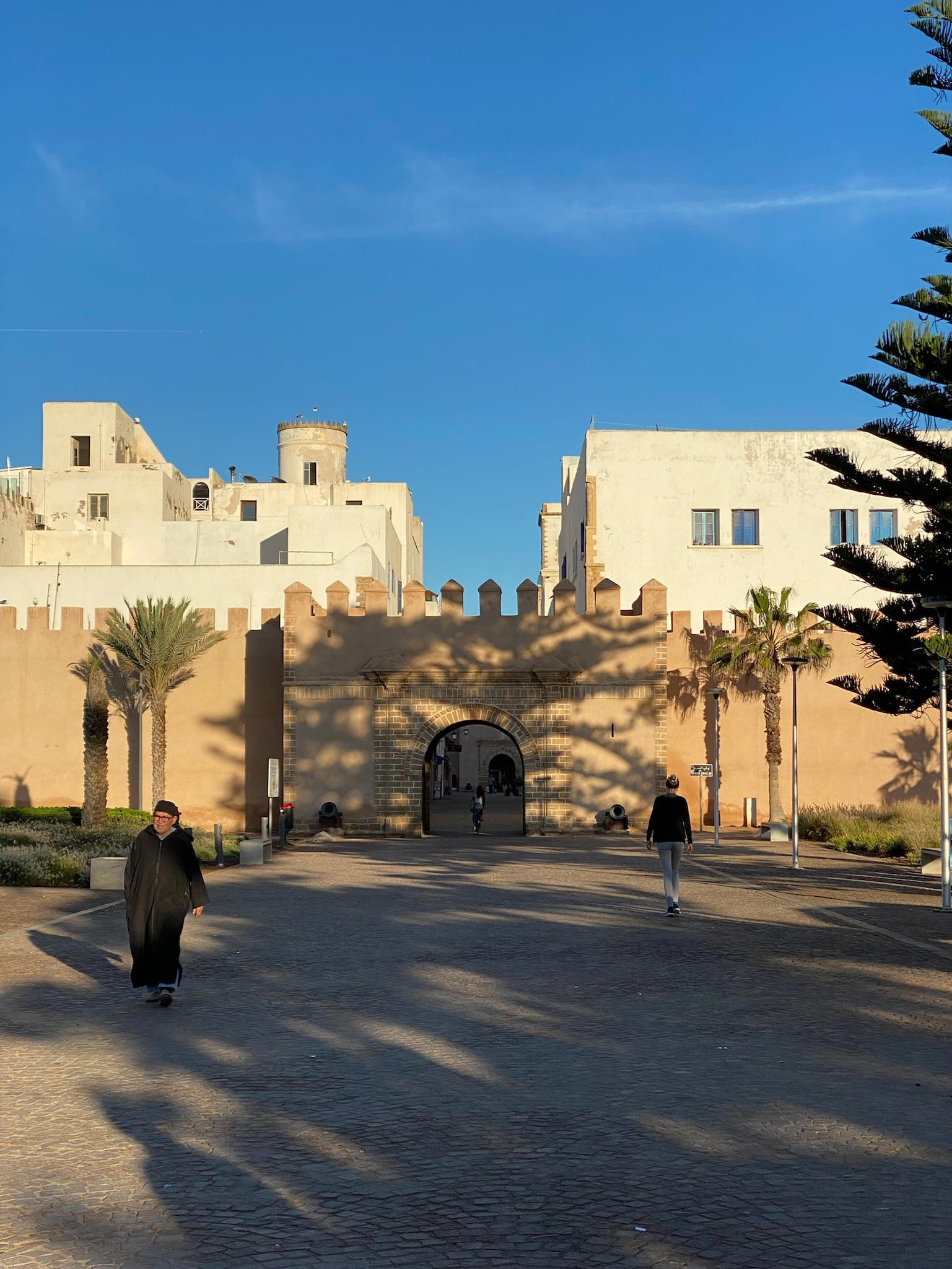
Sleeping inside the walls or outside them decides everything else: how much you walk, how much wind you feel, whether you need the car for dinner.
Inside the medina you live closer together and closer to the place itself: small rooms, walls that hold the ocean damp, bedrooms that stay cold in winter. Outside town the trade runs the other way, space and amenities in exchange for the distance. These are the addresses that hold up either version.
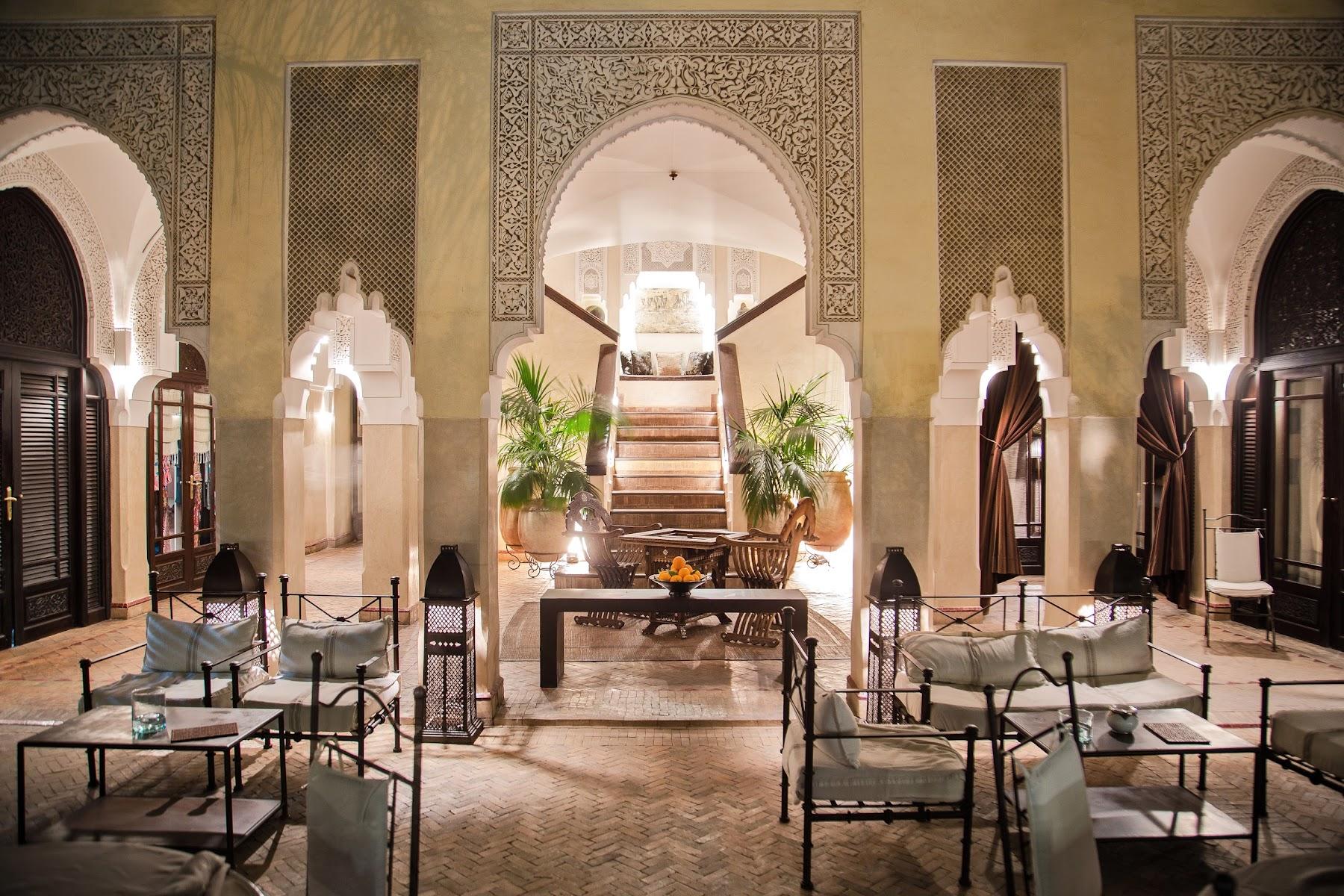
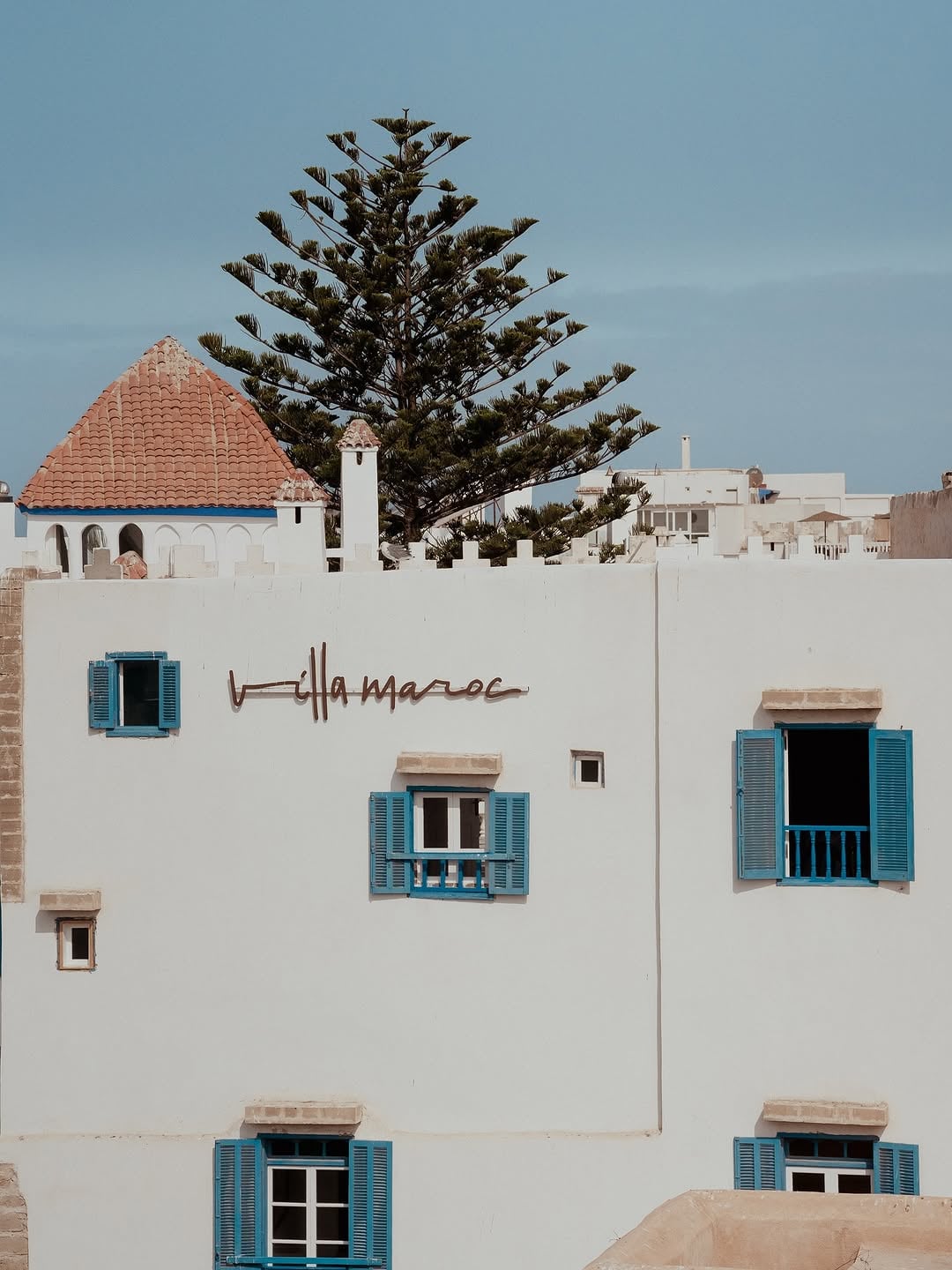
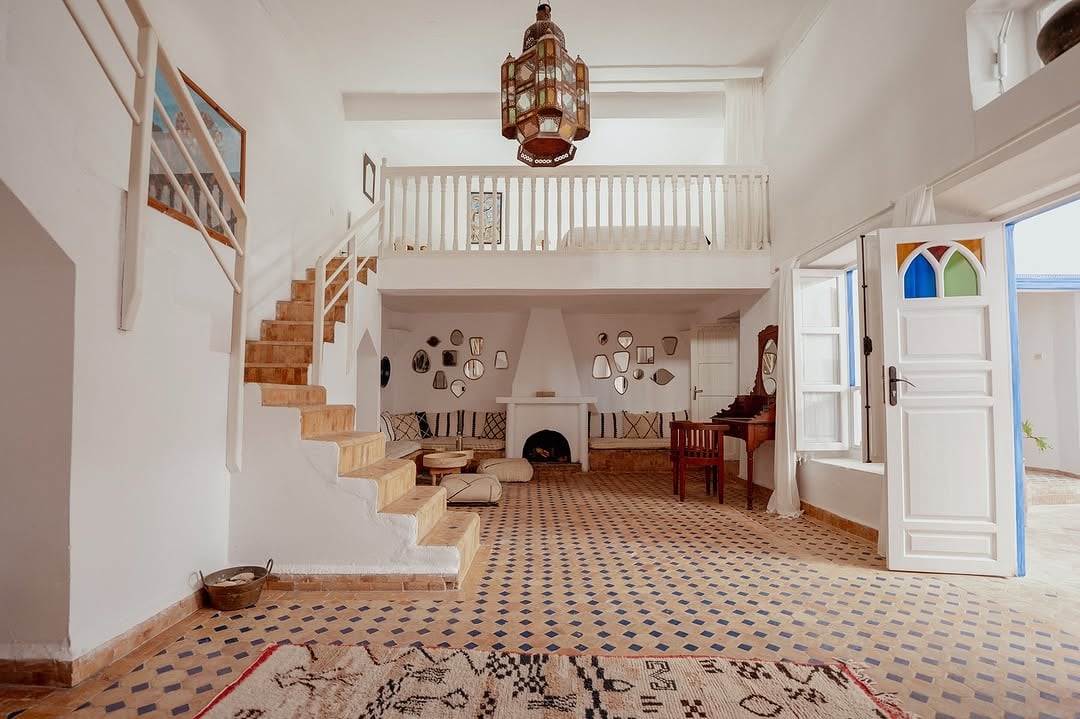
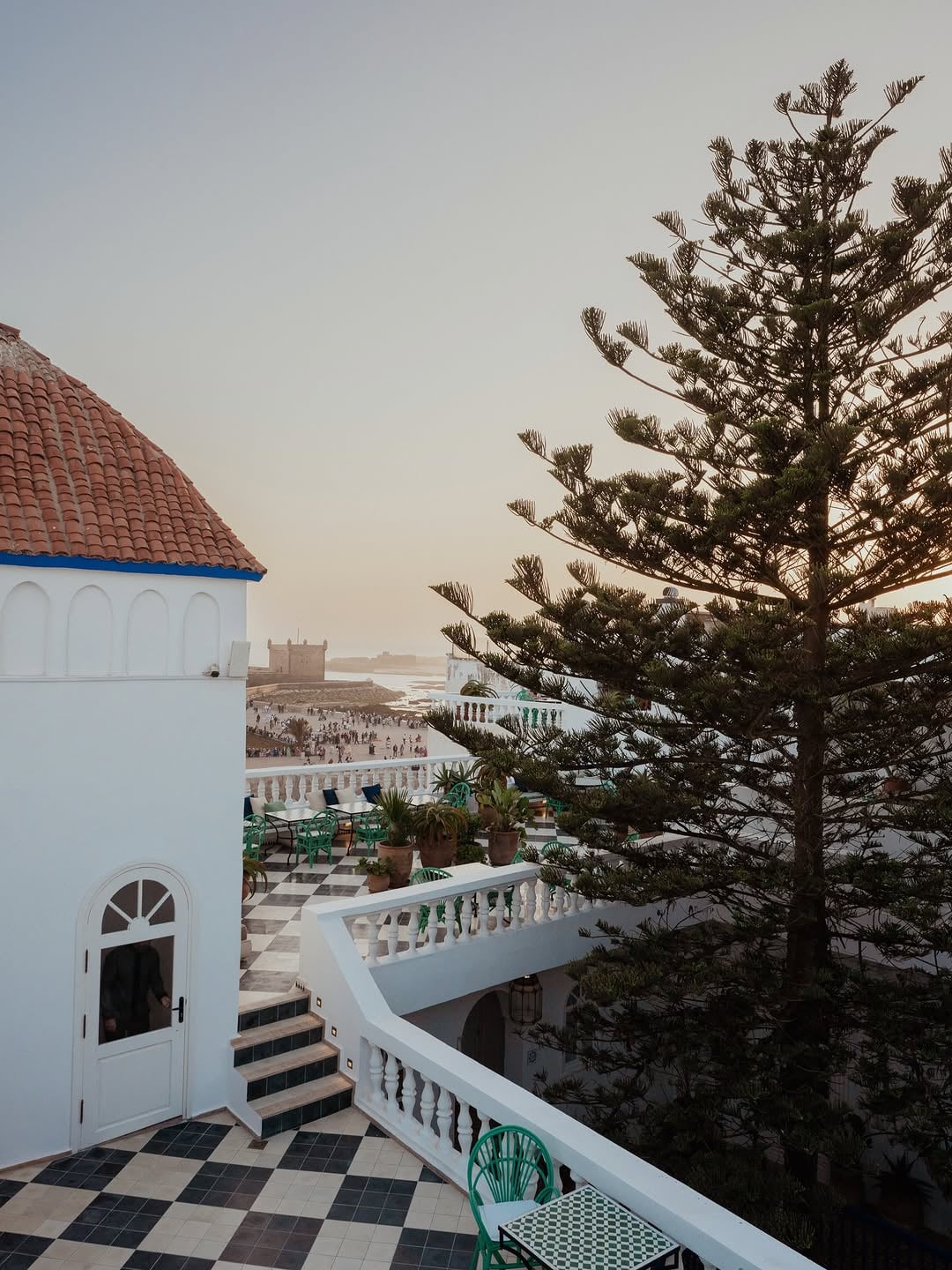
Villa Maroc set the template in 1990, when Abderrahim and Cornelia Ezzaher turned a surfers' guesthouse they had bought two years earlier into a run of riad-style rooms just inside the Bab Sbaâ gate. It later grew to twenty-one rooms across four combined eighteenth-century houses, credited as Morocco's first riad hotel and eventually named among the thousand places worth crossing an ocean to see.
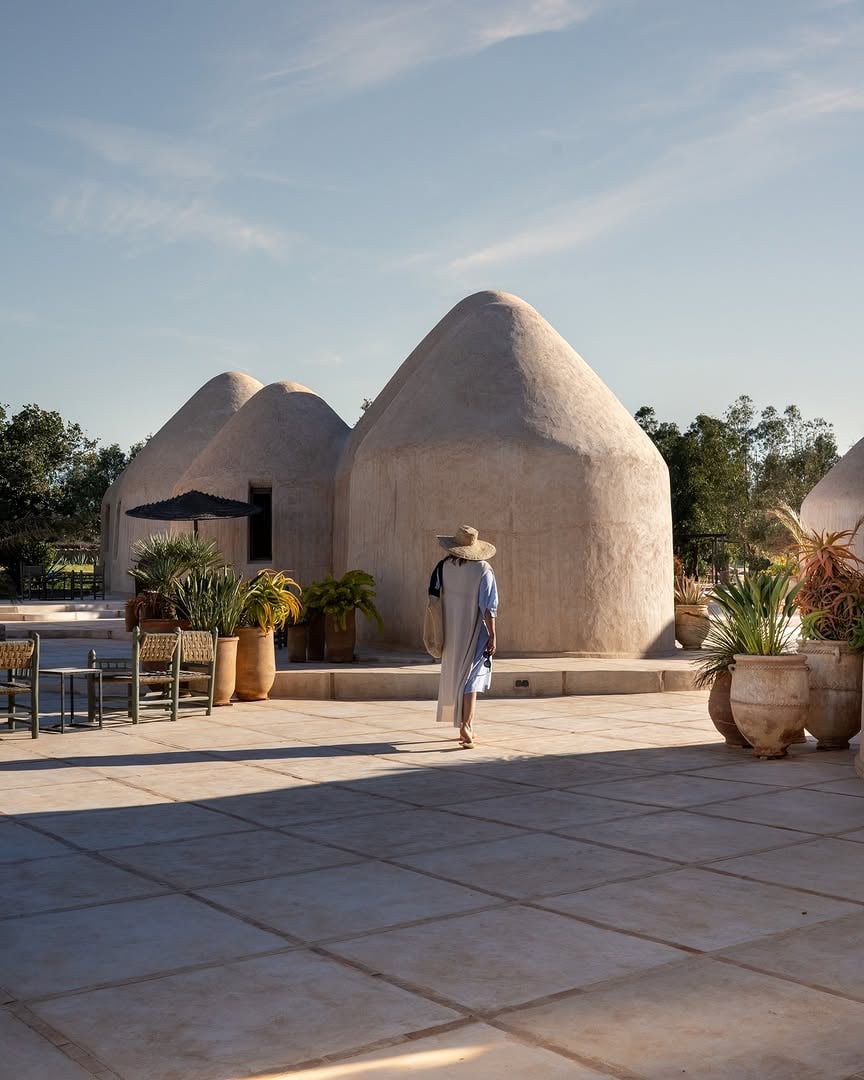
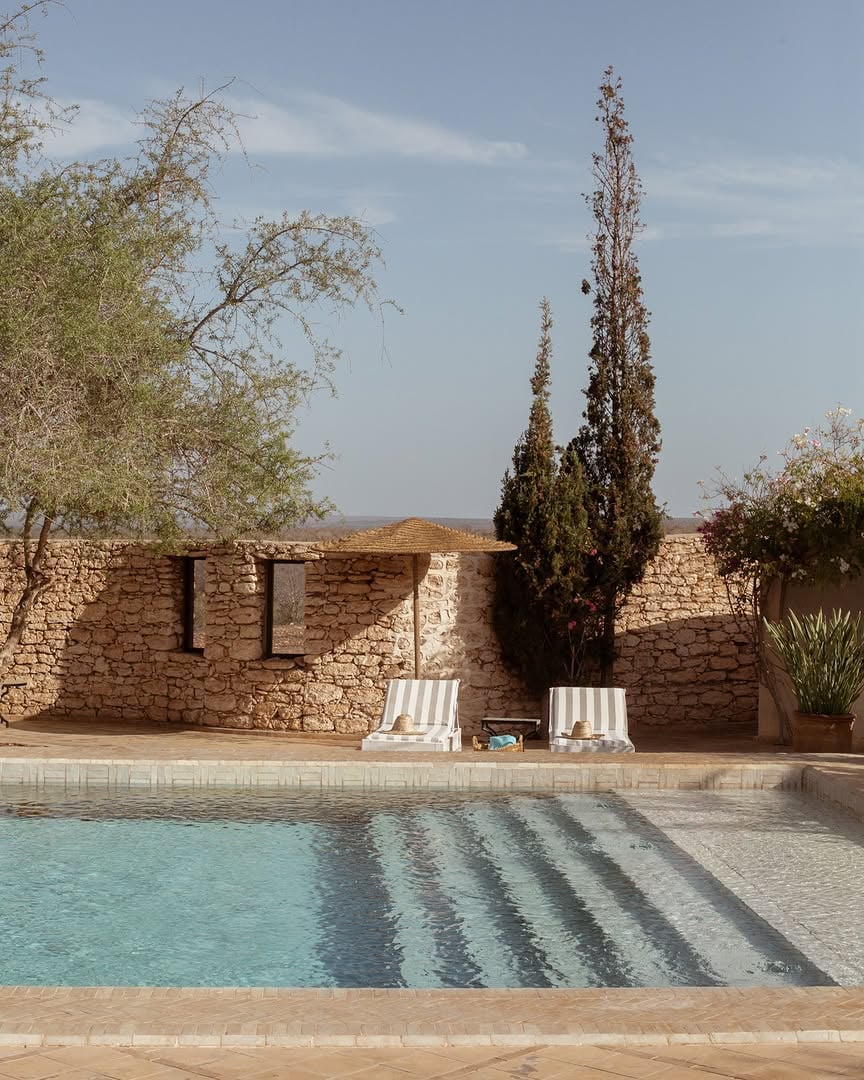
The same Ezzaher family opened a second property outside town in 2009, Les Jardins de Villa Maroc, now run by their daughter Mounia: a pool and restaurant added in 2012, then in 2020 a cluster of eleven earthen domes, built by stacking repurposed sugar bags and finishing them with a natural mortar of sand, clay and lime, plus three suites, set among olive and argan trees about fifteen minutes from the medina. It also hosts a handful of international yoga retreats each year.
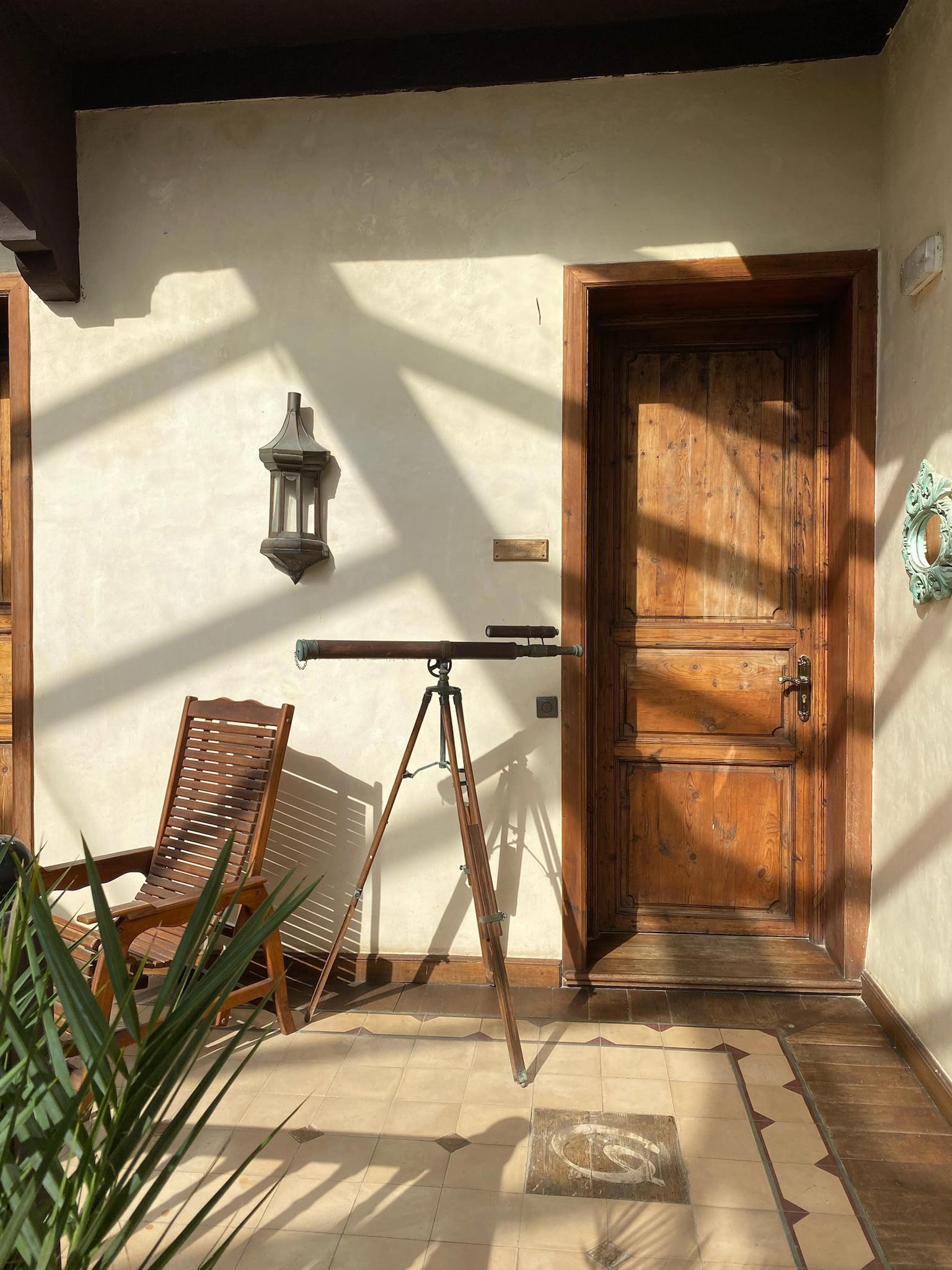
Villa de l'Ô sits just inside Bab Sbaâ too, backed onto the ramparts: twelve rooms, nine of them suites, restored and opened in 2008. The materials run more colonial than Moroccan, stone and tadelakt alongside mahogany, brass and leather, with the original carved doors kept in place. The hammam is downstairs and the roof terrace has a jacuzzi facing Mogador Island; the largest suite, Avelmor, has a terrace of its own.
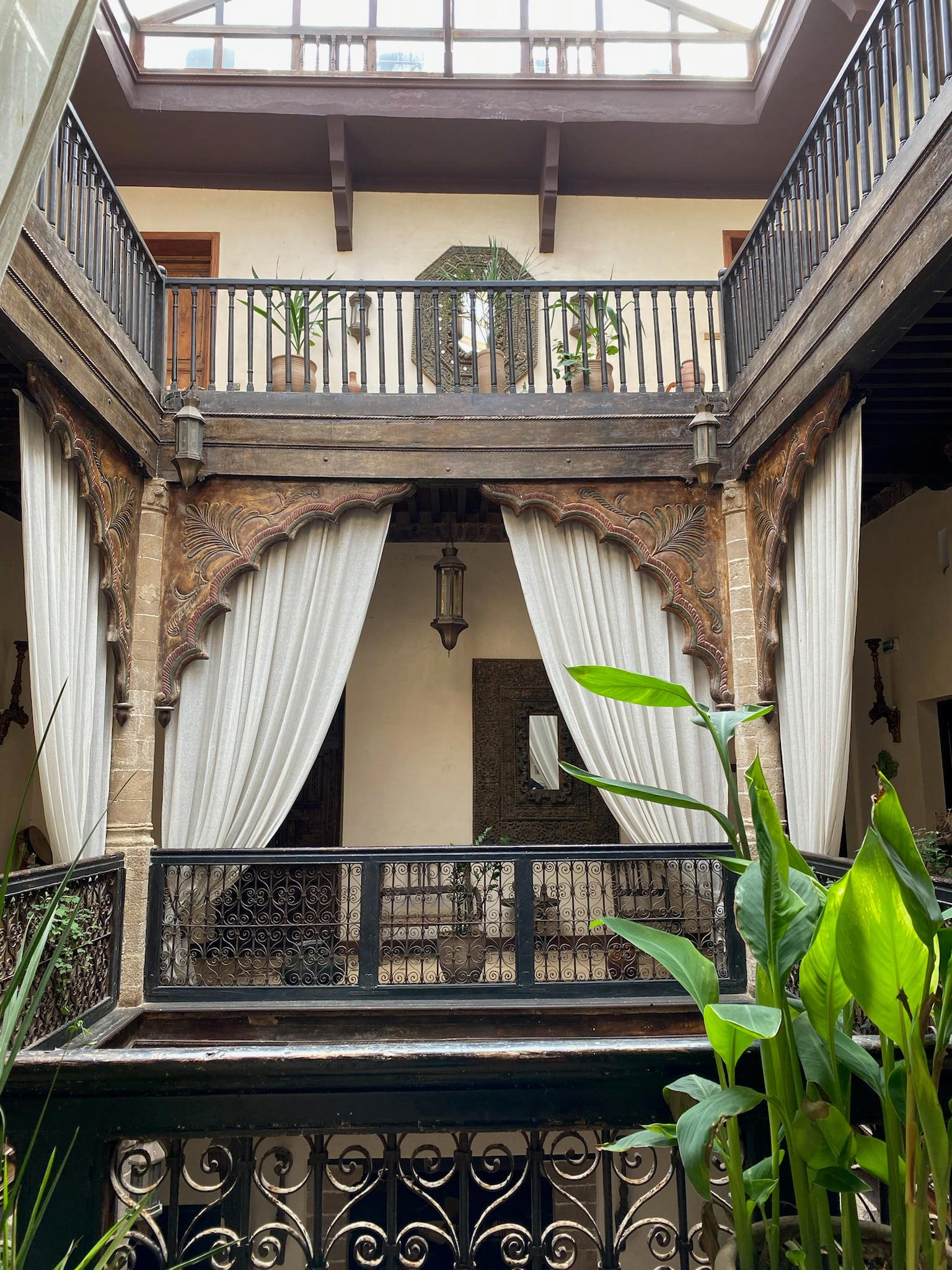
L'Heure Bleue Palais occupies a merchant's house that spent decades as an orphanage, before the Azoulay family, one of Mogador's old trading dynasties, restored it into a thirty-three-room Relais & Château address, reopened in June 2004.
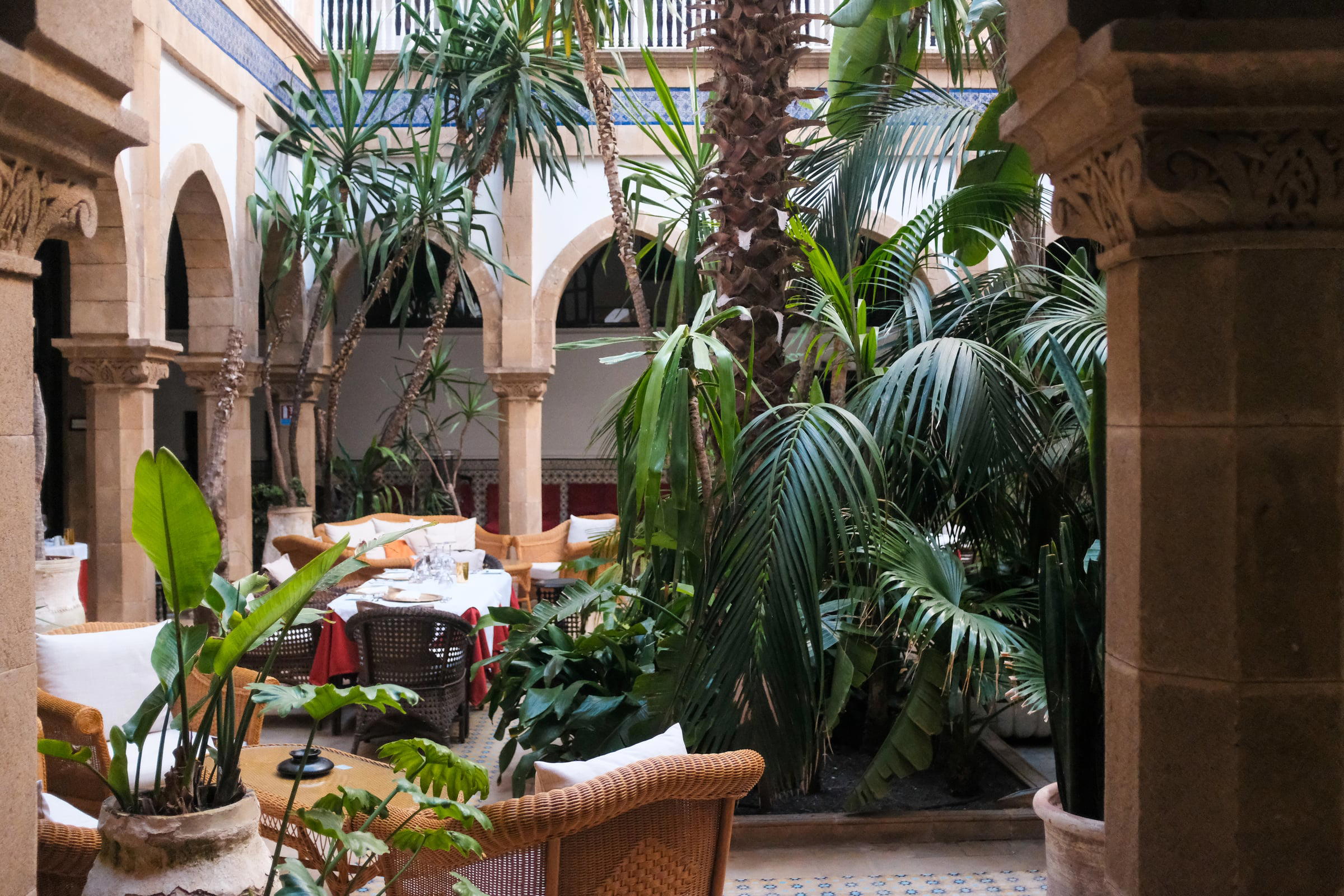
Villa Beldi works at a smaller scale: eight rooms in a converted 1960s house, a few minutes' drive from town, closer to staying with someone's aunt than checking into a design hotel. It is the opposite trade to Villa Maroc, more space and more amenities for less convenience, because getting into town always means the car.
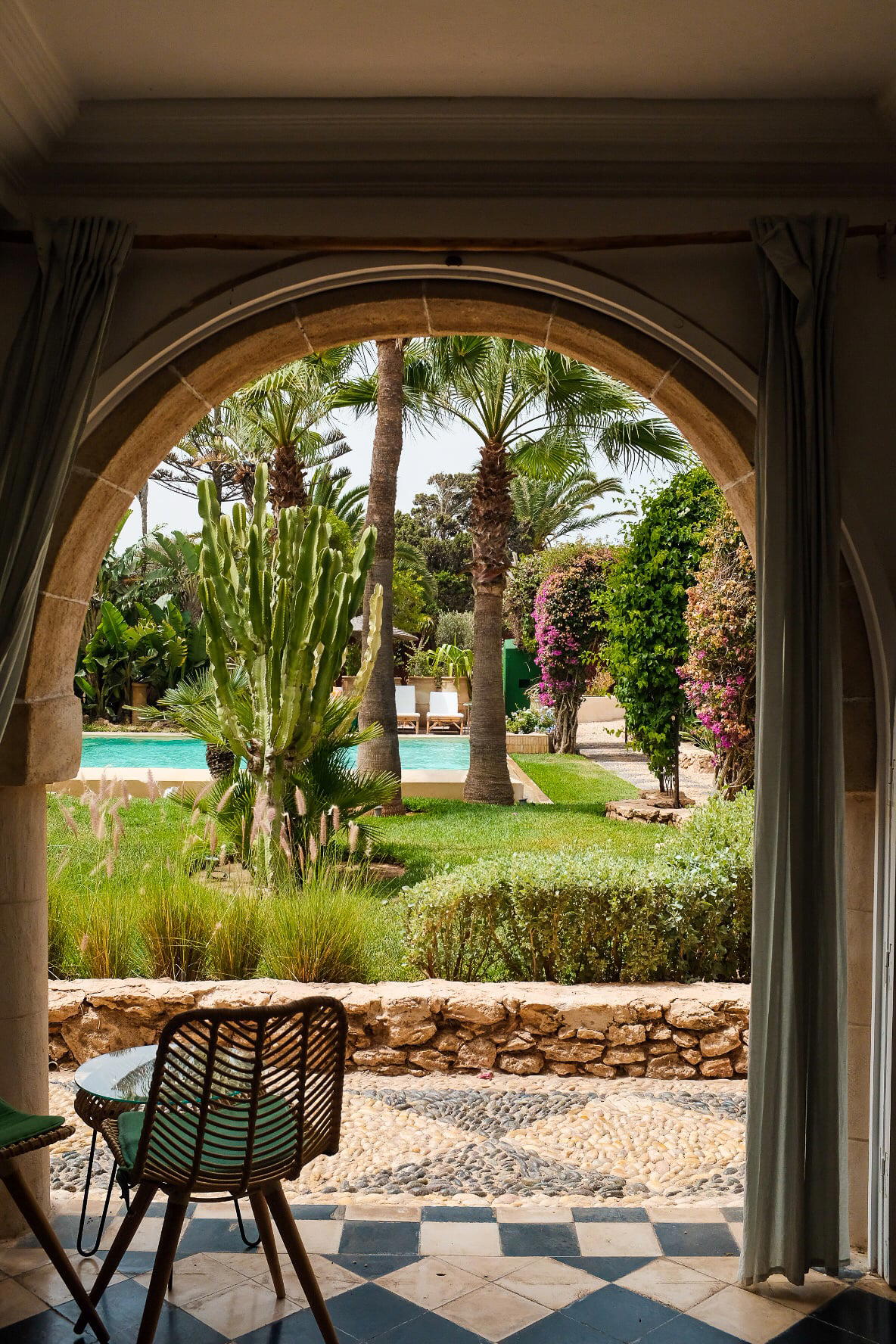
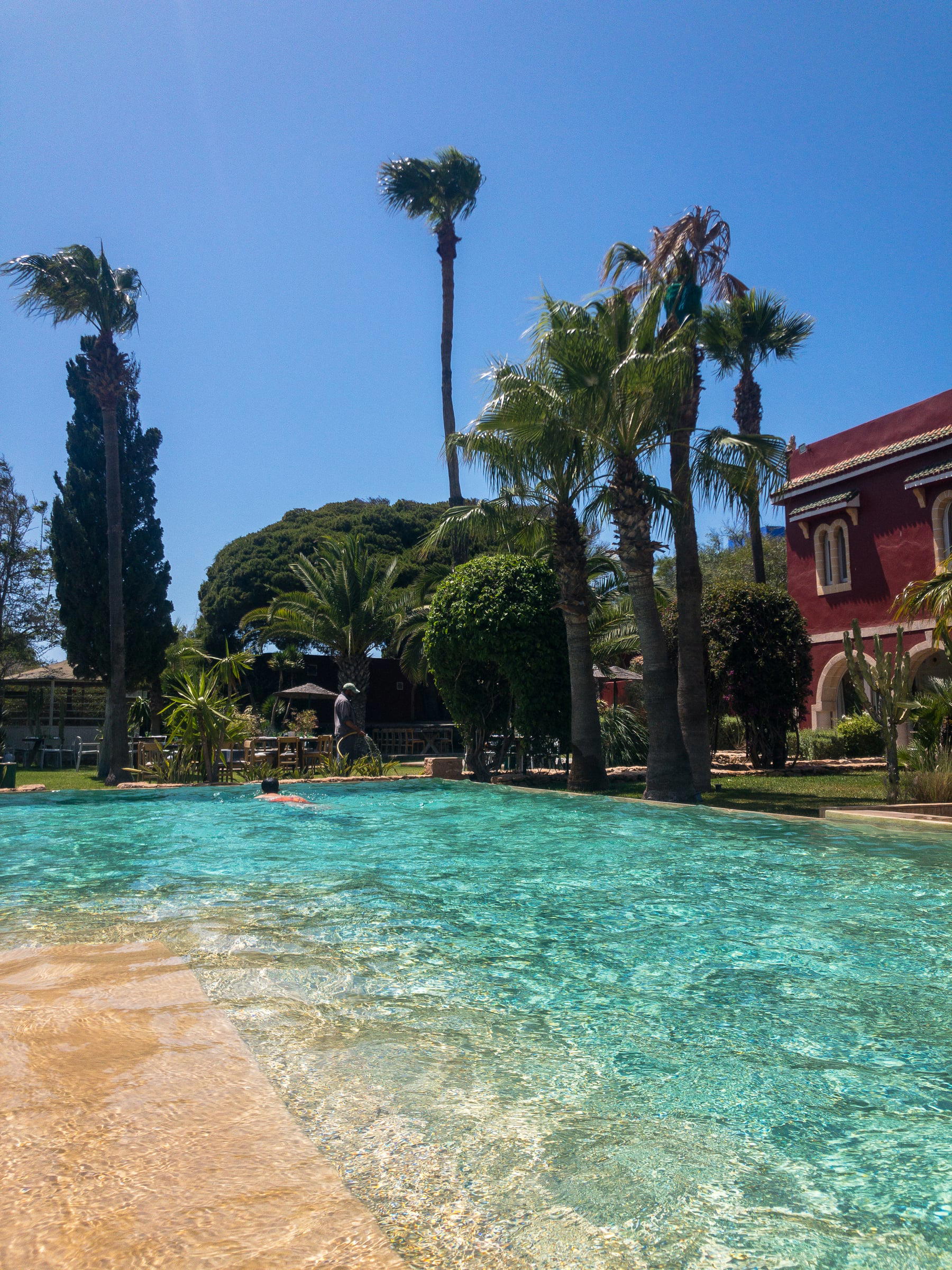
Out past Diabat, Le Jardin des Douars occupies a rebuilt ksar with nineteen rooms and six private villas around two pools and a hammam, far enough from the coast that the wind there is only ever a rumour, and you feel the full heat of the interior. It is built for not leaving: pools, hammam, rooms or private villas, all inside the same walls through to the end of the stay.
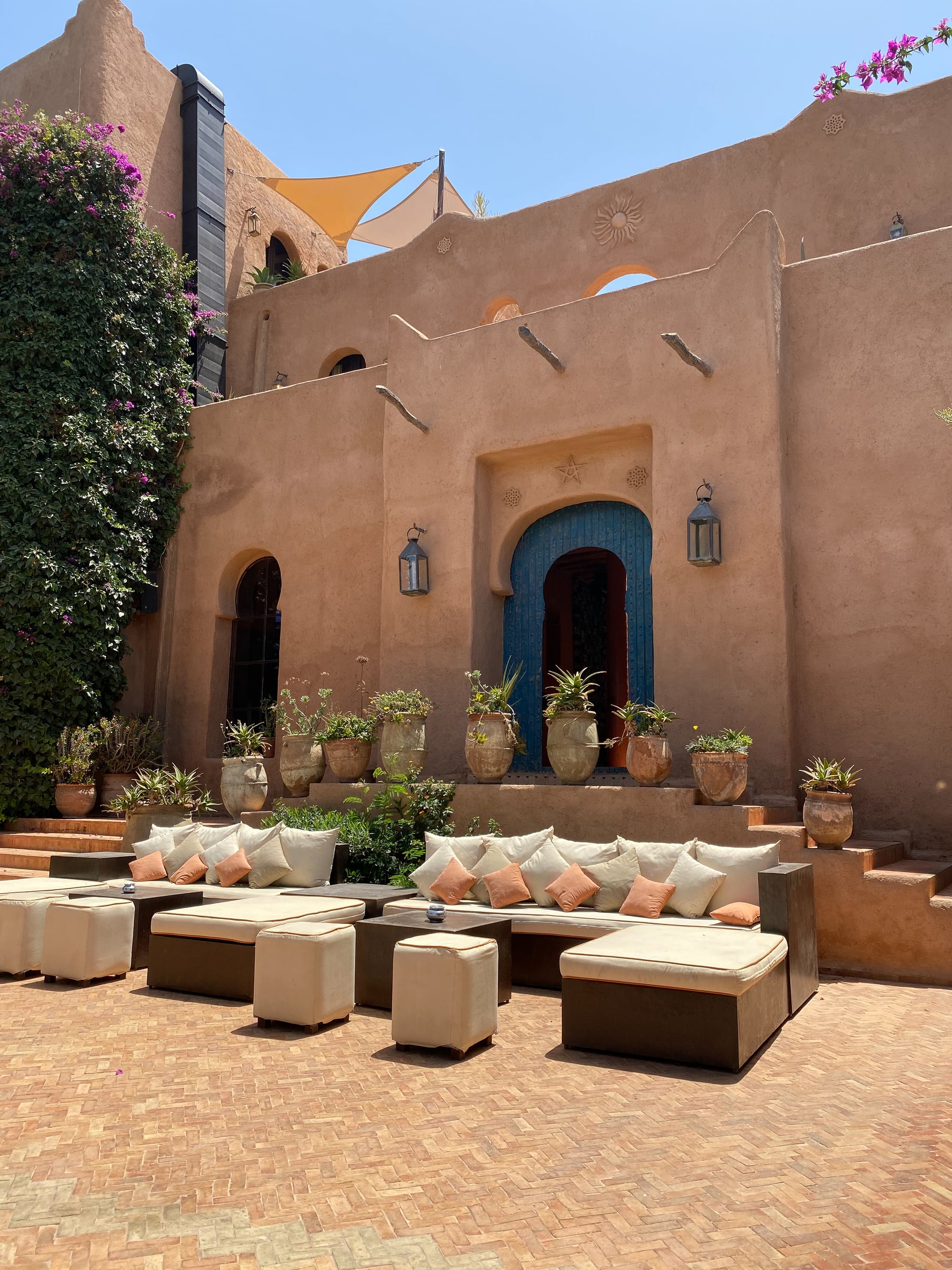
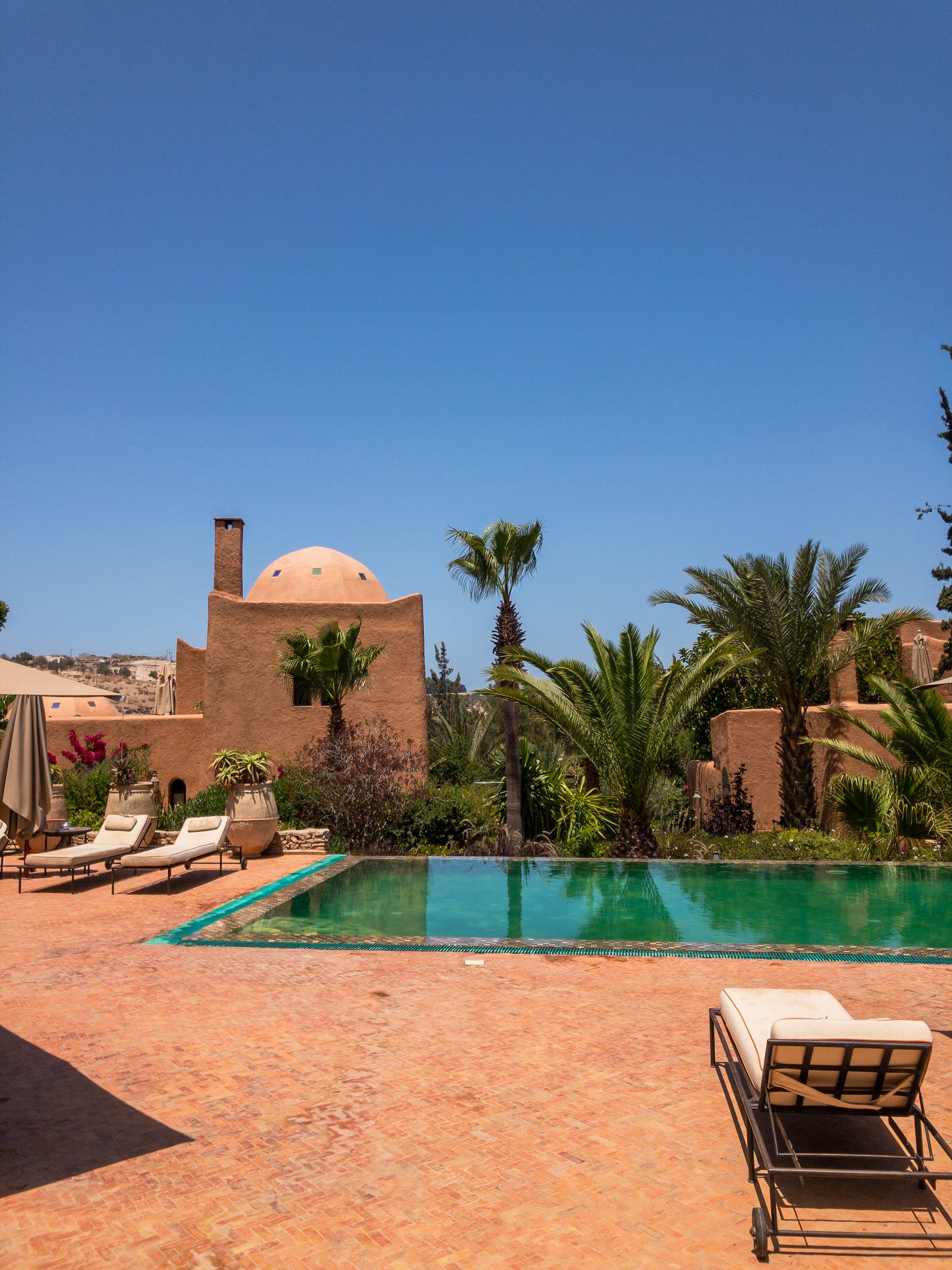
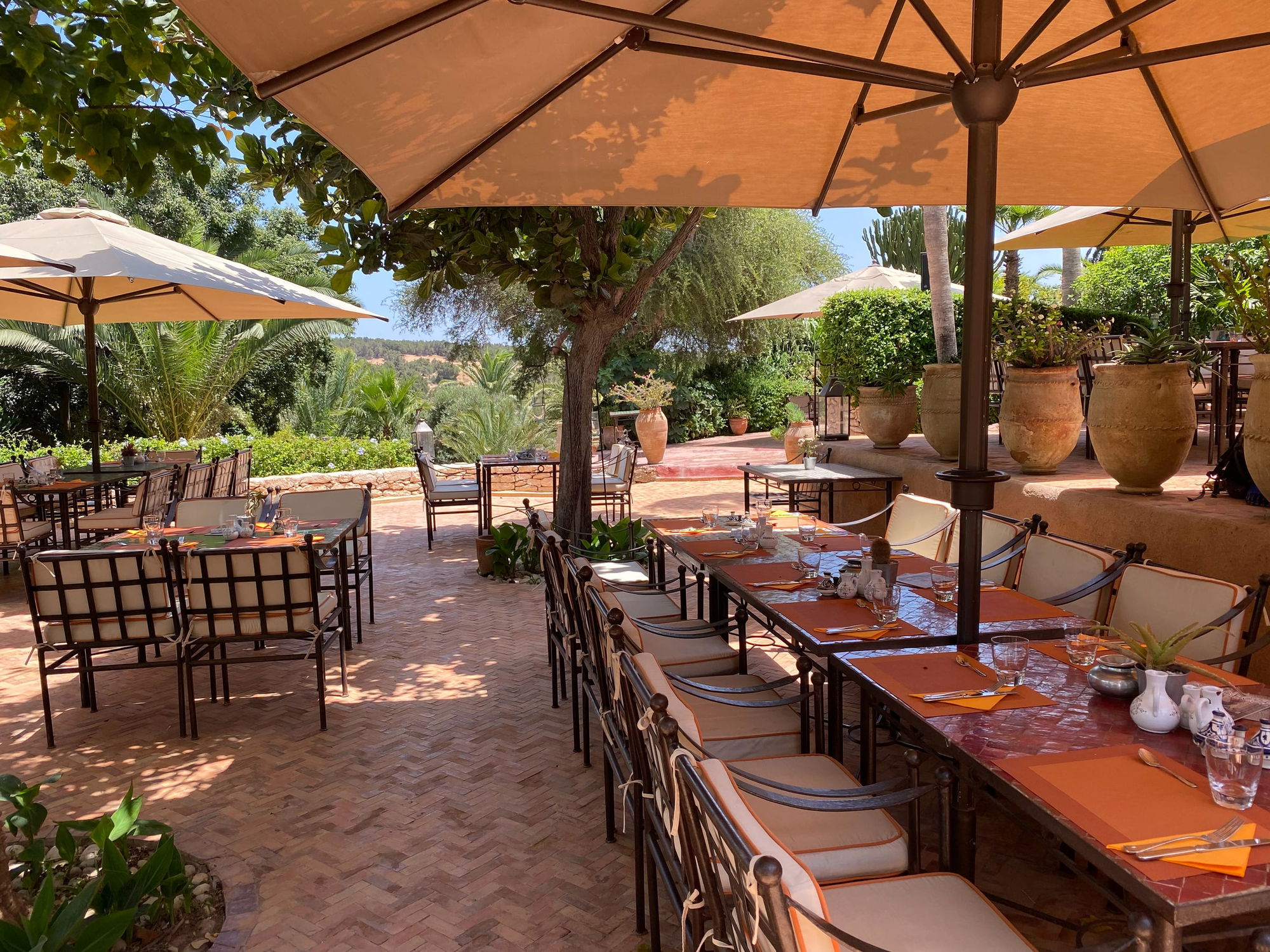
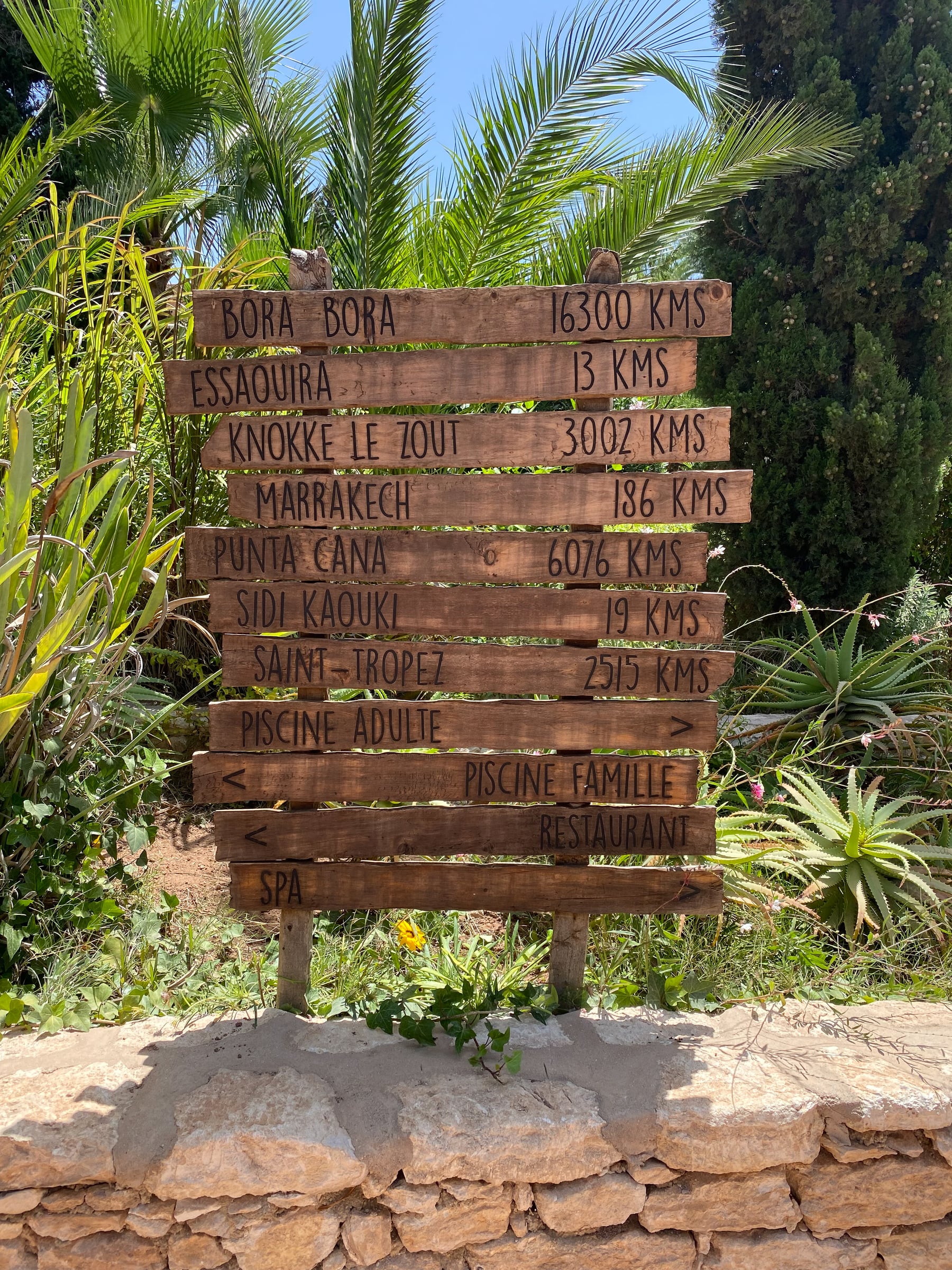
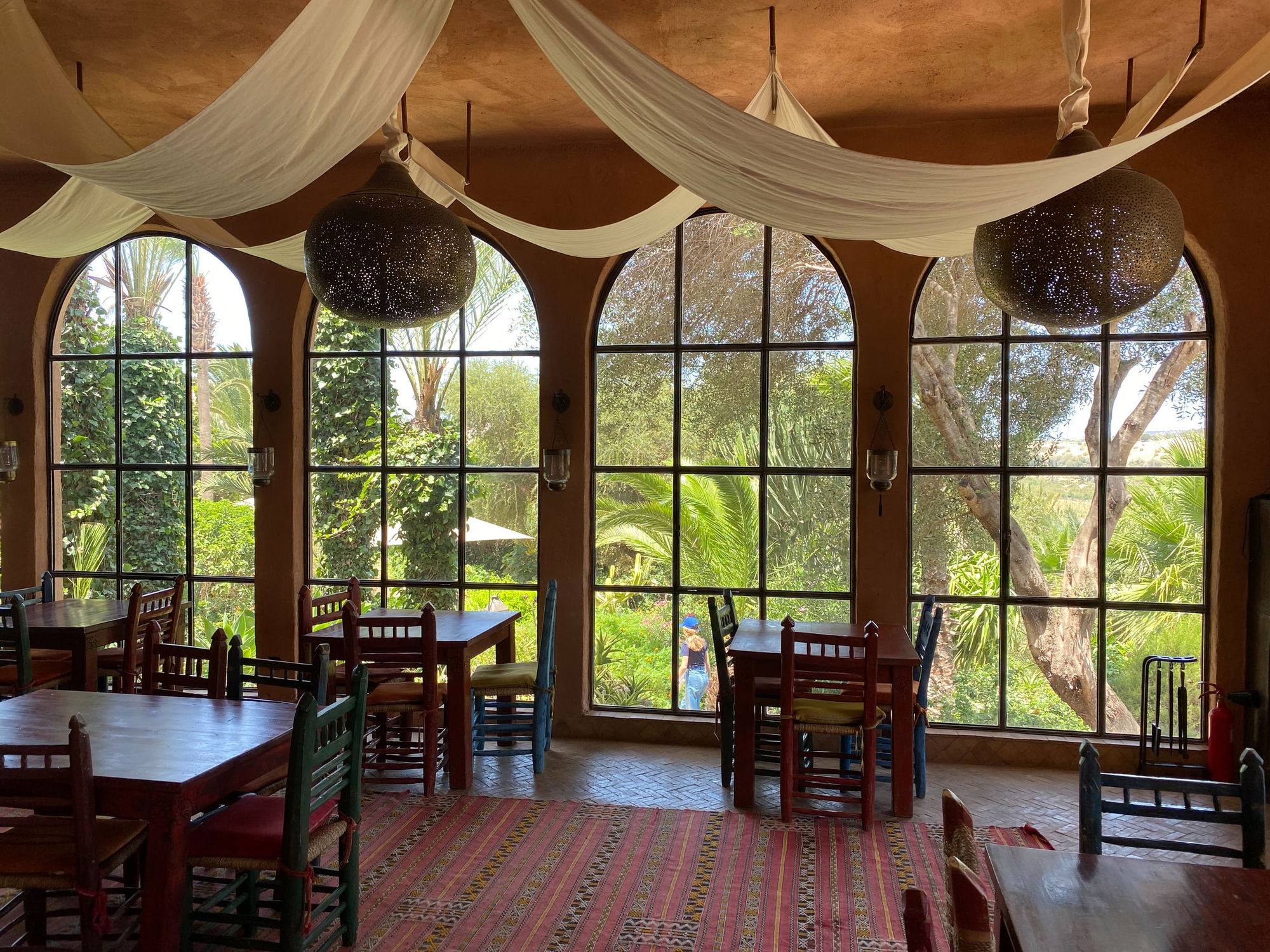
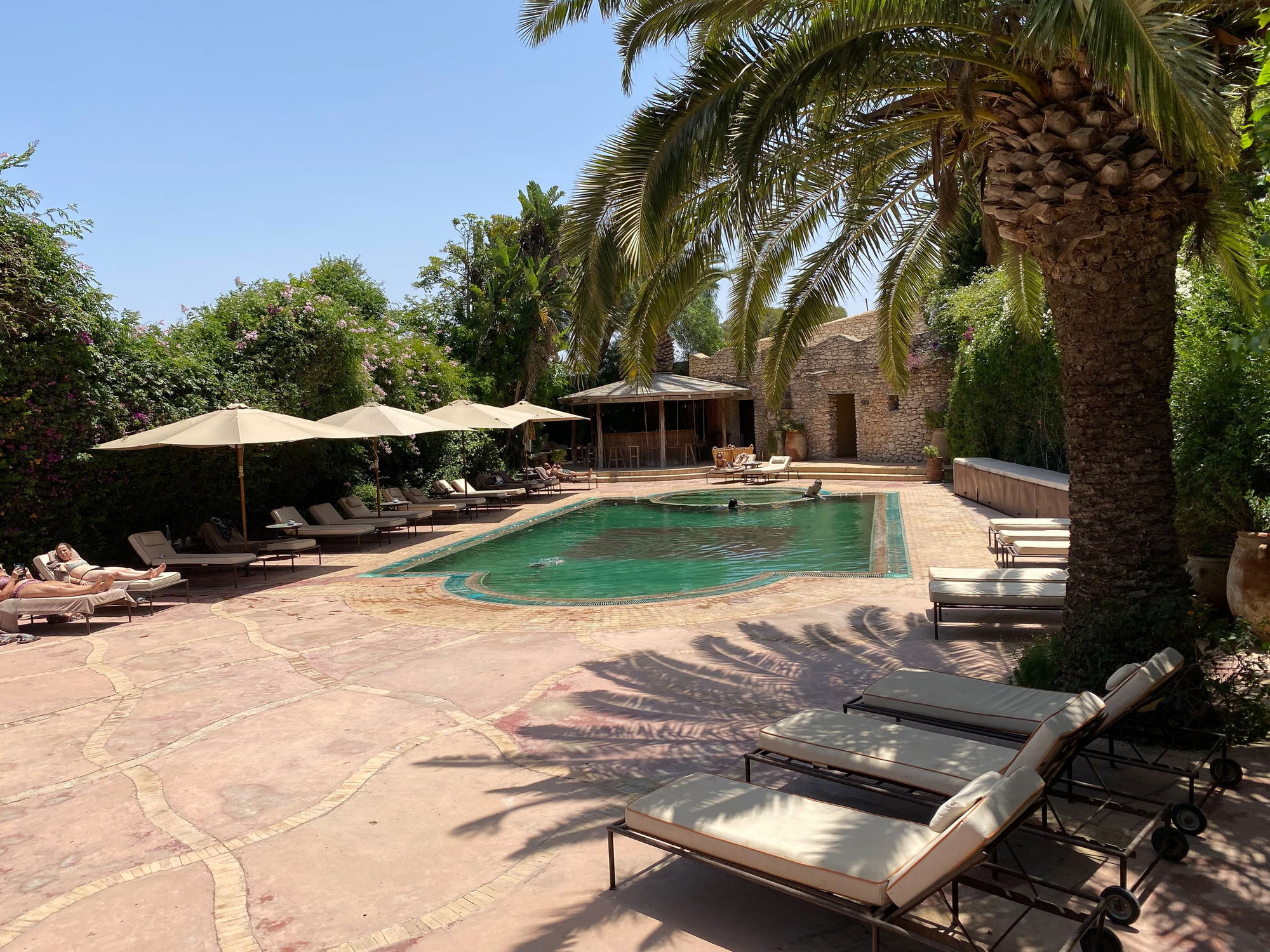
Anyone sleeping in the medina can still take an afternoon, or Sunday brunch, at Villa Beldi or Le Jardin des Douars: the car, and nothing else on the plan for that day.
Where to Eat
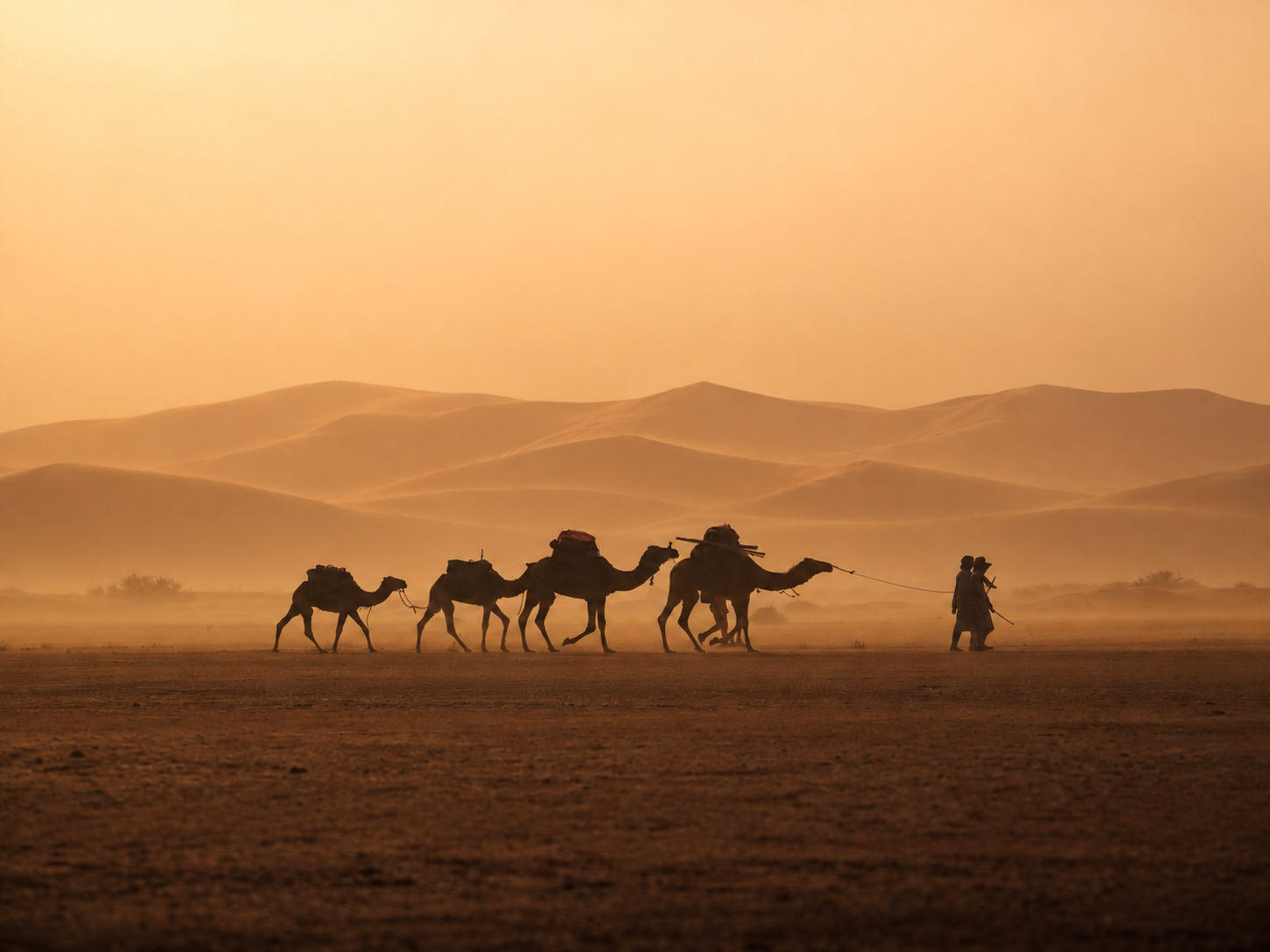
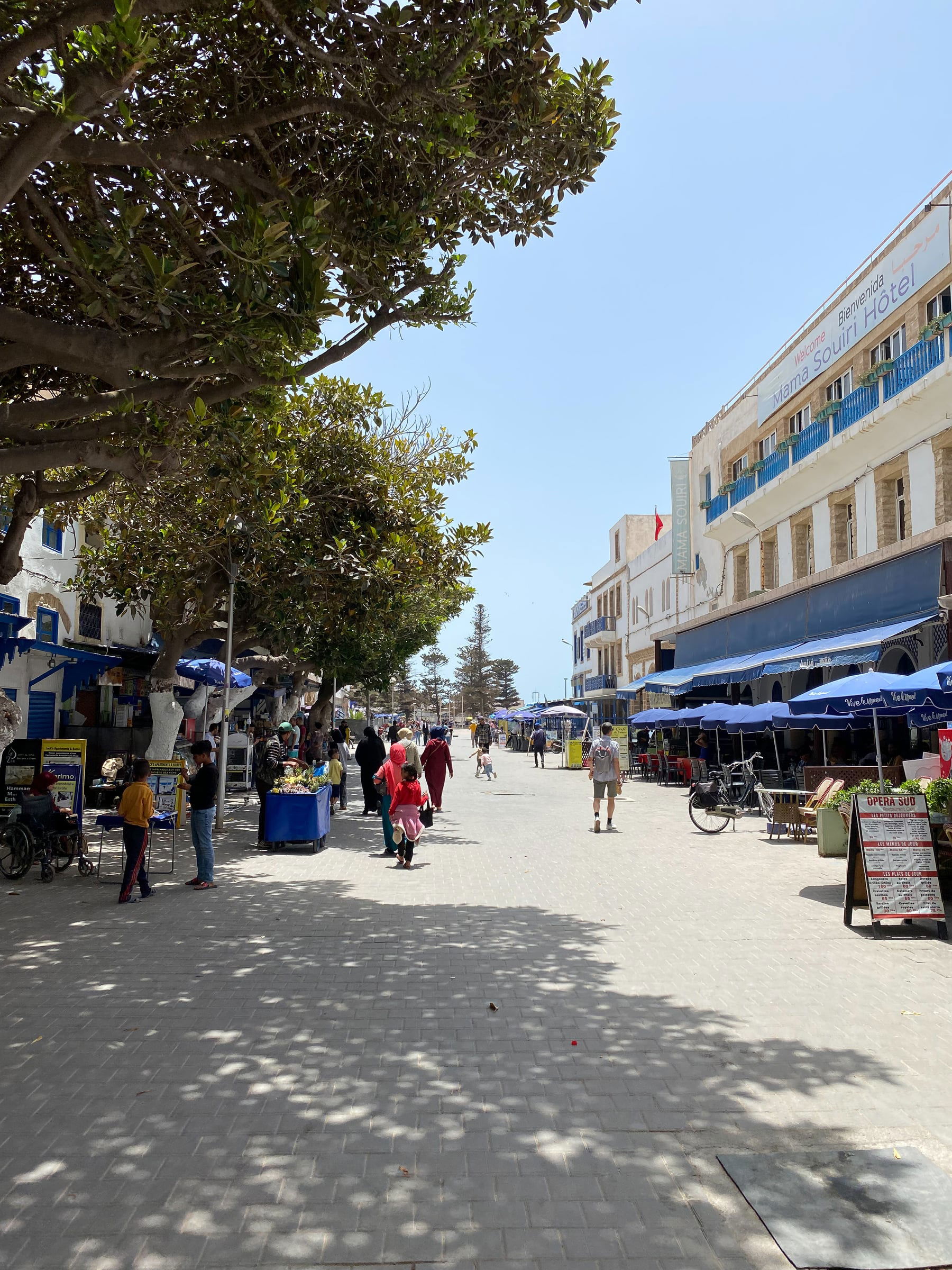
At the table too, what counts most is the kind of day you are after. There is the place you walk into and stay until evening, and there is the round you make by changing address every few hours: a terrace for the sunset over the ramparts, another looking onto the seafront, a table in the medina to watch people go past, and one on the sand, with the camels crossing in front of it.
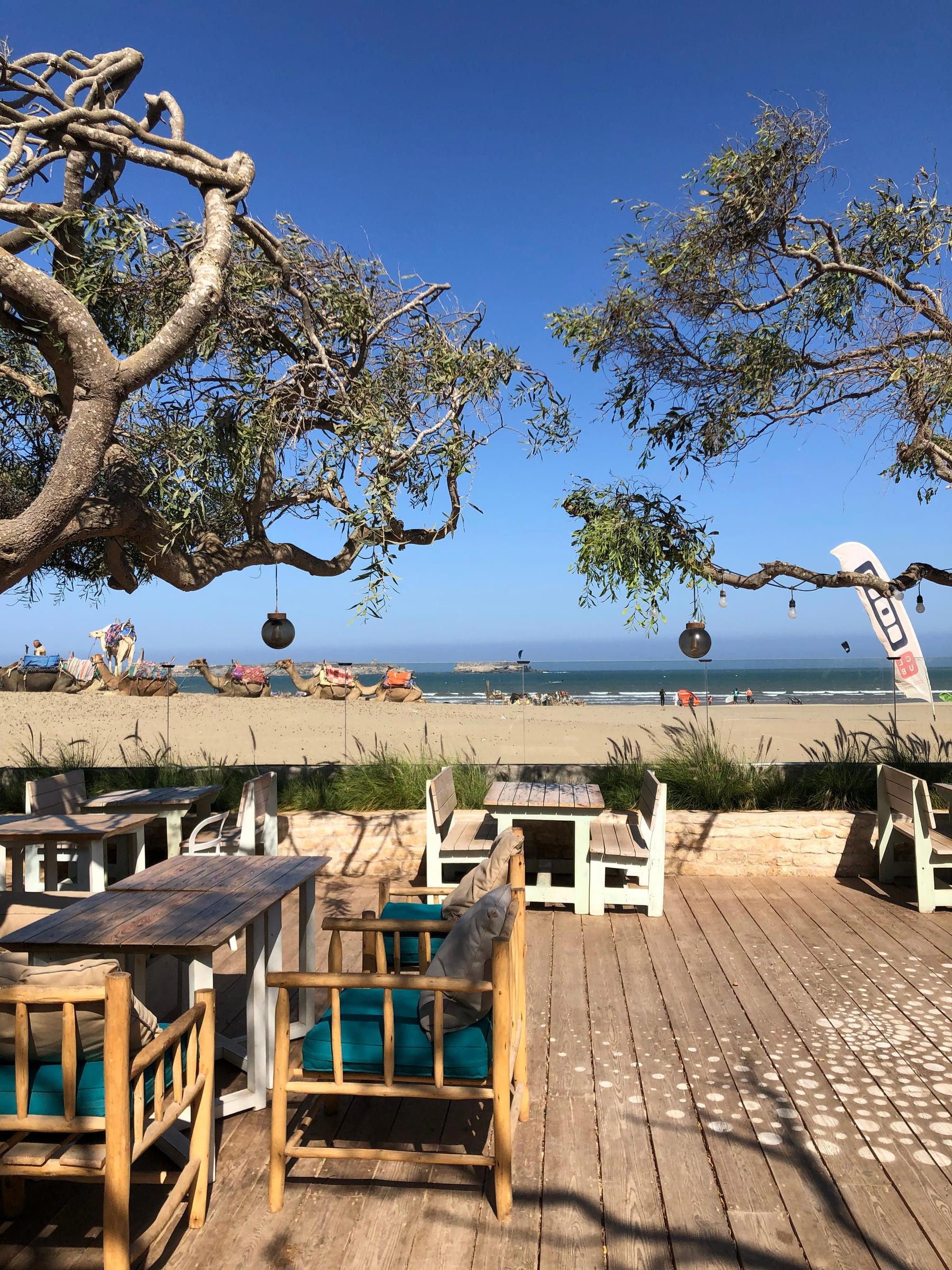
One place covers the whole day. Ocean Vagabond holds breakfast, the lunch where half the town turns up, afternoon tea, the aperitivo and dinner, without changing pace. Only the soundtrack changes: live music on Wednesdays, a DJ on Fridays and Saturdays from 7:30pm until closing around midnight, kitesurfers still in their wetsuits at the next table. On Saturday mornings there is a market. Here, you run into whoever has just surfed, whoever still has to, whoever picked Essaouira as home and whoever landed here by accident.
The other addresses work at any hour just as well, but each has its own right moment. Some declare it in their opening times: three hours at lunch and no more, or dinner only and by reservation, or almost purely for the sunset.
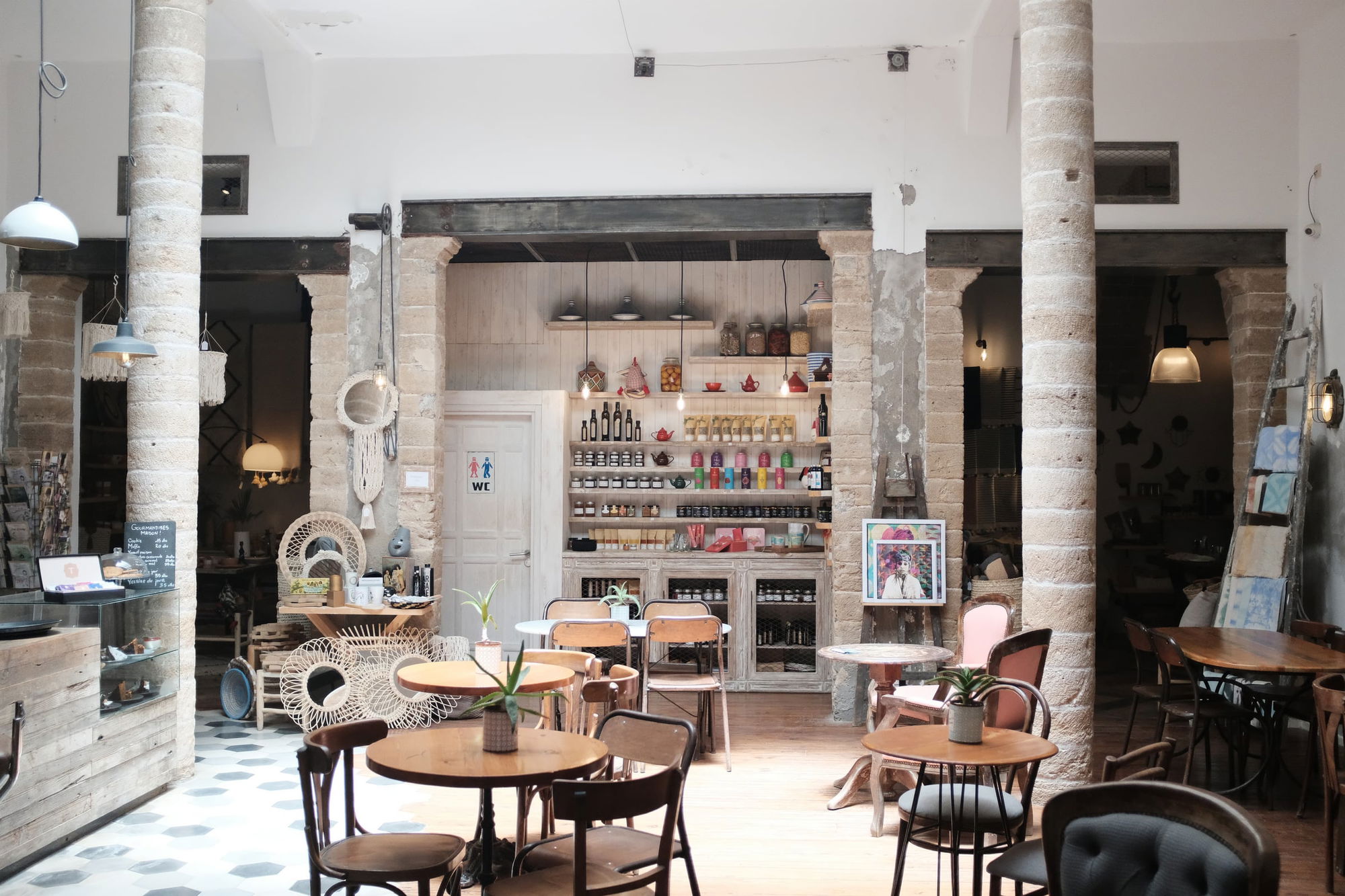
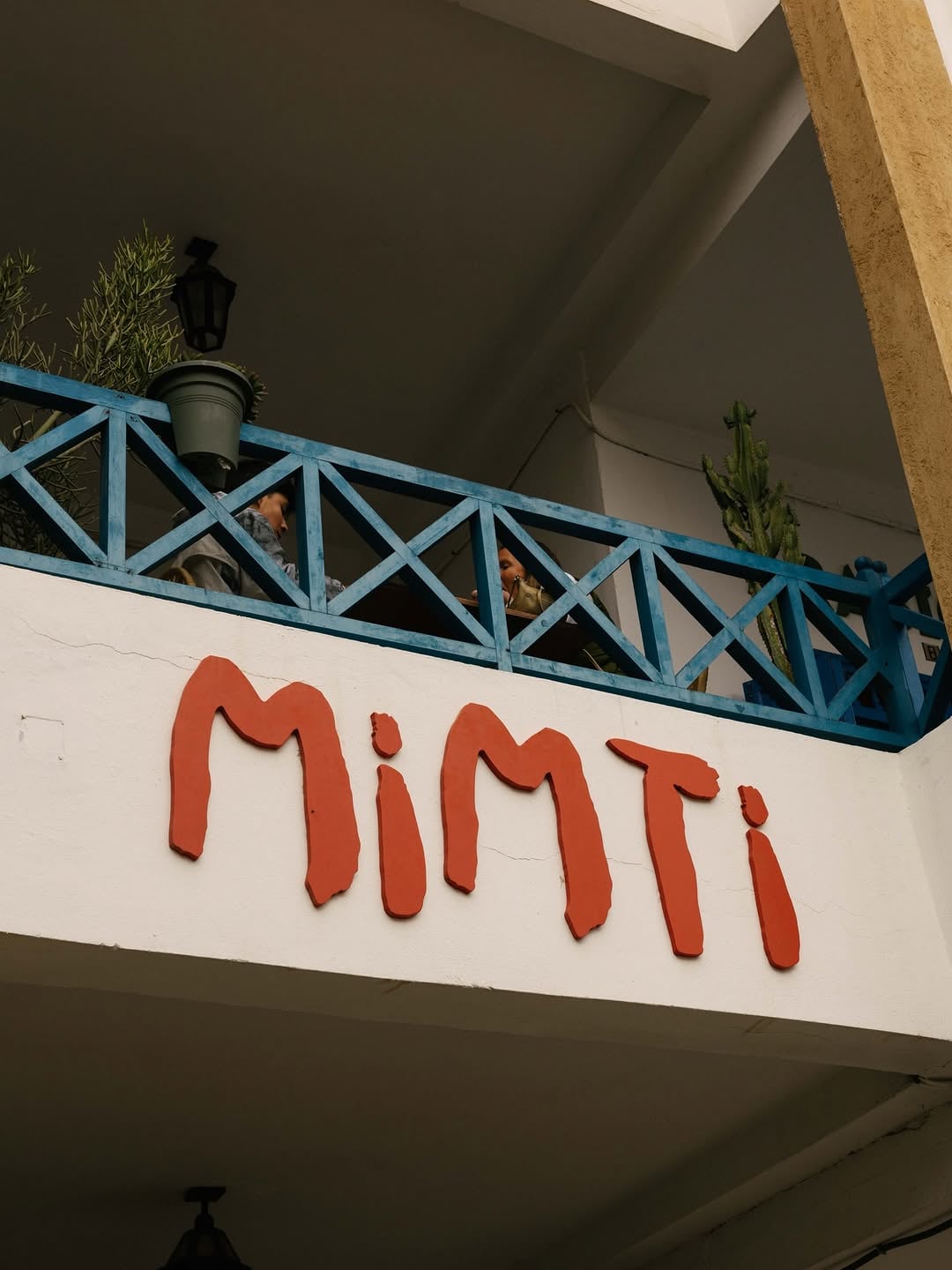
For a coffee or a quiet lunch, L'Atelier occupies the first floor of a former almond warehouse at the medina entrance, café and concept store since 2017, with a cooking and embroidery workshop run together with a local women's cooperative. Mandala Society, a second address after the original in Marrakech, keeps a vegetarian menu of açaí bowls and avocado toast behind a boho-chic front. Sisterhood puts a café and a vintage shop together, with a terrace above. Mimti, on Place Al Khaima, opens only Tuesday to Saturday, noon to three, a minimal four-dish menu built on whatever the couple who run it, Soufiane and Kaja, brought in that morning from their own farm outside town.M
For a more considered sit-down meal, Umia sits on the Skala itself, an open kitchen led by the self-taught chef Bibi and her partner Jamal, the day's menu rewritten around whatever came in that morning between fish and vegetables, with a 2023 refit that added a Gnawa mural above marble and velvet. For a more refined dinner, La Table Madada occupies an eighteenth-century carob and almond warehouse, candlelit tables and live guitar, dinner only, six to nine, closed Thursdays, by reservation, built around dishes like spider crab gratin and sea bass in a salt crust.
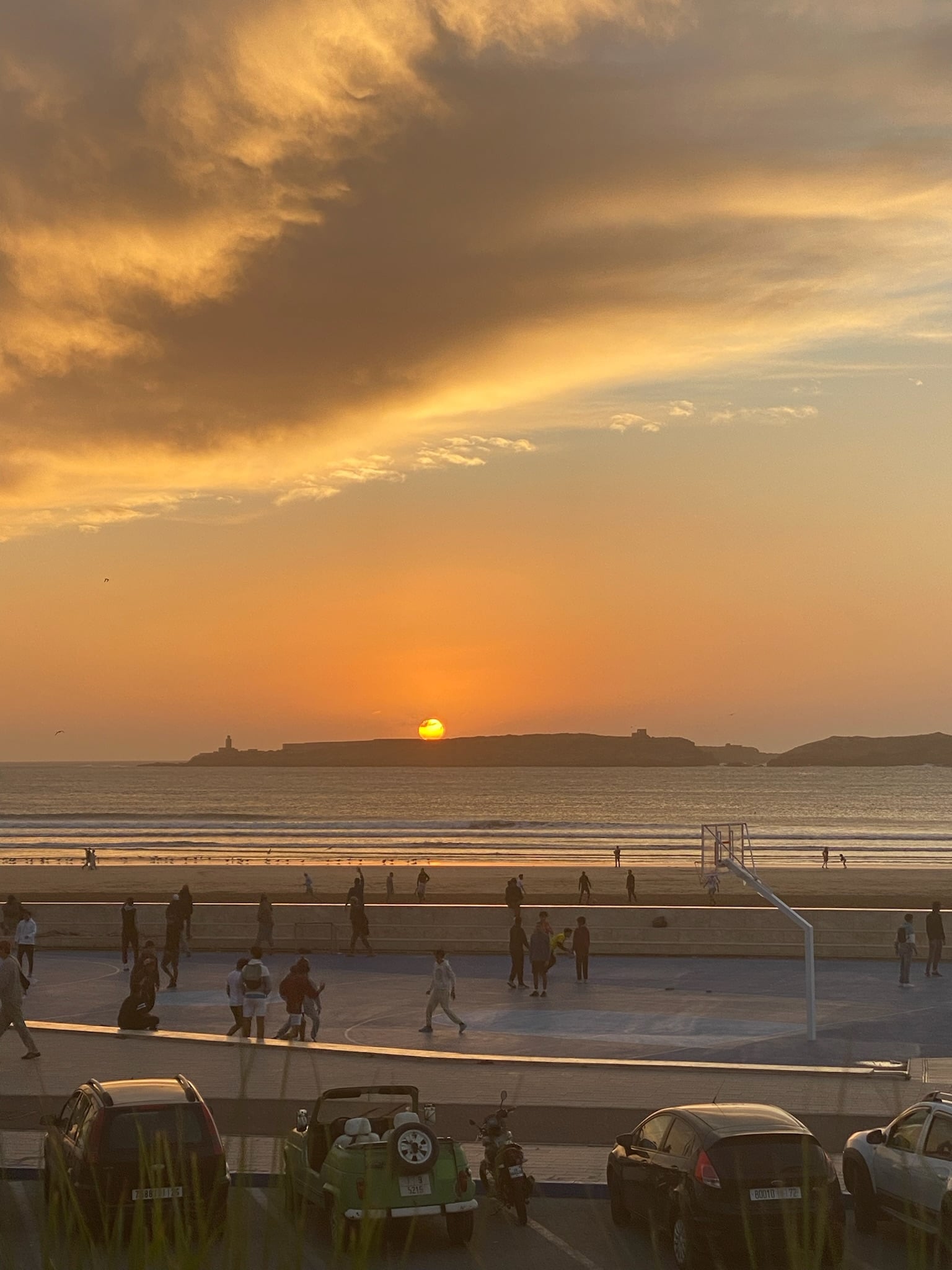
For the aperitivo, Ocean Vagabond stays the evergreen. To change the frame, and above all to get the sunset, there are the terraces: Beytt Mogador on the seafront, La Coupole, on the beach since 2016, which keeps its upper floor precisely for the sun going down behind Mogador Island, and Le Palazzo, a former sultan's storehouse that picked up the mid-century name Palazzo Desdemona, chosen, the hotel says, by an earlier owner as a tribute to Welles, with a terrace renovated in 2024 that looks out over the medina and the ocean at once. Salut Maroc is set into the bastion itself, with the cannon battery below.
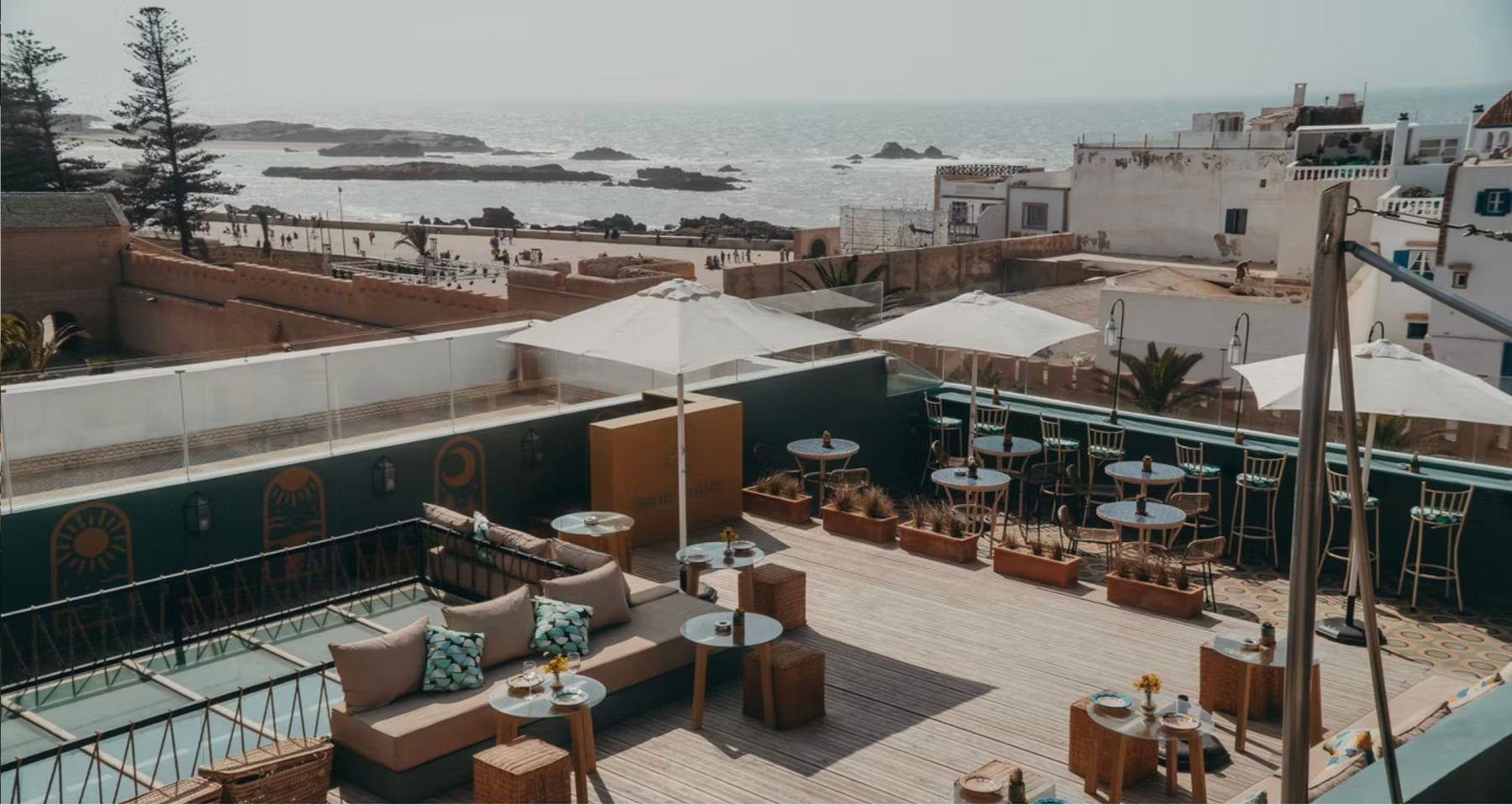
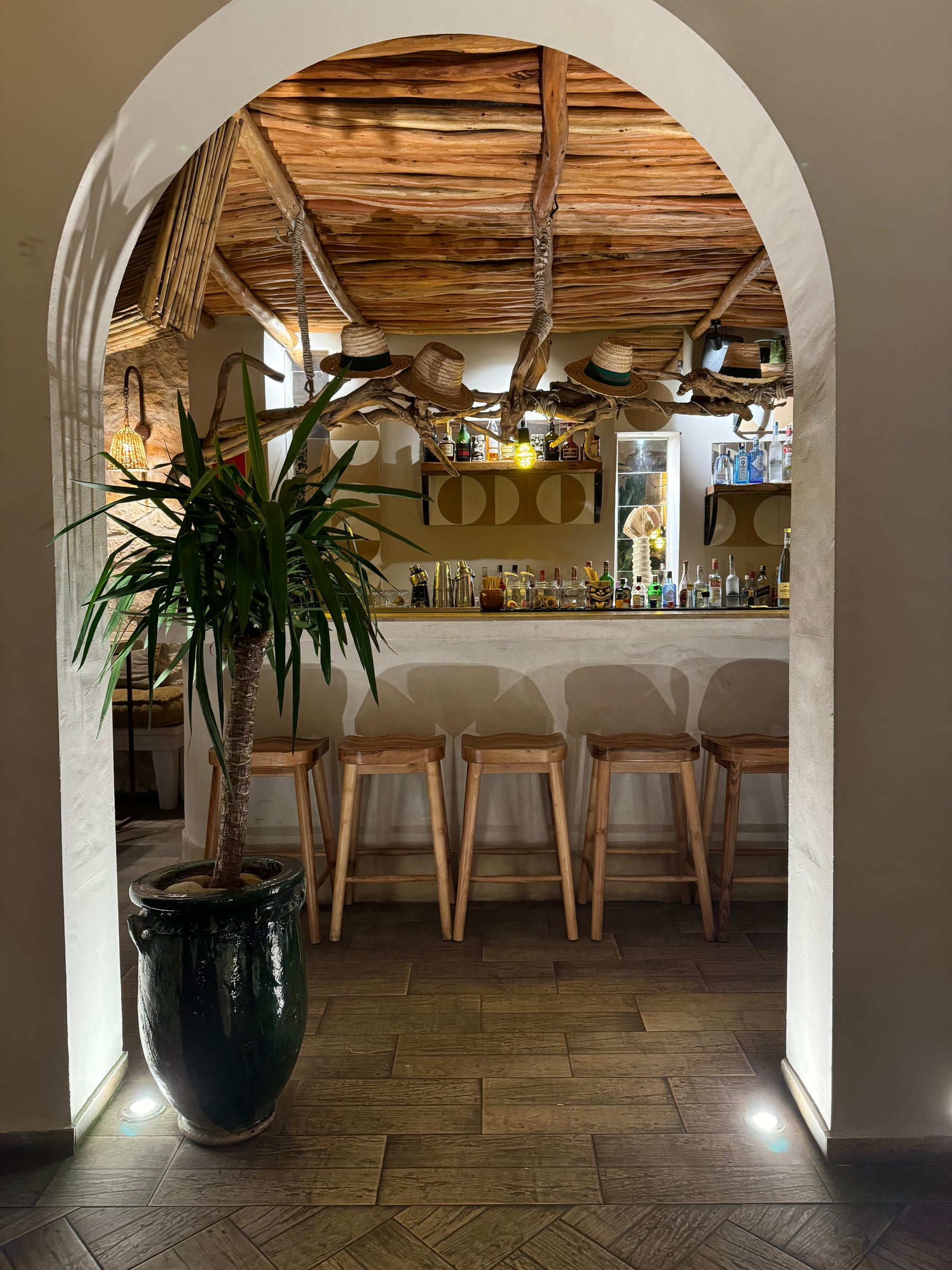
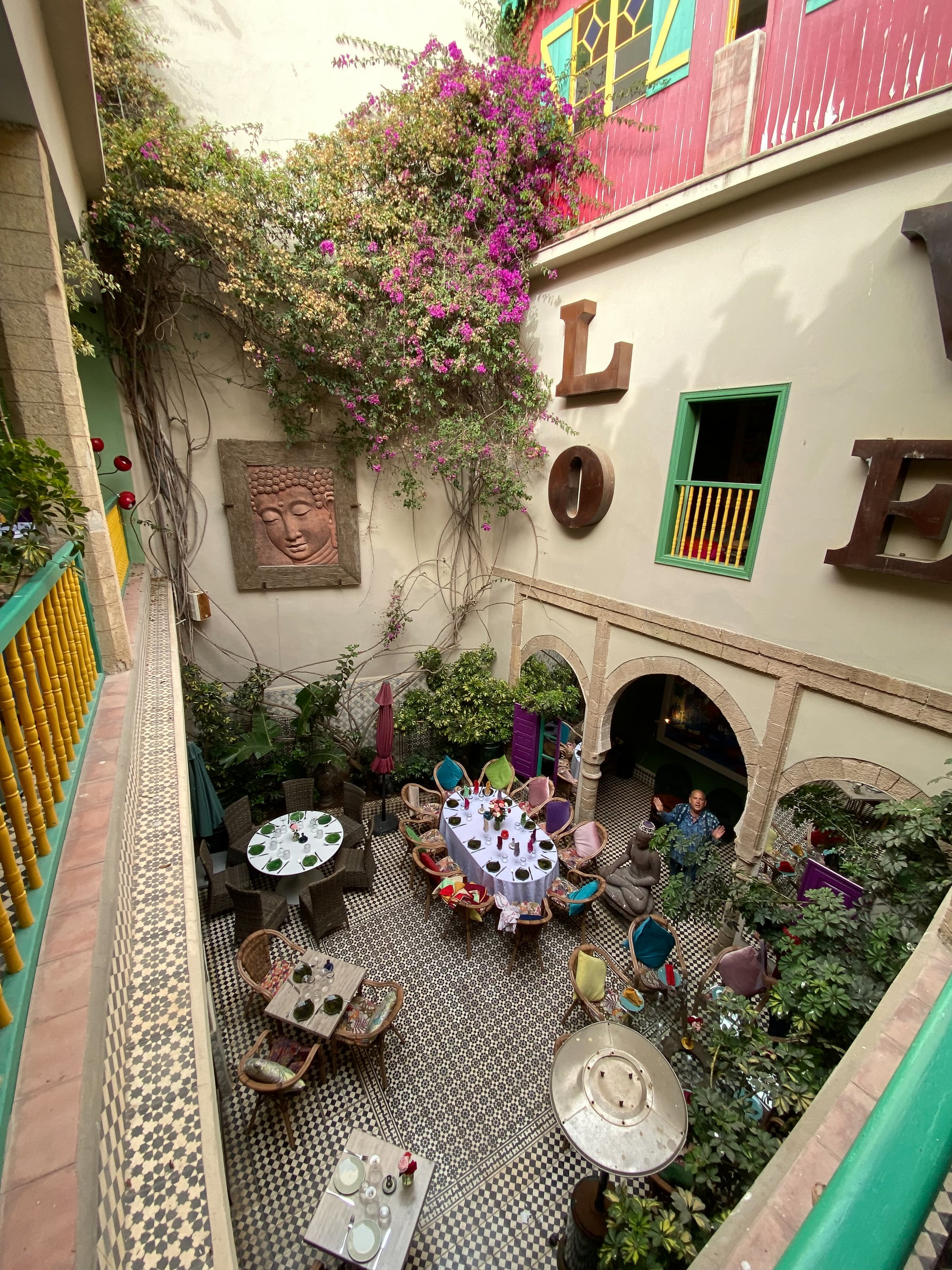
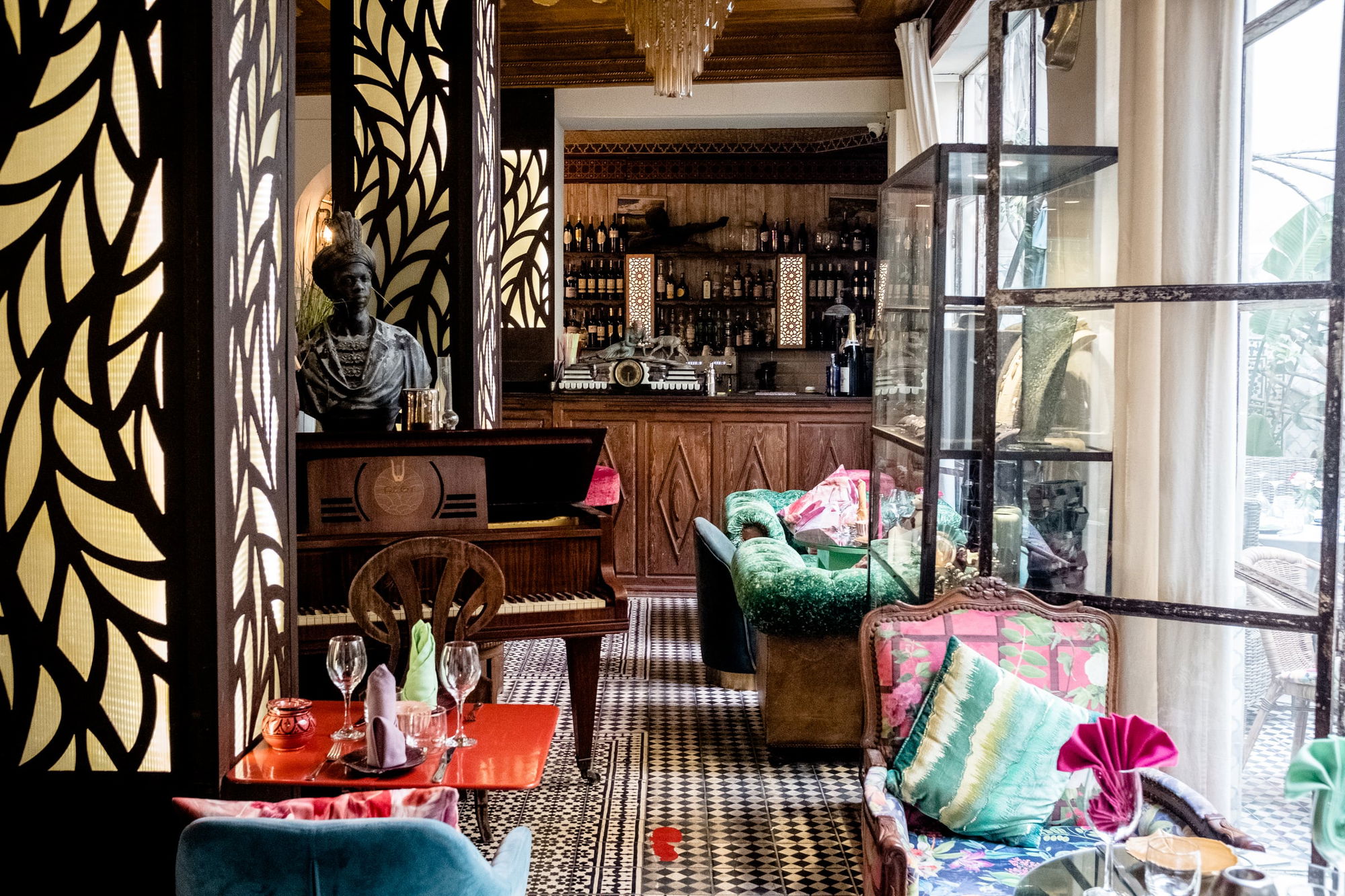
For dinner with a bit of a crowd around it, there are three real addresses. Dar Baba runs across two floors of a nineteenth-century medina house, a lounge, a bright room, a terrace facing the ocean, built around a black paella with cuttlefish and prawns. Mega Loft climbs three levels to a terrace above the market street, seventies chairs and cinema posters, Moroccan and Mediterranean cooking, a DJ on the roof in the evening and no alcohol. Le Love by Caravane, across the lane from the original Caravane Café, goes for flavours of the sea and a livelier show than its calmer sister opposite.
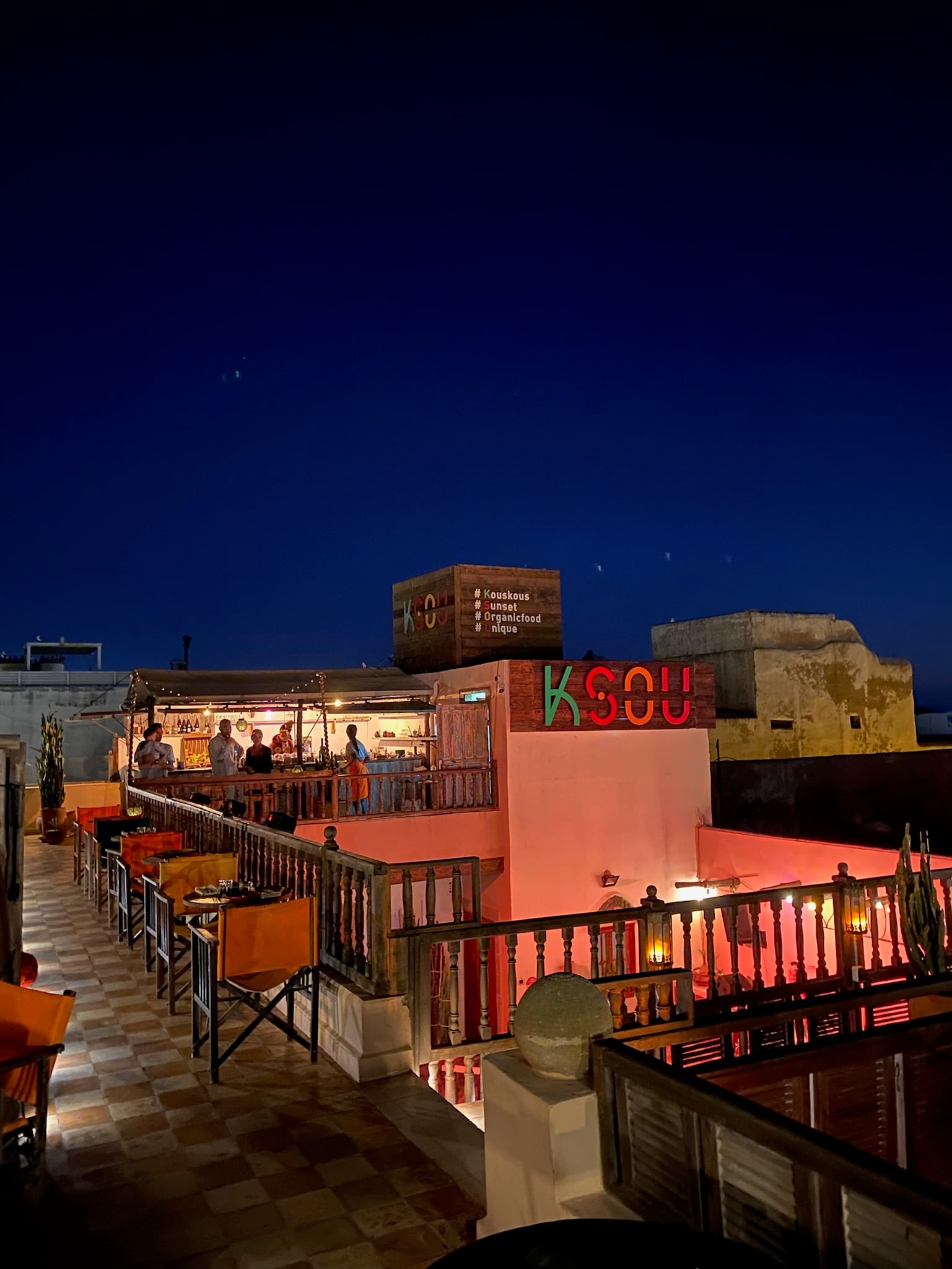
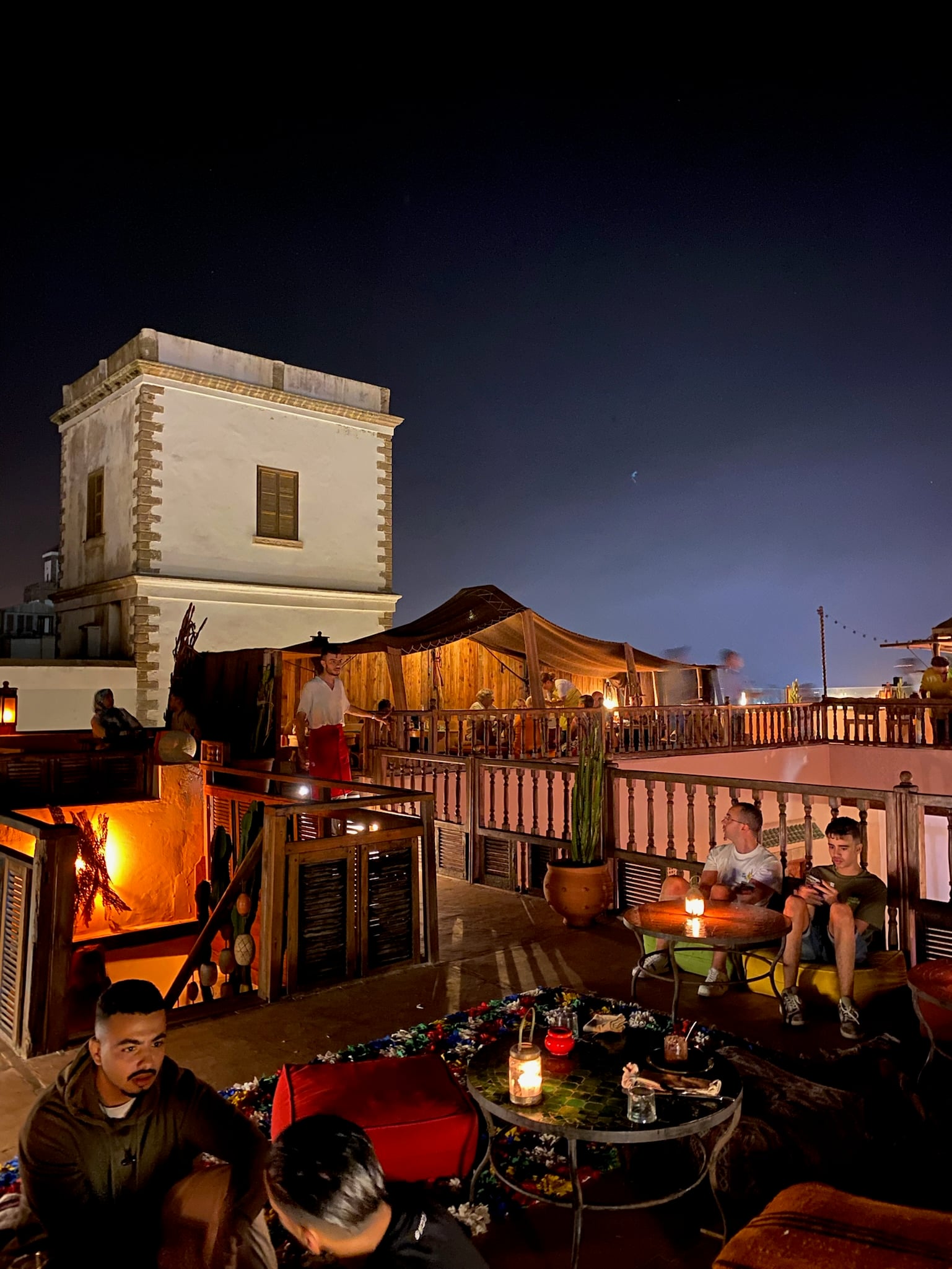
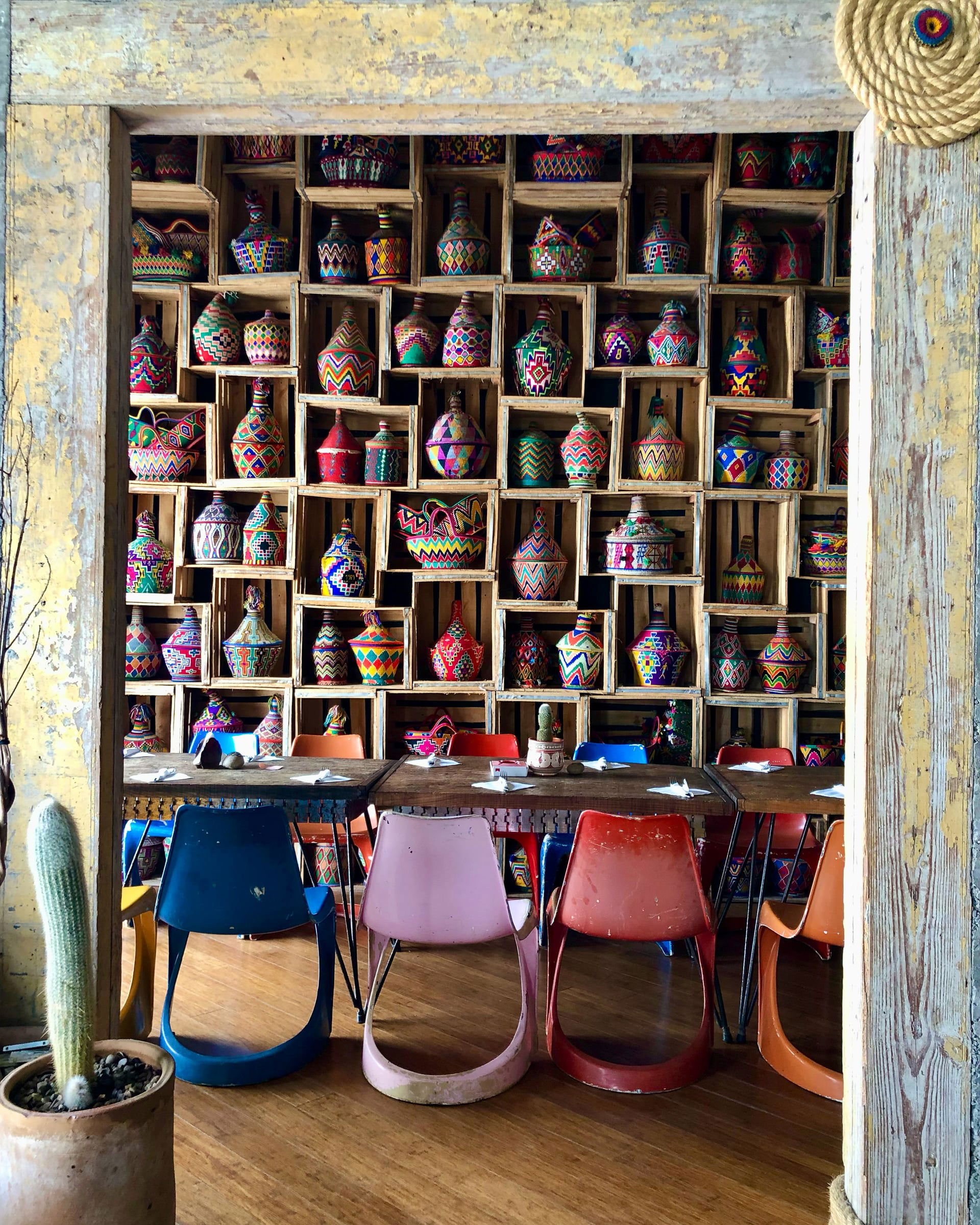
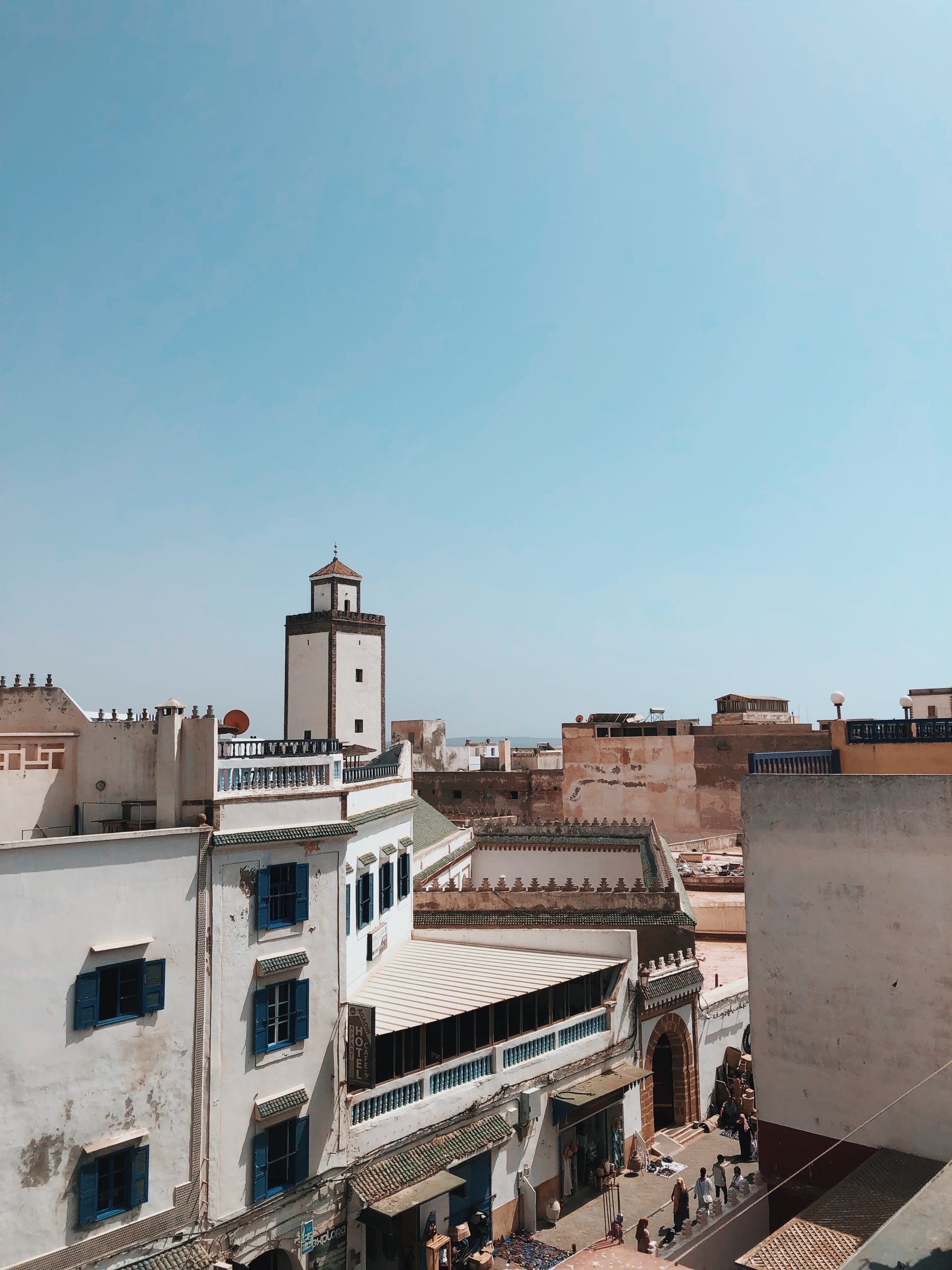
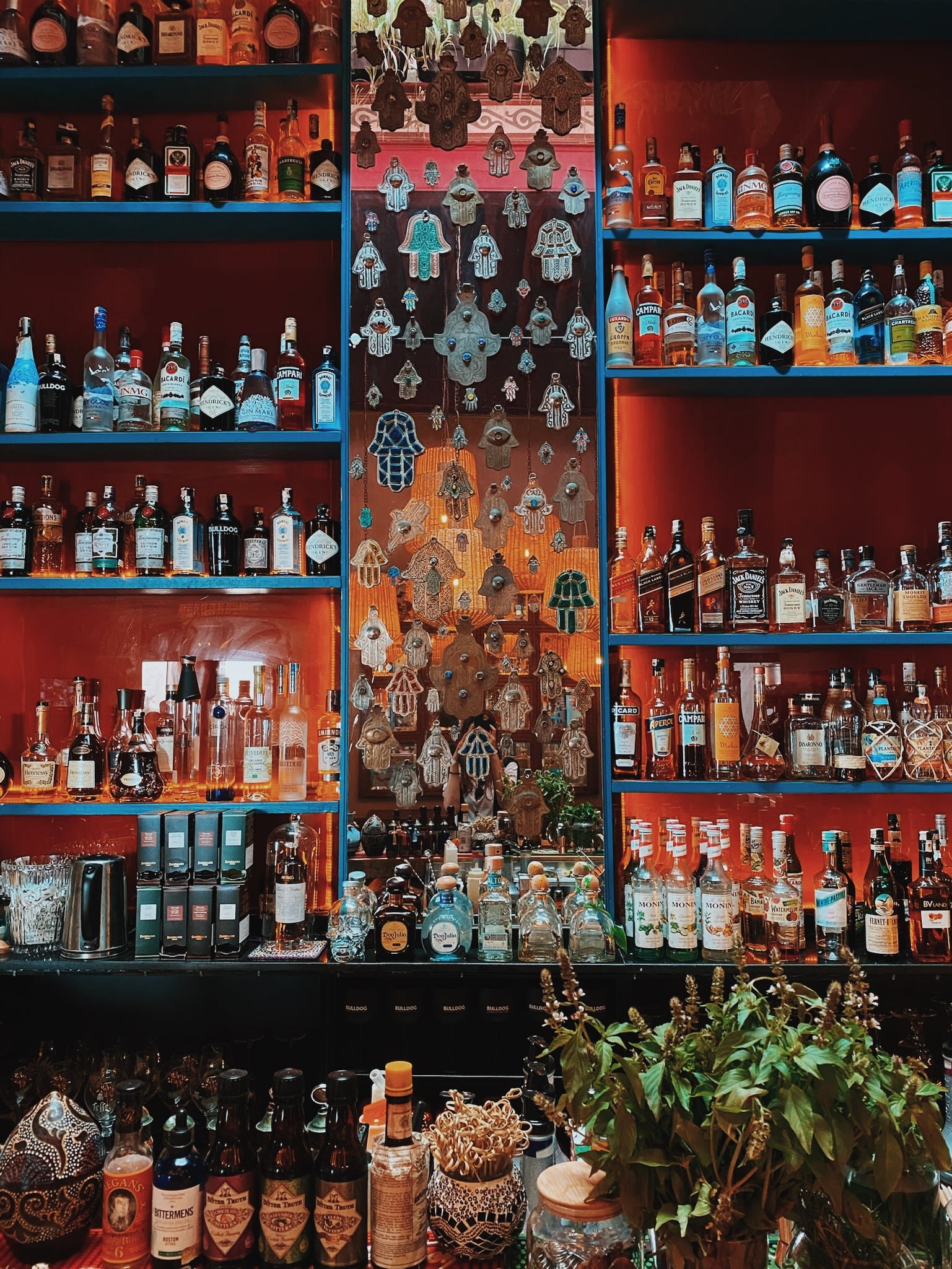
For something more traditional, Ksou keeps a Gnawa trio on its medina terrace most evenings. It is the same repertoire that in June, at the Gnaoua World Music Festival founded in 1998 by the Casablanca producer Neila Tazi, gets played to forty thousand people. On the terrace the audience is about forty. You can also eat under a tent.
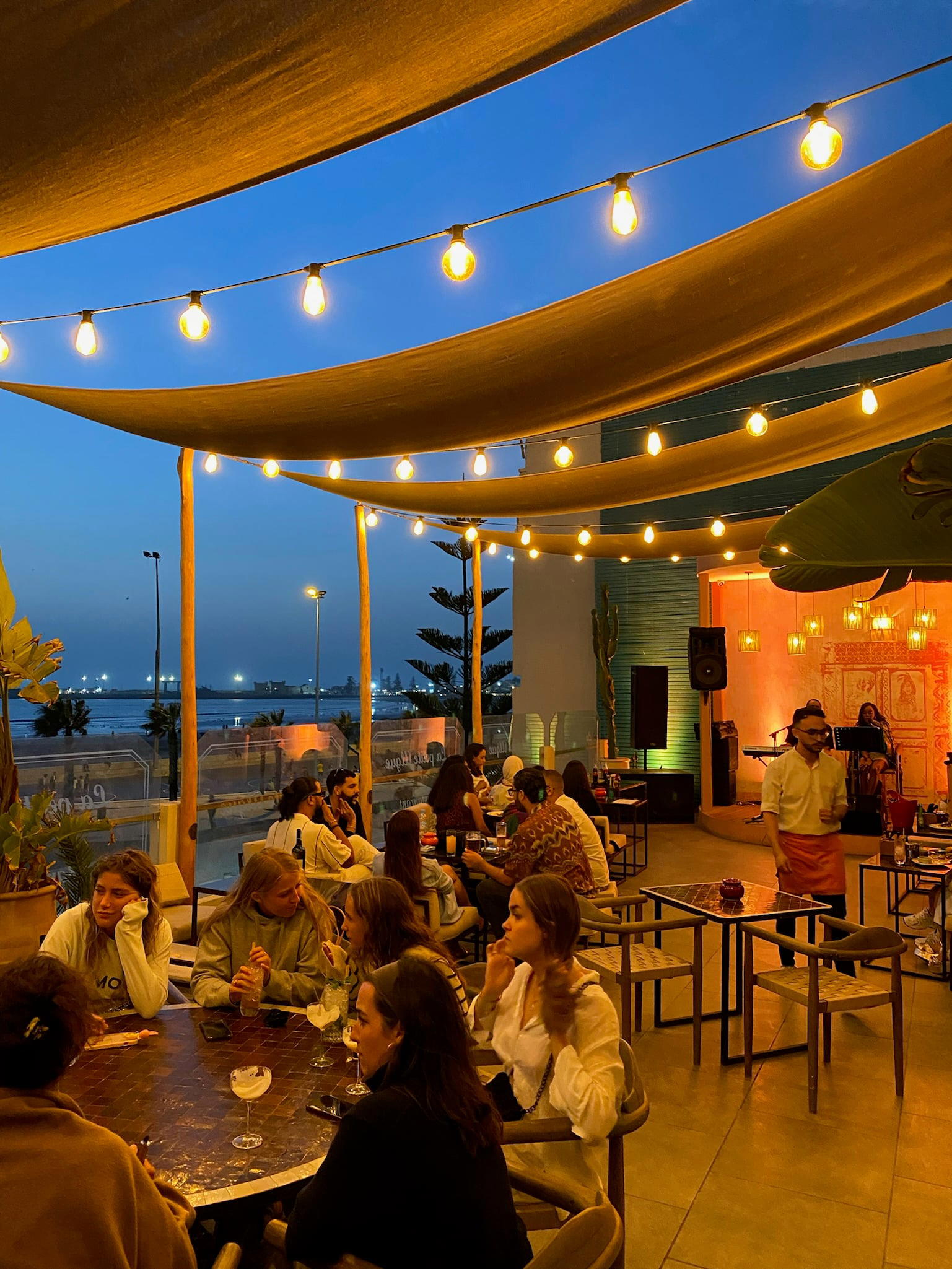
And when the evening is meant to keep going, Beytt Mogador works a double shift on its rooftop: restaurant at sunset, dance floor and a Gnaoua band starting around nine. Le Taros, on Place Moulay Hassan, keeps the best-known terrace in town open until half past two in summer, with live music and DJs. That is what you go for, more than the cooking.
What to Do
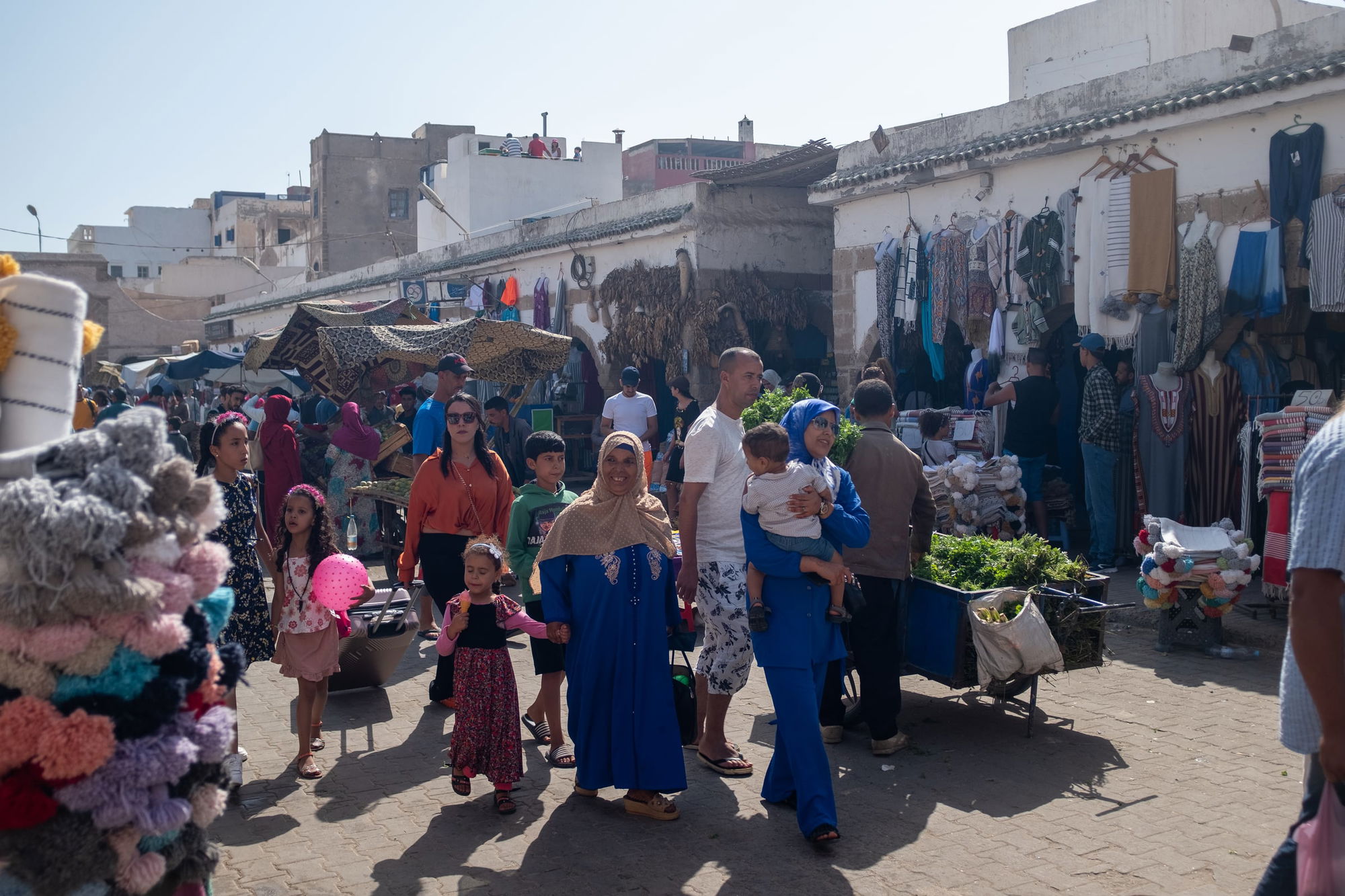
Walking, first of all: the medina, the souk, the ramparts, the port, the beach, the seafront. Then the horse, the camel, the buggy or the quad. The medina moves at a slow pace, and the sellers let you look without pressing.
Around the town there is Diabat, a few kilometres away, and Sidi Kaouki, a little further out.
For anyone travelling with their sport, Golf de Mogador, at Diabat, has two eighteen-hole courses designed by Gary Player and six tee positions per hole; the first of the two opened at the end of the 2000s. Padel is played at Club des Douars, four courts a two-minute walk from Le Jardin des Douars, which treats it as its own sports centre.
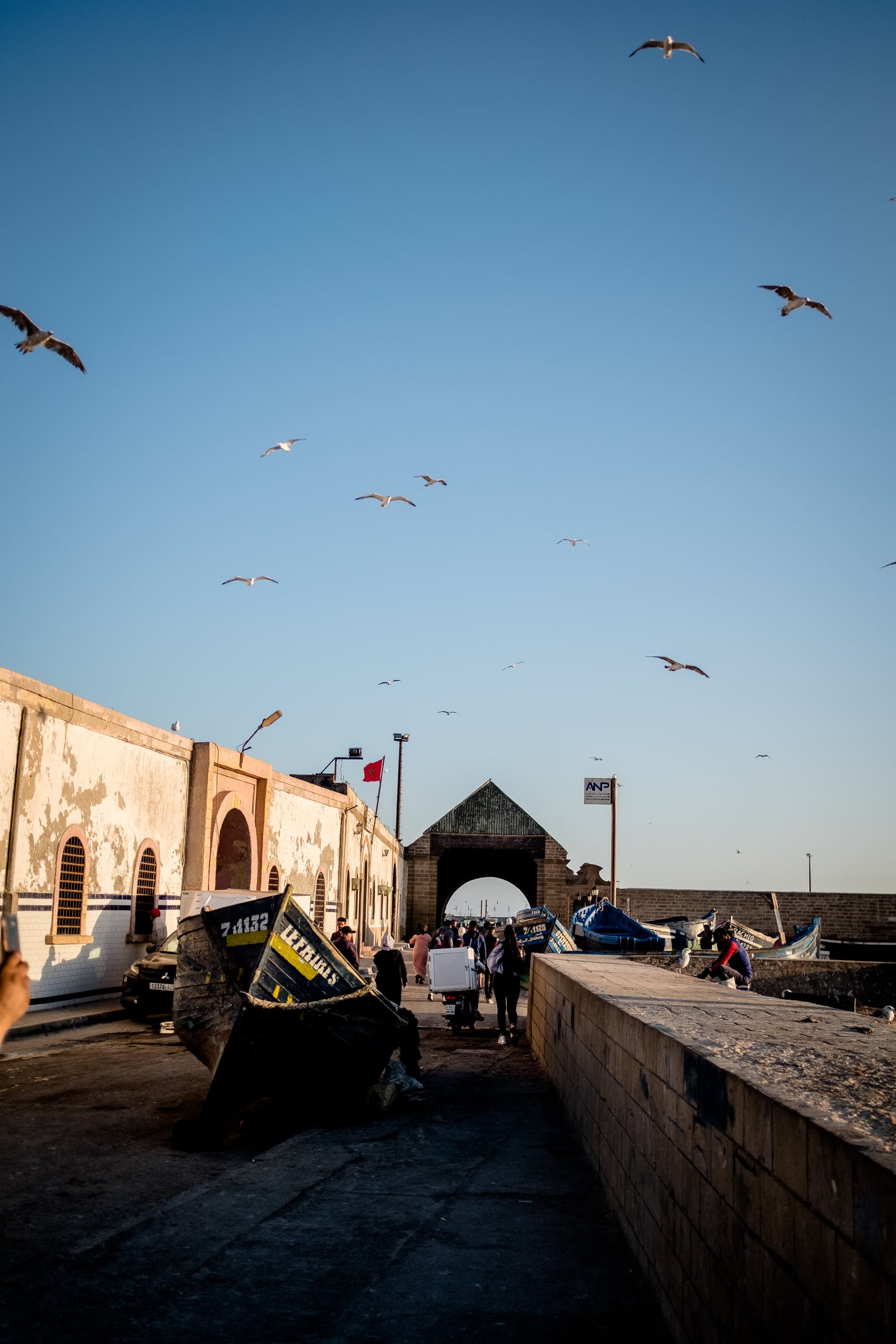
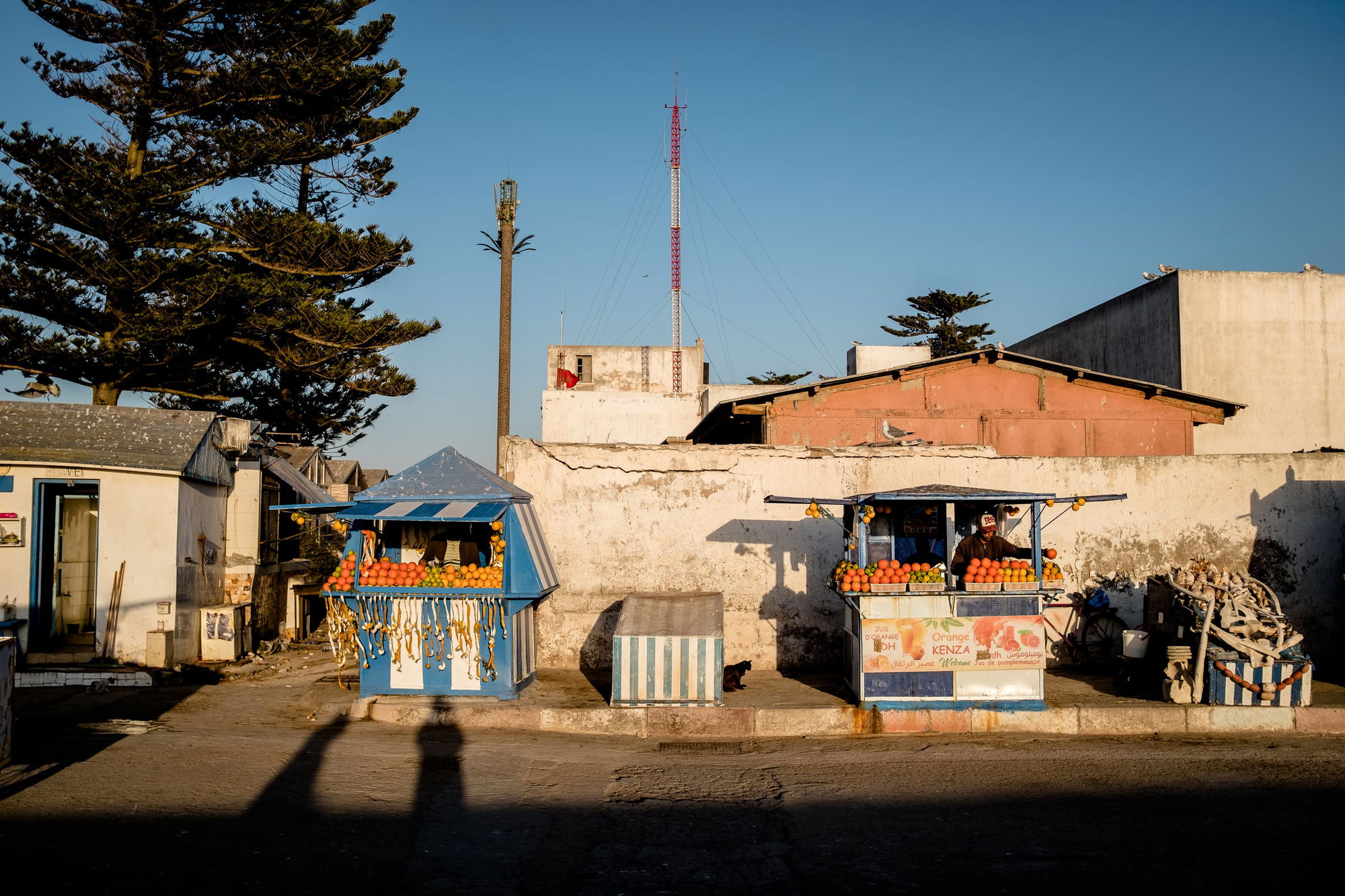
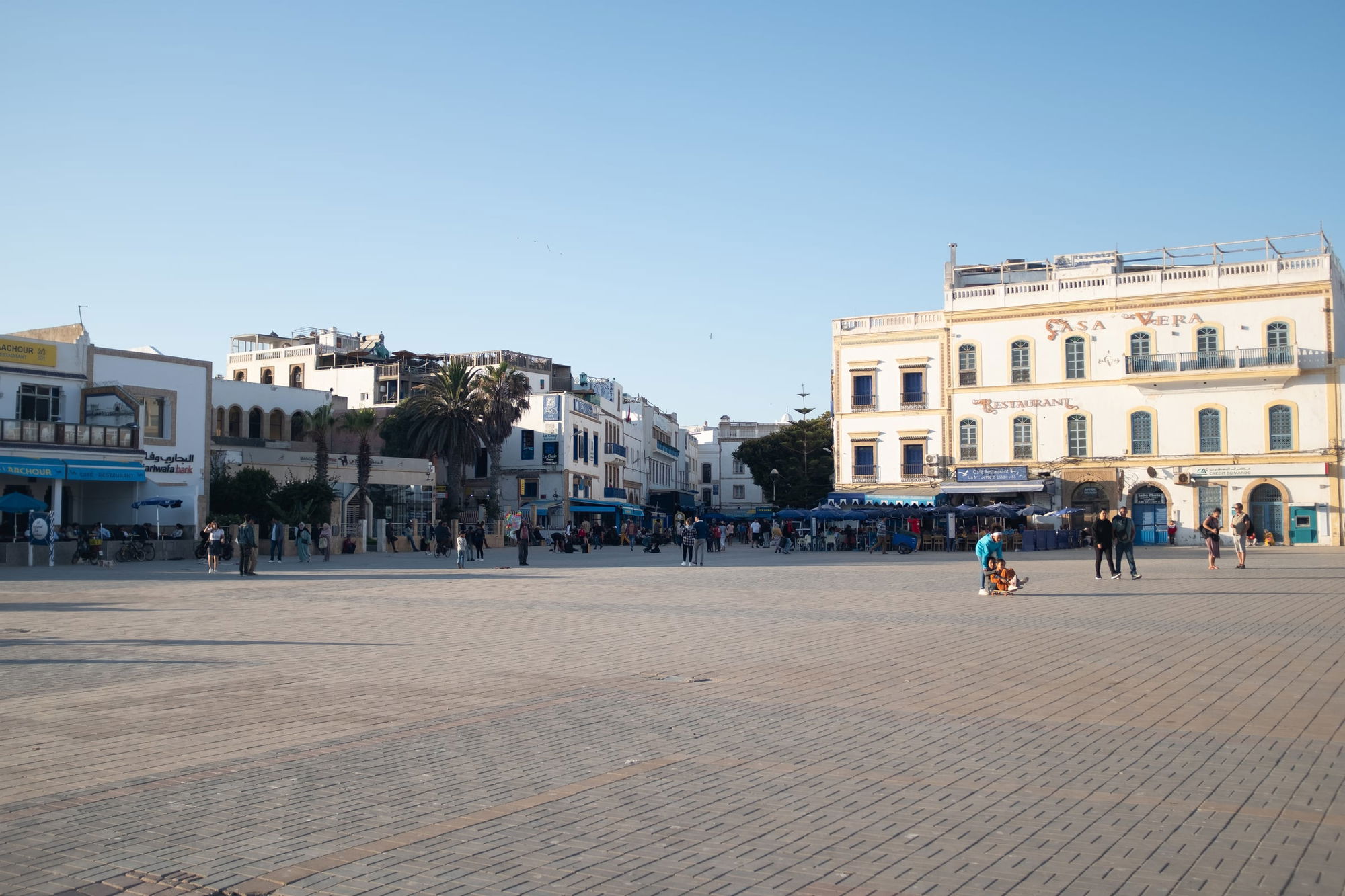
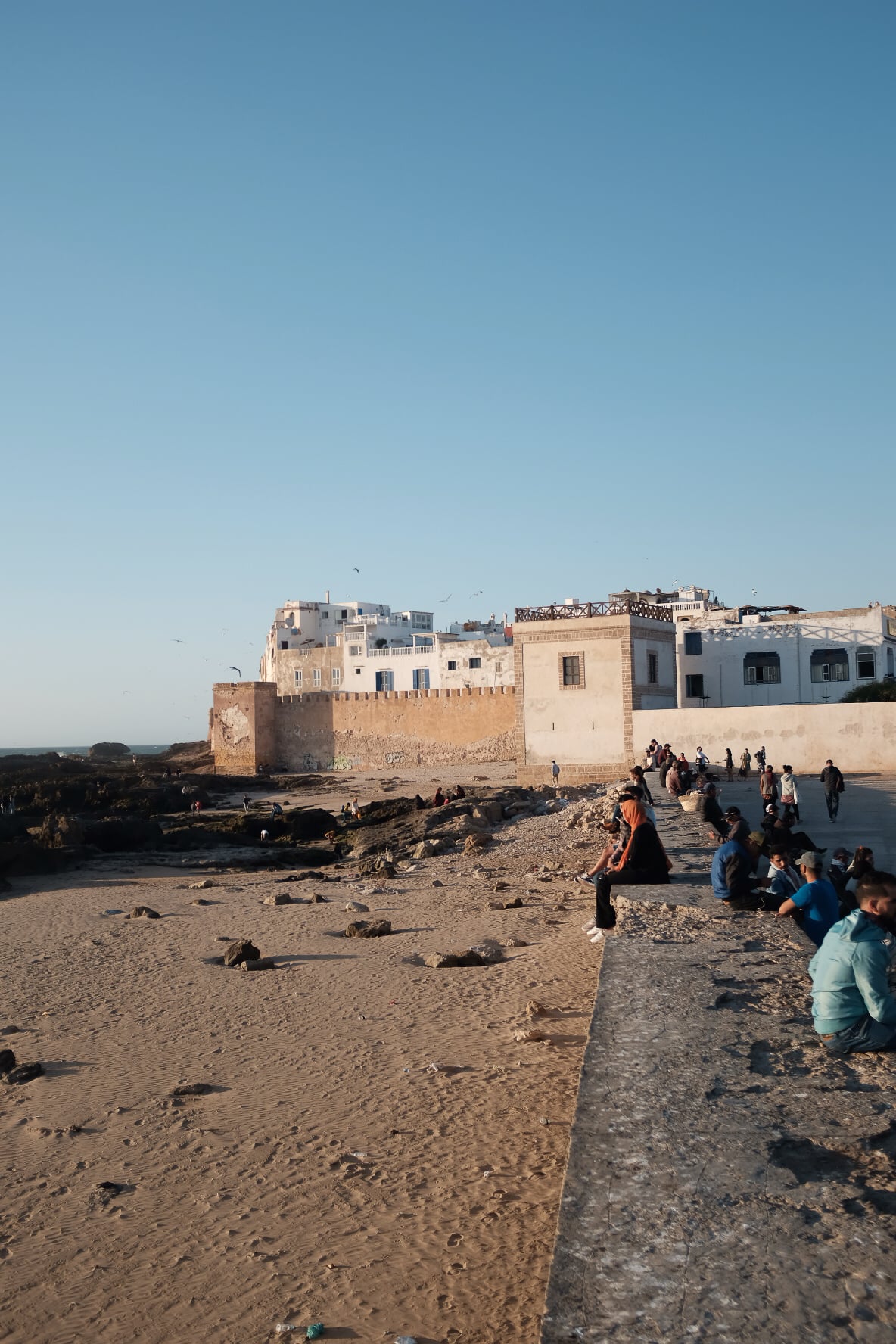
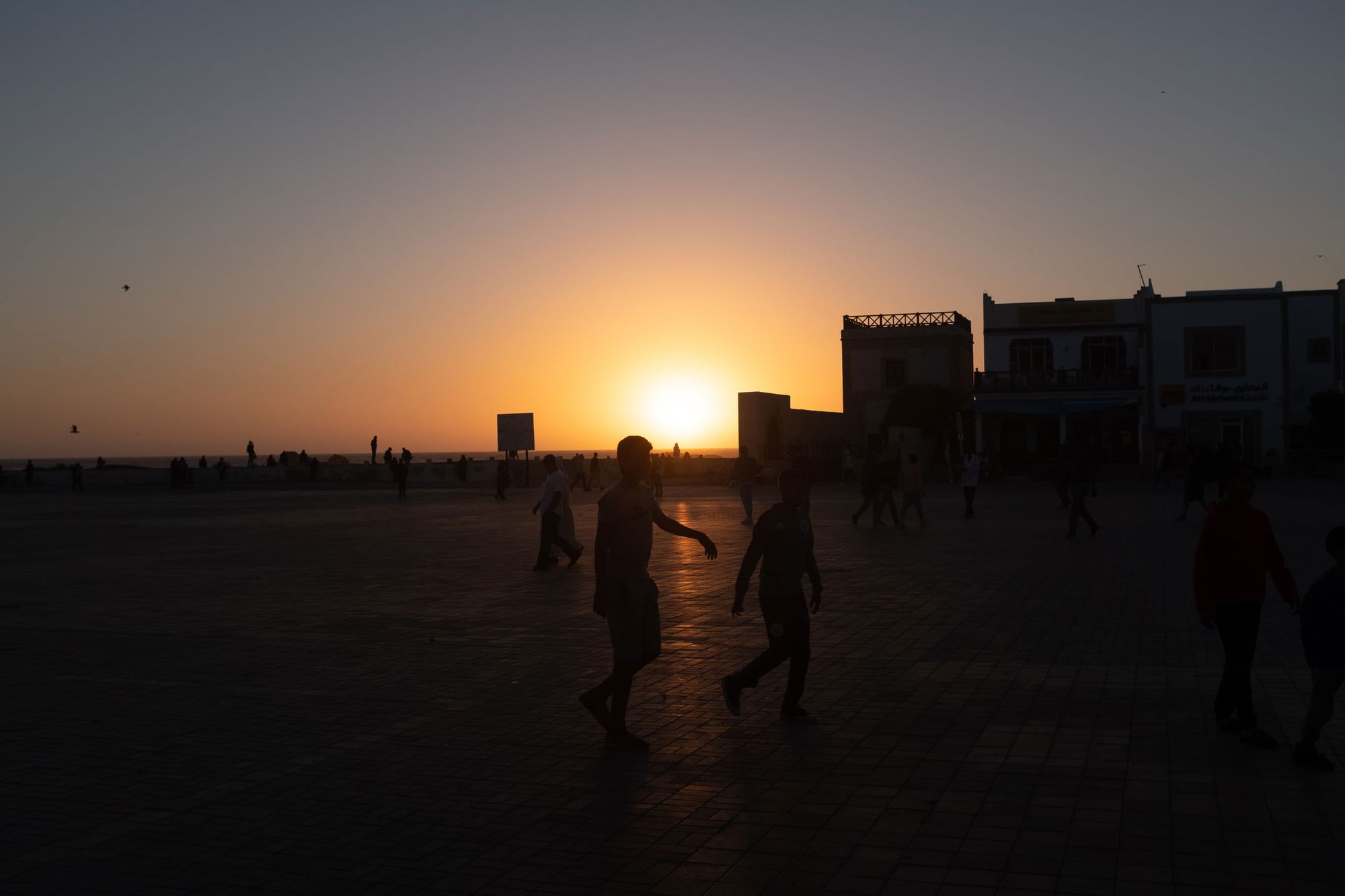
The rest is decided by the wind. In the morning it is not there yet, and that is the hour for the walls, the port and the beach. Around midday it gets up, and from then on, in summer above all, the place to be becomes the bay.
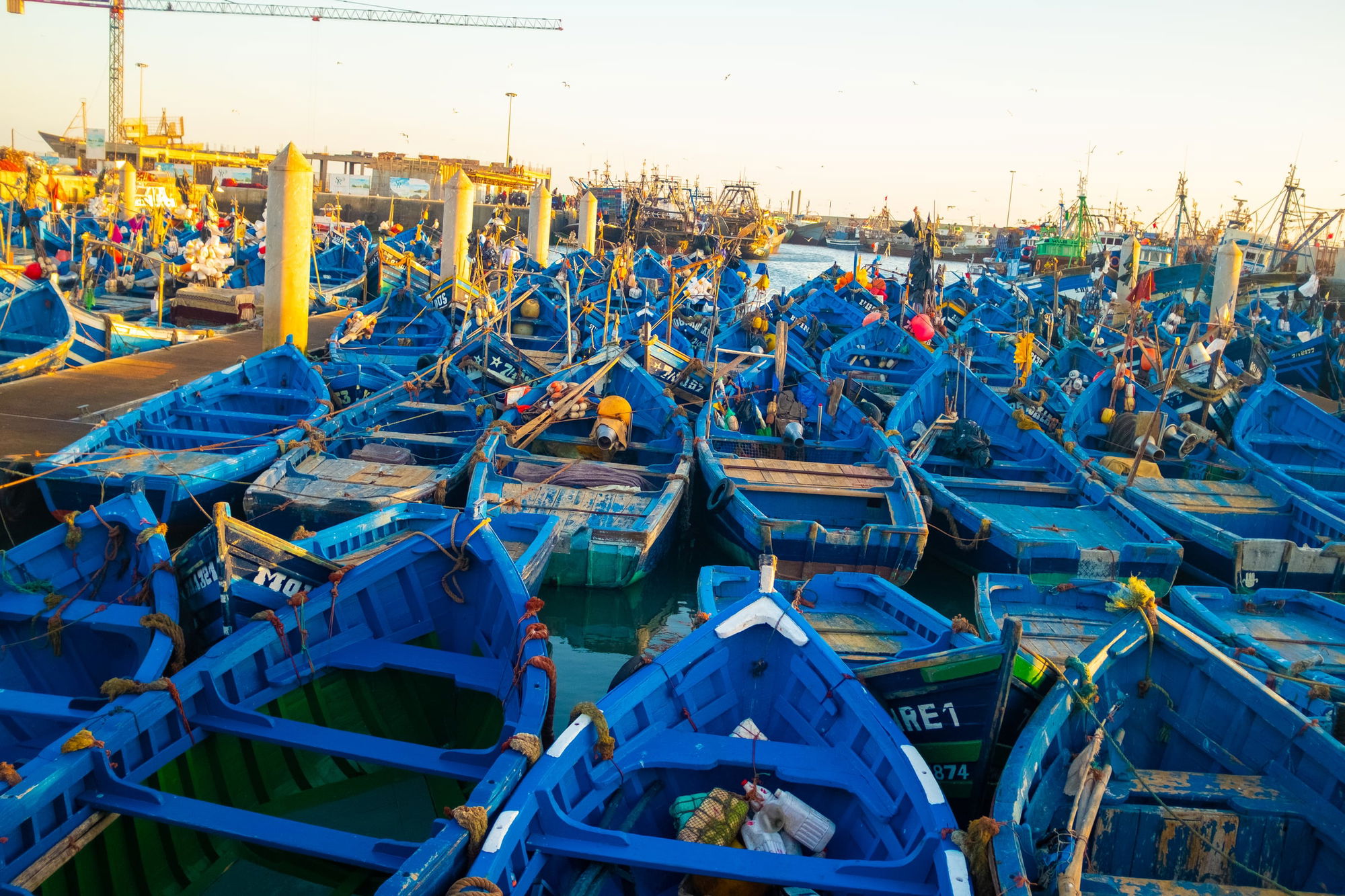
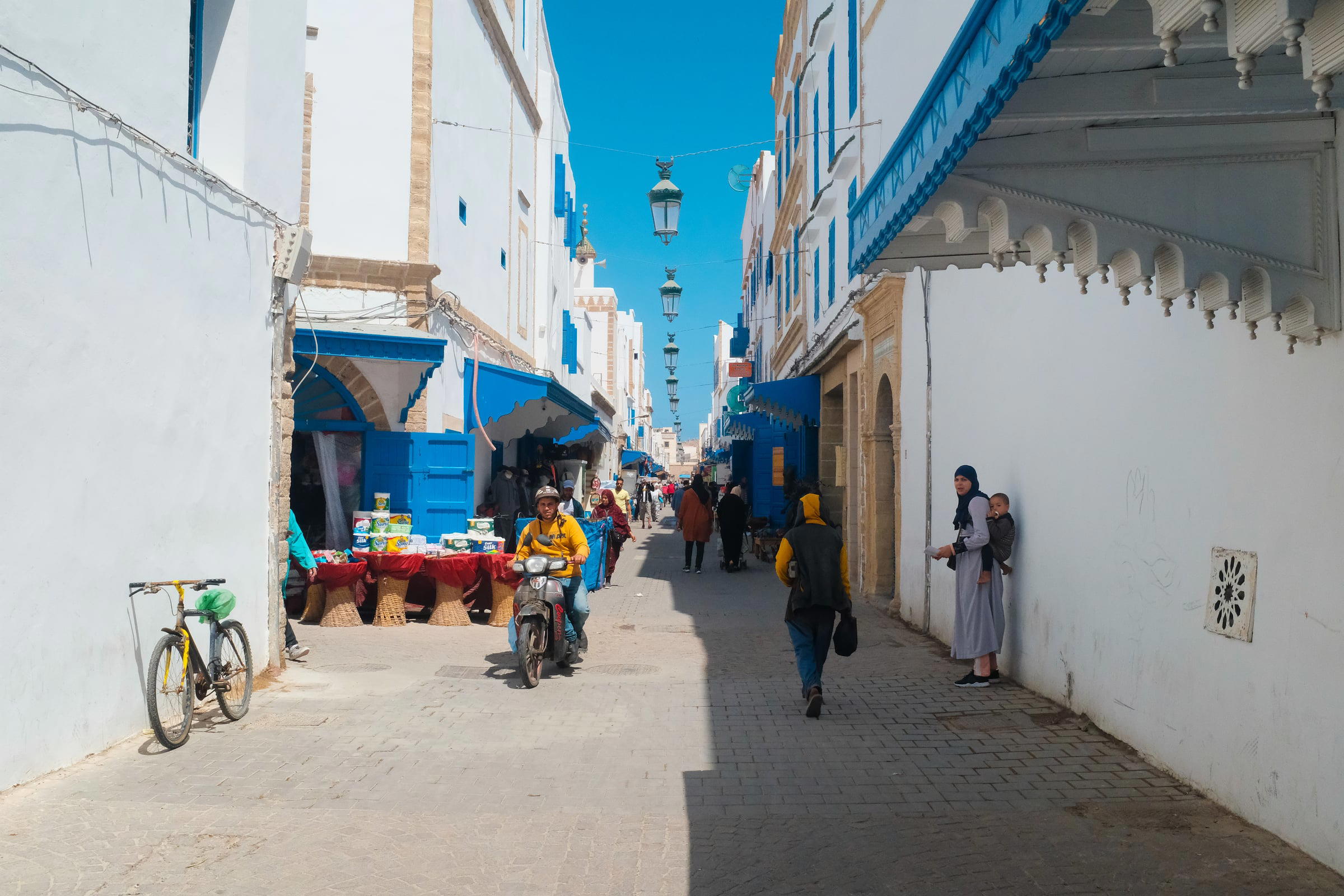
The medina starts waking around ten. Anyone up early who feels like walking watches the same town change face three times in a few hours, on the seafront, on the beach, inside the port. Worth seeing are the Skala de la Ville and the Skala du Port, which faces the fishing harbour instead, with its own row of cannons. Inside the harbour the blue boats (the smaller ones are called felouques, the larger sardiniers) come in from the night's fishing, and just outside Bab el Marsa, at the fish market, you buy the catch straight off the boats and have it grilled on the spot at the stalls next door, served with bread and salad at shared tables.
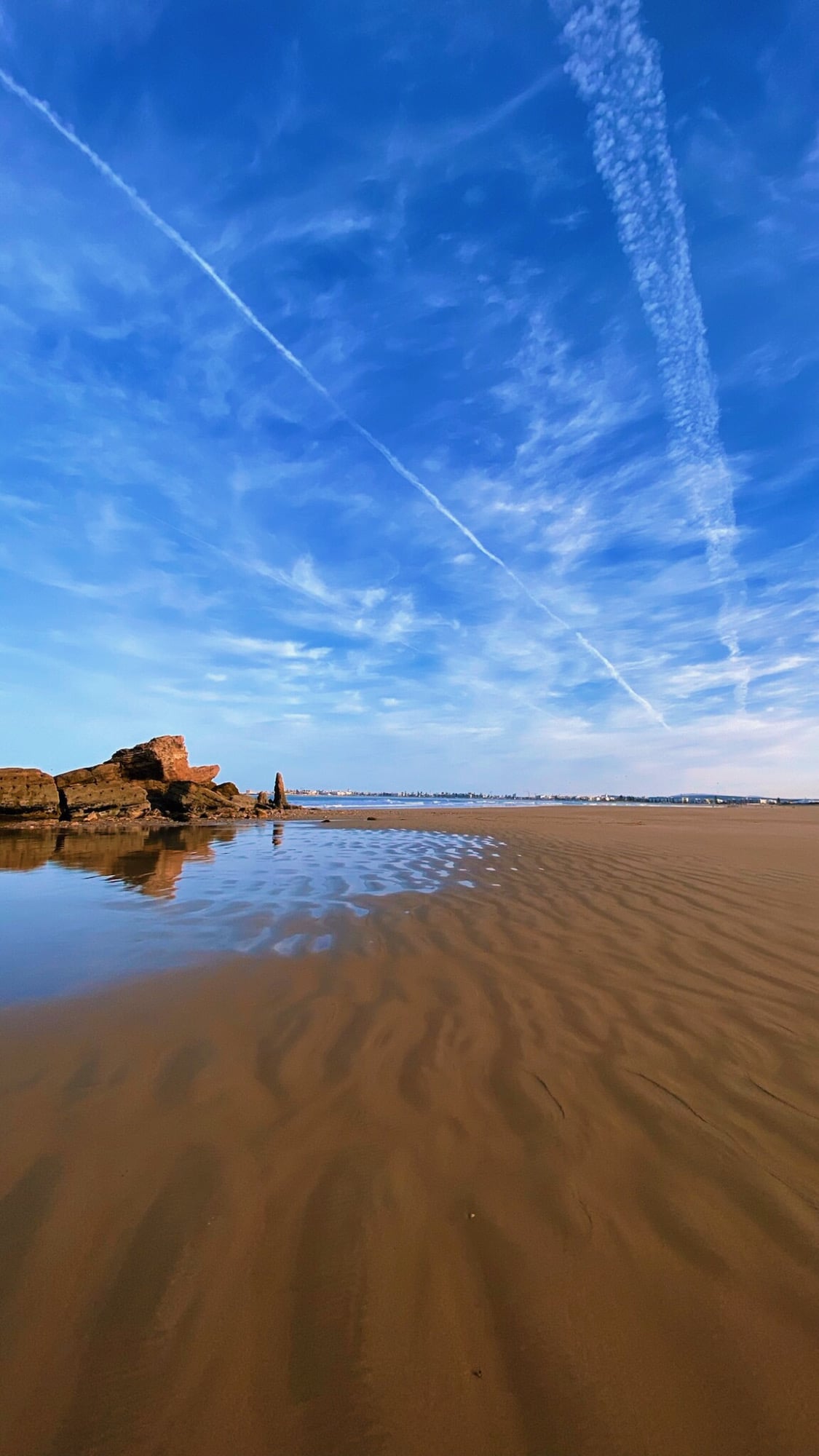
The beach, at that same hour, is another place entirely: no wind, no kitesurfers, only the low tide and whoever is walking. By late morning it starts to fill, and when the wind arrives everything changes, the bay and the medina together.
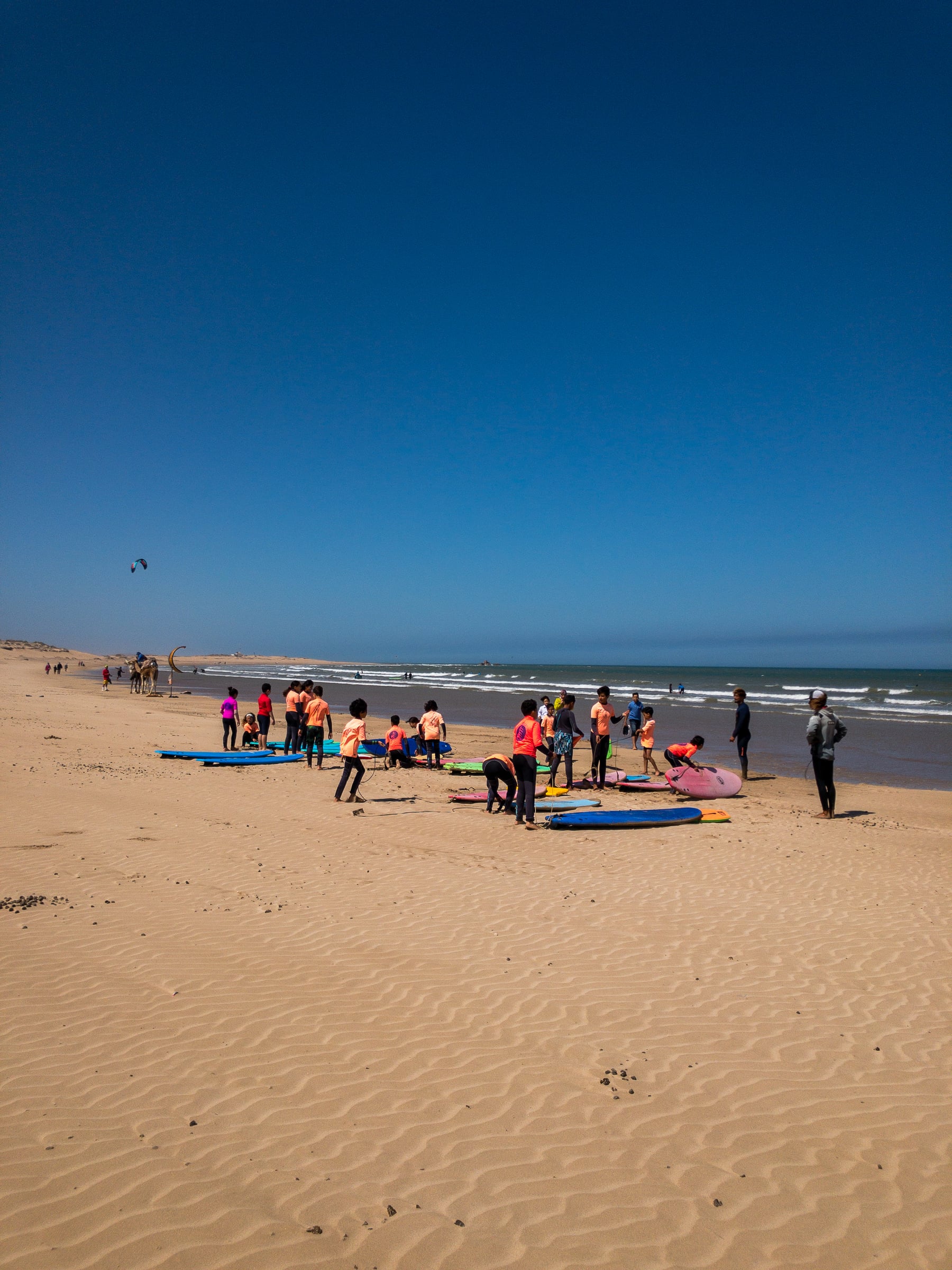
Essaouira's kite schools run on that same wind that got Cornut's ramparts built, a wind that is mostly a summer thing: strongest in July and August, past thirty knots on the peak days, present with less force from April through to October, side-shore along the crescent of beach, hot desert air rising inland and pulling cooler Atlantic air in behind it.
Diabat, a few kilometres south along the same coast, near the mouth of the Oued Ksob, gets wind just as hard as the town does, and yet riders still gather every morning to take Arabian-Barb horses and camels along the dunes. The quads and buggies leave from here too, running south down the open beach to Cap Sim, over the big dunes and back through the mimosa. The ruined house nearby that guides still call "the Jimi Hendrix castle" has nothing to do with the guitarist beyond the coincidence of the name: he never set foot there, and the song it gets tied to was written two years before he first set foot in Morocco. The ruin gets photographed anyway.
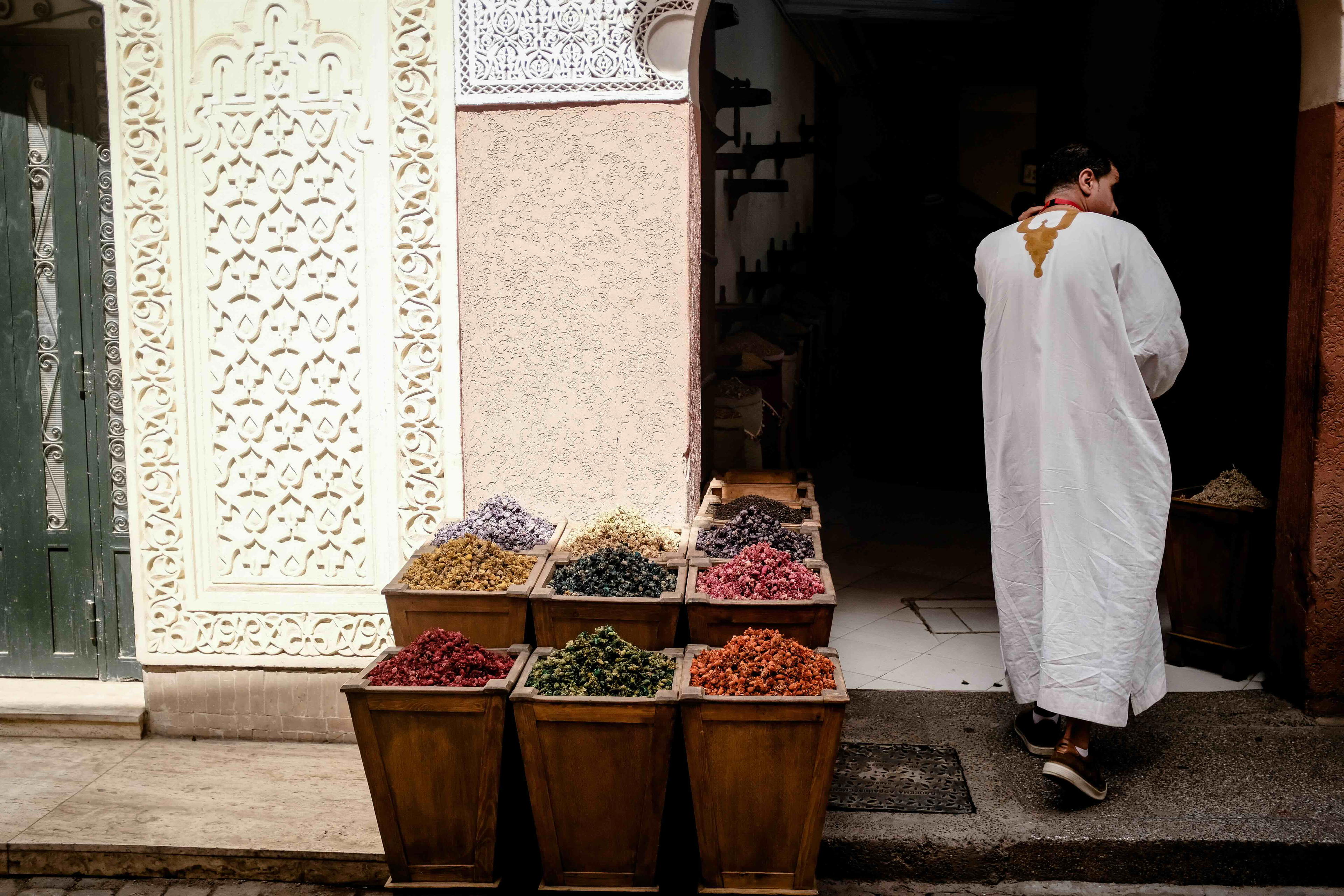
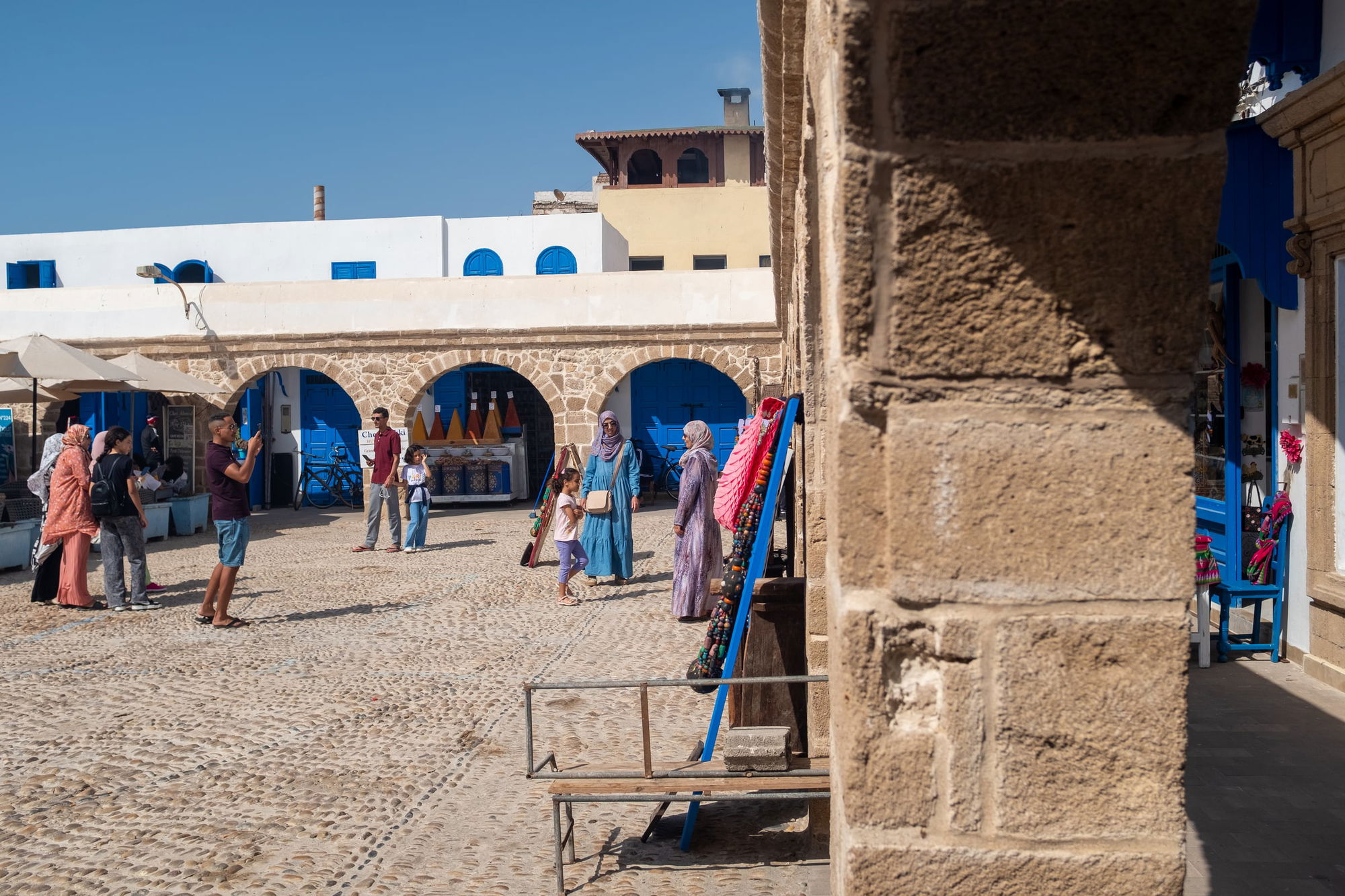
Inside the walls, the medina has been a UNESCO World Heritage Site since 2001, and in the workshops towards the port they still work thuya wood. Bayt Dakira, "the house of memory", reopened the restored Simon Attias synagogue as a cultural centre in 2020, its courtyard quiet enough, in the afternoon, to hear whoever is still inside reading out the names on the restored gravestones next door. Prices stay low and the choice is narrow: fewer stalls, and nearly all of them on the same wood and the same argan.
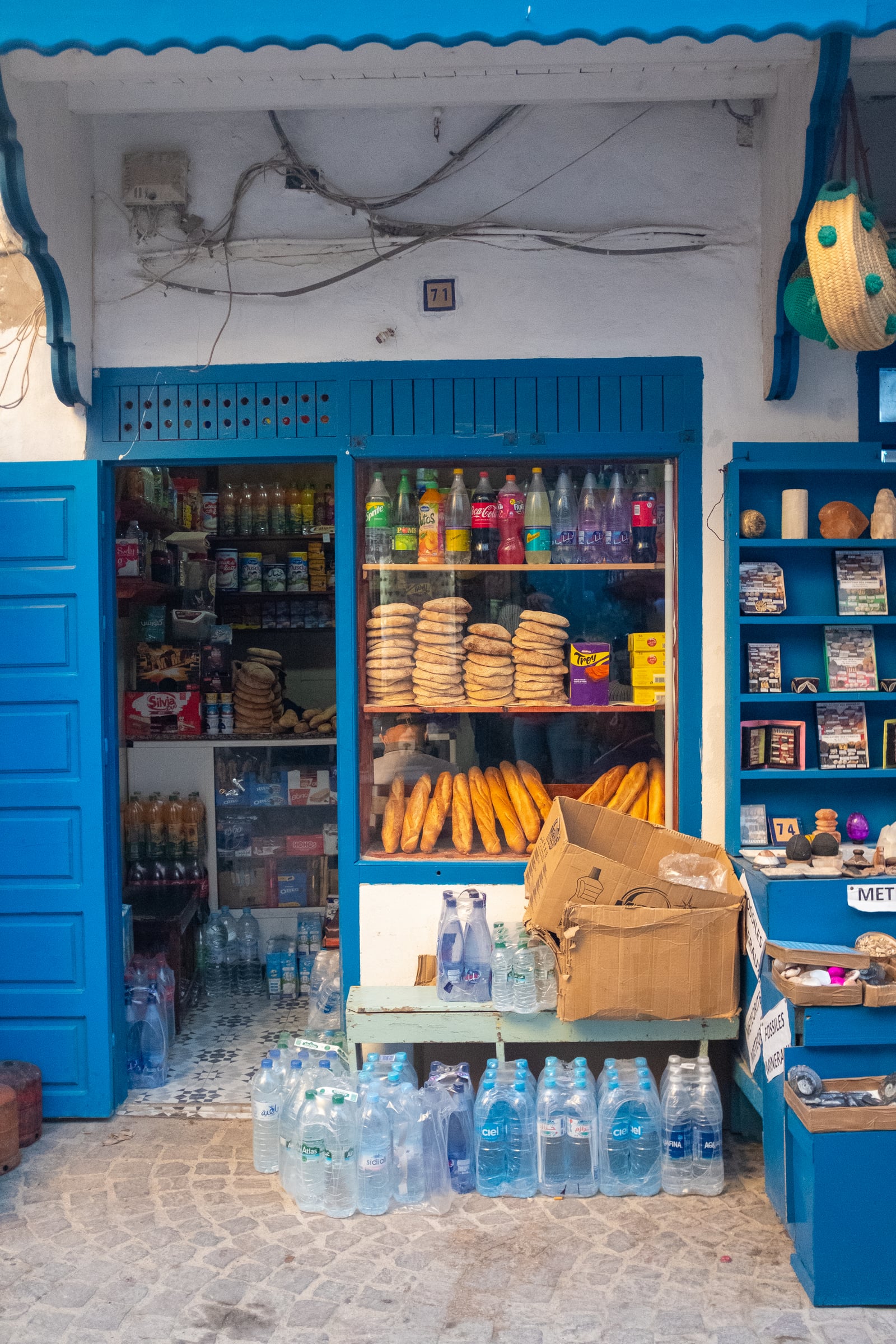
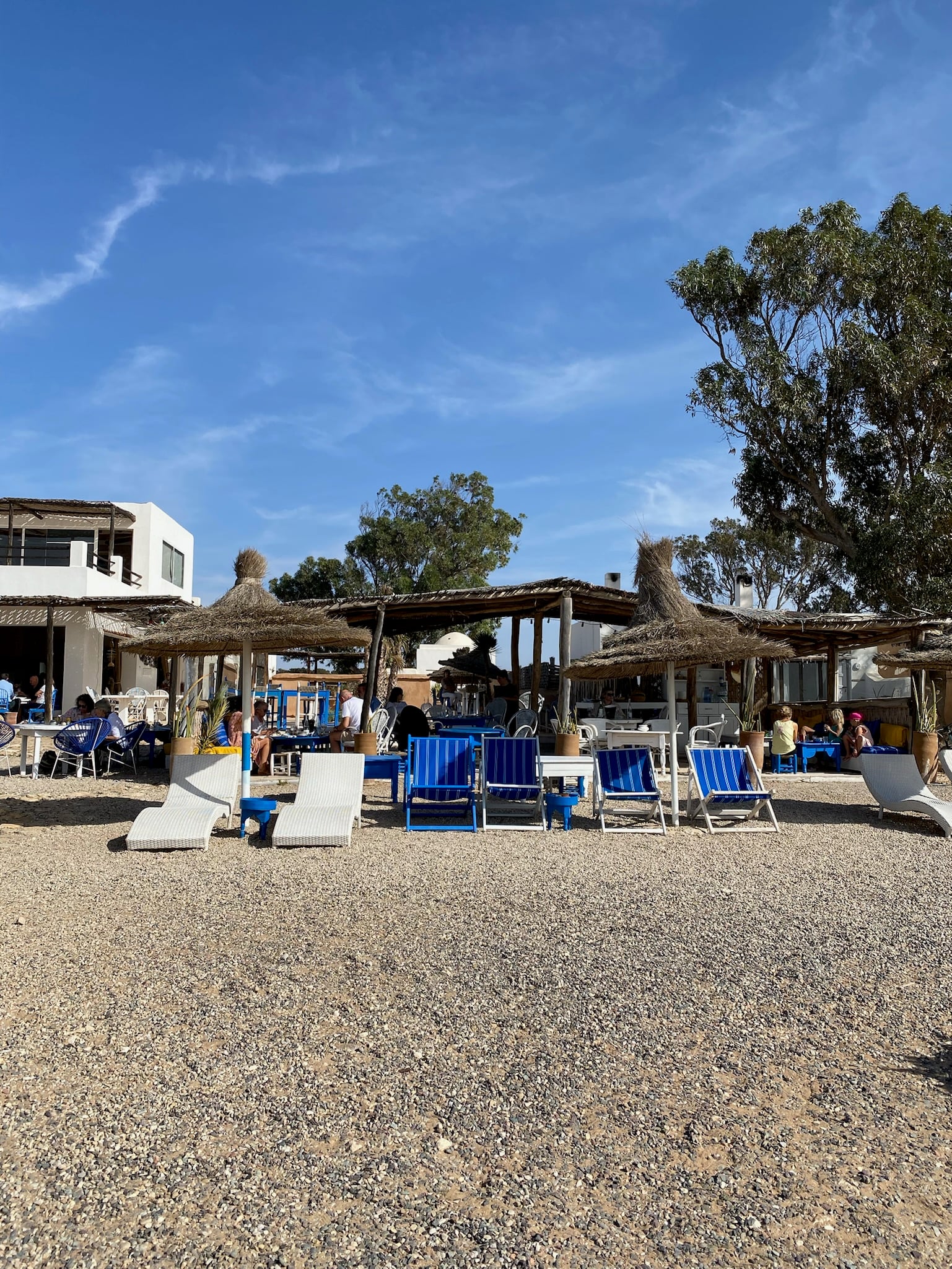
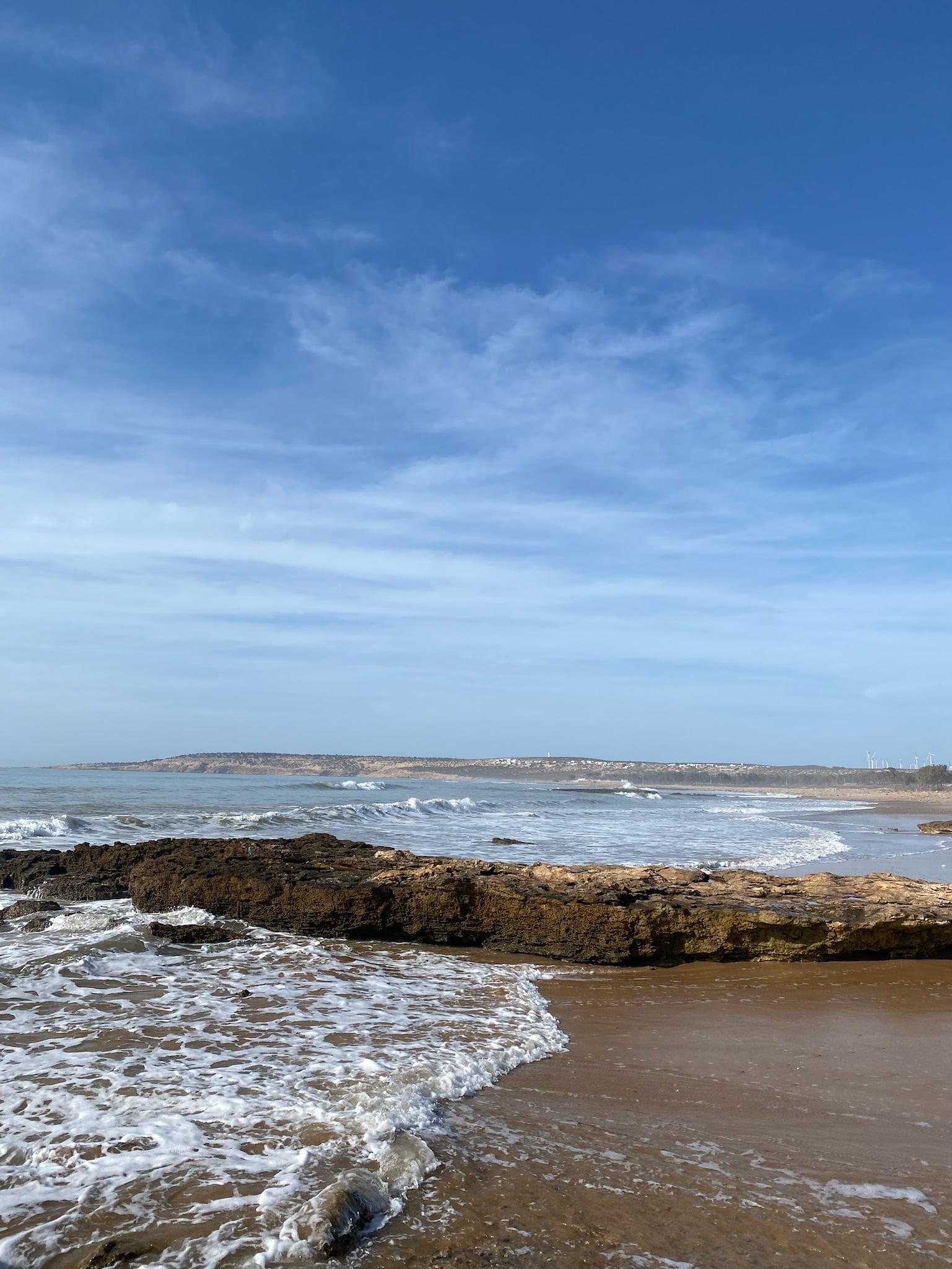
Twenty-five kilometres south, Sidi Kaouki trades that intensity for a longer, gentler break, sheltered enough by its headland to be the default choice for beginners through peak season. It is one paved road, a handful of surf lodges (the six rooms at Kaouki Lodge, built in stone and lime by an owner who still lives on site, are among the more considered), and a whitewashed koubba on the beach where local fishermen still stop to pray before heading out, dedicated to the nineteenth-century marabout the village takes its name from. Reachable only at low tide: at the wrong hour it stays out of reach, just visible across the sand. For lunch, a drink or Sunday brunch, La Mouette et les Dromadaires keeps a wooden beach house with its feet in the sand and a Berber-tent lounge, grilled fish and whatever the market brought in that day.
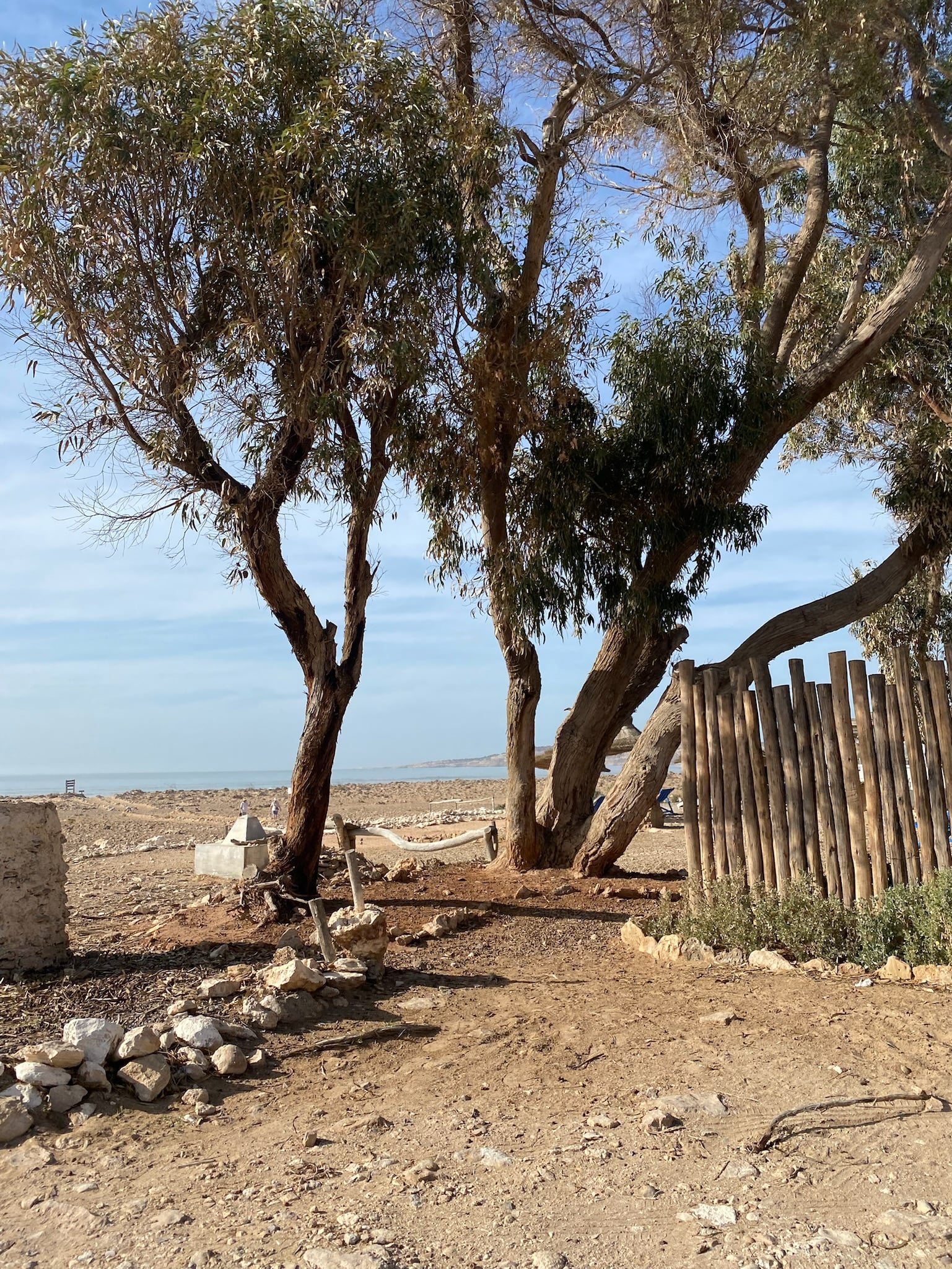
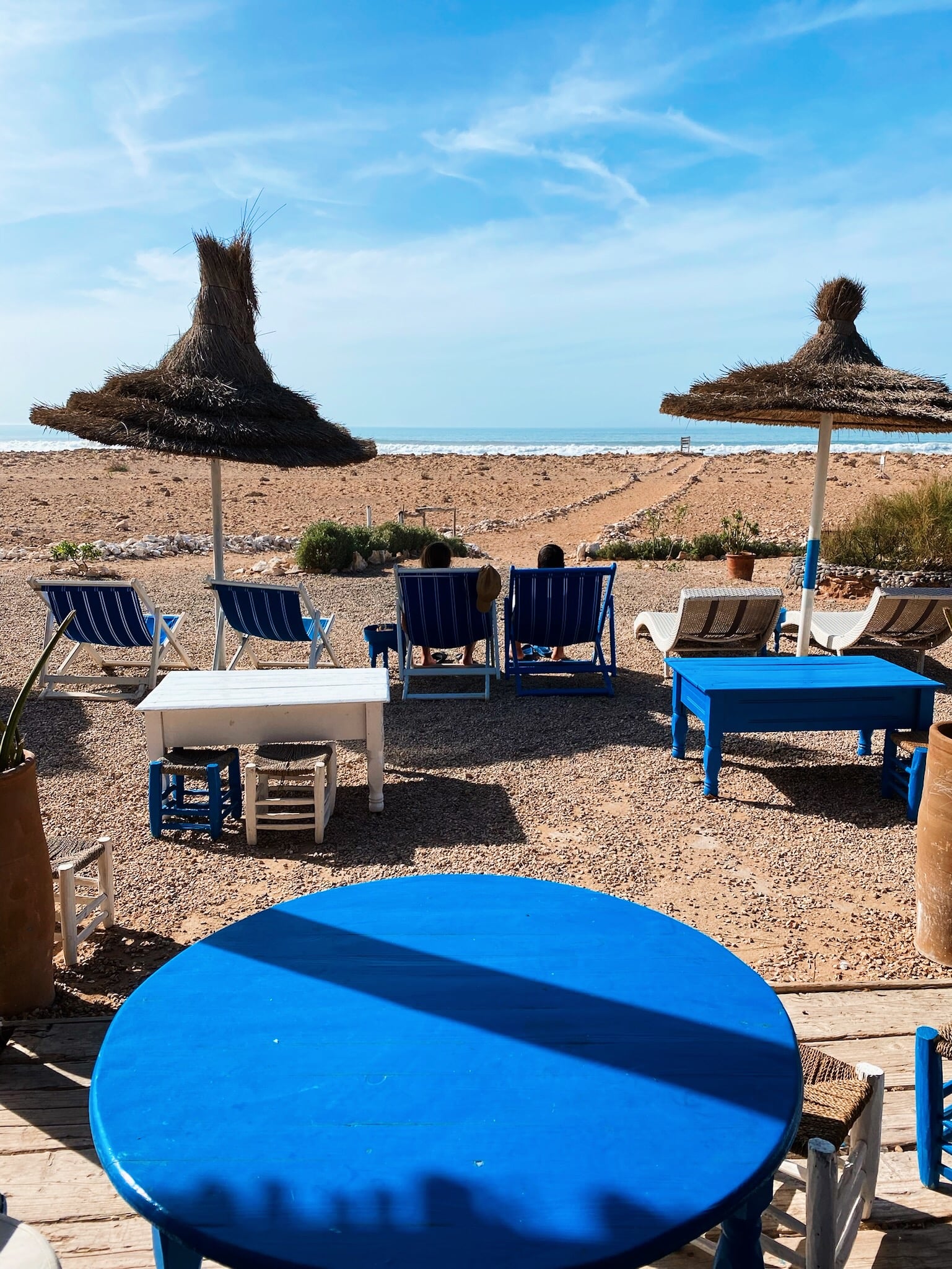
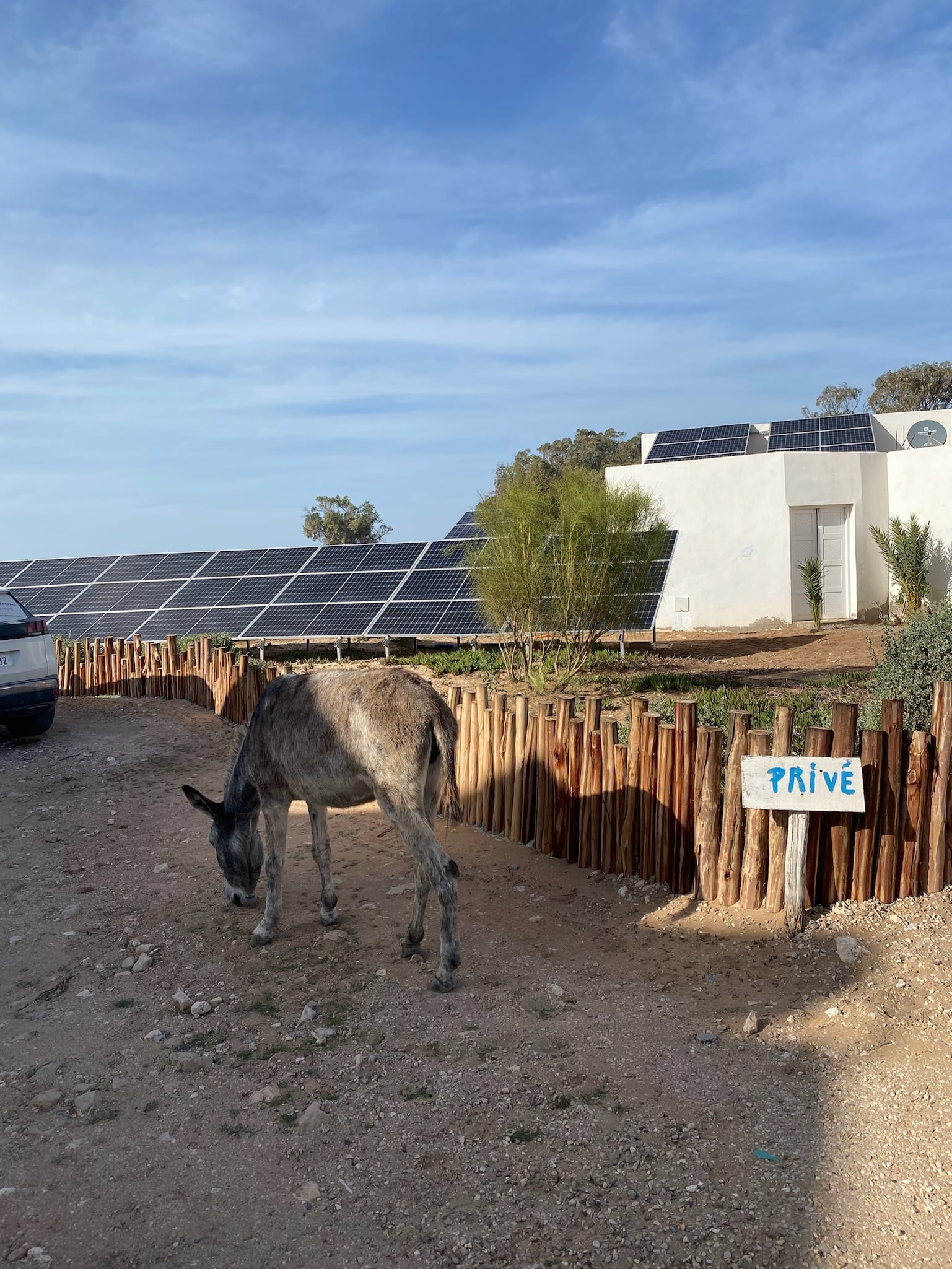
Nobody manages all of this in one trip, and that is not the point. Some spend the whole week inside a wetsuit and some never leave the pool of a ksar in the countryside, some come for the festival in June and some for a Wednesday in November with the medina empty. A day, a weekend, a month or the rest of your life: what changes is which Essaouira you go and take, and each one still has something left to tell you next time.
You may also like…