The Palmeraie of Marrakech: Thirteen Thousand Hectares Beyond the Walls
An open landscape north of the medina where the city's grammar shifts from density to something slower, more agricultural, and fundamentally different in kind.
Timence · 12 April 2026
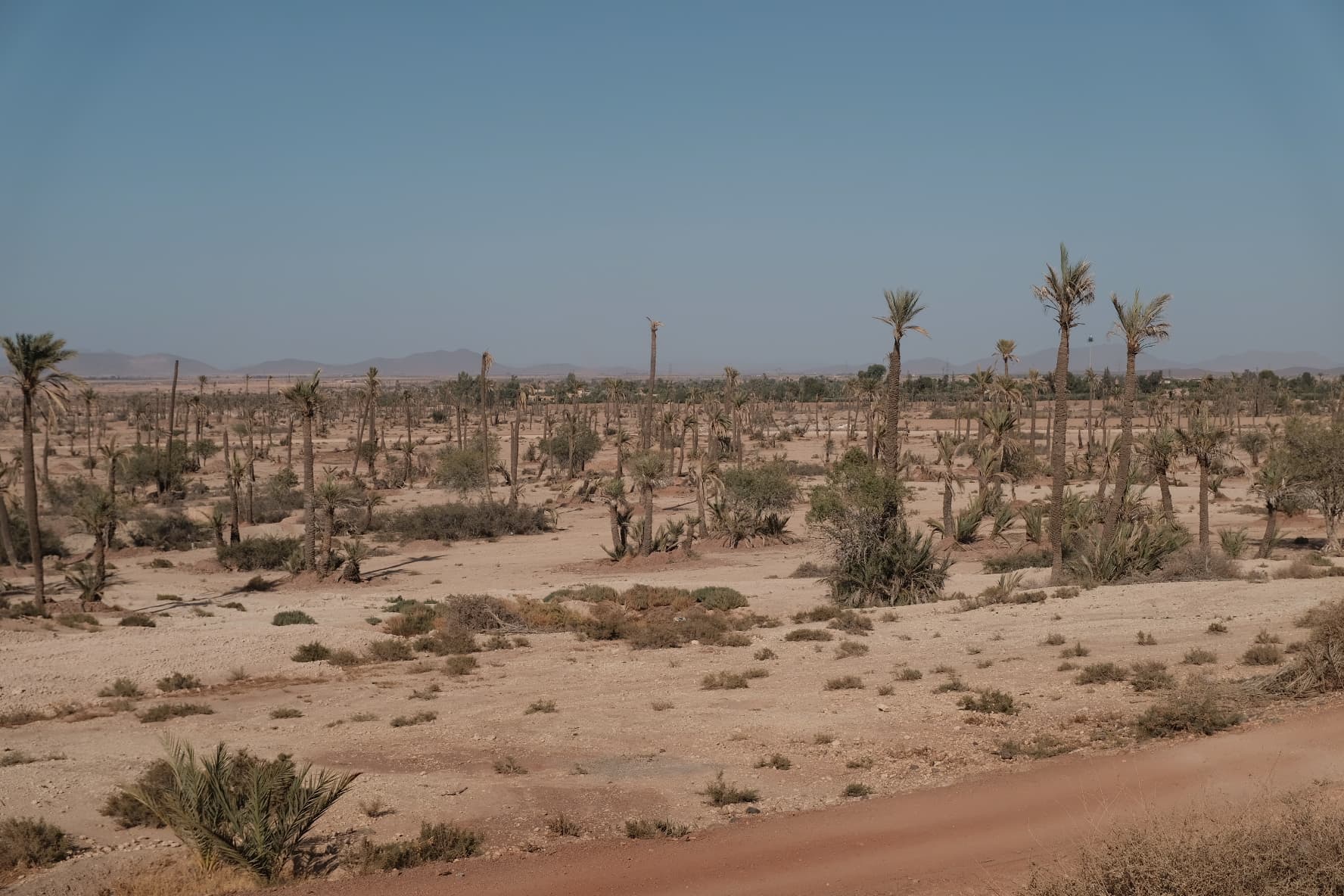
The road from the medina to the Palmeraie is short by distance and long by character. In fifteen minutes the city's compression releases into something else: olive groves, irrigation channels, enclosing walls at intervals, the occasional palm standing at a height that makes the medina's rooflines look provisional. The Palmeraie Marrakech begins not at a sign but at a shift in the quality of space around you. By the time you arrive, whatever urgency the souks produced has been replaced by something with a different texture.
The origin story is a legend, offered as such. According to tradition, the grove emerged from date stones discarded by soldiers of the Almoravid dynasty in the eleventh century, a landscape born from casual waste, from seeds dropped in passing. Whether the history is accurate matters less than what the image suggests: that the Palmeraie was not designed, not planned as a destination, but arrived at gradually, through accumulation and time and the basic logic of growth in a semi-arid environment. Thirteen thousand hectares of palm groves stretching north of the city, shaped now by irrigation systems, golf courses, private compounds, and the productive olive groves that give the landscape its secondary agricultural character.
A Different Spatial Logic
What the Palmeraie offers, before any specific venue or activity, is a spatial logic that the medina does not. The medina is enclosed, compressed, built at a scale that is simultaneously human and medieval: narrow streets where two people pass with effort, light falling at angles the architecture controls, the sense of history layered in stone and plaster at every turn. The Palmeraie inverts this entirely. The sky becomes accessible. The horizon is readable. The distance between one surface and the next is measured in meters rather than centimeters. For guests who have spent days navigating the medina's density, this inversion is not merely pleasant. It is disorienting in a way that creates space for a different kind of attention.
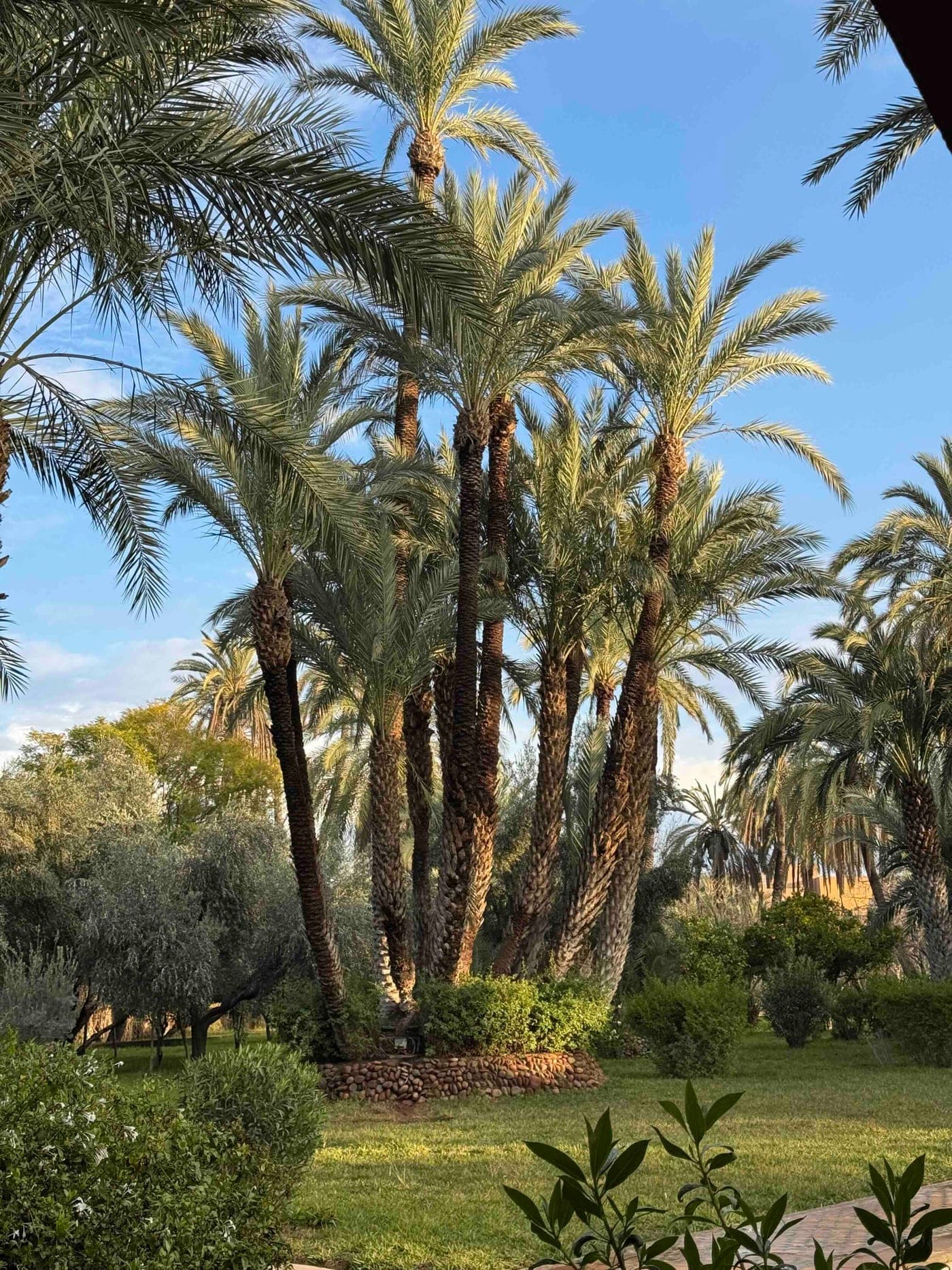
This is where the resorts and private estates that have established themselves in the grove over the past three decades make their case. Properties like Namaskar organize their programming around the openness: gardens that use scale deliberately, pools positioned to make the landscape legible, programming built around the particular silence that large palm-shaded grounds allow. Others, like Ksar Char Bagh, Palais Rhoule, and Palais Ronsard, work in a different register: the private estate logic of enclosed grounds and architectural intention, where the Palmeraie is the perimeter rather than the setting. Jnane Rumi, Jnane Tamsna, and Les Deux Tours develop something closer still to the agricultural character of the land: smaller, more residential, built around gardens and kitchen plots rather than resort infrastructure. What each approach shares is an understanding that the landscape itself is the argument. The buildings are secondary. The grounds are the offer.
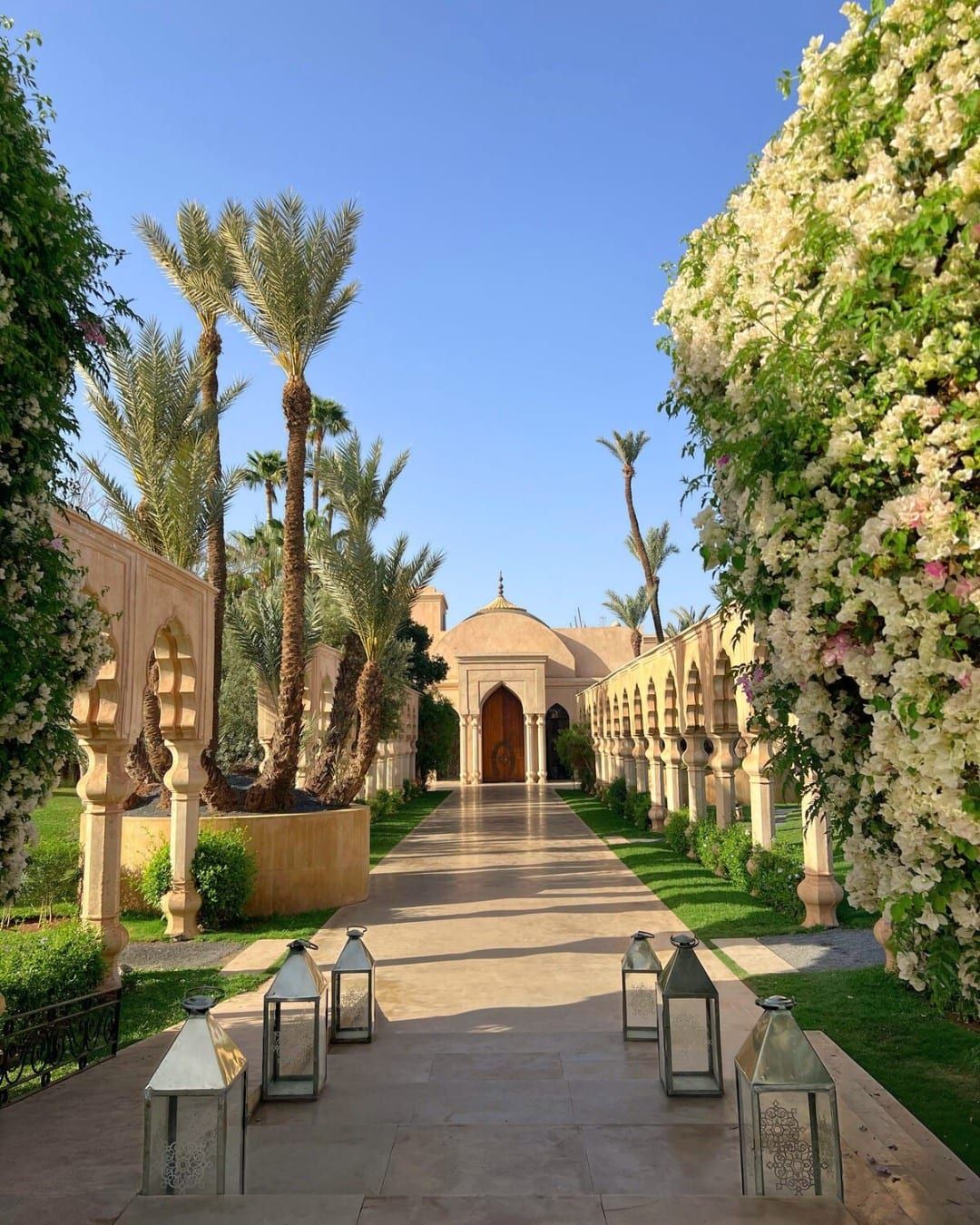
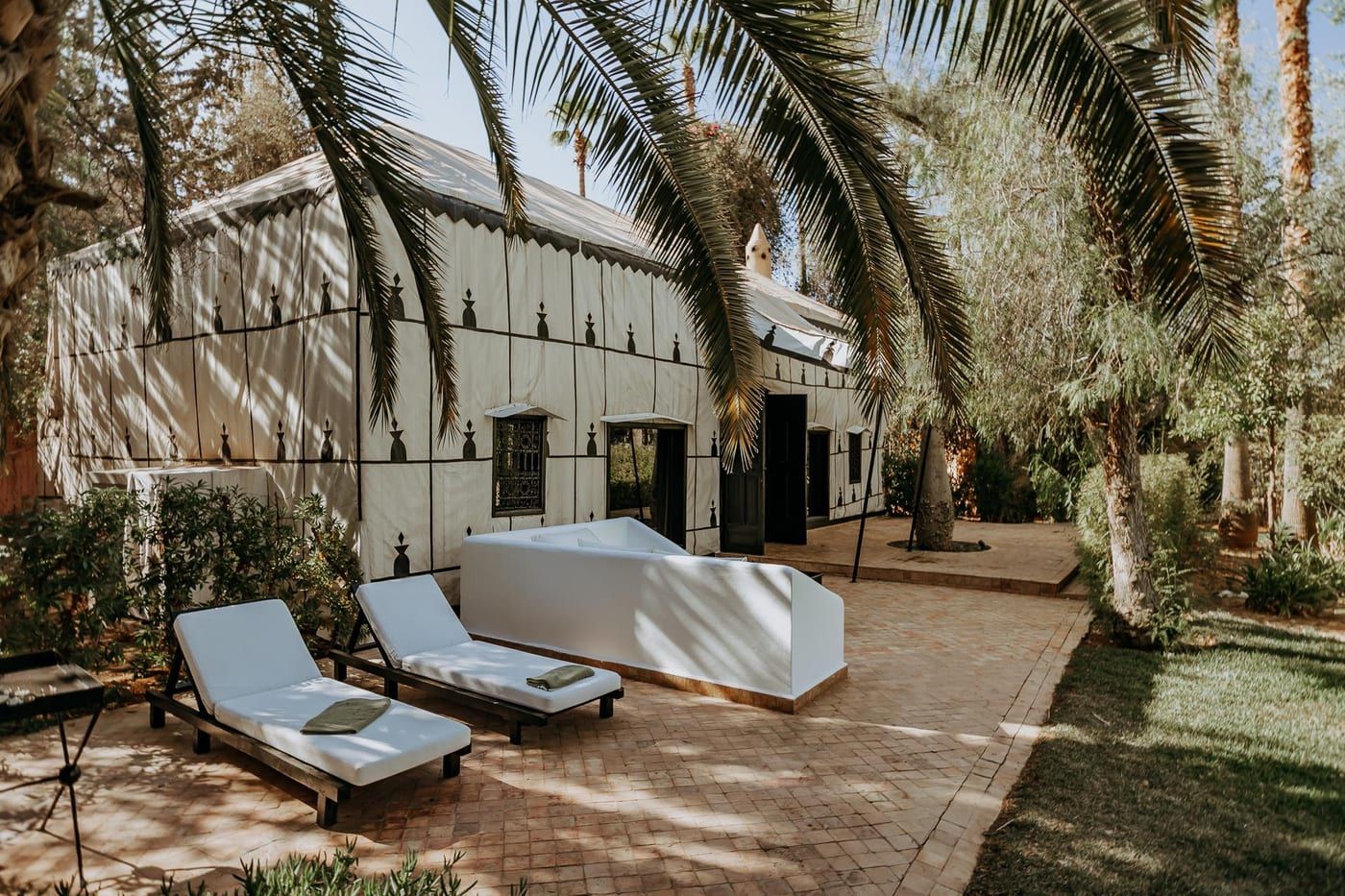
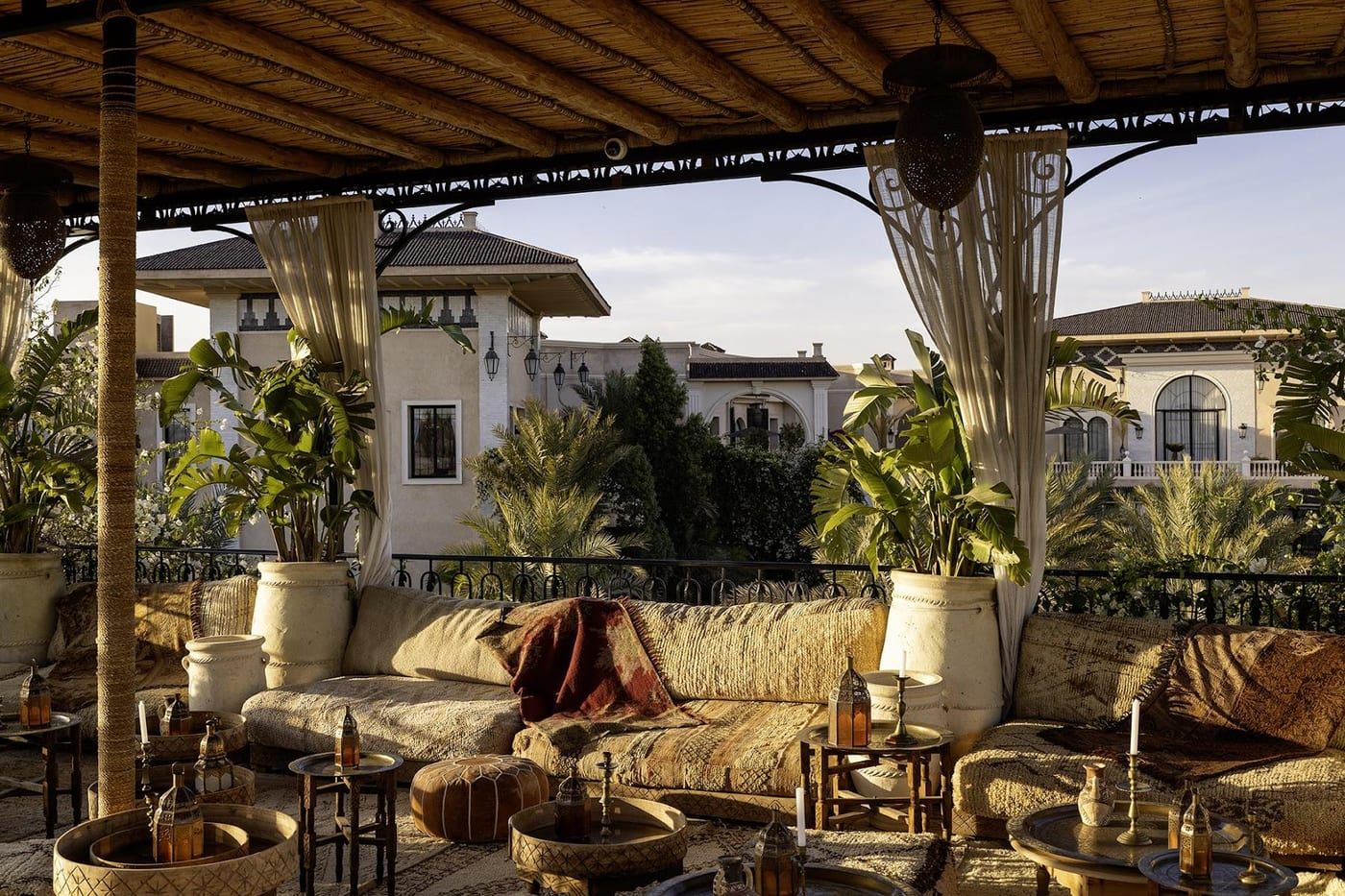
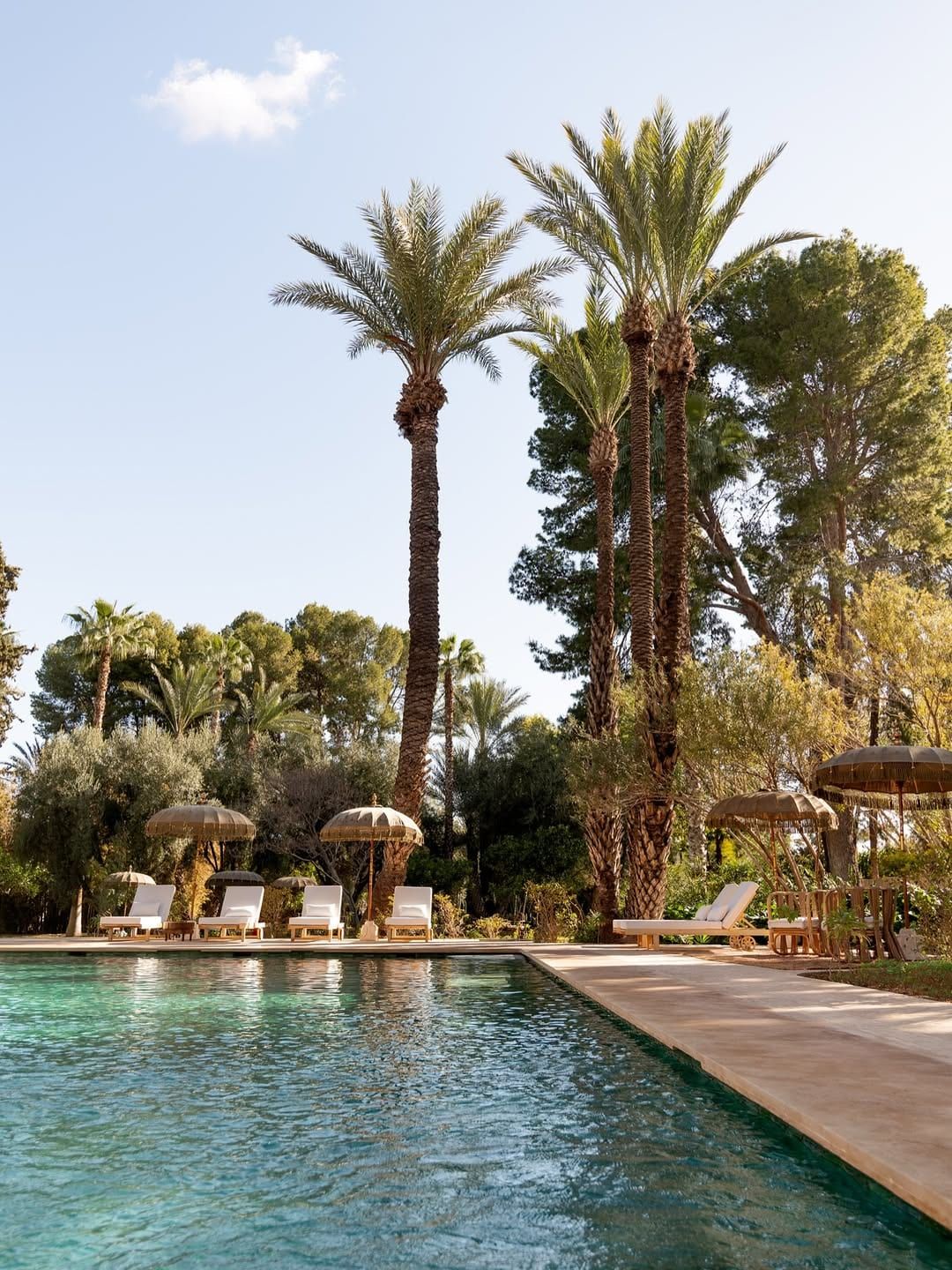
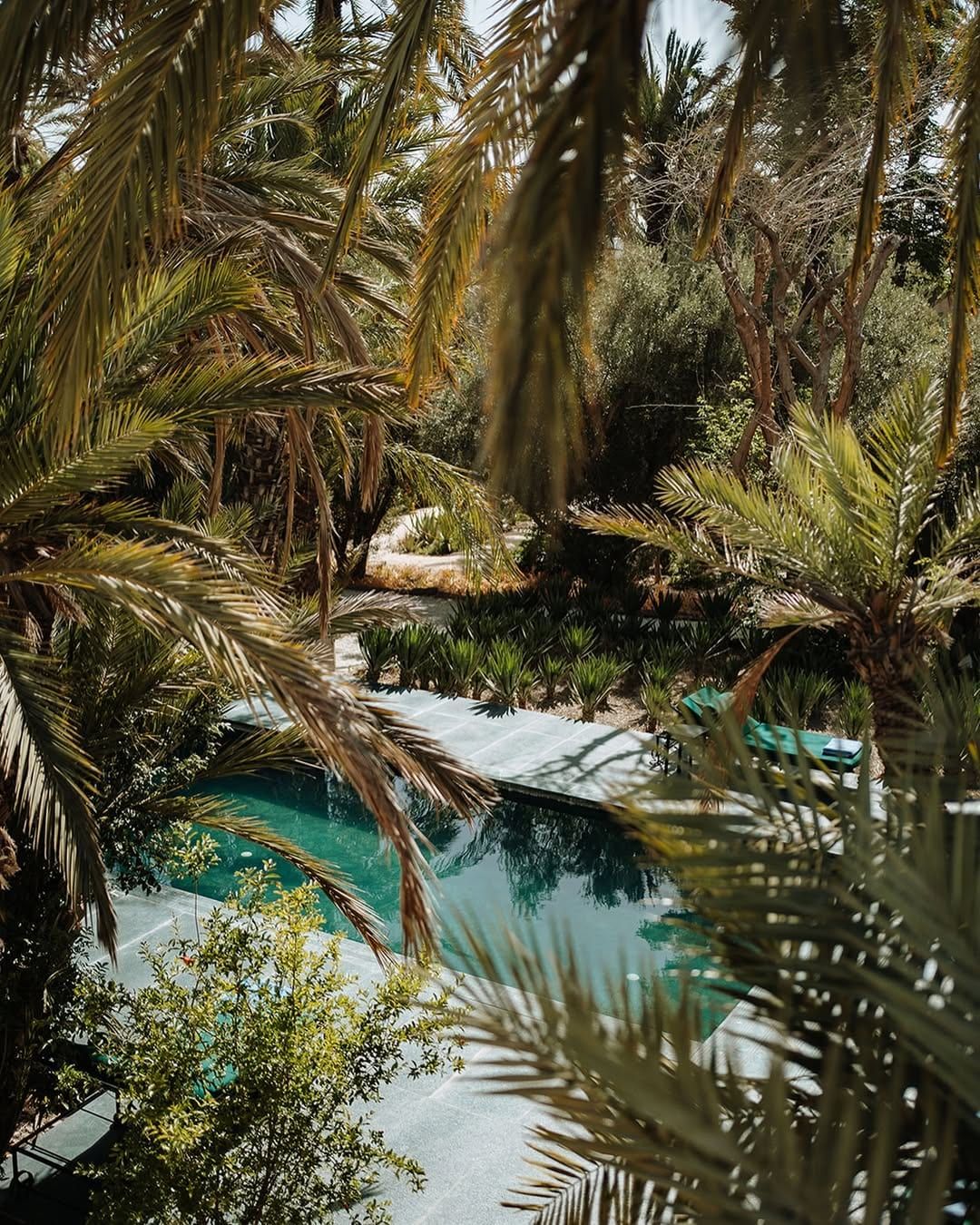
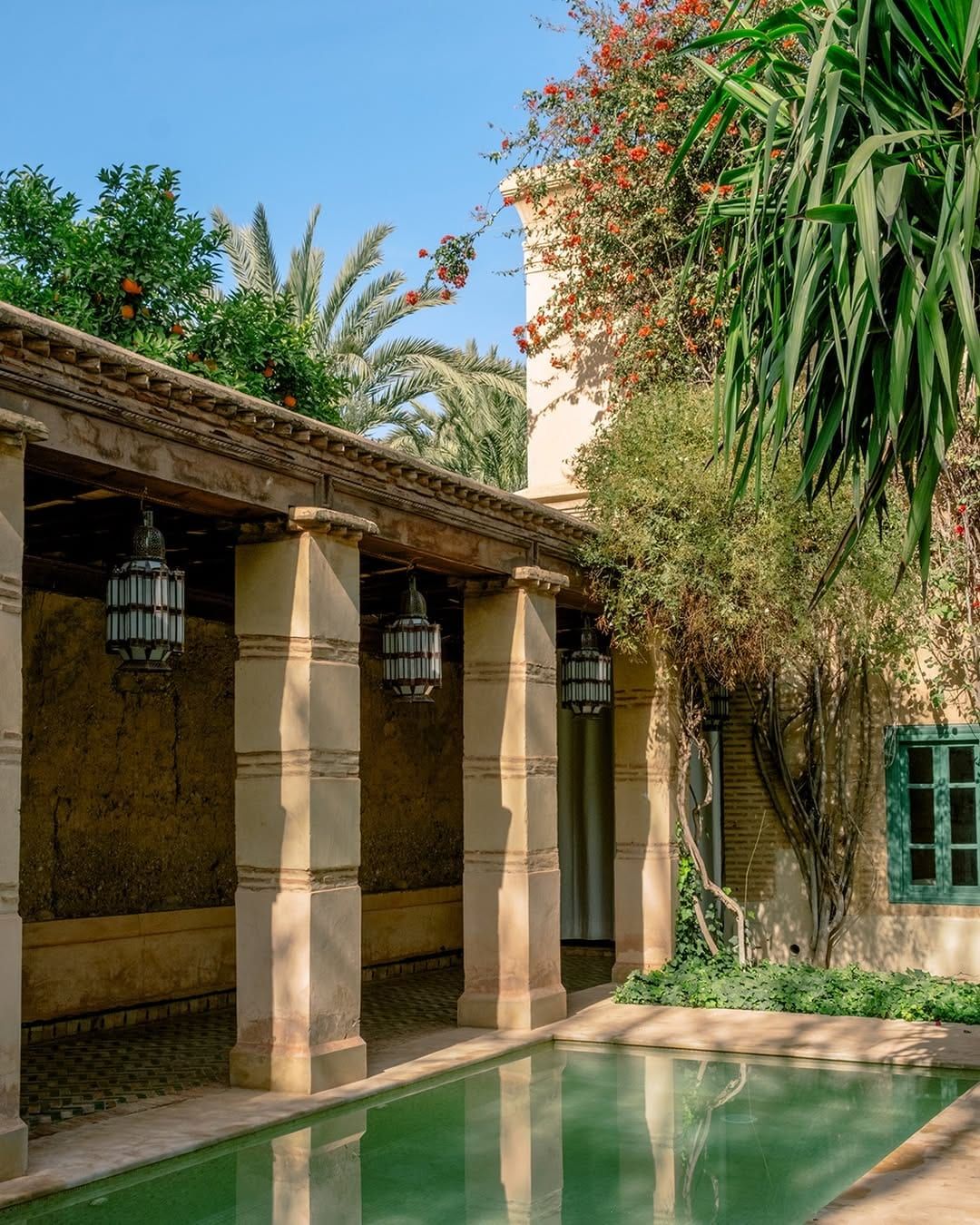
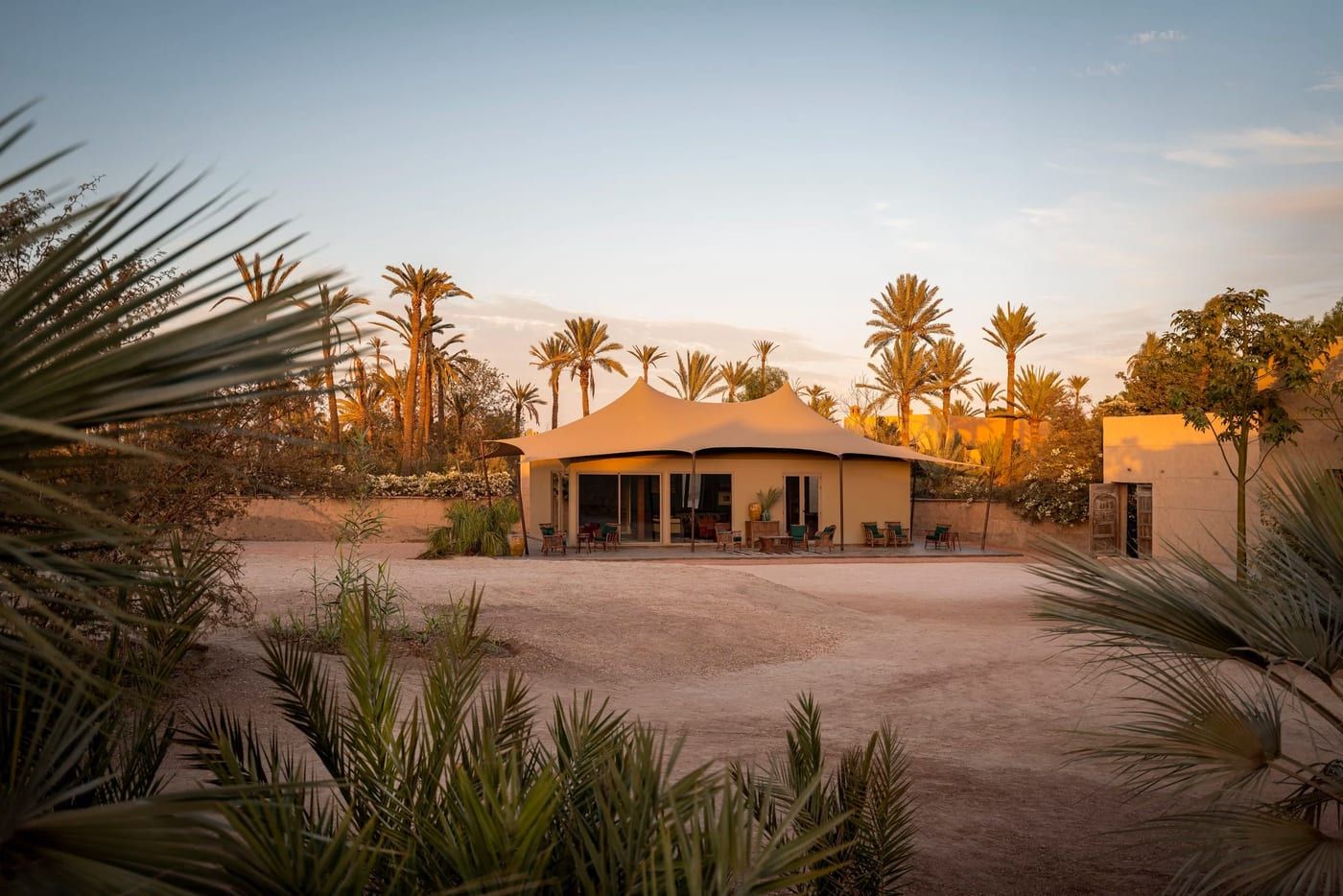
The villa and private compound culture that has developed alongside the resorts adds another register to the Palmeraie. The grove has become one of Marrakech's primary addresses for extended stays, for guests who want proximity to the city's cultural intensity without living inside its noise. A villa in the Palmeraie offers something the medina riad structurally cannot: outdoor space at a scale that is agricultural rather than courtyard-sized, the kind of garden where a table under a palm tree is genuinely shaded and genuinely private.
How Time Moves Here
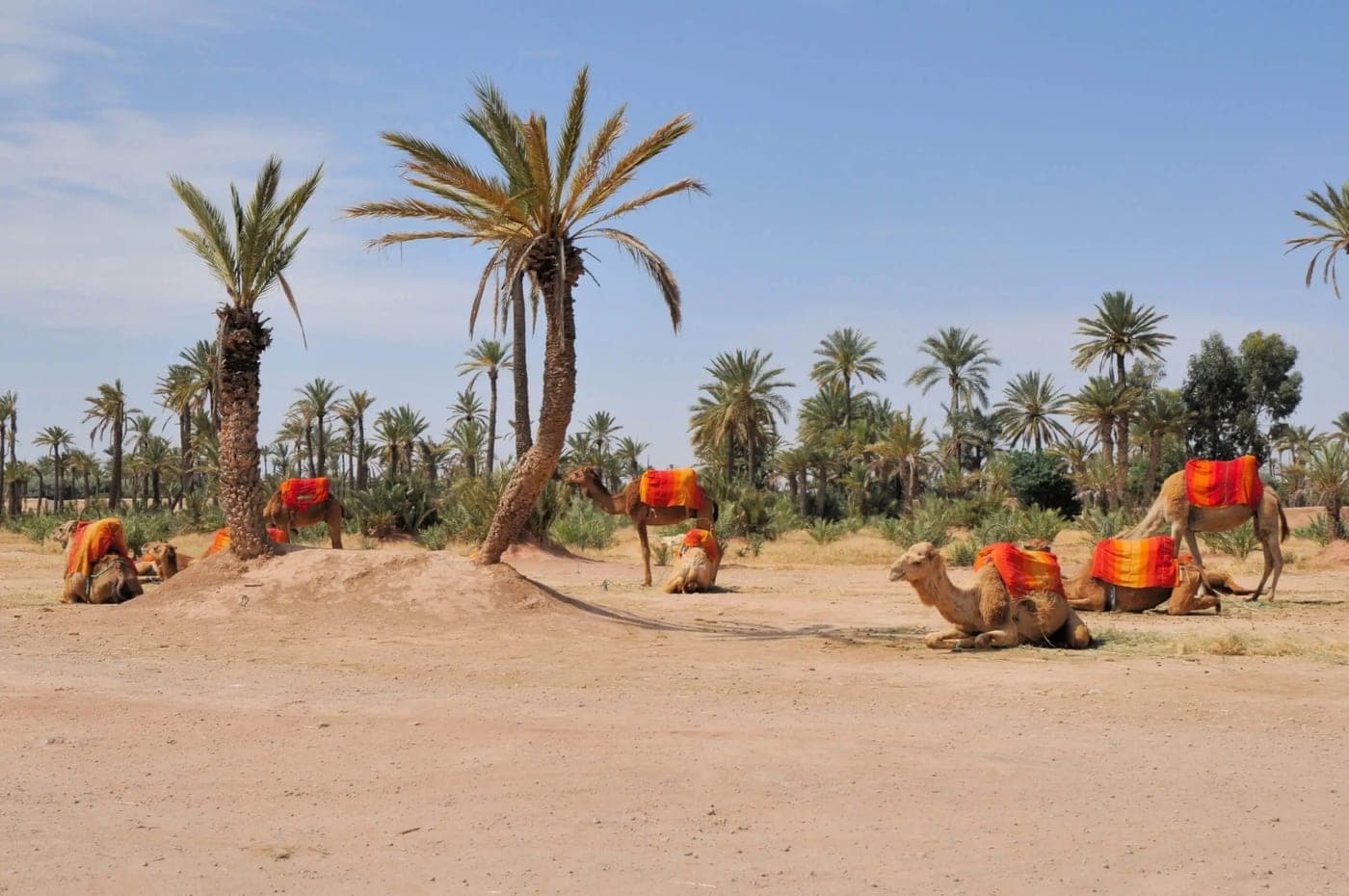
Camel rides, quad biking, and golf courses organize the more active dimension of a Palmeraie visit and they are available, real, and used by guests who want a counterweight to the medina's pace. But the more durable offer is less specific. The Palmeraie operates on a different timeline. There is less pressure toward accumulation of experience, less of the productive urgency that the medina's historical density seems to require. A day here builds around observation rather than appointment: the quality of light through palms at midmorning, the sound of irrigation water against the heat of noon, the temperature shift that a shaded pool terrace creates in the early afternoon.
The landscape changes character through the seasons in ways that matter to how it is used. In winter, the grove holds a clarity that the summer does not: cold nights sharpening the days, the low light catching the upper fronds in a way that the overhead sun of July erases. In summer, the shade of the palms earns its meaning differently. It is not decorative but necessary, the functional reason that the Palmeraie exists as a destination at all when the city bakes. The resorts manage this seasonal rhythm deliberately; guests who understand it can calibrate their time in the grove accordingly. In practice, this means organizing the day differently by month. A December morning in the grove, garden breakfast with the sun still low and the air cool, uses the landscape as the medina cannot. A July afternoon reverses the sequence: the shade earns its meaning only when the city outside is at its most demanding.
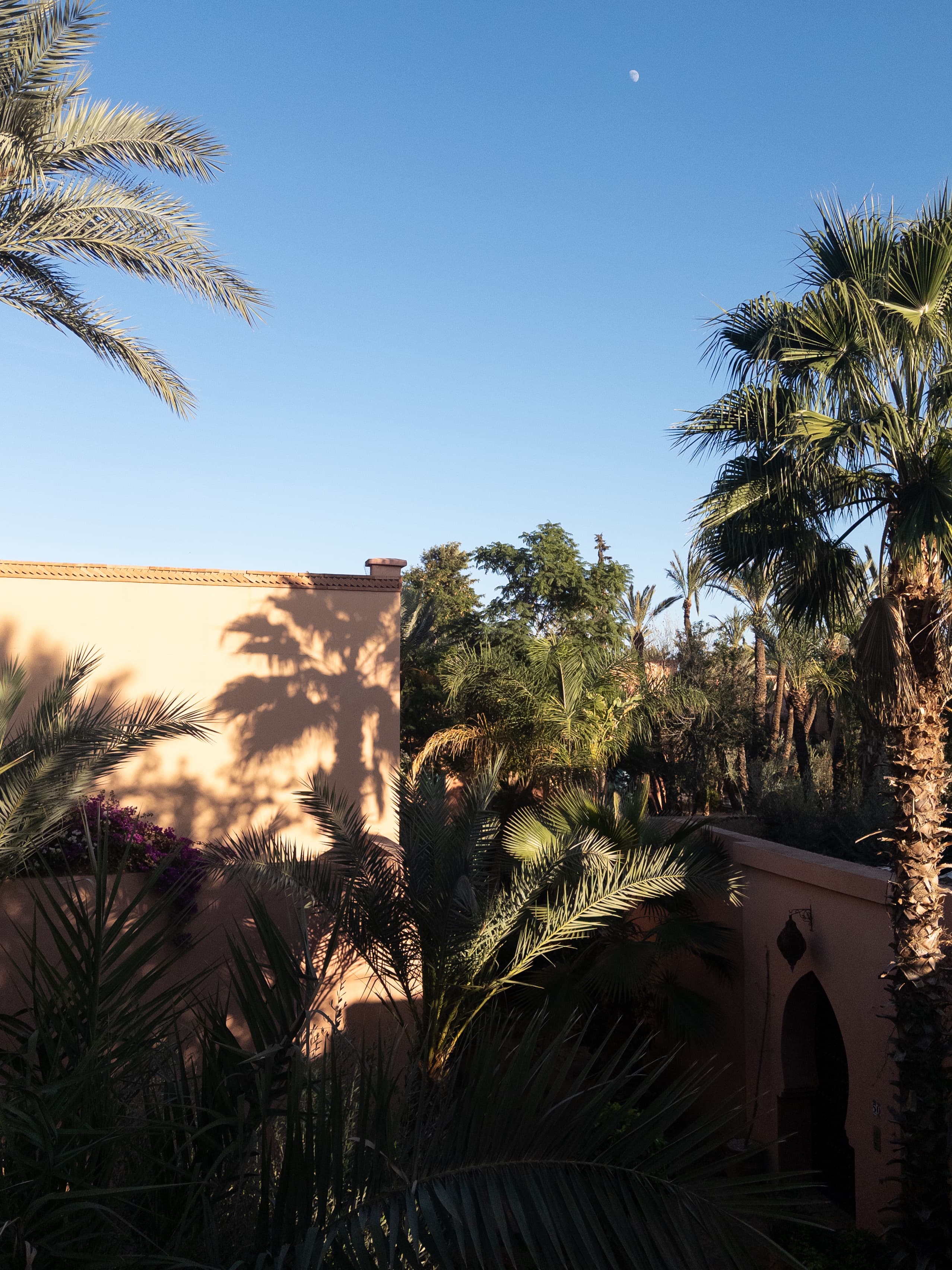
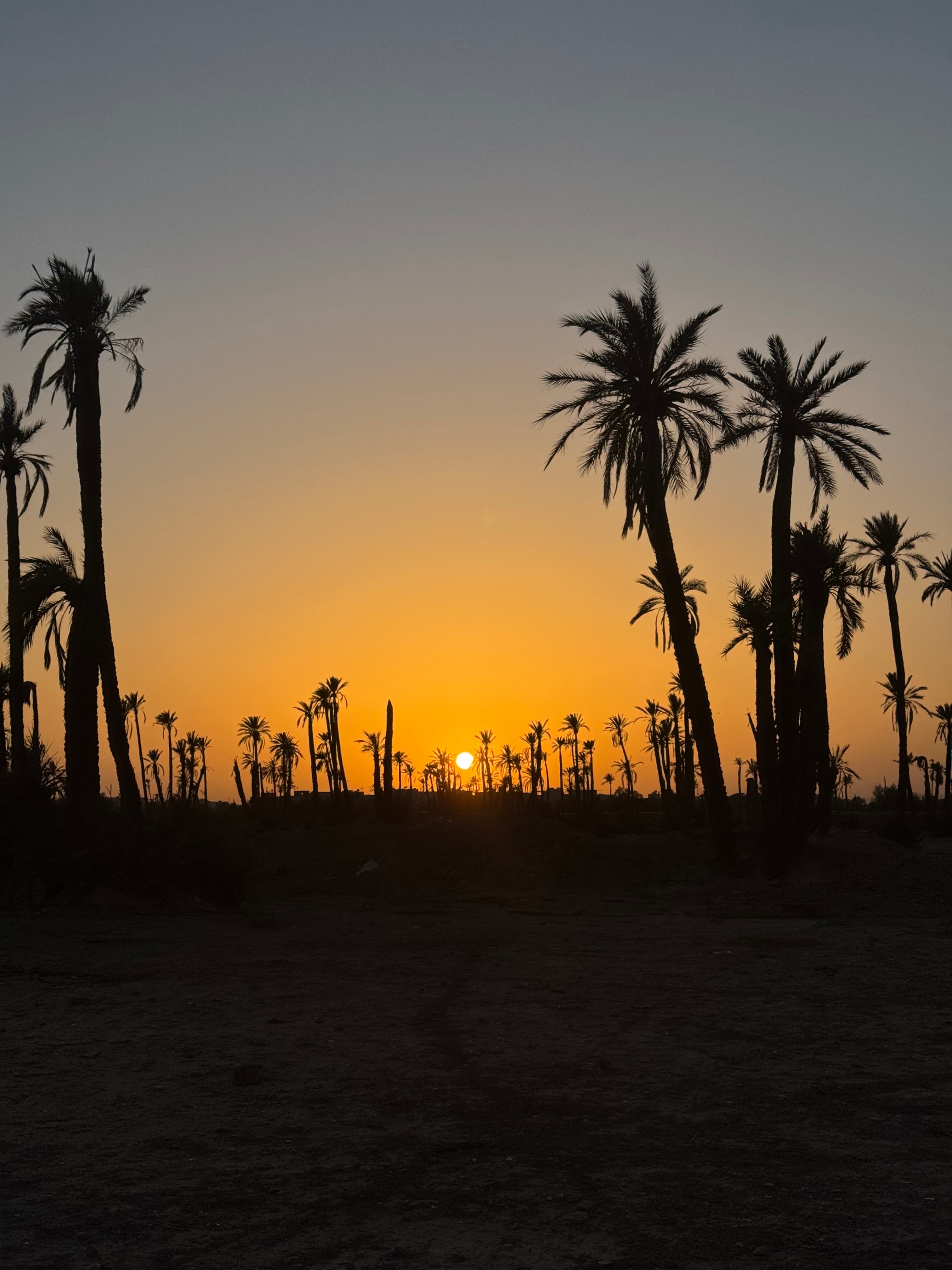
The Palmeraie is not an alternative to Marrakech. It is Marrakech read at a different register: the same city expressing itself through open space and agricultural time rather than through medina density and historical compression. The intensity of the souks is only fully legible against the quiet of the grove. And the grove's particular silence is only full because the city it belongs to is never entirely still. The distance between them, fifteen minutes by car, is one of Marrakech's more interesting spatial arguments.
You may also like…