Marrakech Travel Tips: What to Know Before You Arrive
A practical guide to timing, currency, and moving through the city with ease.
15 April 2026
The first thing Marrakech does is redistribute your attention. The sounds arrive before the images, the scale disorients before it reveals itself, and the practical questions (how do I get there, where do I change money, what is safe to drink) press harder and sooner than in most cities. These are not signs of a difficult place. They are the normal overhead of arriving somewhere that operates by its own logic. The Marrakech travel tips that follow are an attempt to reduce that overhead, so that what remains is the city itself.
When to Come
Spring and autumn are the calibrated answer: March to May, September to November. Temperatures sit between 22 and 30 degrees. The light is particular, the streets have energy but not chaos, and the major sites are manageable without endurance. Summer, from June through August, is a different proposition. Temperatures reach 38 to 42 degrees in the medina, which is built of stone and does not cool easily. It requires a different rhythm: early mornings and late evenings, minimal midday movement, reliable air conditioning for the midday rest. Winter is mild by day, sharp by night, and the least crowded and least expensive window.
Before You Arrive
Europeans, North Americans, and Australians enter Morocco without a visa for stays up to 90 days. A passport valid for at least six months beyond your travel dates is required. The Moroccan dirham is a closed currency and cannot be purchased outside the country. Exchange on arrival: at the airport for immediacy, or at a city bureau de change or ATM for better rates. The airport rate carries a premium worth avoiding if you have any cash buffer on arrival.
Notify your bank before leaving. Some foreign cards are blocked on first use in Morocco. ATMs are available at branches of Attijariwafa Bank, Banque Populaire, and CIH Bank.
For navigation, download Maps.me alongside Google Maps, which handles medina lanes with considerably more accuracy. Save your riad's address in Arabic, provided by the property at booking, and use it from the first taxi: drivers work from landmarks and Arabic addresses, not transliterations.
Money and Getting Around
Cash is the operational currency of the medina. Vendors, hammams, cafes, taxis, and market stalls work in dirham and often in small denominations. Keeping 10 and 20 MAD notes accessible removes friction. Cards are accepted across Gueliz and at most hotels; the further inside the medina you go, the less reliable that assumption becomes.
For movement across the city, the petit taxi is the standard instrument. These small beige cars are metered and licensed for three passengers. The meter should be running from the moment of departure (ask for it if the driver does not start it), and destination addresses given in French or Arabic produce faster results than English approximations. App-based alternatives, Careem and inDrive both operate in Marrakech, offer fixed prices that remove the negotiation variable entirely.
The Medina Is Pedestrian by Design
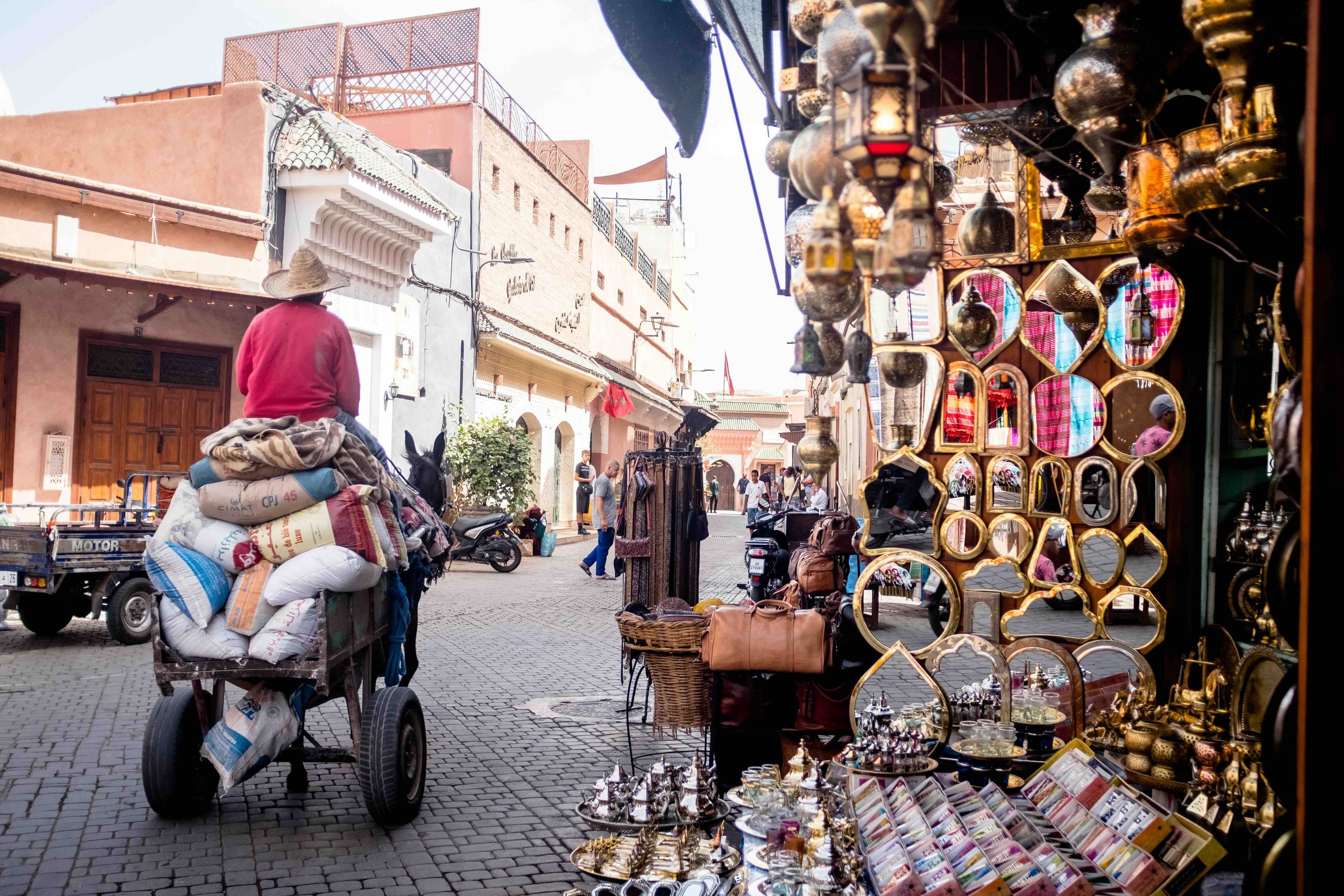
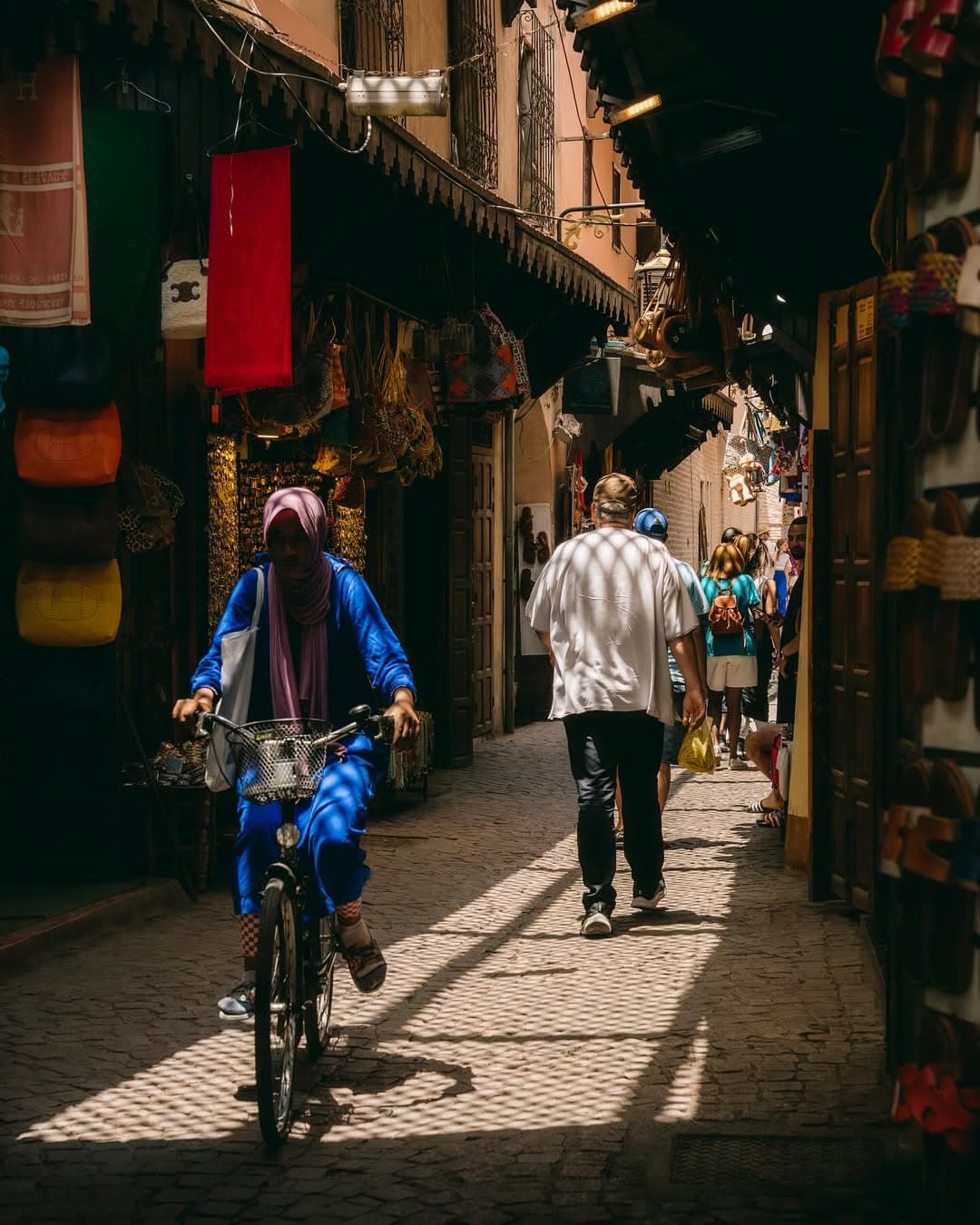
The medina's lane structure is not a planning failure. It is a deliberate system: main arteries narrow into secondary passages, which narrow again into the dead-end derbs that serve individual family clusters. Cars do not enter. This is not an obstacle. It is the condition that makes the medina what it is.
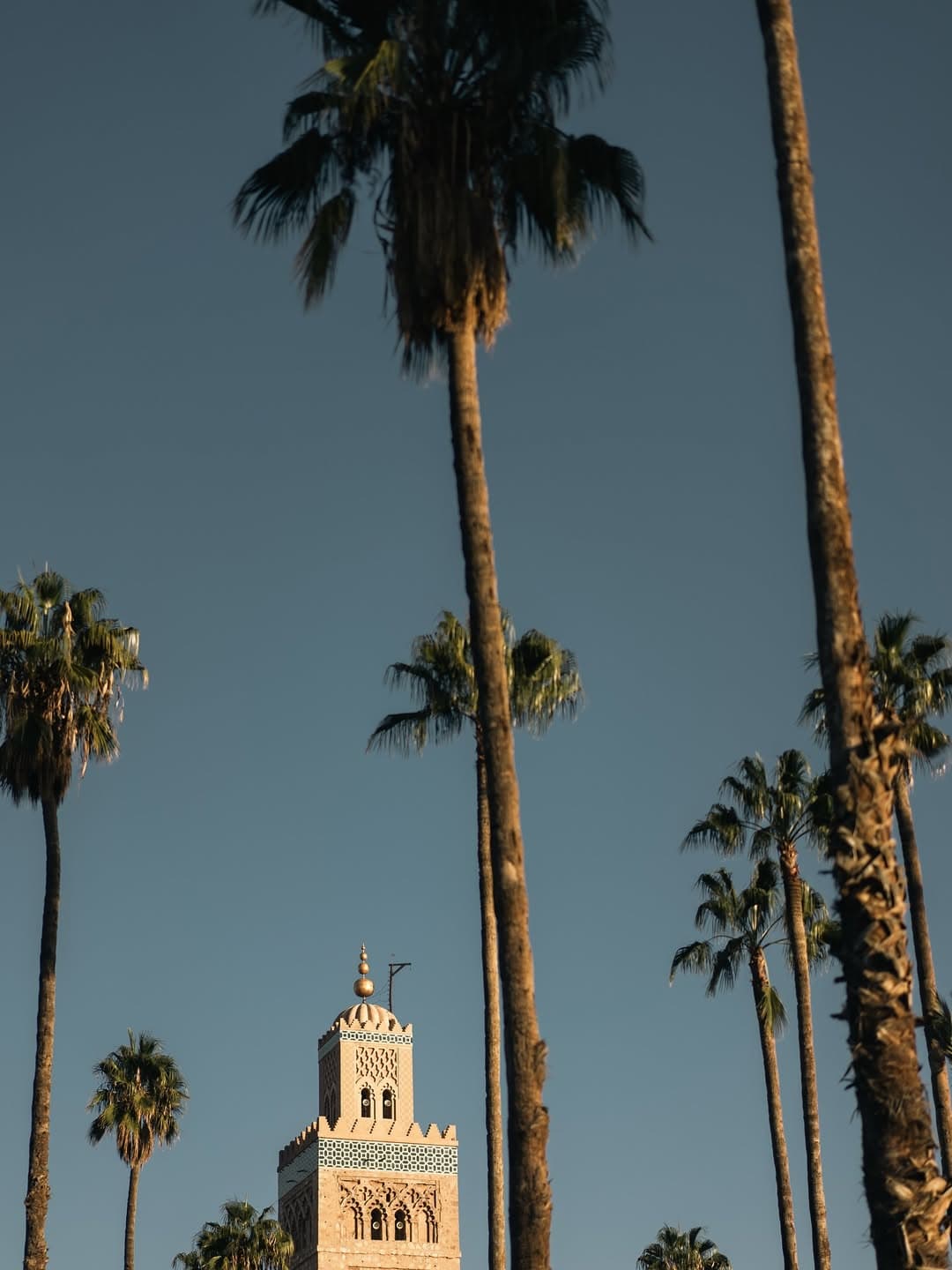
Getting lost inside it is normal, and it is also useful. The Koutoubia minaret and Djemaa el-Fna are the two reference points that reorient from almost anywhere. Maps.me outperforms Google Maps for the narrower lanes. The practical knowledge that takes two days to accumulate (which passage leads where, which turn opens into which souk) is the same knowledge that makes the third and fourth days qualitatively different from the first.
Safety is not a major concern. Violent crime targeting visitors is rare. The more typical friction is commercial pressure in the souks, which becomes navigable once understood as a form of performance rather than a problem. Bargaining is expected; initial prices are starting positions, not offers. A counter at roughly half the opening price is standard.
What to Wear
In the medina, covered shoulders and knees are the appropriate register, not a legal requirement but a signal of basic courtesy that changes how the city receives you. Light, breathable fabrics address the heat. A scarf carries year-round utility: shade, access to prayer sites, and cover against the evening chill. In Gueliz, the standard relaxes entirely.
Beyond the Walls
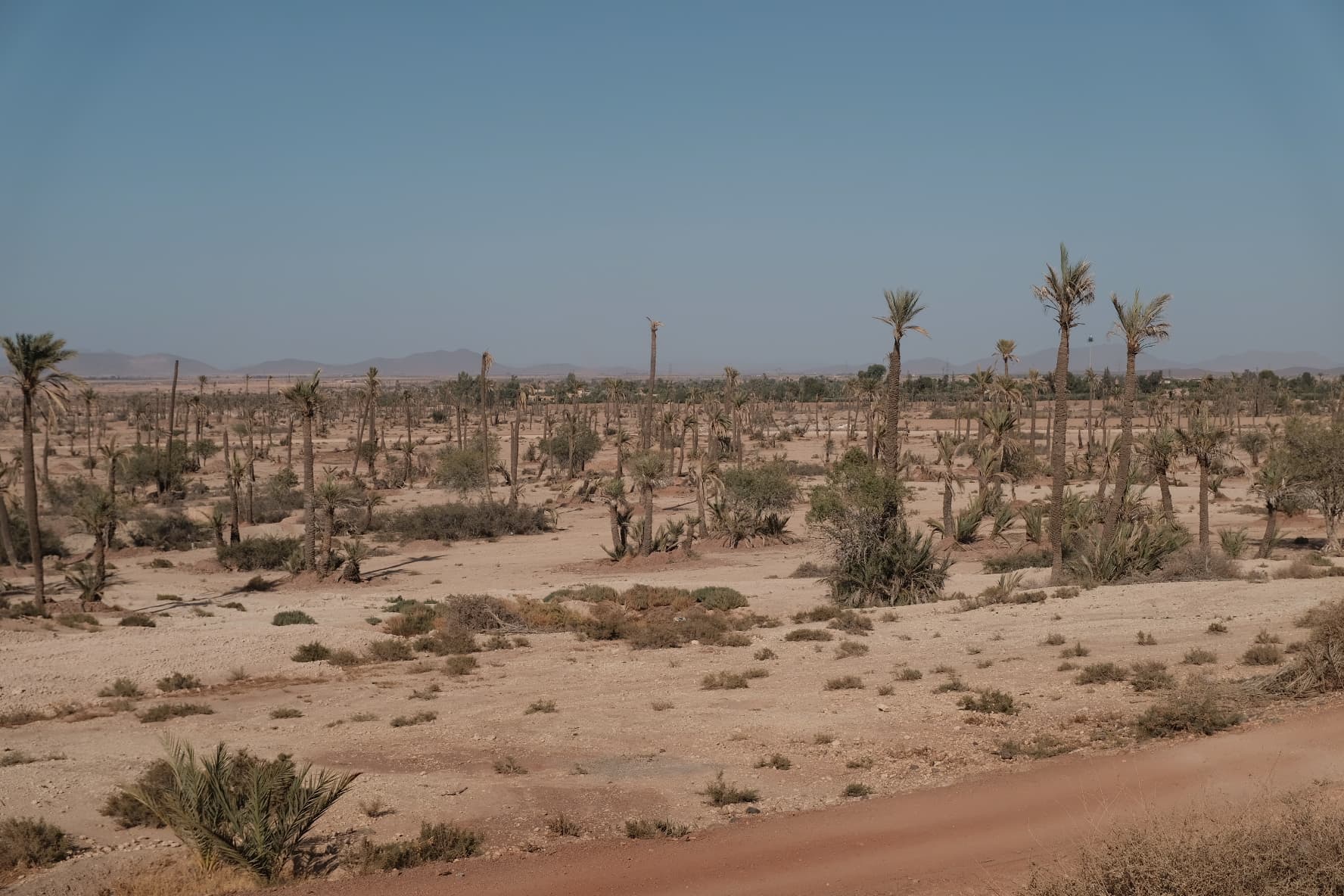
The medina is not the whole city. Gueliz, the French-designed district northwest of the walls, has restaurants, galleries, and coffee shops in a different register: less dense, more contemporary, easier to move through. Sidi Ghanem, the former industrial zone that became a design district, is where Moroccan craft operates in a studio rather than a souk context. The Palmeraie, twenty minutes north, is a version of Marrakech at a completely different pace.
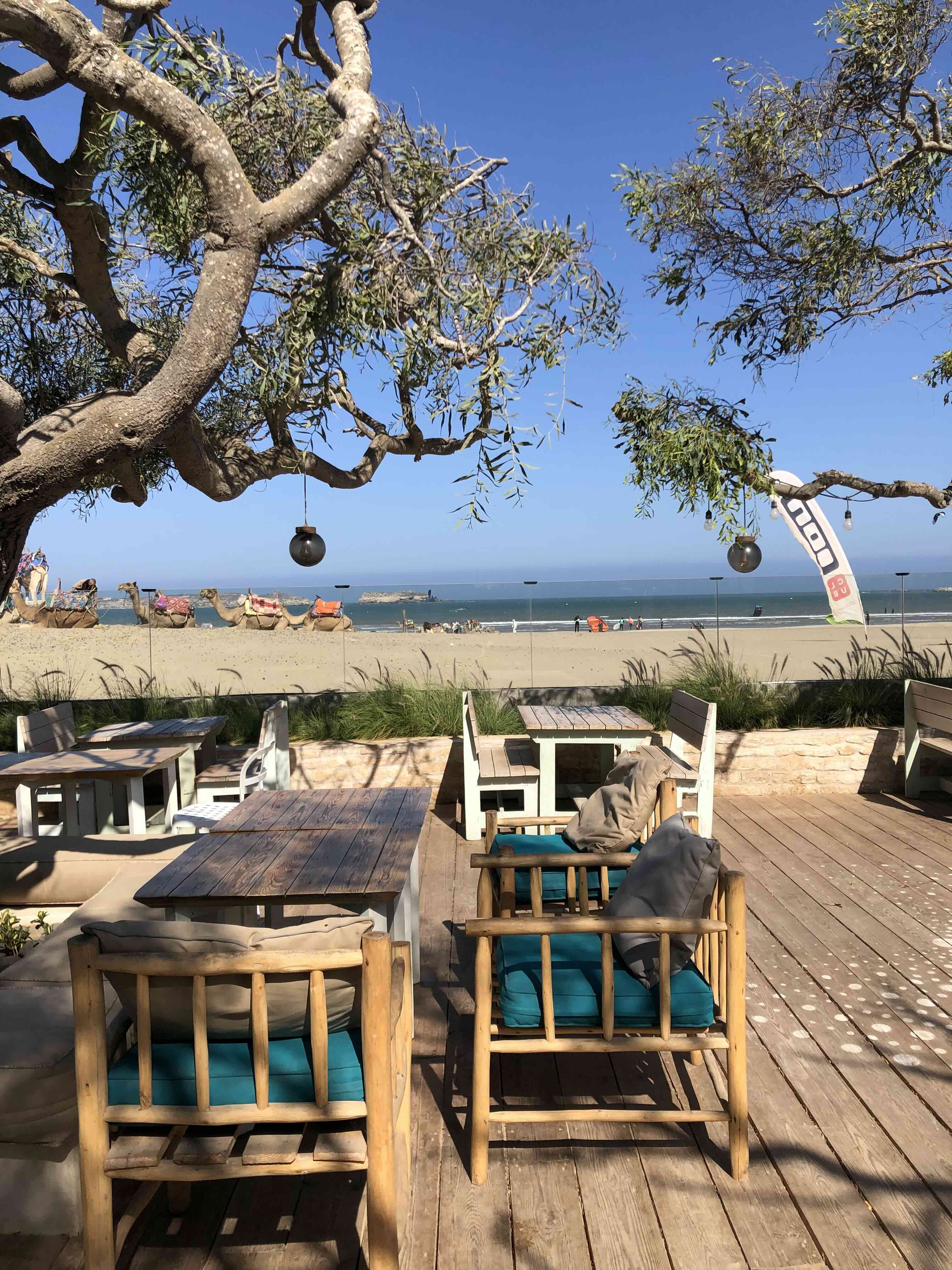
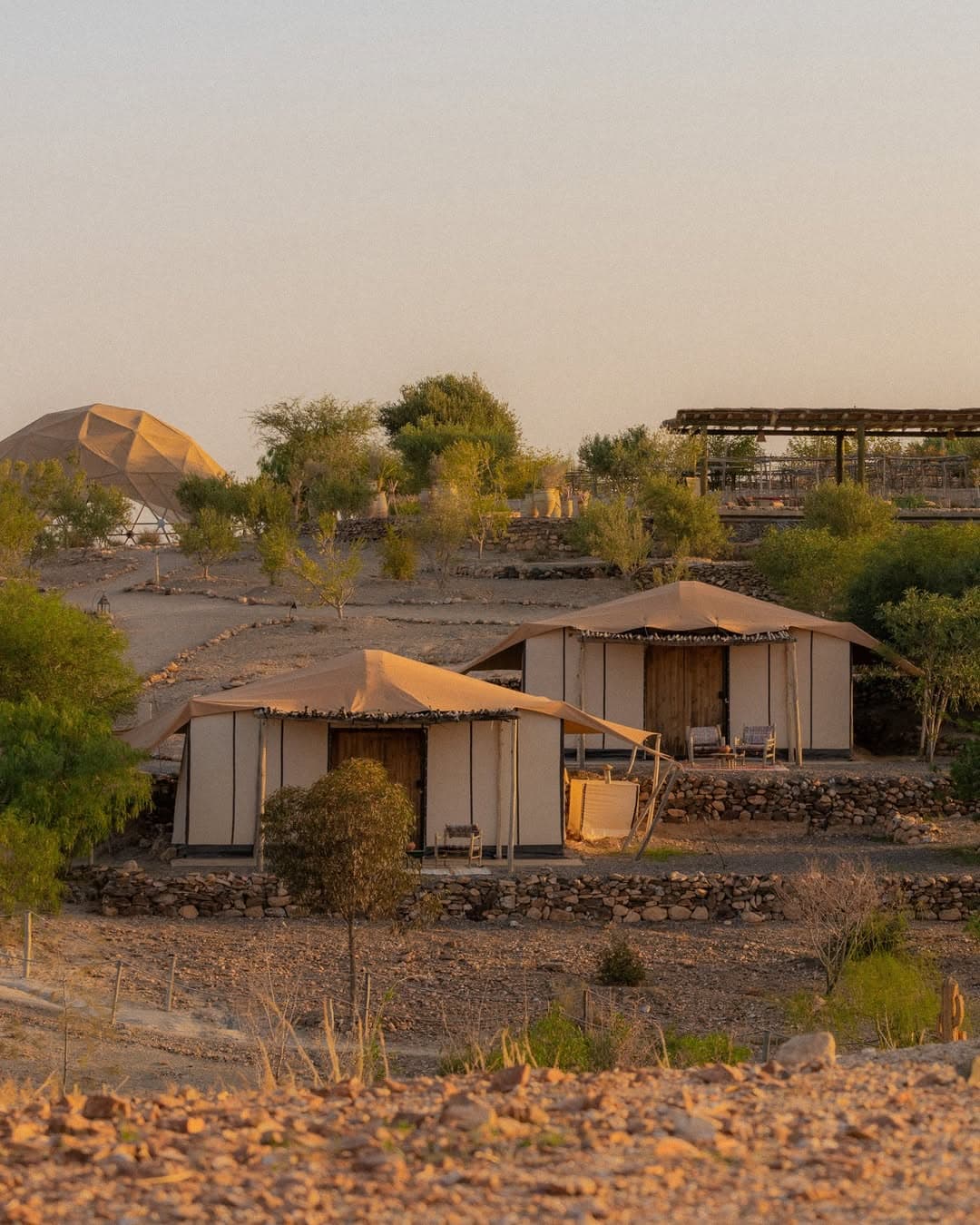
Beyond the city, the Ourika Valley, the Agafay desert, and Essaouira on the Atlantic coast are the most established day and overnight trips. None require more than a private driver or a rental car and a morning start.
Marrakech rewards preparation and forgives imperfection. The practical overhead of arriving (the currency, the connectivity, the medina logic) resolves within the first day, and what is left is the smell of cumin drifting from a stall you will never find again, the weight of a copper tray, the way a derb opens without warning into a courtyard that should not fit where it does.
You may also like…