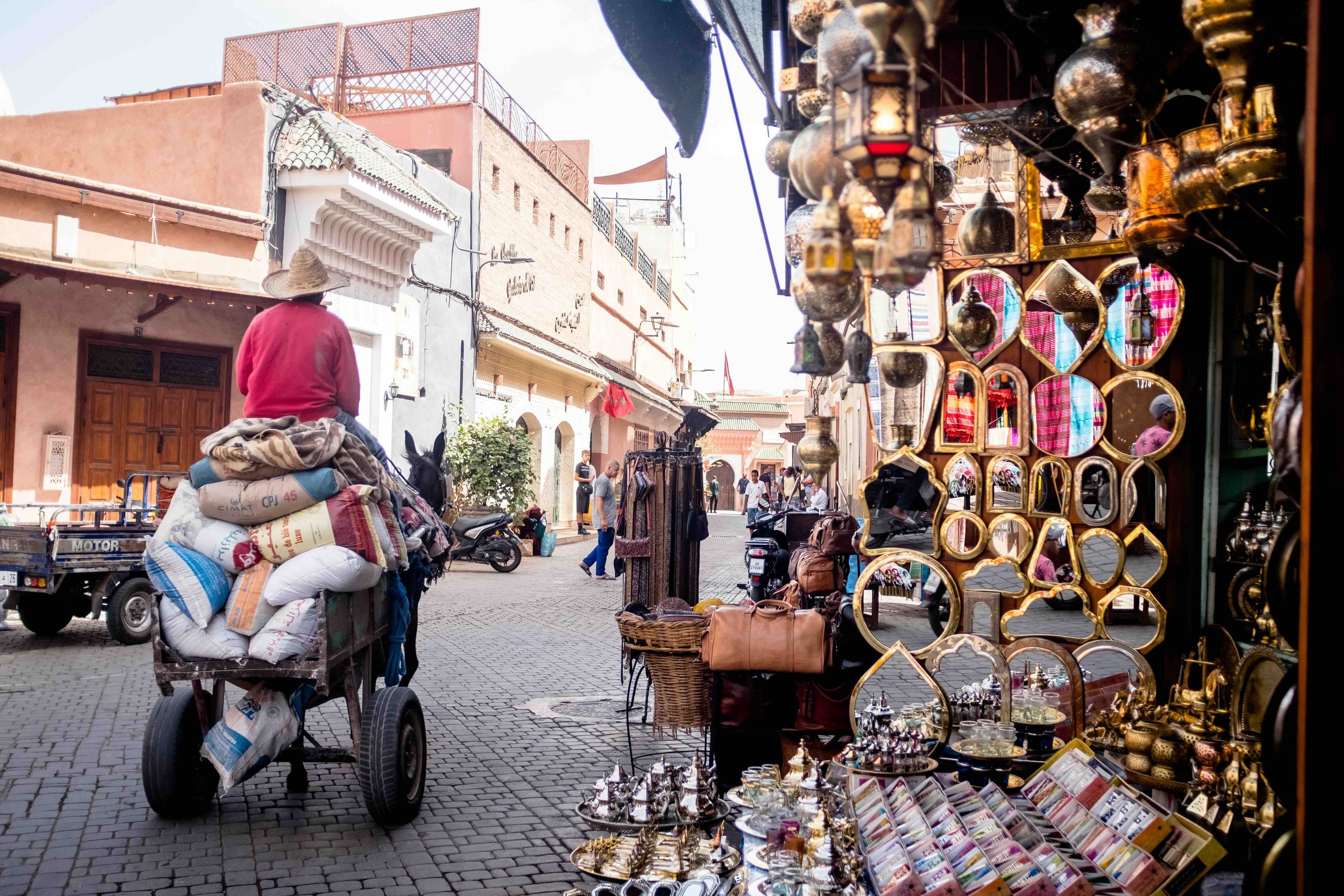
The Medina of Marrakech: A City Built to Work
How nine centuries of urban intelligence shaped the most walkable city in North Africa.
Timence · 12 April 2026
Founded in 1070, the medina of Marrakech was not designed for visitors. It was designed for the people who lived in it. That original intention is precisely what makes it so powerful to walk through now.
The medina of Marrakech was not planned. It was grown. Yusuf ibn Tashfin, the Almoravid sultan who established the city in 1070 on the edge of the Haouz plain, laid down a logic that subsequent dynasties extended, modified, and built over across nine centuries. What remained constant was the underlying system: a city organised not around monuments or ceremonial axes, but around the requirements of daily life. Water, shade, privacy, proximity. The result is a city that continues to function in the twenty-first century not despite its medieval origins but because of them.
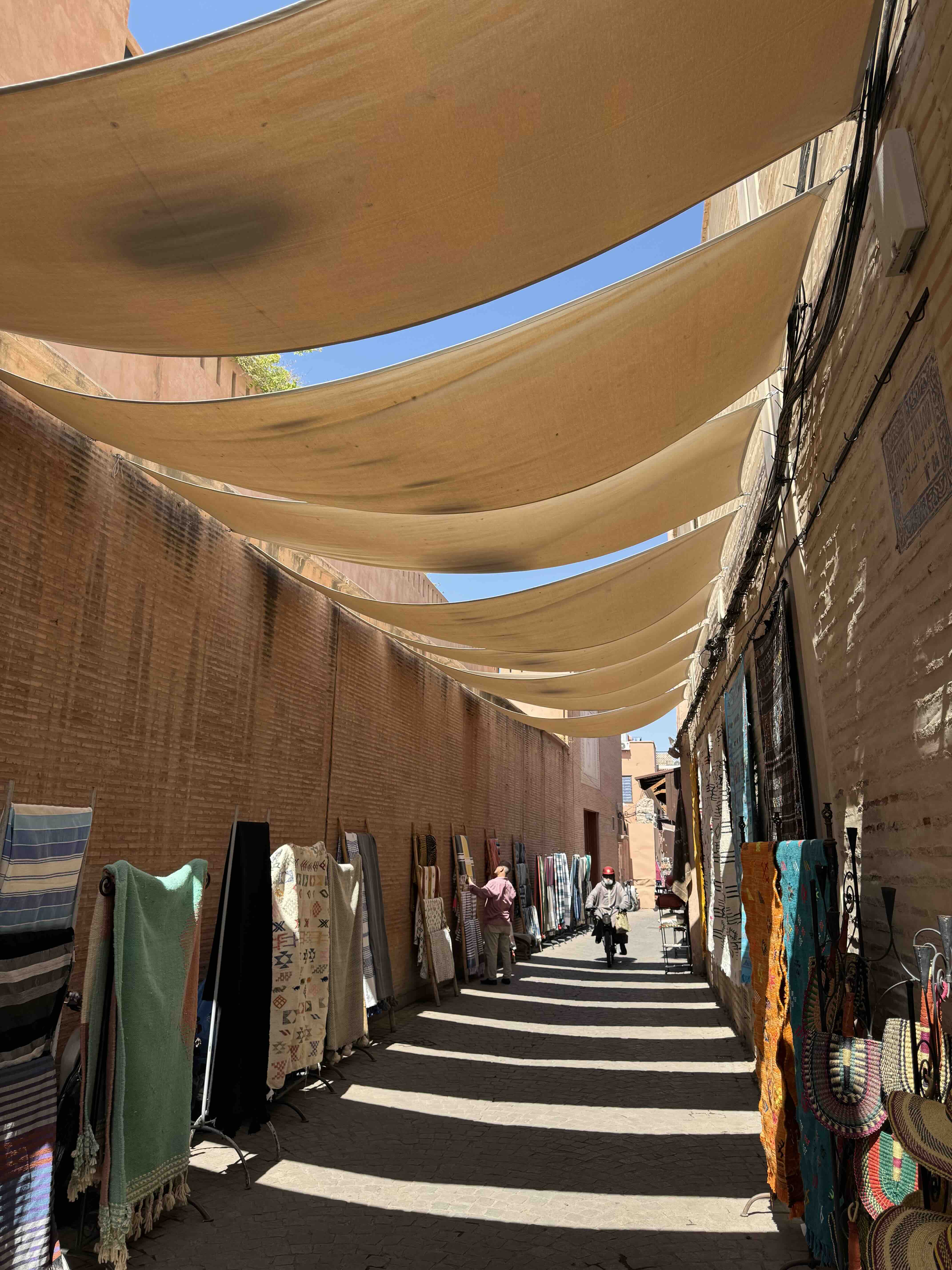
Visitors arriving in the medina for the first time frequently describe a specific sensation: the feeling of being inside something rather than beside it. This is not a metaphor. The medina's street pattern, the dense network of lanes that narrow as they approach residential quarters, the walls that lean toward each other overhead, the dead-end passages called derbs that seal off family clusters from the main flow of traffic, all of this was engineered to create enclosure. The city was built to contain and protect, to move air along shaded corridors, to make walking distances between water, bread, and prayer achievable on foot. It was built, in other words, to sustain life. That is the source of its peculiar power over the visitors who move through it now: they are inside a machine that was not built for them, and they can feel the precision of its original design even without understanding it.
The Neighbourhood as Unit
The basic cell of the medina is not the building but the quartier. Each neighbourhood within the larger city operates as a self-sufficient system: a mosque for prayer, a hammam for washing, a communal oven for bread, a water point, a small market for daily goods. This structure was not accidental or merely traditional. It was the solution to the problem of urban life before modern infrastructure: how do you sustain a large population in a dense city without the grid, the pipe, or the distribution network that contemporary urbanism assumes? The answer was radical decentralisation. You build a city of cities, each one capable of functioning on its own, connected to the whole but not dependent on it.
The derb extends this logic inward. Where the quartier is the public unit, the derb is the private one: a dead-end lane, accessible from the main artery but sealed by a gate or simply by its own logic of enclosure, sheltering the houses of one or several family clusters from the noise and visibility of the street. The transition from the main souk to a derb takes seconds and crosses a significant social boundary. The noise falls away. The lane narrows. The doors on either side are heavy and anonymous, offering no clue to what lies behind them. Privacy in the medina is not a modern concept retrofitted onto an ancient urban form; it is built into the structure of the city from the beginning.
The Riad and the Madrasa
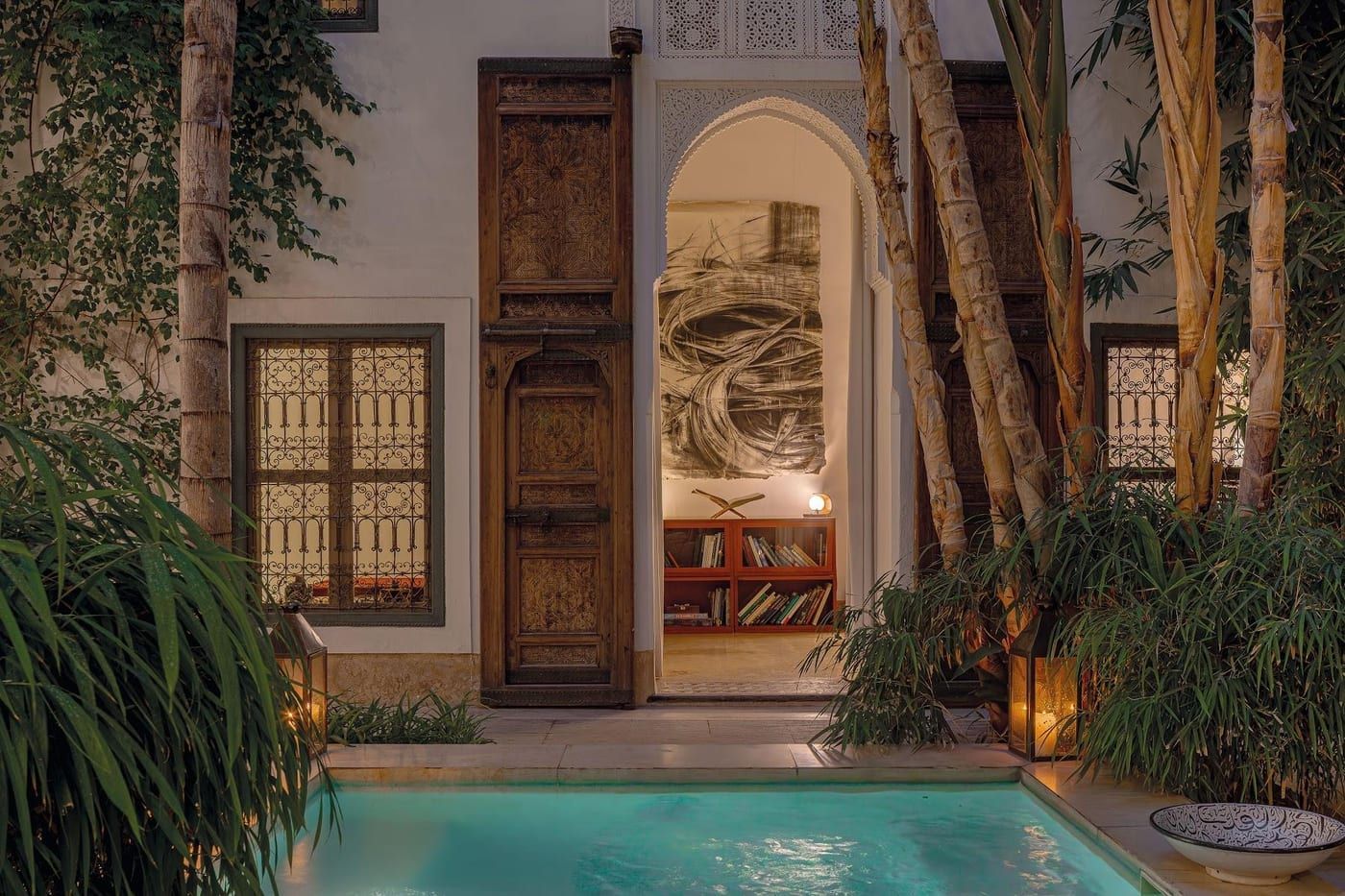
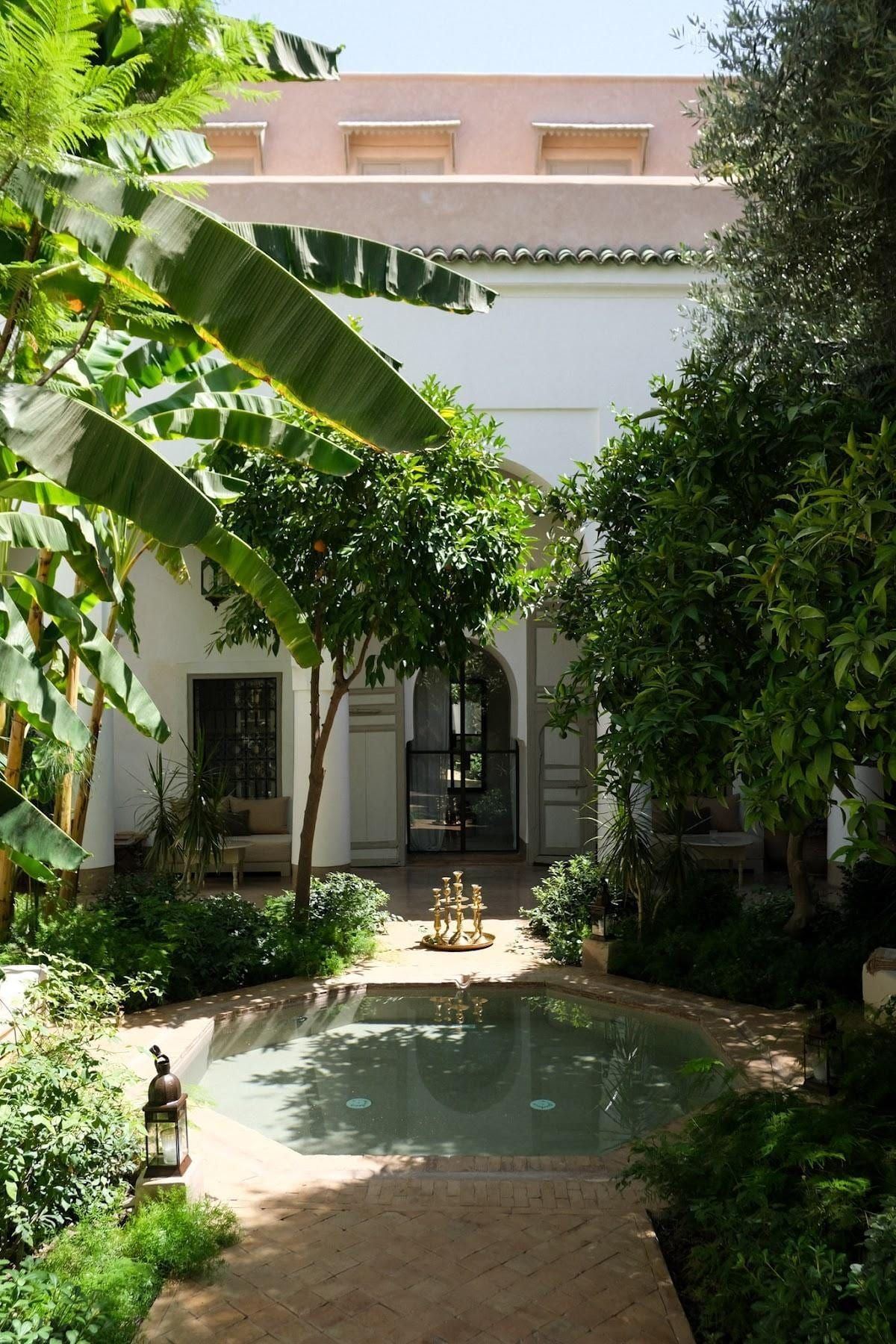
The architecture that emerges from this logic is the architecture of interiority. The riad, the traditional Moroccan courtyard house, turns its back on the street entirely. Its outer wall is blank, its door undecorated. Everything faces inward: the rooms arranged around a central courtyard, the courtyard itself organised around a fountain, the fountain audible from every room. Daylight enters from above rather than through windows facing the lane. Sound is contained. The house is a world complete in itself, insulated from the city it sits inside.
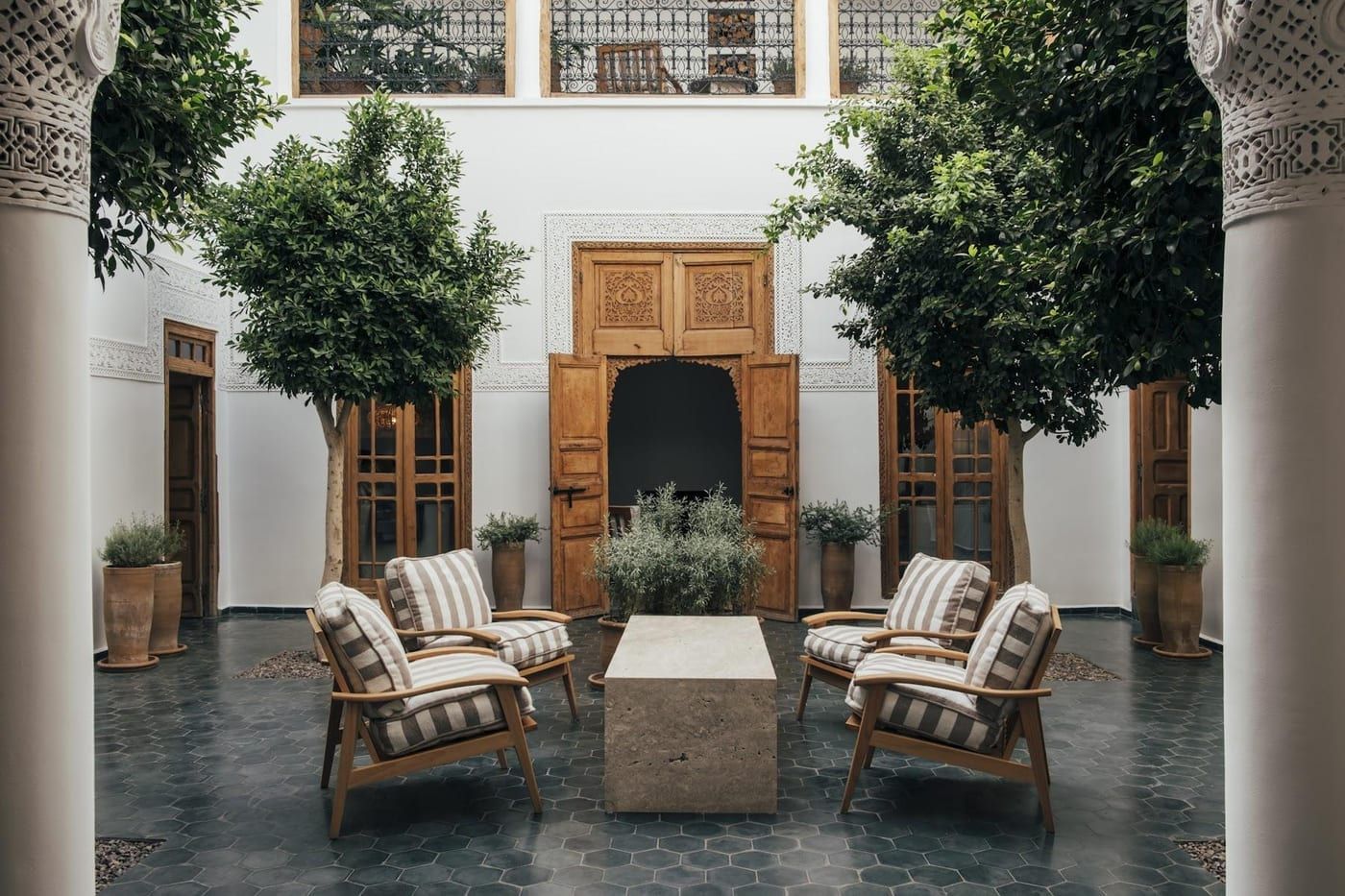
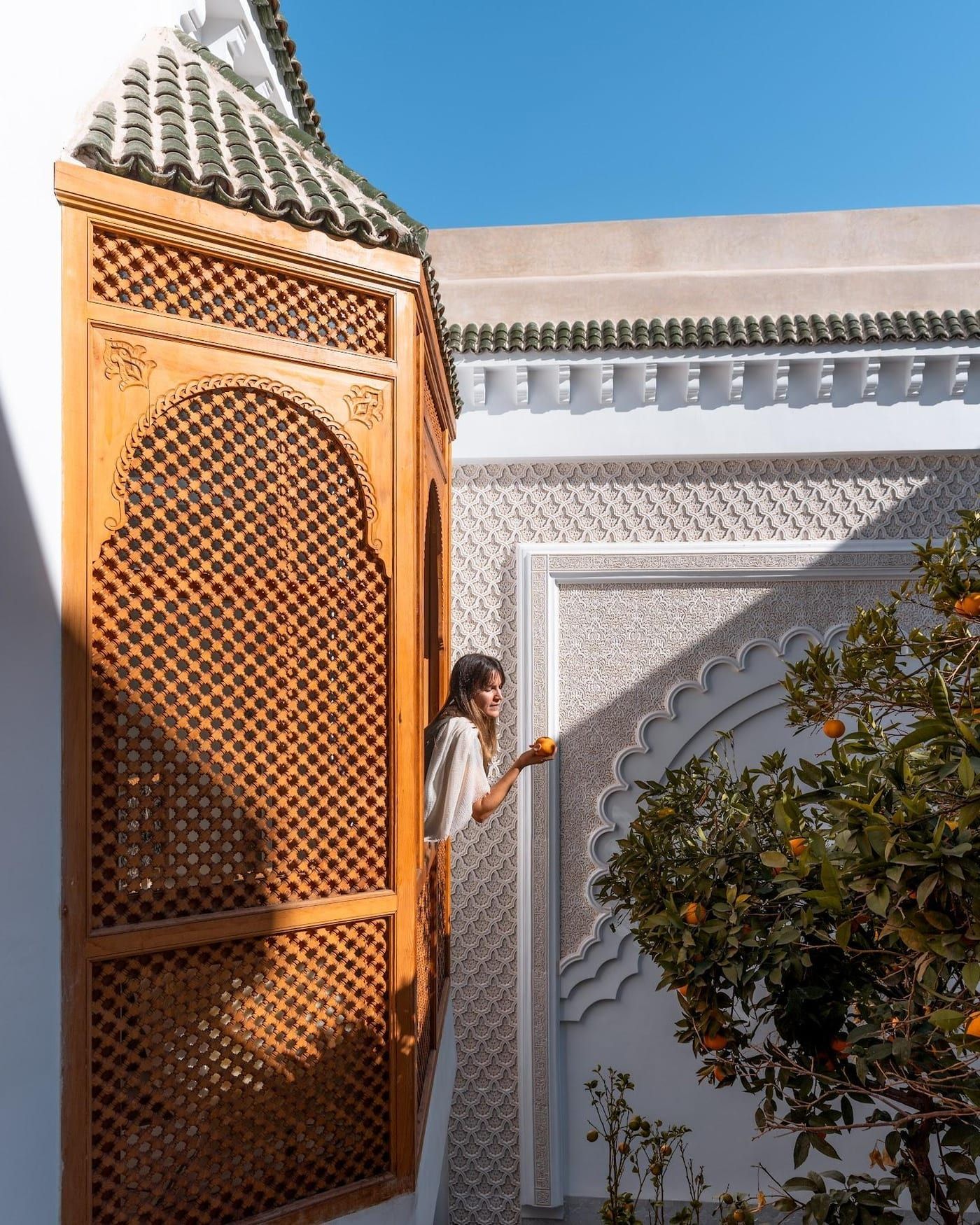
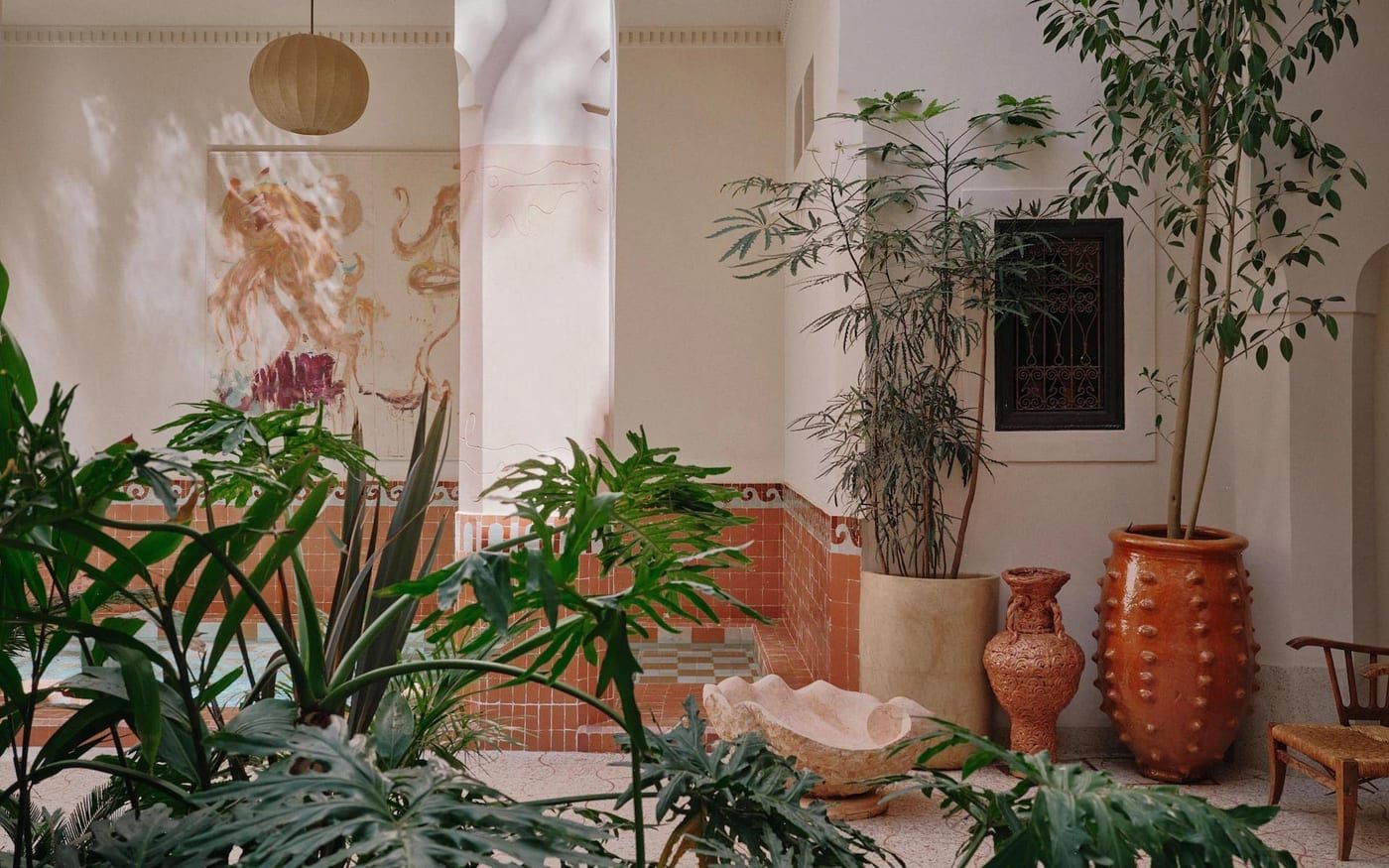
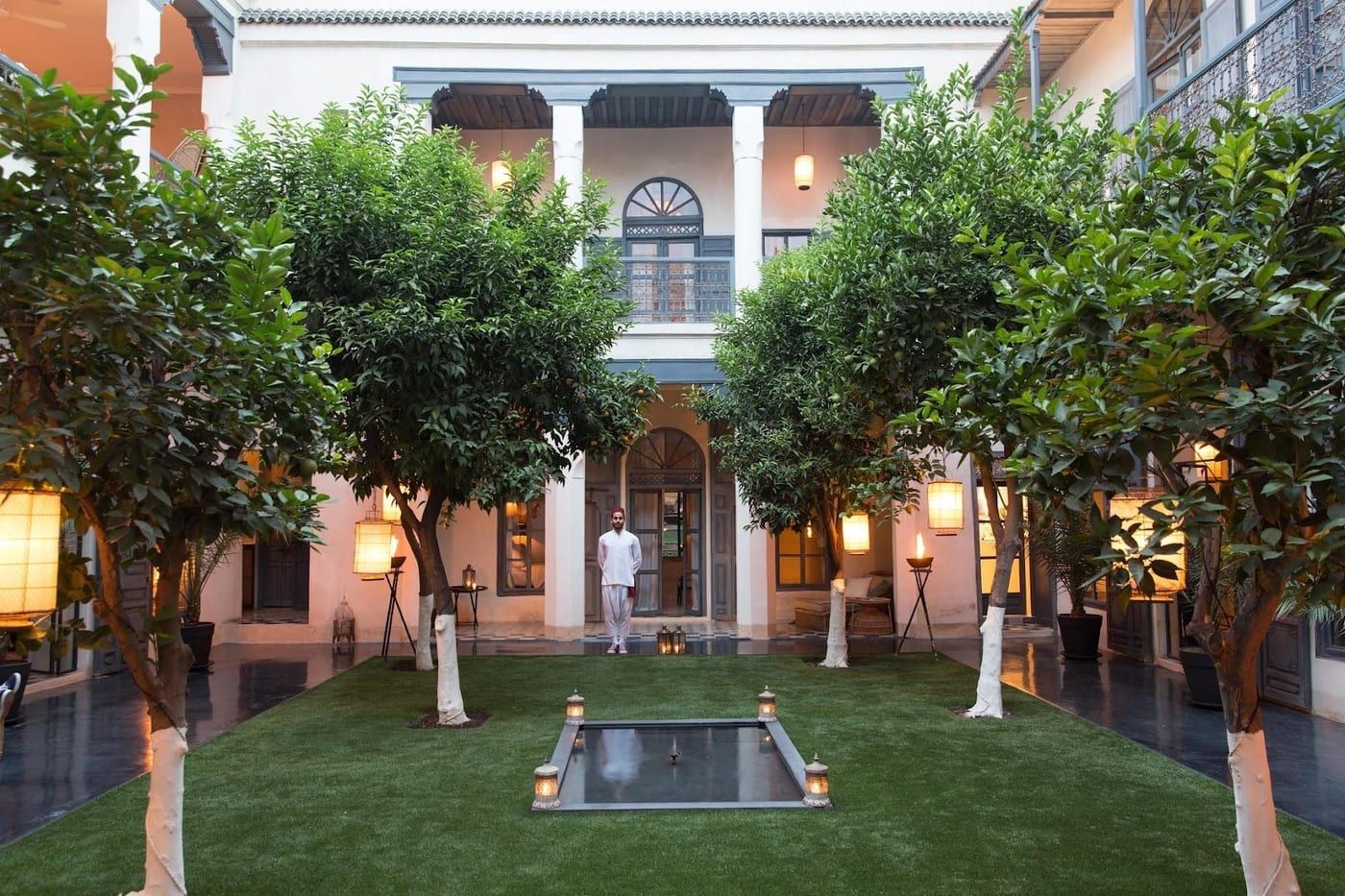
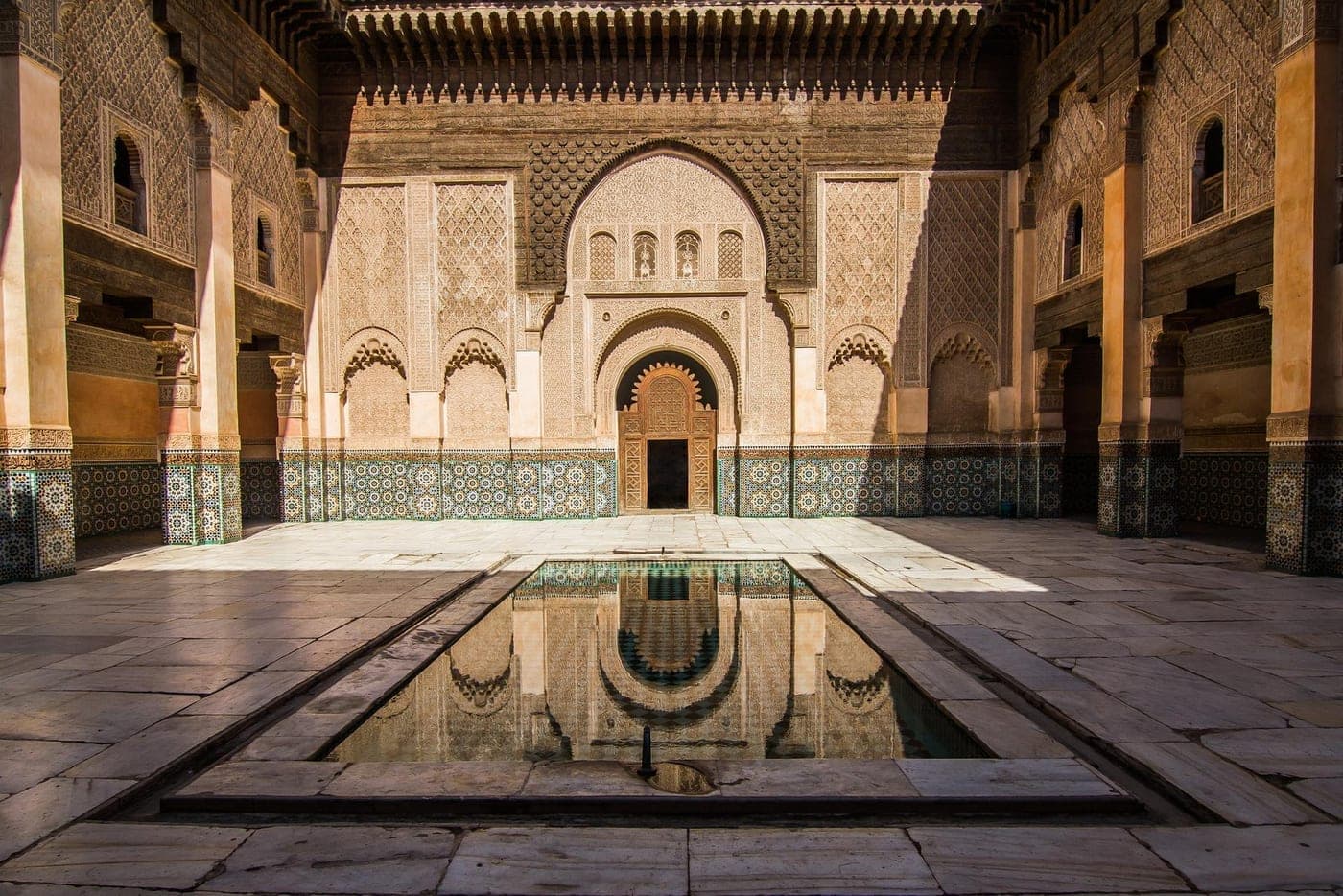
The Ben Youssef Madrasa, the theological school that stands near the old mosque of the same name in the northern medina, applies the same principle at civic scale. Built in the fourteenth century and expanded dramatically by the Saadian dynasty in the sixteenth, it was for centuries one of the largest Islamic schools in North Africa, housing students from across the Maghreb and sub-Saharan Africa. Its exterior is almost entirely featureless. Its interior is one of the most sustained exercises in decorative geometry in the Islamic world: carved cedar above, tiled zellige below, carved plaster connecting the two, every surface activated with a pattern whose repetition is not monotony but argument. The argument is that beauty is a form of teaching. The student who spent years inside those walls was being educated not only by texts but by the visual logic of the space he inhabited.
Djemaa el-Fna
At the medina's southern edge, where the city opens toward the Koutoubia and the beginning of the route to Gueliz, Djemaa el-Fna functions as the civic brain of the old city. The square has been a place of public gathering since the Almoravid founding, though its precise history is difficult to reconstruct: it has been a place of execution, a market, a fairground, and a cultural event in the sense that UNESCO recognised in 2001 when it designated the square's oral and intangible traditions as cultural heritage of humanity. The designation is unusual and somewhat awkward to administer, because what it protects is not a building or an object but a practice: the practice of the storytellers, the musicians, the Gnawa performers, the herbalists and the snake handlers who have gathered on this ground across centuries.
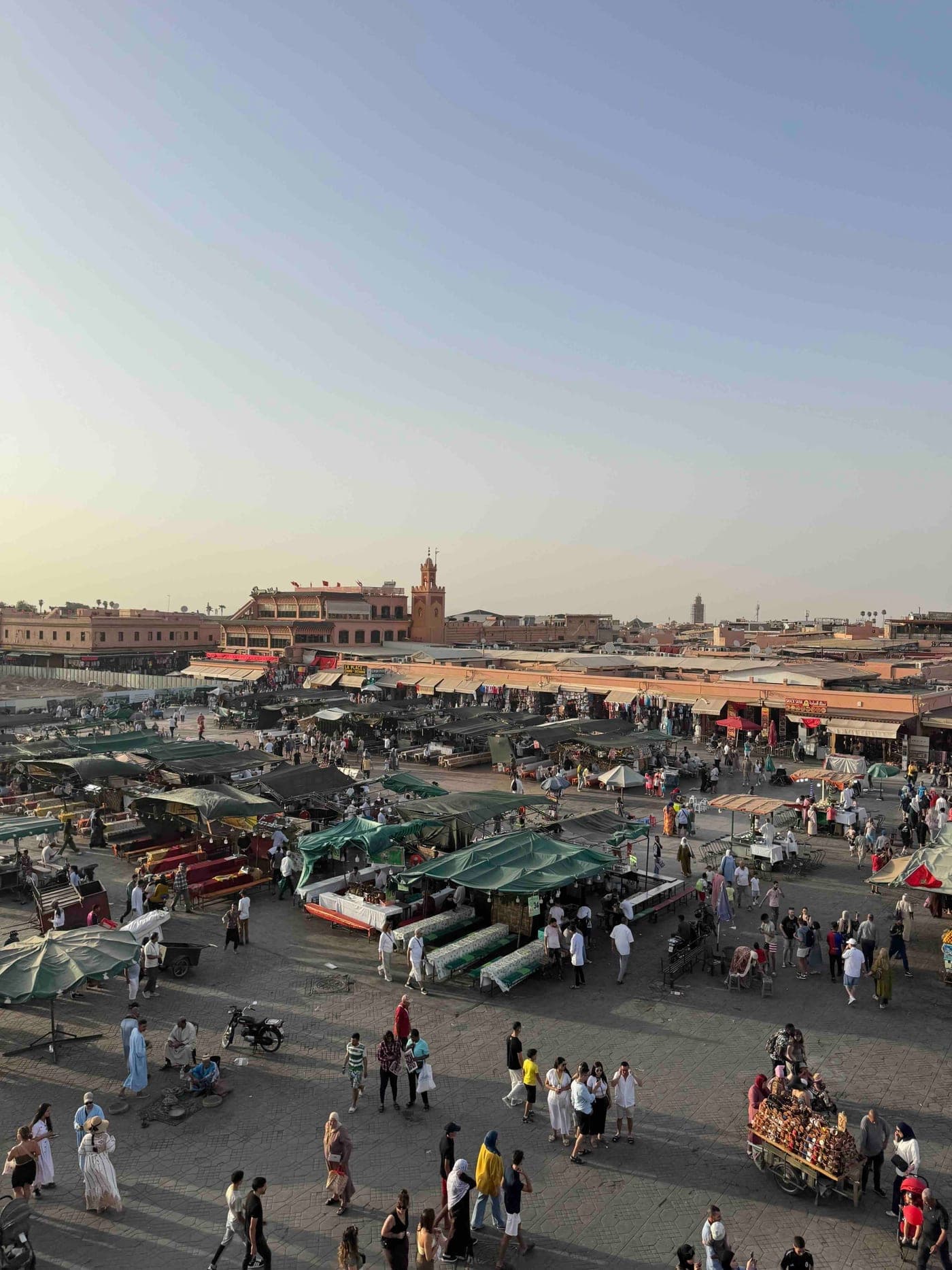
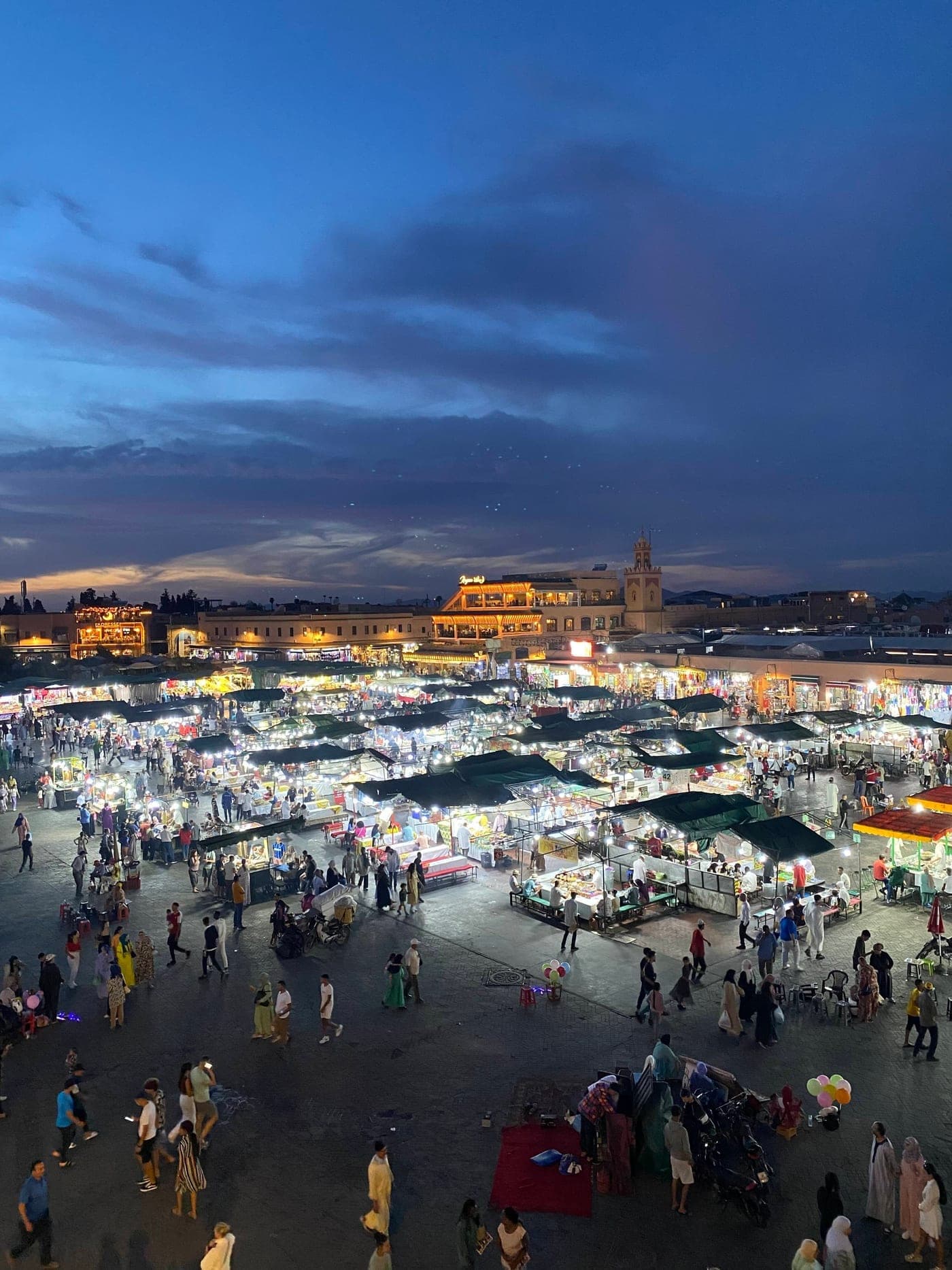
In the early morning the square is nearly empty, the light horizontal, the Koutoubia casting a long shadow west. By noon it is a transit space, people moving through it with somewhere to go. By evening it has become something else entirely: a dense, circular social event that expands into the surrounding restaurants and cafes and continues until well past midnight. What Djemaa el-Fna demonstrates, with more clarity than any monument, is that the medina was always understood to include unstructured collective life as part of its design. The square is not an interruption in the urban fabric. It is the fabric's most important void, the space left deliberately open so that the city can gather itself.
What Nine Centuries Produces
The medina of Marrakech is a UNESCO World Heritage Site, a status it received in 1985, and the designation sits slightly uneasily on a city that has never stopped being lived in. Unlike many heritage zones, which freeze in amber a moment that has passed, the medina continues to transform. Riads that were family homes for generations have become boutique hotels. Workshops that produced brass lanterns for local buyers now price for European interiors. The souks around Souk Smarine sell to tourists more than to residents. These changes are real and their effects on the city's character are worth attending to seriously.
What has not changed is the underlying structure. The derb pattern, the quartier logic, the riad typology, the relationship between public artery and private enclosure: these remain because they work. They work not because nine centuries of residents were conservative, but because the solutions they represent are genuinely good solutions to the problems of urban life at human scale. Walking through the medina of Marrakech is an experience that is disorienting at first and gradually becomes legible. The legibility, when it comes, is not familiarity but recognition: the recognition of a city that was built with intelligence, by people who understood what a city was for.
You may also like…