Hivernage, Marrakech: The City's Most Legible Neighbourhood
The garden district that held its purpose for a century, and still knows exactly what it is.
16 April 2026
In a city that habitually conceals its intentions behind walls, Hivernage is the rare exception: a place you can read from the street, whose purpose has held for over a century.
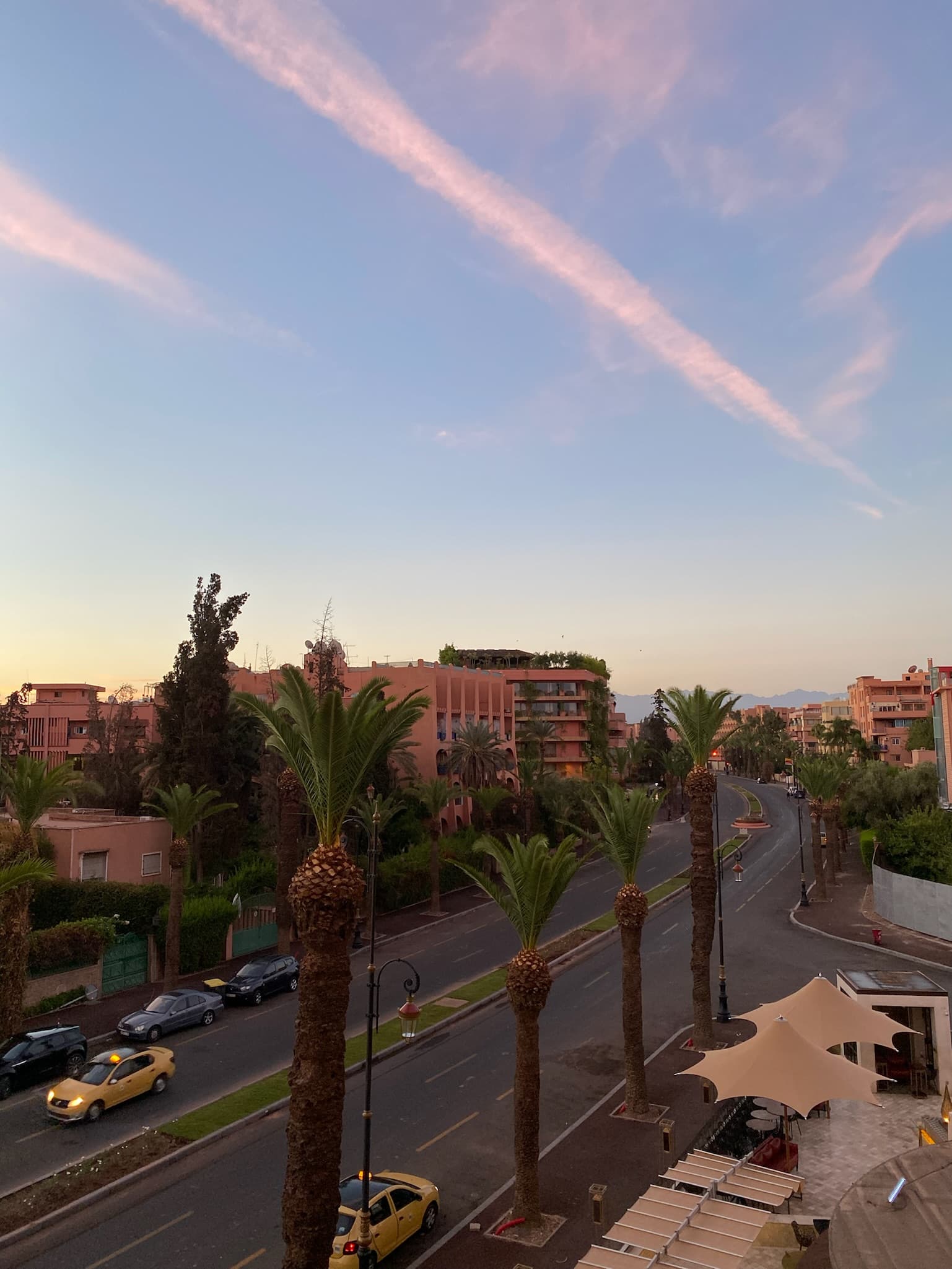
Stand on Avenue Echouhada on any morning and the quality of the place announces itself before you have walked fifty metres. The palms line the boulevard in formal rows, their crowns at a height that provides shade at ten in the morning. The gates of the villas are set back behind hedges that have been growing long enough to be opinionated about their own form. The pavement is wide. Between the pedestrians and the traffic there is a margin of green, planted and maintained with a regularity that says, clearly: this was planned, someone decided it should look this way, and the decision has been honoured.
This is unusual in Marrakech. The medina reads as accretion, centuries of decisions layered on each other until the original logic is visible only to specialists. Gueliz is commercial pressure given physical form, its boulevards shaped by the momentum of trade and investment rather than any single intention. The Palmeraie has no legible plan at all, just the density of the palm groves and the properties hidden within them. Hivernage is different. Hivernage you can read.
What Was Decided Here
When French colonial planners drew up the Hivernage district in the early years of the twentieth century, the brief was unusually precise: a residential garden neighbourhood for European winter visitors, with spacious lots, planted avenues, and the quality of air that the medina's density precluded. The name they gave it was not merely descriptive. Hivernage, the act of wintering, was a statement of purpose. This district existed for people who wanted to be comfortable in a specific way: outside the intensity of the city, inside its privileges.
The planning was done at a scale that assumed permanence. The lot sizes were generous. The street proportions allowed for trees to reach maturity without crowding the carriageway. The setbacks were deep enough that the private gardens would carry weight in the streetscape, which is why, a century later, walking through Hivernage still feels like walking through a district that was designed by someone who understood that vegetation takes decades to arrive at its full effect.
The earliest permanent institution to reflect the neighbourhood's specific ambitions was not a hotel but a casino. In the early 1950s, the Es Saadi opened on the edge of the district, building Morocco's first casino alongside a hotel set within eight hectares of private gardens: palms, banana trees, olive trees, bougainvillea, and the deep red roses that the city makes its own. The casino had to be placed outside the medina walls by regulation, and Hivernage was the only place that made sense. The hotel quickly attracted an international clientele for whom Marrakech meant specifically Hivernage, and Hivernage meant specifically the promise of pleasure within walls that the city outside could not quite guarantee.
The Garden as Continuity
What connects the original French colonial plan to the contemporary Hivernage is not its architecture, which has changed considerably, nor its ownership, which has changed entirely. It is the gardens. The neighbourhood's essential character has always been horticultural, and the decision to invest in green space at scale, made in the first decade of the last century, has compounded over time in a way that real estate and construction cannot replicate on a short timeline.
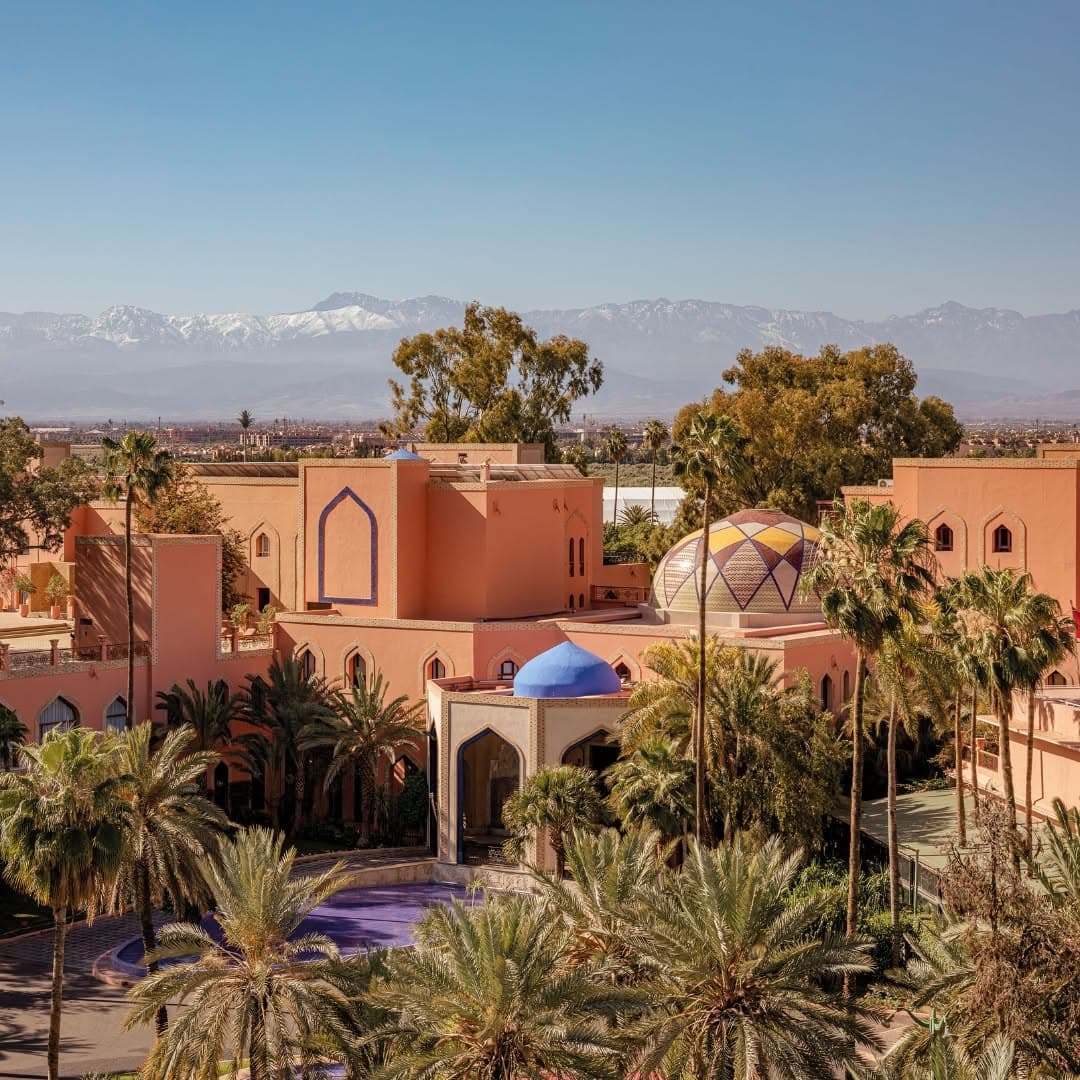
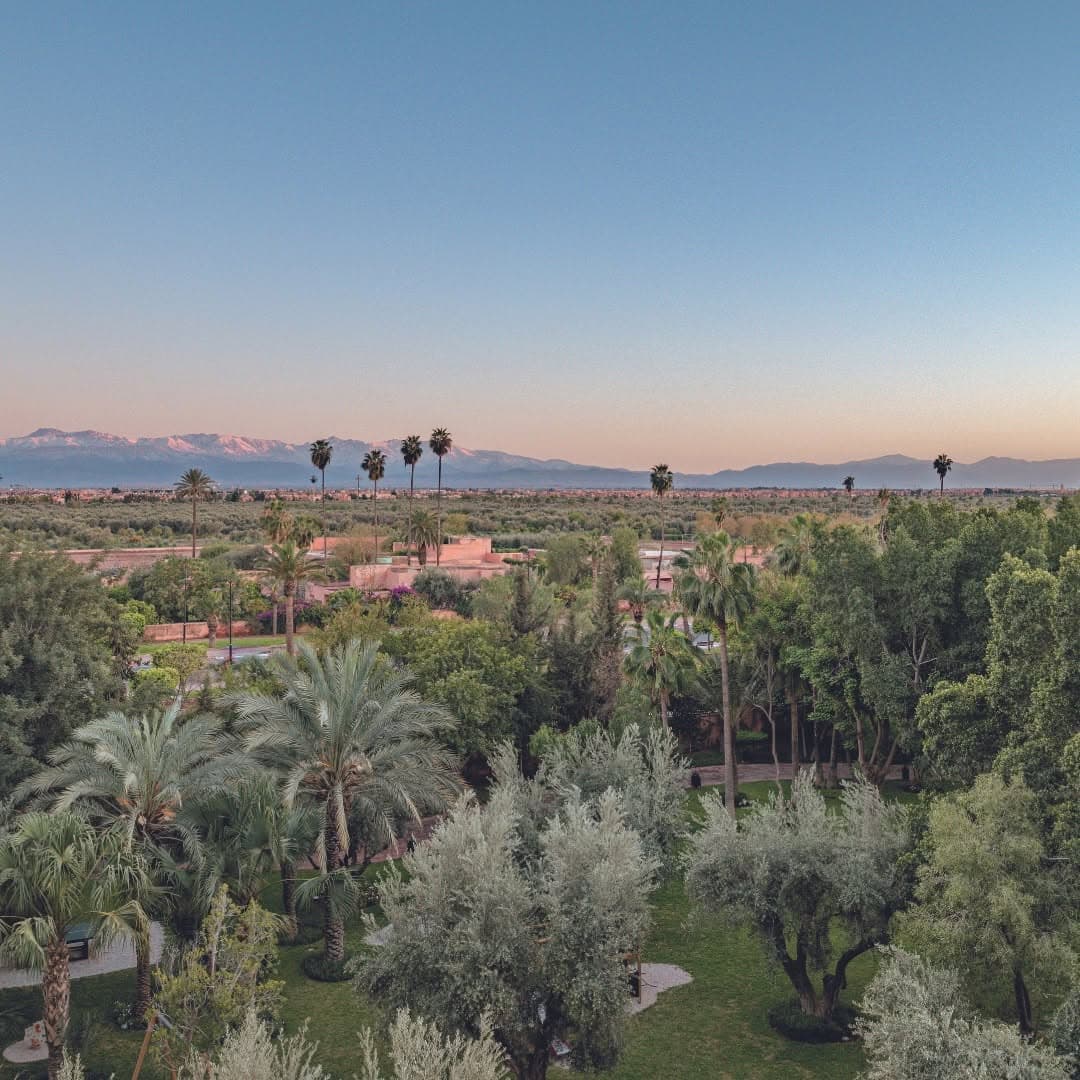
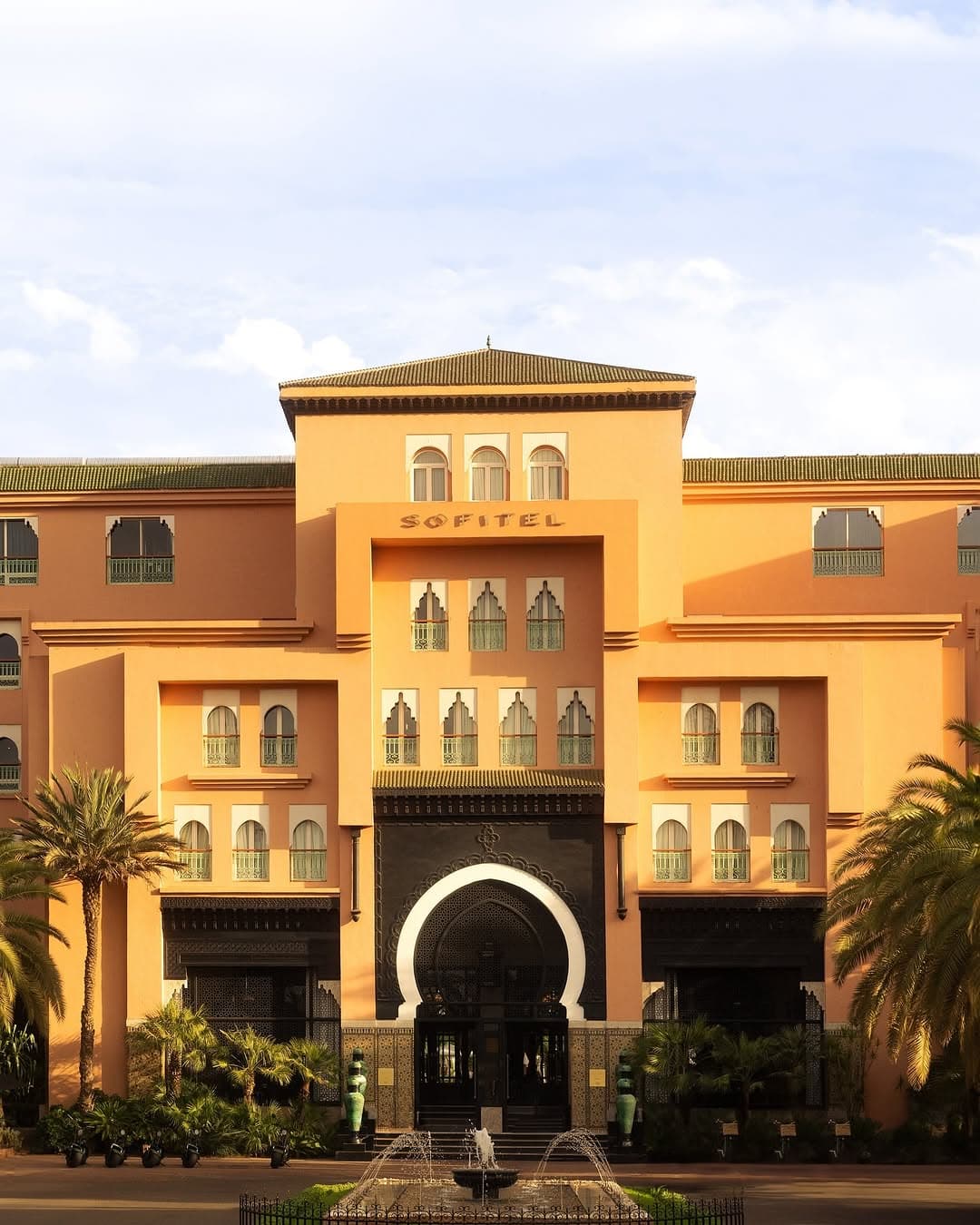
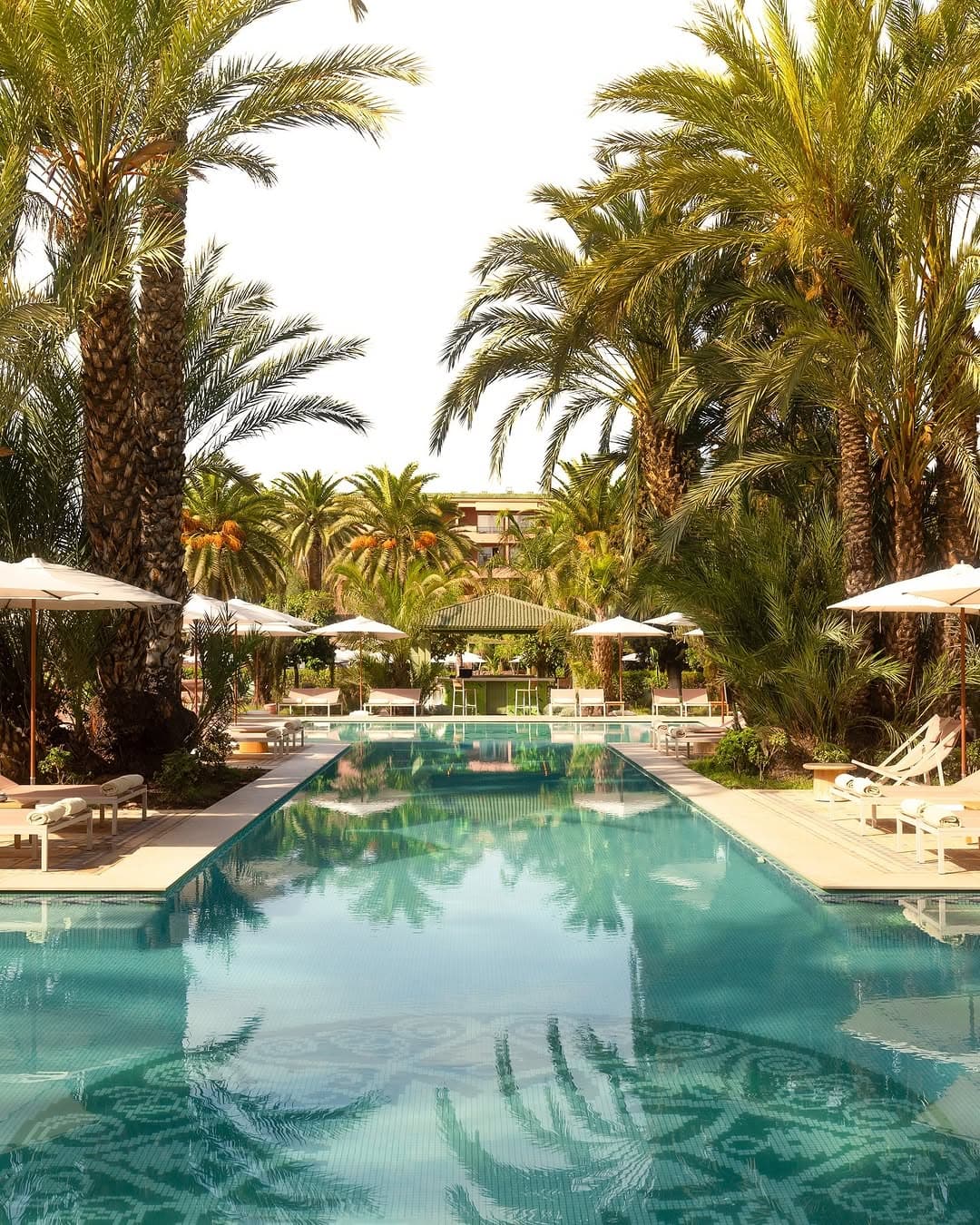
Es Saadi's eight hectares are the most concentrated expression of this logic. The gardens planted in the early 1950s are now mature in a way that makes them structurally different from anything created afterward: the shade is denser, the root systems deeper, the microclimate within the property measurably cooler than the streets beyond the gates. La Mamounia, whose gardens were originally laid out as orchards under the Alaouite sultans before the hotel was built in 1923, holds a similar botanical depth. The Sofitel Palais Imperial, more recent in its ambitions, follows the same template: significant investment in the grounds, the understanding that in Hivernage the garden is not amenity but argument.
Walking the neighbourhood in the late afternoon, you are in the company of this argument at every corner. Gates left ajar show courtyards of jasmine and bougainvillea. The walls of private villas carry the imprint of climbing plants that have been growing since before the current owners were born. The street trees, now fully grown, create a canopy that changes the quality of the light below it. This is not a managed park, not a designed experience, not something that was installed for effect. It is what happens when a planting decision is made at scale and left alone long enough to become permanent.
The Evening the Neighbourhood Was Also Built For
The casino that was placed at the heart of Hivernage in the early 1950s was not incidental to the neighbourhood's character. It was a statement about what kind of leisure the district intended to host: organised, theatrical, requiring some degree of formality, and running at its best after dark. That logic has propagated forward through the decades with a consistency that suggests it is structural rather than accidental.
What distinguishes Hivernage from every other neighbourhood in Marrakech is that the entire evening can unfold within its borders, from aperitivo to closing time, without once needing to leave, and without the evening ever running out of options.
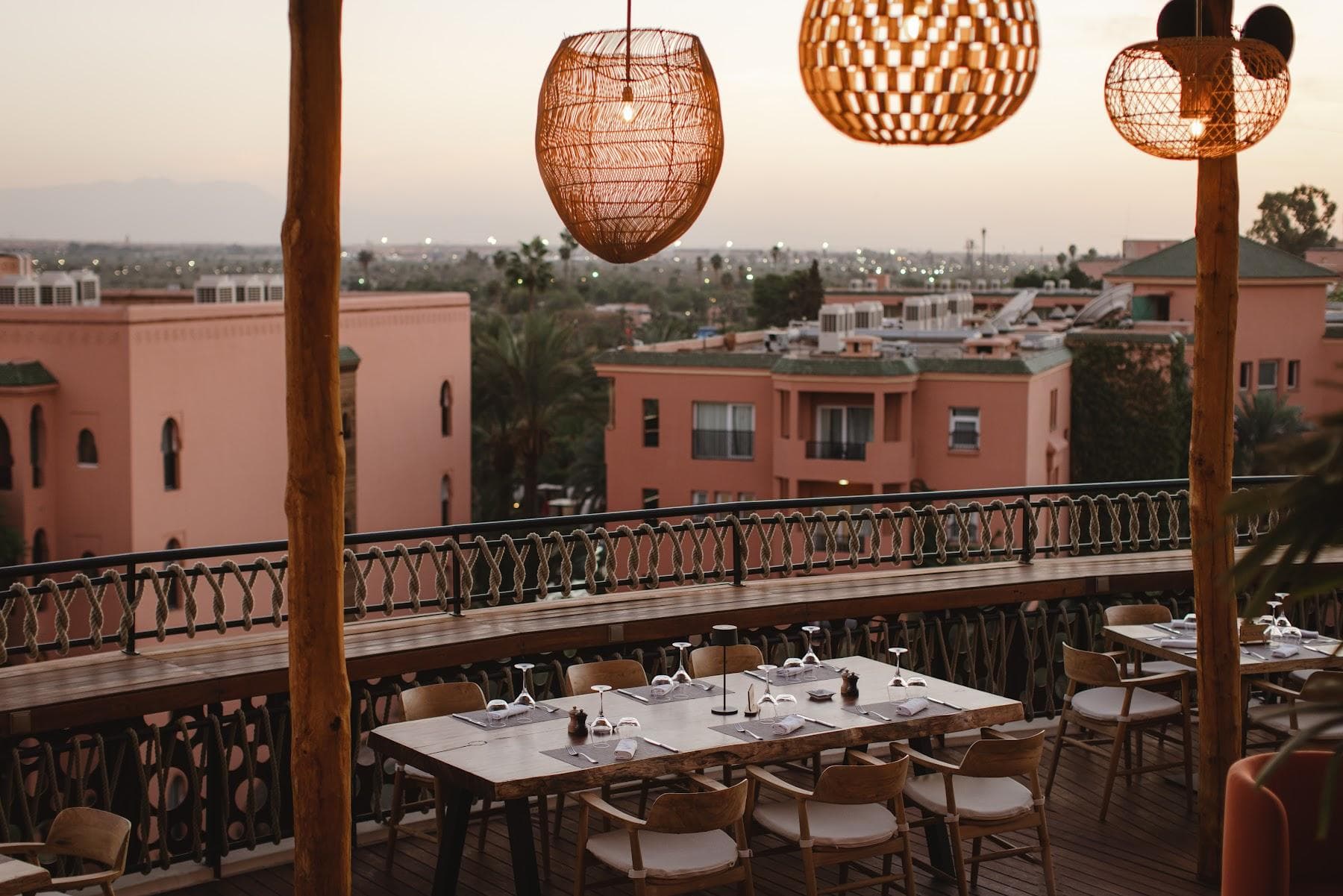
At dinner, the choice runs from the straightforwardly excellent to the deliberately theatrical. Le Palace doesn't need the show: the evening stays at the table, and that is enough. At the other end, the options split by format. Nobu brings its international brand to Hivernage in two registers: the Rooftop Garden for the kind of afternoon that extends naturally into the evening, and Nobu Restaurant for the full Japanese-Peruvian signature. Comptoir Darna, Jad Mahal, Lotus Club, and L'Epicurien work on a different premise.
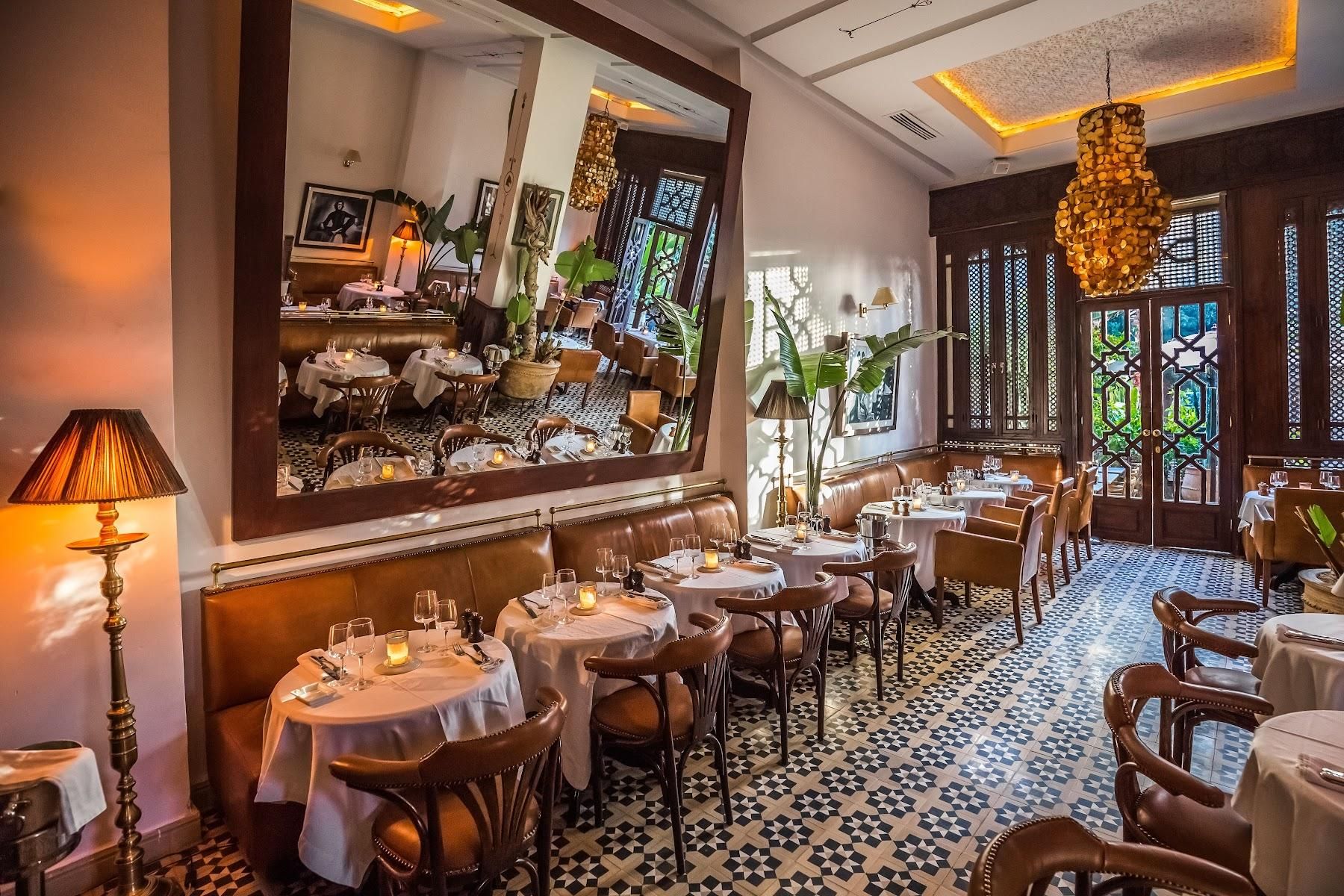
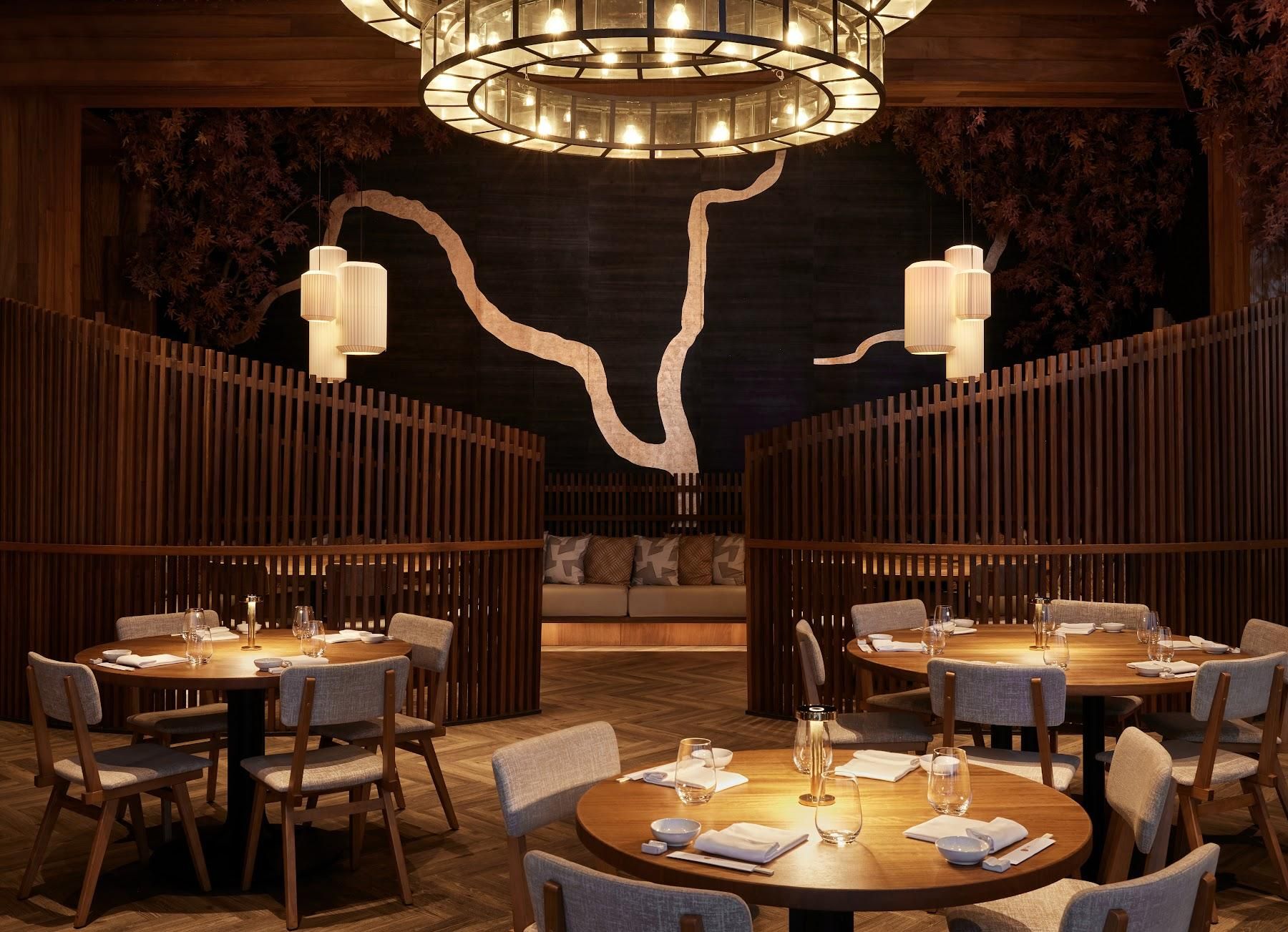
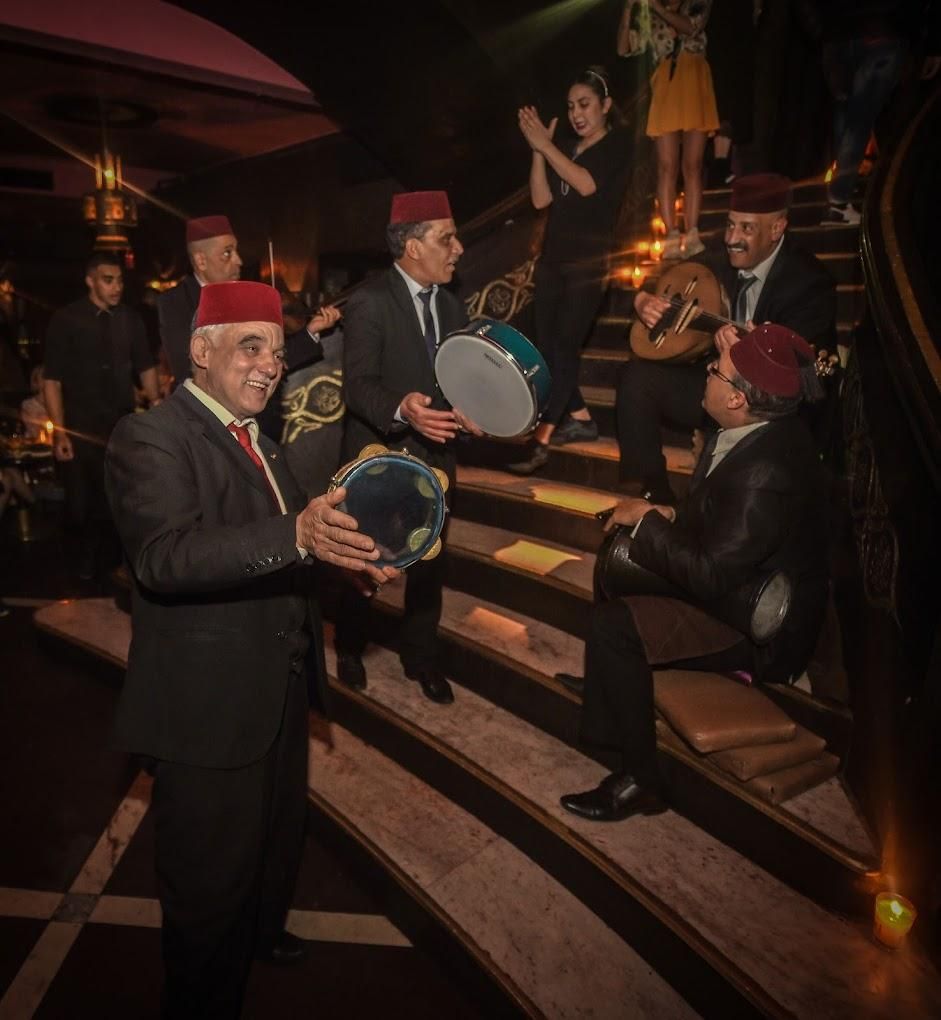
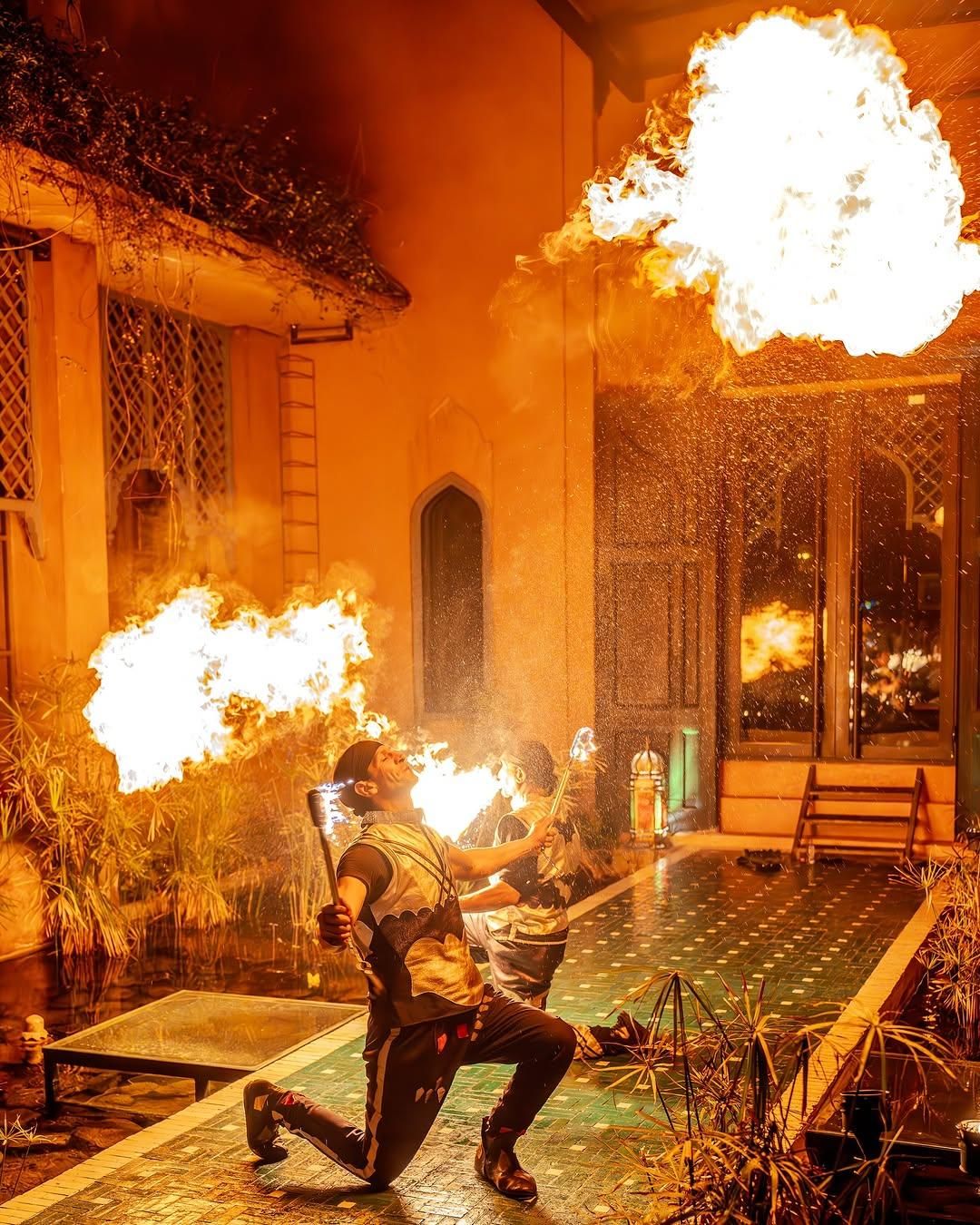

The show begins before the first course, continues past dessert, and the same room that served dinner is still running, under different lighting and a different tempo, well past midnight. The casino and the lounge bars offer other stations along the same evening, places designed for exactly the kind of unhurried time that Hivernage has always been built to support.
Later still, and in Hivernage later is always possible, the neighbourhood shifts register entirely. Theatro inside Es Saadi carries the original casino floor's theatrical logic into a contemporary club. BCSTG, Babouchka, and Secret Room complete the offer: three different versions of what late night in Marrakech can mean, all within the same postcode as the dinner table.

This is not nightlife in the conventional sense of venues that stay open late. It is a hospitality tradition with a specific Marrakech character: the evening as a constructed experience, requiring time, requiring multiple elements, and requiring a neighbourhood that was designed to contain all of them at once. Hivernage has been that neighbourhood for over a century.
A Place That Holds Its Purpose
Cities change. The thing that is remarkable about Hivernage is not that it has resisted change but that the changes it has absorbed have reinforced rather than eroded its original intention. The villas became hotels. The hotels became larger. The casino acquired a theatre and the theatre became a club. The winter visitors became year-round visitors. The European clientele became international. But the underlying proposition, that this district exists for a particular quality of ease, organised pleasure, and green space held at generous scale, has not shifted in any fundamental way.
In a city as layered and resistant to simple reading as Marrakech, this is a small architectural miracle. Hivernage sits between Gueliz's commercial density to the north and the Medina's ancient grain to the east, its southern edge running close enough to La Mamounia and the Royal Mansour to borrow something of their ambition. The result is a neighbourhood unlike any other in the city: quieter than Gueliz, more legible than the Medina, more lived-in than the Palmeraie, and more central than it appears on a map. The medina contains centuries within a single afternoon. Gueliz contradicts itself from block to block. Hivernage, from the rows of palms on Avenue Echouhada to the gate of a villa garden at dusk, still says the same thing it said in the early twentieth century: come in, slow down, this place was made for you.
You may also like…