Marrakech in Summer: What 40 Degrees Actually Teaches You
July and August are the most demanding months and the most revealing. The city slows down, the light intensifies, and the travelers who stay discover a version of Marrakech that the moderate seasons never produce.
Timence Guide · 11 April 2026
Forty degrees Celsius in Marrakech is not what forty degrees feels like elsewhere. The city has a dry desert climate, which means there is no humidity to trap the heat against your skin, no heavy air to push through. The sun is direct and absolute, but the shade is genuinely cooler and more bearable. A thick-walled riad courtyard at midday in July is a different thermal environment from the street outside it: the temperature differential can be ten degrees or more. This is one of the first things that summer in Marrakech teaches: that the city was built to manage this season, and that it still does.
The second thing it teaches is that the rhythm matters more than the temperature. July and August reward those who organize their days around the sun rather than against it. Midday, from roughly 1 to 6pm, is not a time for the medina or for sustained outdoor movement. It is a time for pools, for tiled interiors, for hammam heat that paradoxically cools the body by making the outside feel mild by comparison, for the extended lunch that lingers into afternoon shade. The city's architecture, its courtyard logic and its thick walls, was designed for exactly this containment.
The Daily Architecture of Summer
The summer day in Marrakech has three distinct acts, and the quality of each depends on accepting the terms of the one before it.
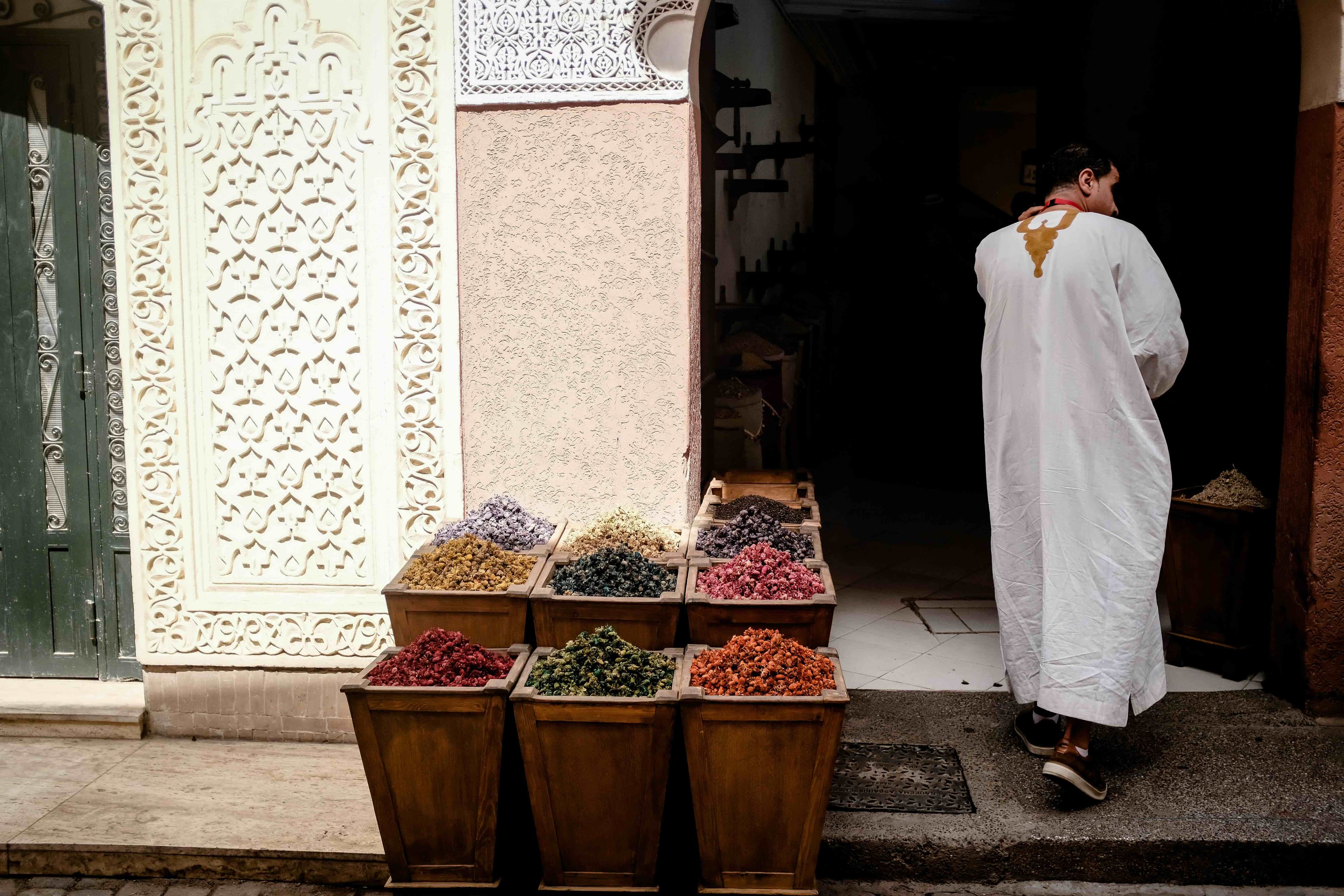
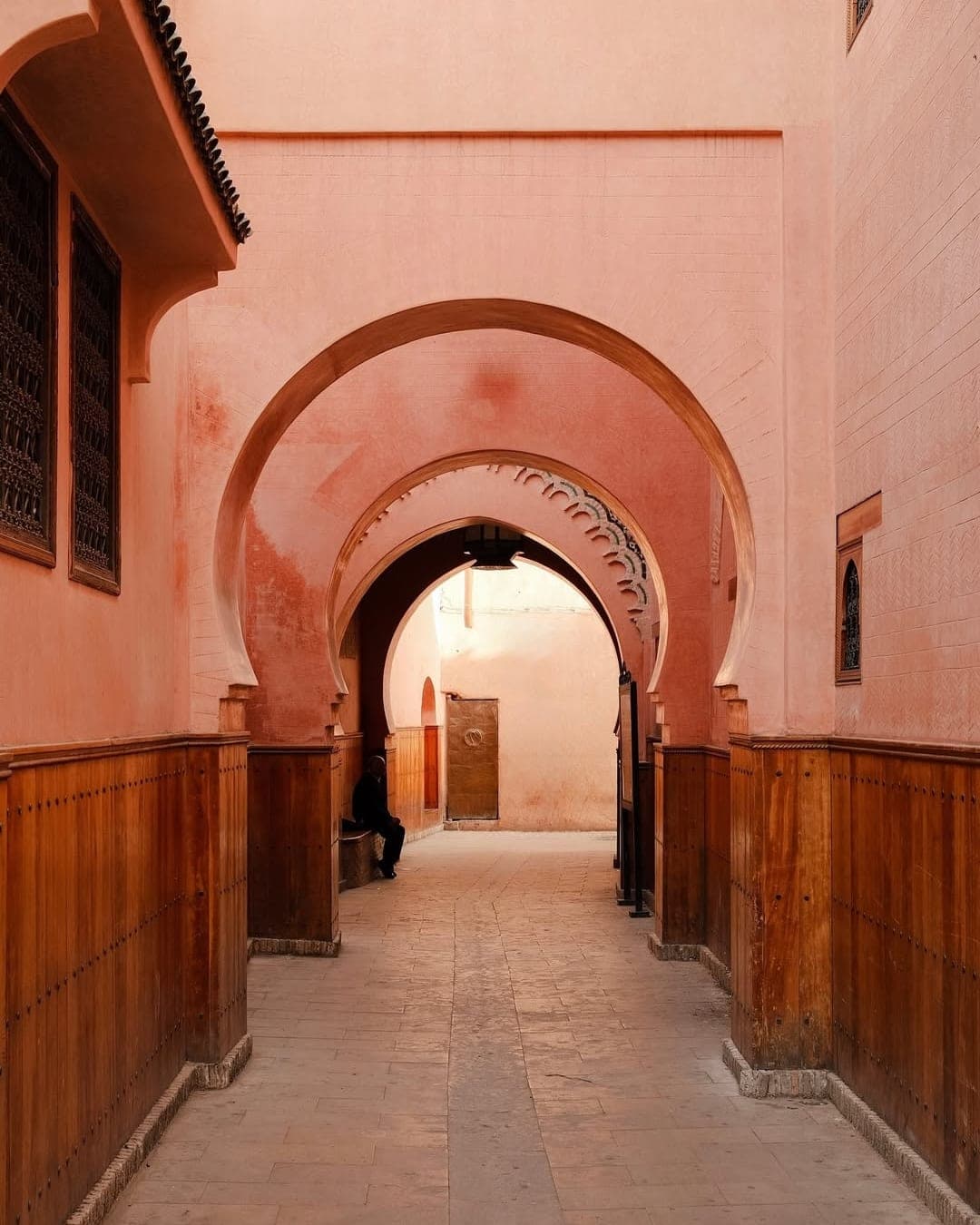
Mornings are the city's best hours in July and August: from first light until around 11, the medina is navigable, the air is clear, the souks move at a pace that feels like the city is sharing itself rather than enduring you. Gardens like Jardin Majorelle open early, and an hour there before the heat establishes itself produces a quality of experience that no afternoon visit, in any season, can match. This is the window for the Bahia Palace, for the Medersa Ben Youssef, for the long slow walk through the Mouassine quarter that would be an ordeal by noon.
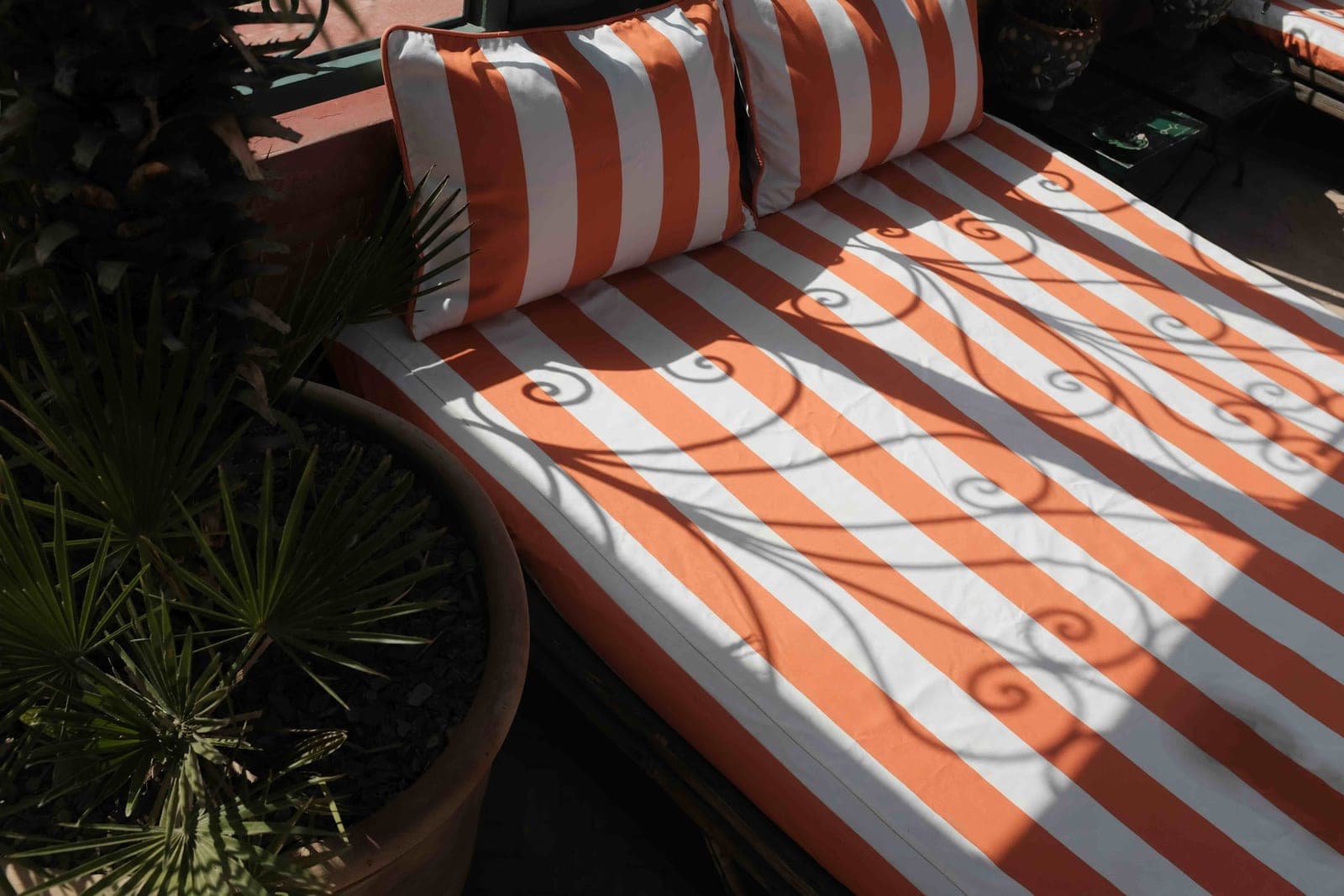
Afternoons are architecture time: the interior of a riad, the depth of a tiled room, the particular suspension of a hammam session followed by mint tea on a low divan. The city's day-pass pools open their gardens and their long chairs. The hotels that manage this city most thoughtfully, whether boutique riads in the medina or the larger properties in the Palmeraie and Hivernage, understand that the summer afternoon is about quality of shade, the angle of a breeze, the availability of cold water. This is not the season's concession to the heat. It is the season's main event.
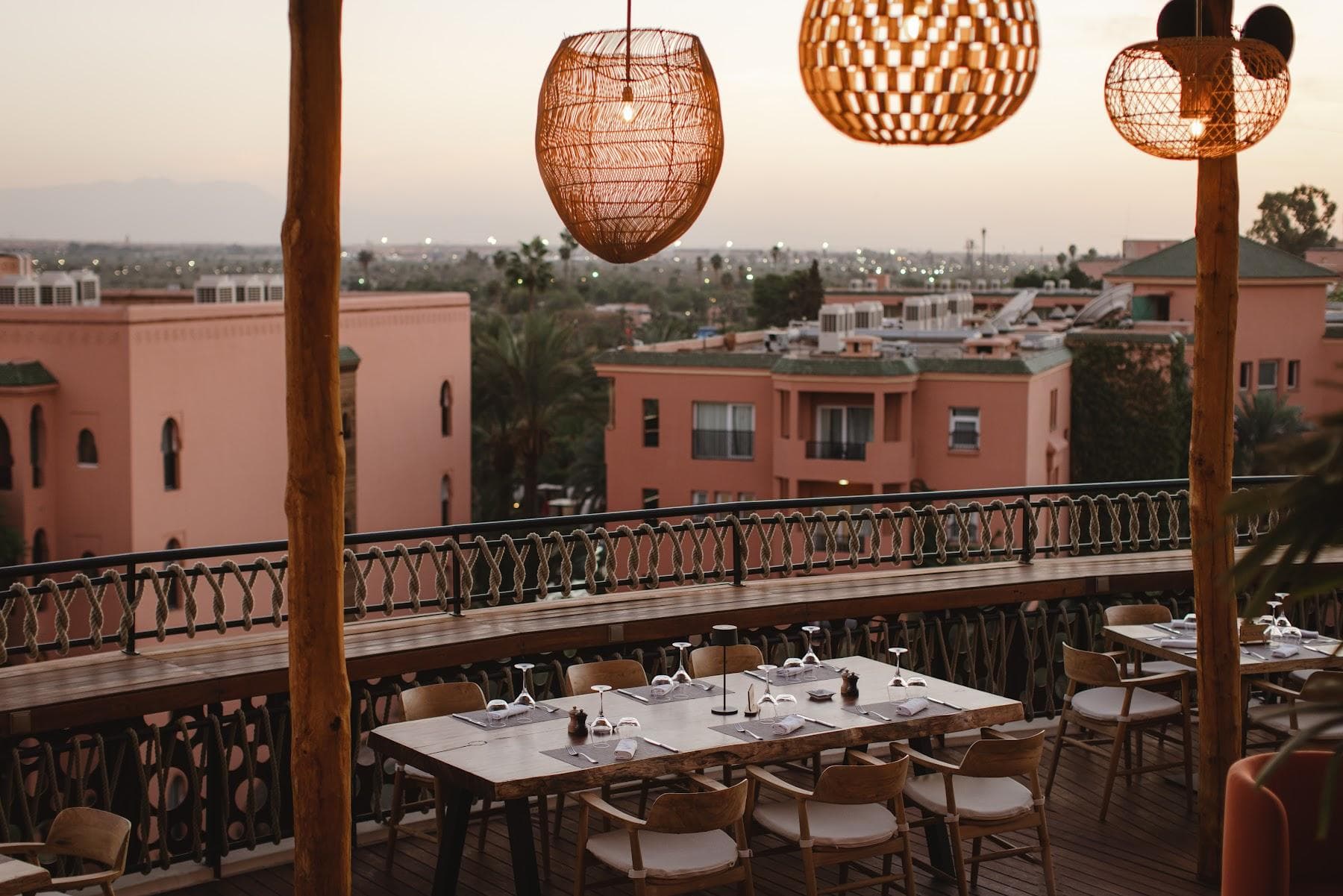
Evenings are Marrakech's gift to those who stayed through the afternoon. After six, the heat softens. The rooftops fill. Jemaa el-Fna, which at noon had been reduced to a few stubborn vendors and the smell of the grills, comes back in full color: smoke, orange juice, acrobats, the steady percussion of entertainers who have been doing this long enough to know exactly when the square wakes up. Restaurants in the northern medina and along the Rue Mouassine and in Gueliz run their full service from eight until late. The evening hours in summer have a particular quality of earned pleasure: they feel better because of what preceded them.
One exception is worth keeping in mind: in August, occasionally over a window of several days, temperatures can peak above 42 degrees. On those days the three-act logic breaks down. Overnight lows can remain above 25, and the evening stays warm. The only viable strategy involves staying inside or leaving the city altogether.
A Quieter City
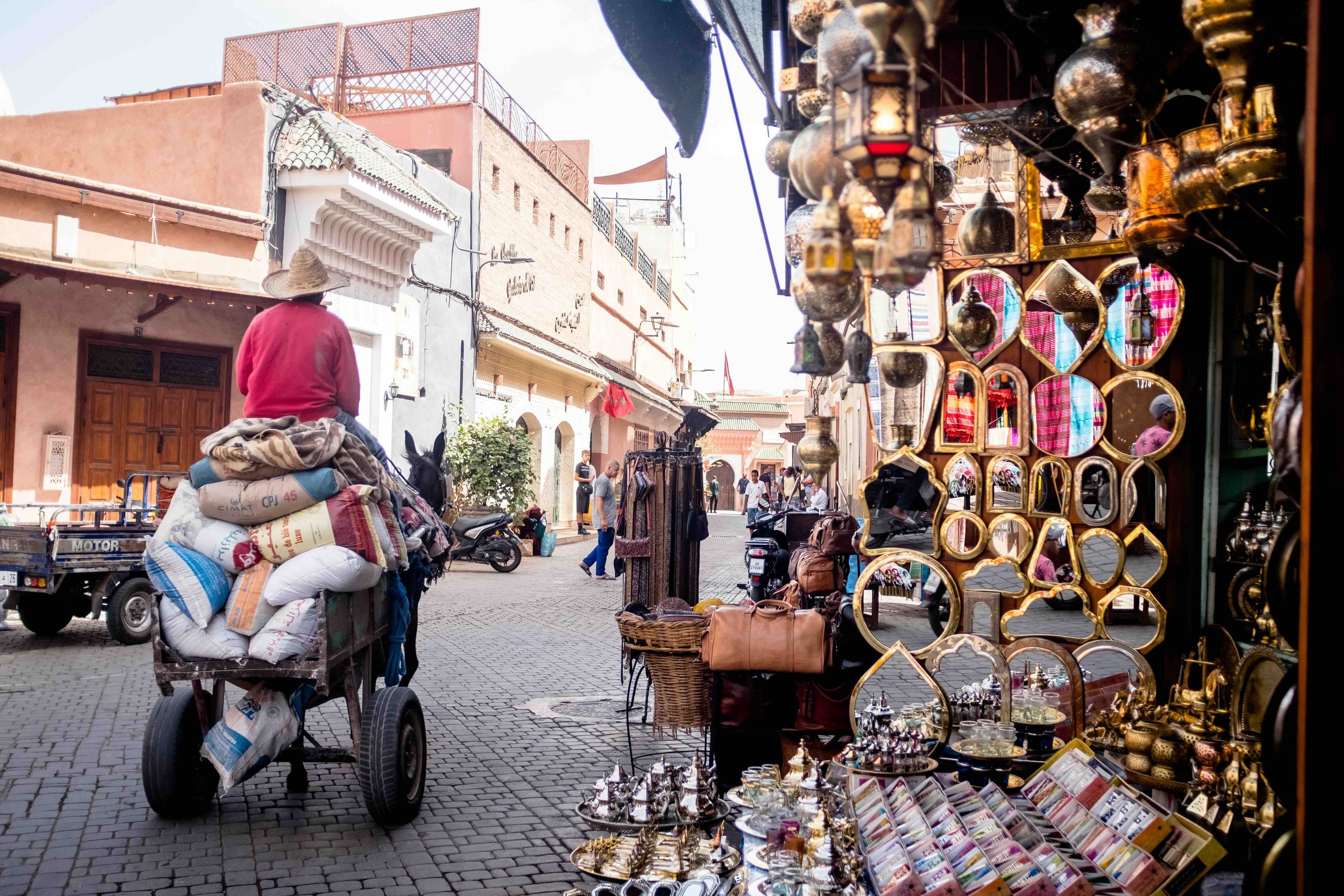
Summer does one more thing to Marrakech: it quiets it. Tourist numbers are lower in July and August than in any shoulder season, and the city that emerges from the reduction in visitor density is more itself. Certain riads and small restaurants that run at capacity from October through May become available. It is worth checking ahead though: in August some venues, including restaurants, reduce their hours or close temporarily. The souks, still operating, do so without the friction of high season. The medina's lanes, usually a negotiation between pedestrians, motorbikes, and the occasional mule, feel less contested in the early mornings.
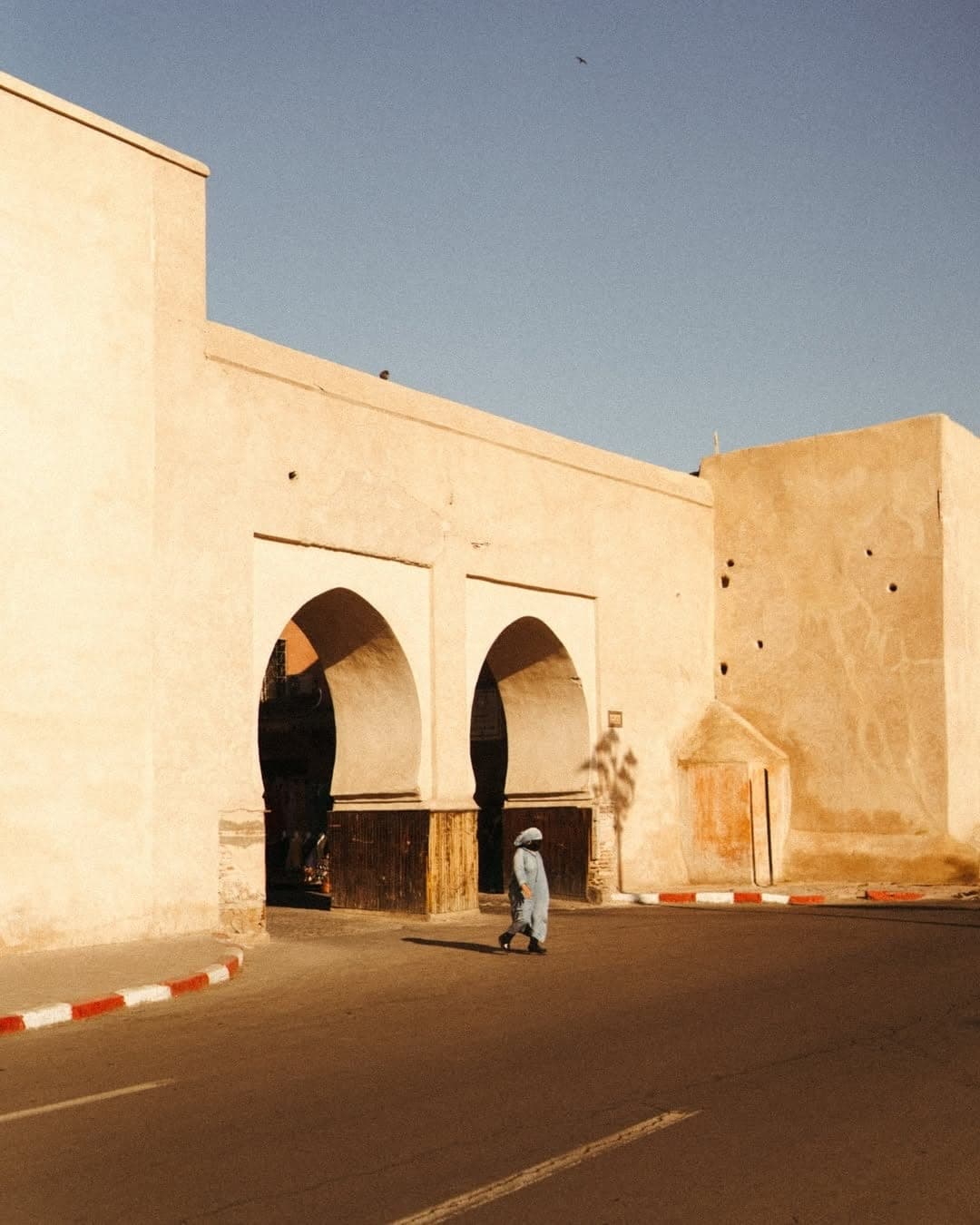
It should be noted that many locals also leave Marrakech in the months of July and August. The city is therefore quieter, but also less animated by its ordinary daily life.
When the Heat Becomes the Point
There is a particular experience that only summer in Marrakech produces: the hammam as a cooling mechanism rather than a luxury. In winter and spring, the hammam is warmth. In summer, it resets the body's relationship to temperature in a way that becomes physical and almost medicinal: an hour of heat, then the cool-down, and the outside world afterward feels manageable in a way it did not before. This is not a metaphor. It is a physiological fact that the city has been applying for centuries.
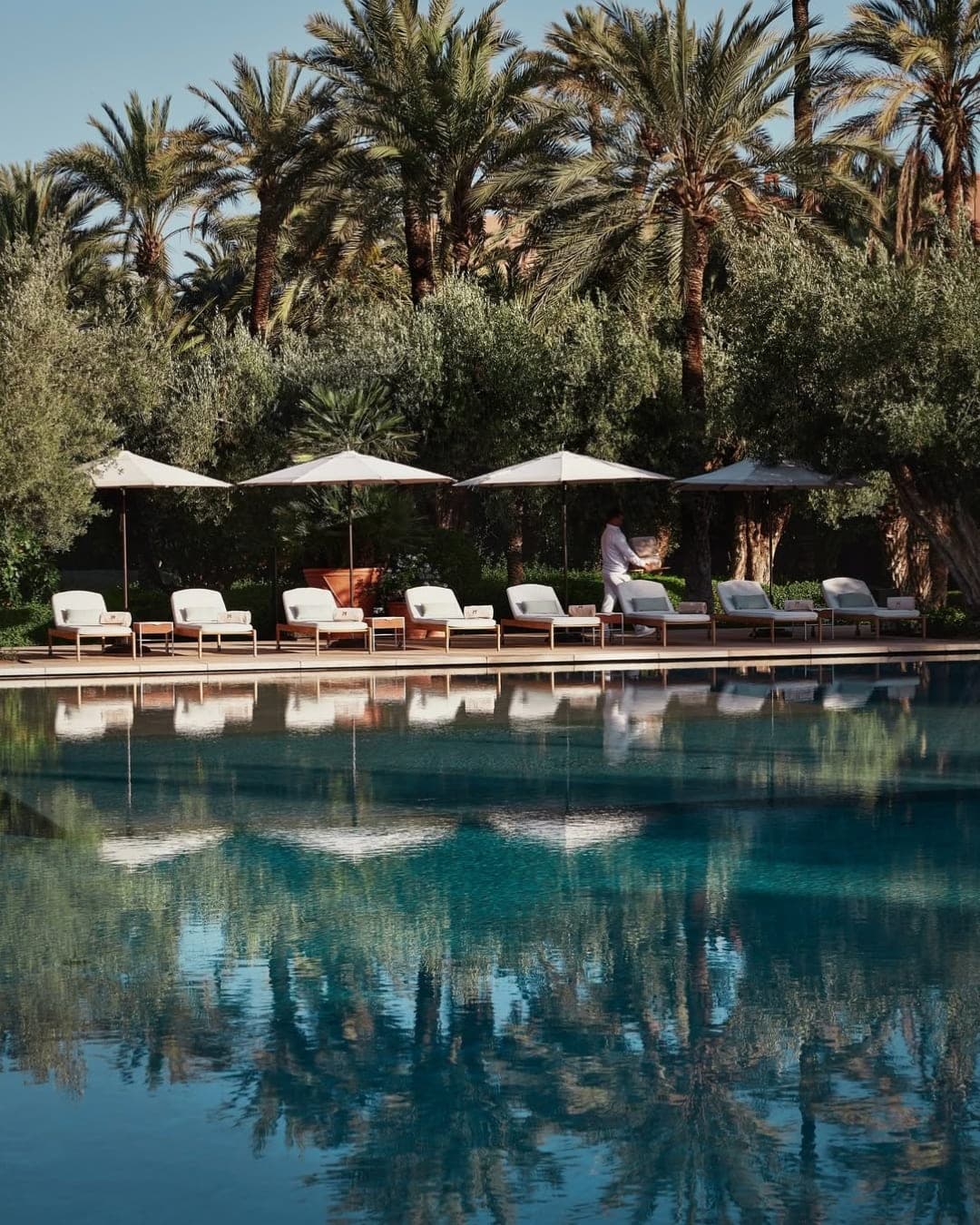
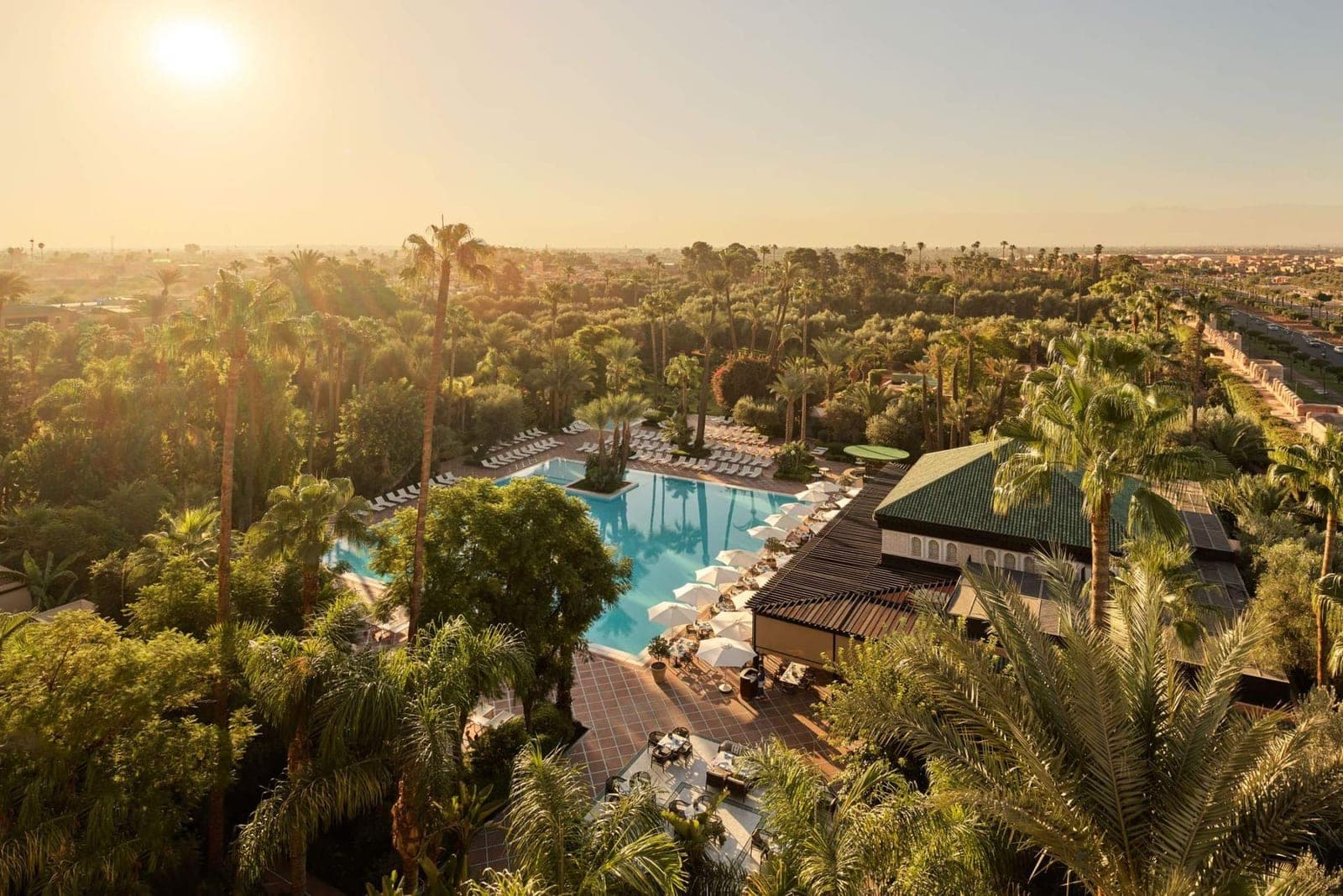
The pools are equally functional at this time of year, and the range of options available in Marrakech is wide enough that the choice becomes an aesthetic rather than a practical question. Ultra-luxury options at the major hotel properties. Garden pools in the Palmeraie that trade on green cover and natural shade. Rooftop options in the medina that offer the city as backdrop. The day-pass culture that Marrakech has developed around its hotel pools is one of the better design solutions to a hot summer that any city has produced.
The Coastal Escape
July and August make Essaouira, Agadir, and Taghazout on the Atlantic coast feel less like day trips and more like alternate universes. Three hours from Marrakech by road, these coastal towns sit in ocean-cooled air around 24 to 25 degrees: not cold, but a complete atmospheric contrast to the 40 of the Marrakech plain. Essaouira is the most immediately compelling: the wind-scoured medina, the blue and white of the fishing port, the particular quality of Atlantic light on the walls of the ramparts at afternoon. Taghazout draws the surf community and those who want the ocean horizon without the formality of a resort.
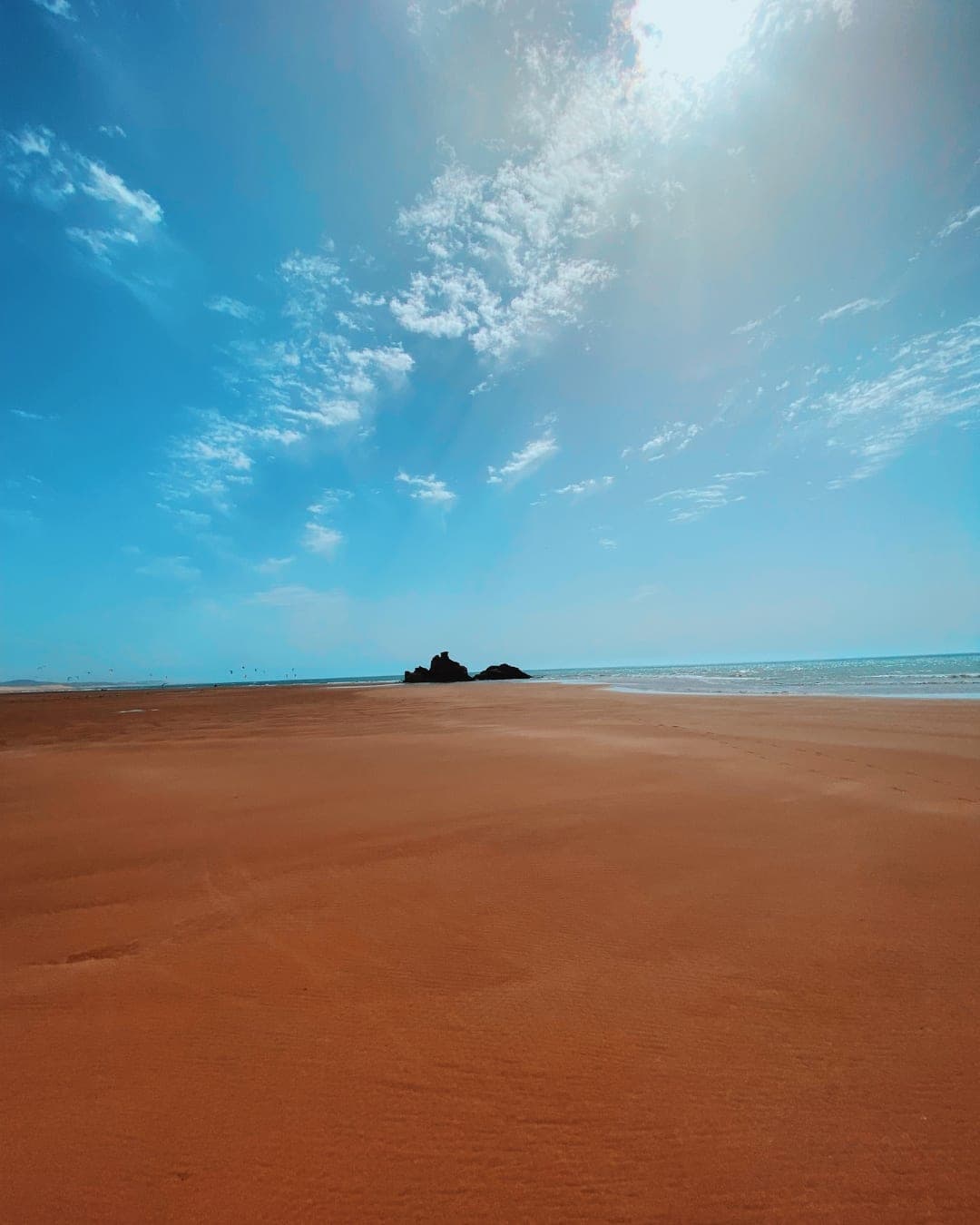
The drive itself is part of the argument: south through the Jbilet hills, then west across the plain, the landscape changing from red to green to coastal grey as you approach the sea. In the other direction entirely, the Agafay Desert at dusk in summer is cooler than the city and offers a version of the landscape that the high heat of the plain does not allow. Sunset from one of the camp properties, the Atlas behind you slowly losing its color, earns its reputation.
Summer in Marrakech is not for every traveler. It makes demands that the shoulder seasons do not, and some of those demands are non-negotiable. But the version of the city it reveals, slower, quieter, organized around ancient instincts about heat and shade and the timing of pleasure, is a version that nothing else shows quite as clearly.
You may also like…