Jnane Tamsna Marrakech
A nine-acre garden compound in the Palmeraie, built on an ethnobotanist's vision of how plants and people can inhabit space together.
5 April 2026
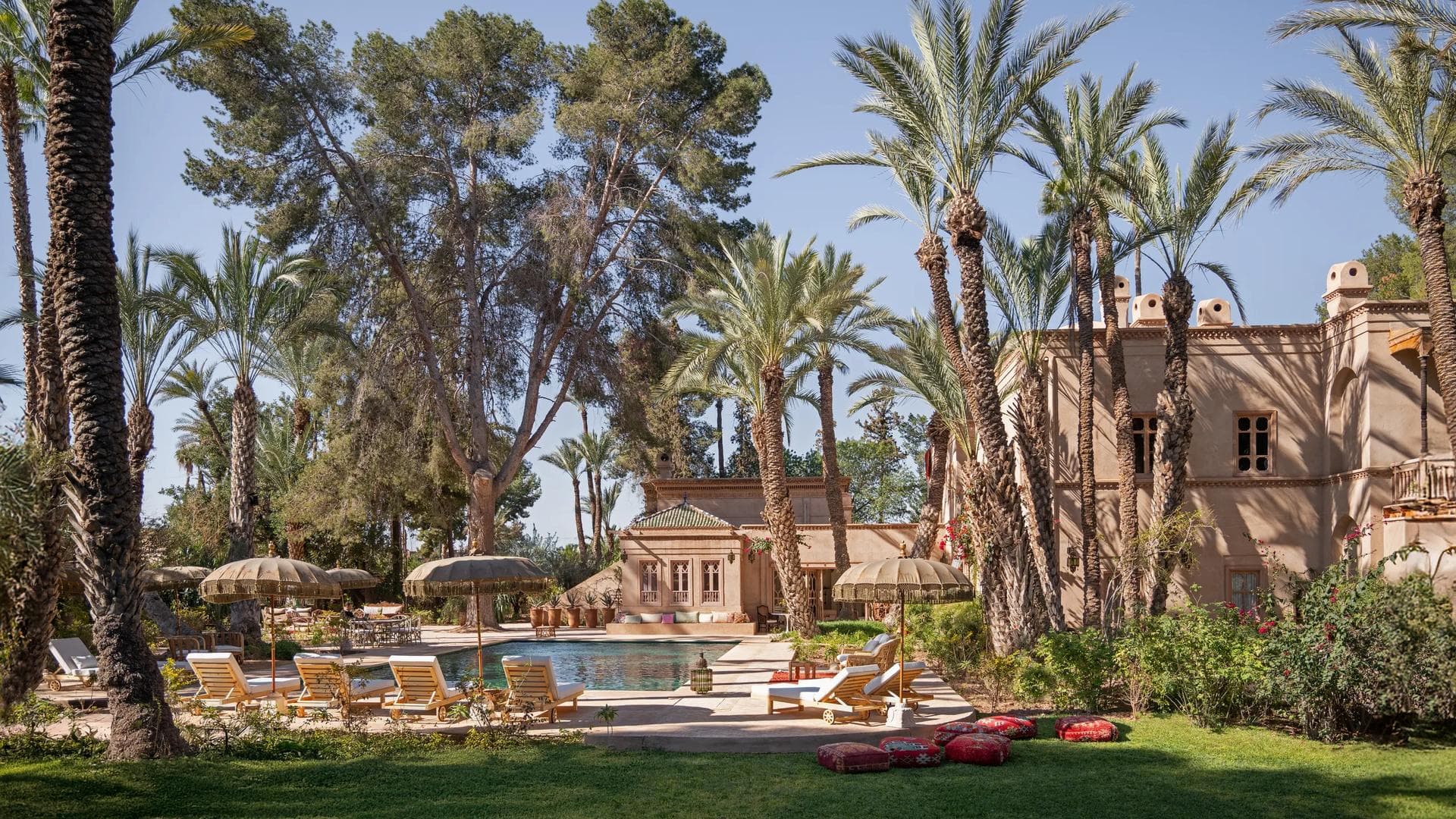
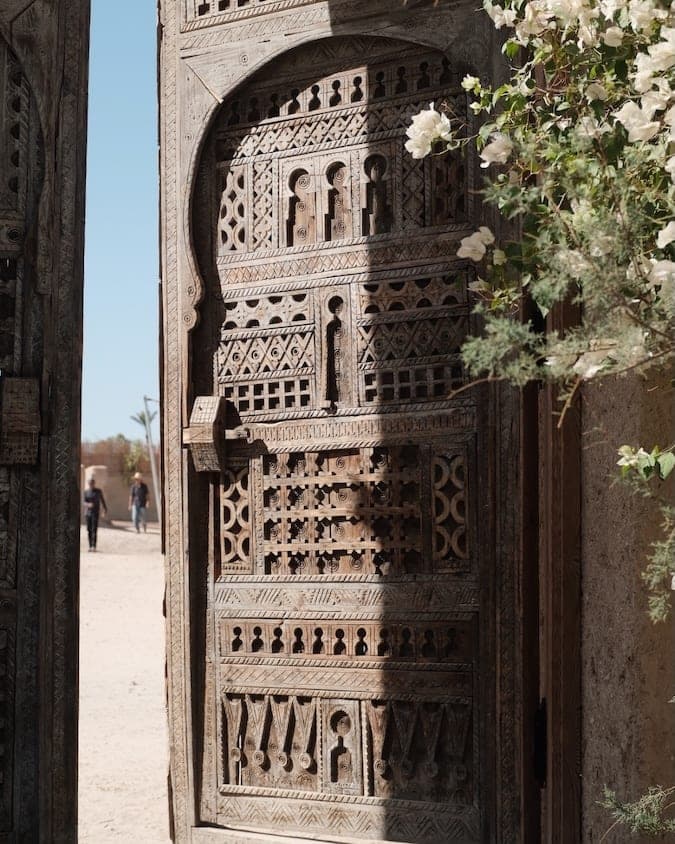
Beyond the gate, the nine acres of garden at Jnane Tamsna open as an interval in the city, a threshold where the urban density of Marrakech gives way to something more generous with light and air. The property sits in the Palmeraie, that strip of palms and water lying east of the Medina, where family compounds and hotel grounds nestle among the trees. But what distinguishes Jnane Tamsna from the landscape around it is not grandeur but intention: this is a place shaped by the belief that a hotel can function as refuge without descending into isolation.
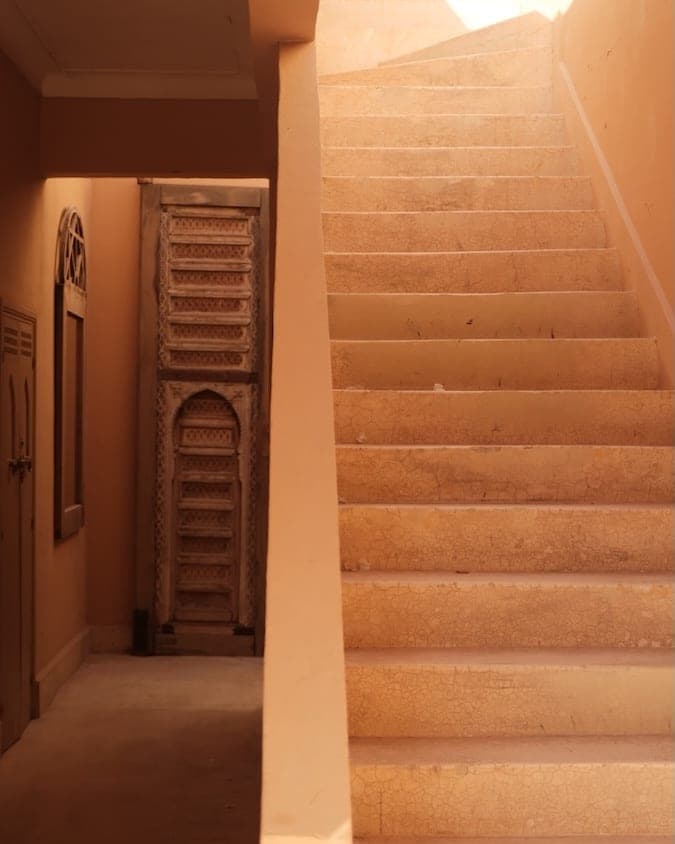
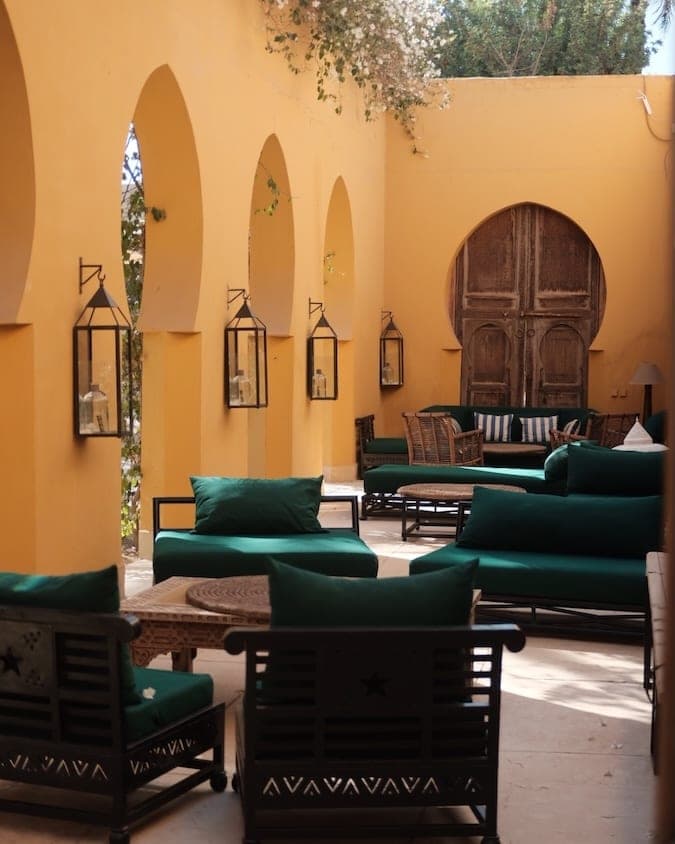
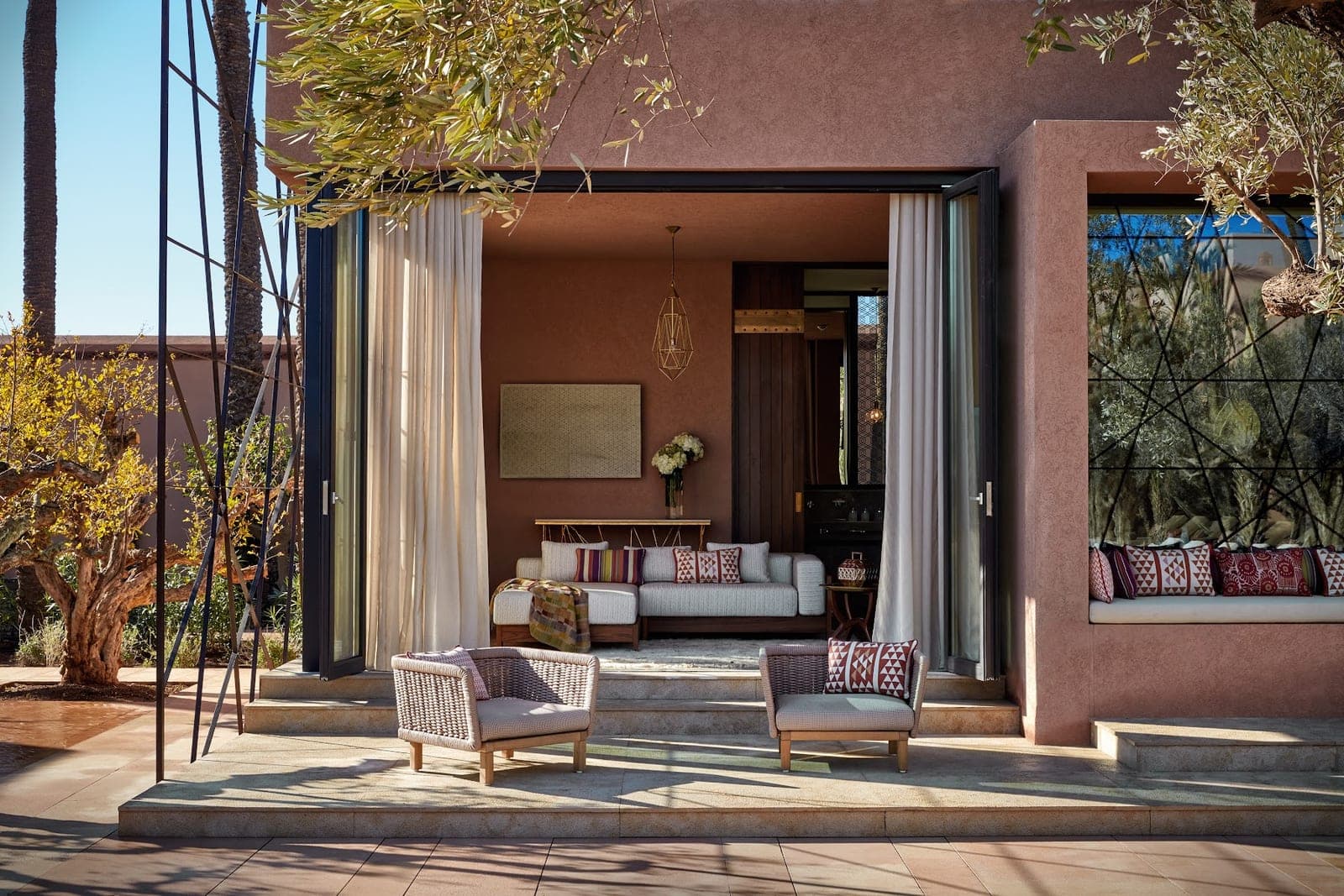
Meryanne Loum-Martin, a lawyer turned hotelier of Senegalese-French heritage, and her husband Dr. Gary Martin, an ethnobotanist and founder of the Global Diversity Foundation, acquired the land in 2000 and opened the hotel in 2001. What began as a single property evolved into a composition of five houses spread across the grounds, each one a distinct dwelling within a larger holding. This dispersal, rather than a conventional tower or corridor structure, allows guests to inhabit the place in a way that mirrors how homes actually feel. The architecture respects the palm trees already rooted there, works with the topography rather than against it, and permits the light to find its own angles.
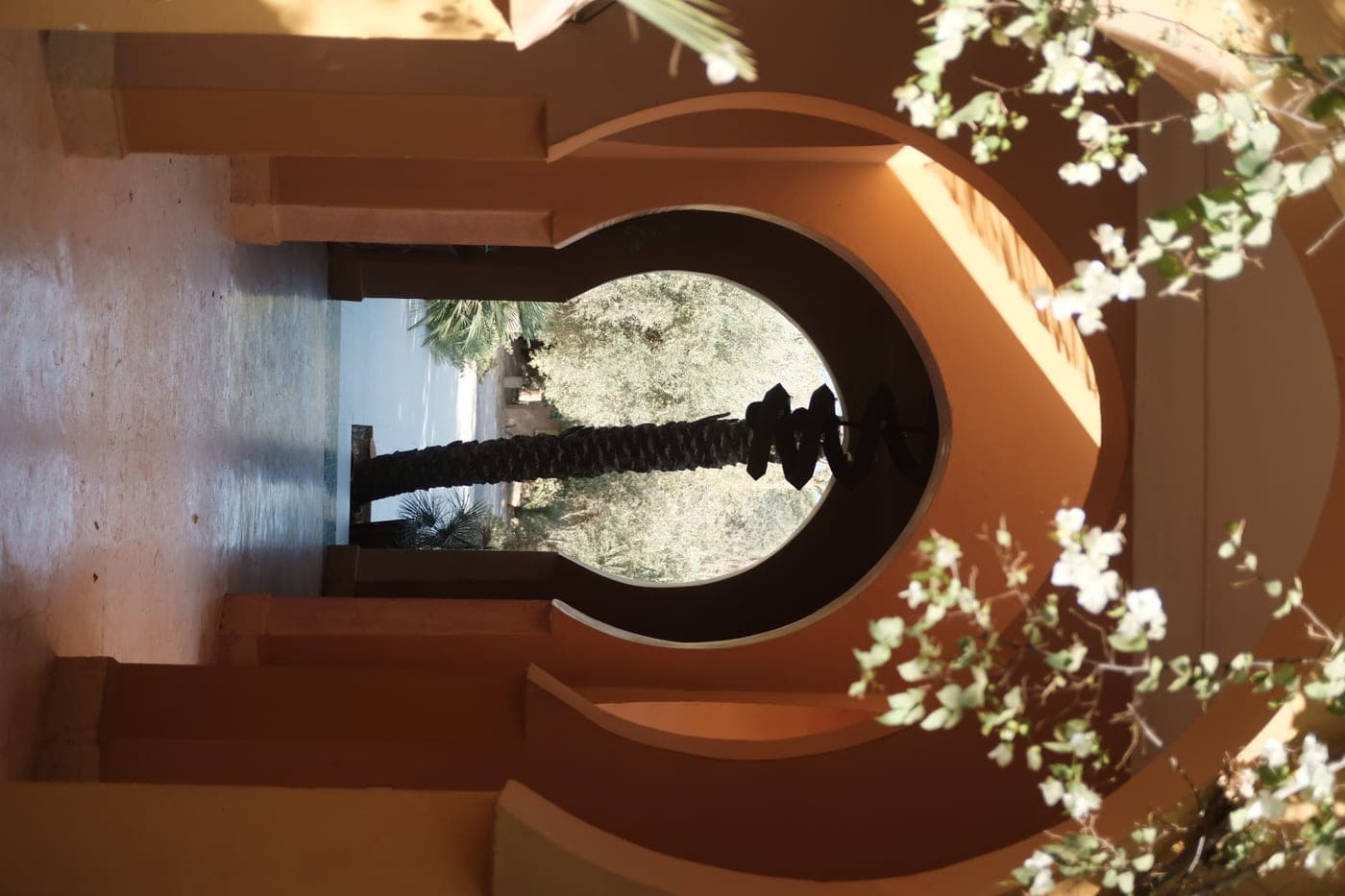
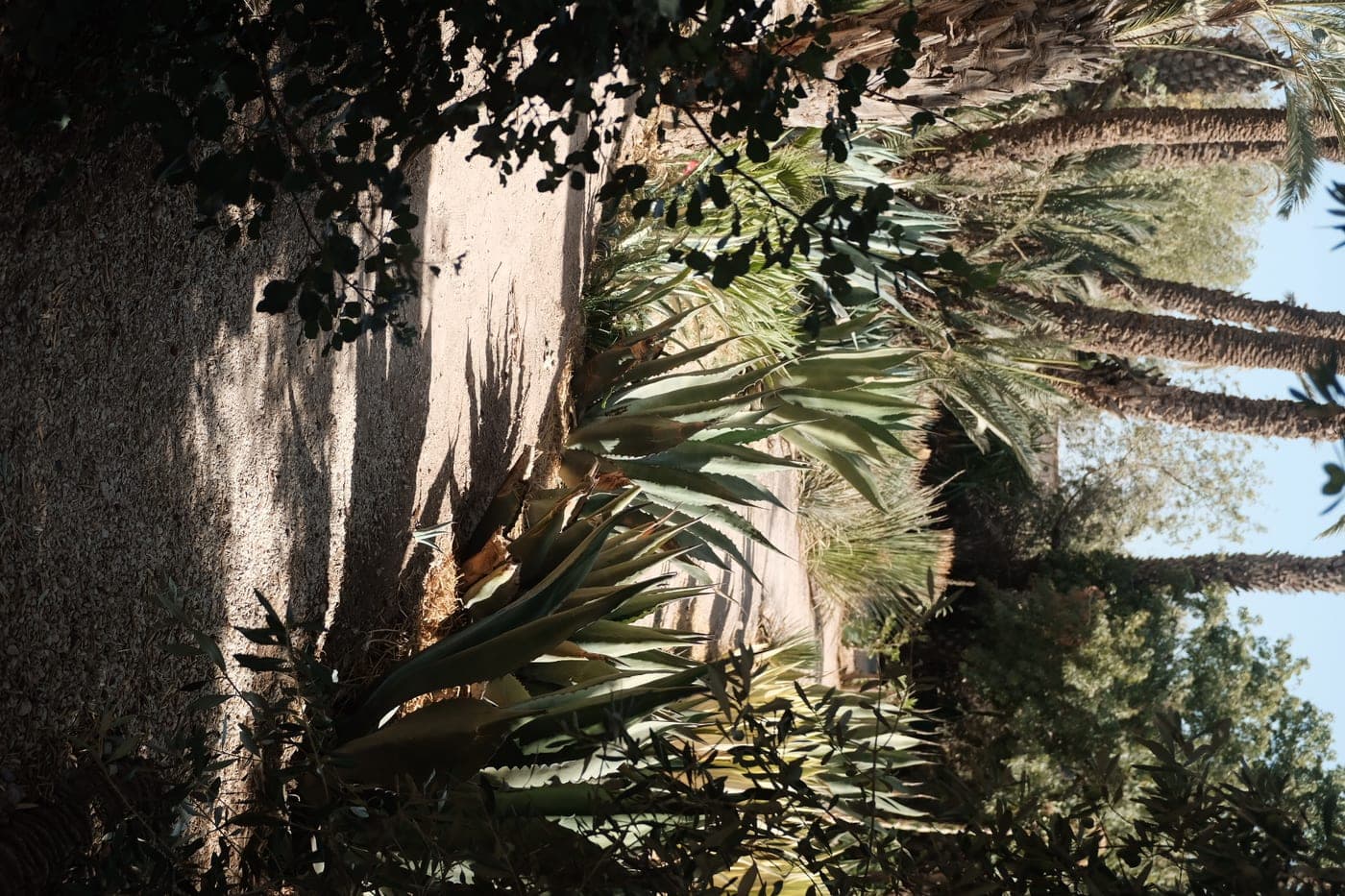
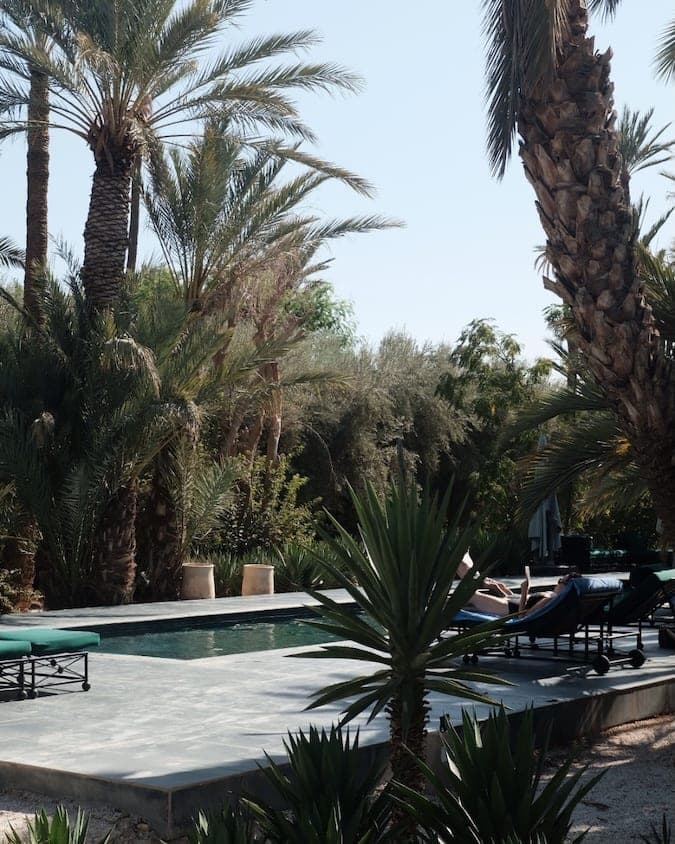
The nine-acre garden, designed by Gary Martin, is where the hotel's character coalesces. This is not a landscaped collection of specimens but rather a working ecology, a space where plant knowledge and local practice inform every row, every shelter, every watering strategy. The garden breathes with the rhythm of the Palmeraie itself. Paths wind through fruit trees and flowering plants in patterns that recall traditional Moroccan gardens without mimicking them exactly. Five pools are scattered across the property, each one positioned to feel discovered rather than announced, each drawing its definition from the vegetation that surrounds it.
An Unguarded Elegance
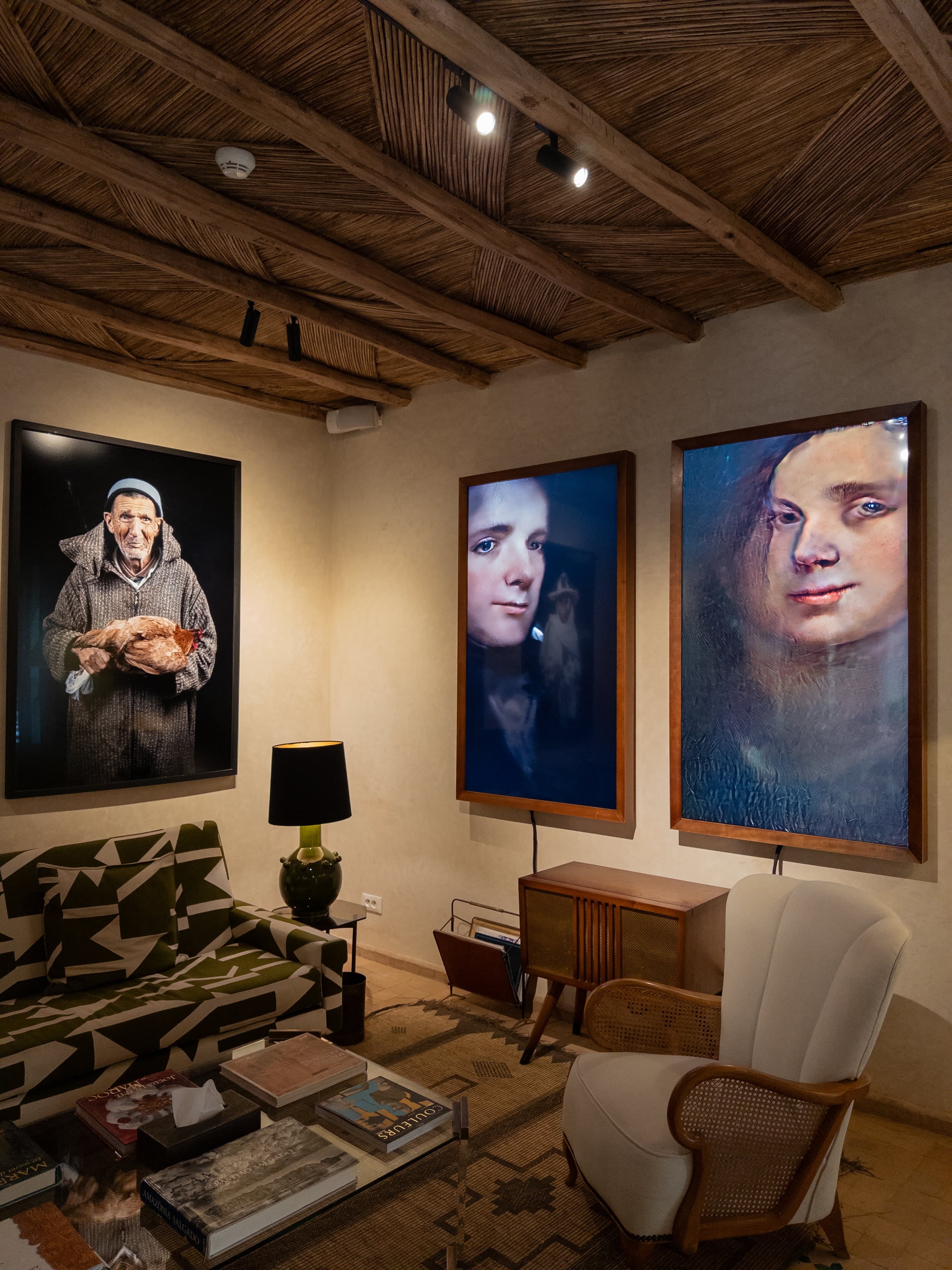
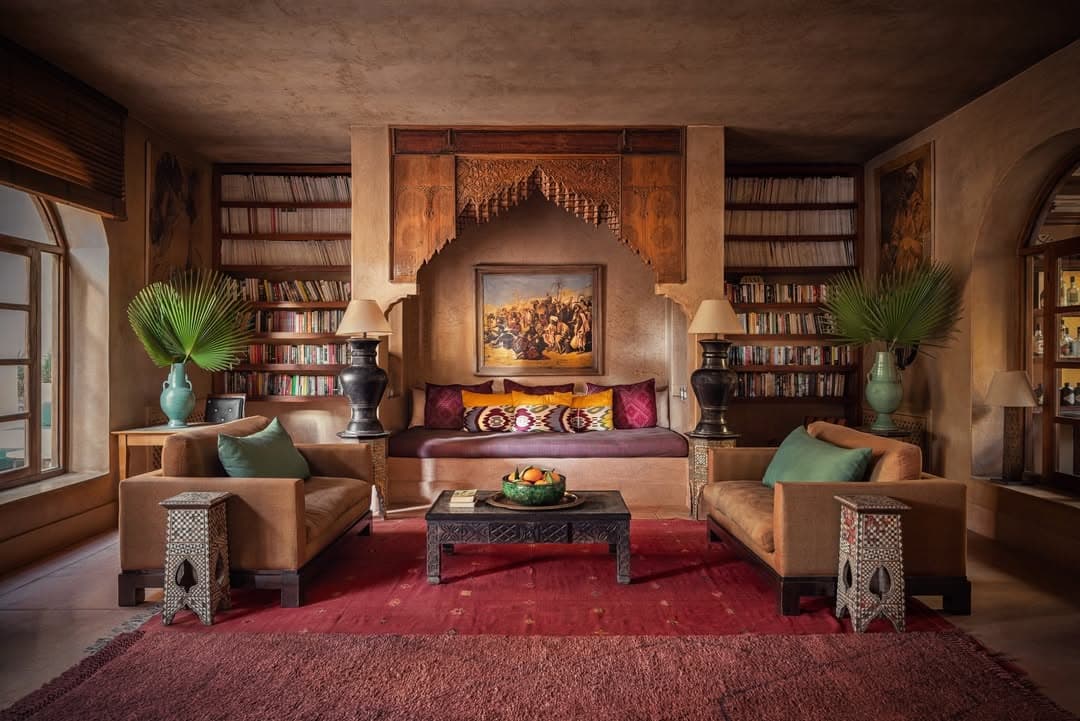
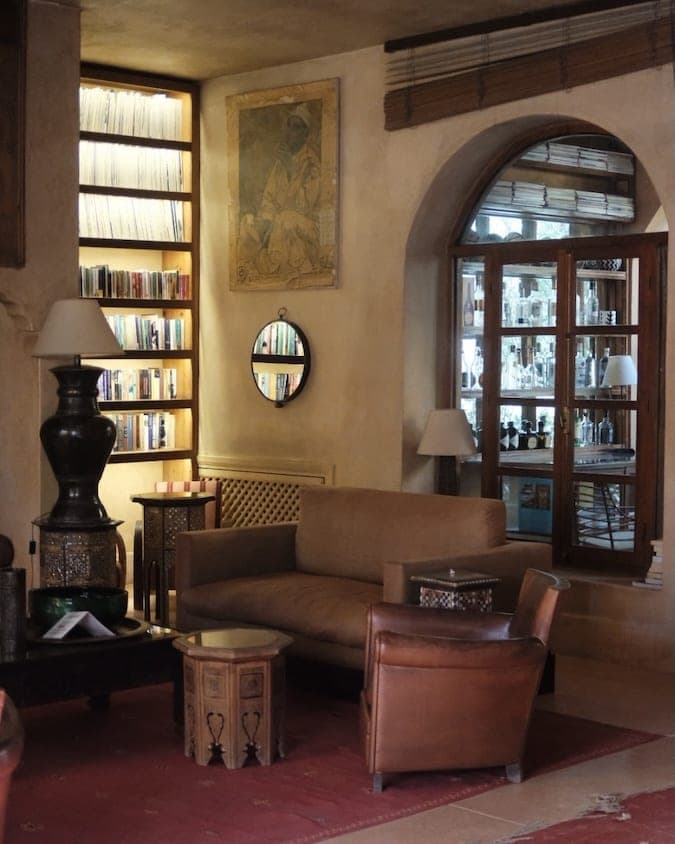
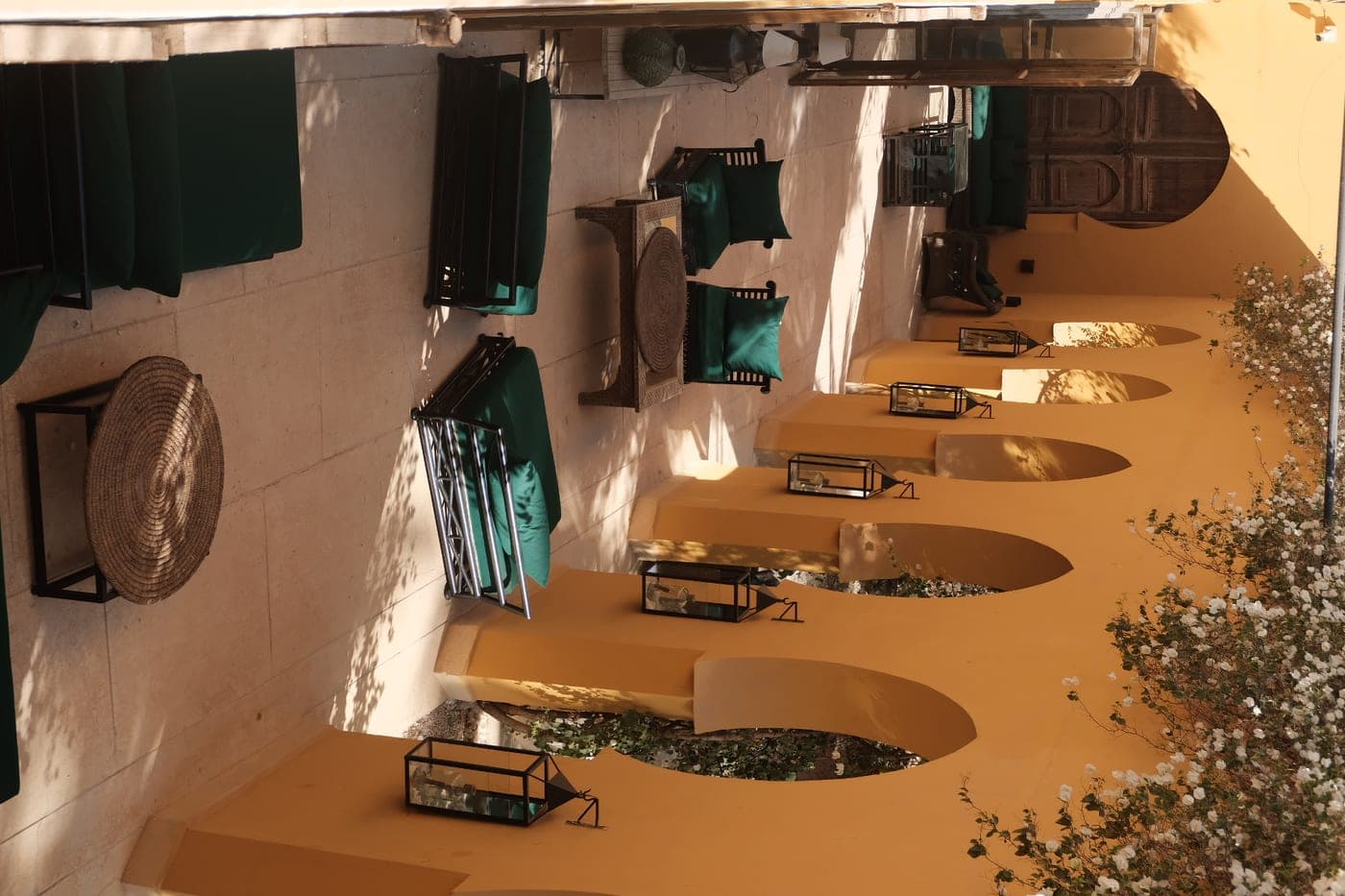
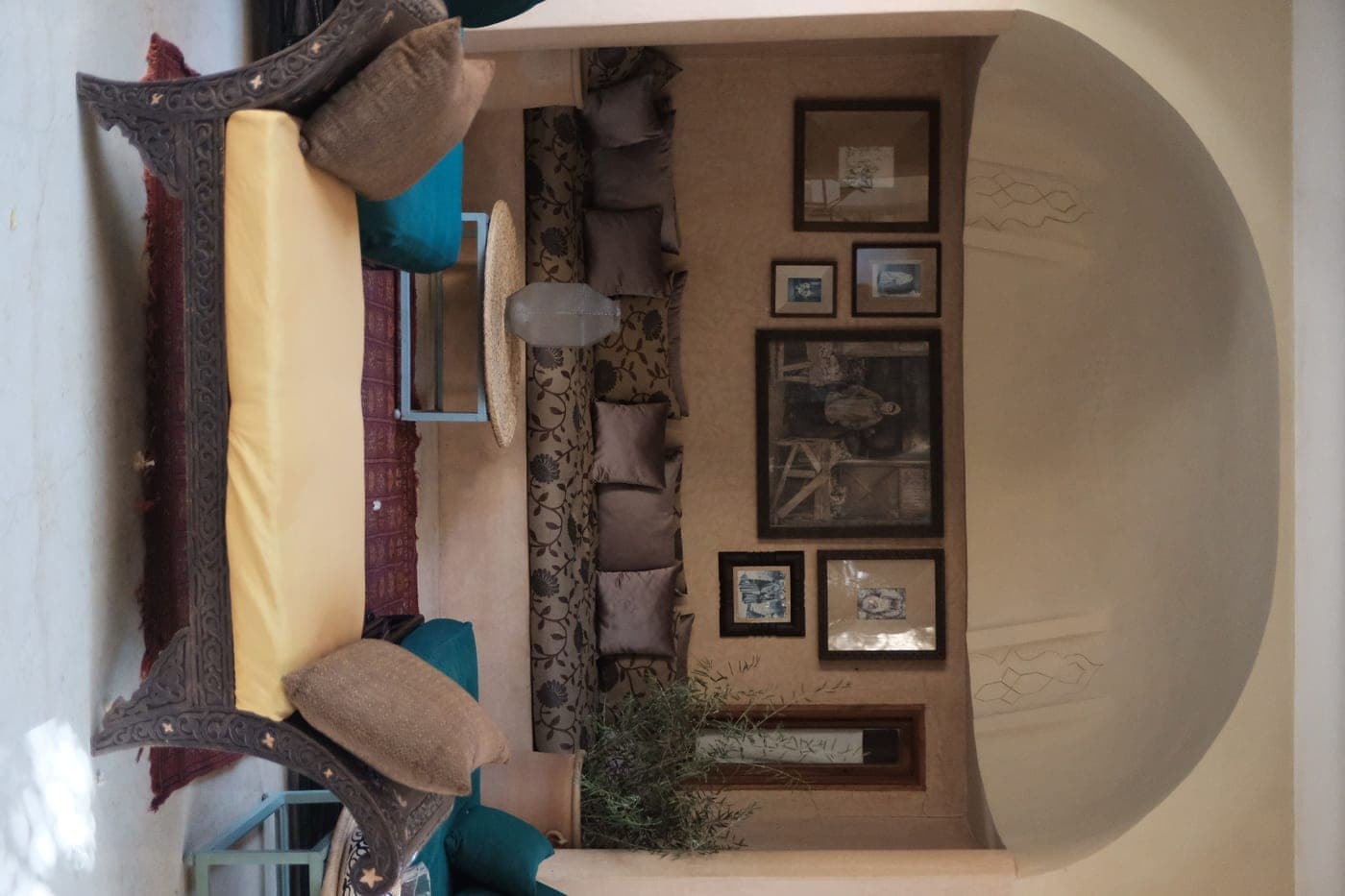
The interiors mix Oriental, African, and European influences in a way that feels earned rather than assembled for effect. Textures accumulate naturally, clay renders beside carved wood, rugs sit on tiled floors, and light enters through arched windows in ways that suggest the architecture was designed to control it carefully. Twenty-four bedrooms distribute across the five houses, each room shaped by its particular position in the building and its relationship to the light outside.
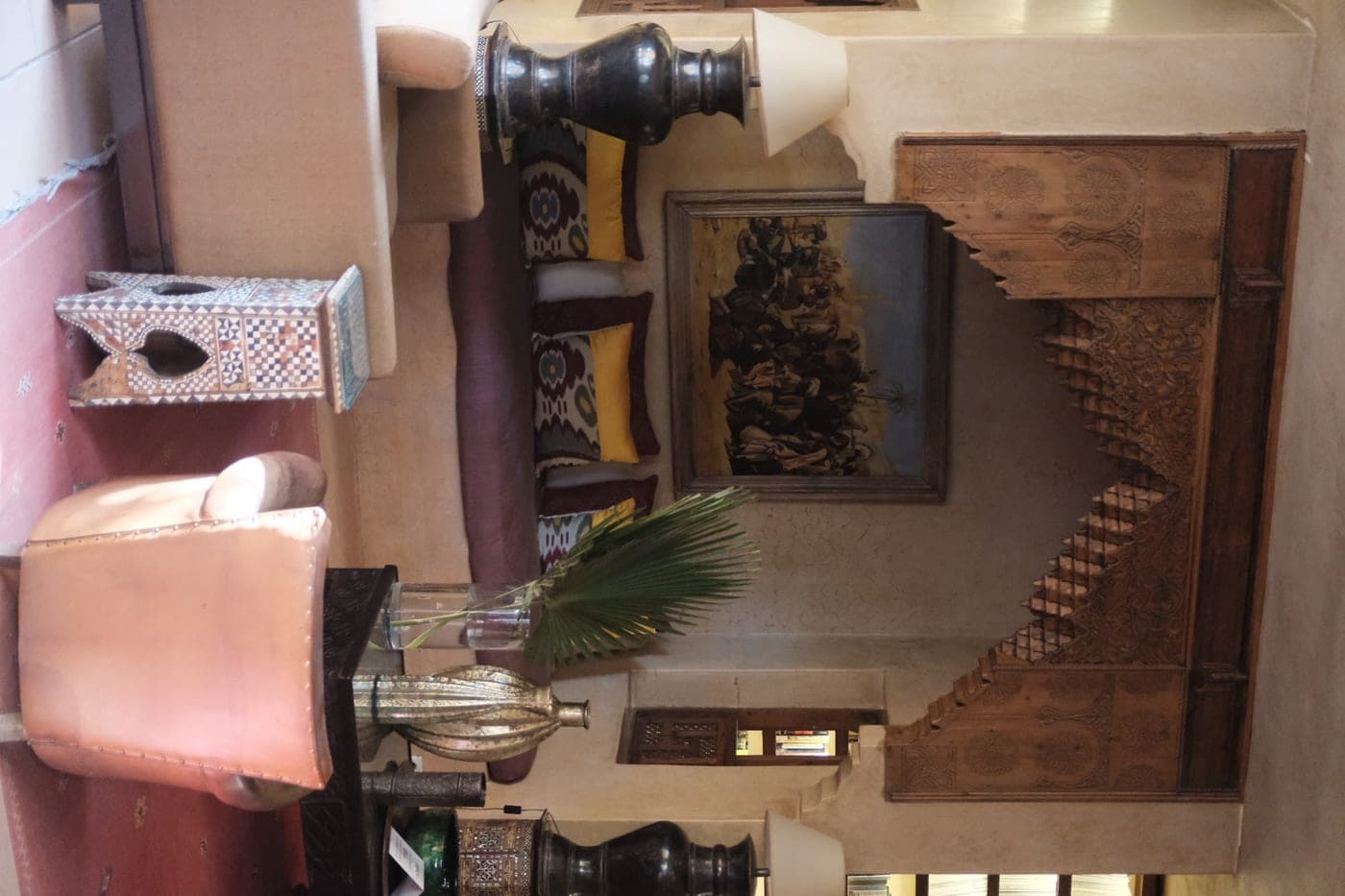
What guests encounter at Jnane Tamsna is less a display of luxury than a demonstration of comfort understood as completeness. The staff are present without hovering. The gardens are maintained with discipline. The pool water is clear and maintained to the temperature that invites use. Breakfast arrives with the ingredients that matter, and the kitchen understands that hospitality includes the knowledge of when not to intervene. The tennis court exists for those who came to move. The quietness of the property exists for those who came to think.
A Particular Audience
Jnane Tamsna has attracted a particular category of visitor: artists, writers, musicians, and others for whom the texture of a place matters more than its brand weight. The hotel holds a Michelin Guide designation, a recognition that sits lightly on the property without defining it. The guest list, over the years, has included figures whose names suggest the reach of the place, but what draws them is not the label of having stayed somewhere famous. It is the experience of a space where the care extends to every surface, every shade of light, every detail that compounds comfort without announcing itself.
The Palmeraie location means the hotel sits between the city and the desert, neither embedded in the urban density of the Medina nor isolated in pure landscape. The sound of the city is distant enough to vanish, but the proximity remains. A guest can choose to descend into Marrakech for a meal or a walk, can return to the gates knowing the place will be exactly as they left it. This balance, difficult to maintain, is where Jnane Tamsna finds its particular equilibrium.
Jnane Tamsna operates at the intersection of several graces: the grace of the place itself, the garden in particular; the grace of ownership willing to sustain something over time rather than extract from it; and the grace of guests who arrive understanding that a hotel can be a refuge not because it performs comfort but because it contains it in layers too deep to name easily. The name itself, meaning "garden of paradise" in Arabic, carries the weight of what the place delivers without claiming to deliver it. It simply opens the gates and allows what is there to be enough.
Jnane Tamsna · Hotel
Discover Jnane Tamsna→You may also like…