Jnane Karwan: Where the Palm Grove Ends and the Desert Begins
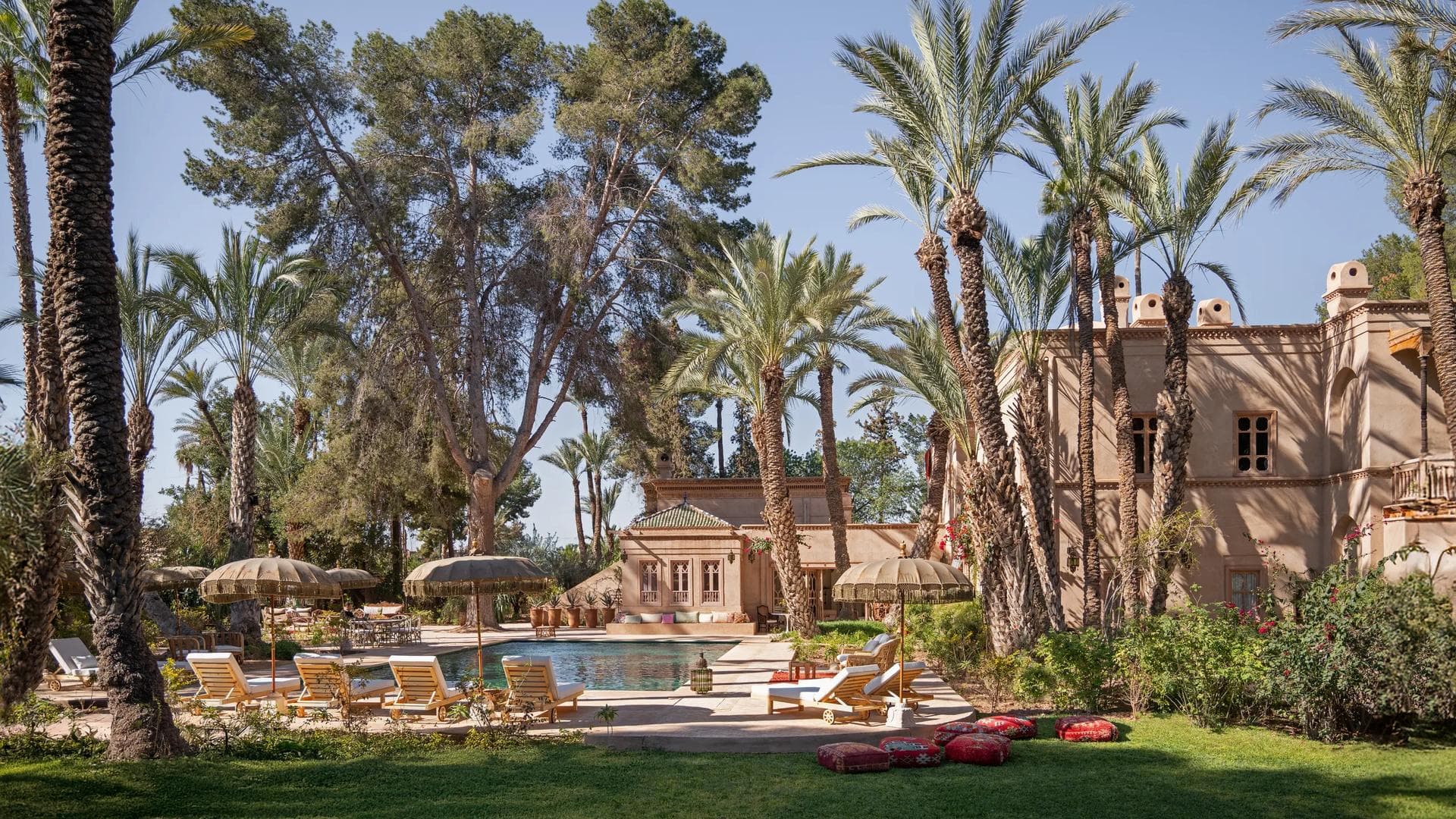
At the edge of Jnane Tamsna's nine-acre estate, a small camp sits between two landscapes that, in Marrakech, rarely touch: the density of an oasis garden and the open quiet of desert land.
5 April 2026
The gate is old, unhurried. What's beyond it doesn't announce itself. A path curves through palms and undergrowth grown over more than two decades of patient cultivation, over 700 plant varieties, a garden dense enough that your first instinct is to slow down, not to scan for amenities. Then the vegetation opens, and the tents appear: low, composed, standing at the edge where cultivated ground gives way to sandy horizon: This is Jnane Karwan.
A Project Built on Memory
The word karwan is the Arabic form of caravan: a moving settlement, a line of people and animals crossing open land. The name is precise. Meryanne Loum-Martin, who designed and built Jnane Karwan alongside her husband Gary Martin, the same pair behind Jnane Tamsna itself, conceived the project as something more than an extension of the main property. It is, in her words, a tribute to the heritage and natural character of an oasis traditional landscape.
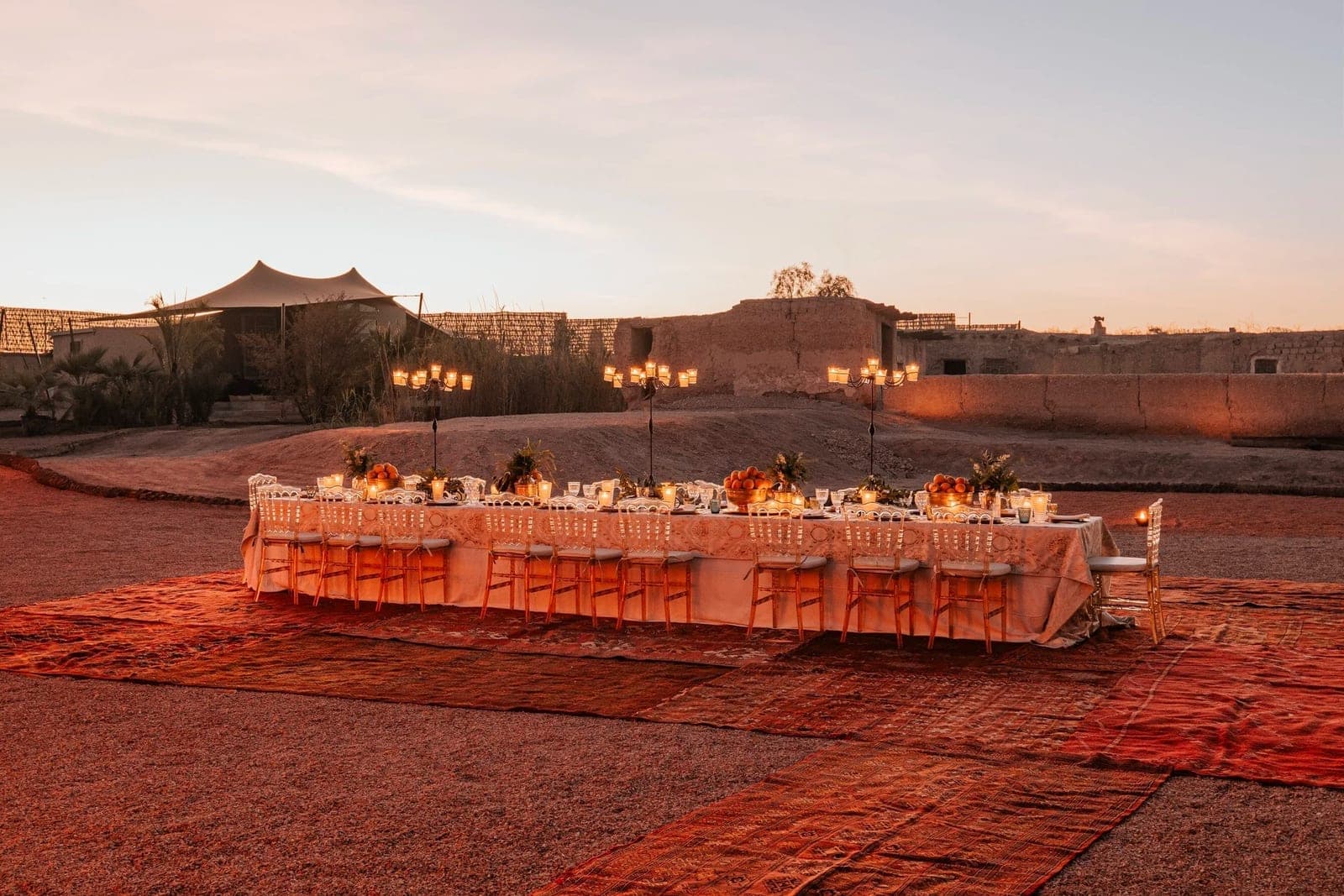
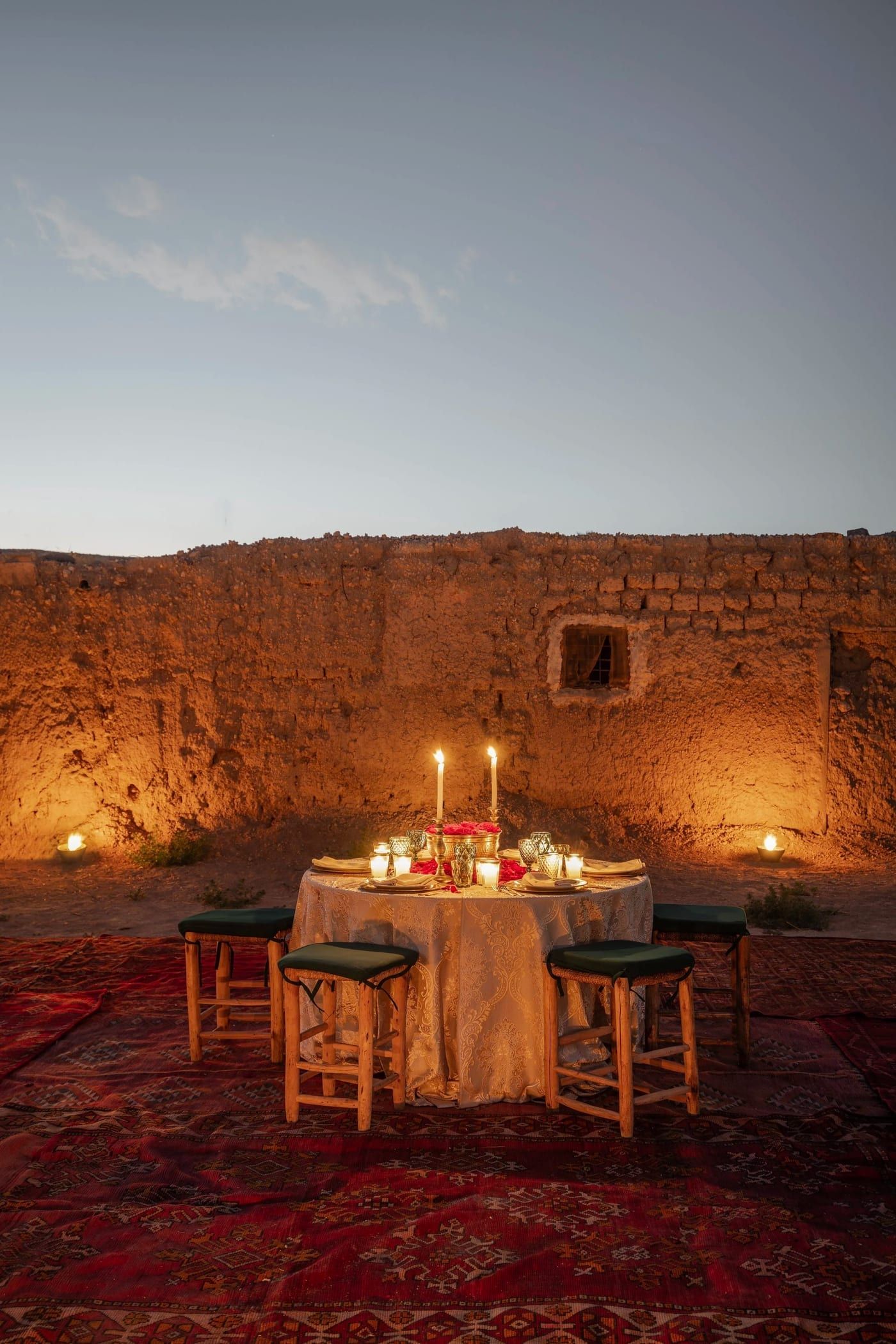
When Meryanne first arrived in Marrakech in 1985, the Palmeraie was a different place: scattered hamlets, adobe construction, open countryside dotted with sheep. Over the following decades, rising land values dissolved most of that world. Concrete replaced earth. The original character of the grove became harder to read. At the centre of the Karwan site, a rare adobe house survives, one of the few remaining examples of pre-development Palmeraie architecture. Preserving it was not incidental to the project. It is the project's centre of gravity, the fixed point around which the tents are arranged in deliberate dialogue.
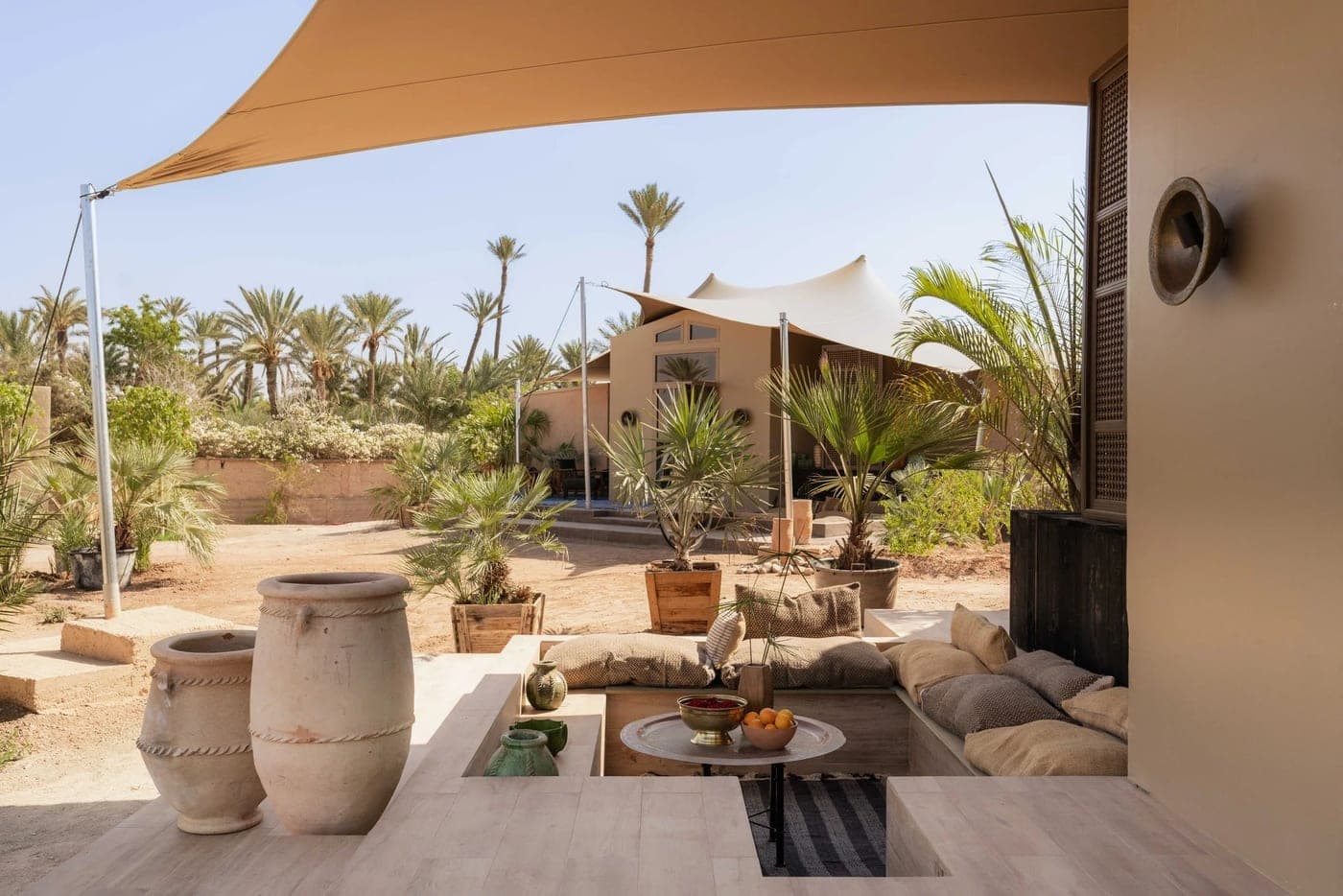
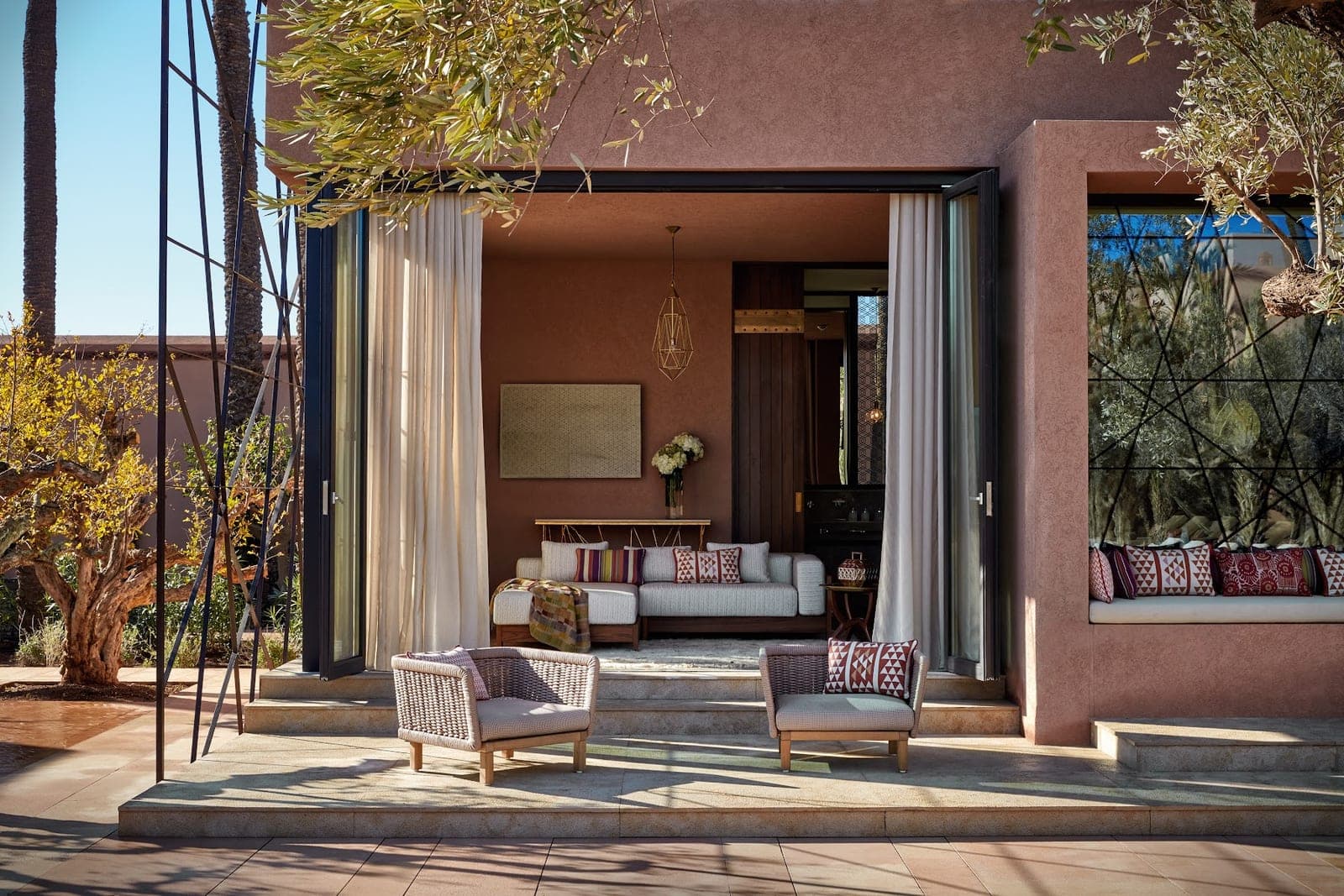
The tents themselves, called Safari Tents and Safari Suites, were not chosen for romance or theatrical effect. They were chosen because they leave the land intact, because they echo the nomadic traditions of the region, and because they do not claim permanence where the land's character should prevail.
The Interior Language: Three Nomadic Chapters
Each tent carries its own geography. Meryanne drew from three distinct zones along the historic caravan routes, India, sub-Saharan Africa, and the Saharan corridors, and treated each space as a separate chapter in the same larger story.
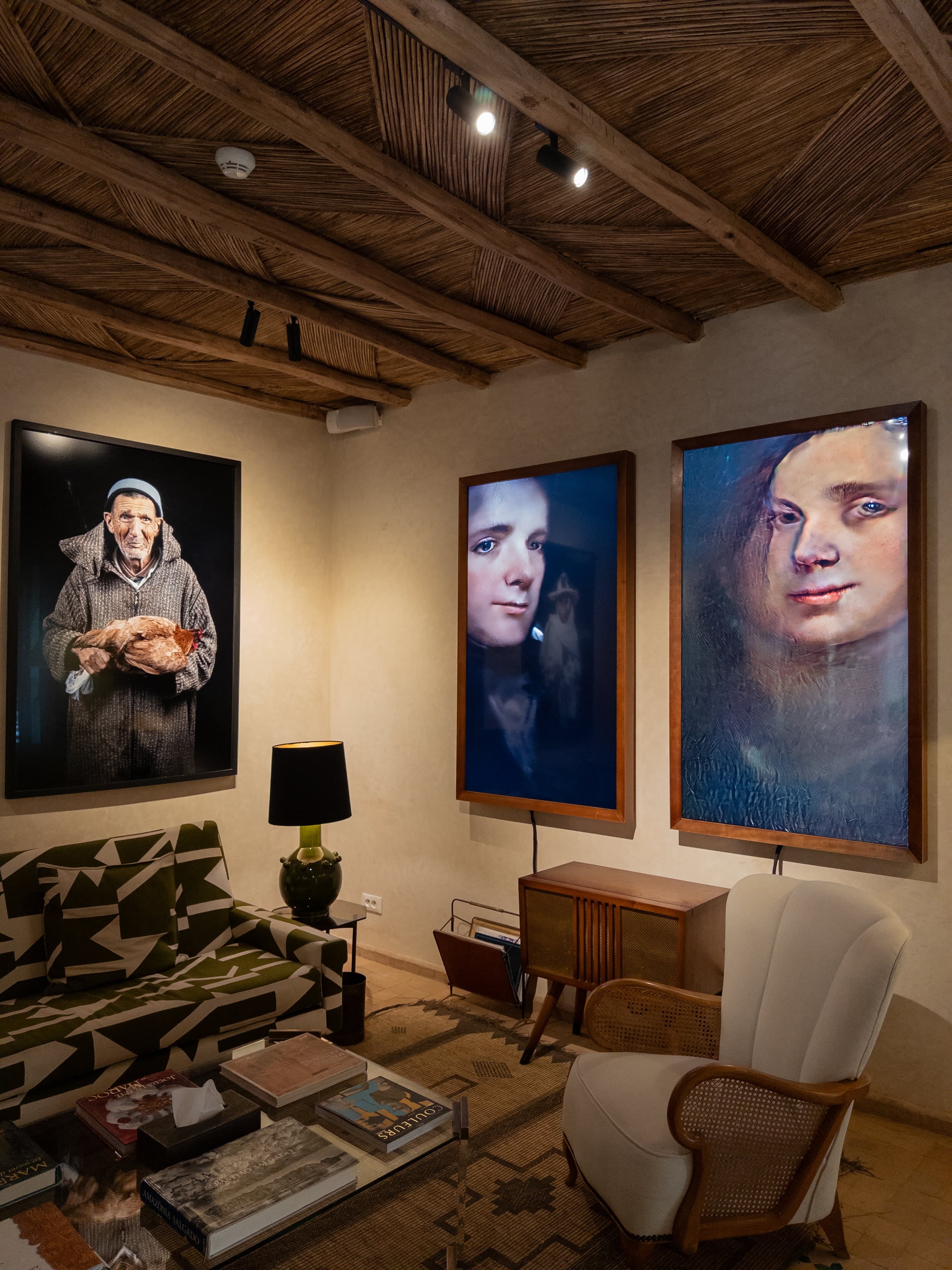
The Punjab Tent is anchored in deep red tones and large portraits of Indian figures in traditional dress. The bed is laid with an authentic Suzani, the Central Asian embroidered textile that found its way into Mughal interiors across the Subcontinent; the headboard is upholstered in Indian silk Meryanne sourced directly in Jaisalmer. Inlaid side tables carry an unmistakably Indian character. In the bathroom, celadon green marble and copper details evoke the atmosphere of a refined hunting camp, the kind where a Maharaja might have expected both wilderness and comfort.

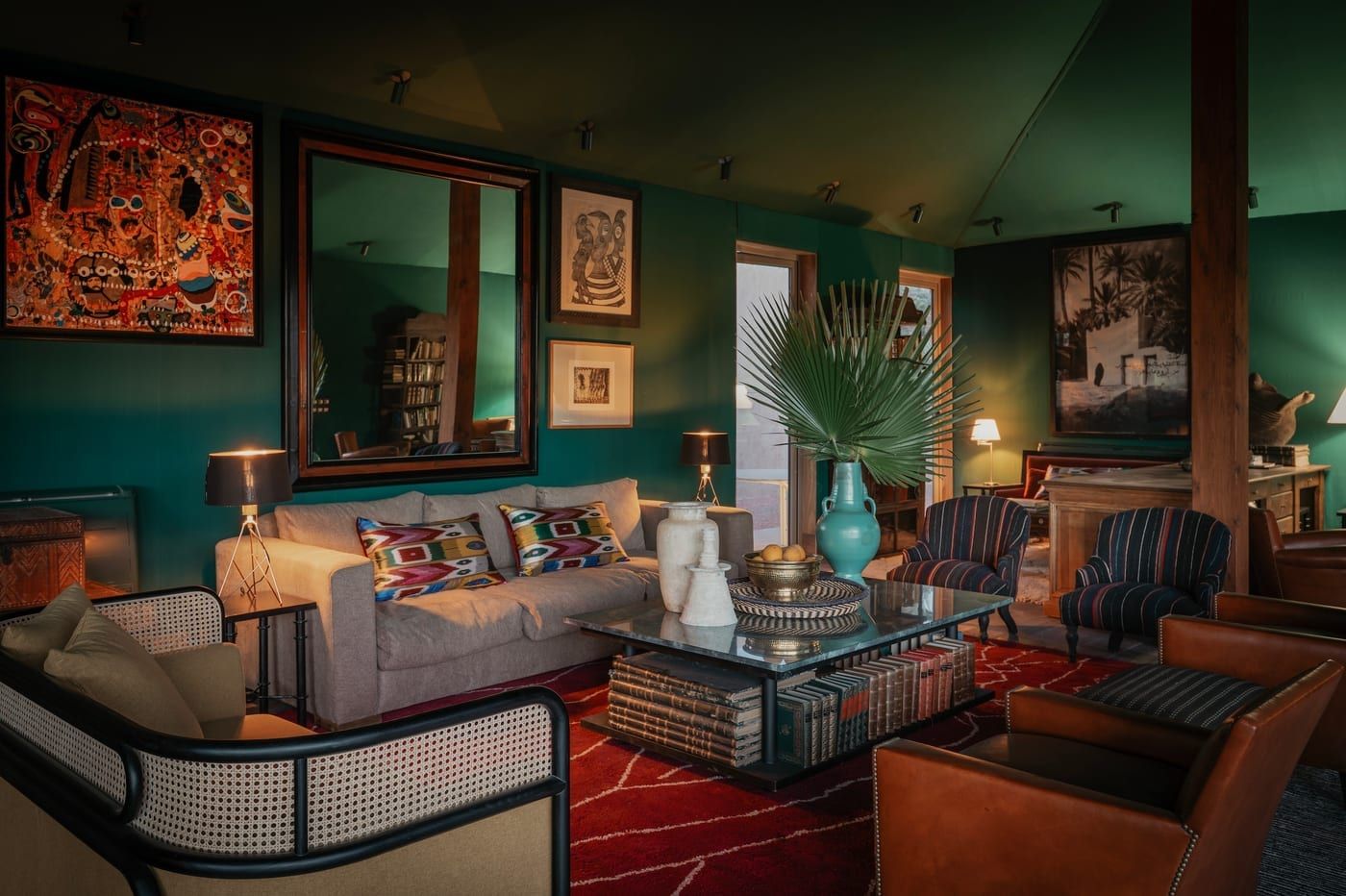
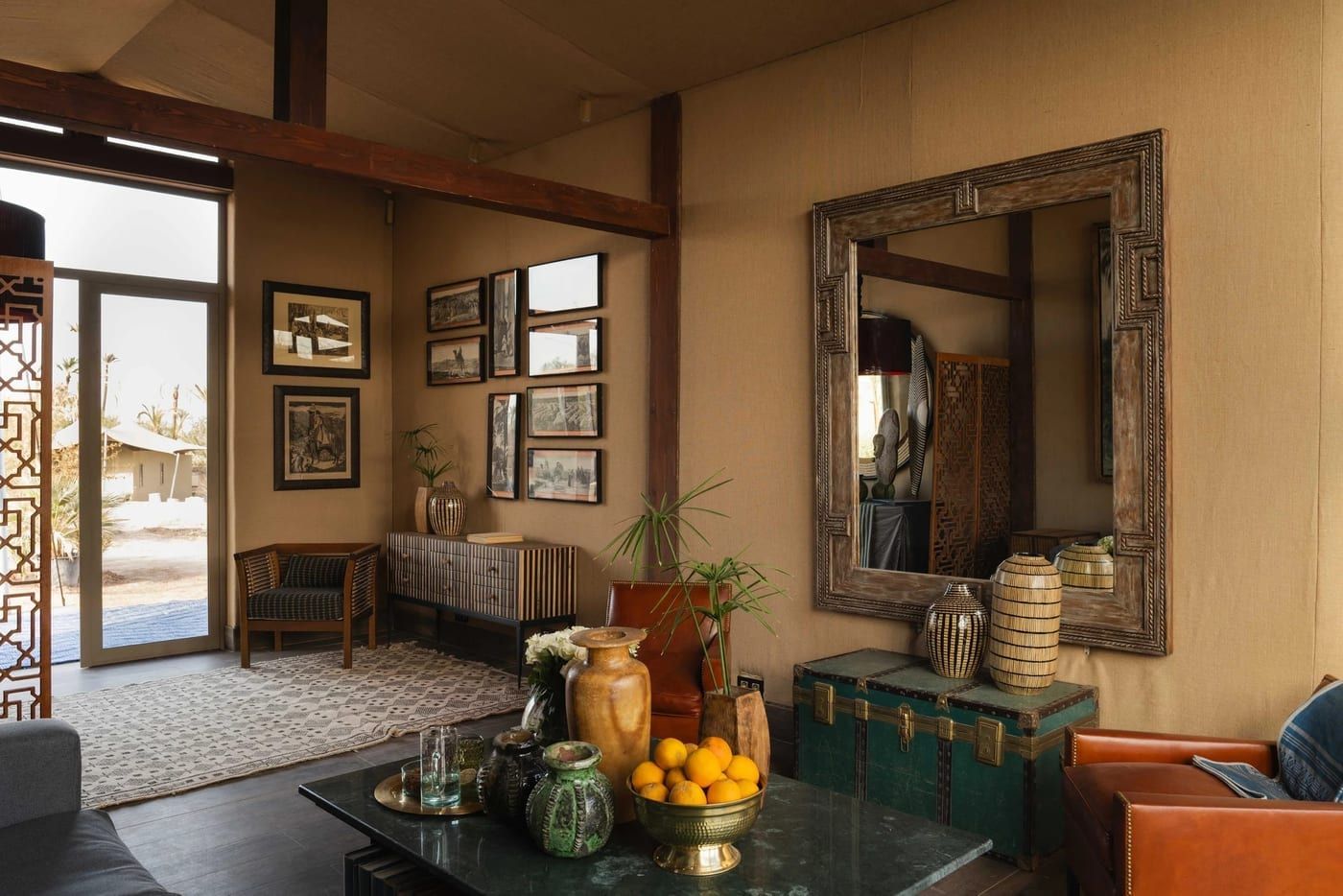
The Timbuktu Tent turns toward West Africa and the Saharan trade routes. The Explorer Suite, the larger of the two Safari Suites, documents the continent through another lens: old photographs from the Sahara and the Sahel line the walls, chosen for their specificity rather than their aesthetic appeal. The fabrics reach across the continent: textiles by Aïssa Dione from Senegal, a bedspread from India with a Suzani-inspired print, a bedhead textile from Togo, a weave from Sierra Leone made by artisans working in Senegal. A painting by Philippe Deltour, chosen for its resonance with the surrounding palm grove, hangs in the salon alongside books from Meryanne's family collection, old leather bindings, large-format, heavy with history.

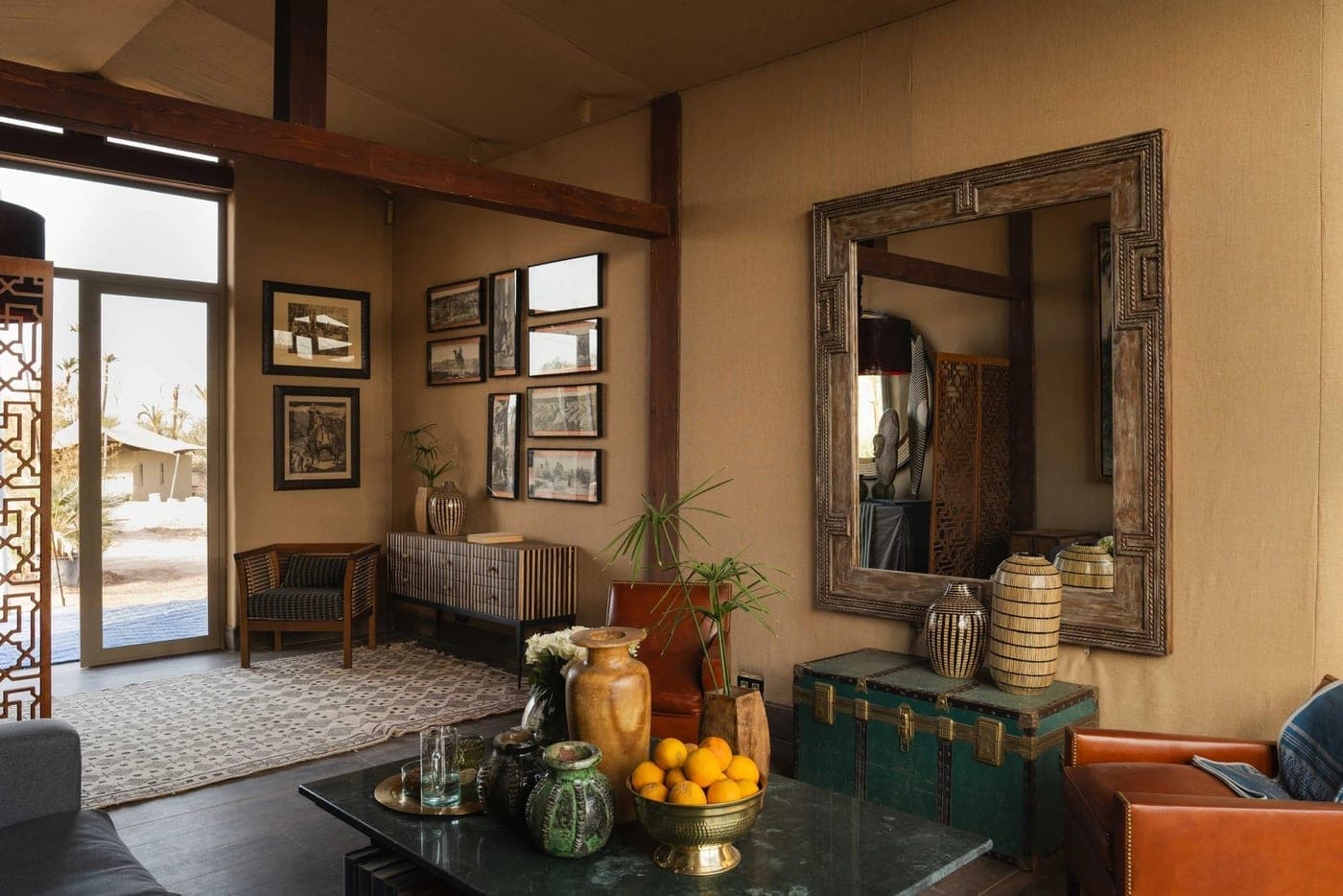
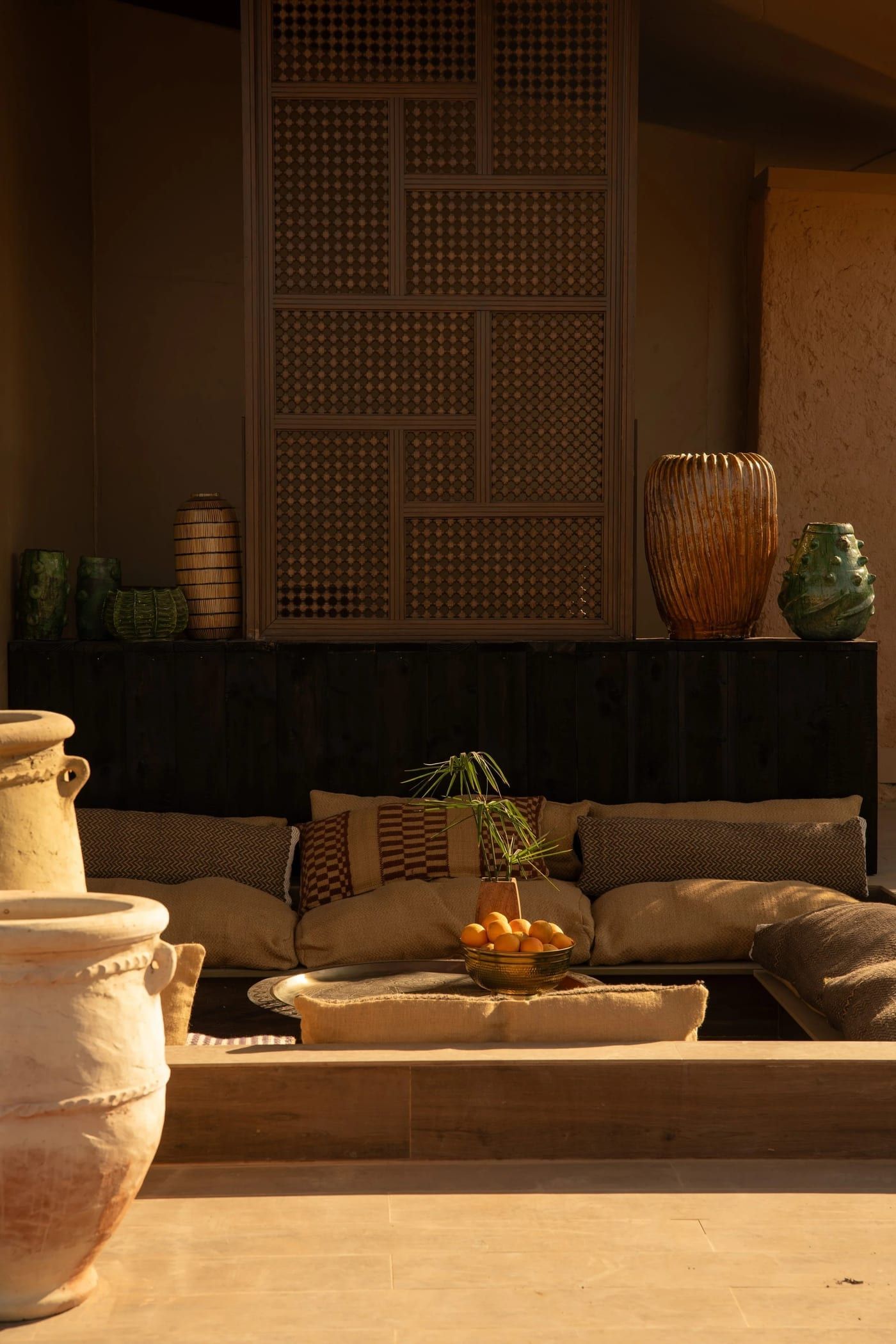
The layering is deliberate and dense, but nothing sits as decoration for its own sake. The jute textile applied to the wall in the Explorer, the mashrabiya-inspired screen with Amazigh patterns in the bathroom, the lamps modelled on those found in 1940s scientists' studies: each element traces a line back to a specific place and time. The overall effect is less that of a themed room and more that of an interior with a private logic, assembled by someone who has actually travelled the route.
The Explorer Suite opens onto its own private, salt-treated and heated pool. The garden behind it draws on plants associated with Nelson Mandela, winter-blooming species chosen for their resonance with endurance and patience.
The Ground Beneath
The garden at Karwan exists in two registers. In the oasis section, still pools mirror palm silhouettes and quiet sitting areas open between layers of shadow and green. Mint tea, an open book, the particular silence of a garden that has had decades to settle into itself. In the desert section, where the tents sit, planted green pockets soften the mineral expanse, creating privacy without interrupting the sense of open space.
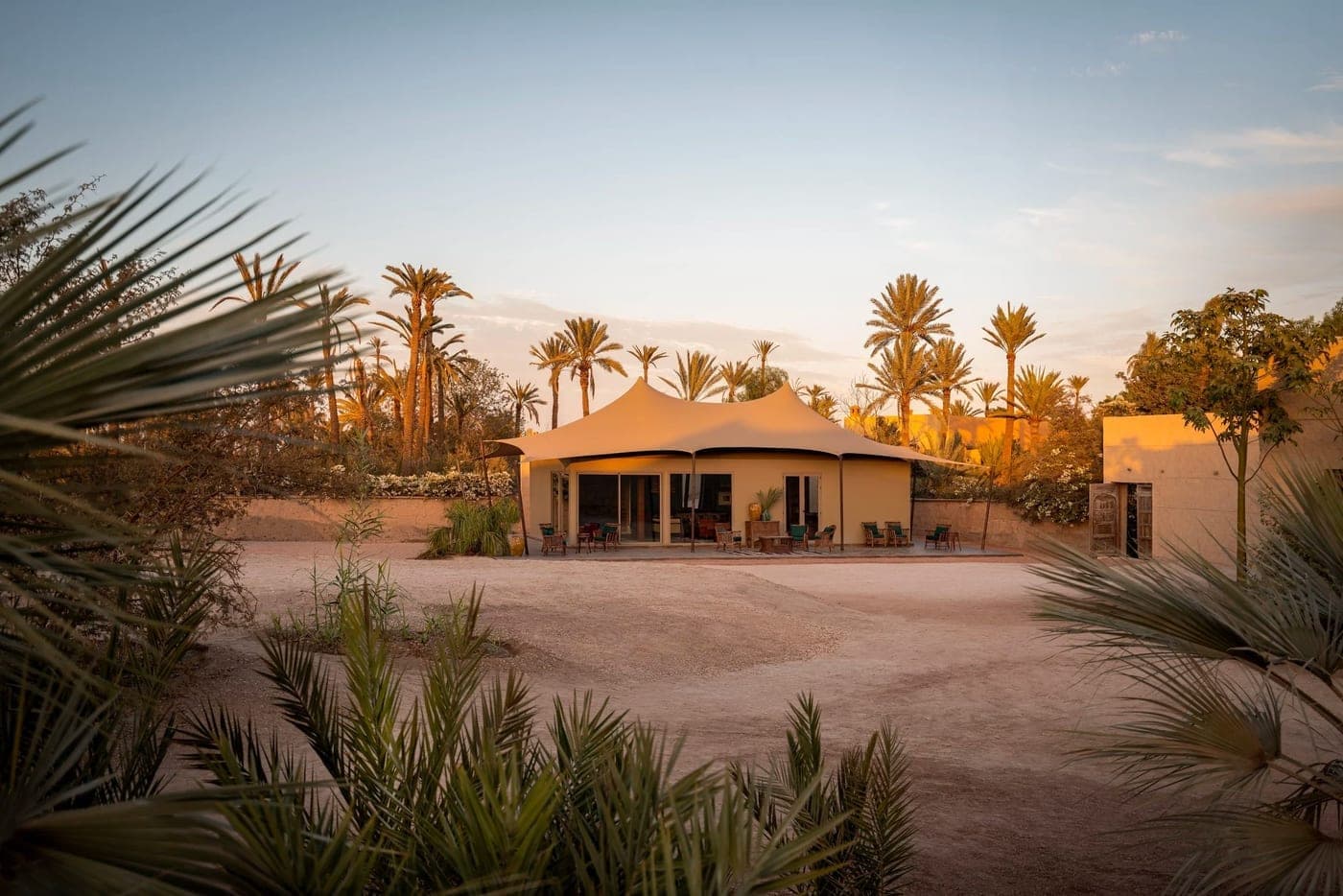
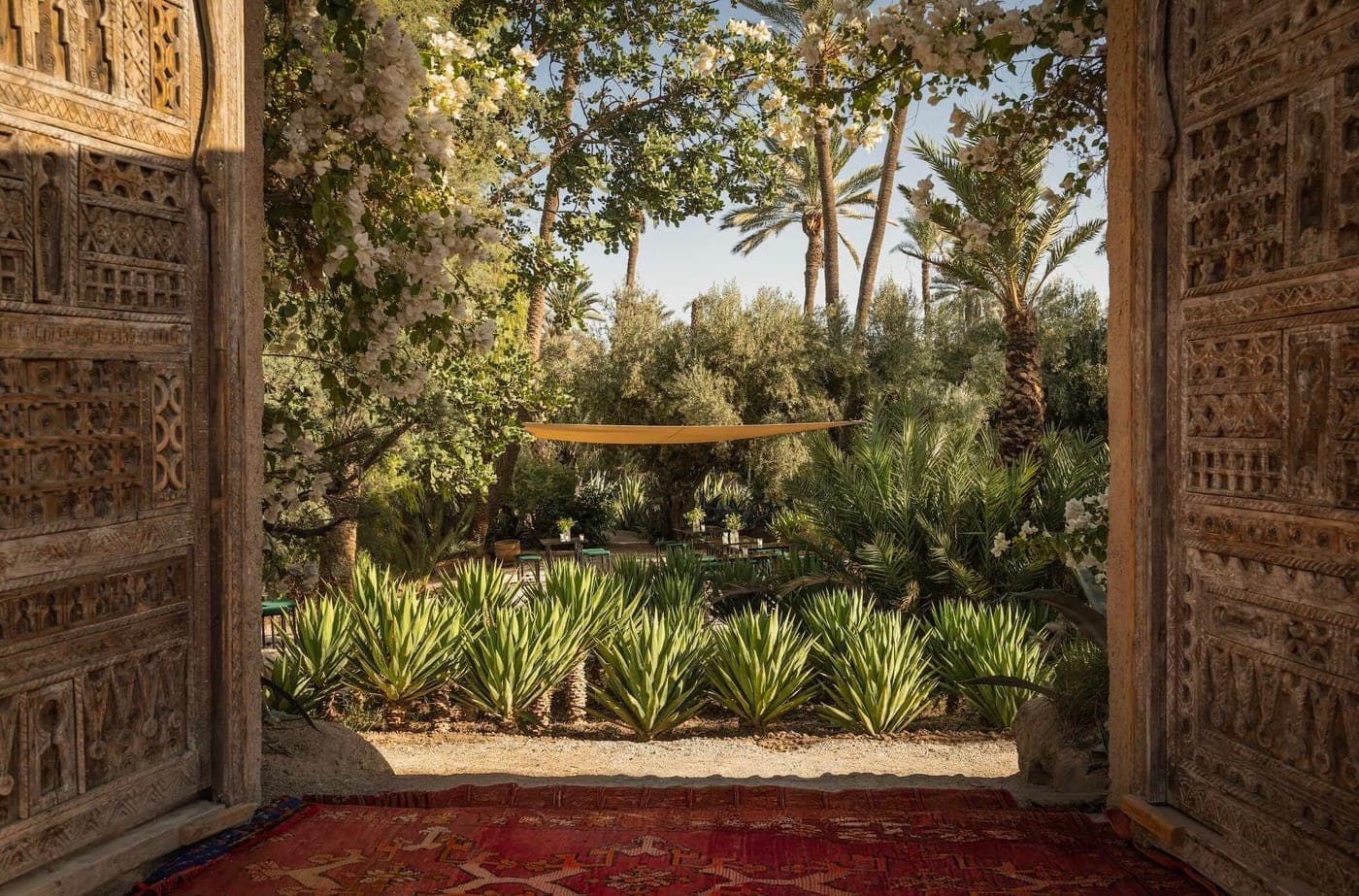
Gary's work on the soil here spans more than twenty years. The result is a garden that looks less planted than grown, which is the difference between designed nature and cultivated nature, and a distinction the Palmeraie, with its long agricultural memory, still knows how to hold.
At the Edge of Two Things
Jnane Karwan is thirty minutes from the Medina. On the map, it's the Palmeraie, a familiar address. In practice, it exists at a less familiar boundary. Not quite countryside, not quite wilderness, not fully a hotel in the conventional sense. A small camp where the architectural and ethnographic imagination of Meryanne Loum-Martin has been applied not to a building but to a landscape, and where the landscape has been allowed to remain the primary fact.
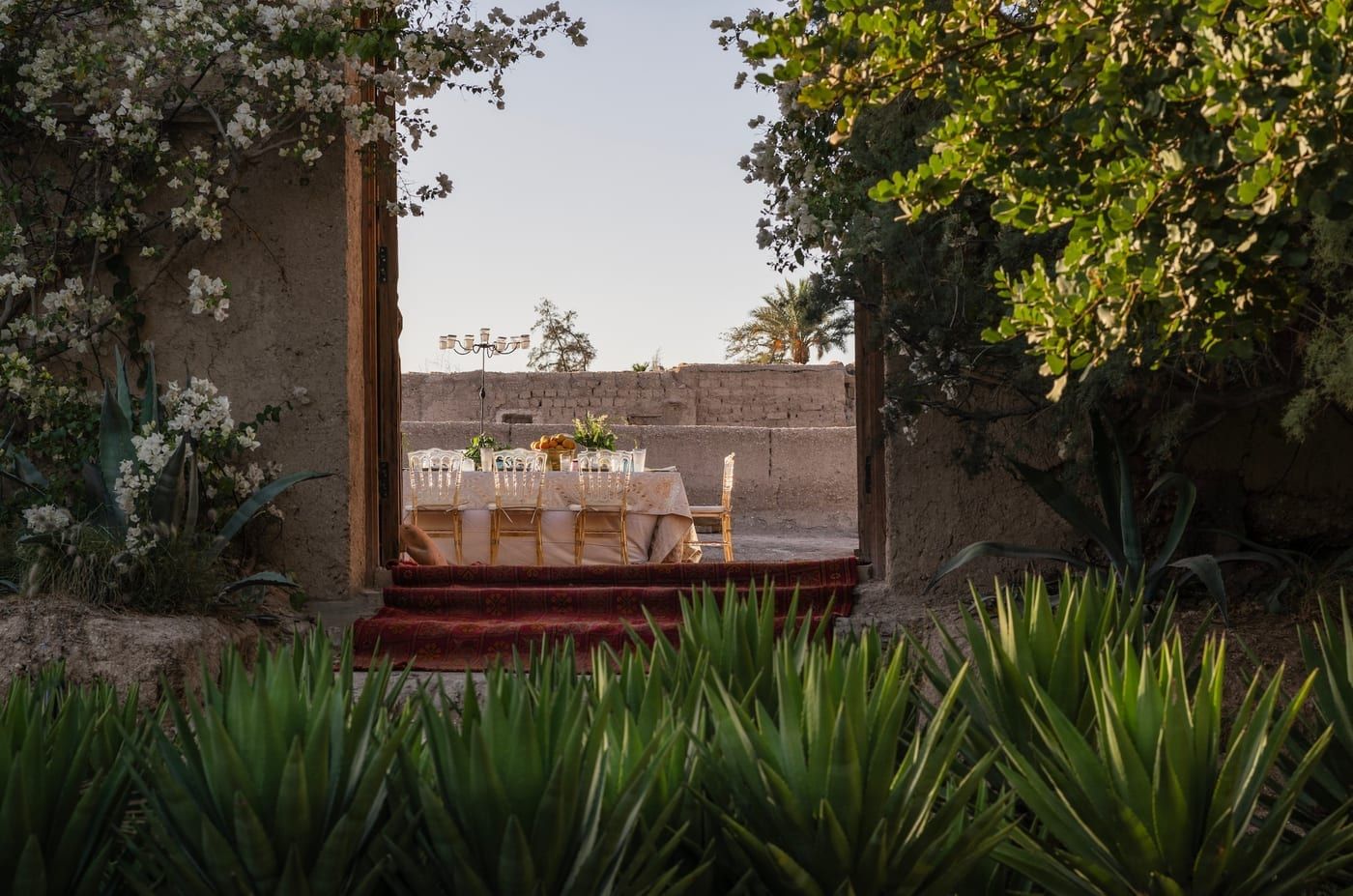
The Palmeraie is changing fast. The adobe house at the centre of the Karwan site is one of the few surviving structures from its earlier form. That it has been preserved, and built around with intention, says something about what kind of project this is.
Address: Douar Abiad, La Palmeraie, Marrakech
You may also like…