Amanjena Marrakech: Moorish Architecture and Desert Oasis
Thirty-two pavilions and seven maisons on fifteen acres of Palmeraie, where Ed Tuttle's reading of Moroccan and Andalusian precedent becomes a contemporary resort.
5 April 2026
The name Amanjena translates as peaceful paradise in Arabic, and the property earns that designation through means that are spatial before they are sensory. Passing through the entrance gate, the shift in atmosphere is immediate and difficult to attribute to any single element: the proportions change, the light changes, the sound of the city falls away. What remains is a quality of calibrated stillness that Aman properties are often described as possessing, and that Amanjena produces more convincingly than almost any other address in Morocco. The sense of perfection is not decorative, it is architectural. Every archway frames something. Every water surface reflects something. The relationship between building, landscape, and sky has been so precisely considered that the result reads as effortless, which is the most demanding achievement in resort design.
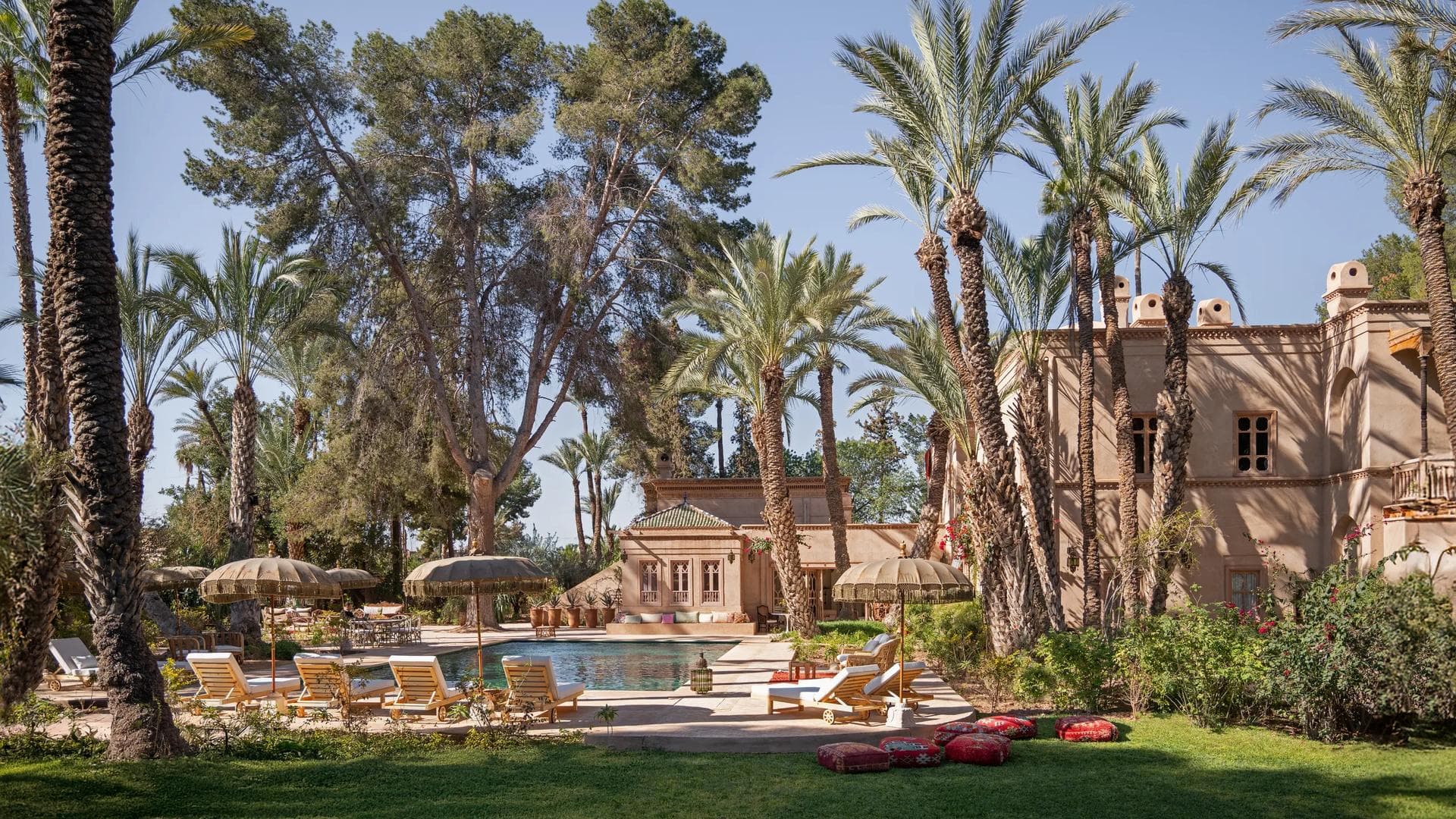
The Palm Grove of Marrakech extends southward from the city in thick clusters of green, a landscape that serves as visual buffer between the dense Medina and the open desert. Amanjena occupies fifteen acres within this zone, a position that places the resort at the threshold between two distinct environments, able to offer both the cultural proximity of the city and the spatial generosity of the palm-forested periphery.
The Architecture and Its Precedents
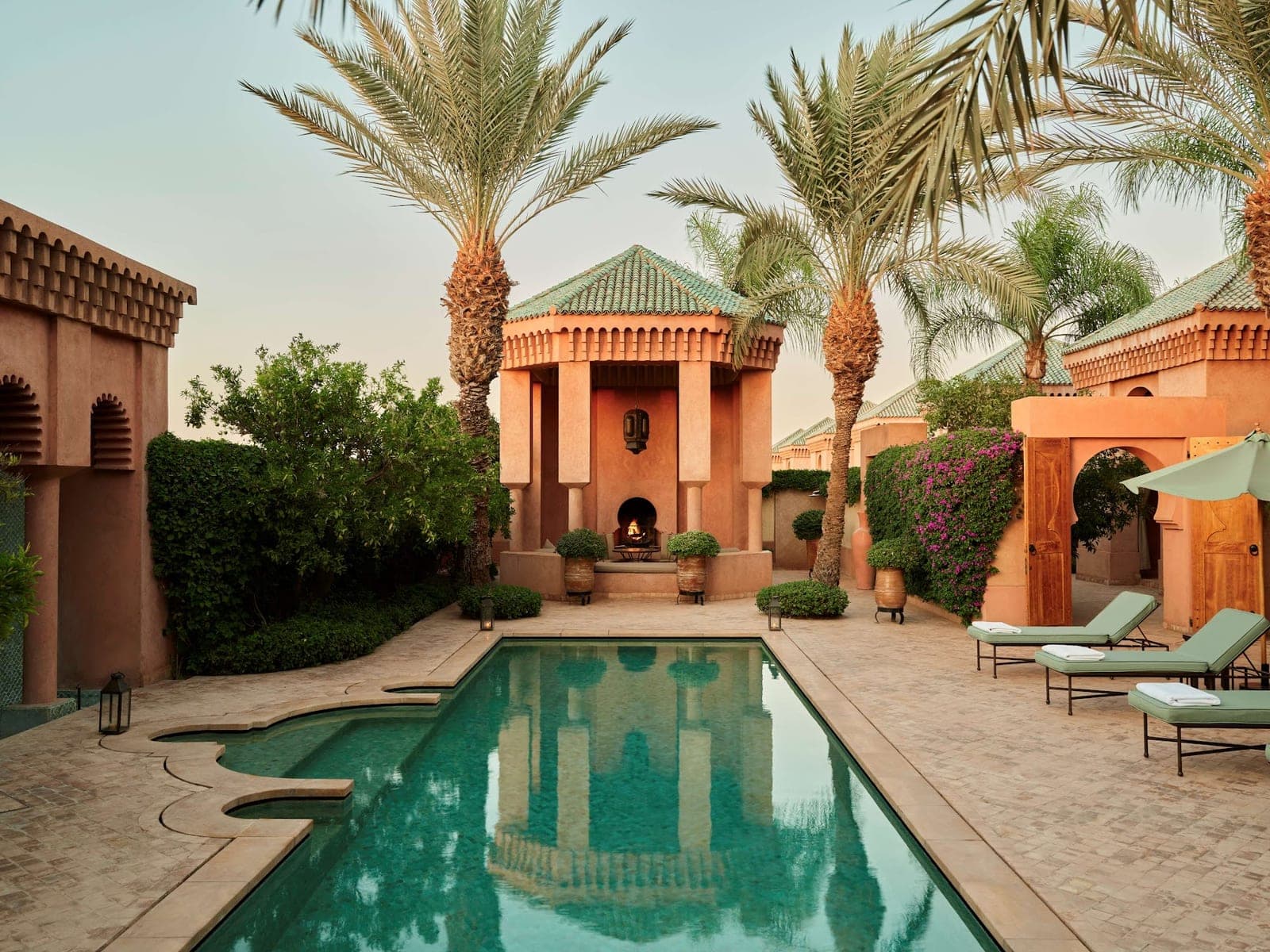
The architecture was designed by Ed Tuttle, an American architect whose approach to resort design emphasizes proportion, material restraint, and dialogue between building and landscape. Tuttle drew his primary references from two sources: the Alhambra palace in Granada, with its sequence of geometric enclosures and its particular handling of water as spatial element, and the twelfth-century Menara Gardens on the western edge of Marrakech, where a central bassin mirrors the sky and the Koutoubia minaret. These are not literal translations but compositional principles: the organization of space around water, the use of arched openings to frame views, the management of shade and light as active design variables.
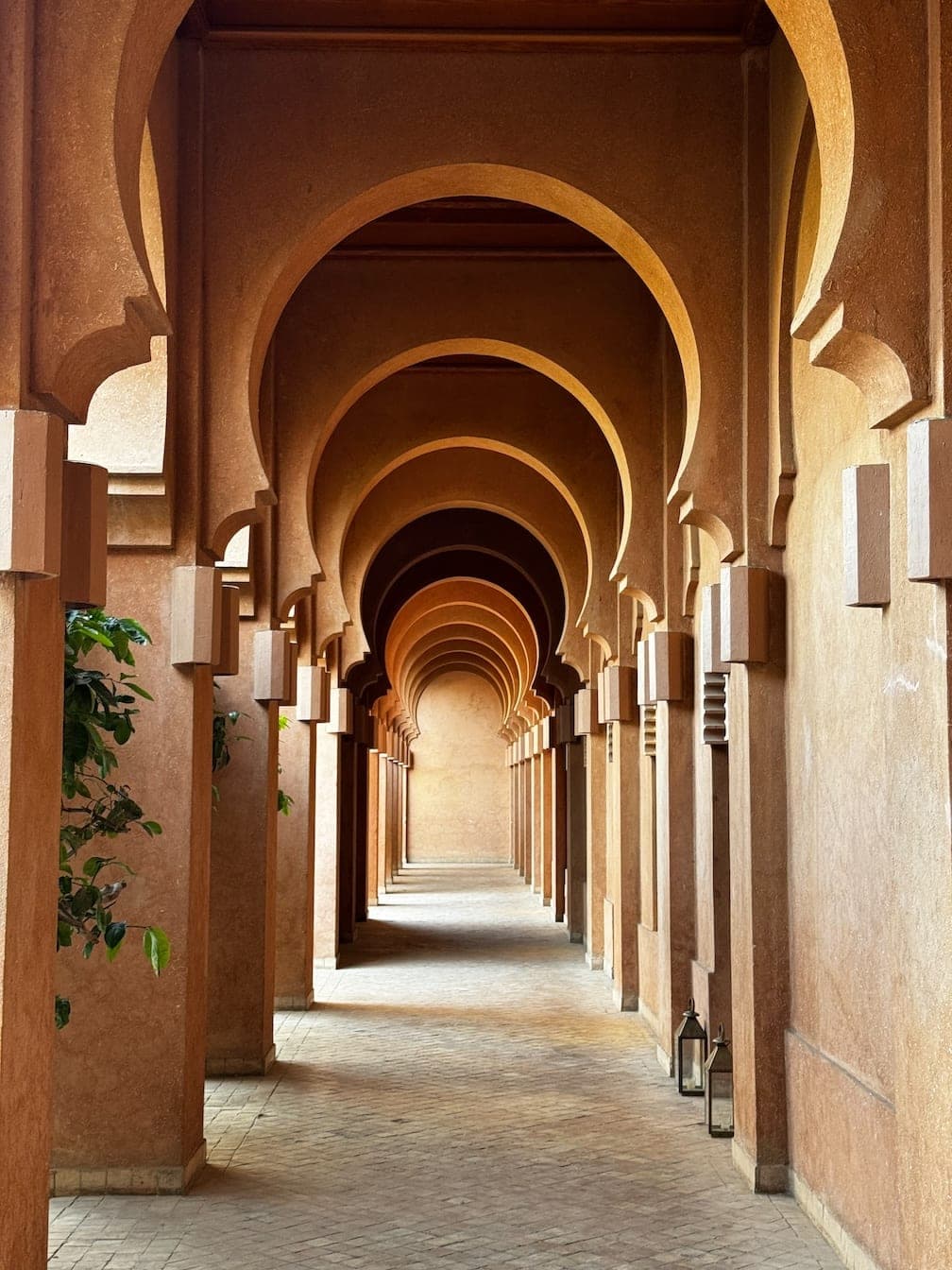
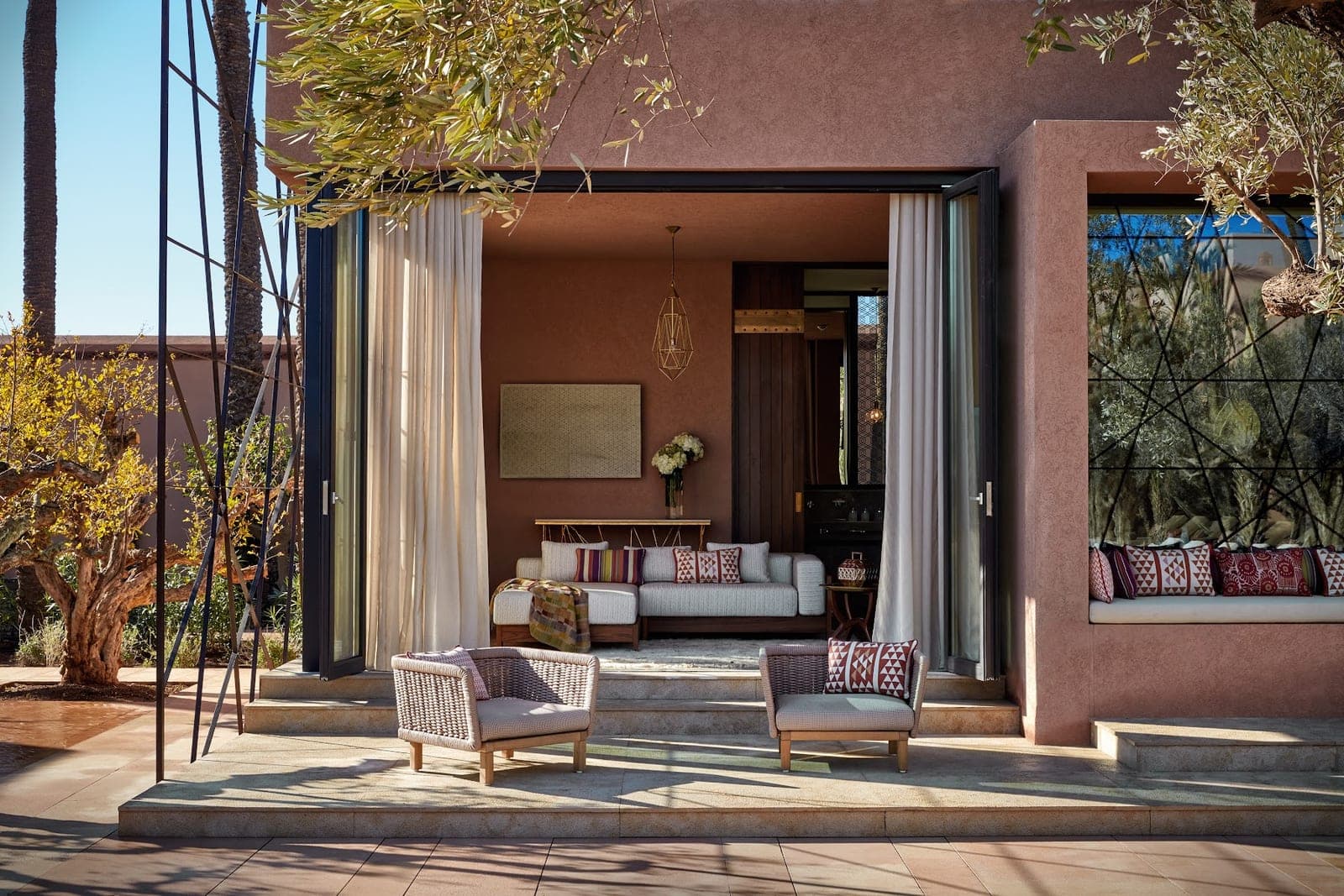
The buildings are rose-hued, their earthen palette matching the color of Marrakech's historic walls rather than contrasting with them. Vaulted ceilings, archways, and interior courtyards echo the kasbahs of the old city while maintaining the proportional clarity that distinguishes Tuttle's approach. A renovation in 2025 has refreshed the property while respecting the original design logic: materials have been maintained, the landscape has been thoughtfully replanted, and contemporary service standards have been integrated without altering the architectural character.
The Accommodation Strategy
Amanjena offers thirty-two pavilions and seven maisons distributed across the property. The strategy favors separation: each unit occupies its own relationship with the landscape, its own pathway of arrival, its own visual and acoustic privacy. The approach reflects a particular understanding of luxury as solitude rather than concentration of services.
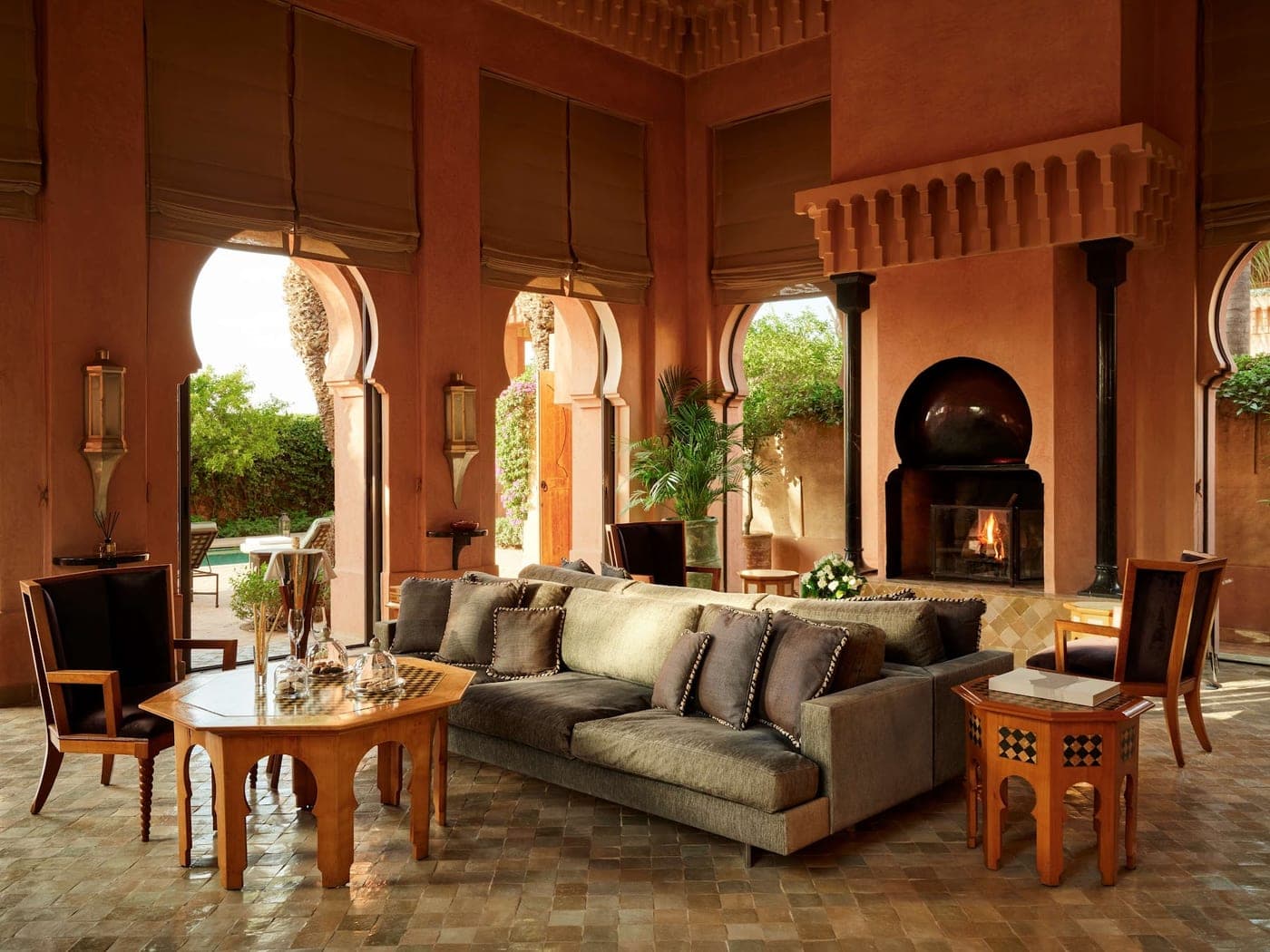
The pavilion rooms exemplify this philosophy. High ceilings create vertical generosity. Private fountains bring water and sound into immediate proximity with the interior spaces. Gardens surrounding each unit provide buffer and planting. Eight pavilions have their own private pool and garden oasis; others overlook the main thirty-three-meter pool that anchors the central landscape. The maisons can interconnect to accommodate larger groups, and each comes with butler service, extending the logic of private residence.
Each evening, staff light the fireplace, a gesture that signals the attention to the particular needs of the space and its temporary inhabitants. The bathrooms continue the material conversation: green Moroccan marble lines the walls, and deep soaking tubs provide space for unhurried bathing that the design explicitly honors as a daily ritual.
The Landscape and the Water
The landscaping of the property rivals the architecture in its intentionality. Plantings have been selected and positioned to create visual rhythm, to frame views toward architectural elements, to provide shade without overwhelming the buildings. The palm groves have been maintained and extended. Water features appear throughout, small pools and channels that reference traditional Moroccan garden design while serving contemporary landscape functions.
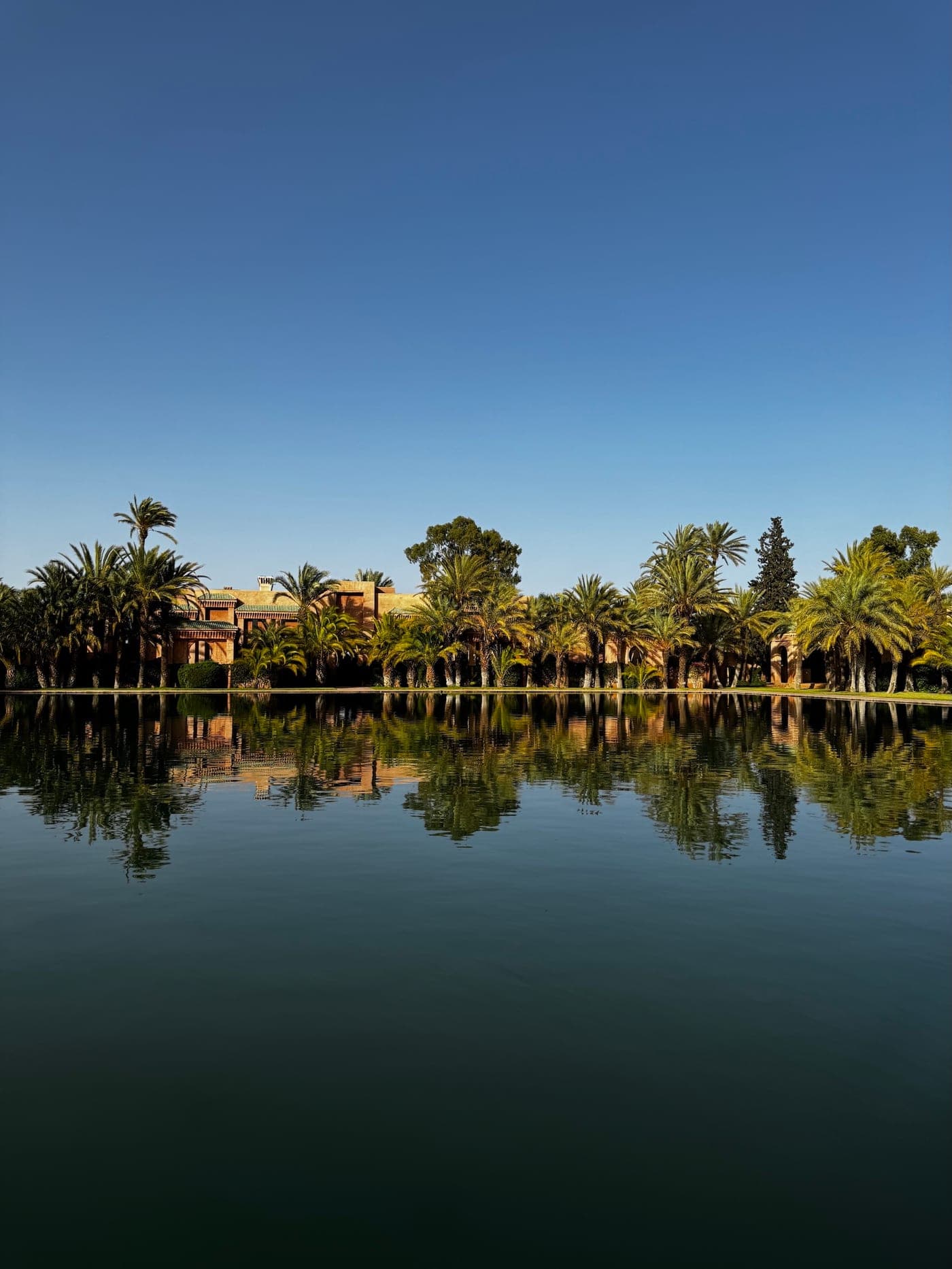
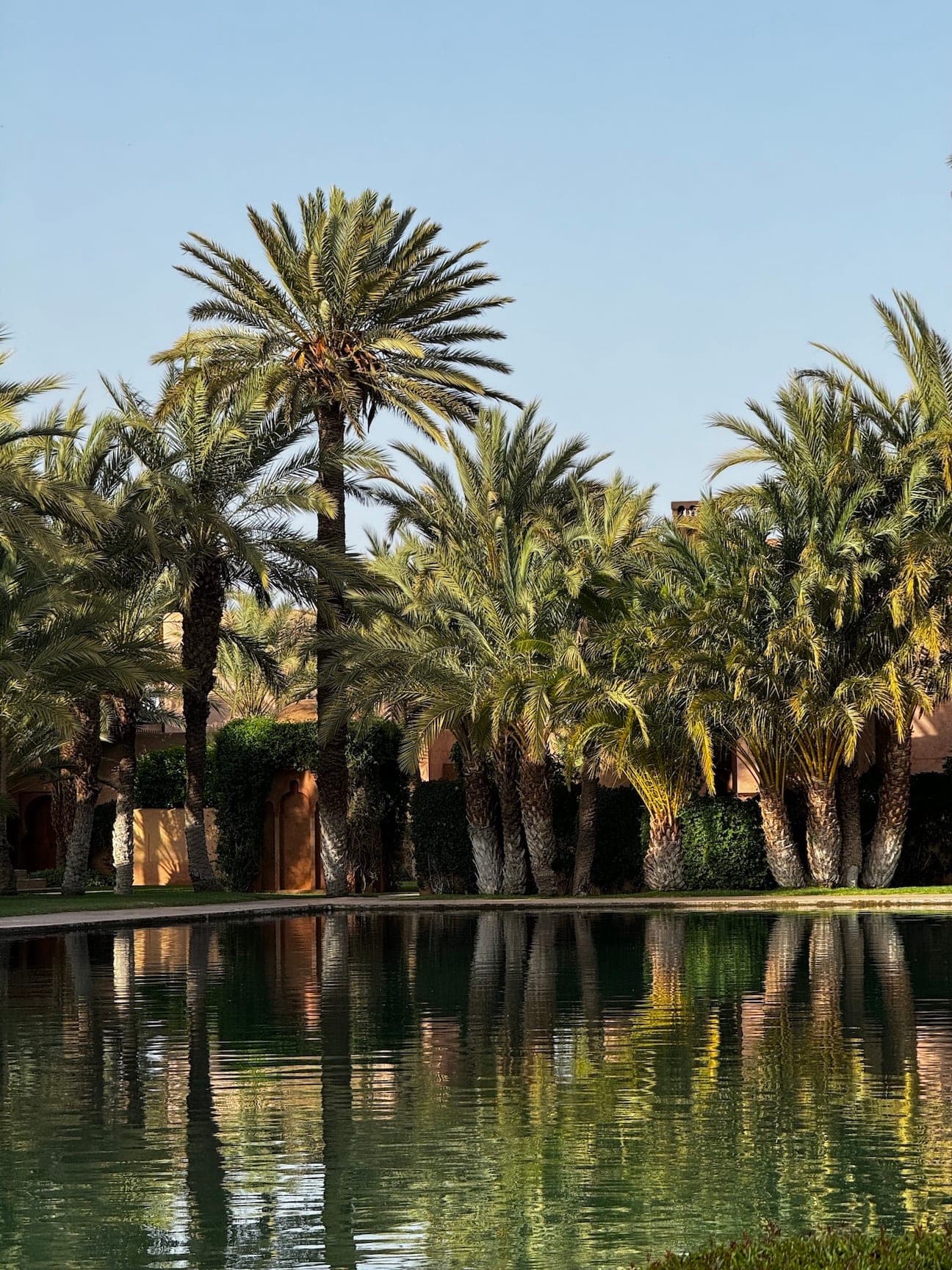
The resort functions as an oasis not only visually but structurally. The irrigation systems, the planting design, and the material choices all support the idea of abundance in an arid landscape. The effect is neither botanical exhibition nor artificial park, but a considered environment that acknowledges the constraints of its geography while asserting the possibility of sustaining green and water in this particular climate.
The Dining Program
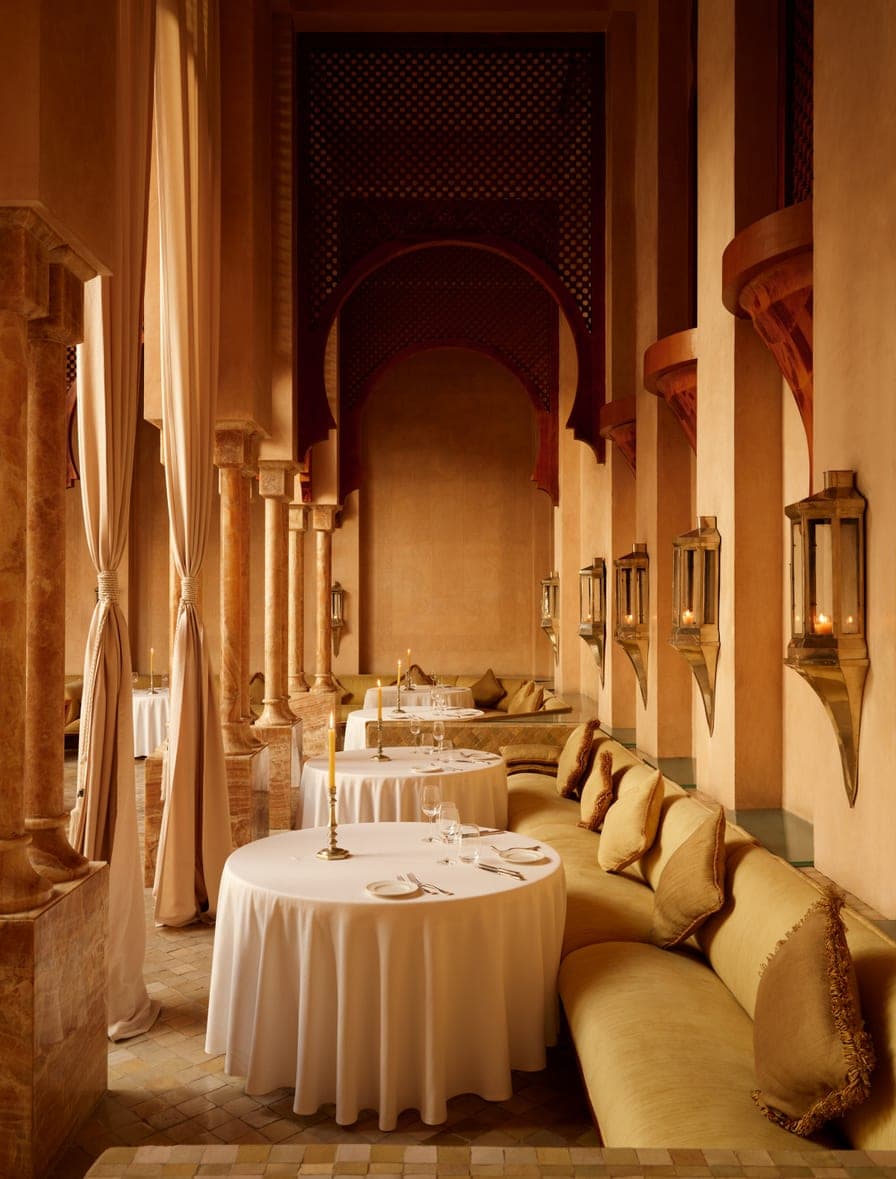
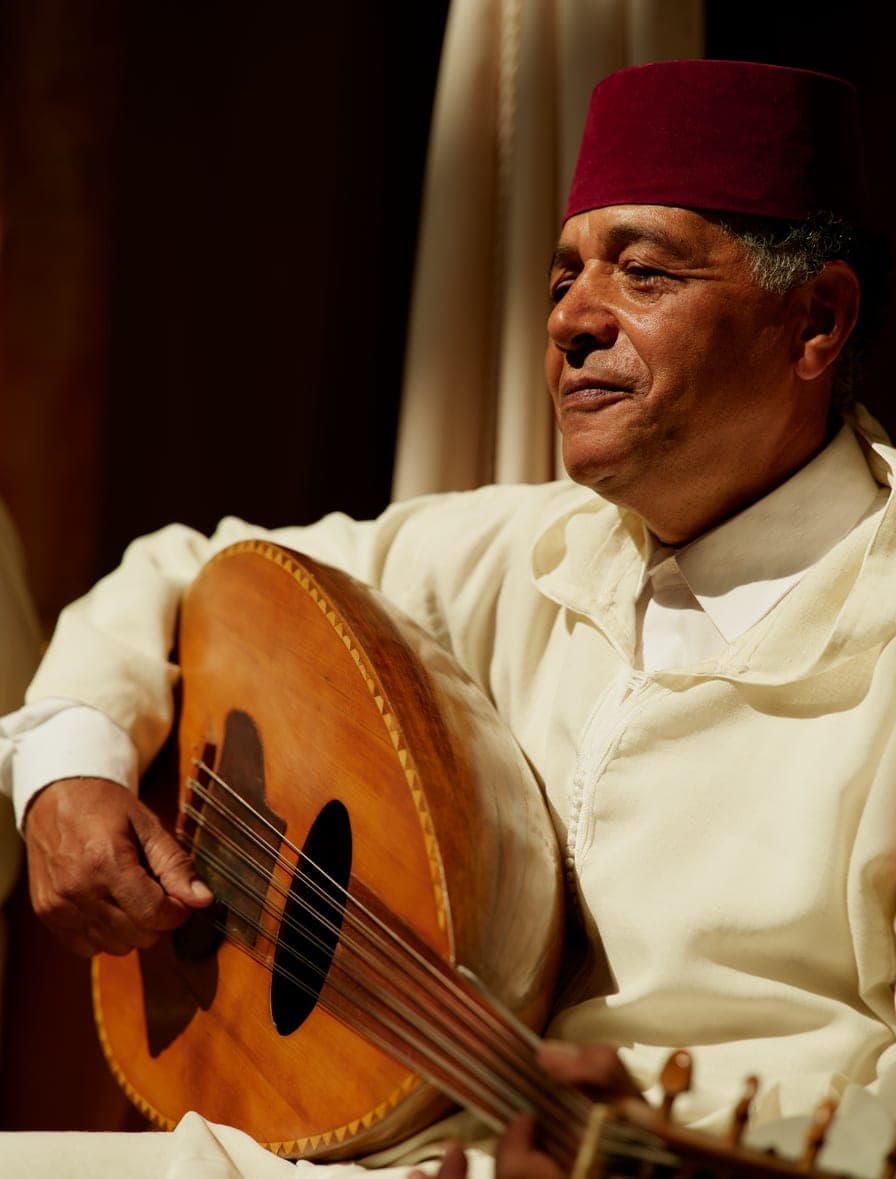
The Moroccan Restaurant offers dinner with a menu drawn from the culinary traditions of the country, accompanied by local musicians who play throughout the evening. The setting places the food and the music in relationship to each other, so that the cultural dimension of the meal is present in both what arrives at the table and what fills the space around it.
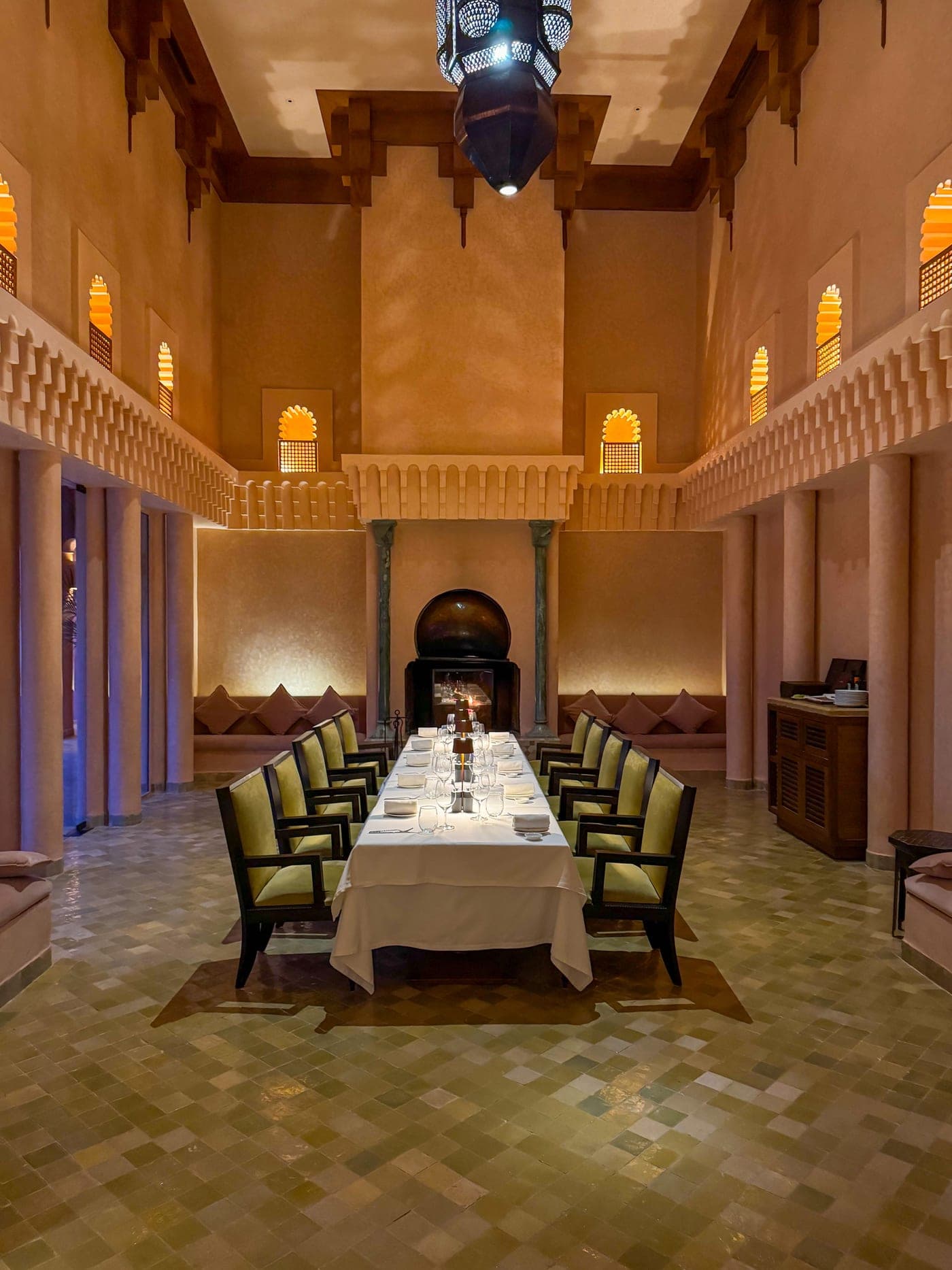
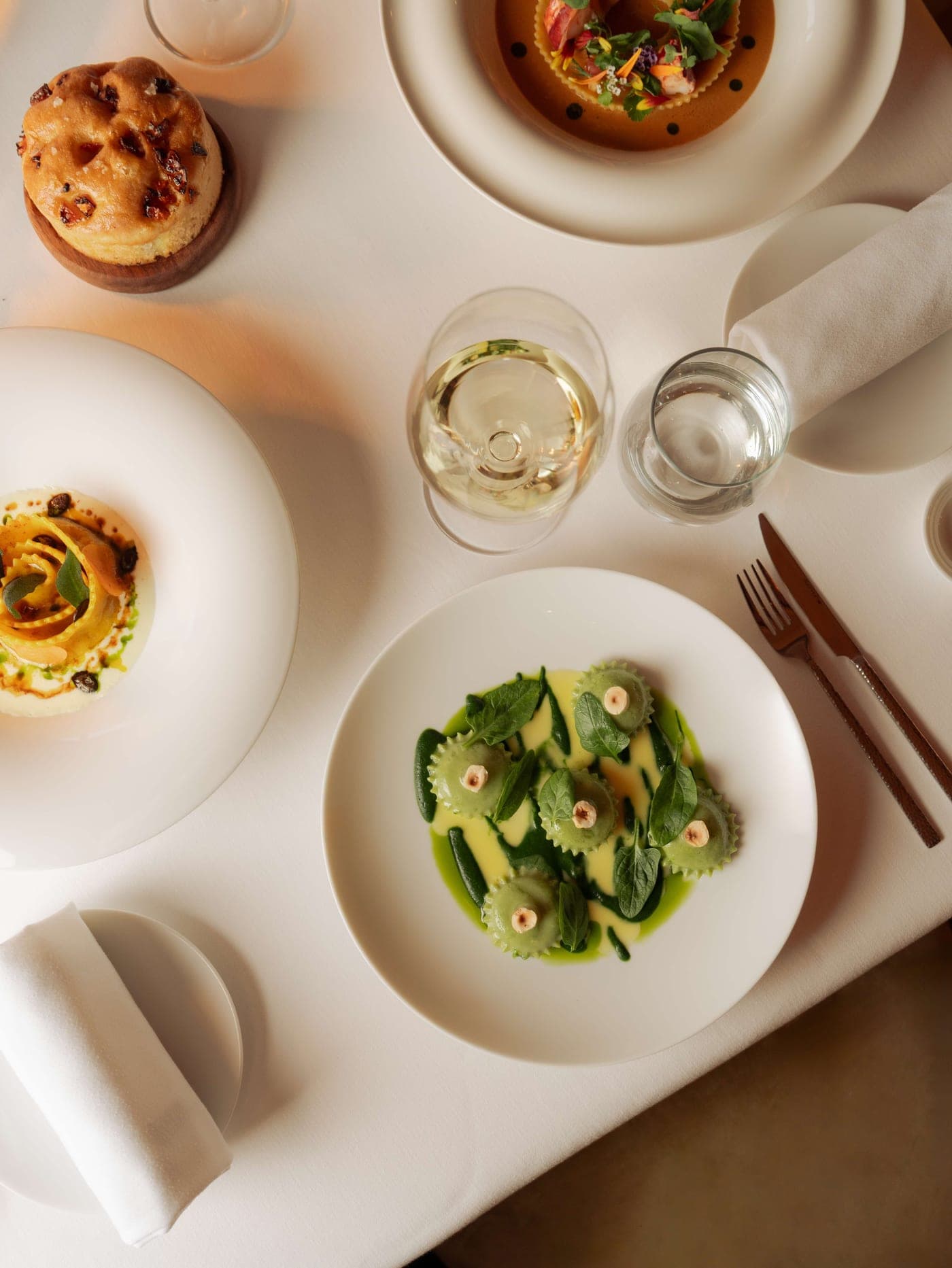
Arva, Aman's signature Italian restaurant positioned near the main pool, is conceived as a celebration of Italy's culinary heart. The menu moves with the seasons, drawing from the produce and slow traditions of southern Italian cooking, translated through the Aman kitchen's register. The name Arva is rooted in the concept of cultivated land, and the restaurant honors that origin: the table as a place of gathering, the meal as the social event around which the rest of the evening arranges itself.
The Pool Terrace and Olive Grove completes the outdoor dining offer with Mediterranean fare served under shaded arches at the height of the day. Beyond these, the property offers further bar and lounge spaces distributed across the fifteen acres, each with its own relationship to the landscape and to the particular hours it serves most naturally. The Bar, with its inky-black seating, dusky pink walls, and single-handed nimcha swords, occupies a register of its own.
The Spa and Physical Program
The Aman Spa occupies spaces designed for restoration that employ material authenticity and spatial generosity as primary tools. Marble hammams fragrant with rose and orange blossom offer a restorative sequence that connects ancient ritual to contemporary practice. Treatments draw from the regional material repertoire: argan oil, rhassoul clay, gommage scrubs. Yoga, meditation, and fitness sessions run alongside the hammam and bodywork program, providing a range of approaches to physical restoration that anticipates different guest intentions. Tennis courts complete the active facilities.
What Amanjena represents within Marrakech is a specific position in luxury hospitality: the commitment to contemplation over activity, to the particular qualities of solitude and material beauty, to a resort model that rewards time spent in one place rather than movement between experiences. The fifteen acres, the dispersed pavilions and maisons, the water features and the planted landscape all work in the same direction. The result is a property that occupies its geography with conviction.
Amanjena · Hotel
Discover Amanjena→You may also like…