STAY
The Mellah Hotel: Where Moroccan Craft and Contemporary Art Live Together
A ten-room boutique hotel in Marrakech's historic Jewish quarter, where hand-cut zellige, mid-century furniture, and artworks by Mous Lamrabat occupy a restored riad a three-minute walk from Bahia Palace.
Timence Guide Editors · 5 April 2026
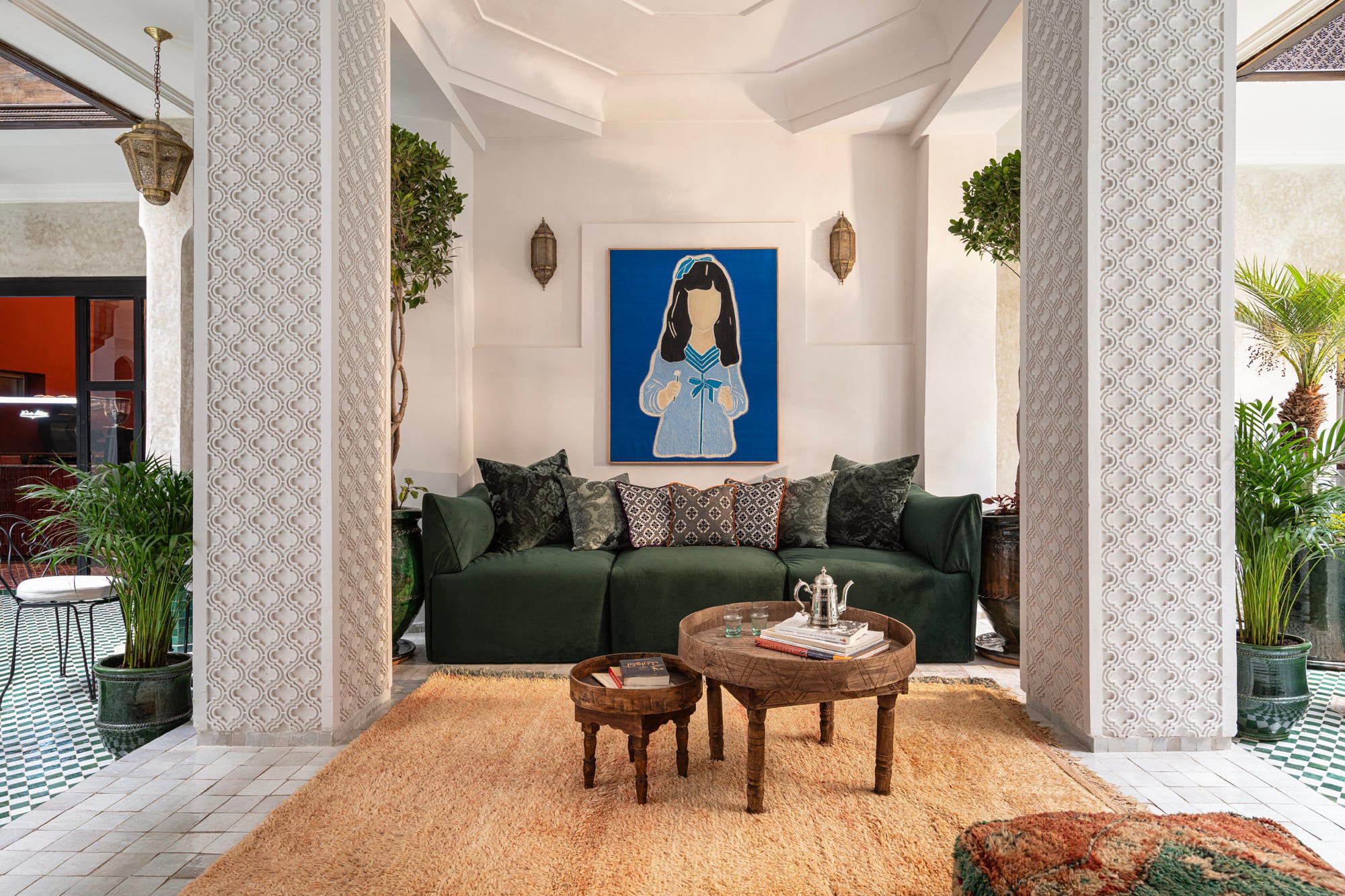
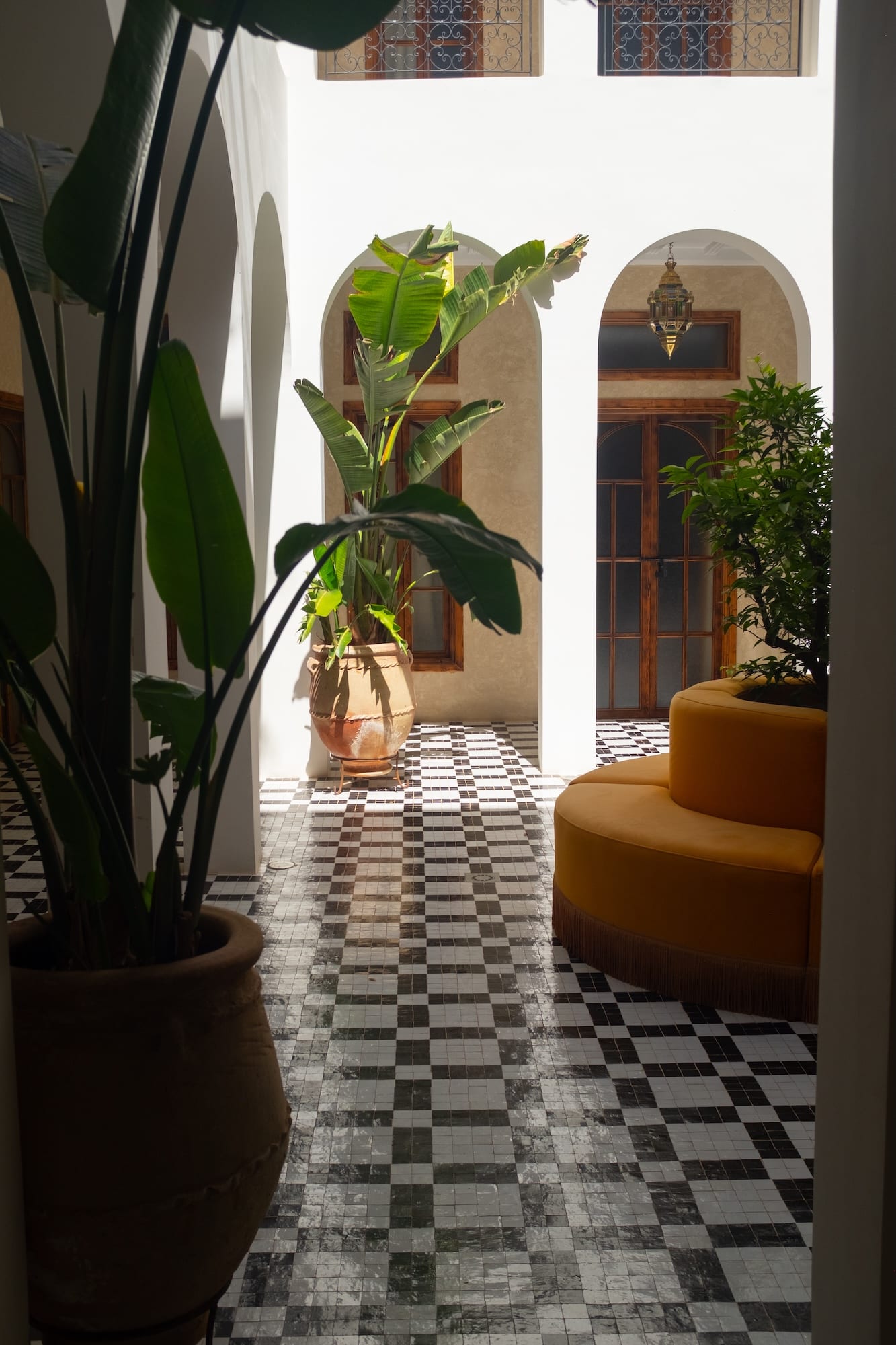
From the lane it announces nothing: a small door on a narrow, almost anonymous derb in the Mellah, the kind you would walk past without a second look. Step through it and the building opens at once, a hall dense with detail giving onto a courtyard full of light. The courtyard works on contrast: a circular ochre velvet sofa against a minimal black-and-white checkerboard floor, large green banana plants rising around it. The compression of the street gives way in a single step to color and height.
That contrast is the neighborhood in miniature. The Mellah carries a history distinct from the souk quarter around it, the district set aside in the sixteenth century to house Marrakech's Jewish community, its architecture shaped by that separateness: enclosed wooden balconies that face inward, yellow-painted buildings that crowd narrow lanes, a spatial grammar that developed on its own logic and left visible traces. The streets feel different here. Quieter, more enclosed, marked by the layered use of space over centuries.
Into this district, French-Moroccan entrepreneur Simo Azzouz brought a riad restoration that reads as a passion project before a hotel. The building at 13 Derb Alaati Allah is not a hospitality brief applied to a historic property. It is the result of someone deciding to inhabit a building with attention, to restore it using the materials its tradition demands, and to populate it with art and furniture that carry that tradition into the present without breaking its continuity.
The Materials
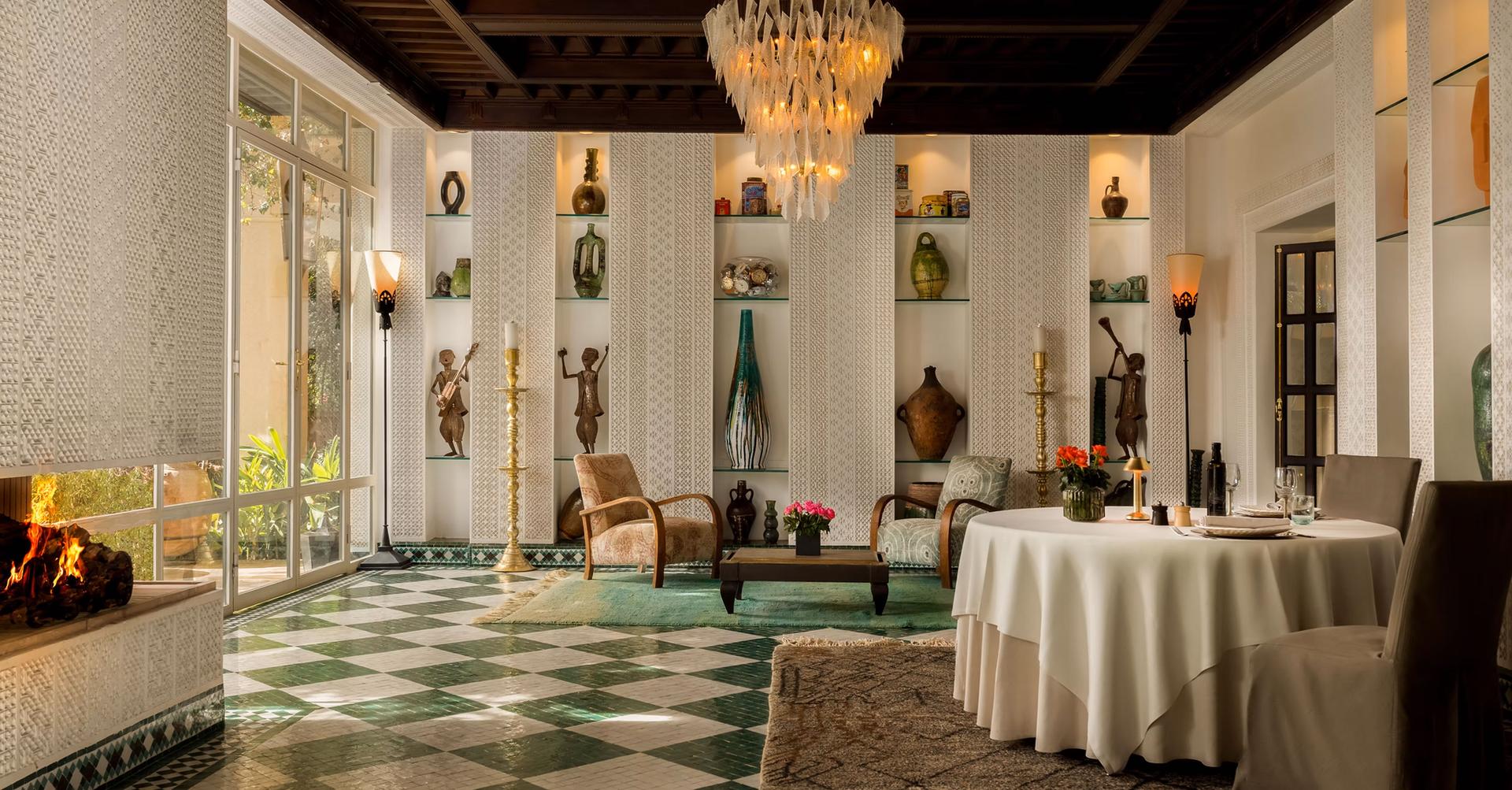
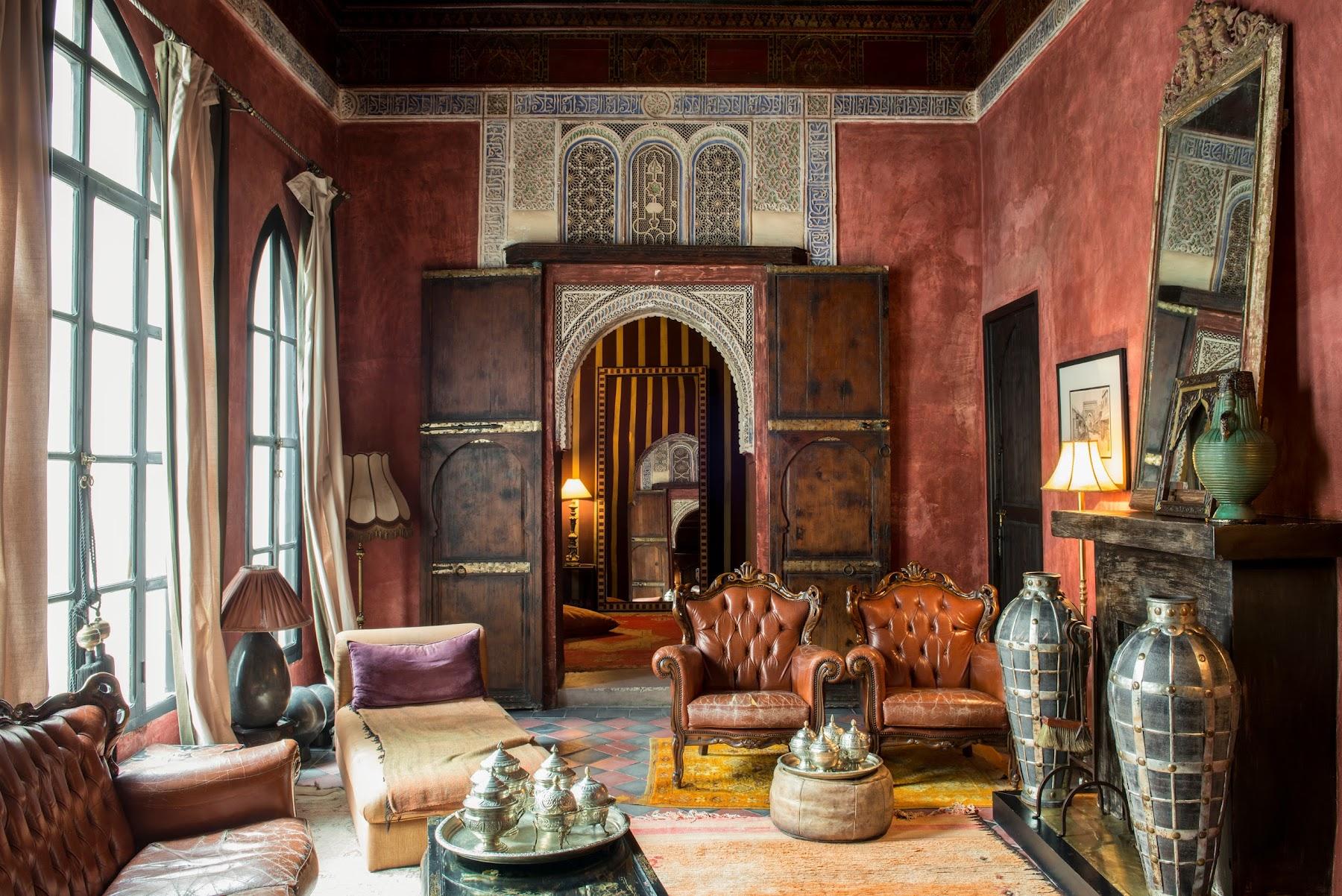
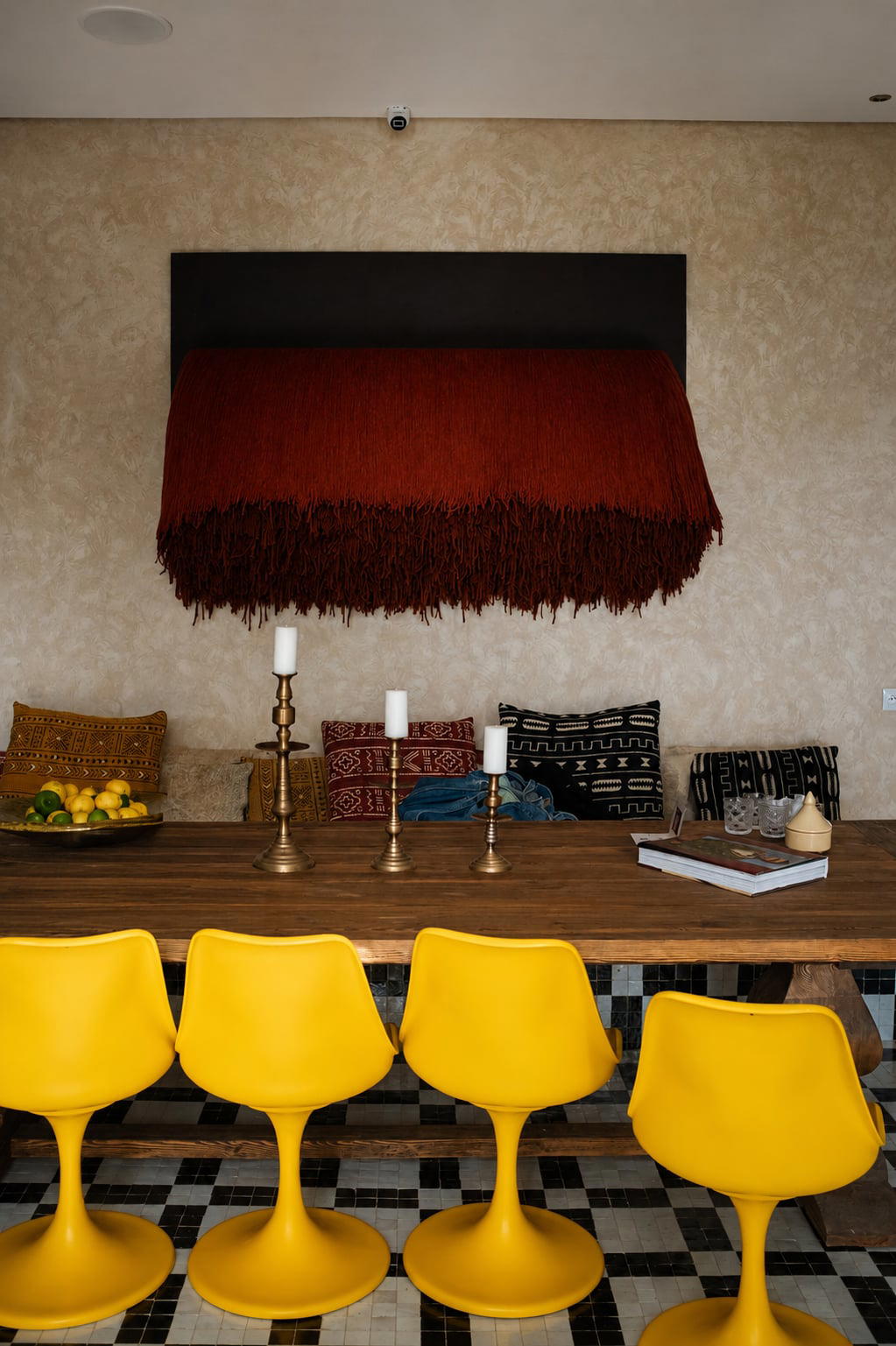
Hand-cut zellige tiles appear across the property in patterns whose geometry rewards sustained looking. The tadelakt that covers walls was applied by craftspeople who understand the material as a living surface, one that changes with humidity and light and age. Arches follow structural principles that give them their particular grace. These are not decorative choices borrowed from a vocabulary of Moroccan aesthetics. They are the primary language of the building, the given conditions from which everything else proceeds.
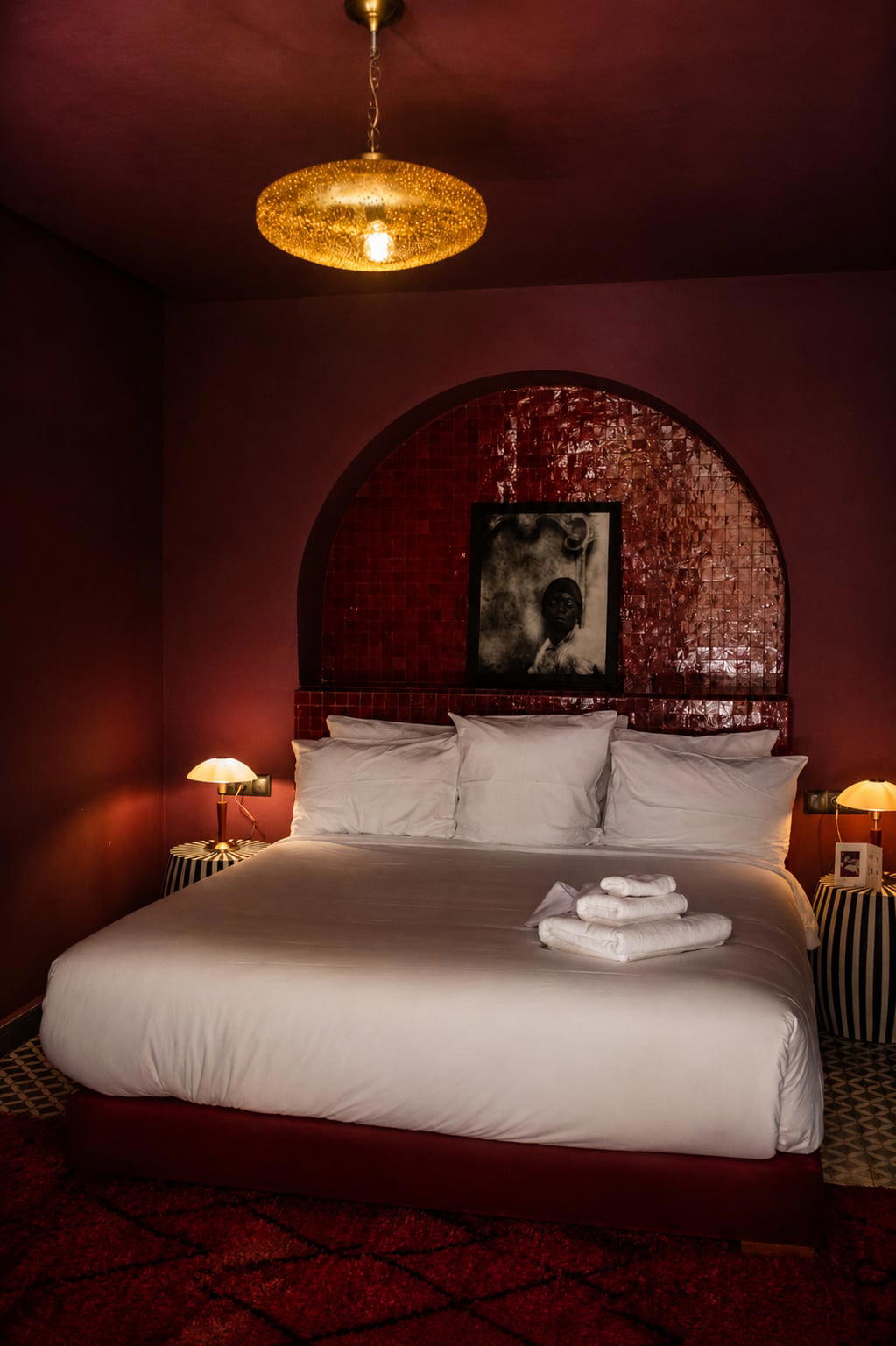
The floors set the tone before anything else: black-and-white zellige checkerboard in the courtyard and corridors, patterned cement tiles in the rooms, terracotta on the roof. The cylindrical tiled showers in each room, the Moroccan brass lighting throughout, the freestanding tubs in five rooms made from traditionally sandblasted copper or brass: these are elements that function as design decisions and as craft statements simultaneously.
No two rooms are the same, each built around its own color palette and character. Each is composed as a balance of three things: the comfort that makes it livable, the art on its walls, and a bathroom treated as part of the furniture rather than a service space set apart. Throughout the property, modernist furniture pieces appear beside artisanal surfaces. The dialogue is the point.
The Art
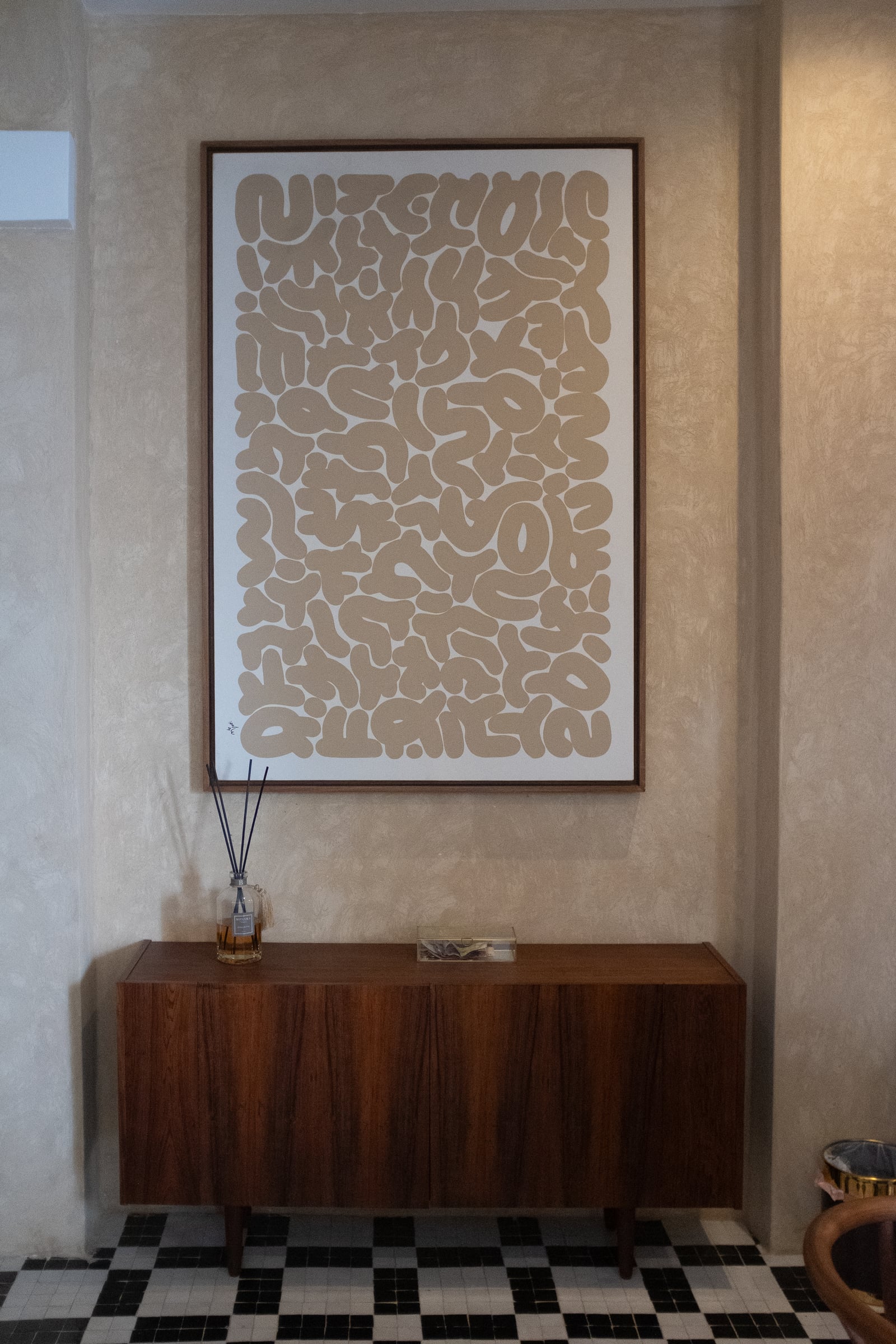
The collection begins at the door. A painting by Samy Snoussi hangs at the entrance, the Moroccan-French painter whose compositions read like a private system of signs, somewhere between writing and ornament. Deeper inside, an exhibition of work by Amine El Gotaibi, the Marrakech-born artist known for installations in wool, earth and metal that turn questions of light and power into physical form.
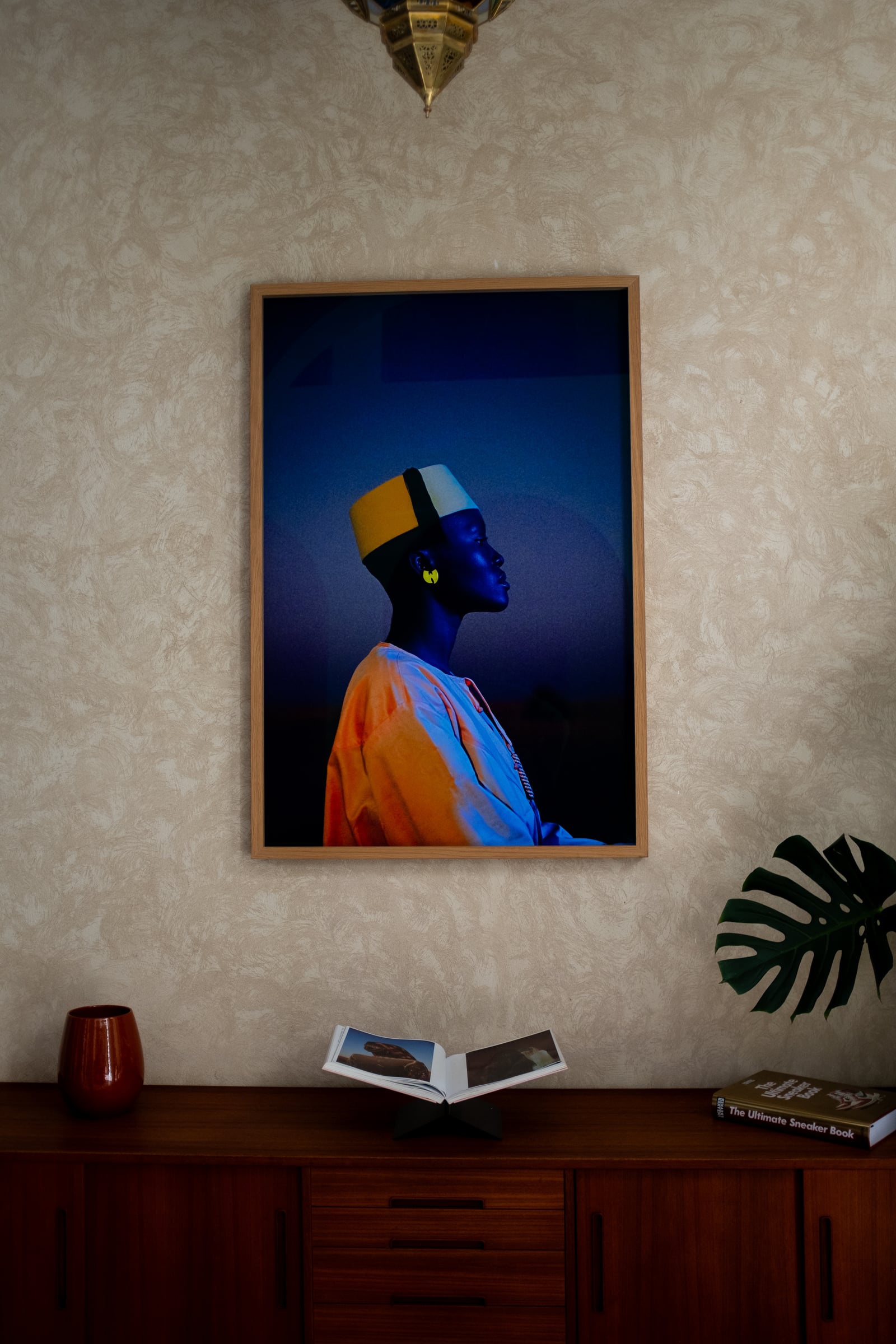
Works by Mous Lamrabat and Bouchra Boudoua are placed through the hotel's rooms and corridors. Lamrabat, a Flemish-Moroccan photographer, makes portraits that reframe questions of identity and cultural representation through bold visual composition. His work here does not function as decoration but as a framing device: the hotel is aware of what it is inside, historically and culturally, and the art acknowledges that awareness.
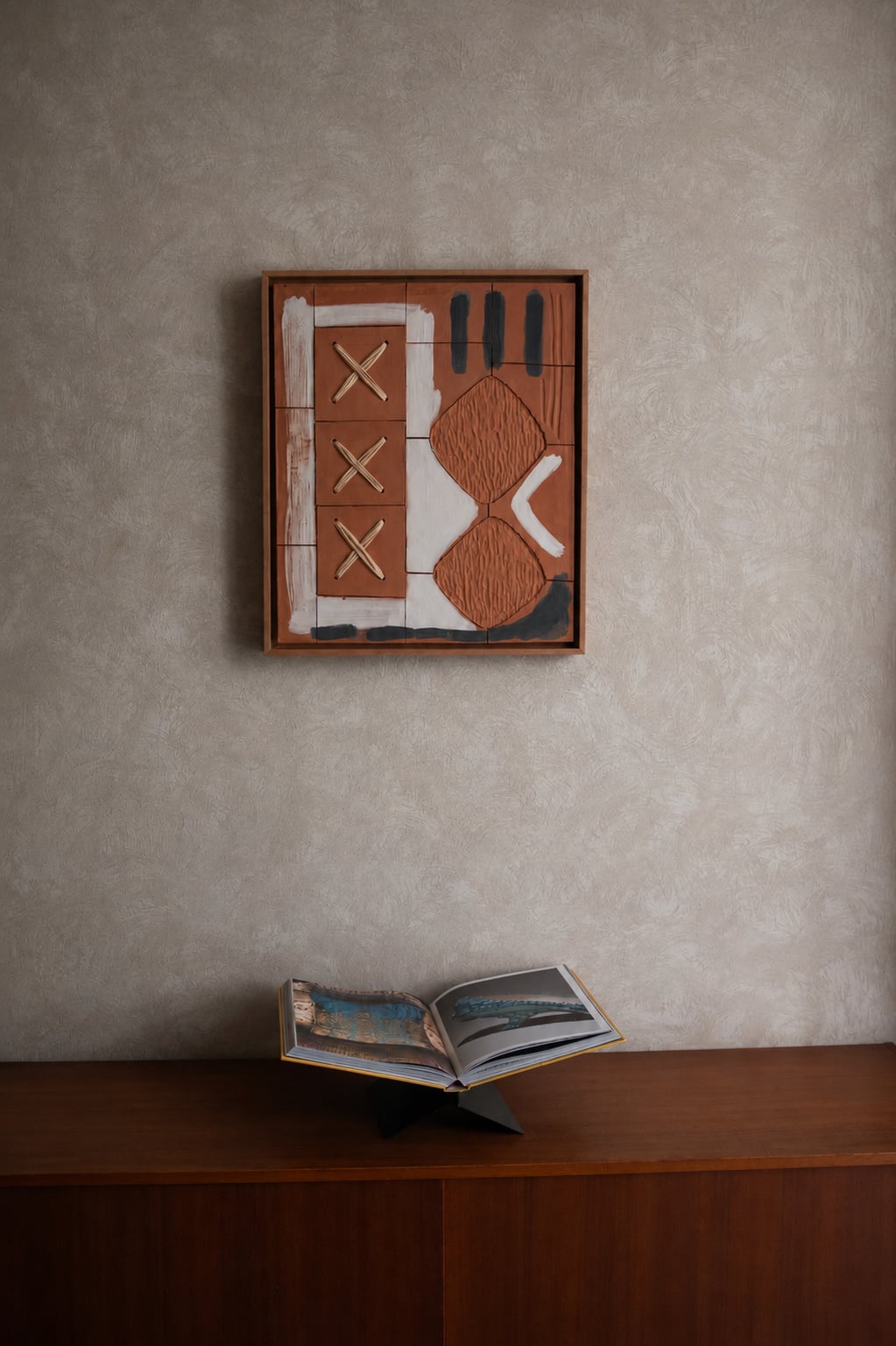
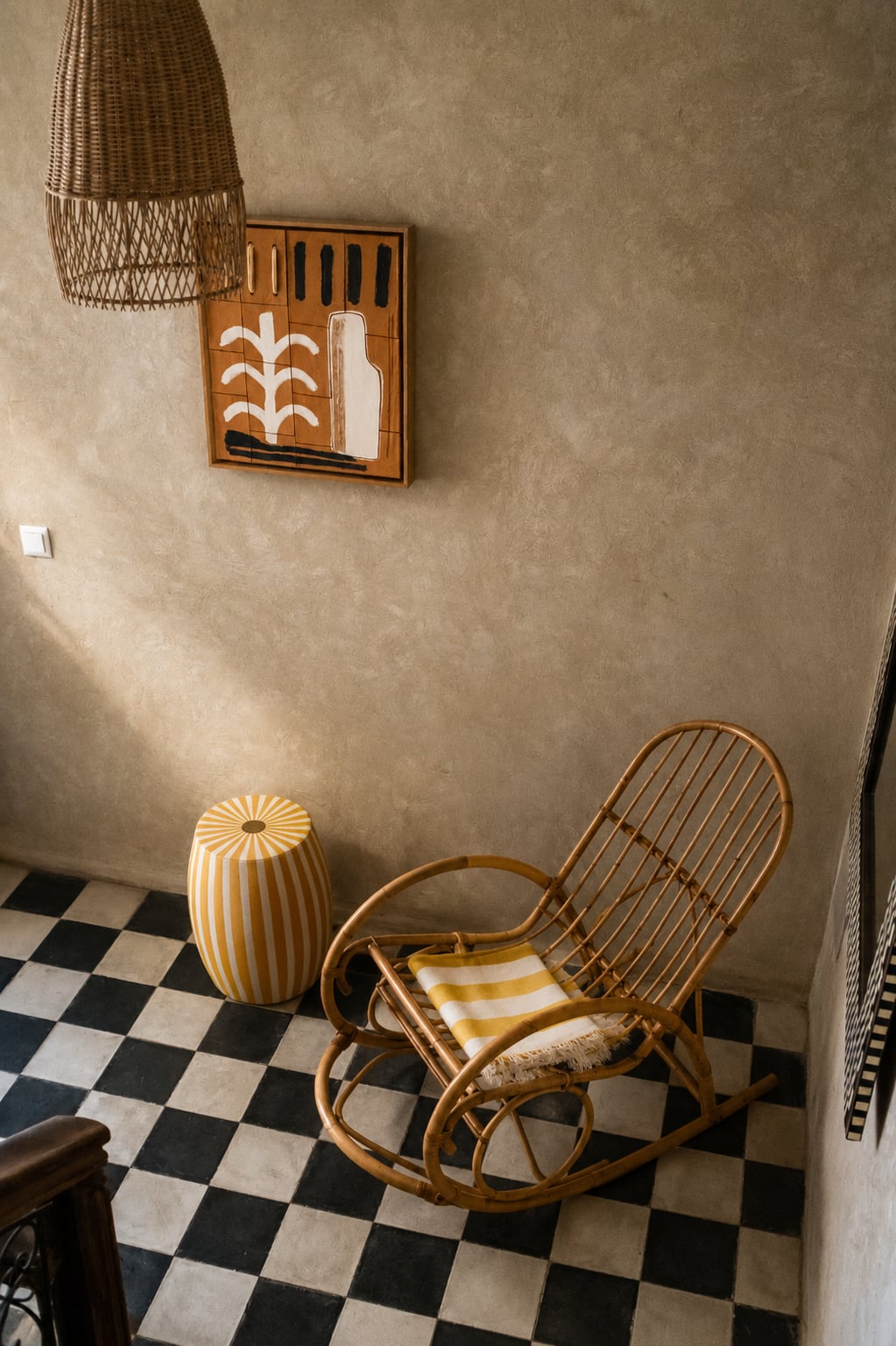
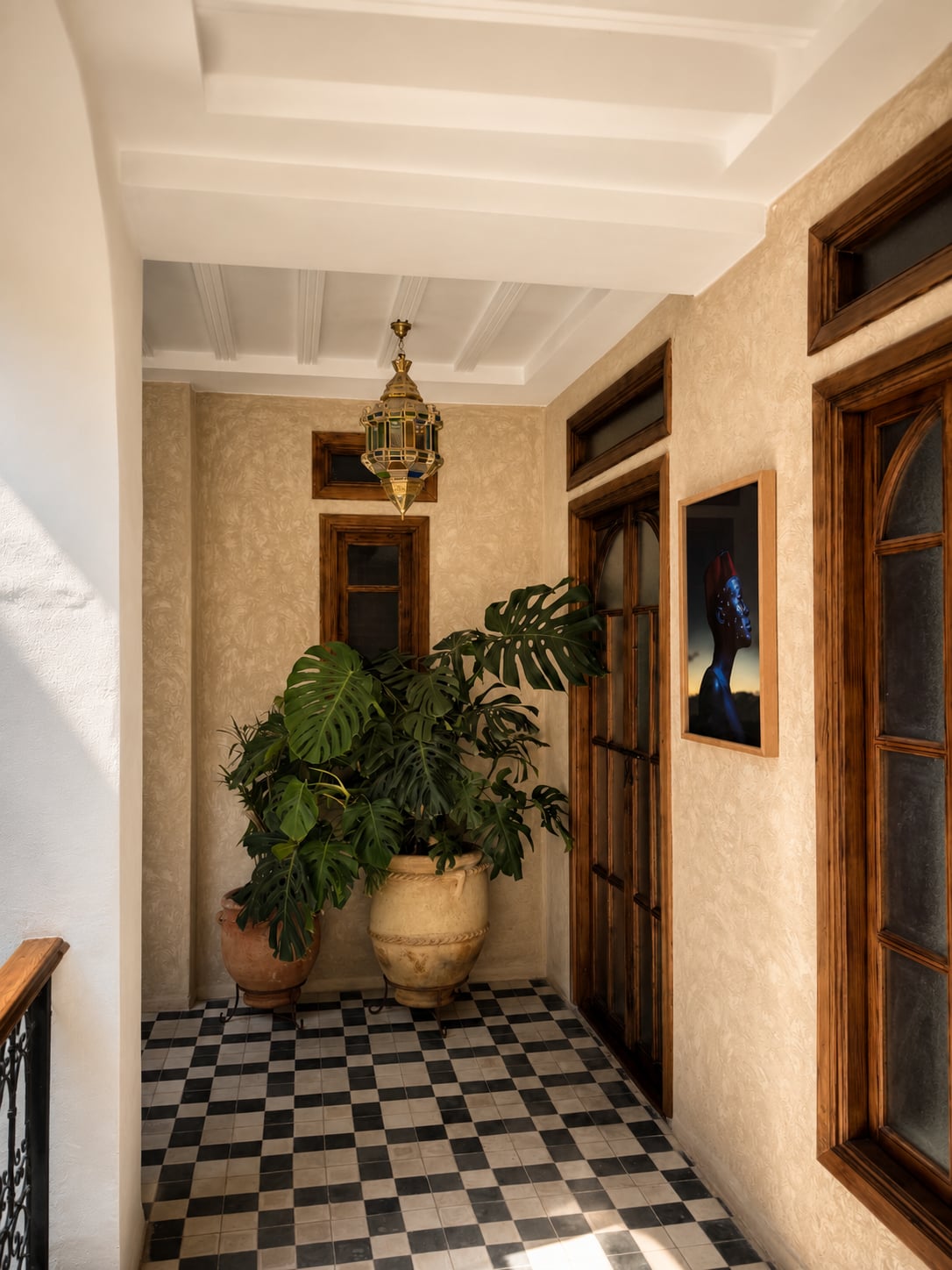
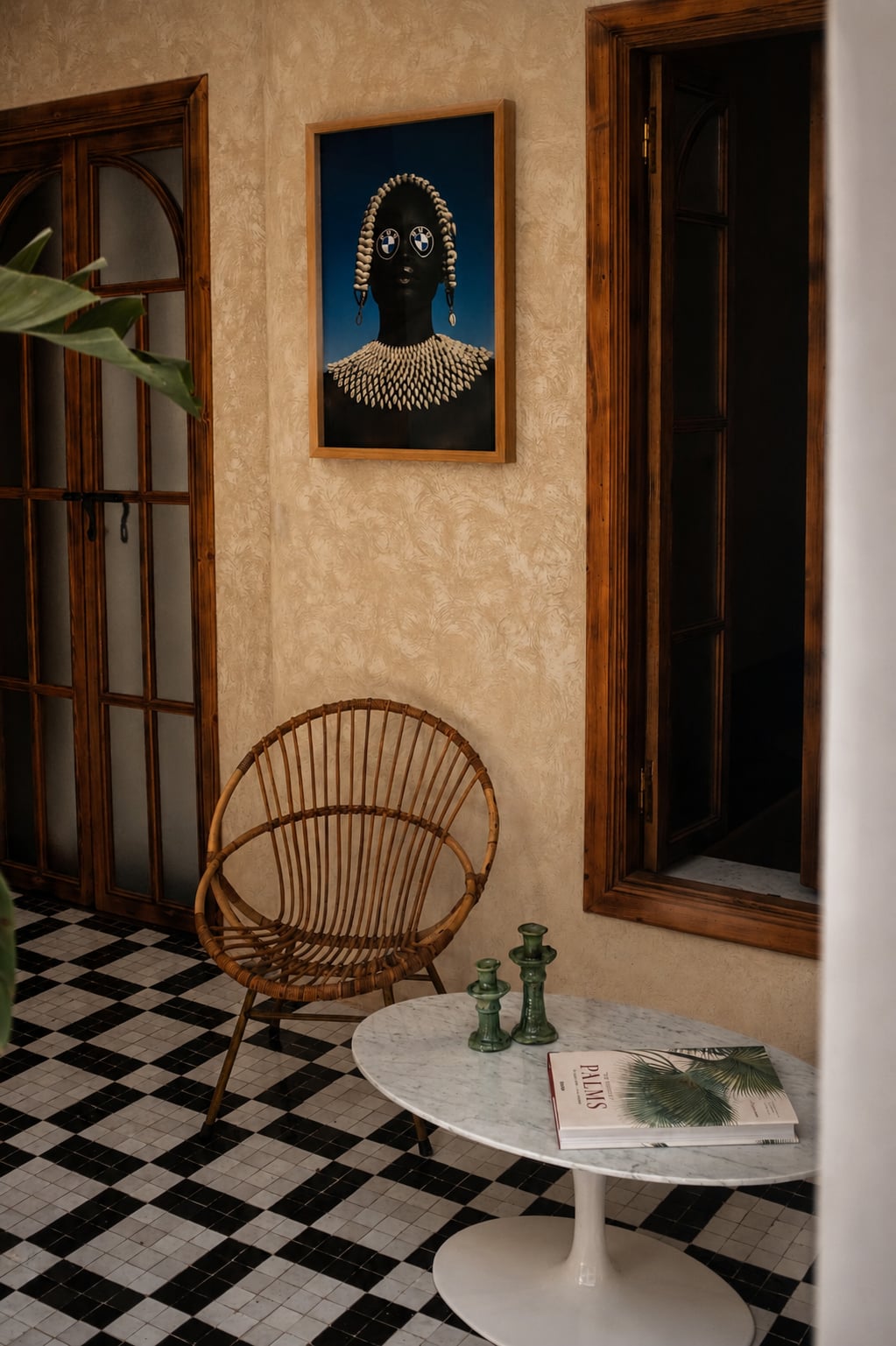
Bouchra Boudoua's work occupies a different register, contributing to the visual texture of spaces where materials, craft and image combine into environments that require no explanation. This is not a hotel that gestures toward Moroccan culture from a safe distance. It is inside it, in a neighborhood that carries that culture in its walls.
The Rooftop
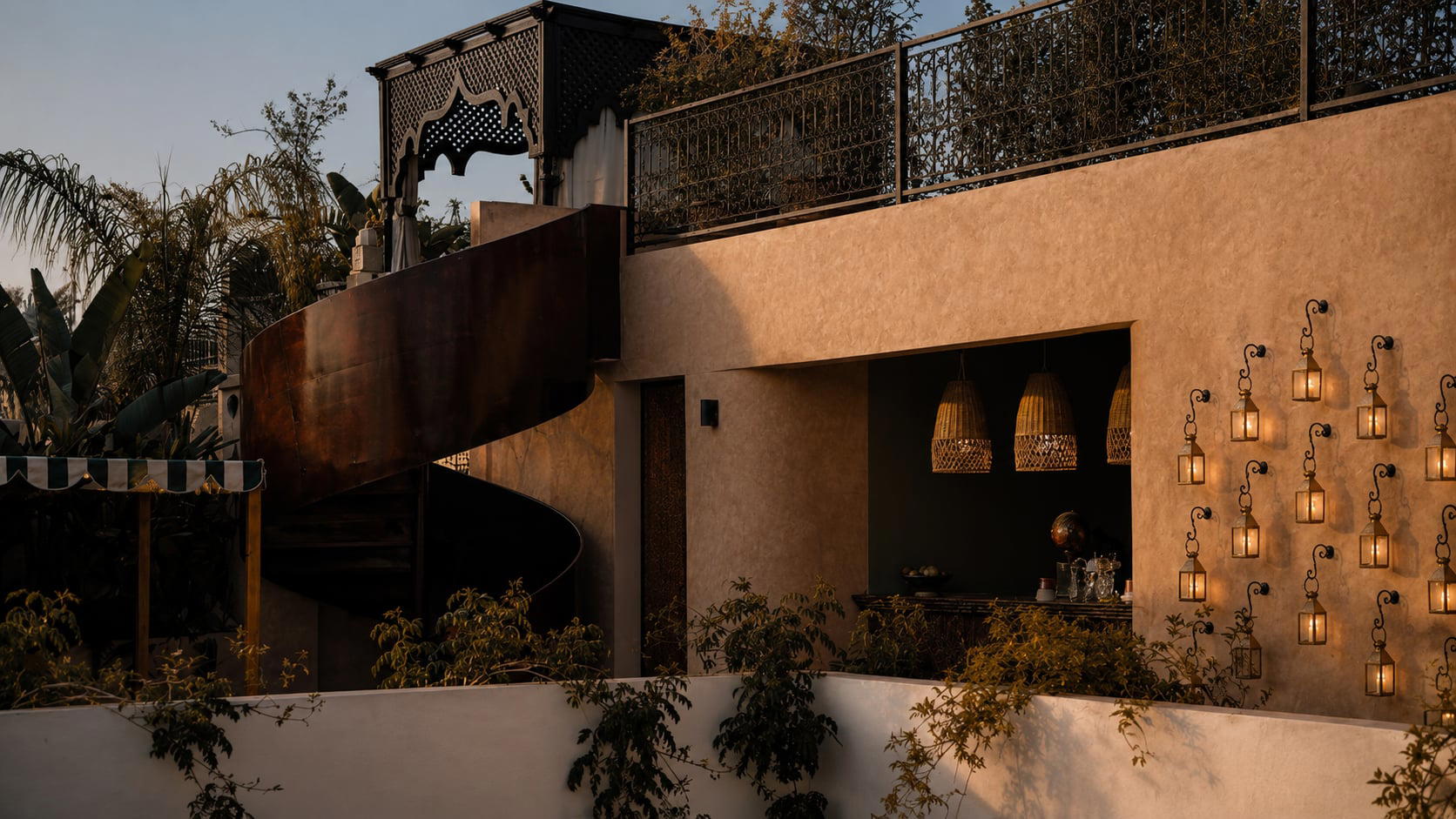
The rooftop pool measures ten meters, lined in striped zellige, the water reflecting the medina's roofscape in continuous shift. Banana trees and tropical planting create a canopy that transforms the terrace into something unexpected above the compressed streets below. The upper level offers a 360-degree panorama: the Atlas Mountains on clear days, the minarets at various distances, the geometric pattern of the medina's rooftops spreading toward every compass point.
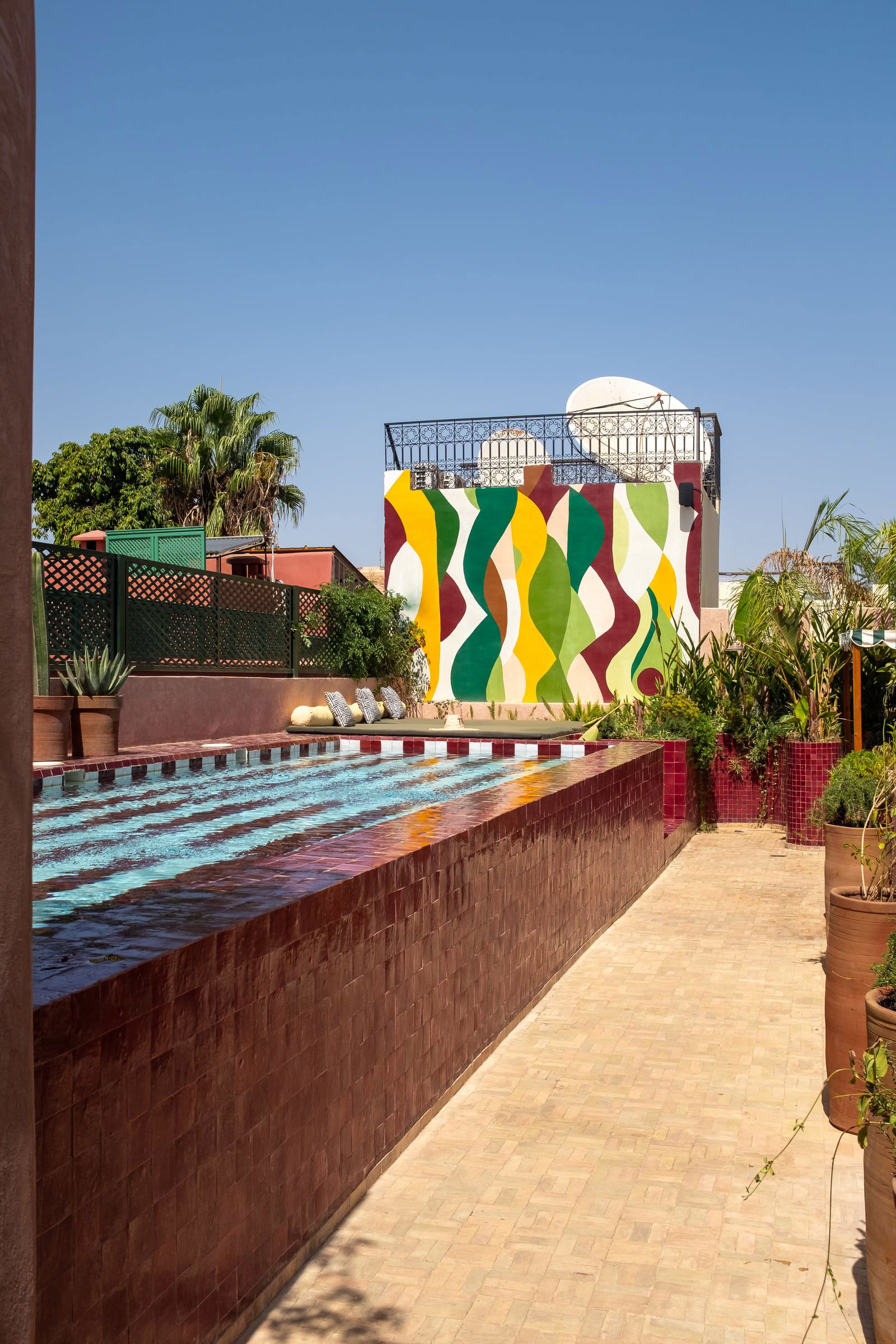
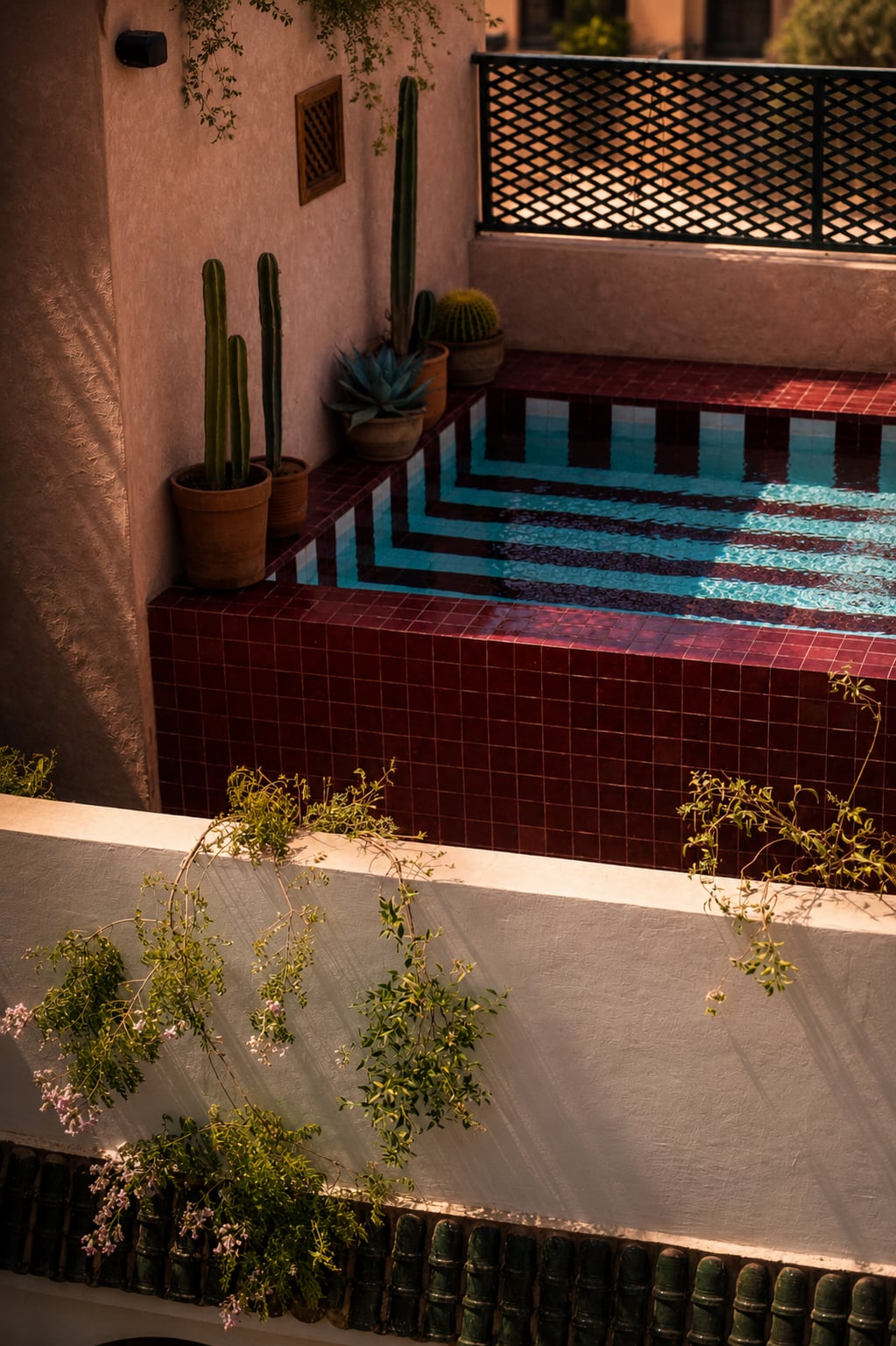
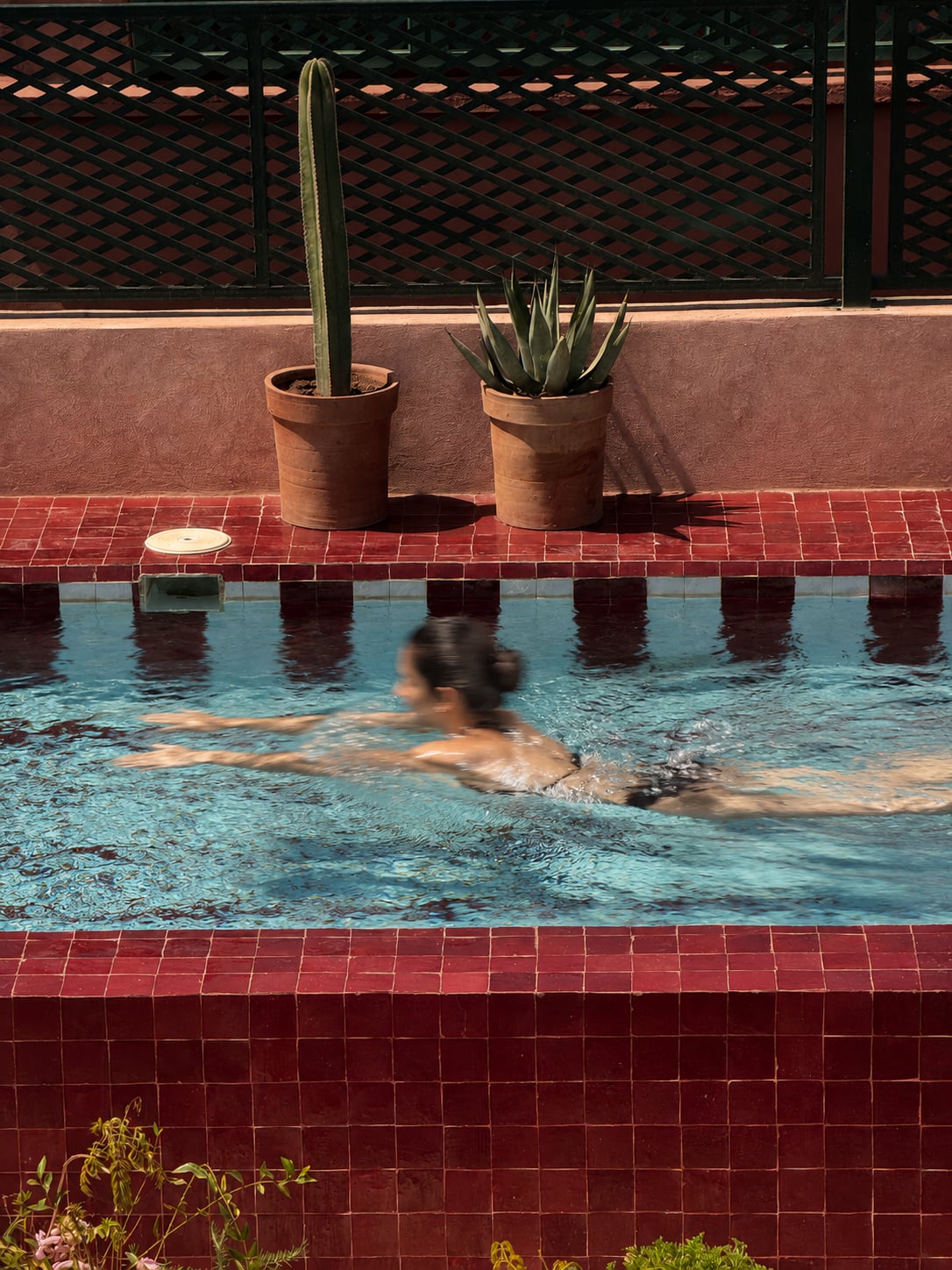
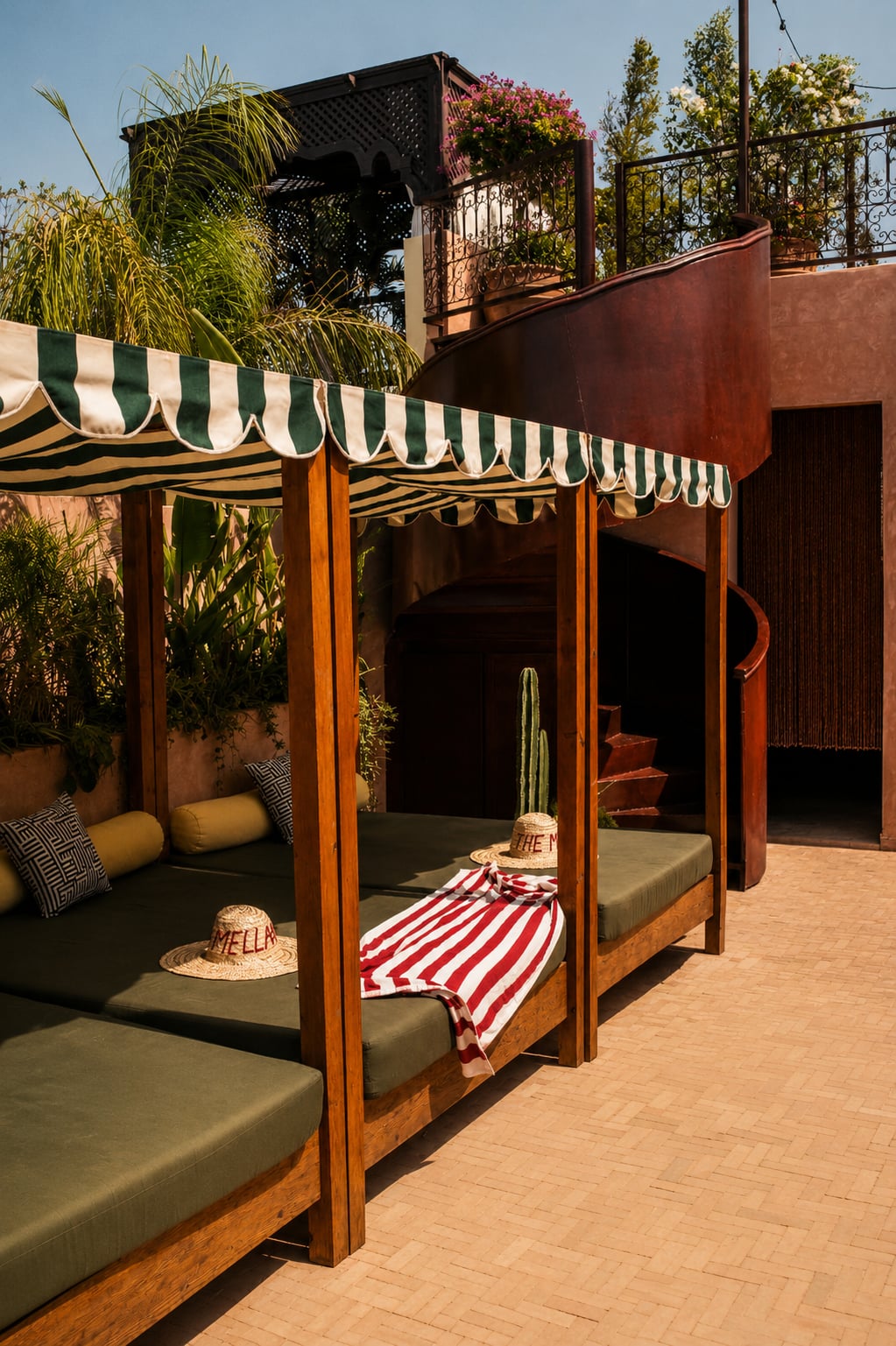
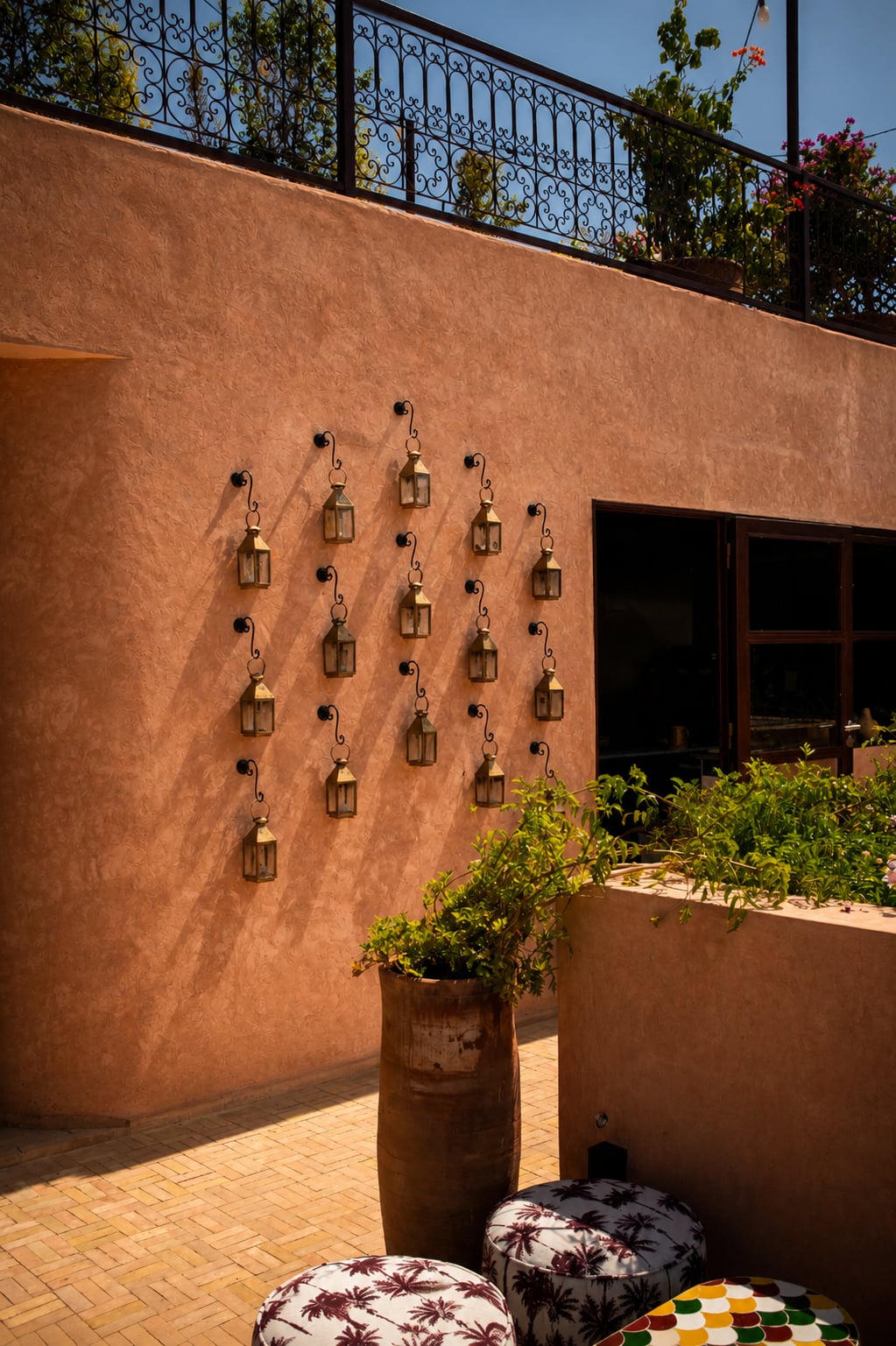
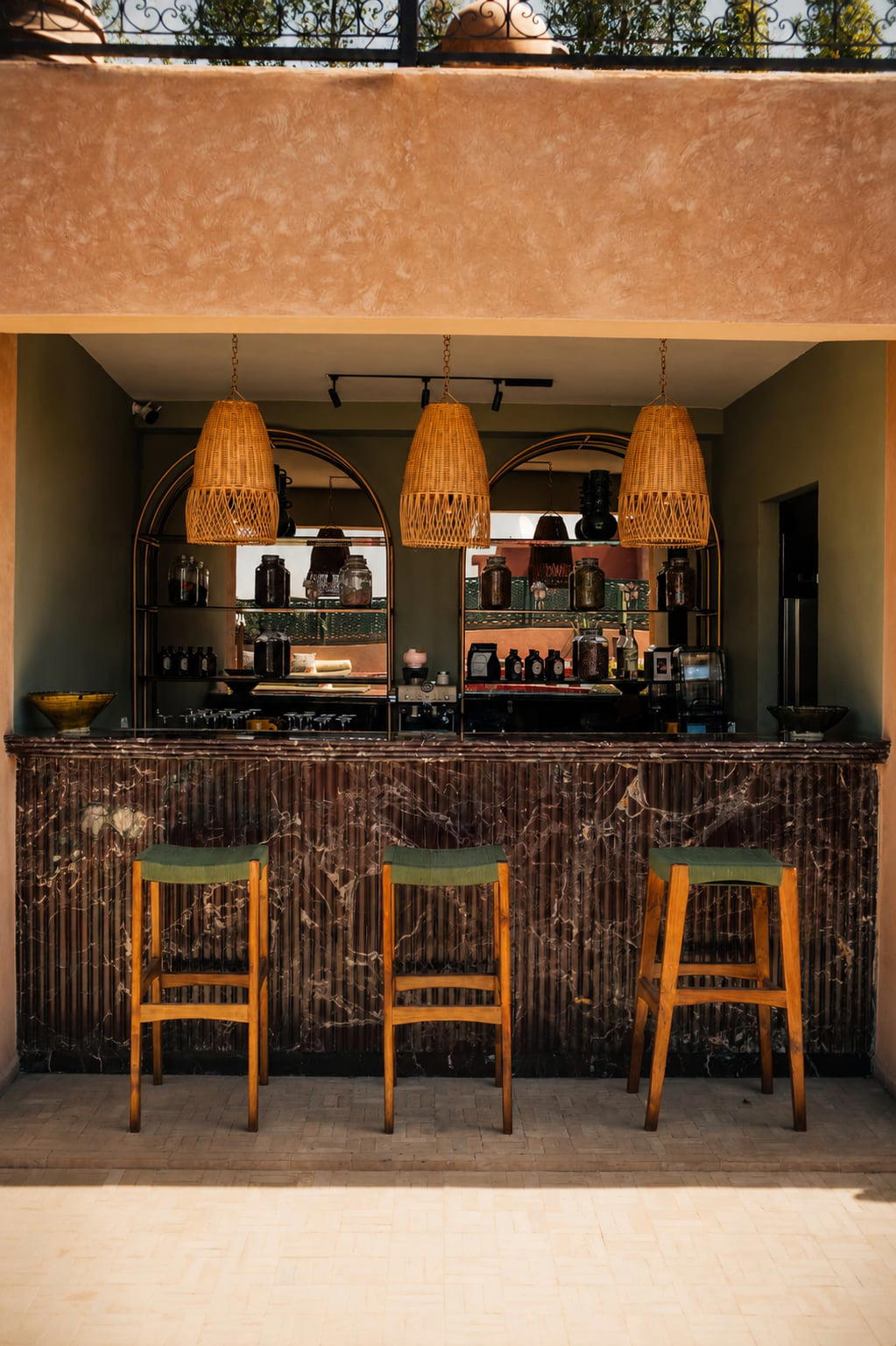
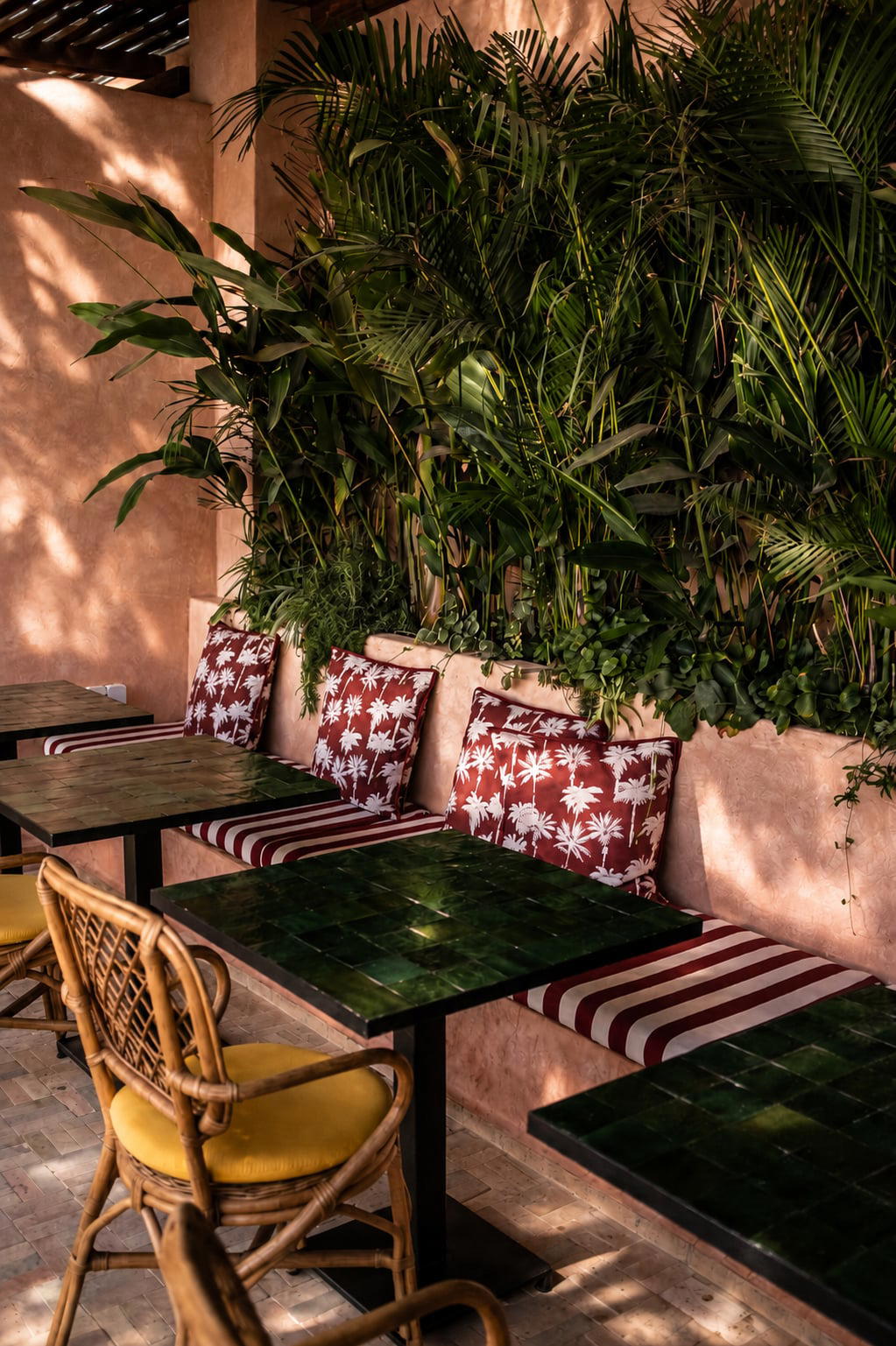
The terrace is where a day at The Mellah organizes itself. Mornings begin here, breakfast set on the tiled table as the first light reaches the roof. Through the afternoon the pool, heated and kept at around 23 degrees, and the daybeds beside it are where guests recover from the medina. At dusk the bar takes over, with a short list built on Moroccan ingredients: a hibiscus margarita, a Mellah Negroni infused with local spices. After dark the same terrace becomes a dining room under open sky.
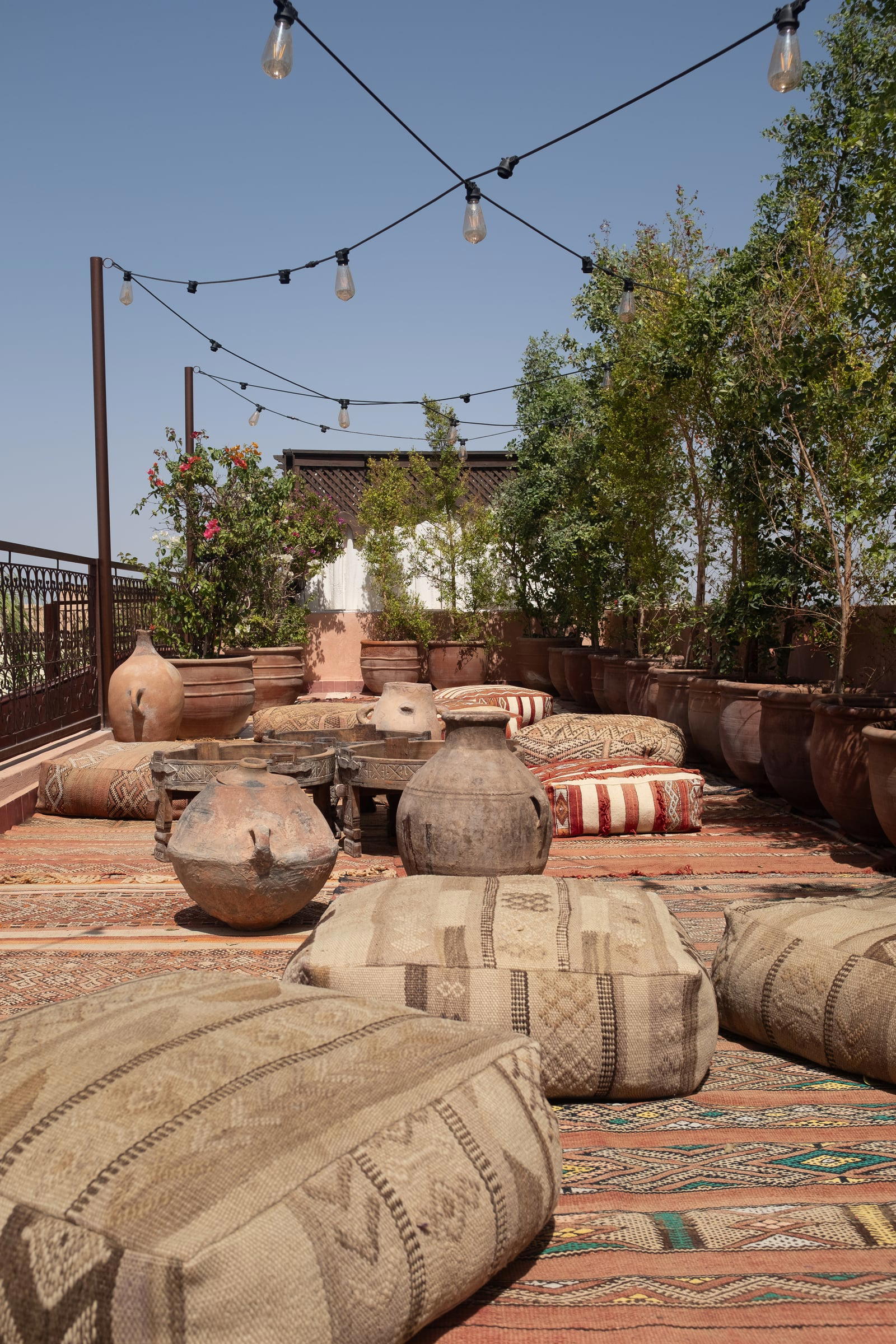
Dawn yoga sessions take place on this terrace. The elevation, the air, the view over the medina roofscape: these are the conditions the practice finds here in a combination that is hard to replicate elsewhere.
The Kitchen
Breakfast is Moroccan, set daily, with rotating fresh-pressed juices. The kitchen is overseen by chef Ilham, whose cooking moves between Moroccan and Mediterranean registers without losing the specificity of either. Cookery classes are available for tagines and Moroccan pancakes, beginning with a visit to the nearby spice market to source ingredients, and structured around the techniques of a kitchen that works from the tradition rather than toward it.
The hotel has no spa, but in-room treatments can be arranged with local therapists. The absence is not a deficit but a form of restraint. The Mellah does not attempt to be everything. It is ten rooms, a restored riad, a curated collection of craft and art and furniture, a location that places it inside one of the city's most historically layered districts. This is sufficient for what it intends to be.
The District
The Mellah quarter has undergone gradual change as its original community dispersed over the twentieth century, but the physical traces remain: the synagogues still standing, including Lazama Synagogue a few streets away; the balconied facades; the particular organization of a neighborhood that developed its own internal logic across four centuries. Bahia Palace is a three-minute walk from the hotel entrance, its nineteenth-century interiors and extensive gardens forming the architectural counterpoint to the medina's density.
To stay in this neighborhood rather than the more visited areas around Jemaa el-Fna is to receive a different version of the city. The streets are quieter. The history is more specific. The hotel makes no attempt to smooth that specificity into a more comfortable generality. It exists within the neighborhood as the neighborhood is, and offers its guests a riad that has learned to do the same.
You may also like…