STAY
Riad Dar des Arts: A Living Gallery in the Southern Medina
Inside Dar Society's boutique riad, where contemporary Moroccan art and a new idea of hospitality share the same walls.
Timence Guide Editors · 29 June 2026
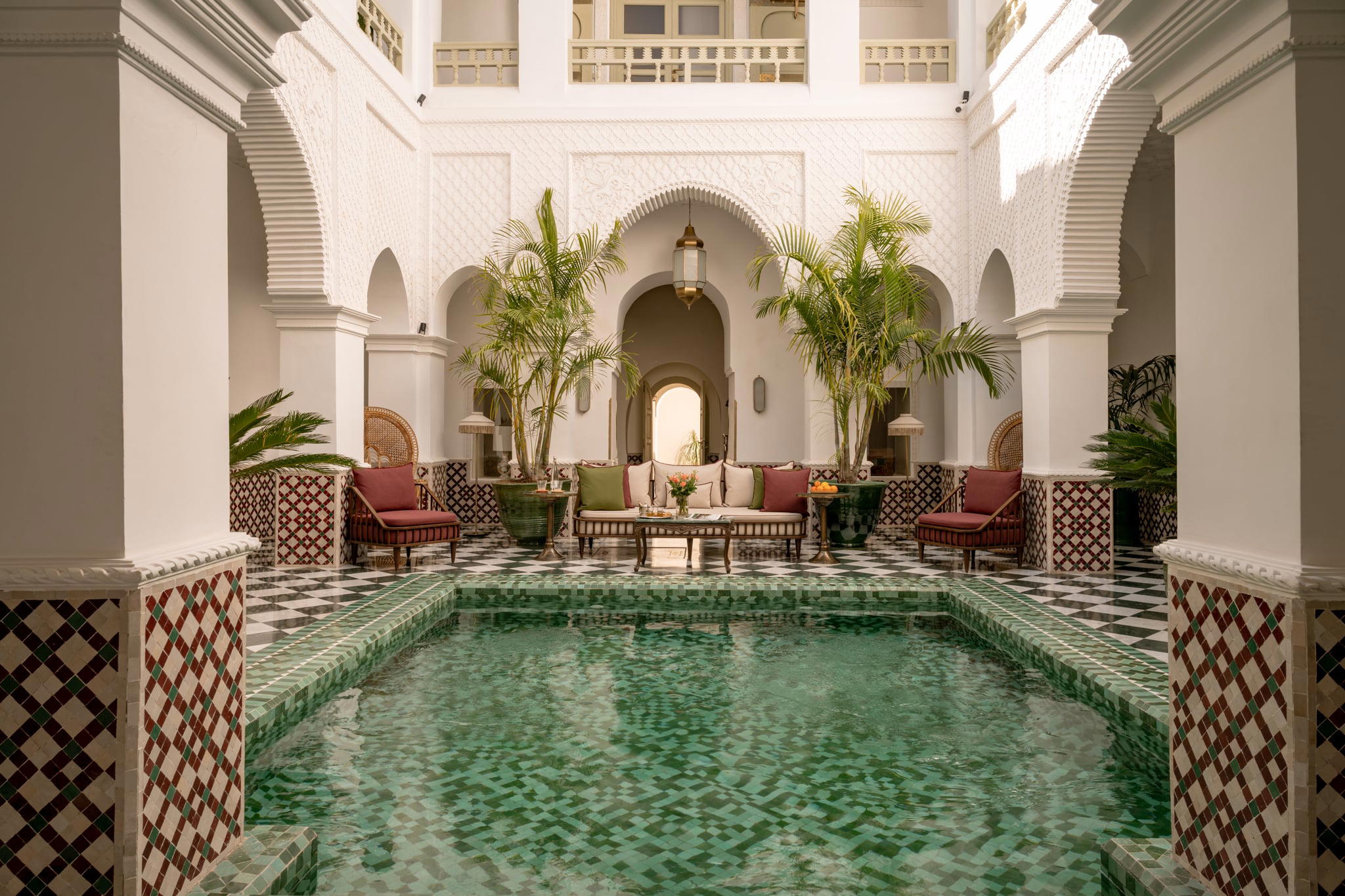
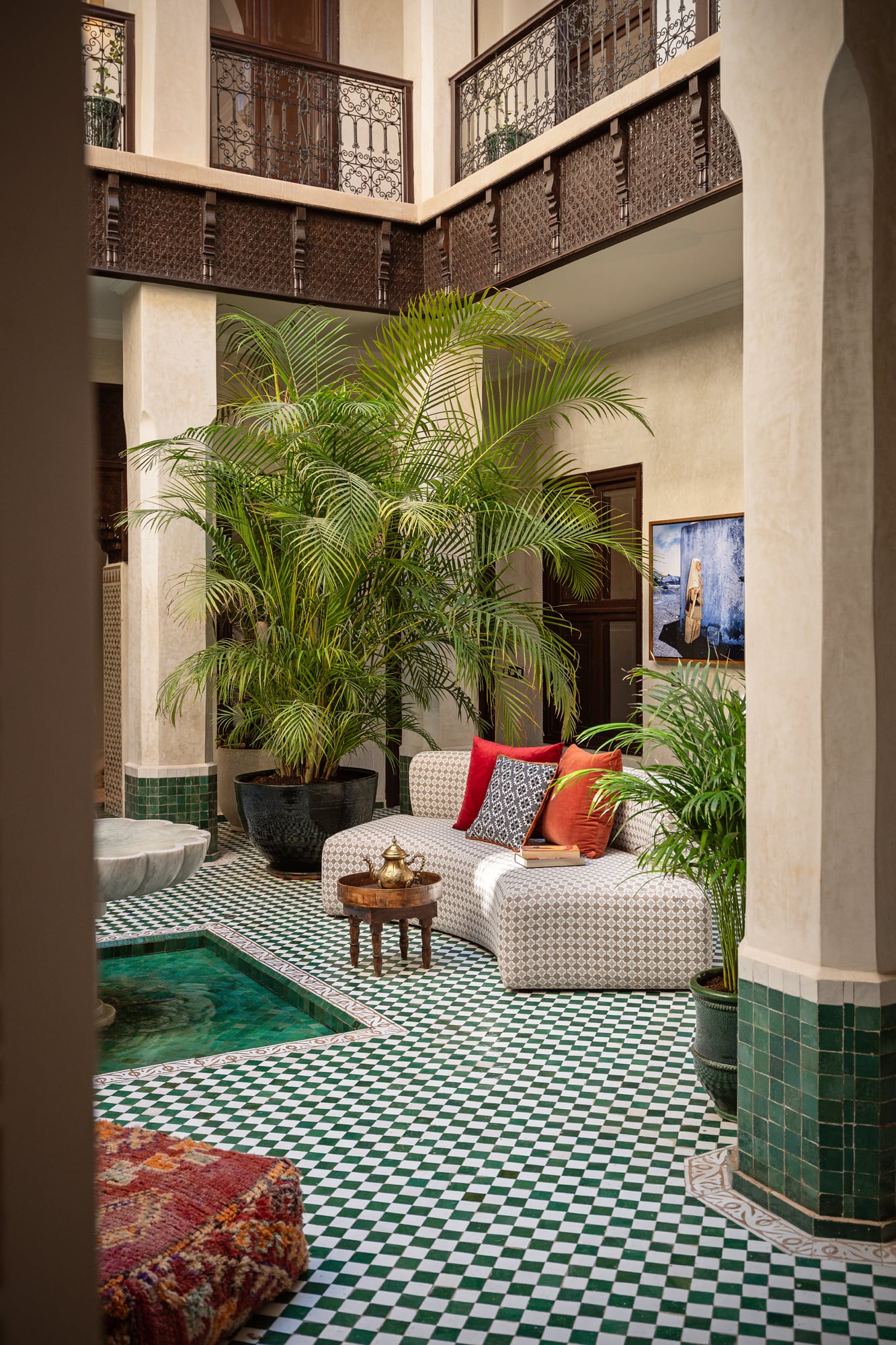
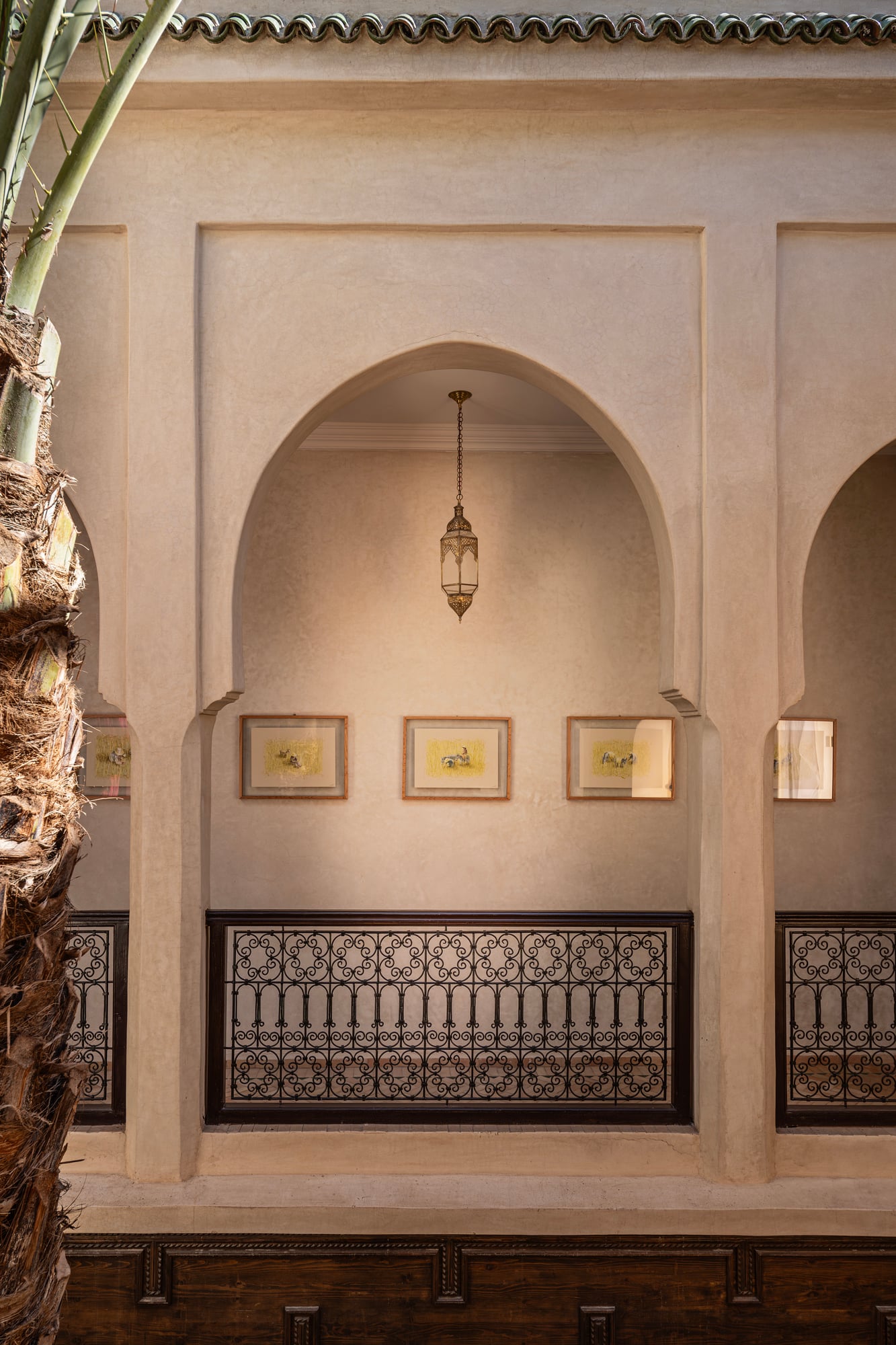
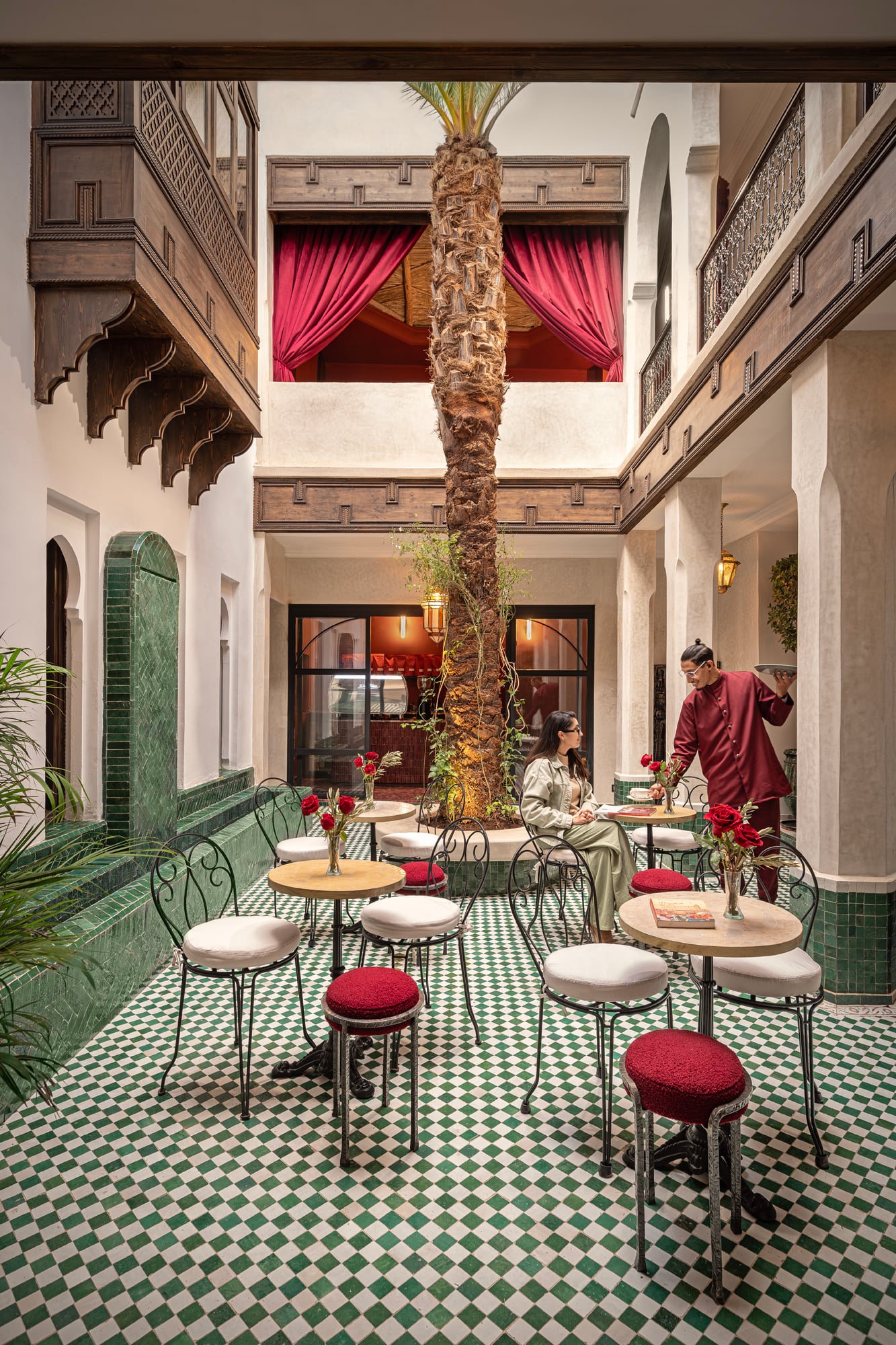
The entrance gives little away, as the old city tends to. This is a corner of the southern medina you reach on purpose rather than stumble into, a quiet derb where no large sign competes for attention, only a discreet facade and a threshold that opens onto a patio of green zellige, a still fountain, and palms reaching toward an open sky.
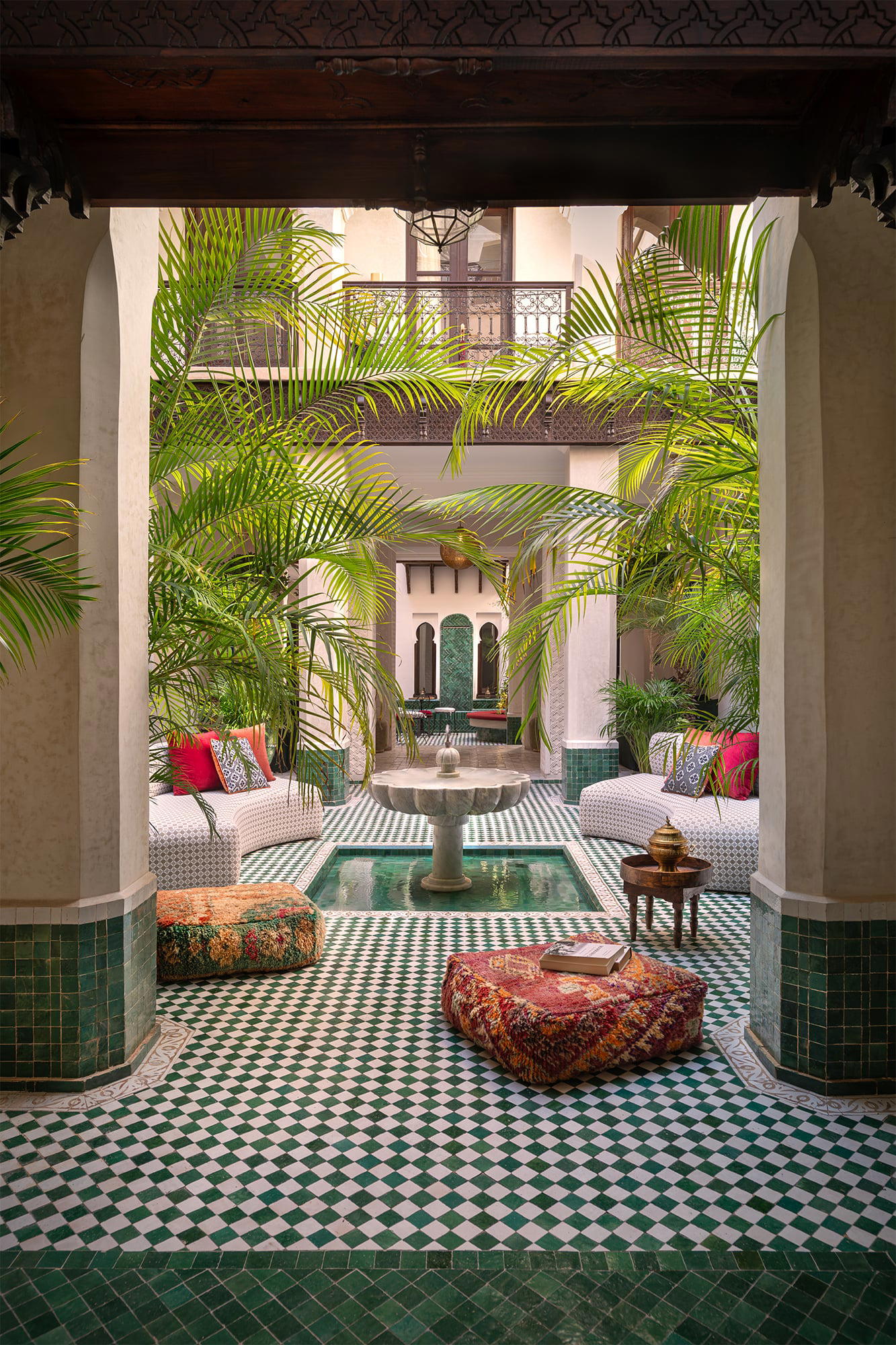
This is the first lesson of Riad Dar des Arts: the most interesting things in Marrakech rarely announce themselves. What looks like an anonymous wall hides a thirteen-room house that has quietly become one of the most admired independent addresses in the old city.
The house belongs to Dar Society, a hospitality group that moves between Paris and Marrakech. Founded by Laila Skalli, Réda Berrehili, and Javier Cedillo-Espin, later joined by two-Michelin-starred chef David Toutain as a partner, the group describes itself less as a brand than as a "travel society": a way of reconnecting travelers to culture, craft, and one another at a moment when much of luxury feels interchangeable.
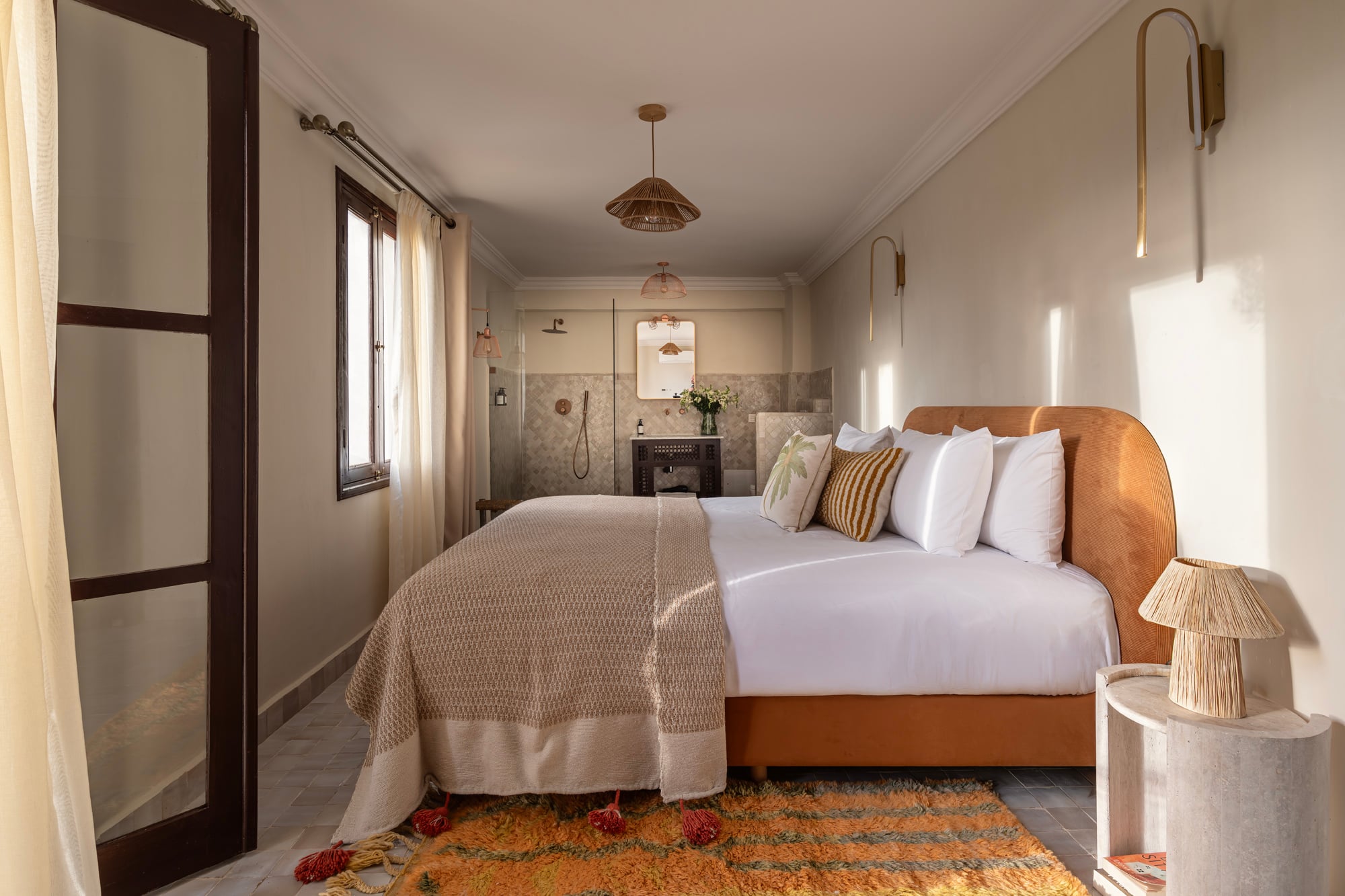
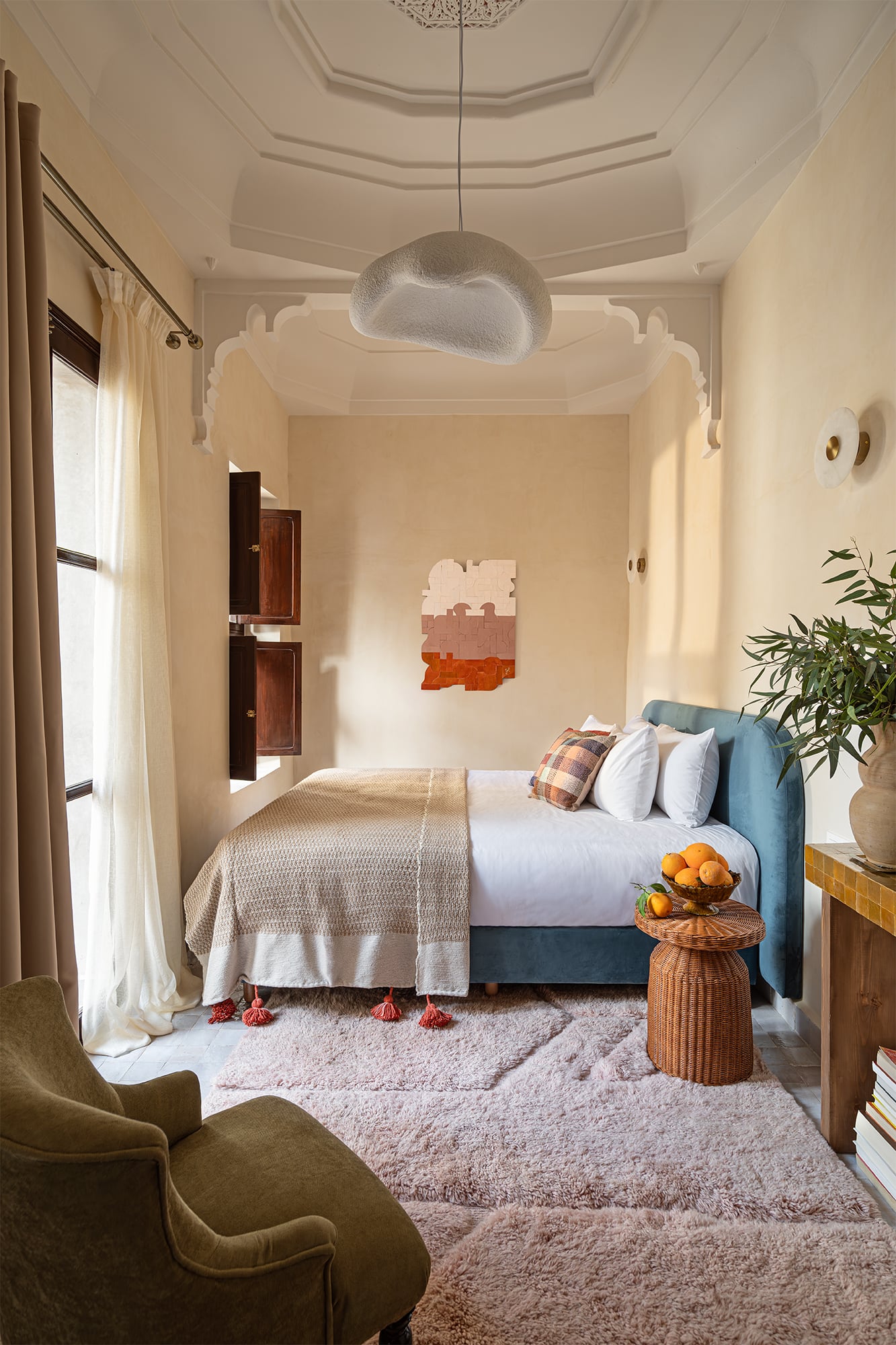
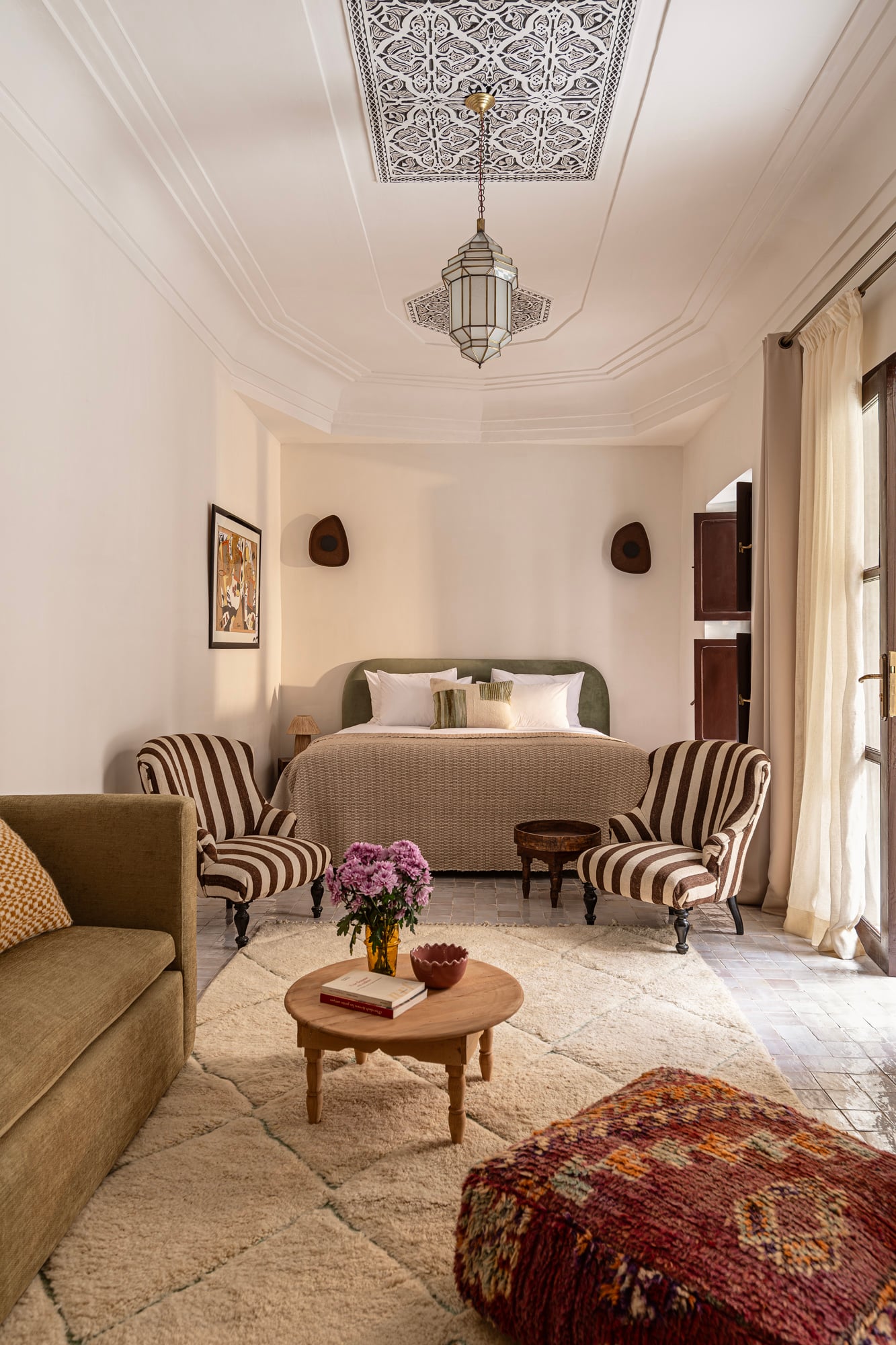
A house built on dialogue
Dar Society began with food. Its first project, Mida, started in Paris as a culinary laboratory built around a single table where strangers became a community, with Michelin-starred chef Toshitaka Omiya in the kitchen. The idea was simple and a little radical: use the table to slow people down, and let conversation do the rest.
That instinct found a permanent home when the founders took over a boutique hotel in the south medina, along with the Museum of Moroccan Culinary Art, a short walk away in the same quarter. The riad became the place where the society's convictions could be lived rather than explained.
It was in 2026 that people began to talk about the house, which moved quickly from a discreet address to a name travelers pass between themselves, in search of something more personal in the medina.
Where art is lived, not displayed
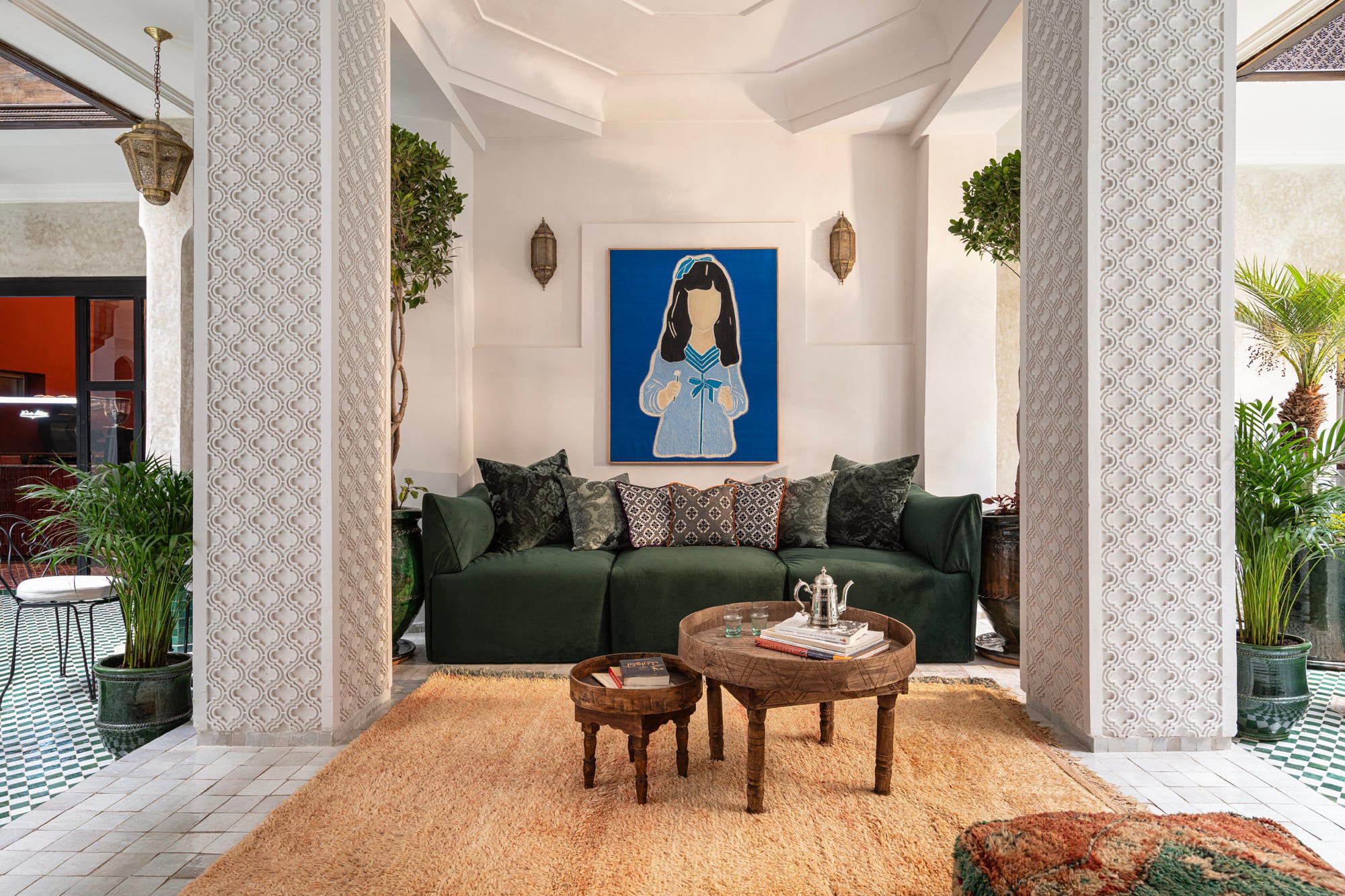
What sets the place apart is what hangs on its walls, and how. Under the curation of artist Margaux Derhy, the riad functions as a revolving gallery for emerging Moroccan talent, an inaugural collection she calls Heritage in Motion.
The premise is that heritage is not static. It moves, it breathes, it is reinterpreted through contemporary eyes. Derhy, who trained at Central Saint Martins and the Royal College of Art and works between Paris and Massa, gathers a generation that speaks to this idea from different angles: Amina Benbouchta's still lifes in acrylic and gold leaf, Ismail Boukarkour's oil-pastel scenes of rural labor, Karim Barka's bodies rendered in leather and skin, Sara Benabdallah's photographs of women between tradition and agency, Kamil Bouzoubaa-Grivel's drawings caught between the digital and the hand.
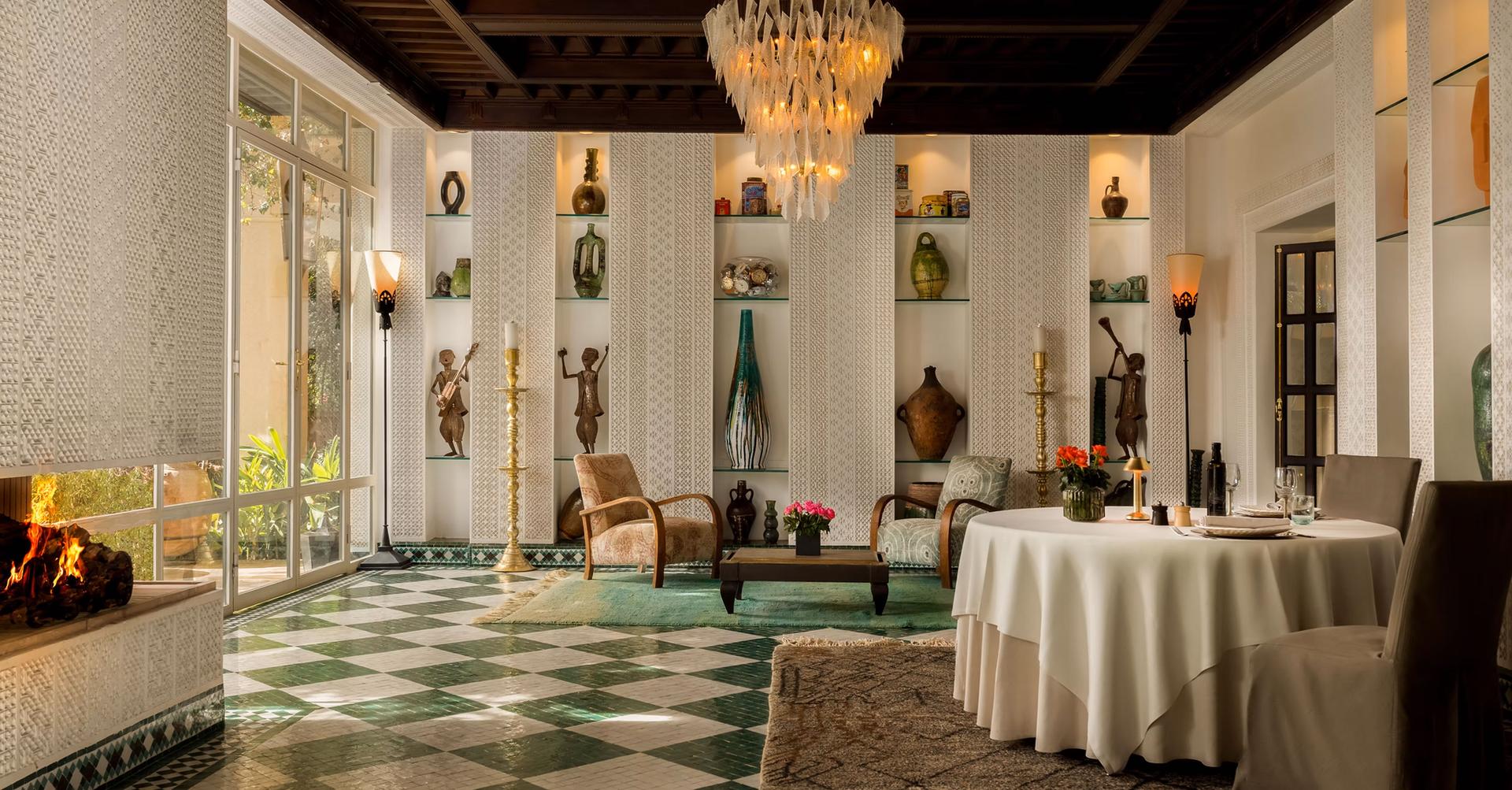
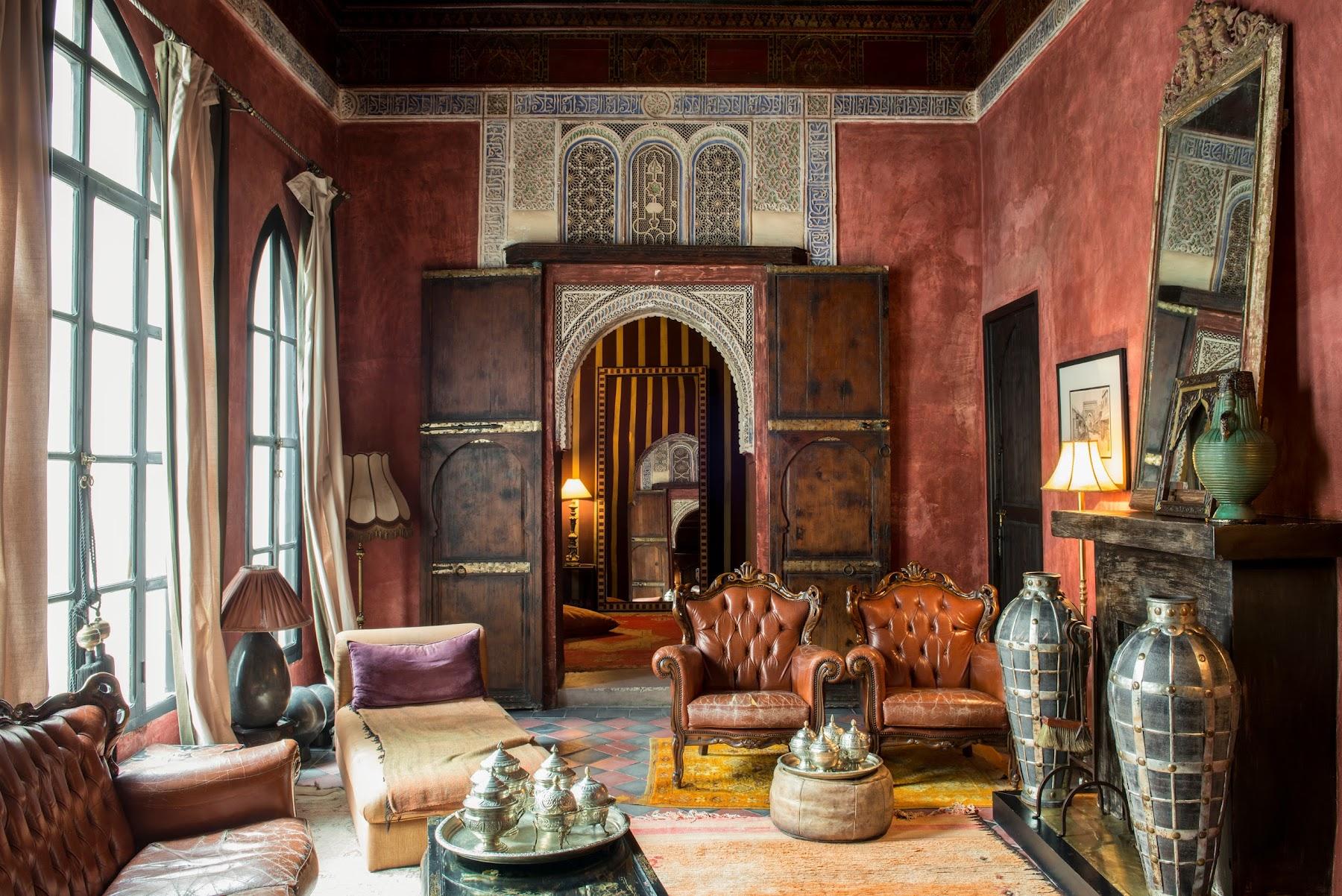
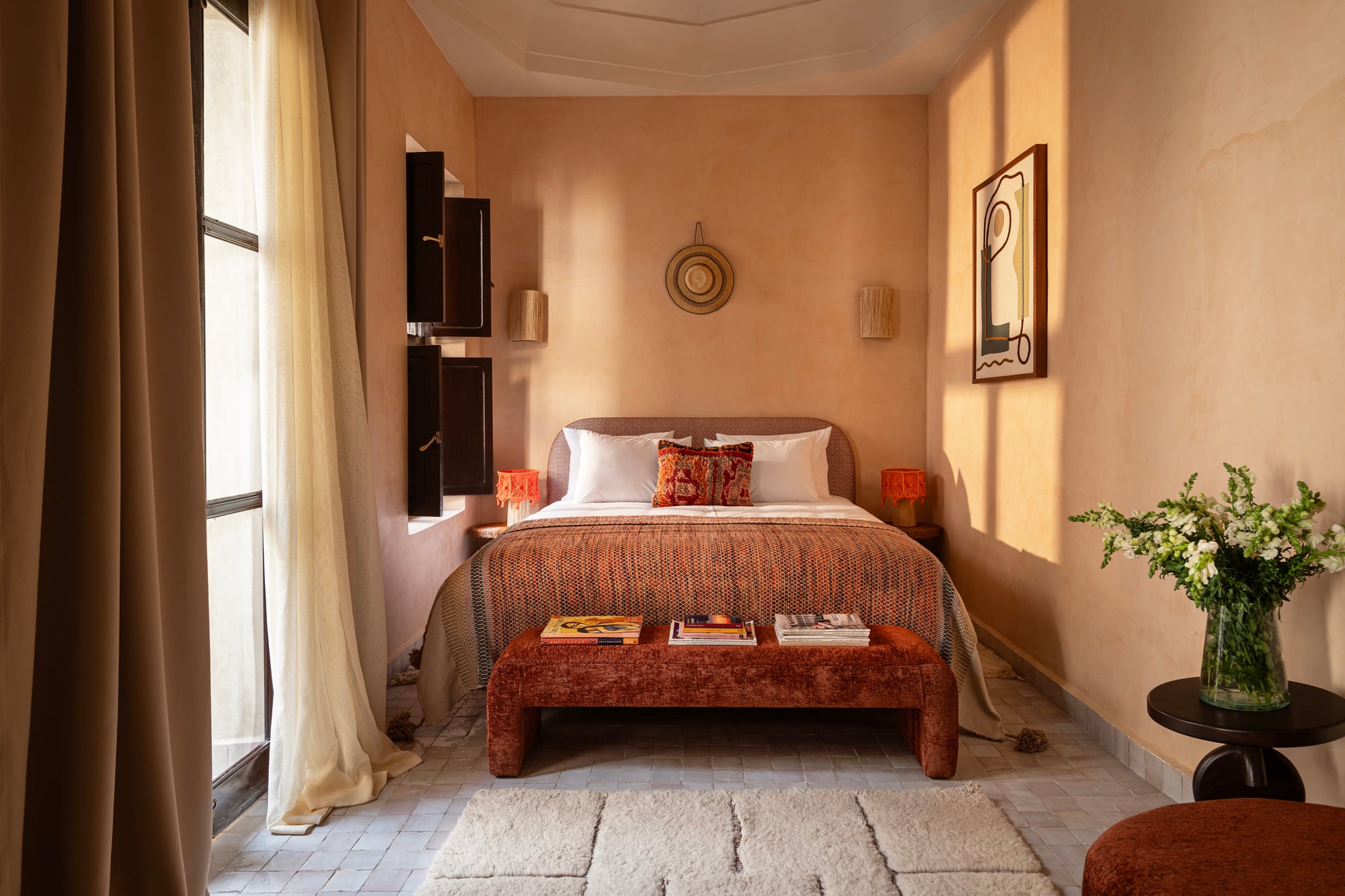
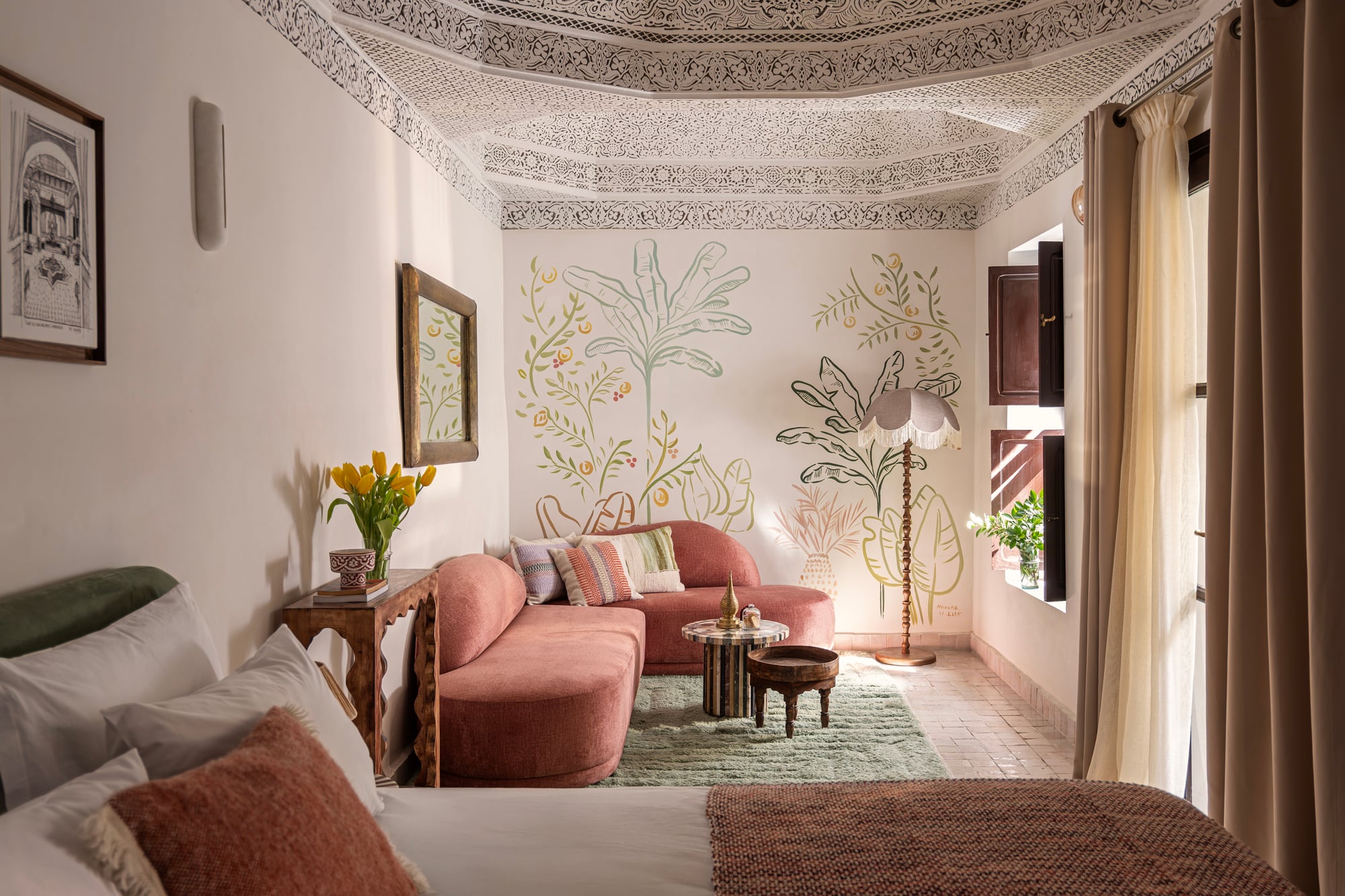
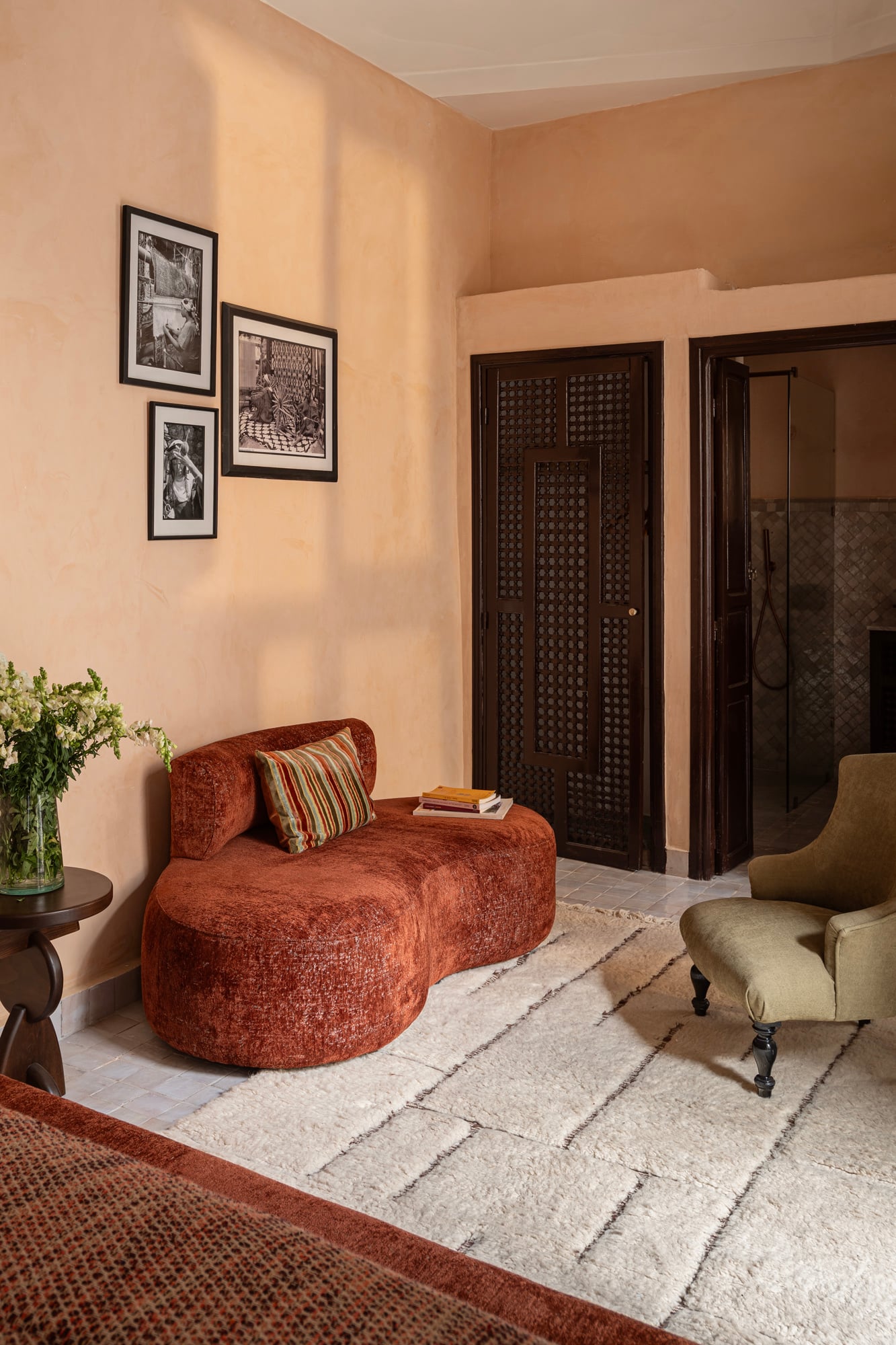
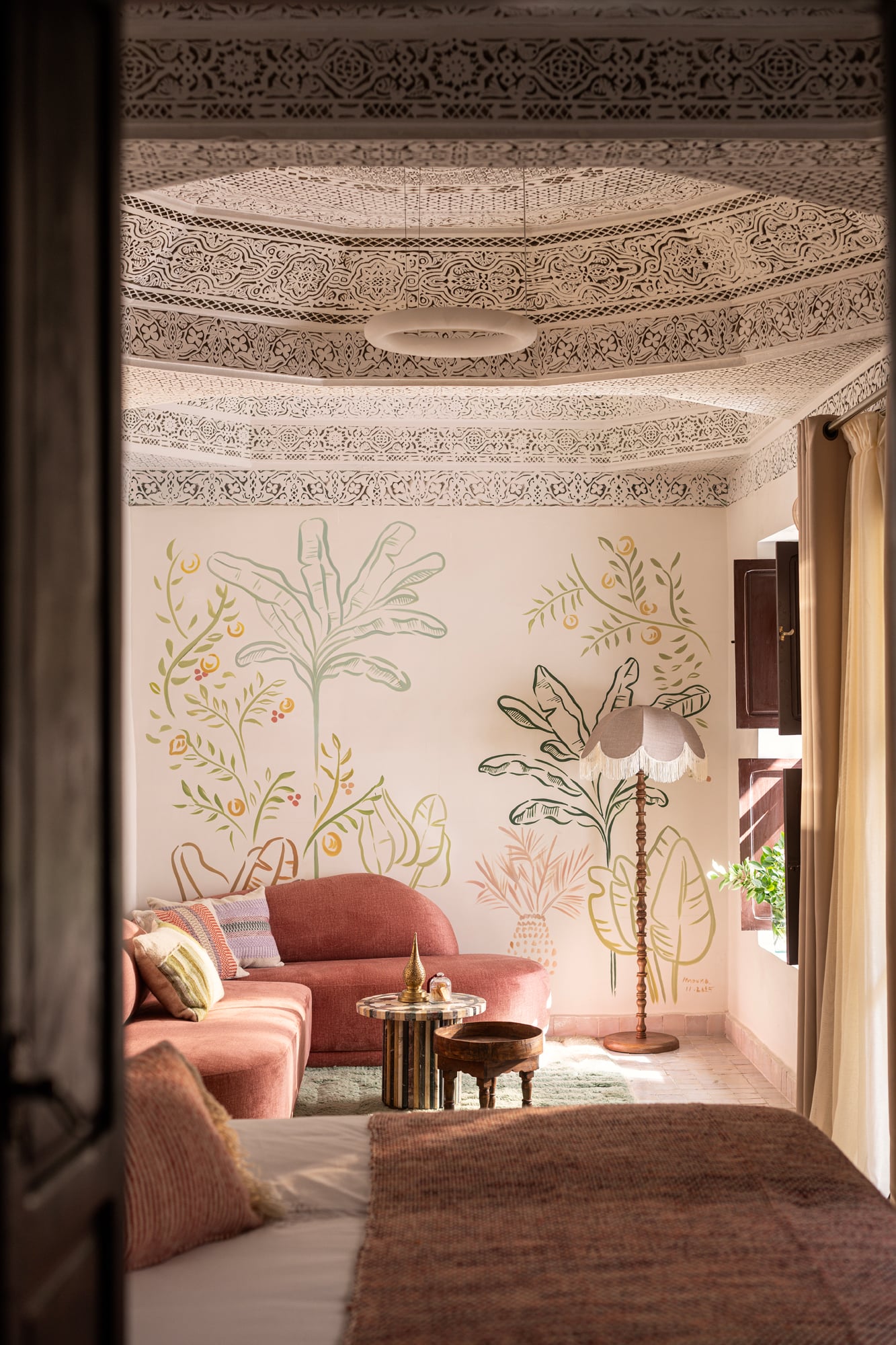
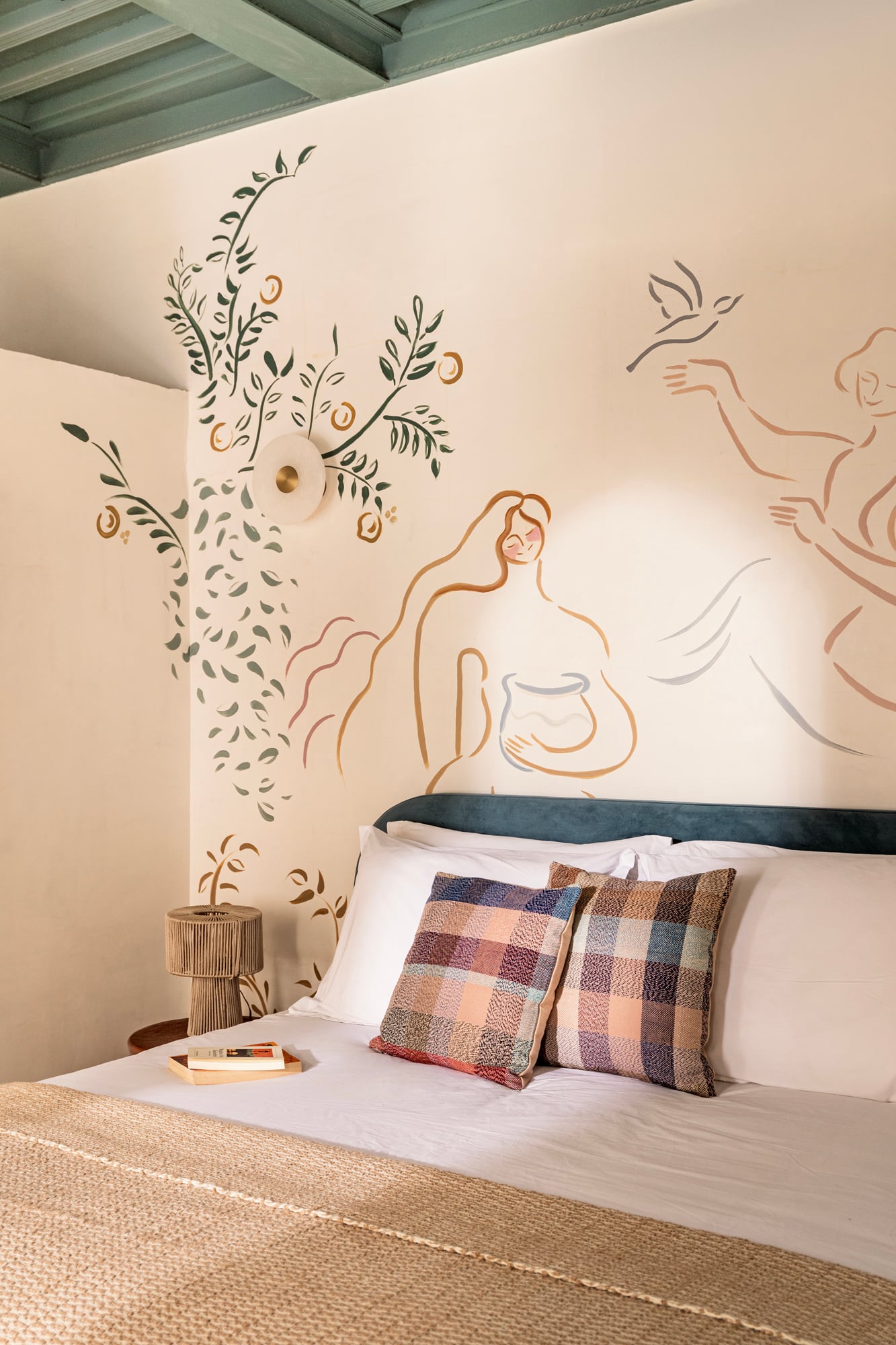
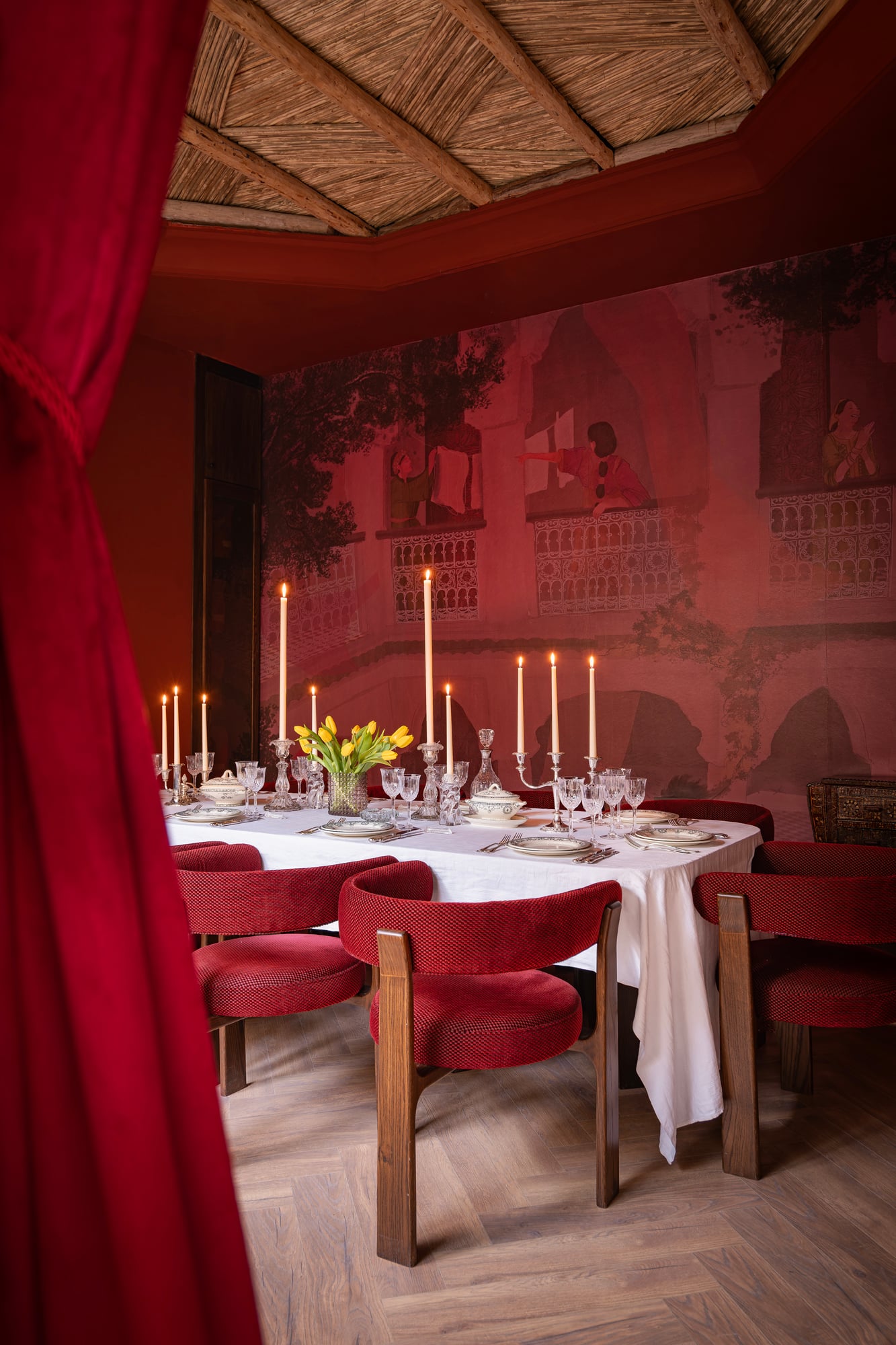
The work is not roped off. Pieces are placed as though they have always inhabited these rooms, propped in the patio, watching over a sofa, set beside a doorway. Hand-painted murals by Mouna Moumni run through the bedrooms and the Mida dining room, and the house collaborates with makers like the embroidery label Wissada and designer Saad Filali, all of them treating craft as a living resource rather than a frozen inheritance.
The rhythm of the day
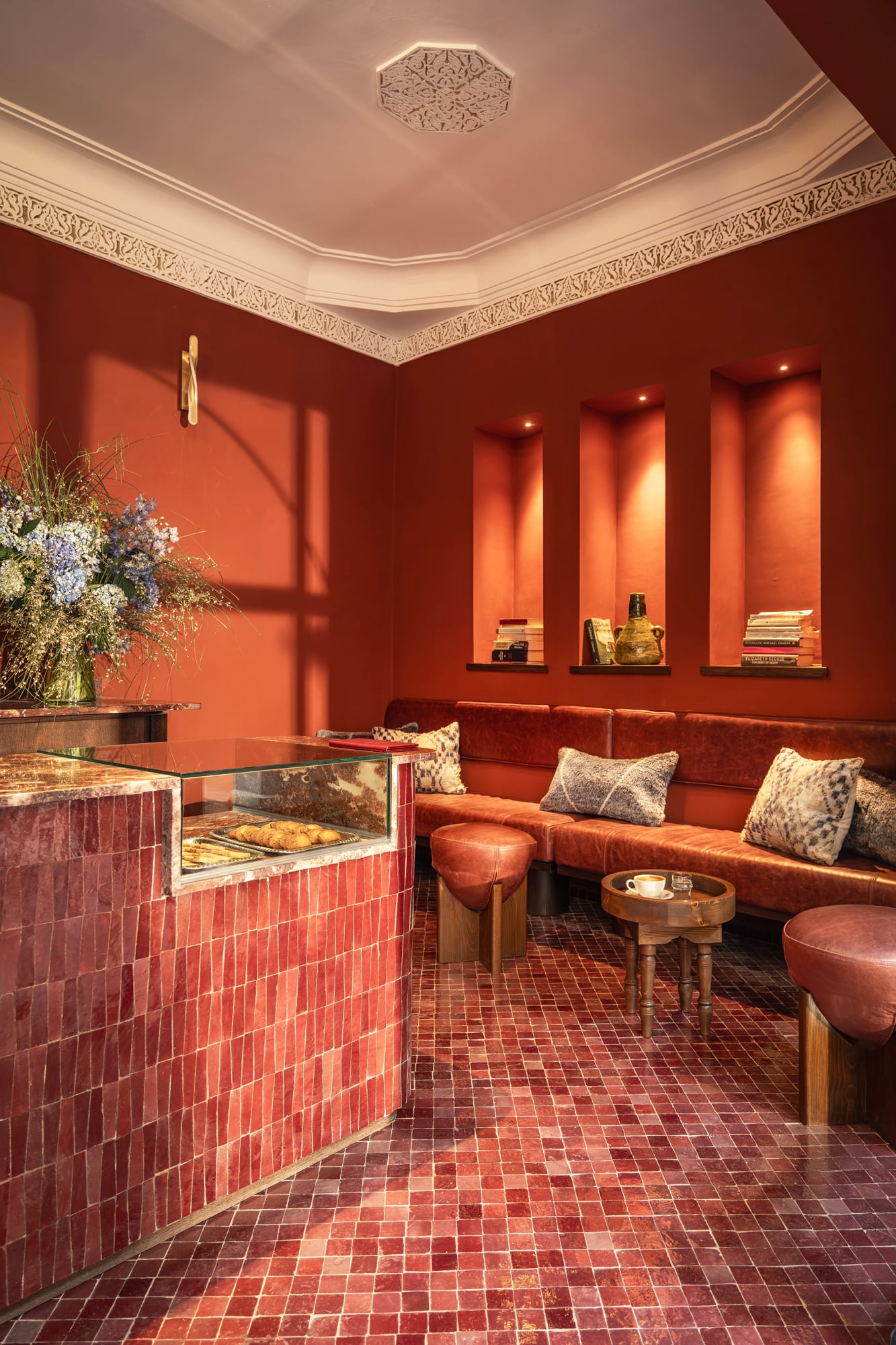
For all its cultural ambition, the riad is first a place to stay, and it knows how a good day in the medina unfolds. Mornings belong to Café Ben Ali, a corner for purists that brings specialty-coffee standards to the ancient streets of the south medina. The patio holds the slow middle hours, cool and shaded, the kind of space that makes you cancel your plans.
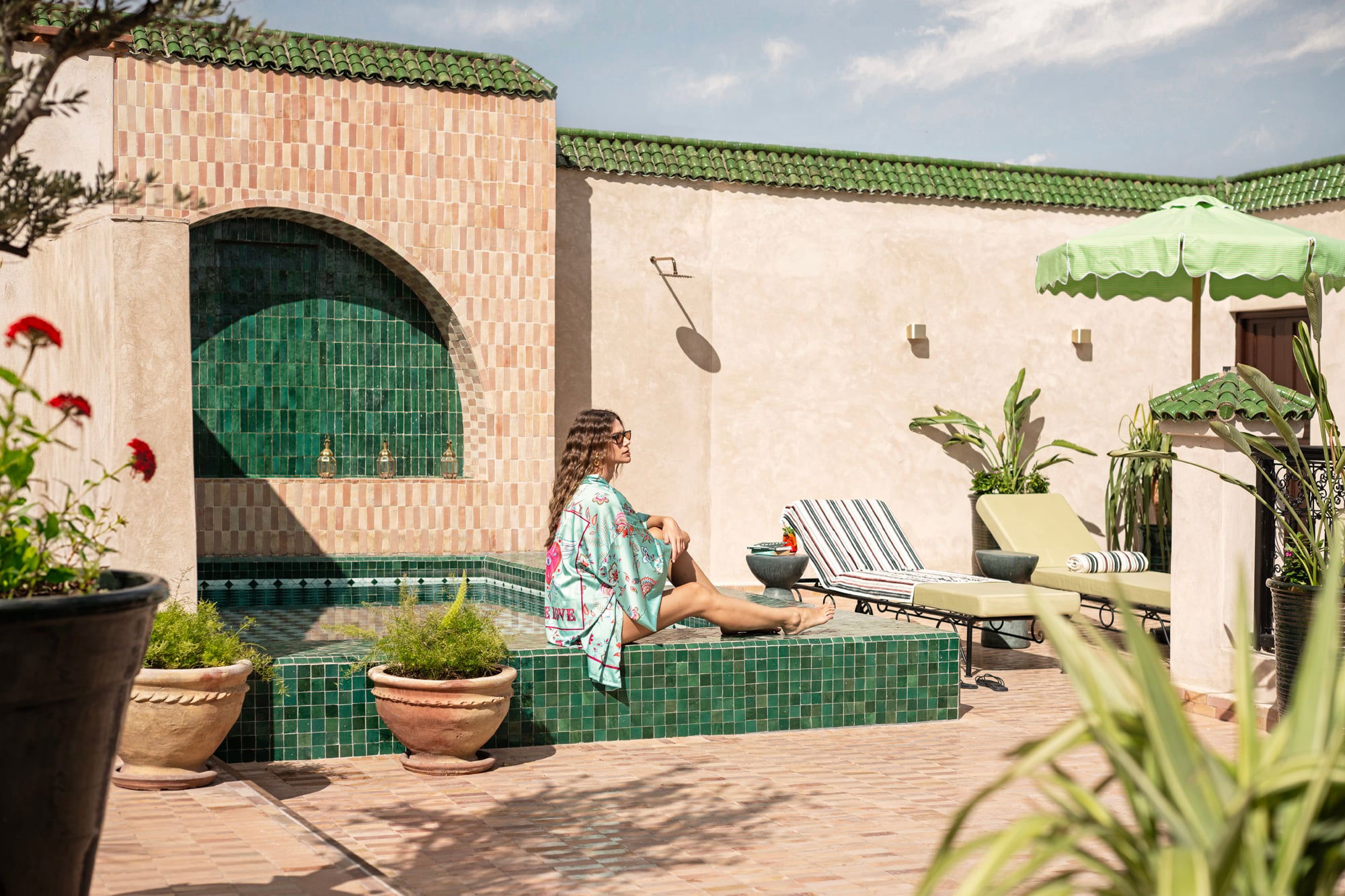
The roof is the reward. Above the silent terraces of the medina, the rooftop is one of the more intimate vantage points in the city, the place where the day softens into evening and the call to prayer drifts across the rooftops.
Septem, coming this autumn
That rooftop is about to gain a new chapter. In September 2026, Dar Society will open Septem, a twenty-five-seat gastronomic table led by David Toutain in his role as Culinary Director and partner. The chef, known for his two-Michelin-starred Paris restaurant, describes the project not as importing a vision to Morocco but as listening to a land and opening a dialogue with the world.
The kitchen will draw on the essentials of Moroccan cooking, clay and fire, olive oil, grains, spices, and seasonal produce, in dishes meant to circulate around a shared table. There is no sign, no spectacle, only twenty-five seats above the medina. For now it remains an opening to anticipate rather than a table to book, but it signals where this house is heading.
What it represents
Riads have always been inward-looking houses, organized around a courtyard and a sense of retreat. What Dar Society has done here is turn that introspection outward, making the courtyard a place of encounter rather than escape. The art is Moroccan and contemporary at once; the hospitality is rooted in the medina yet fluent with Paris.
In a city with no shortage of beautiful walls, this one is worth crossing for what happens inside them: a quiet argument that the future of travel is not more spectacle, but more connection.
You may also like…