STAY
Built around horses, home to Marrakech’s longest pool and Africa’s only Chenot Spa: Selman Marrakech
On the Route d'Amizmiz, the Bennani Smires family built a palace designed by Jacques Garcia around their Arabian horses: an eighty-metre pool that leads to the palace of Assyl with the stables at its far end, six tables for every hour of the day, and in every room a piece from Mrs Bennani's collection.
Timence Guide Editors · 29 September 2026
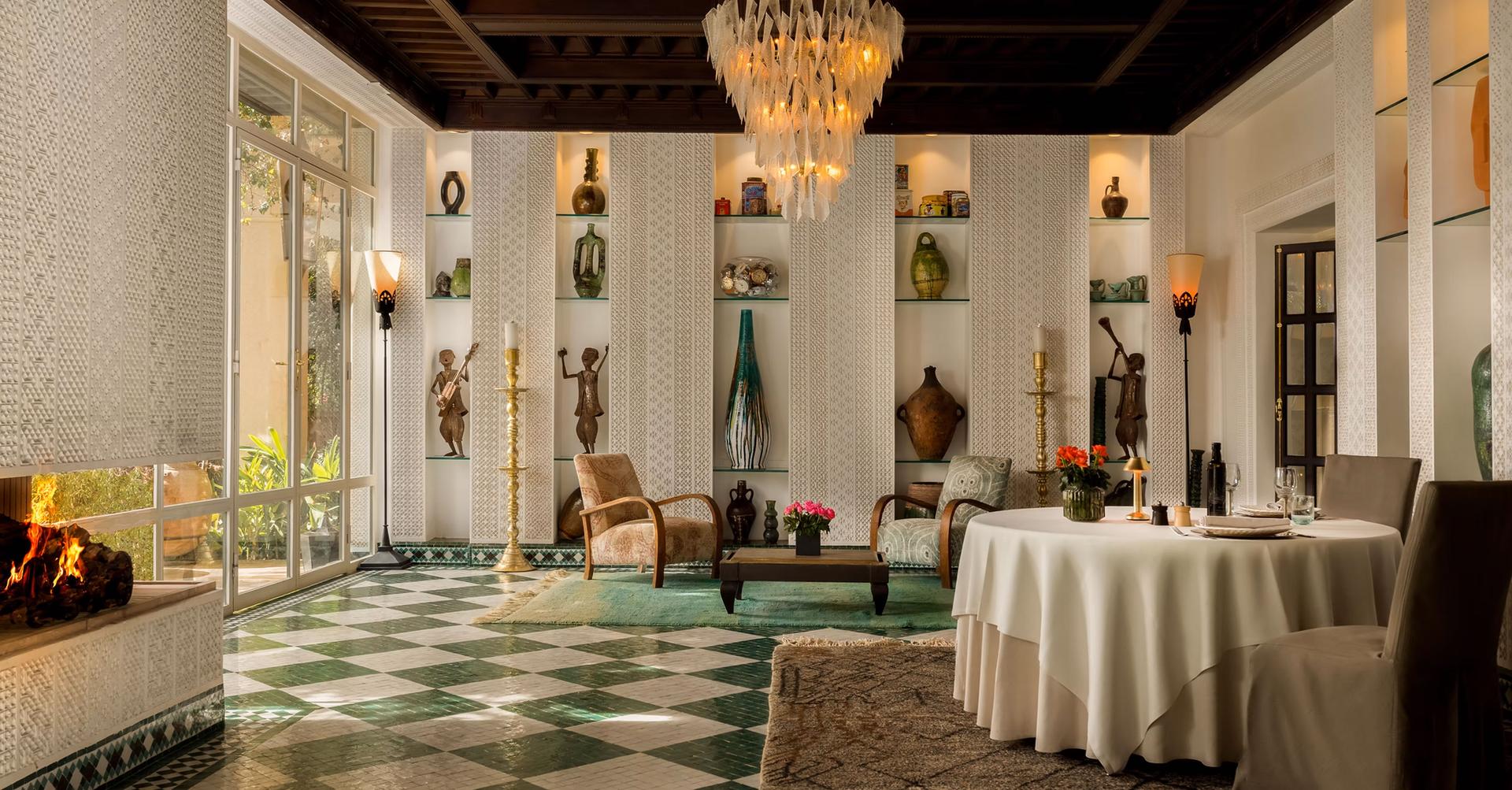
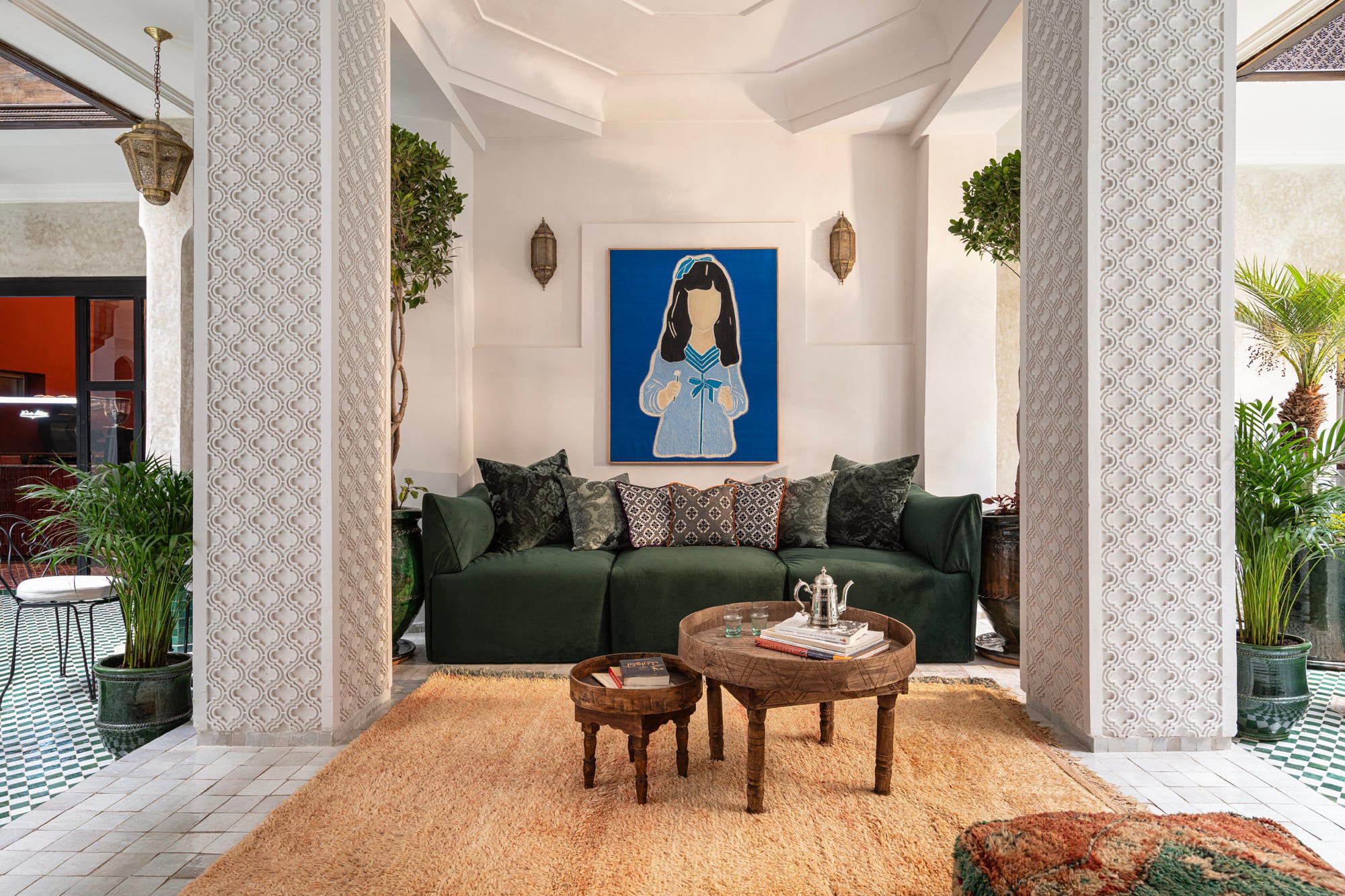
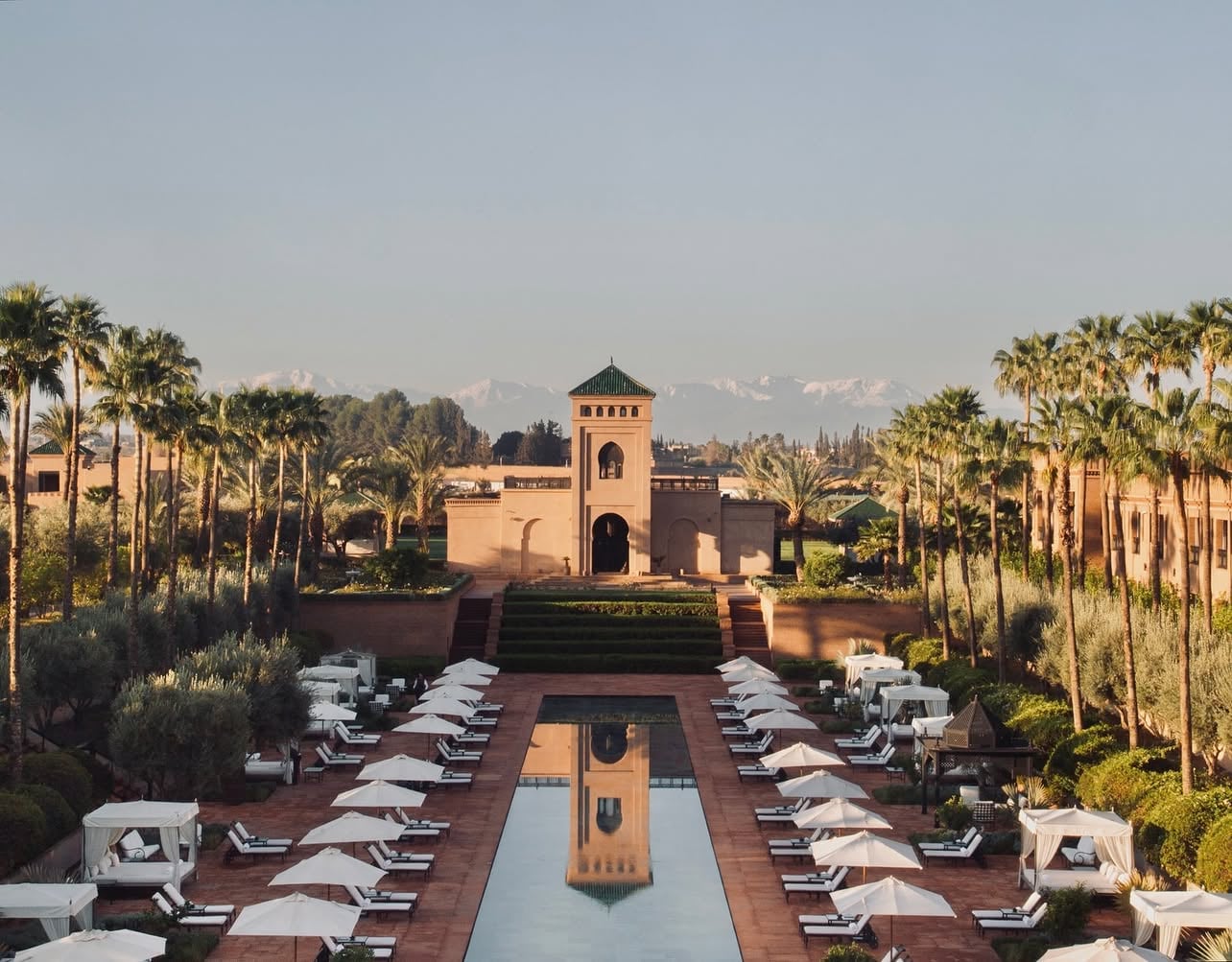
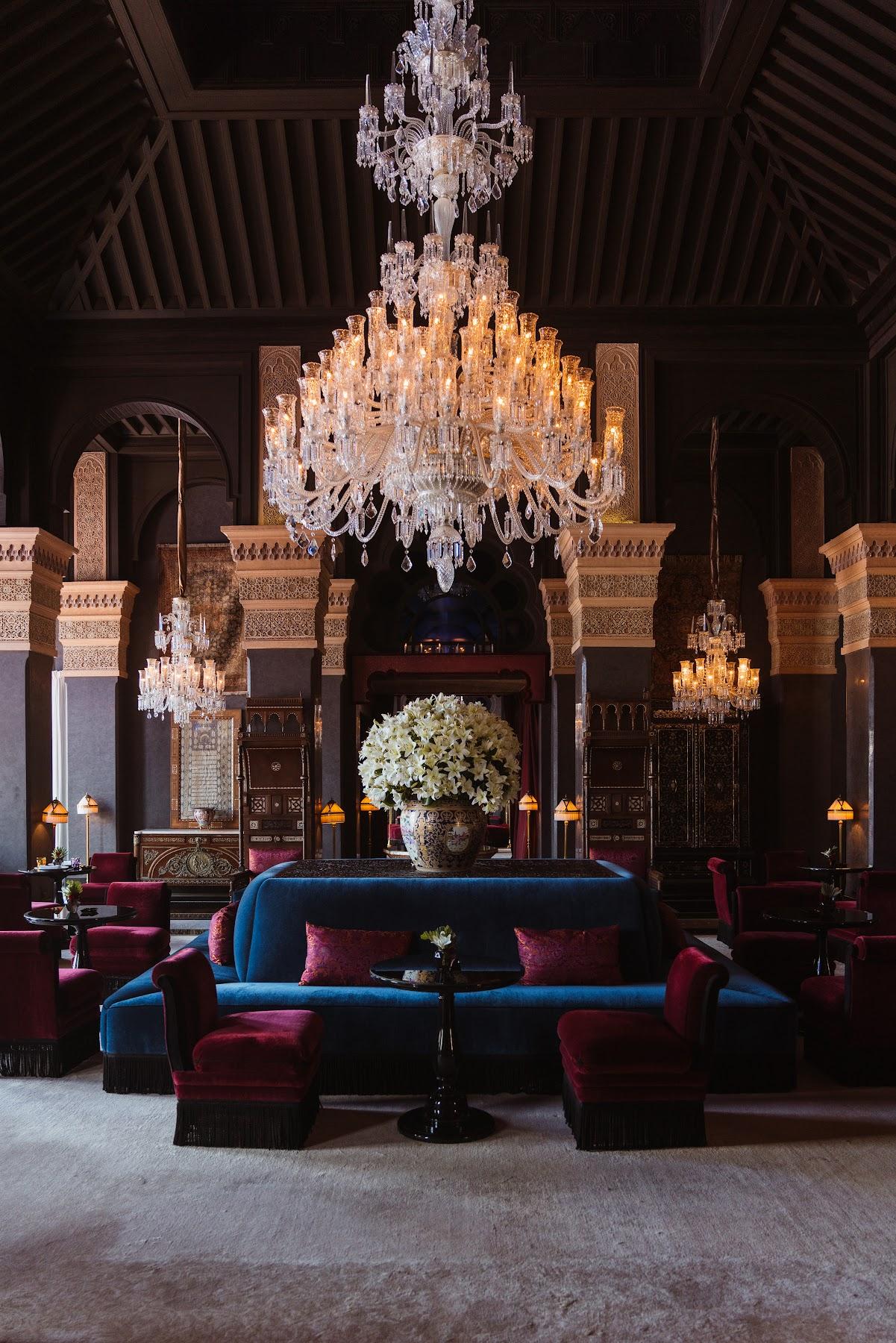
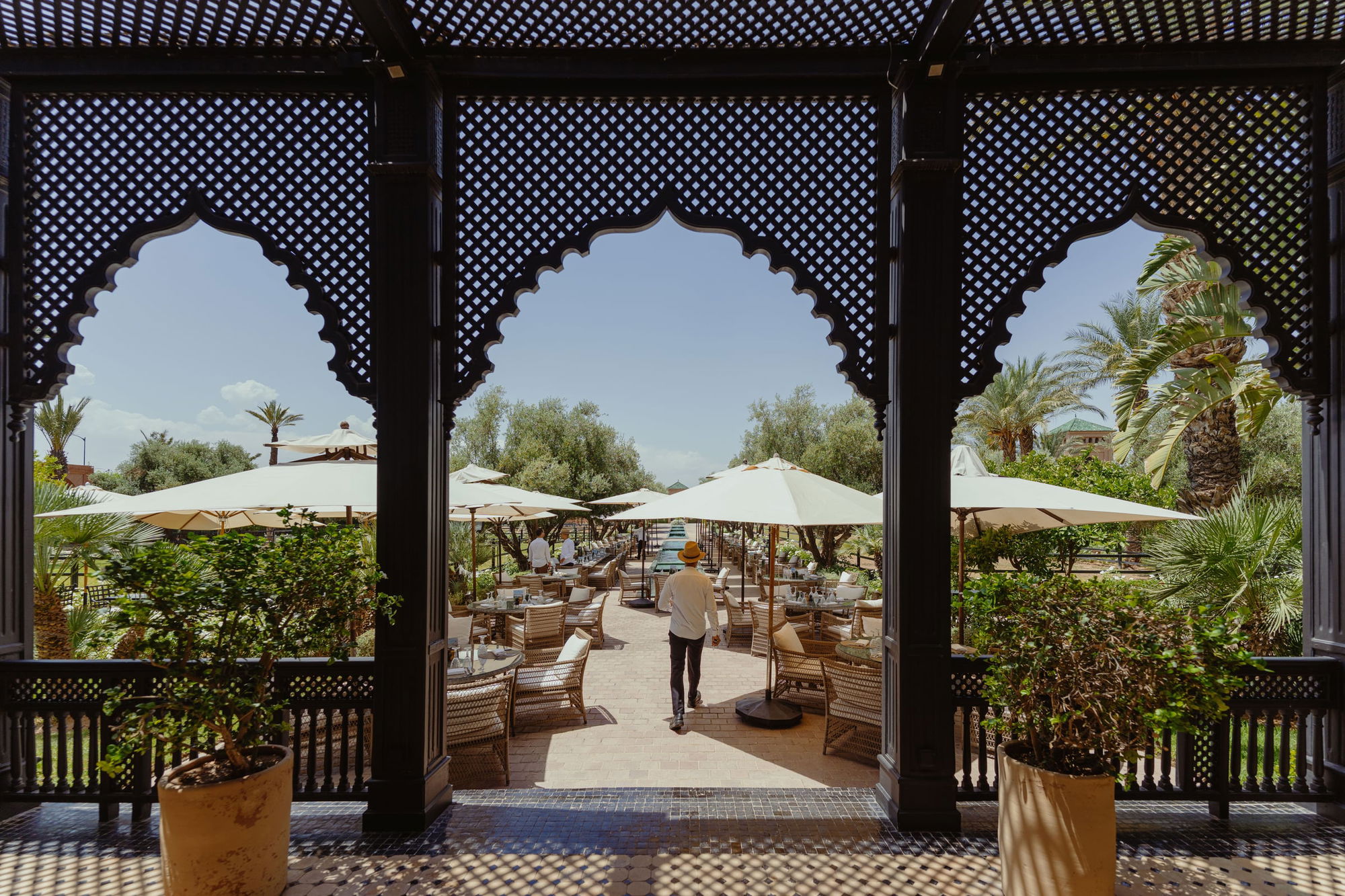
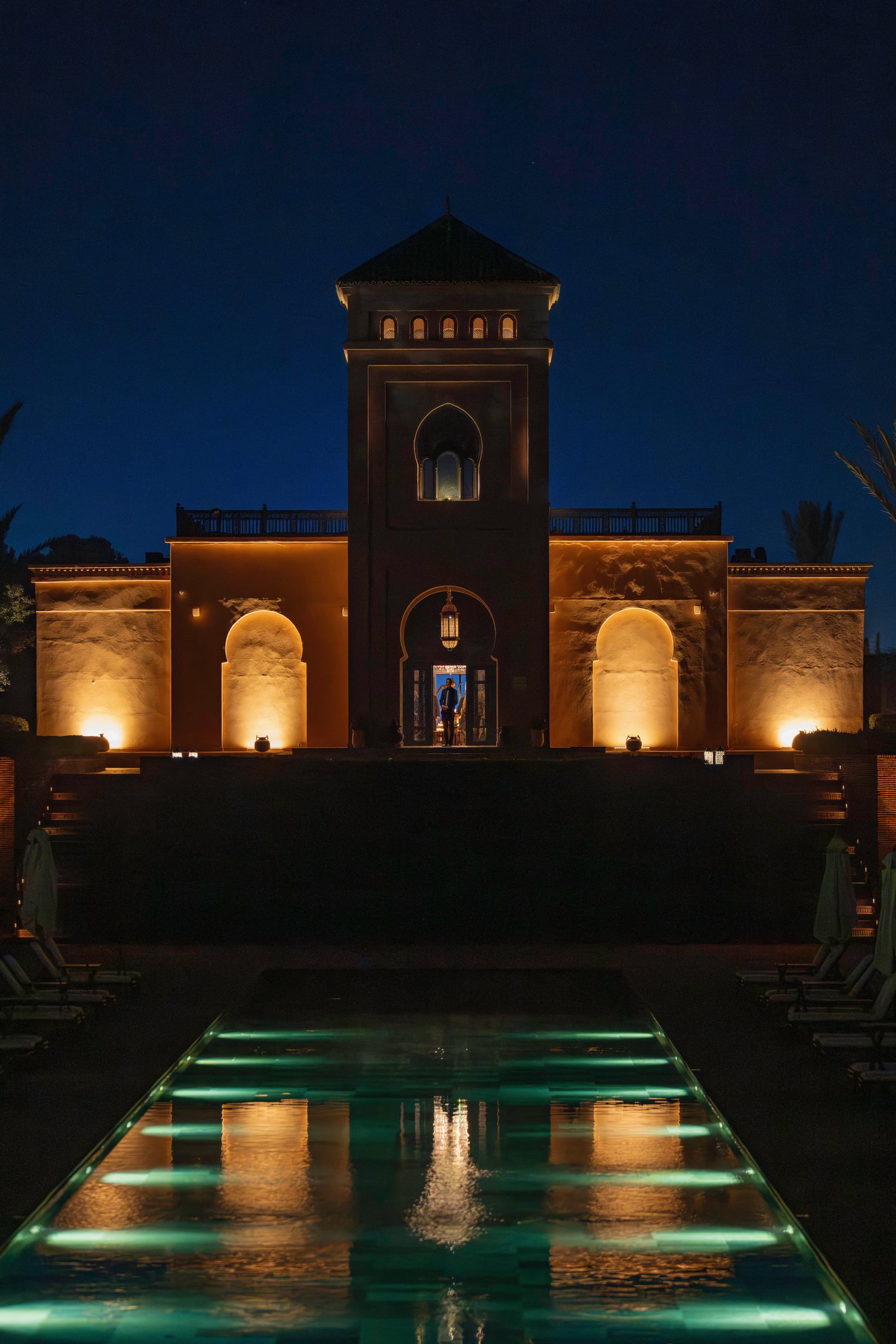
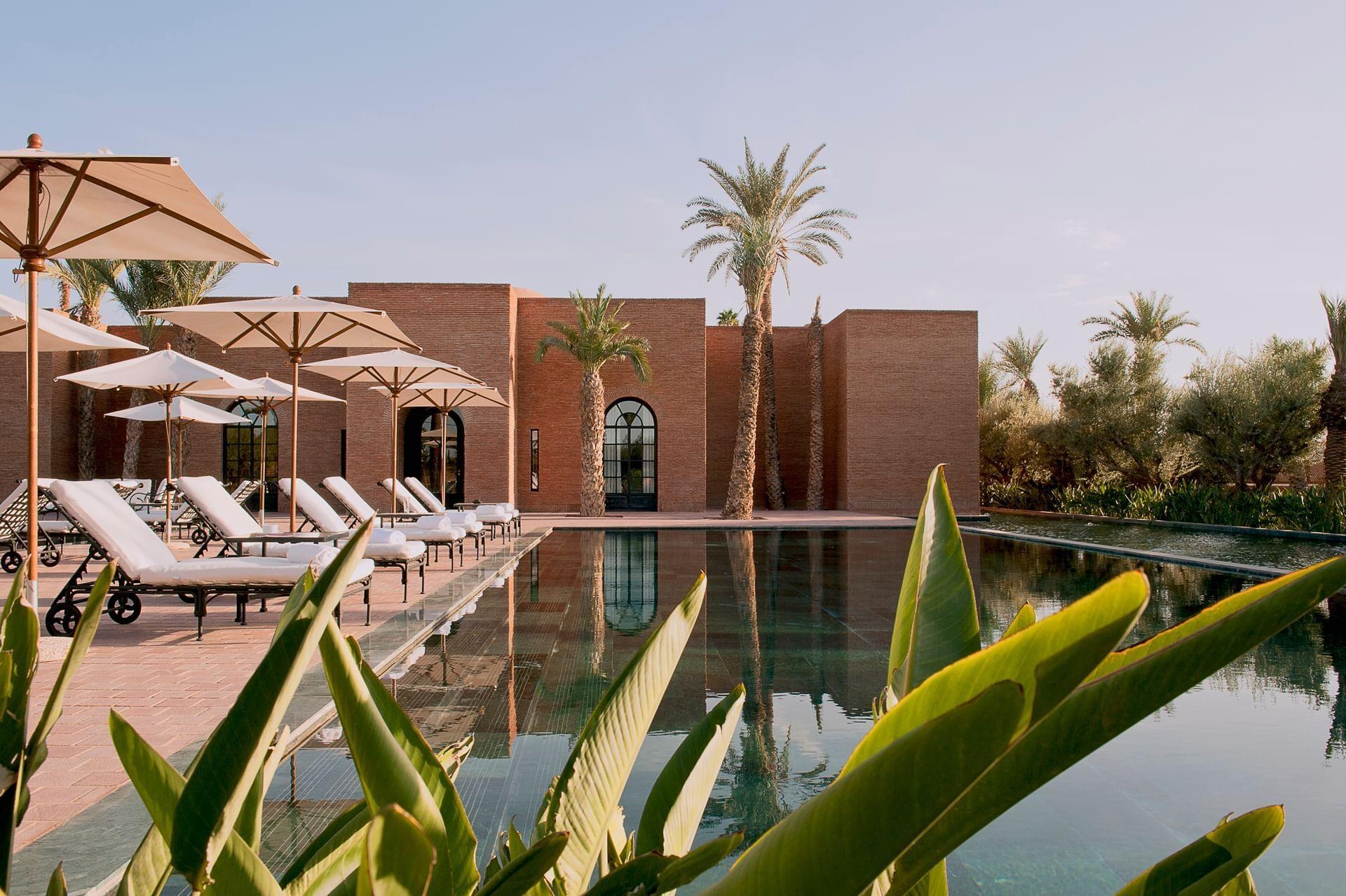
At kilometre five of the Route d'Amizmiz, after the palm groves, a brick wall follows the road for a long time before it opens. Past the archway of Selman Marrakech, the first thing to come into view is a horse, a sculpture, then the entrance to SABO and the green of the gardens, with geometric façades around them and fountains set among the planting. Inside, the salons answer that grandeur with something more sensual: a Moroccan world closes around you, and everything in it seems to have been chosen, each colour made for the place it occupies, each table set exactly where it stands. Then tall French windows open onto the terrace and the whole house seems to turn in one direction. The pool begins there and runs straight out between two rows of palms, eighty metres of water and the longest pool in the city, to the palace that houses Assyl; reach the far end, turn your head to the left, and there are the stables.
Anyone who knows the city's other palaces will recognise the richness and notice how differently it is worn: La Mamounia puts its grandeur on public view, the Royal Mansour keeps its perfection behind walls, and the Selman wears the same splendour more sensually, warmer and less institutional than the first, less rarefied than the second, with the enveloping, slightly cinematic atmosphere of a private house. Its architecture seems built to move you from one world into the next: the salons, the long water and the gardens, the palace of Assyl at the far end and, beside it, the stables.
The founding sire
Abdeslam Bennani Smires's grandfather, who came from Marrakech, had wanted the family to found a palace in his home city. The grandson who took the wish on trained at the hotel school in Lausanne and collected Arabian horses, and in 2005 he decided to bring those two passions into one place and to give it the name of his line. Selman was the original father of that line of purebreds, and Abdeslam has chosen to recreate its lineage: by his own account, the breeding began while the building still existed only in his mind.
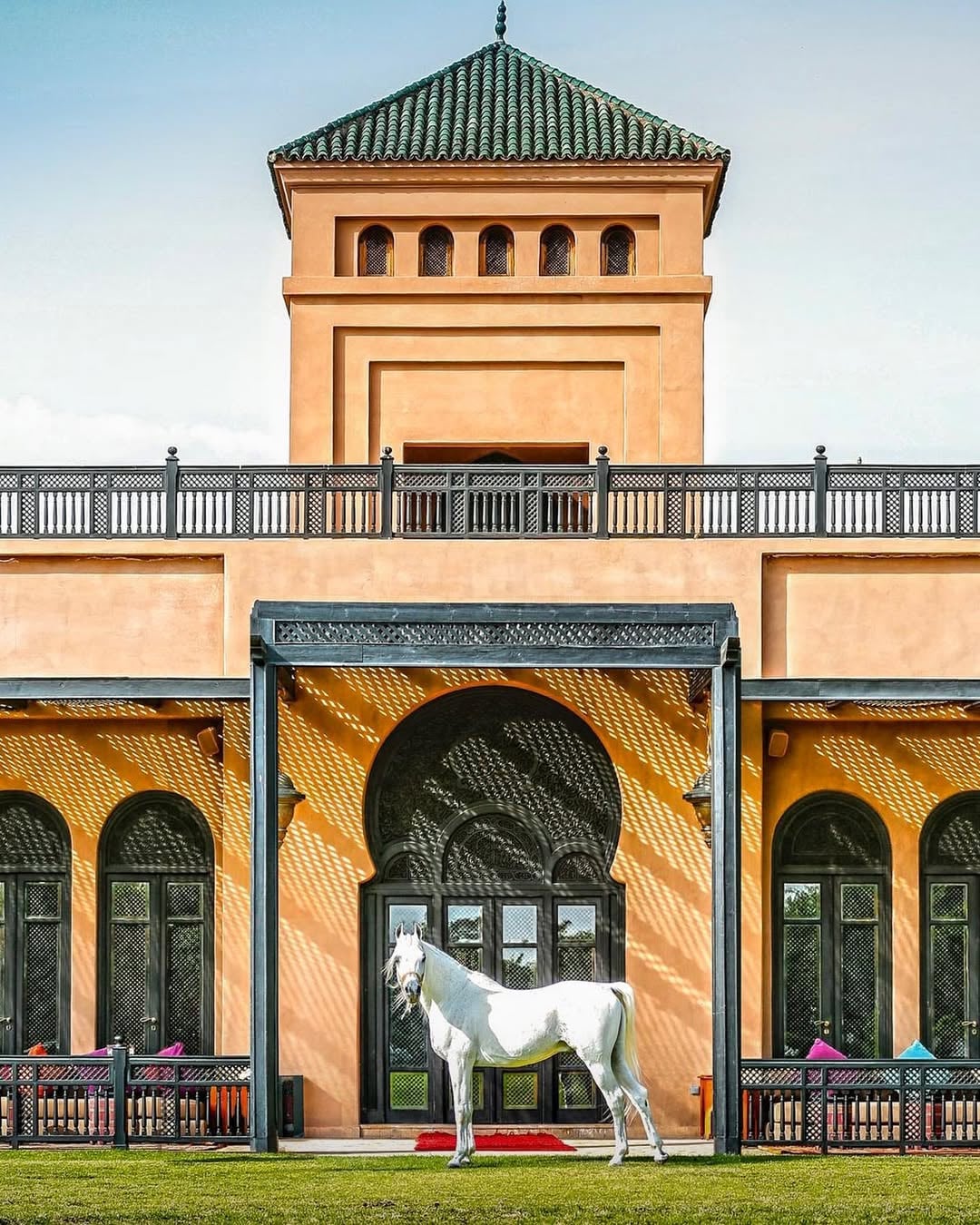
The Selman is a family's work. Abdeslam built it with the support of his parents and of his sister Saida, and three of them left their mark on it: Abdeslam his horses and his training in hospitality, Saida "softness and pragmatism", and their mother, Mrs Bennani, her eye and her collection. Jacques Garcia designed the palace, sketching it at his first meeting with the family, and Moroccan craftsmen built what he drew; it opened in 2012 on six hectares at the foot of the Atlas. Garcia gave the stables the same care as the rooms: two buildings with sixteen boxes and five paddocks, in a place of honour at the far end of the pool, in front of the Andalusian Pavilion.
Horses in the life of the house
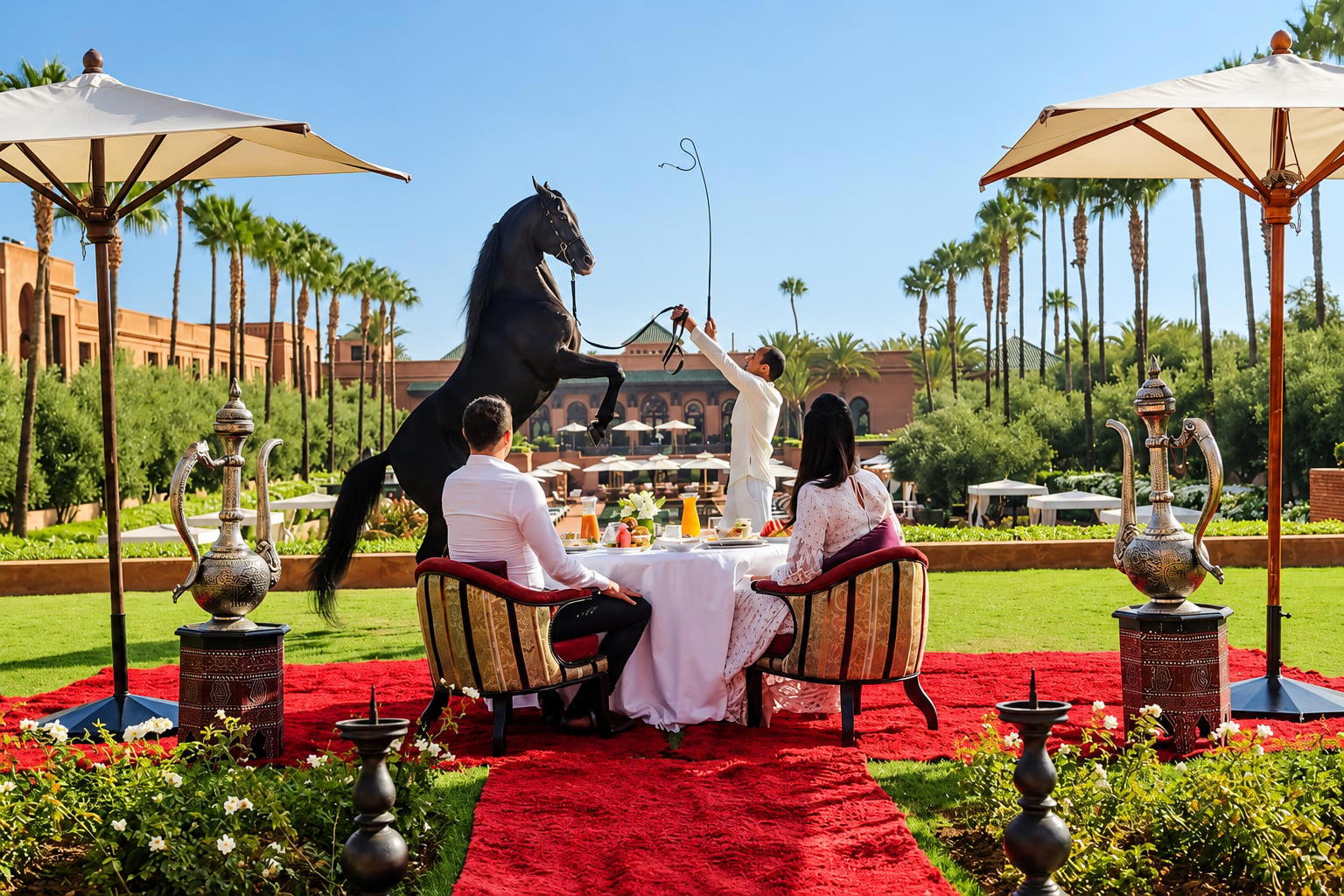
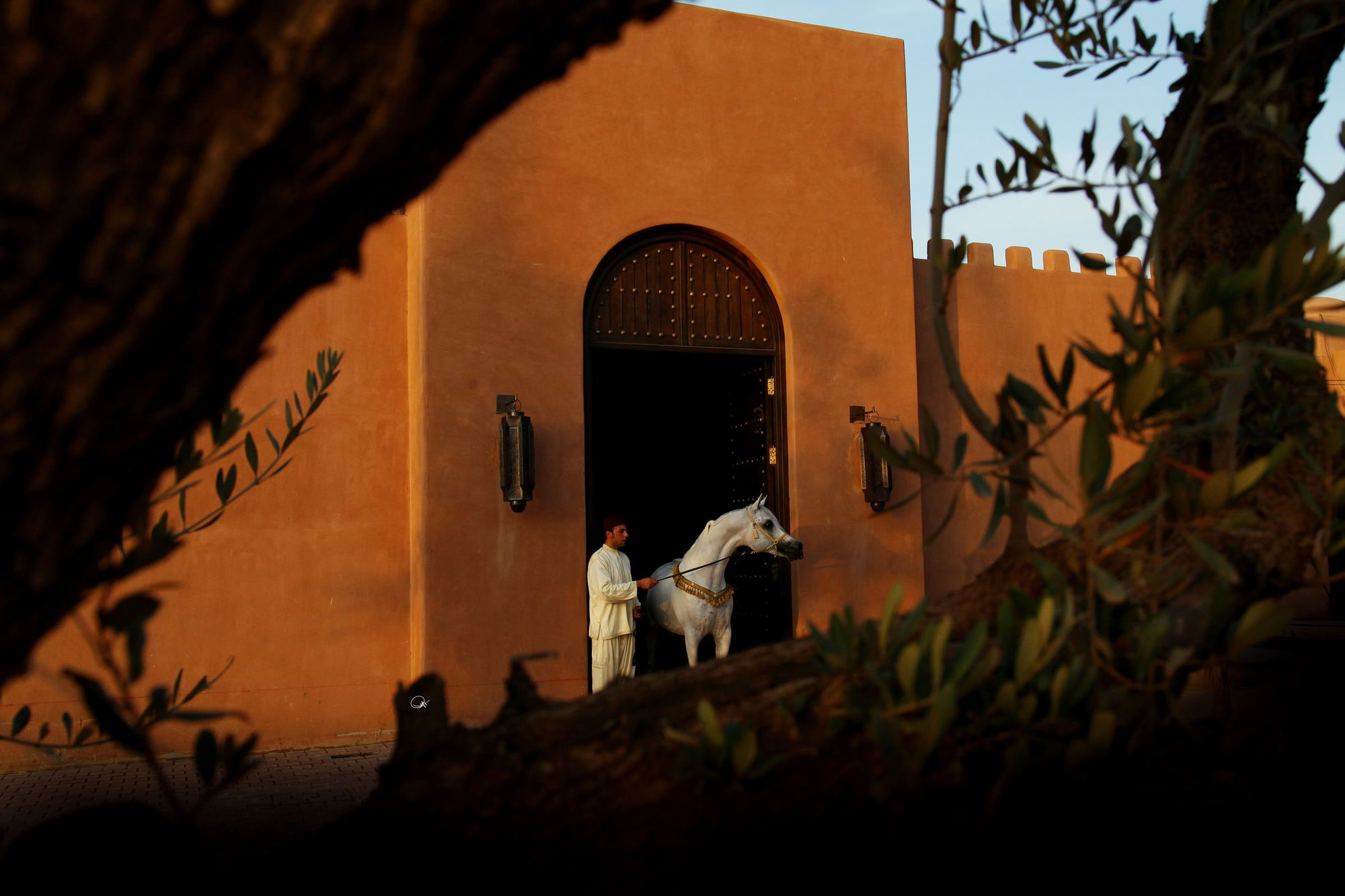
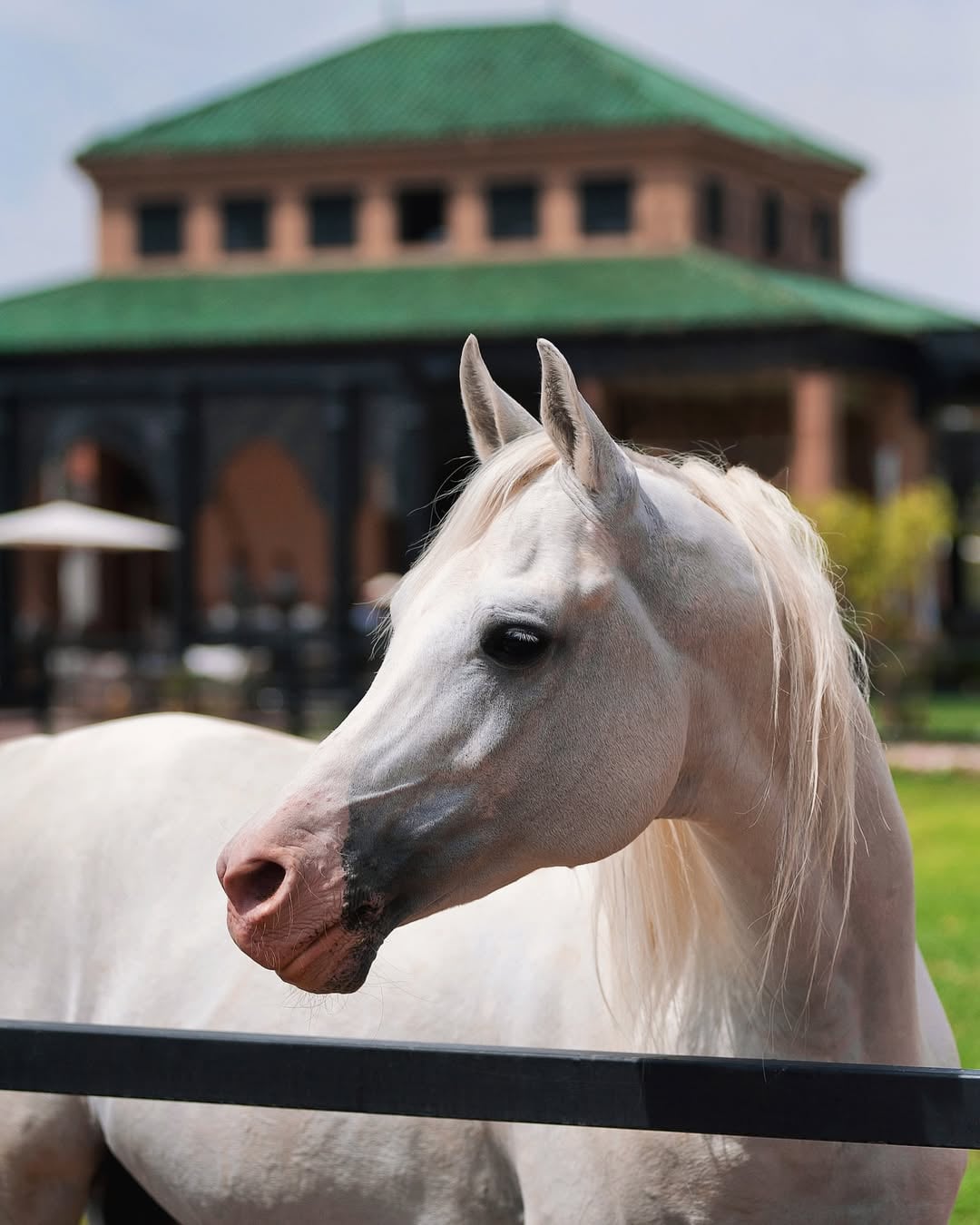
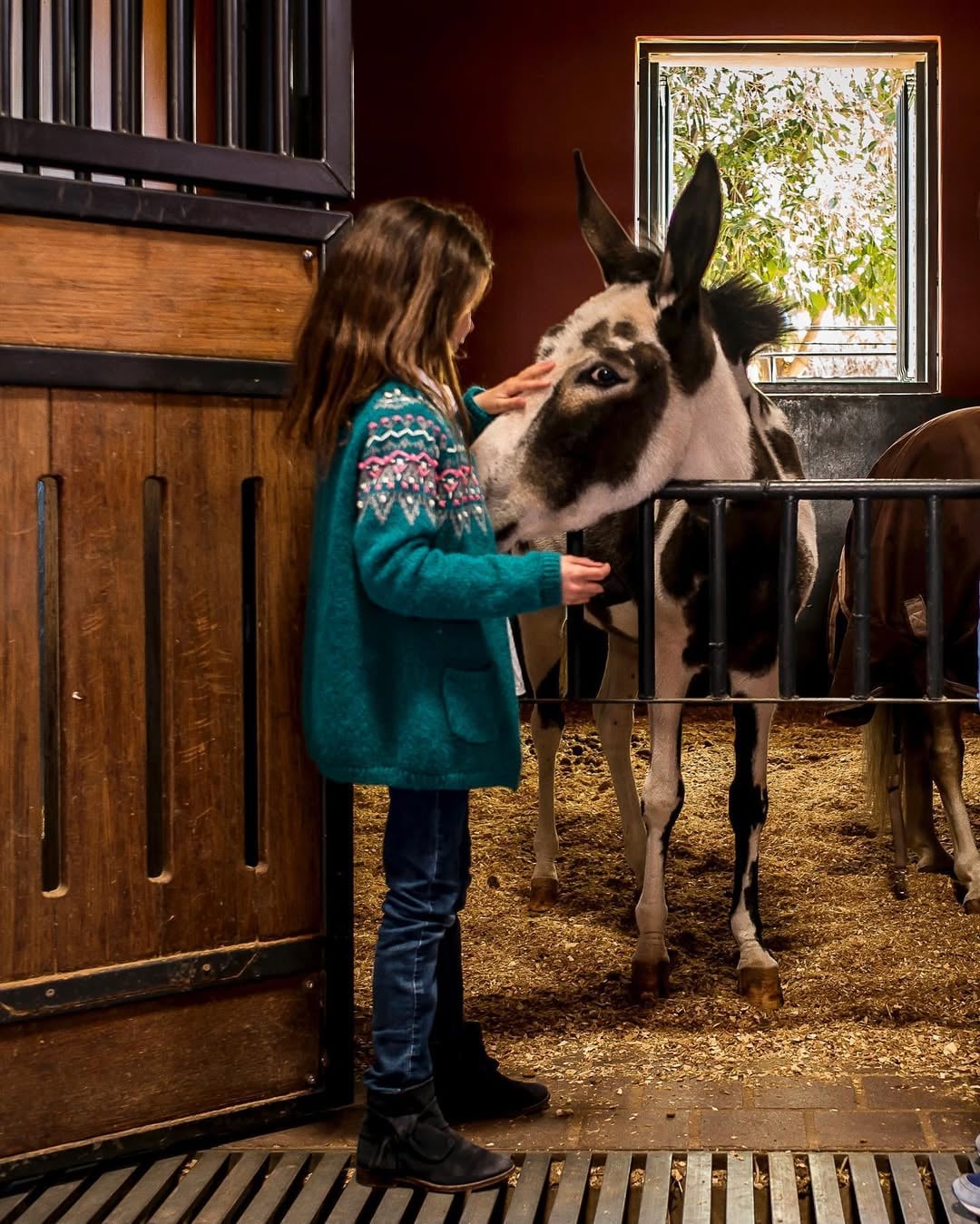
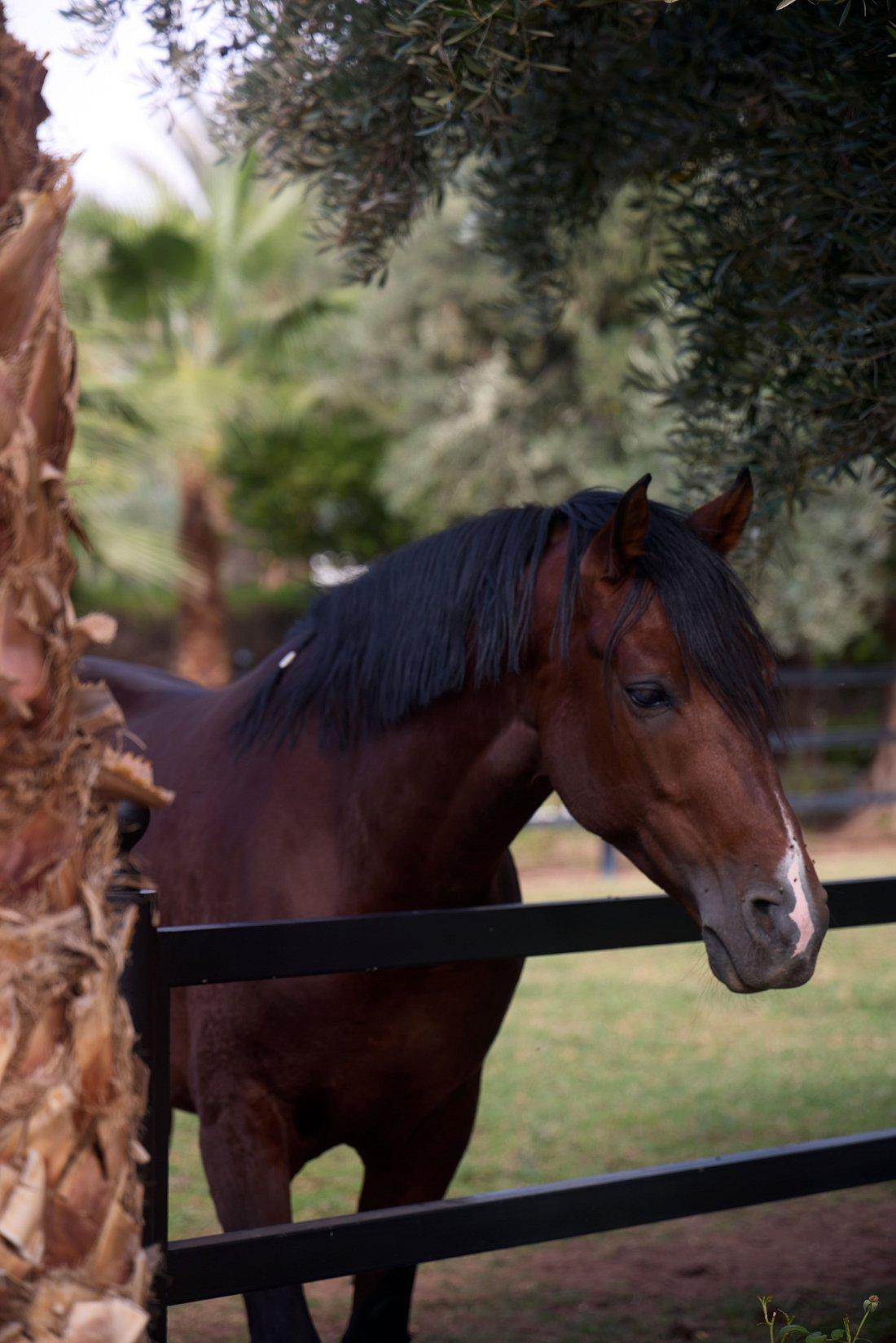
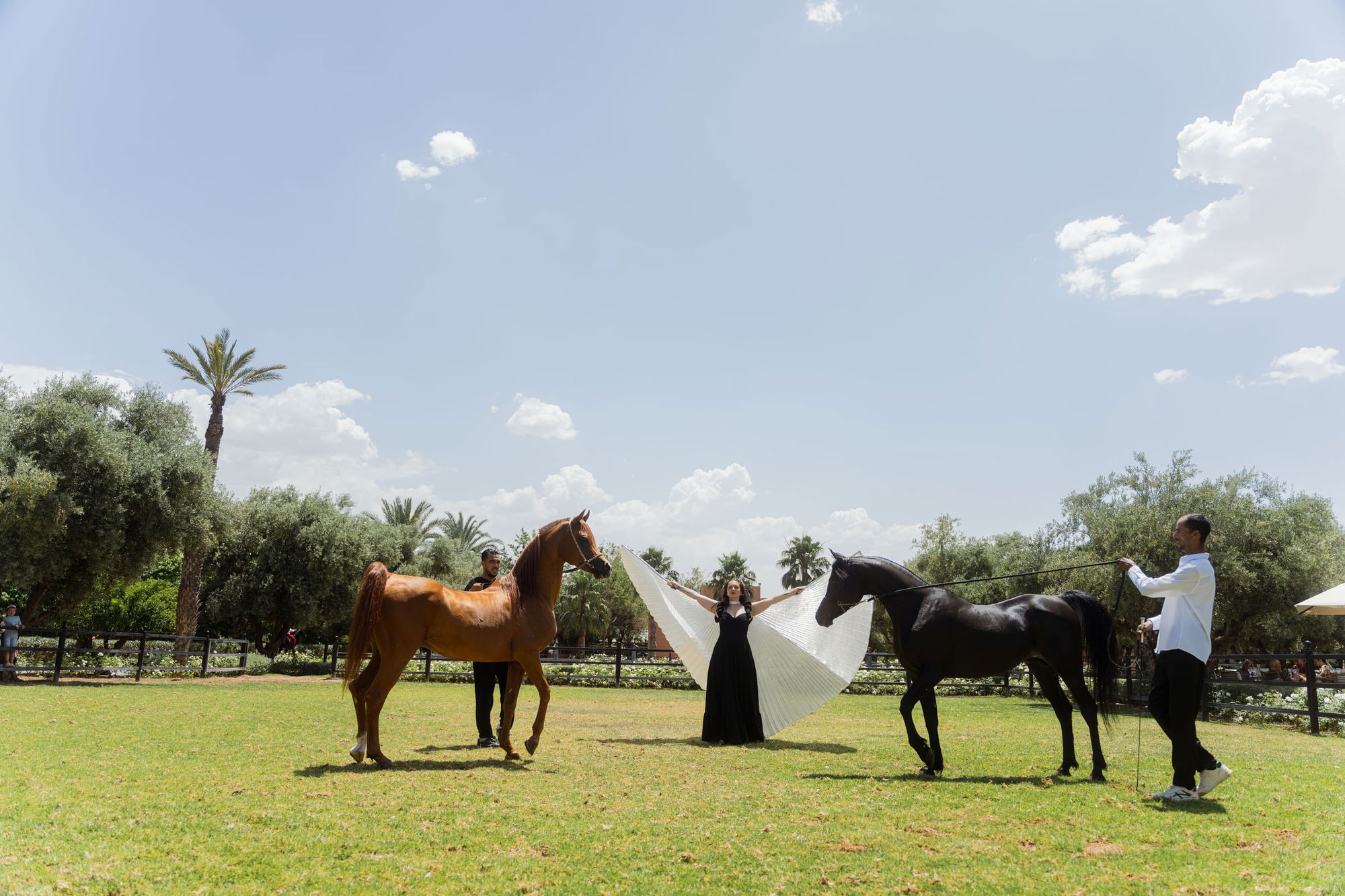
Most of what a guest sees of them is quiet: horses in their boxes, horses grazing in the paddocks, visible from the gardens. They belong to the daily life of the hotel rather than to its list of activities, and at certain hours they come closer. A private breakfast or lunch can include a presentation of the horses, and at dinner a table can be laid inside the stables themselves, between the boxes, under lanterns and red walls.
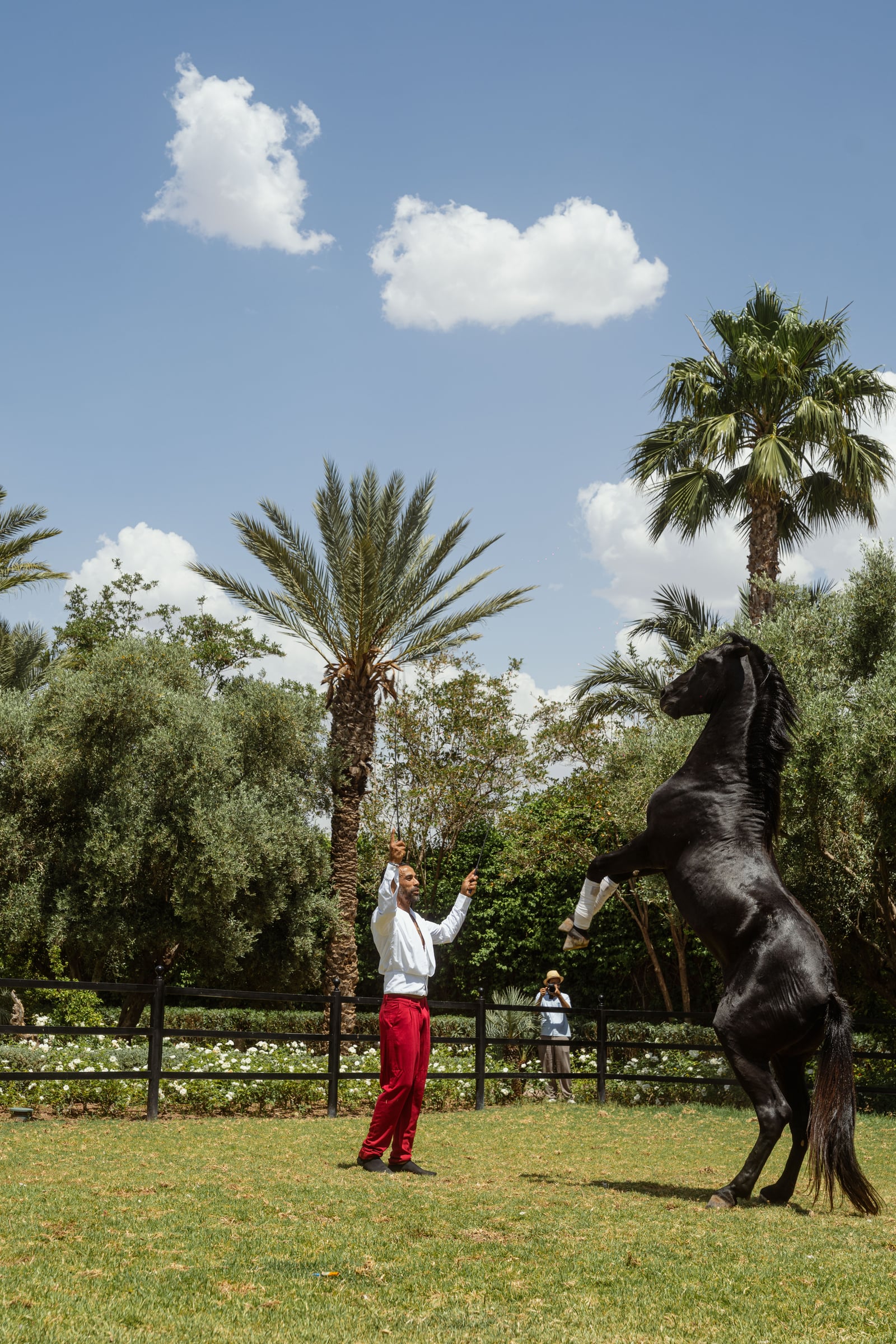
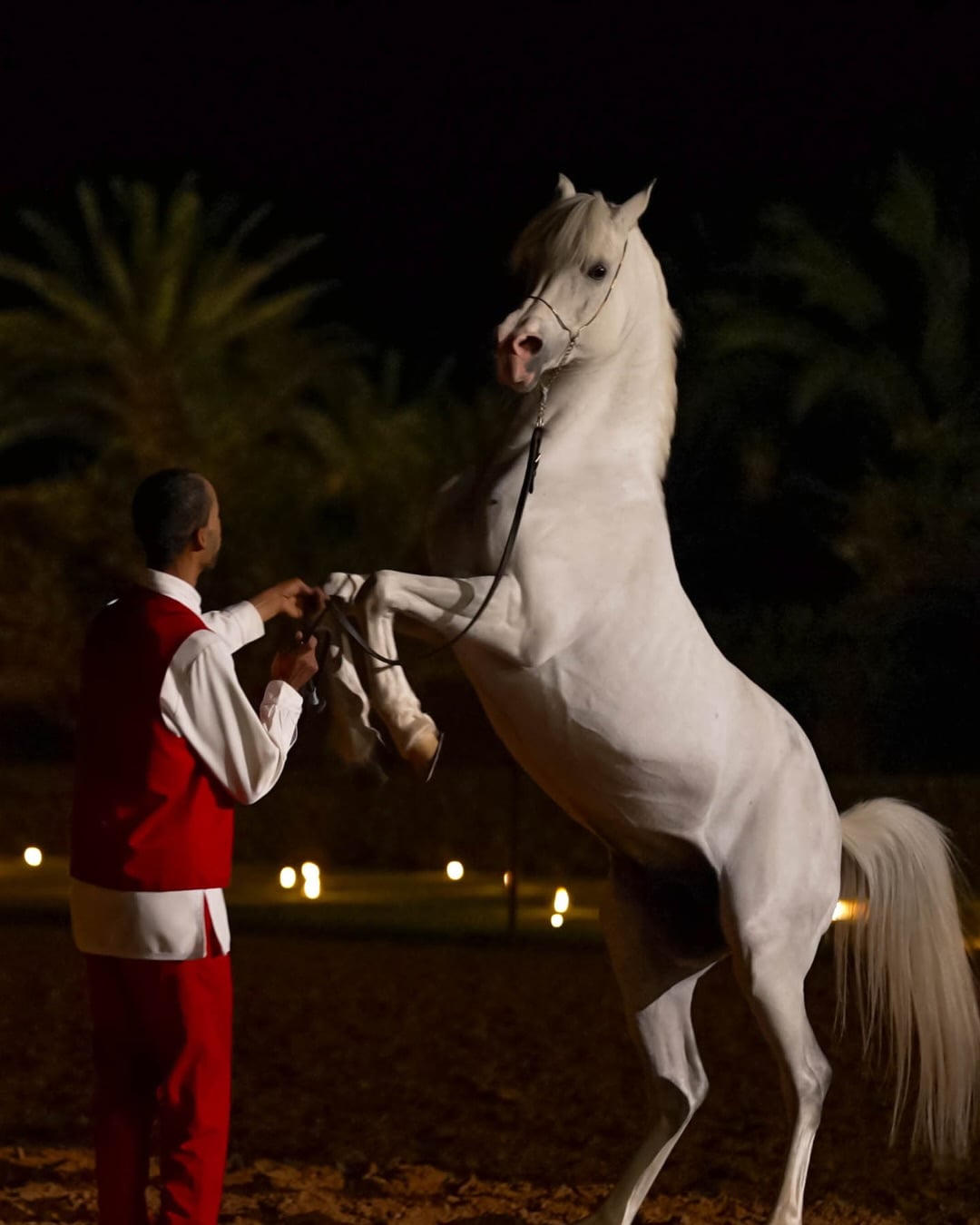
For guests who want to come closer still, the stables open at every level: private lessons on a horse trained in dressage for those who ride, a gentle ride through the gardens for beginners, ponies for the children. The equestrian shows belong to Sadek, the artist in residence, who trained at Morocco's Academy of Equestrian Art in vaulting, dressage and acrobatics and worked alongside Bartabas, the founder of the Théâtre Équestre Zingaro.
Six tables, from lunch to the last drink
Jacques Garcia designed the hotel's five restaurants and its bar, and since the autumn of 2024 Jean-François Piège, the French chef who earned two Michelin stars at Les Ambassadeurs in the Hôtel de Crillon, has directed its kitchens, his first time cooking in Morocco. Beside his French and Mediterranean tables, Assyl keeps the Moroccan kitchen in the hands of an all-female brigade, and each place belongs to a different hour of the day. Piège has said that the Selman, run by a family for as long as he can remember, feels "like being at home".
La Terrasse
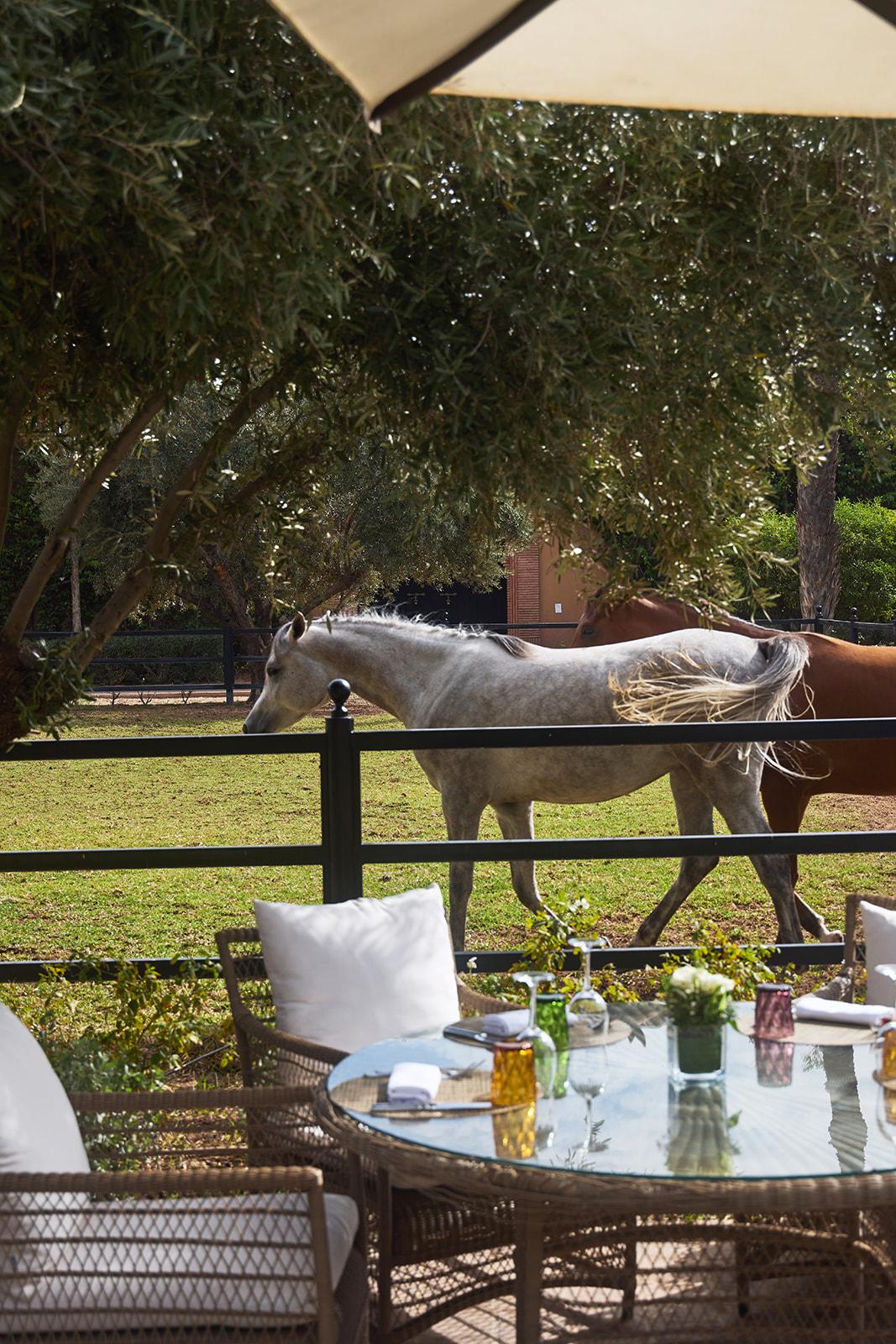
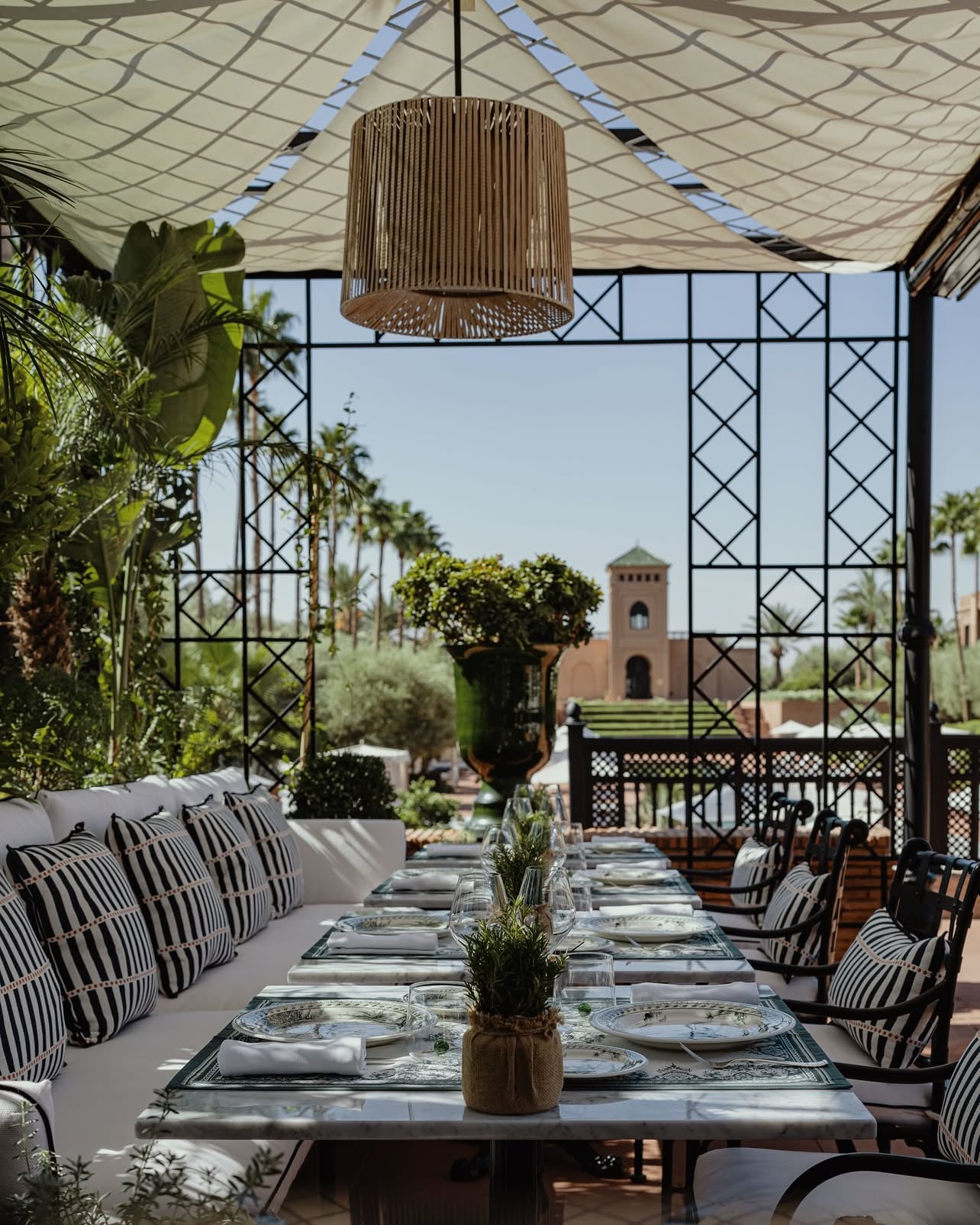
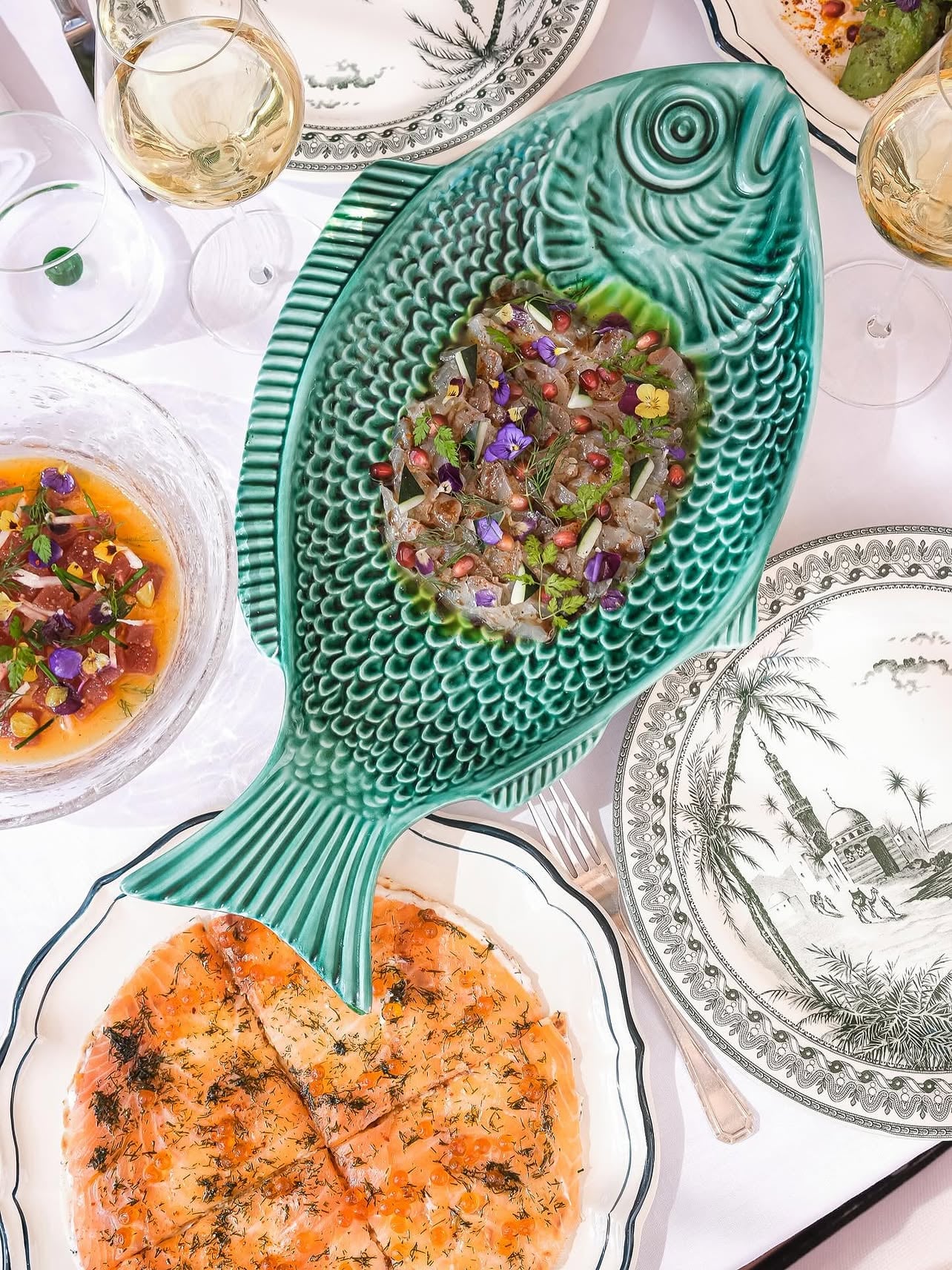
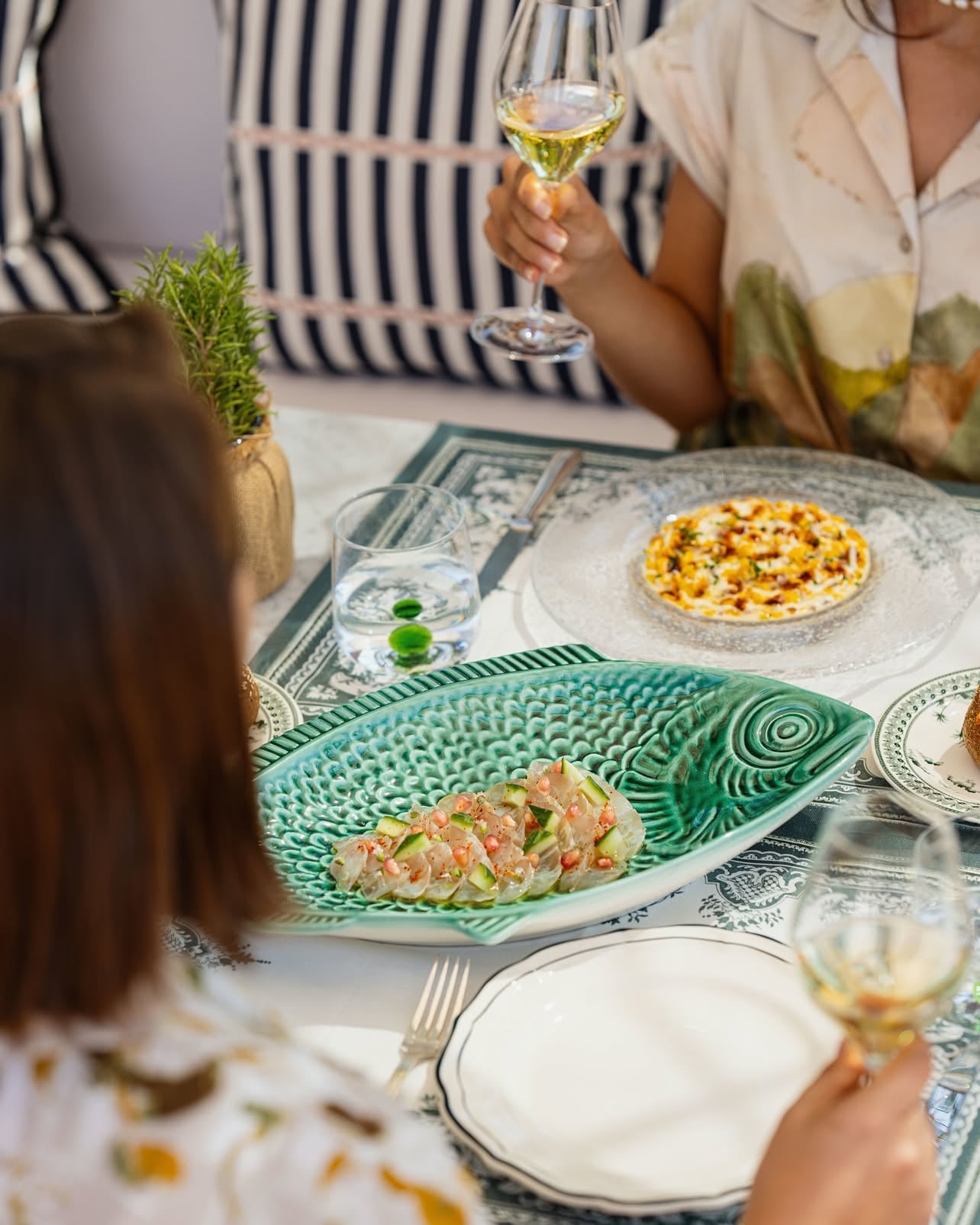
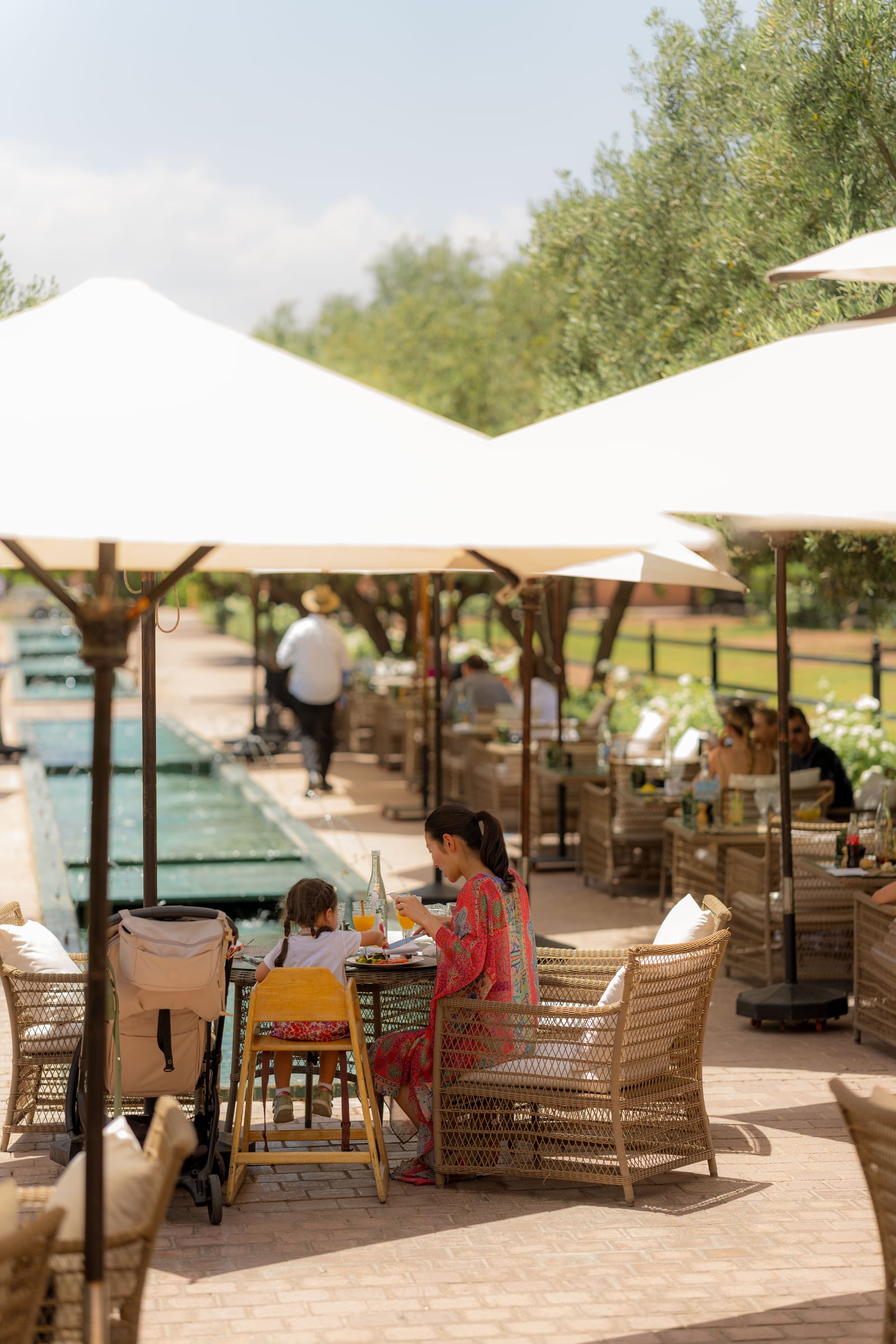
The collaboration began here, in an outdoor setting Garcia reworked for it, and La Terrasse is the Selman's table for the daylight hours: lunch outside, a gourmet tea, an aperitif with friends. Piège describes its cooking as a cuisine of sun and colour, Mediterranean in its traditions and generous on the plate, with dishes such as skewered bluefin tuna with pepper sauce, sea bream cured like gravlax with dill and cucumber vinegar, a carbonara made with wild squid, and lightly spiced lobster rigatoni in bisque. It is open from 12:30 to 18:00, and on Sundays and Mondays it stays open until eleven, for dinner under the sky.
Le Pool Bar
Down by the water, the Pool Bar takes the same chef into a lighter register, for the hours spent between the loungers and the eighty metres of the pool. Its menu, also written by Piège, is colourful and fresh: grilled meats, raw fish and salads, served every day from 12:30 to 16:30.
Le Pavillon and the Sunday brunch
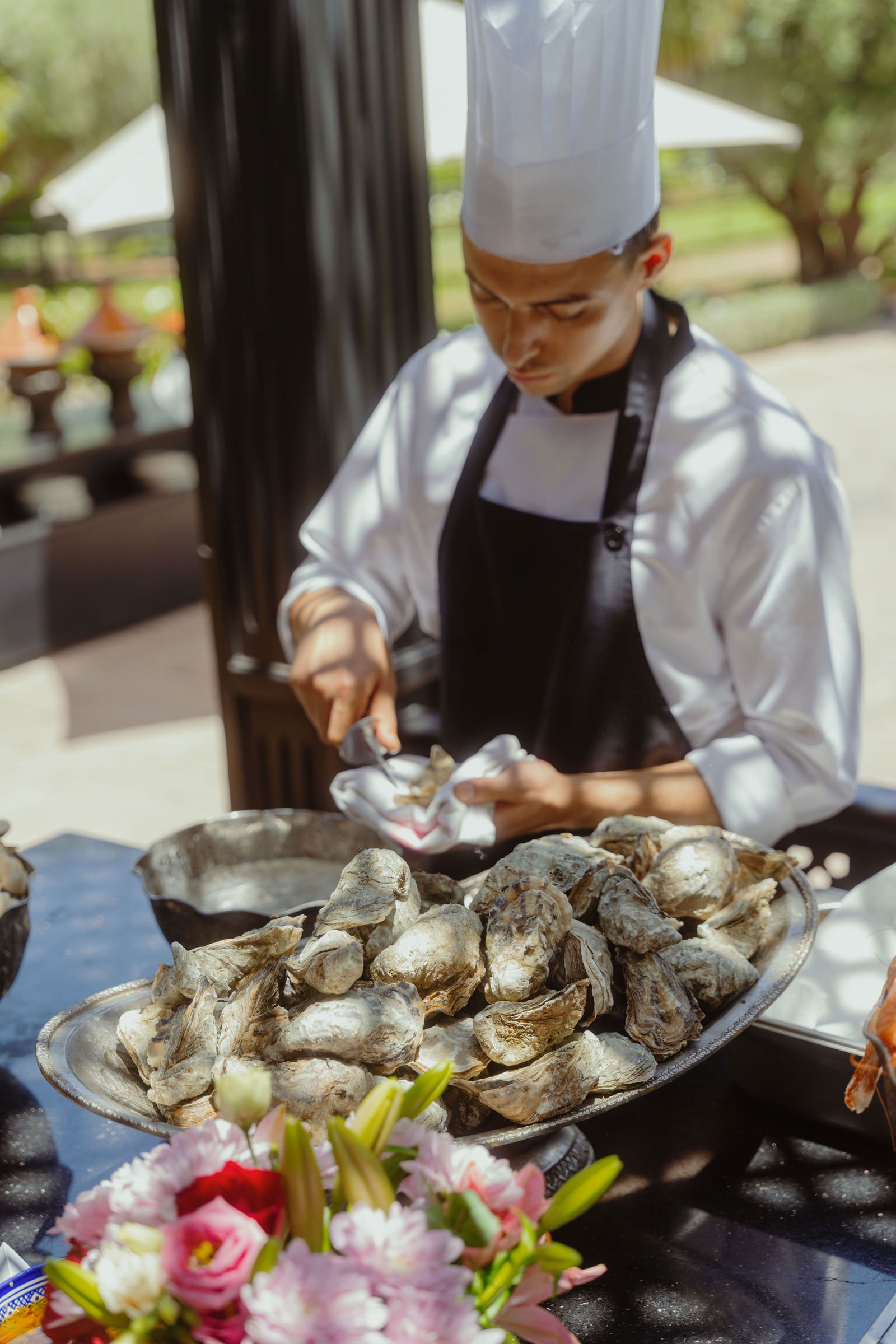
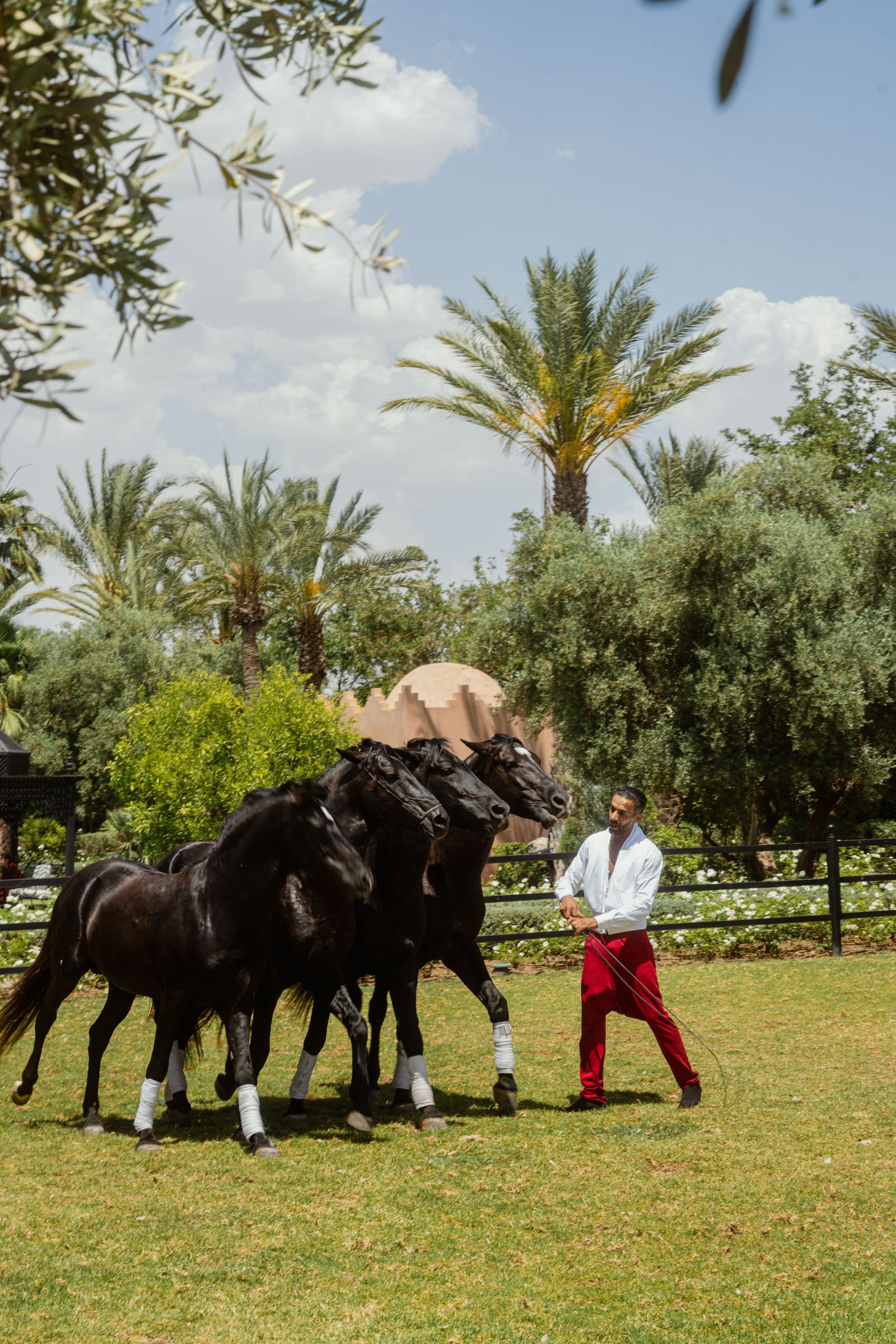
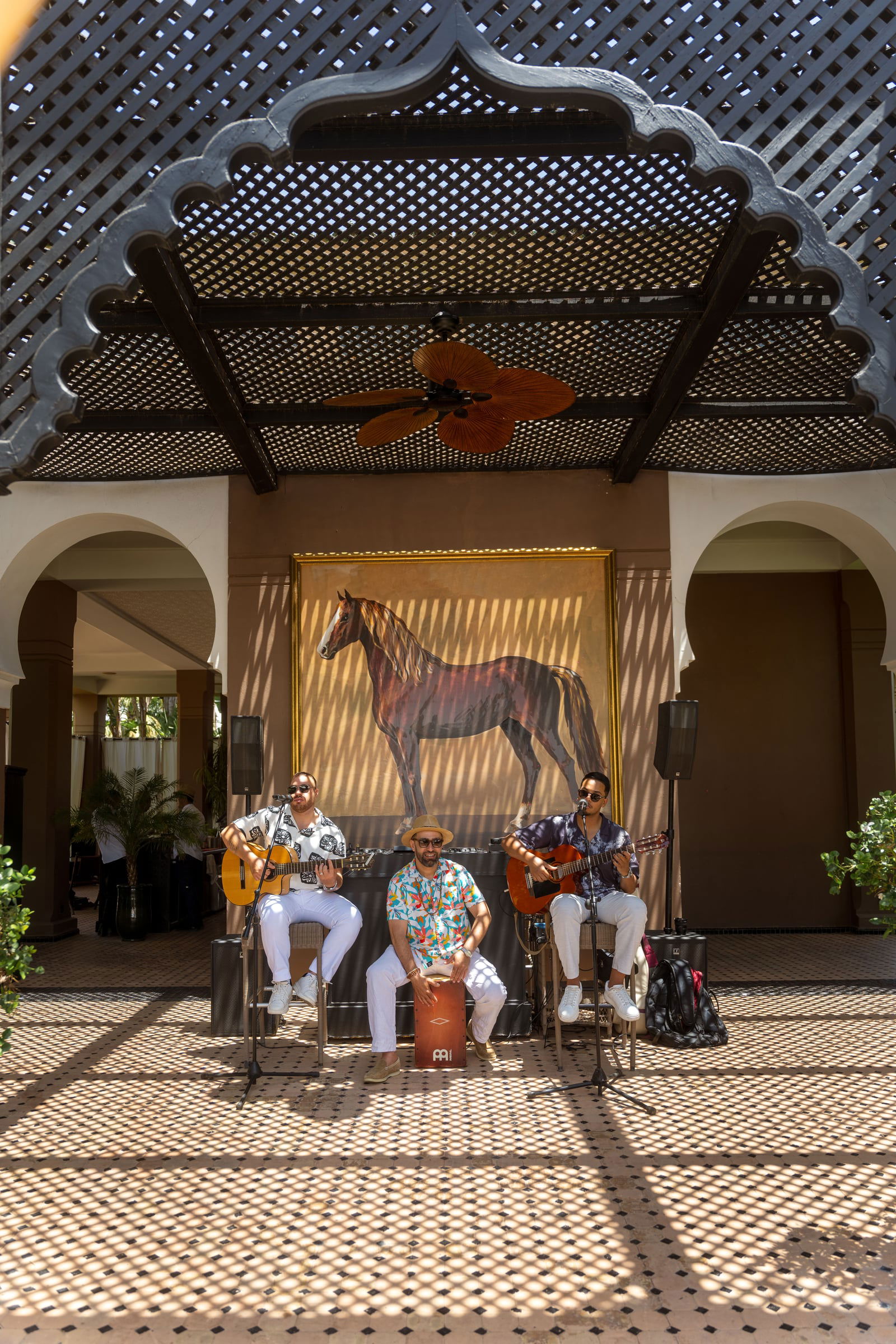
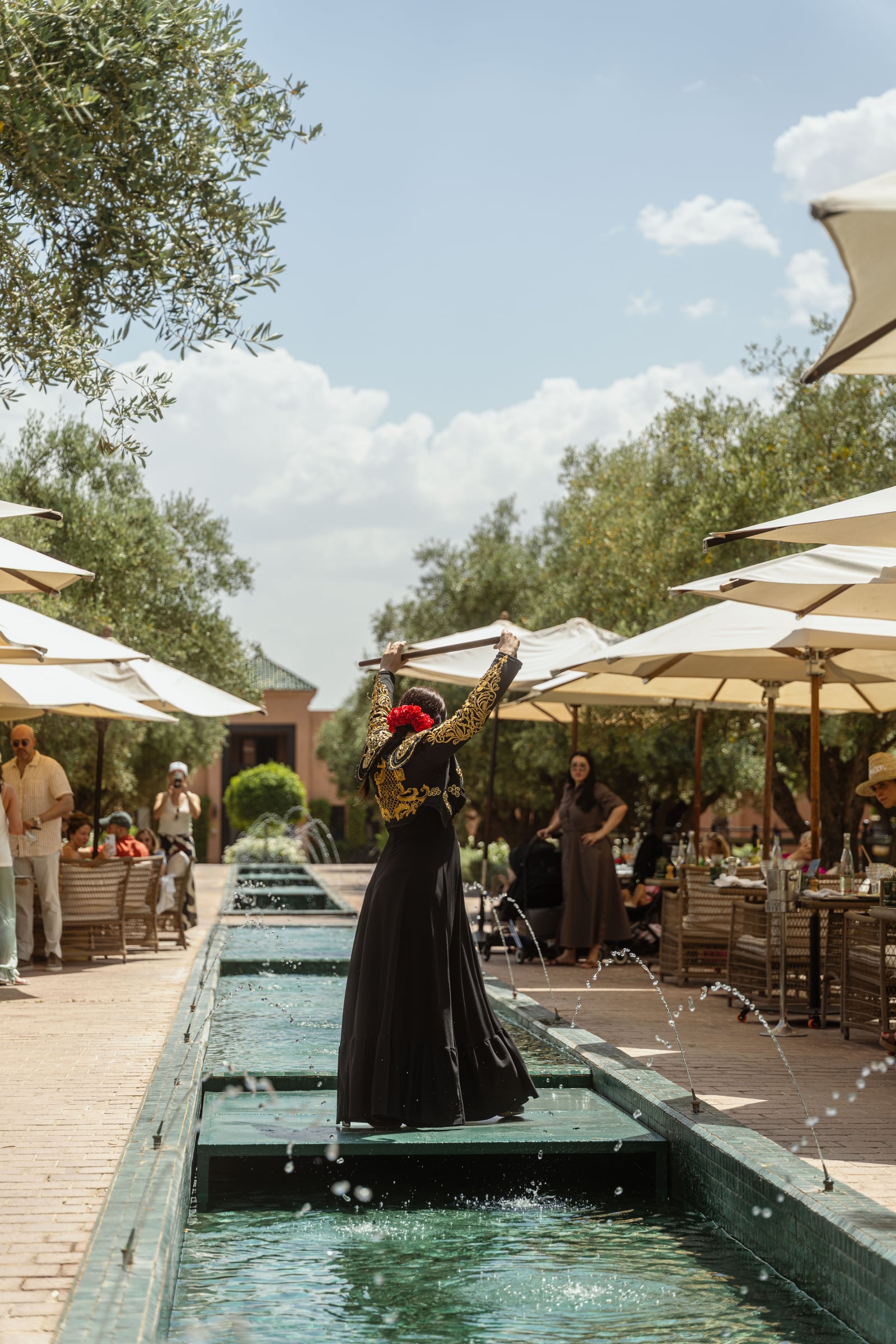
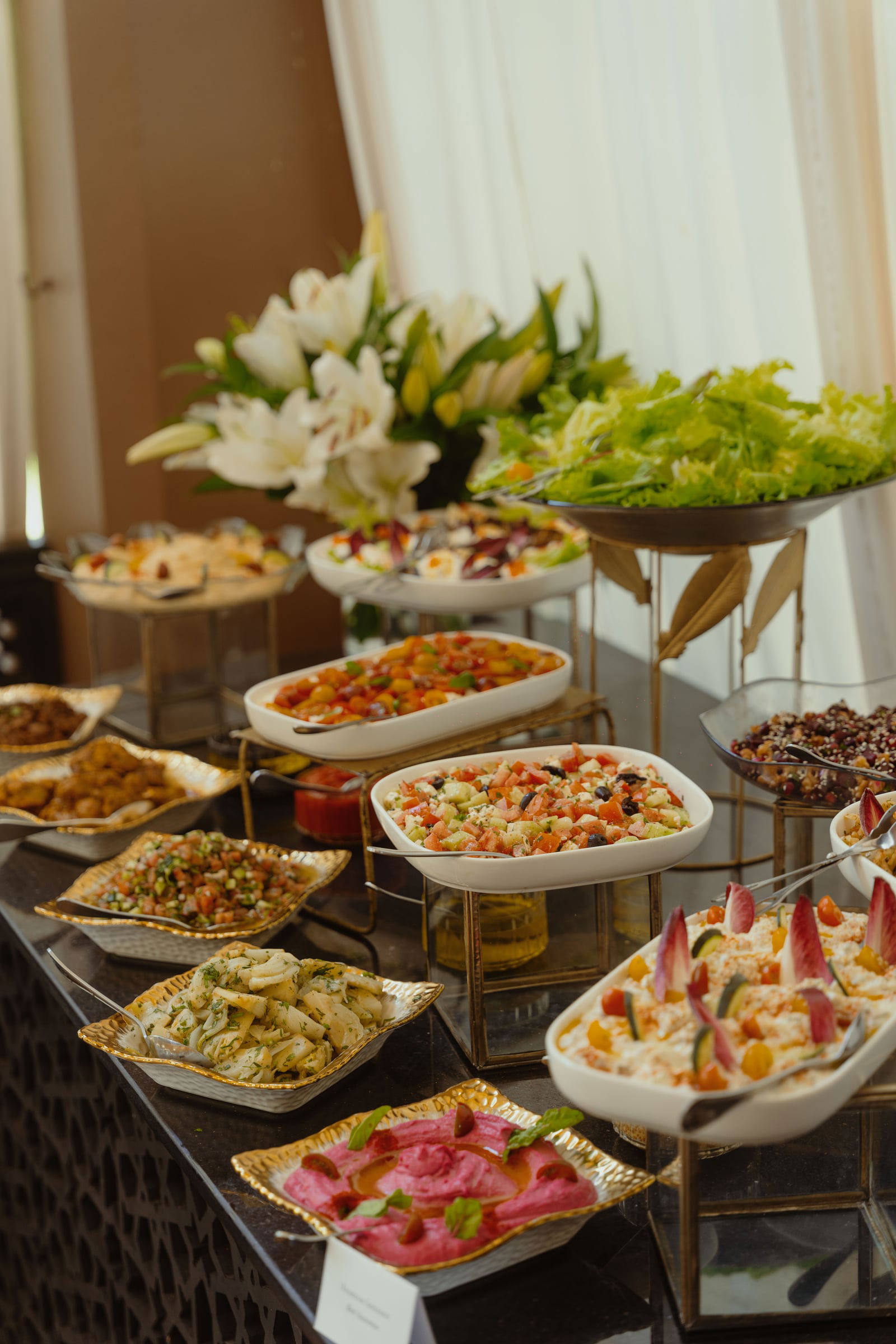
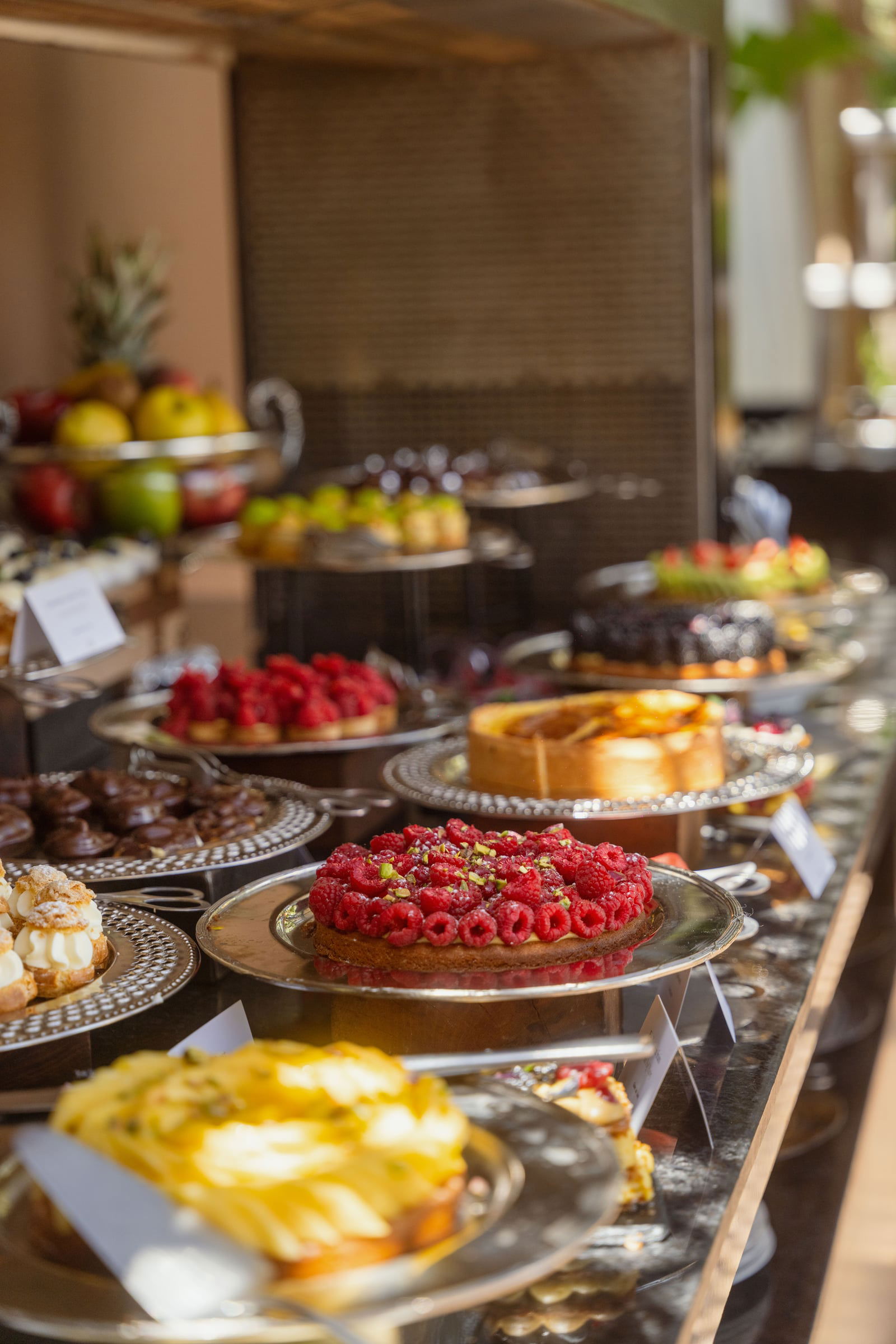
Le Pavillon is an open-air restaurant in the Spring Garden, looking over the green of the stud farm and its paddocks, and on Sundays it holds the Selman's brunch, back since Sunday 27 September 2026. From 12:30 to 16:30 its live stations set out Moroccan specialities, international classics and seasonal dishes, colourful salads and sweets, in an easy, convivial mood set by a Cuban duo. Then comes what the house considers its signature: the parade of the Selman's Arabian horses, followed by an equestrian show by Sadek, the artist in residence, built around the grace and nobility of the horse, a few metres from the tables.
The brunch is meant for families and friends. It costs MAD 1,900 per person with a glass of Champagne, half price for children under twelve, and has to be booked ahead. Non-residents are welcome, and so are their children at the Kids Club that day: if you are not staying, Sunday is the day to see the horses.
SABO
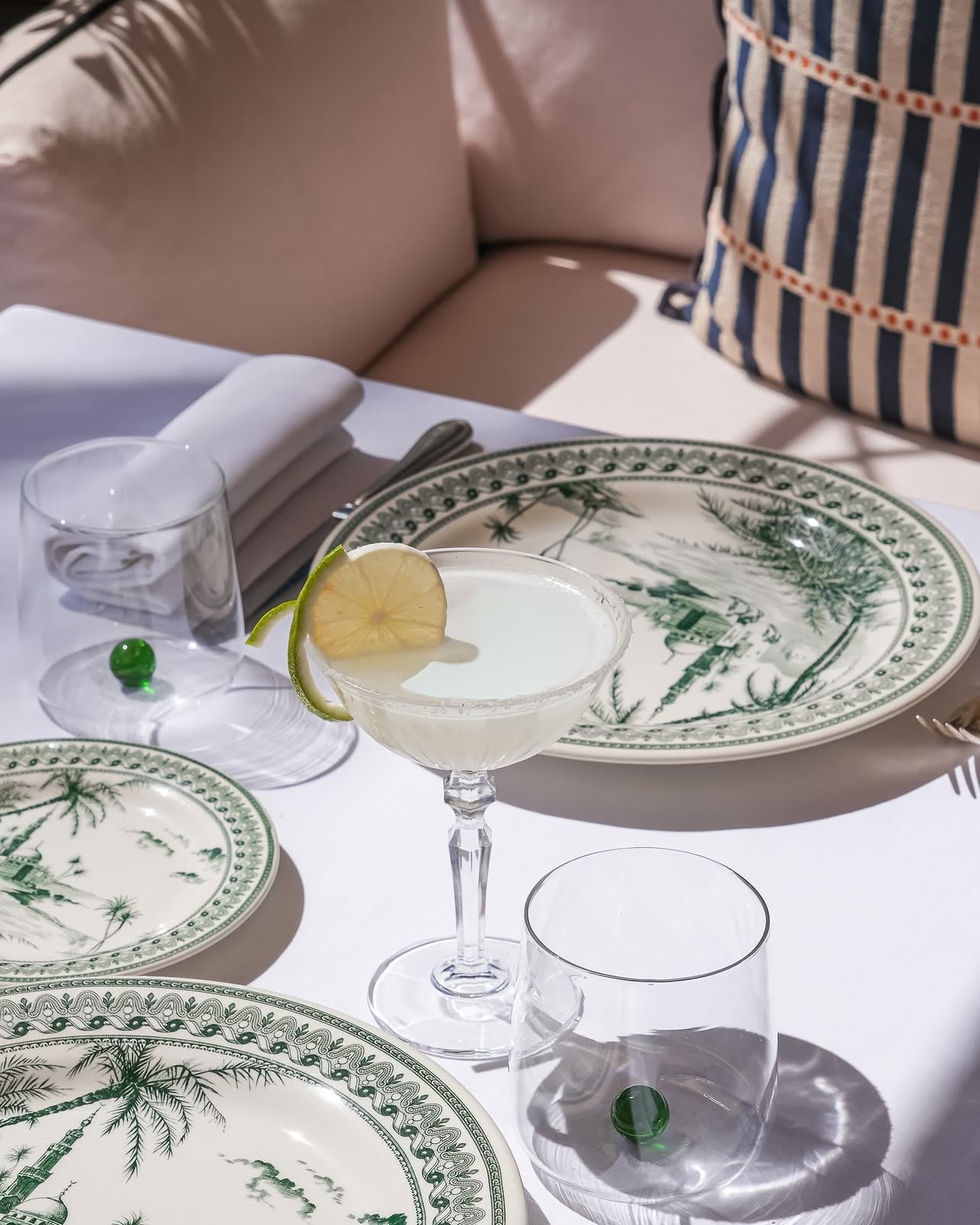
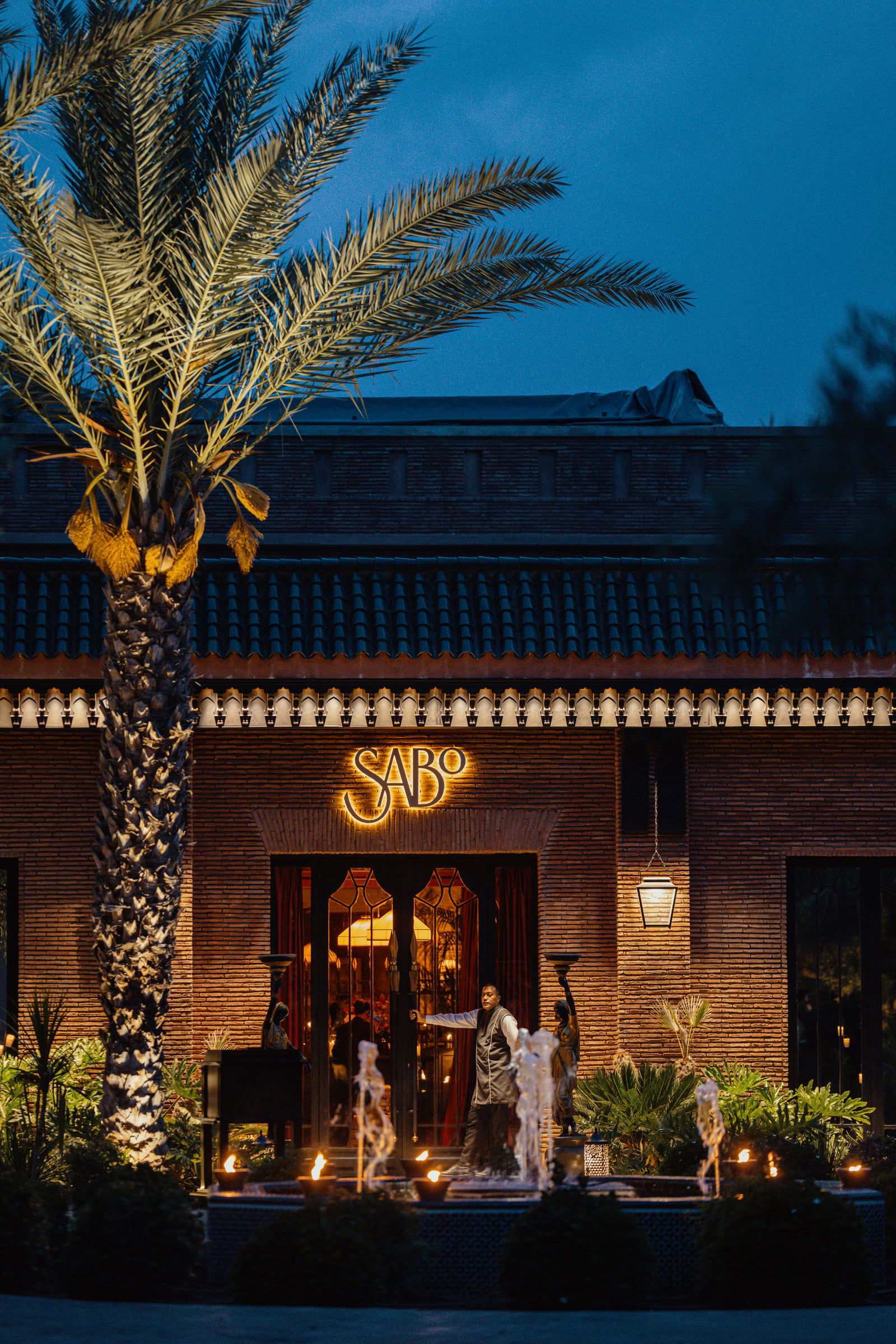
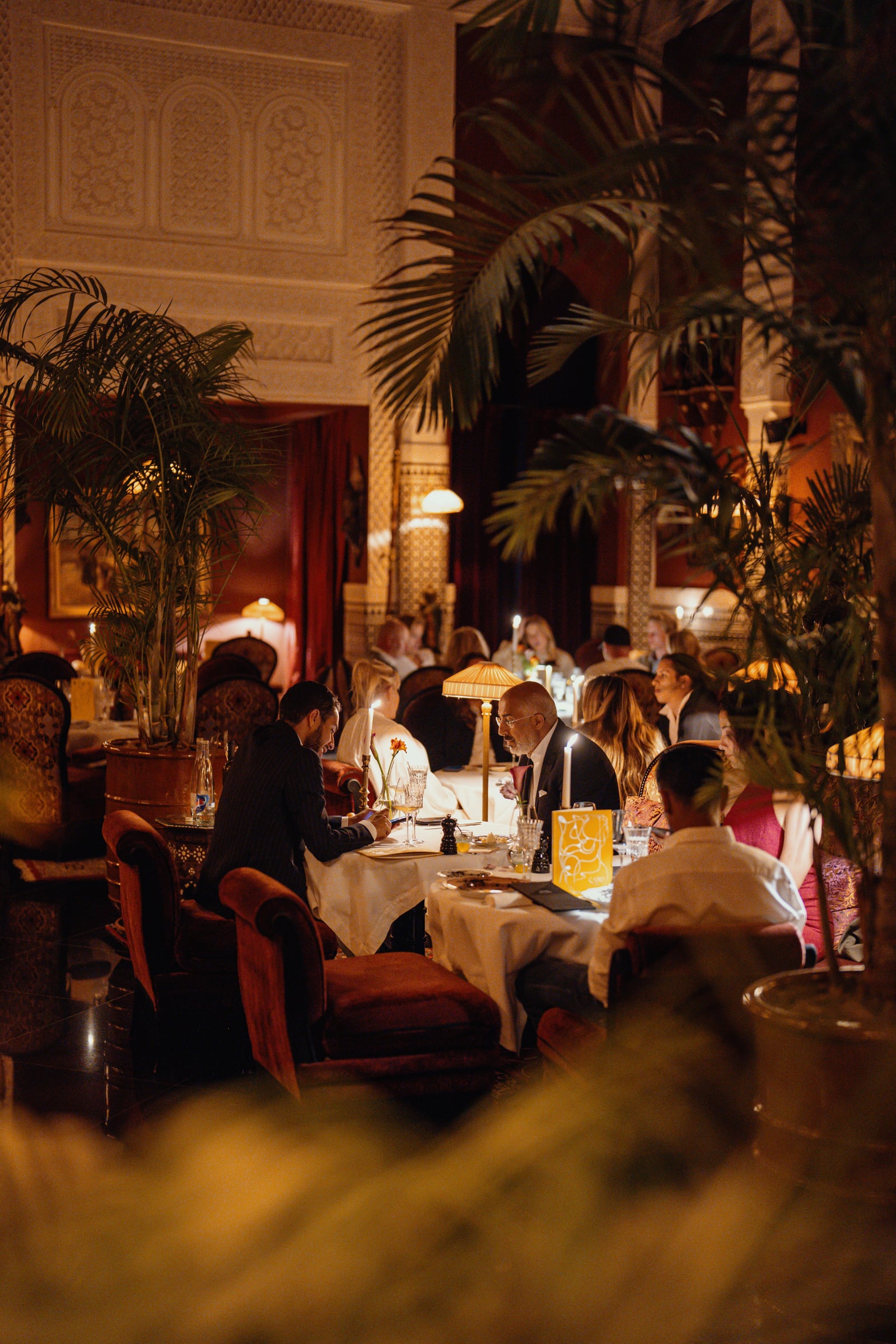
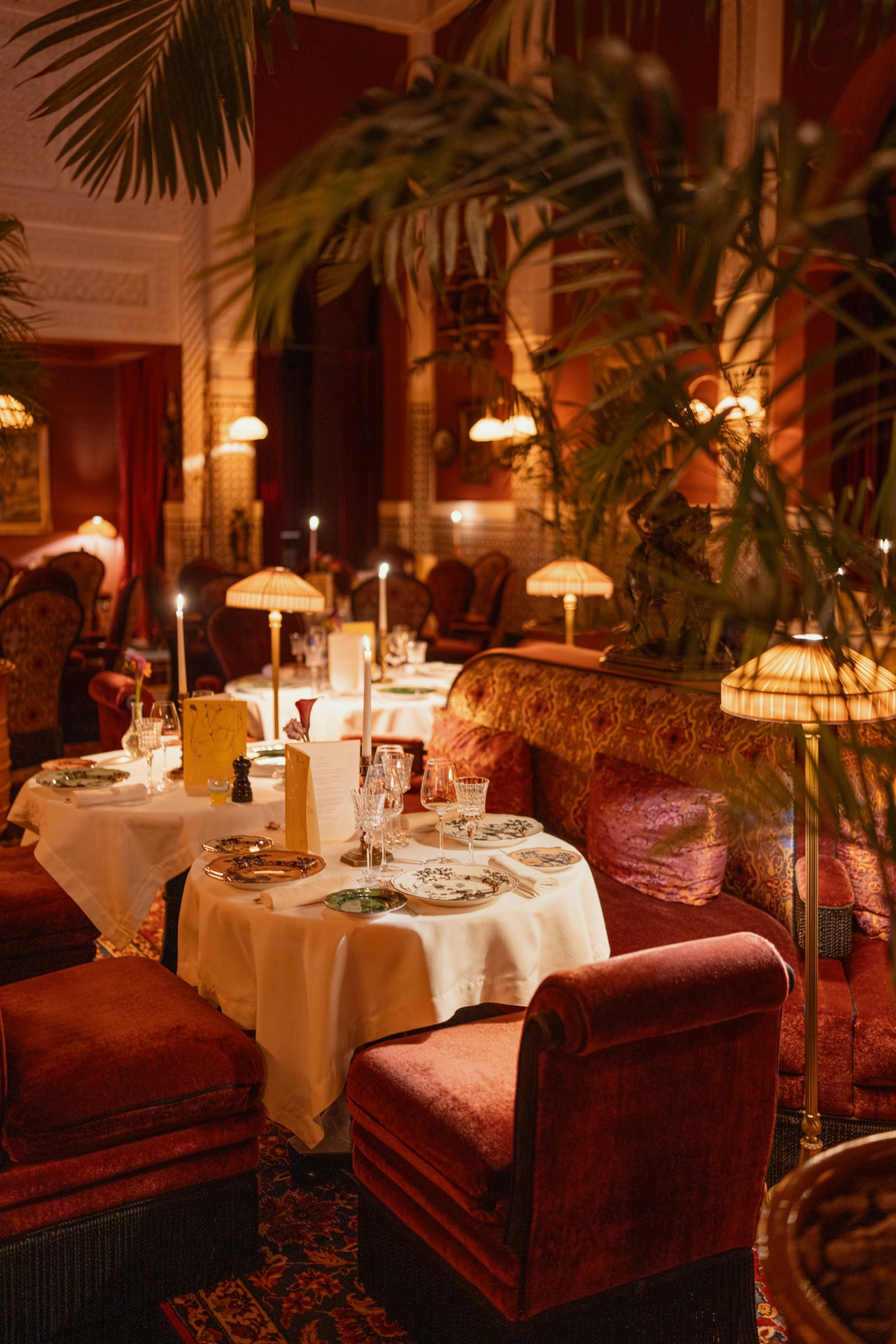
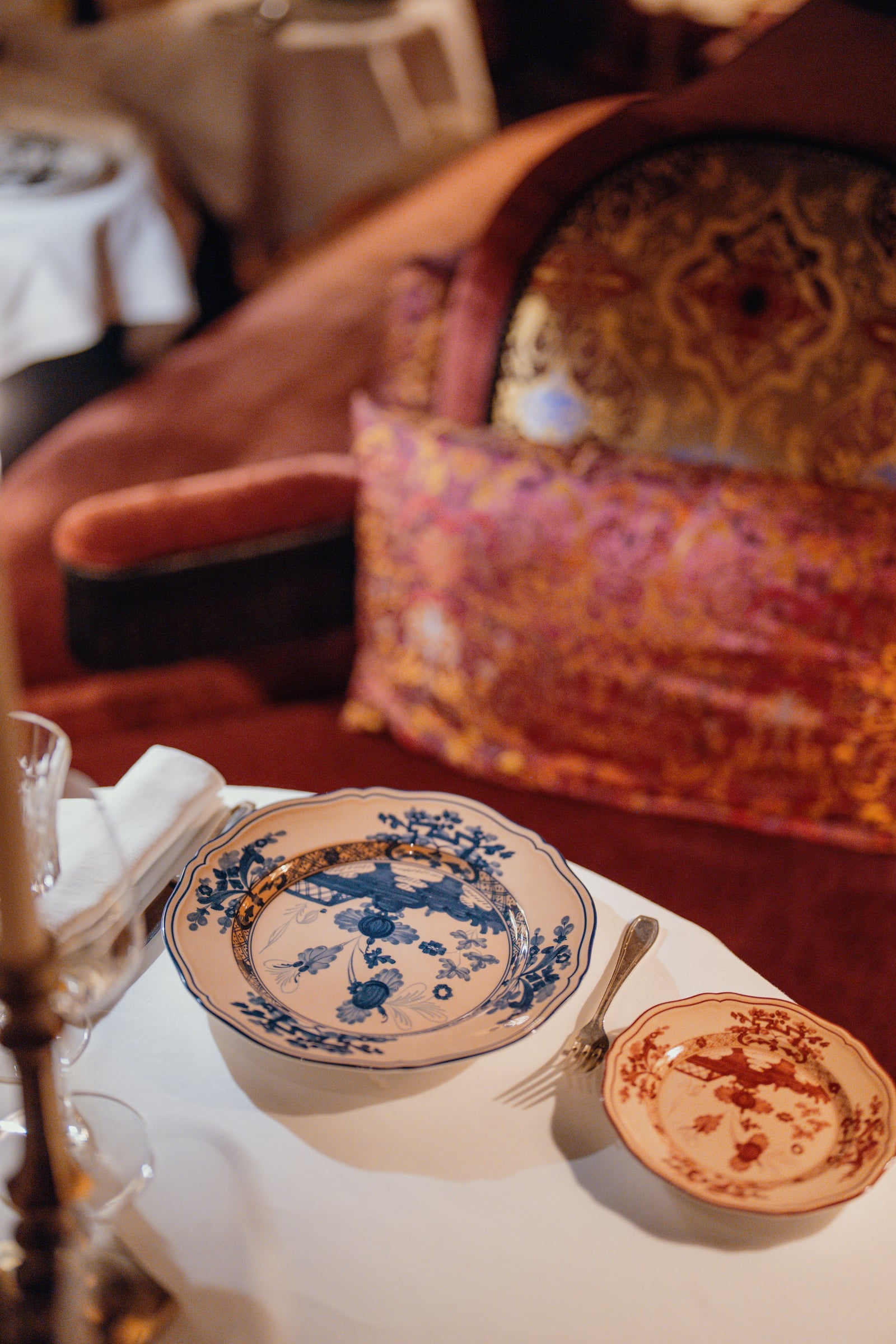
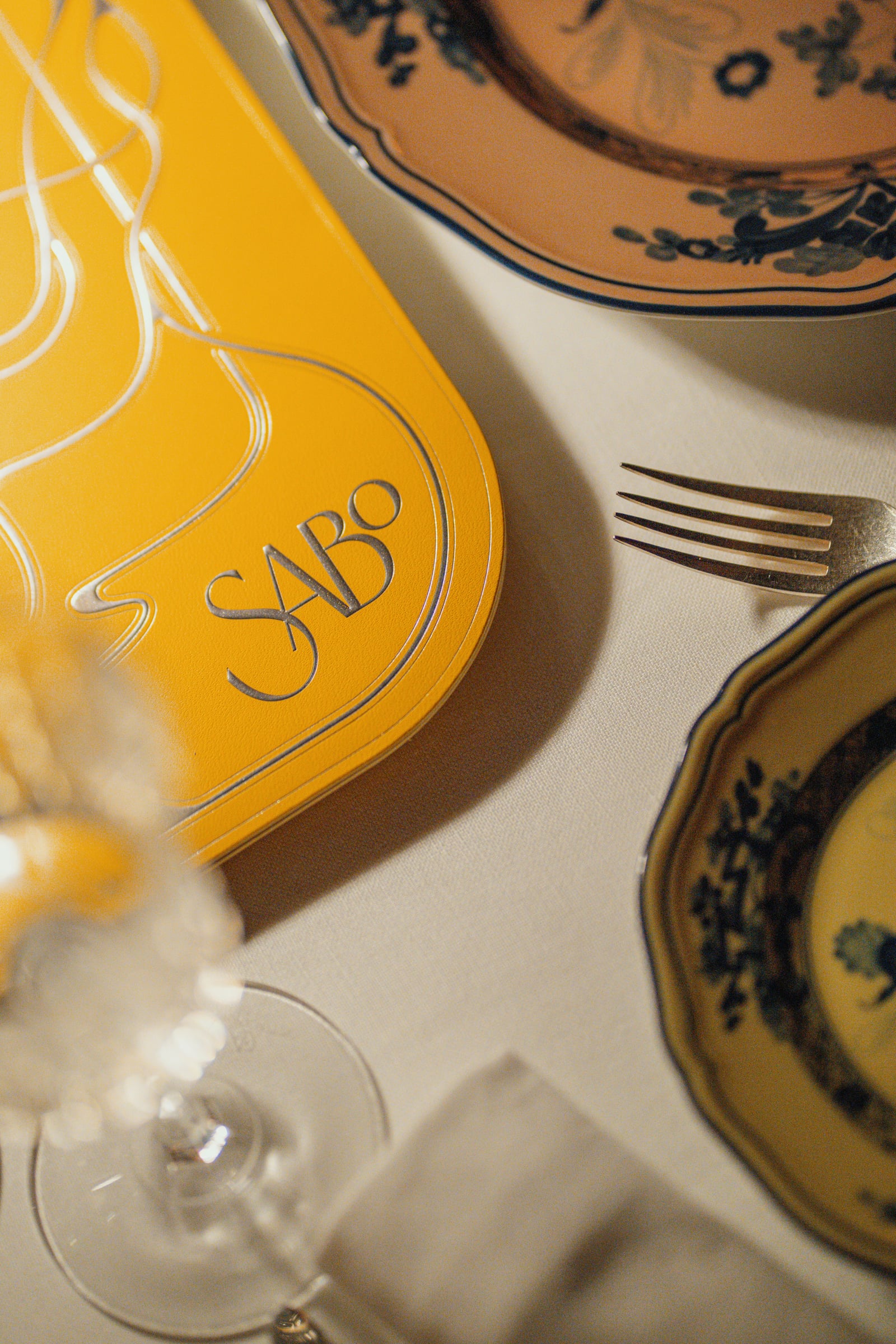
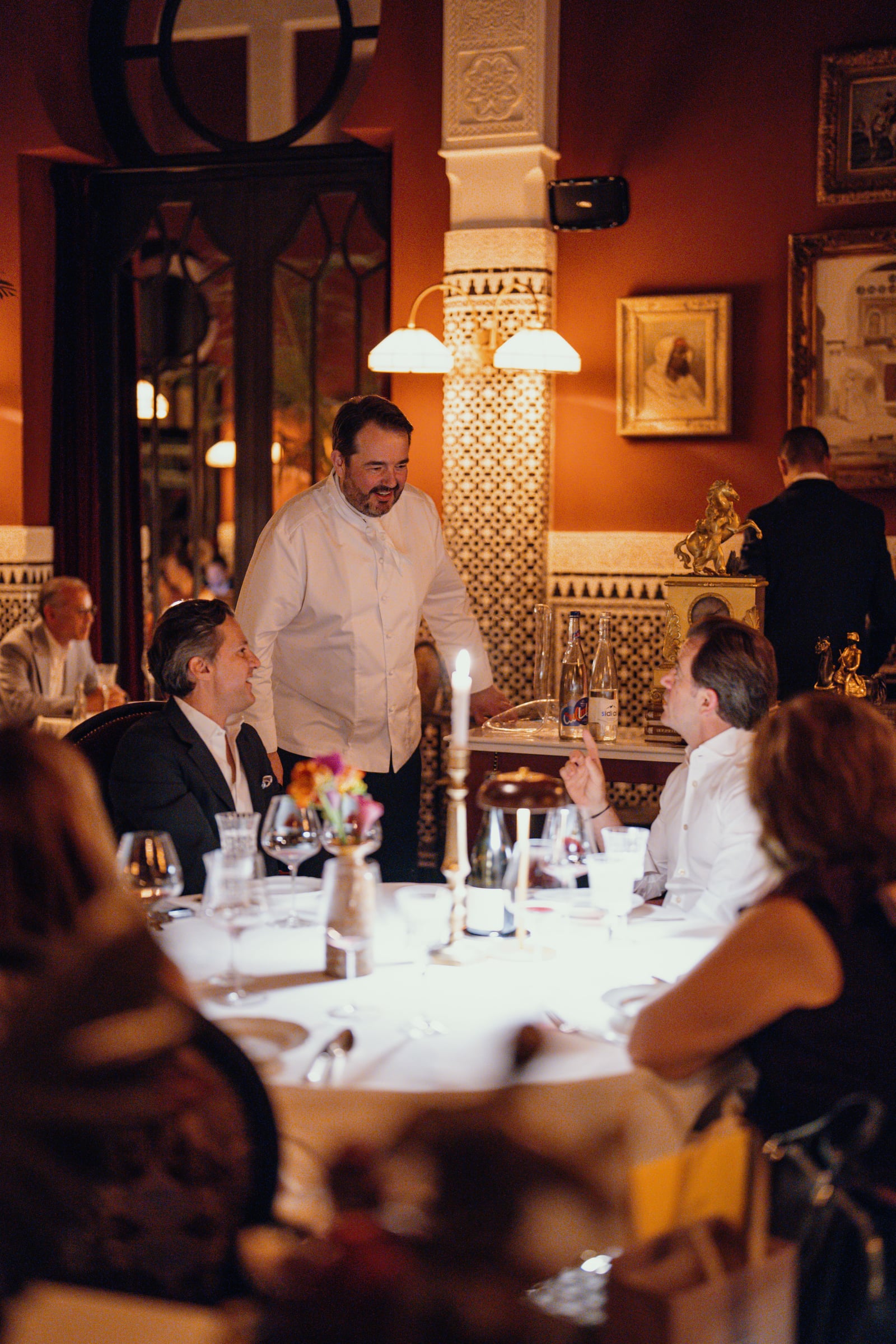
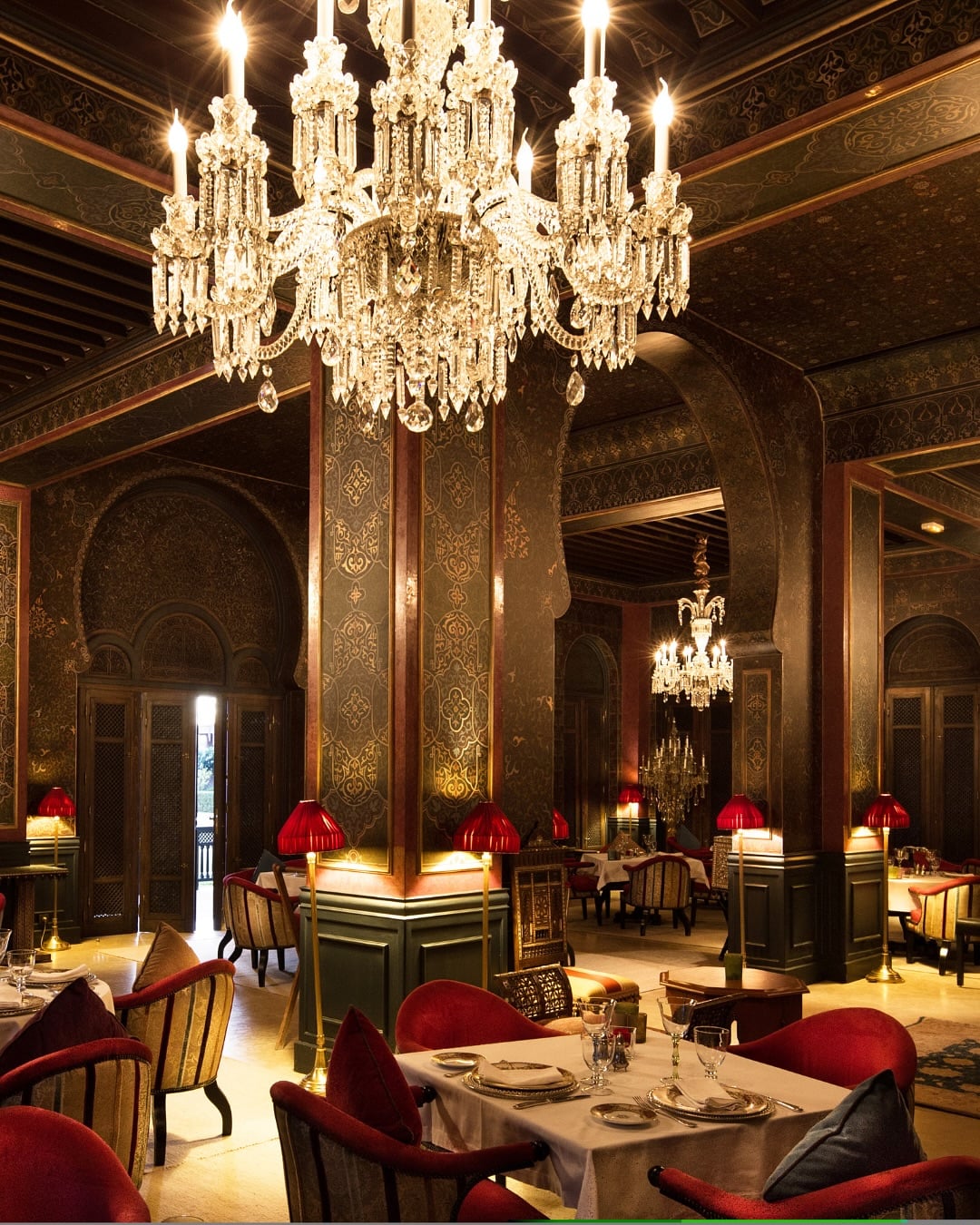
SABO is the evening table and the most French of them, opened by Piège in May 2025. Garcia dressed it as a Moroccan Belle Époque: a patio whose roof opens onto the night sky, Ginori porcelain and antique silverware sourced for the room, and a library-bar where dinner can end more intimately. The cooking joins French savoir-faire to Moroccan produce, and the menu that opened the restaurant gives the tone, from a croq' of caviar and mozzarella to a shoulder of lamb confit with garden herbs and strawberries and raspberries in Champagne. Even the name leads back to the stables: it comes from sabots, the French for hooves, and from the almost choreographed way horses move. SABO is open from Tuesday to Sunday, from seven until one, and celebrated its first year in 2026.
Assyl, in acts
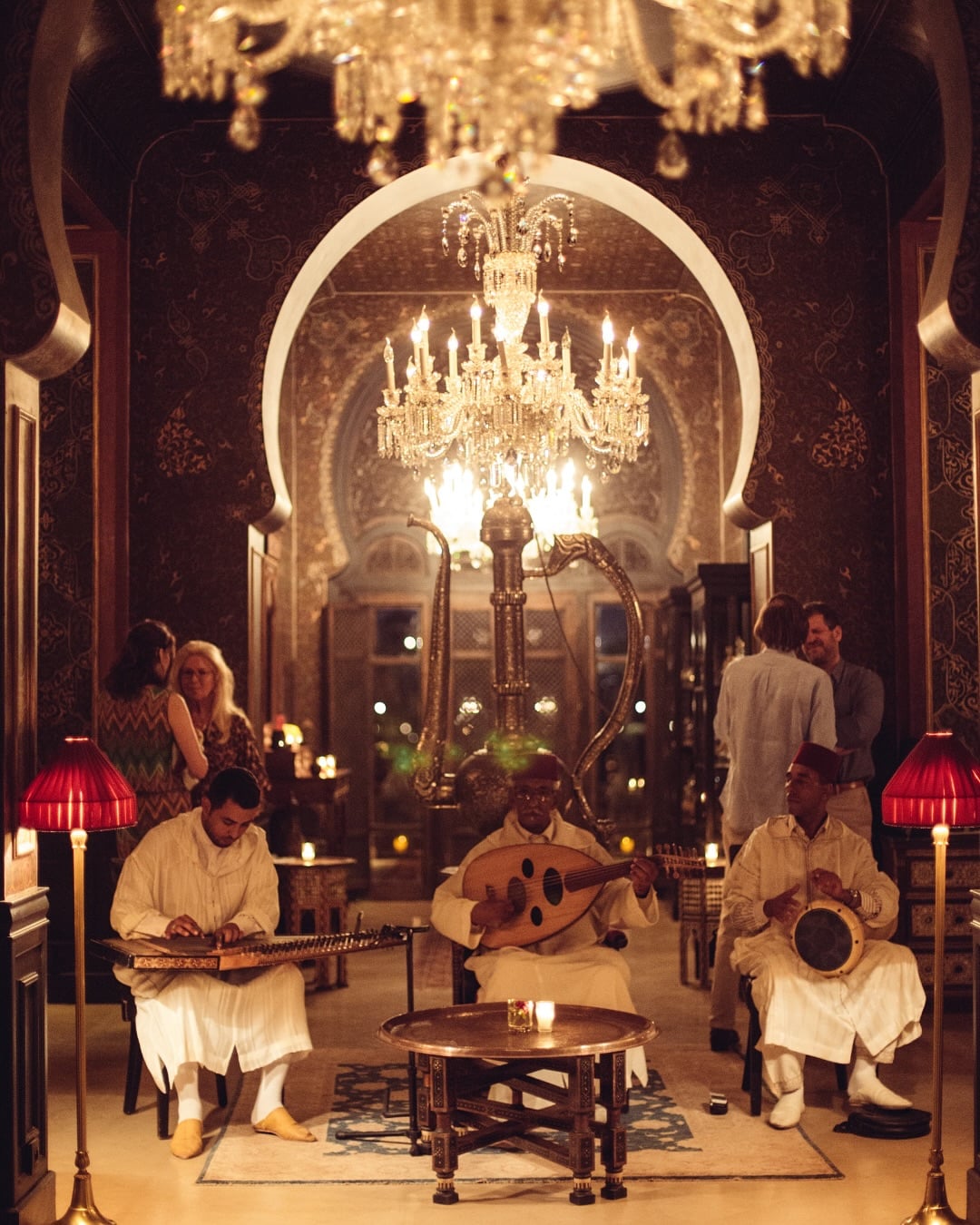
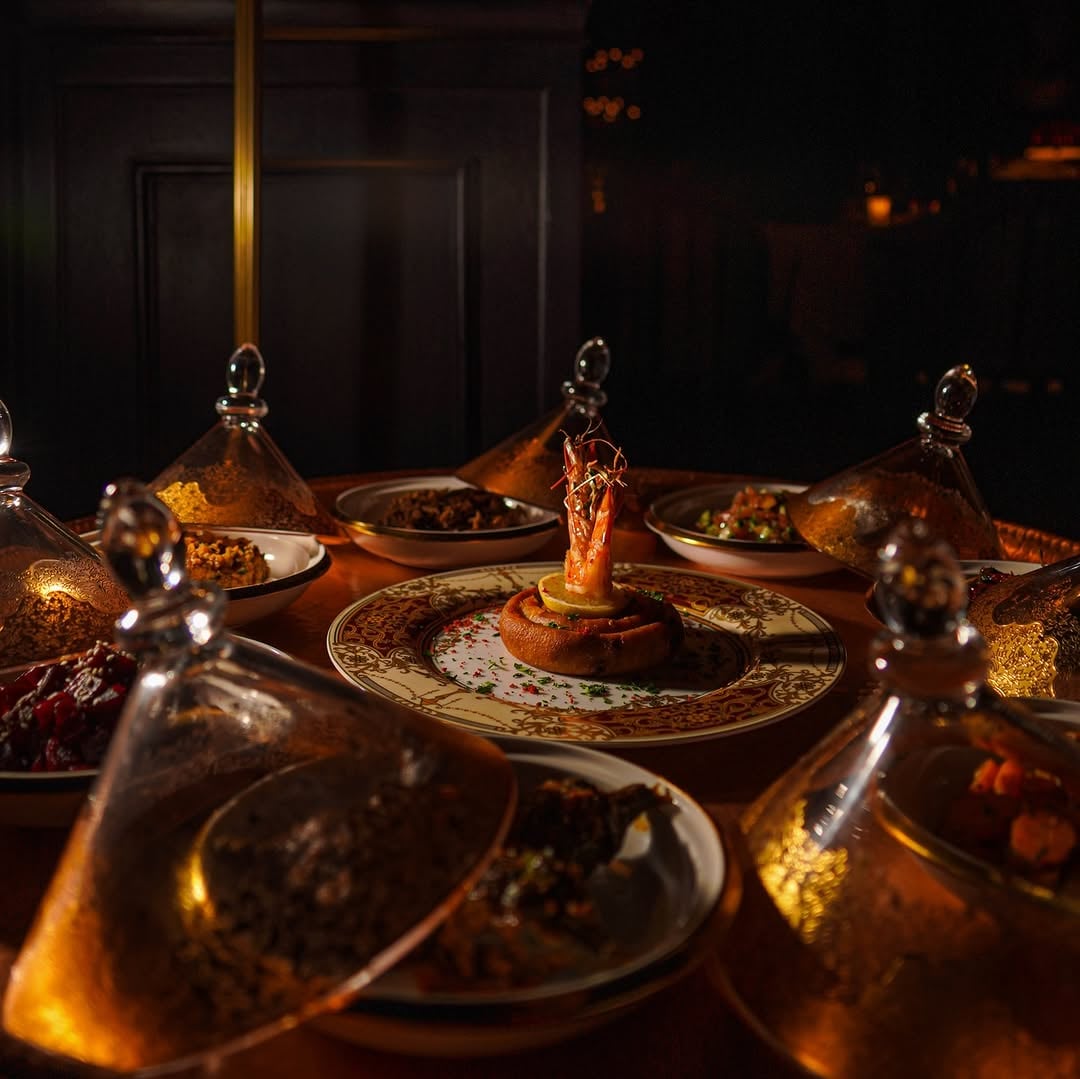
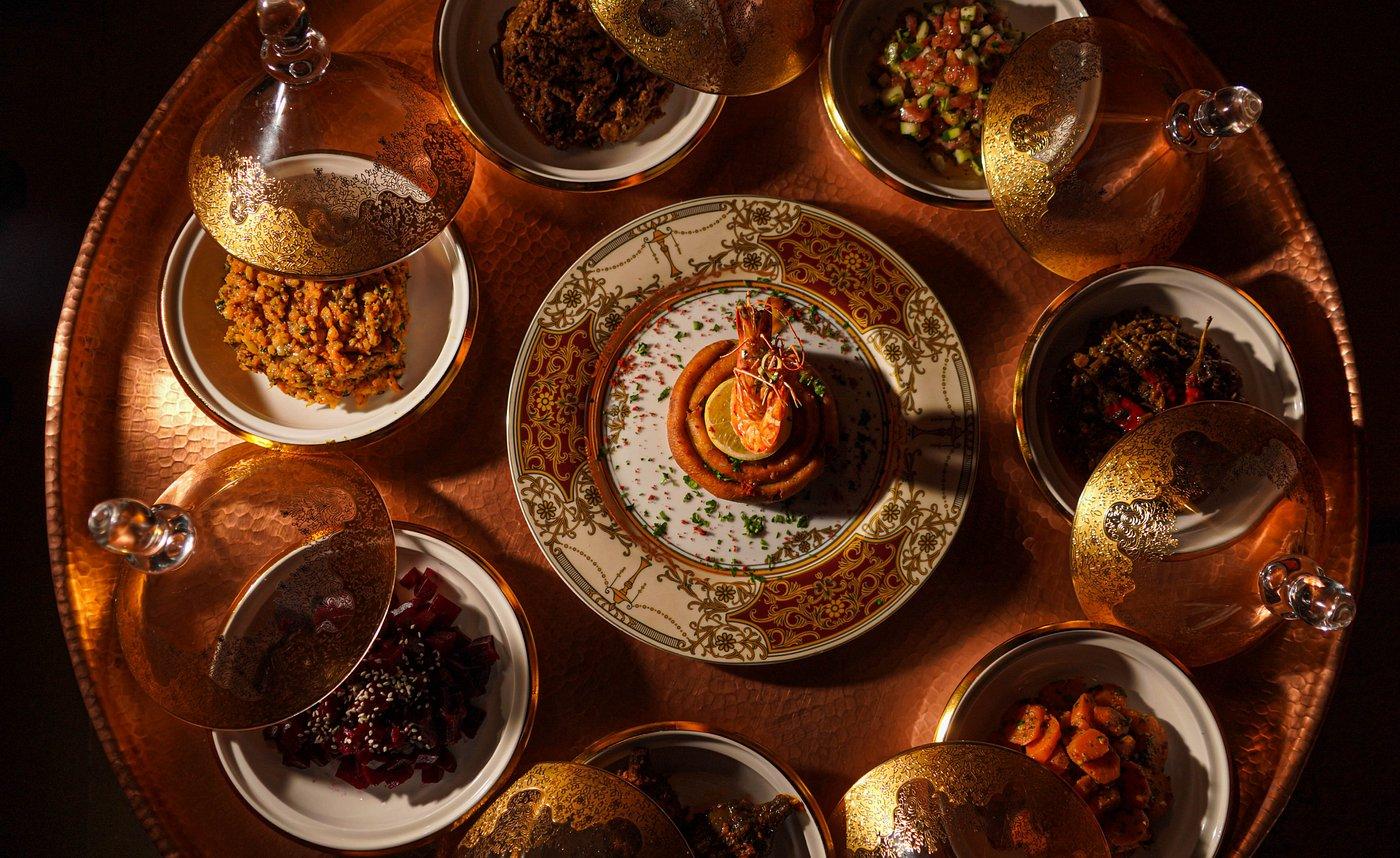
Assyl, the Selman's Moroccan restaurant, occupies the palace at the far end of the pool and serves dinner from Monday to Saturday, from half past seven until eleven. The meal begins in a room of high ceilings, painted woodwork and chandeliers, and the kitchen belongs to an all-female brigade led by chef Hafida, cooking in the tradition of the dadas, the women through whom Moroccan recipes, gestures and know-how have passed from one generation to the next.
Musicians play lute and oud through the meal and the dancers follow, and just when the evening seems to be over, it changes direction: guests step outside, order one last drink and gather for the equestrian show. It is the moment when the idea behind the Selman is easiest to read, as the horses from the stables next door come into the evening as its last act, under the Marrakech sky.
Le Bar Selman
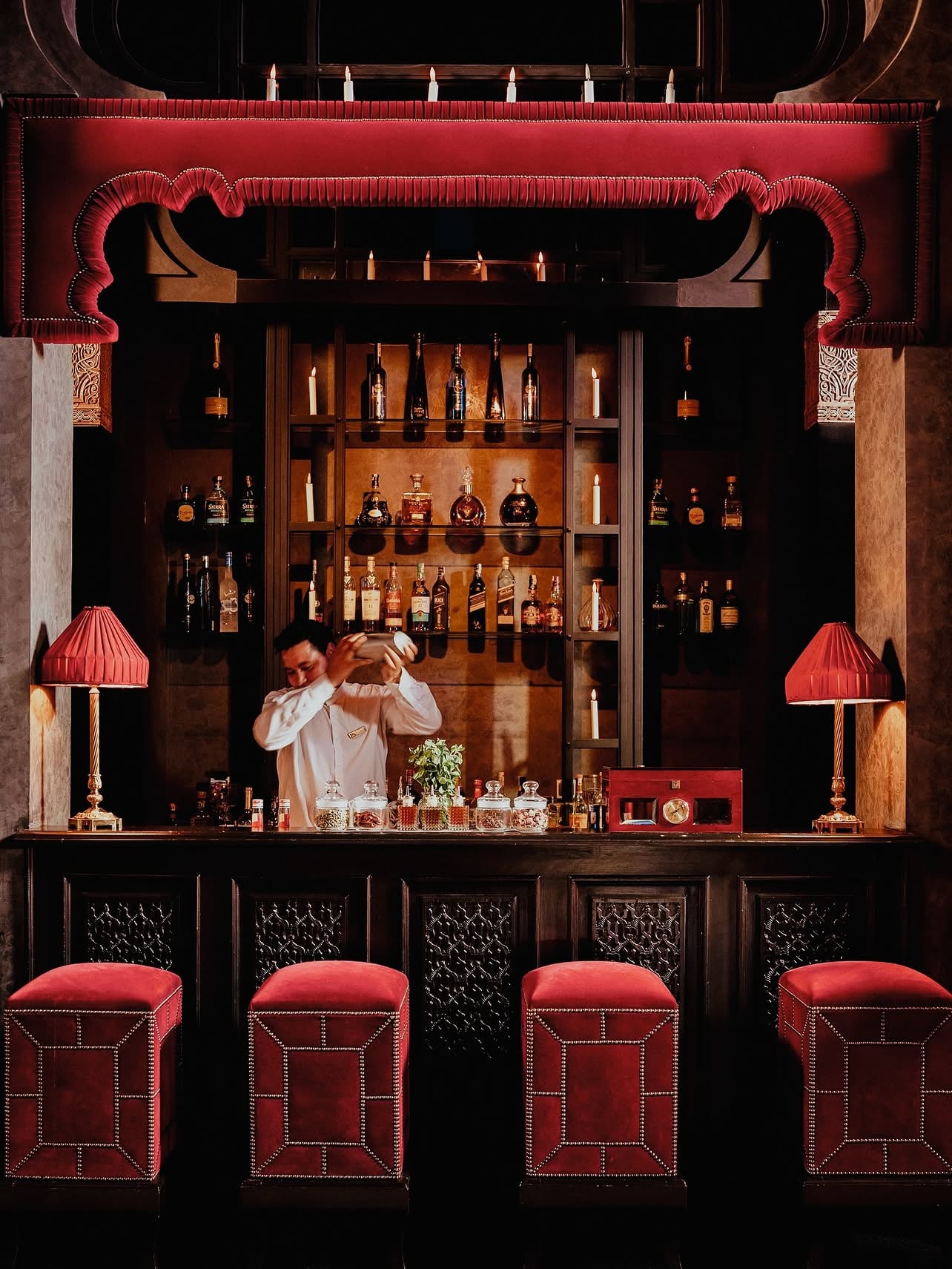
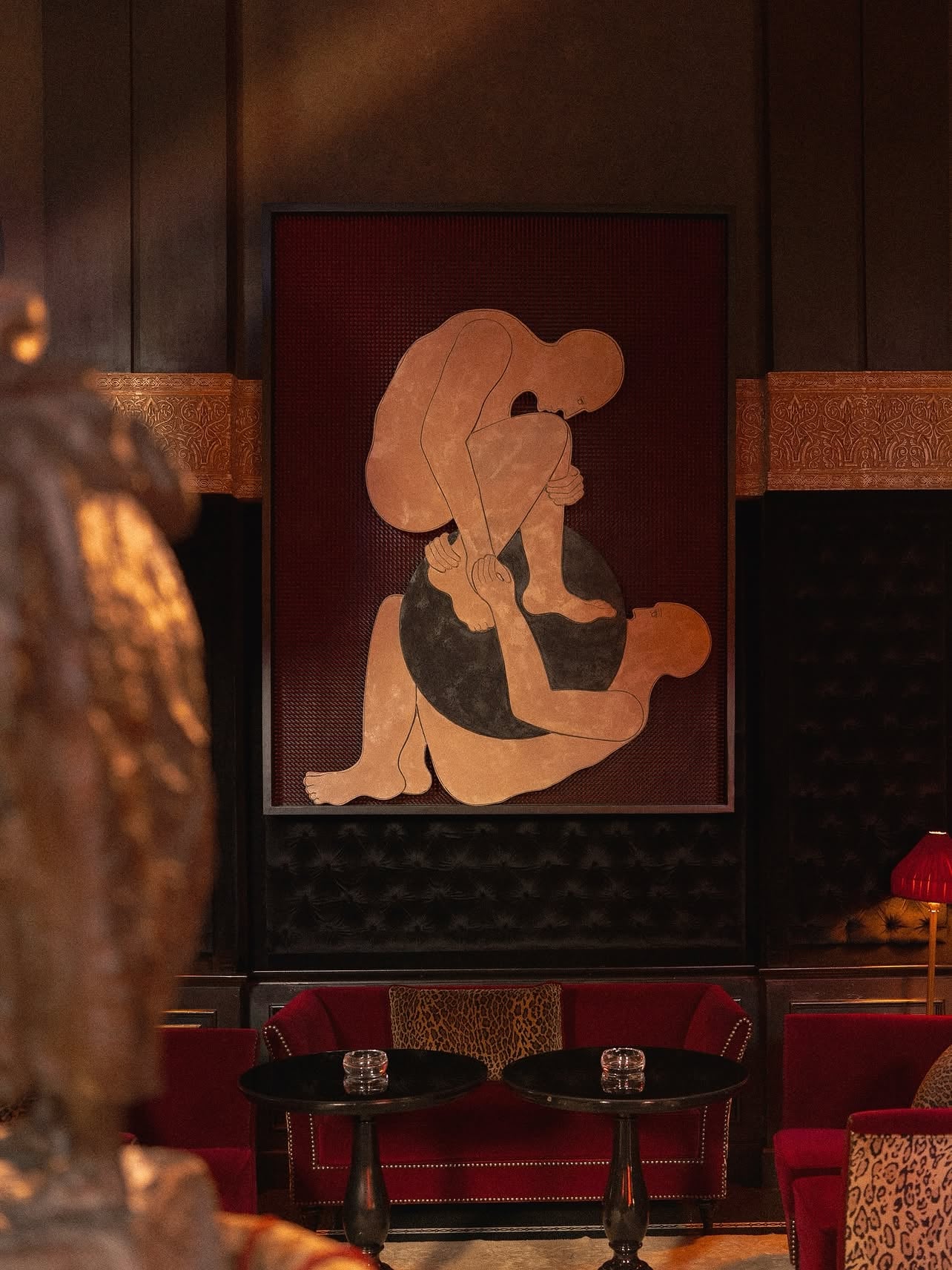
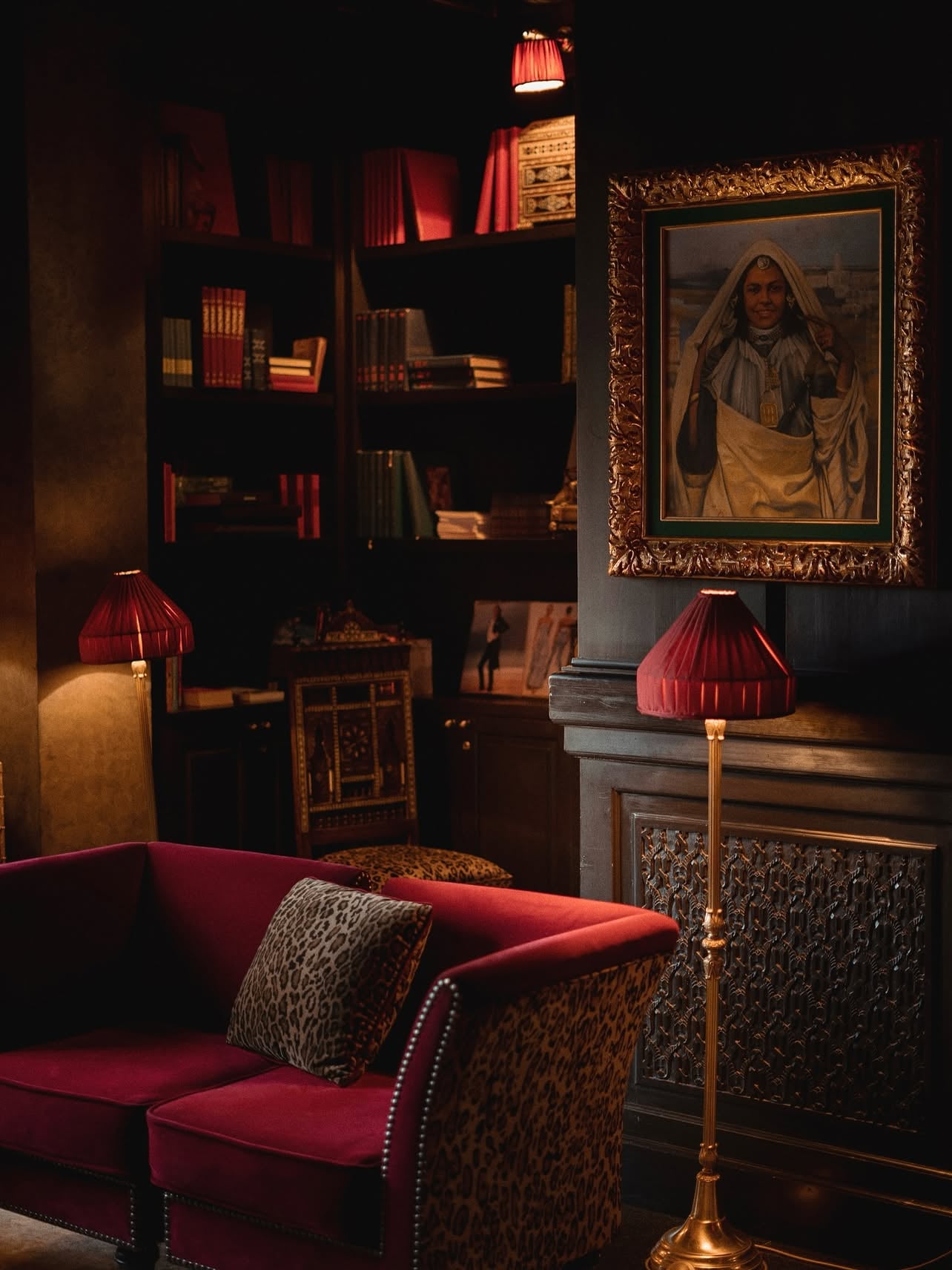
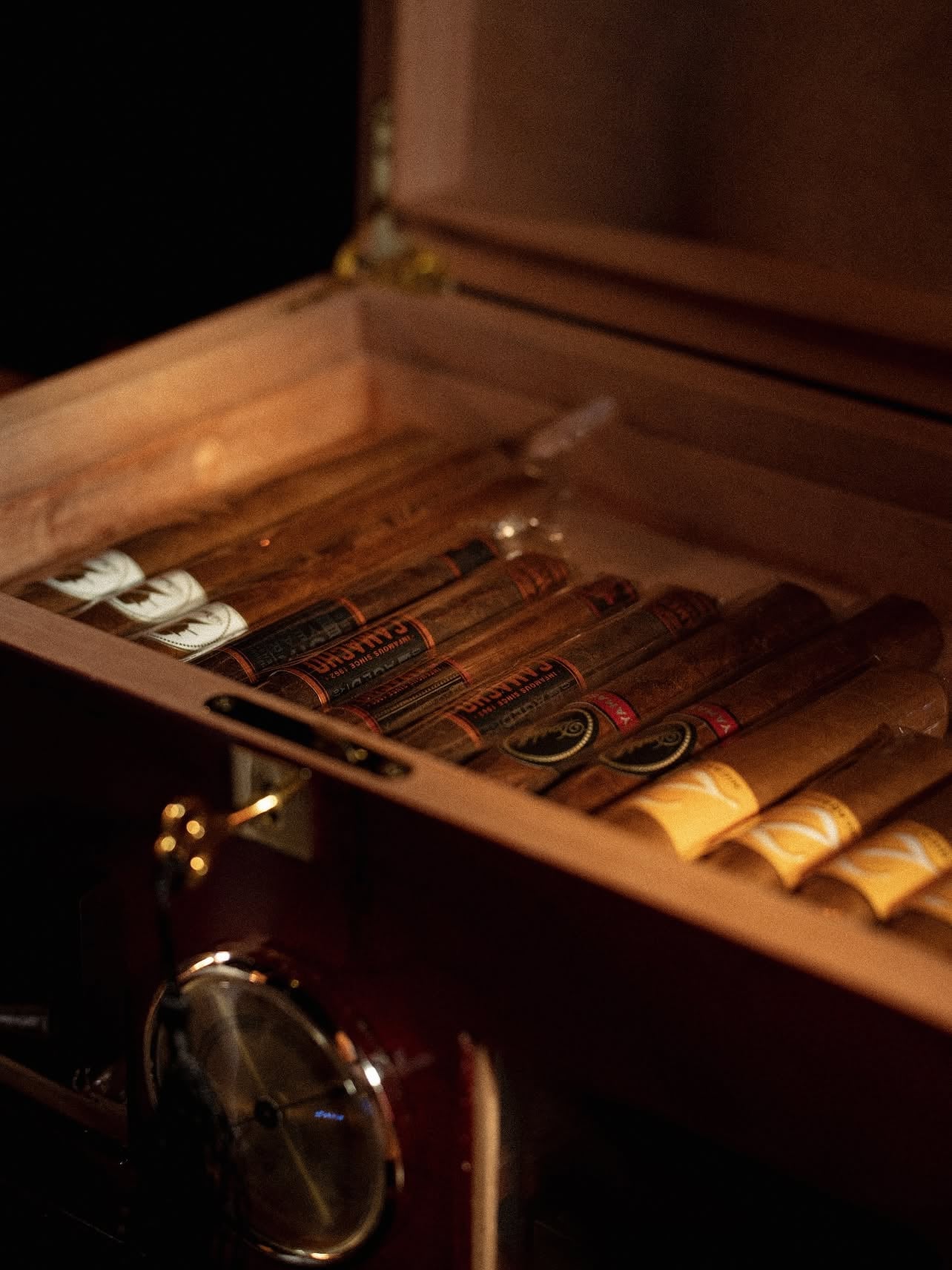
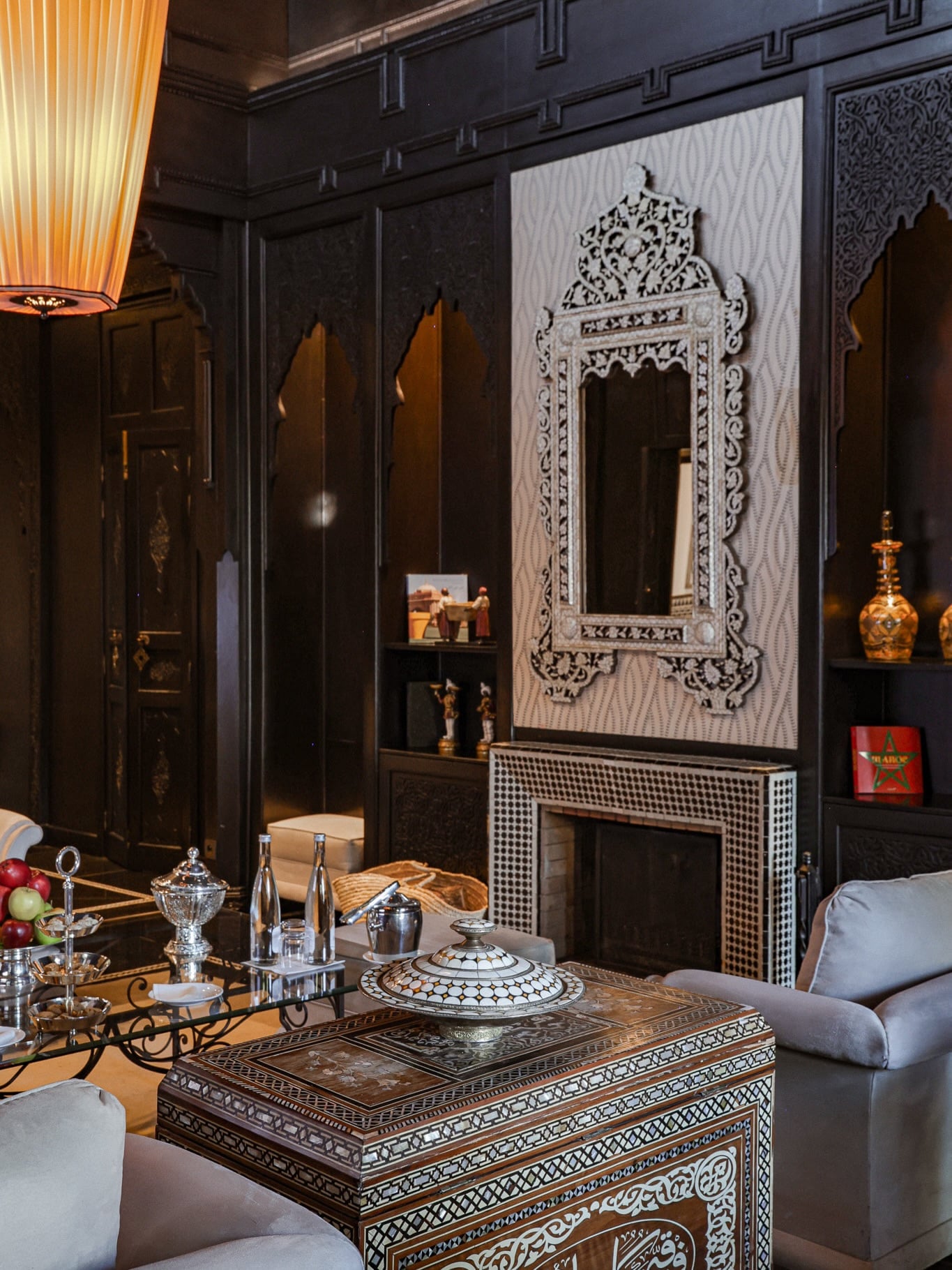
At night the heart of the hotel is its bar, reached through a library, and it is where the house is at its most sensual: Garcia's velvet and dark wood, lamps turned low, the animal prints that carry Mrs Bennani's taste, and a work by the Moroccan artist Mahi Binebine. The drinks list is built with care, signature cocktails and reworked classics, wines and spirits, with a selection of fine cigars for those who want to stay a while, and the bar is open every day from six in the evening until one.
Chenot, apart
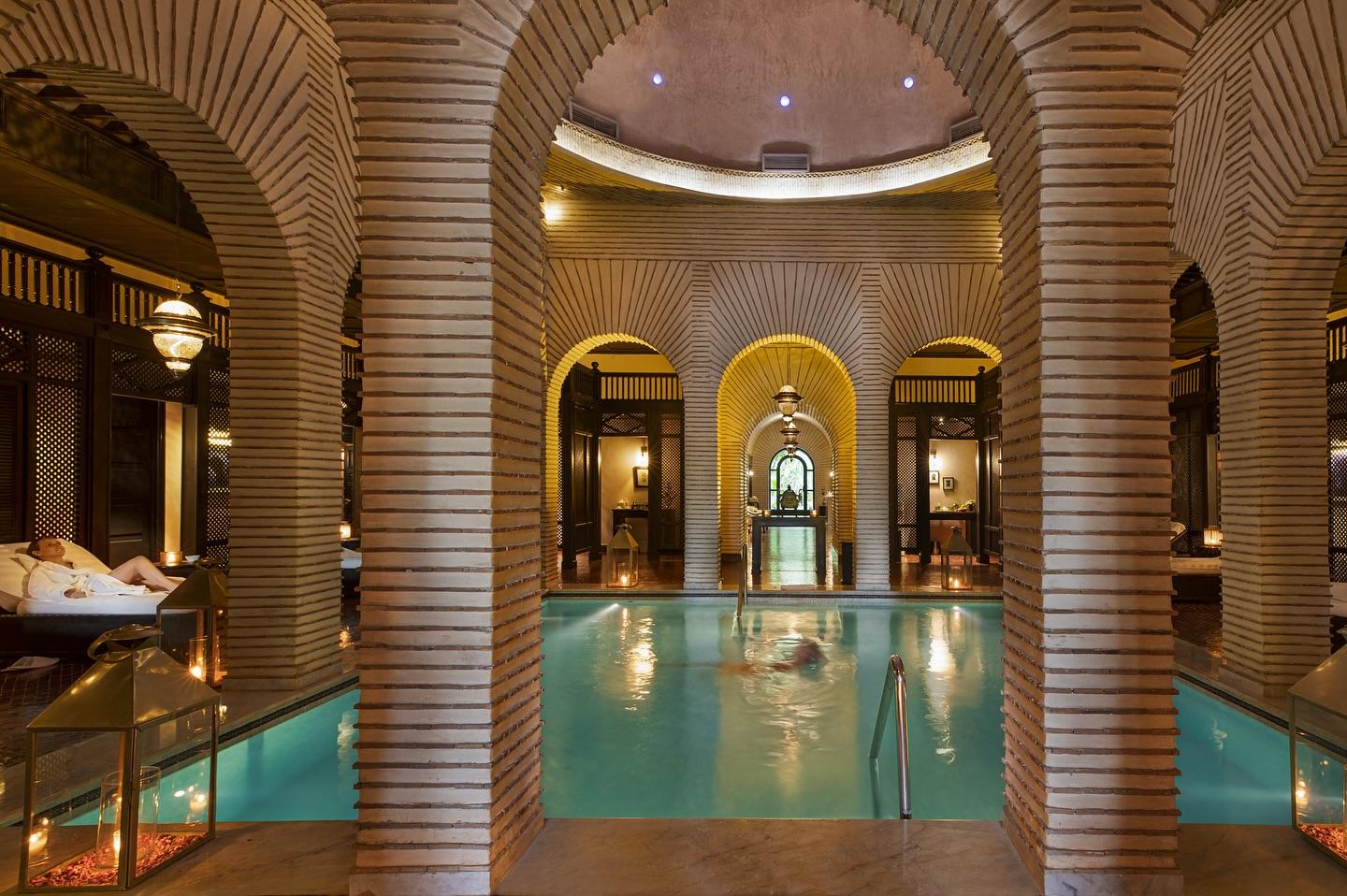
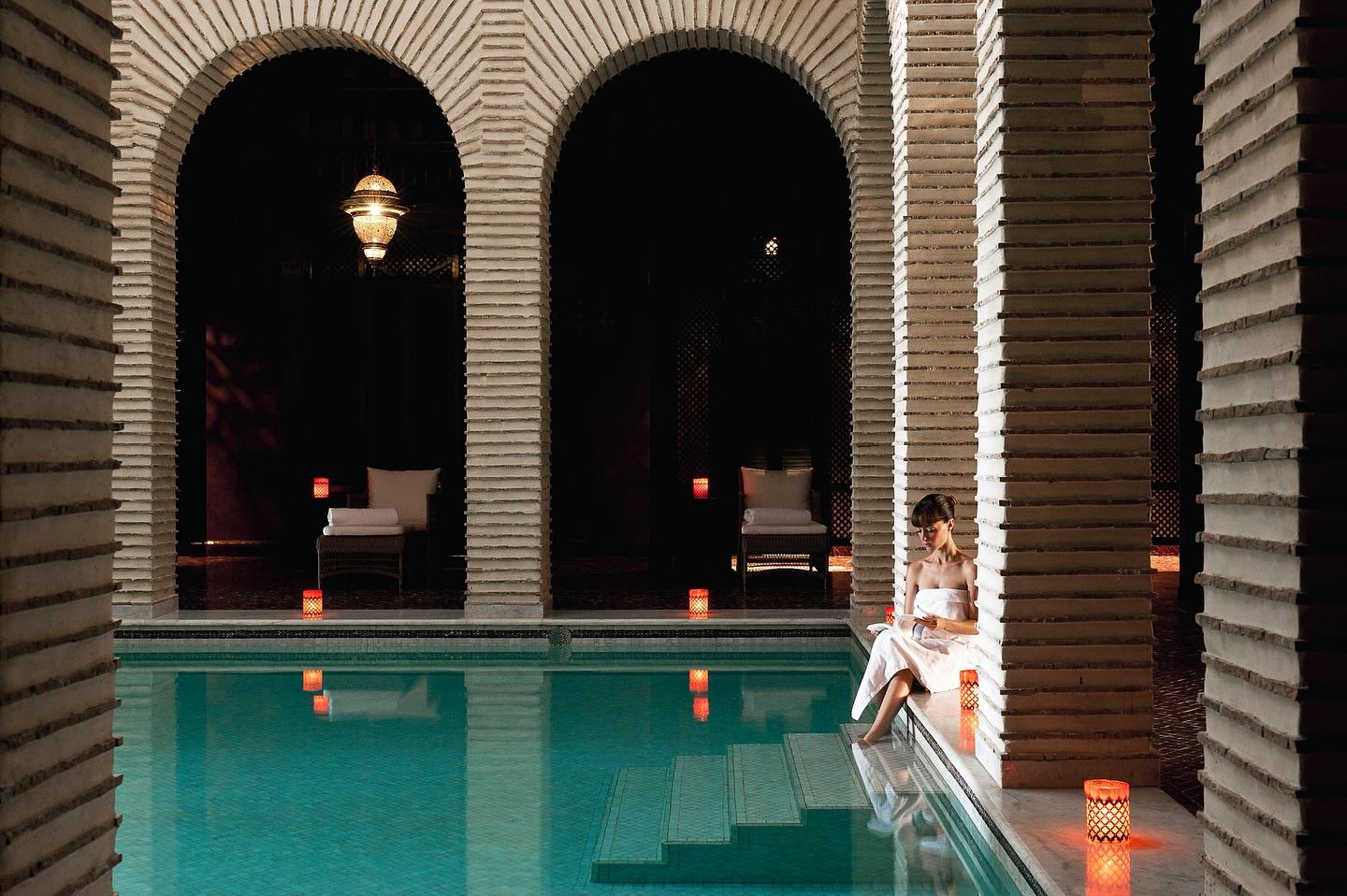
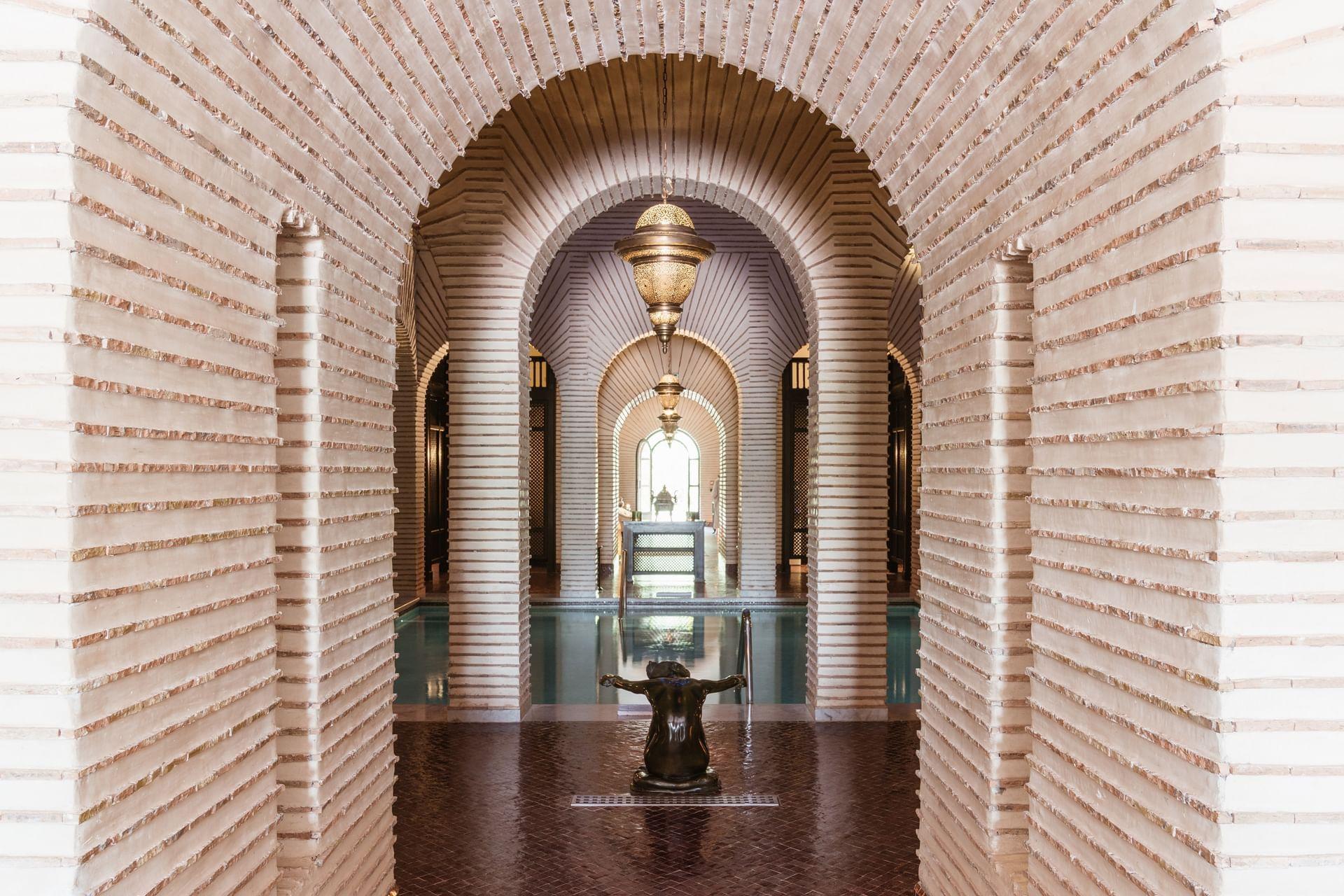
The Chenot Spa stands in a building of its own, apart from the hotel, and stepping into it leaves the velvet and the horses behind: 1,200 square metres that borrow from the heated baths of old Istanbul, with two hammams, heated outdoor pools and all the room its treatments need. It is the only Chenot address in Africa, one of five the brand lists worldwide. Beyond the usual treatments, it runs retreats of three, five or ten days on the method Henri Chenot developed over more than four decades at Merano, in northern Italy: an individual assessment and diagnostics, treatments based on the principles of traditional Chinese medicine, and a Biolight menu served in the hotel's own restaurants for the length of the cure. Next to the method, the hammams keep to Moroccan ritual, with black soap and a wrap of rhassoul clay.
Rooms, suites and villas
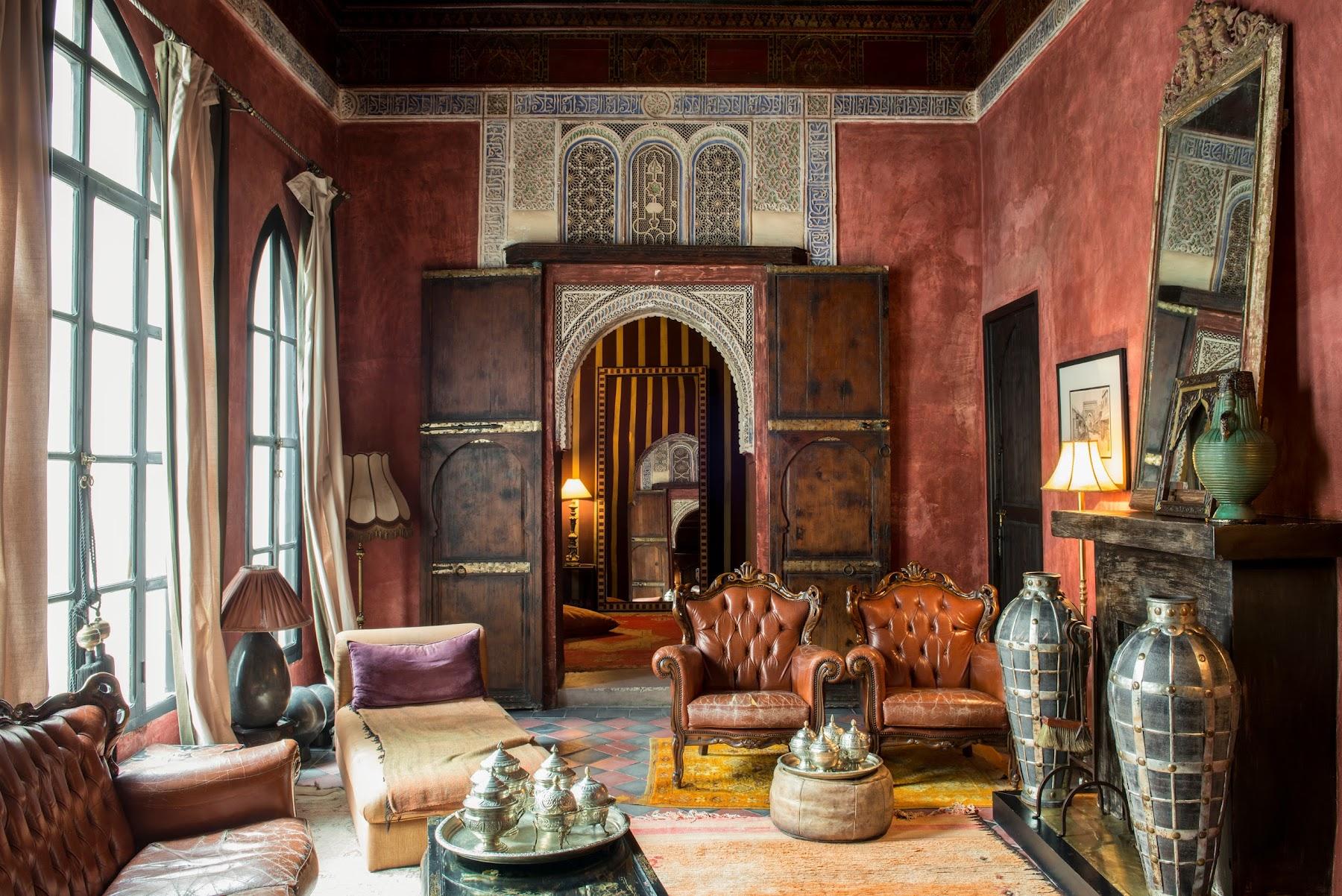
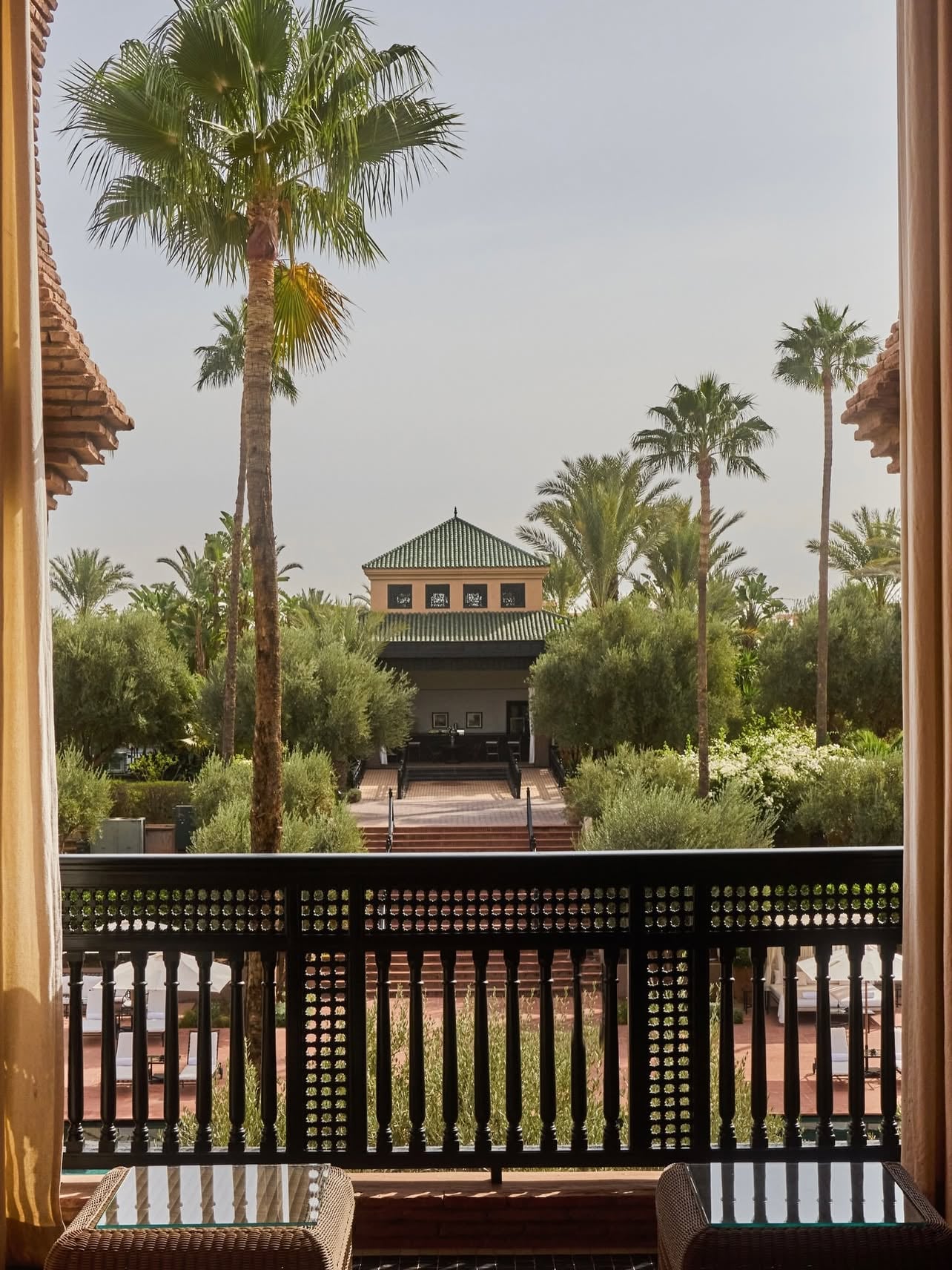
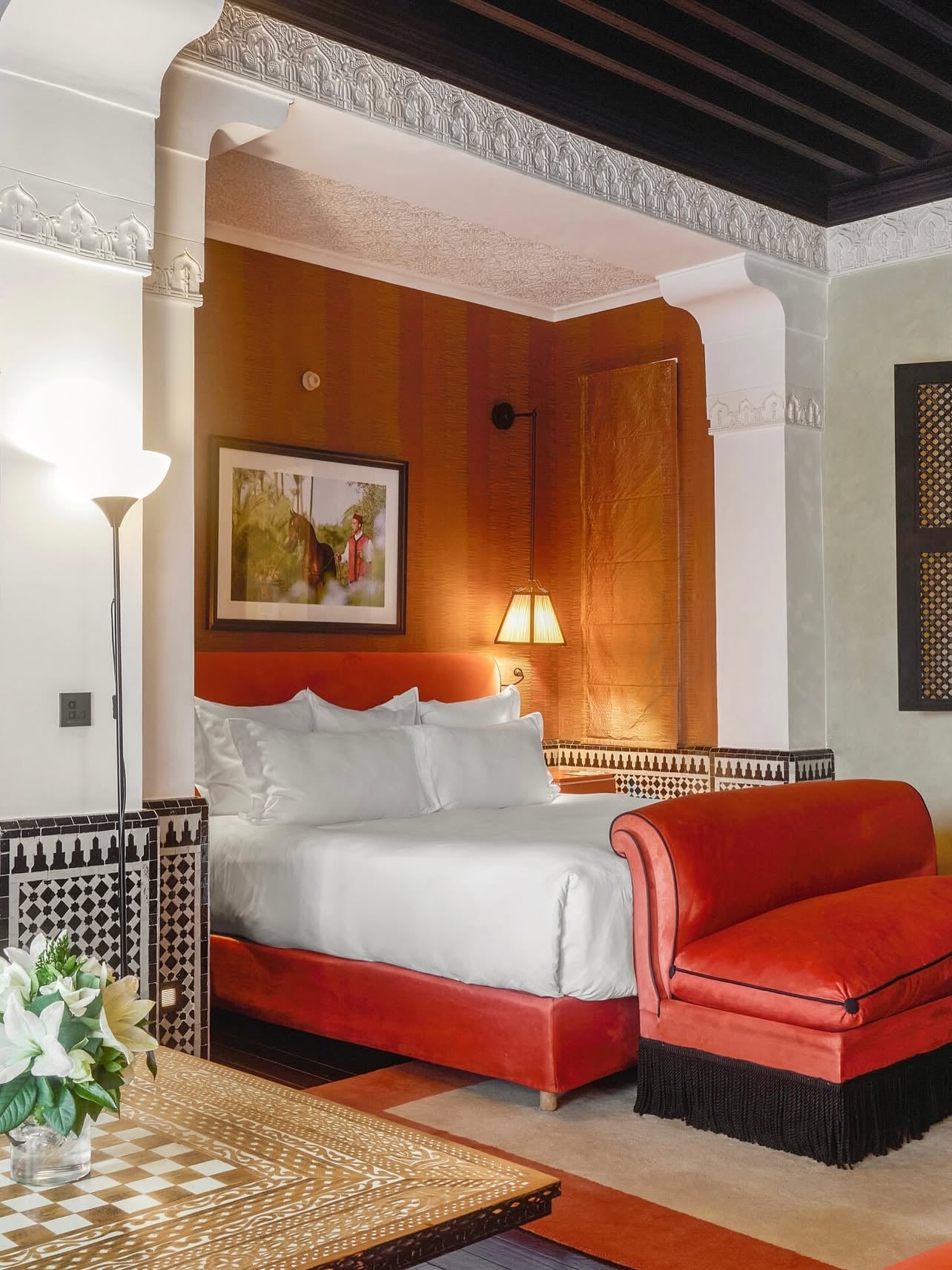
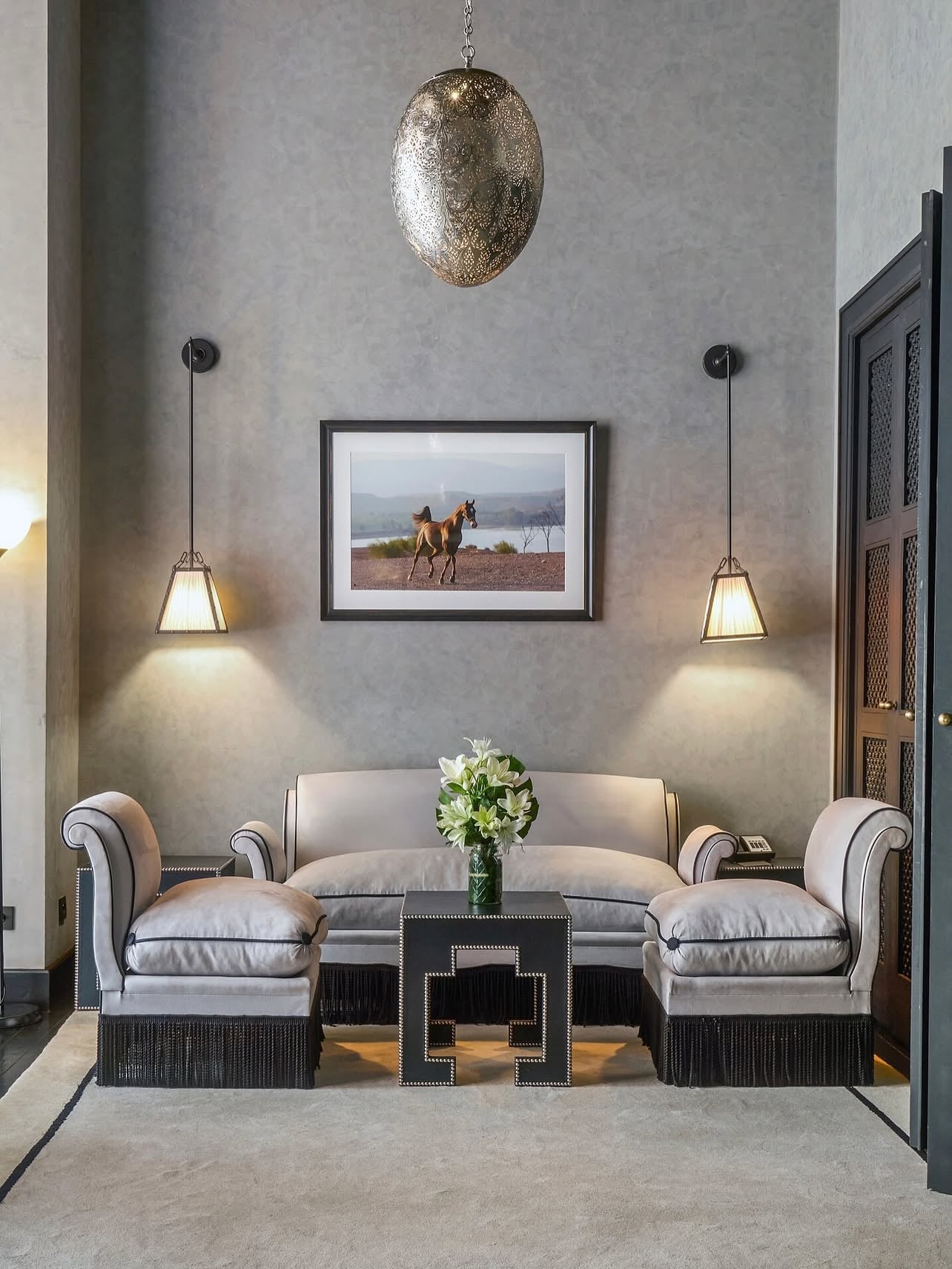
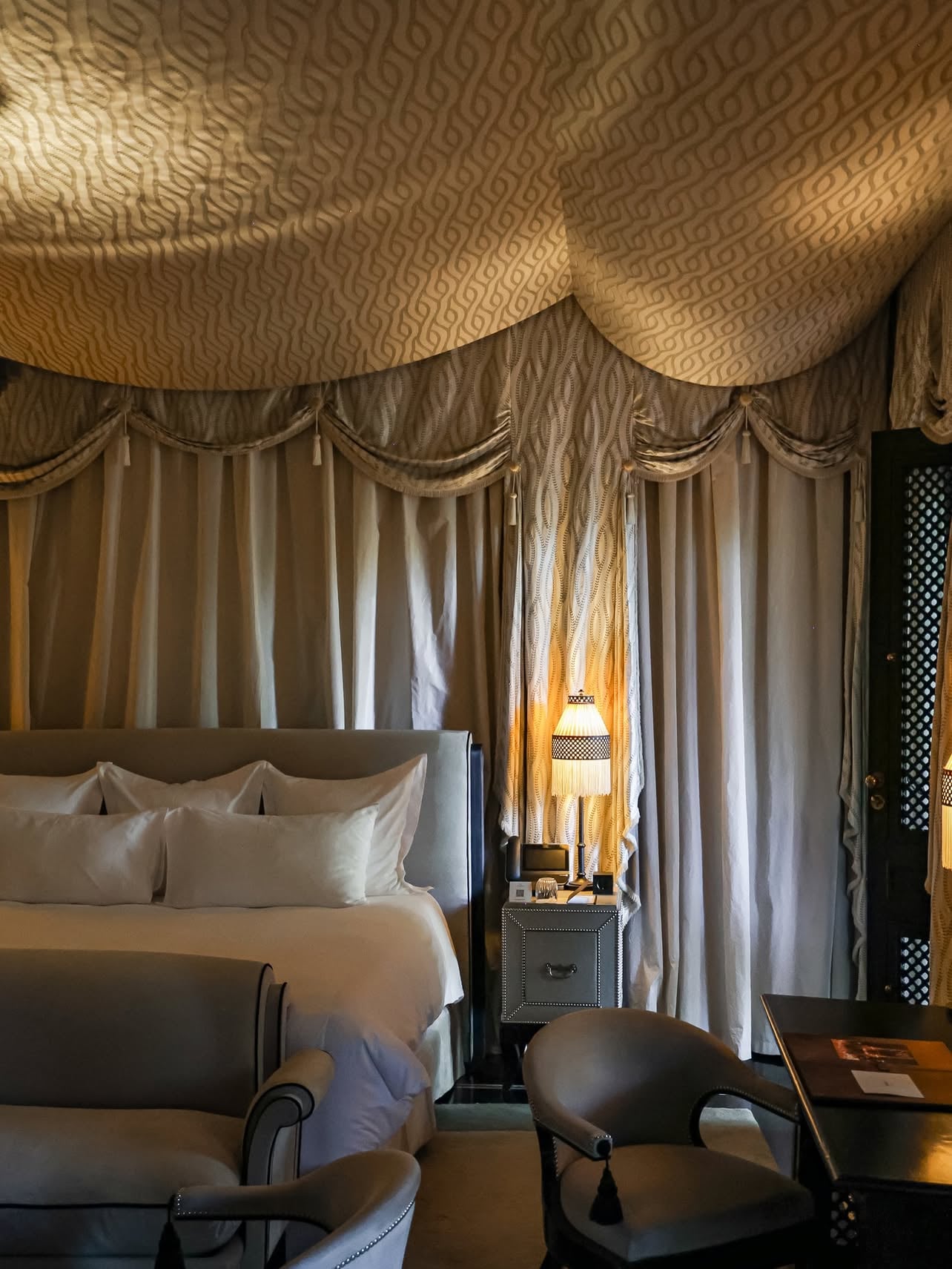
The palace has sixty keys: thirty rooms, twenty-five suites and five villas, all signed by Garcia. The rooms, of 55 square metres, are the most restrained of them, warm and calm, in wood, tadelakt and fine fabrics, with muslin curtains moving at the windows; the Deluxe rooms open onto the pool and the Andalusian gardens and add carved woodwork, patinated leather with golden studs, chiselled plaster and enamelled zellige, and the Deluxe Premier look out from their balconies with the Atlas behind. From a room on the pool side, the view is the water itself.
The suites widen the same language. The junior suites, of 70 square metres, add a living room and details in studded leather, carved wood and chiselled copper, opening onto the pool and the gardens. The suites, of 120, have two terraces, a monochrome palette, a bedroom and a separate lounge, two dressing areas and a bathroom in black-and-white zellige with its own bath and shower.
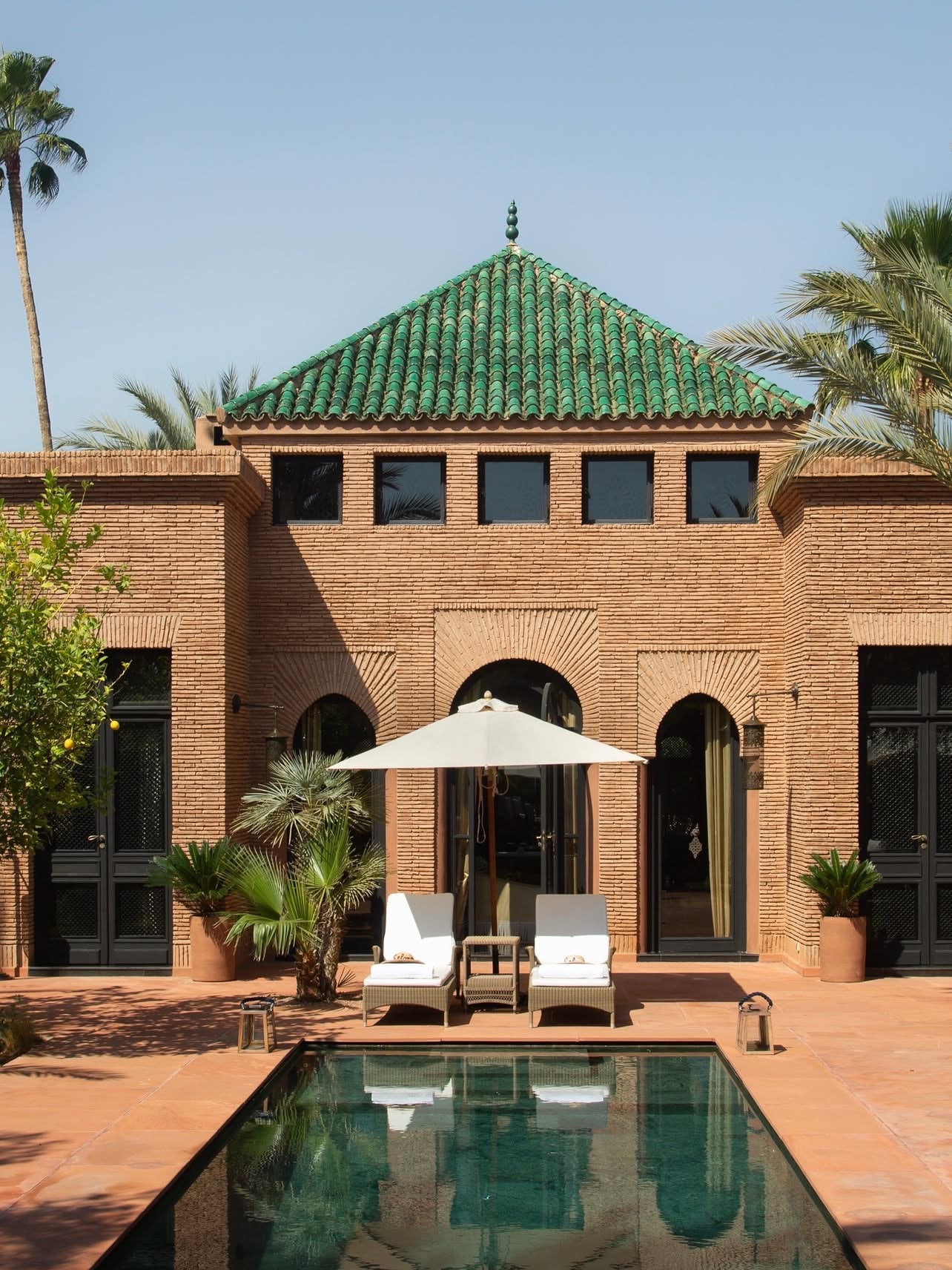
The five villas sit apart within the grounds, four of 580 square metres with one bedroom and the Villa Selman of 700. Each has its own fifteen-metre heated pool lined up with the garden and its bougainvillea, shaded patios, fireplaces and the sound of running water, with a butler, a private bar and a car entrance of its own.
One family, several worlds
The Selman still belongs to the Bennani family and is still run by it, "an intimate and personal family property" made of separate worlds, and what holds those worlds together is the family itself: the grandfather's wish gave the palace its city, Abdeslam's horses gave it its name, Saida gave it its balance and Mrs Bennani its details. It is a house to take slowly: for a first visit from the city, the Sunday brunch at Le Pavillon is the easiest way in, and a dinner at Assyl shows the whole idea in a single evening, from the dadas' kitchen to the horses outside; for a stay, the villas and the Chenot retreats of three to ten days give the Selman the time it asks for.
In each room, in the salons and in the bar, there is a piece from Mrs Bennani's collection, a painting here, a sculpture there, each one of a kind, and in the lobby her choices reach as far as the chairs where the Moroccan musicians sit to play. She is still very much present in the house, and so are her choices, down to the smallest detail, the way someone shapes a home they know intimately.
You may also like…