EAT & DRINK
SABO Marrakech: A First Year at Jean-François Piège's Evening Table
Twelve months on, the chef's restaurant at Selman marked its opening over three nights of its founding menu.
Timence Guide Editors · 28 May 2026
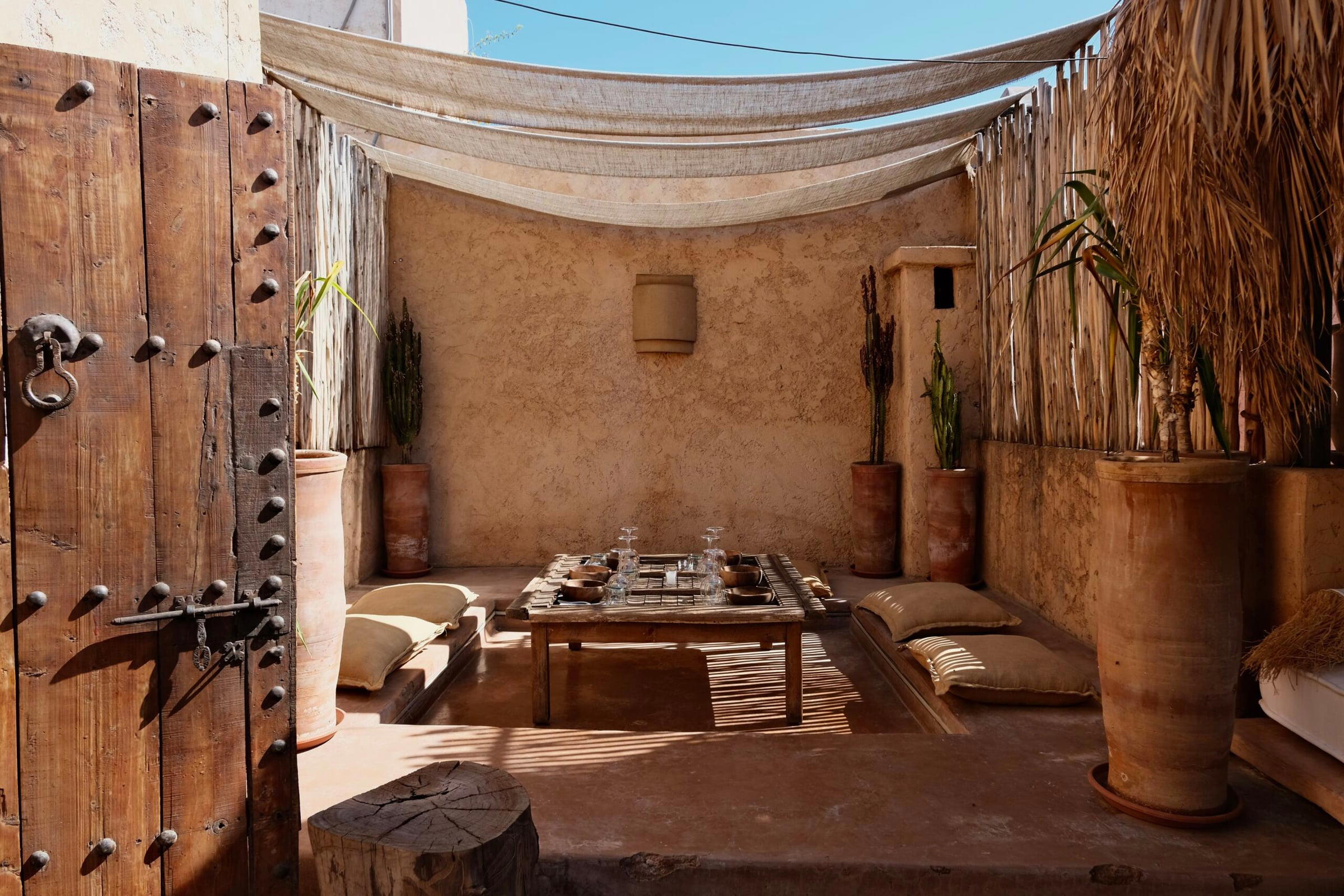
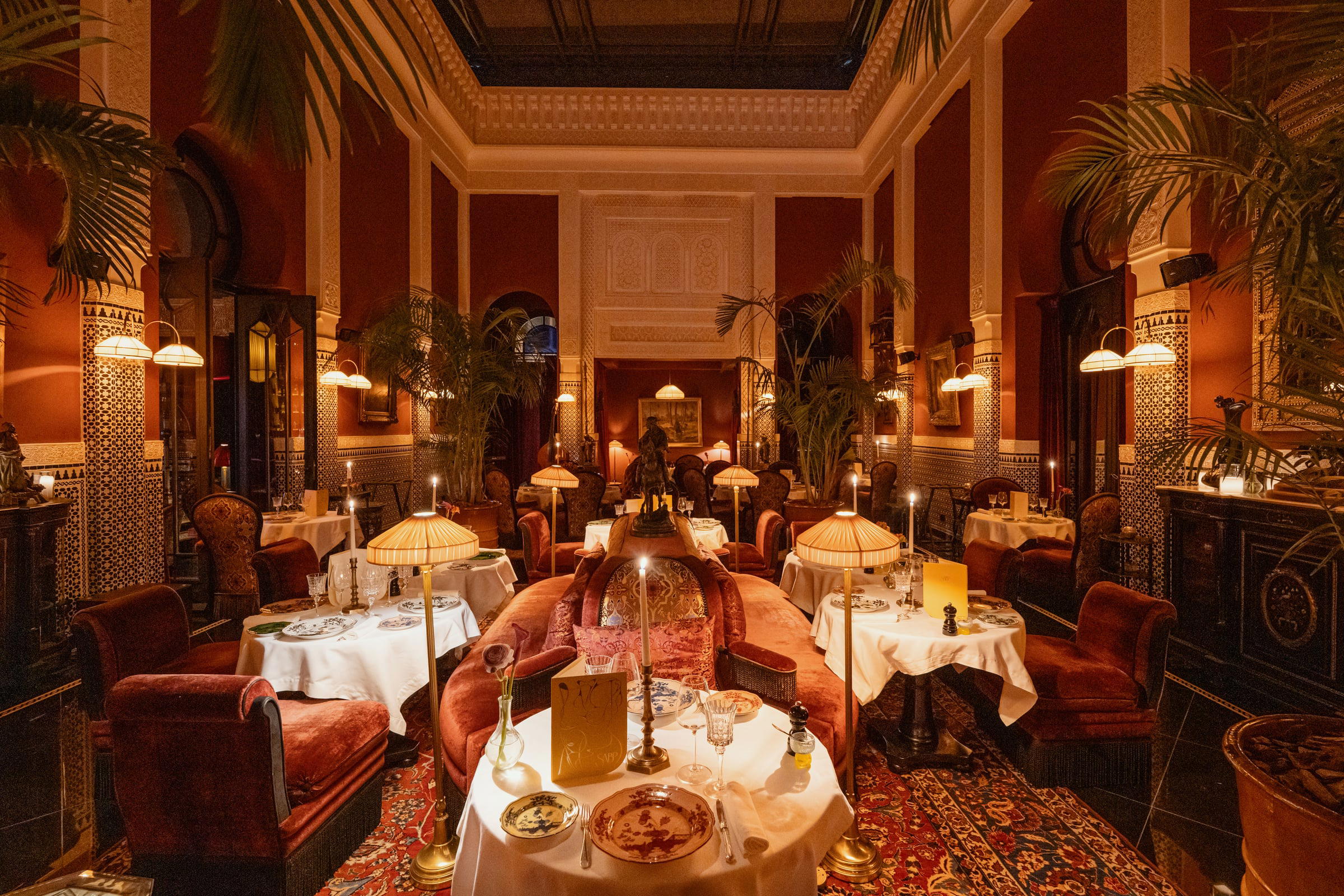
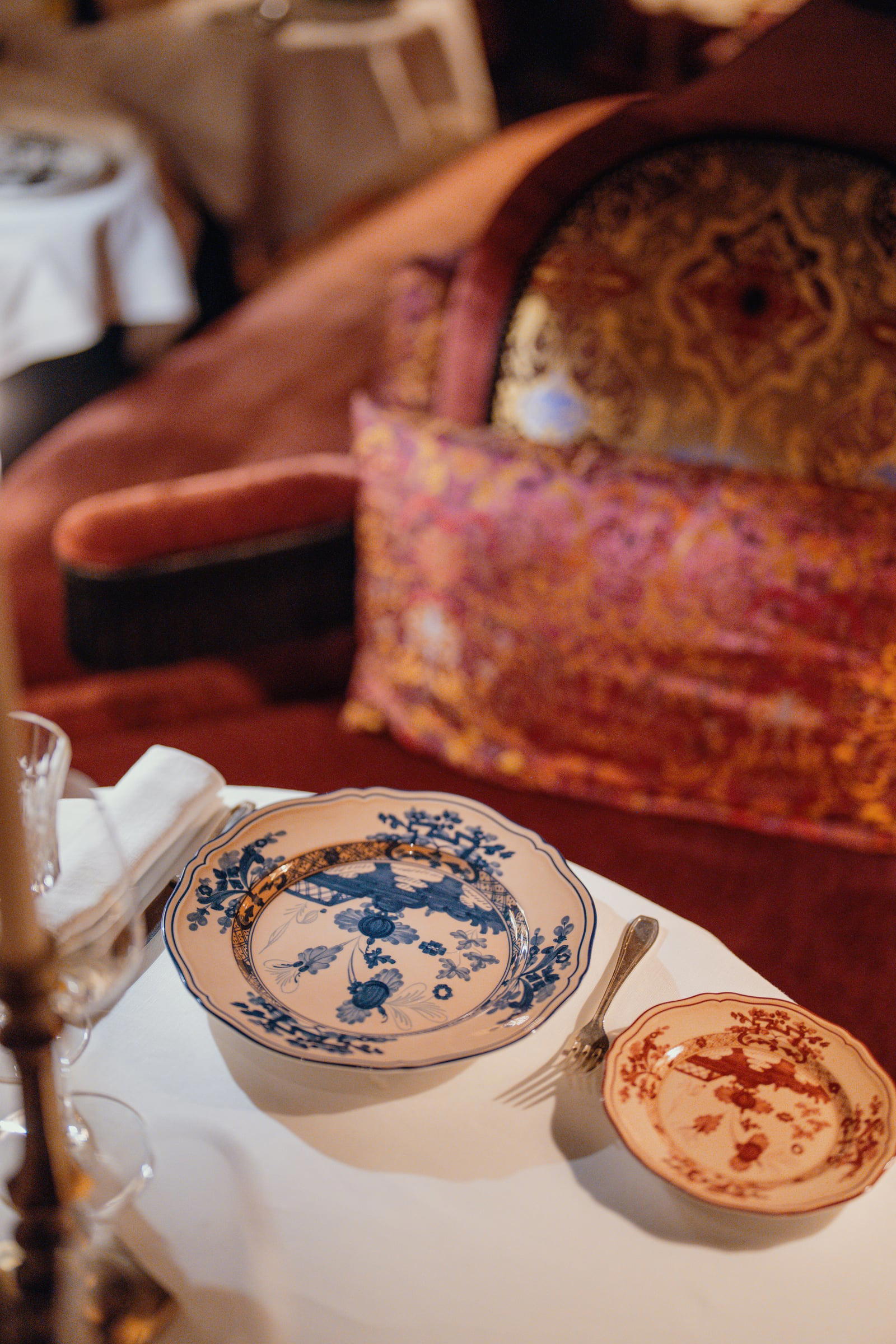
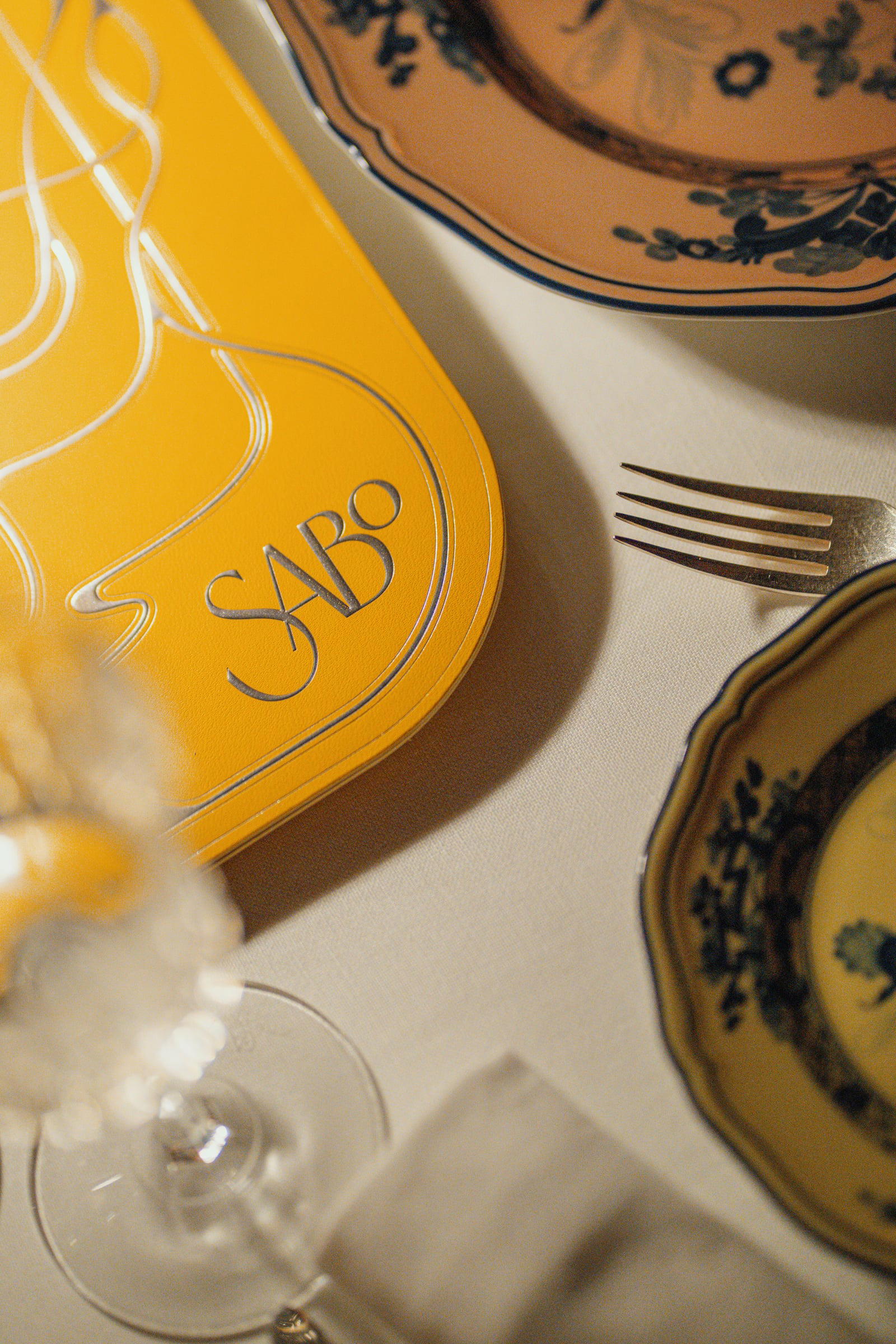
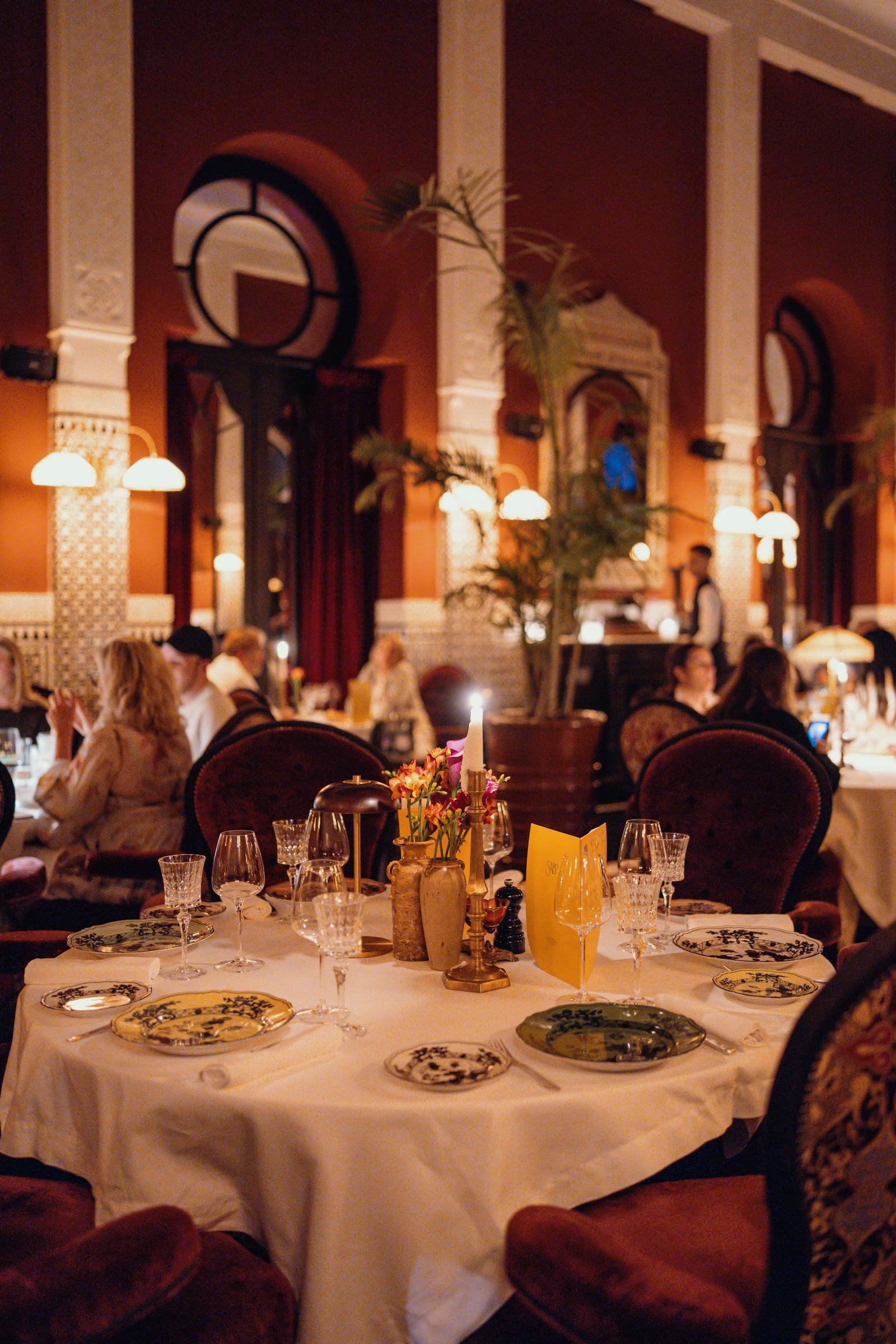
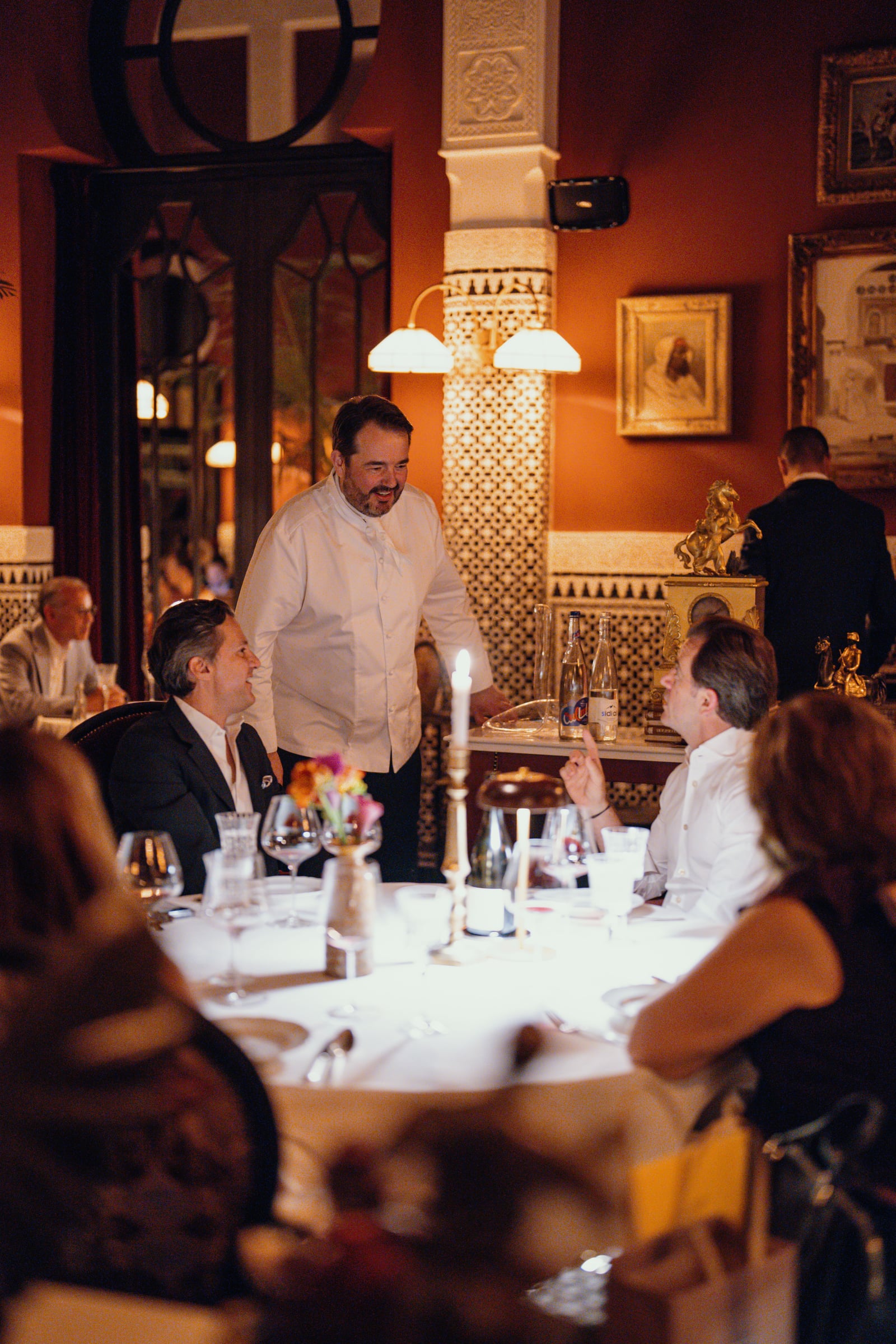
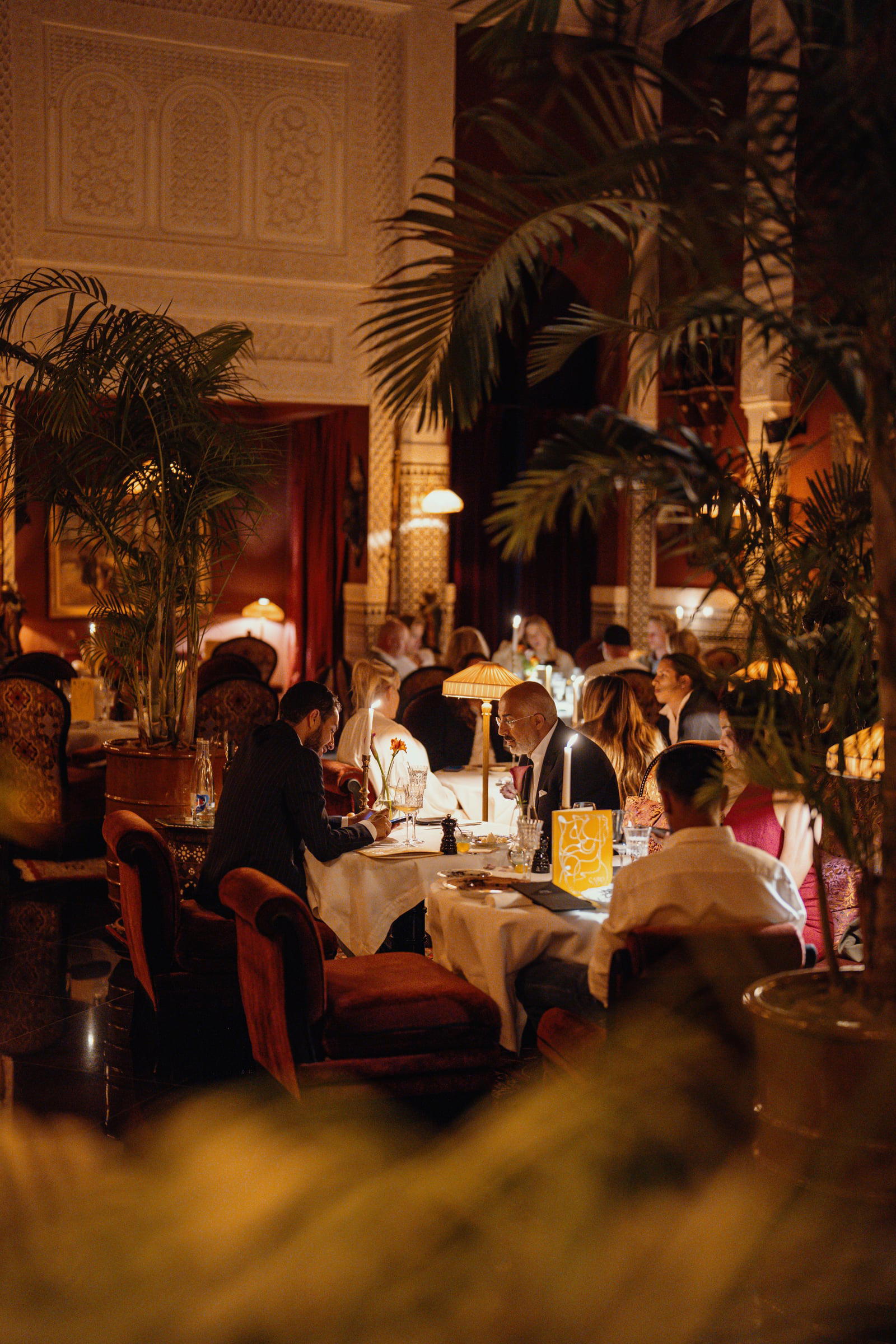
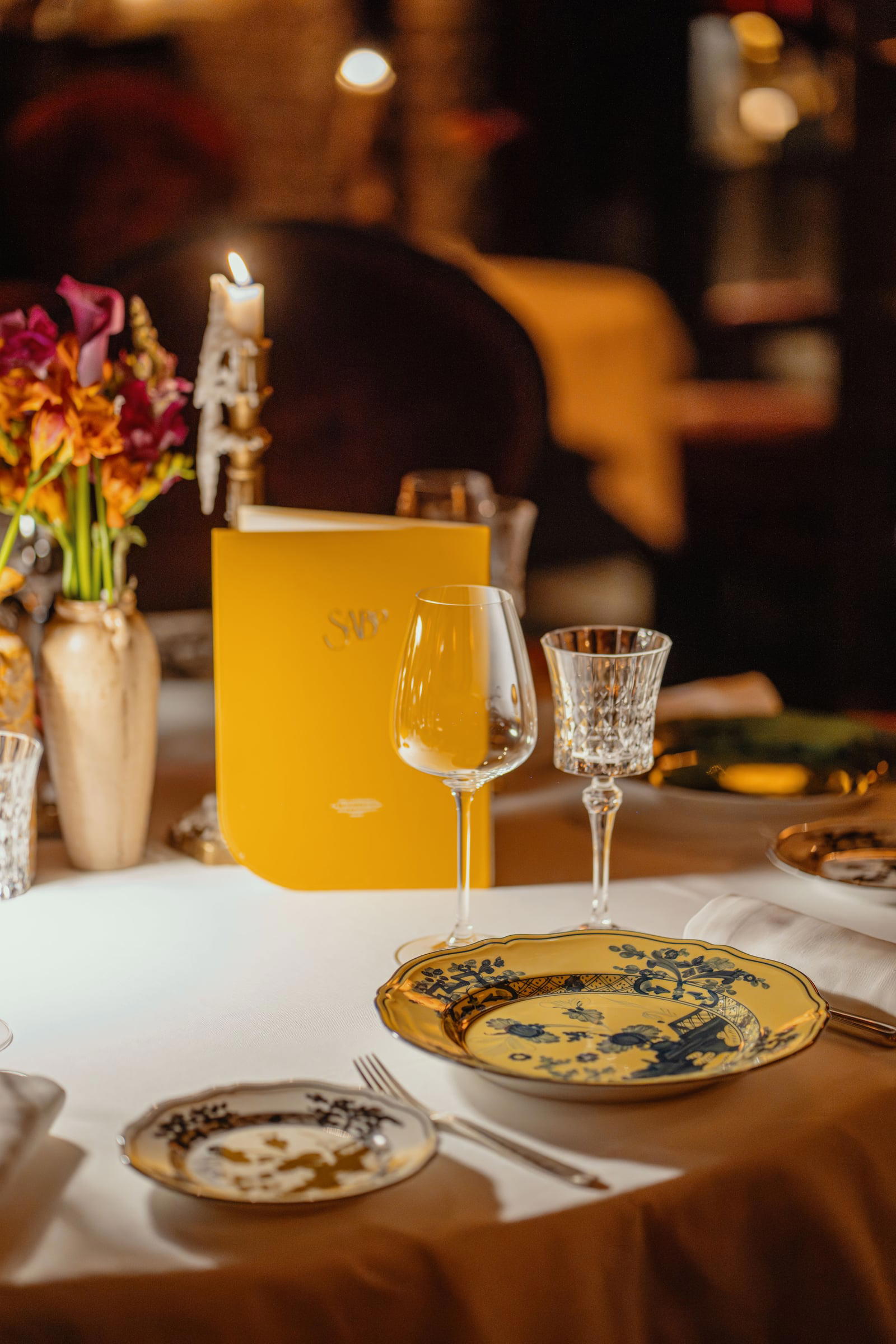
The patio opens straight to the sky. Beneath it, tables are laid with Ginori porcelain and antique silver, candlelight catching on sculpted plaster and the cool geometry of zellige. Over the Ascension weekend in mid-May, from the 14th to the 16th, this room marked the first year of SABO Marrakech, the evening restaurant born from the meeting of Selman Marrakech and the French chef Jean-François Piège.
A first anniversary is a quiet kind of milestone, and SABO marked it not with something new but with a return. For three consecutive evenings the kitchen cooked the signature menu imagined for the opening, the dishes that had defined the restaurant's arrival a year earlier. Piège was in the room for two of those nights.
A Parisian table at the foot of the Atlas
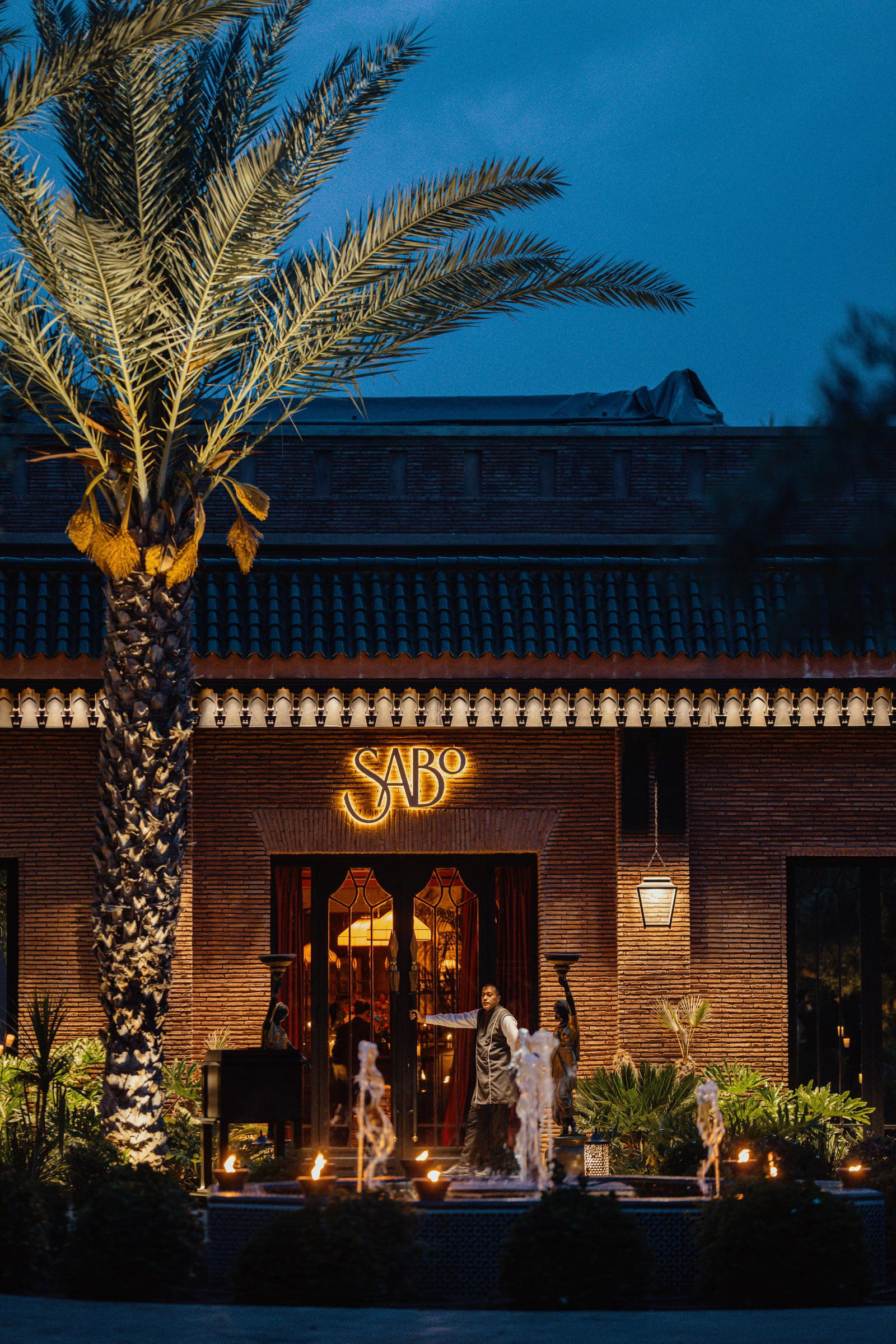
SABO sits inside Selman Marrakech, the palace the Bennani-Smires family opened in 2012 on the Route d'Amizmiz, set in gardens at the foot of the Atlas and kept apart from the noise of the city. The hotel carries the signature of Jacques Garcia, was built by Moroccan artisans, and was conceived around an idea of arabo-andalusian living: serene, epicurean, unhurried. It is also known for something unusual in a hotel, a stud farm devoted to Arabian thoroughbreds.
That detail is not incidental. The restaurant's name is a nod to a horse's hoof, a quiet line drawn between the table and the stables, extending the soul of the estate into the dining room. It is the kind of connection the place prefers: nothing announced, everything implied.
SABO belongs to what Selman calls a new culinary era, the chapter that opened with La Terrasse, the outdoor Mediterranean table the hotel describes as the first milestone of the collaboration. Piège, a chef from the Drôme who trained in the grand Parisian palaces and earned two Michelin stars at Les Ambassadeurs in the Hôtel de Crillon, took over the hotel's kitchens in late 2024, his first time directing restaurants in Morocco. He described joining as a matter of joy and honour, and SABO became its evening table, where French technique meets Moroccan produce.
Garcia's Belle Époque, after dark
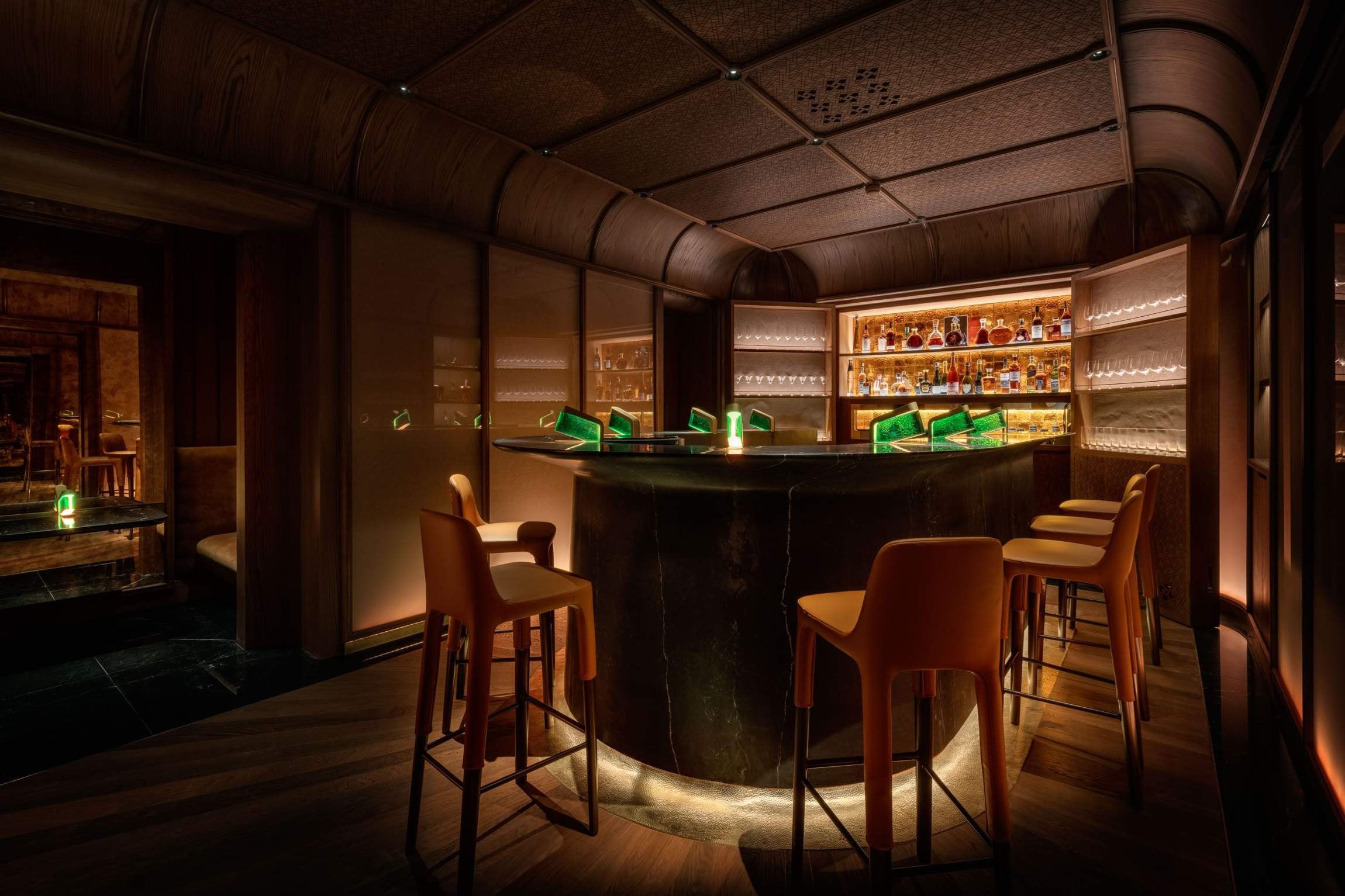
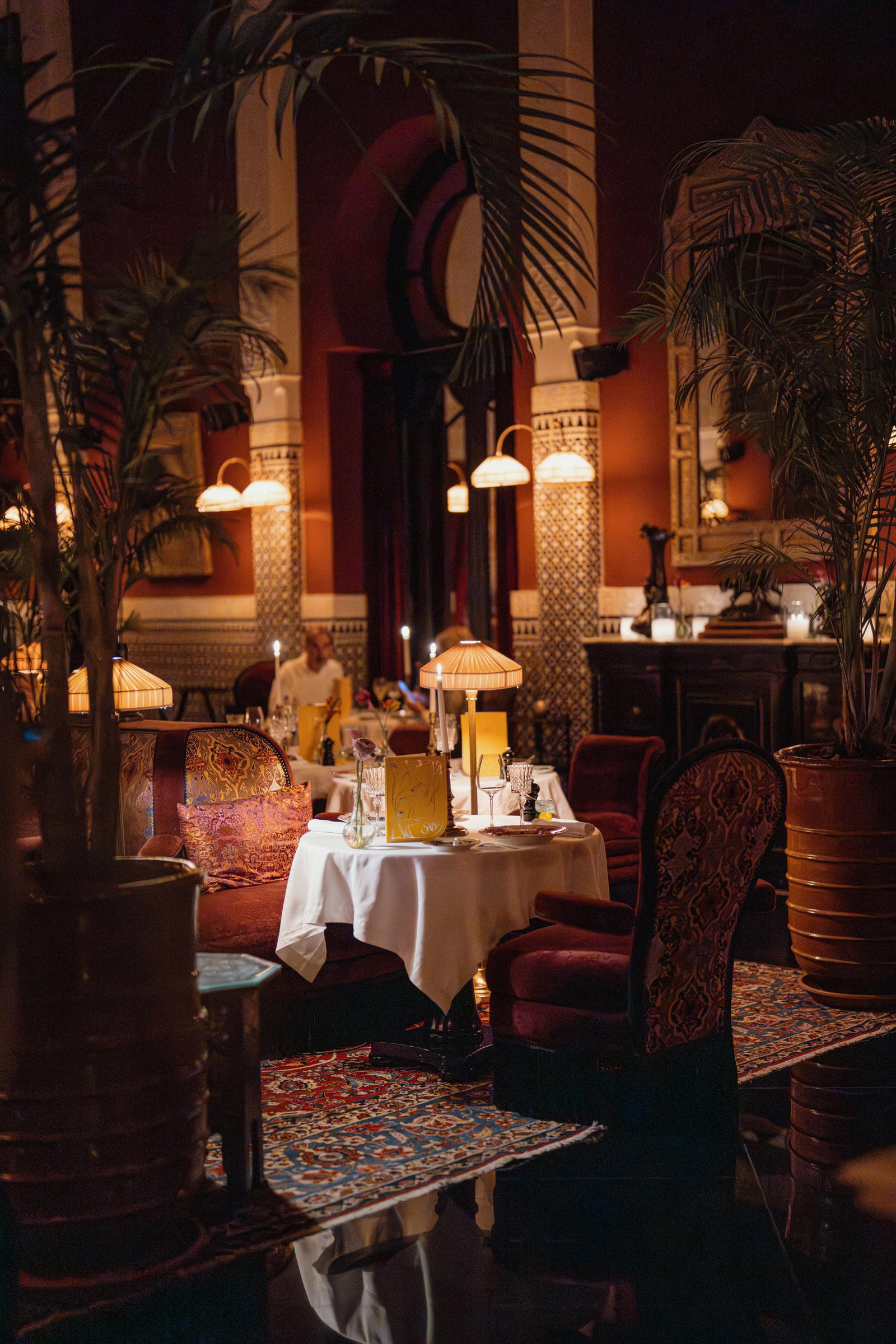
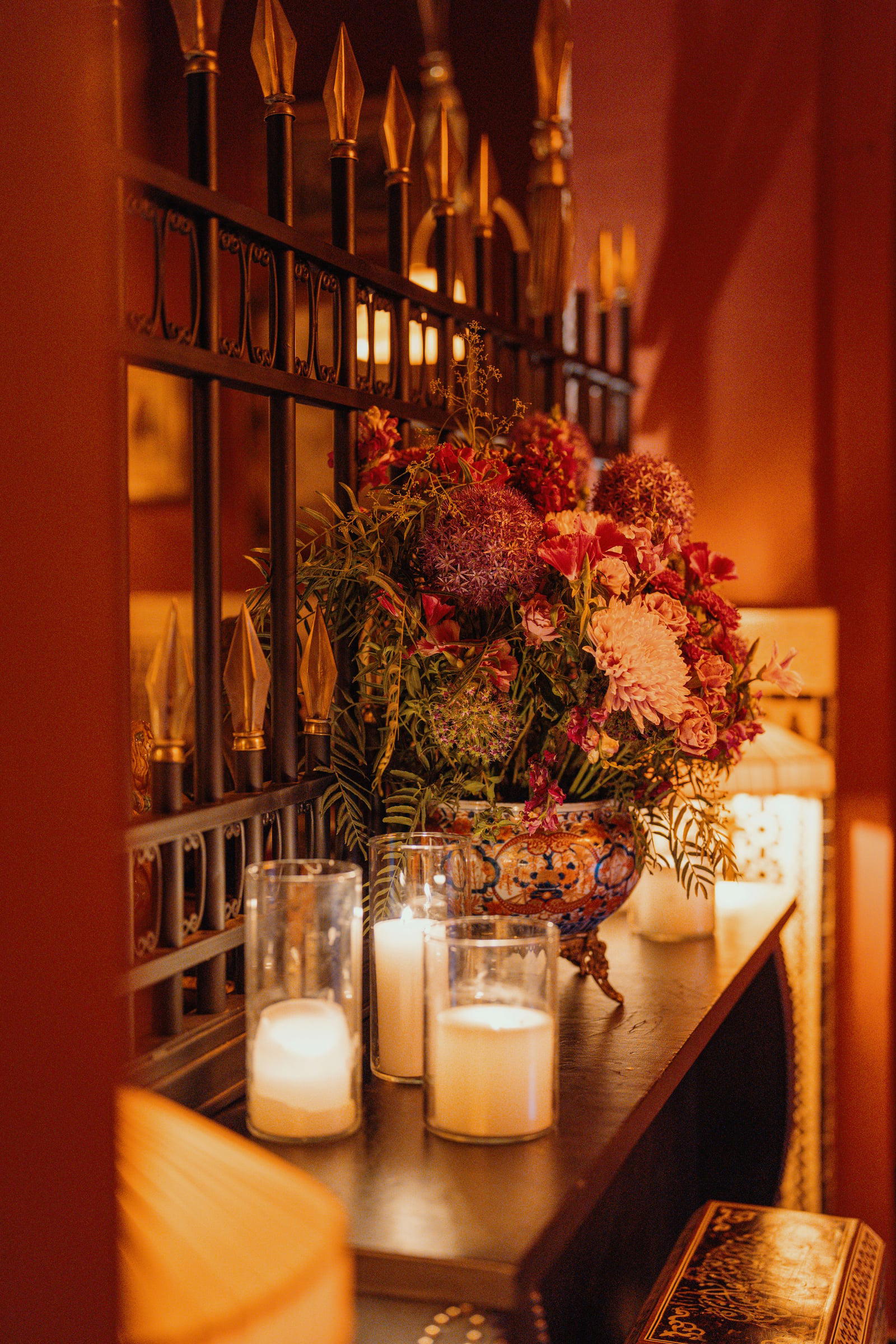
Garcia's interior is theatrical by design. SABO reads as a Moroccan Belle Époque room: deep colour, layered pattern, noble materials, the warm and slightly hushed atmosphere of a space built for the evening. The main dining area sits under an open-roof patio that reveals the stars, then folds into the palace's library-bar for those who want something more enclosed.
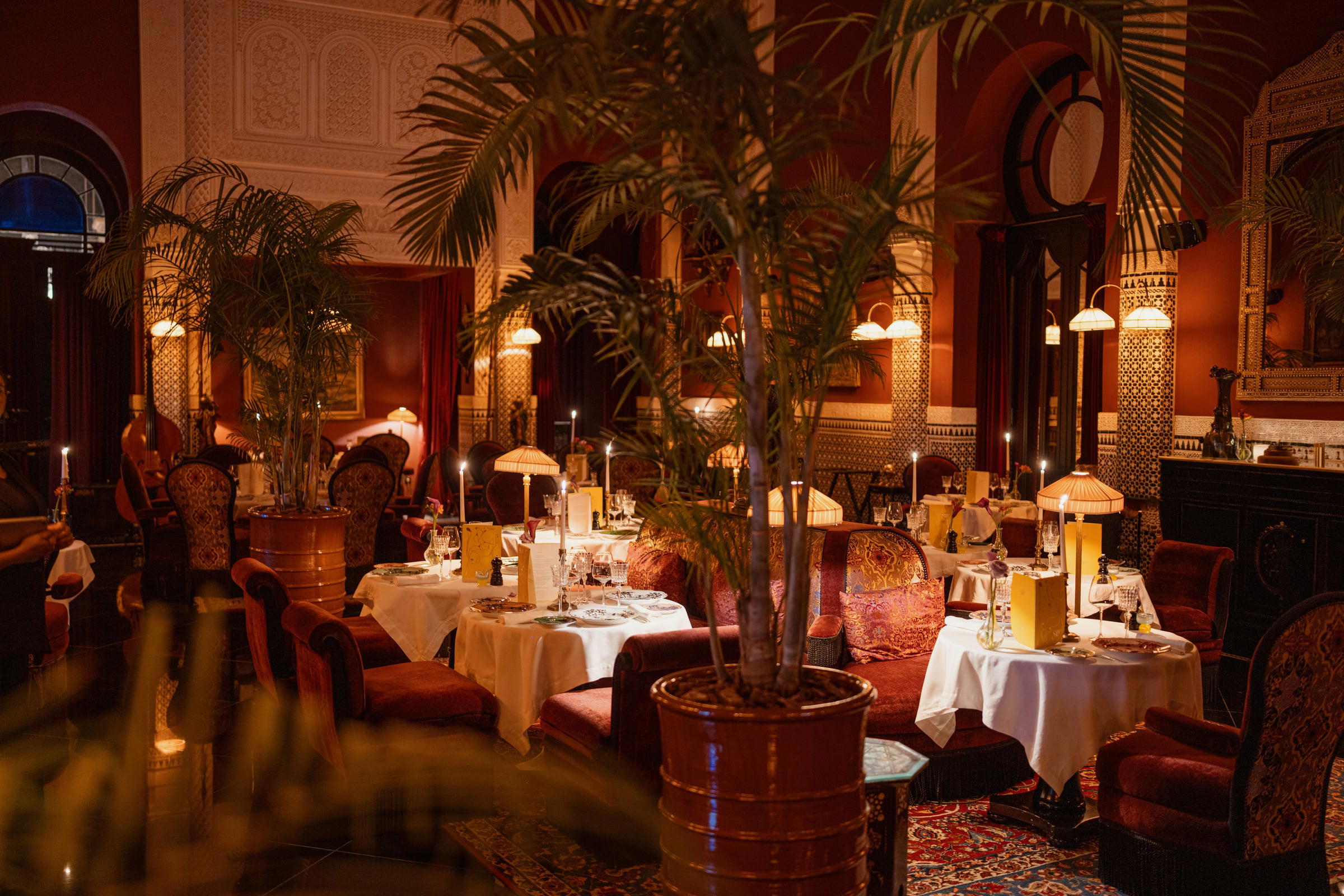
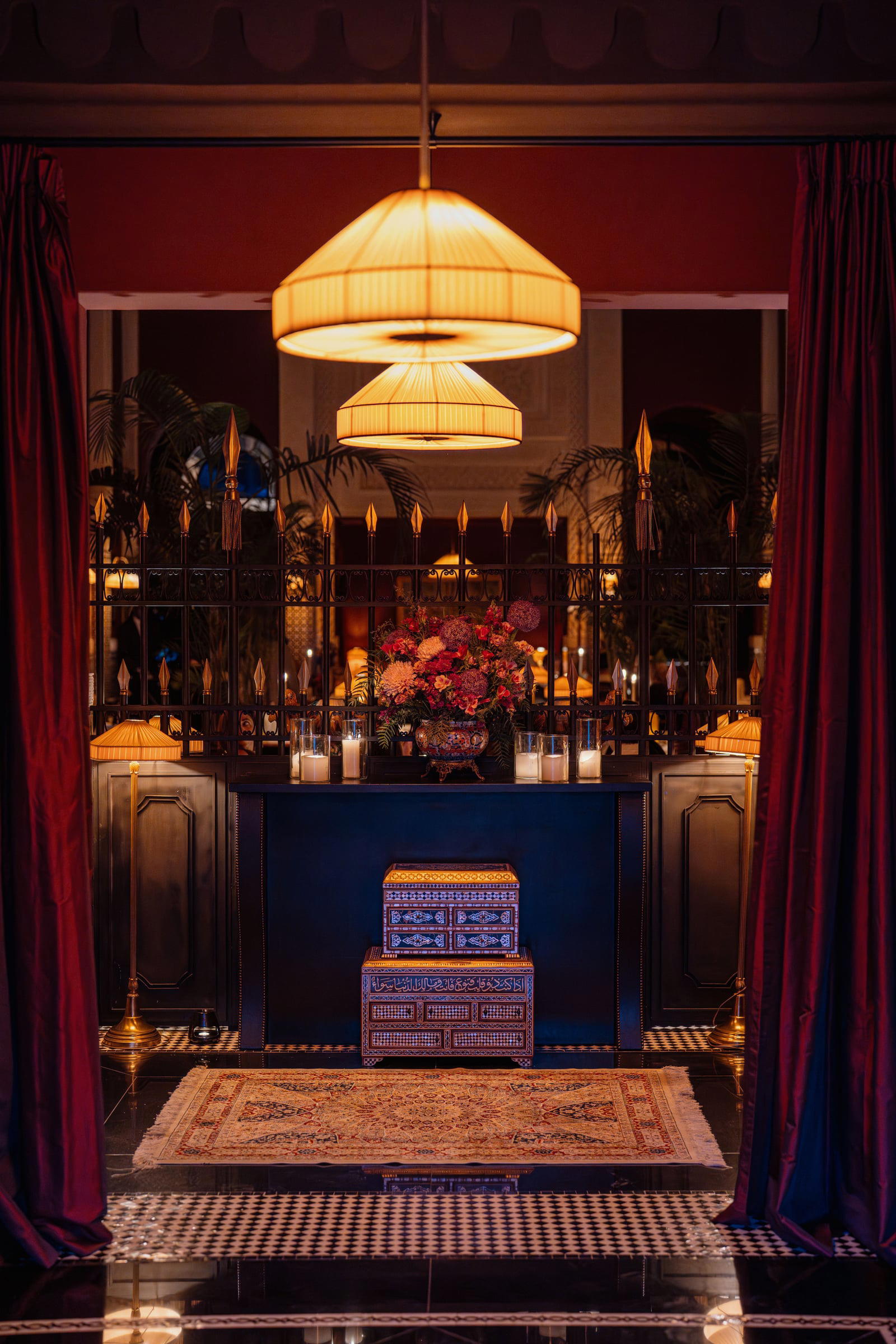
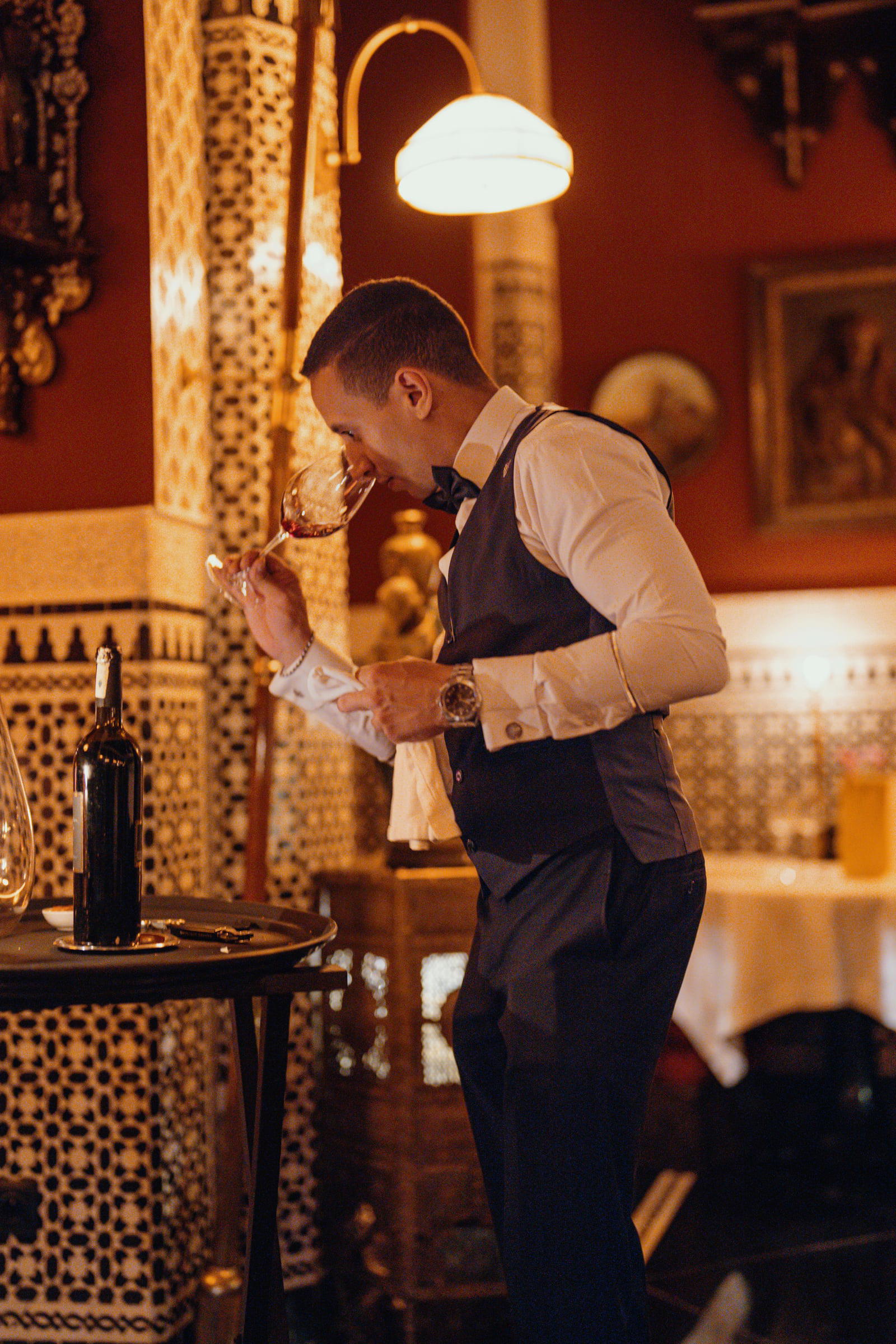
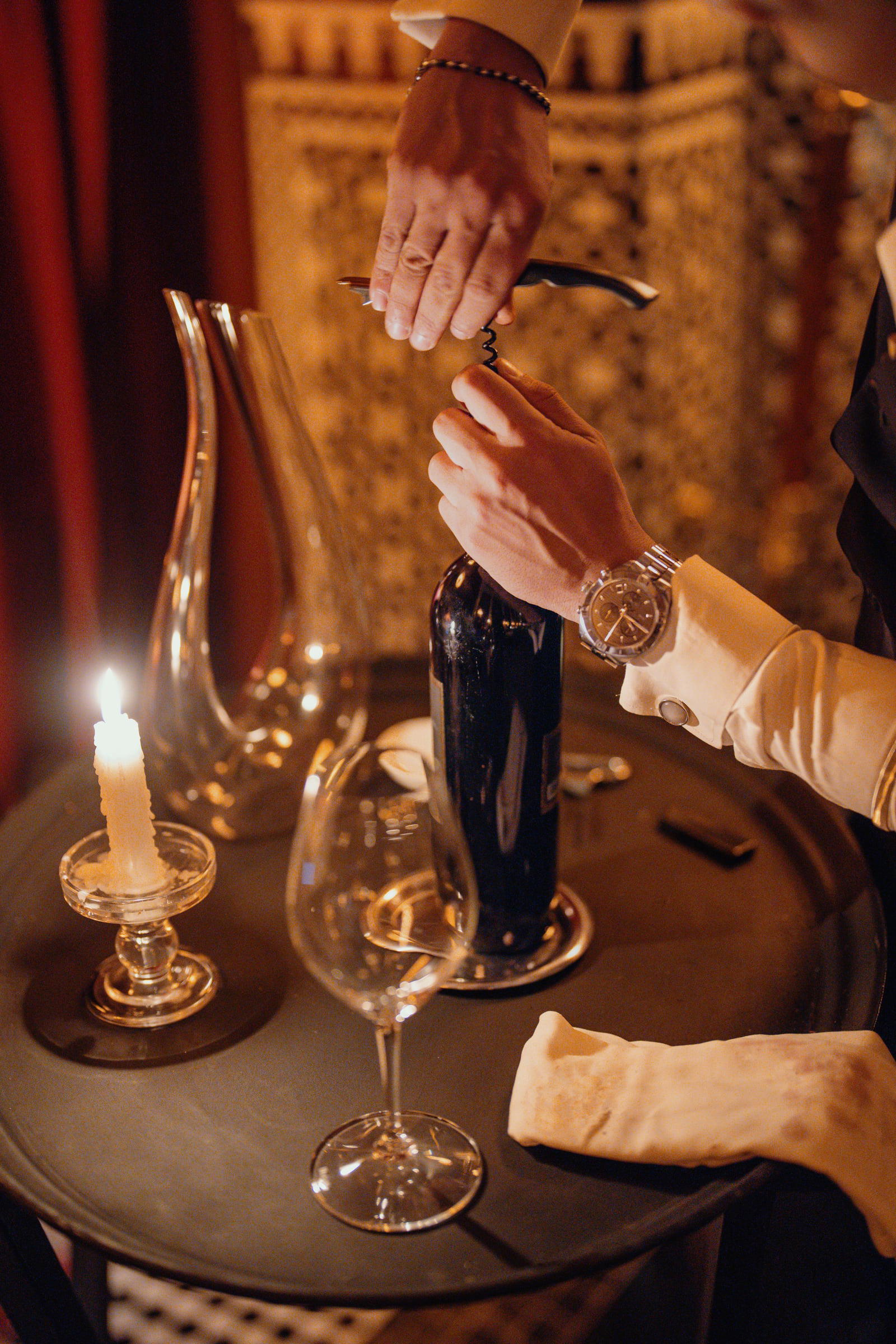
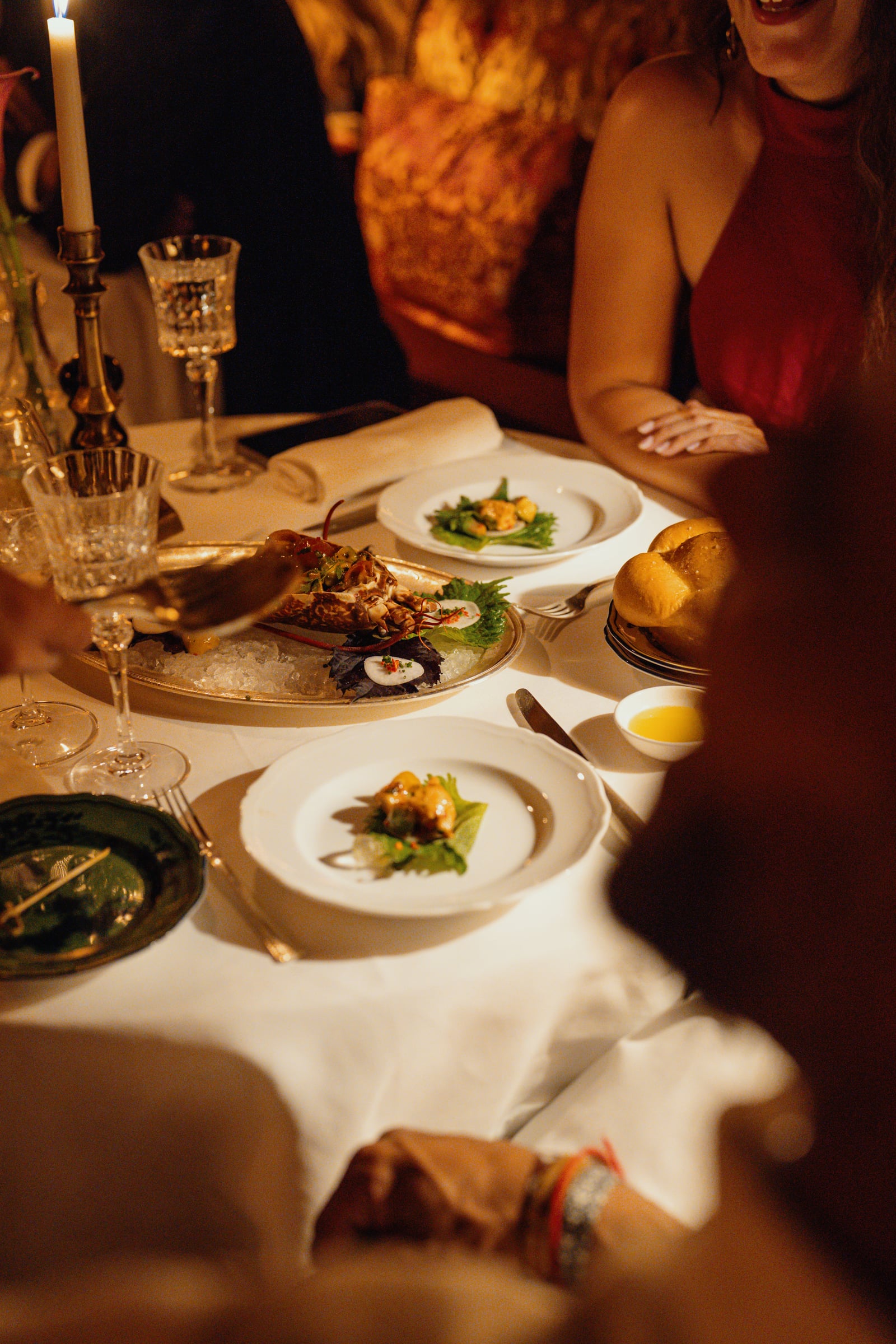
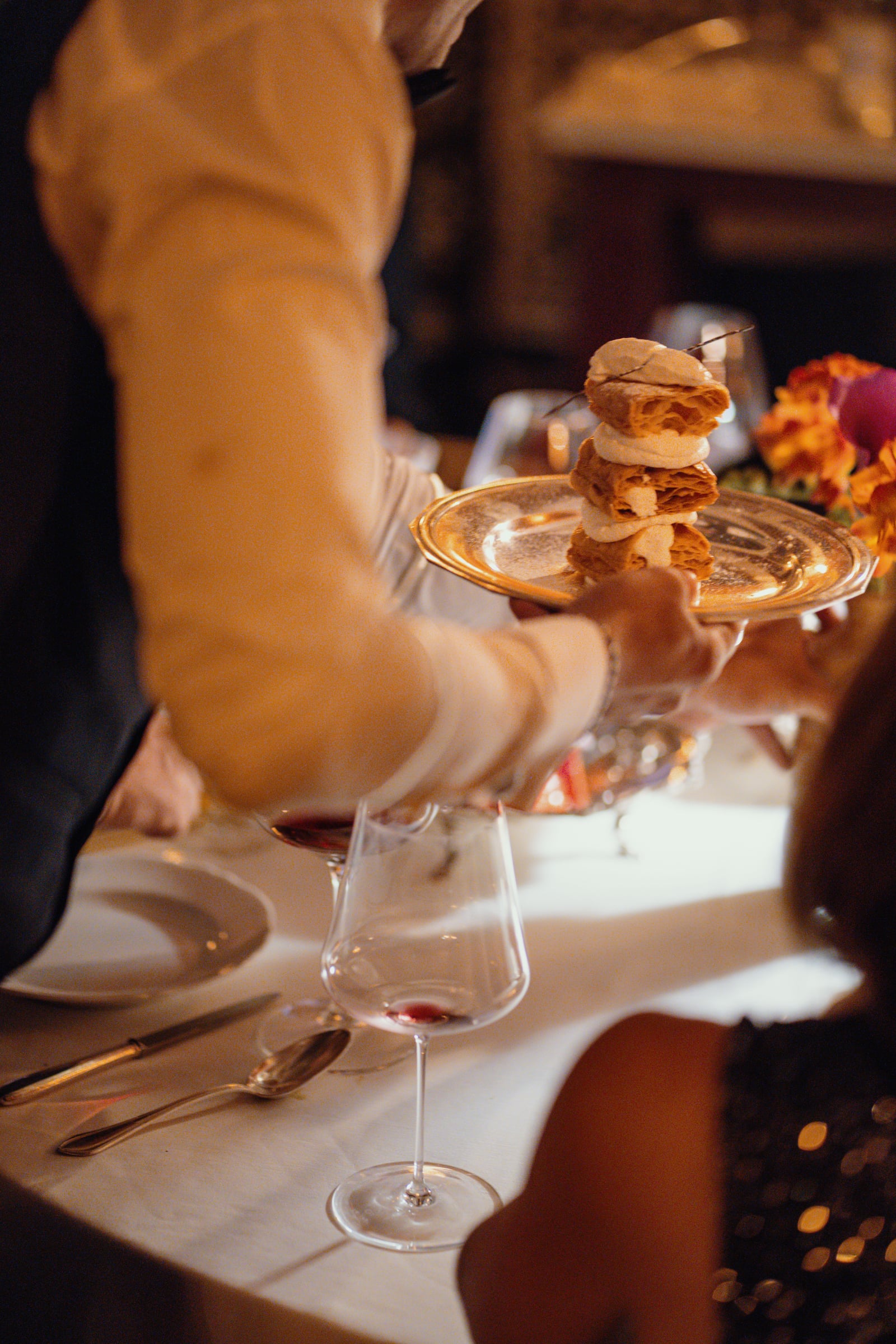
The argument is in the detail. The Ginori porcelain and the antique silverware were sourced specifically for the venue. Service is staged rather than merely efficient, part of what the house calls its scenography, a dining-room choreography that belongs to the meal as much as the food does. The effect is festive without tipping into spectacle, refined without going cold.
A table for the evening
SABO is built for the part of the night when dinner becomes the event rather than the prelude to it. It opens Tuesday to Sunday, from seven in the evening until one in the morning, and its register is festive and refined at once.
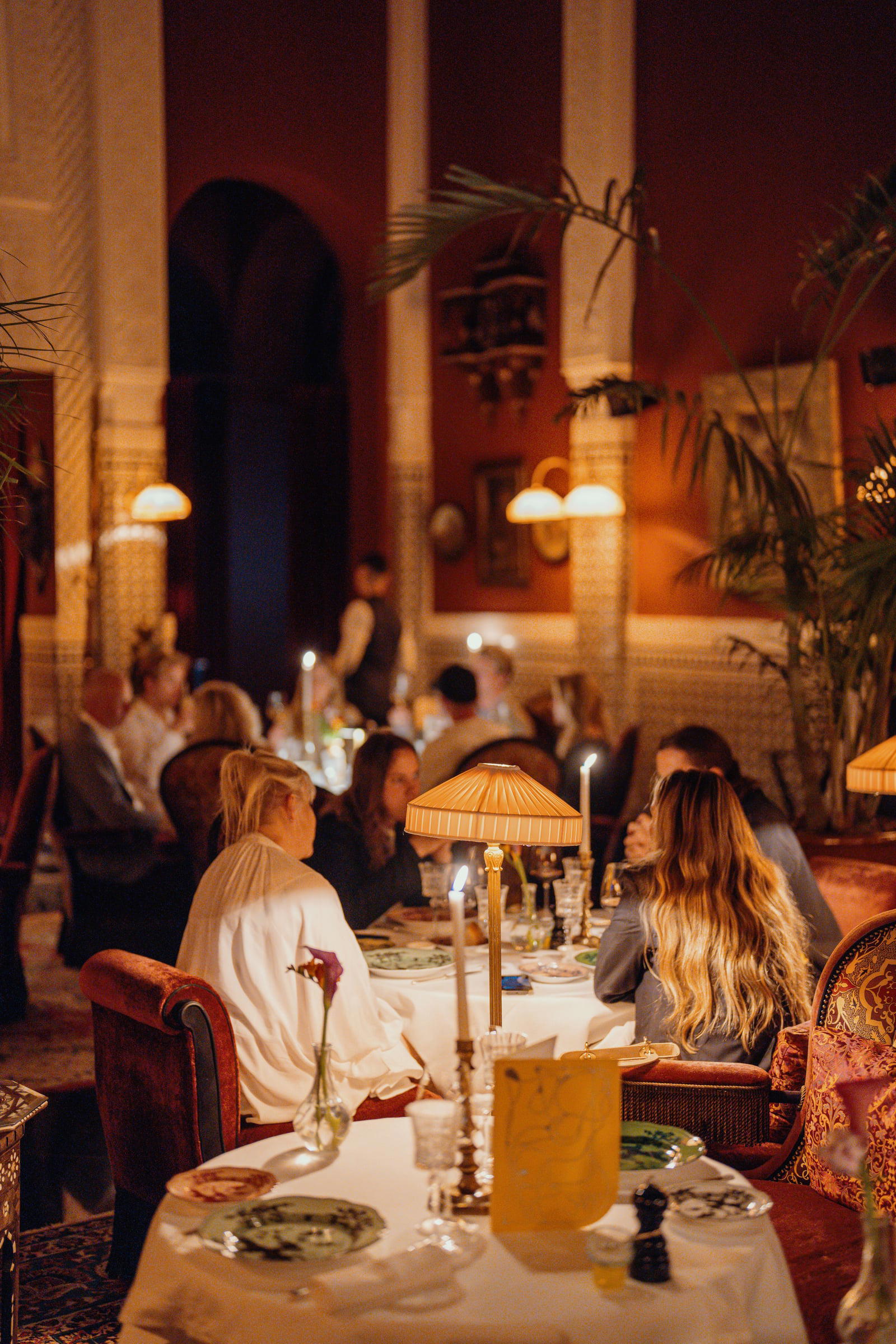
The contrasts are deliberate. The precision of the plates plays against the looseness of the hour, French restraint against Moroccan warmth, a Parisian grammar spoken in the Ochre City. It is a place to settle into rather than pass through, the kind of evening that organises itself around the table instead of treating dinner as a stop along the way.
The founding menu, brought back
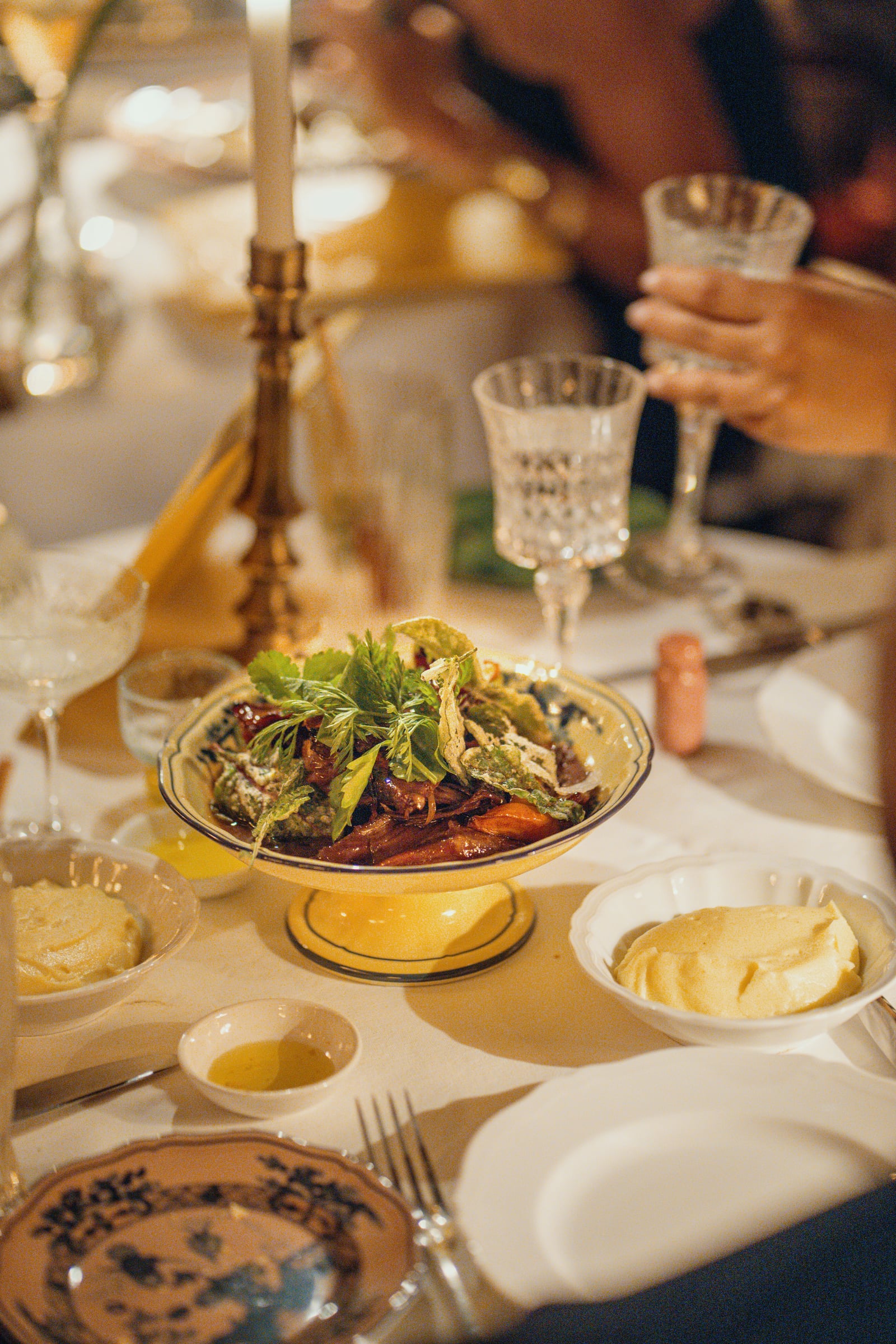
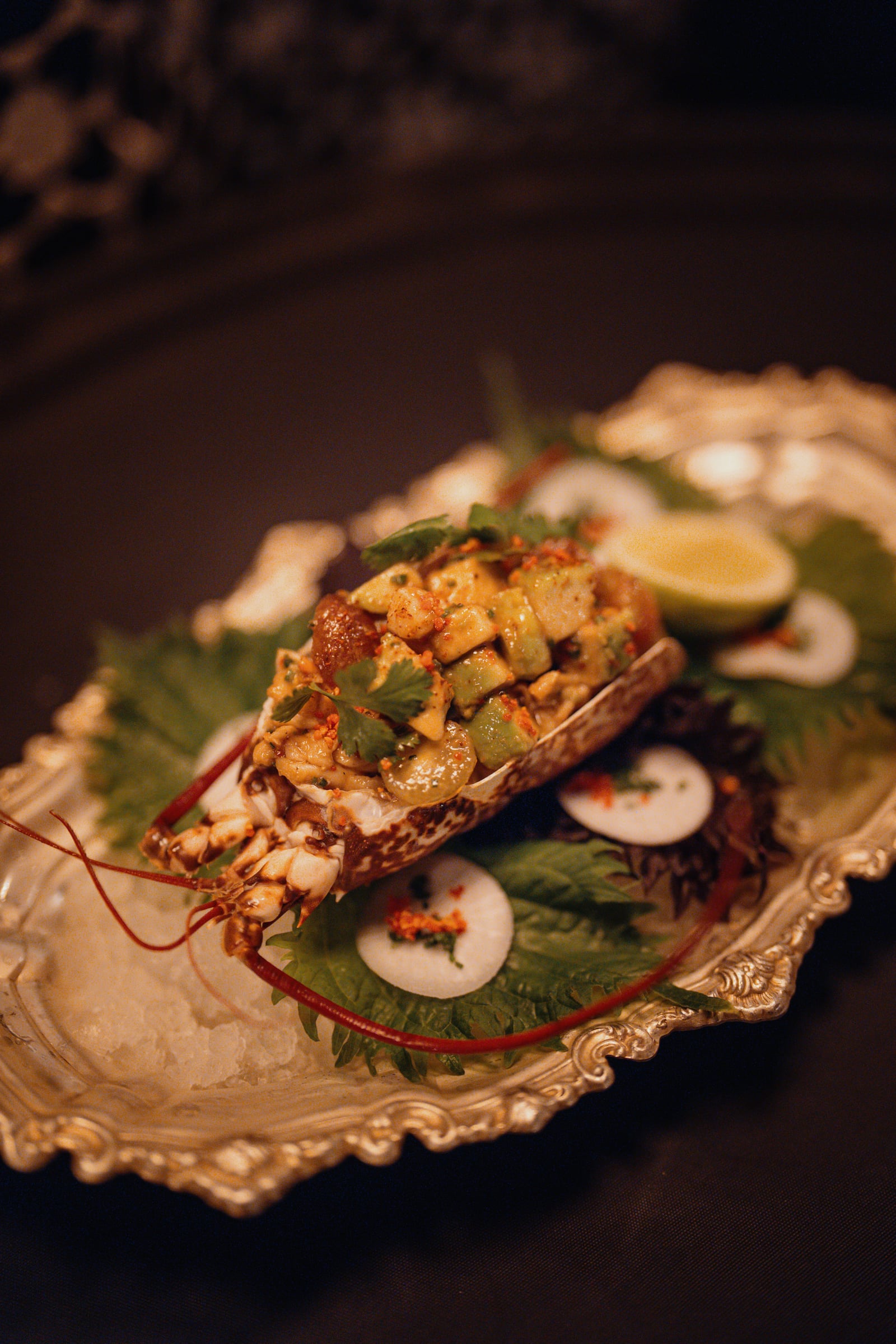
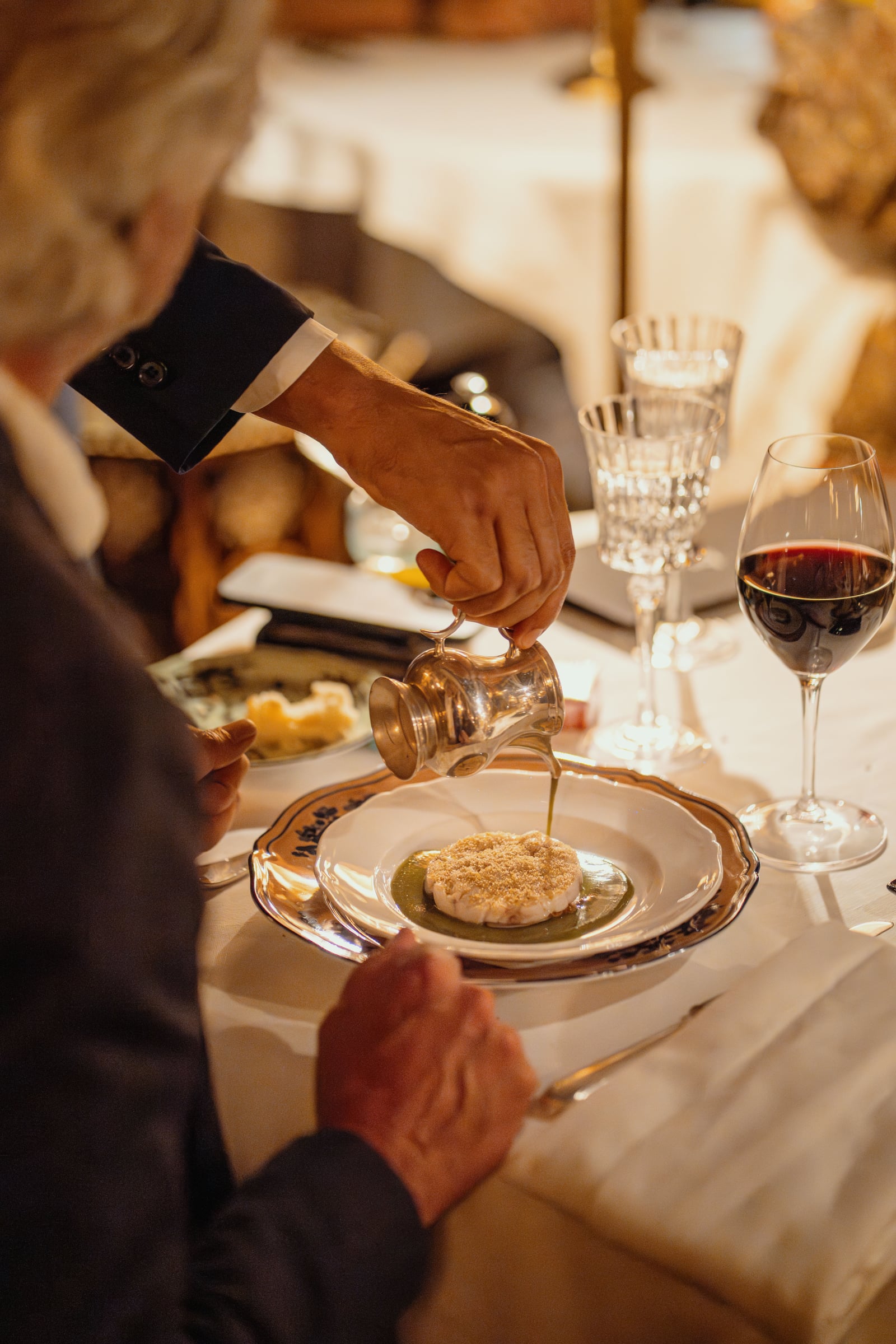
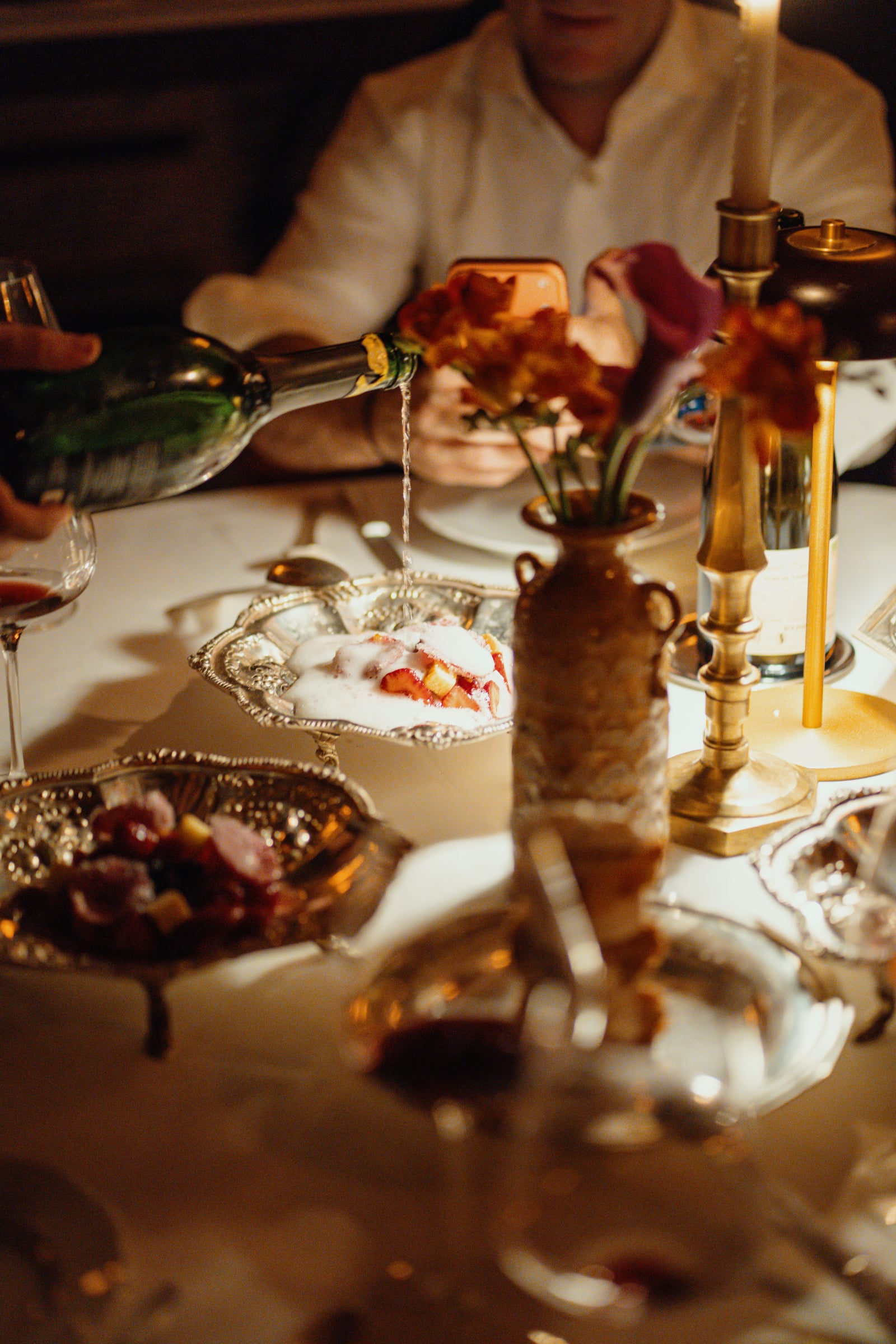
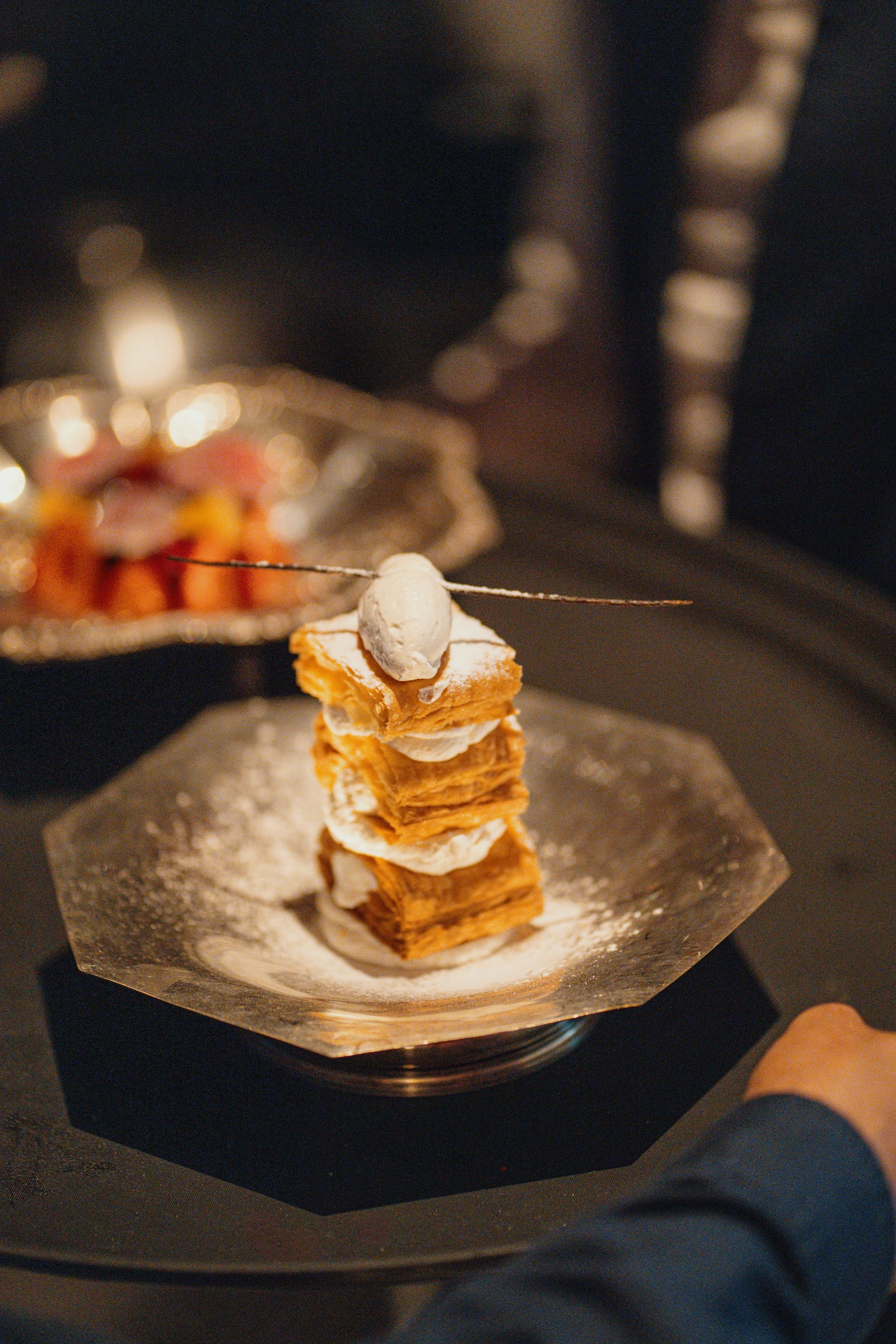
For the anniversary the kitchen returned to the dishes that opened the restaurant, a way of measuring the year by repeating its first sentence. Among them, a croq' of caviar and mozzarella; a lamb shoulder confit, cooked until it gives to the spoon and finished with garden herbs; and, to close, a nage of strawberries and raspberries in champagne.
One plate came from further afield. As an echo of the year behind it, the menu carried a signature dish from Le Grand Restaurant, Piège's two-Michelin-starred dining room in Paris, listed as "the most beautiful sea bass of the local catch, cooked very slowly, with a caper-leaf concentrate." Le Grand Restaurant is where Piège works in his freest and most personal register, and the dish arrived in Marrakech like a Parisian murmur translated into Moroccan waters.
What SABO is, one year in
A year is long enough to know what a restaurant is for. SABO belongs to the same Marrakech conversation as the city's other festive evening tables, and sits comfortably among the restaurants worth planning an evening around.
What it represents is harder to name and more interesting. It is a French chef's language spoken fluently inside a Moroccan palace, under a roof open to the sky, in a room named after the horse, the animal that stands as the emblem of the estate. The first year did not reinvent that premise. It confirmed it.
You may also like…