EAT & DRINK
The Marrakech Dinner Where Horses Arrive Before Dessert: A Night at Assyl
Pure Moroccan cooking, Andalusian music and belly dancers: an elegant, theatrical evening in a palace across the water from the Selman's terrace.
Timence Guide Editors · 30 October 2026
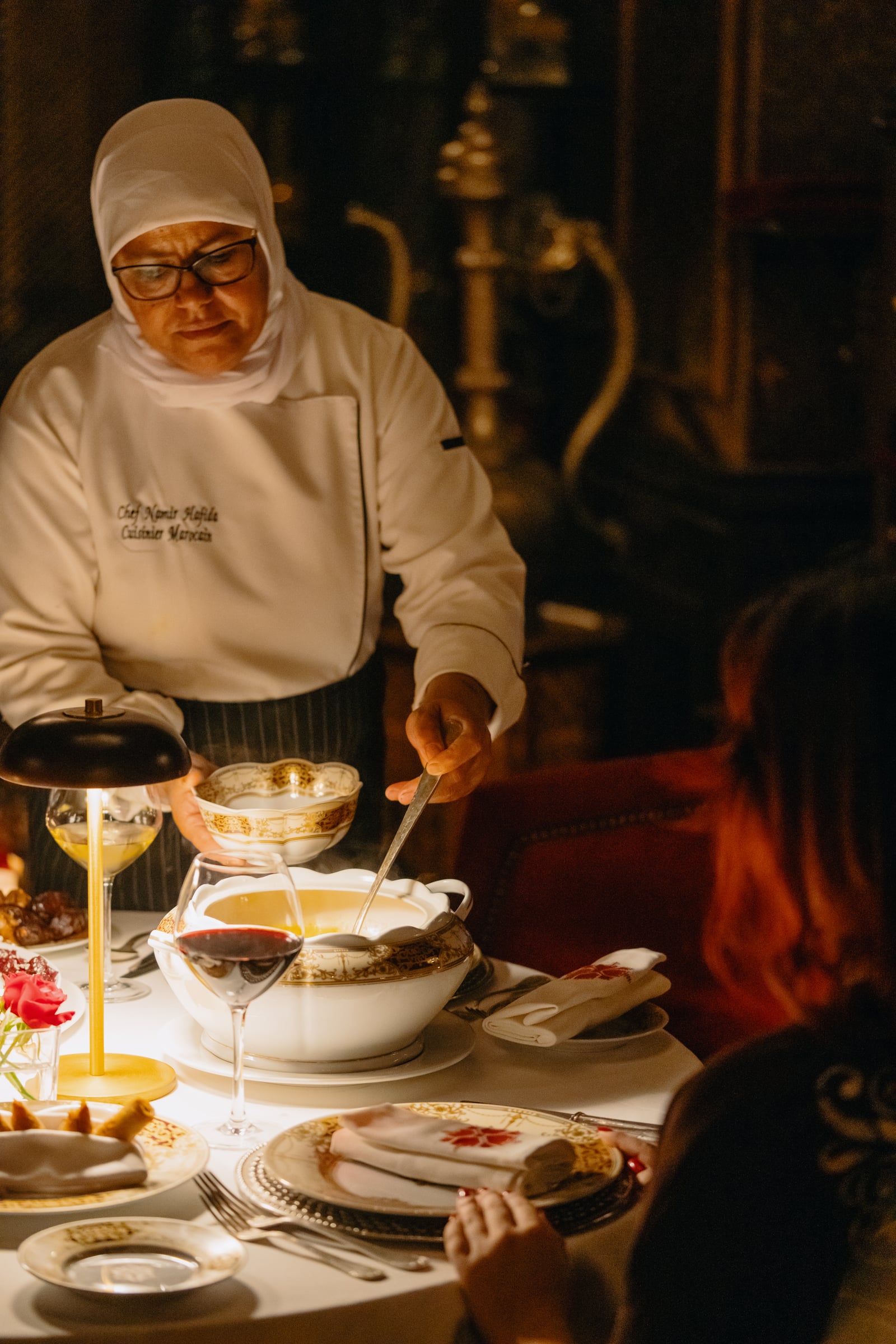
Assyl is the Moroccan restaurant of Selman Marrakech, the hotel the Bennani Smires family built around its Arabian horses on the Route d'Amizmiz. Assyl's kitchen is led by Chef Hafida and an all-female brigade, and dinner is served with live Andalusian music, belly dancers between the tables and, before dessert, a parade of the hotel's purebred horses in the garden outside.
Who Assyl is for
Assyl is not a classic dinner show. The cooking stays at the centre of the evening, pure Moroccan cooking the way it used to be made, from the pastilla to the tanjia, while the musicians and the dancers move around the meal without taking it over. The horses are the high point: their parade in the garden is when the Selman, a hotel named after a line of stallions, enters the dinner, and it is worth booking Assyl for. The room is elegant and theatrical, and at the same time intimate enough for a romantic dinner, since the music plays all evening and you can still talk across the table. It is an evening to dress up for.
It suits a couple, a group of friends, a family dinner with parents, and anyone who loves horses. It makes less sense if you are after a contemporary menu or a quick dinner before going on somewhere else: the menu is traditional, and the evening moves from the dining room to the garden and back again, so plan the whole evening around it.
From the terrace to the door
The first time you see Assyl, it is still eighty metres away. From La Terrasse, the terrace restaurant of the Selman Marrakech, the pool runs out between two rows of palms, and at the far end of the water stands the palace that holds the restaurant, with the stables beside it on the left. To reach La Terrasse you have already crossed half the hotel, under the archway on the road, past the sculpted horse and the fountains in the gardens, through the salons, and now there are eighty metres of water still to walk, with the palms overhead and the palace slowly getting closer. Keep the stables in mind on the way: the Selman takes its name from the line of Arabian stallions that Abdeslam Bennani Smires breeds, and the horses will come back into the evening before it is over.
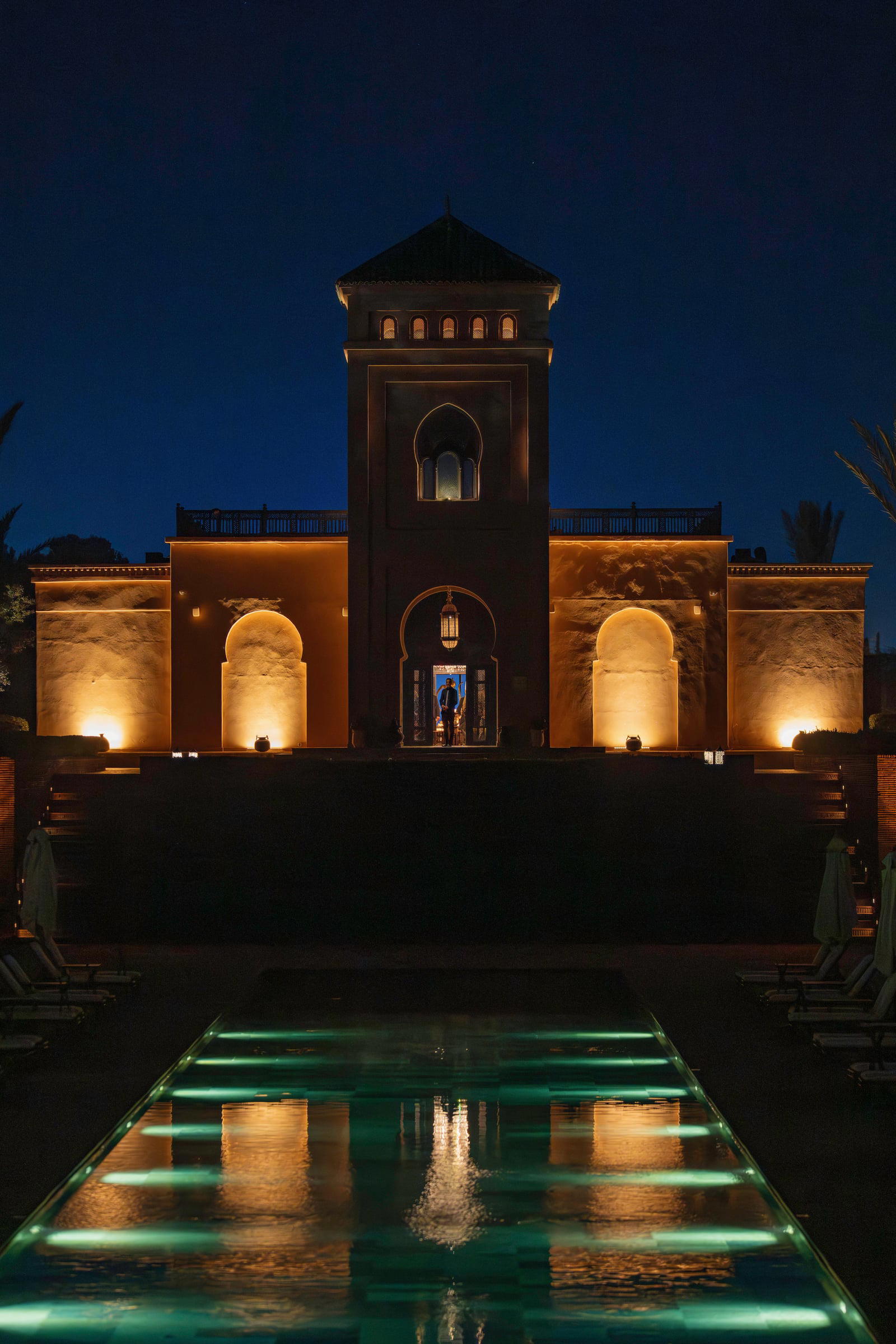
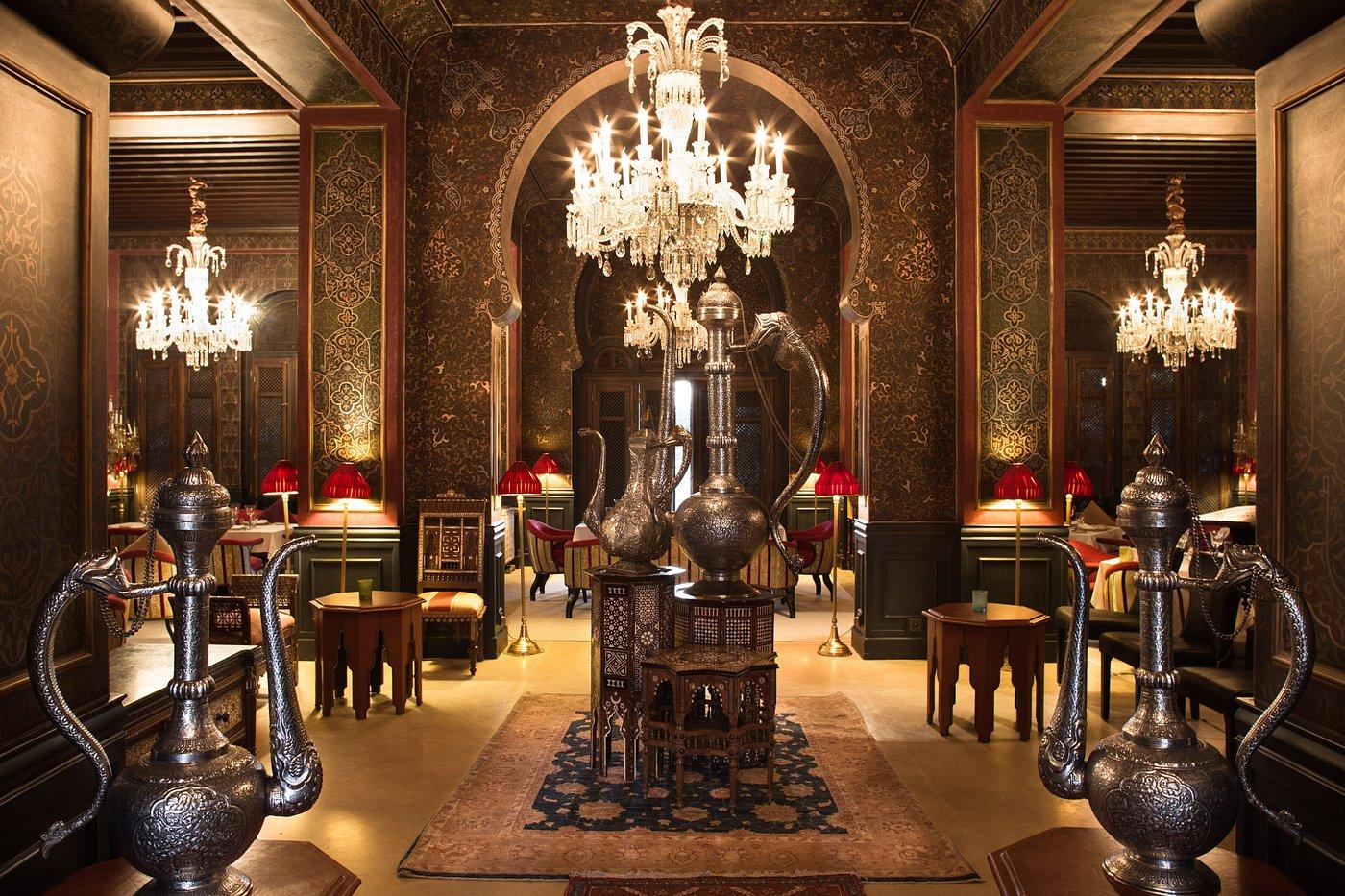
From the path, Assyl looks calm. The garden around it is quiet, and the door is dark wood with narrow slits: through them you glimpse light, but you cannot tell what is happening inside. It opens before you can reach for it, and the quiet is gone at once: tall silver teapots stand on inlaid octagonal tables on either side of the entrance, small candles burn in glasses along the consoles, a tray of rose petals glows on a low table, and from somewhere further in comes a voice striking up a Moroccan song.
A room full of detail
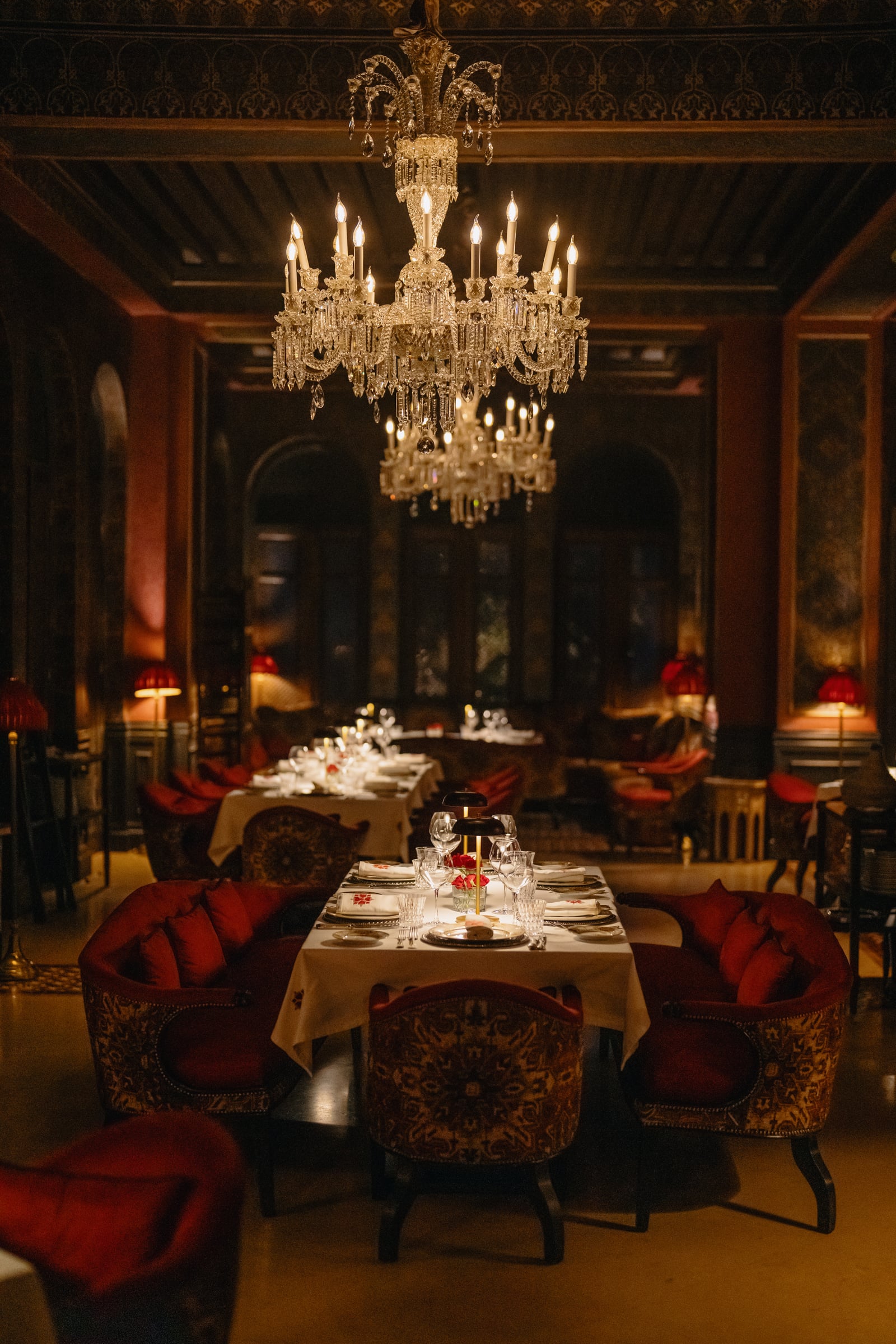
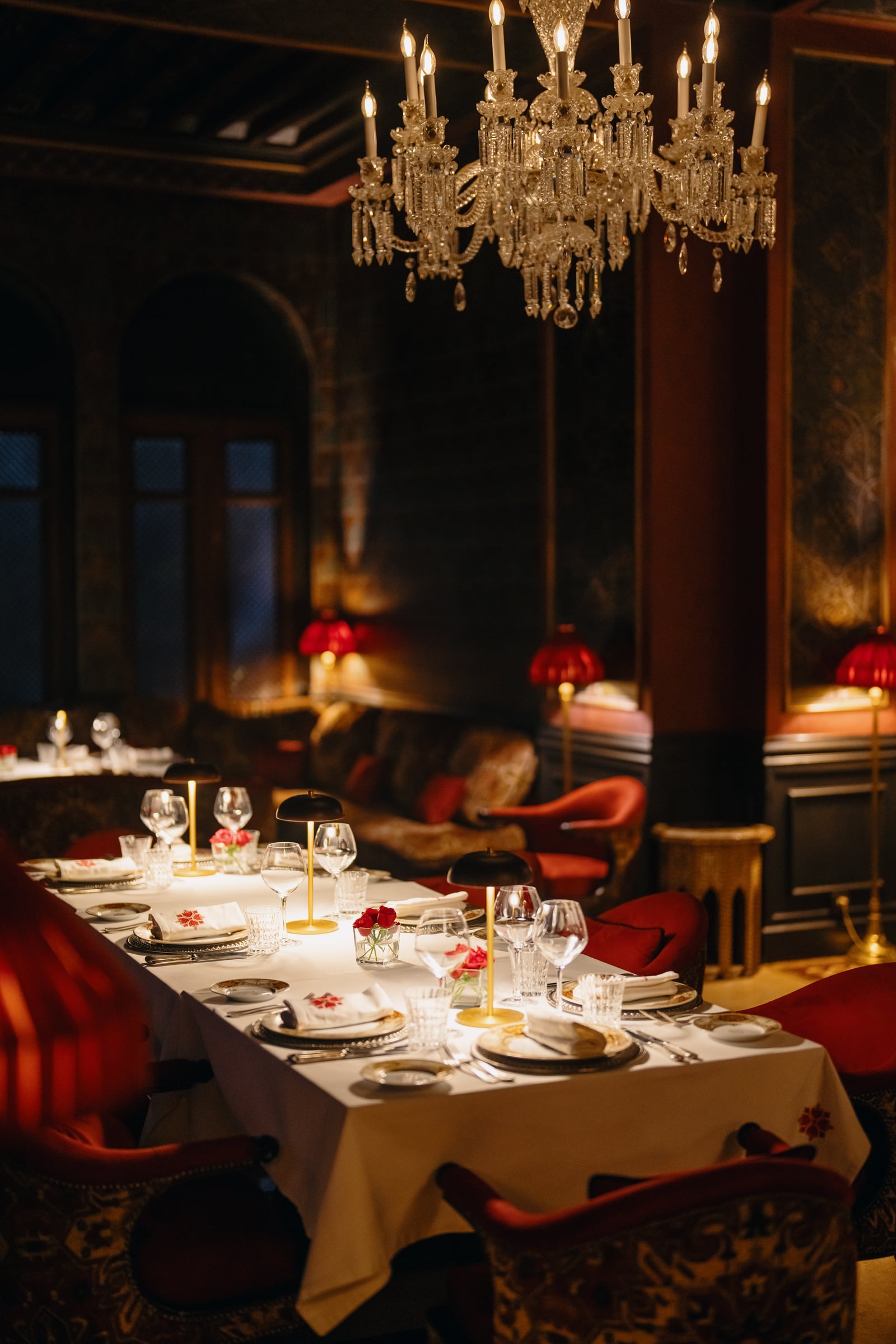
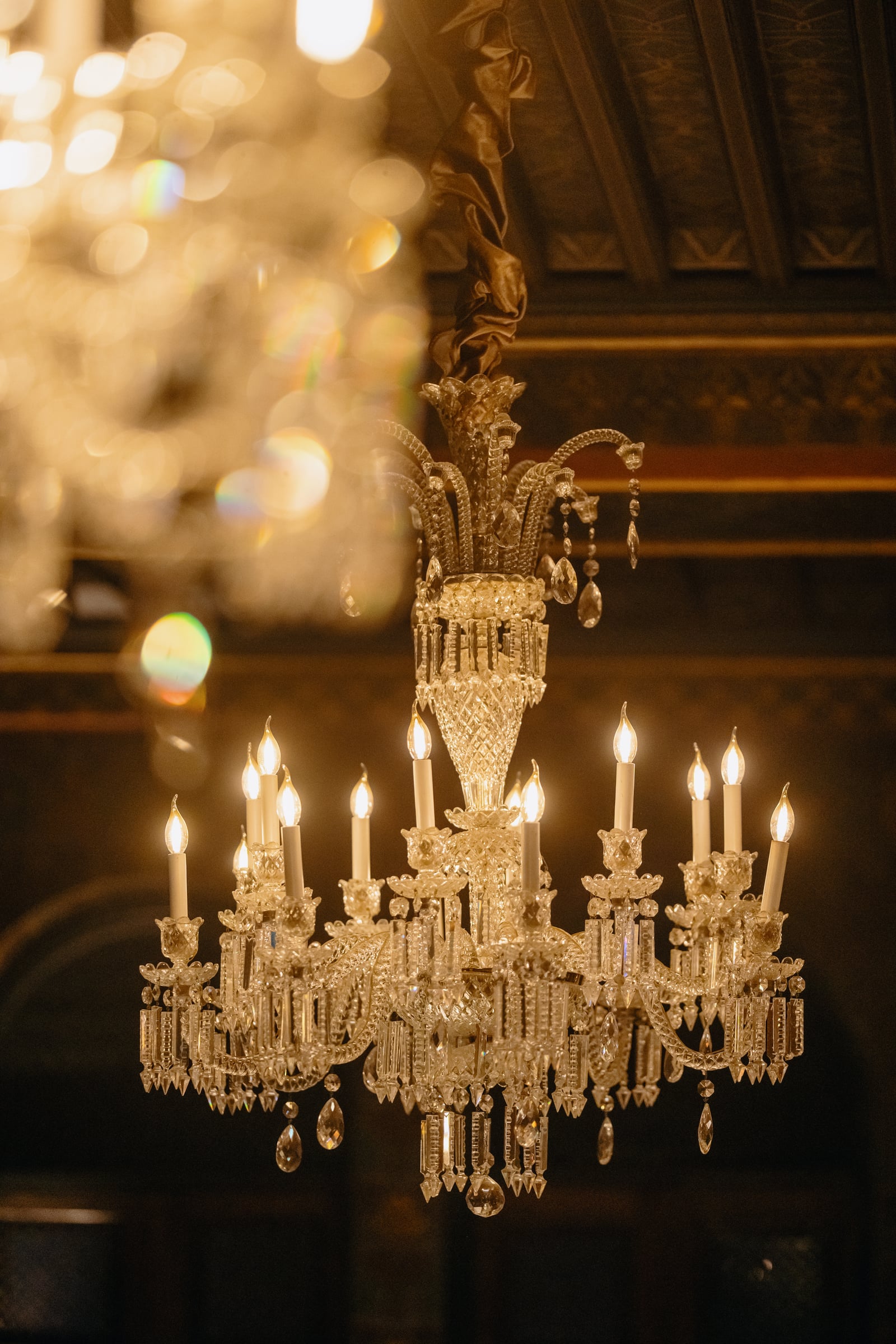
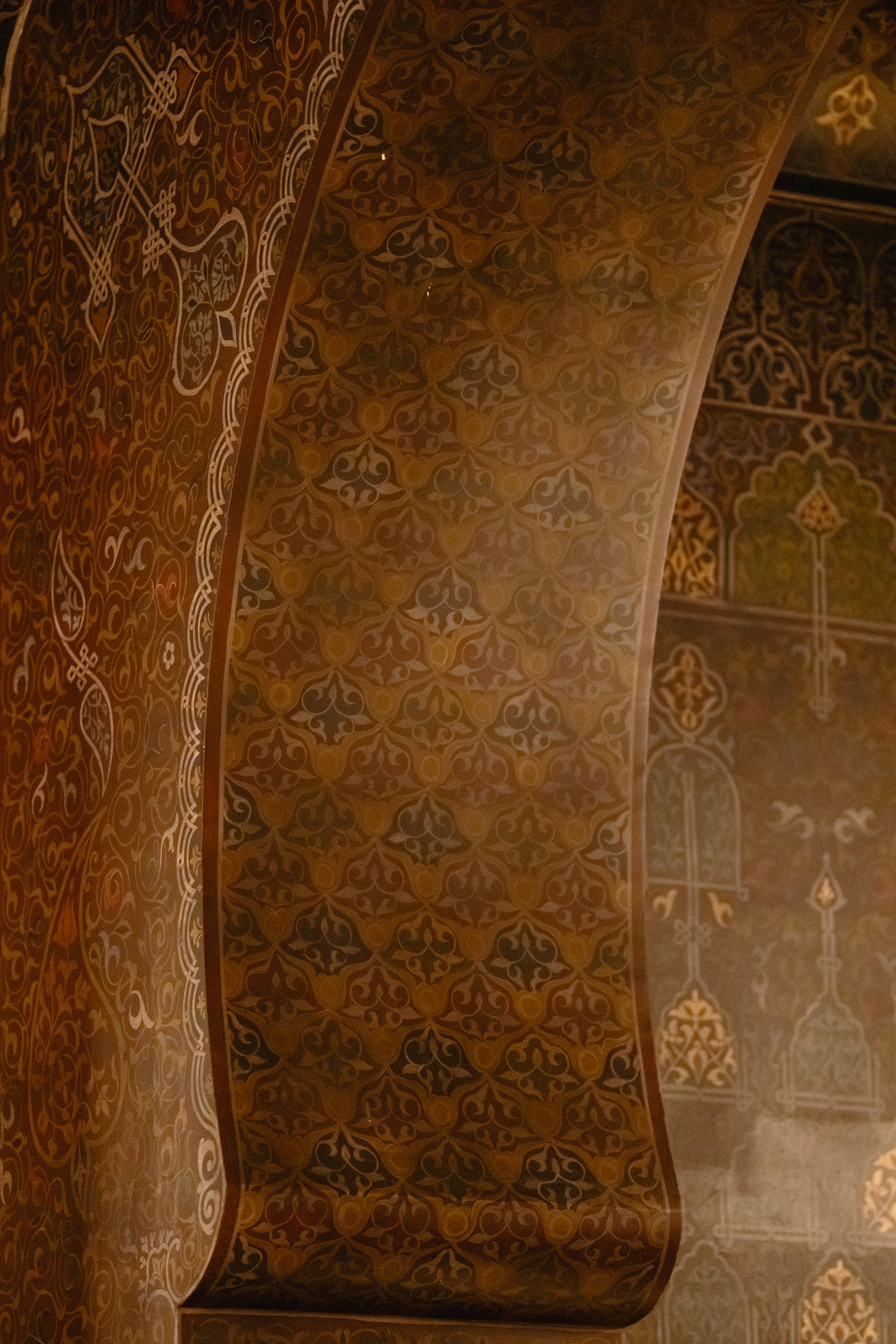
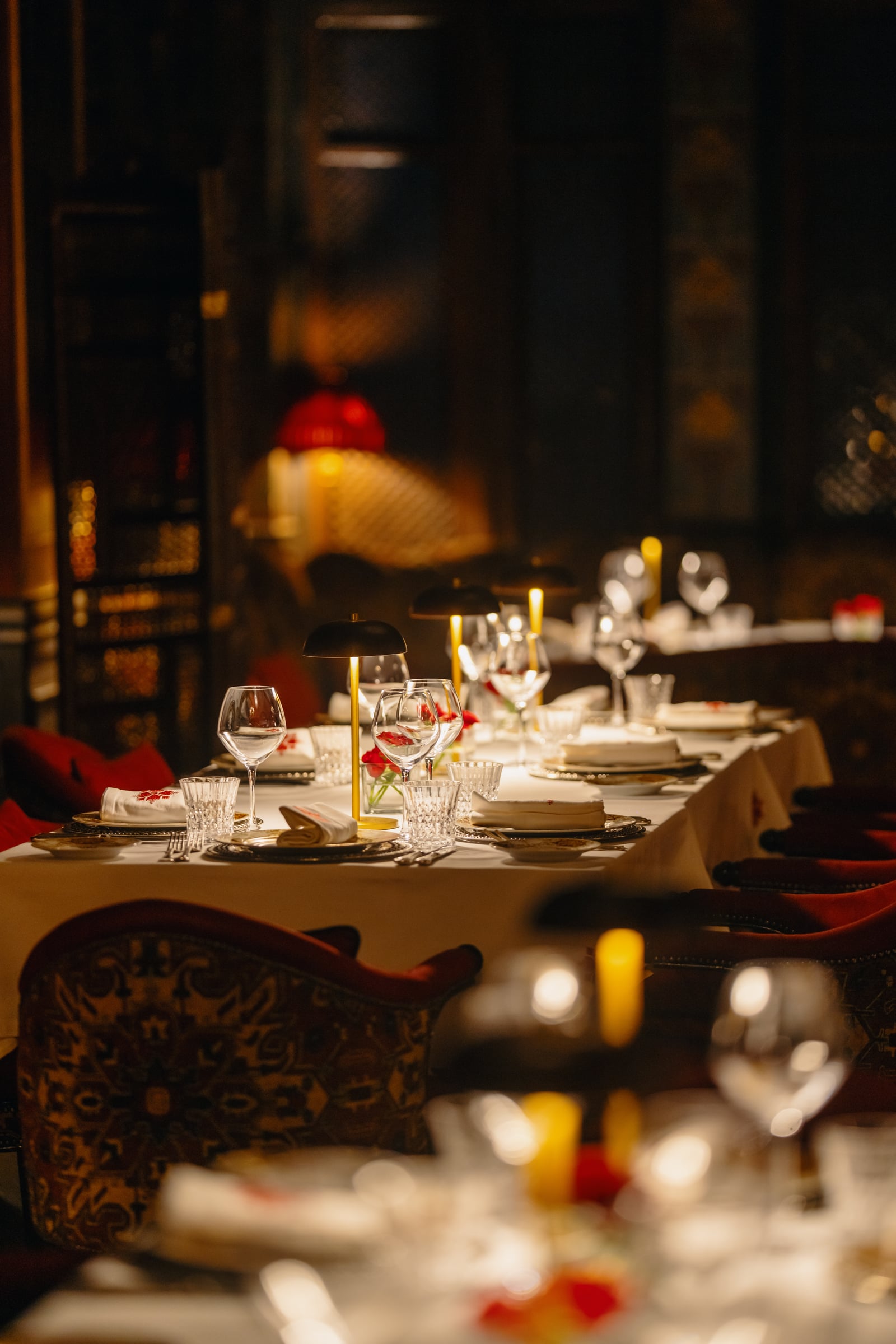
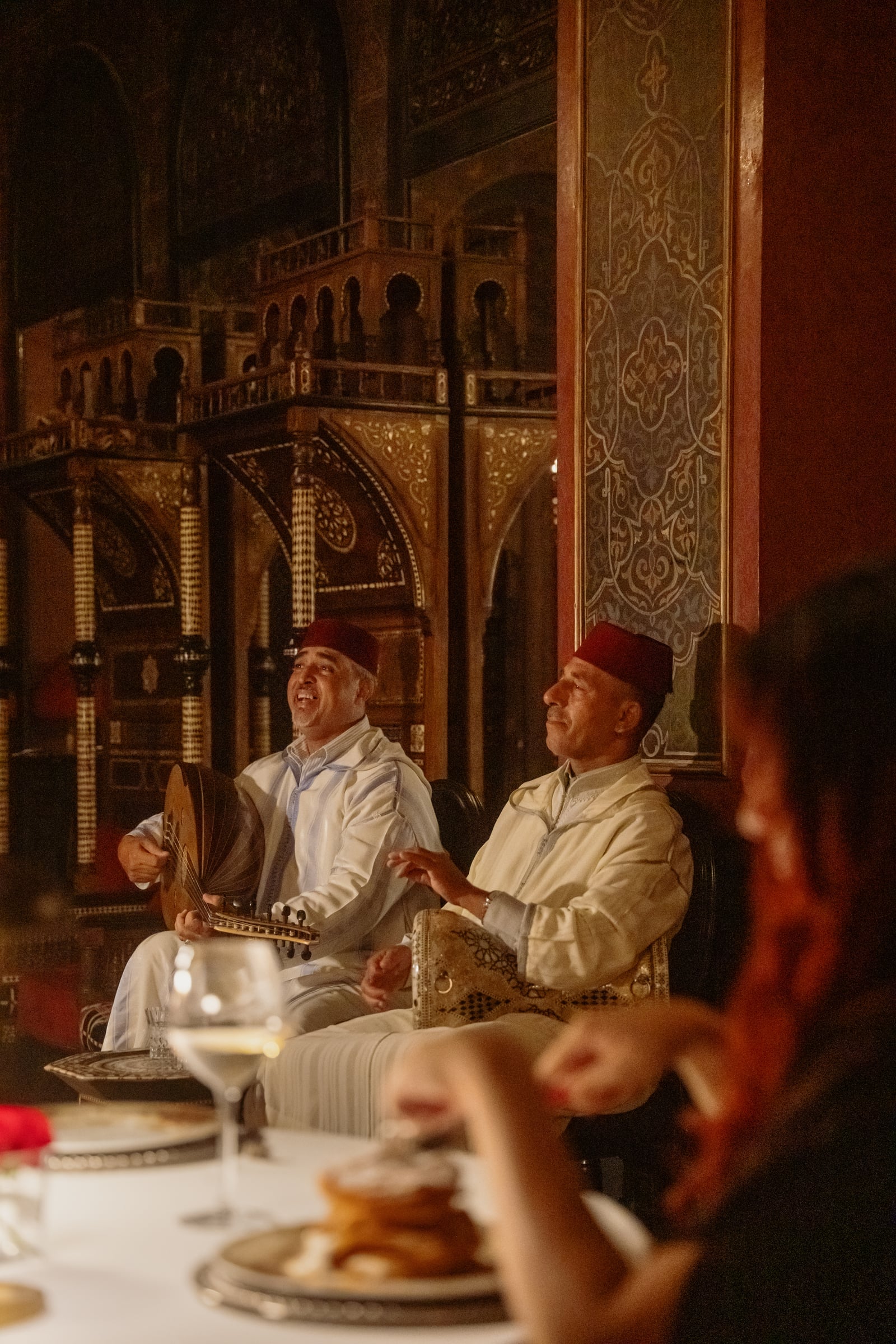
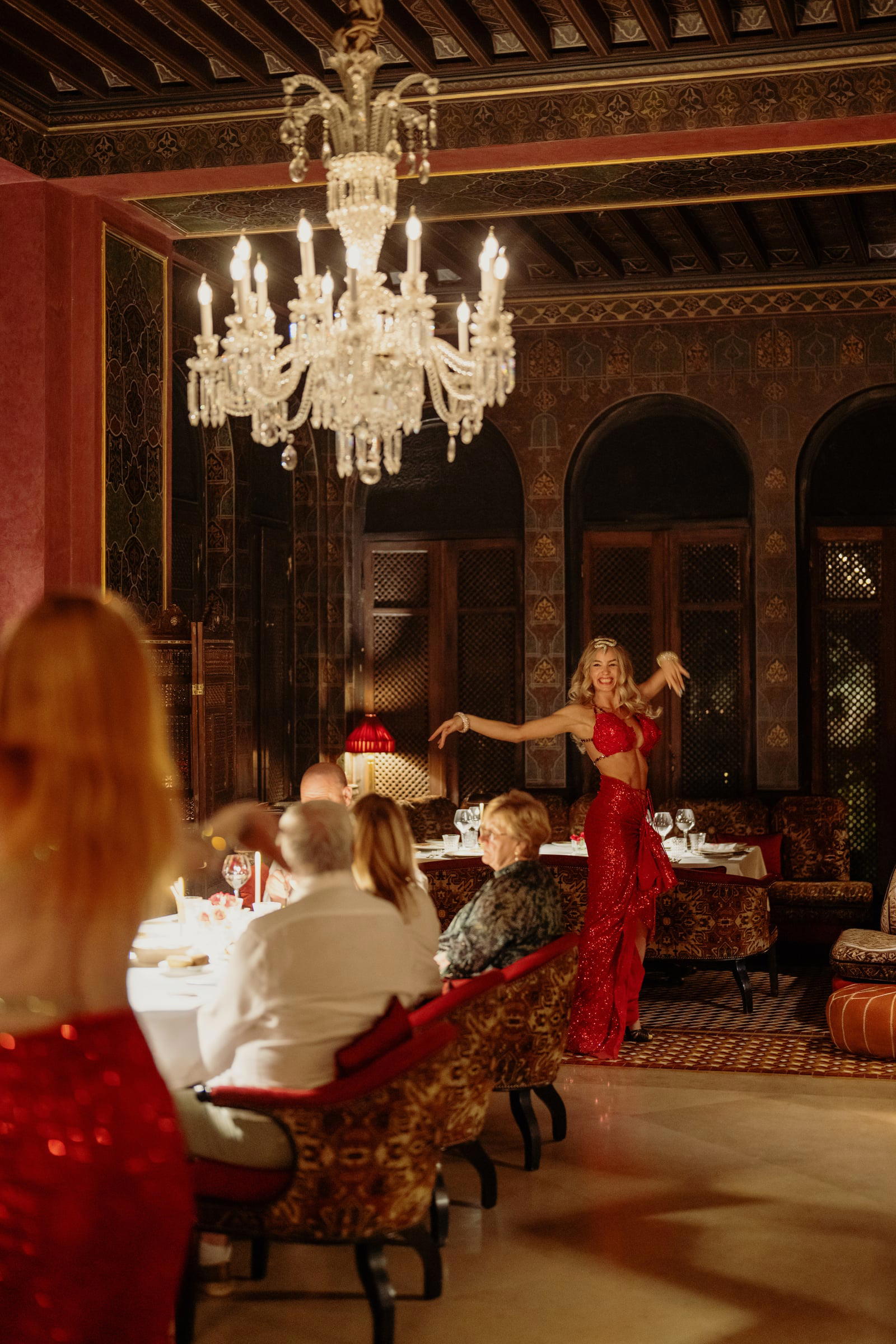
The music reaches you before the room does. An Andalusian duo sits against a wall of carved and inlaid wood, one musician bent over an oud, the other on percussion, and they are already singing when you walk in. Around them the room has an Ottoman richness, with high ceilings, painted woodwork and crystal chandeliers hanging over the tables, and underfoot a geometric Moroccan mosaic. Jacques Garcia, who designed all five of the Selman's restaurants, gave Assyl dark patterned walls and red velvet armchairs deep enough to sink into, and there is so much to look at that it takes time to see it all and tell one detail from the next, while the waiters cross between the tables and the candlelight moves on the silver.
What you eat at Assyl
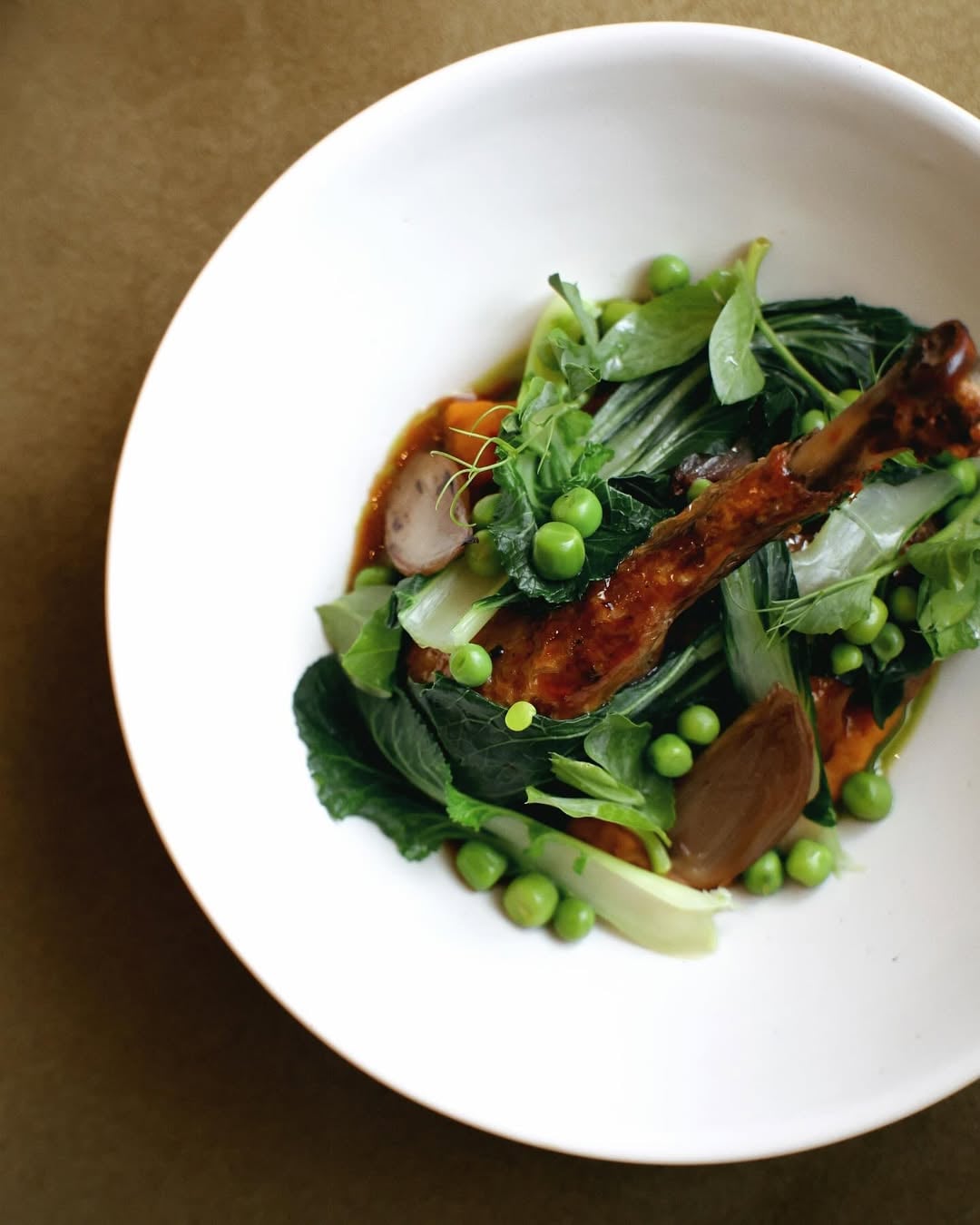
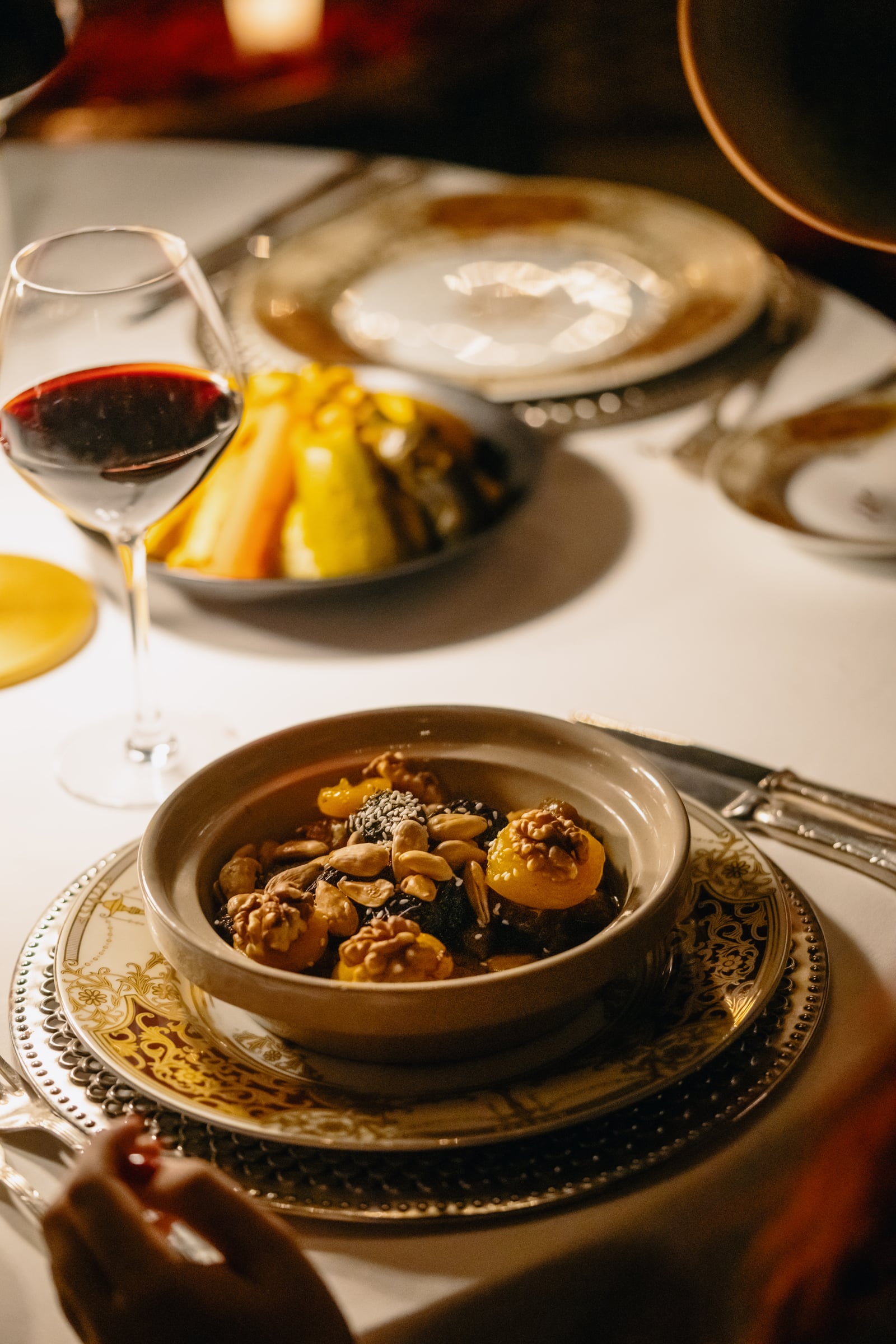
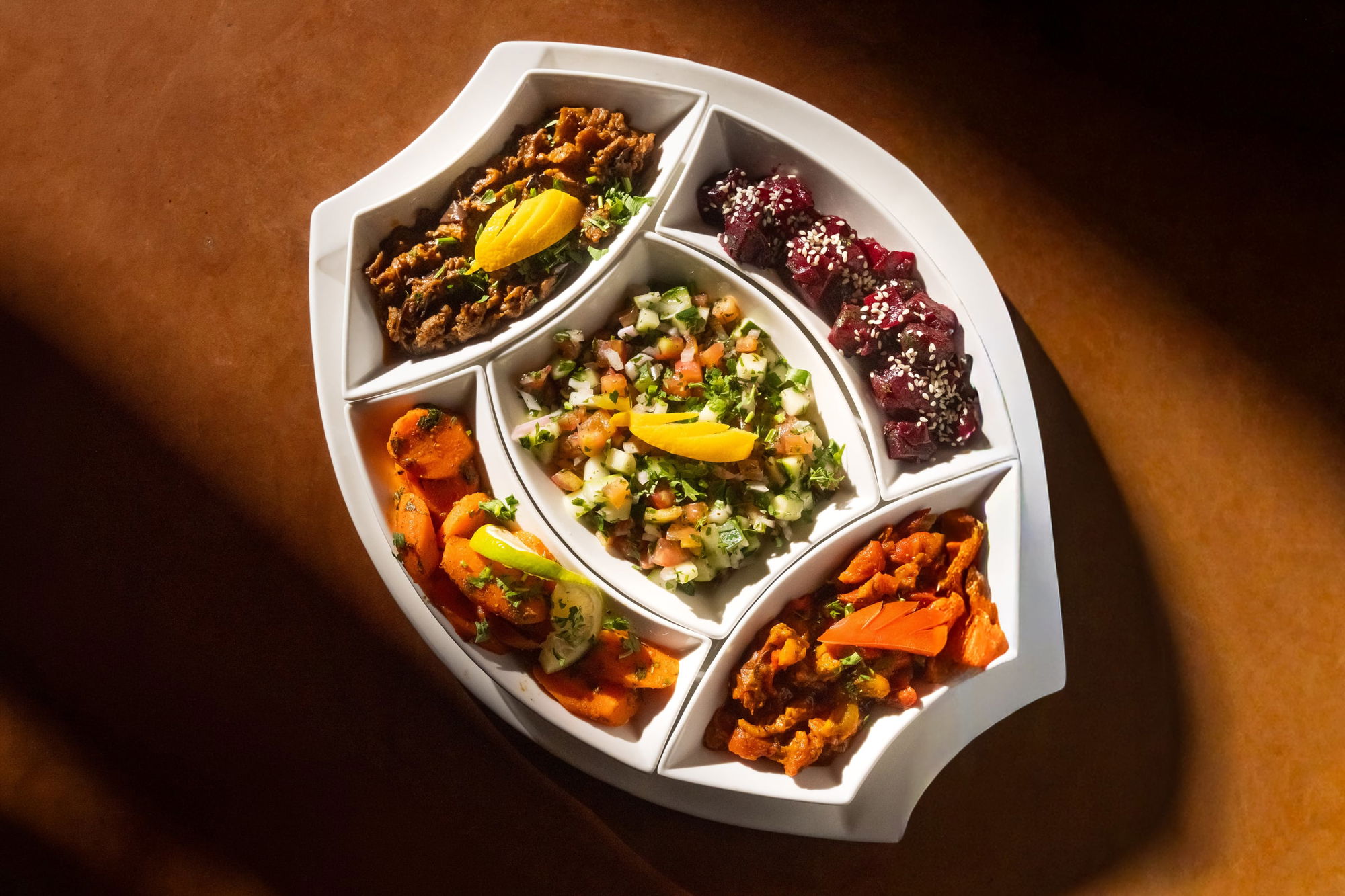
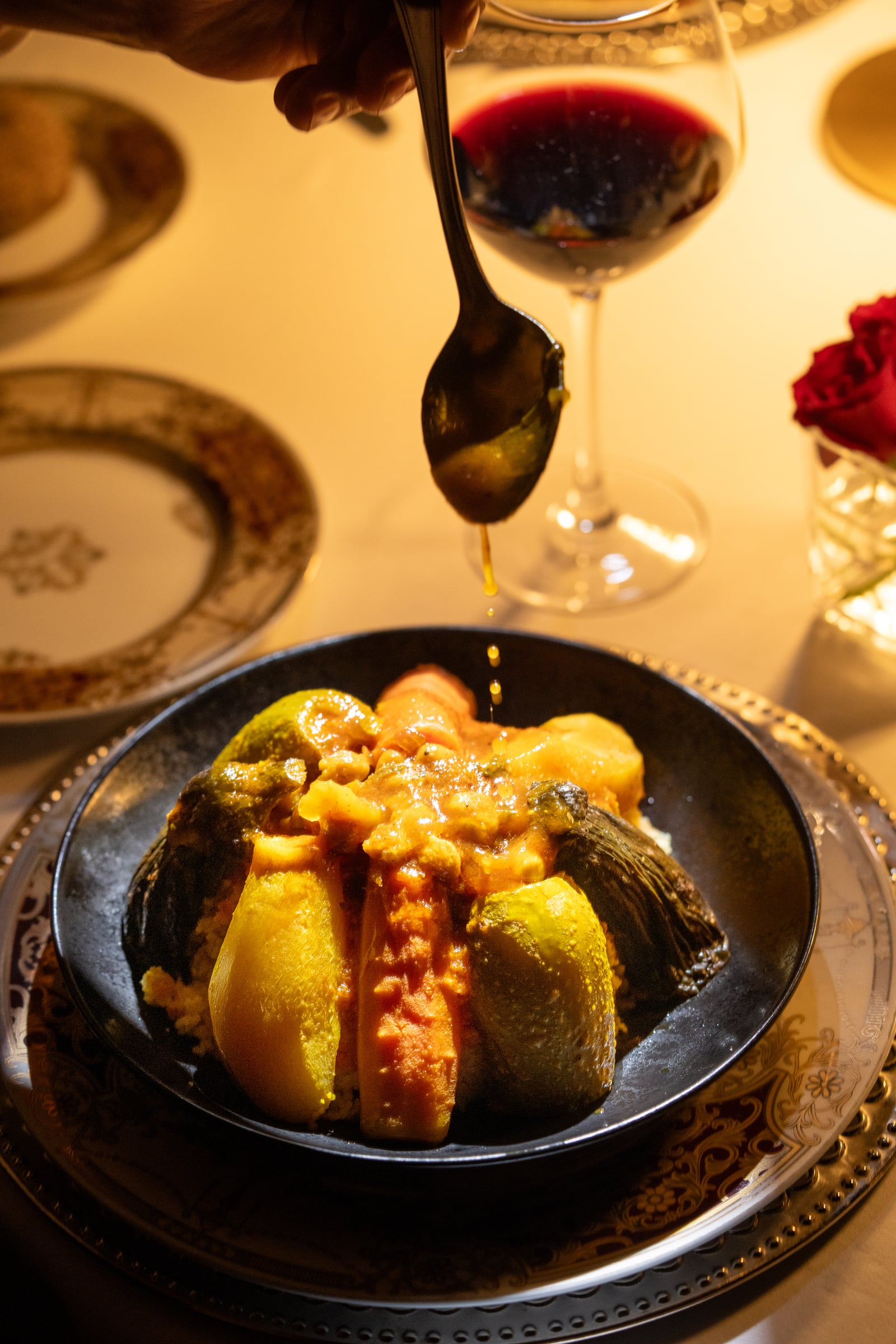
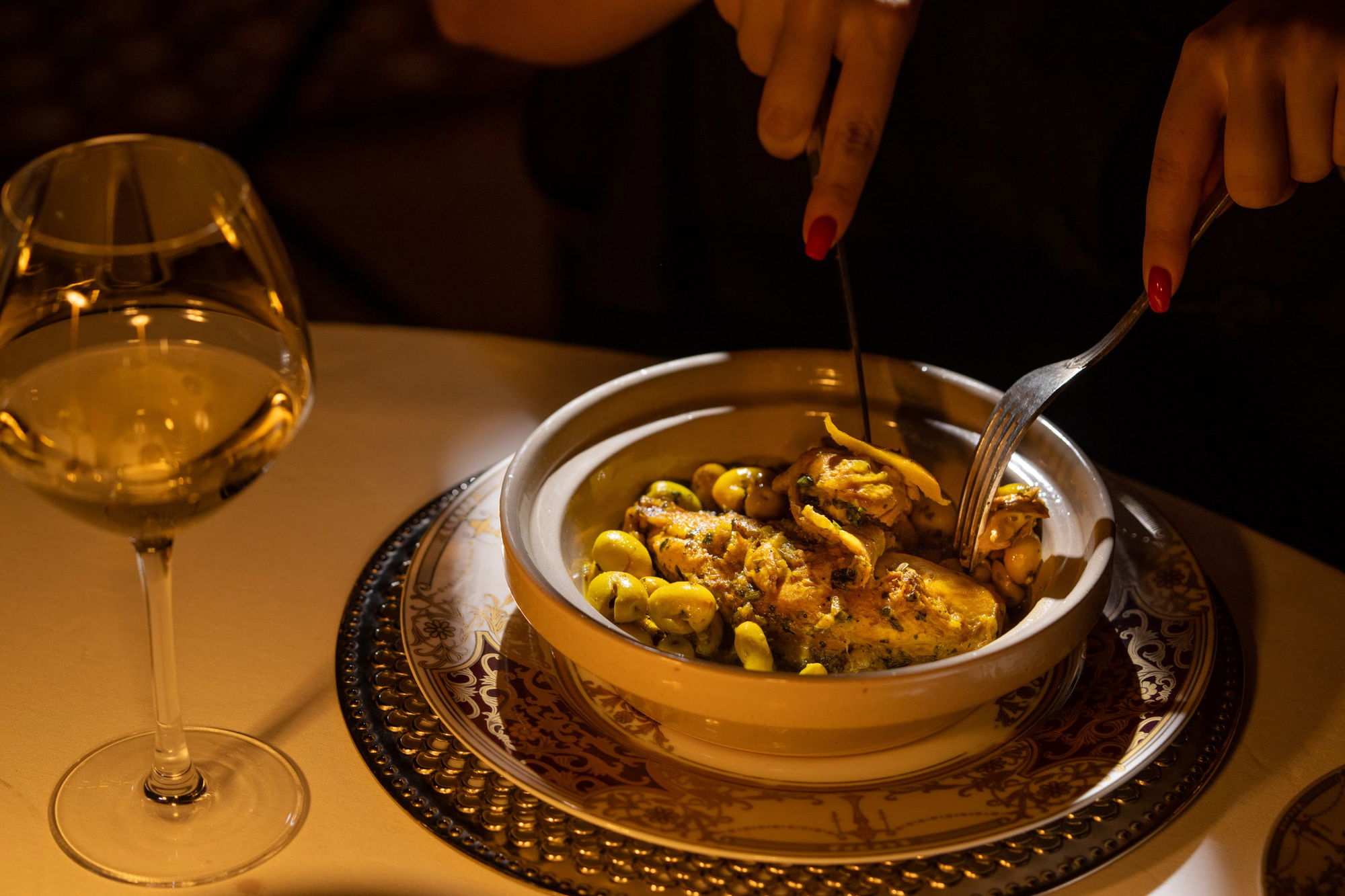
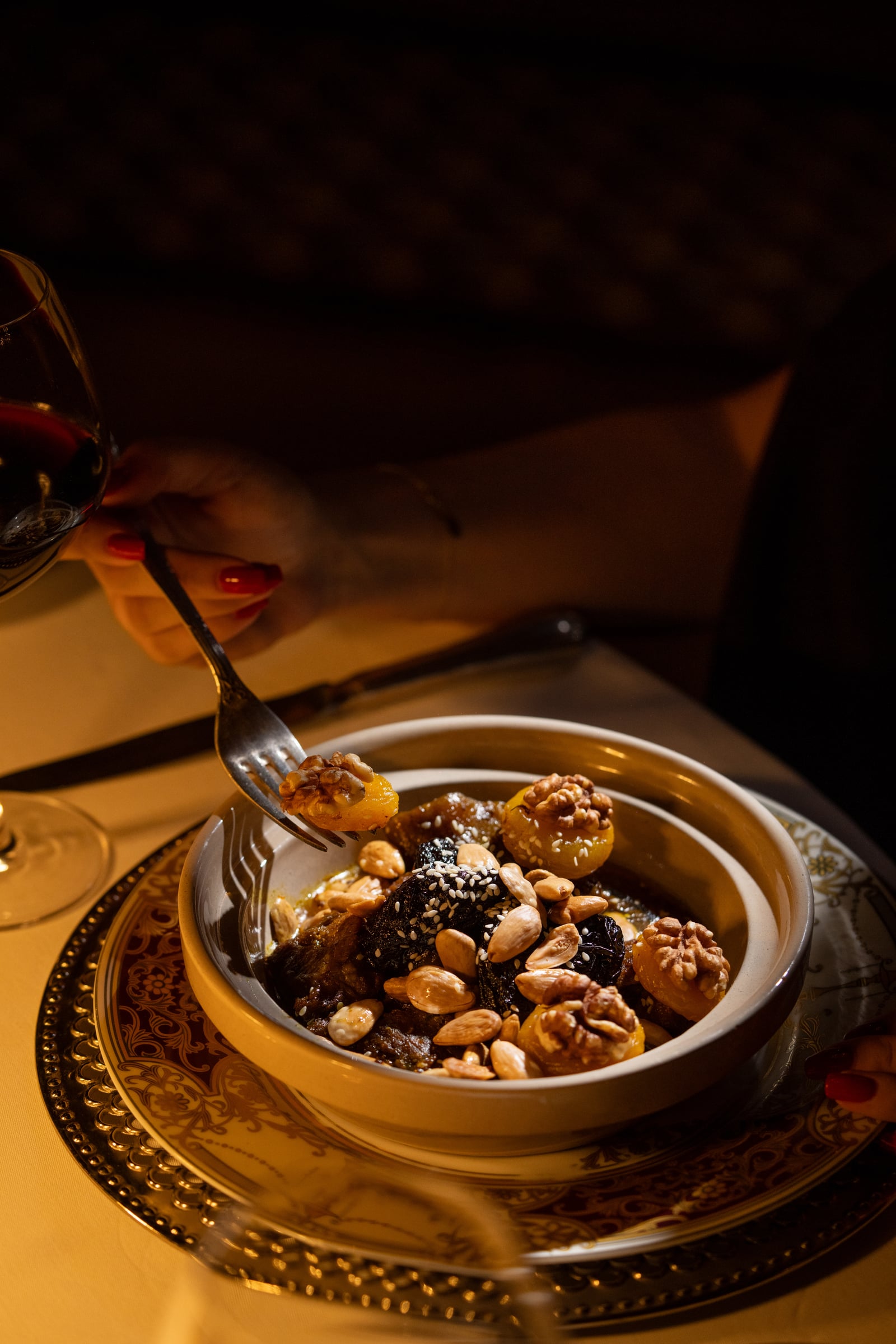
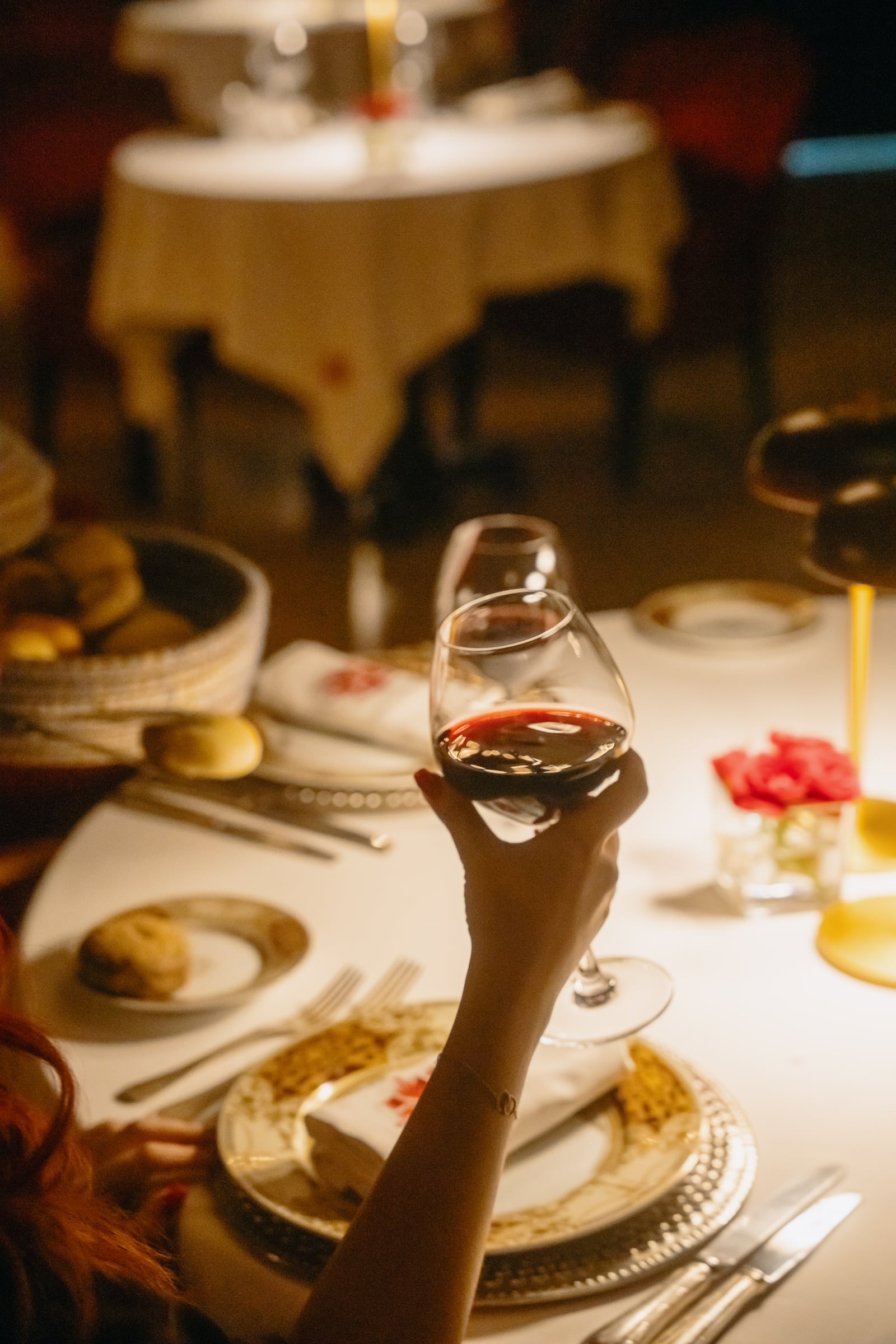
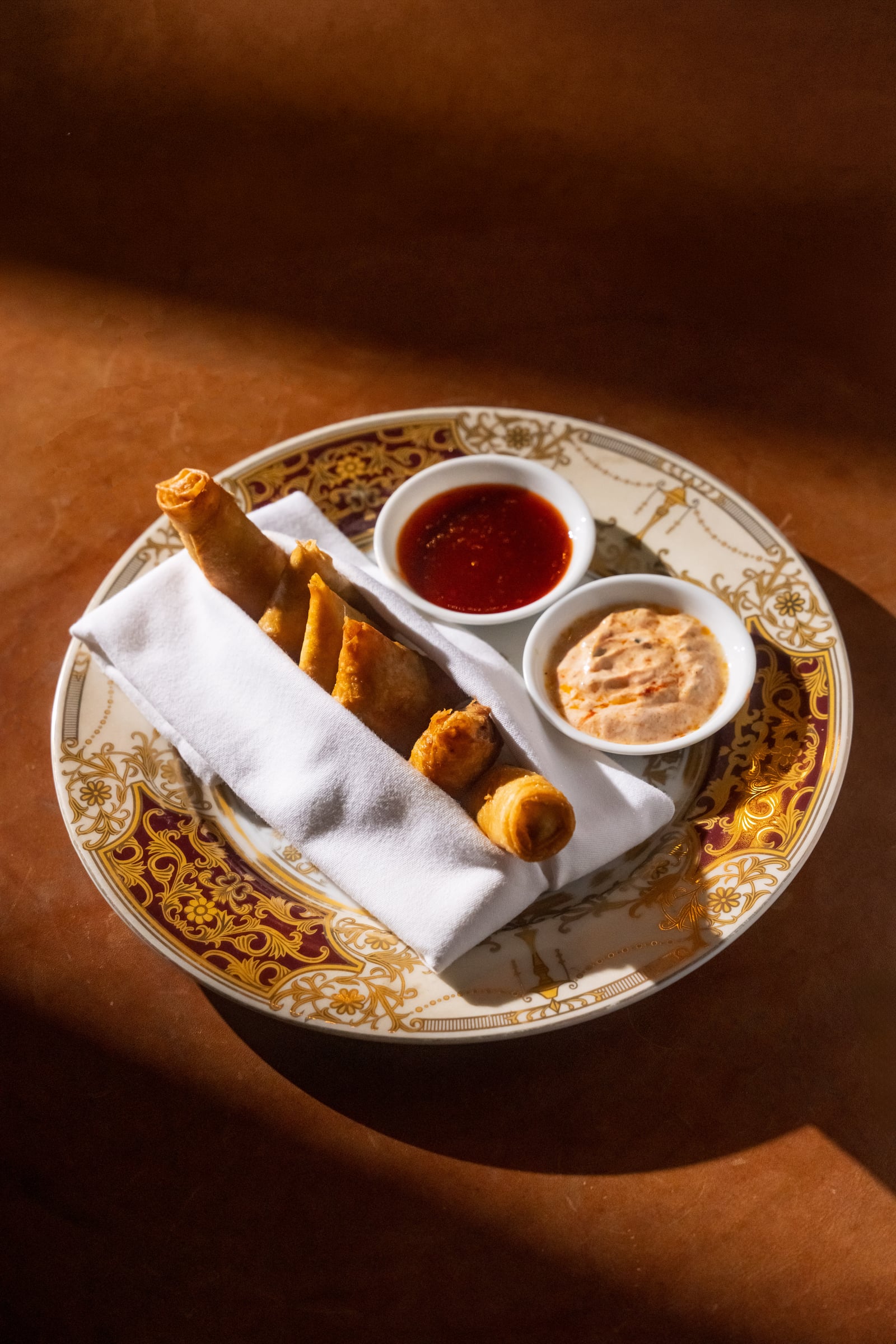
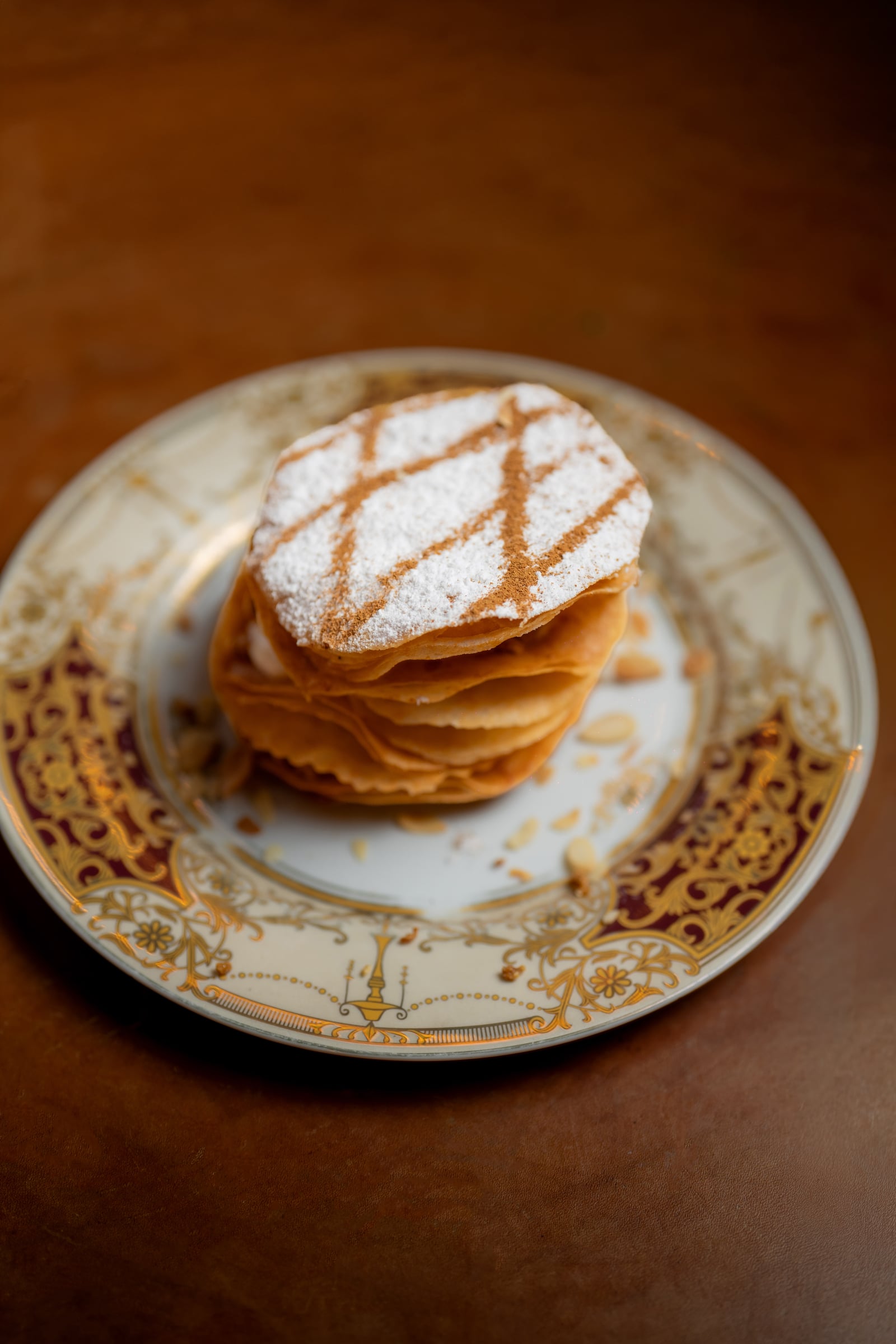
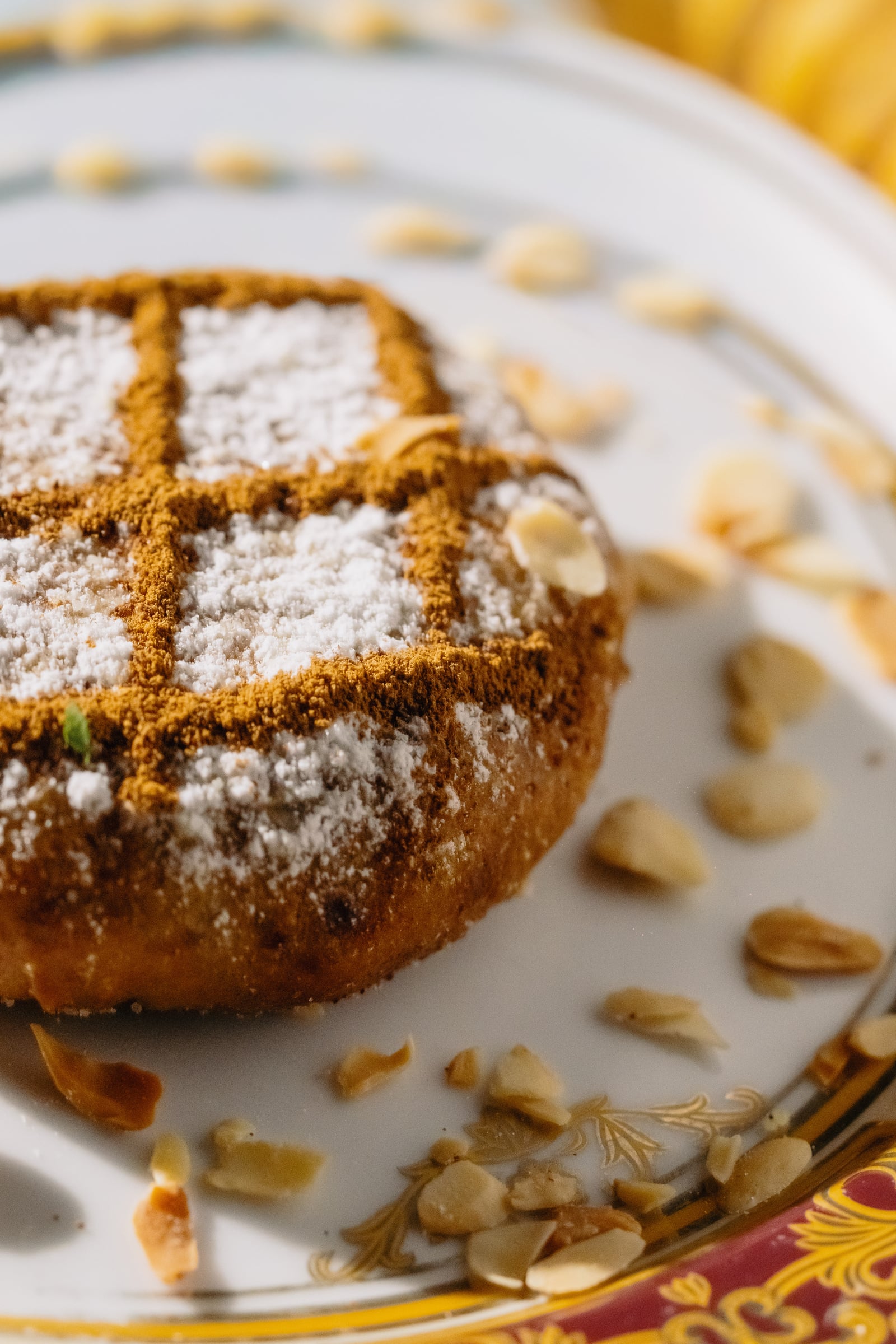
Moroccan cooking is the sum of centuries of exchange: Berber cooking, the Arab-Andalusian cooking the Moors brought back when they left Spain, the dishes of the Middle East that came with the Arabs, and Jewish cooking. The music you are listening to belongs to the same story. You choose two courses or three, from the Menara menu or the Assyl: to start, a chicken and almond pastilla or a harira with its condiments, then a lobster tajine finished with argan oil, lamb mechoui with mint and cumin, or the tanjia marrakchia, the slow-cooked beef shank that carries the city's name. Among the Selman specialties are a whole sea bream with chermoula and a lobster pastilla, while the m'hamer lamb shoulder with couscous, for two, is ordered 24 hours ahead. Alcohol is served too.
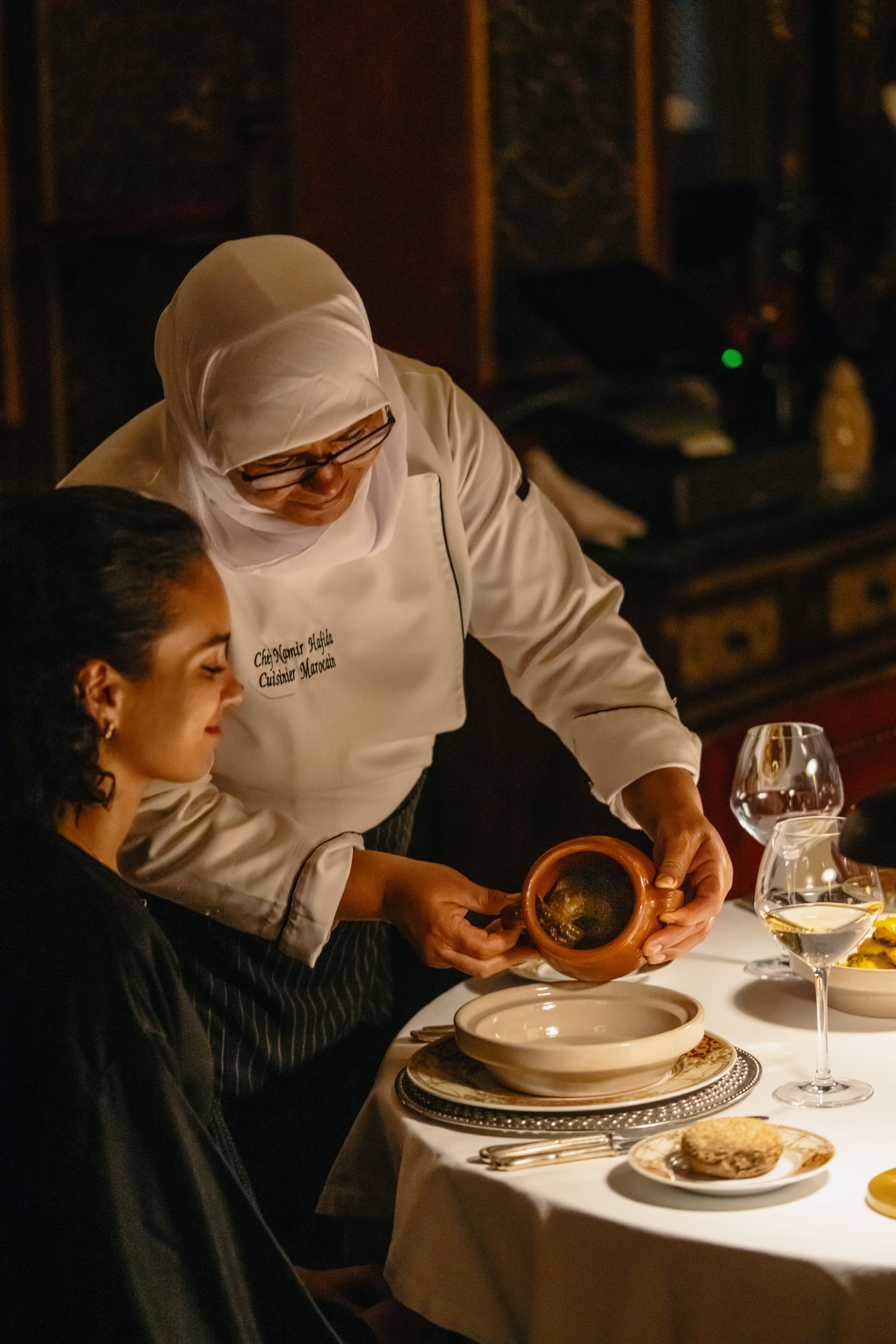
Assyl's kitchen is run entirely by women, Chef Hafida and her brigade, cooking in the tradition of the dadas, the women through whom Moroccan recipes and gestures have passed from one generation to the next. It is balanced cooking, where you taste every flavour and they all hold together without one covering the others, which is what makes a Moroccan kitchen a good one. If some of the names on the menu are new, the story behind traditional food in Marrakech is a good place to start.
When dinner becomes a performance
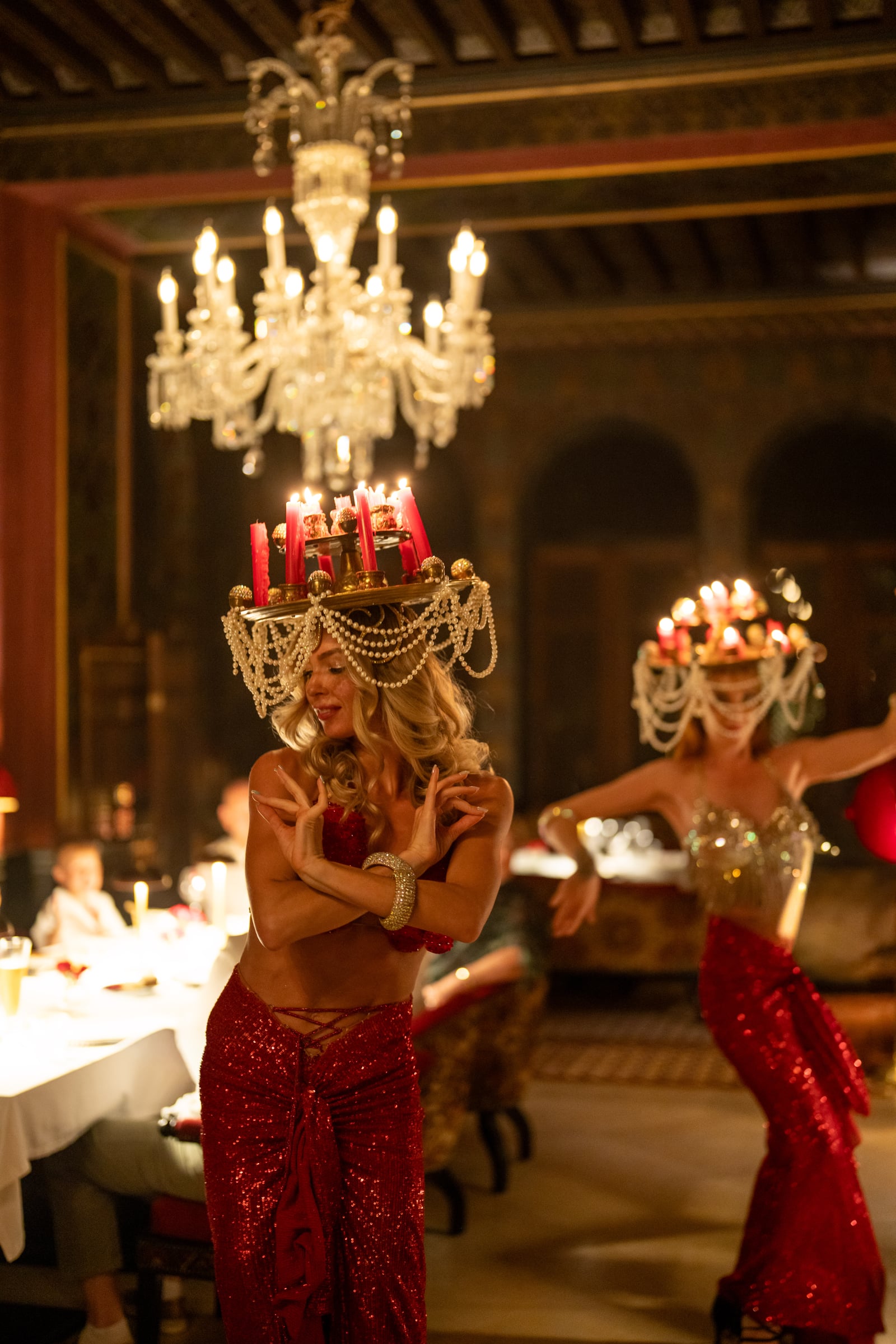
Halfway through dinner the room shifts, and for a moment you cannot tell what has changed. Then you see them: belly dancers moving between the tables in red and silver, one of them carrying a tray of lit candles on her head. The room has no stage, and the dance happens where you are sitting, a few steps from your plate, until the dancers leave, the duo takes the room back and dinner picks up where it left off.
Waiting for the horses
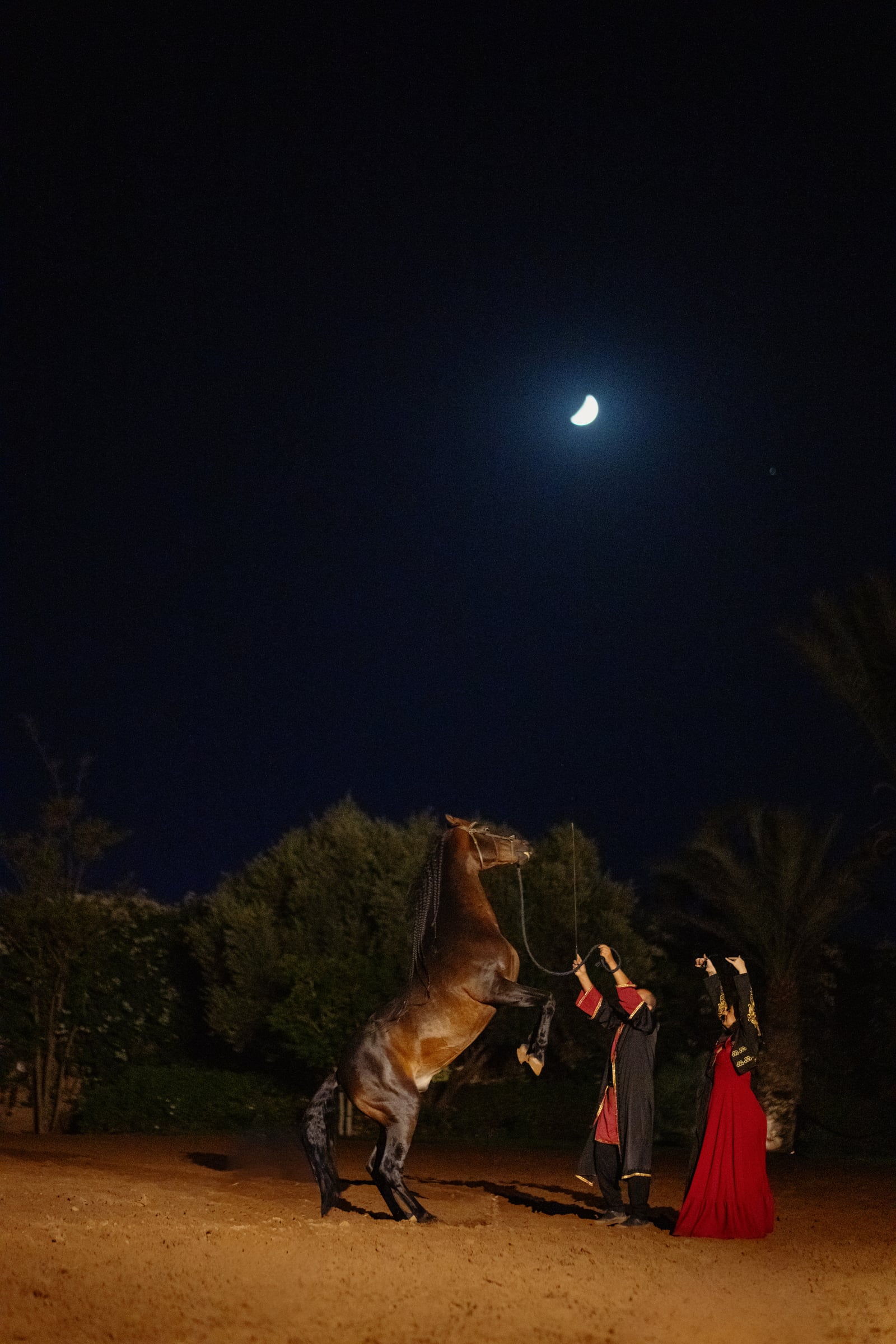
Before dessert, a waiter asks you to come outside. After the velvet and the chandeliers, the garden is another world again: a few candles on low brass tables, deep sofas, a tall palm dark against the sky. Someone brings tea, and you sit facing a sand arena, empty under a single light, where the horses should appear, and wait. Then music rises from the dining room you have just left, the dancers follow it out in a new performance, and out of the dark the first horse comes in, then a second, then a third: Arabian purebreds from the stables you saw from La Terrasse at the start of the night, glossy and imposing at close range.
When the show ends, the scene moves back to the main dining room for dessert and tea: a milk pastilla, perhaps, or a pear poached with chocolate and ras el hanout. The music carries on through the rest of the evening.

Assyl Marrakech: price, opening hours and reservations
Assyl serves dinner from Monday to Saturday, from 7:30 to 11 pm, inside the Selman Marrakech at Km 5 Route d'Amizmiz, and tables are booked on the hotel's website or by phone on +212 5 24 45 96 00. As of October 2026 the Menara menu costs MAD 1,150 per person for two courses and the Assyl menu MAD 1,450 for three, and there are vegetarian, lactose-free and gluten-free dishes.
You may also like…