Le Jardin Secret Marrakech
A Saadian palace garden restored and reopened to the public in 2016, holding two distinct garden worlds and an ancient water system within a single walled site in the Mouassine district
7 April 2026
The door at 121 Rue Mouassine gives nothing away. It sits in a stretch of the medina where the souk density is at its highest, where spice stalls and textile merchants compete for attention along lanes that shift direction without warning. The carved frame above the entrance is the only signal that the threshold matters. Inside, the noise of the Mouassine quarter recedes within a few steps, replaced by the particular silence of still water and shaded space.
Le Jardin Secret Marrakech traces its origins to the late sixteenth century, when the Saadian Sultan Moulay Abd-Allah commissioned works in the Mouassine district as part of a broader urban reorganization of the medina. What remained was substantially rebuilt in the mid-nineteenth century, then acquired in 1912 by al-Hajj Muhammad Loukrissi, chamberlain to Sultan Moulay Abd-al-Hafiz, who filled it with gardens, pavilions, and a tower whose height made visible his standing within the court. By the end of the twentieth century, the property had fallen into serious disrepair. Restoration began in 2008. The garden opened to the public in 2016.
Two Gardens
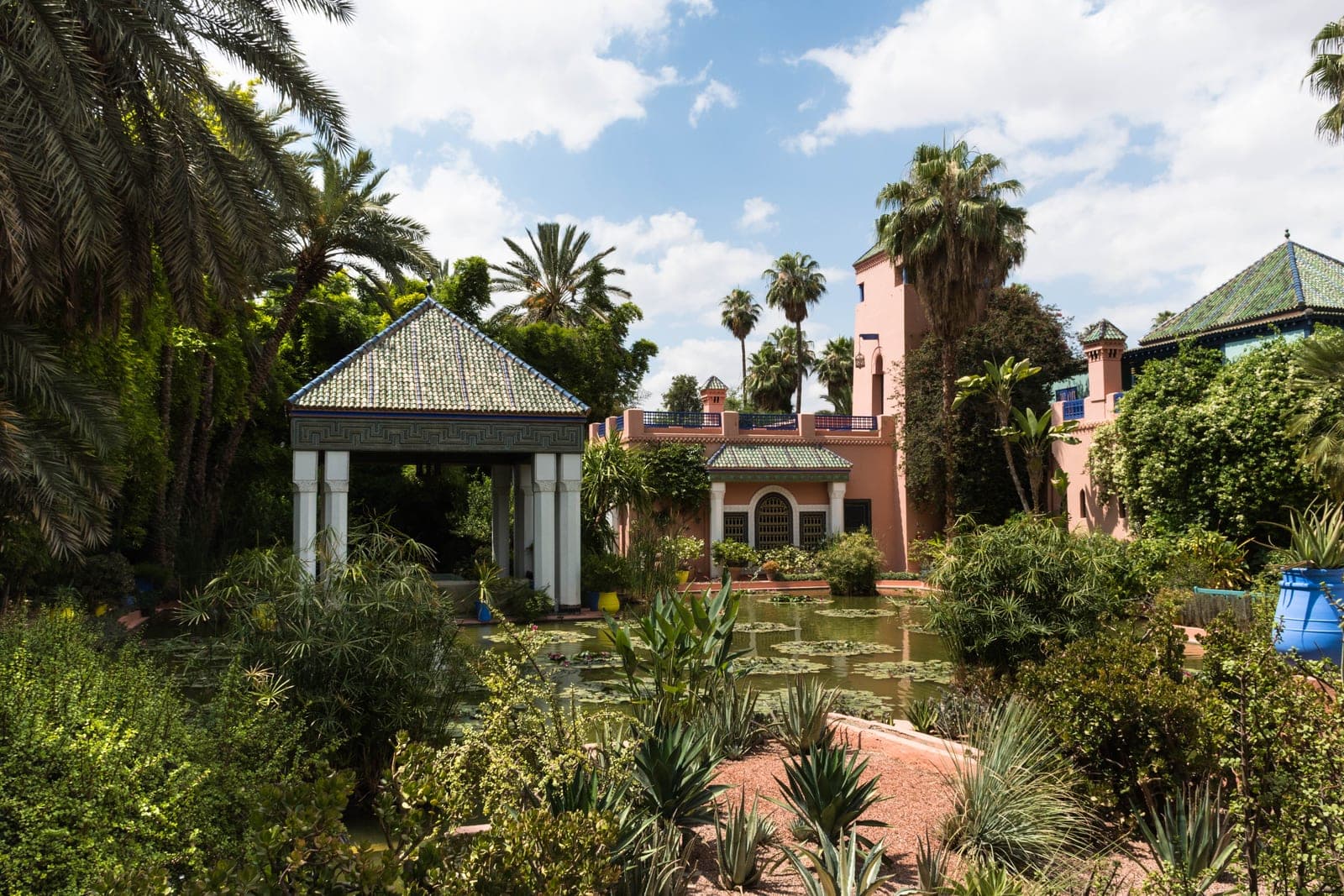
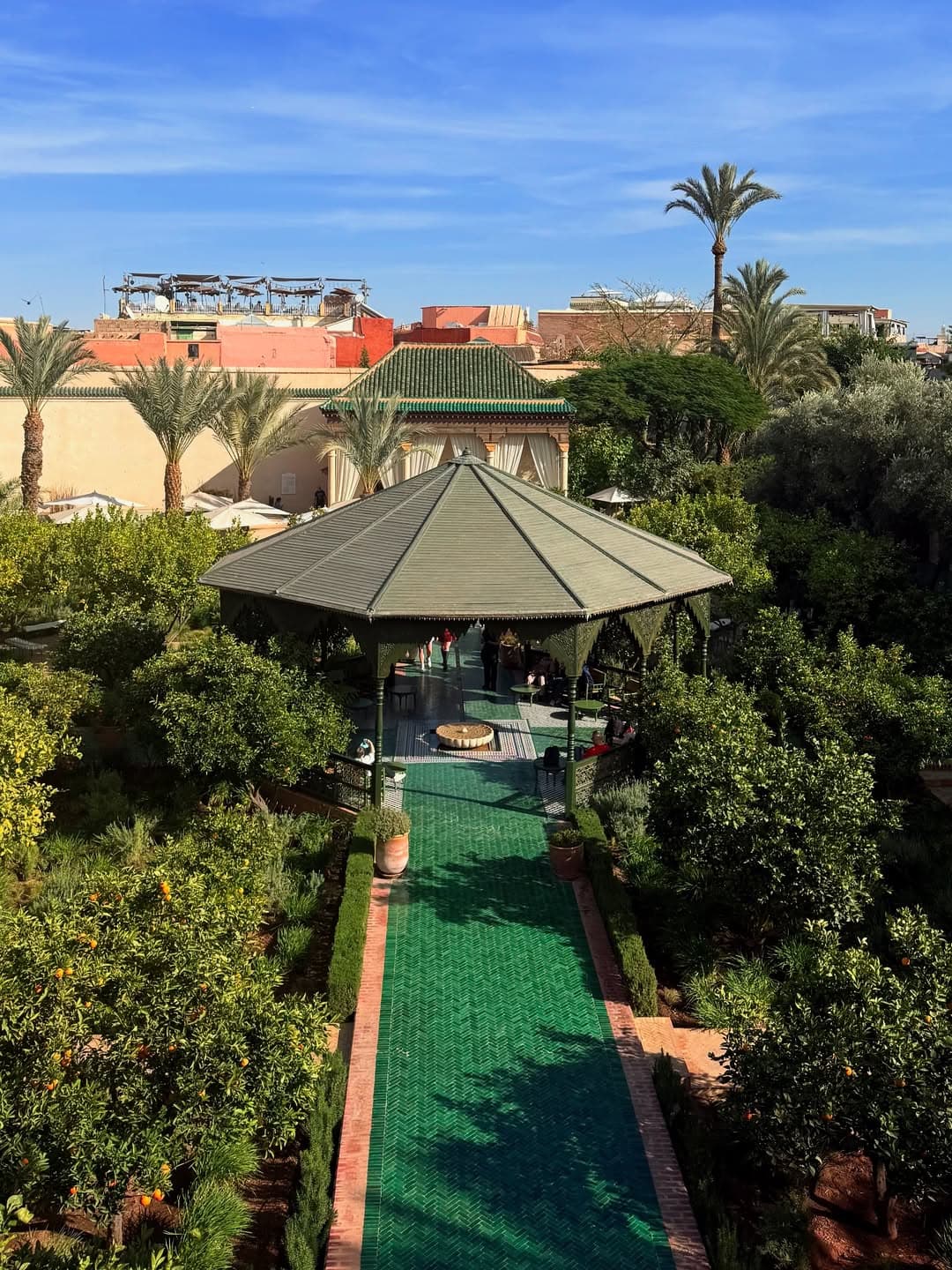
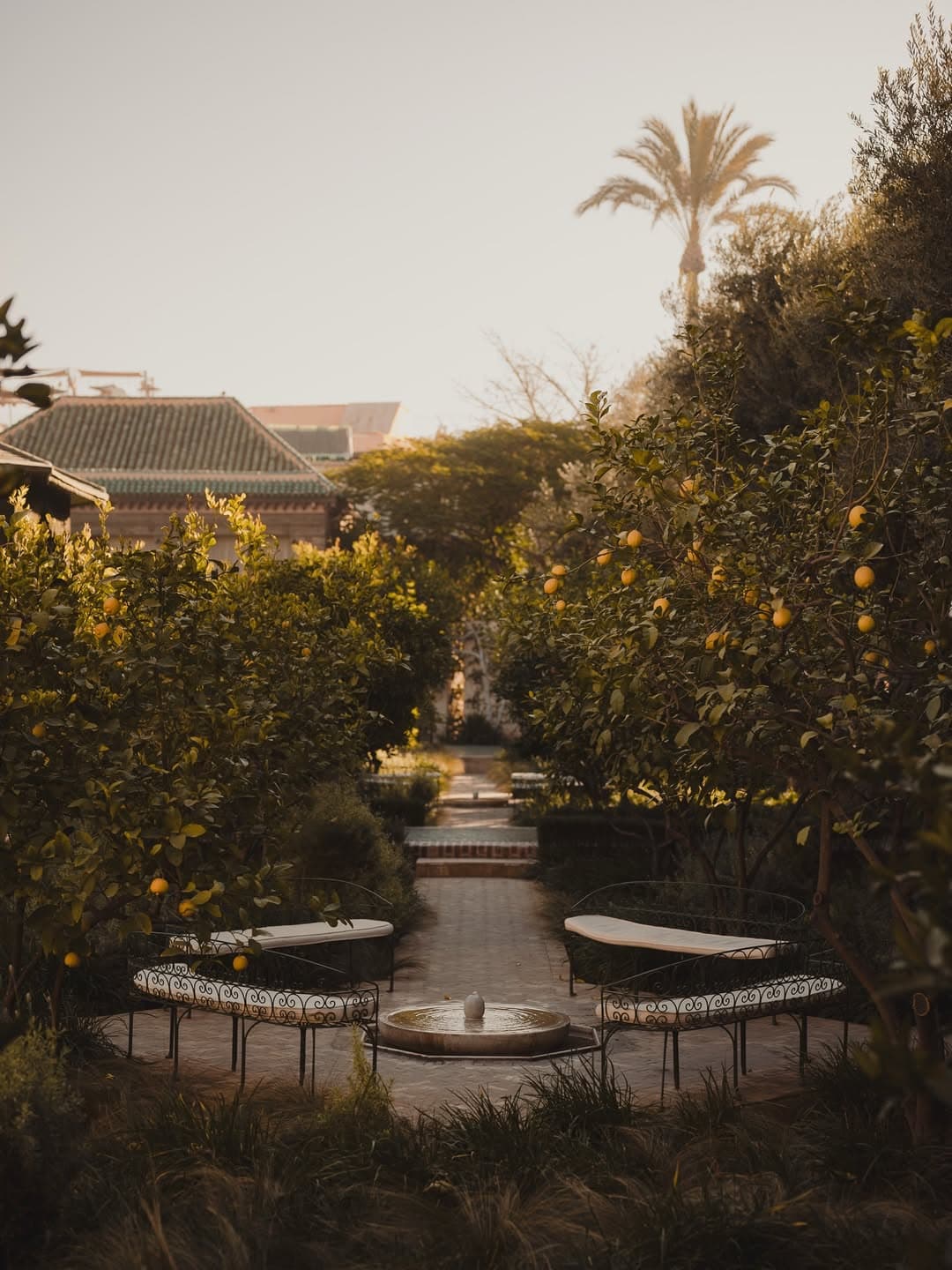
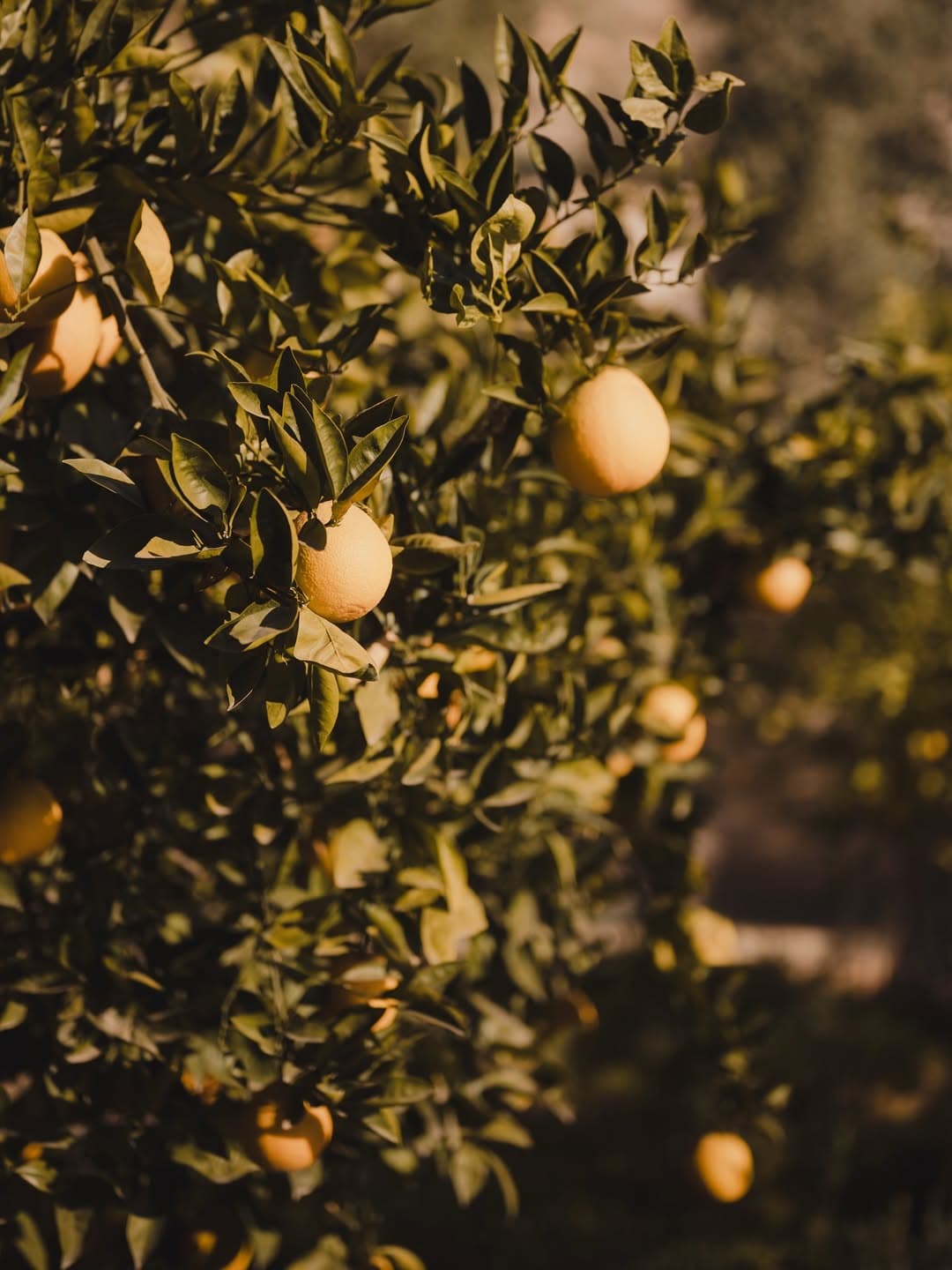
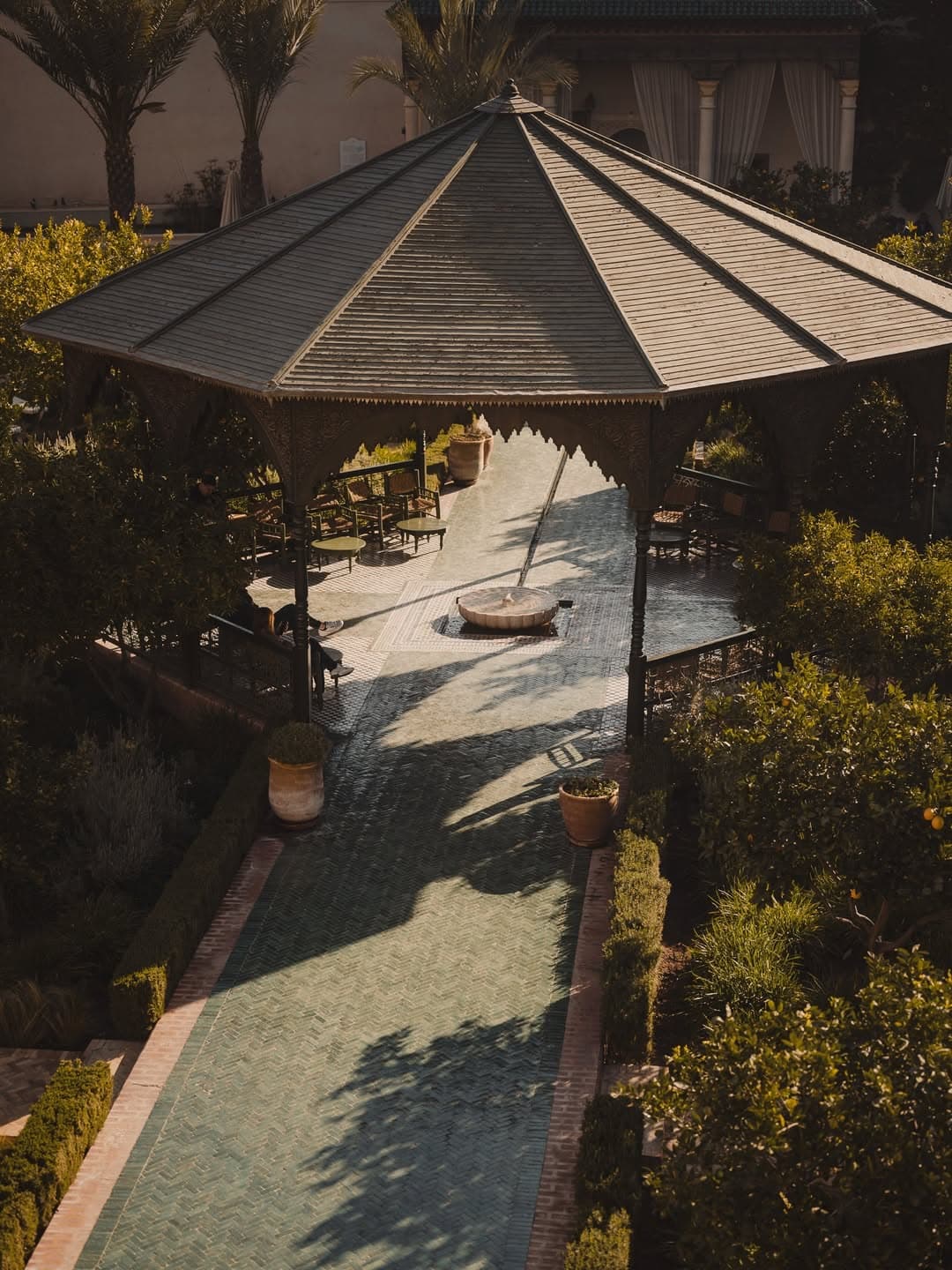
The site divides into two garden spaces, separated by the architecture of the house but connected by the same underground water supply. The larger is the Islamic garden, laid out according to the principles of chahâr bâgh geometry, the fourfold division of space by water channels that organizes a garden into a cosmological map as much as a horticultural one. Fruit trees grow here in their traditional roles: pomegranate, fig, date palm, orange. The planting is functional before it is beautiful. The pavilions surrounding this garden were reconstructed using nineteenth-century techniques. The principal pavilion, known as Oud el Ward, includes a domed reception room, a qubba, designed for receiving guests, a private hammam, and access to the tower that rises seventeen meters above the site.
The smaller Exotic Garden was designed by British landscape architect Tom Stuart-Smith, who approached the commission with an awareness that he was working within a tradition he did not automatically belong to. The result is a garden that acknowledges its foreignness through its material choices: drought-resistant plants from Asia, Africa, the Americas, and Australia, arranged with the sculptural logic of their forms rather than their geographic origins. Bamboo groves reach above the walls. Agaves hold their ground against the ochre stone. The planting is not decorative in any soft sense, it is structural, each element earning its position through form rather than color.
The Khettara
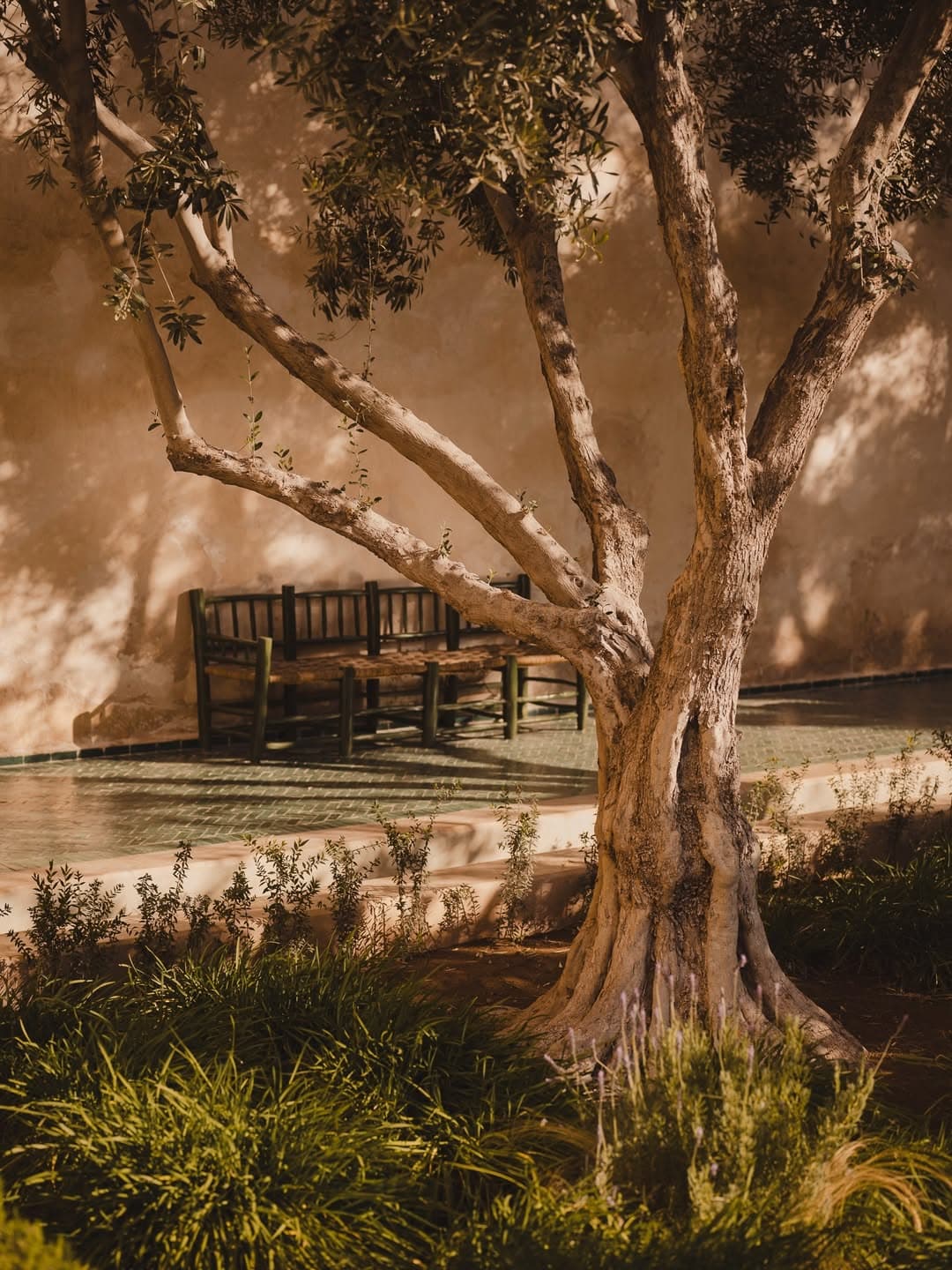
Running beneath both gardens is the restored khettara, a system of underground channels that once carried water from the Atlas Mountains into the city's palaces and gardens through gravity alone. The Almoravids developed khettara technology in the eleventh century, and for centuries it sustained the greenery of the medina without mechanical intervention. The system at Le Jardin Secret had fallen out of use by the 1950s. During the restoration, it was cleared and reconnected to a well on site, returning water to the channels that feed the Islamic garden. The khettara does not perform the original journey from the mountains, the aquifer levels and urban infrastructure no longer permit that, but it circulates water through the garden as it would have, audibly and with the same logic of flow the original engineers calculated.
The sound of moving water through stone channels is not incidental. In Islamic garden theory, water is not decorative but constitutive: it divides the space, cools the air, marks time. The restored khettara returns that function to the site, making it legible as more than a historical garden, but as a system still operating.
The Museum and the Tower
The on-site museum holds manuscripts, artifacts, and archival documents that trace the history of the Mouassine district and the palace garden itself. The collection is specific rather than comprehensive, objects with documented provenance, records that show transformation across four centuries without abstracting it into generality.
The tower rises seventeen meters above the garden. Access costs 40 dirhams beyond the entrance fee, and from the top the view takes in the minarets of the Mouassine mosque, the rooftop landscape of the medina, and, on clear days, the far edge where the city meets the palm groves. The tower's function was always partly visual: the height signaled status to anyone approaching the medina. From inside, it reverses that relationship, placing the visitor above the city instead.
Practical Matters
Entrance to Le Jardin Secret costs 100 dirhams. Hours vary by season: 9:30 AM to 7:30 PM between March and September, shorter in winter months. The garden is accessible to visitors with reduced mobility, with the exception of the tower. A café operates on site. Reservations are not required; tickets can be purchased at the entrance or in advance through the garden's website. The site closes during Ramadan at 4:30 PM.
Le Jardin Secret · What to see
Discover Le Jardin Secret→You may also like…