Jardin Majorelle Marrakech: A Century of Layered Intention
One hectare of botanical composition that outlived its creator and became something its creator never imagined.
4 April 2026
In 1923, Jacques Majorelle purchased land at the edge of Marrakech, on the border of the old palm grove that still marks the city's northeastern horizon. He was the son of Louis Majorelle, the Nancy-based Art Nouveau cabinet-maker, which meant he had grown up inside a particular idea of beauty: ornament earned through craft, form following organic logic. What he built in Marrakech over the next four decades was something different, more austere in its composition, more deliberate in its use of color, and ultimately more enduring than anything his father had made.
Majorelle had first arrived in Morocco around 1917, sent by doctors to convalesce from illness. The climate and the light retained him. Where other European artists came to Marrakech and painted its surfaces, Majorelle attempted to build one.
The Garden as a Life's Work
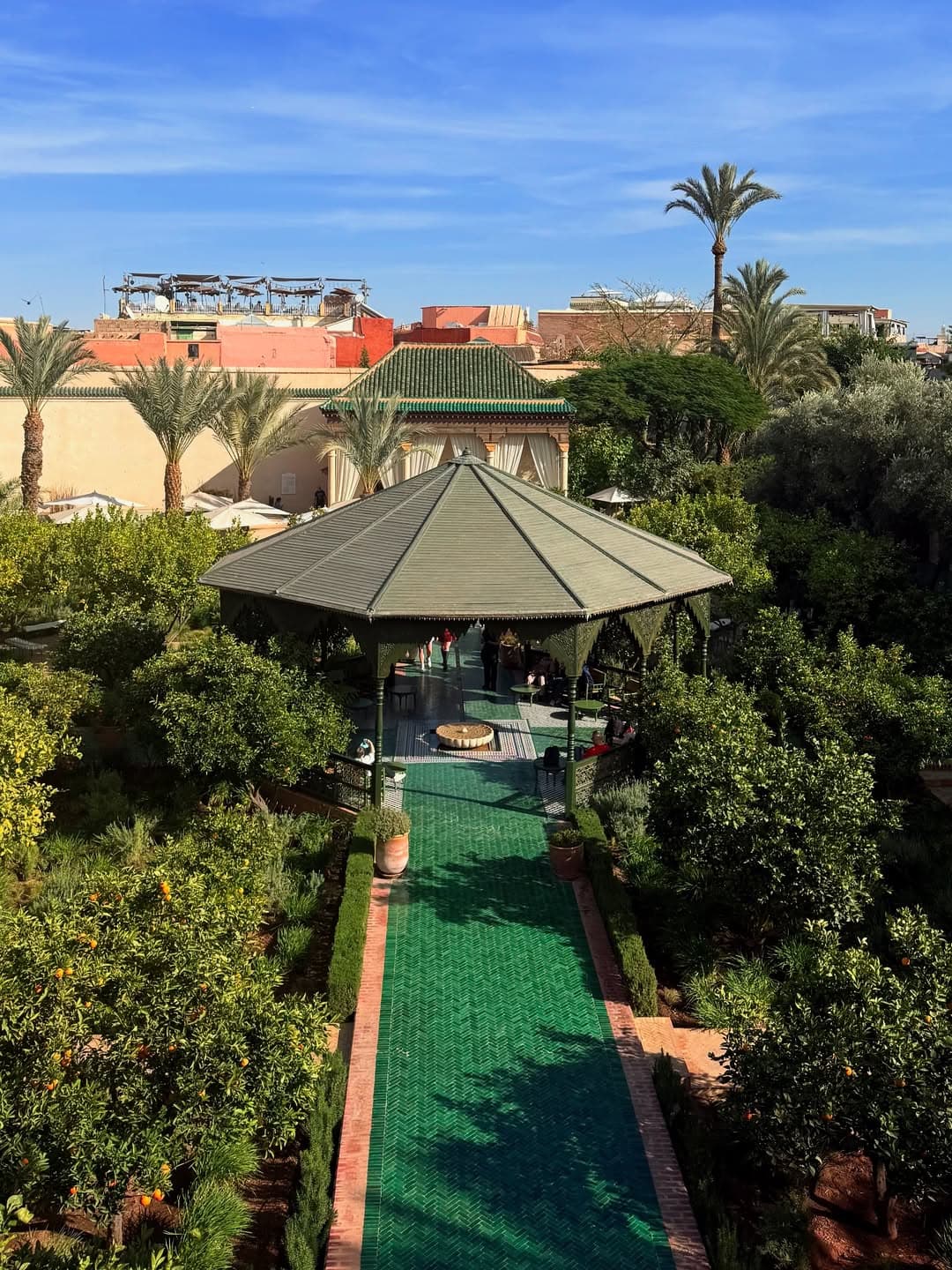
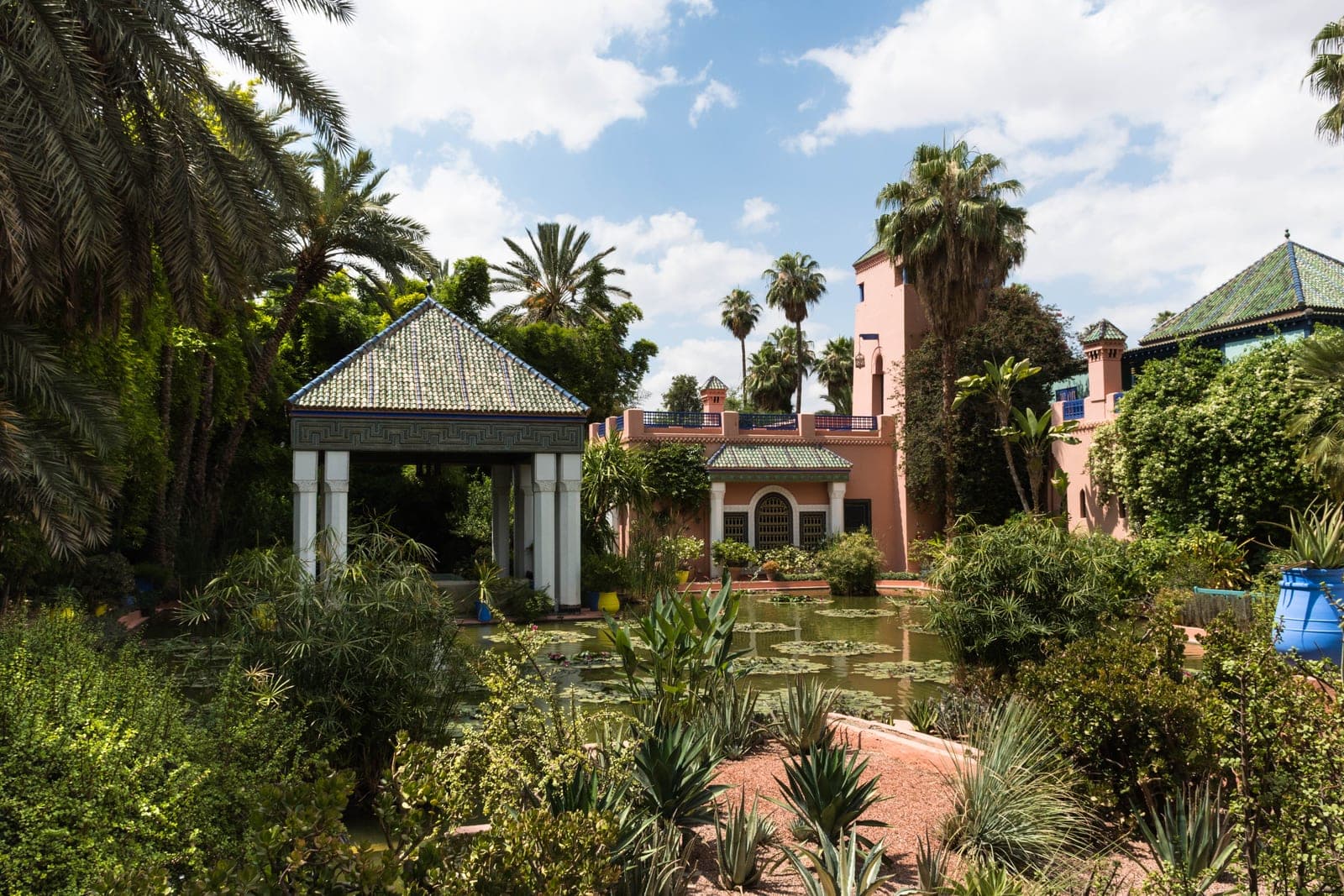
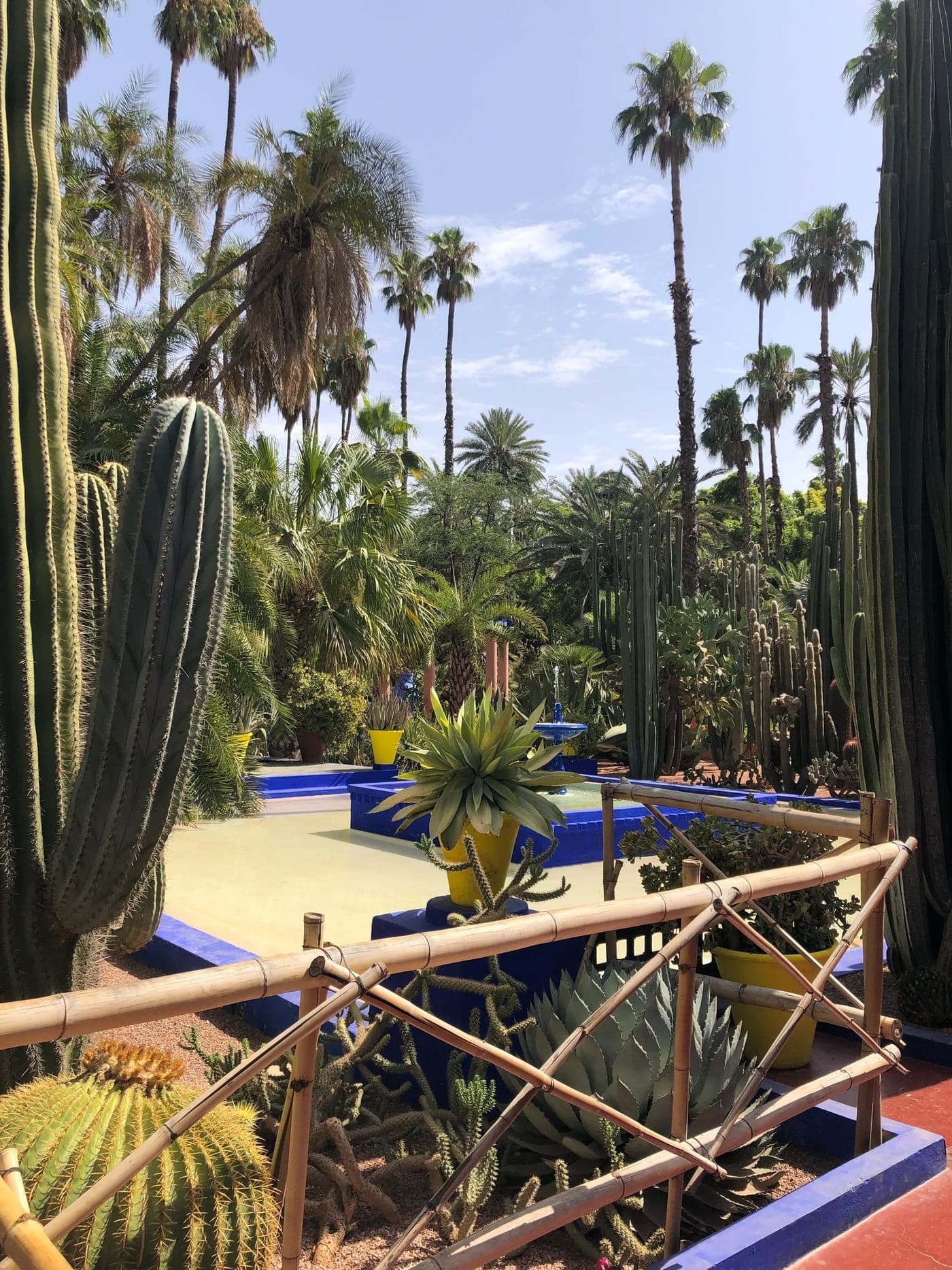
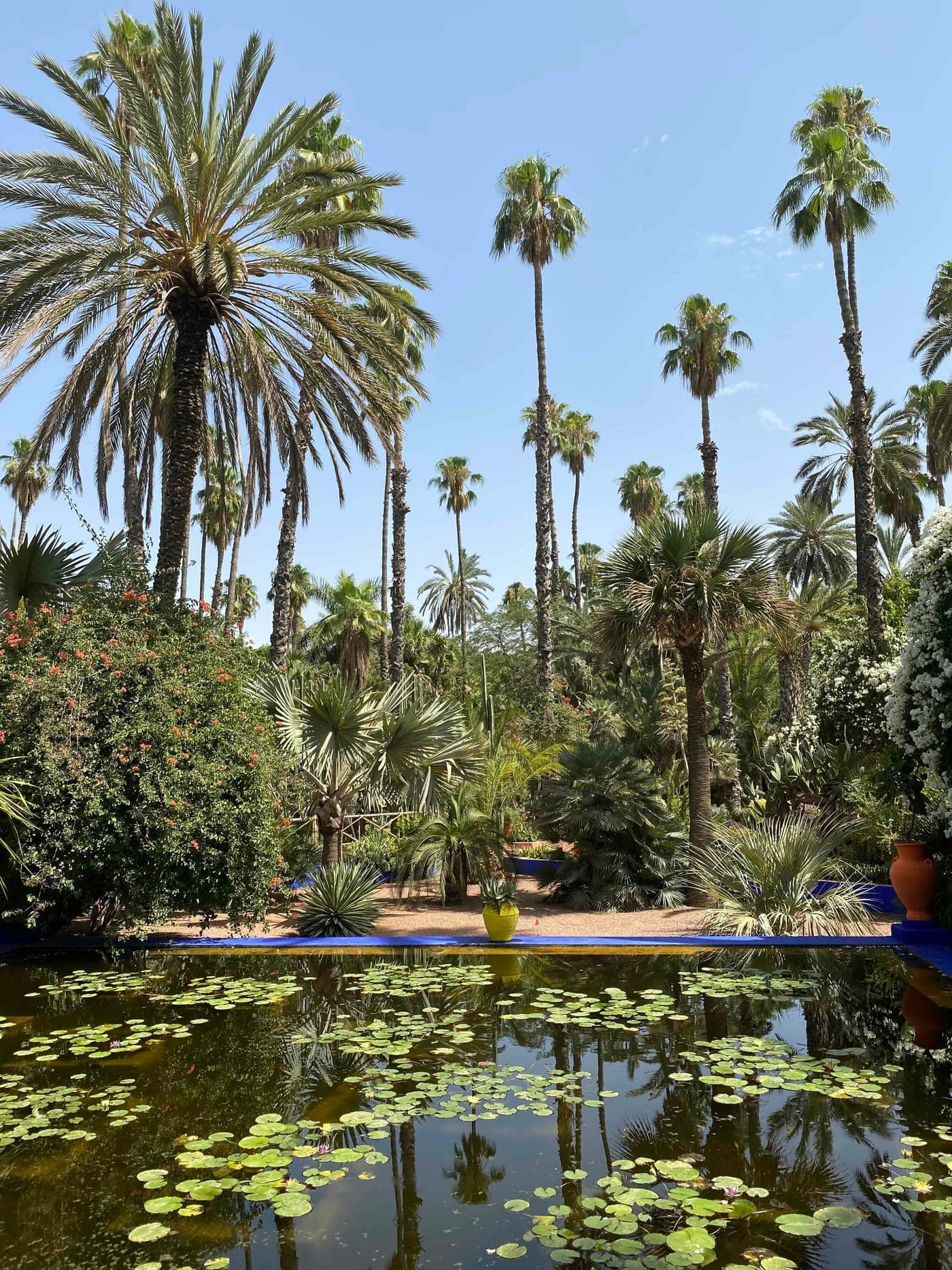
He cultivated 135 plant species from five continents, arranging them with the eye of a painter rather than a botanist. The result is not a garden in the horticultural sense but a composed landscape, where yucca and bamboo and water lilies occupy space the way objects occupy a still life: chosen, placed, proportioned. Bougainvillea cascades where color is needed. Palms mark vertical rhythm. Paths intersect on different levels, creating the sensation of a labyrinth that opens, at intervals, into small clearings of surprising light.
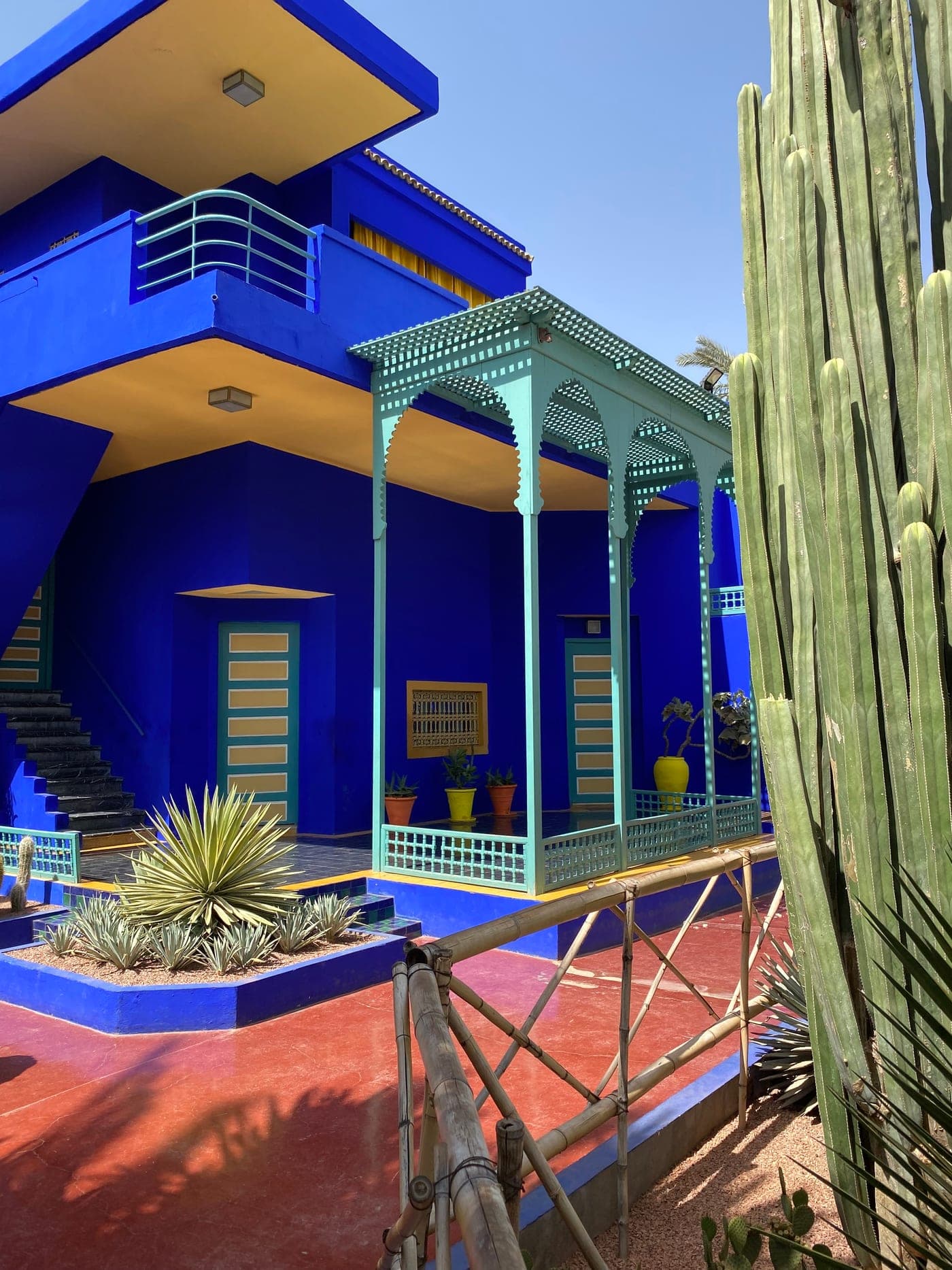
At the center of it all, French architect Paul Sinoir completed a Cubist villa in the 1930s, designed as Majorelle's residence and studio. The building is spare and geometric, its white volumes and right angles in deliberate contrast with the organic density surrounding it. Against the plant life and the water features, it reads as a frame held up to composition.
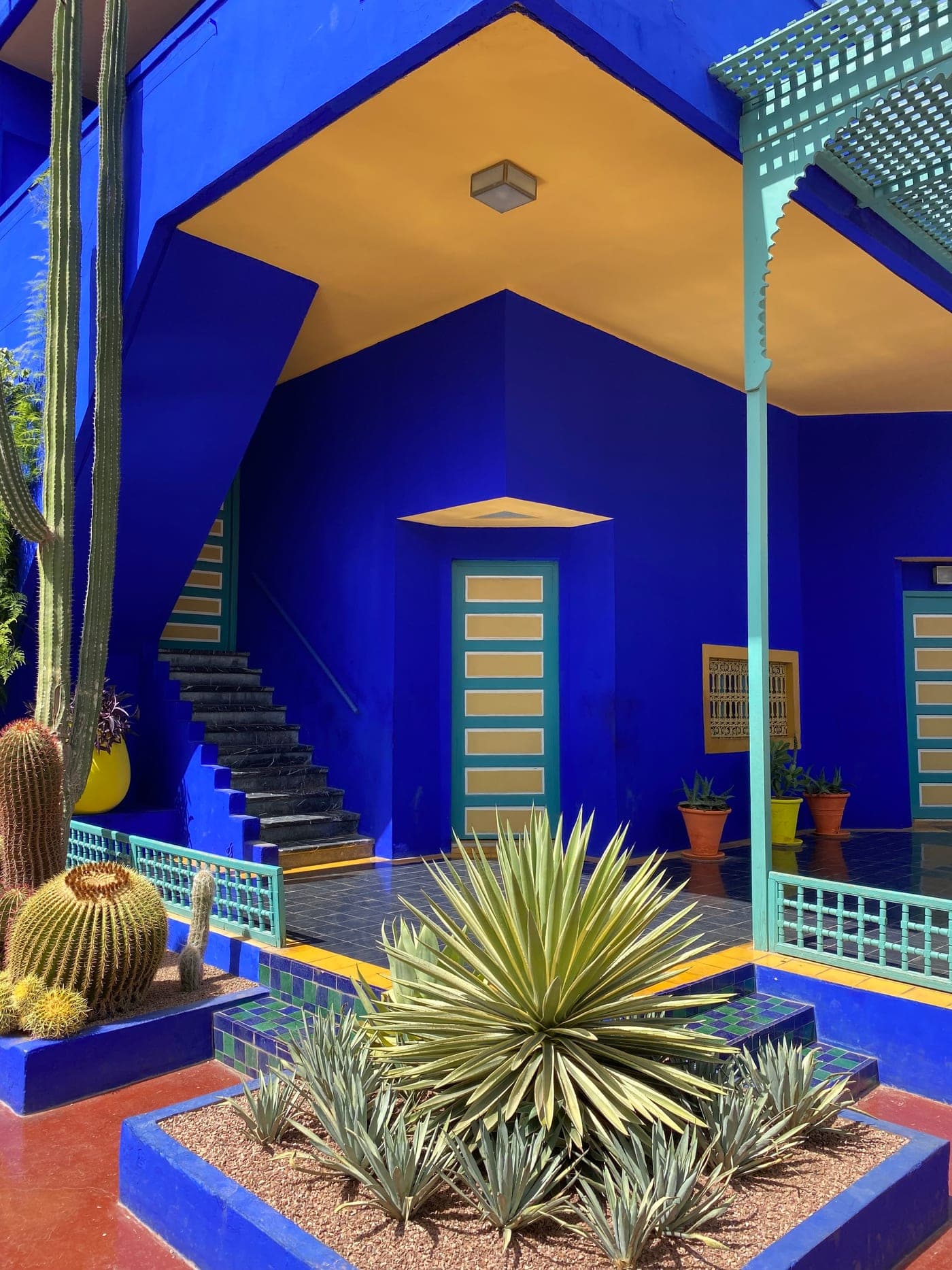
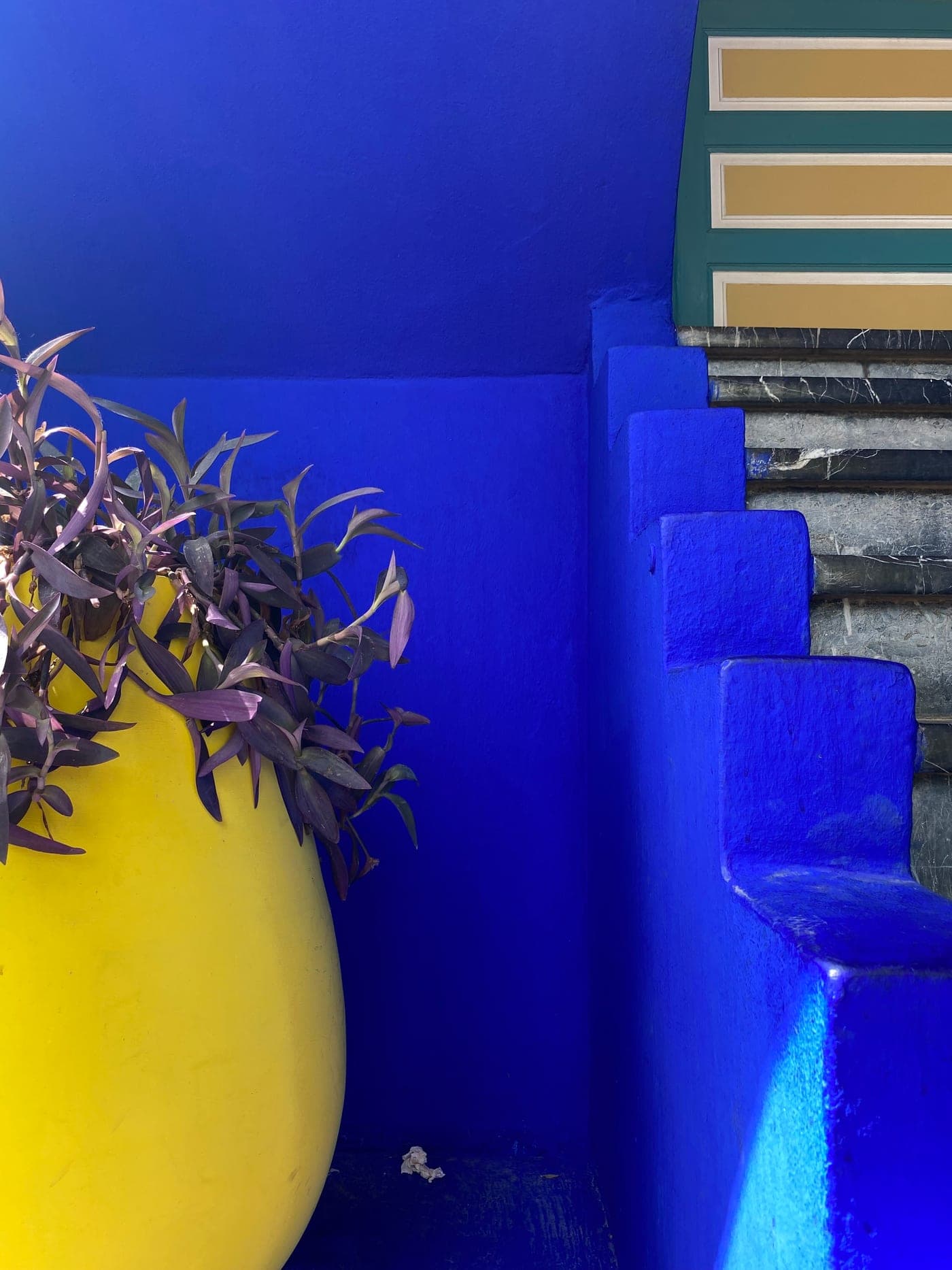
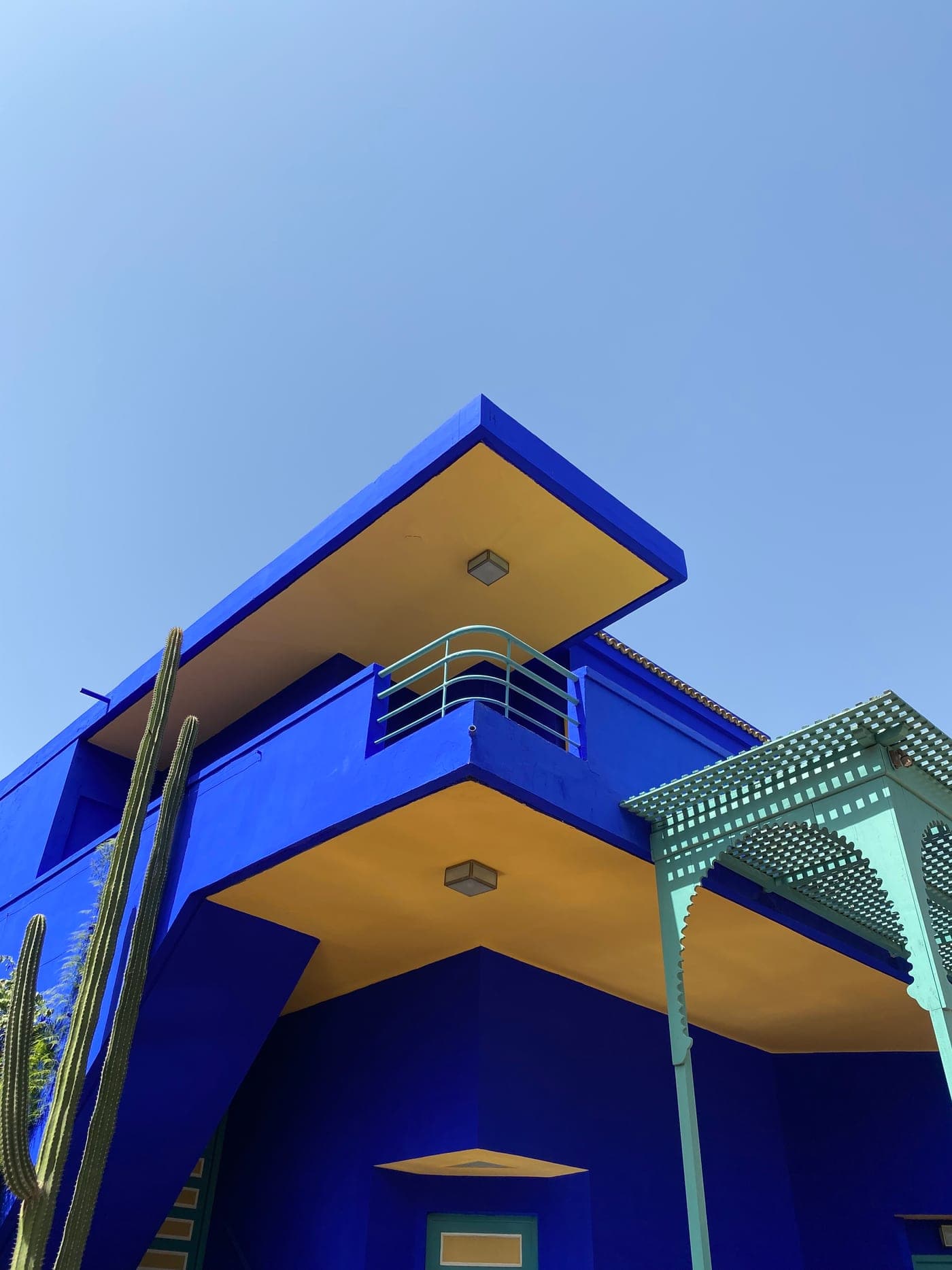
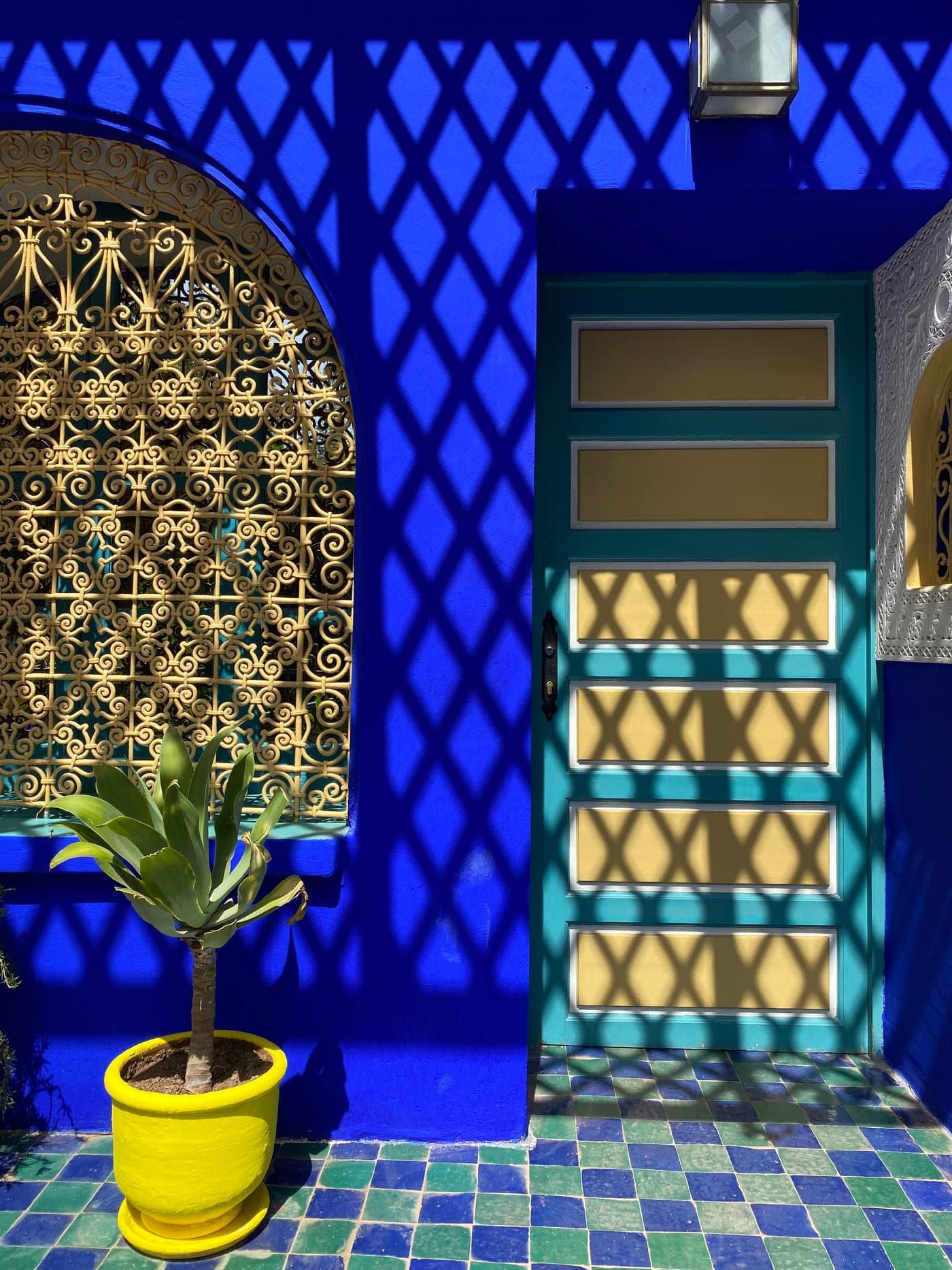
The color that came to define the entire space, a cobalt blue of particular intensity, appeared gradually. Majorelle named it after himself. It draws from the blue tiles he had seen around Marrakech, from the Berber burnouses he observed in the surrounding countryside. Applied to the buildings, to the ceramic pots, to the water basins, it creates a visual identity so powerful that the garden is now inseparable from it. Visitors were calling it Majorelle Blue long before anyone thought to formalize the name.
He opened the garden to the public in 1947, charging an entry fee to help sustain the maintenance costs. The garden by then was both his creation and his financial burden. After his divorce in 1956, he was forced to divide the property. A car accident compounded his difficulties, eventually leading to the amputation of his left leg. By the time of his death in 1962, he no longer owned what he had spent forty years making.
What Was Nearly Lost
The years between 1962 and 1980 were uncertain. In cities where land is valuable and private botanical gardens generate no profit, the logic of redevelopment tends to prevail.
In 1980, Yves Saint Laurent and Pierre Bergé purchased the garden from developers who had begun acquisition with other intentions. The two had first come to Morocco in 1966, and their attachment to Marrakech ran deep. Saint Laurent described the garden as an endless source of inspiration, and it is easy to understand why: the color relationships, the way different textures meet, the contrast between controlled geometry and dense organic growth. He renamed Majorelle's villa Villa Oasis. For nearly three decades, the space served as his refuge and his reference point.
After Saint Laurent's death in 2008, the property passed to the Foundation Pierre Berge, Yves Saint Laurent. In 2011, the foundation opened the Berber Museum in Majorelle's original painting studio, housing more than 600 objects collected by Berge and Saint Laurent during their years in Morocco, drawn from the Rif Mountains to the Sahara. The collection presents Berber material culture with seriousness and depth, occupying a space that Majorelle himself had used for the act of looking and translating.
The Complex It Has Become
On October 19, 2017, the Musee Yves Saint Laurent Marrakech opened in a new building within the garden complex. Designed by Studio KO, whose architectural practice in Morocco extends across several significant projects in Marrakech, the building spans 4,000 square meters and holds more than 7,000 garments and 30,000 accessories from Saint Laurent's personal collections, alongside photographs, videos, and working sketches tracing the full arc of his career. The structure integrates without interrupting: brick-clad, warm-toned, it sits in relationship to the botanical space rather than competing with it.
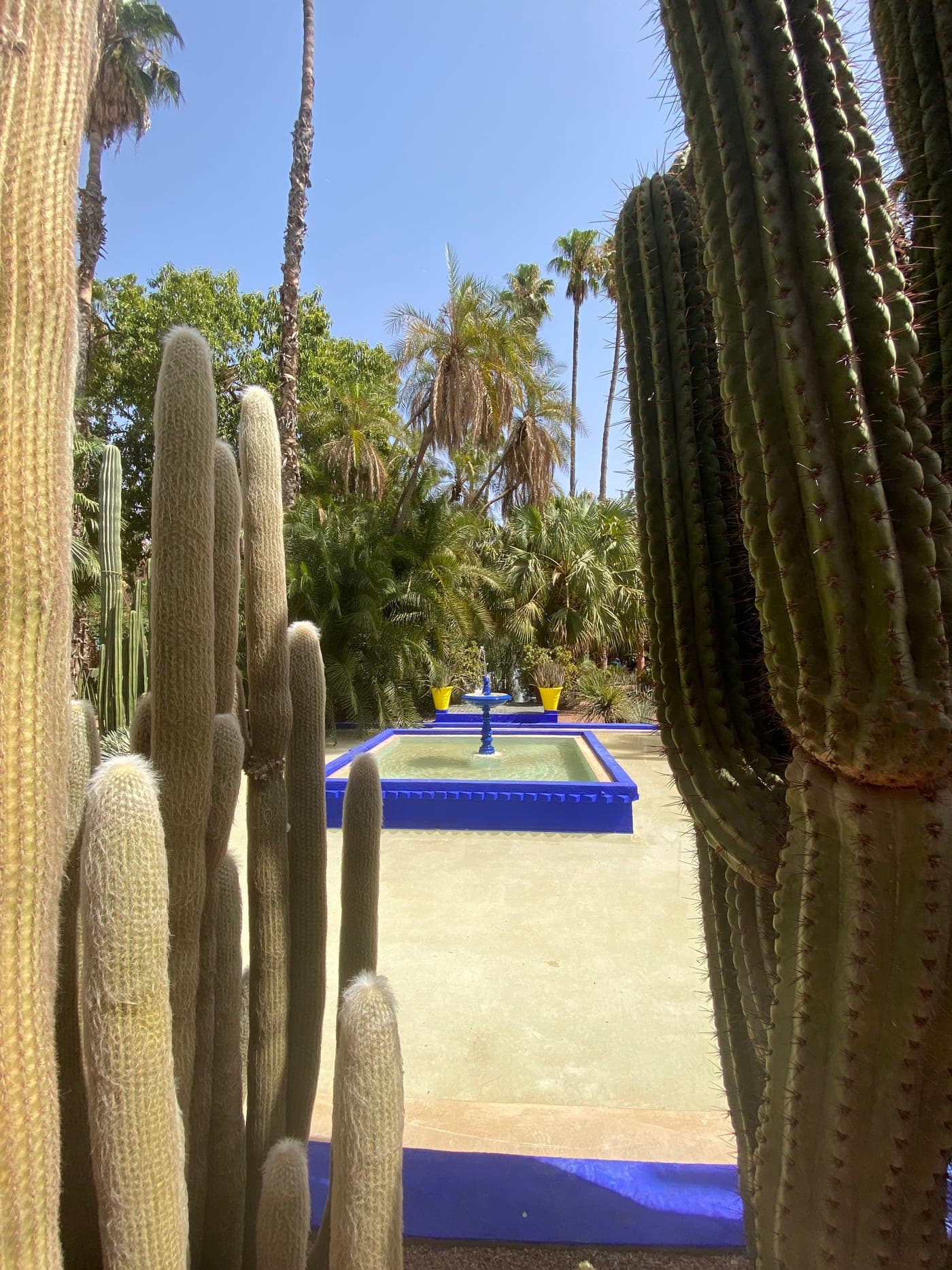
The garden today draws close to a million visitors annually, a figure that asks real questions about what preservation means. A space designed as private sanctuary, as refuge and laboratory, now functions as one of Morocco's most-visited public institutions. The paths Majorelle walked alone, or with a few guests, bear the weight of that passage every day.
What survives is the compositional intelligence. The planting still works as composition. The color still does what it was meant to do. The Cubist villa still stands in its calculated relationship to everything around it. Whatever has been altered by the scale of public attention, the essential argument of the place remains intact.
Reading the Layers
Walking through Jardin Majorelle now means reading several periods simultaneously. Majorelle's original vision is still legible in the spatial logic and the plant relationships. Saint Laurent's long period of stewardship maintained rather than altered. The institutional layer added after 2008 expanded the complex without diluting the garden. And the daily presence of visitors from everywhere provides its own form of testimony about what the space still offers.
The garden sits in Gueliz, Marrakech's Ville Nouvelle, a neighborhood of gridded streets and early twentieth-century French planning. Entering it from that context is a genuine displacement, not into another country or culture, but into a different temporal register. Things feel older here than they are, because the care that has been taken is visible in every part, and visible care accumulates into something that reads like duration.
Jardin Majorelle · What to see
Discover Jardin Majorelle→You may also like…