STAY
Palais Beit al Noor: The House of Light in the Marrakech Medina
A twelve-room riad in Zaouia El Abassia where Lebanese hospitality meets the Moroccan art of living.
Timence Guide Editors · 11 June 2026
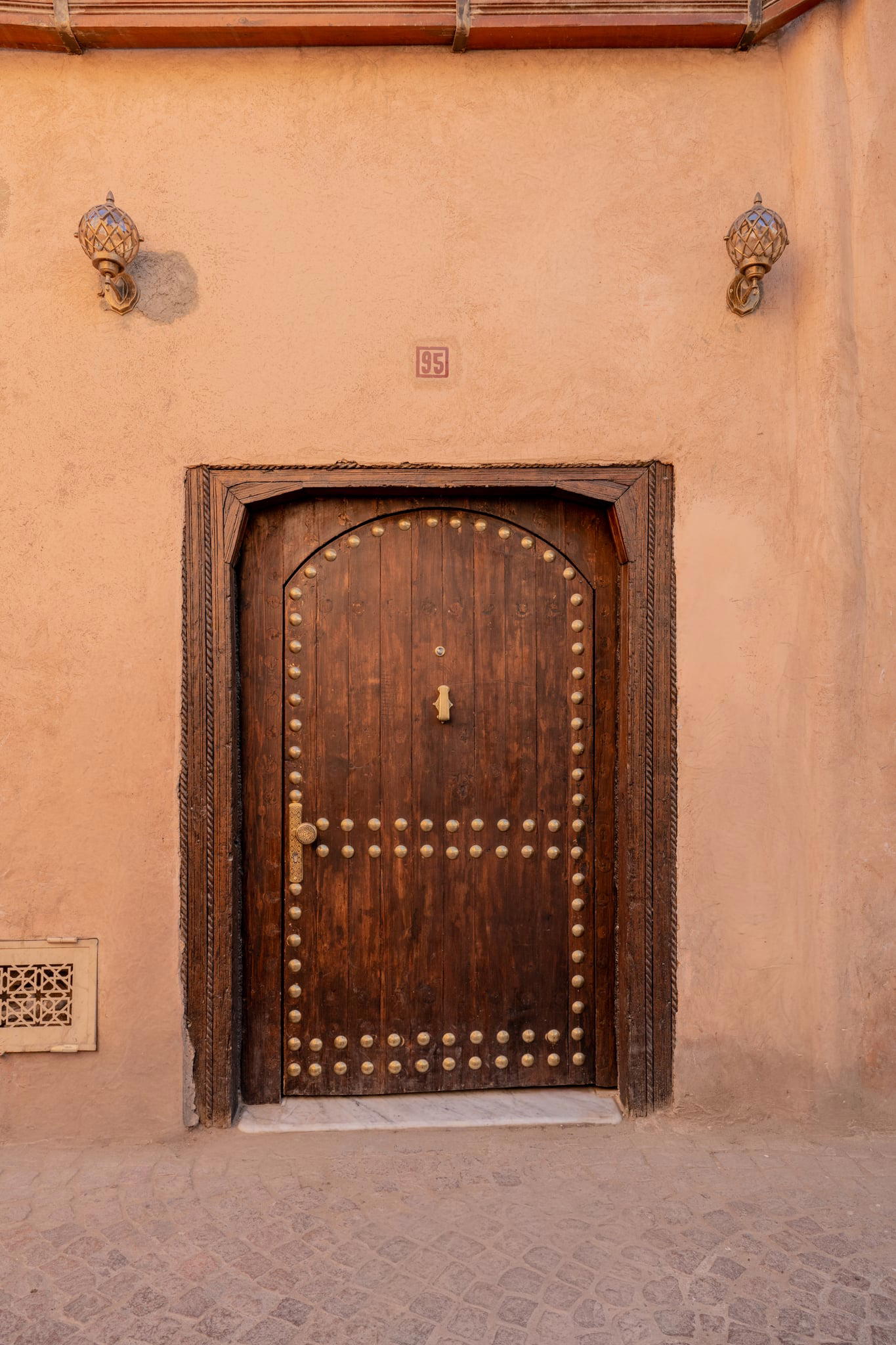
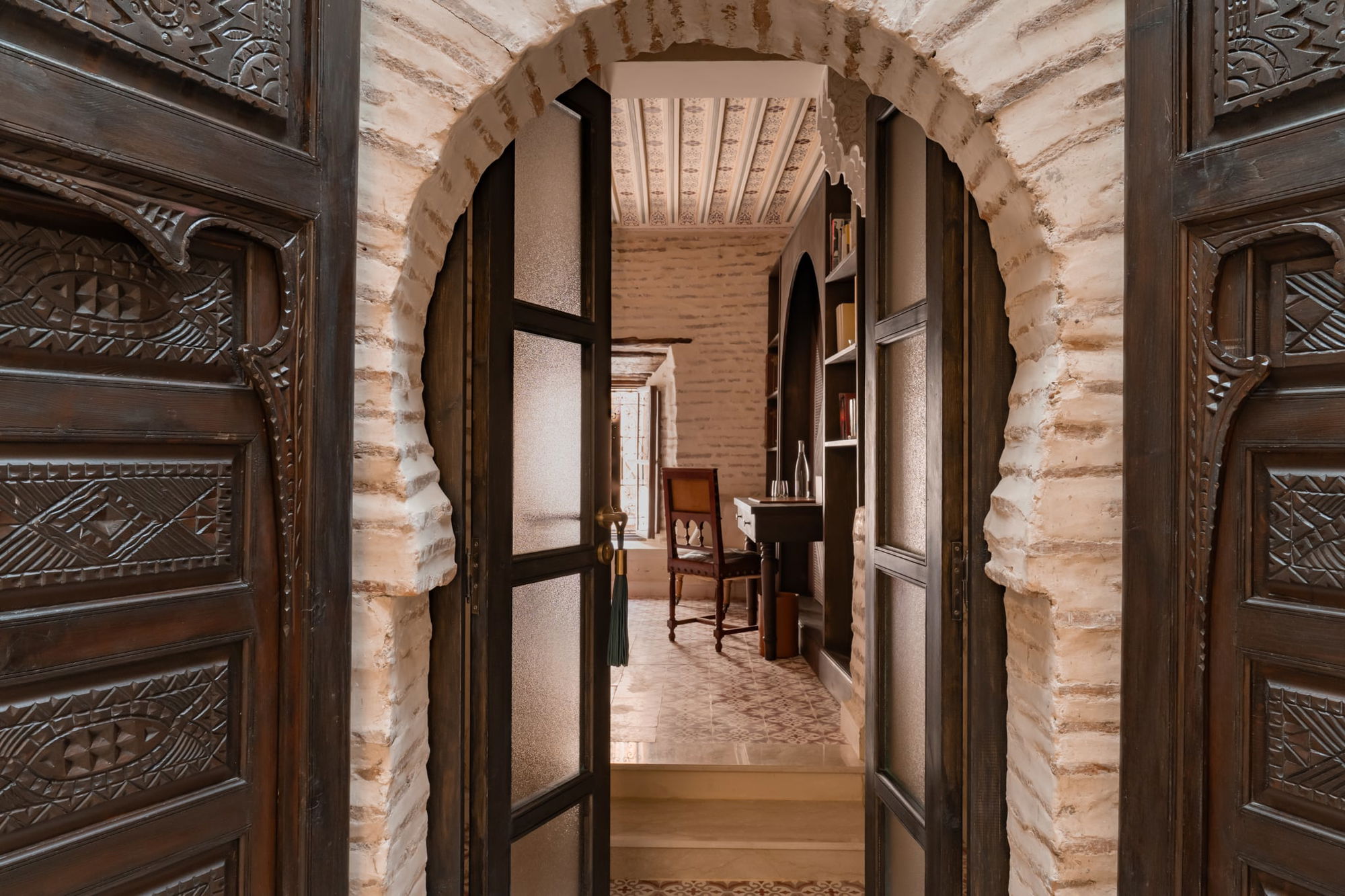
The door gives nothing away, which is the oldest enchantment of the medina: the plainest little doorways open onto the most magical interiors, and the lane outside promises none of it. In Zaouia El Abassia, one of the calmest quarters of the Marrakech medina, the entrance to Palais Beit al Noor keeps that secret as well as any. Then it opens, and the city falls away. What replaces it is coolness: the shade of a patio, water moving in a fountain, the layered scent of jasmine, rose, cedar and musk. Light does the rest, sliding down carved plaster and settling on marble. The name, in Arabic, means the house of light, and the house spends the day making the case.
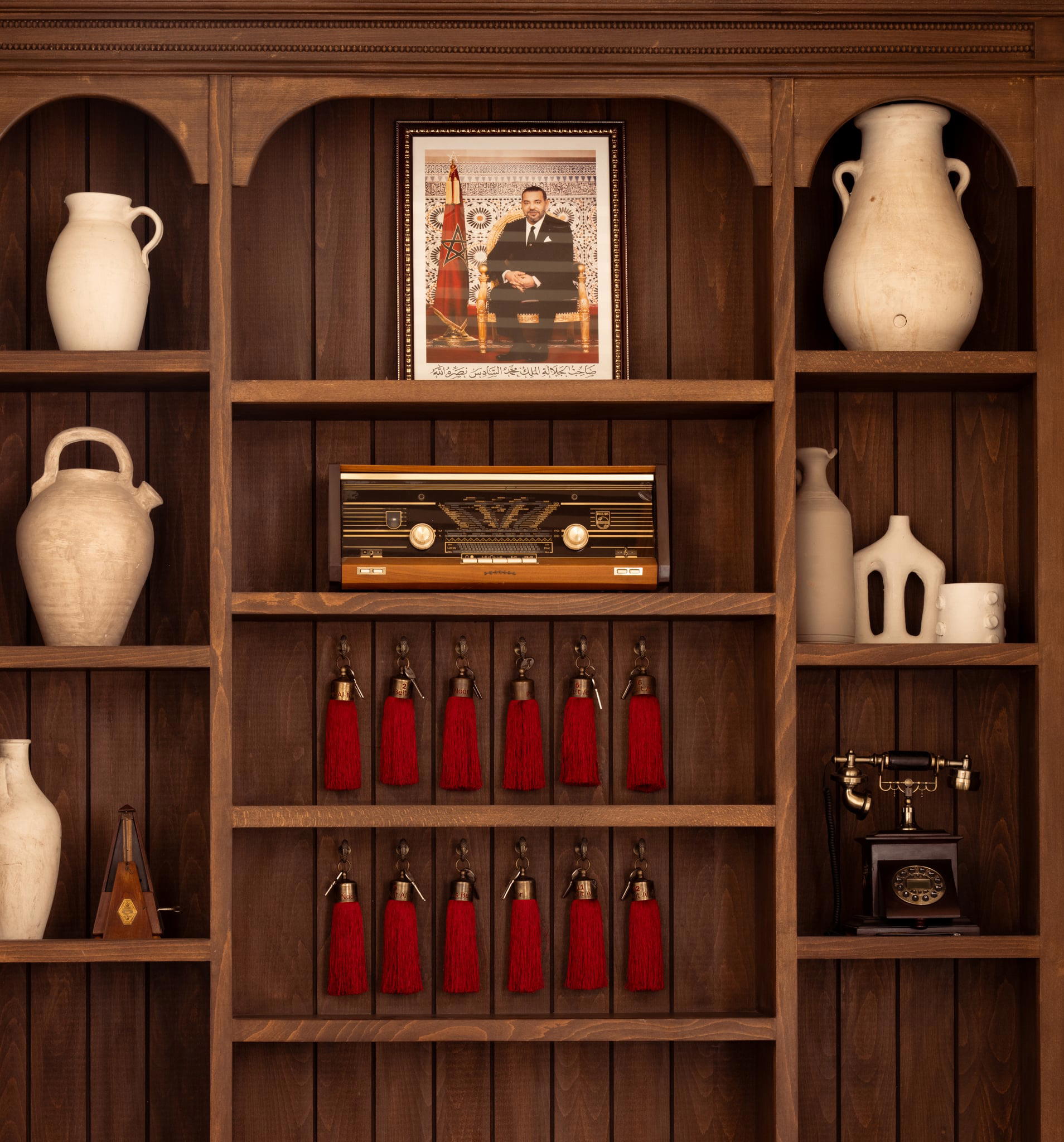
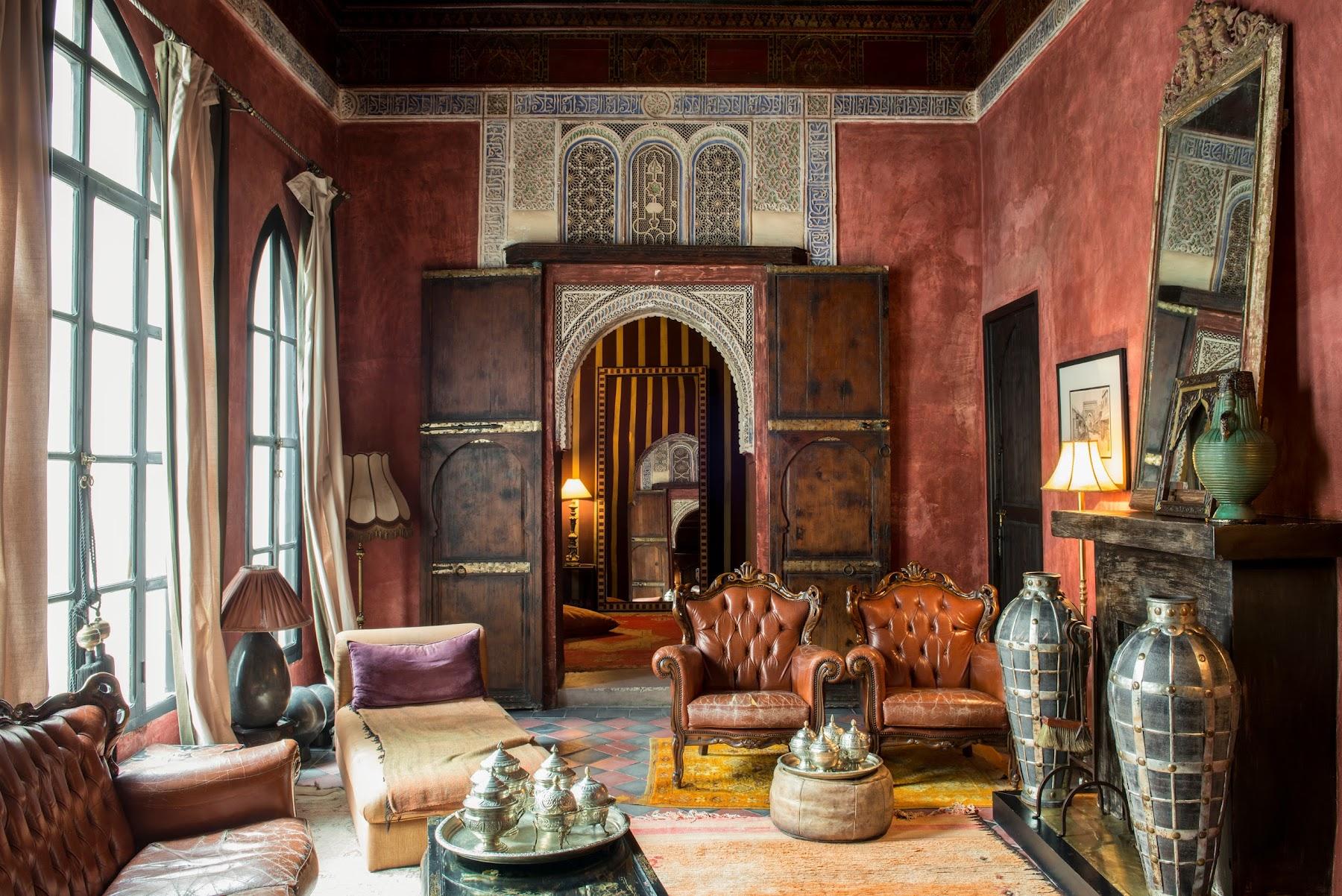
Behind these walls is an eighteenth-century former medersa, a Quranic school of knowledge, brought back over a meticulous restoration by Joëlle and Nicolas Delsuc, a Franco-Lebanese couple who fell for the city and chose to keep a piece of Lebanon inside it. The result reads a little differently from the riads around it. The bones are Moroccan, the inflections often Lebanese: a particular green, a fleur-de-lis tucked into a plaster motif, a hospitality that treats arrival as something to be looked after rather than processed. The owners are firm that they did not open a hotel. They opened a Beit, a home, with the manners of a private house and only twelve rooms to keep.
That intention shows before guests reach the threshold. A private driver meets each arrival at the airport and brings them to the very door of the palace, a small feat in a quarter where most addresses end where the cars stop.
Three patios, two terraces
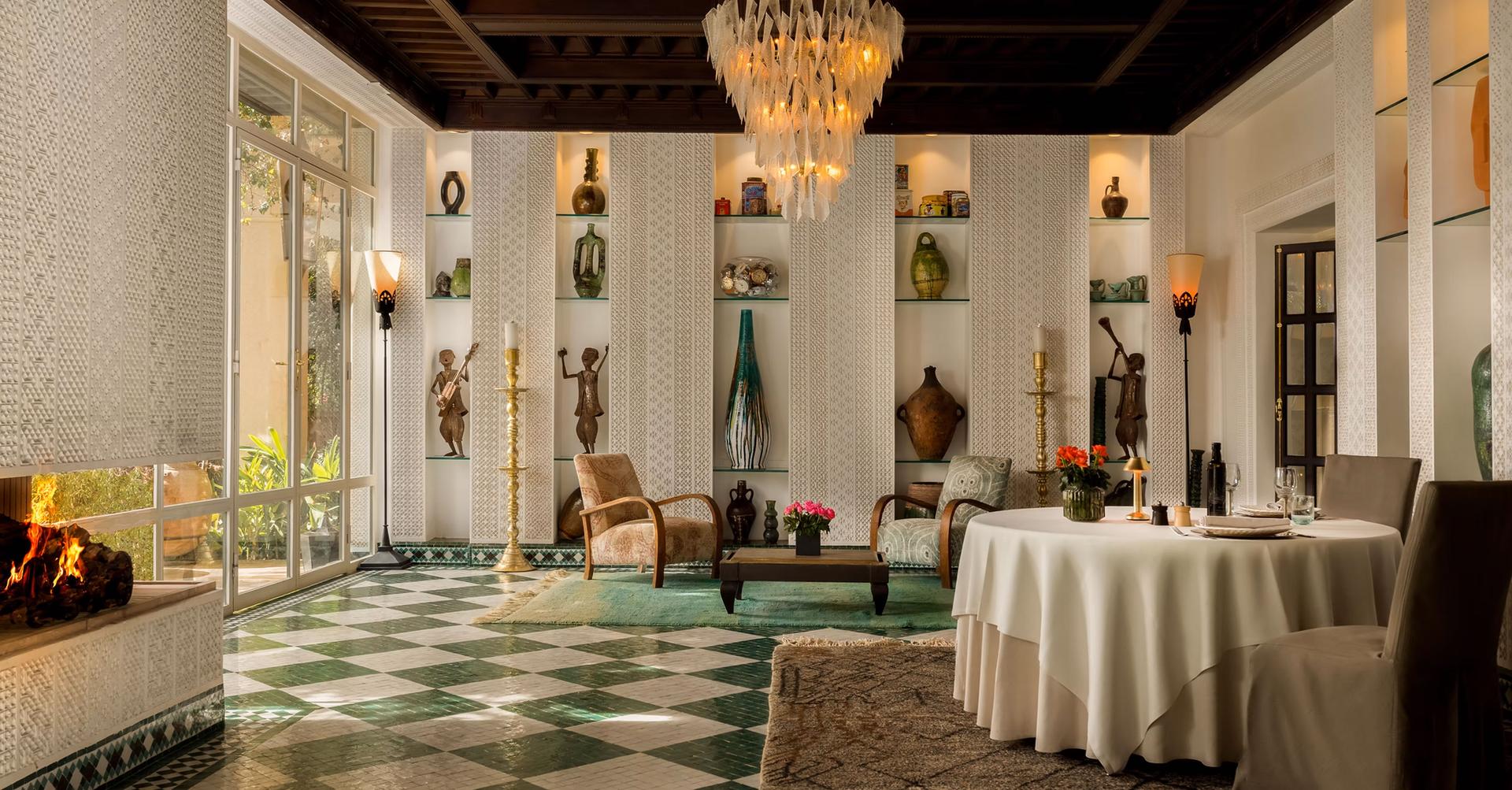
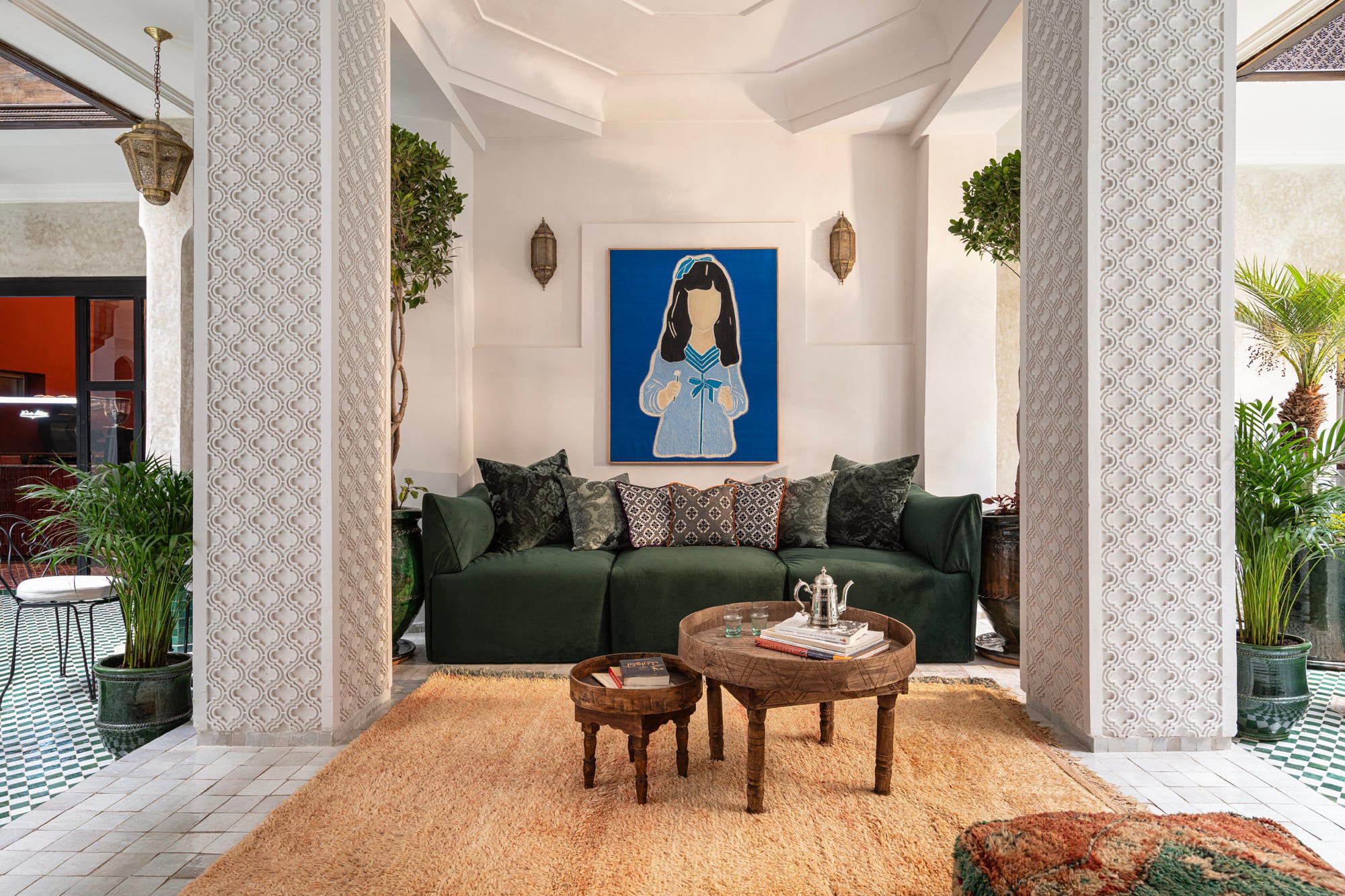
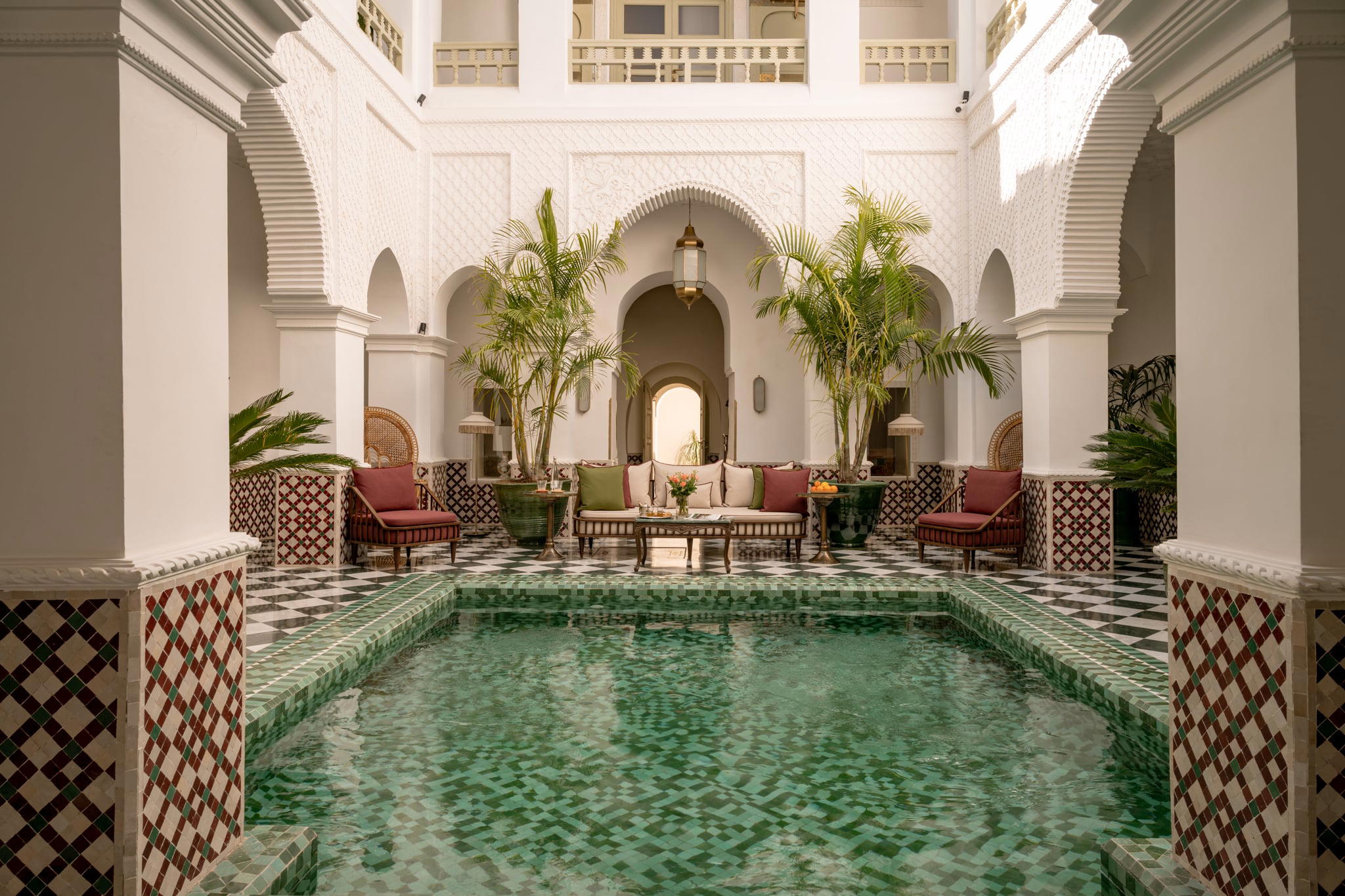
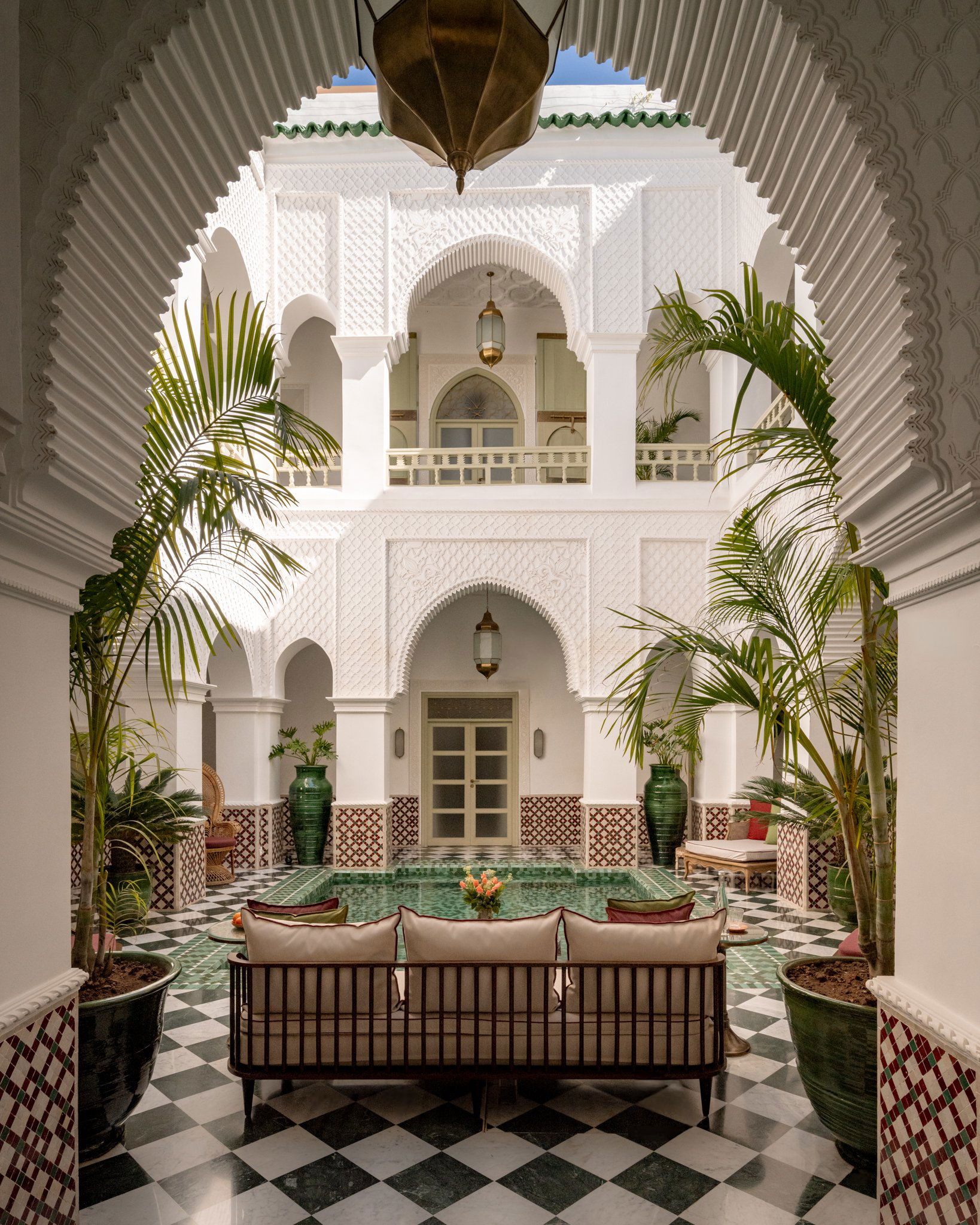
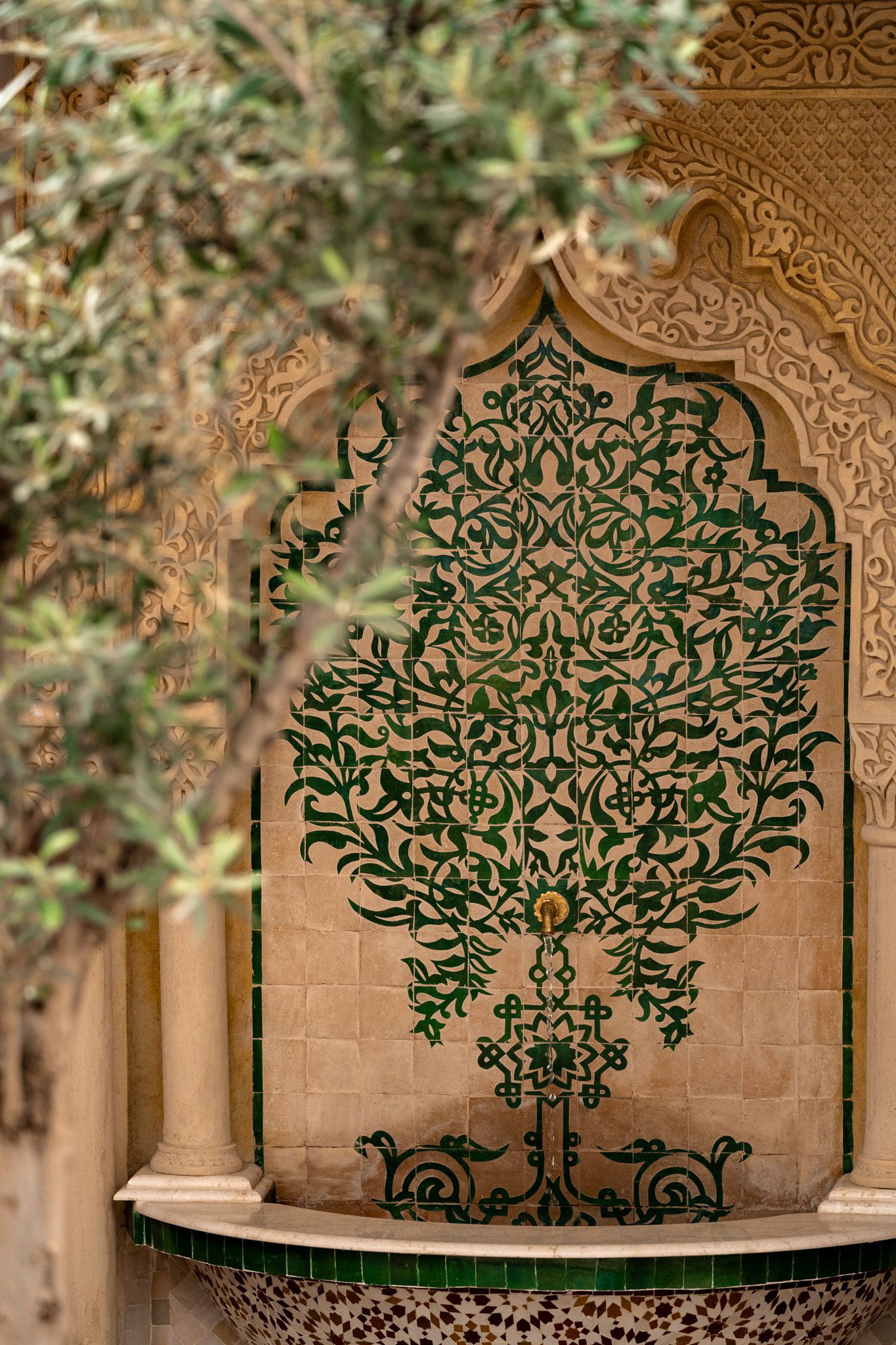
The house turns around three courtyards, each with its own temperament. The Medersa patio, named for the old schools of knowledge, is the formal one: symmetrical arches, a long zellige pool the deep green of still water, a floor of white and green marble laid like a chessboard. The Berber patio is its rougher cousin, square and planted with orange trees around a stone fountain. The third, the Douheria, borrows the dialect word for little house and gathers itself around a single olive tree.
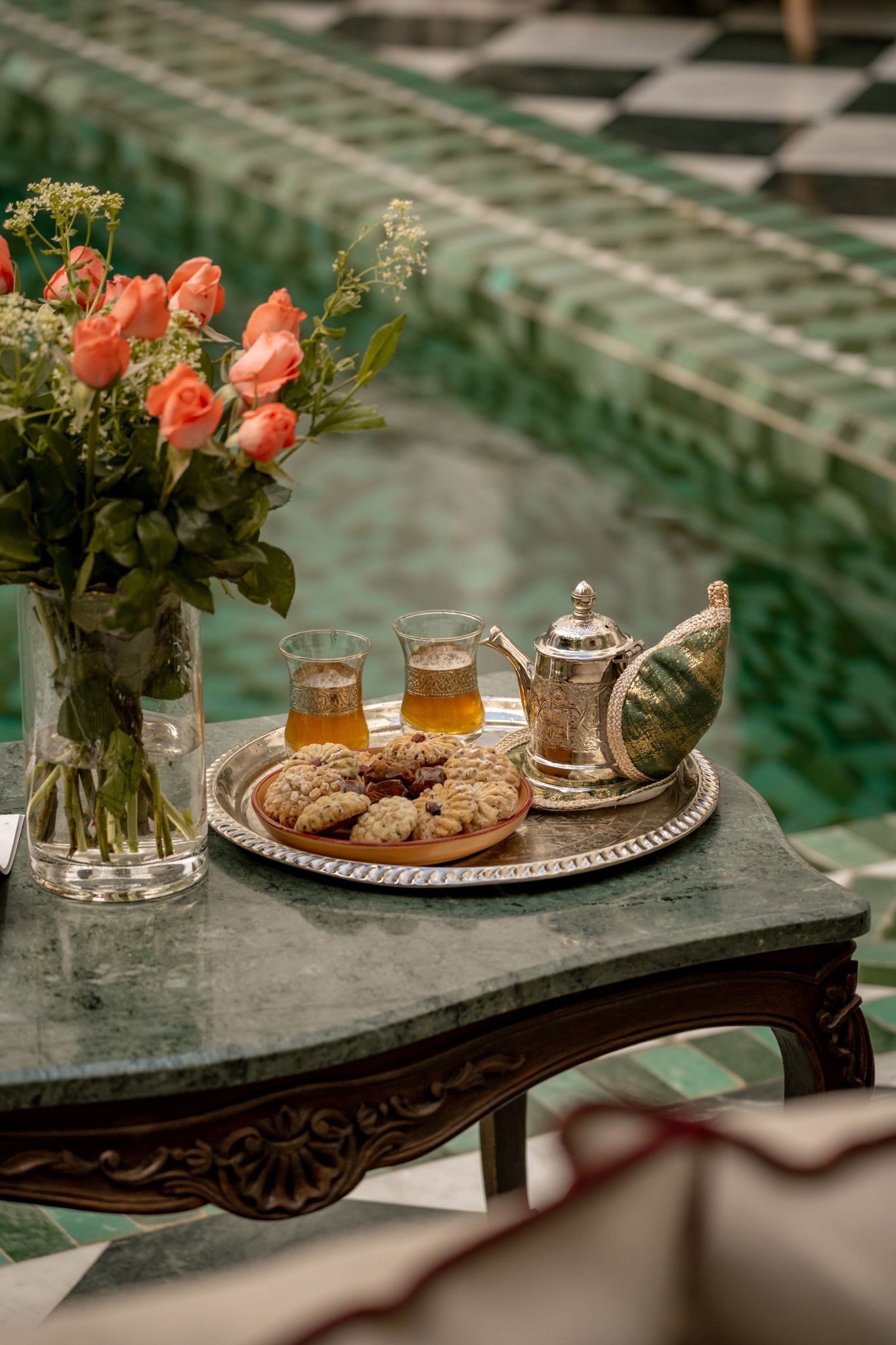
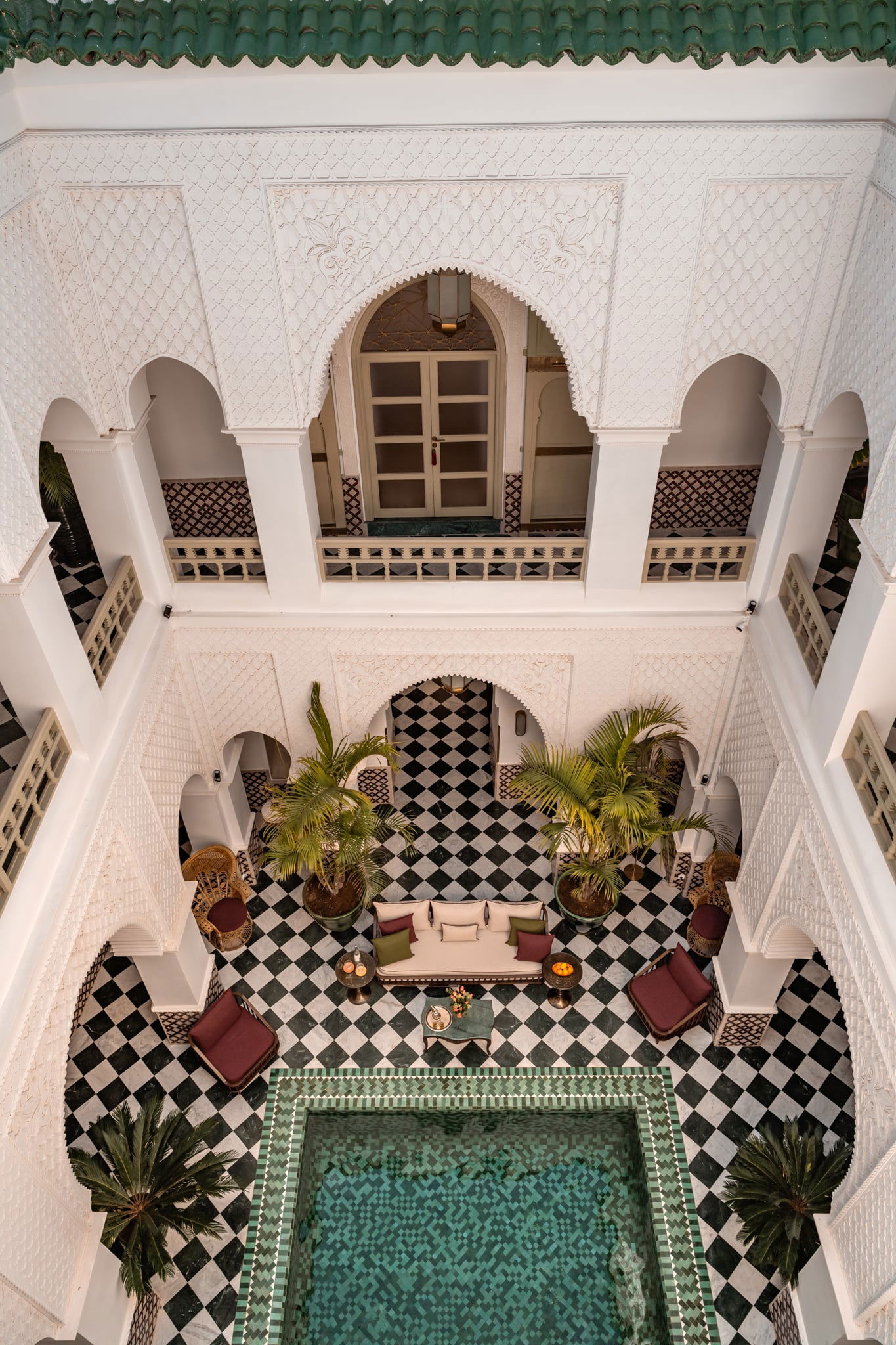
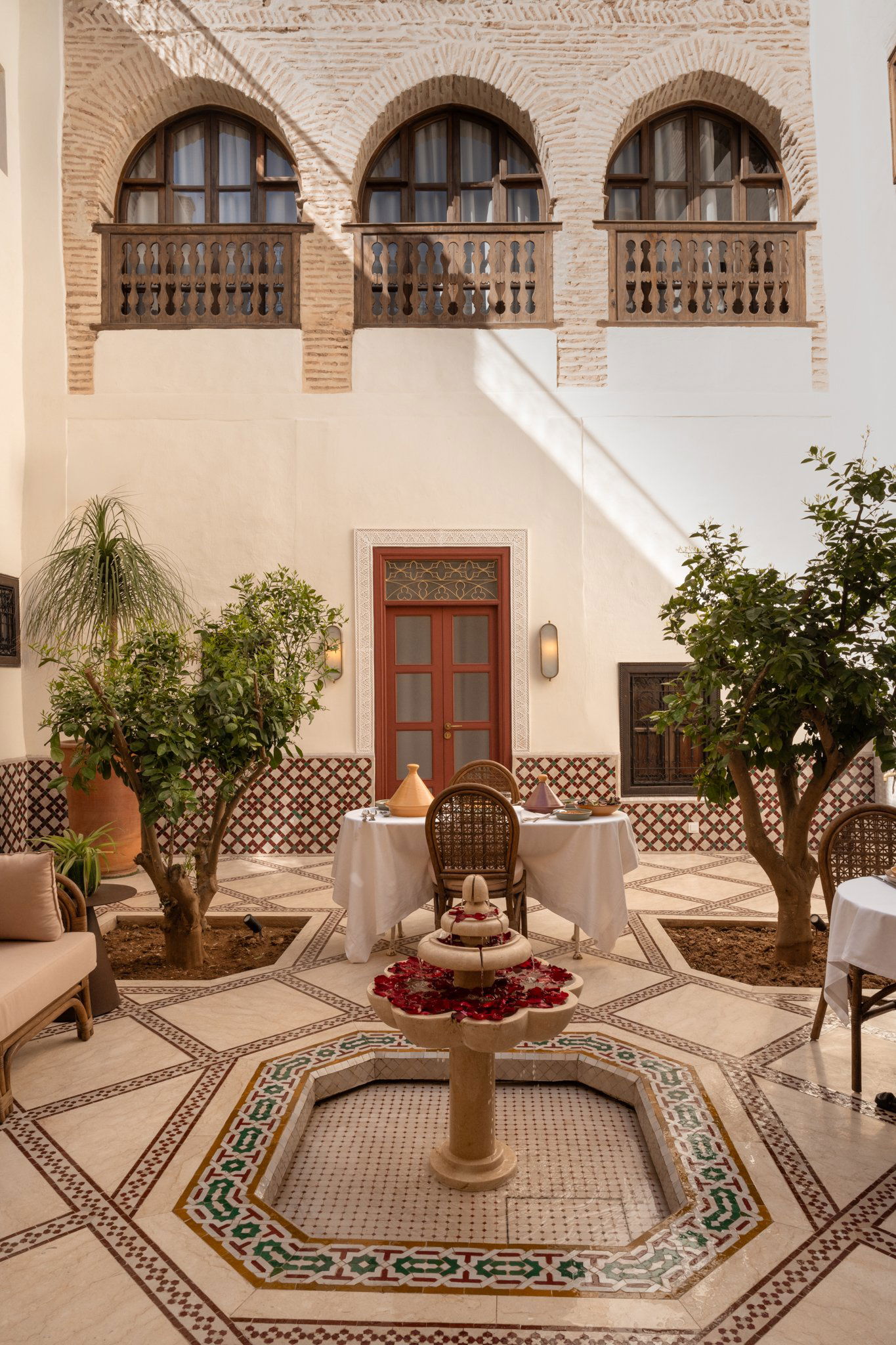
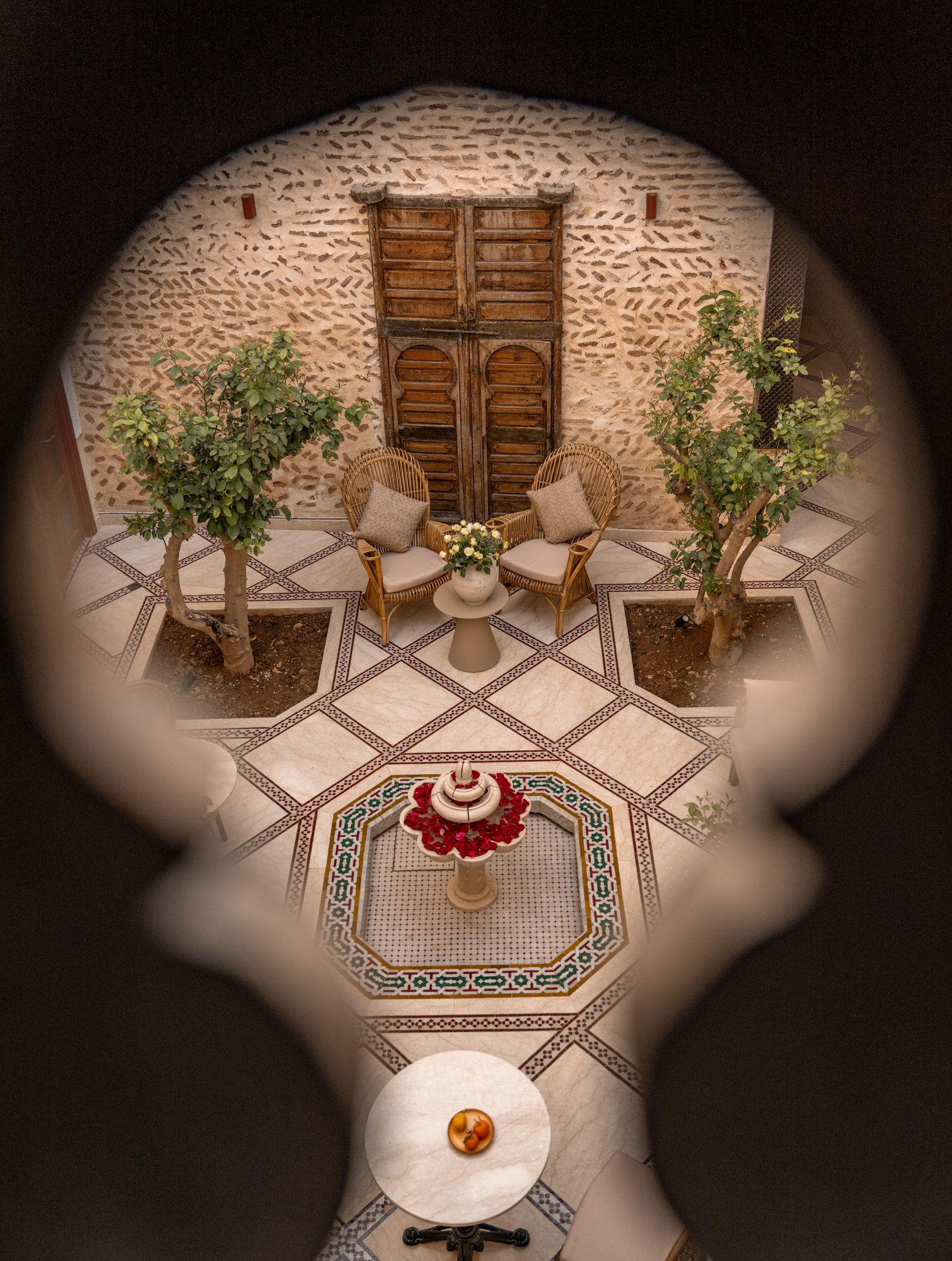
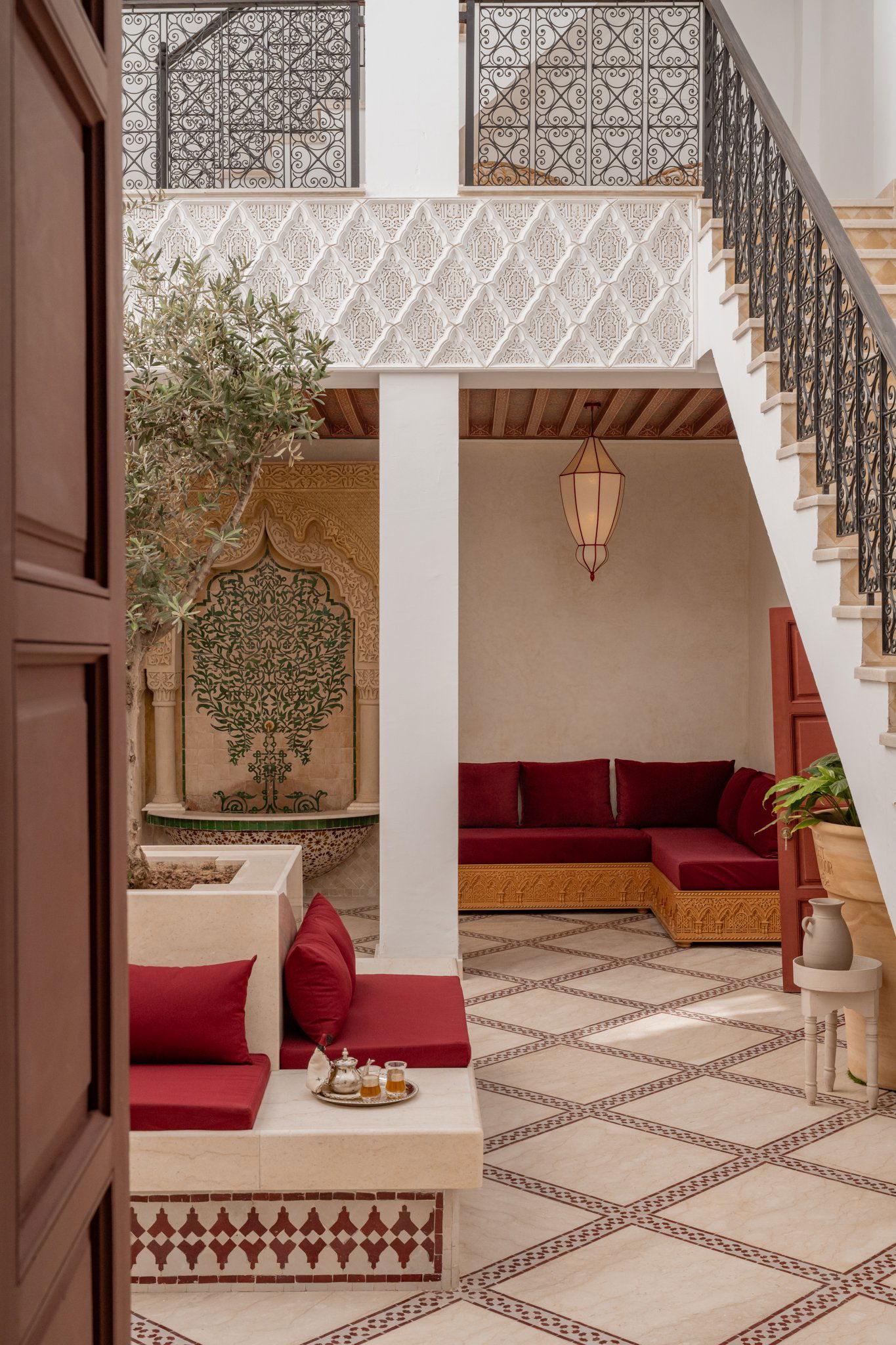
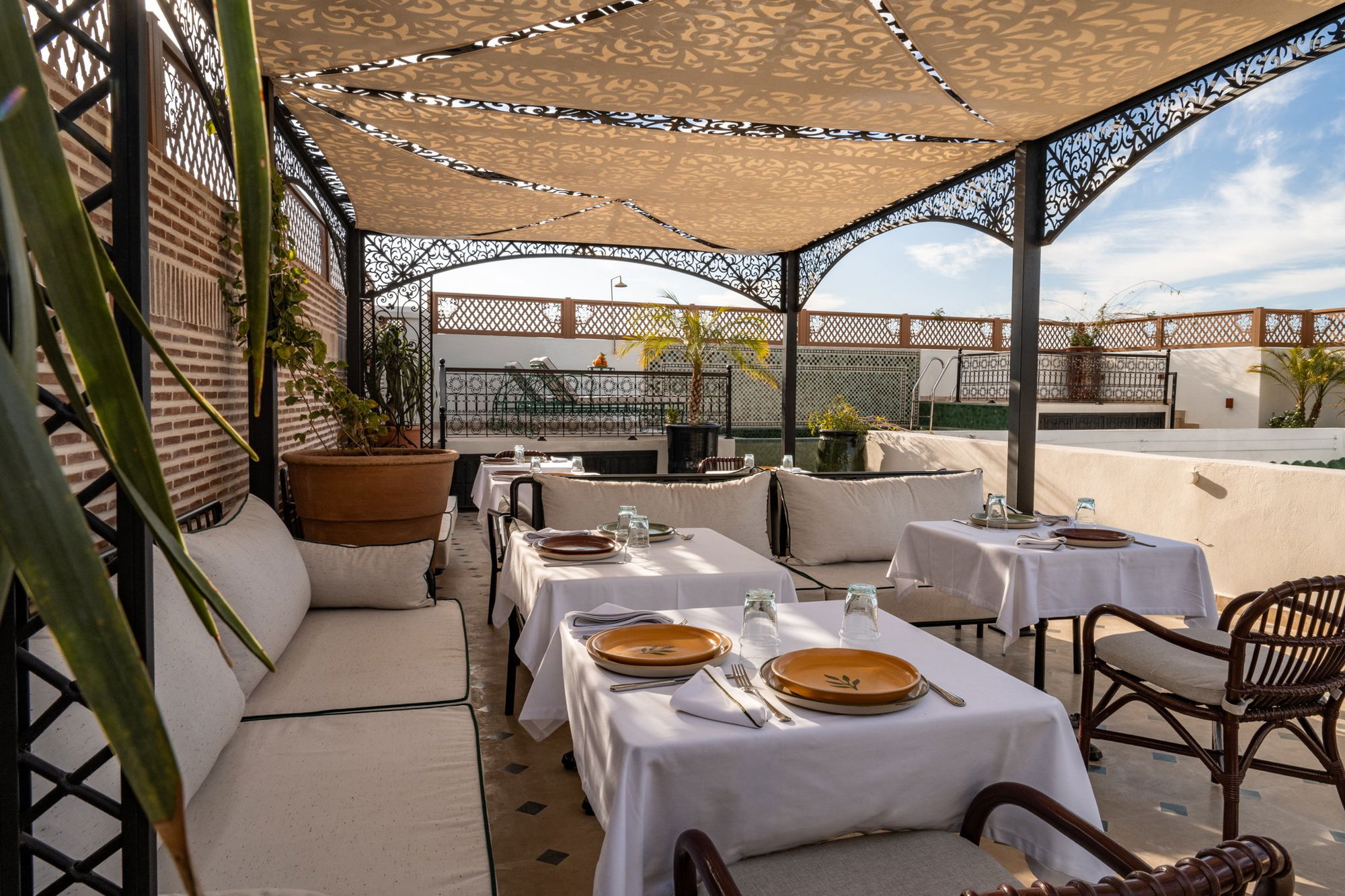
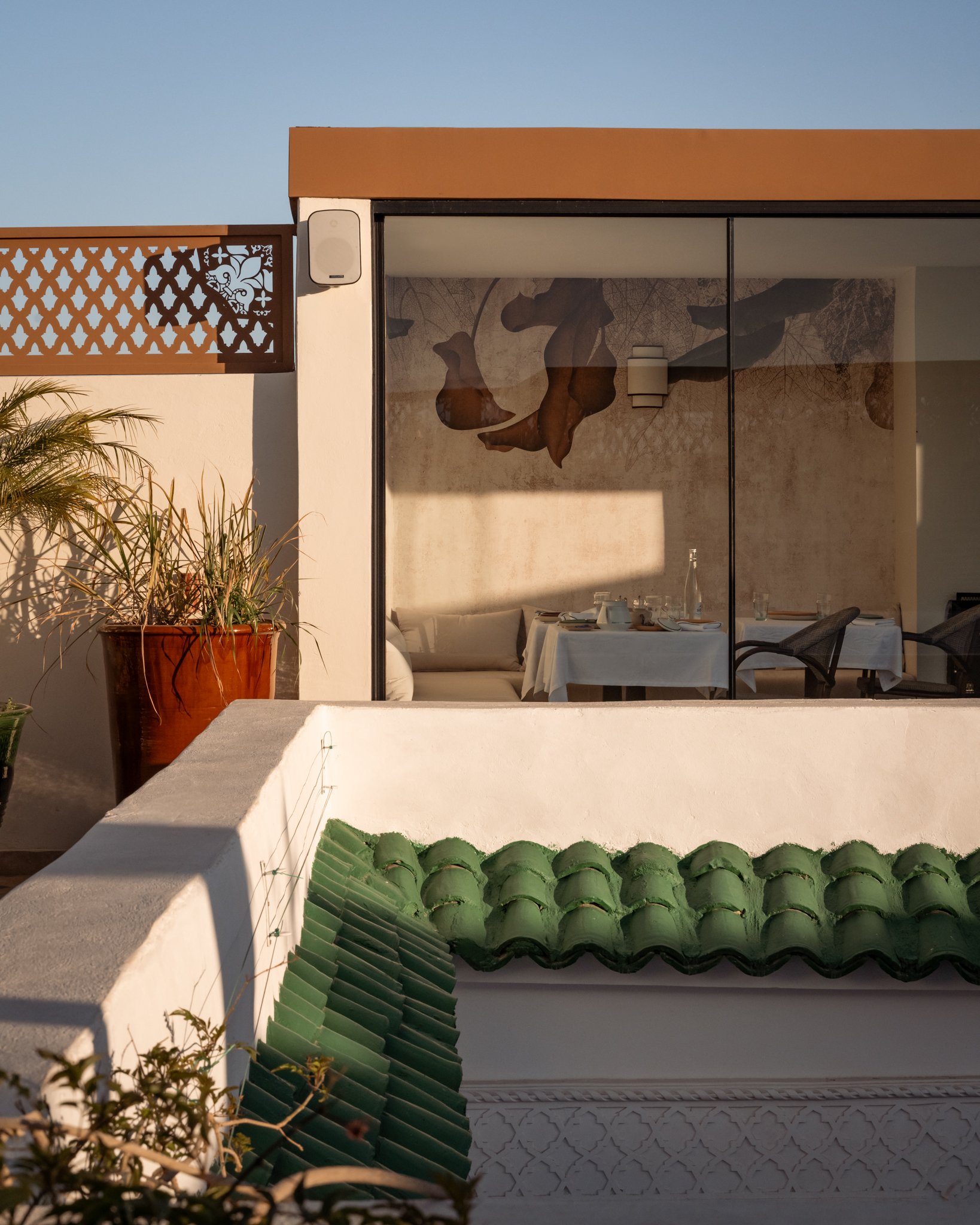
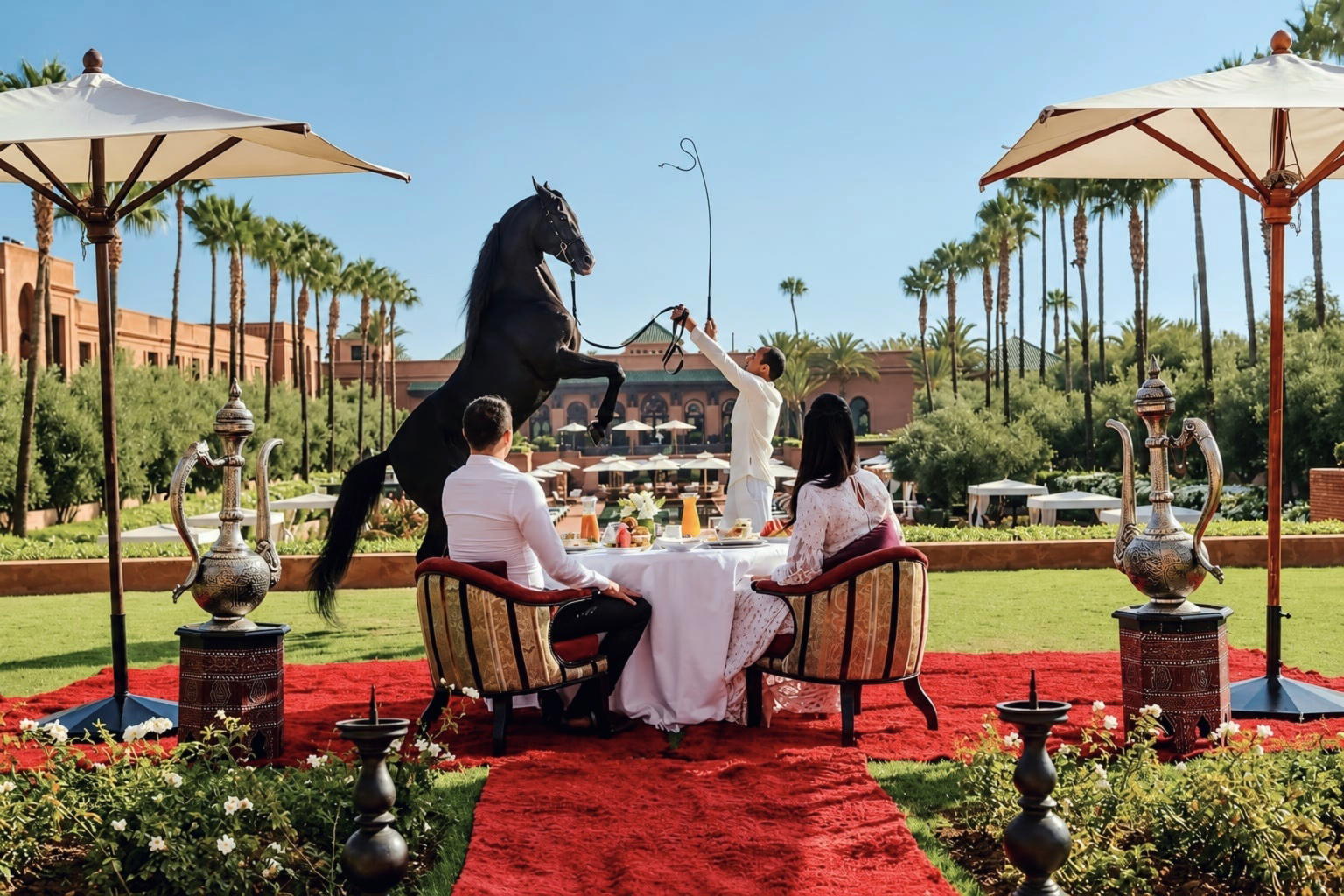
The day tends to move upward. Mornings begin in the patios and end on the two rooftop terraces, which open onto the tiled roofs of the medina and a neighbouring minaret capped in green. Breakfast, mint tea and an unhurried dinner all happen up here when the weather allows, the kind of evening that blends Moroccan and Lebanese plates without announcing it.
A house built by hand
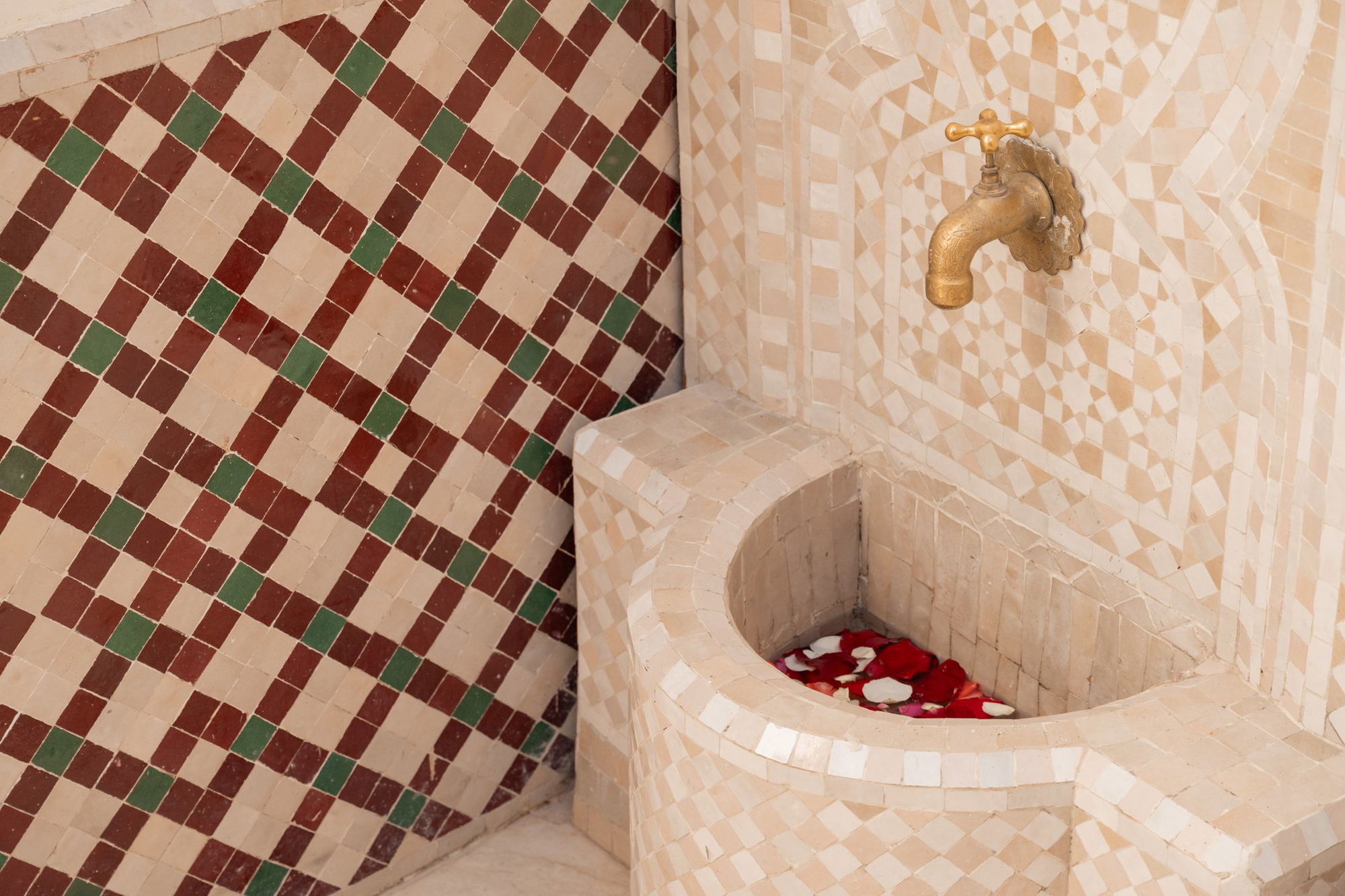
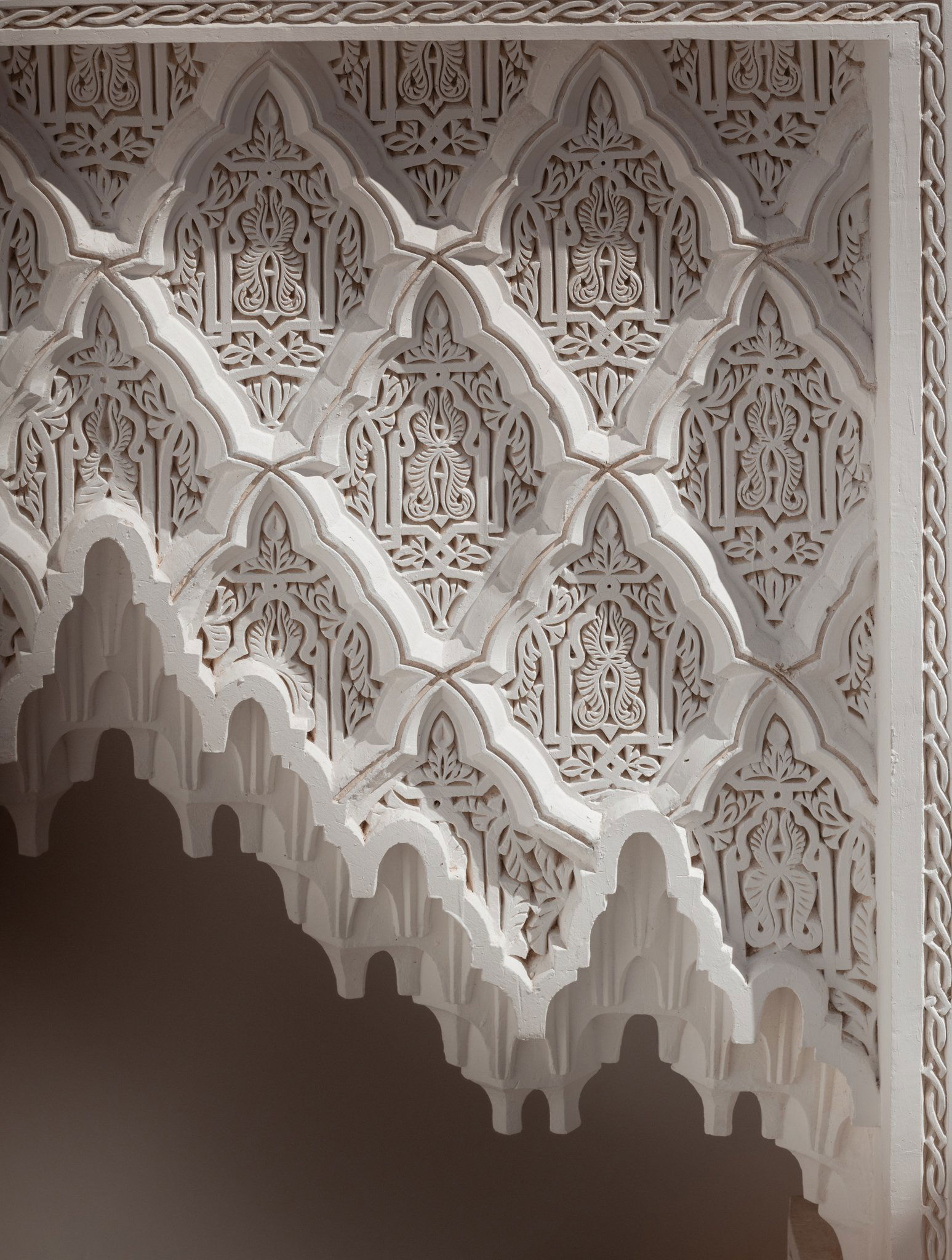
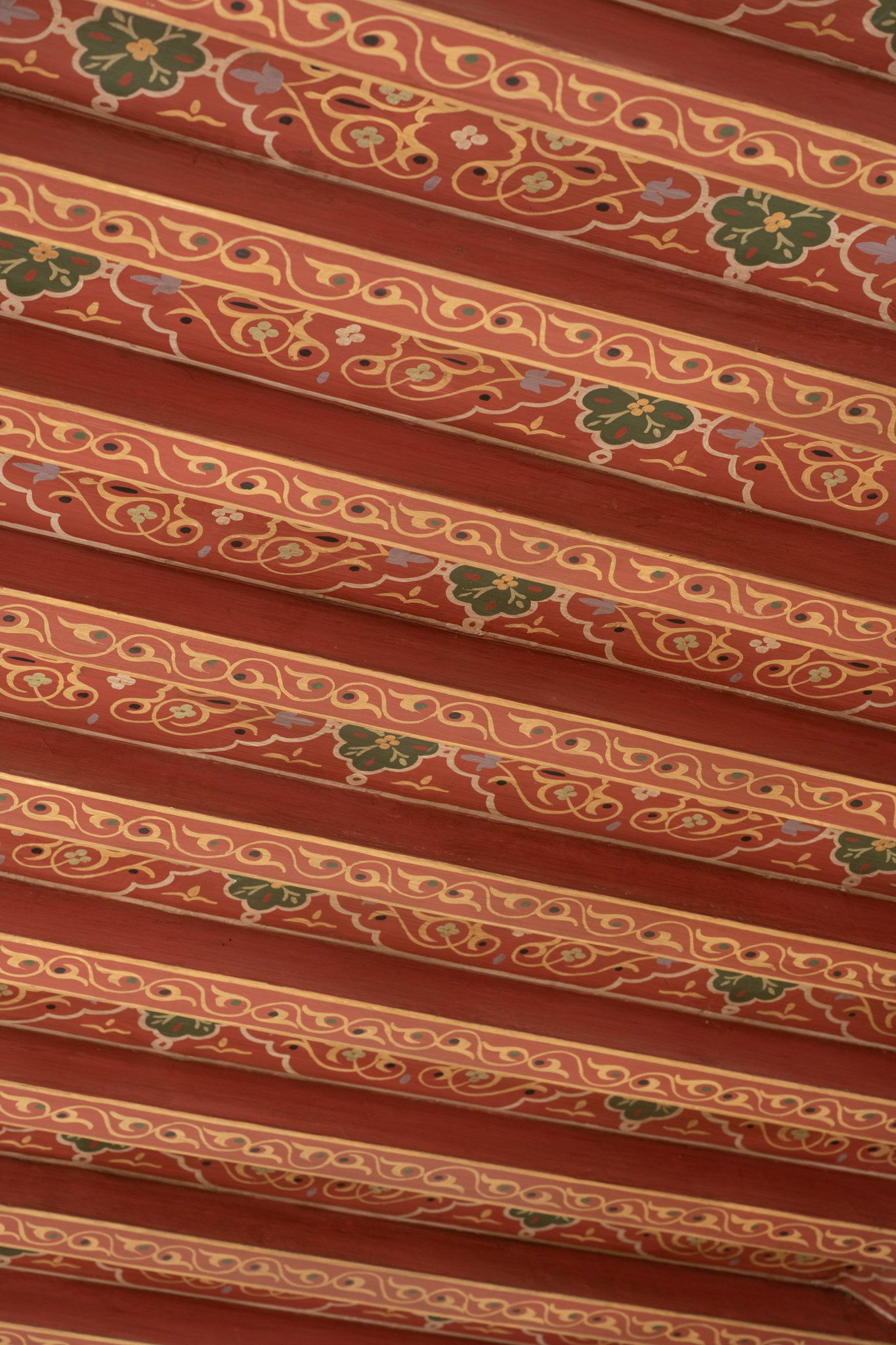
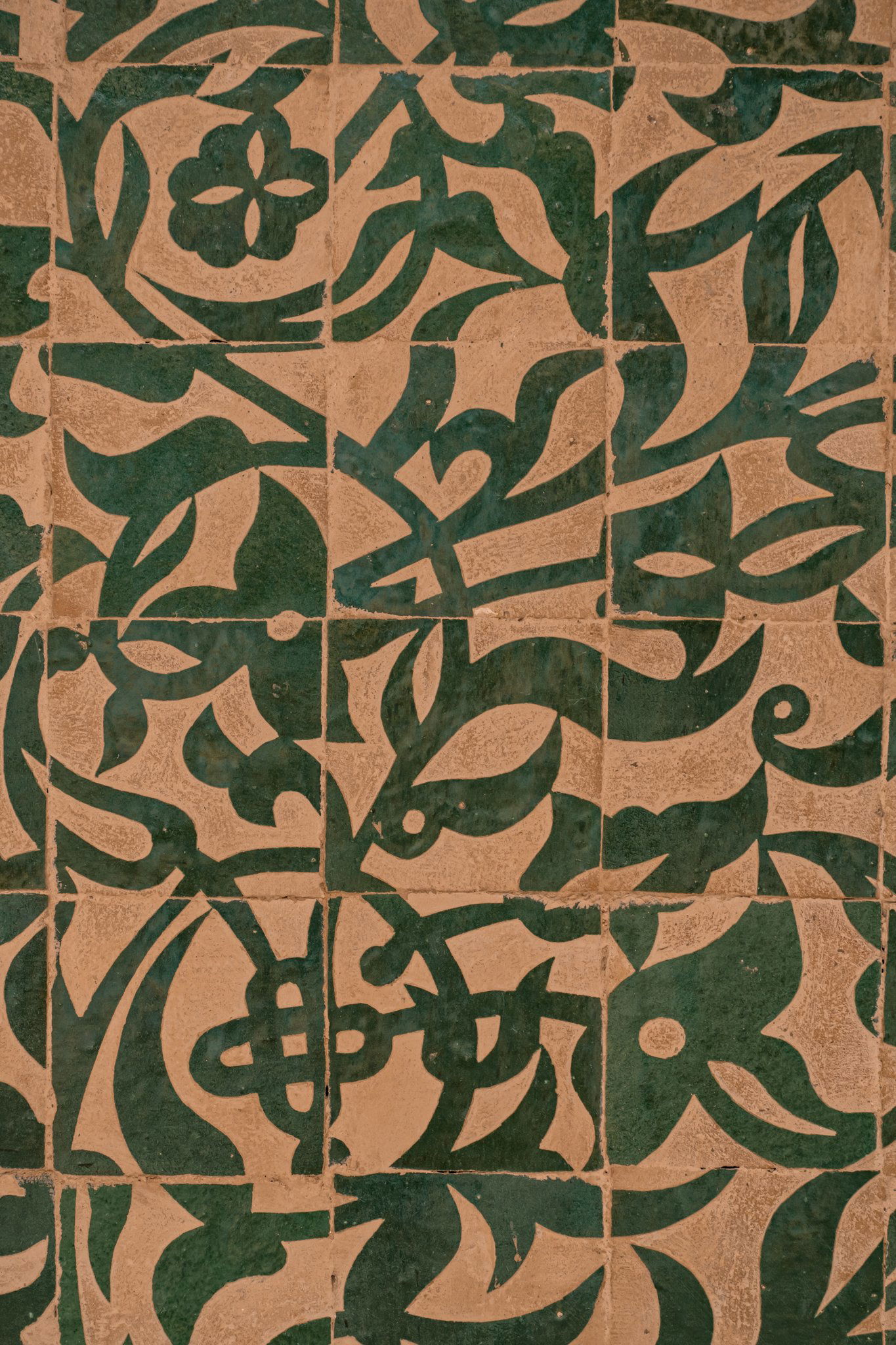
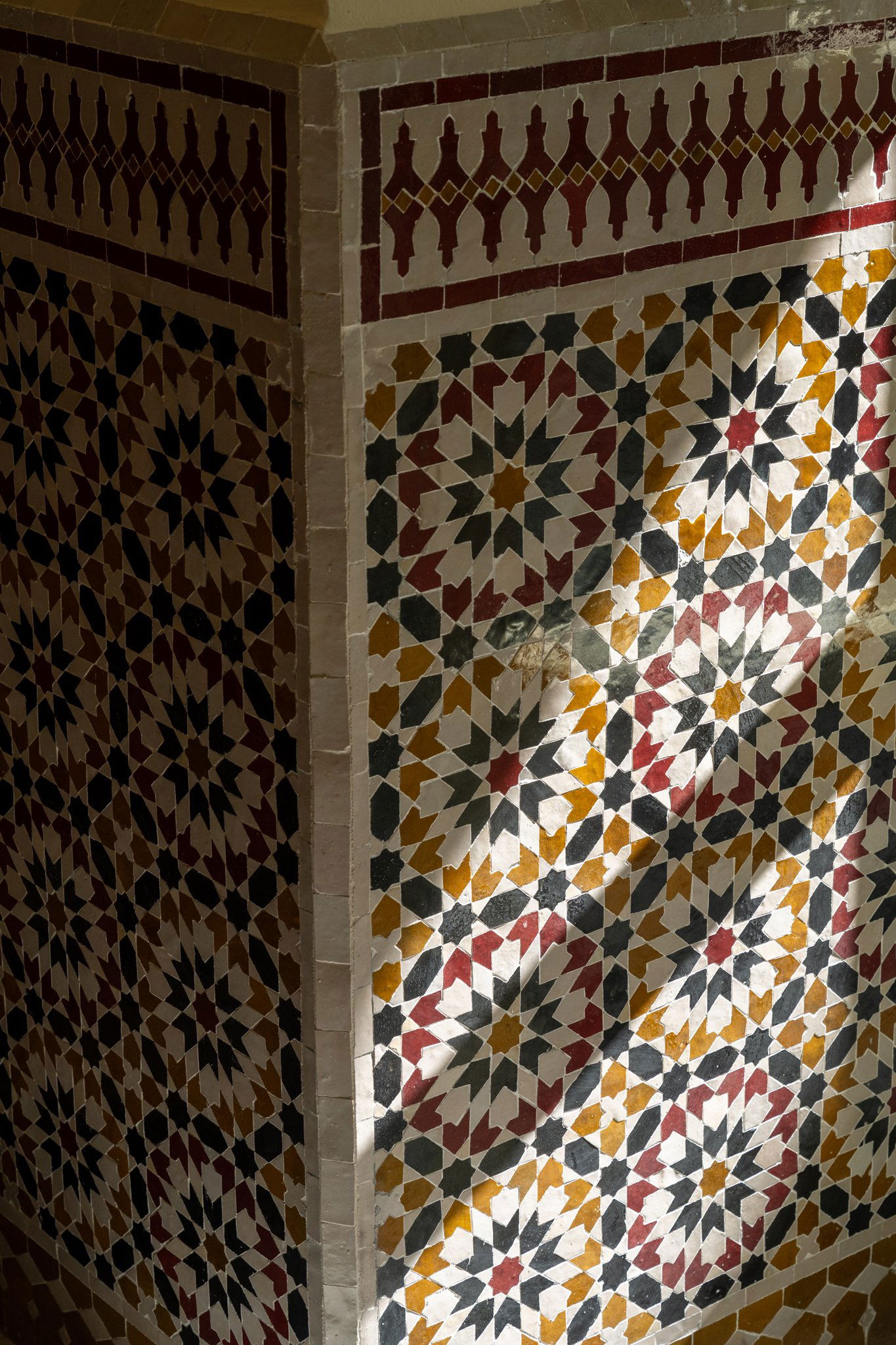
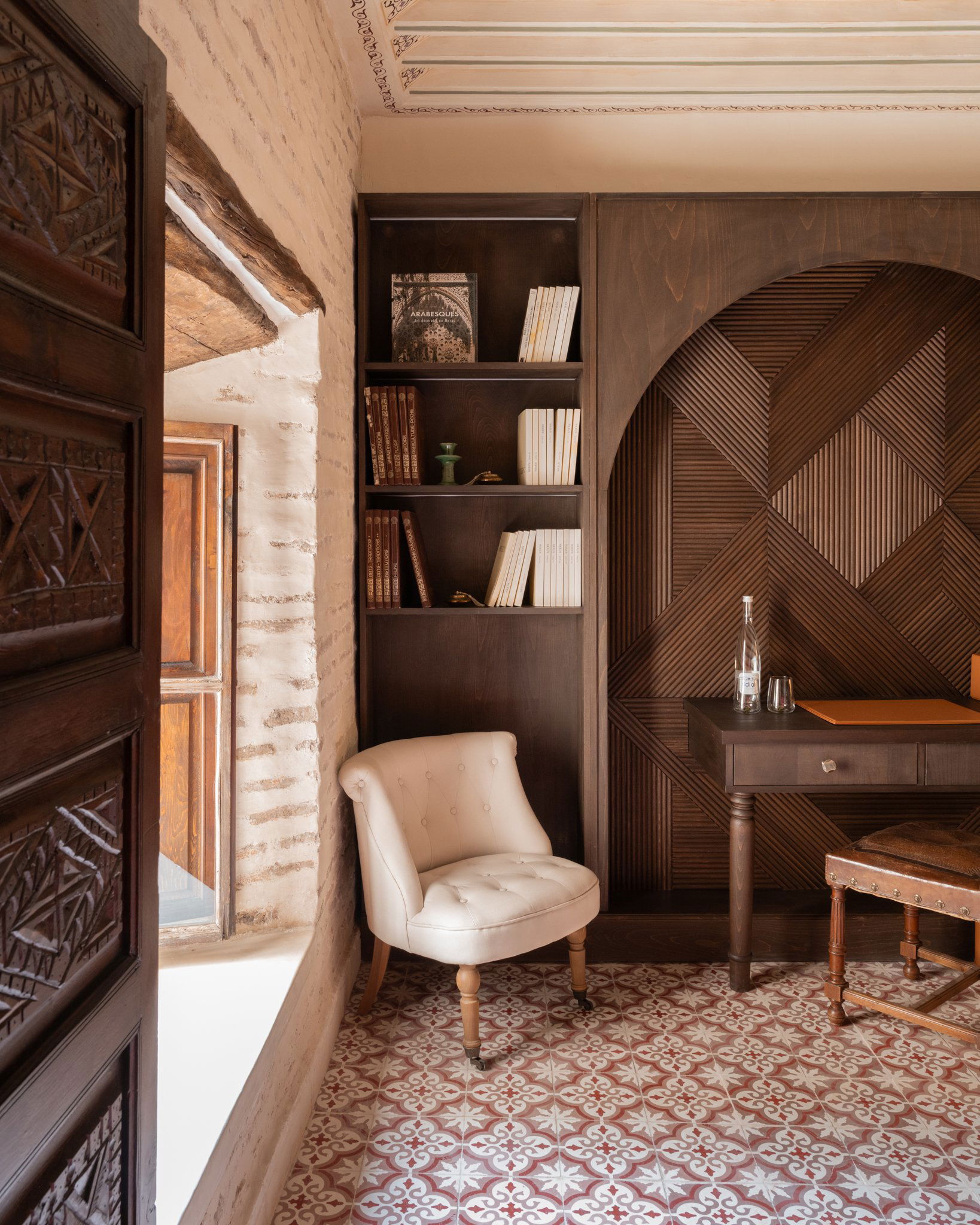
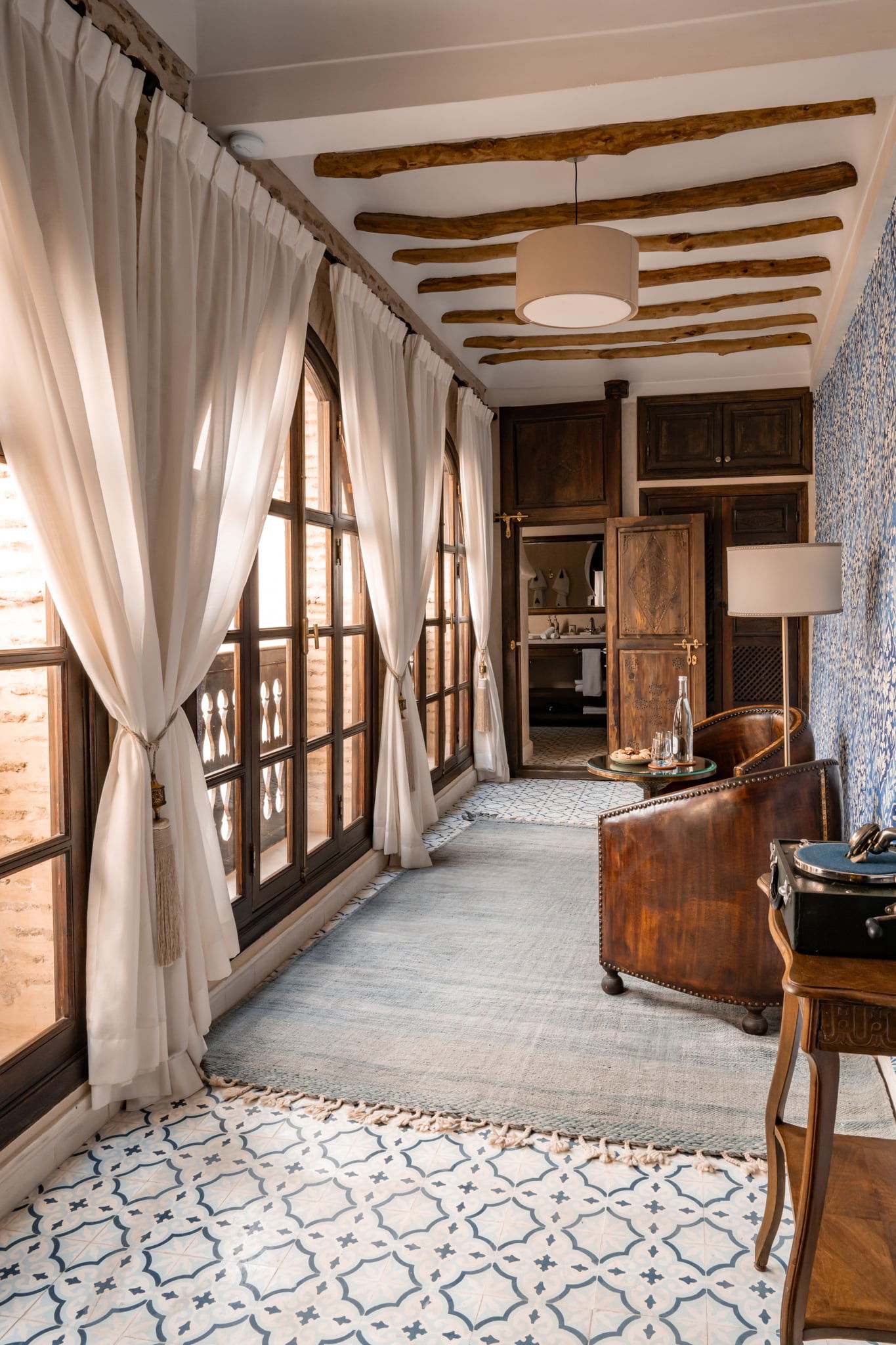
Craftsmanship is the through-line, and it is specific rather than decorative. The restoration as a whole took twenty-one months. Gebs, the art of sculpted plaster, is the signature gesture: fifteen artisans spent nine of those months cutting arches and frames into something close to lace. Wooden ceilings carry the painted geometry of the zouak tradition, vivid and hand-drawn. Fassi zellige, hand-cut and set into crosses of burgundy, white and green, gives the walls their depth. Marble runs throughout the palace, most visibly in the white and green checkerboard floors.
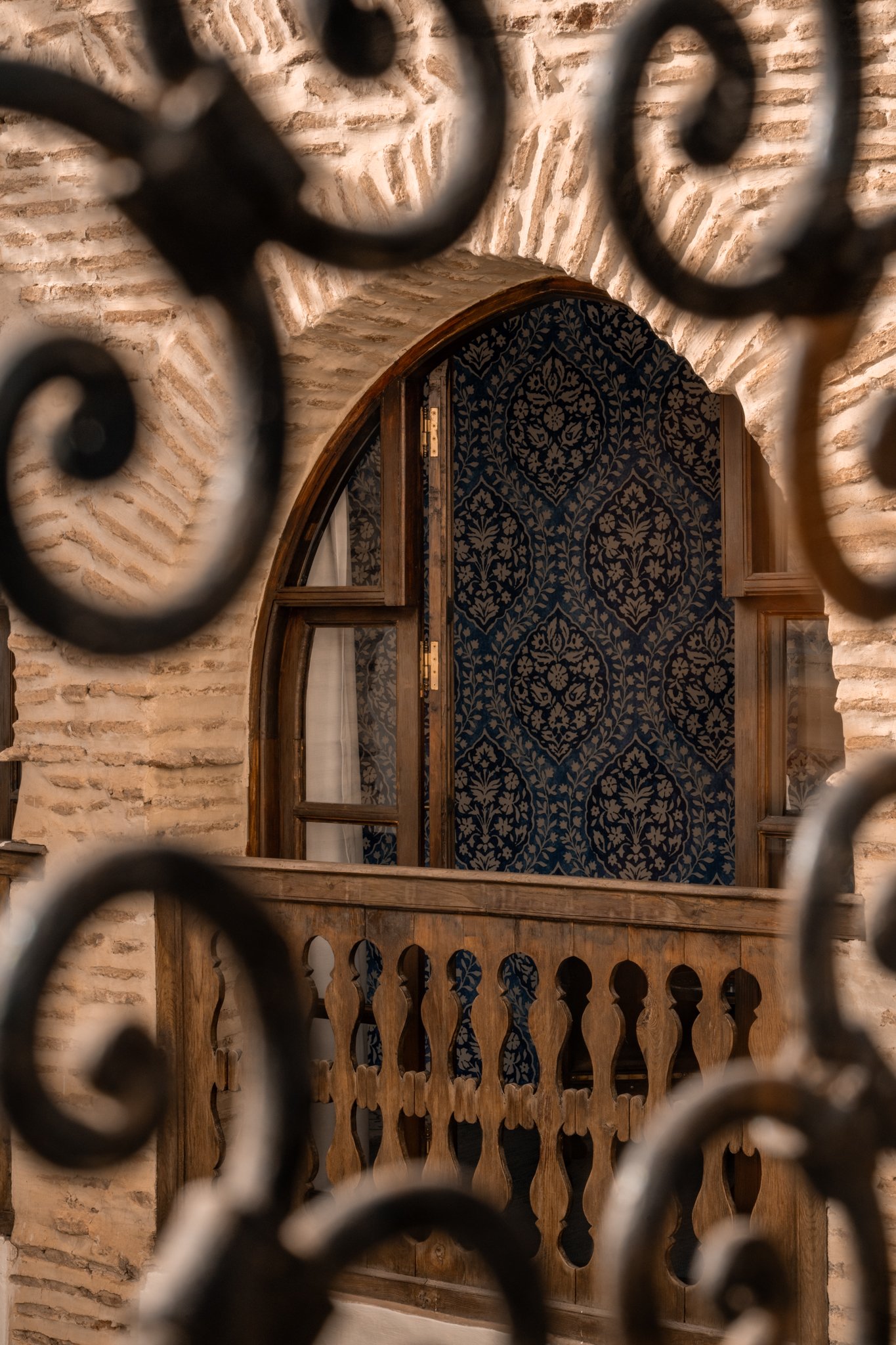
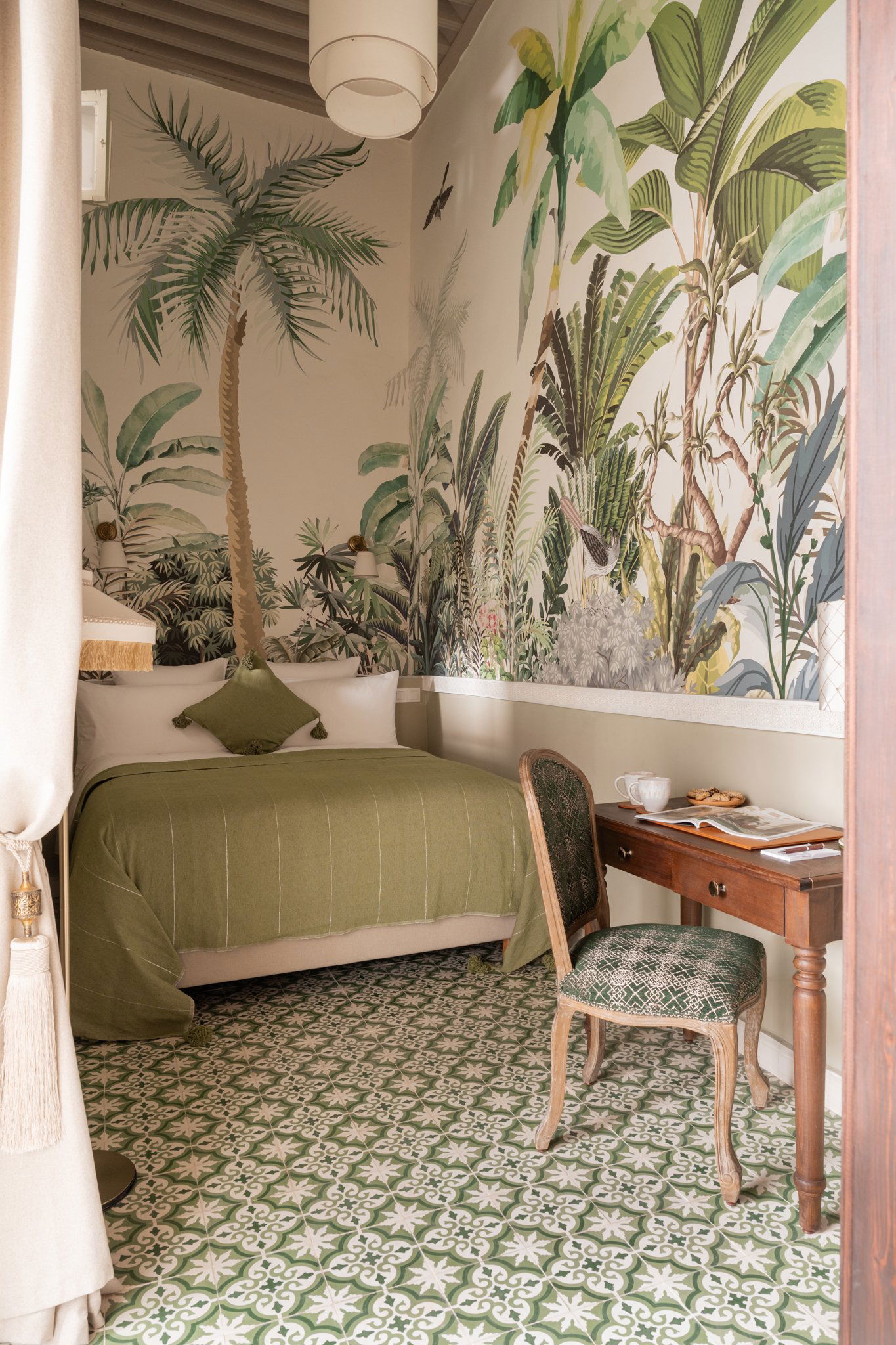
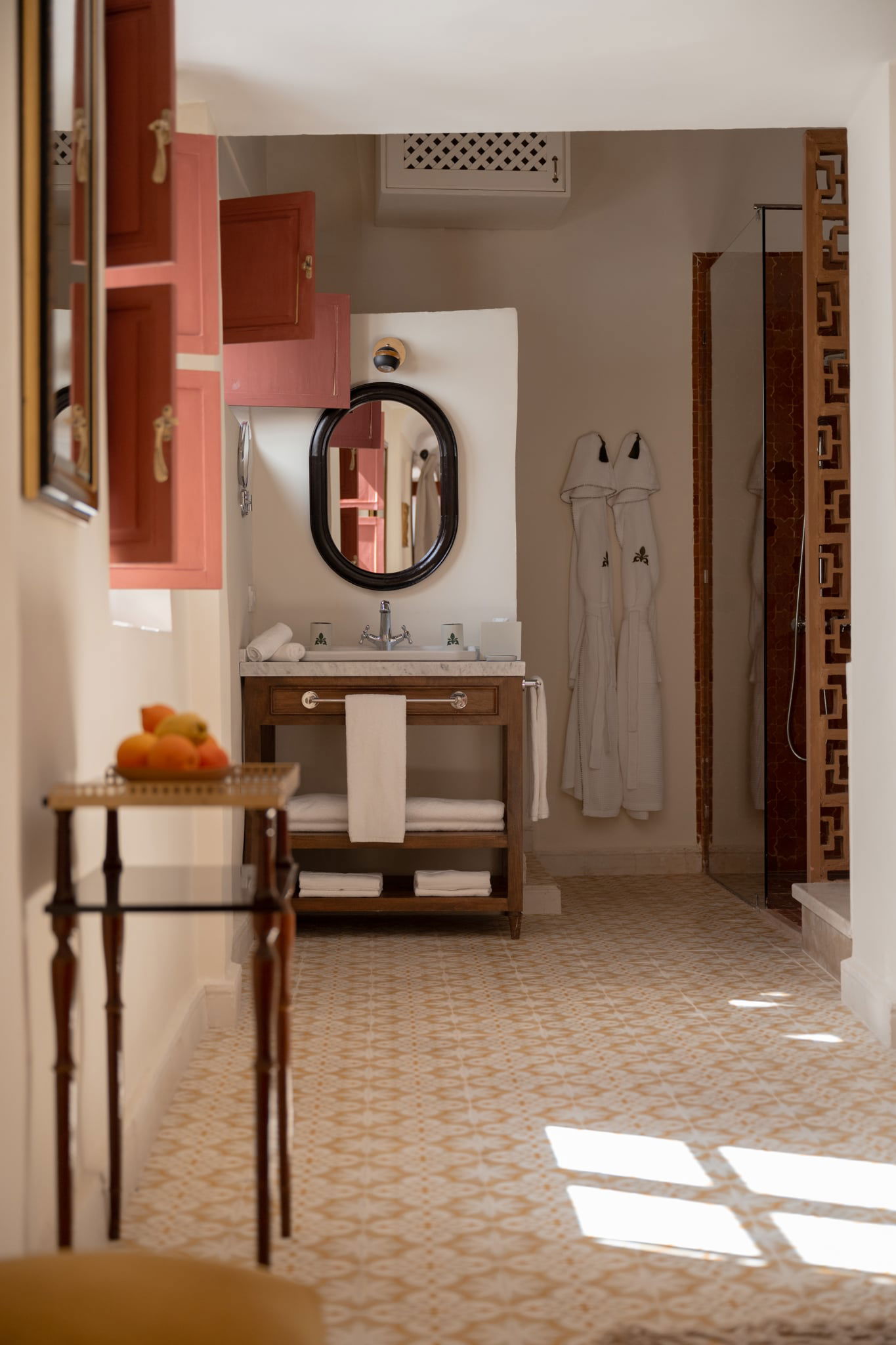
The Lebanese hand surfaces in the seams. Cement floor tiles drawn from traditional Lebanese homes run through the bedrooms; a wrought-iron stair railing in the Medersa courtyard follows a Lebanese motif, executed start to finish by Moroccan artisans. Two craft cultures share the same house, and the joins barely show.
Twelve Lebanese names
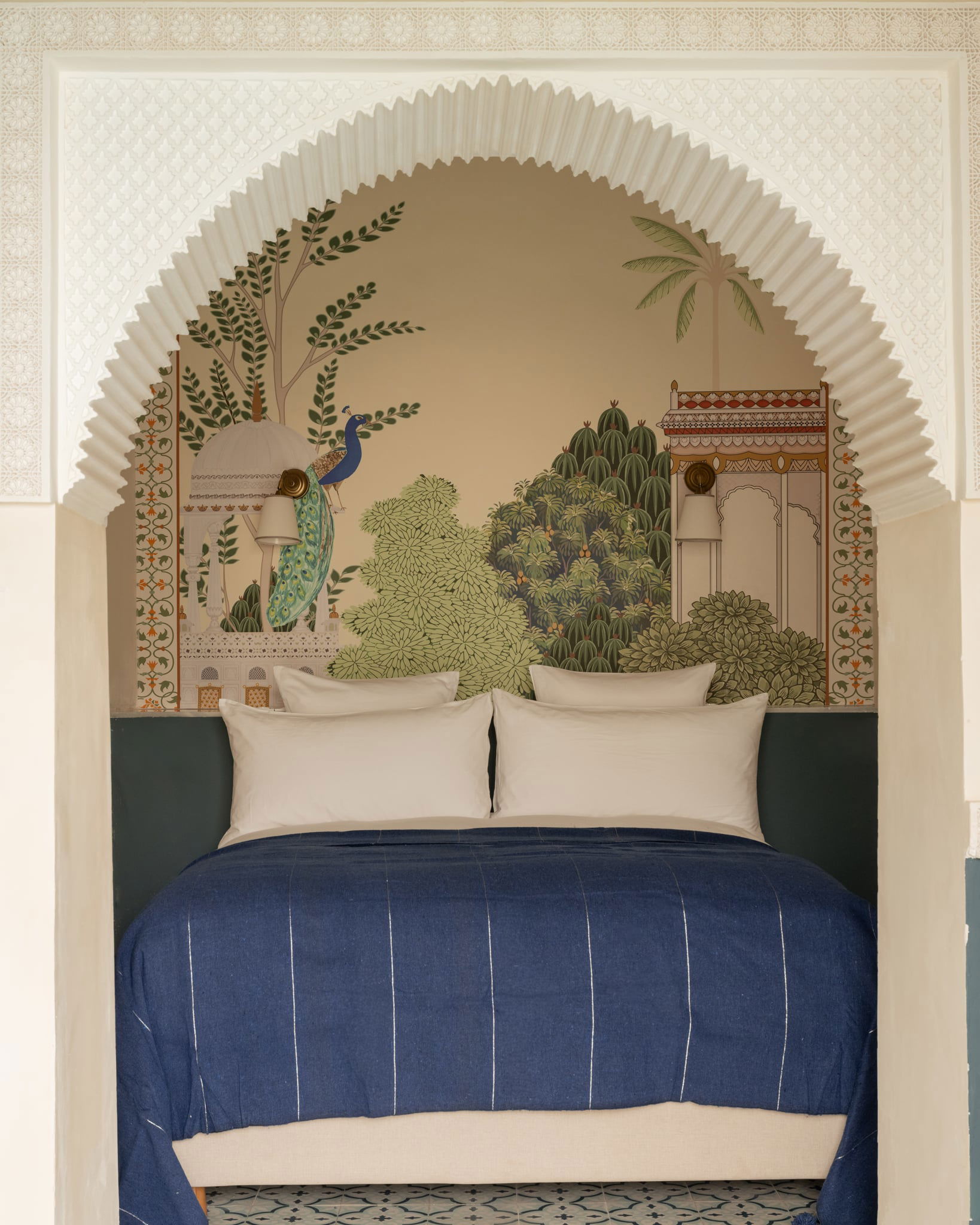
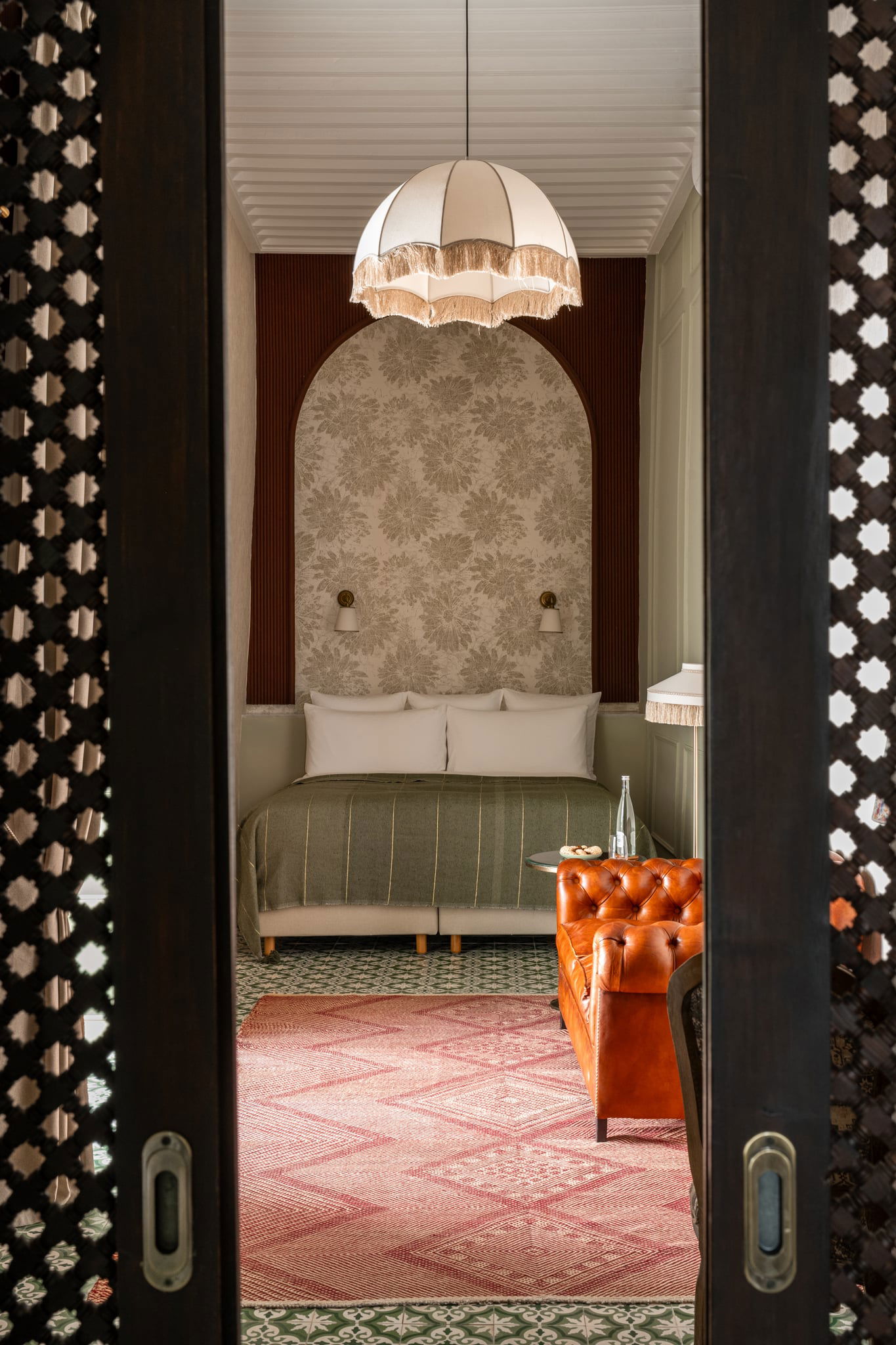
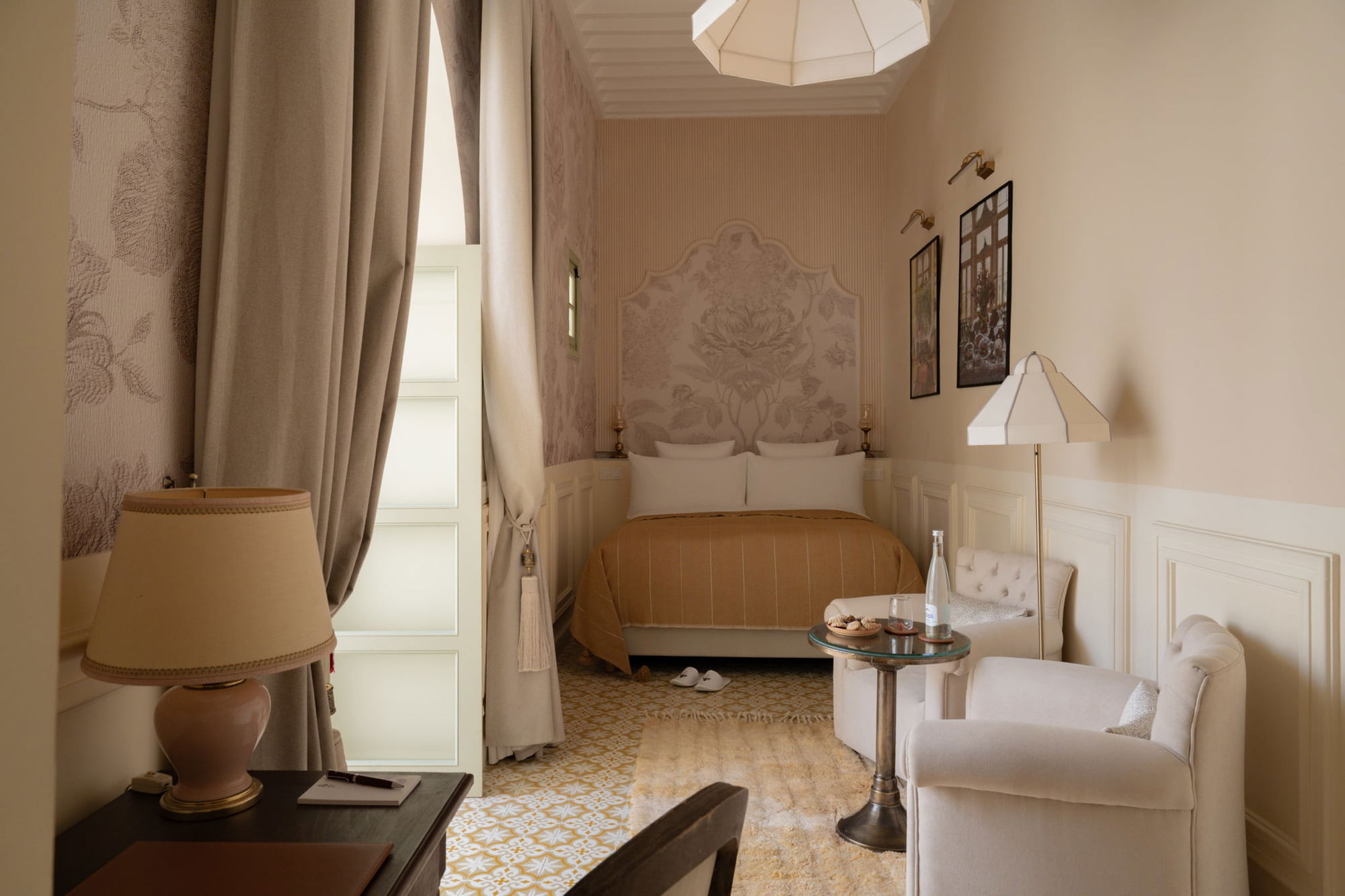
The twelve rooms, four of them suites, are each named after an iconic Lebanese cultural figure, an artist, writer or musician, from Fairuz to Majida El Roumi, Khalil Gibran to Sabah. They run from compact seventeen-square-metre rooms to a sixty-seven-square-metre suite, and no two are alike: a hand-painted mural in one, a botanical wall in another, patterned cement underfoot throughout. The Fairuz Suite, the largest, opens onto a private terrace edged with roses and a living wall. The Majida El Roumi Suite takes its character from a twelve-square-metre mezzanine. Each is conceived as a quiet tribute to the figure whose name it carries.
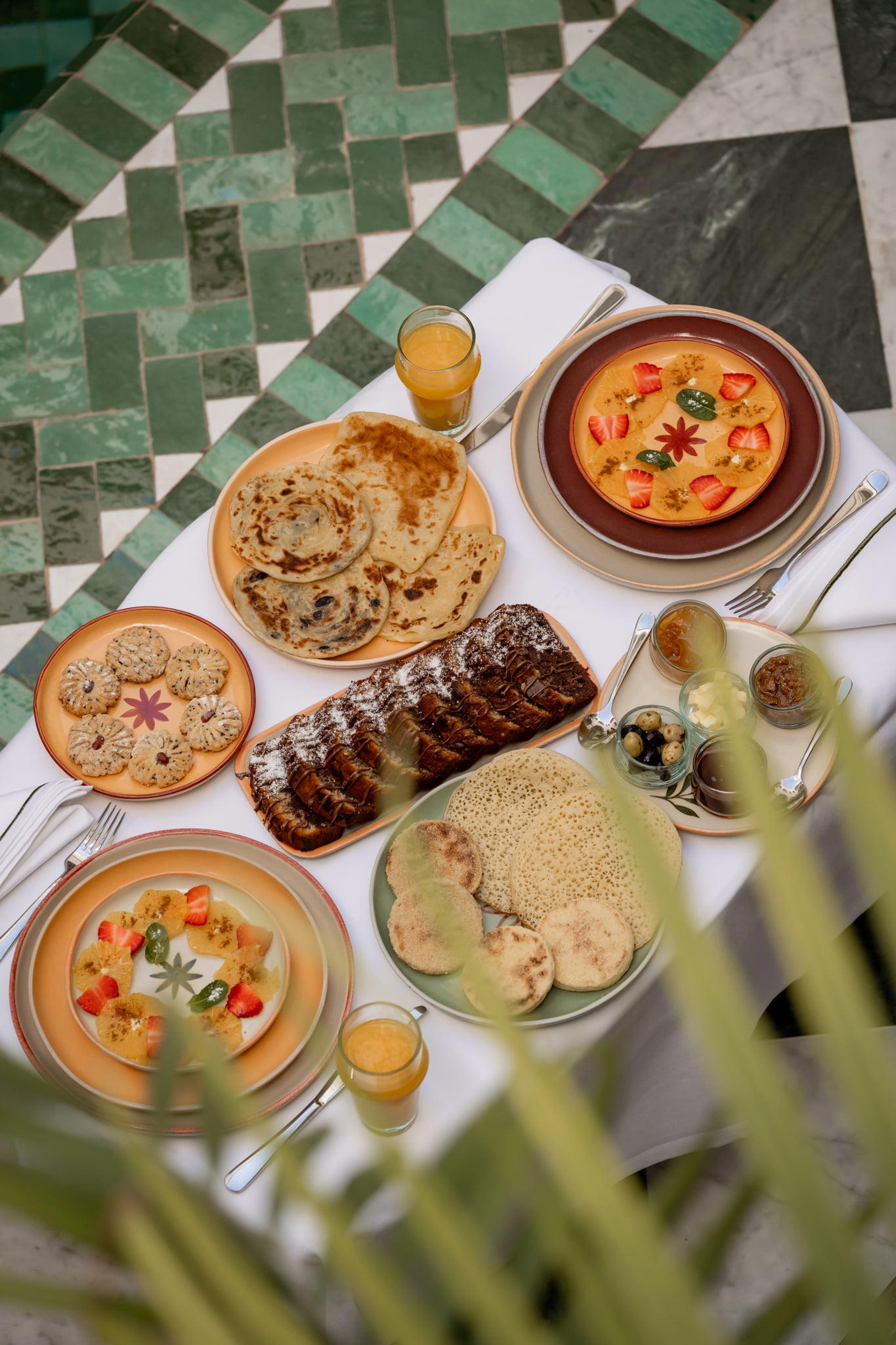
The table keeps to the same logic. An open kitchen holds the centre of the house, the cook in view, the air carrying whatever is on the fire. Reserved for guests, the restaurant serves a seasonal, home-style menu that moves between the two countries: artichoke and quince tagines, fragrant salads, grilled plates, Lebanese classics quietly reworked, and a short run of desserts.
Not a hotel, a Beit
What the house offers the medina is not another entry in the luxury-riad column, but a quiet argument that two traditions can share one roof without either losing its accent. Marrakech has always taken in what arrives at its gates, so the meeting of Morocco and Lebanon here does not read like a fashionable fusion. It reads like deep hospitality and authenticity, each tradition respected in its own right. The owners return to a line of their own, recalling that some encounters transcend chance and become self-evident: where the steps we do not choose lead us home.
You may also like…