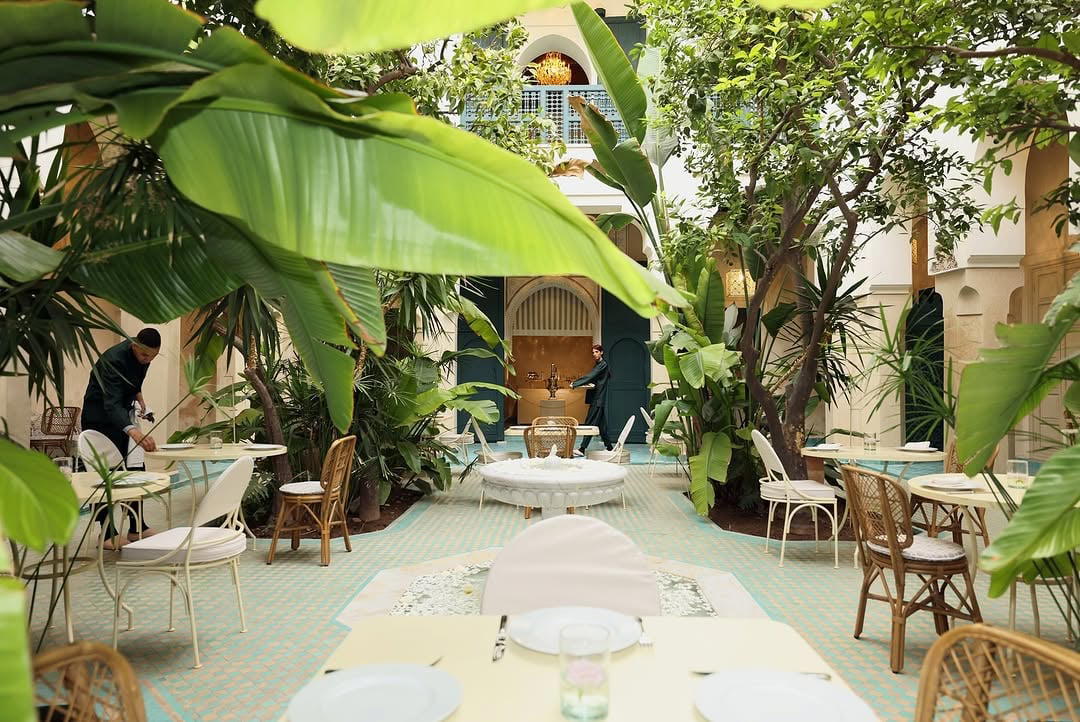
EAT & DRINK
1112 Marrakech: Twelve Teas, Twelve Regions, and the Geography of Moroccan Tea
How a restored riad on Talaa Ben Youssef turns the everyday glass into a reading of the country: the ritual of Moroccan tea, region by region.
Timence Guide Editors · 8 July 2026
The most repeated gesture in Marrakech is also the easiest to overlook. A glass is filled from a height, the amber thread of it catching the light, then set down without ceremony on a low table, a shop counter, a carpet unrolled for a sale. Tea arrives before conversation and outlasts it.
And nothing in the country is offered so deliberately. It is the first thing a guest receives and the last thing taken after a meal, the currency of welcome and the quiet close of a negotiation. Precisely because Moroccan tea is everywhere, it becomes invisible to the people moving through it, a background hum rather than a thing to be noticed.
A few steps from the Medersa Ben Youssef, on Talaa Ben Youssef, a teahouse asks you to notice. 1112 is built on a single, quietly radical premise: that the glass you drink without thinking is not one thing but twelve, and that each version belongs to a place.
A map you can drink
The twelve are not a poetic conceit. They are the twelve administrative regions of Morocco, the same lines a ministry draws on a map, redrawn here as a tasting. The house has quietly rebuilt the country in teapots.
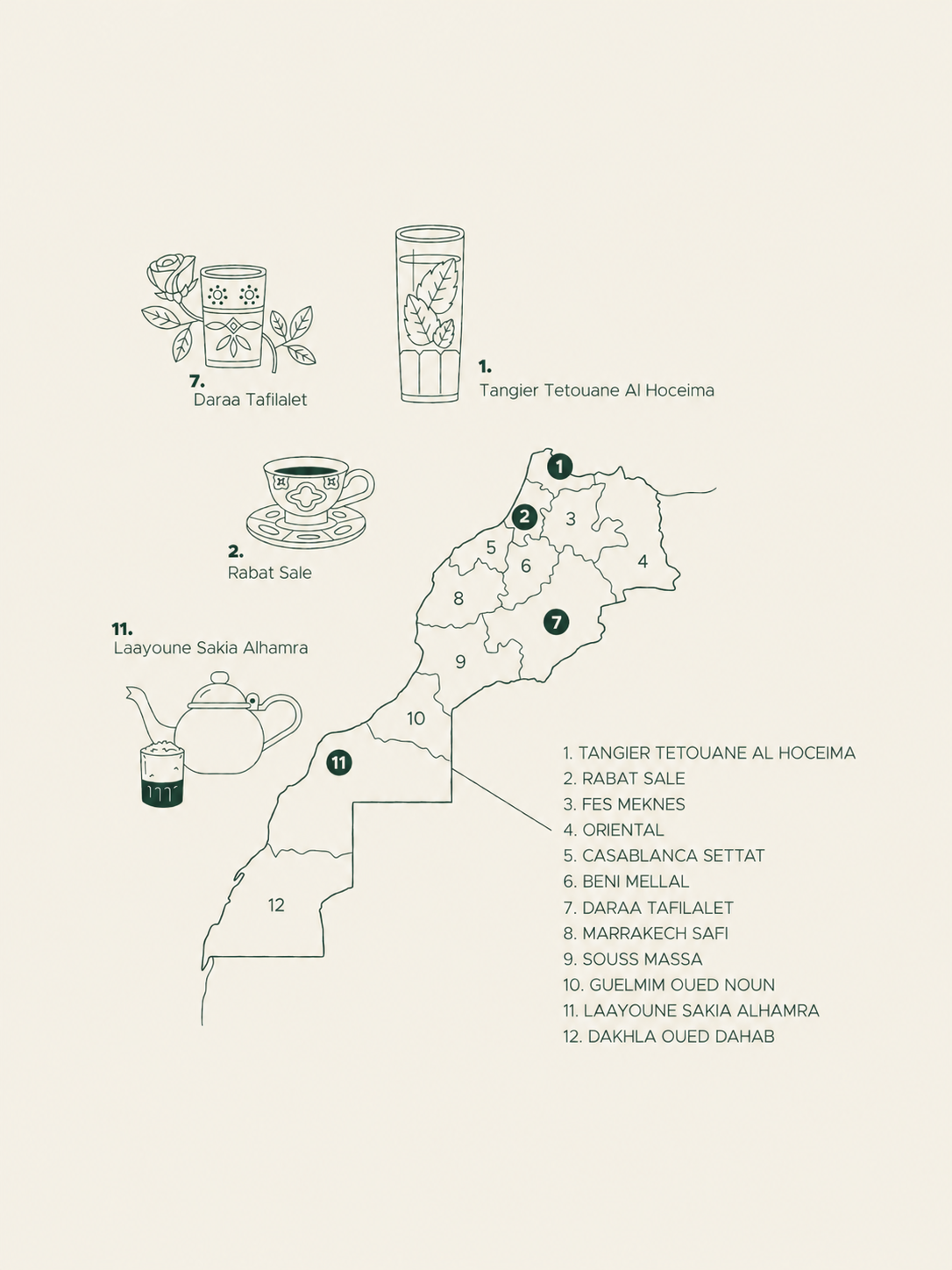
Read it from north to south and a landscape appears. Around Tangier the glass is the familiar one, fresh mint poured tall. In Fès it thickens into the old craftsmen's blend of Seffarine Square, a tea of nine herbs, verbena and geranium and marjoram and absinthe and sage folded through four kinds of mint. In Marrakech's own glass, Essaouira's sea-trading past resurfaces as green tea scented with lavender and green anise.
Keep going south and the tea grows rarer. The Draa-Tafilalet arrives perfumed with roses from Kalaat M'Gouna, Souss-Massa carries saffron from the fields of Taliouine, and the Saharan regions are poured from heat-holding enamel pots, smoky and concentrated. At the far edge, in Dakhla, the cup is infused with ambergris and priced on request, brewed at your table by a tea master in a ceremony the house calls jma3aa. The country's emptiest, most distant corner holds its most precious glass.
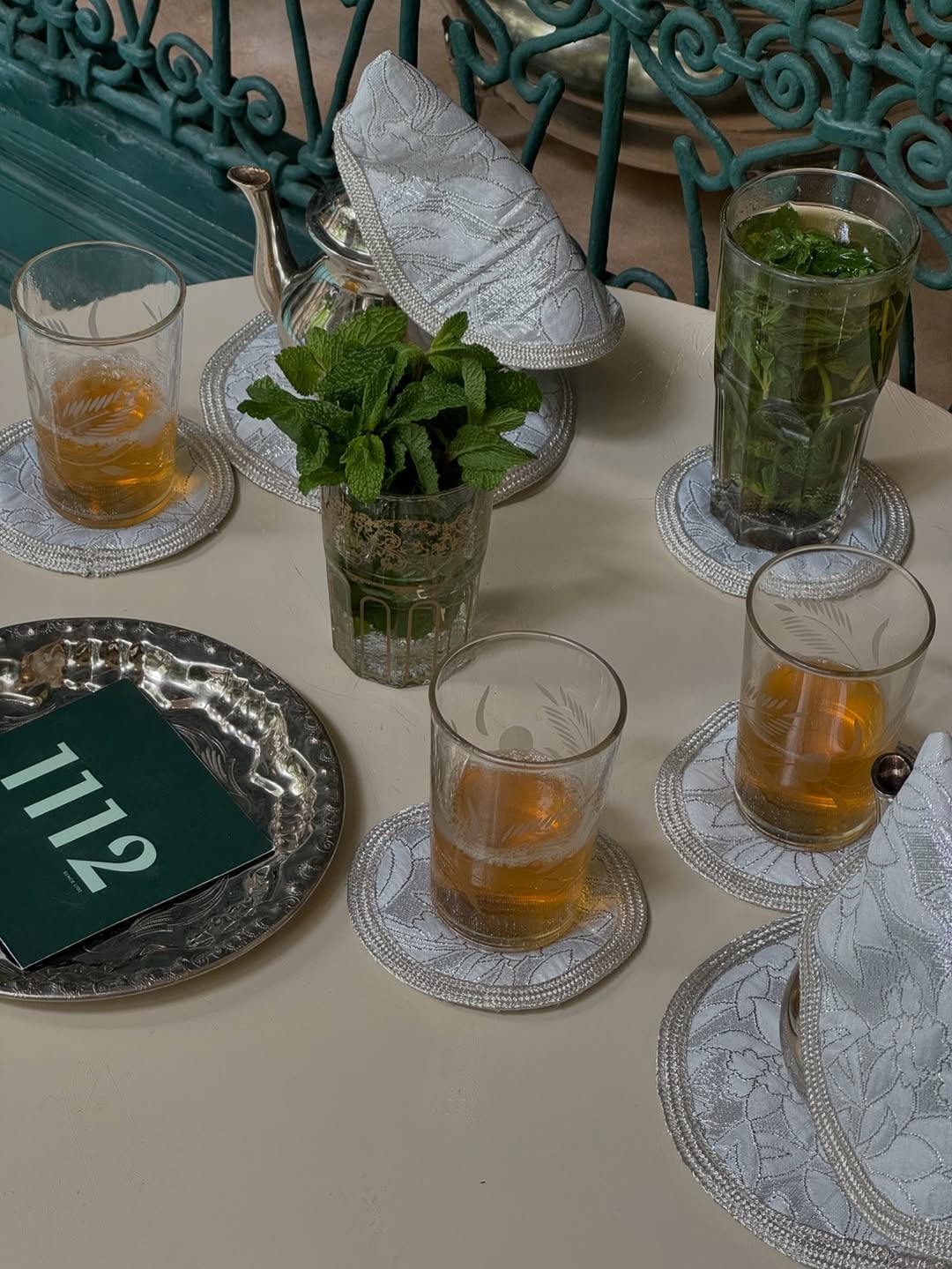
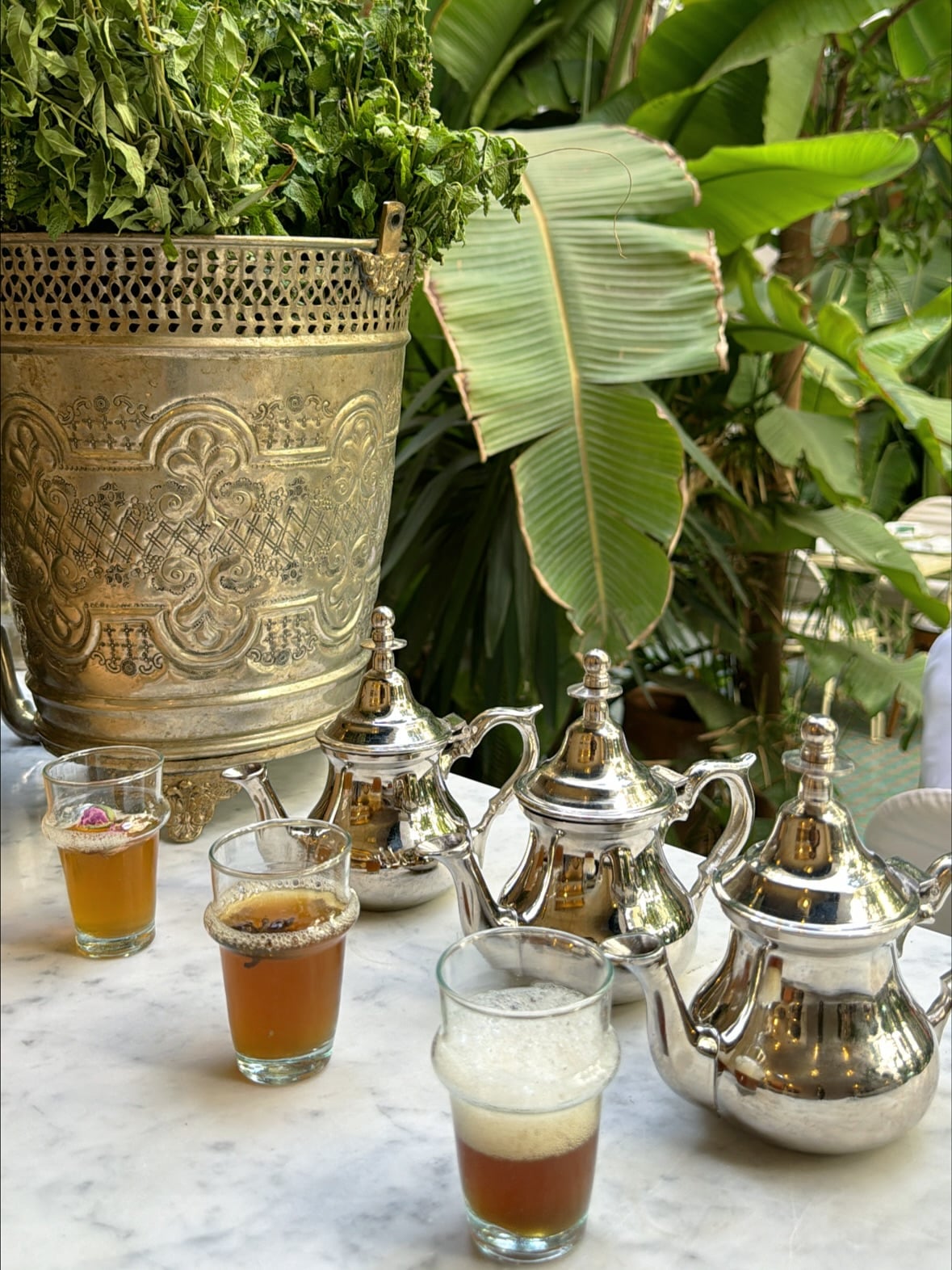
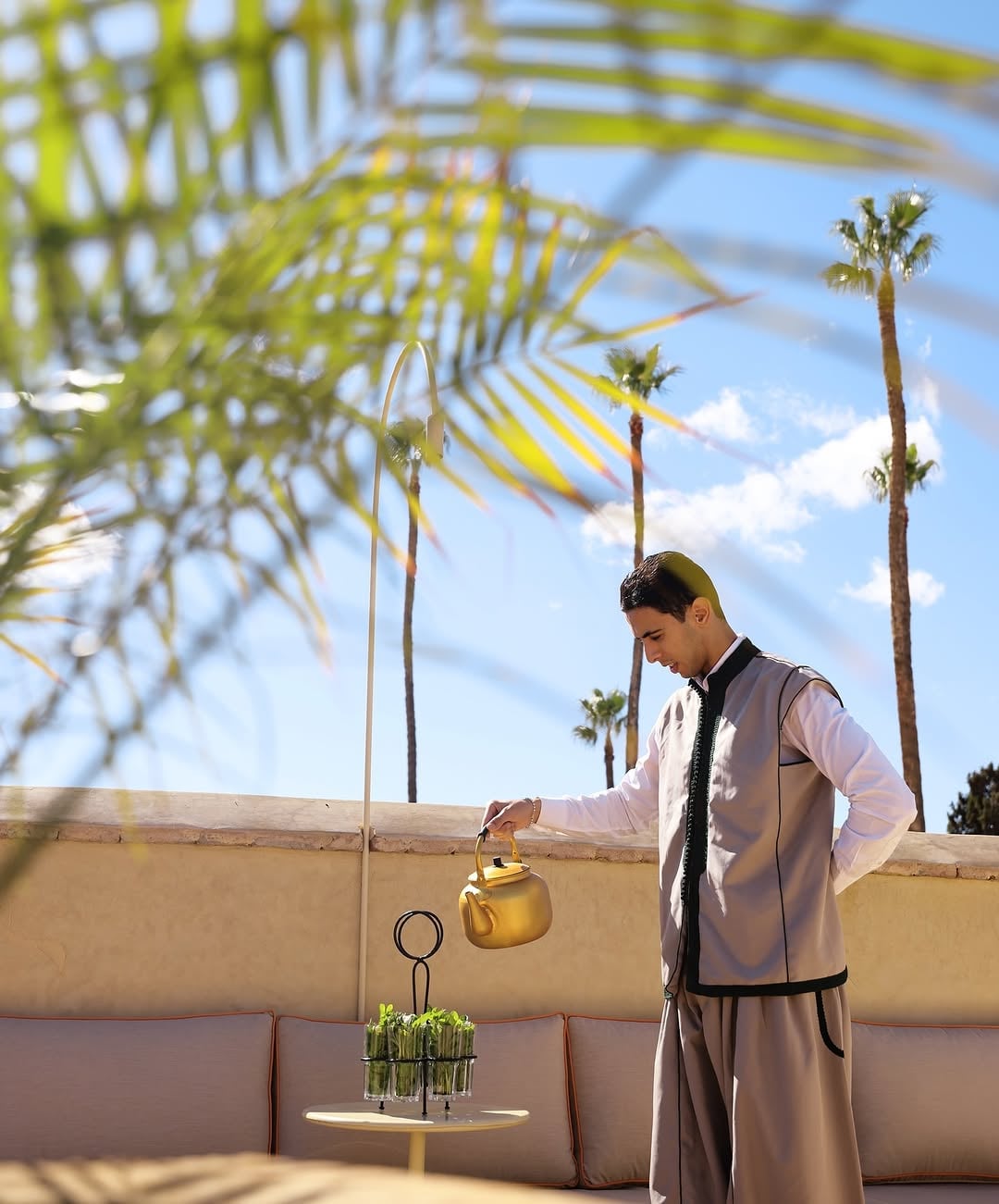
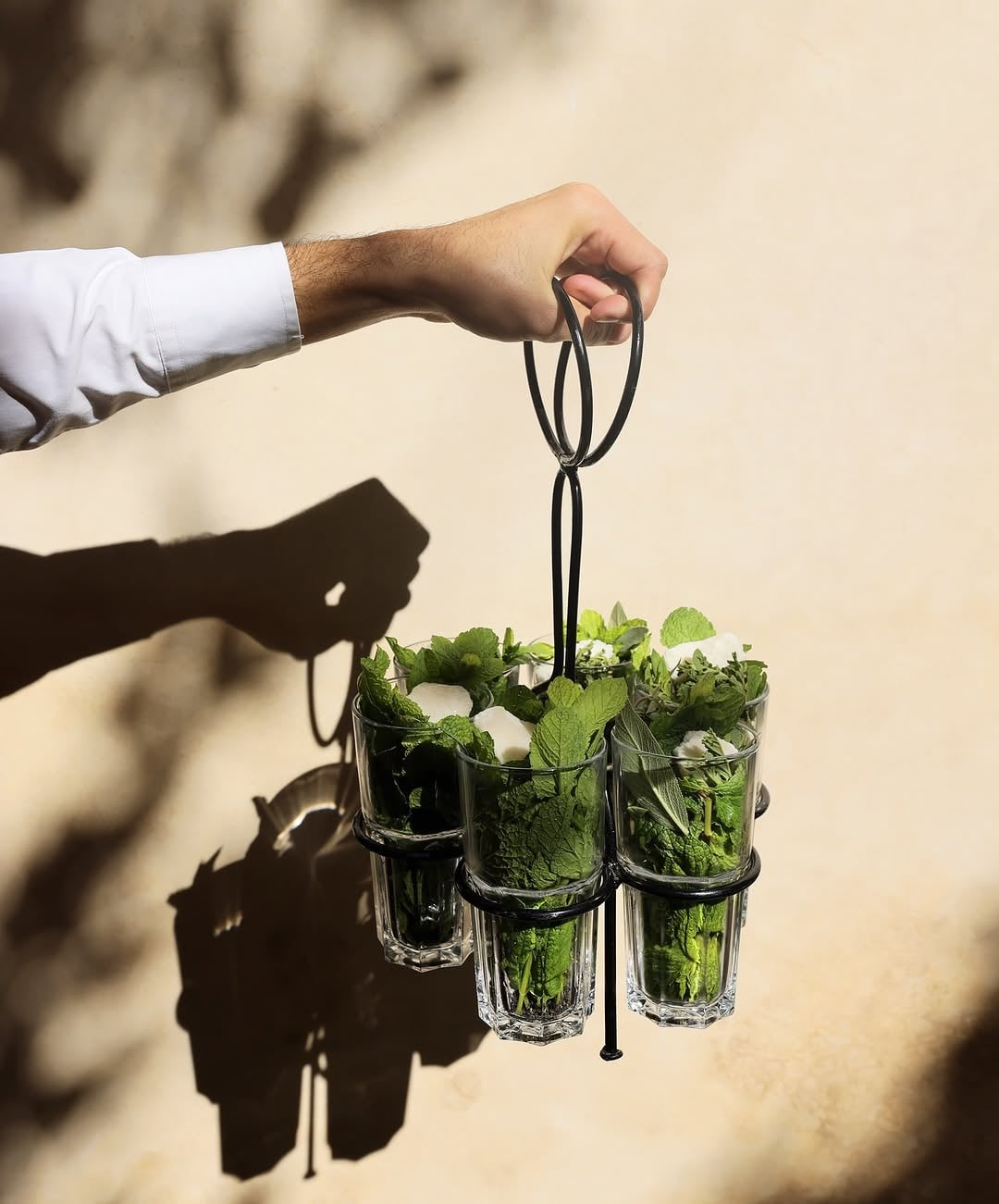
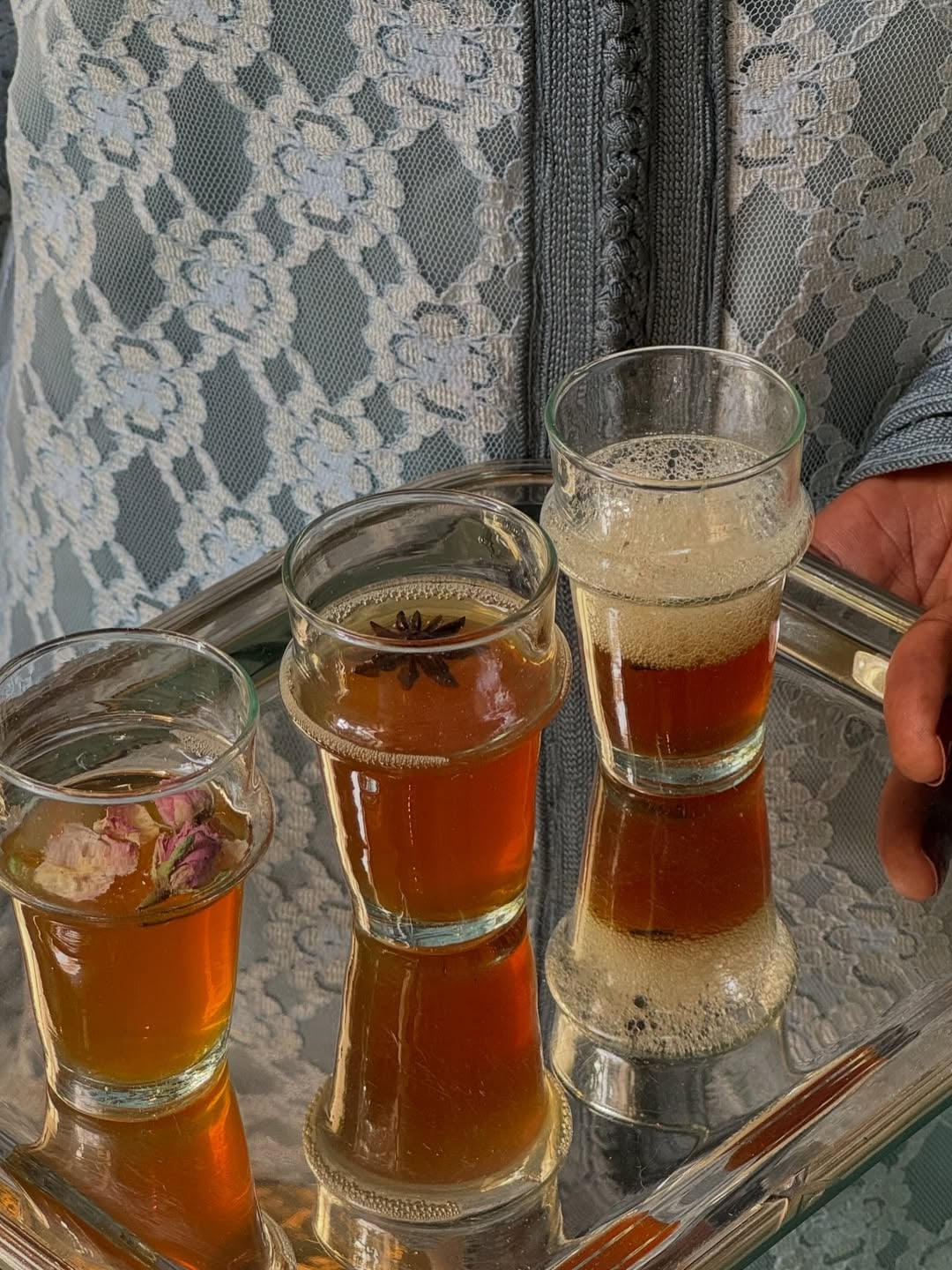
There is even an honest joke folded into the map. The entry for Rabat is not tea at all but coffee, cinnamon and orange blossom served in silver pots, because in the capital, the house concedes, coffee tends to win. A guide willing to mark where its own theme breaks down is the kind worth trusting.
The ritual, slowed down
All of this depends on the ceremony being taken seriously rather than performed. The pour from a height is not for a phone camera. It aerates the tea and raises the light crown of foam by which a well-made glass is judged, and the whole sequence, the rinsing, the first pot returned to the leaves, the tasting and adjusting, is a form of attention paid to whoever is sitting across from you.
1112 builds time into the visit on purpose. It keeps the old rhythm of the eleven o'clock tea, the mid-morning pause taken with a few pastries, and at the southern extreme it stages the desert's jma3aa, tea made slowly at the table as an act of hospitality rather than a transaction. The height of the pour is never the point. What the pour is for is.
The house makes the same argument
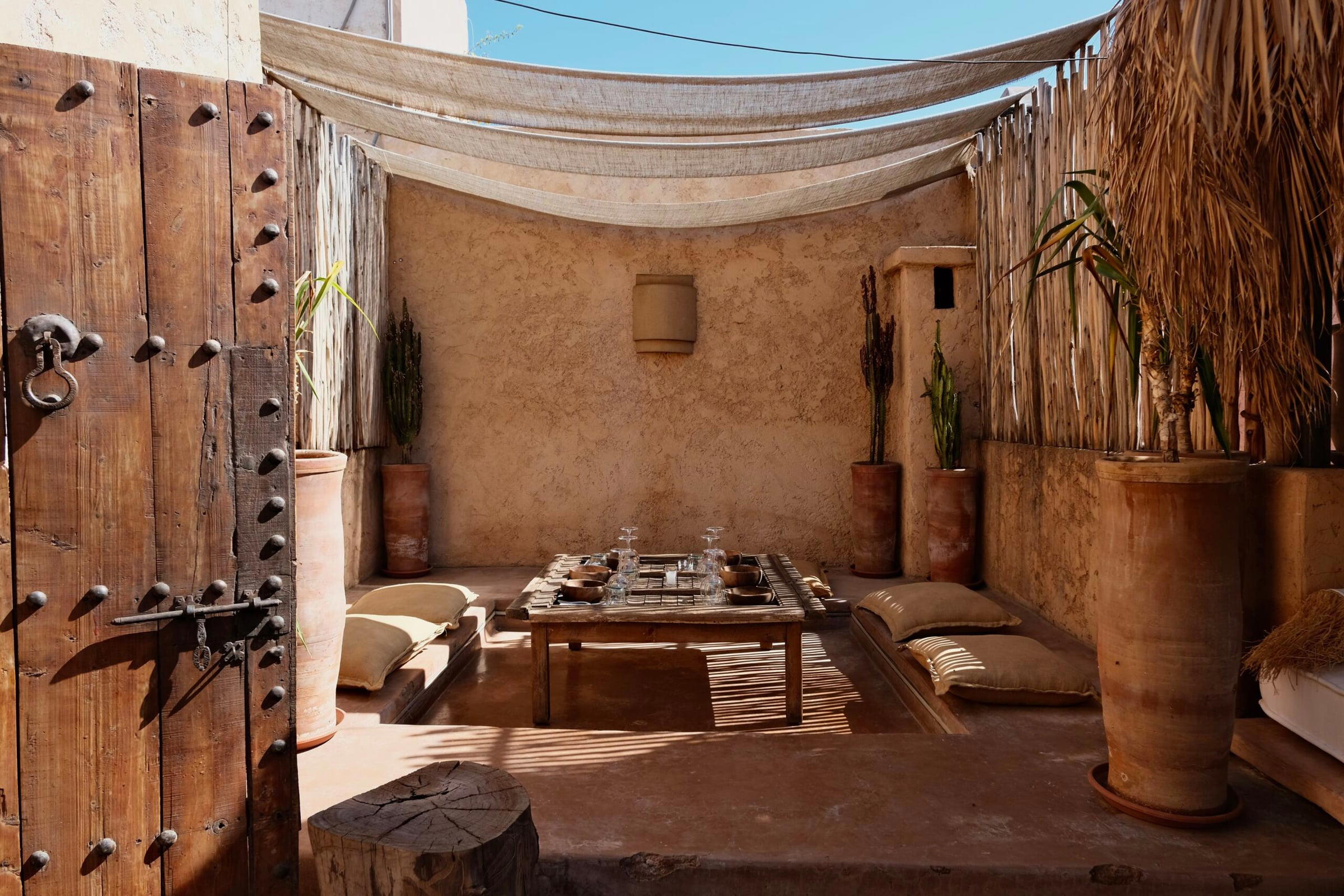
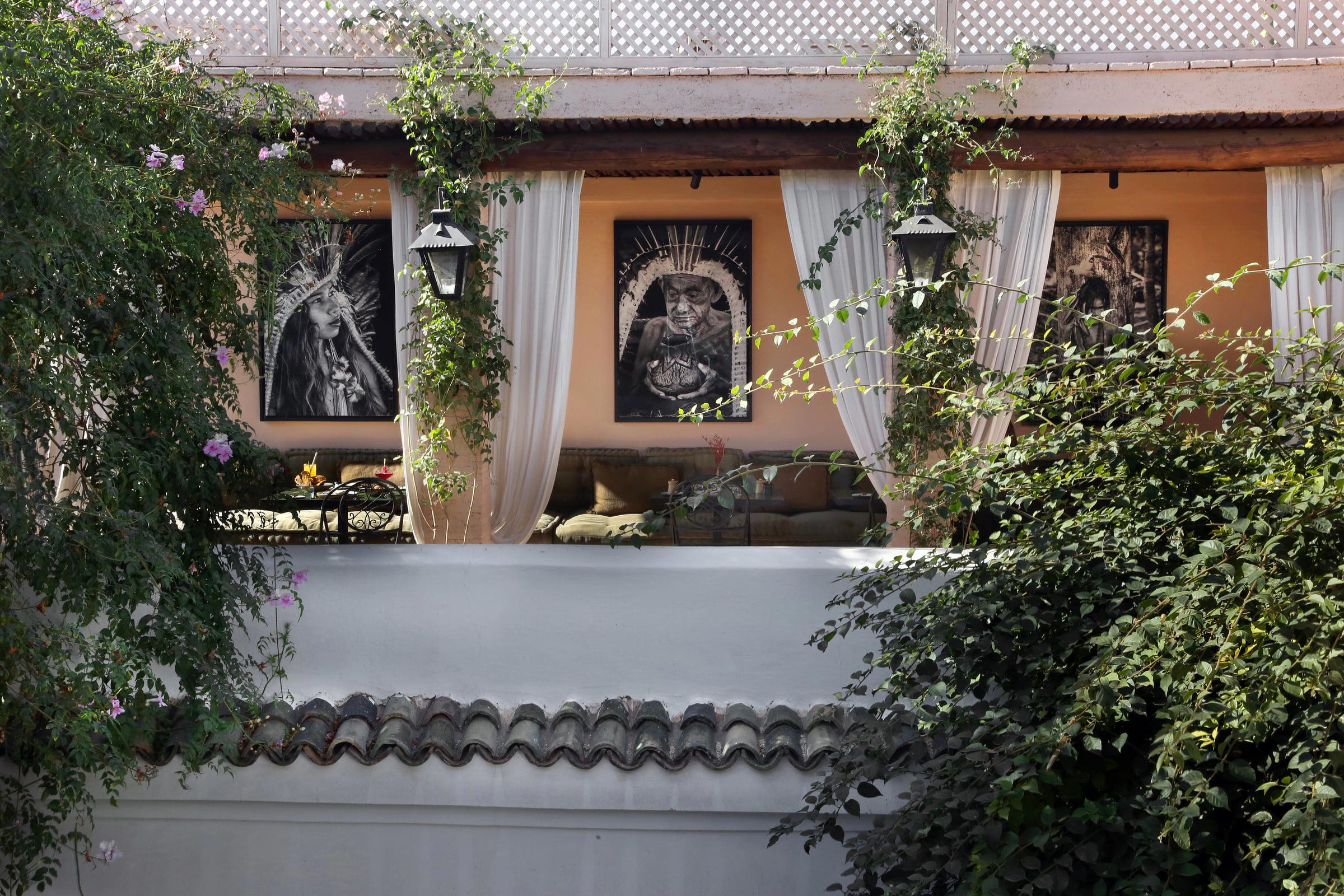
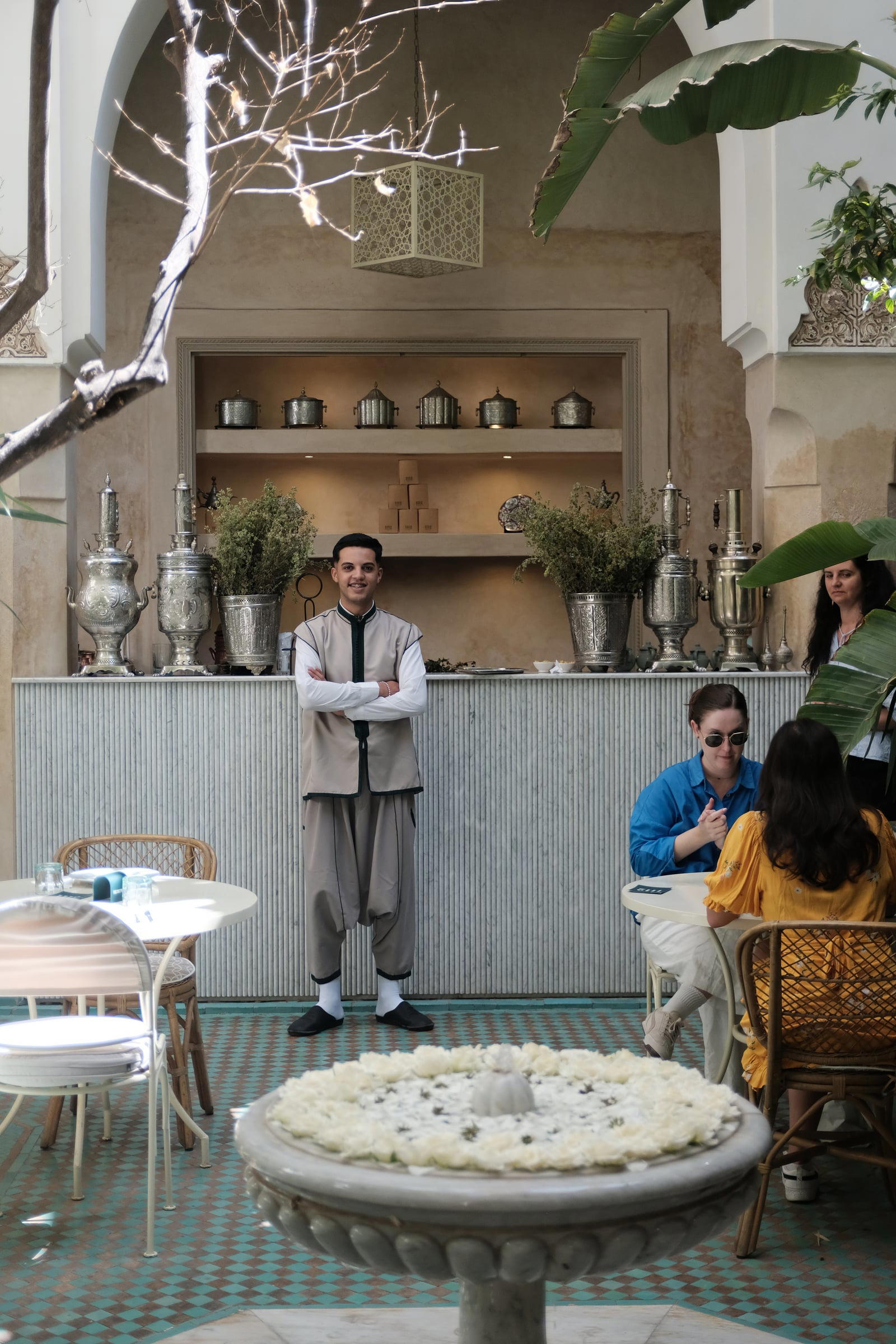
The setting is not incidental to any of this. 1112 takes its name from a date carved into the wooden ceiling of the riad it occupies, the year 1112 of the Islamic calendar, which falls around 1700. The house is more than three centuries old, and it carries that age openly.
It was brought back by the Ait Ben Abdellah family, who have spent decades restoring riads across the Medina, among them Dar Cherifa, Dar Zellij and Dar Bensouda. The distinction in their work is restraint. The woodwork, the zellige, and the proportions of the original house have been kept rather than reinvented, and you feel it the moment you step off the lane into the courtyard.
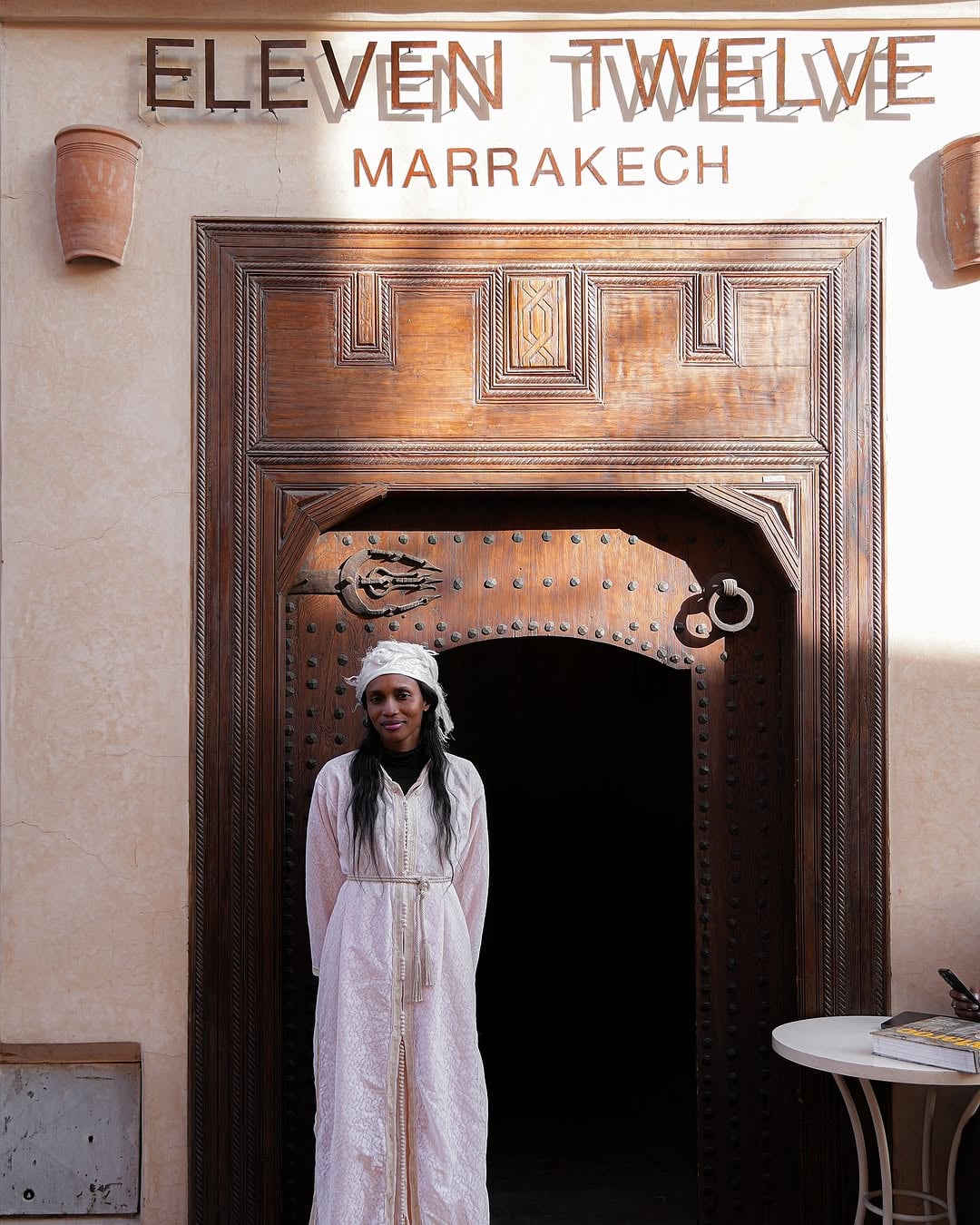
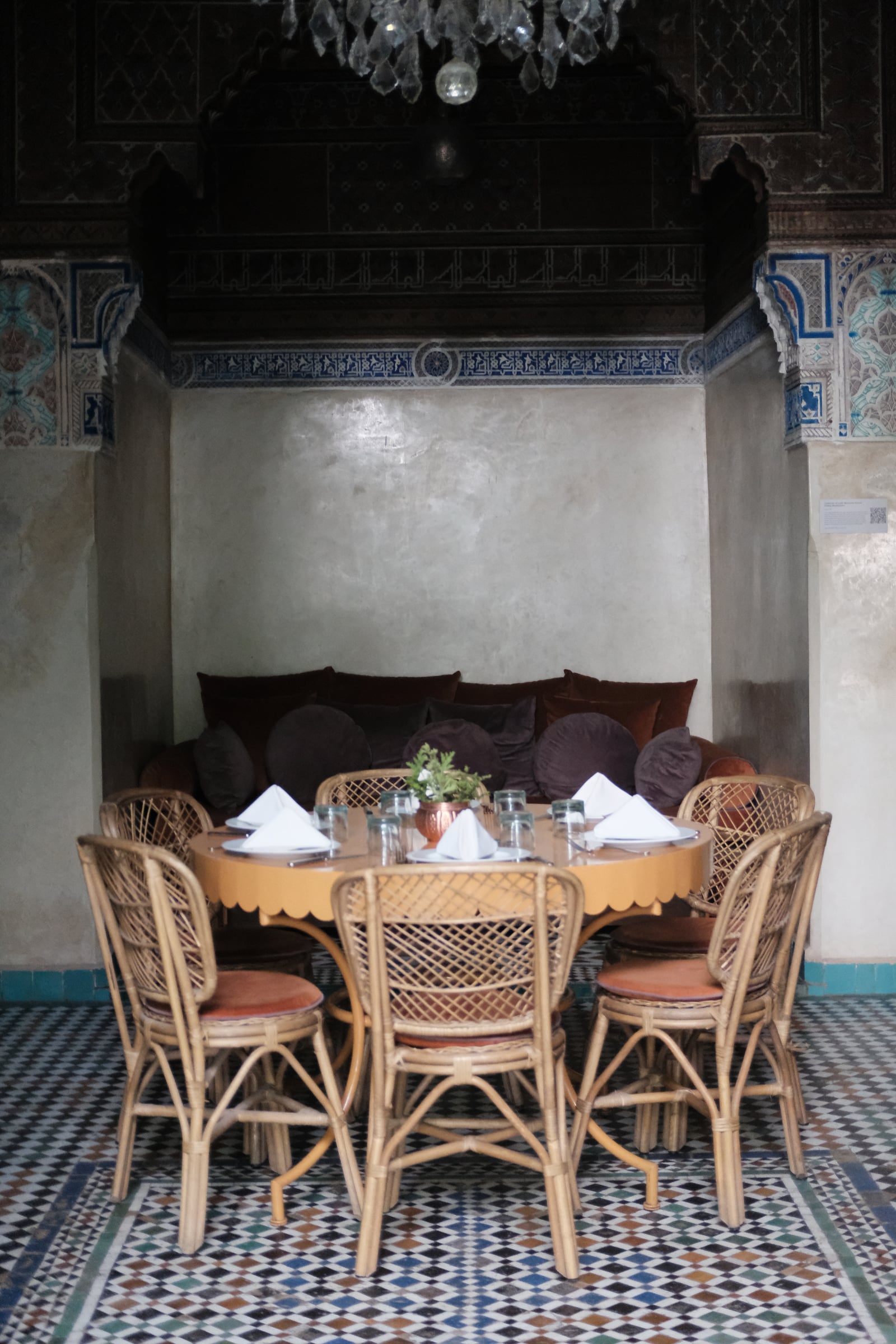
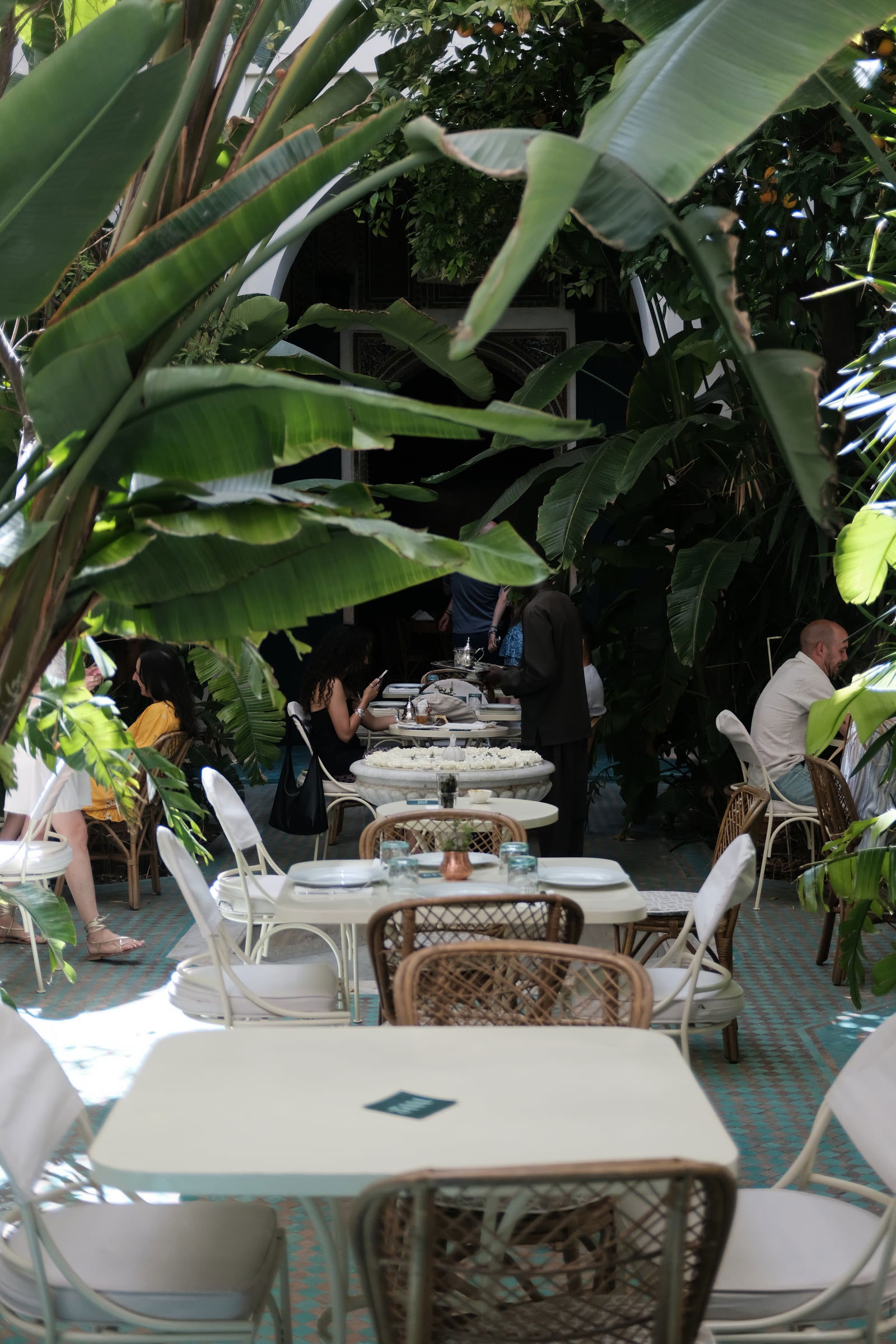
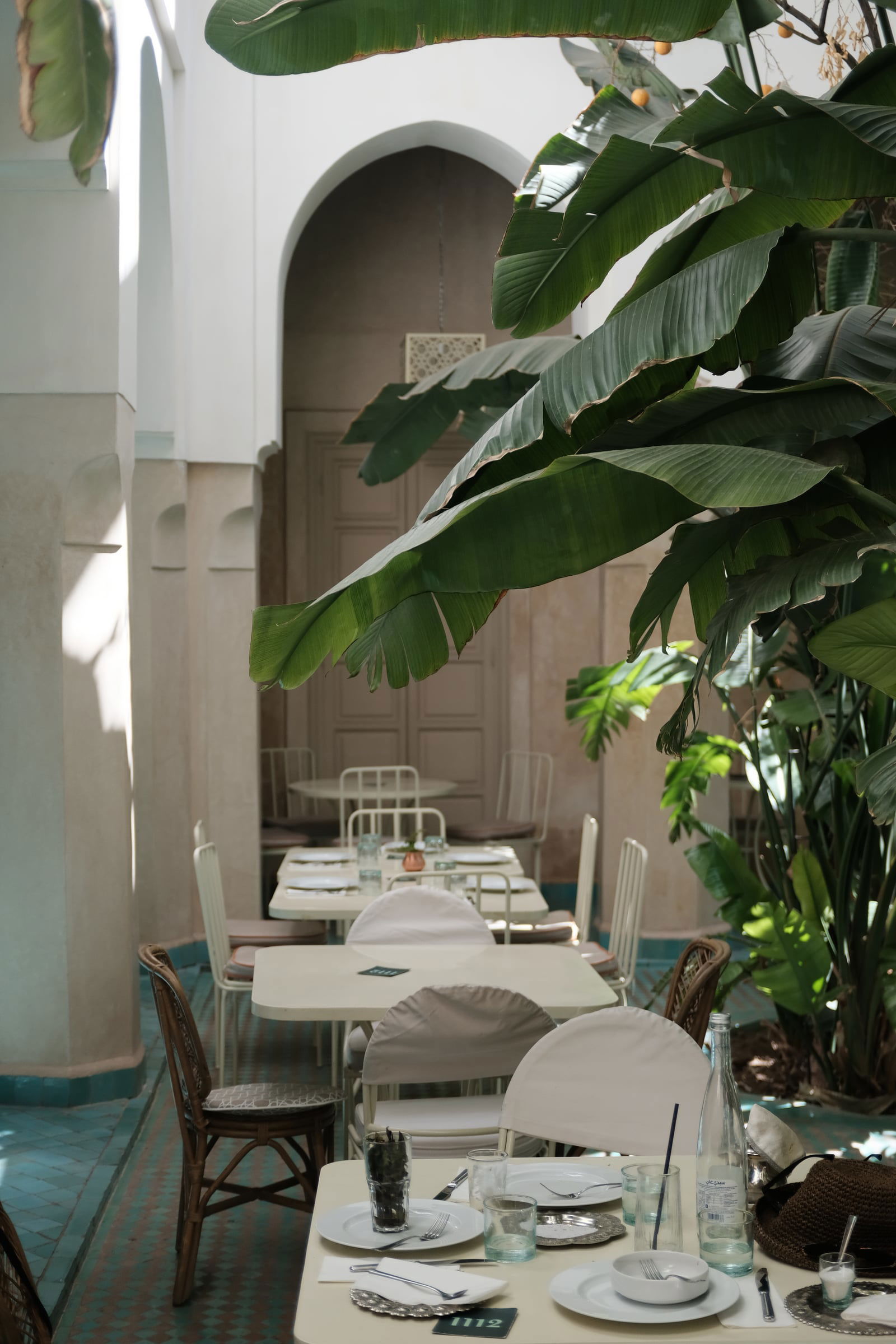
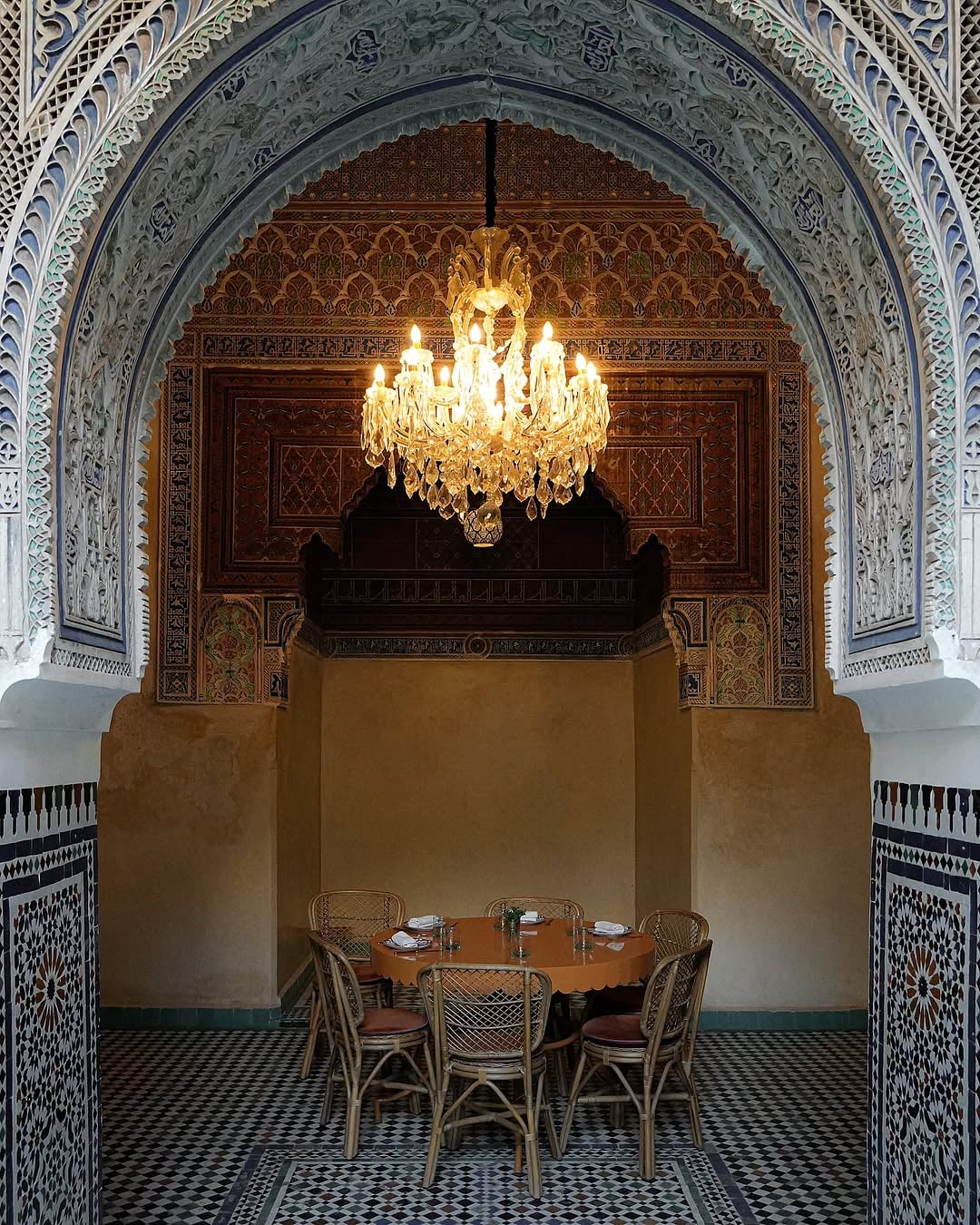
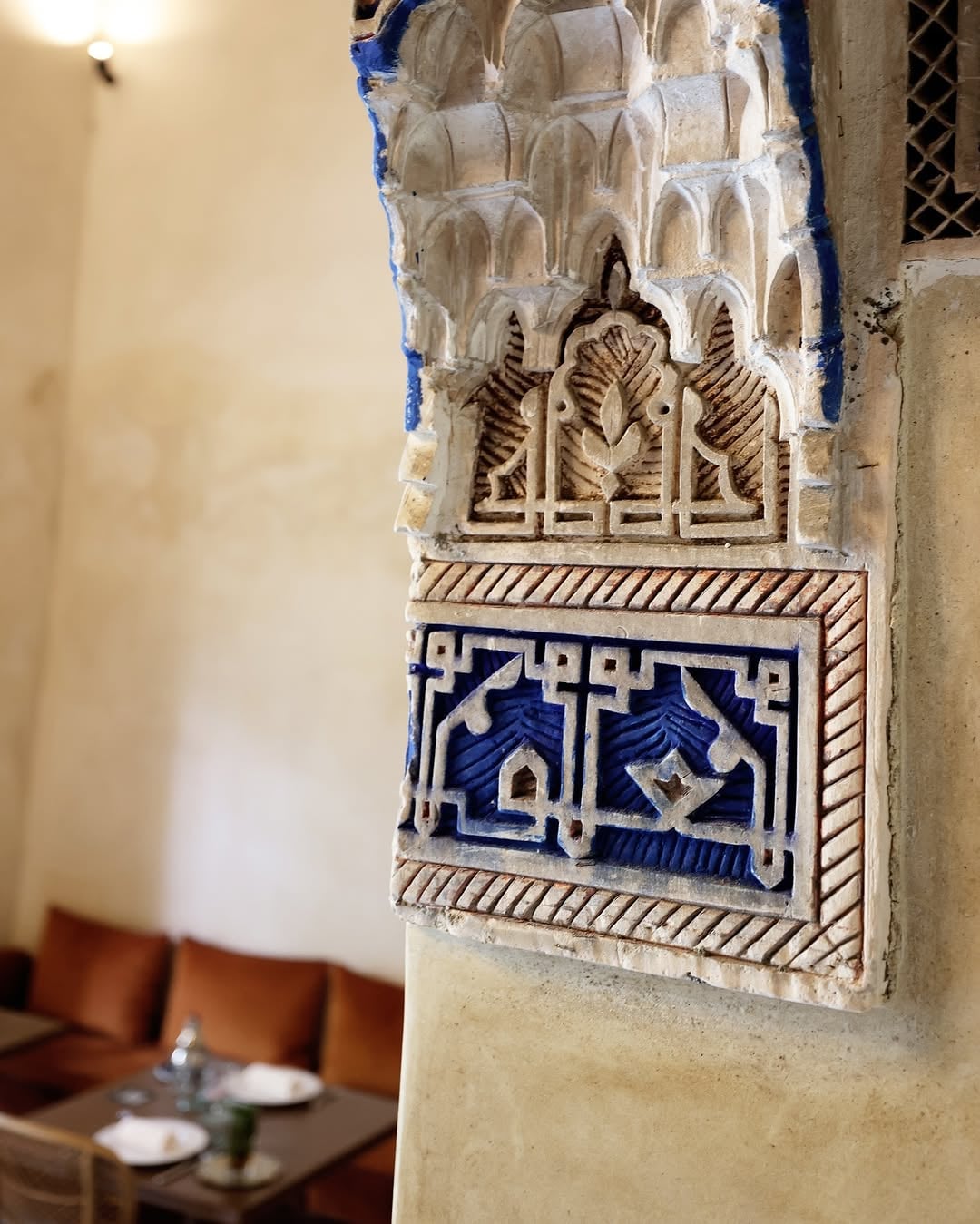
That restraint is the same argument the tea makes. Both refuse the shortcut. Alongside the tea room sit a restaurant and a small museum: the kitchen revives dishes that had quietly fallen out of use, the madfouna of the Tafilalet, a Fassi qedra of beef, almonds and saffron, a tanjia turned slowly with Taliouine saffron, while the museum keeps the objects of the ritual itself, the pots and trays and worked-metal vessels through which tea entered Moroccan life. It is a house that treats a drink as heritage, which in this country it plainly is.
An hour against the current
The Medina is built to keep people moving, a machine of lanes and stalls that resists standing still. A restored riad works against that current by design. Thick walls hold the quiet, the courtyard opens a square of sky over the shade, and time loosens in a way it rarely does outside the door.
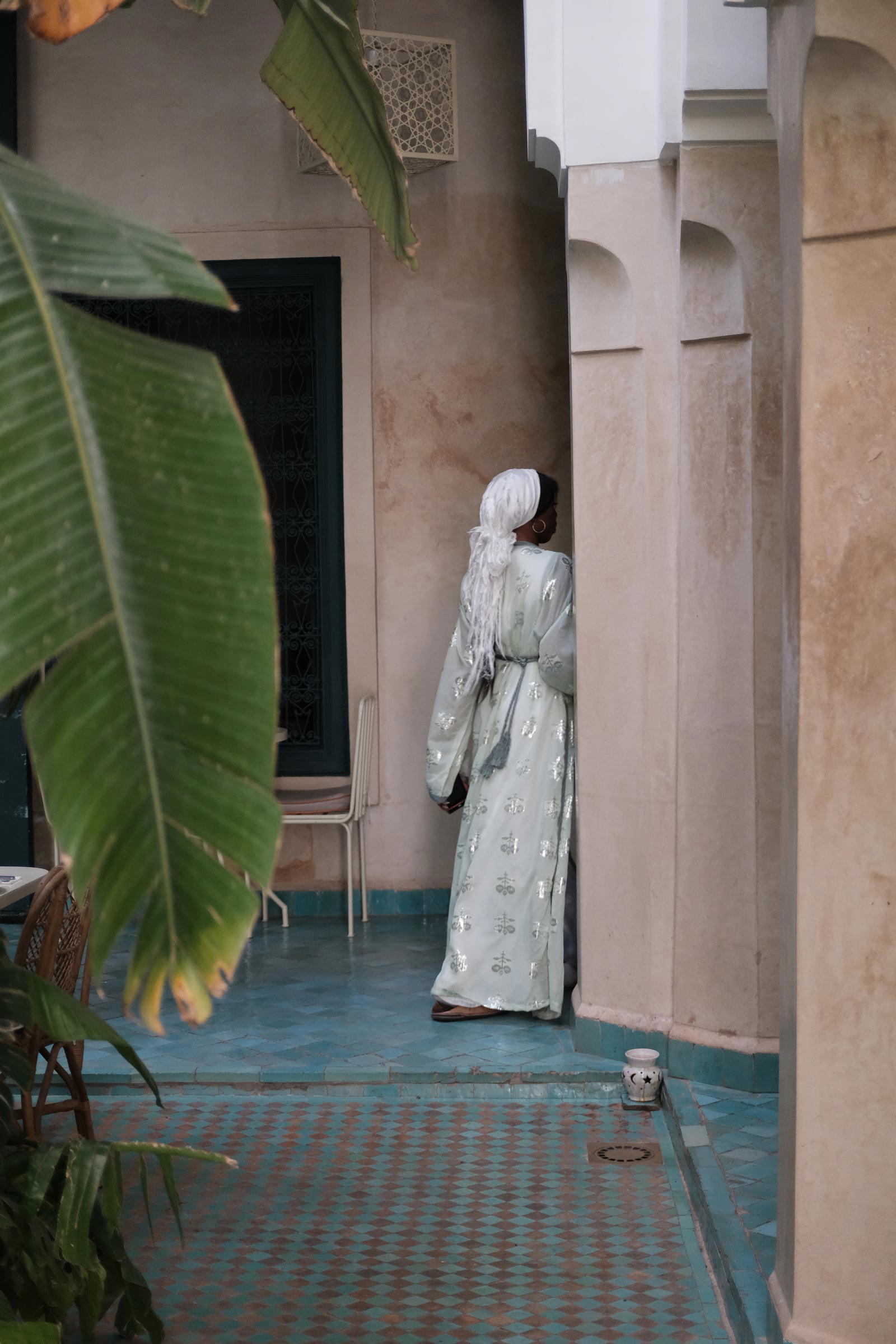
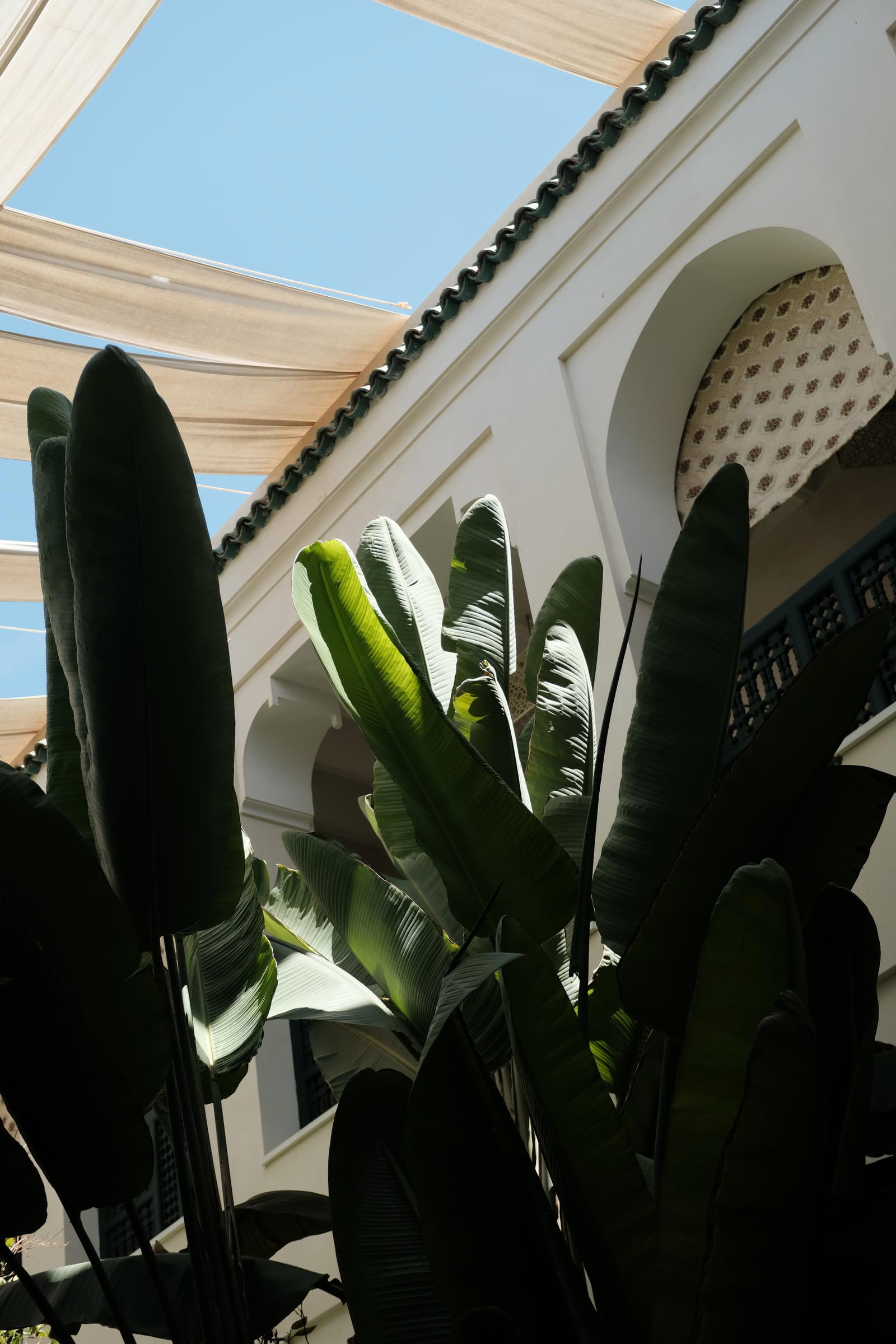
To spend an hour here over a single glass is a small and deliberate act of resistance, the slow counterpoint the city keeps a few metres behind its busiest streets, not far in spirit from what Bacha does with coffee.
That, finally, is what the twelve teas are for. Not a menu to finish, but a way of learning that the country you are walking through has a taste, and that it changes as you cross it. You step back into the noise of Talaa Ben Youssef able to read the next glass, wherever it is poured, a little differently.
You may also like…