EAT & DRINK
Pétanque Social Club: Behind the Blue Door in Guéliz
On Boulevard Mansour Eddahbi, behind the Art Deco shell of the Ciné-Palace, a 1930s pétanque club has come back as Marrakech’s most curated outdoor social hour.
Timence Guide Editors · 28 June 2026
The door is blue, wooden, and gives nothing away. No sign, no menu in a stand, no name carved above the lintel. On a Tuesday in April you might walk past it three times before you understand what’s on the other side. The address is 70 Boulevard Mansour Eddahbi, in Guéliz, behind the Art Deco shell of the Ciné-Palace, but the address is almost beside the point. The place wants you to find it the way Marrakech tends to ask you to find things: from a friend, by accident, or because someone told you to look for the door without a name.
Behind it is the Pétanque Social Club, a 1930s gravel club that closed for decades and reopened, in 2024, as the most cinematic outdoor bar-restaurant in Marrakech’s new city.
The club, before it was a club again
The original Pétanque Club of Guéliz opened in the 1930s, when the neighbourhood was still the French ville nouvelle and the men who played here were doctors, judges, and shopkeepers who came after work to throw bowls until dark. Photographs of those founding members now hang on the walls inside. The club went dormant for decades, the gravel pitch overgrown, the bar shuttered, the trees taller than the buildings around them.
It took Kamal Laftimi three years to acquire it. Laftimi is the restaurateur behind Le Jardin, Café des Epices, and Nomad, three of the addresses that effectively re-wrote how visitors and locals navigate the medina over the last fifteen years. The Pétanque is his first project outside the old city, and the longest he has waited for any address. "This was one of my favourite spots in Guéliz," he has said, and the line is worth taking literally: he was a customer of the building before he was its owner.
Inside Diego and Alexeja’s Magic Totalism
The design went to Diego Alonso and Alexeja Pozzoni of DiegoandAlexeja Art & Design Studio, an Ibiza-based duo whose stated approach goes by the name Magic Totalism: a slow accumulation of pieces with provenance and time. Their brief was not to renovate but to wake the rooms up without erasing what they already were.
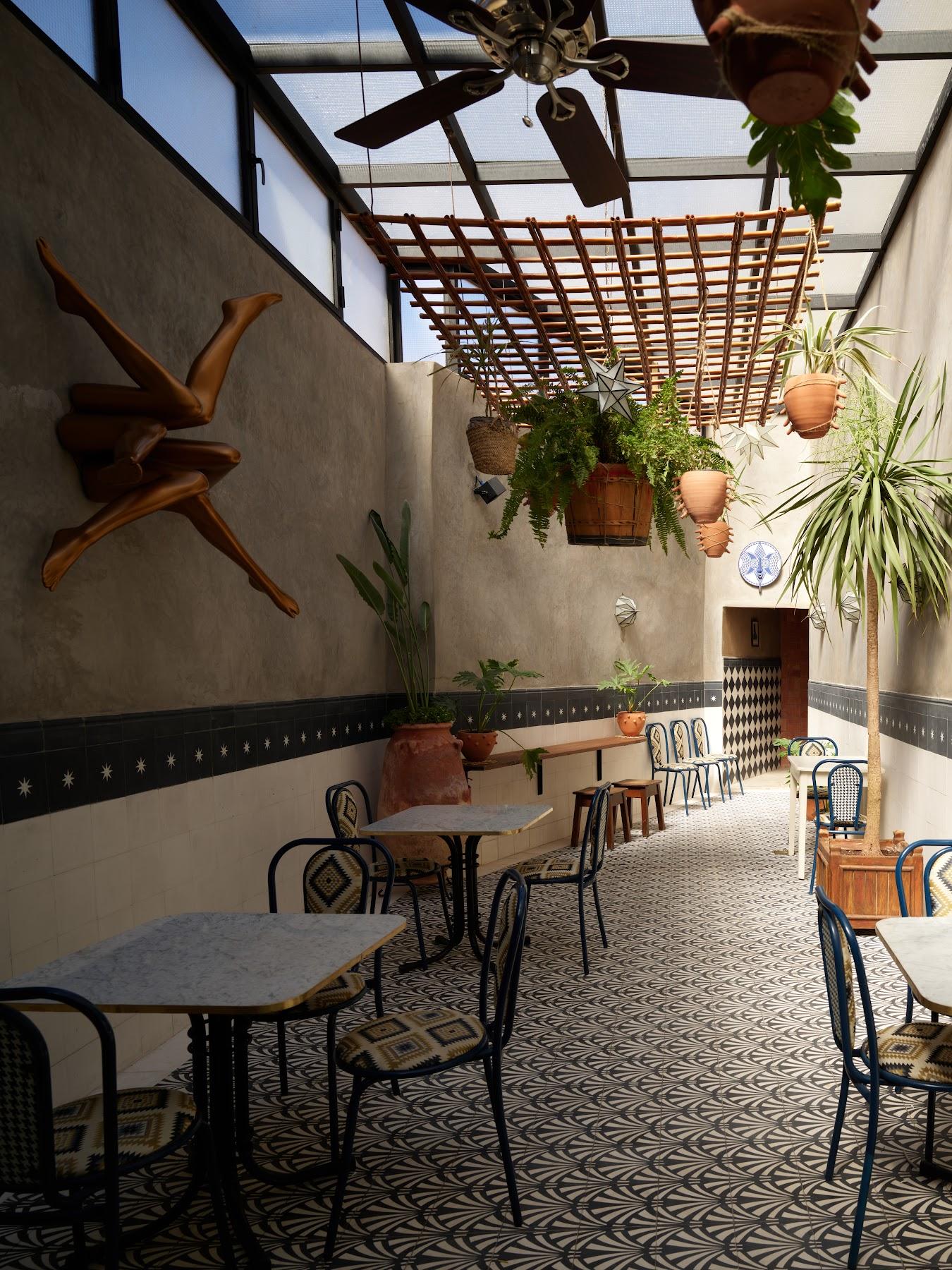
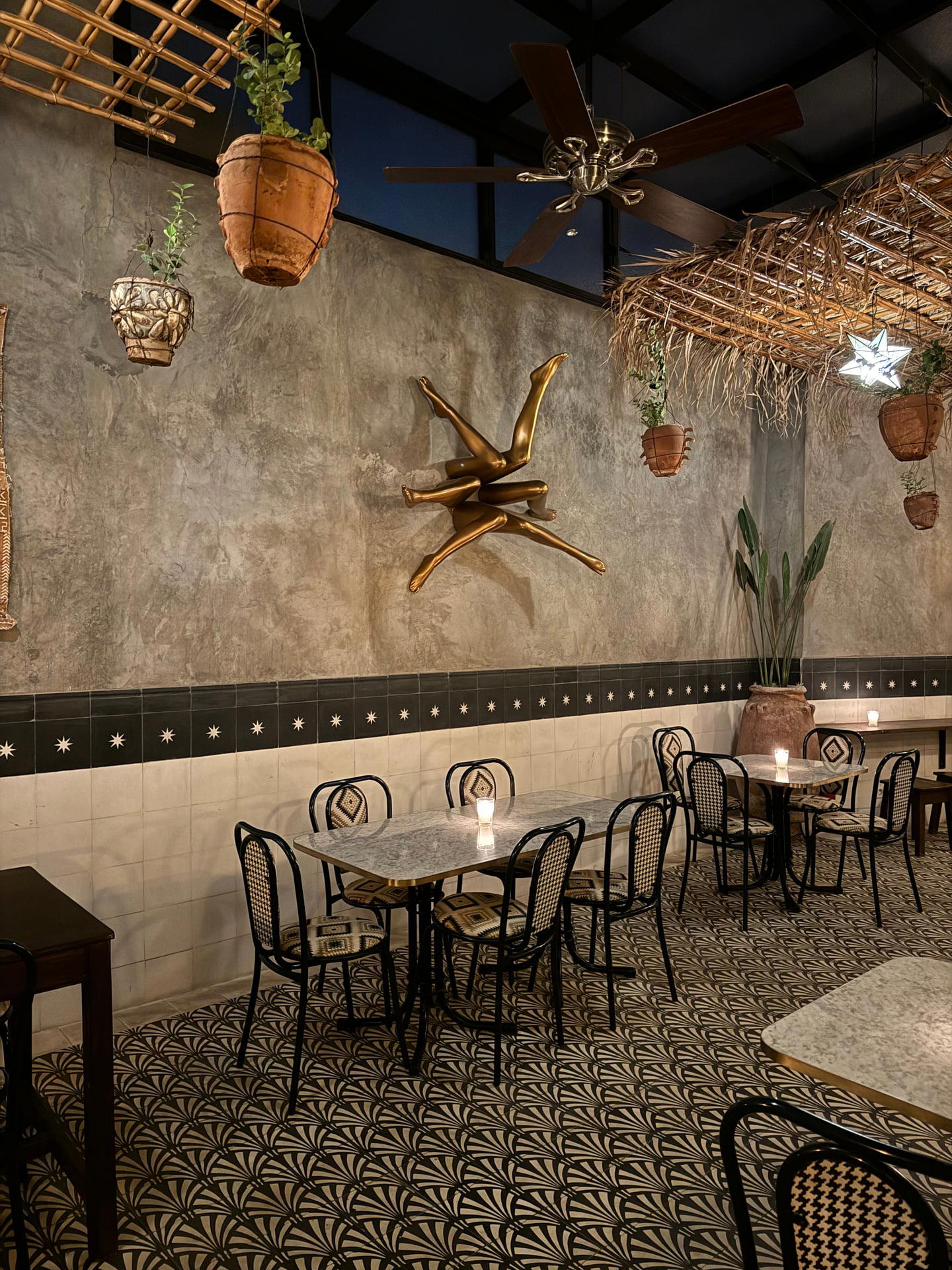
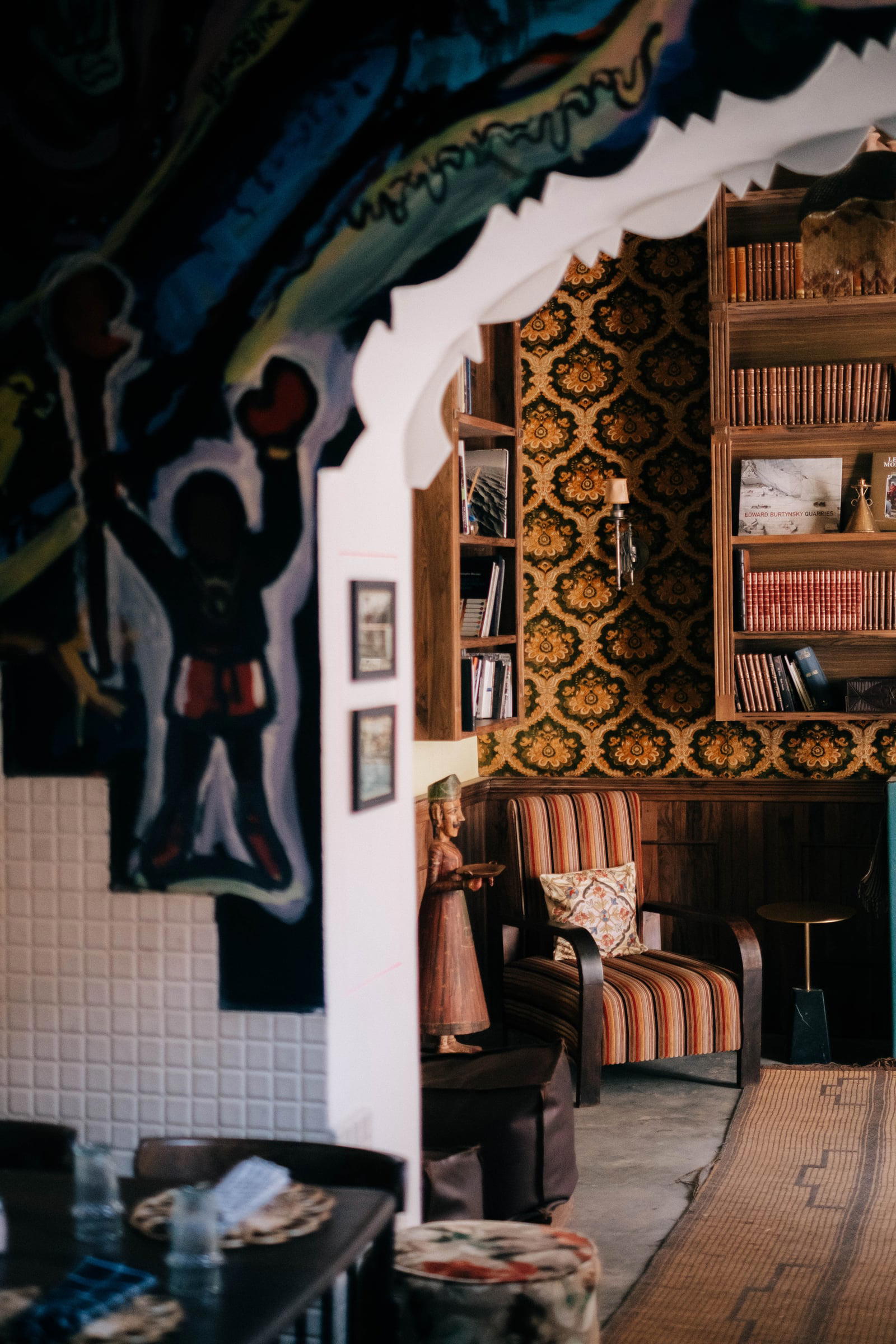
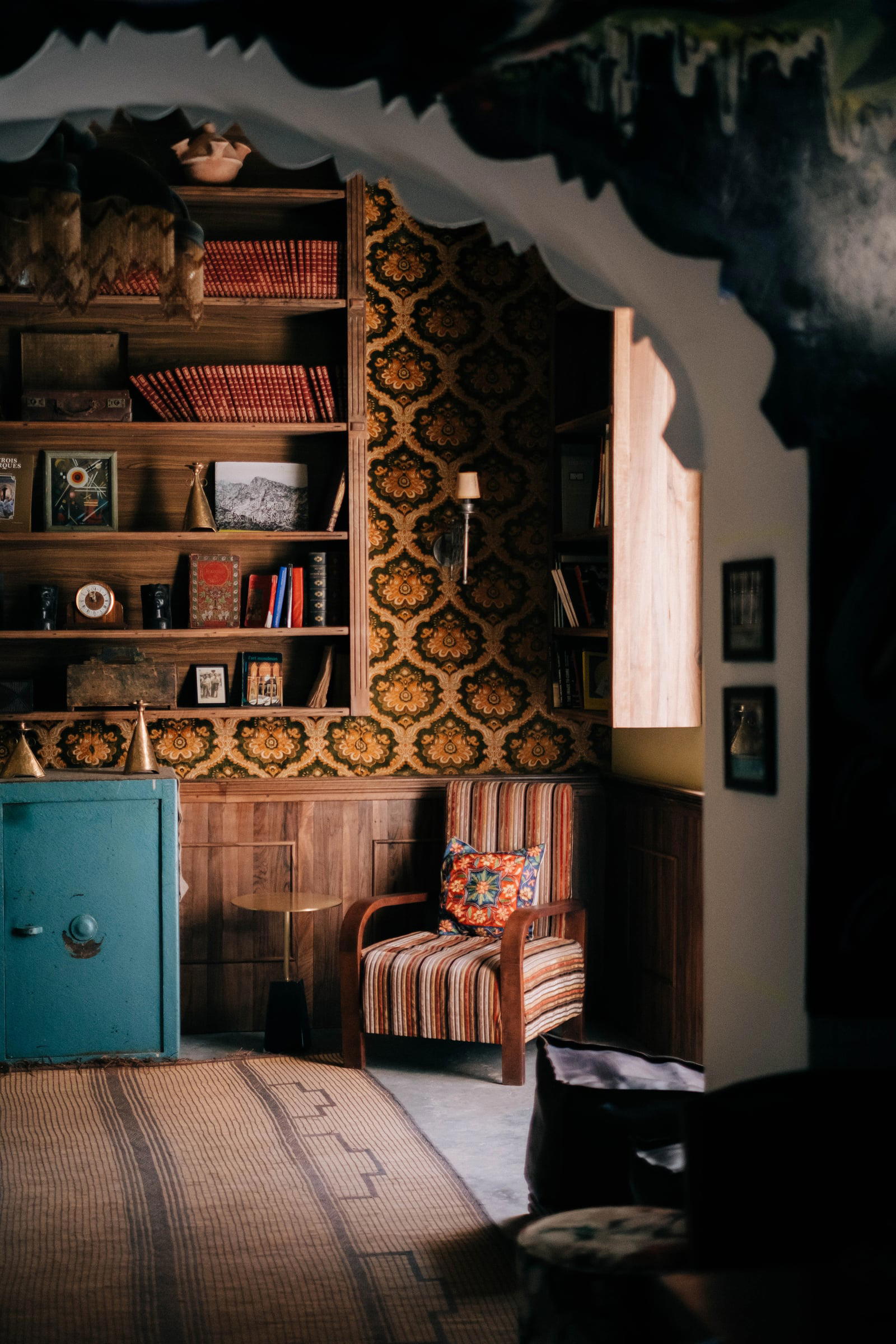
Terrazzo floors run through the salons. Velvet curtains hang heavy at the doorways. Crystal chandeliers and mirror balls share the ceilings. The bar is topped in marble. Beaded fly screens divide the rooms. Floral couches sit beside repurposed shutters that now serve as tabletops, and windows have been rotated ninety degrees to pull more light in. In a back room that was once the building’s butcher, the Moroccan artist Yassine Balbzioui has painted a mural that anchors the whole interior in a single contemporary gesture.
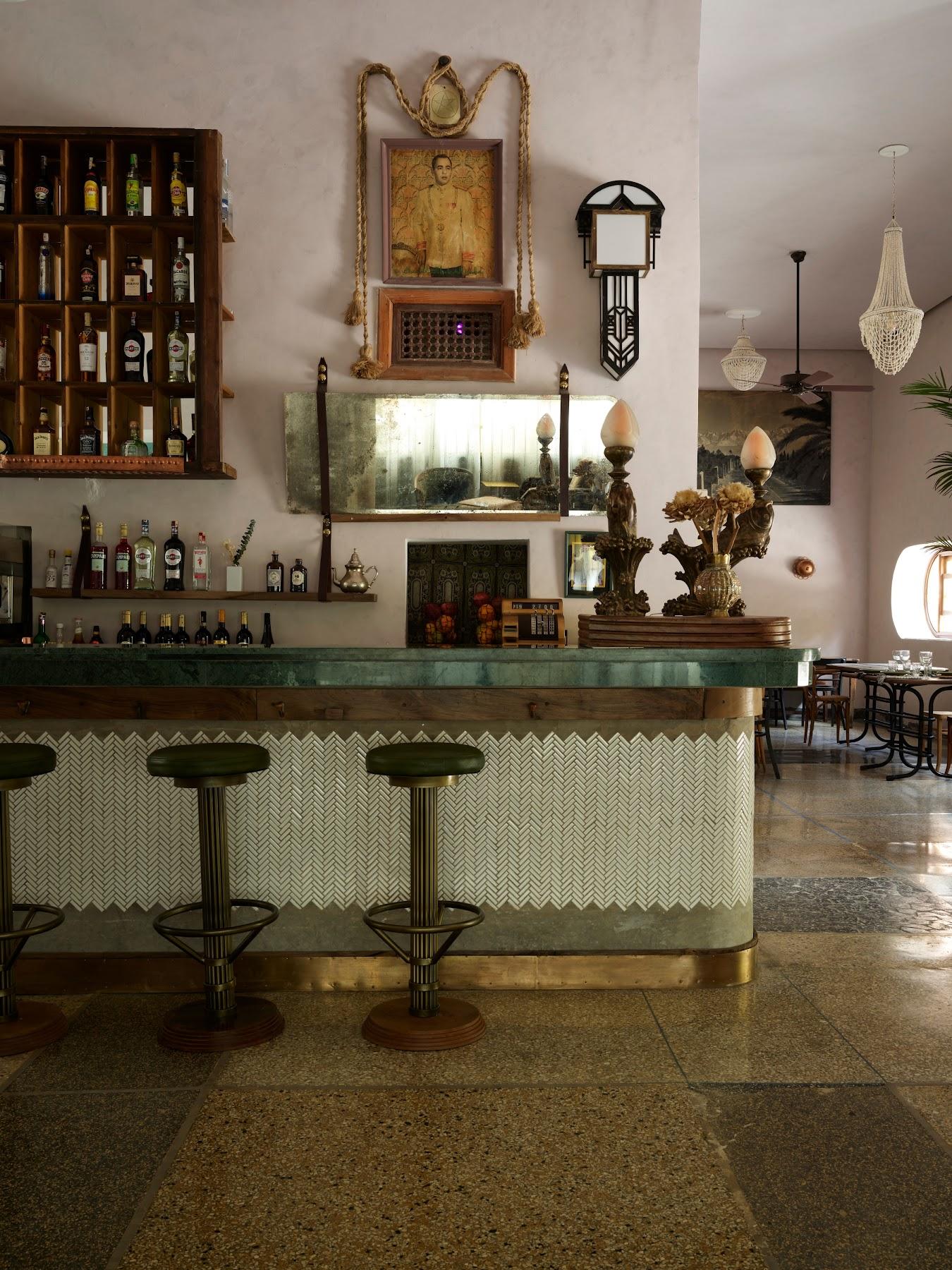
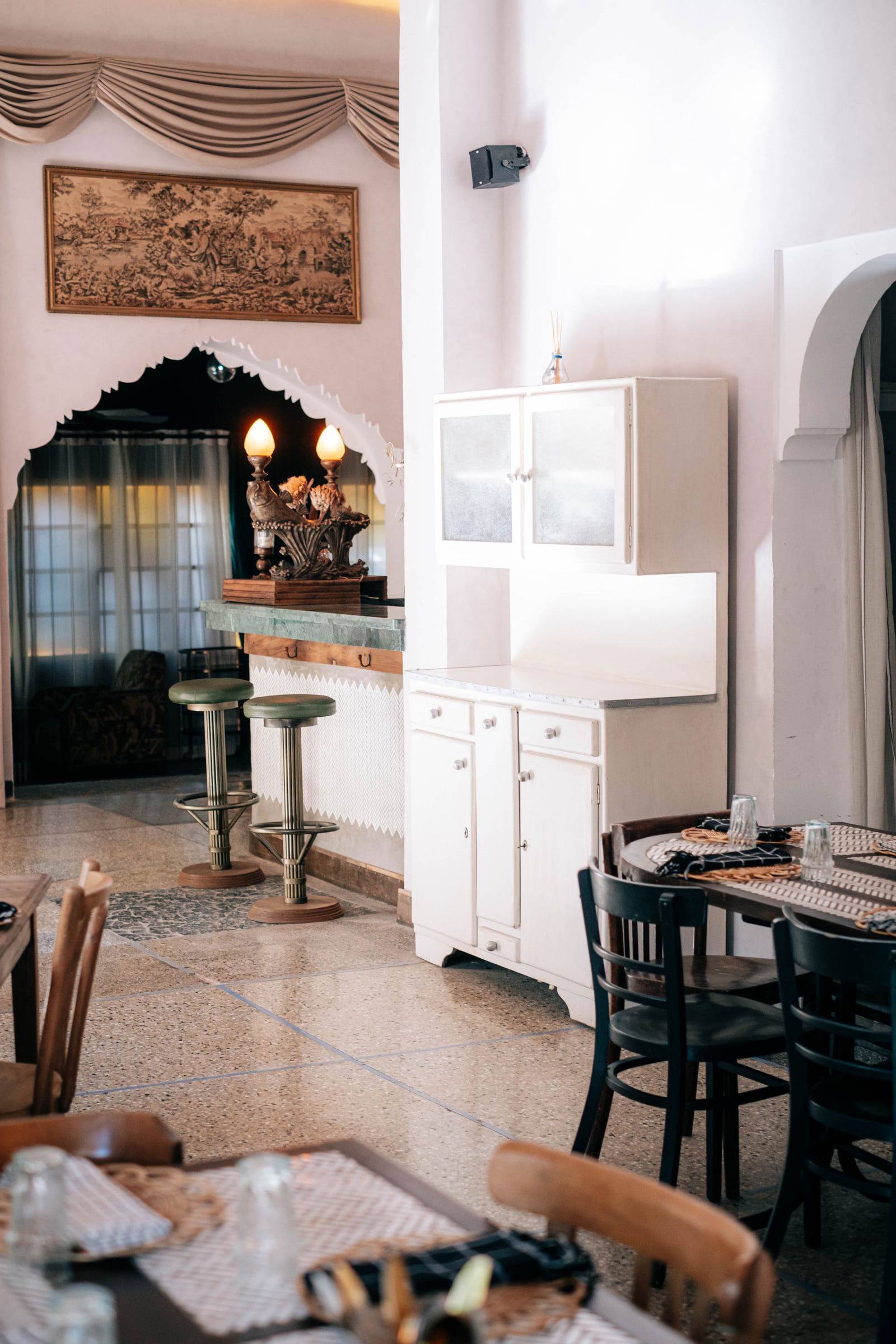
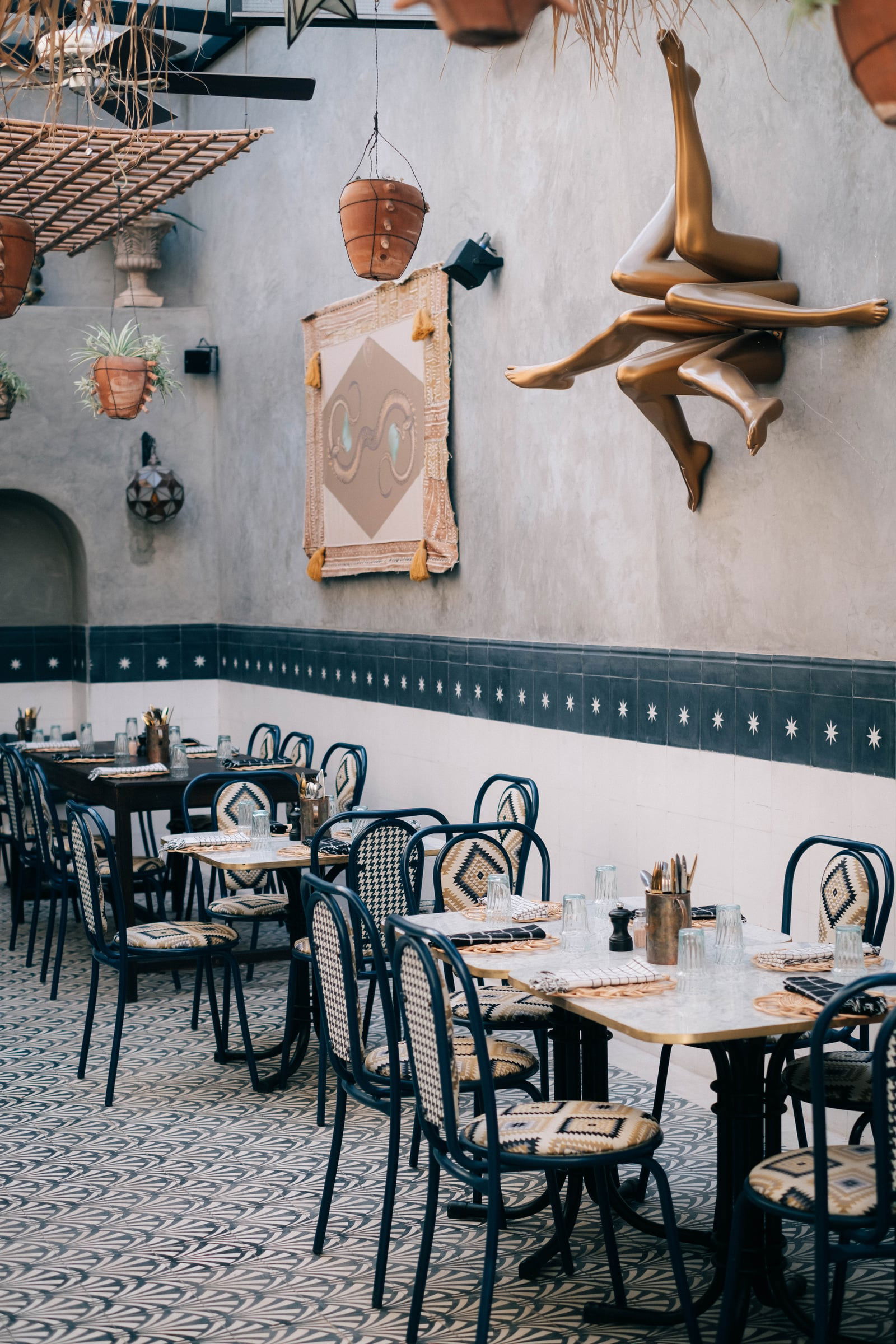
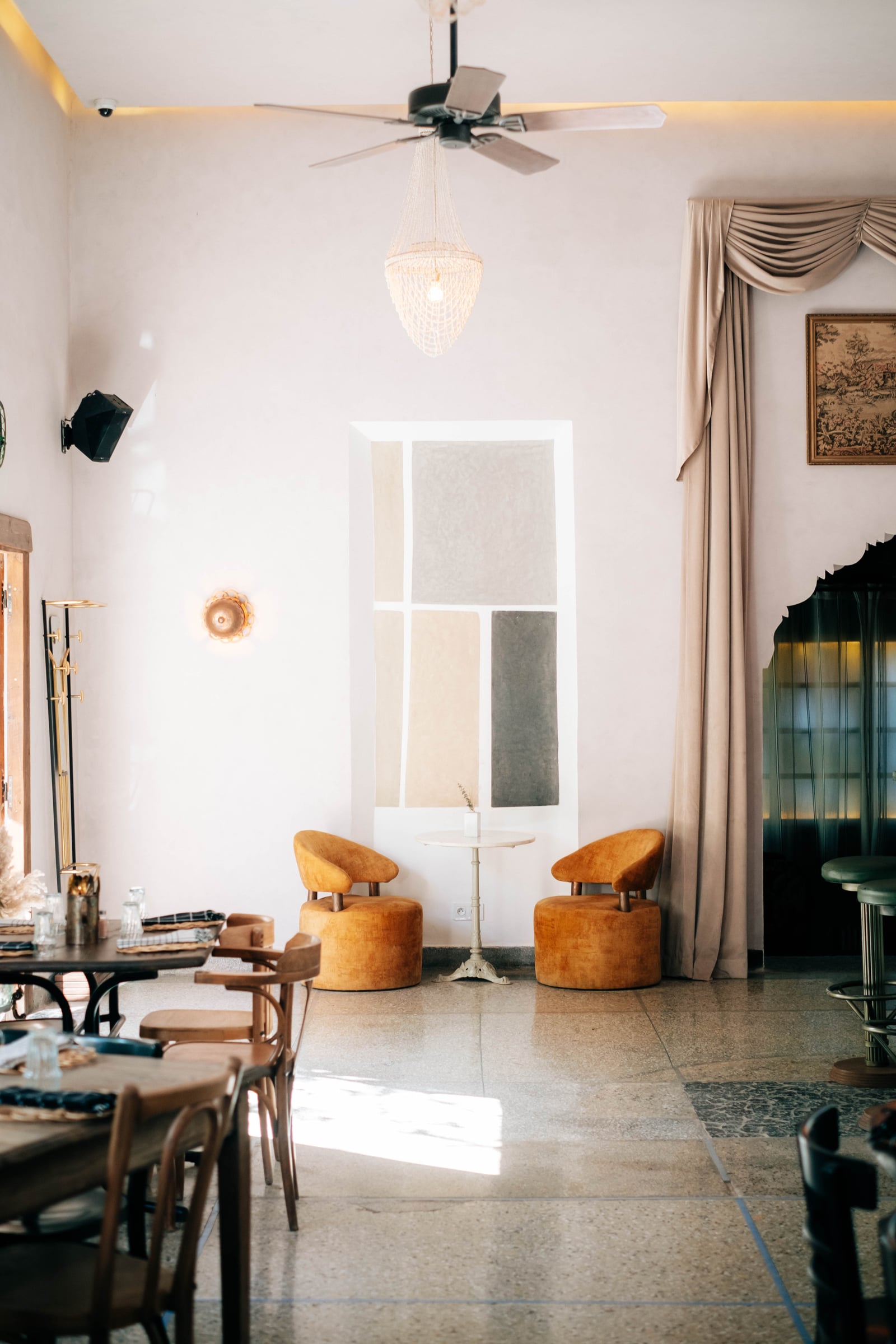
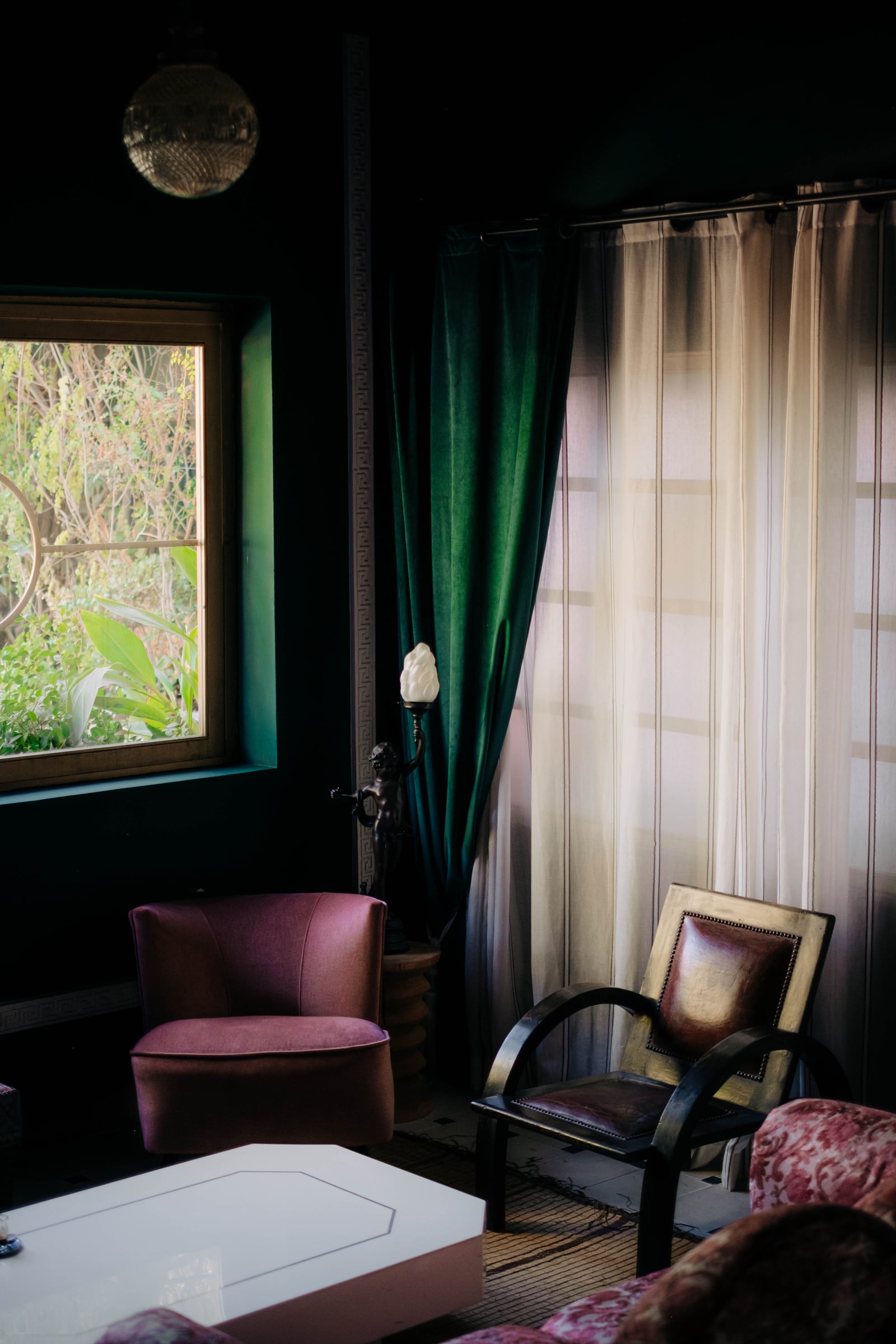
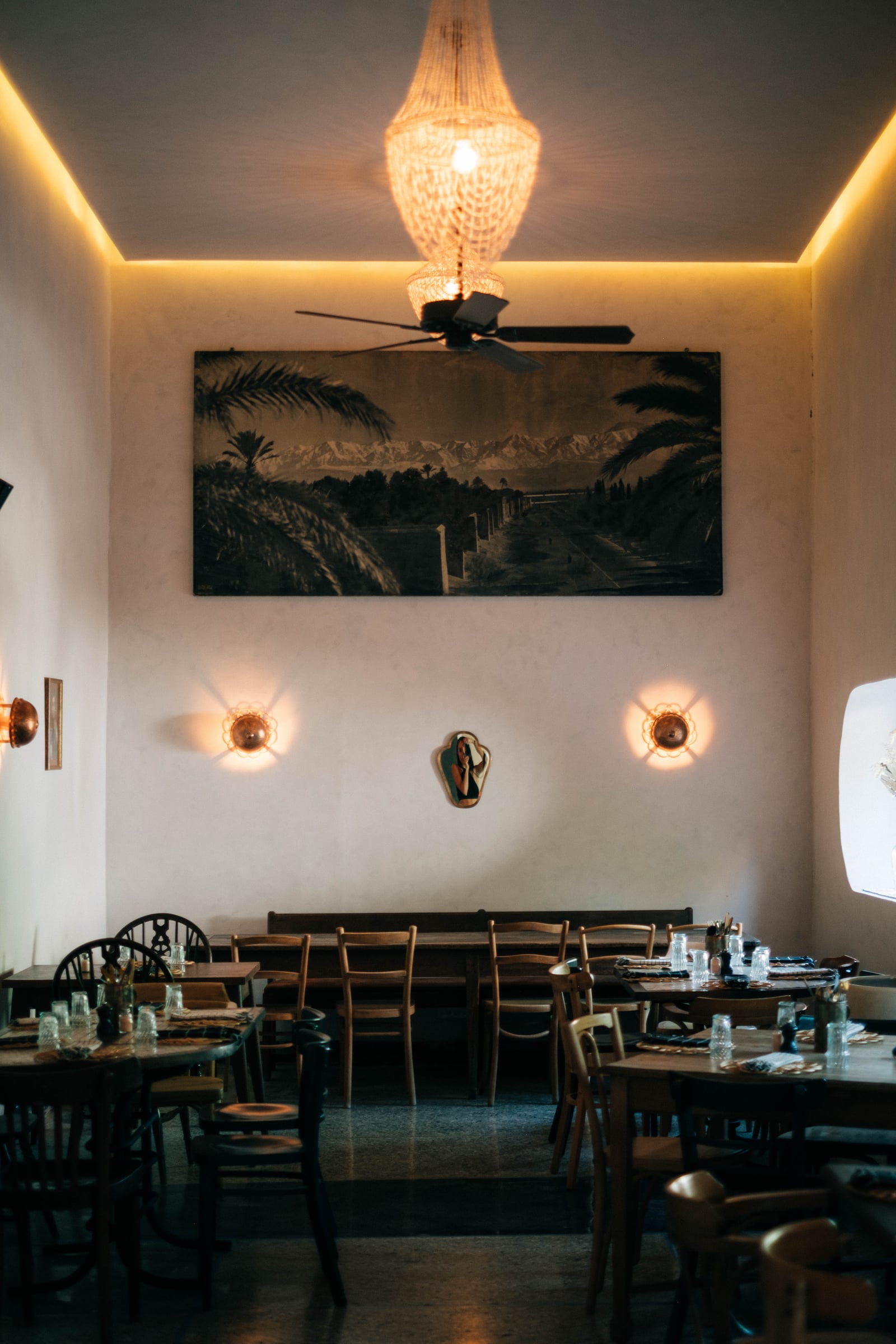
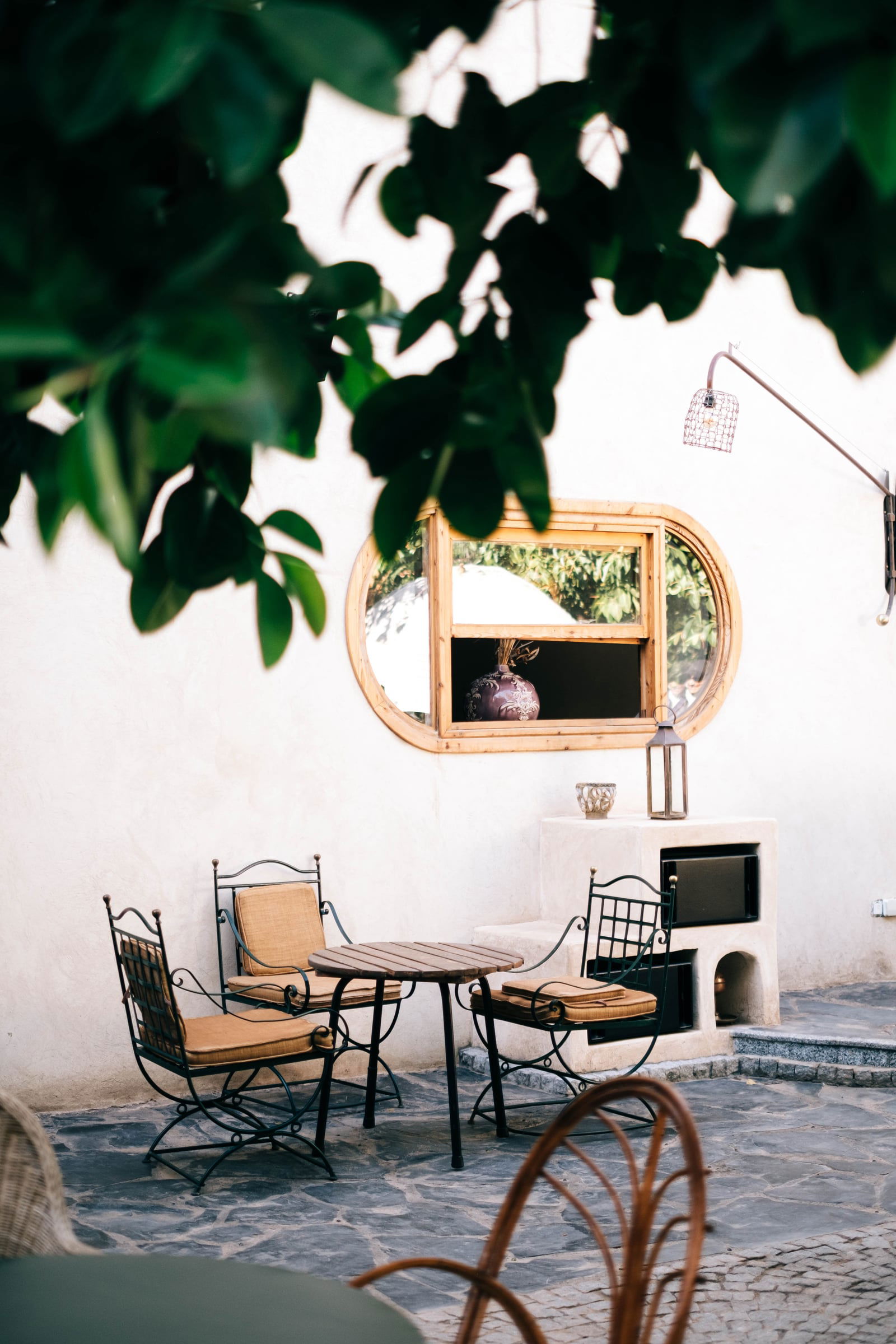
A notable share of the furniture has been lifted directly from La Mamounia’s 1970s interiors: club chairs and sofa sets that now sit in the bar and the adjacent lounge, carried out of one of the city’s most storied hotels and brought back into daily use. It is the kind of provenance that the rooms wear quietly, not as a label but as a layer of memory the building can rest on.
The aesthetic reads as a cabinet of curiosities pretending to be a bar. None of the pieces match. All of them work.
The garden and the gravel
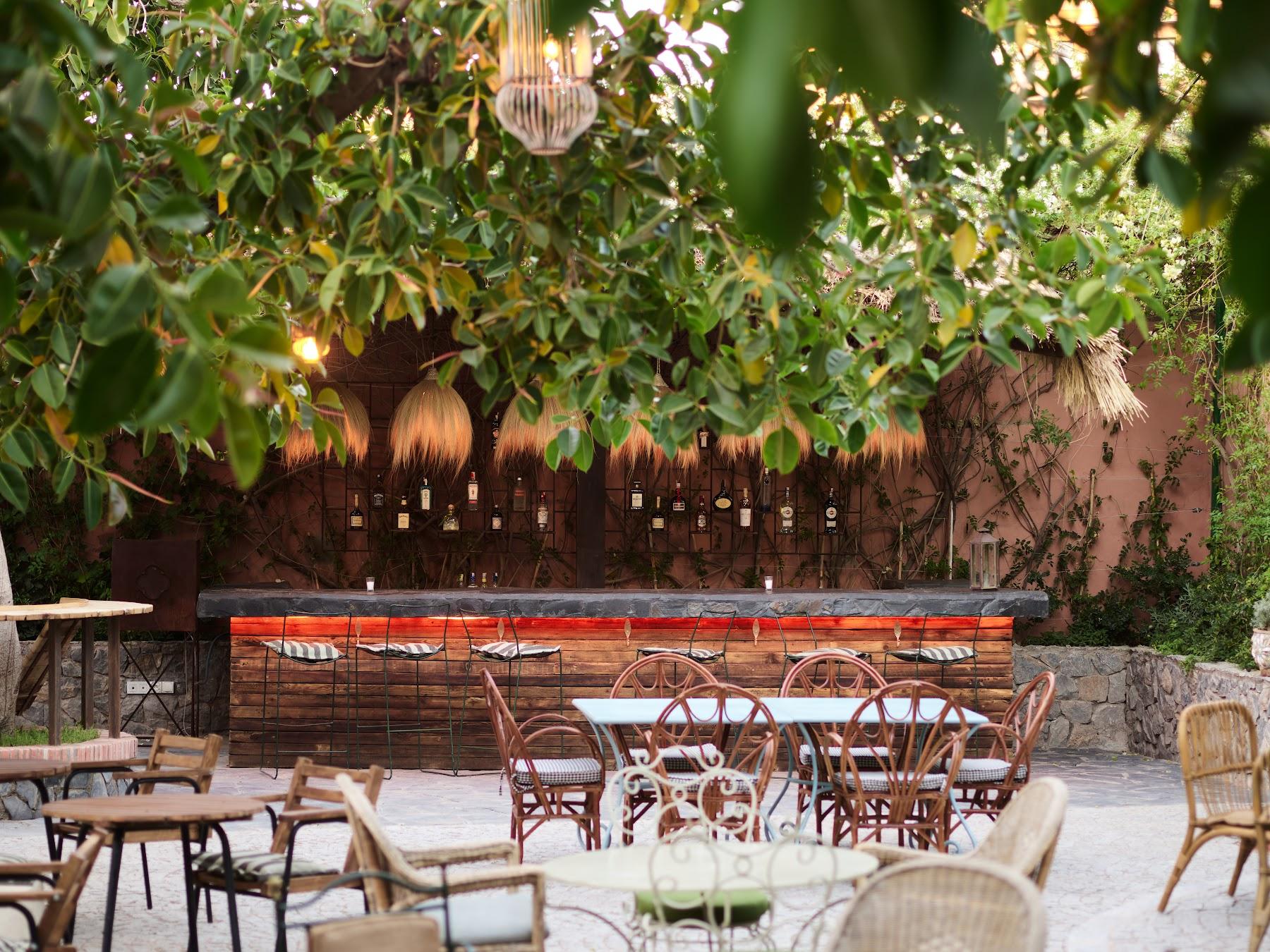
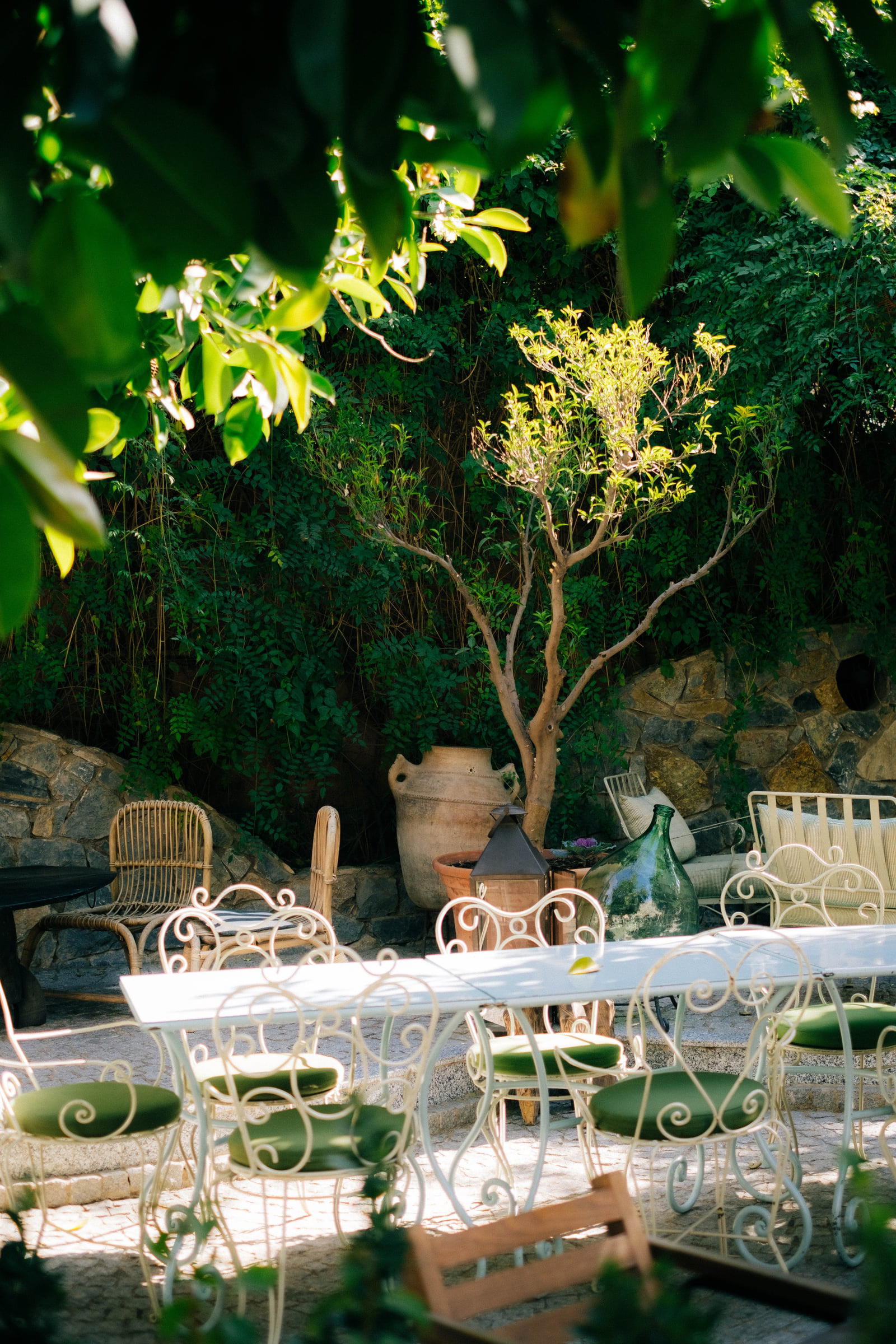
The real centre of the property is outside. A grown ficus caoutchouc holds the middle of the garden, the pétanque pitch extending alongside it in a long lane of raked gravel. The boules are real. They are not decoration. On a slow afternoon you will see two or three games unfolding, mostly between regulars who know each other’s throws.
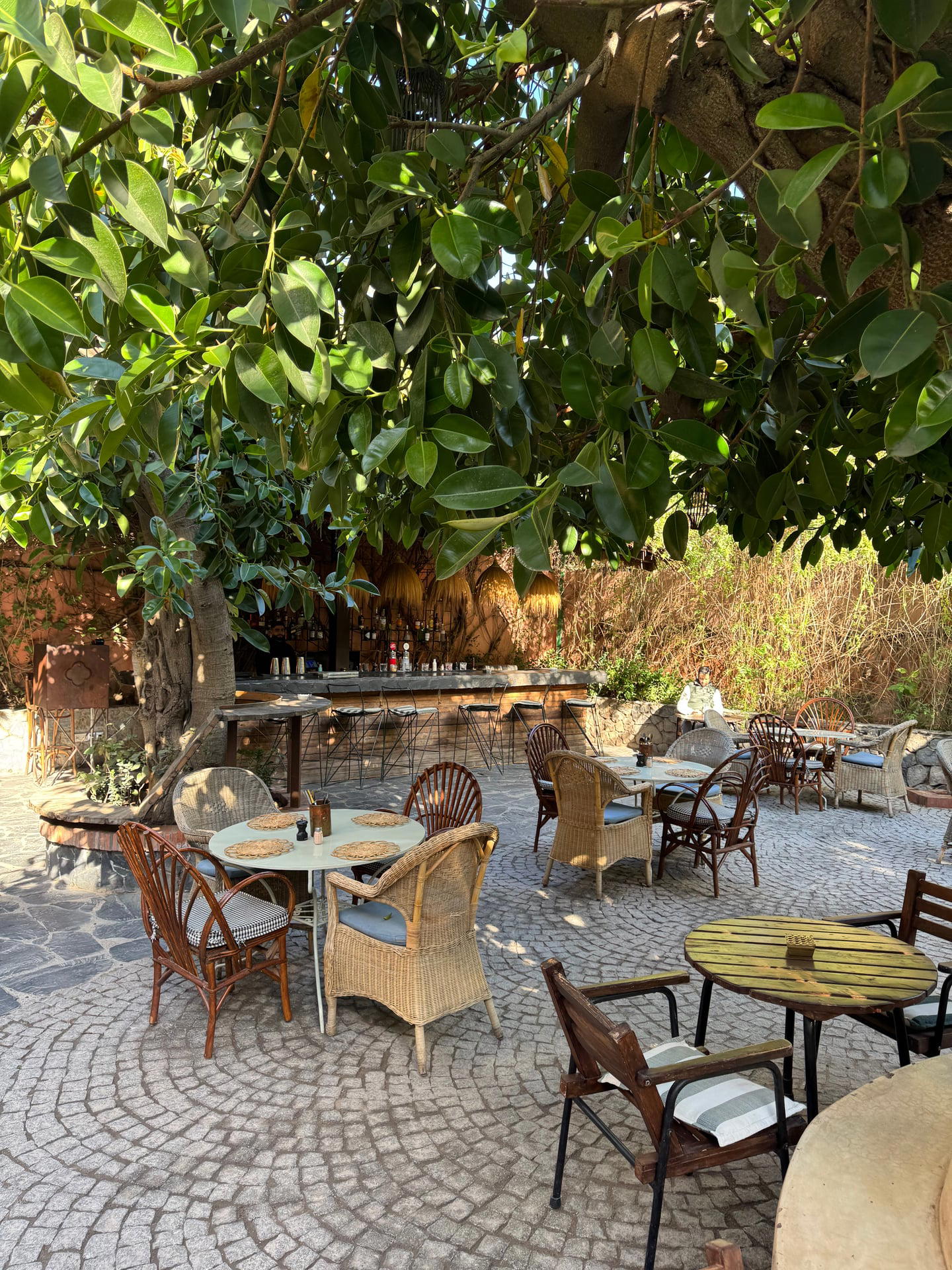
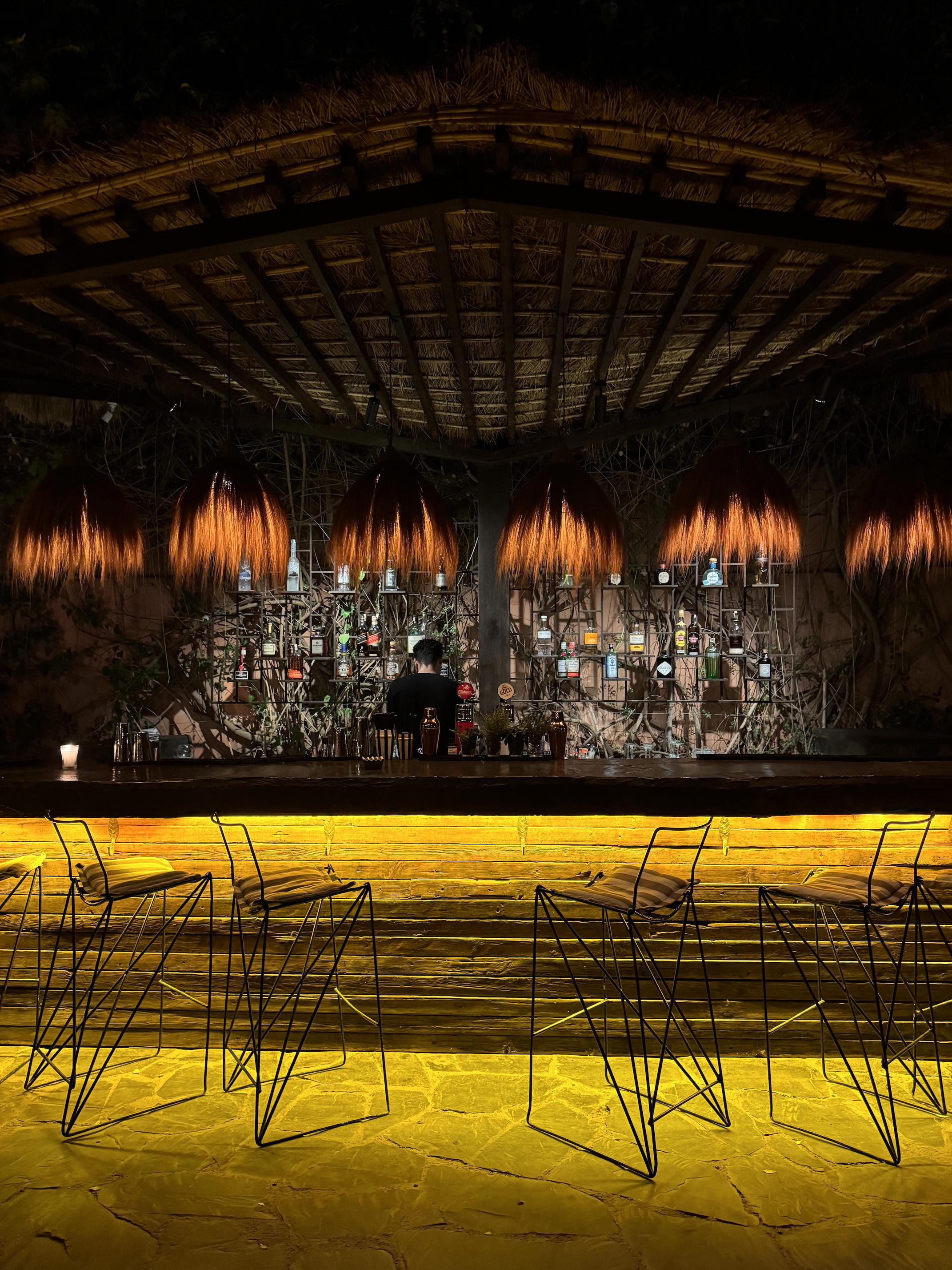
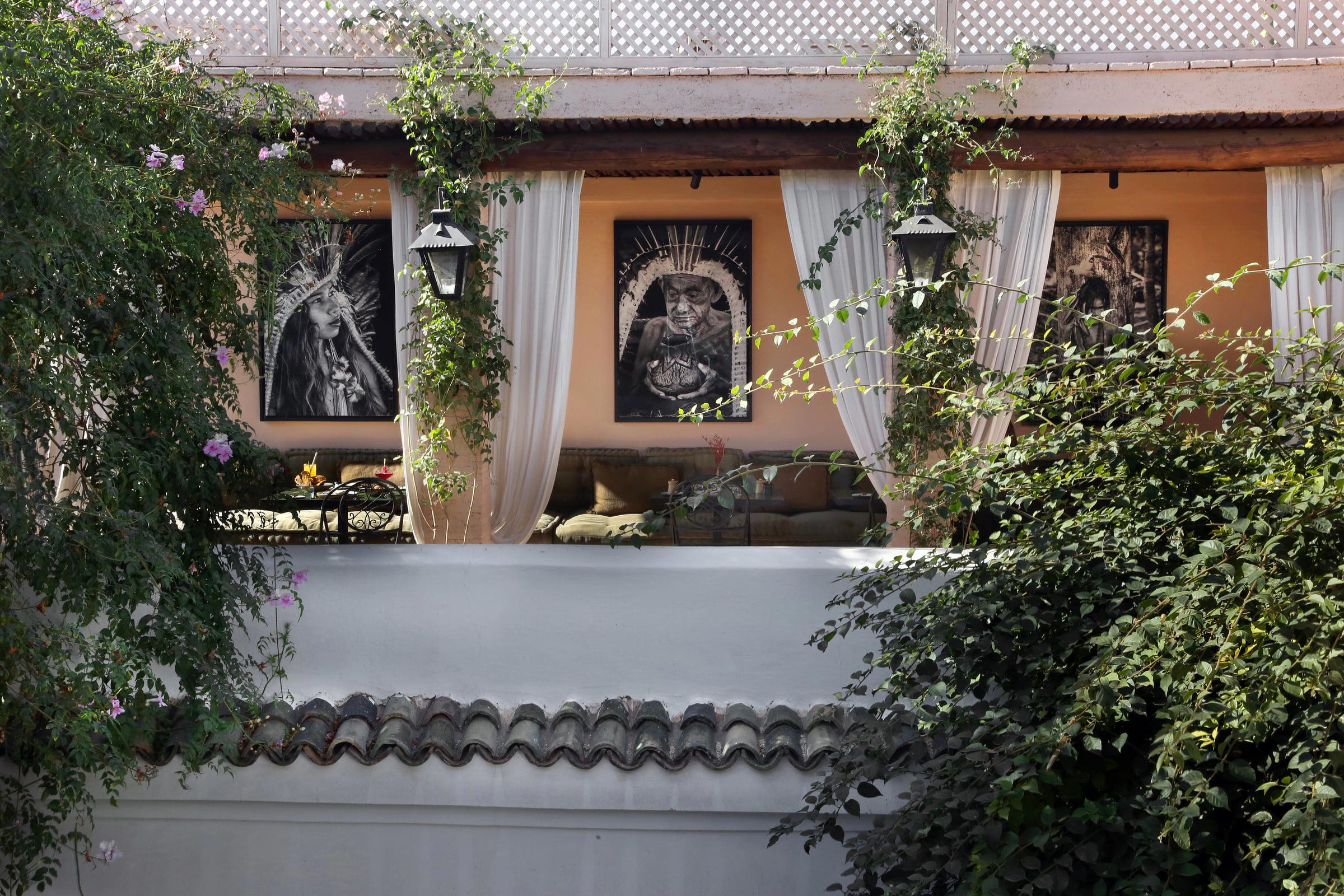
Daybeds and low tables ring the pitch under the trees. The outside bar, more arty than polished, runs the food and drinks for the garden. The light through the leaves does most of the design work in the day; the chandeliers take over at night.
Sharing plates, Art Deco bar
The kitchen runs on a sharing logic. Tapas, charcuterie and cheese boards, burgers, salads, grills, the kind of menu built to be picked at between rounds of pétanque or between conversations. The dishes are precise rather than ambitious: a calamari salad with fennel and grilled peppers, a clam cassoulet, a date milkshake on the breakfast menu, half a chicken with yogurt sauce and marinated red cabbage at dinner, sea bass grilled whole, beef hanger steak. Breakfast runs from 8am, and dinner sits in a comfortable middle range that locals can come to weekly without thinking about it.
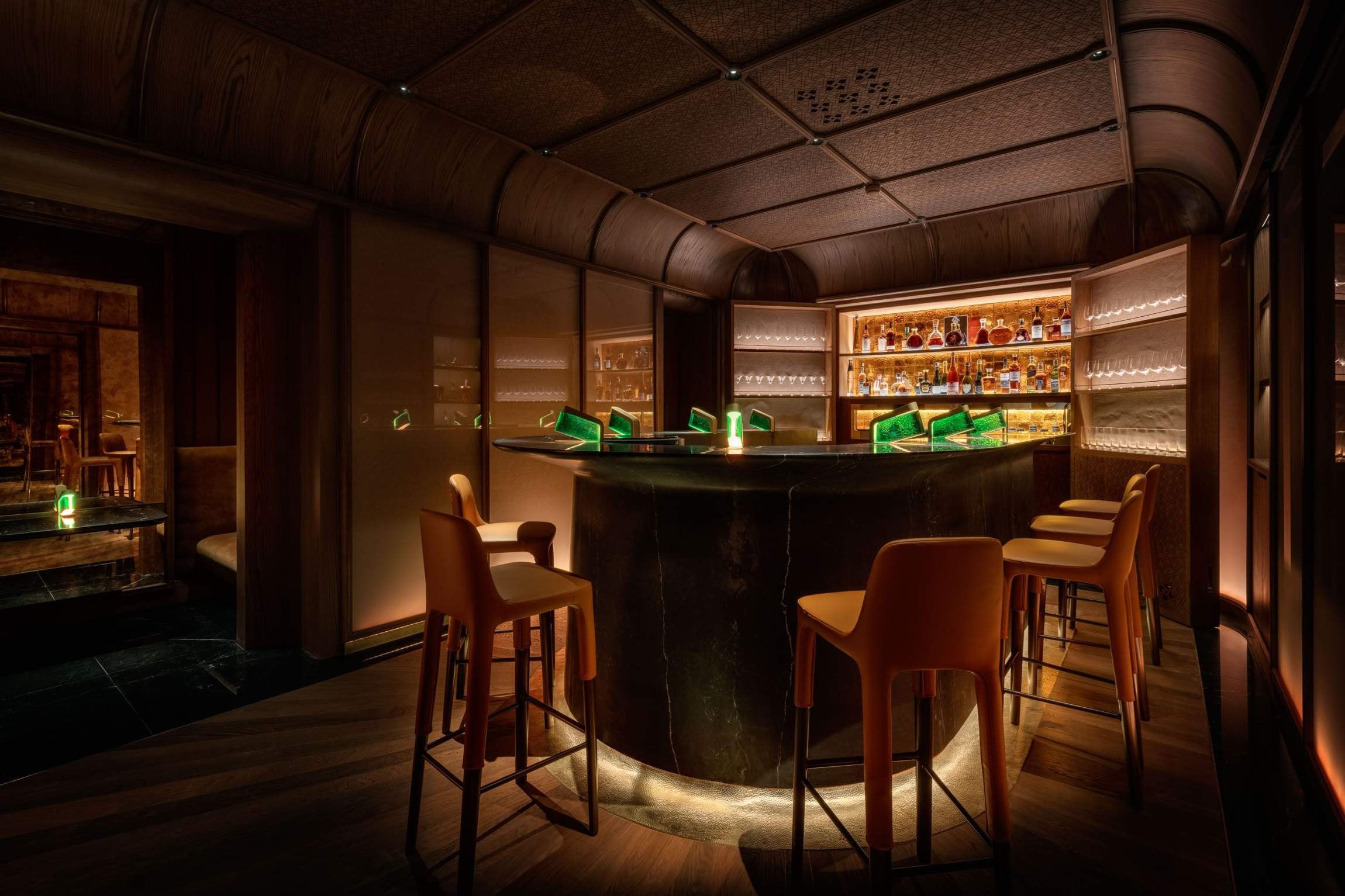
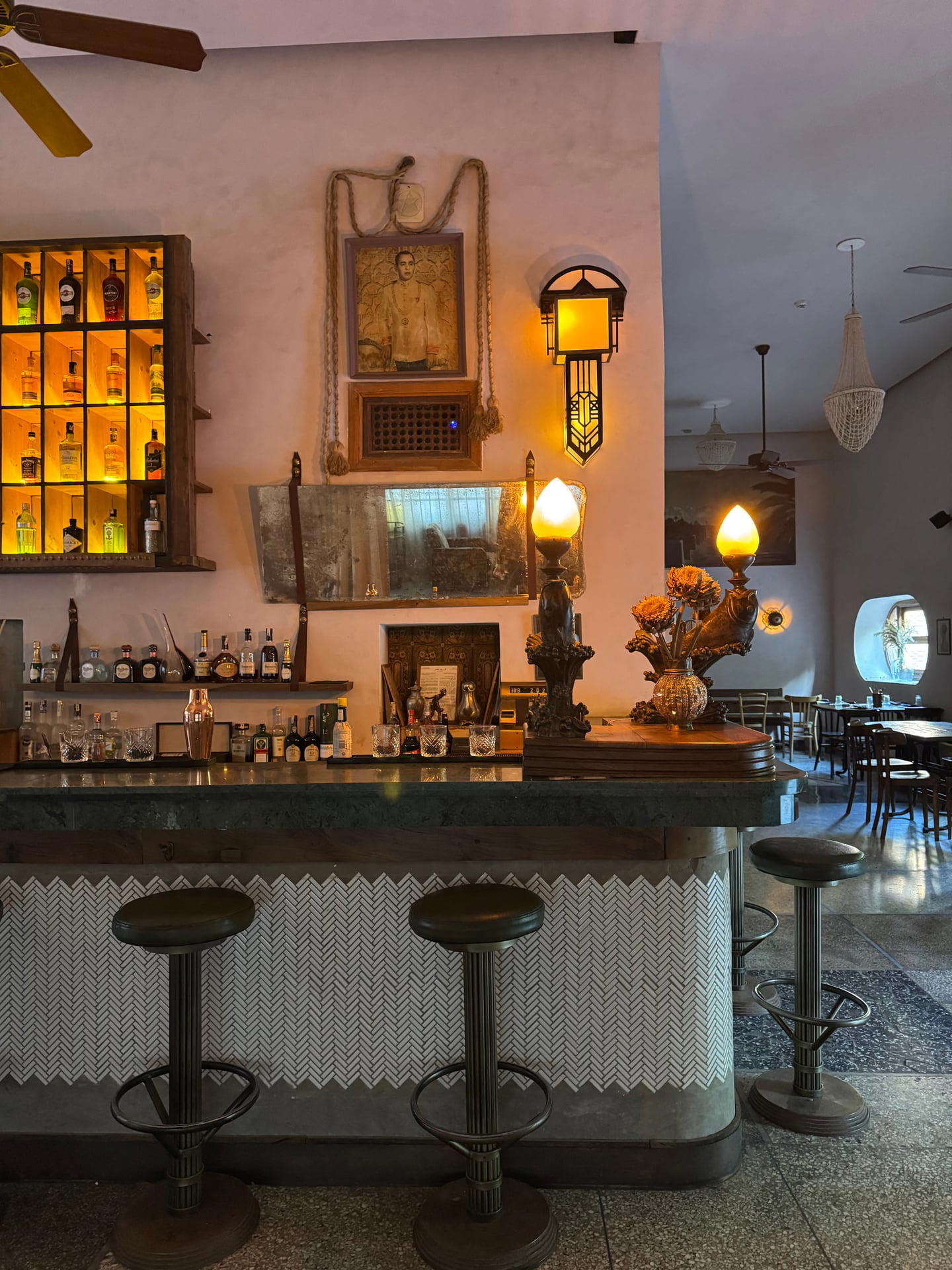
Inside, the Art Deco bar and the adjacent library room transport the place to a different decade entirely. On nights with live music, the rooms read like an old-world Parisian social club that someone forgot to close.
Different rhythms in the same garden
The rhythm is not the same every night. On some weekdays the garden stays low, the music kept quiet, the conversation running the room. On Friday and Saturday, when the resident DJs play, the venue tips from restaurant into social club proper, the trees lit from below, the gravel court turning into a passageway between the bar and the garden. The crowd is mixed by design: regulars from Guéliz, fashion and design people from the medina, expats on a Friday night, travellers who heard about the door from a hotel concierge or an Instagram post.
On Saturday mornings, between 9:30 and 13:30, the garden hosts the Organic Market Marrakech: stalls of seasonal vegetables, fruits, fresh herbs, honey and goat cheese laid out along the pétanque pitch, the bar open for a slower brunch hour. It is the moment of the week when the place is most clearly a meeting point for Guéliz.
The hours run long. Sunday to Thursday until 1am, Friday and Saturday until 2am. The pétanque pitch stays open as long as the music does. Children are welcome at the weekend lunch; the night belongs to a different set.
What it represents
What the Pétanque does well is hold many kinds of evening in the same garden. A drink with a friend at the bar before dinner. A long table with friends under the trees. A couple on a quiet weekday, a family lunch at the weekend. A Friday night that tilts into a DJ session. The space adjusts to each. Laftimi has built a career on places like this: Le Jardin restored a sixteenth-century riad, Nomad reorganised an old rug shop into a rooftop, the Pétanque has been carried back from forty years of disuse without losing what it was.
What sits behind the blue door is not a concept restaurant. It is a 1930s social club resumed in slow motion, with a kitchen, a bar, a market, a soundtrack, and a gravel pitch that has remembered what it was for. The address has no sign because it does not need one.
You may also like…