EAT & DRINK
Eating Among Salgado's Amazonia: Noujoum at IZZA Marrakech
Bill Willis spent nearly forty years in a medina house called Dar Noujoum. The rooftop that borrowed the name now serves lunch and dinner under a wall of Salgado photographs.
Timence Guide Editors · 6 September 2026
Bill Willis rented a four storey house in the medina from a prince in the early 1970s and lived in it until his death in 2009. The house was called Dar Noujoum. Dar is house and noujoum is stars, so: the house of stars. Willis was the American designer who had arrived in Marrakech in the sixties and then spent a career persuading the city to look again at its own zellige and its own tadelakt, and Dar Noujoum was where he received the people who came to watch him do it. The house stood empty after him and was stripped, doors and piping and baths carried off into the street. It belongs to the owners of IZZA now, who are restoring it as an artists' residency, and the photographs and objects from Willis's life that hang in the hotel came out of it.
Noujoum at IZZA, the rooftop restaurant of a hotel made from seven old medina houses opened into one another, fourteen rooms arranged around three courtyards, took the name upstairs with it. It sits above all of them on a terrace of gardened rooms looking over the roofs of the old city. It opened as a restaurant in its own right in February 2025, and you do not need to be sleeping downstairs to eat there. That matters, because the way to the table goes through the collection.
A Museum You Can Have Lunch In
IZZA holds more than three hundred works across its rooms and its public spaces, contemporary Moroccan art, Hassan Hajjaj among it, beside what the house calls one of the world's most significant physical exhibitions of printed NFTs. The names are not decorative ones. Mouhcine Rahaoui works in coal and wax on the miners of Jerrada, the town he comes from. Khadija Jayi paints in swirls of fire. Anass Ouaziz photographs the moments that do not last. Beside them run the digital names, Tyler Hobbs, Dmitri Cherniak, William Mapan, and the Ethiopian collective Yatreda on screens that move.
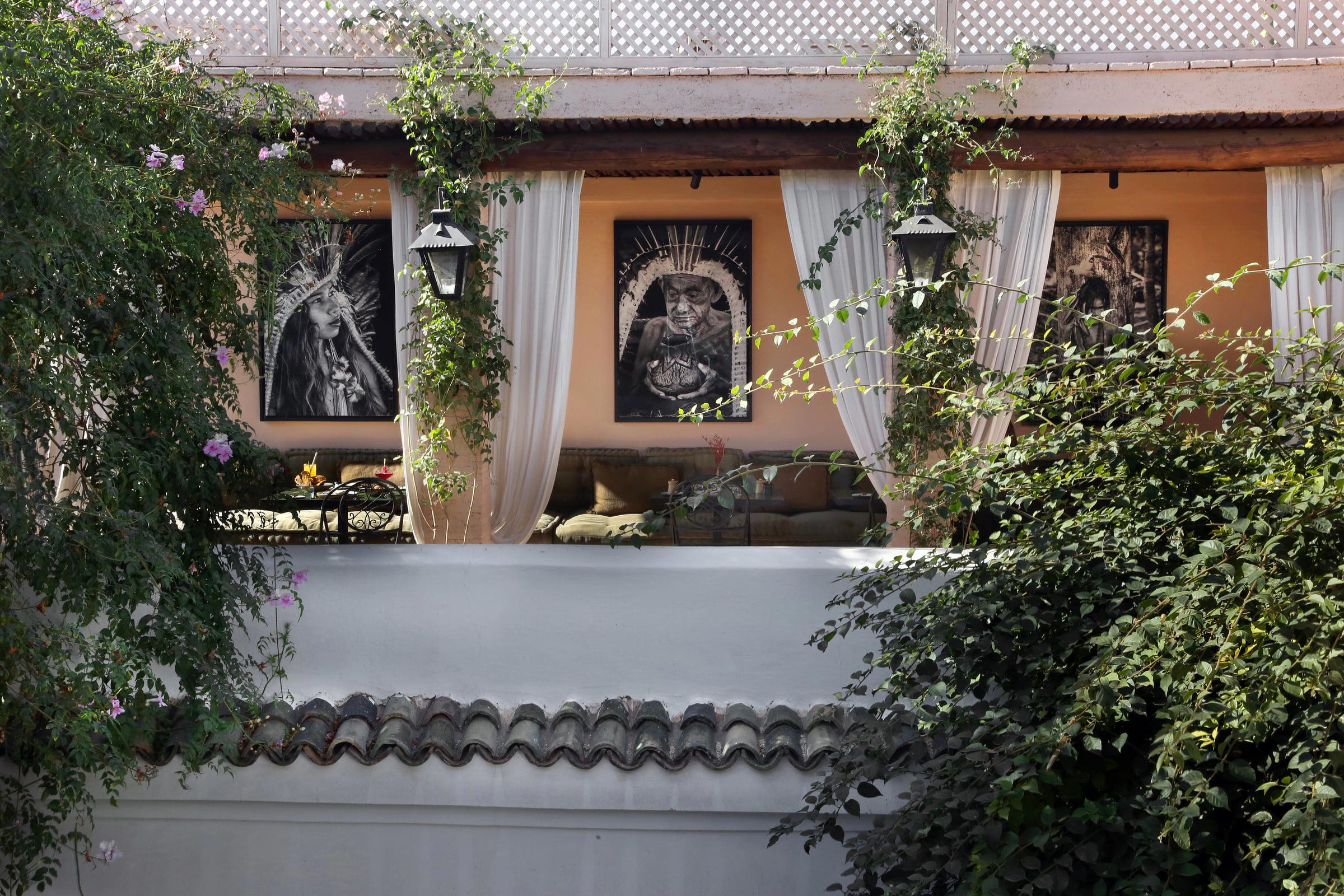
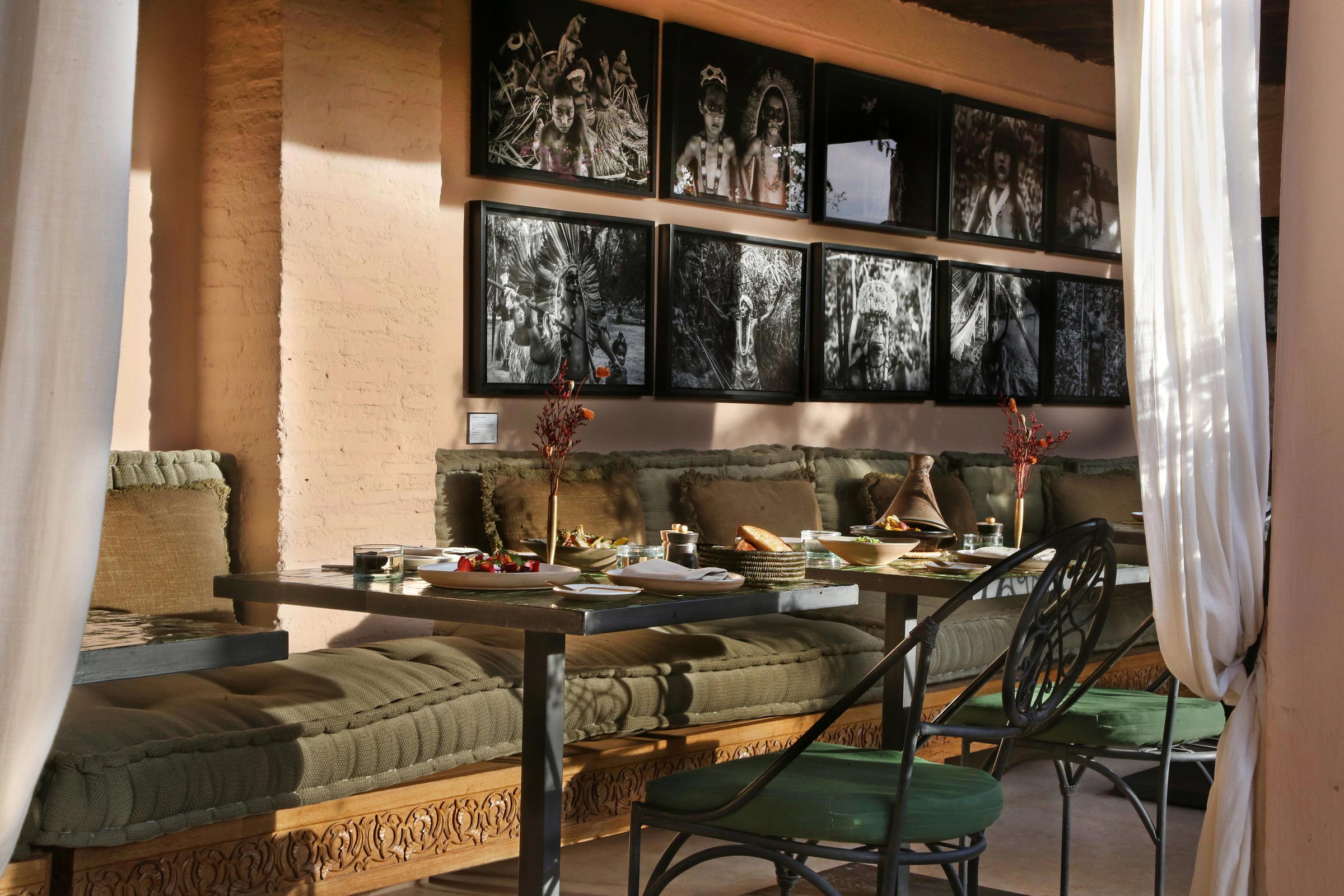
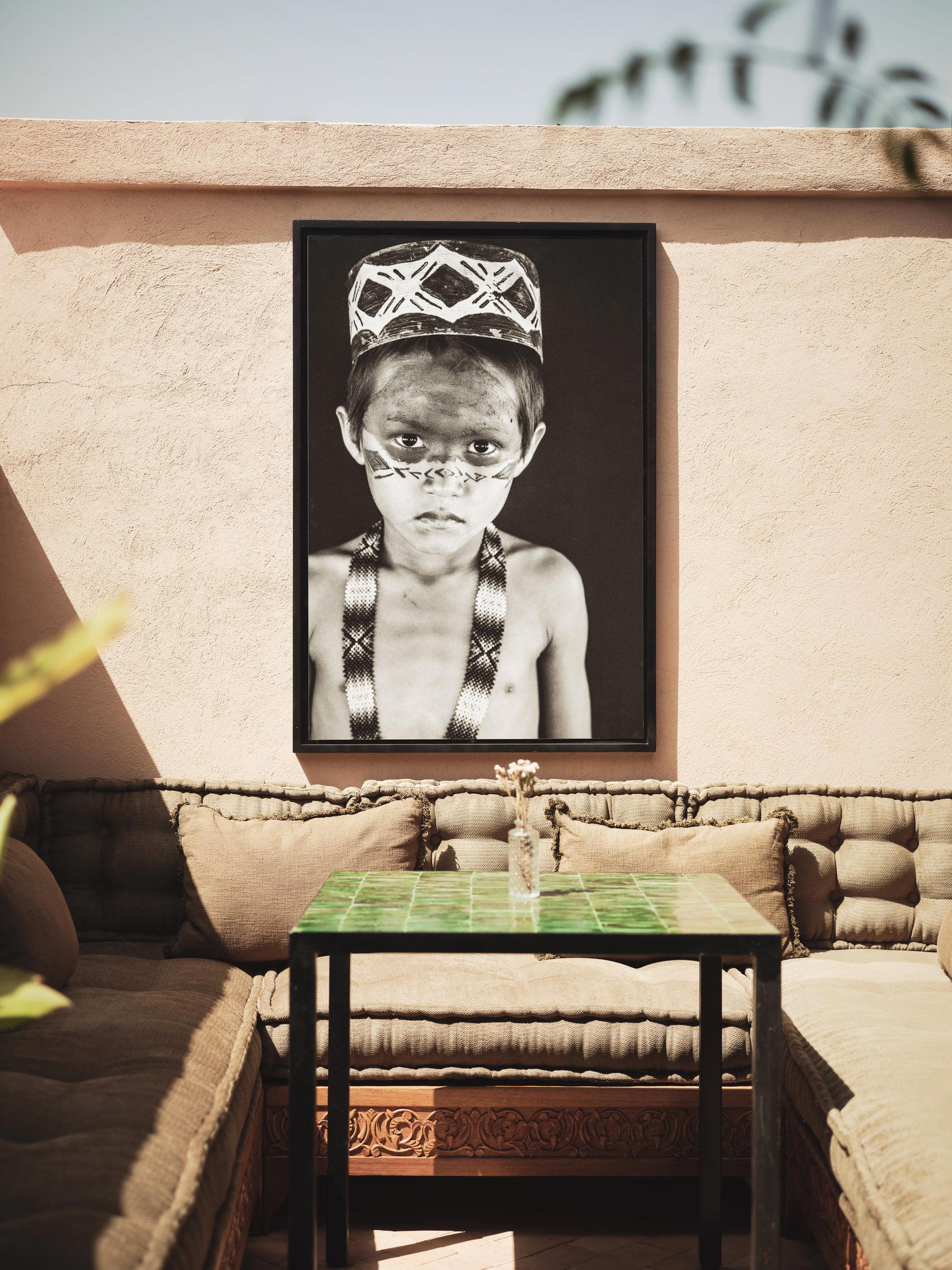
Sebastião Salgado's Amazônia series, released as NFTs through Sotheby's and printed and framed here, hangs on the restaurant walls. Leila Alaoui's Les Marocains portraits are on the way up, along the reception you cross to reach the stairs. On the terrace a two metre screen runs Refik Anadol's AI work built from Mars imagery, a strange and rather beautiful thing to have glowing at the edge of a dinner service. So you eat with black and white photographs at your shoulder and a planet turning behind you.
Come up before the table is called and walk the walls first, because once the plates start arriving nobody looks up.
The Terrace, and the Green Tables
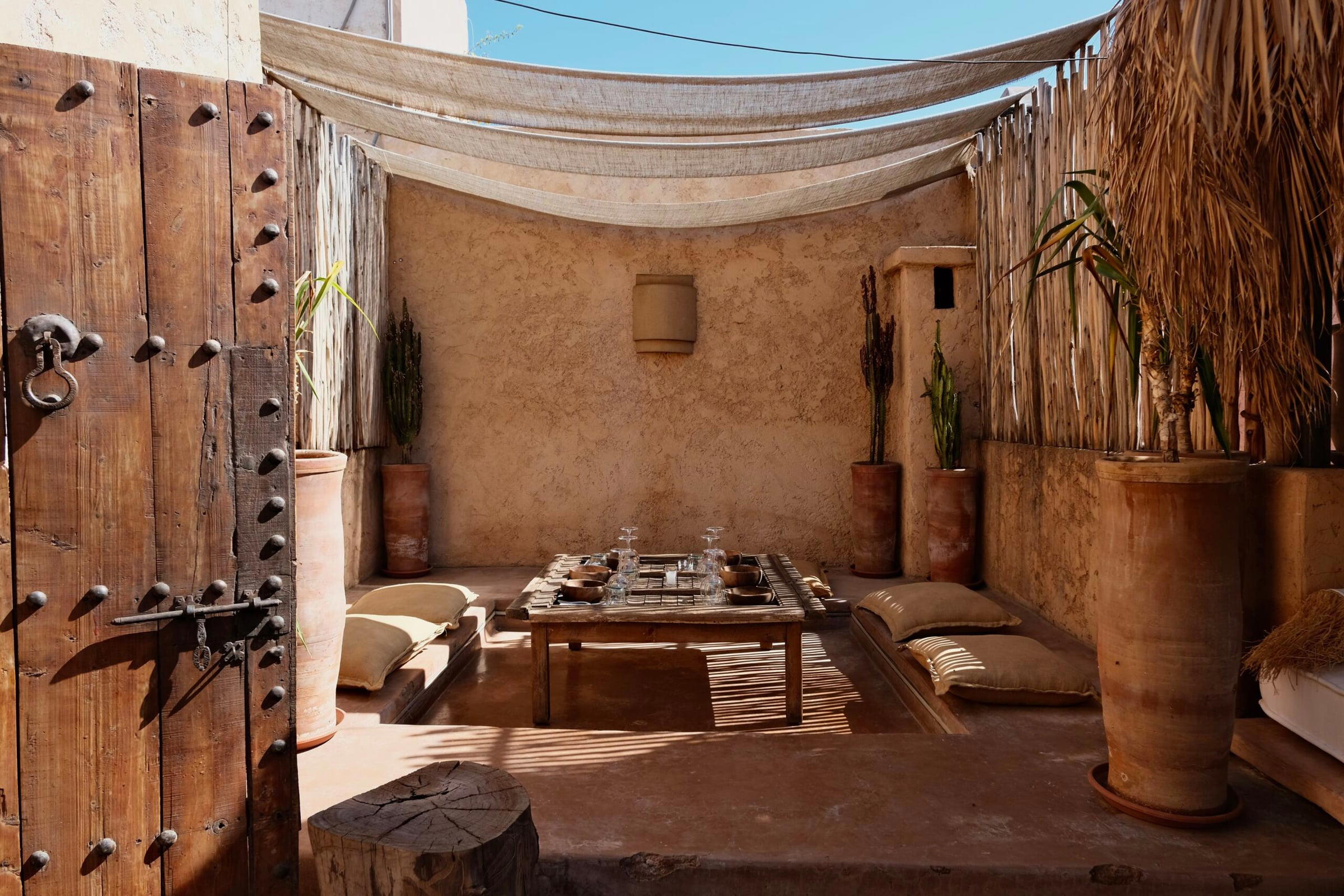
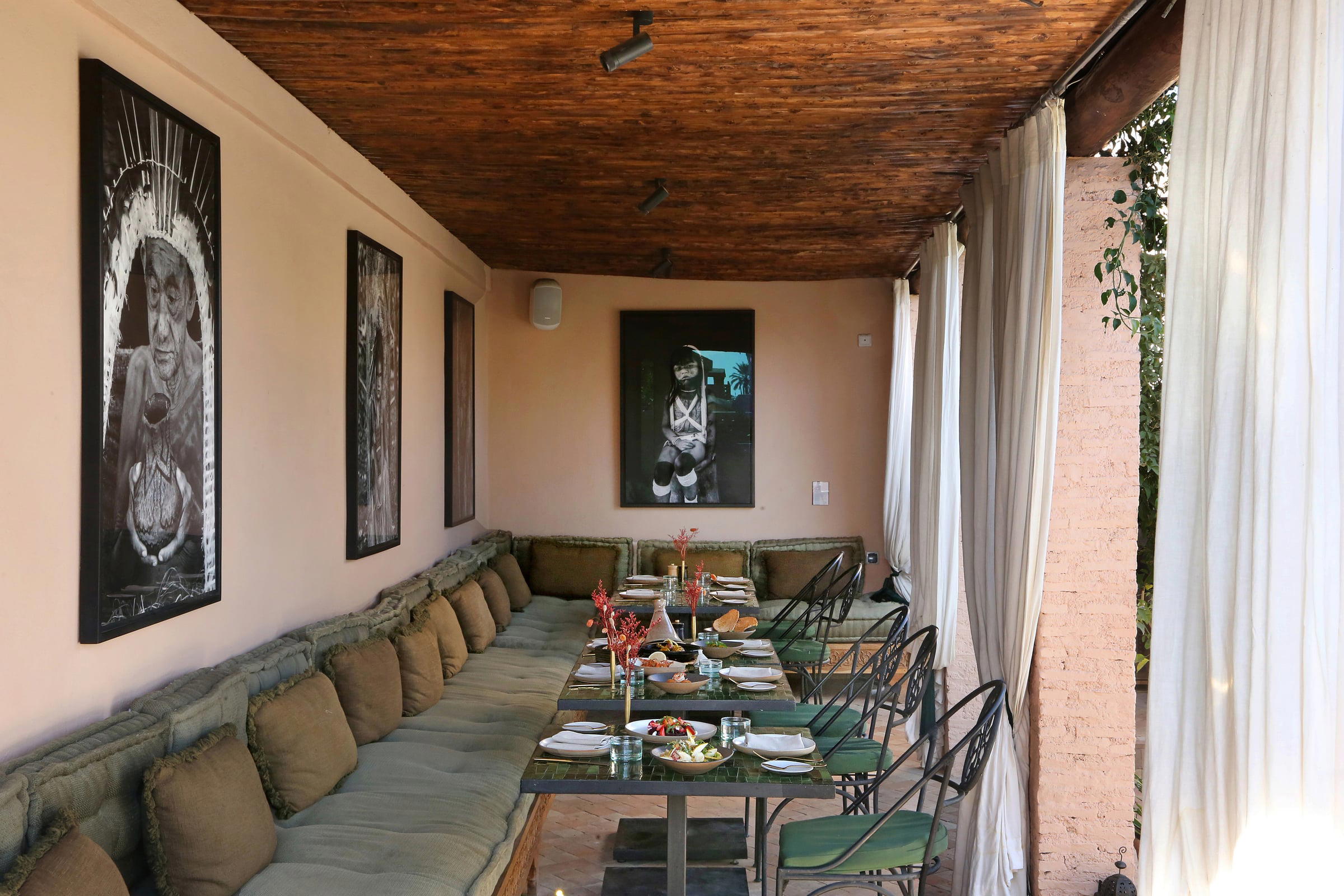
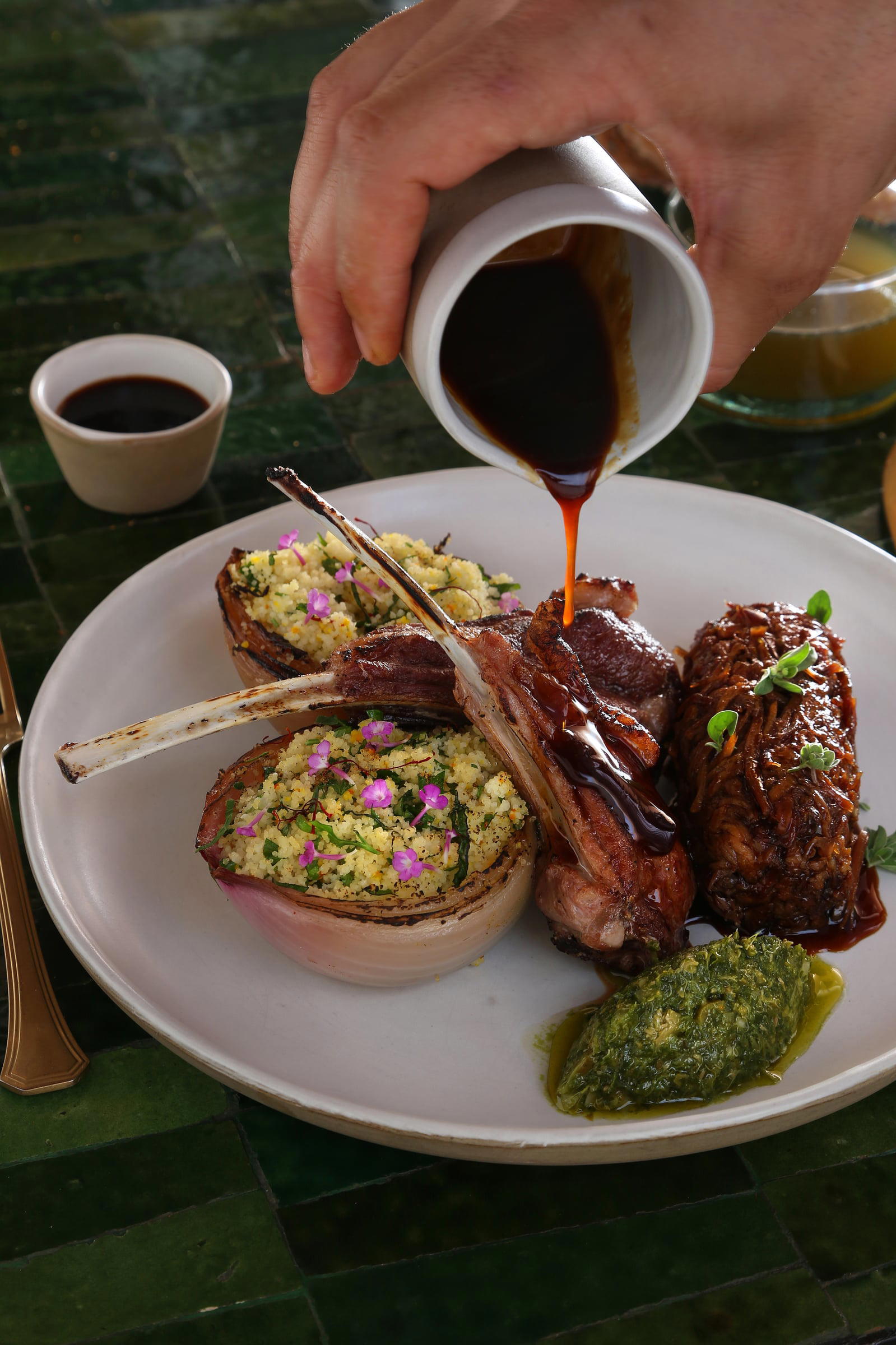
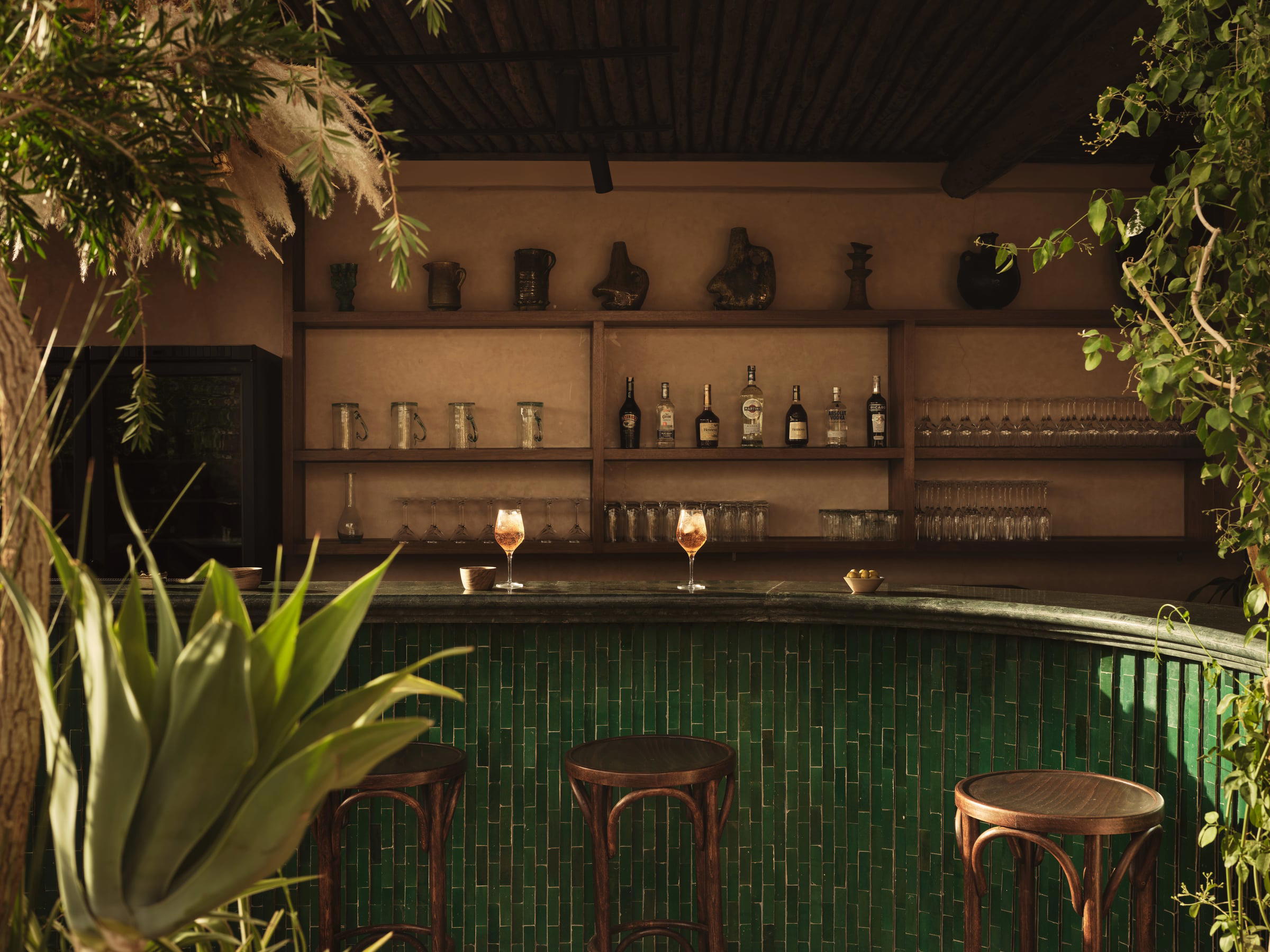
Vines run over a pergola at one end, deep enough to throw proper shade by early afternoon, and underneath it a long table sits on terracotta with slim metal chairs. Everywhere else the tabletops are green zellige, the same glazed green that runs through the bar downstairs, so that a plate of octopus arrives on a surface the colour of the tiles it was carried across. A star has been cut into one of the walls. Through it you get a piece of the garden and, at the right hour, the light.
The kitchen garden is up here too, and it explains some of what turns up on the plate. Beyond the parapet the medina keeps going, flat roof after flat roof, and the Atlas sits behind it on the days the air is clean. It is an intimate terrace, and a green one: a garden with tables laid in it, high up among the rooftops of Marrakech, with the city kept at the parapet.
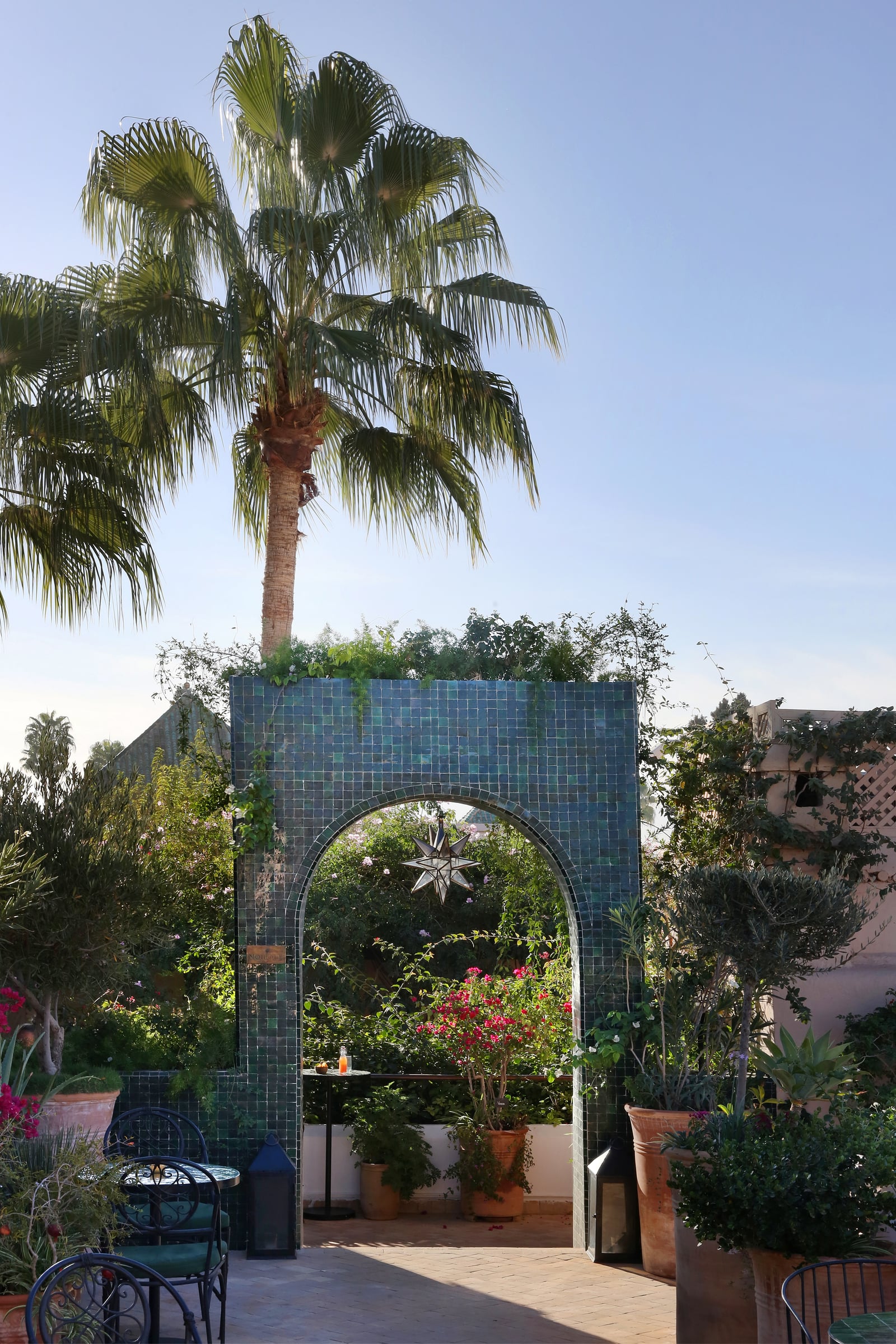
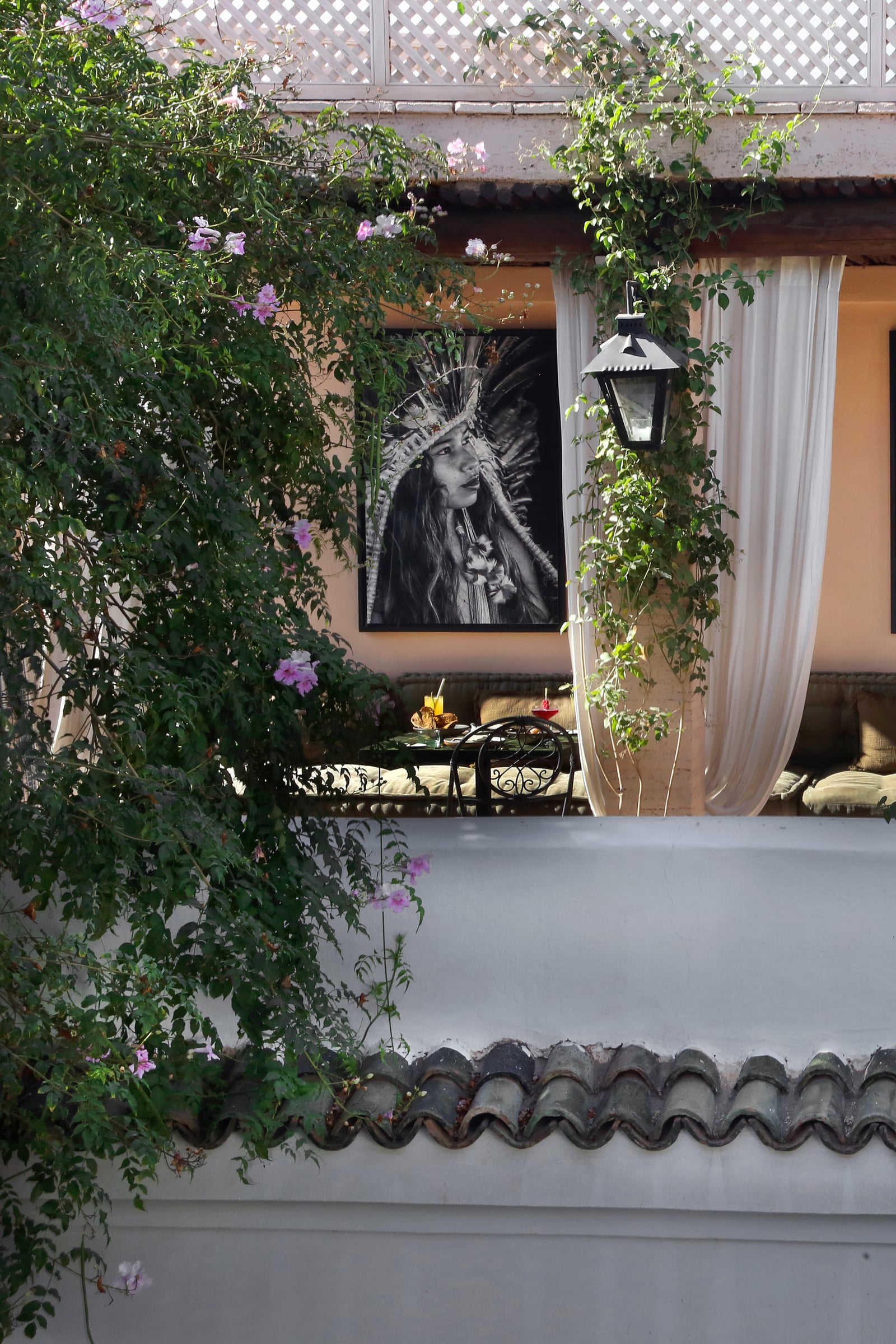
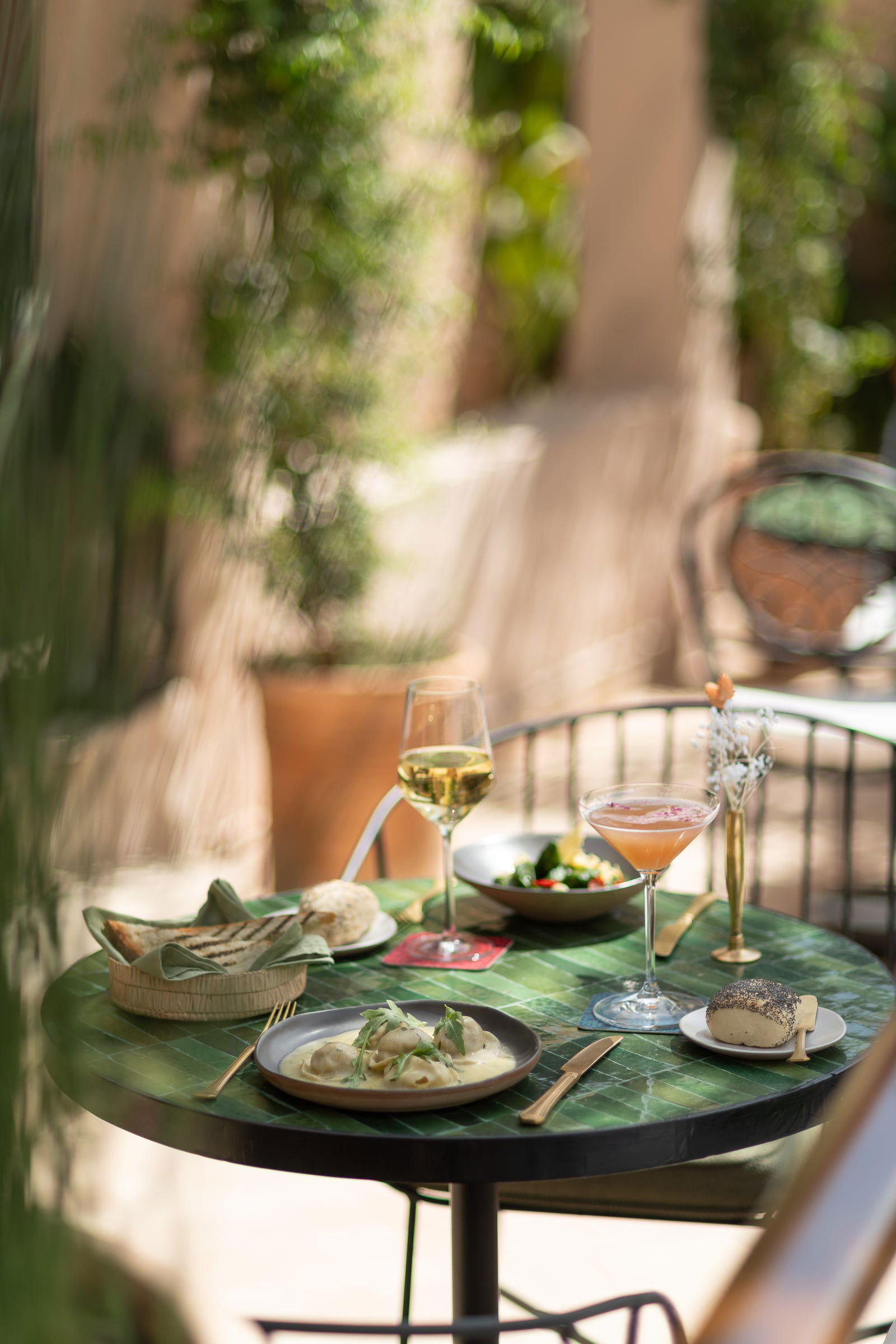
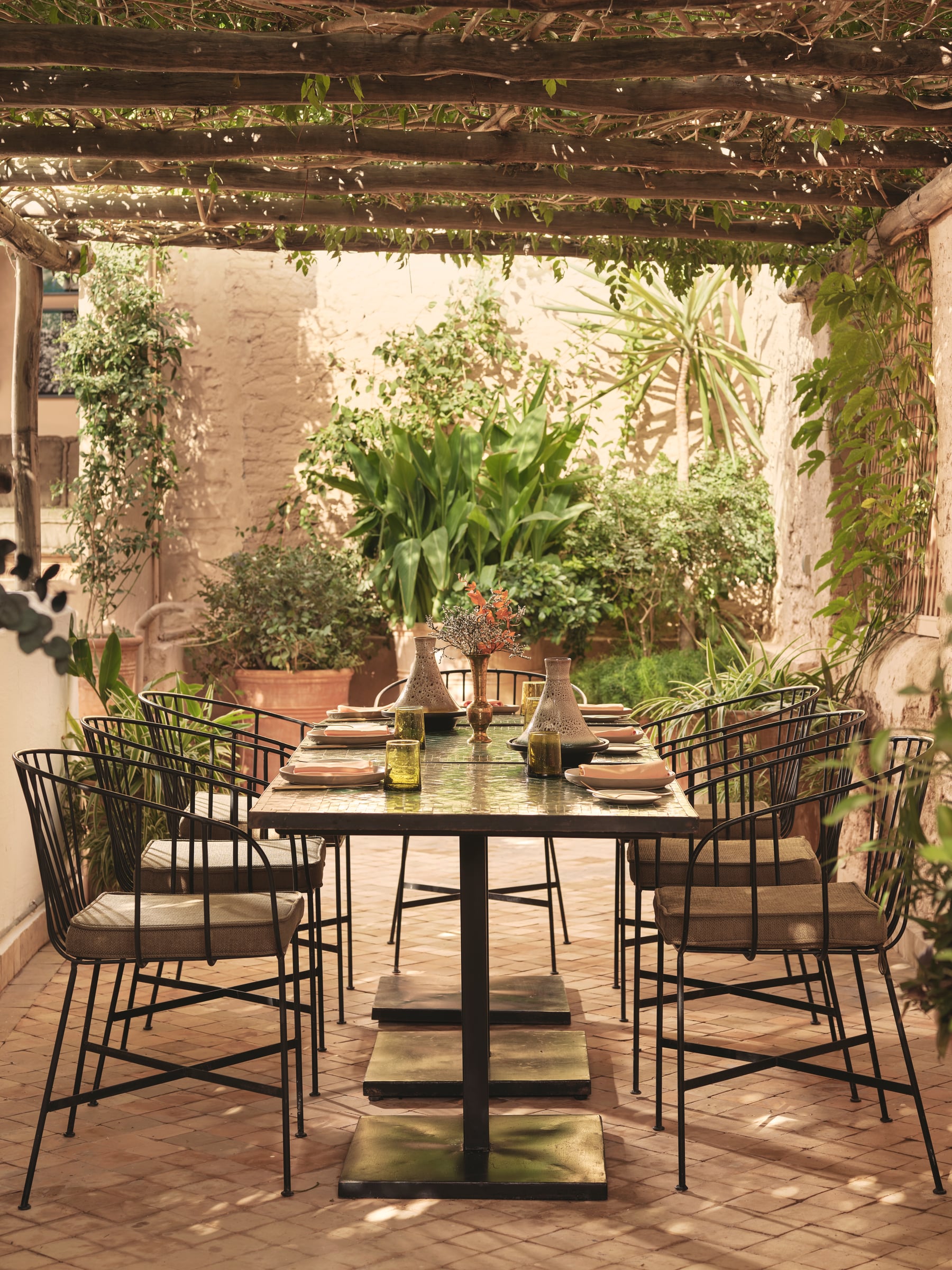
Look closer and the details repeat in miniature: a star cut into the stone, a flower left on the tile beside a glass.
By evening the same tables are reset for dinner, glasses catching what is left of the light.
Ahmad El Hardoum's Kitchen
Ahmad El Hardoum runs the kitchen. He started as a boy in Errachidia, working with his brother in a small hotel in their home town, and he has spent the last fifteen years in Marrakech: Le Palais Paysan, then El Fenn, where he was chef de cuisine. He buys daily from the markets, the farms and the fishermen, and he teaches the young cooks in his brigade.
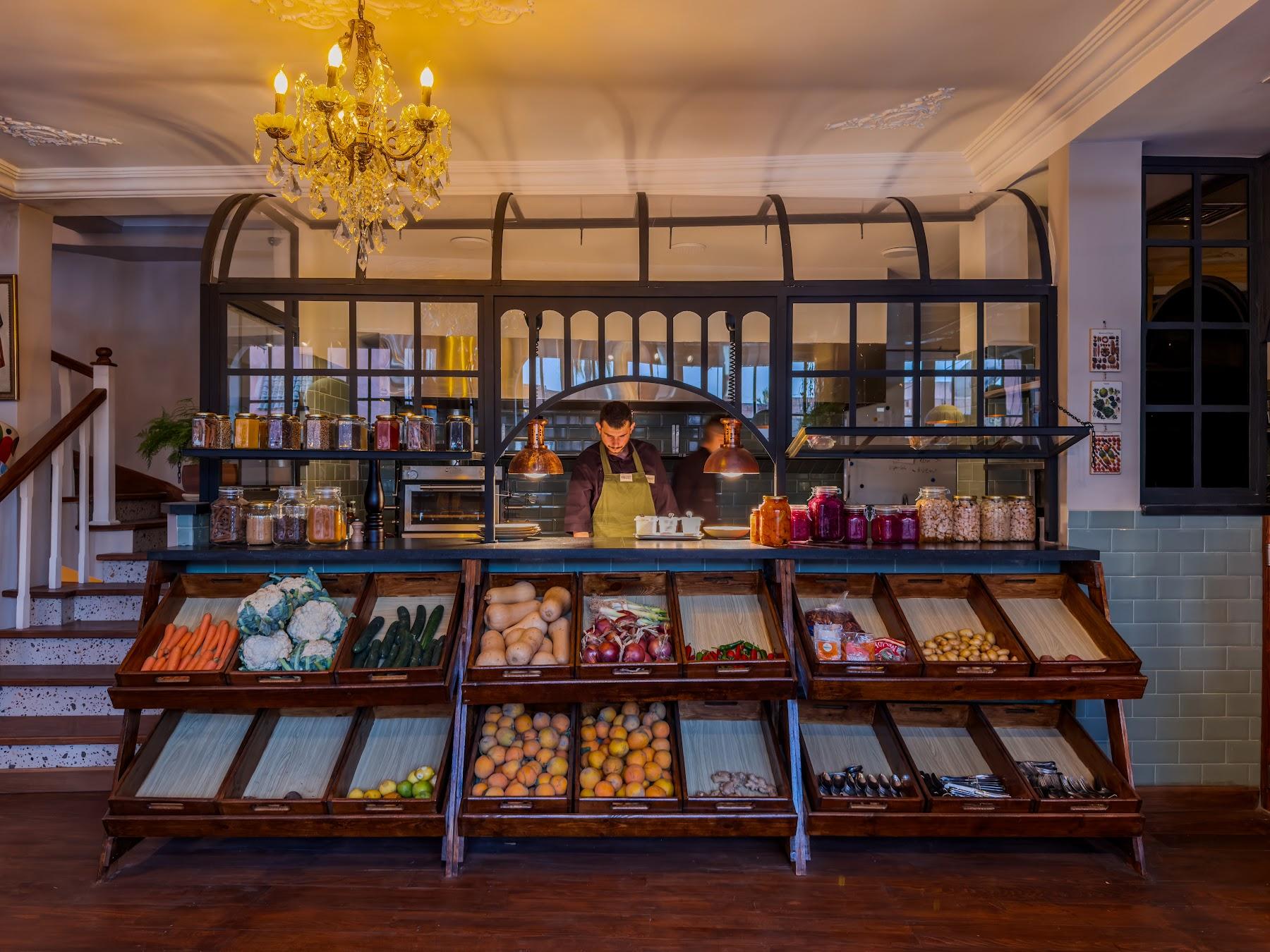
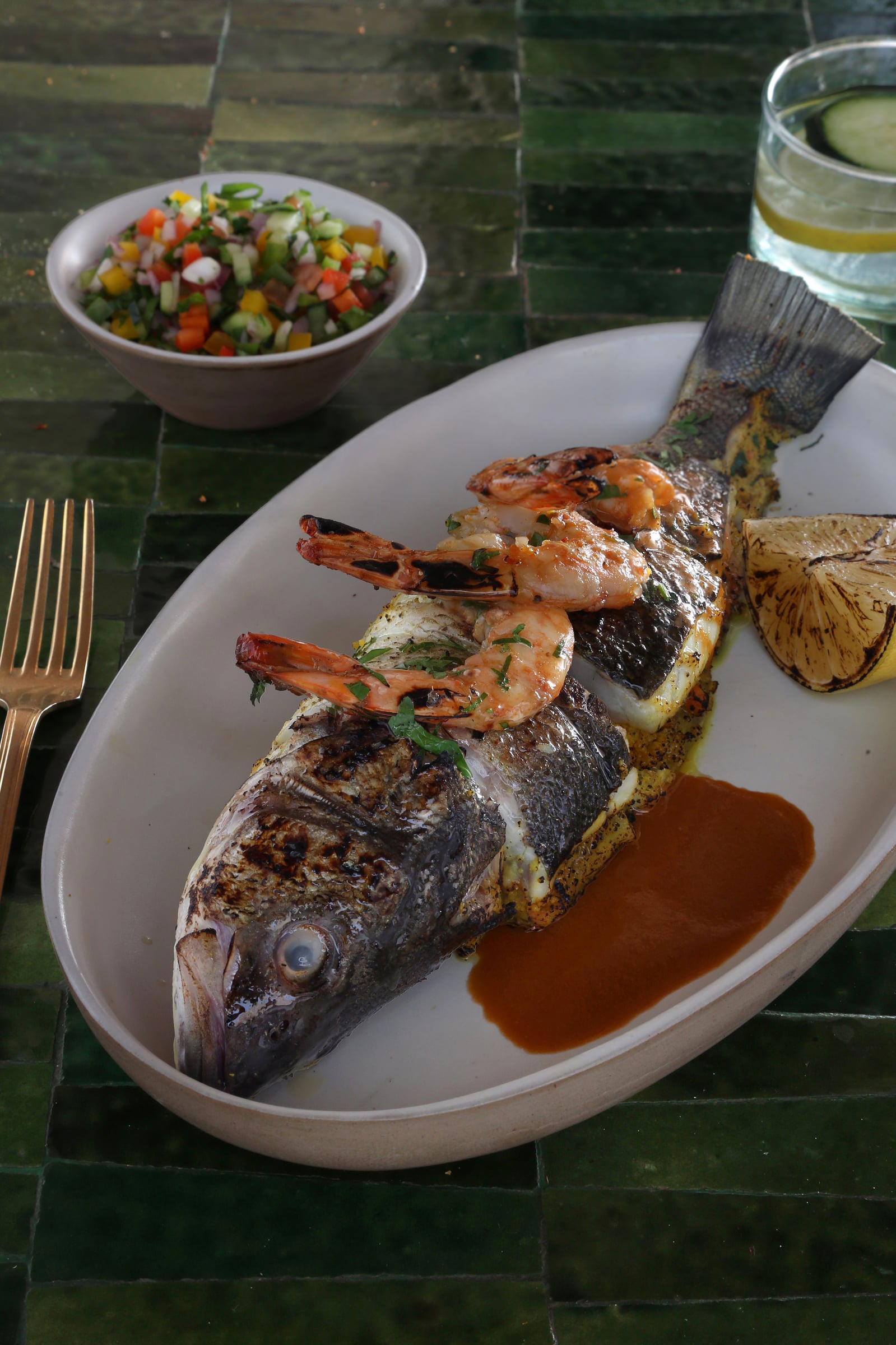
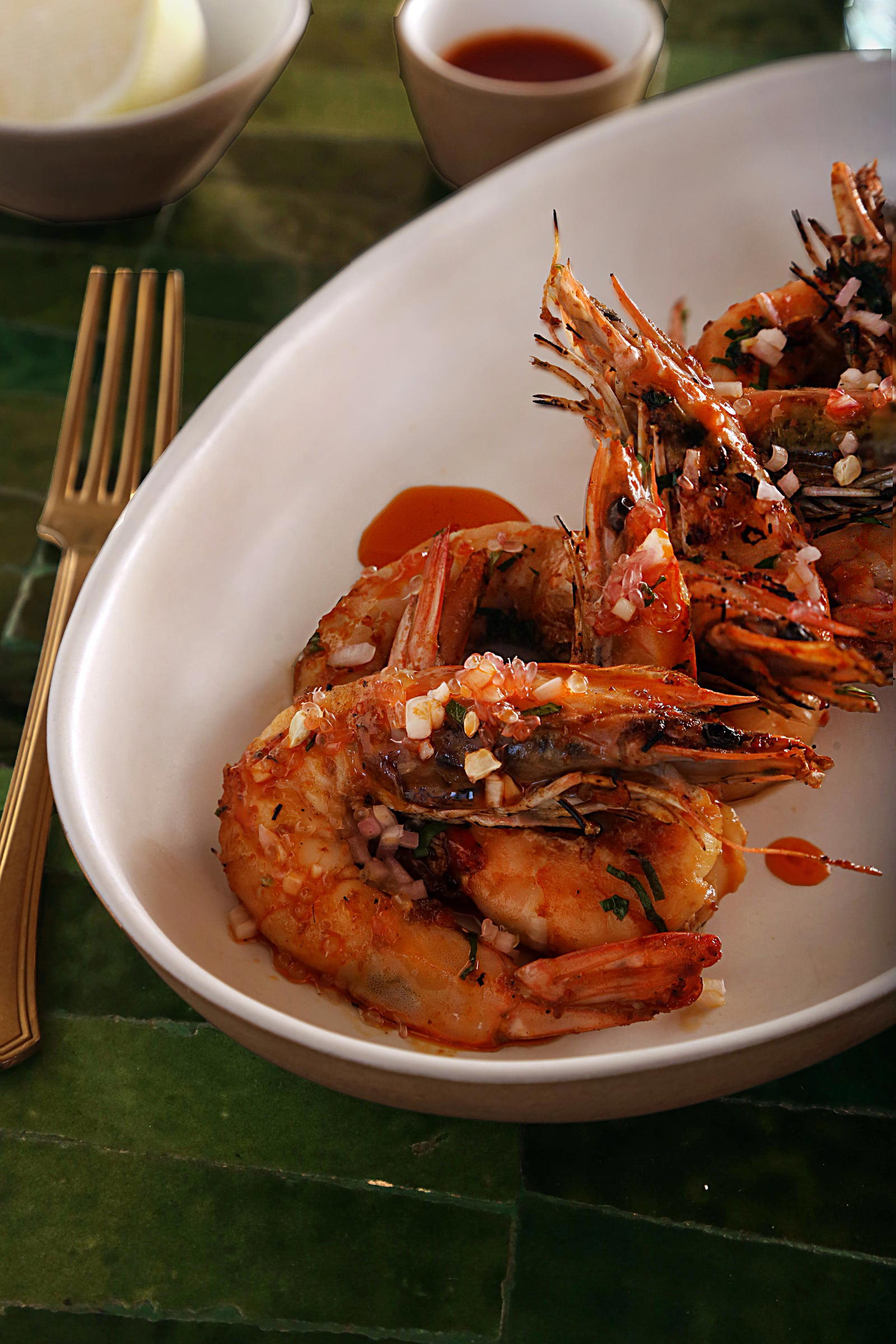
The seasonal menu was selected with Paul Weaver, the British consultant chef who shaped the sharing plate idea here and comes back through the year to build the menus with Ahmad, and it works the way the hotel does, Moroccan technique with a European hand laid over it. Suppliers are vendors in the souks, organic farms outside the city, and the rooftop garden a few steps from the pass. Seafood comes from three Atlantic ports, Dakhla, Safi and Oualidia, and the lamb, beef and chicken from farms in the Rahmna region.
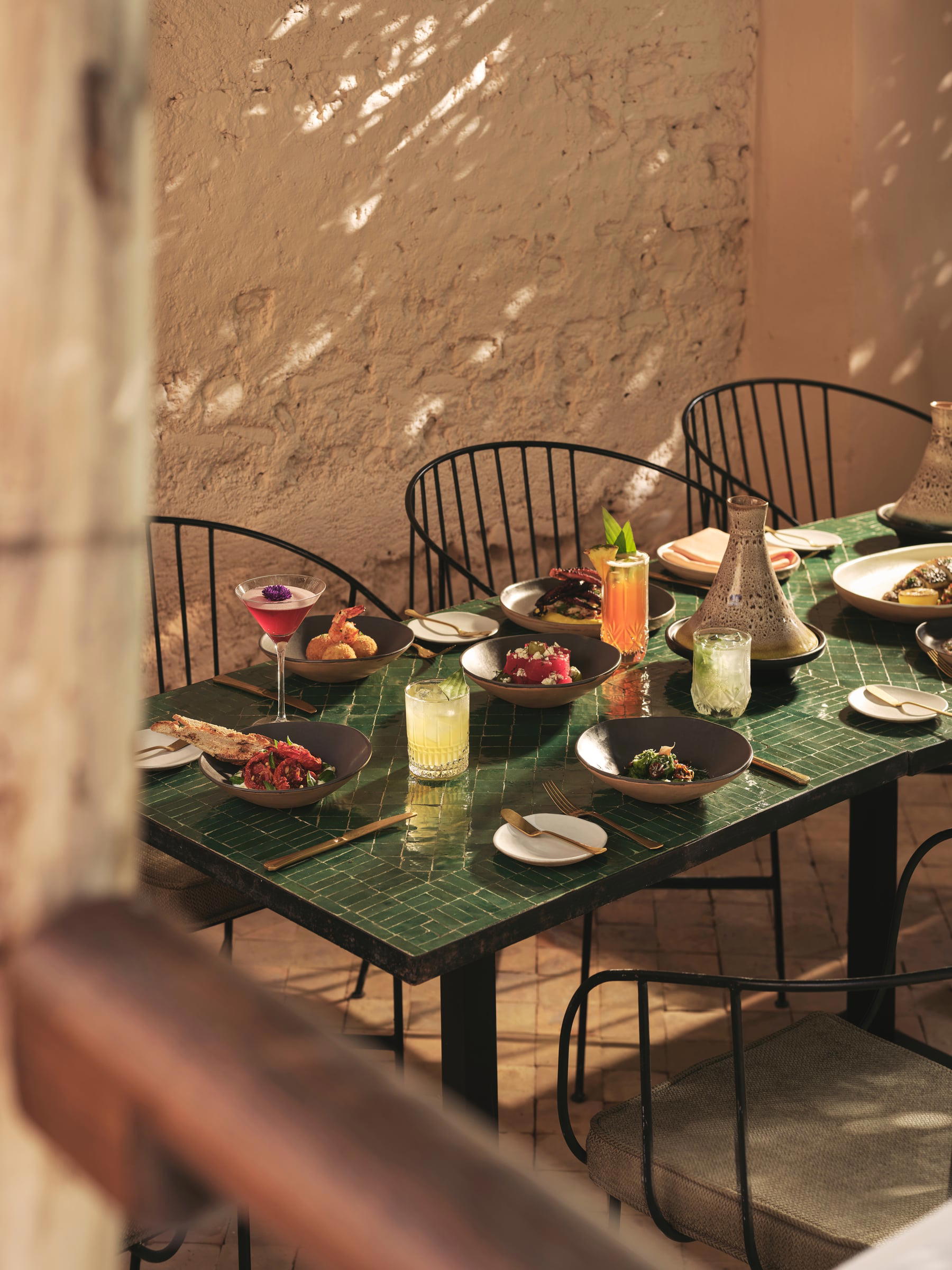
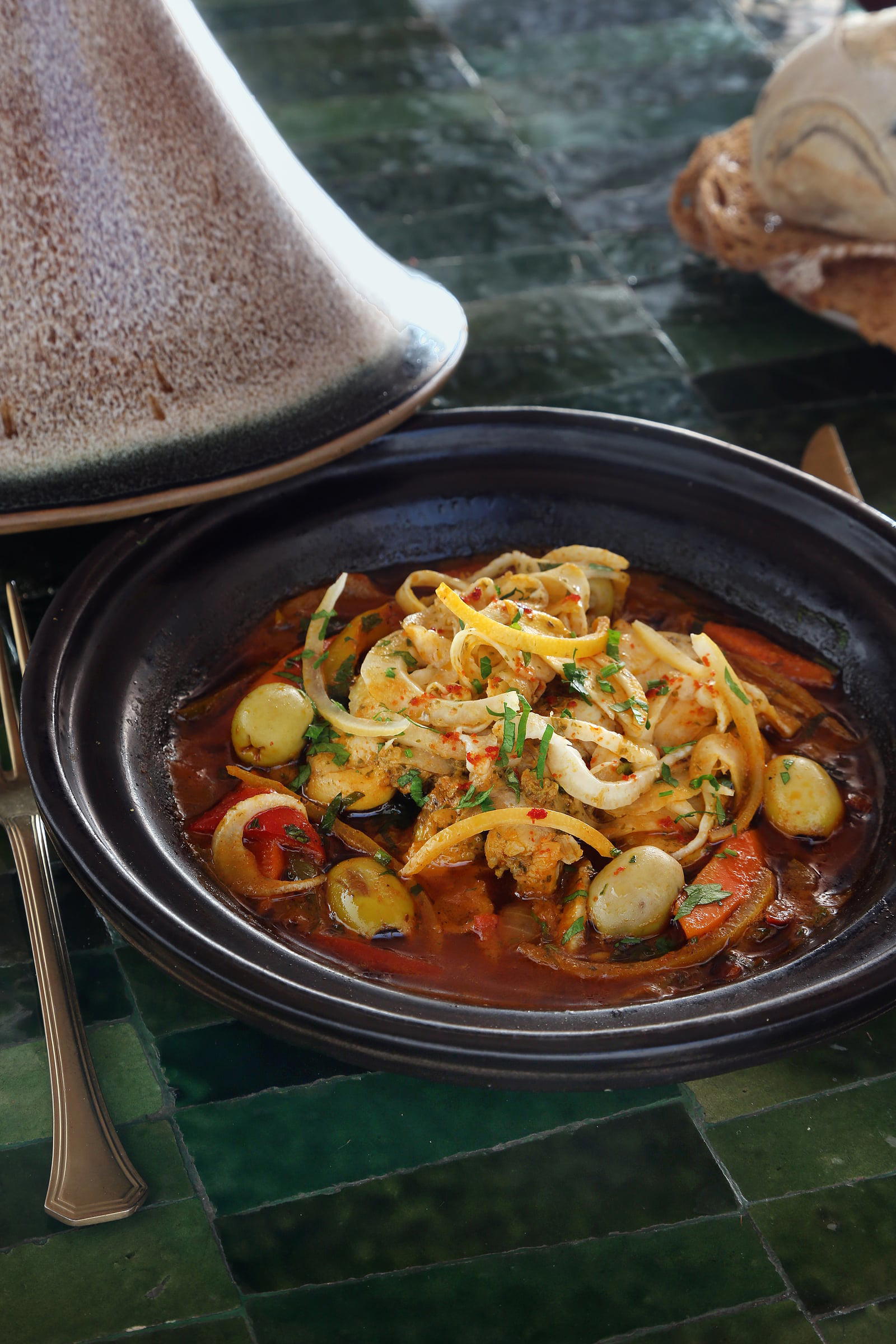
Lunch and dinner run on the same idea, small plates and sharing plates, the format that suits a terrace where nobody wants to sit facing a single large thing on a single large plate. Crab and leek croquettes with king prawn, langoustine and saffron mayonnaise. Beef carpaccio with truffled artichoke, pickled girolles and pastilla, which is the dish where the European hand is most visible. Baked spiced aubergine caponata with stracciatella, basil and fried capers. Grilled octopus on a zucchini mousseline, chicken tagine with olives and preserved lemon, the house couscous.
Then there is the monkfish tagine with charred peppers and fennel. Order it.
The House Dessert
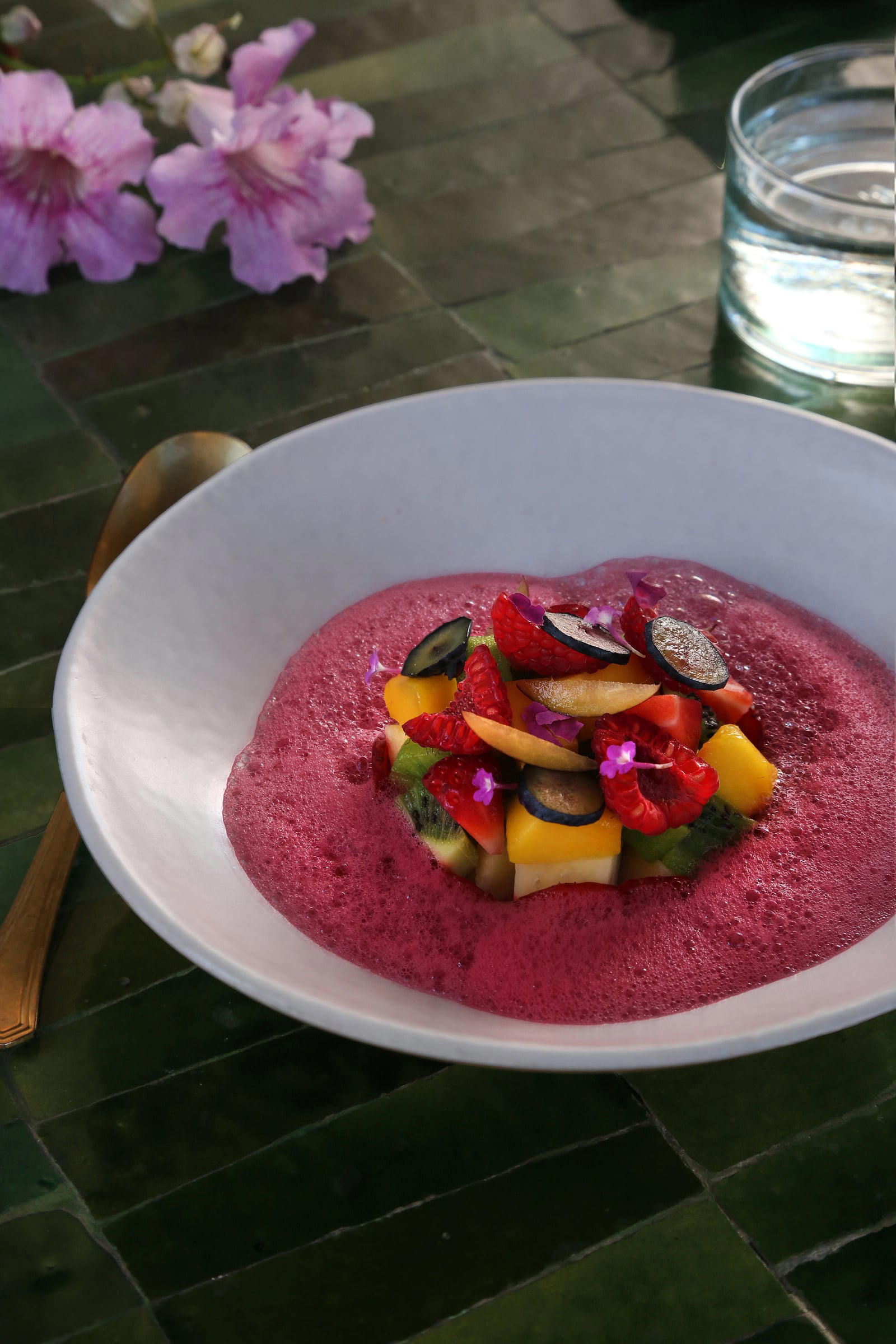
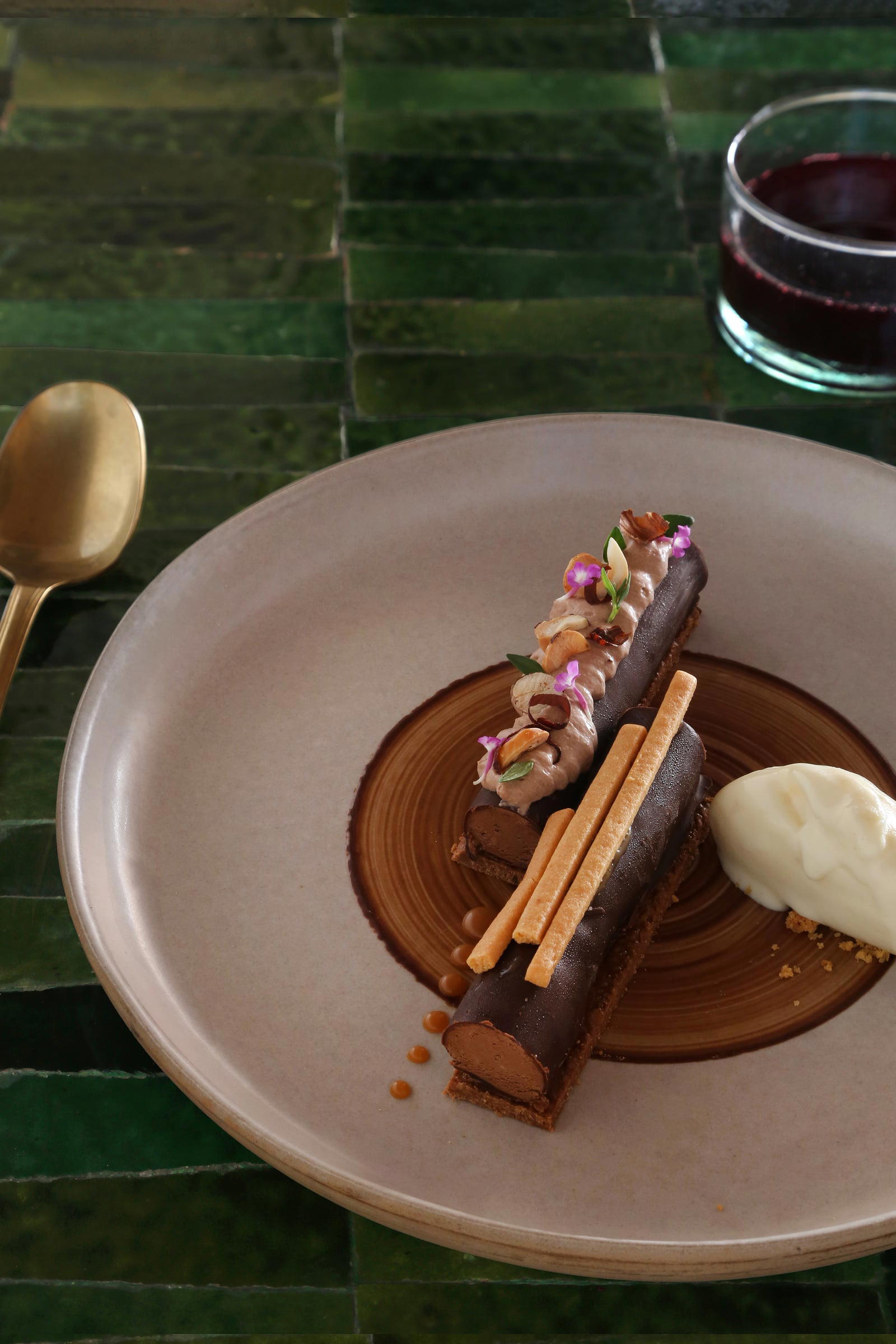
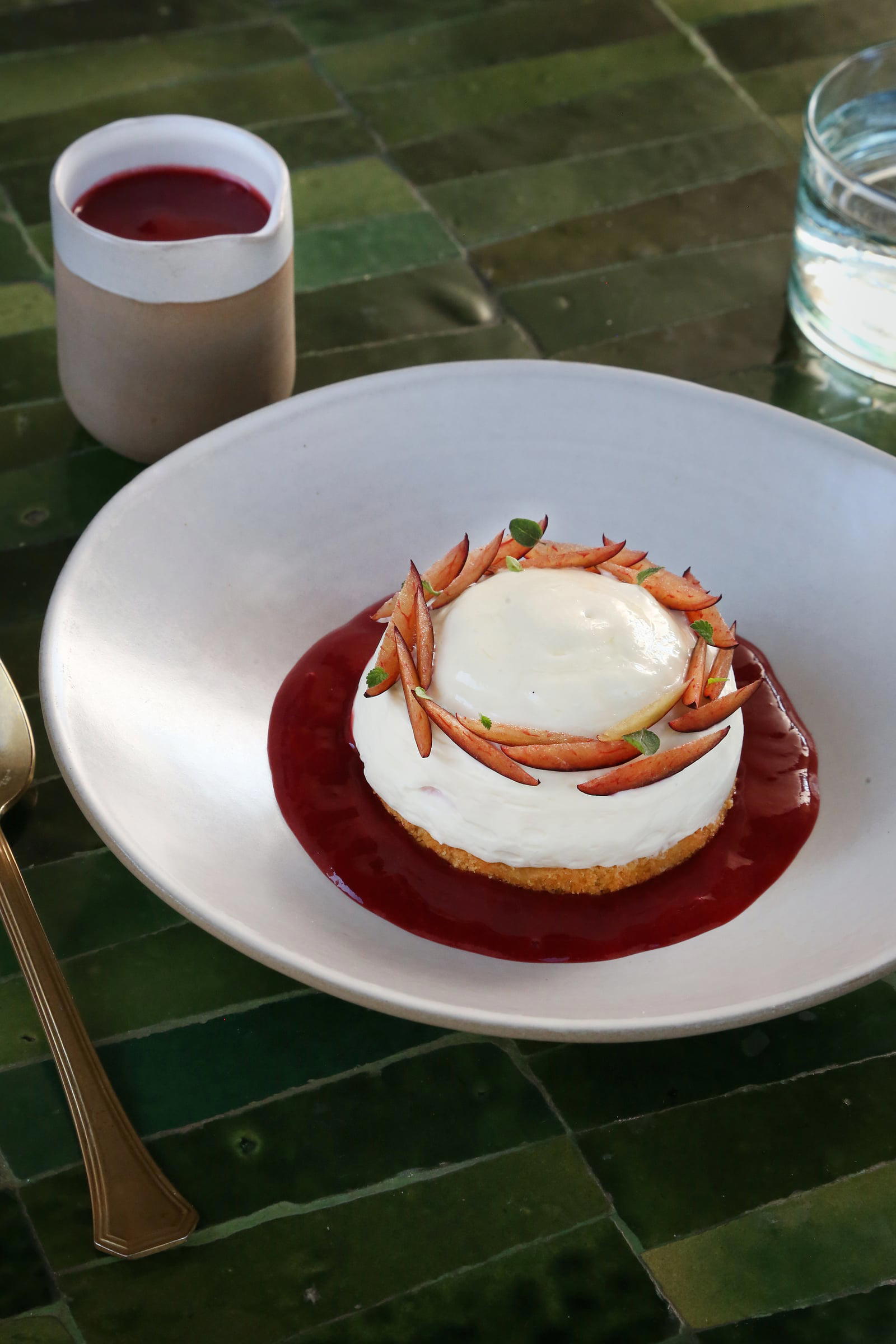
Pastry is Abderazzak El Boukhari's, ten years of it, and the thing to know about his section is that IZZA has its own version of tiramisu and is not shy about saying so. It is the house dessert. The Paris-Marrakech carries the same idea into pudding, amlou ice cream and choux pastry finished with argan oil, a French shape holding a Moroccan taste. Skip dessert altogether and there is a plate of French cheeses instead, Bleu d'Auvergne and Beaufort d'Alpage with a fig chutney, an odd and welcome detour on a rooftop in the medina.
What to Drink
The bar list carries Moroccan and international wines, artisanal beers, cocktails and mocktails, and a long run of teas for the people who have come up at five o'clock. The signature is a rosewater gin martini. Downstairs there is Bill's Bar, named for the designer, hung with his photographs and his things and modelled on his own reworking of Rick's Cafe in Casablanca. It is for people staying in the house, so if you have come up only to eat, the rooftop bar is your bar.
How to Eat There
Breakfast is served daily from eight until half past ten, with its own menu, m'semen and loubia and eggs Royale with saffron. Lunch and dinner share one menu and run straight through from noon to ten at night, and in a city where kitchens close early that is worth writing down. Book ahead: the terrace is not large, and it is shared with the people staying in the seven riads underneath it. The address is the riad's: 46 Driba Laarida, Sidi Ahmed Soussi, in the medina, and like every good medina address it is easier to find with a phone call than with a map.
Come at seven if you want the light going down behind the roofs, at one if you want the pergola and a long lunch, at eight in the morning if you want the eggs Royale with saffron. Whichever you choose, take the stairs slowly and give the photographs their ten minutes on the way up.
You may also like…