EAT & DRINK
A Piece of Japan in Marrakech: IKI in Sidi Ghanem
After Fès and a run of private dinners around Morocco, chef Shoki Yokoyama has found a permanent home in Marrakech. Not in the centre, but behind a white curtain on a street of showrooms and workshops in Sidi Ghanem.
Timence Guide Editors · 25 September 2026
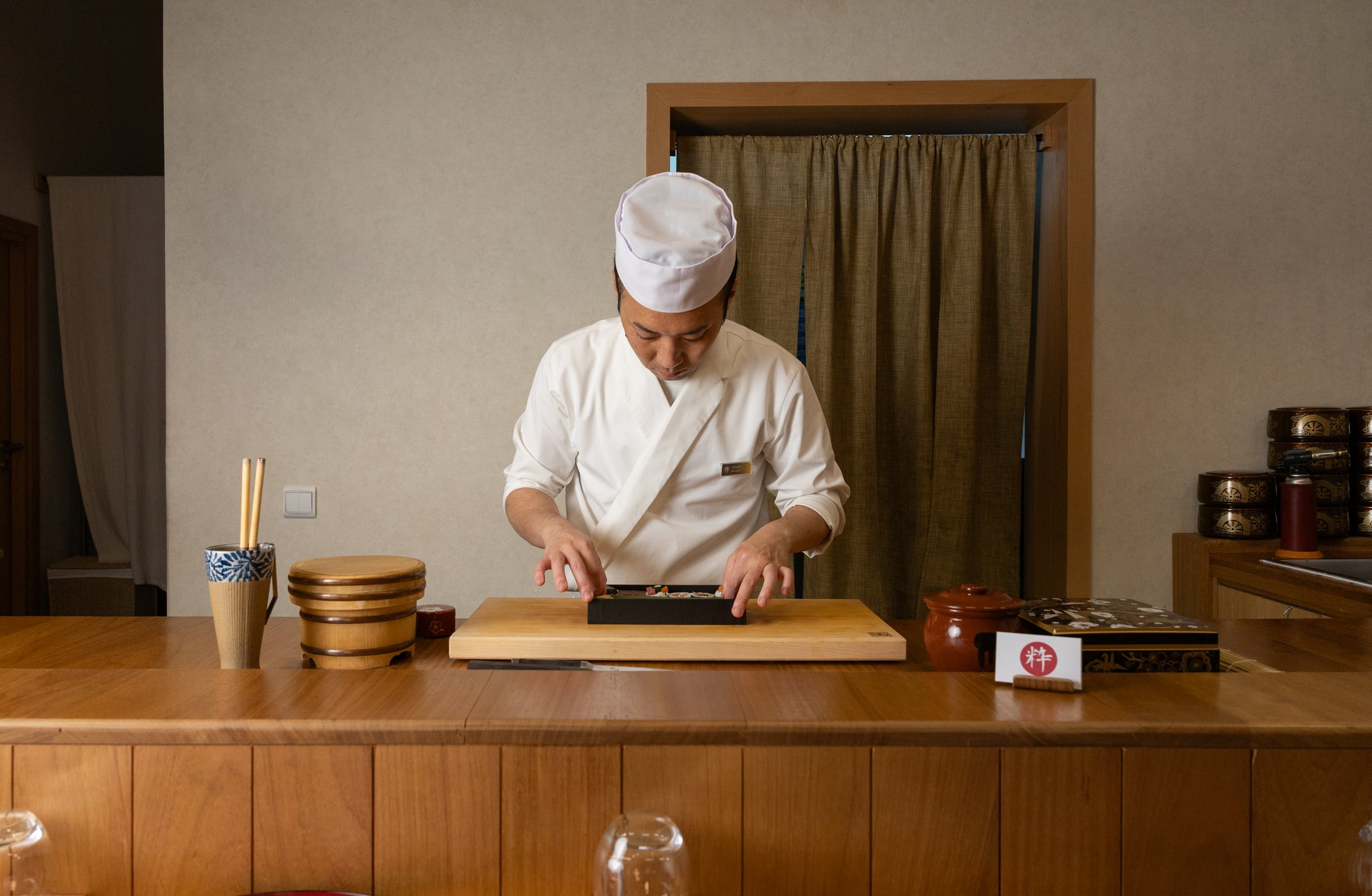
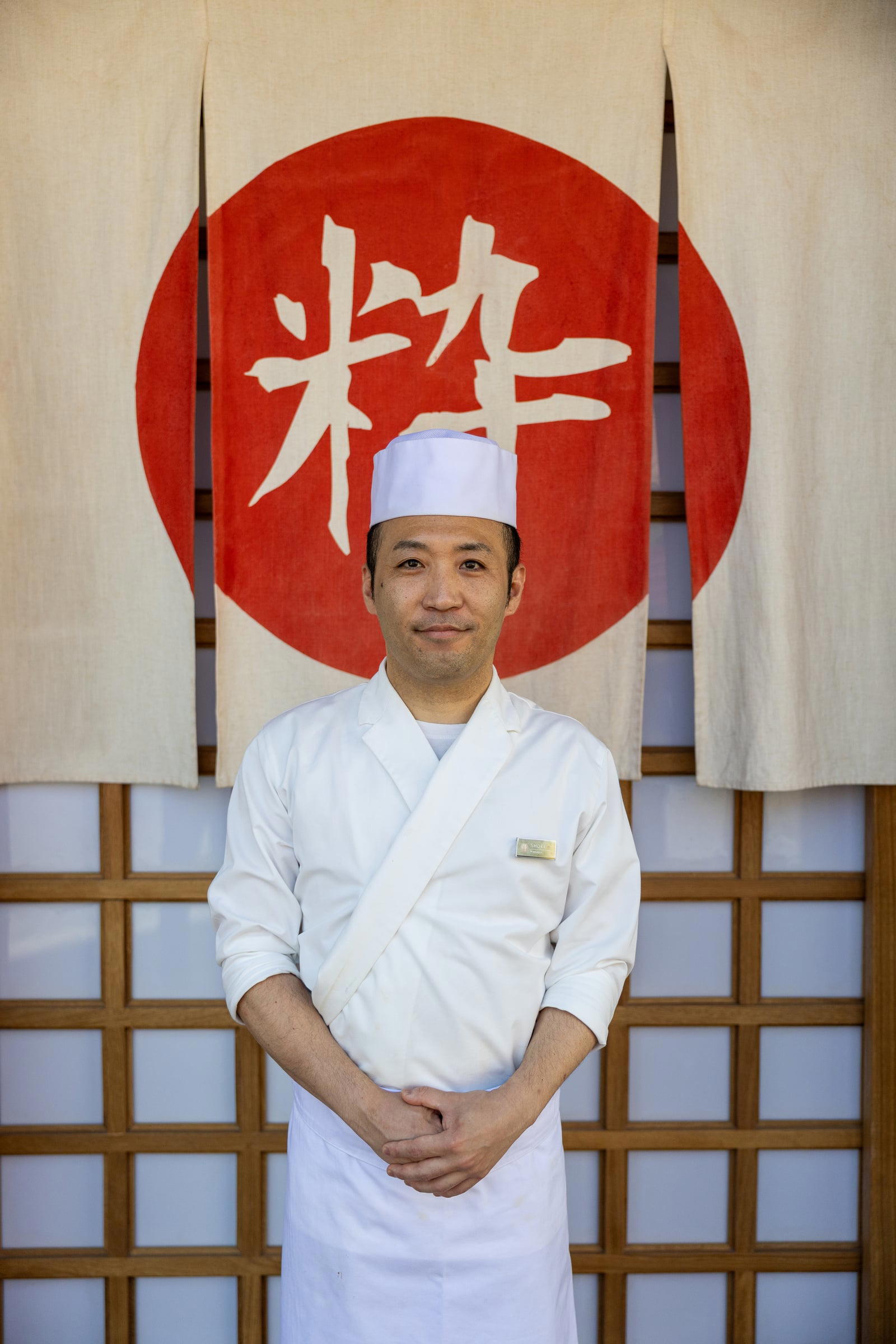
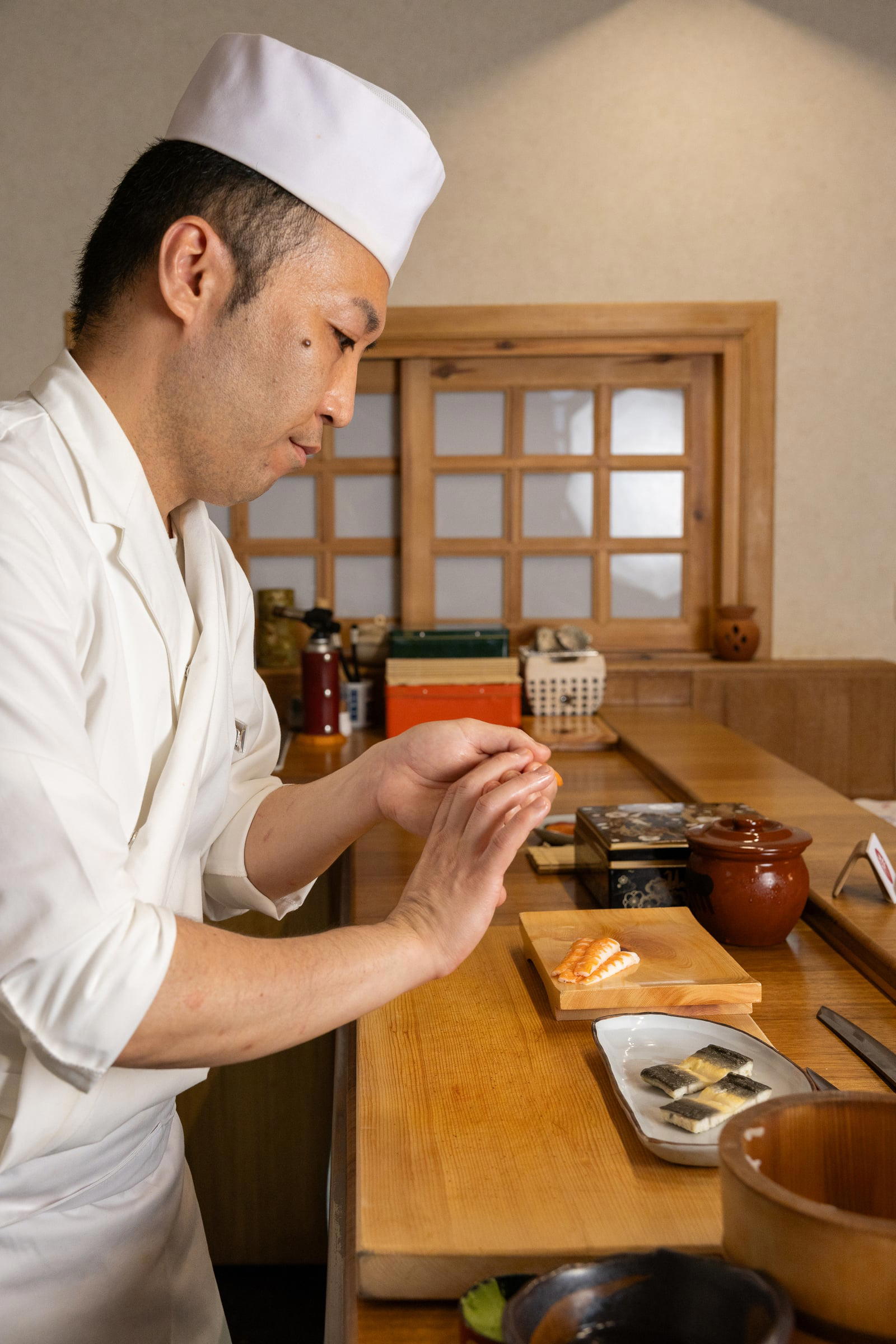
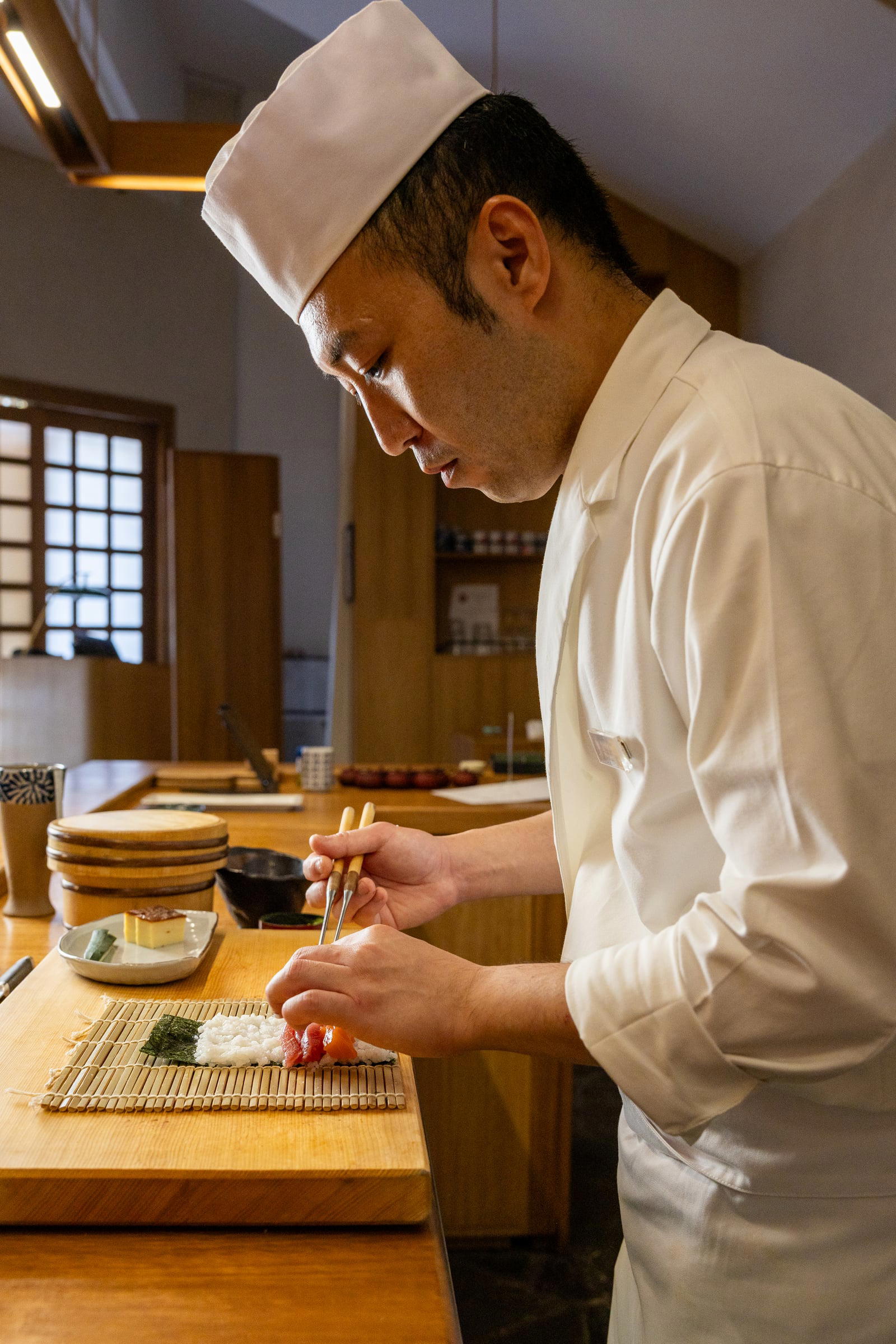
In Sidi Ghanem, Japan begins behind a white curtain. Outside are warehouses, furniture showrooms and design studios; inside, a handcrafted wooden counter places Shoki Yokoyama at the centre of the room. He works on the other side in a white jacket and cap, a chopping board in front of him and little else, while sushi arrives one piece at a time. It is hard to imagine a less obvious address for the restaurant Yokoyama had in mind.
Osaka, Fès, Marrakech
Yokoyama is from Osaka and travelled through more than 30 countries before settling in Morocco. In 2021, he opened IKI in Fès with a clear idea: to cook Japanese food without adapting it more than necessary to international tastes. Rather than the heavily modified fusion cooking often encountered outside Japan, the emphasis is on traditional techniques, precise preparation, carefully chosen ingredients and that particular quality Japanese cooking has of appearing simple precisely when it is not.
Fès is where IKI found its identity, but over time it also became a constraint. Visibility was limited, logistics could be inconsistent, and some of the specialist ingredients a sushi counter depends on were difficult to source reliably. Marrakech offered a different scale: better connections, an international clientele, a developed hospitality scene and, above all, an environment in which a restaurant like this could reach more people without changing what it wanted to be. In March 2026, IKI moved cities, opening at 308 Rue Sidi Ghanem on the 21st.
The address changed. The idea did not.
Before the restaurant, there was already IKI
Marrakech had, in fact, encountered Yokoyama before 2026. Before there was a dining room to book, IKI had already been cooking its way around Morocco: at private dinners and receptions, an event organised by the Embassy of Japan, large-scale catering and evenings hosted in different cities across the country.
For a while, IKI existed without a permanent restaurant at all.
Which helps explain why the opening in Sidi Ghanem feels less like the debut of a new address than the moment an existing idea finally acquired a room of its own. Yokoyama arrived with a defined style of cooking and an audience that, at least in part, already knew it. What had been missing was a place built around that cooking, and the space is now an important part of understanding what IKI is trying to do.
A seat at the counter
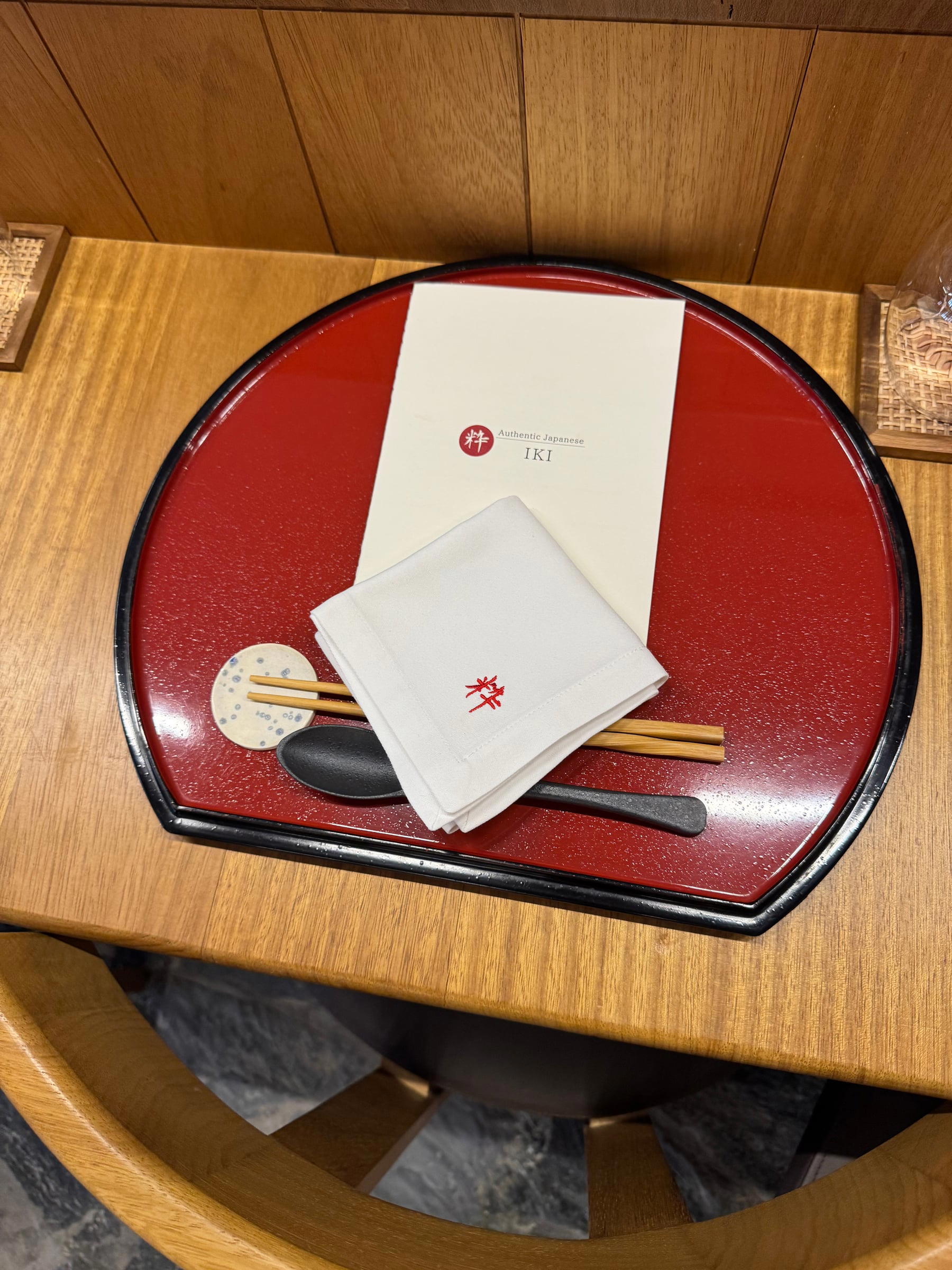
The centre of the dining room is not a table but the counter: handmade in wood, with six seats facing the chef’s station. A lacquer tray, chopsticks and a folded napkin are set at each place; behind Yokoyama, a short blue curtain separates the kitchen from the room.
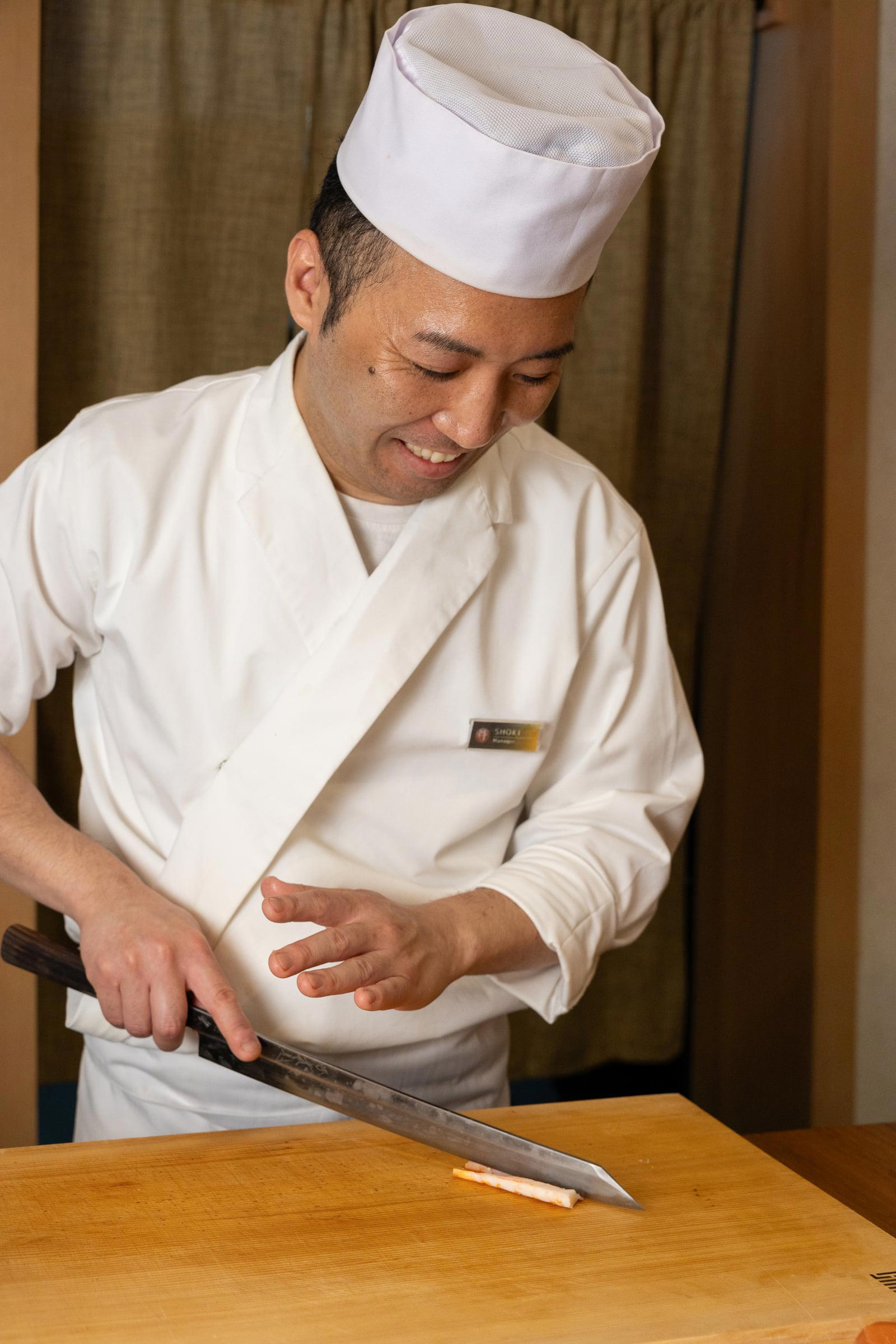
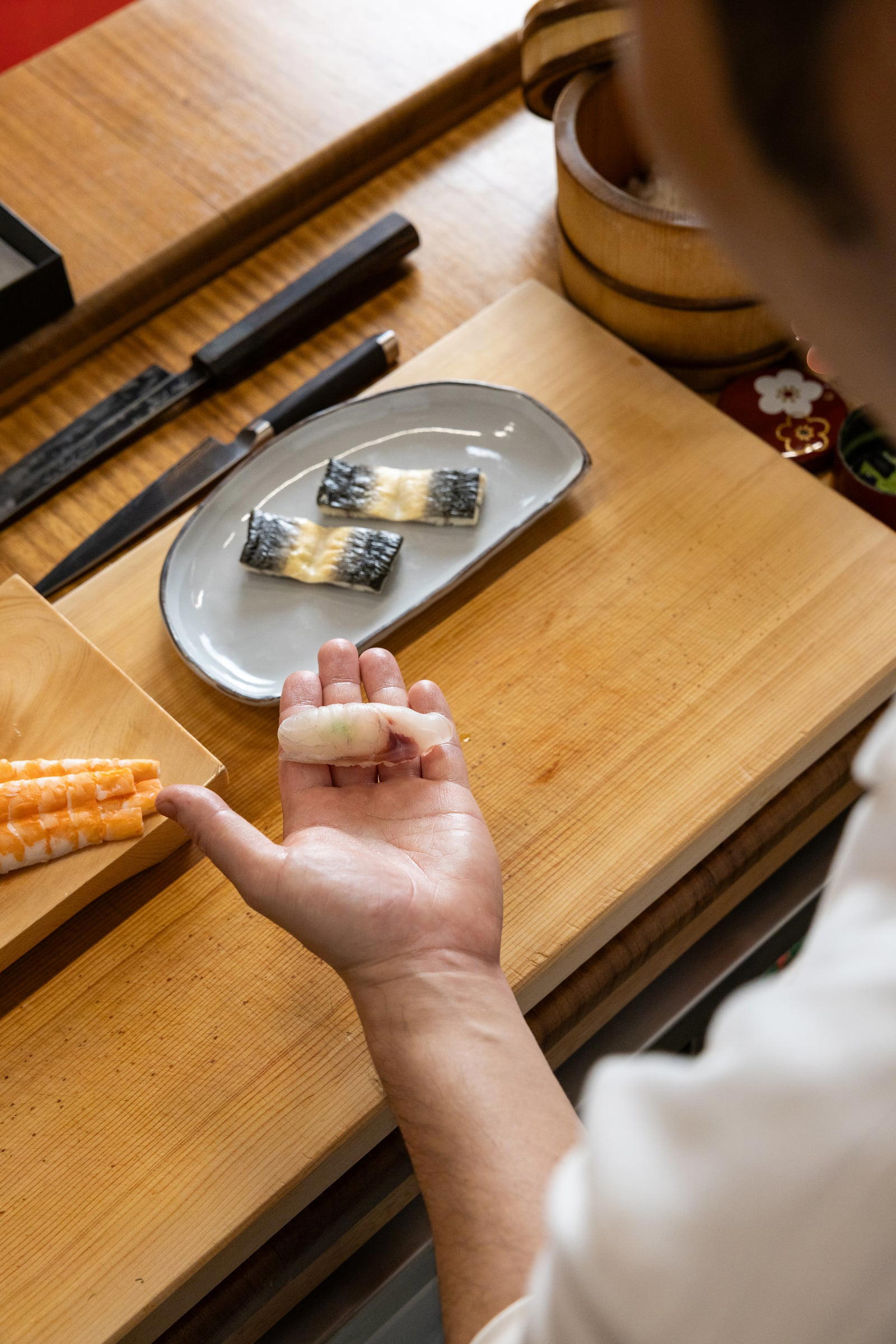
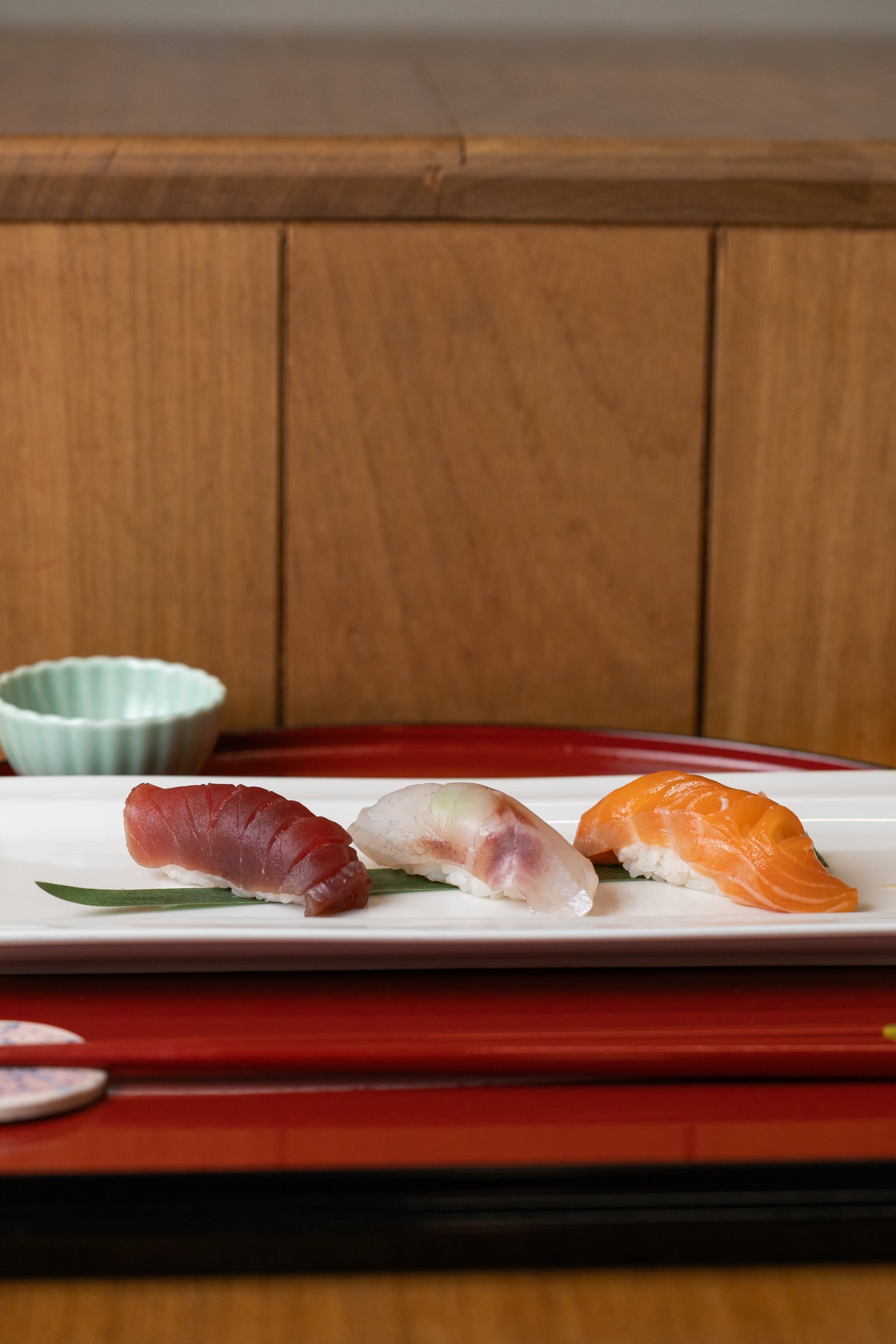
Sitting here means seeing almost everything. Fish is sliced in front of you, rice passes directly from the chef’s hands to the plate, and each course travels barely a metre before it reaches its guest. There is no hidden kitchen from which finished dishes suddenly emerge. The making of the food becomes part of the meal.
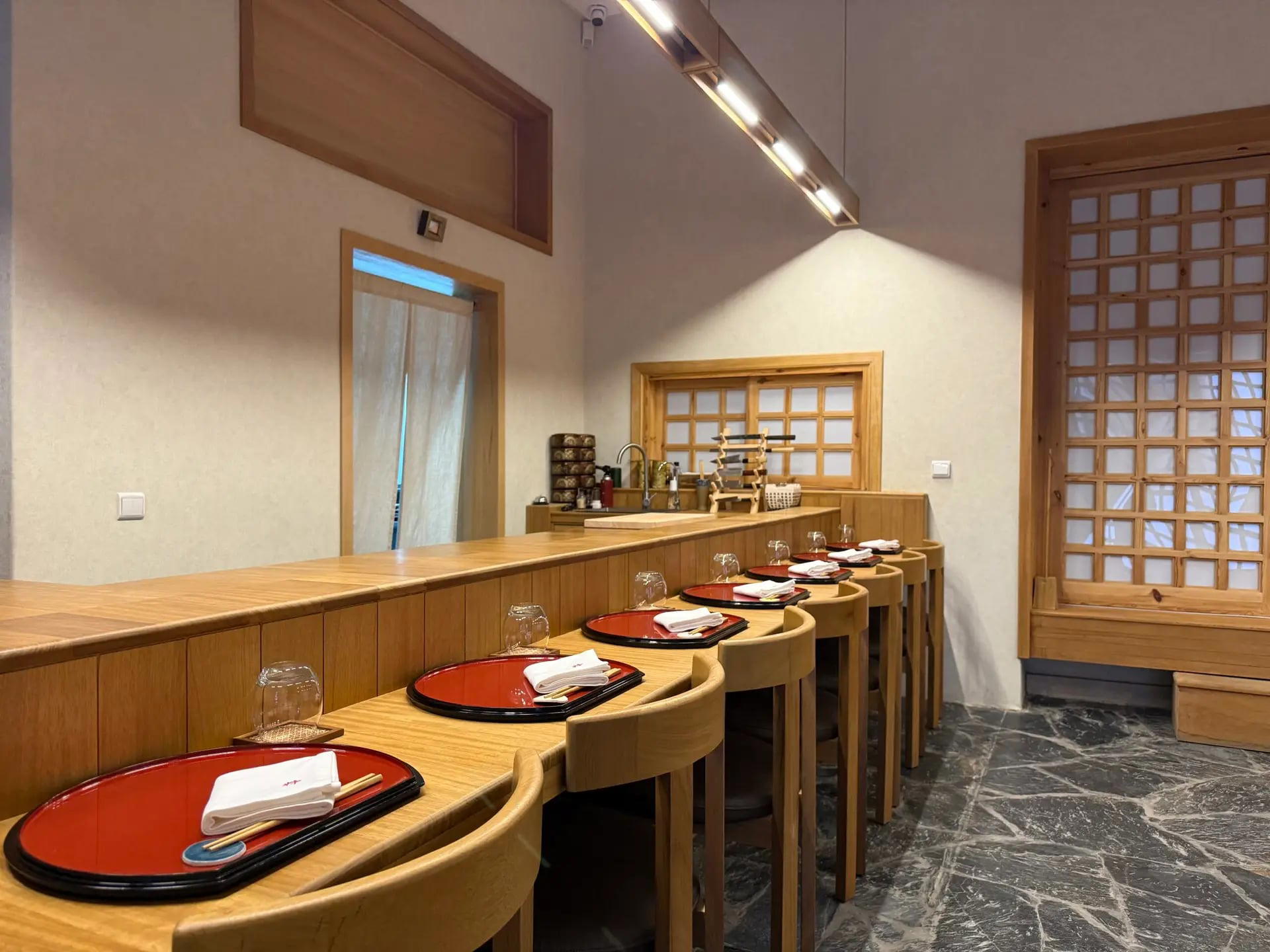
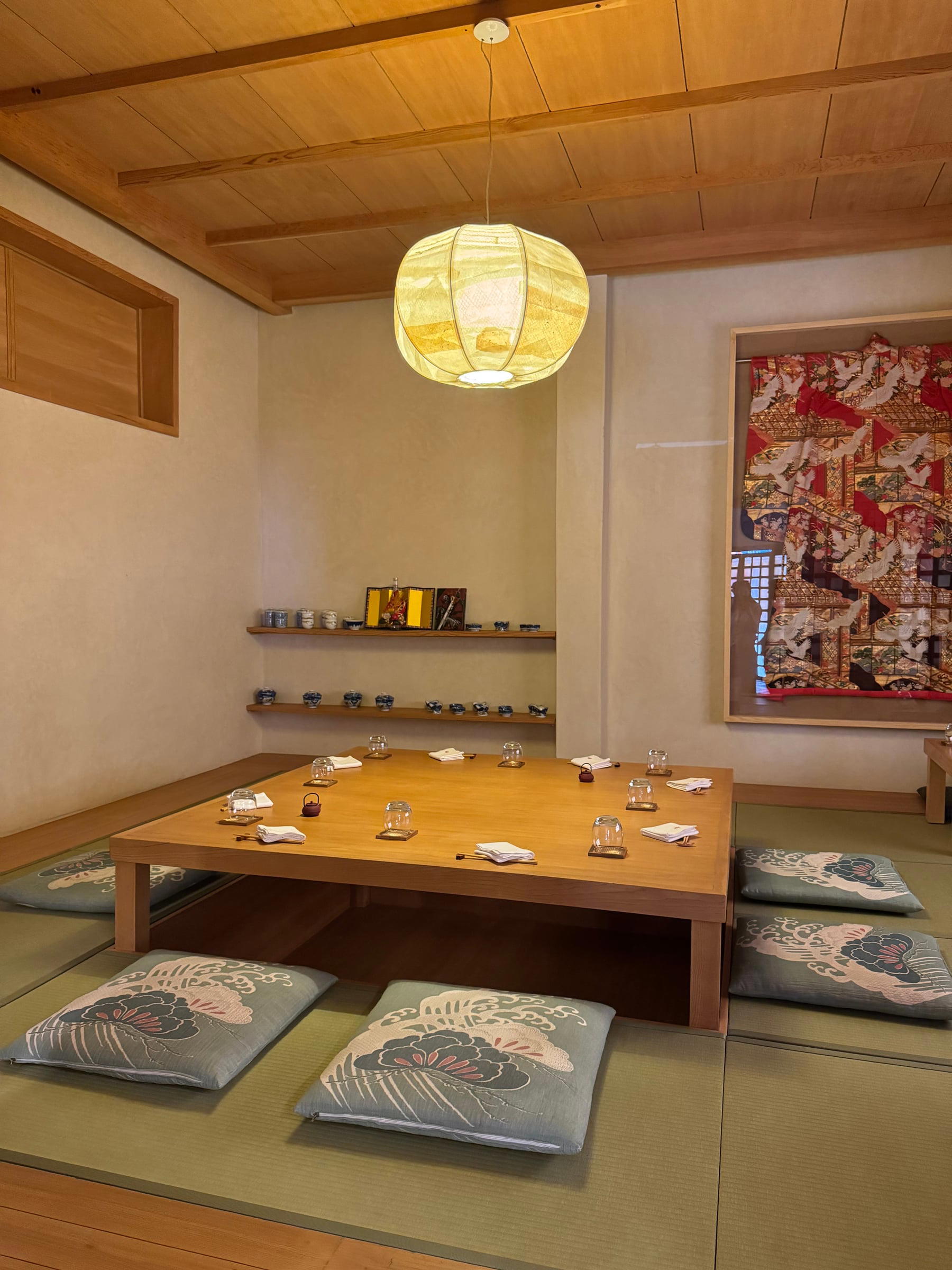
The rest of the room does little to compete for attention. High walls, pale wood, translucent panels that soften the light and dark-veined stone underfoot create a restrained backdrop. To one side is a private tatami room with a low table and floor cushions printed with waves; a paper lantern hangs from the wooden ceiling, and a kimono is framed on the wall above a run of shelves. Japanese tableware, calligraphy and selected artworks complete the room.
It is perhaps here that IKI’s idea of authenticity becomes clearest. Not in an elaborate recreation of Japan, but in the accumulation of details so quiet that, taken individually, they almost disappear. If there are four or more of you, ask for the tatami room when booking.
The character above the door
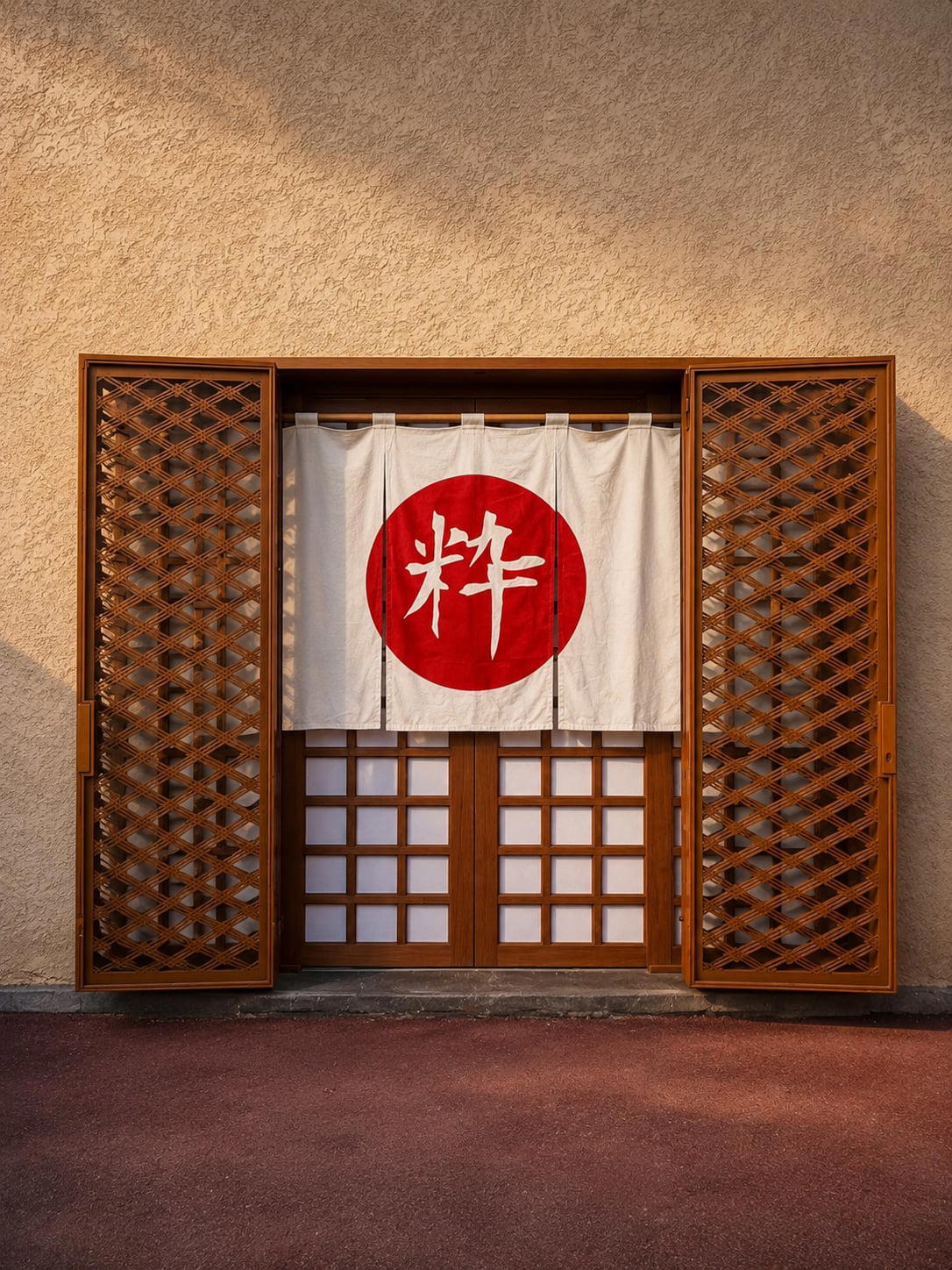
Above the entrance is a single character: 粋. It is read iki, a word rooted in the urban aesthetics of Japan’s Edo period and one without a neat English equivalent. It describes a kind of refinement that has no need to announce itself: understated, assured and more interested in what can be removed than what can be added.
It is an intriguing idea to place at the entrance of a restaurant in Marrakech, a city where craftsmanship so often expresses itself through material and ornament: zellige, carved plaster and cedar, worked doors and courtyards that reveal themselves behind otherwise anonymous walls. IKI moves in the opposite direction (a cotton curtain, a wooden frame, an ochre wall), yet the two sensibilities are perhaps closer than they first appear. Both depend on the work of someone’s hands, and on attention being given to details a guest may never consciously register.
Lunch without ceremony
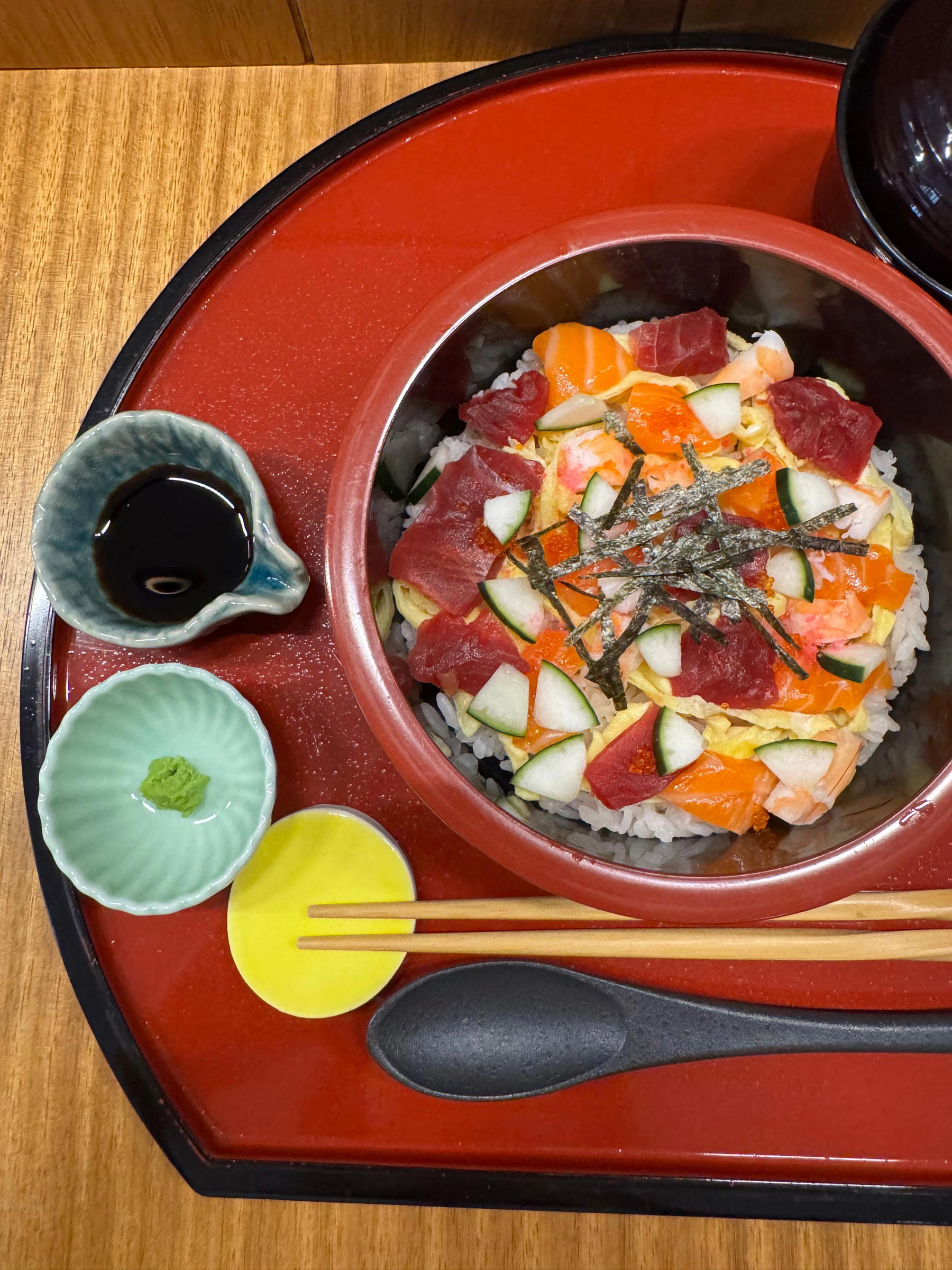
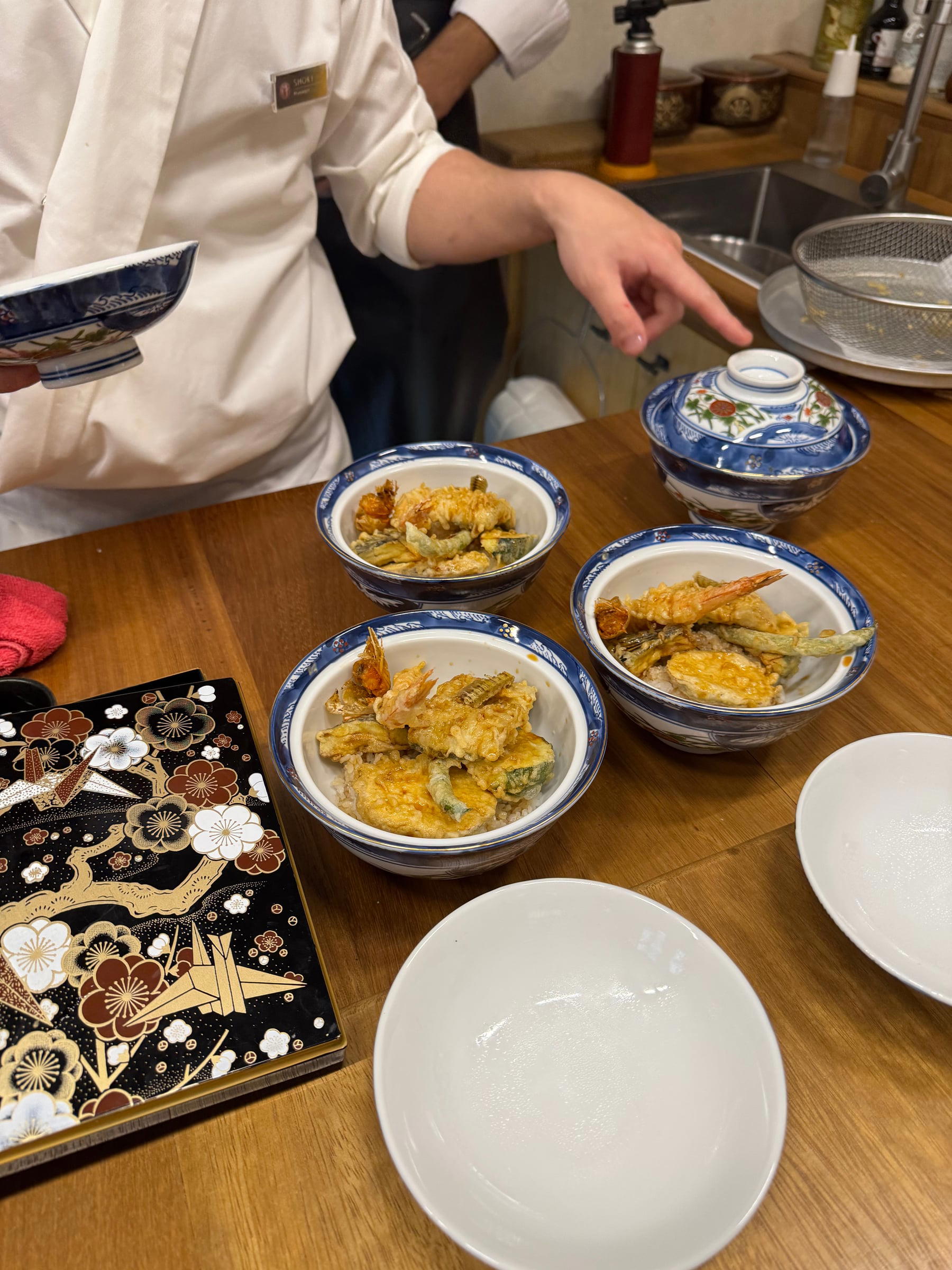
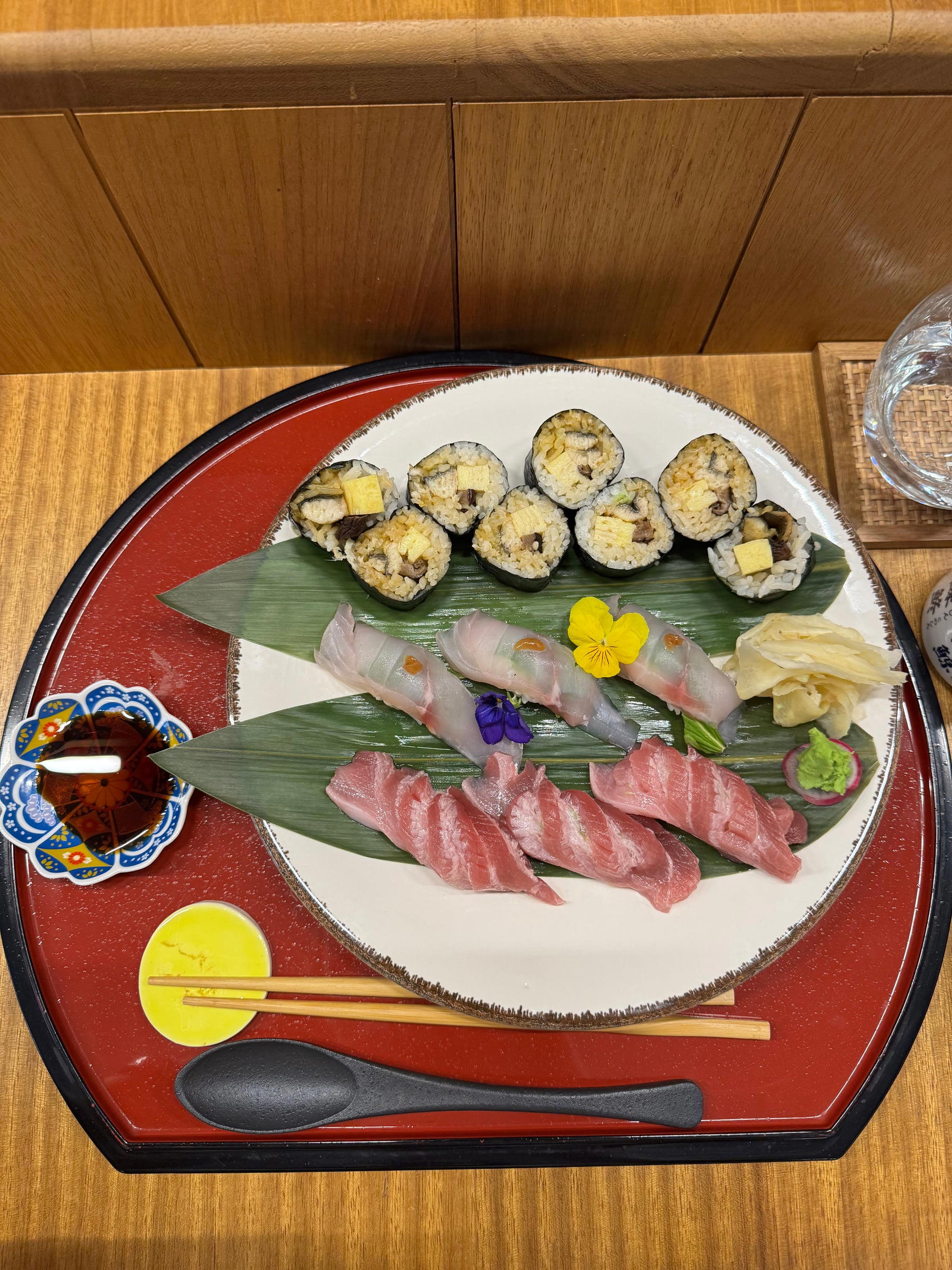
For all this rigour, IKI does not feel particularly formal. At lunchtime, the register shifts towards dishes that are also part of everyday eating in Japan: chirashi sushi, with slices of fish arranged over rice; tempura don, prawns and vegetables served over a bowl of rice; and chicken cutlet don. The tempura arrives in blue-and-white porcelain, its lid resting to one side, while sushi continues to be prepared to order throughout the day.
This is the version of IKI you can drop into for lunch without necessarily turning the meal into an occasion.
Dinner is different.
At dinner, leave the choice to the chef
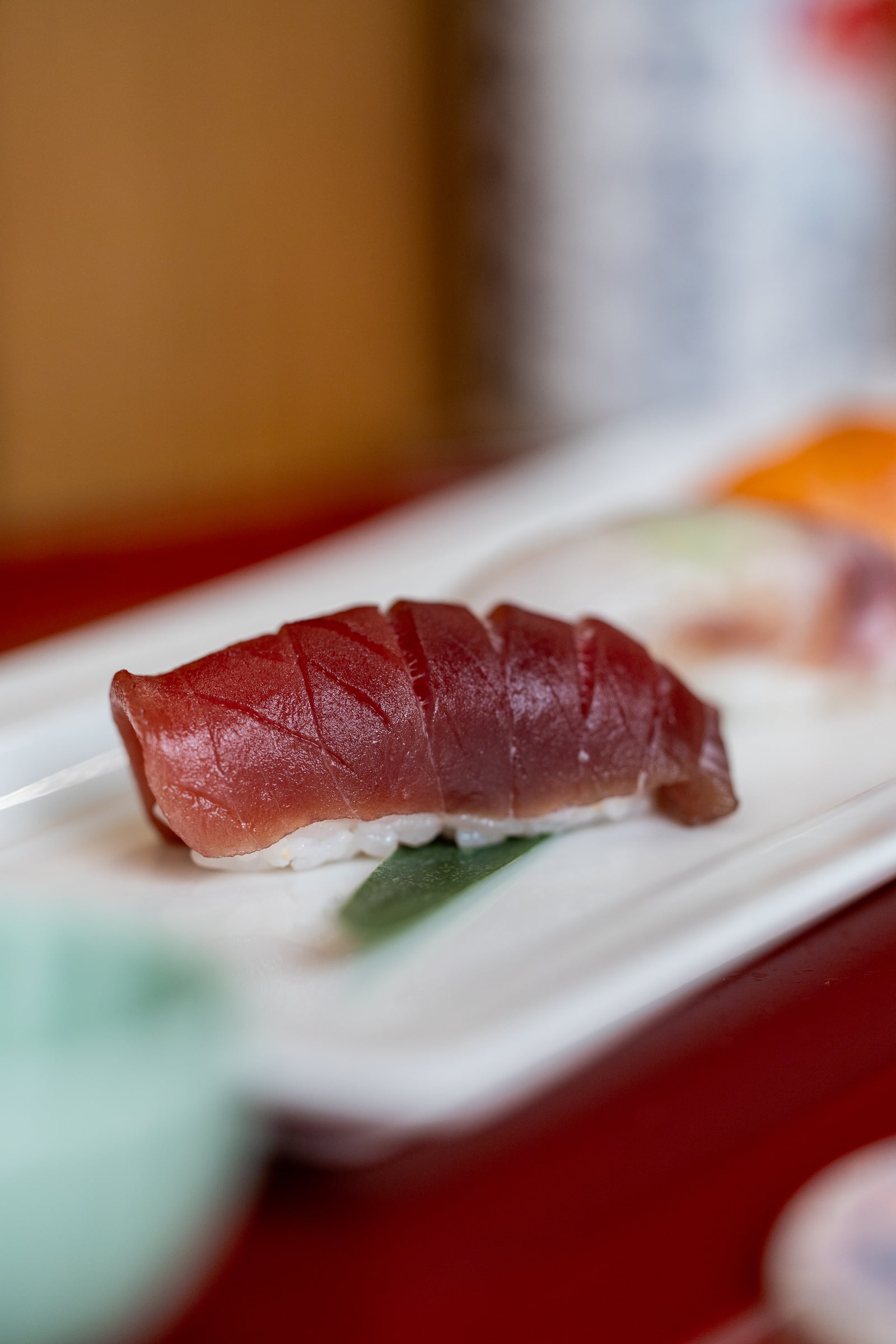
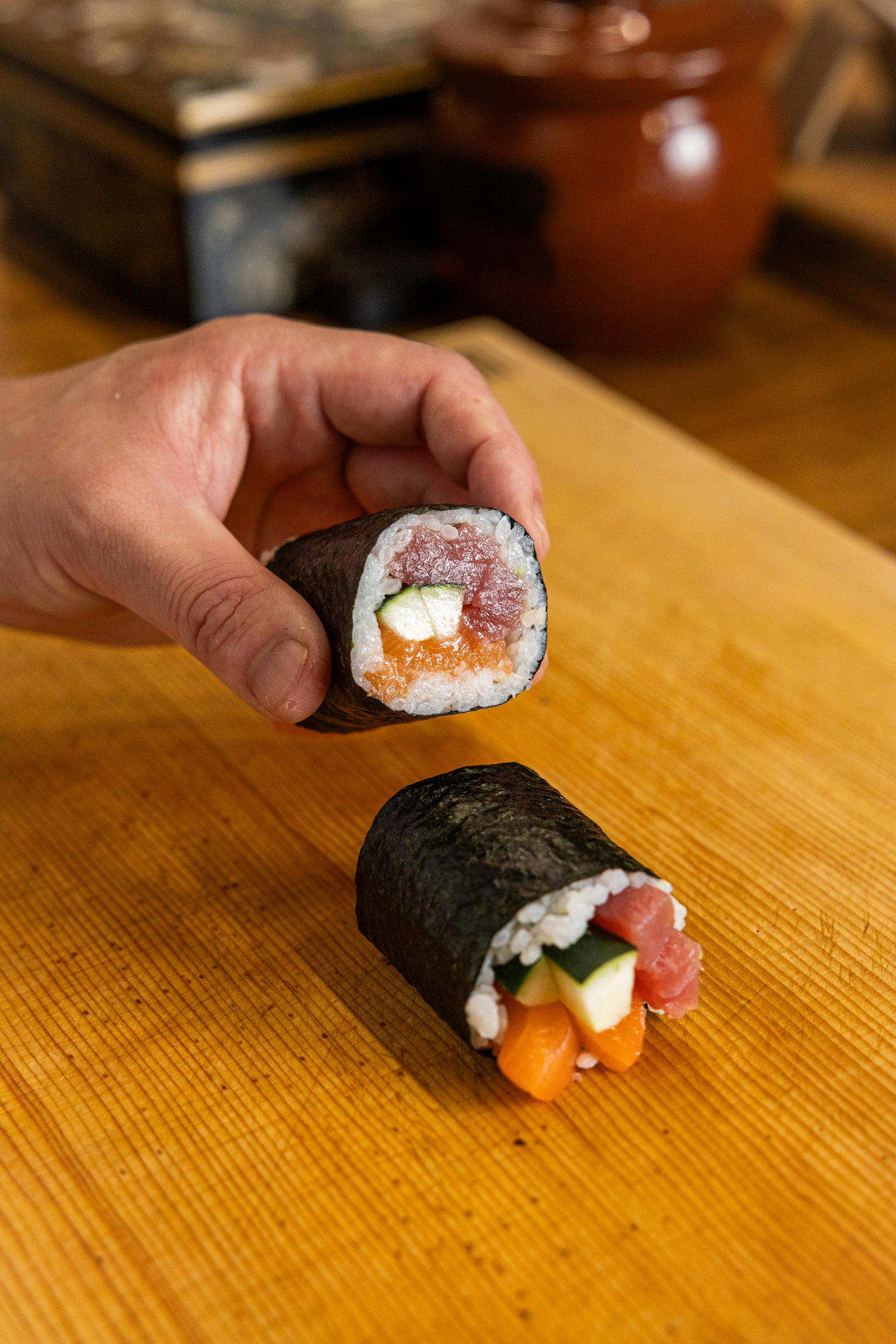
In the evening, the counter comes into its own. The central experience is omakase (broadly, entrusting the meal to the chef), with Yokoyama shaping the progression around what is available that day and what is in season. Small courses arrive one after another, from the first bite through to dessert, while the sushi is made directly in front of you.
There is also a seasonal à la carte menu for those who would rather choose for themselves. But travelling this far north of central Marrakech and then sitting away from the counter means missing part of what makes IKI distinctive.
If you can, book a seat in front of the chef. And when Yokoyama places a freshly made piece of sushi in front of you, eat it then and there. This is not food designed to wait.
Hospitality before service
Yokoyama’s cooking sits at the heart of IKI, but the Marrakech restaurant brings together several different kinds of expertise. Amine El Baroudi contributes his knowledge of the Moroccan business landscape and a connection to Japan that includes importing Japanese tea; Plan・Do・See Africa and Kenji Hosokawa bring the hospitality, concept and operational side of the project.
The word they return to is omotenashi. It is often translated simply as Japanese hospitality, although the idea is more specific: paying enough attention to a guest to anticipate what they might need, without turning that care into a performance. It suits a dining room where almost everything is visible and very little is trying overtly to attract attention.
The plate stays Japanese
Marrakech has no shortage of international restaurants, headline openings or dinners built around spectacle. Perhaps that is precisely what makes IKI interesting. It is not trying to invent a new Moroccan-Japanese fusion, nor to reshape sushi into something more obviously suited to Marrakech. The conversation between the two cultures happens instead through the room, the hospitality and the craftsmanship, while what appears on the plate remains rooted in its Japanese origins.
There is an educational ambition to the restaurant too. Yokoyama wants guests to understand the rules and rhythms behind the food: seasonality, precision, respect for ingredients and the way a menu shifts according to what is genuinely available on a particular day. That may be the most important part of IKI’s move from Fès to Marrakech: not simply greater visibility, but finally having a place in which the idea can be expressed in full.
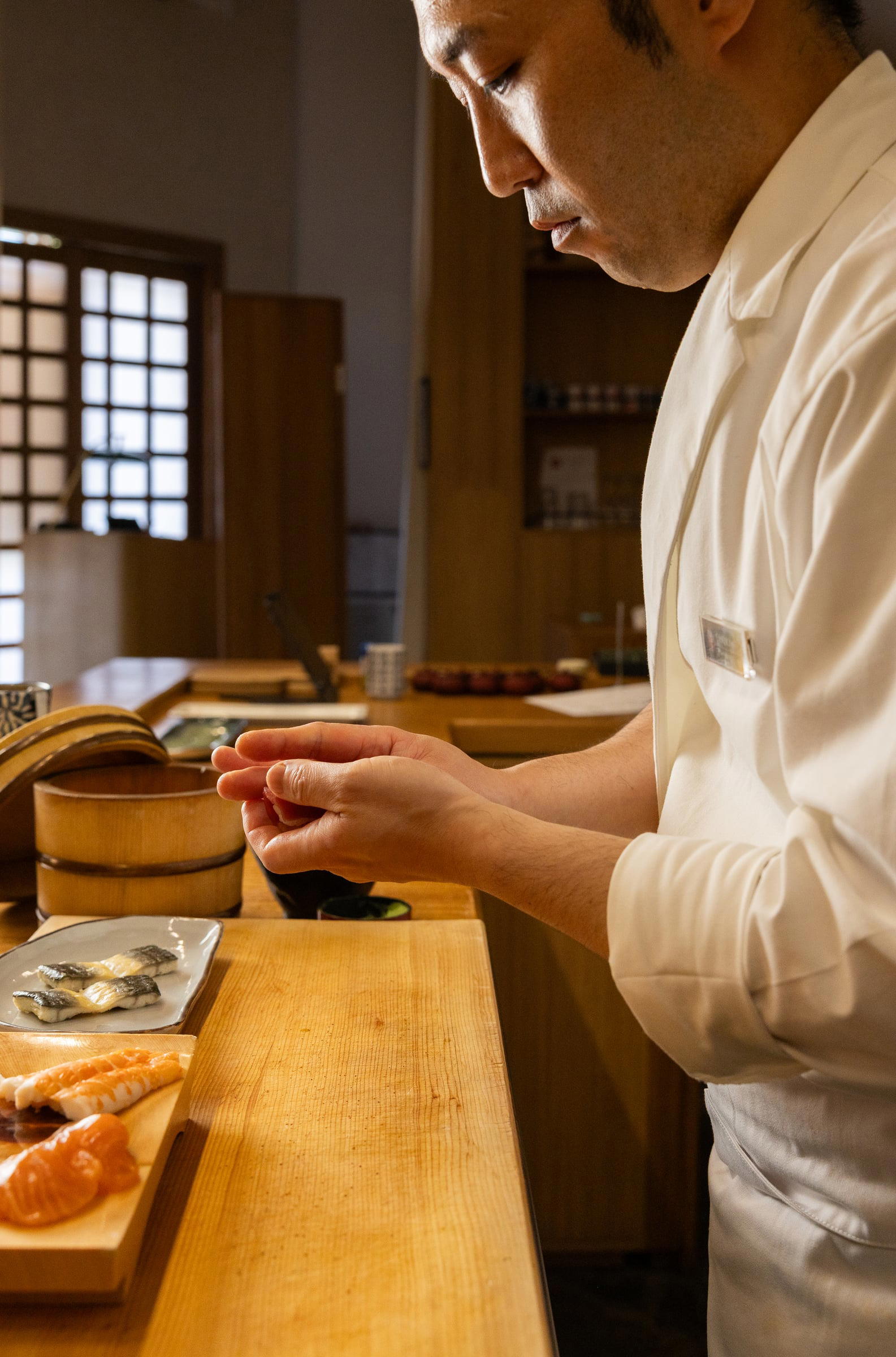
Outside, Rue Sidi Ghanem is still Rue Sidi Ghanem: trucks, showrooms, workshops and broad industrial façades. Inside, the tempo drops. Yokoyama continues working behind the counter in the quiet of the dining room, a chopping board in front of him and a succession of small things taking shape in his hands.
In a city well acquainted with spectacle, IKI has chosen something close to the opposite.
And that may be precisely why it is worth coming all the way out here.
You may also like…
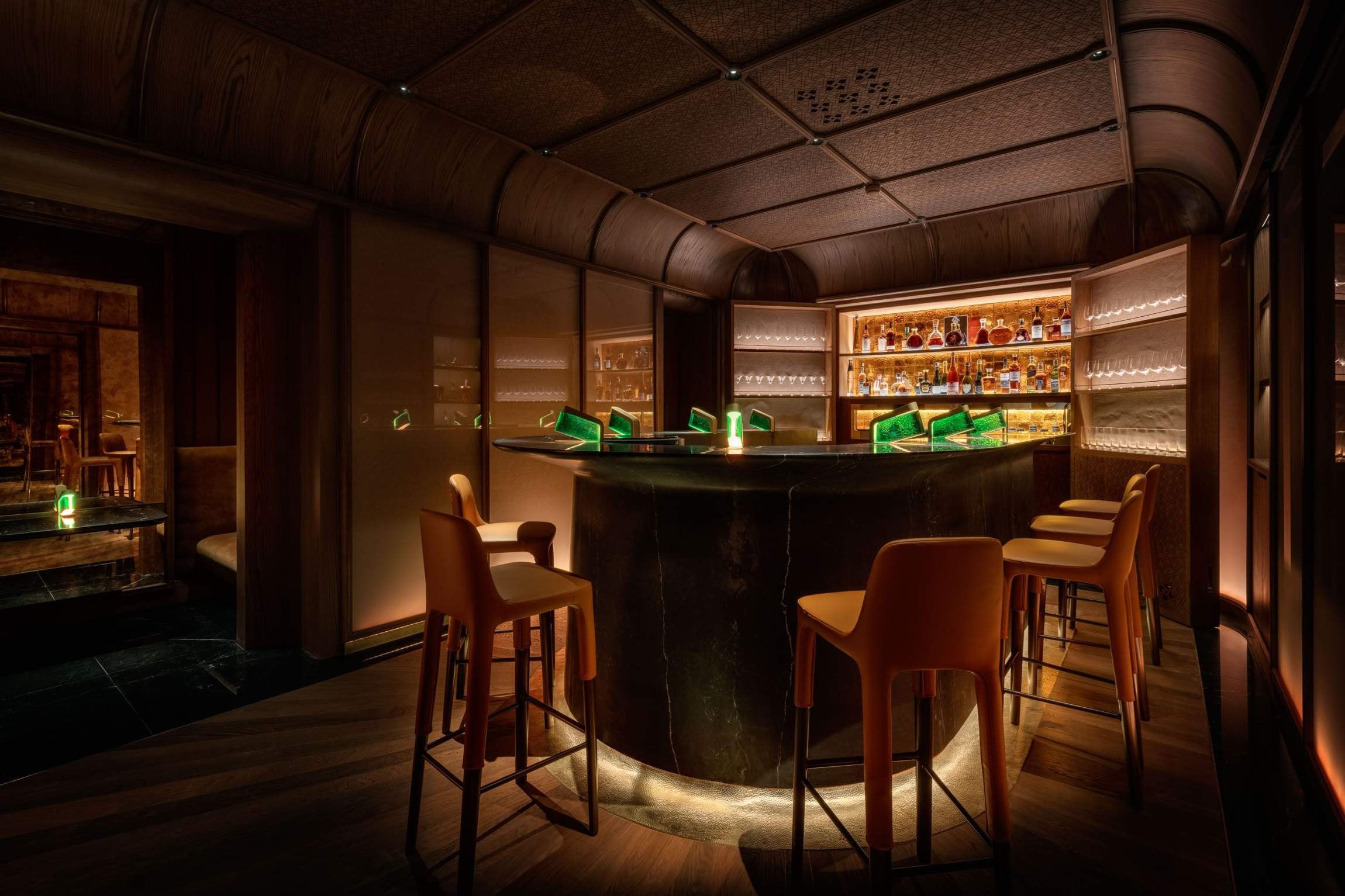
BEST OF | EAT & DRINK
Marrakech's Most Iconic Hotel Bars
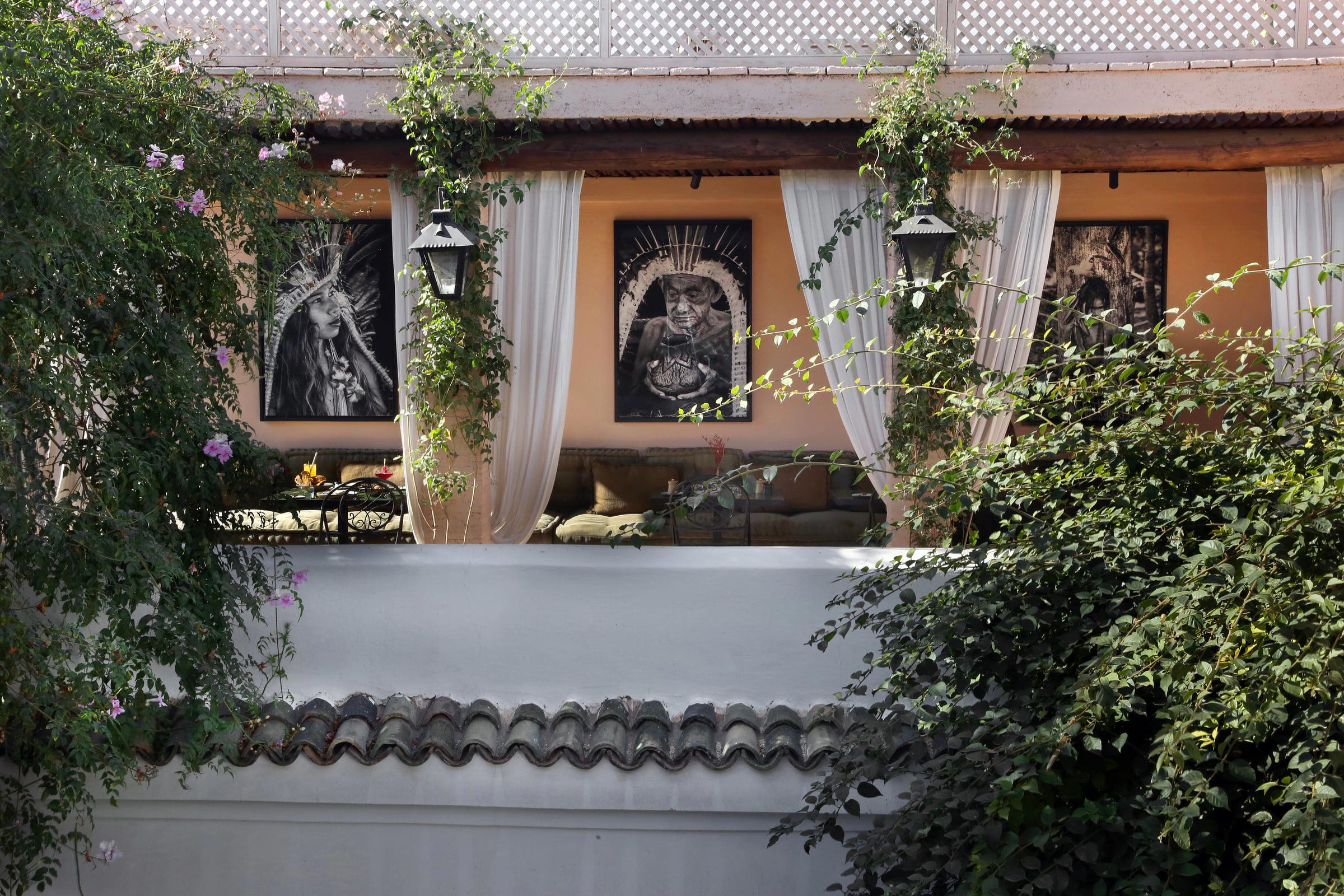
EAT & DRINK
Eating Among Salgado's Amazonia: Noujoum at IZZA Marrakech
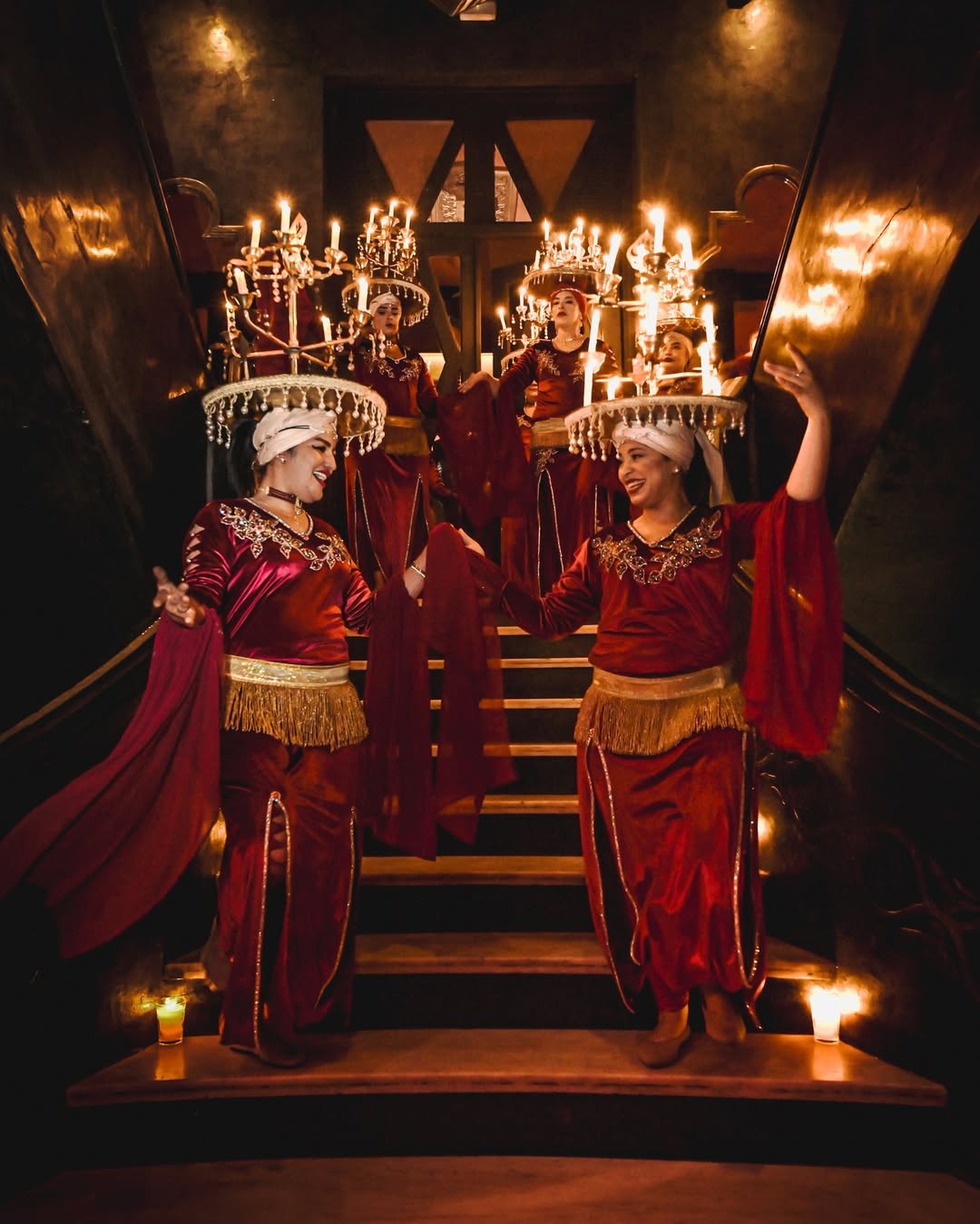 Map
MapBEST OF | EAT & DRINK
Dinner and Show in Marrakech: 24 Festive Restaurants, from Belly Dancers to DJ Sets
 Map
MapBEST OF | EAT & DRINK