EAT & DRINK
NAPA Chapter One: A New Wine and Cocktail Bar in Gueliz, Marrakech
An intimate Art Deco room where the city's most carefully composed buvette is taking shape.
Timence Guide Editors · 20 May 2026
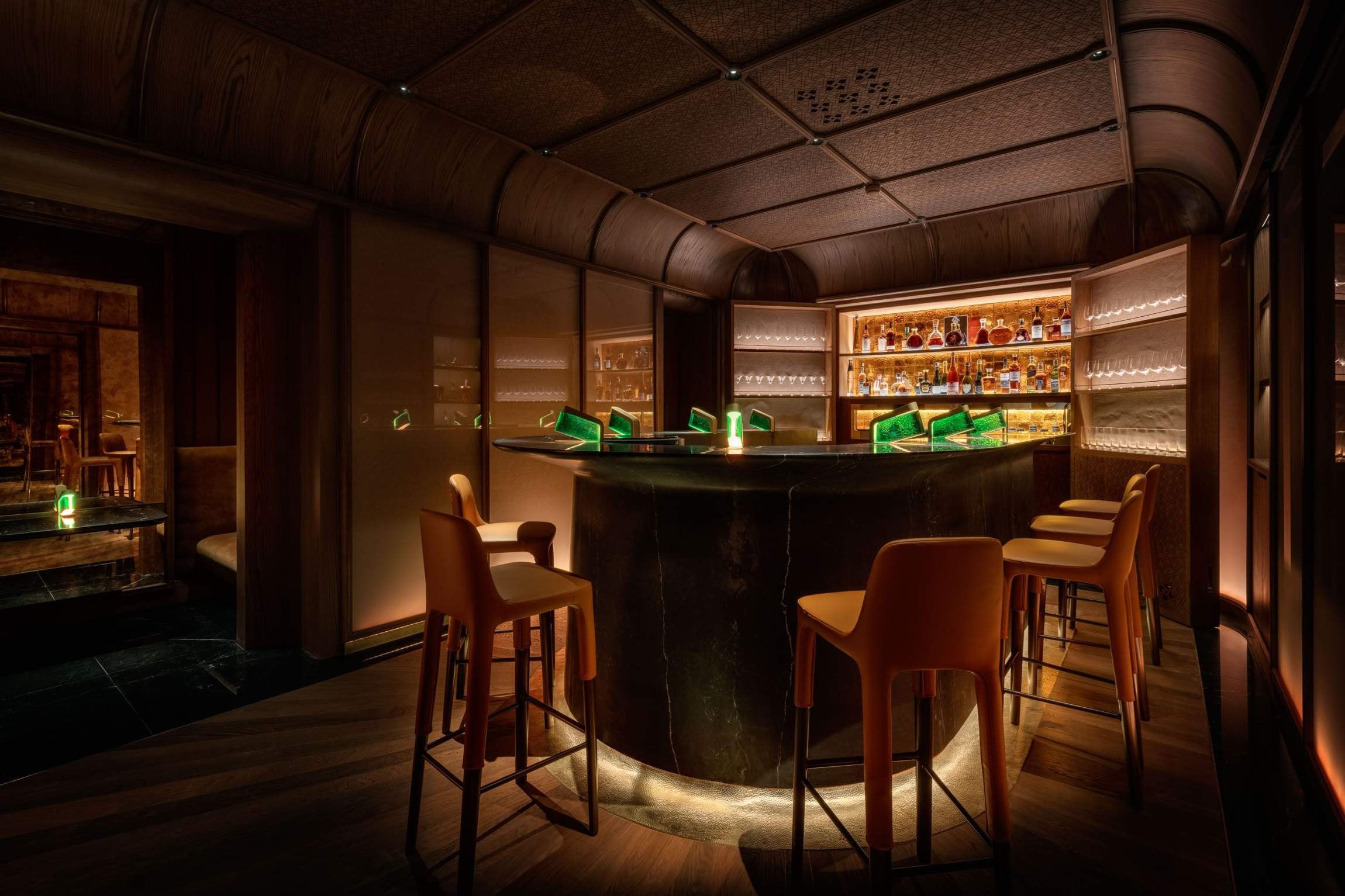
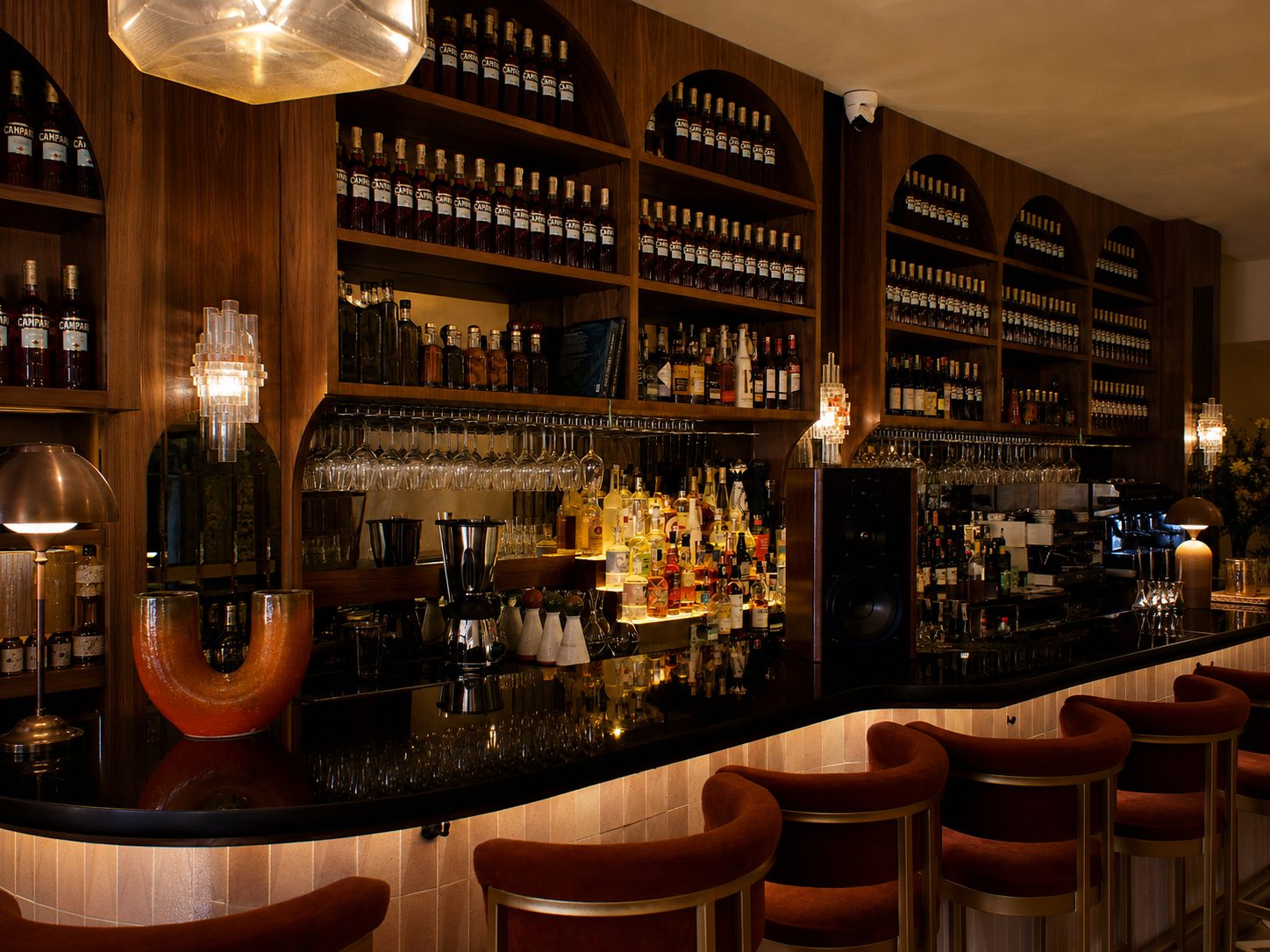
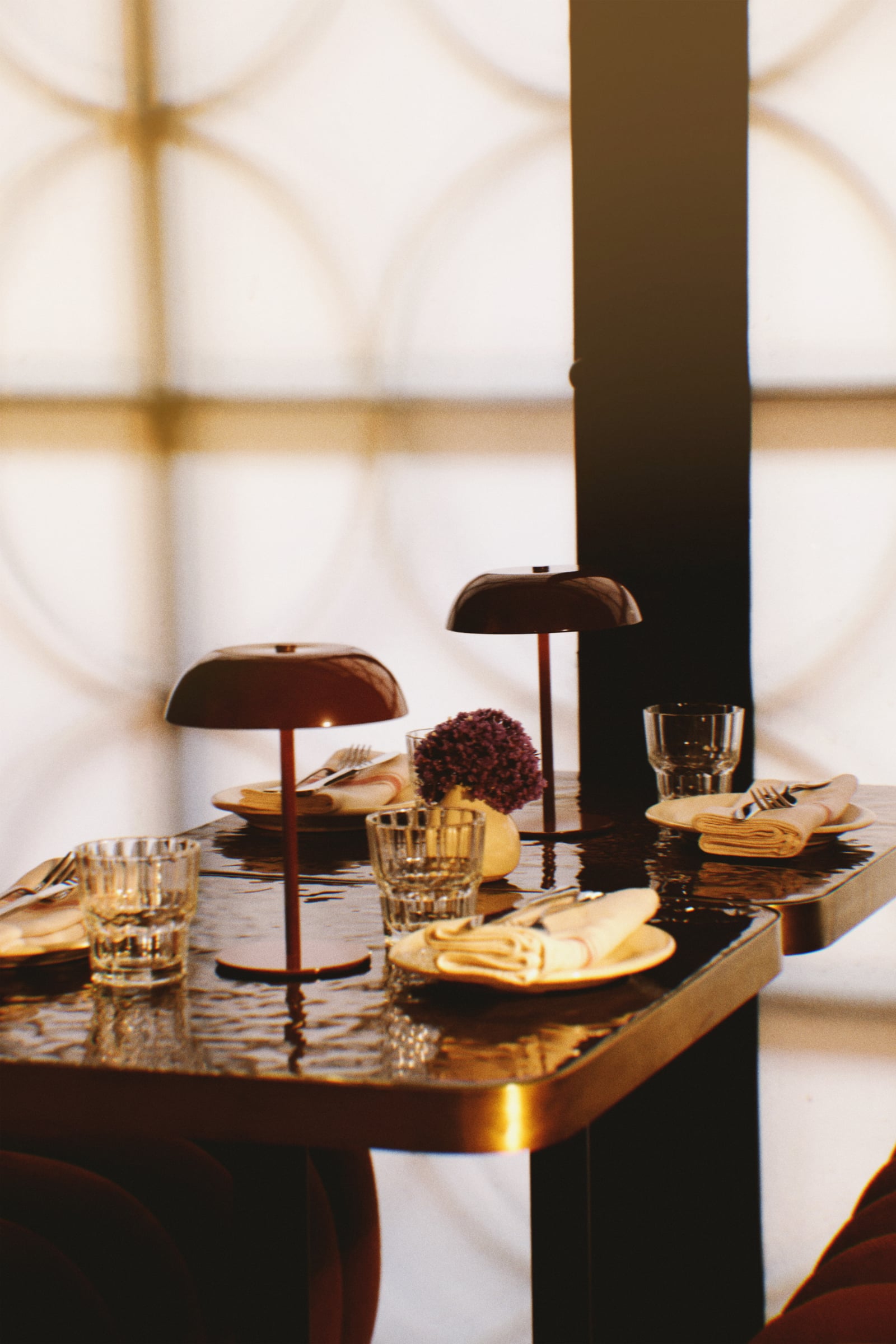
A curved bar anchors the room. Vintage lighting picks out the yellow brick of the windows, and the light shifts as the evening sets in. Tables along the front catch the reflection. NAPA Chapter One opens slowly, the way a chapter does, drawing you in before it tells you what it is.
This is the newest addition to Gueliz, and the latest project from the team behind Farmers, the farm-to-table restaurant that put Aziz Nahas and Benjamin Pastor at the centre of the city's contemporary dining conversation. Here, they have been joined by Simone Mérette, sommelier and mixologist, beverage director of NAPA Hospitality Group, who shapes the creative direction of the room and the glass. The name itself reads as a signature: NA for Nahas, PA for Pastor, Chapter One for Simone.
A buvette in spirit, a laboratory in practice
The wine programme reads like a quiet manifesto. Bottles arrive from winemakers working in sustainable, organic, biodynamic and natural viticulture, gathered from across the world. There is no pretension in how they are served. The buvette idea anchors the room: wine is poured simply, but the choice behind each pour carries weight. The palate has the final say. What is offered is alive, opinionated, ready to speak for itself.
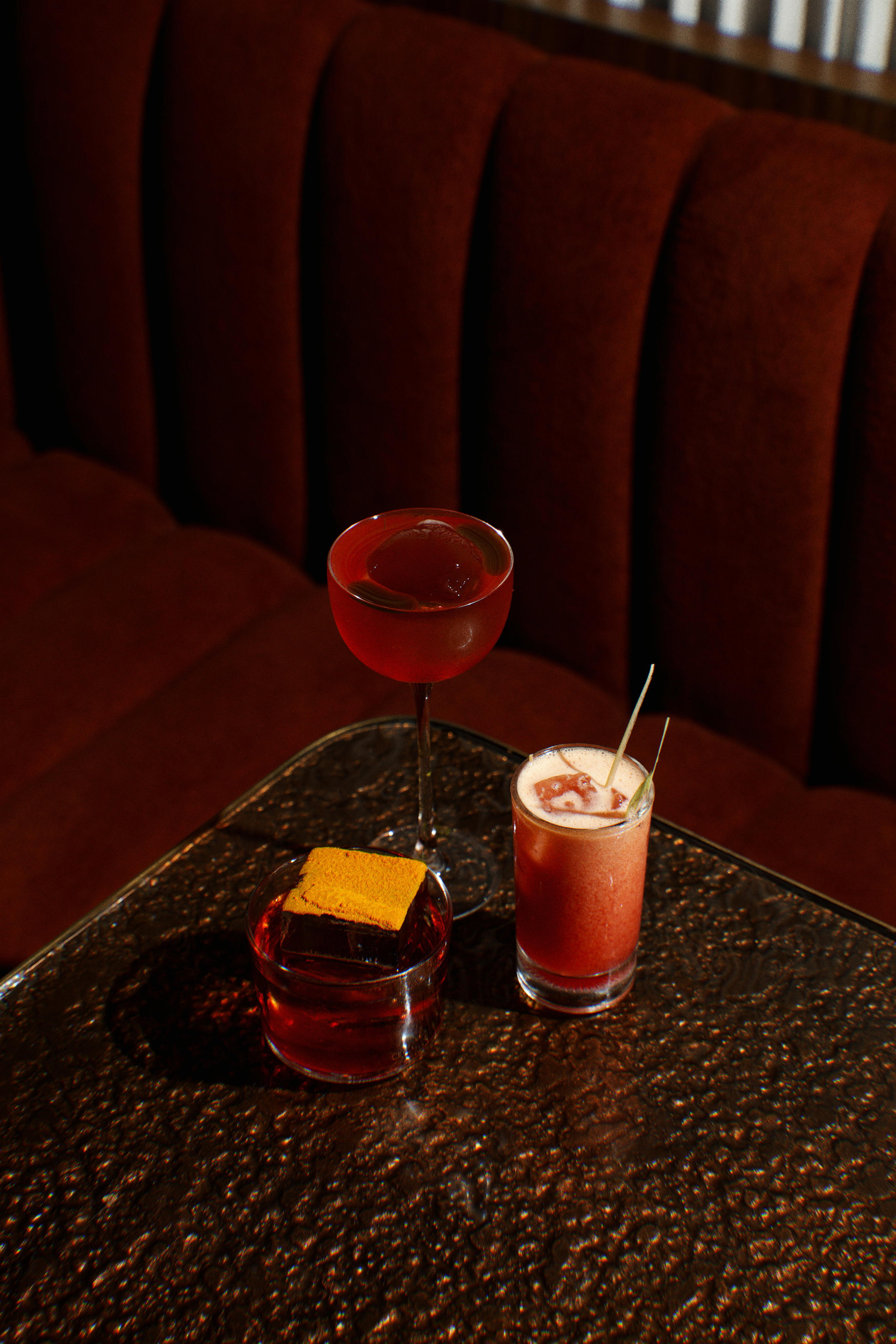
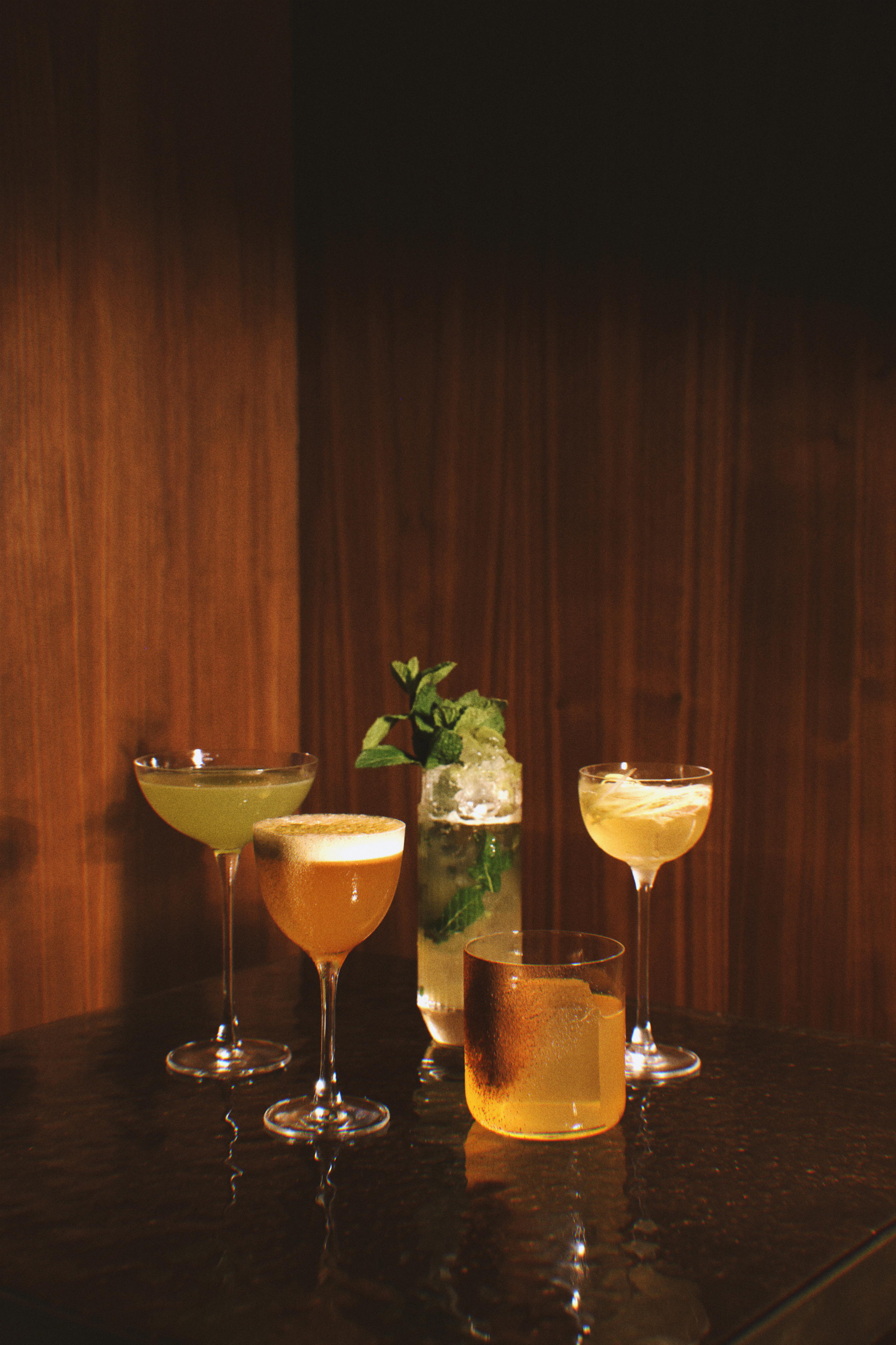
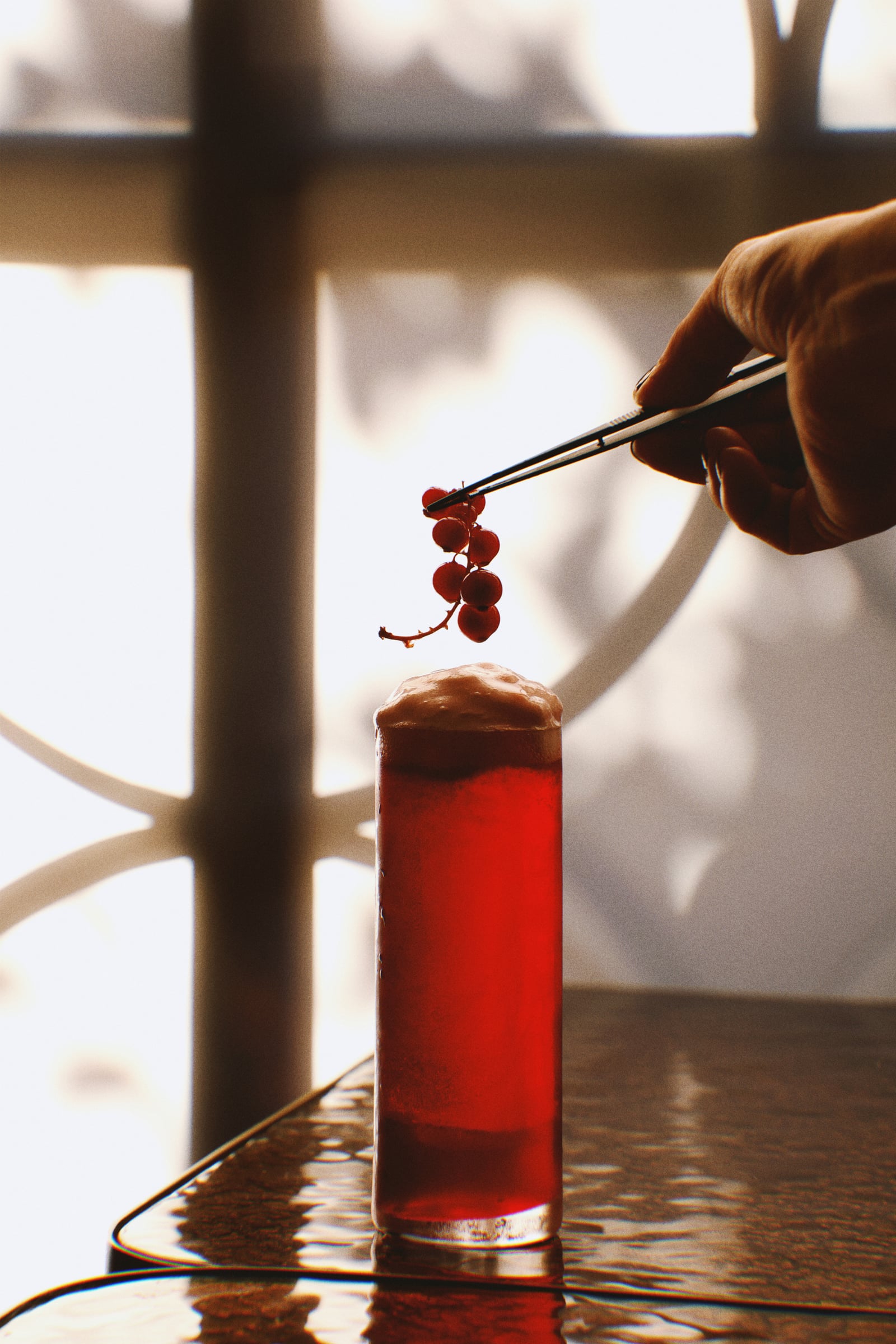
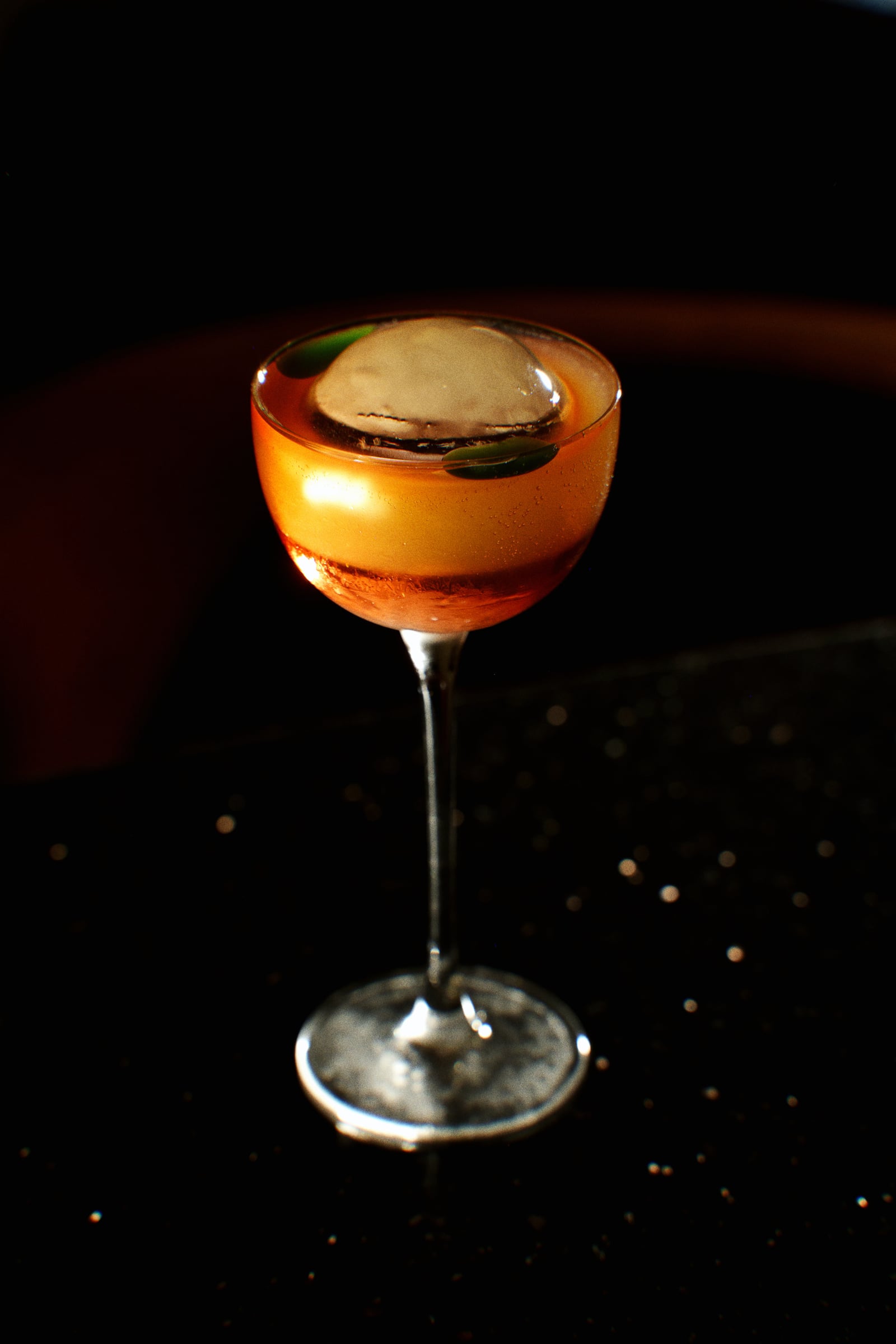
The cocktail programme builds on a precedent. At Farmers, the sister restaurant, drinks already drew their identity from farm-derived botanicals. Chapter One takes that thread further. Drawing on late nineteenth and early twentieth century forms, the drinks here are reinterpretations rather than reproductions. Moroccan ingredients sit at the centre. Spices, botanicals, citrus and aromatics give each cocktail a sense of place. What is not used fresh continues its journey through fermentation, infusion and preservation. The waste line is short by design.
The connective tissue is Sanctuary Slimane, the team's permaculture farm outside the city. Its produce reaches the bar through spirits, syrups and infusions, alongside a network of other local farmers whose work runs in parallel. Chapter One arrives as the latest piece of a growing constellation in Gueliz: Farmers next door, the Blue Ribbon bakery and café a few steps further, Booklore as the cultural anchor, and the farm shop carrying produce straight from Slimane. Simplicity and complexity coexist by intention: a humble ingredient elevated through technique, a refined idea grounded in the field.
Restoring an Art Deco room
The building has good bones. Subtle Art Deco gestures, original to the structure, have been preserved and made visible rather than papered over. The curved bar softens the geometry of the room and pulls movement around it. A hand-tailored wine cellar sits as a focal point, with a small booth beside it that functions as a pause in the flow.
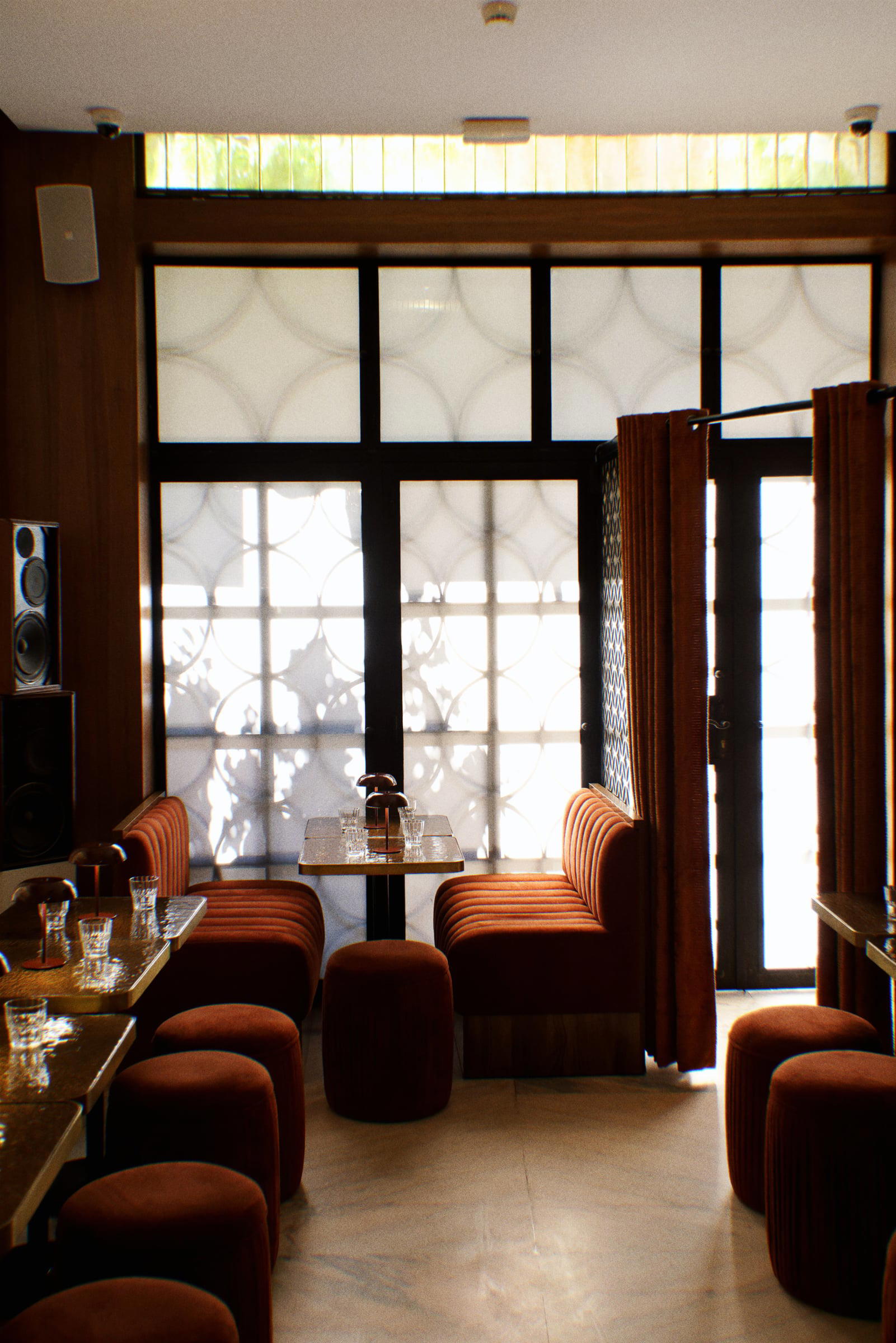
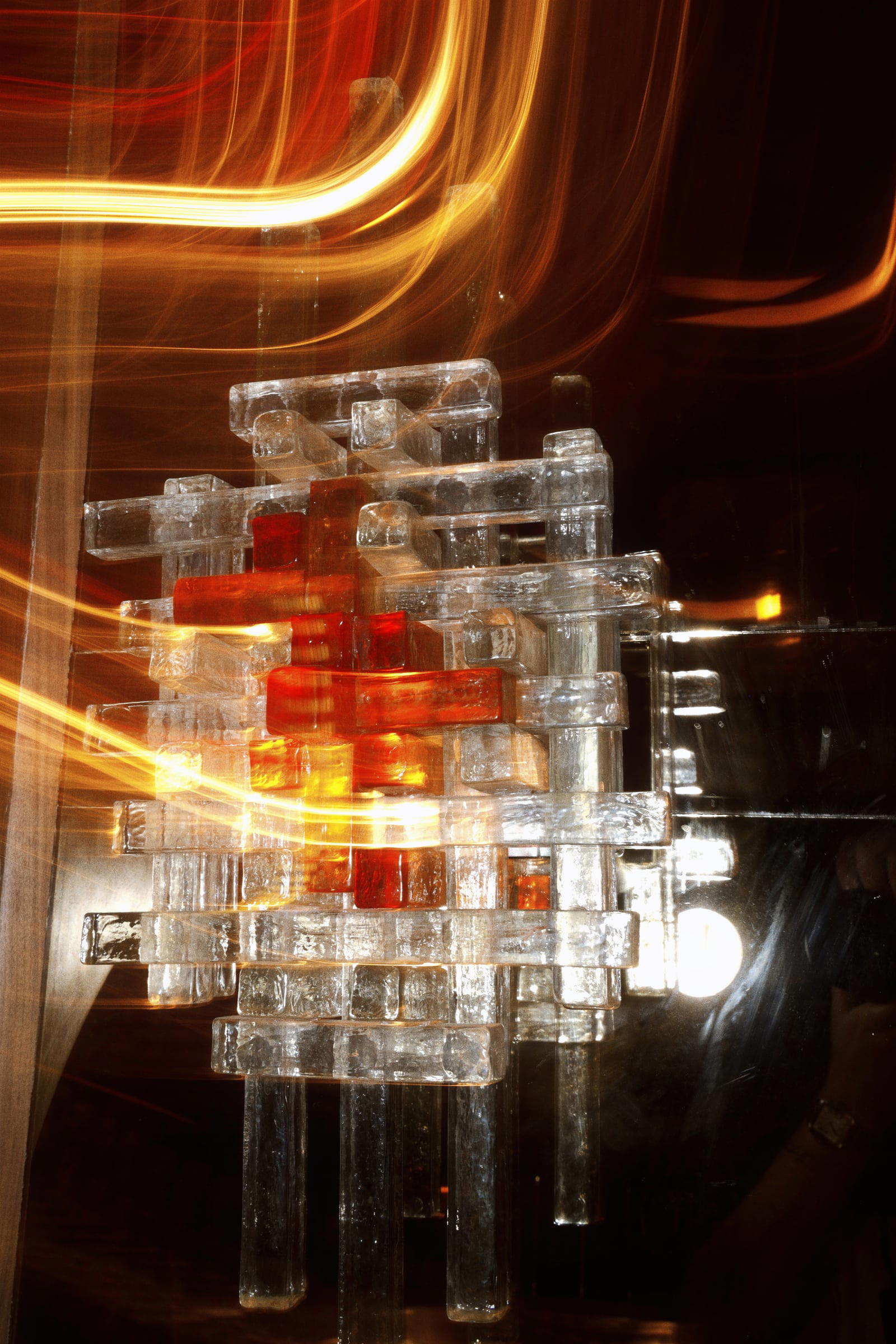
Furniture has been commissioned for the space. Textiles and mosaics come from local artisans. Vintage lighting carries the warmth. The room reads as one composition, not a collection of references, and the impression is of something built to last rather than to trend.
Behind the counter, the design is functional in the most demanding sense. Two cocktail stations, developed with Behind Bar, are arranged around an integrated ice system. Flat stainless steel surfaces, open glass storage, freezer drawers and a back bar held close to hand allow the mixology team to move without friction. An apothecary wall holds spirits and herb boxes for the infusion programme, a visible expression of the bar's agricultural identity. Two mixologists, a barback, and a DJ when required, all fit without congestion. Music, tuned with an acoustic engineer, drapes each table in a veil of privacy that shifts with the tempo of the evening.
The counter, the kitchen, and the rhythm of an evening
Ten to twelve guests can sit at the high counter, close enough to the work to follow the choreography of a drink. This is where the dialogue with the team unfolds, and where the programme is best read in real time.
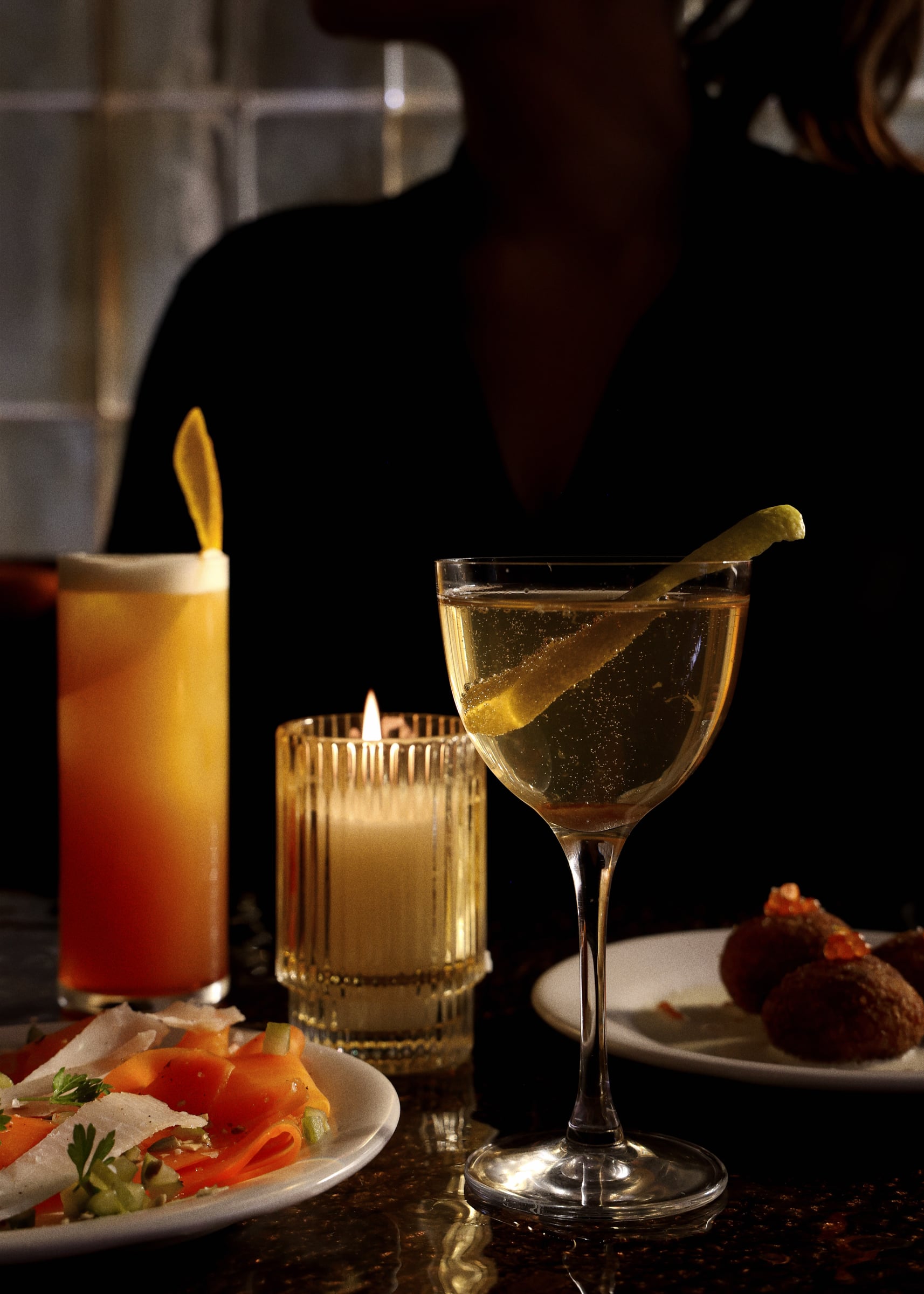
The food is built around sharing. Developed in close conversation with the kitchen at Farmers, the sister restaurant a few streets away, the menu sits as a bridge between bar and kitchen rather than a separate offer. The dishes hold the rhythm of the room, supporting the wine and the cocktails without competing for attention.
A place to return to
The hours do the rest of the work. Chapter One opens at five in the afternoon, Tuesday through Saturday, and stays until one in the morning. It is an arc that holds everything: aperitivo as the evening arrives, a dinner of plates to pass across the table, and a late-night tail that on Thursdays leans into the listening sessions of a resident DJ, working across funk, hip hop and soul. The room is not designed to be passed through. It is designed to be returned to, for a single glass at the end of a long day, or for an evening that drifts toward closing. Music, light, material and service work together to hold the temperature of the room steady. The experience lingers after the last drink, which is the test the team has set for itself.
What this signals, more broadly, is the maturity of a hospitality conversation Marrakech has been building for some time. The city's bars are no longer ornaments to its hotels. They are programmes in their own right, with creative directors, philosophies and points of view. Chapter One reads as a declaration that there is more to come: a living, evolving chapter of shared experience.
You may also like…