BEST OF | EAT & DRINK
Marrakech's Most Iconic Hotel Bars
Eleven hotels where the drink is only half the reason to go, from the grandeur of La Mamounia to the silence of Amanjena, and the three we choose ourselves.
Timence Guide Editors · 8 September 2026
Hotel bars have not just appeared: they have always been there. What has changed, over the last few years, is the way they are used. For decades the hotel bar was a service for the people sleeping upstairs. Today the best of them are built to be worth an evening to someone who is not sleeping in that hotel at all, and hotels openly look for residents as well as guests: music, cocktails, design, rituals, a recognisable social scene.
In Marrakech that shift happened long before anyone gave it a name. Here the hotel has never been only a place to sleep: it is the meeting place of the city, where people arrange to see one another, bring a friend who is passing through, close a working day. At the tables marrakshis, foreign residents and travellers who landed on Tuesday mix together, and it surprises nobody. So what changes is not whether to walk in, but where.
Eleven addresses, from the Medina to Hivernage and out to the estates beyond the walls. At the end of the selection are the three we prefer, and the reasons for the choice.
El Fenn
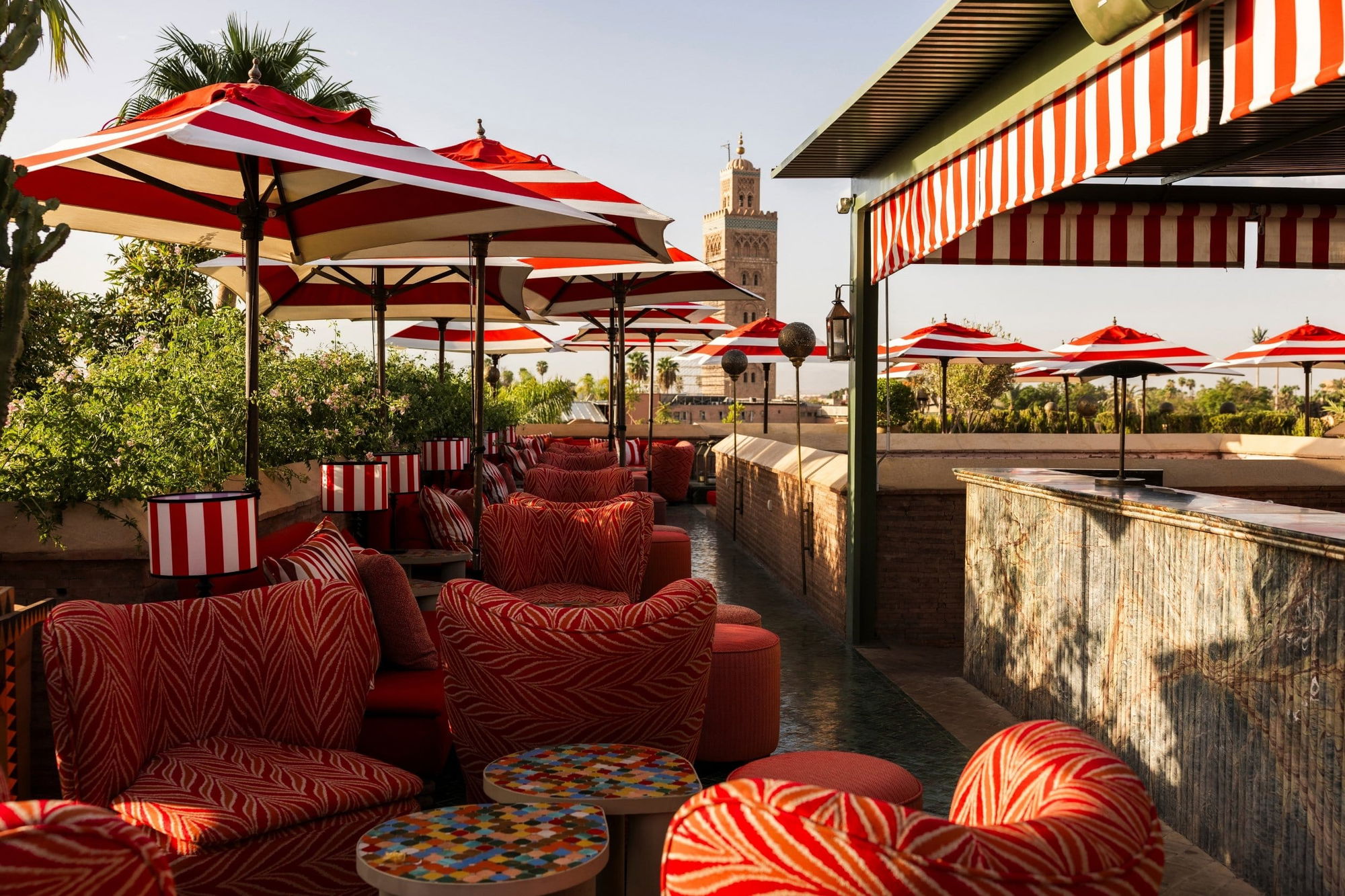
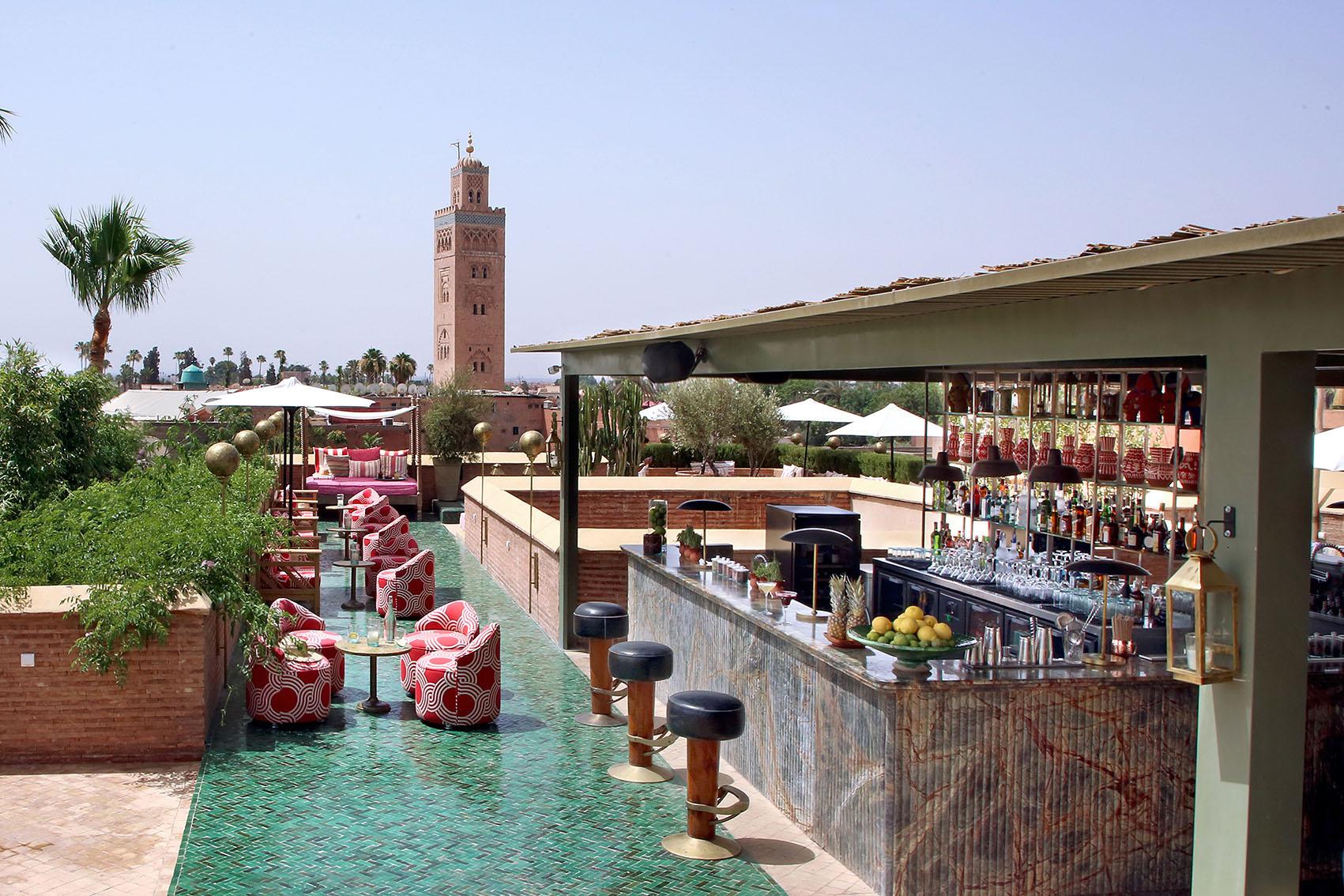
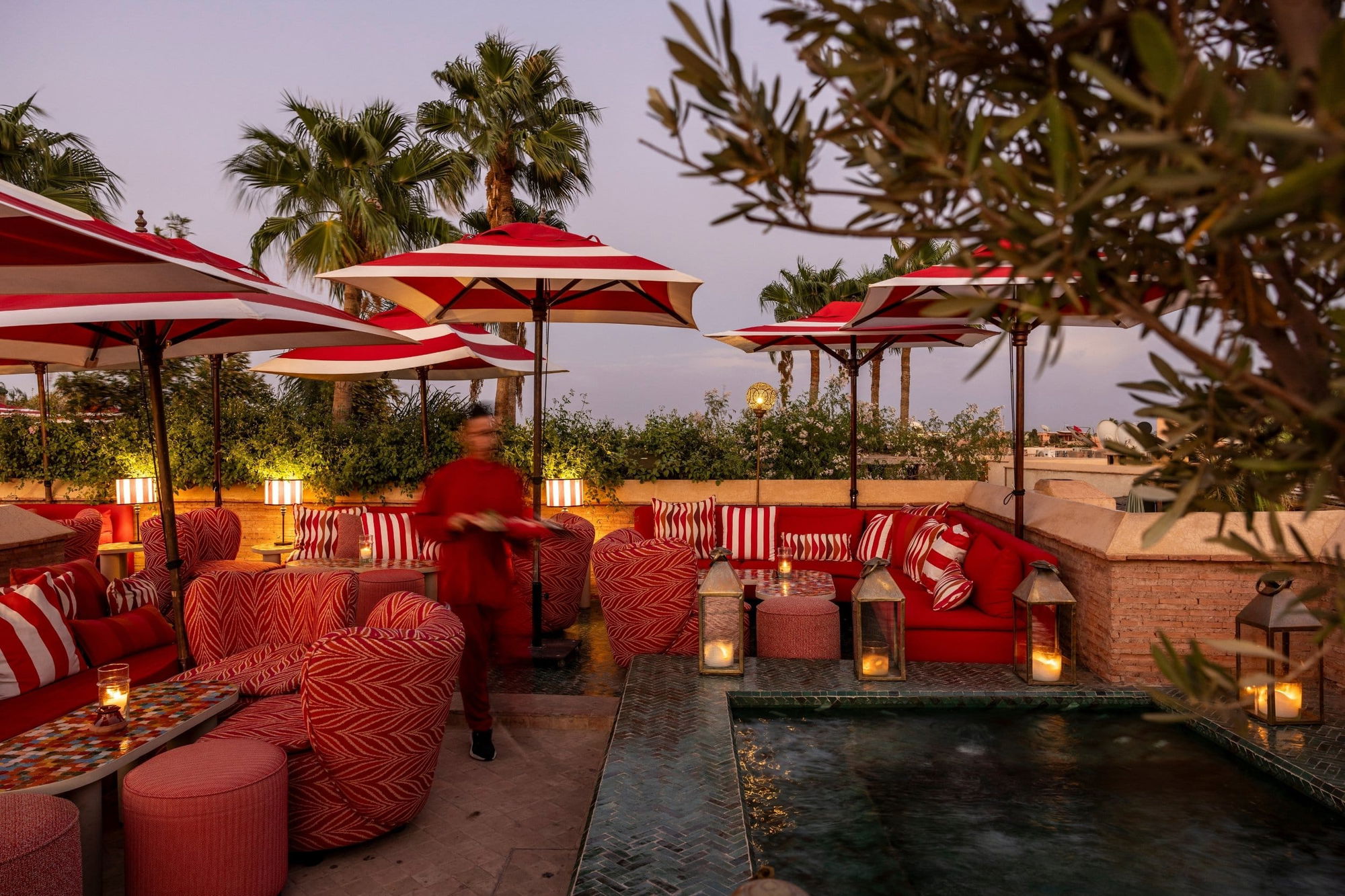
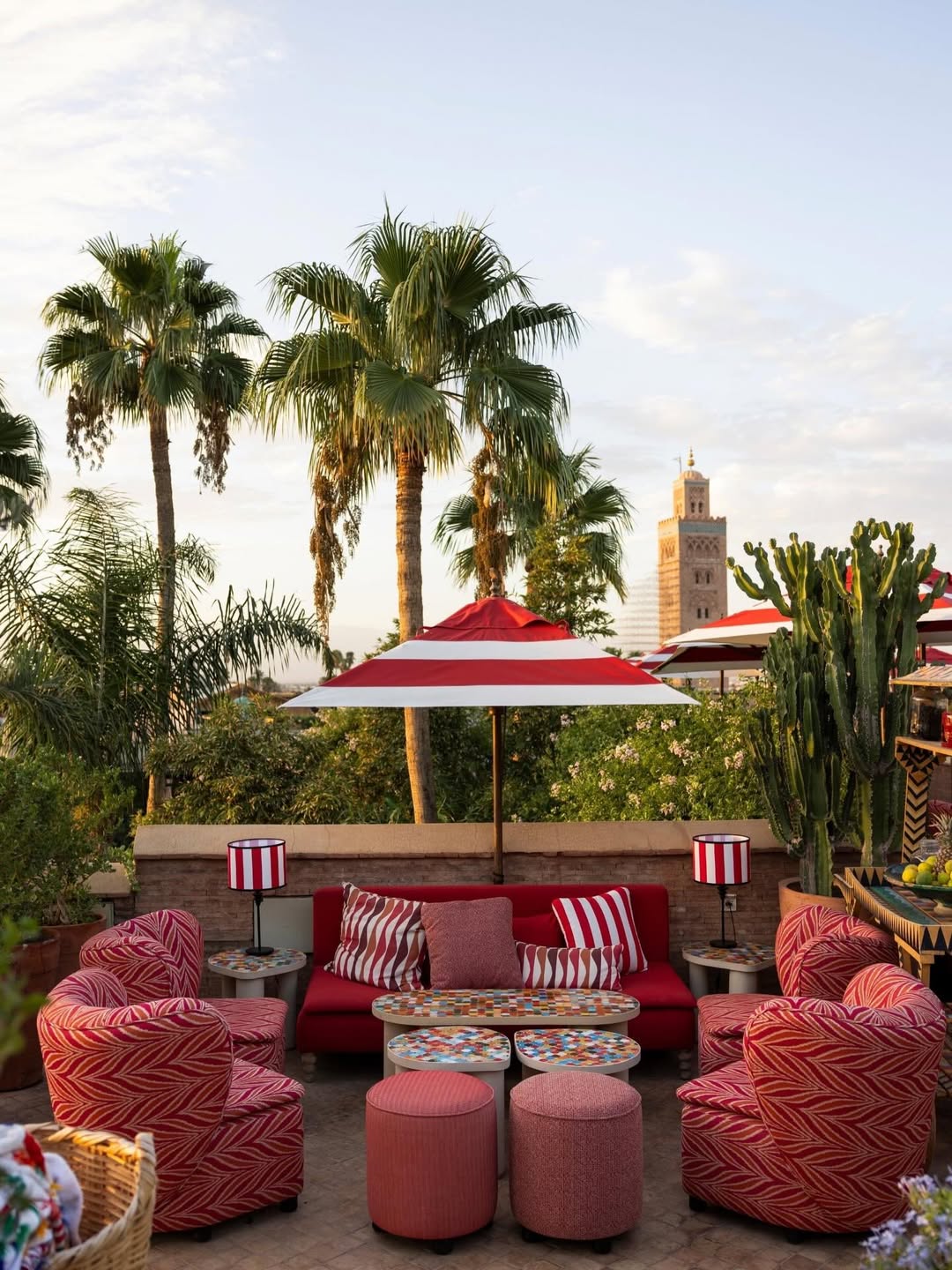
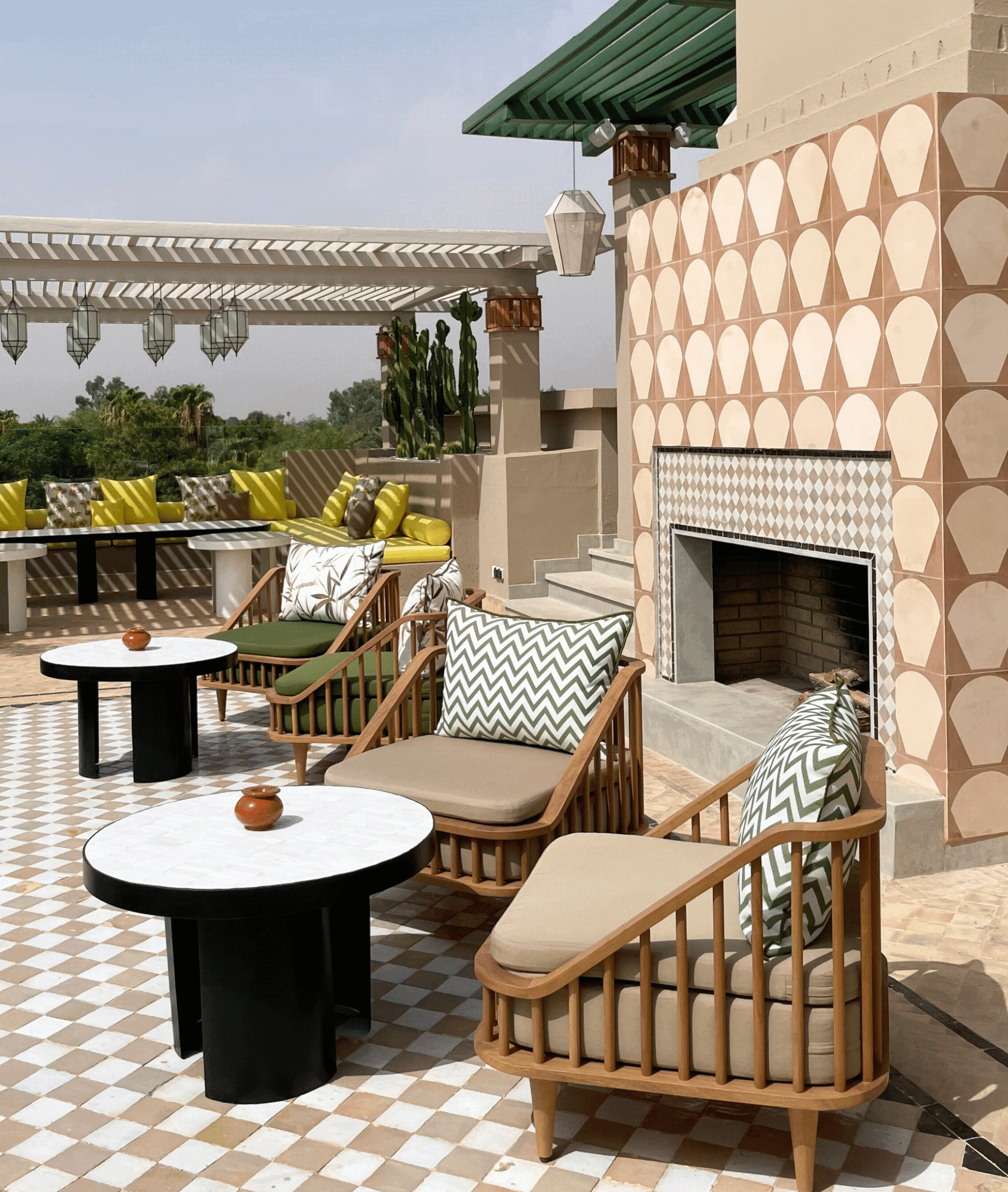
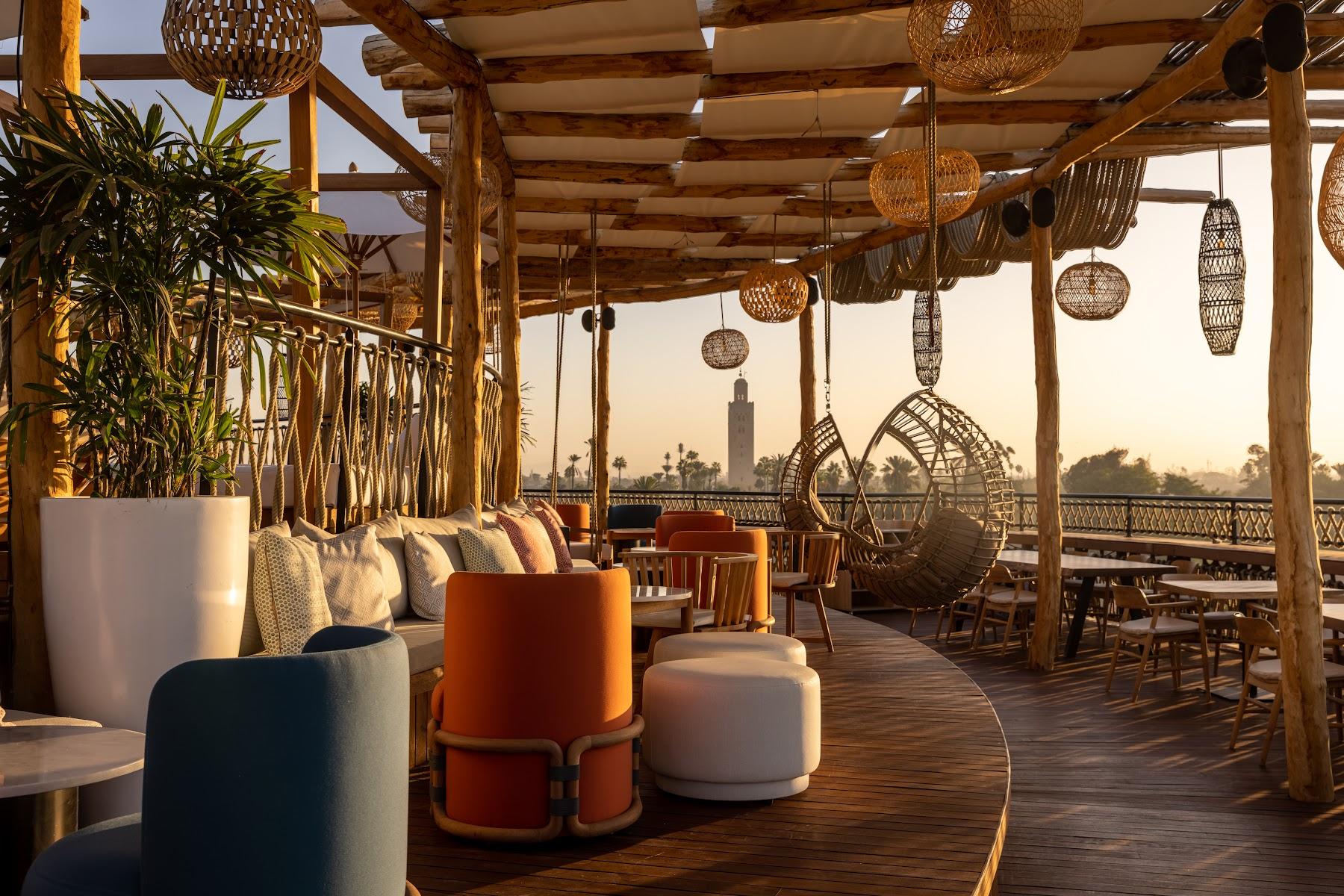
El Fenn stands for a very boutique kind of luxury: careful, considered and strongly design-led, but never pompous or pretentious. The spaces are large, airy and full of personality, with a strong presence of art, colour and contemporary design, and without ever losing the connection to Marrakech. From the rooftop the view opens onto the Koutoubia, and despite the relaxed atmosphere there is almost always something going on.
It is one of the most social places in the city, but in a spontaneous way: people arrive for a drink, meet each other, stay for the sunset and move between the spaces. There is always a certain buzz, and it never turns into nightlife. It is alive without being loud, sophisticated without looking constructed. A quieter, easier, more contemporary form of luxury.
La Mamounia
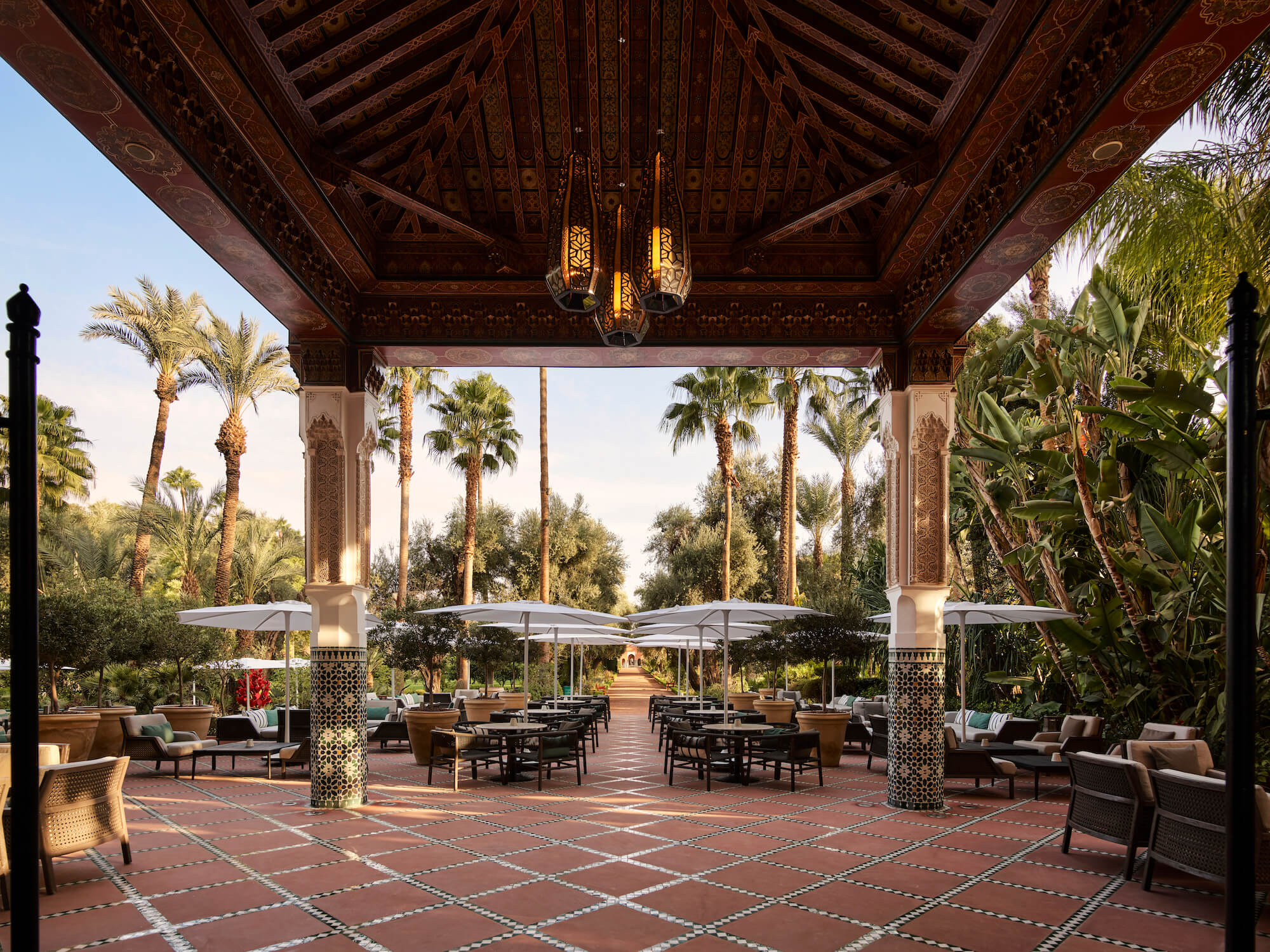
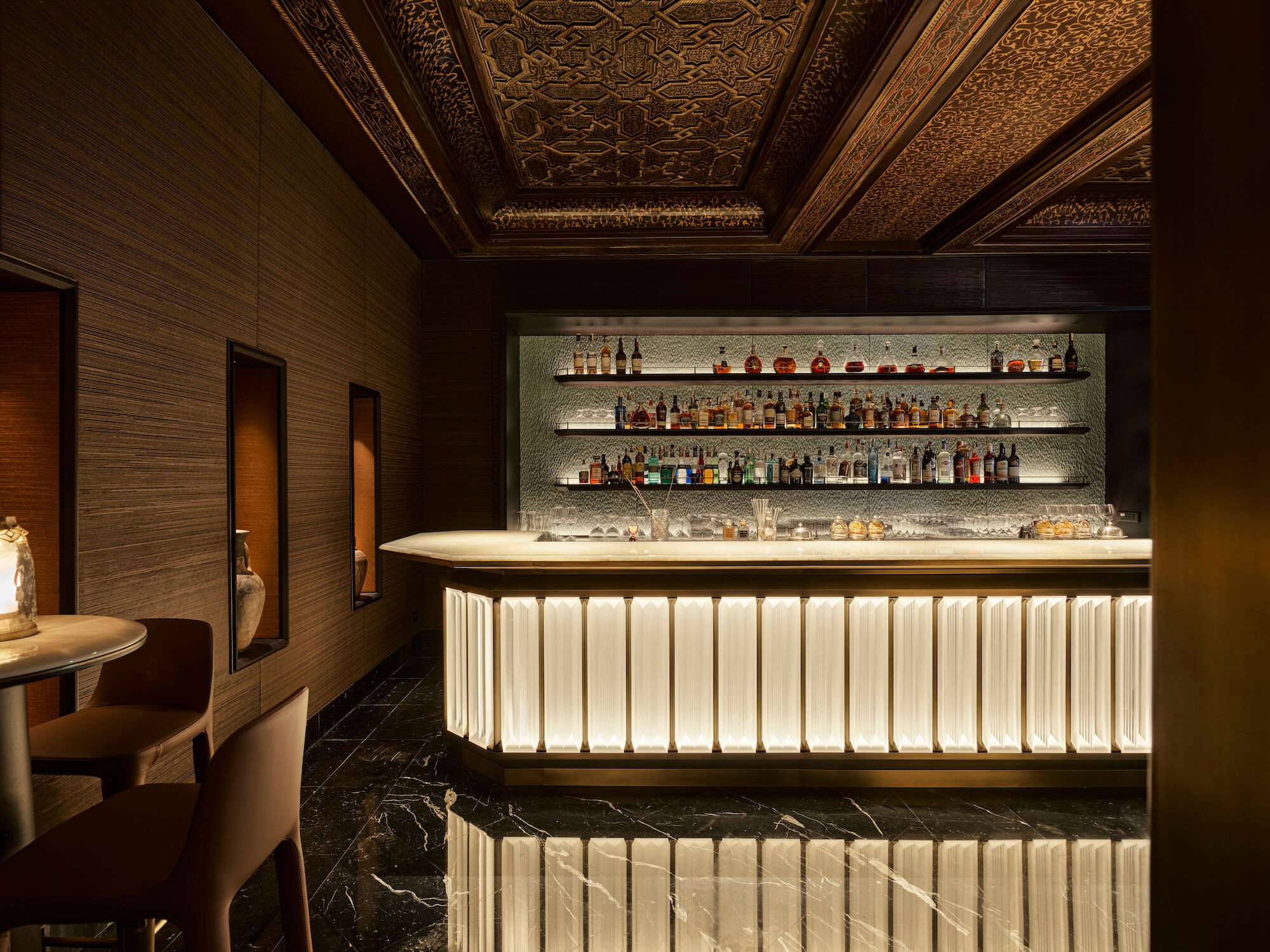
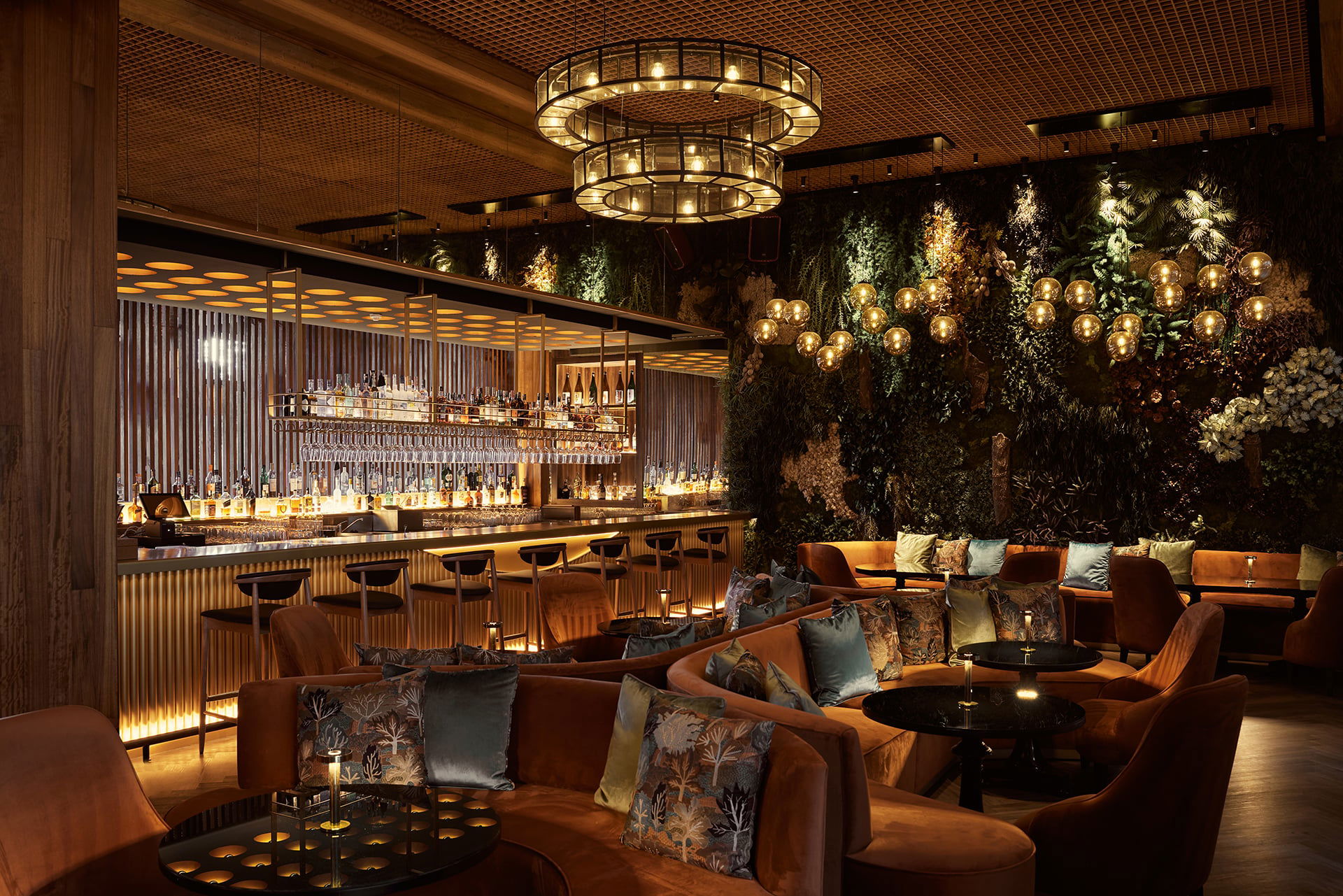
La Mamounia is the most classic representation of Marrakech grandeur. It is iconic, historic, opulent and deeply scenographic. Velvets, gold, large chandeliers, important sculptures, rich decoration: some people might even find it excessive or heavy, but it is precisely this monumentality that is part of its identity. Everything appears perfectly orchestrated, from the movements of the waiters to the work of the bartenders. It is luxury in the most traditional and theatrical sense of the term.
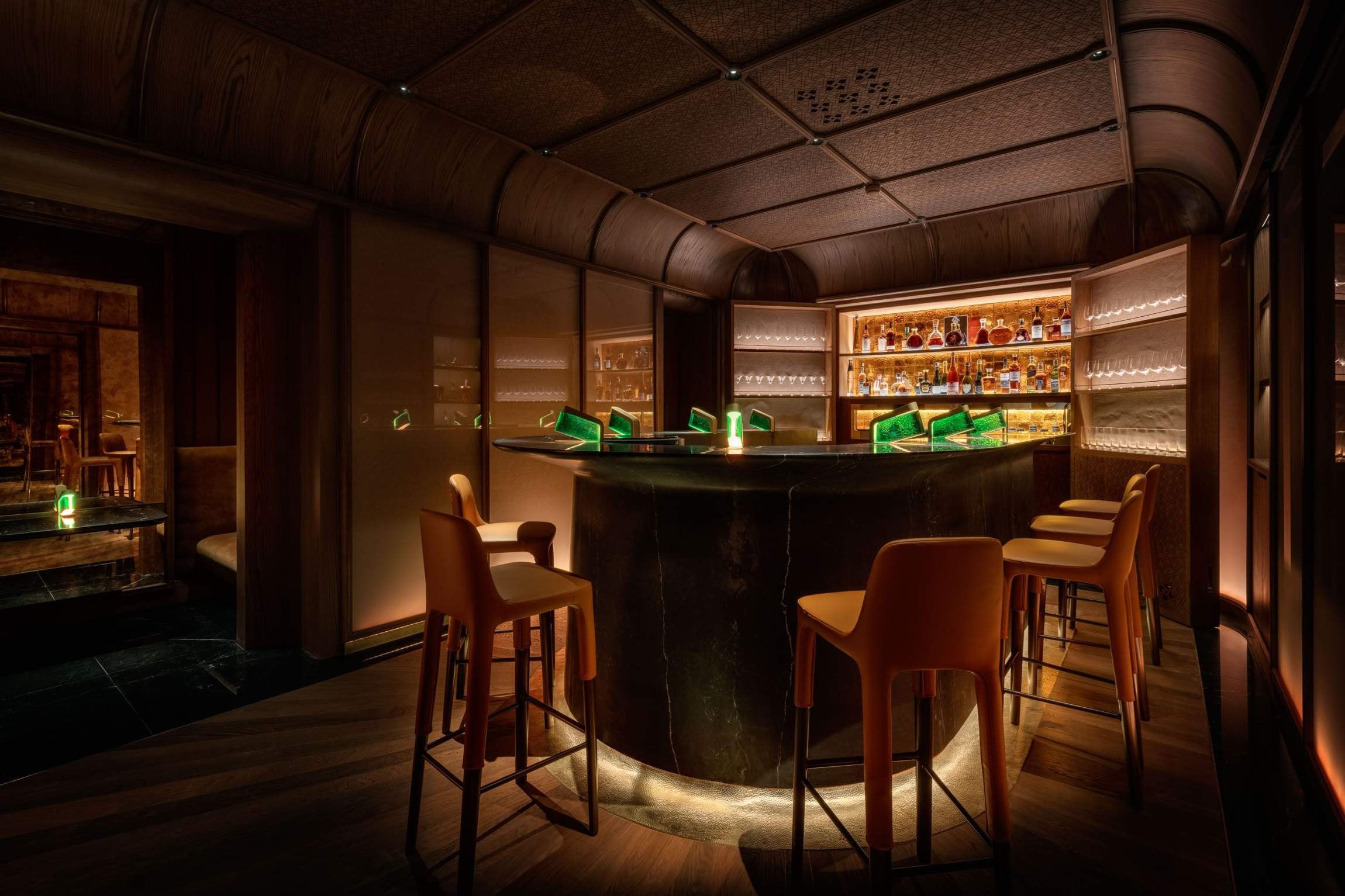
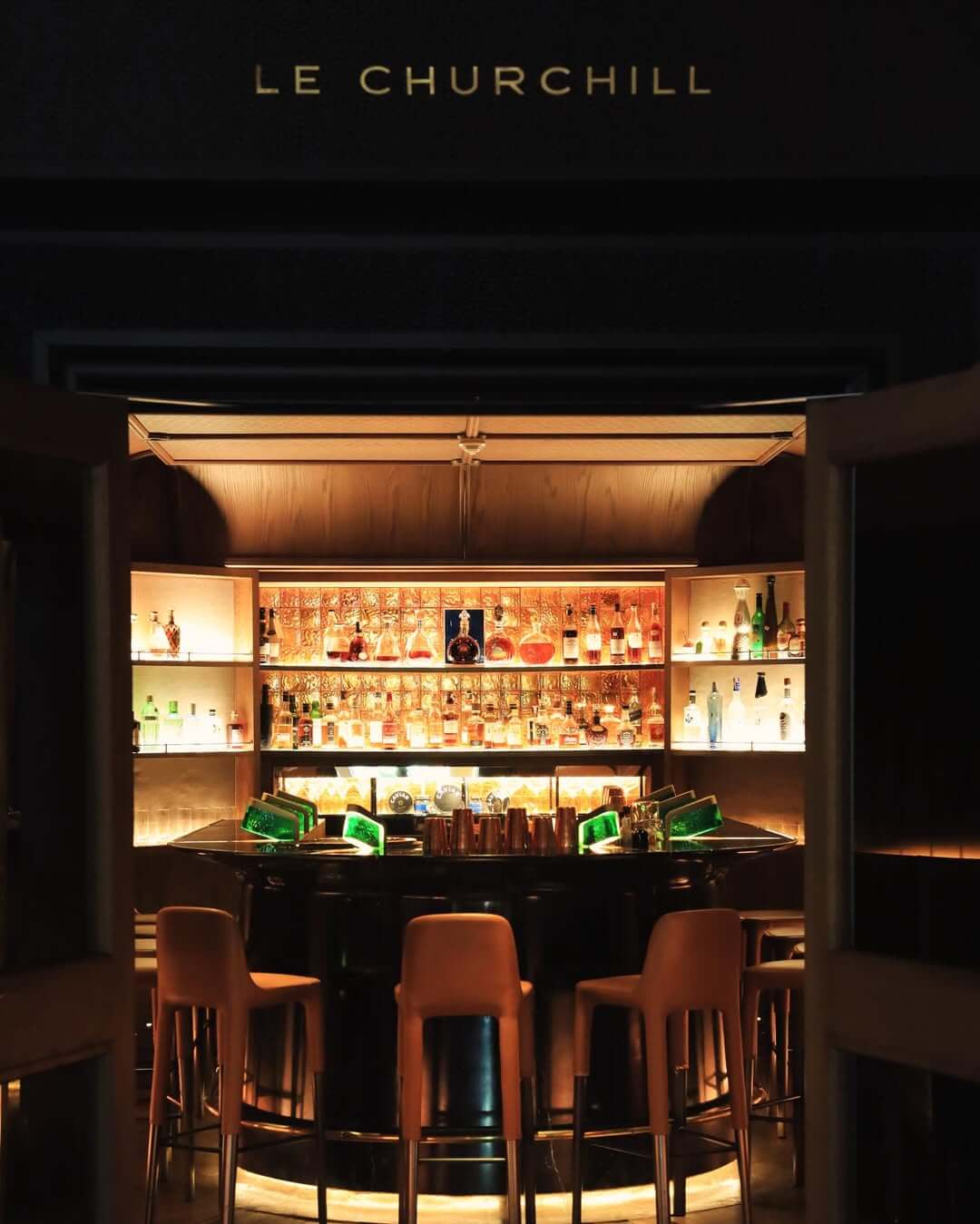
Le Bar Majorelle is wide, open and scenographic, with a large room inside and the terrace onto the garden; Le Churchill is far more contained, almost intimate, with a small counter and a more concentrated atmosphere.
It is also one of the great social places of Marrakech: there is almost always someone here, there is movement, and there is a certain ritual in coming for a drink. It is a place you come to for the setting and for the service, but also to see and be seen. La Mamounia is a place where luxury wants to be seen.
Royal Mansour
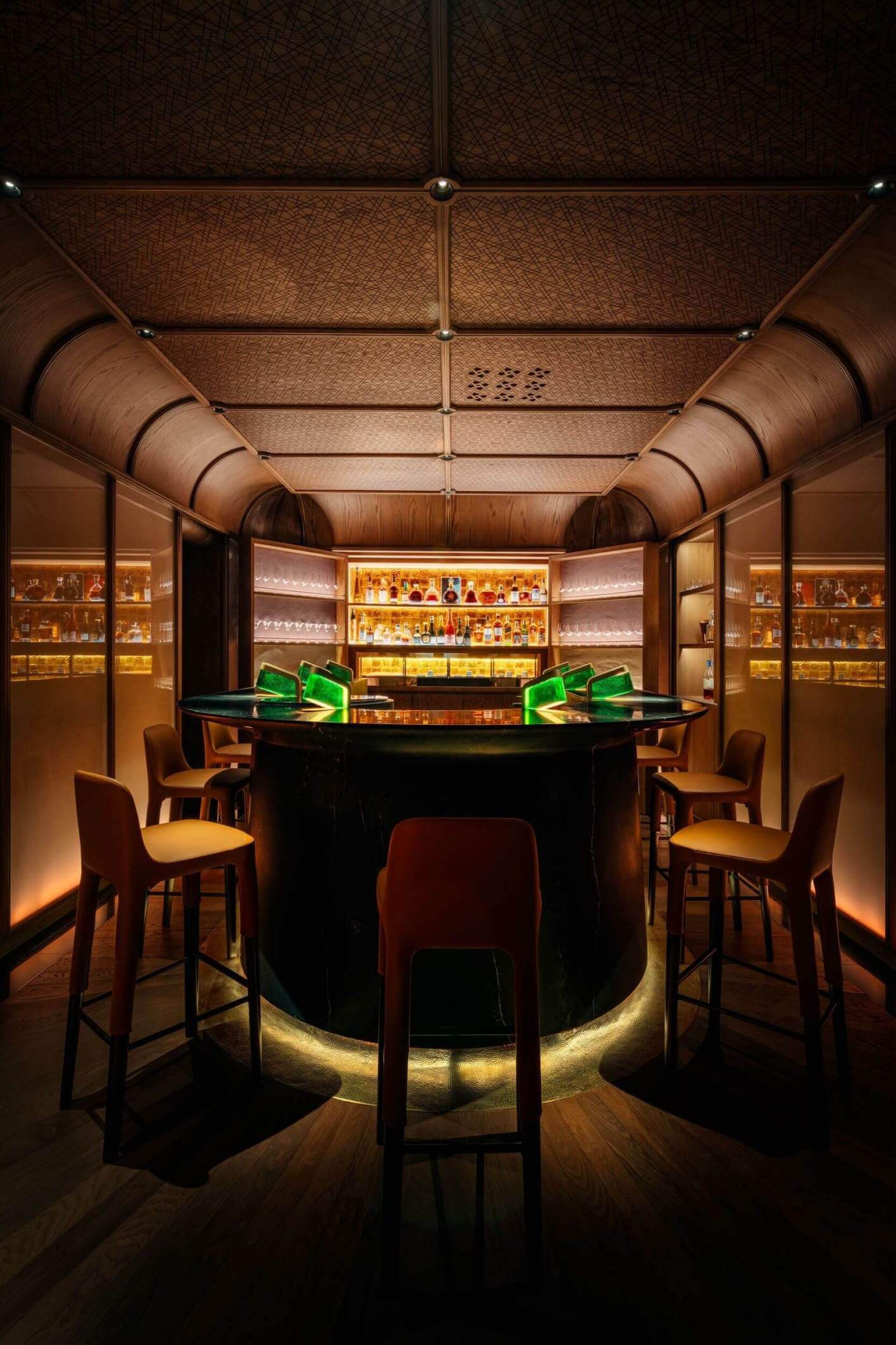
The Royal Mansour is not historic in the literal sense of the word, but it is built to look timeless. It belongs to the world of the great Moroccan palace, with a level of craft, detail and perfection that is close to absolute. It is opulent, and far quieter than La Mamounia.
It never gives the impression of wanting to be full: it almost seems that the scarcity of people is part of the experience. Everything is extremely controlled, cared for and almost theatrical, without any need to seek attention. It is an exclusive, rarefied, impeccable luxury. A place where luxury has nothing to prove.
La Sultana
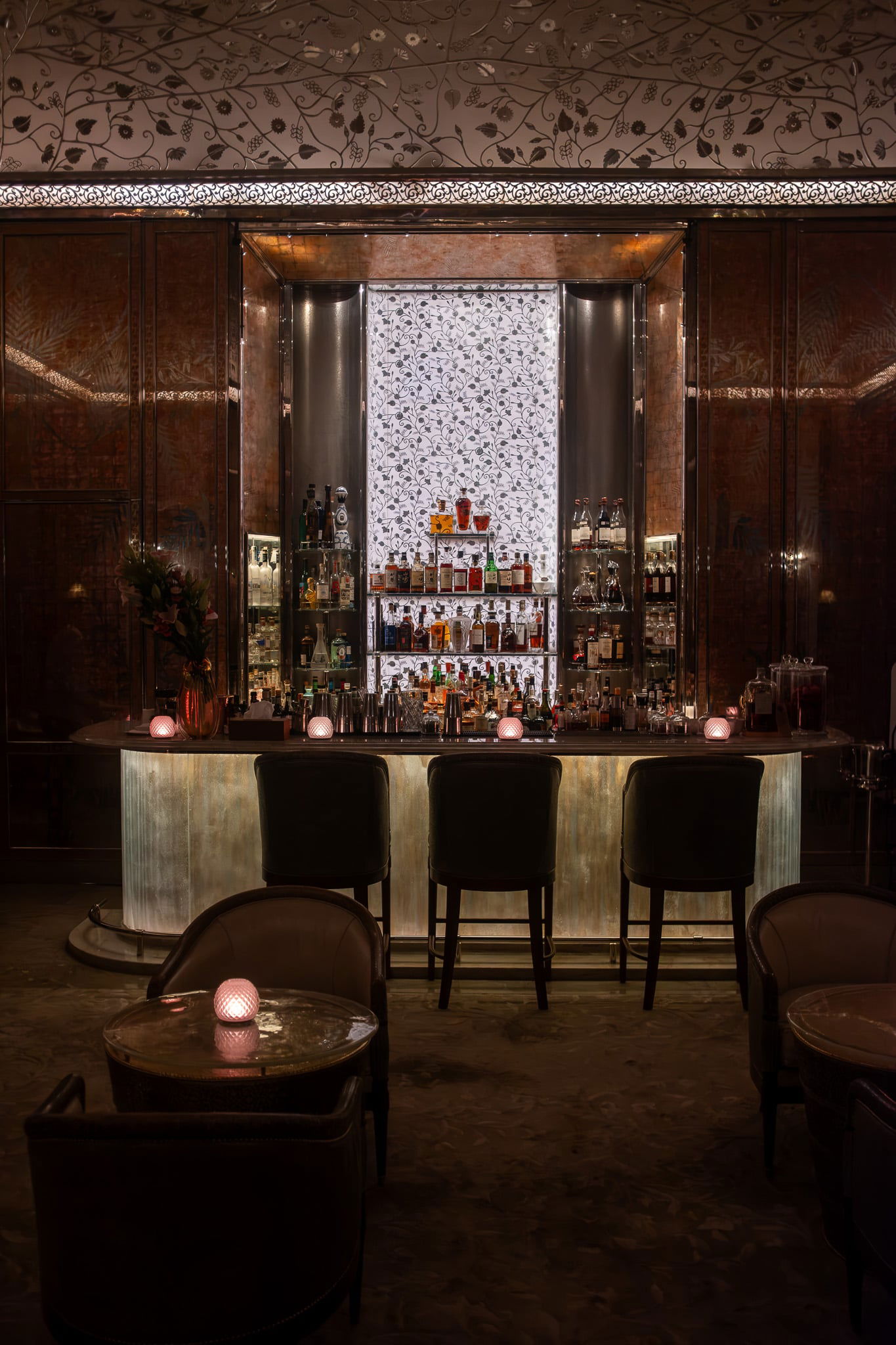
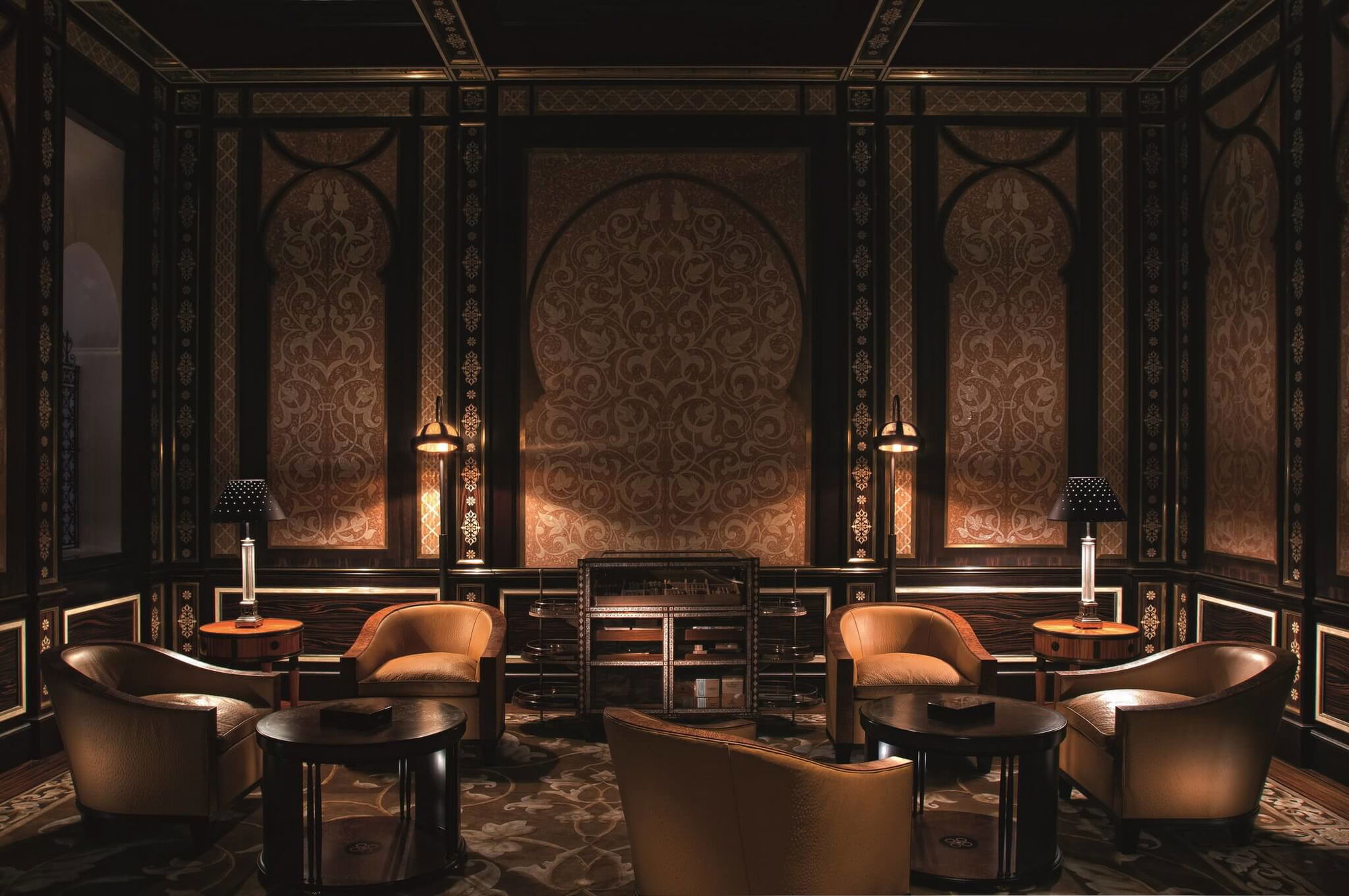
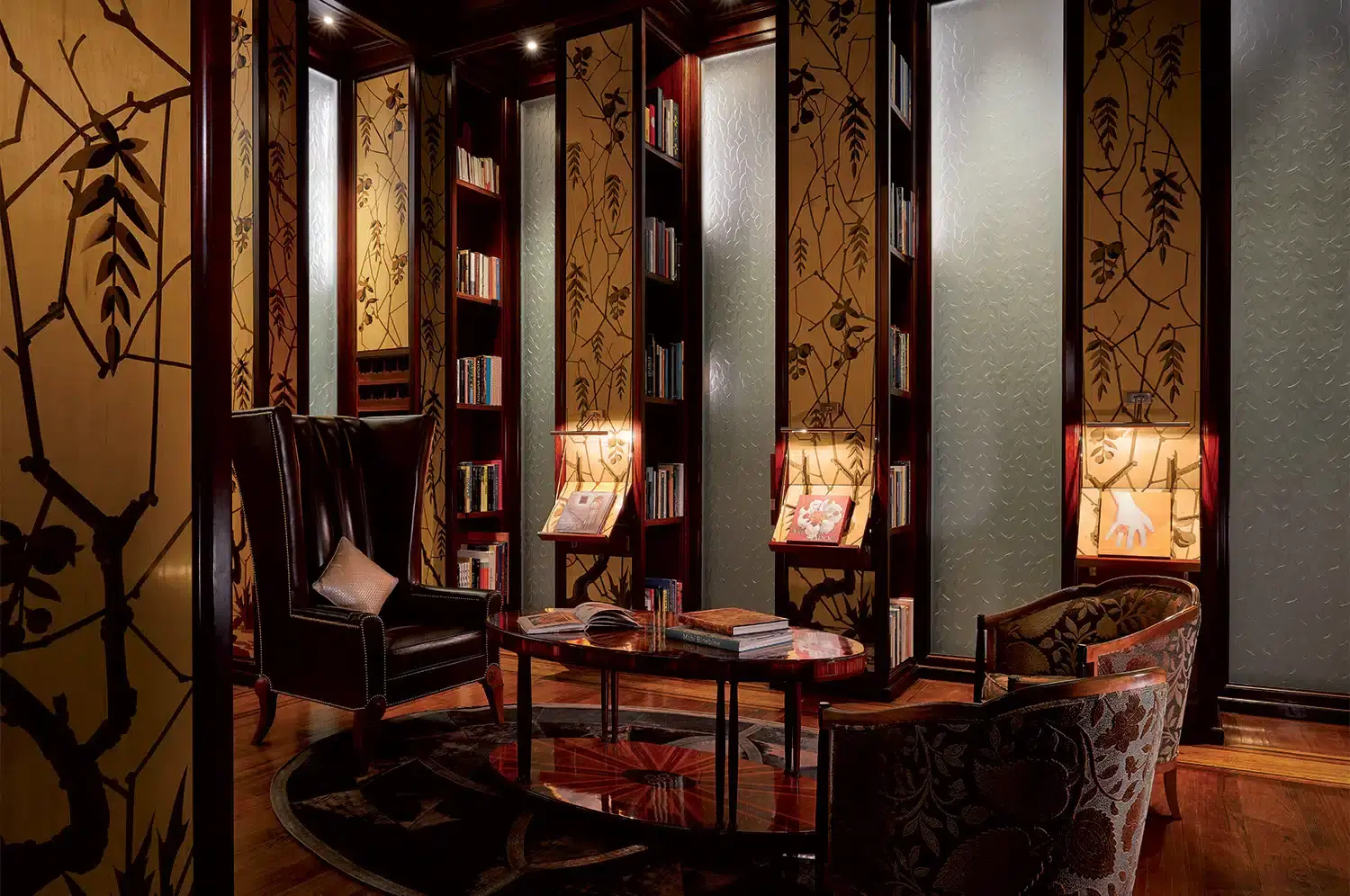
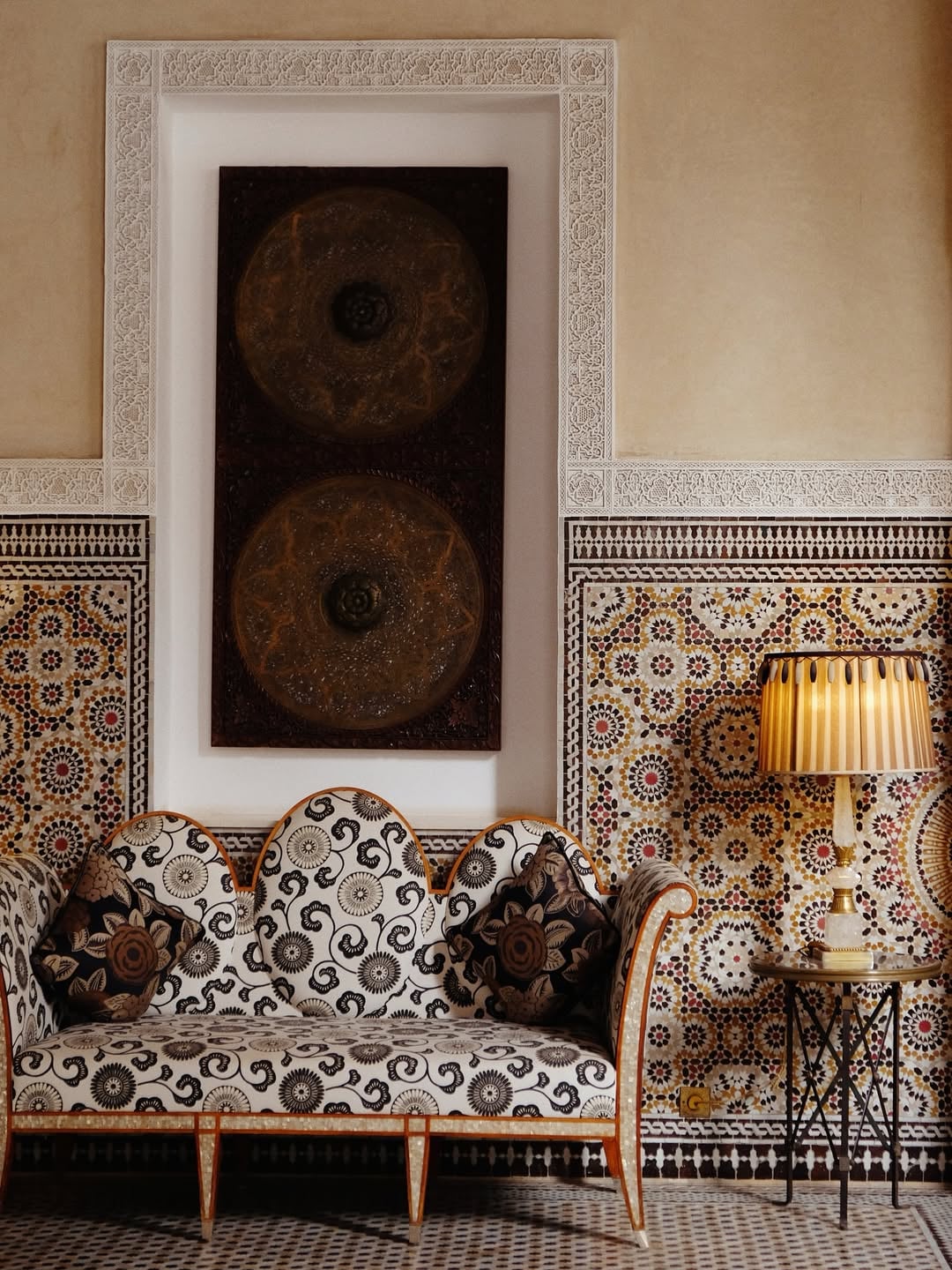
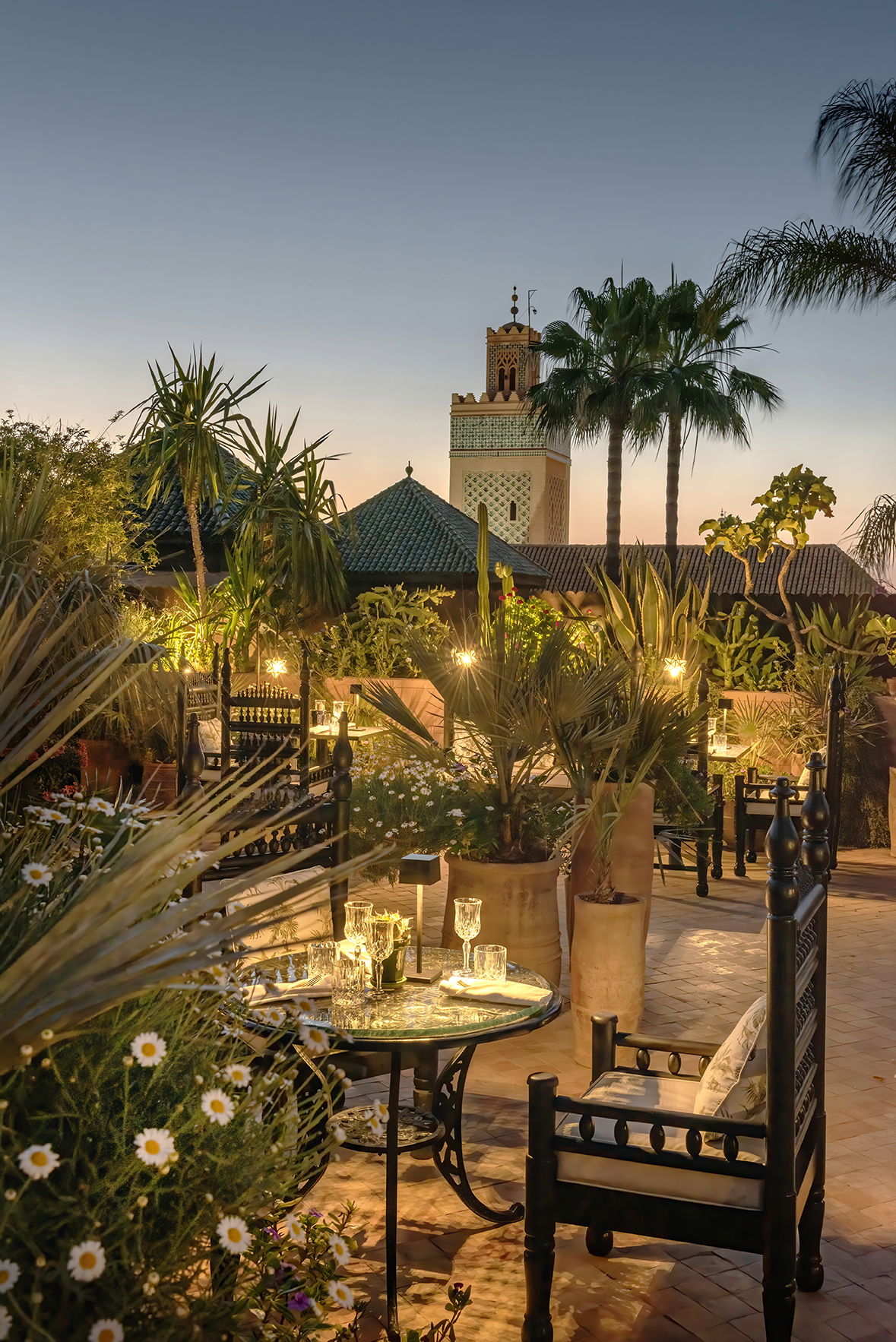
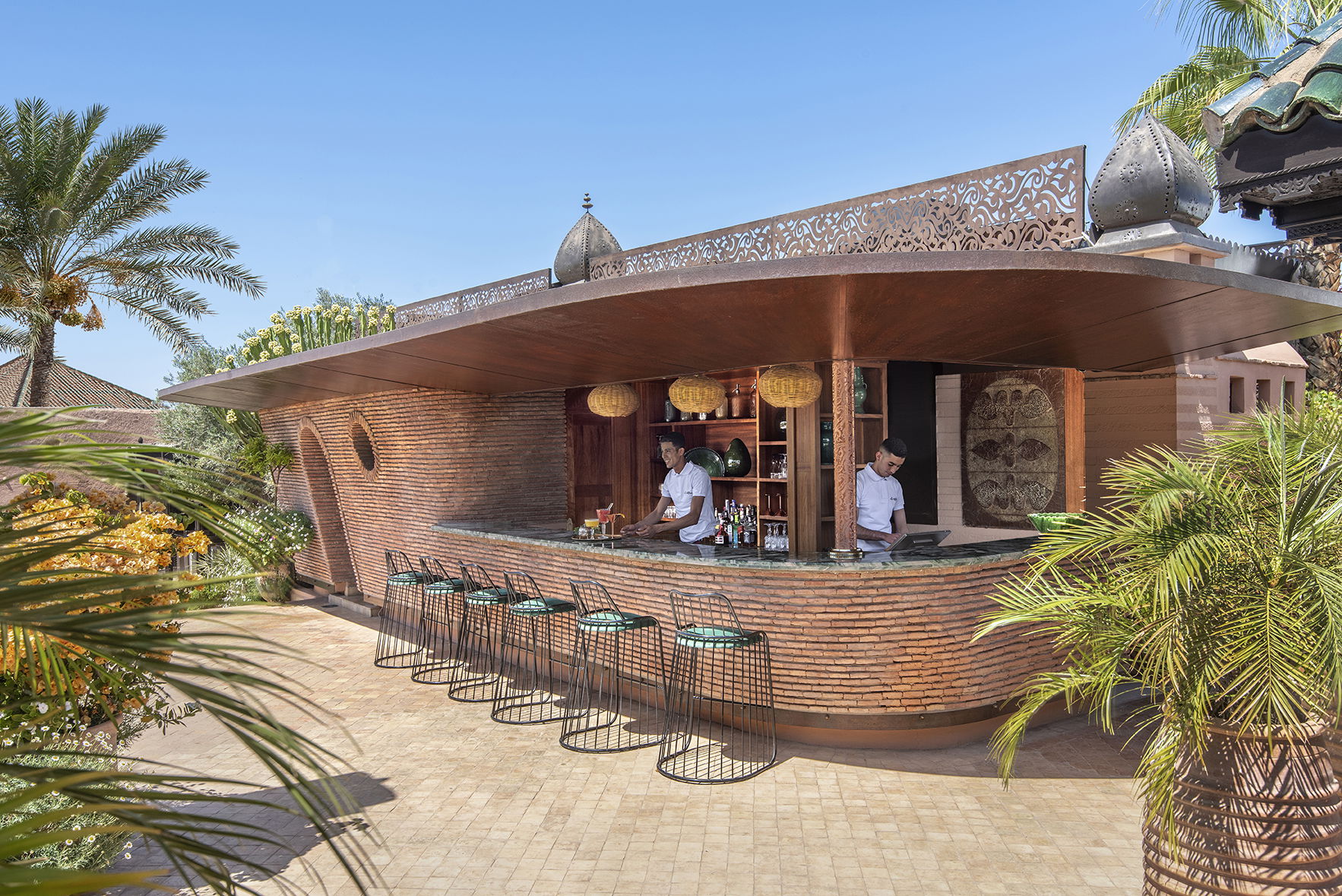
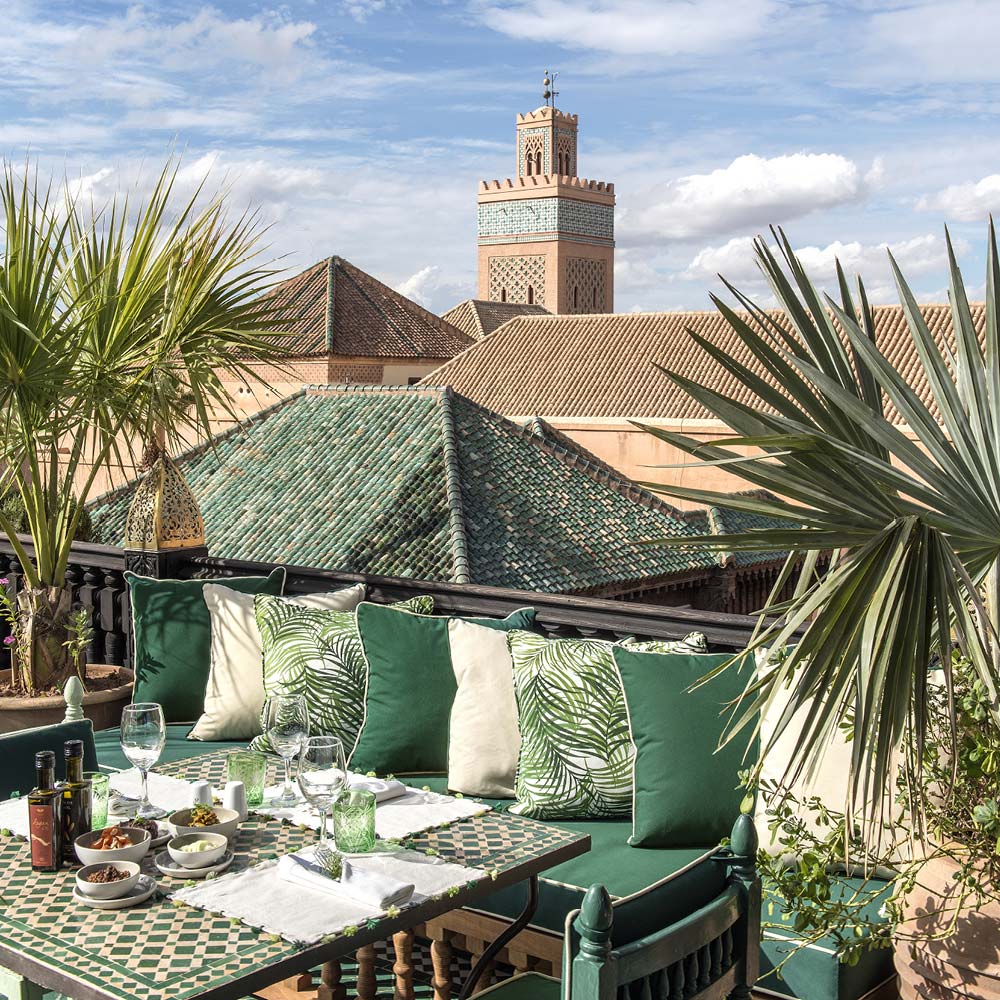
La Sultana belongs fully to the richest and most decorative Moroccan idea of luxury, but it reads it more intimately than La Mamounia or the Royal Mansour. It has a strong historical dimension, made of riads, courtyards, terraces, passages and craft detail.
The rooftop carries that world above the roofs of the Kasbah, which makes the experience less formal and more connected to the city. It is a sumptuous and deeply Moroccan luxury, but more contained, more layered, almost labyrinthine.
Four Seasons
The Four Seasons stands for a more contemporary and international version of luxury. It is less theatrical and less tied to traditional Moroccan opulence, with a cleaner, more ordered, more modern language.
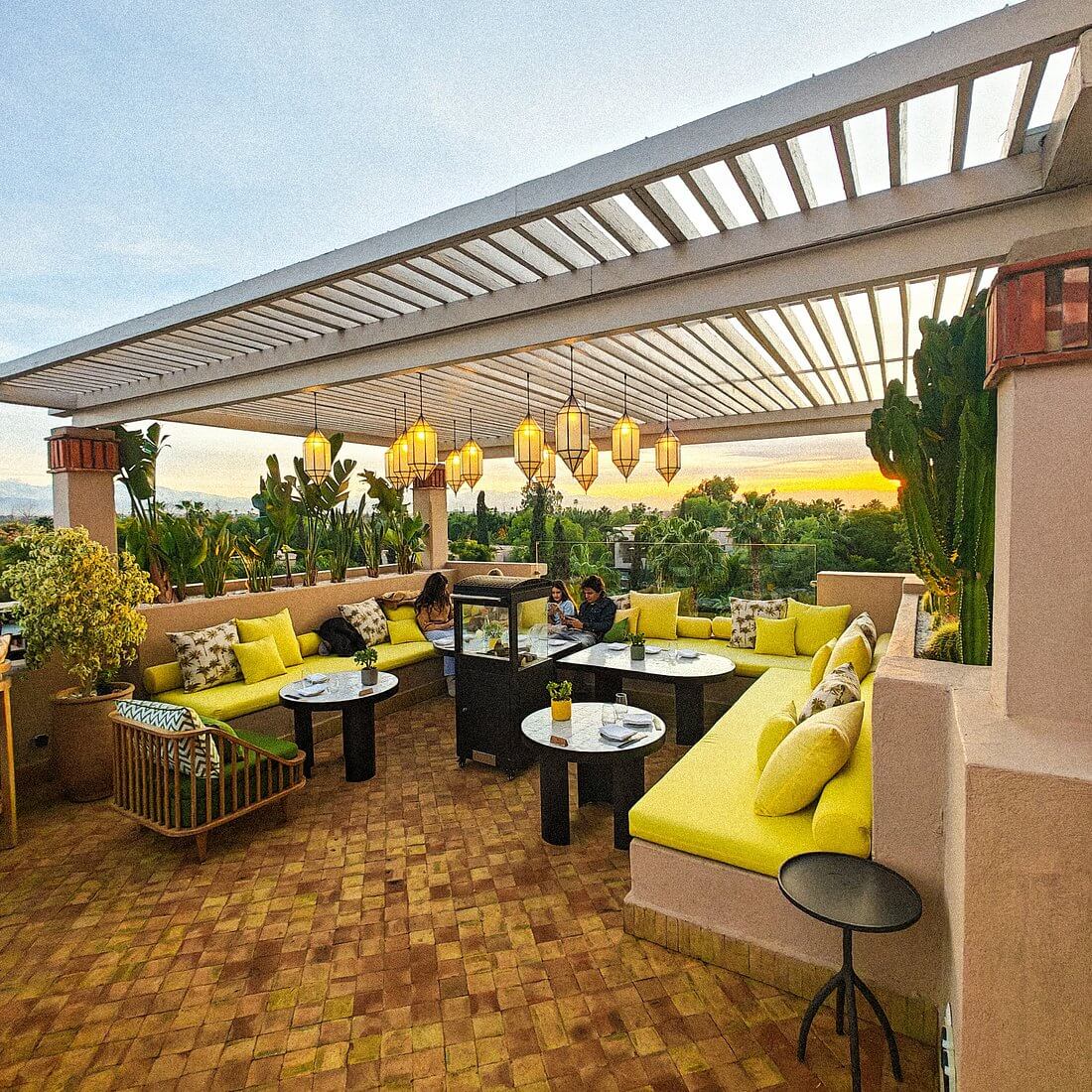
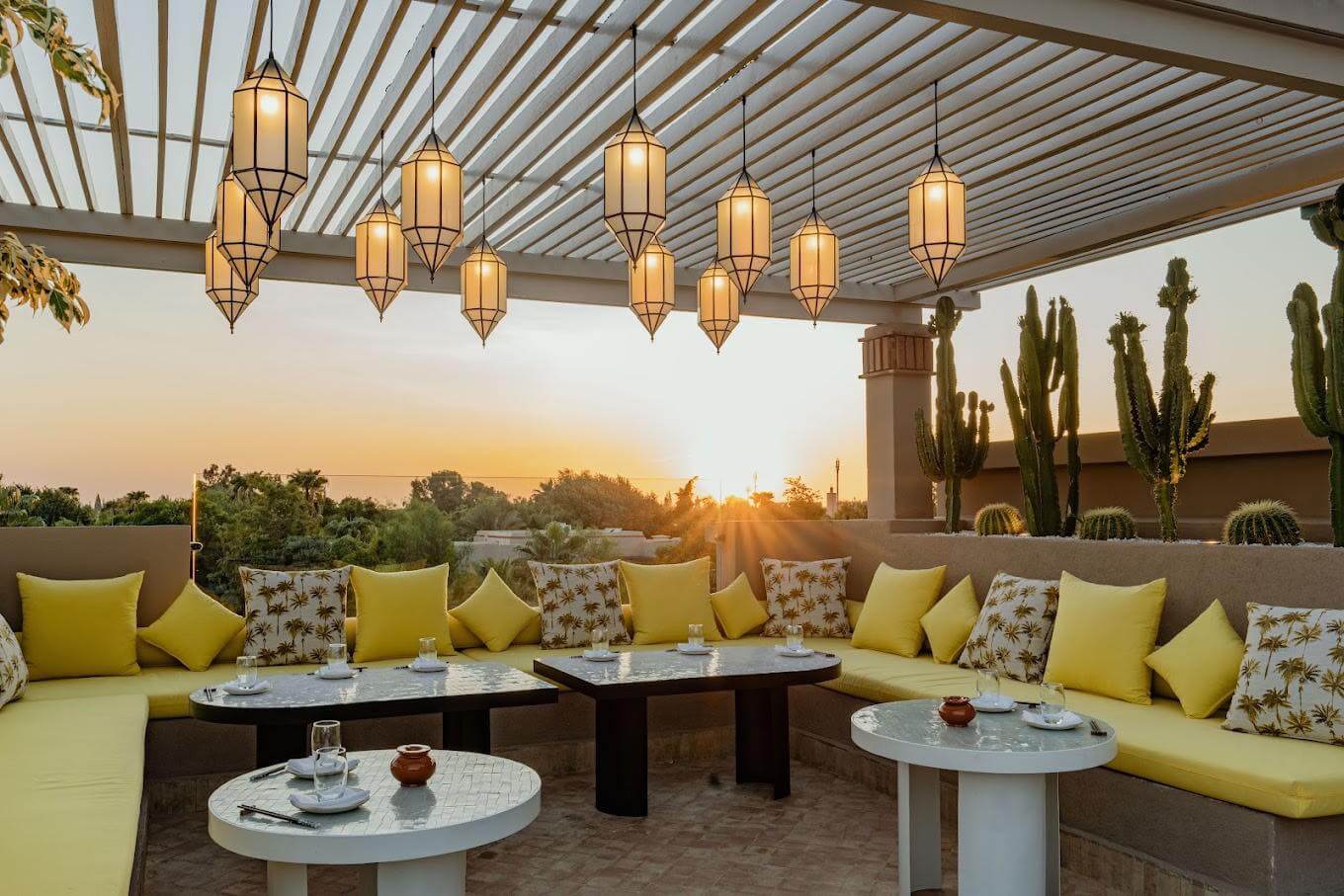
The rooftop opens the space outwards, with a wide view over the Atlas and the gardens. The atmosphere is relaxed, social and very well kept, and less ceremonial than at the great palaces. It is a modern, sophisticated, approachable luxury, tilted towards company more than towards theatre.
Nobu
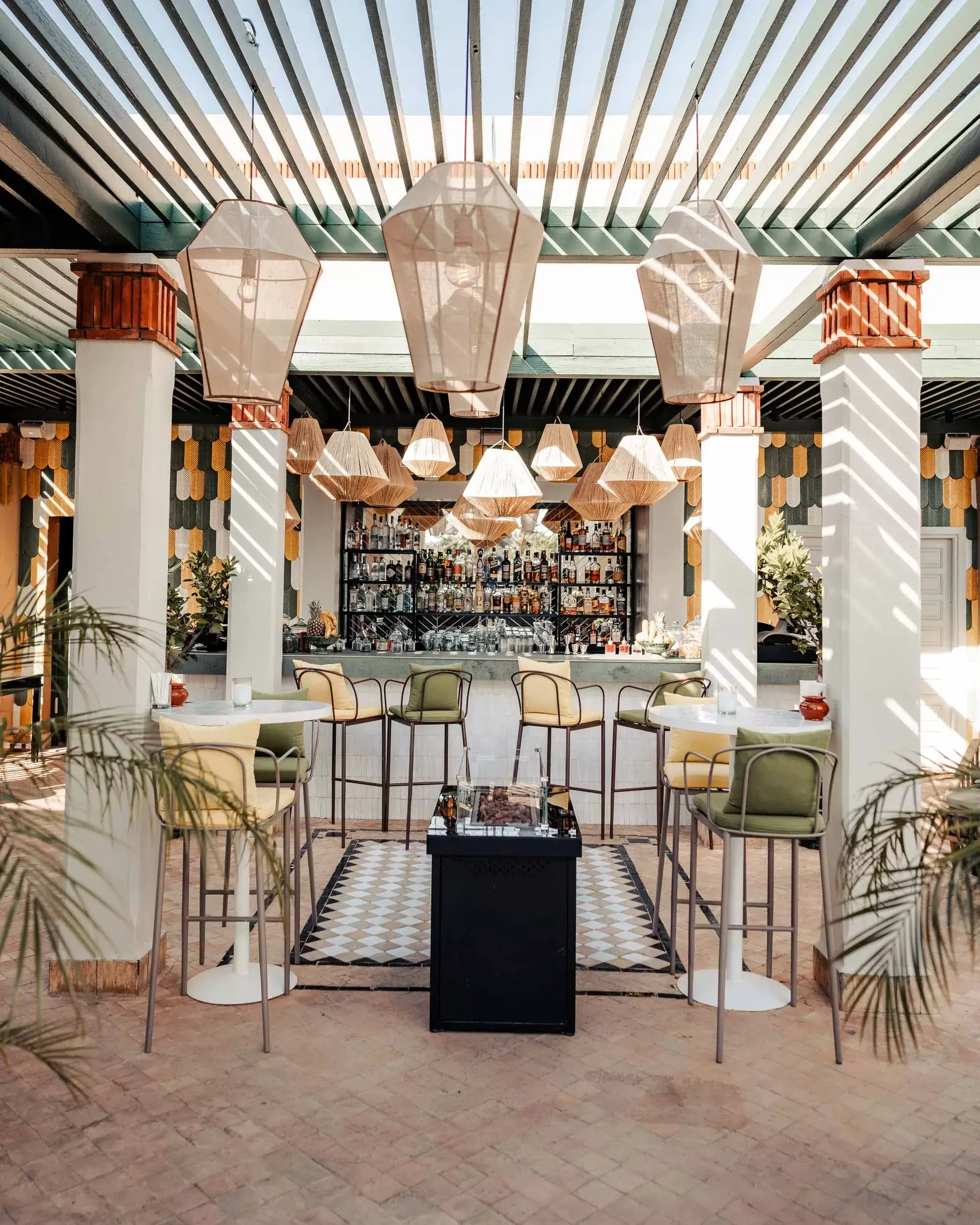
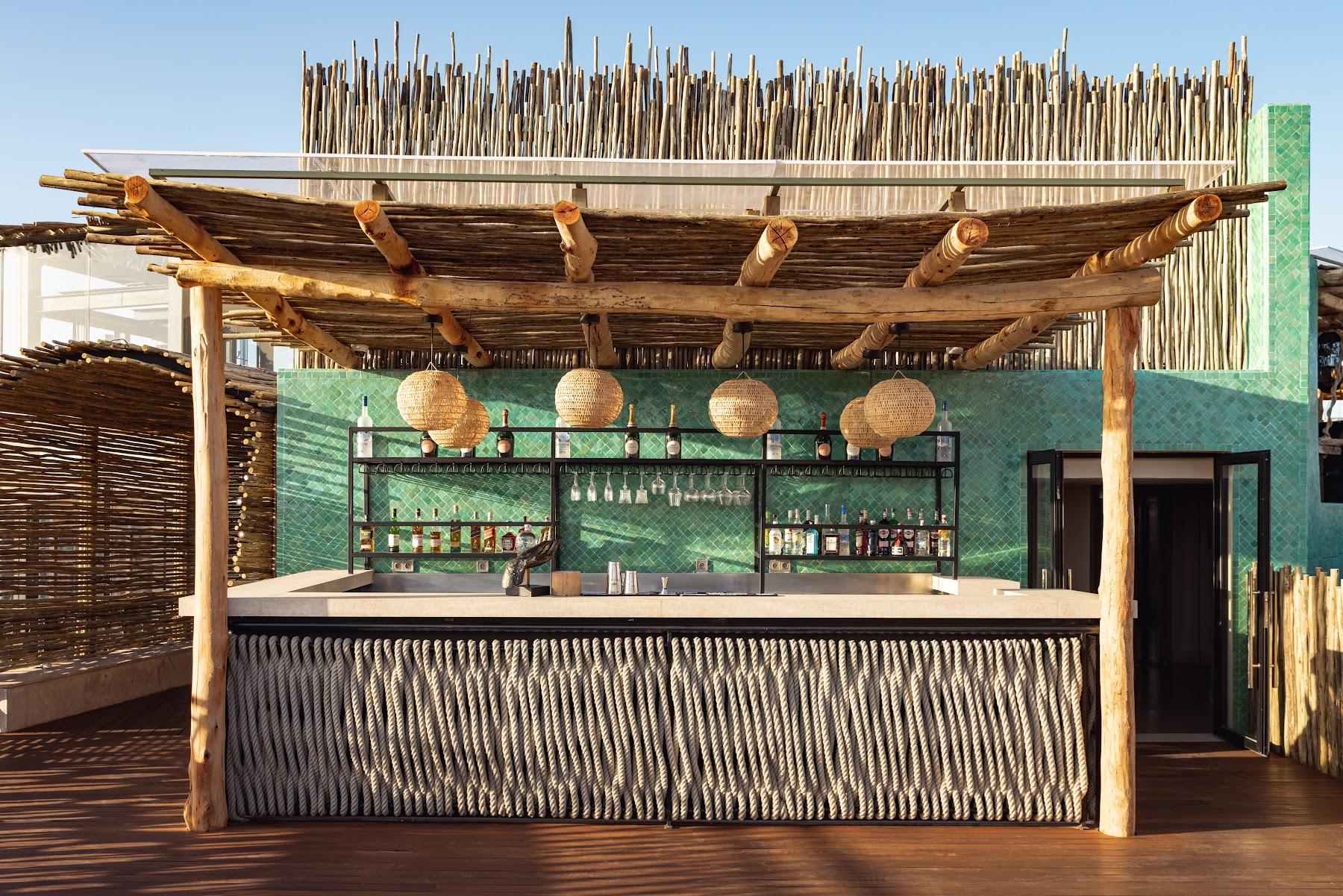
Nobu is almost the opposite of La Mamounia, the Royal Mansour or La Sultana. Here luxury is social, contemporary and deliberately energetic. The rooftop is built around movement: DJs, music, a pool, cocktails, people, spectacle and a strong nightlife dimension. It does not look for silence and it does not want to create distance. It wants to be alive, full and visible.
The social dimension here is not a side effect of the experience: it is a central part of it. Being full, visible and energetic is part of the rooftop's own identity. Downstairs the atmosphere can be more lounge and more sophisticated, but the rooftop is the perfect expression of a more international, dynamic, celebratory idea of luxury.
Amanjena
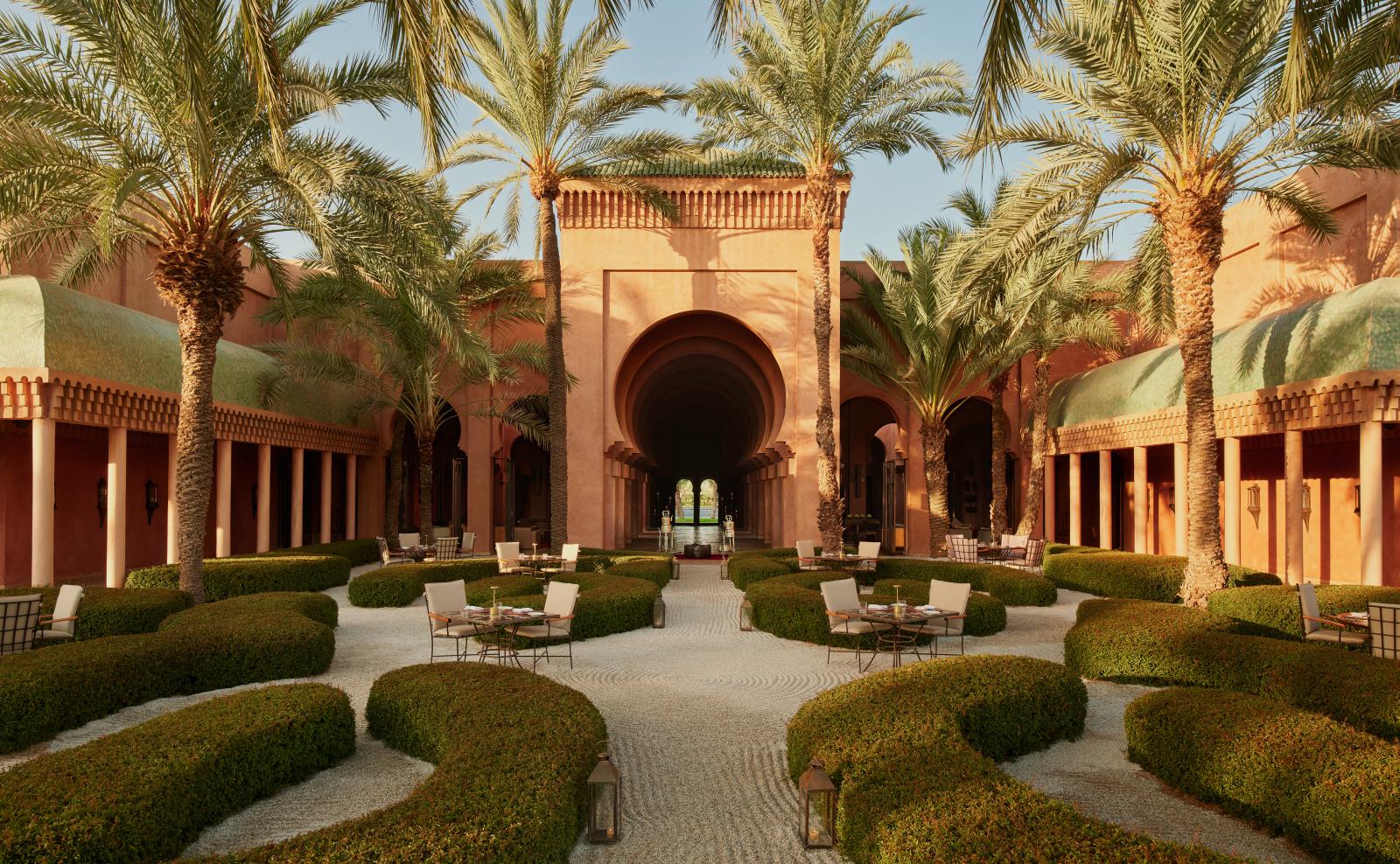
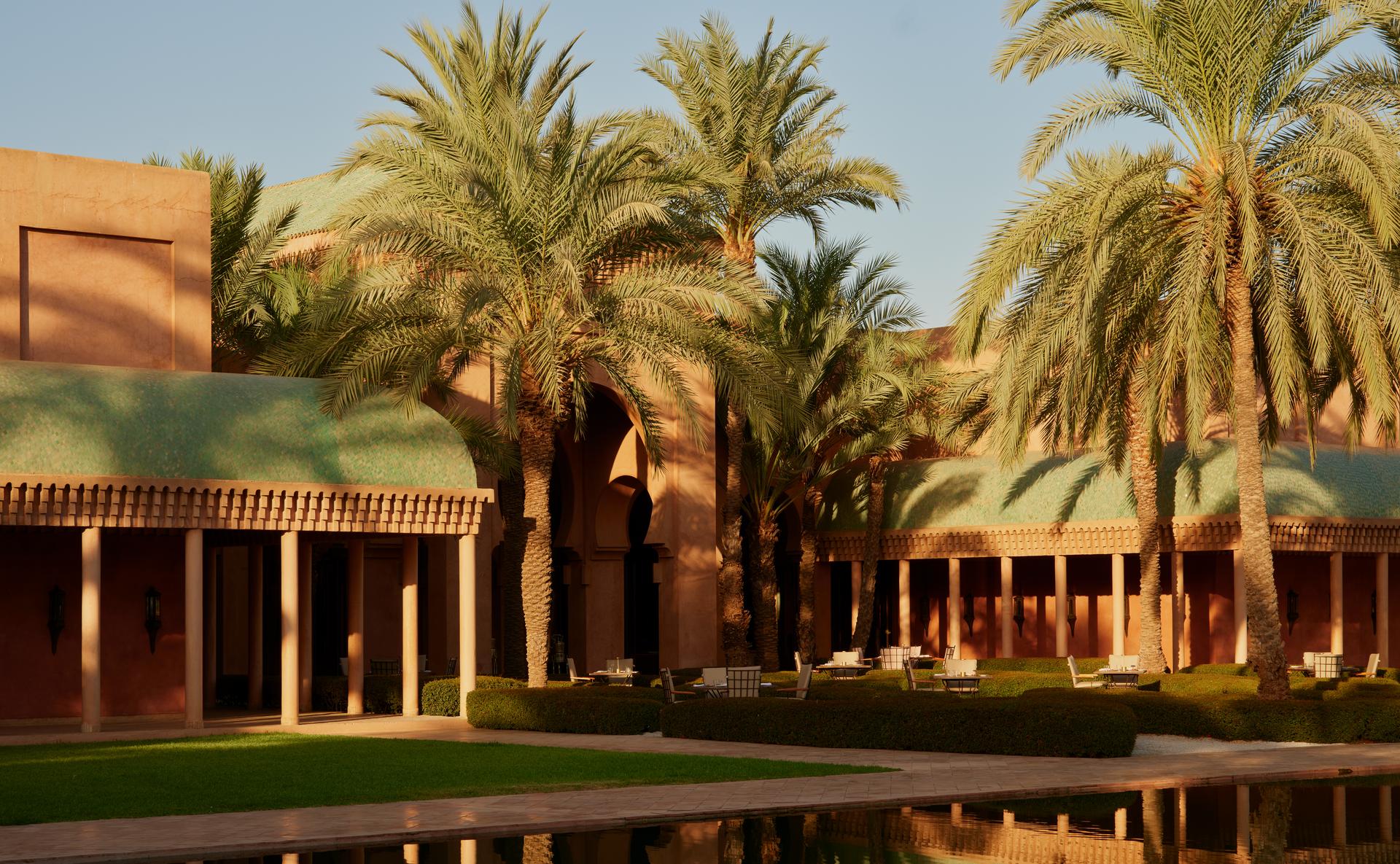
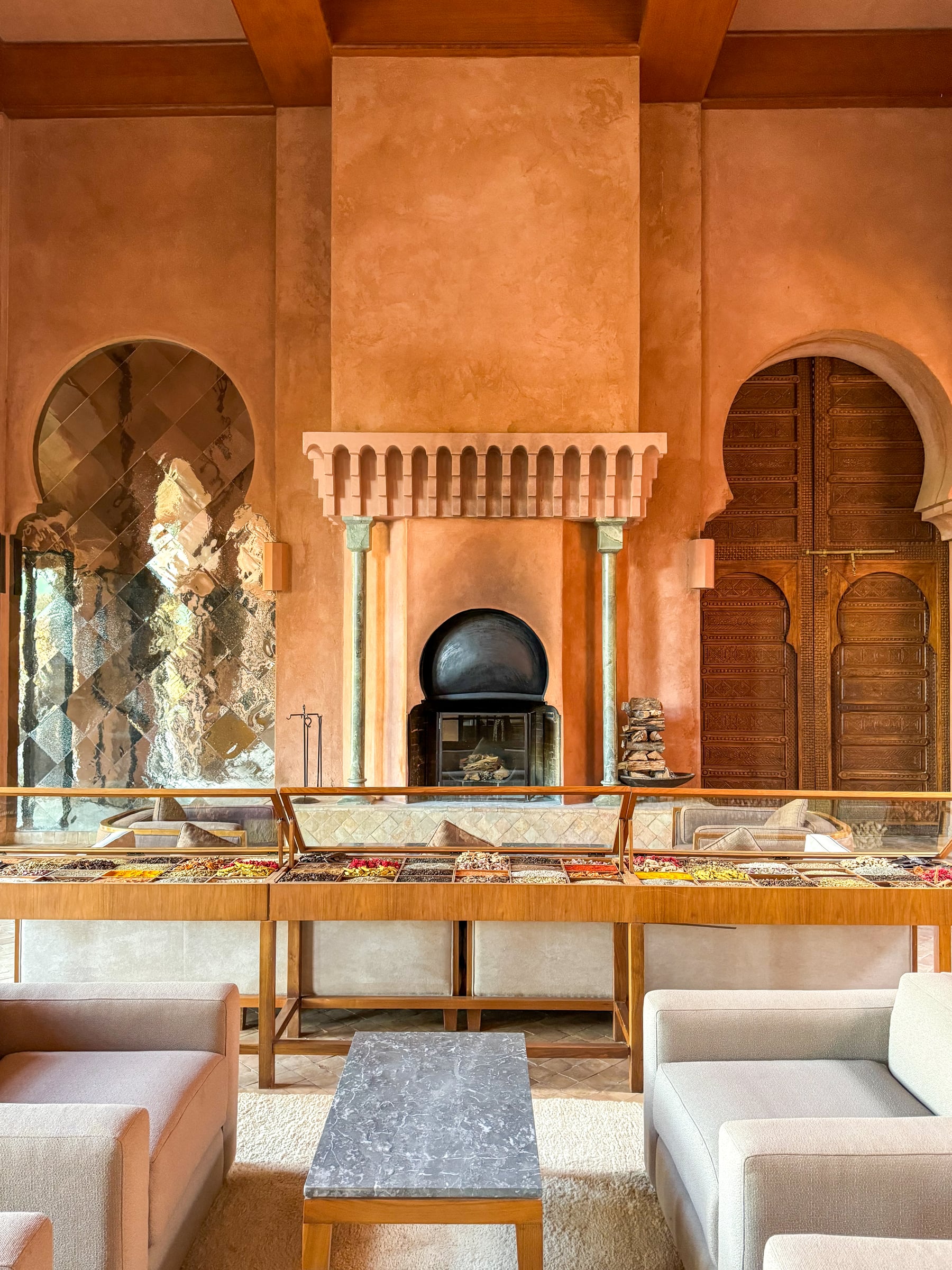
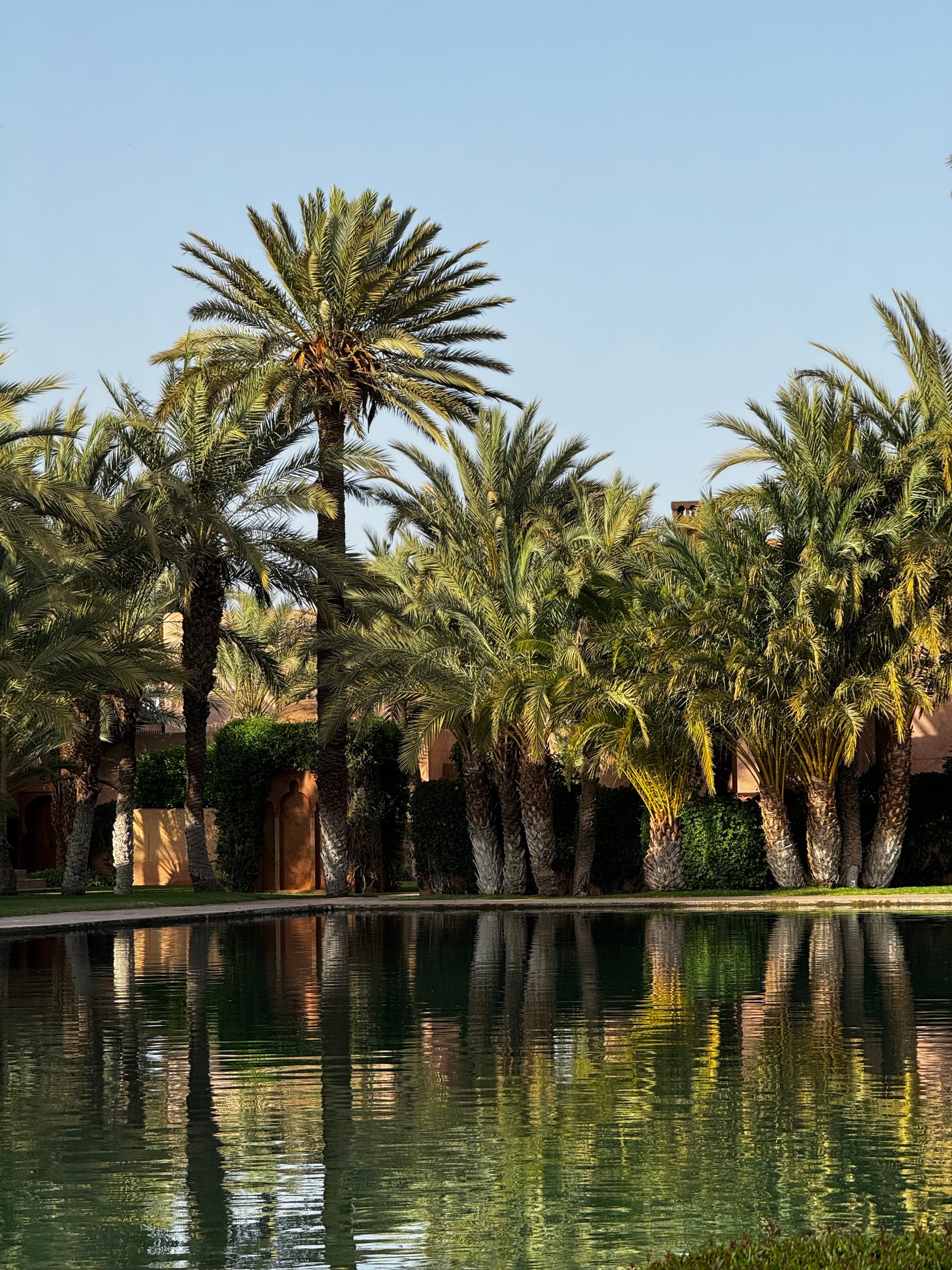
Amanjena is pure calm. The luxury is very present and never pronounced. Everything is built through proportion, silence, water, order and space. Compared with La Mamounia or the Royal Mansour it is far more restrained, and no less sophisticated for it.
It is the typical Aman language: every element seems to be exactly where it should be, without ever looking forced. Everything is in balance. The atmosphere is almost suspended, perfect for an intimate drink with no hurry in it. It is a luxury that does not try to impress you, but to make you feel well.
Jnane Rumi
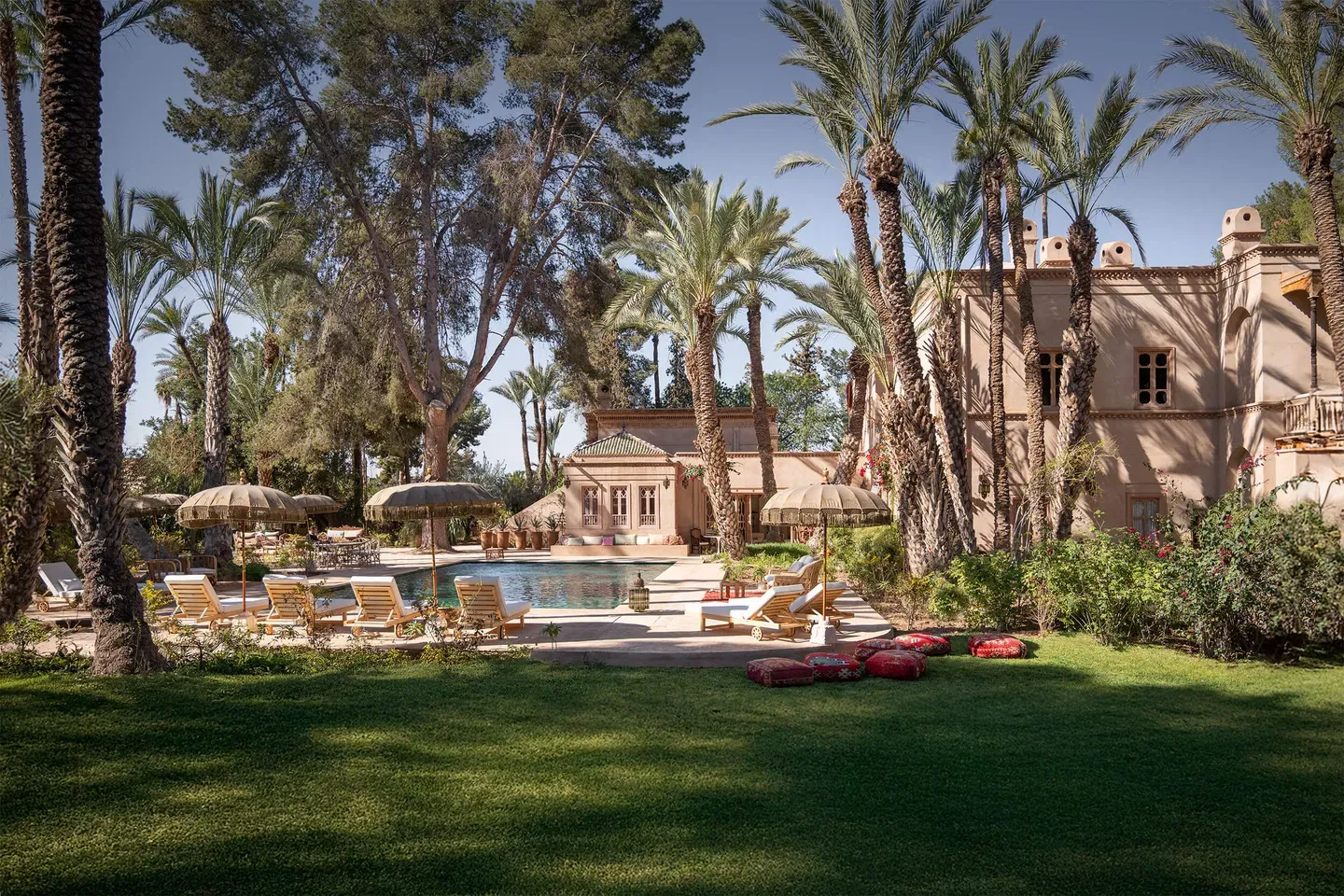
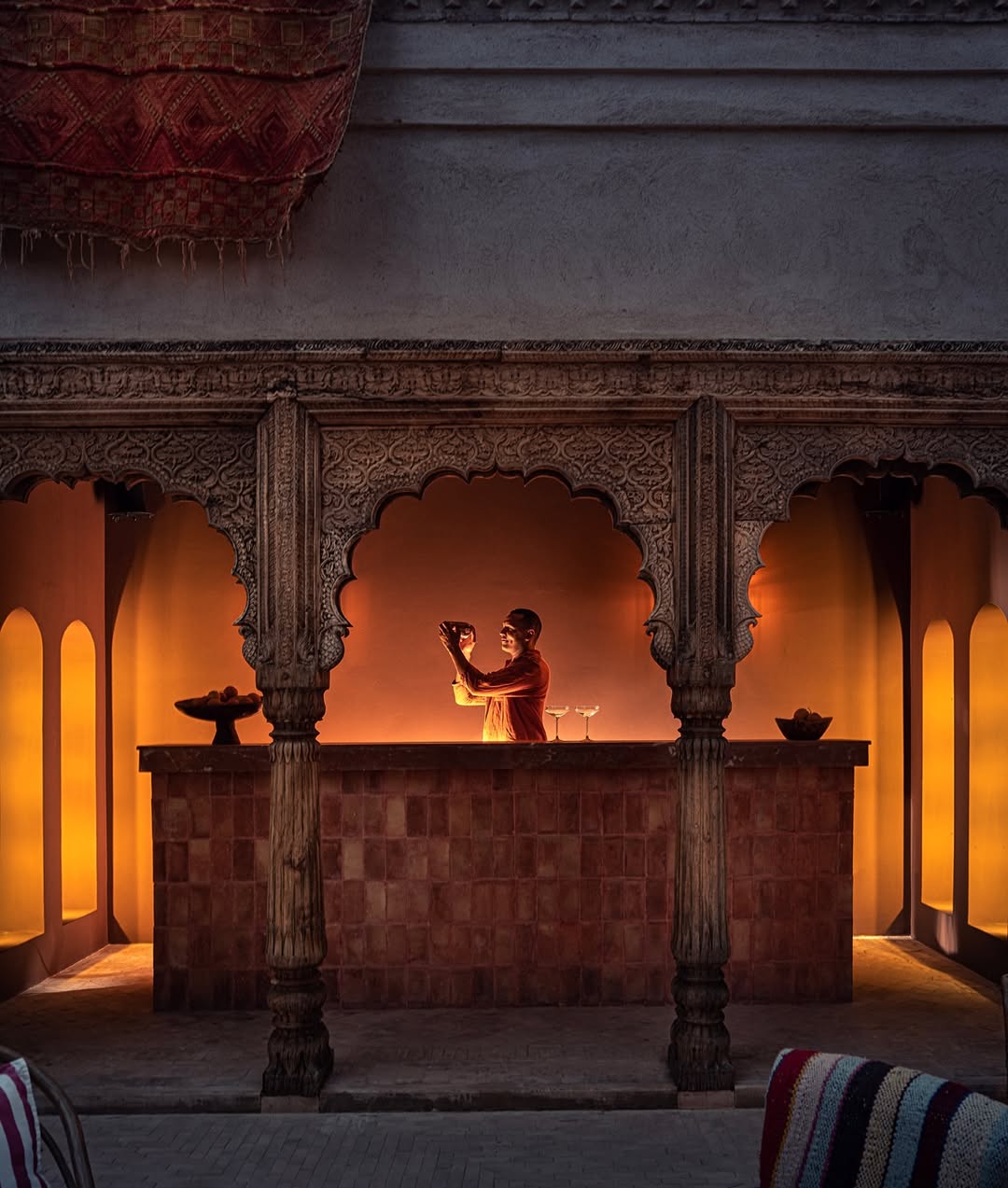
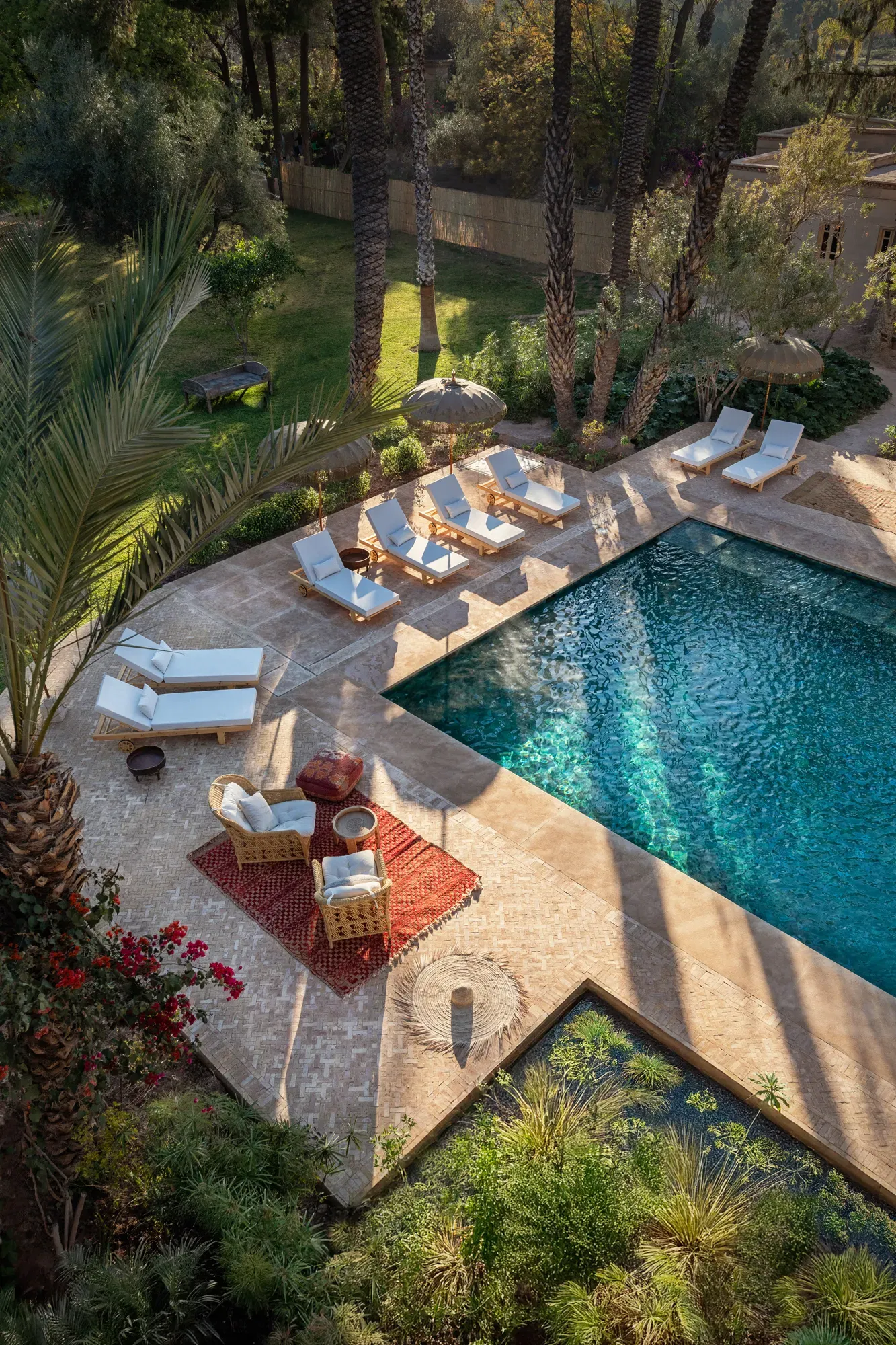
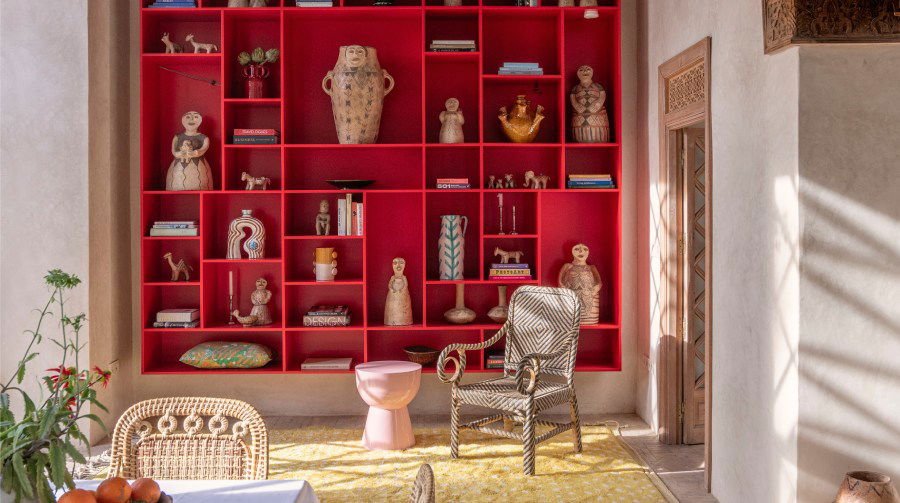
Jnane Rumi stands for a completely different kind of luxury: more natural, more artistic, more personal. There is a strong Moroccan identity, and it is never opulent; at the same time it is not minimalist the way Amanjena is. The rooms are full of art objects, design pieces, vintage elements and details that look gathered over time more than simply chosen to decorate.
The bar sits among the palms, with the pool a short distance away. You hear the silence, the birds, or some light music in the background. It has something of the atmosphere of the house of a friend with extraordinary taste. It is a luxury made of harmony, nature and personality, perfect for an intimate drink.
Mandarin Oriental
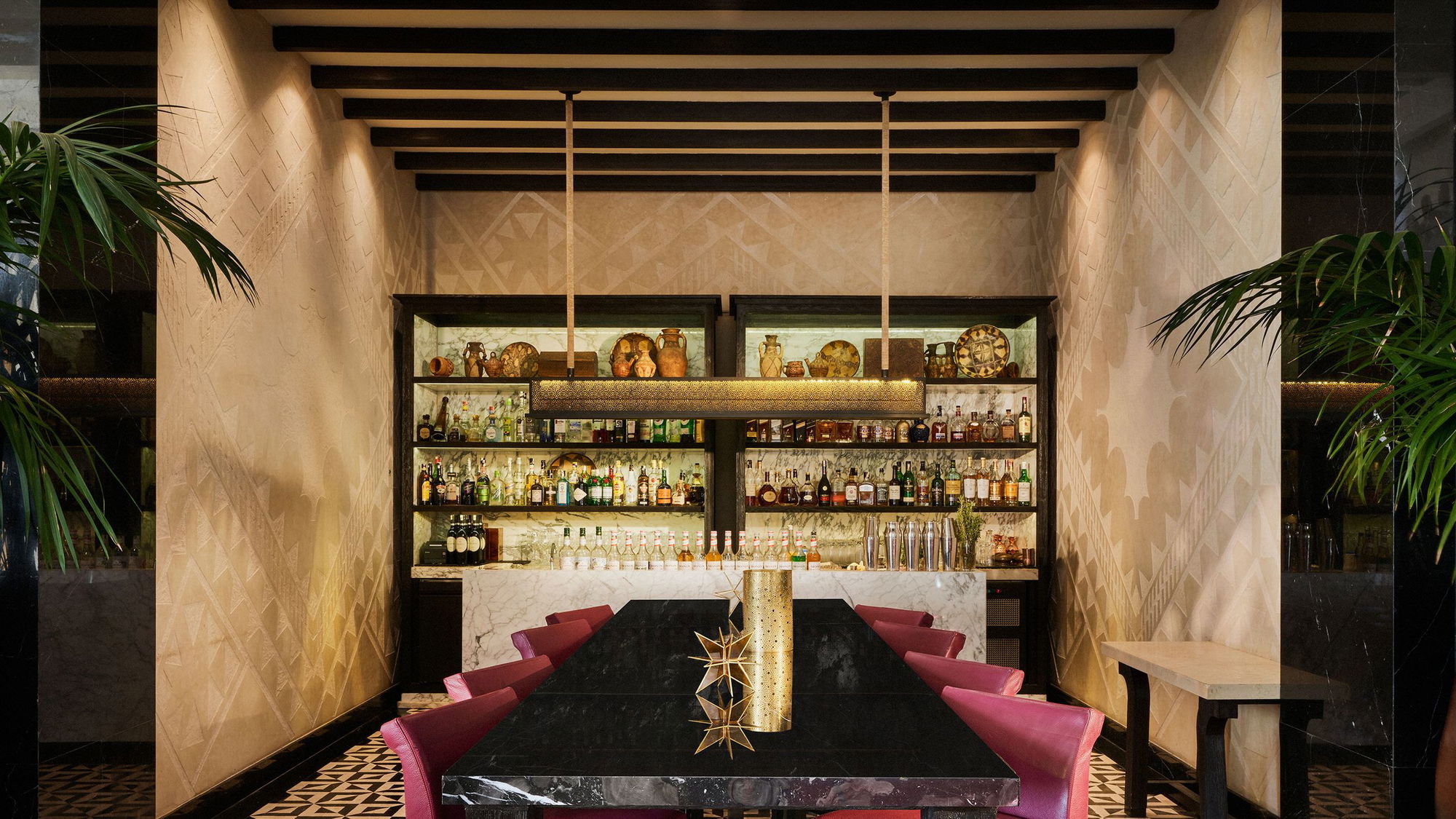
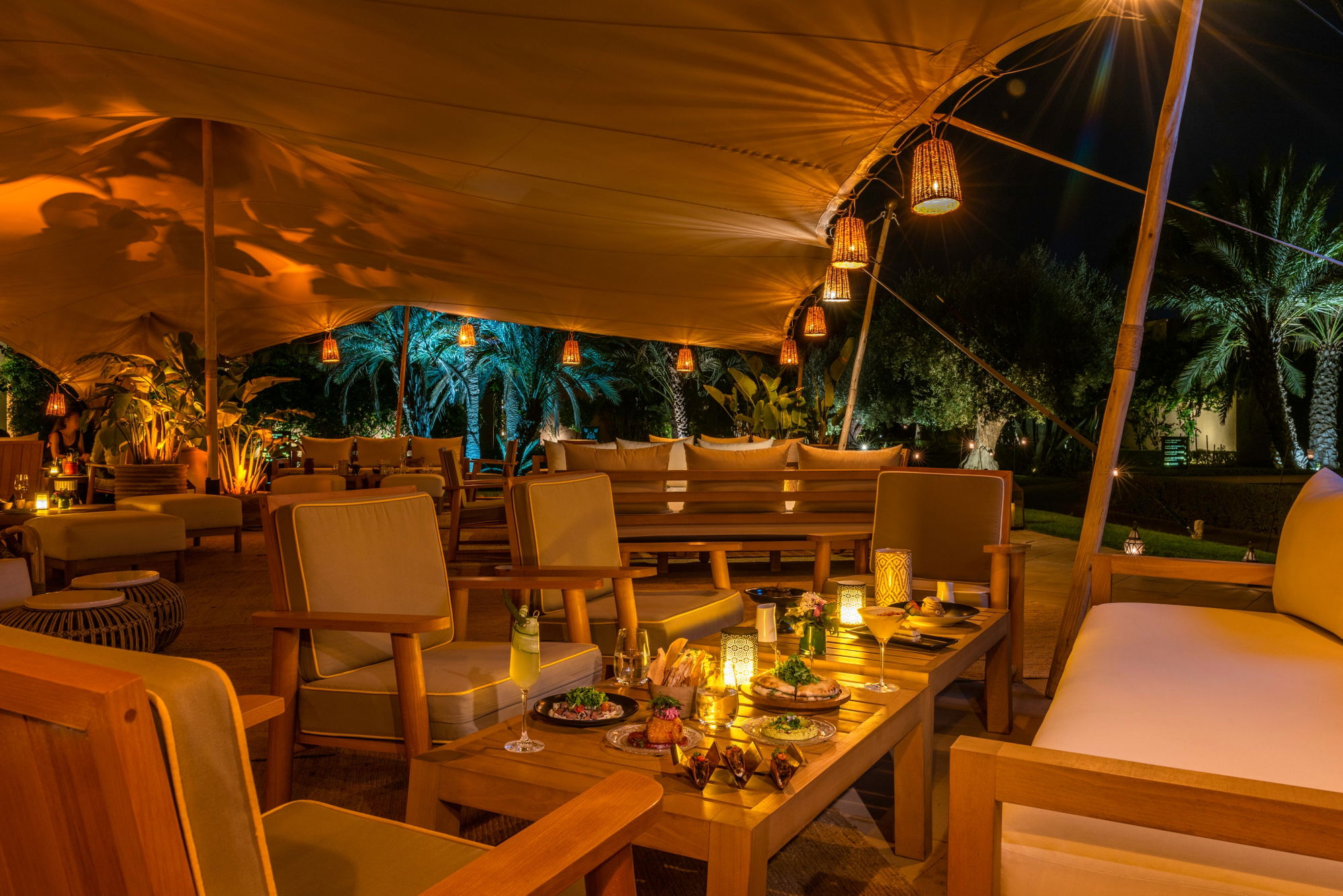
The Mandarin Oriental is the Mandarin language adapted to Marrakech. Precision, geometry, light, proportion and extremely controlled spaces live alongside Moroccan elements and local influences. Everything looks carefully studied, professional and coherent.
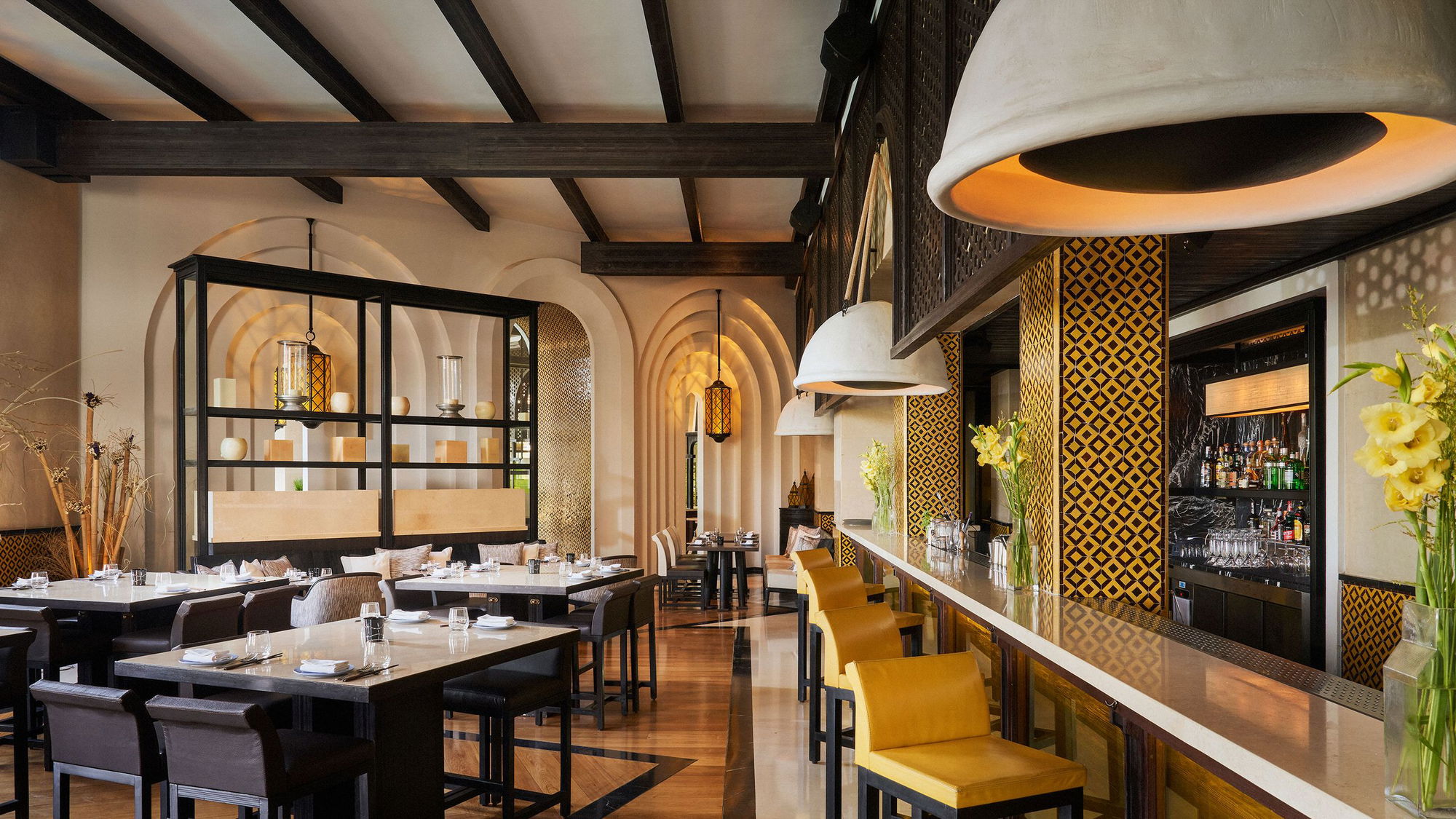
That precision shows above all in the way the different bars have been conceived as separate experiences. Ling Ling is the most social and cosmopolitan side of the Mandarin: music, energy, cocktails and an atmosphere that makes it a destination independently of the hotel. The bar at Shirvan is more tied to the dining experience, sophisticated and contained; The Tent carries everything towards a more intimate, relaxed, Moroccan register. Three very different ways of having a drink inside the same hotel.
It is less emotional and less theatrical than other hotels in the city, and far more architectural and cosmopolitan. A luxury made of control, precision and internationality.
The Oberoi
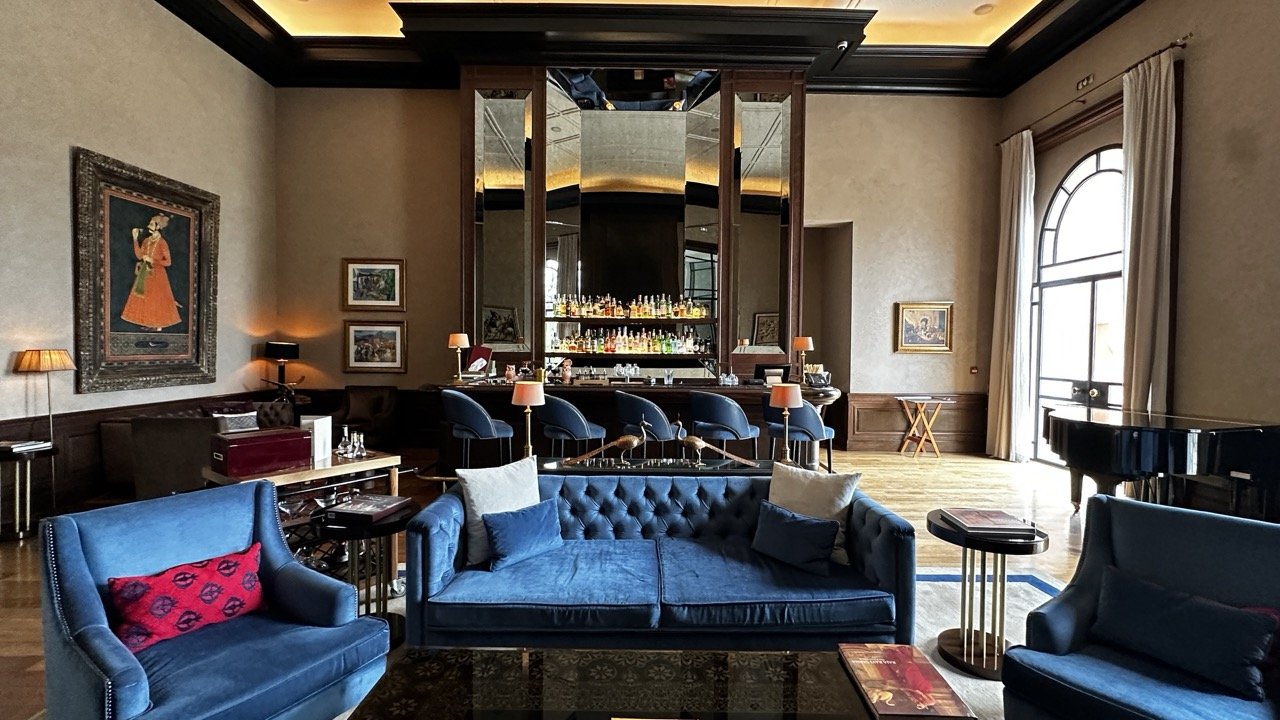
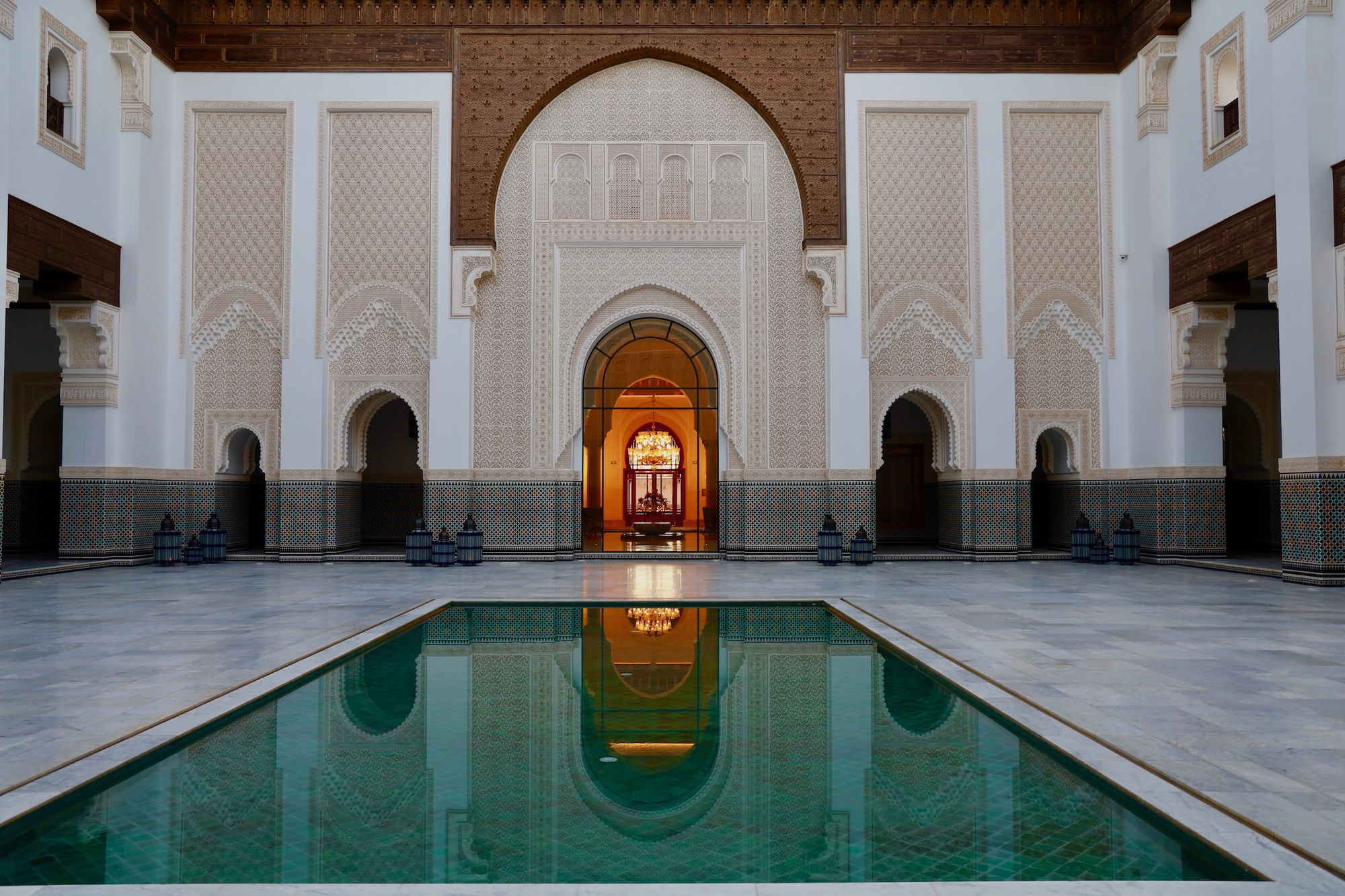
The Oberoi stands for a monumental but contemplative luxury. It is grand in its proportions and deeply tied to Moroccan architecture, but without the same will to impress as La Mamounia or the Royal Mansour. Its strength is in the symmetries, the courtyards, the water, the perspectives and the sense of space.
It is solemn, ordered and very quiet. It is not minimalist the way Amanjena is, but it shares that search for balance and calm. It is a form of luxury that does not overwhelm you: it slows you down. Grandeur here comes through the architecture more than through opulence.
Selman
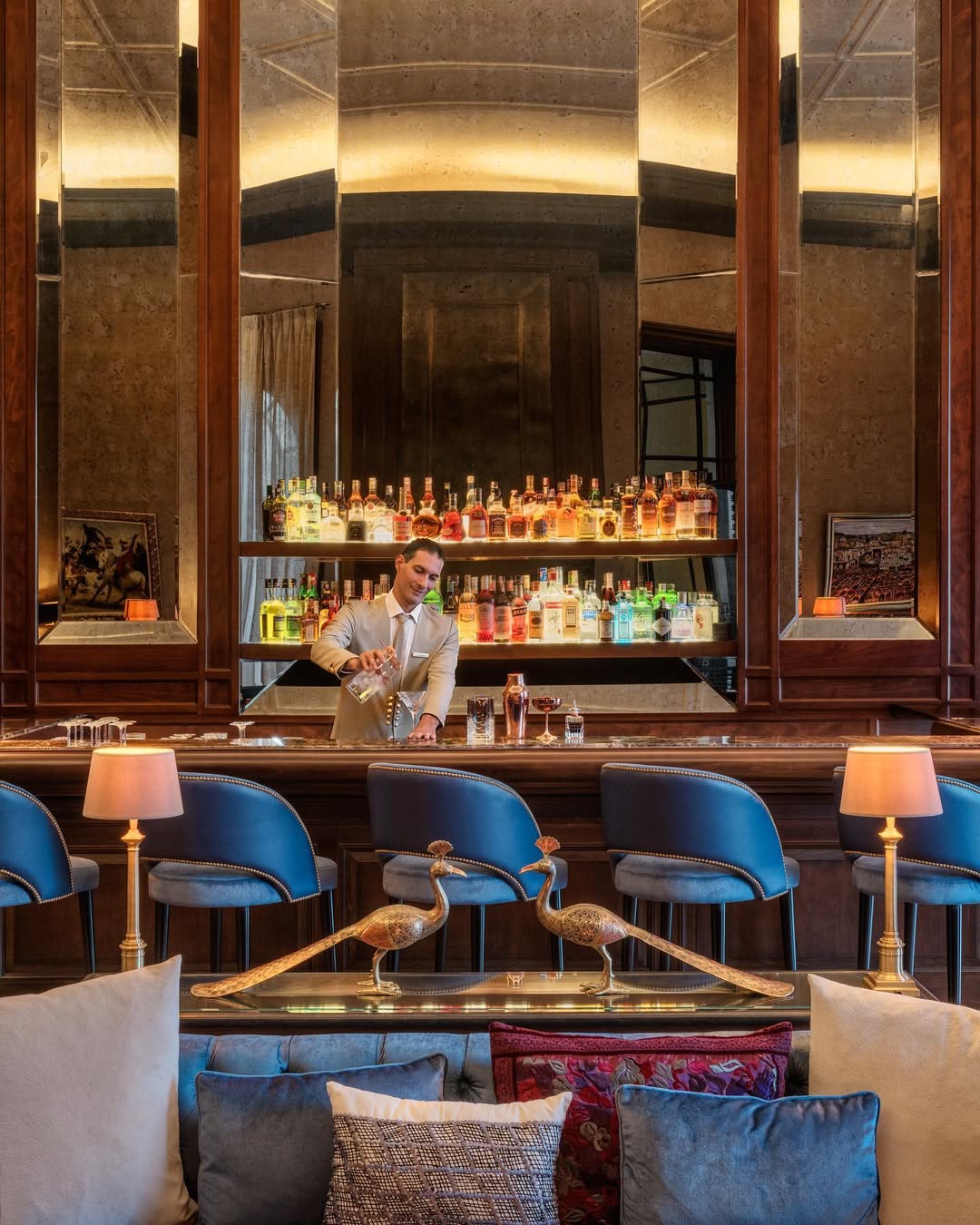
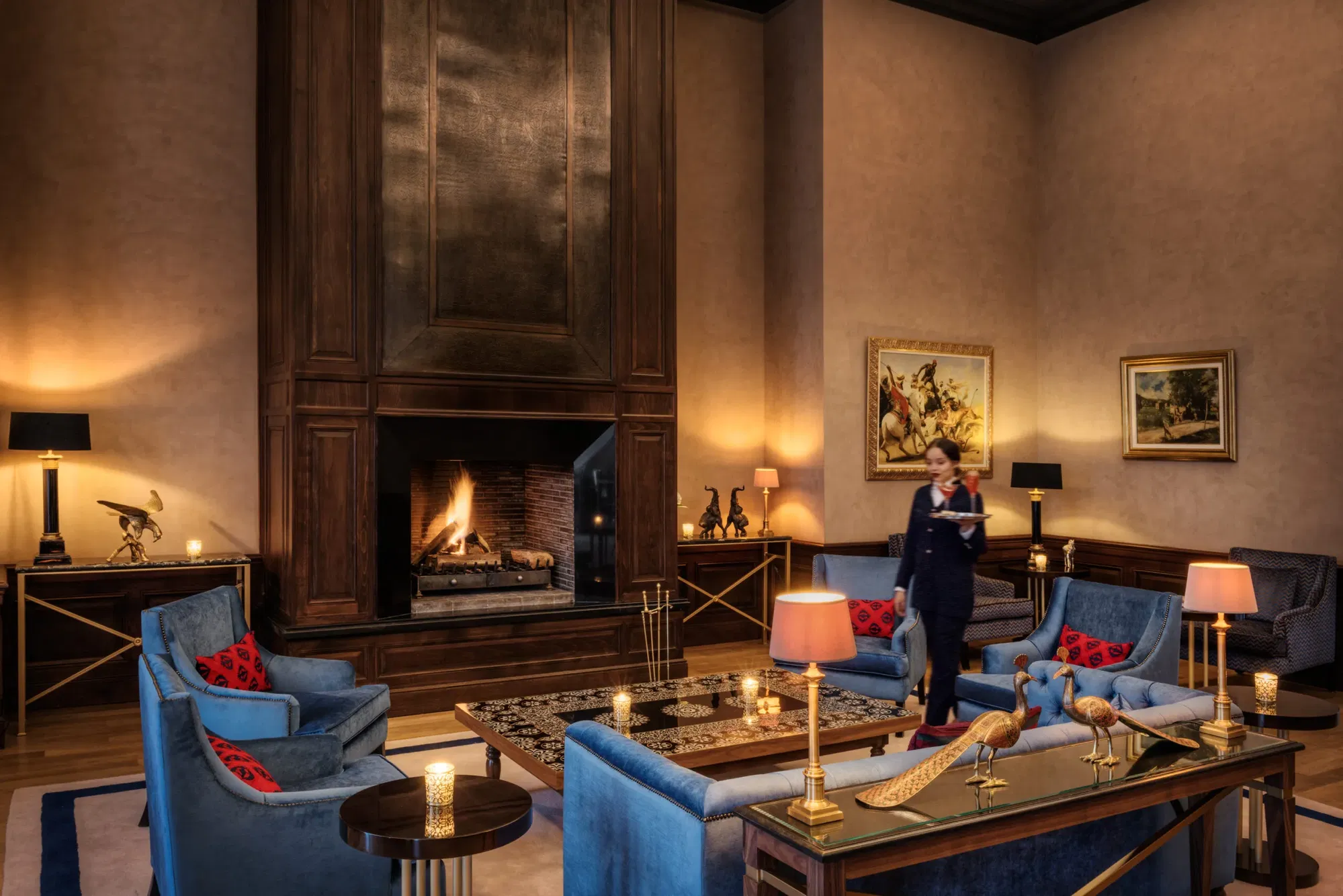
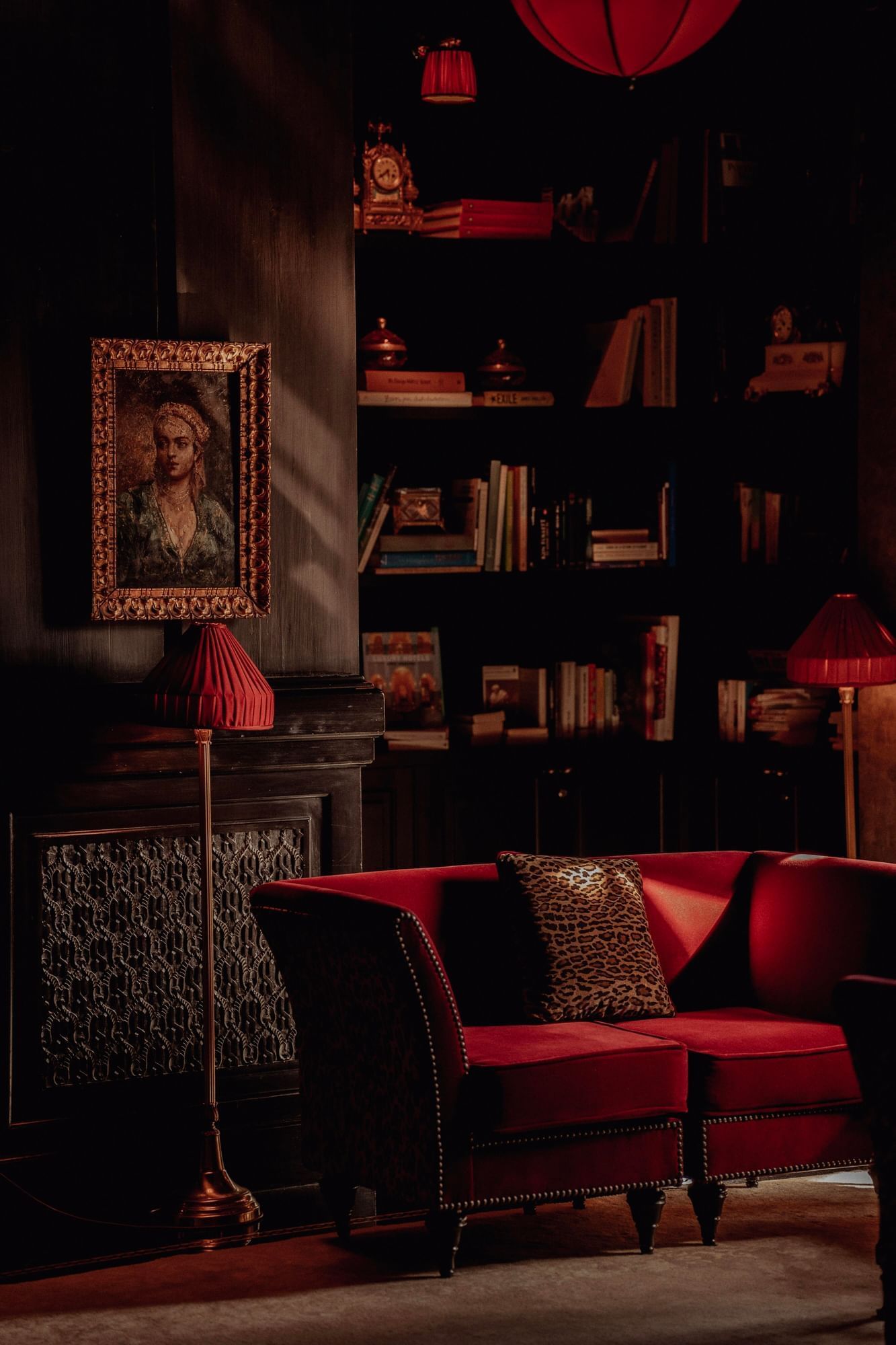
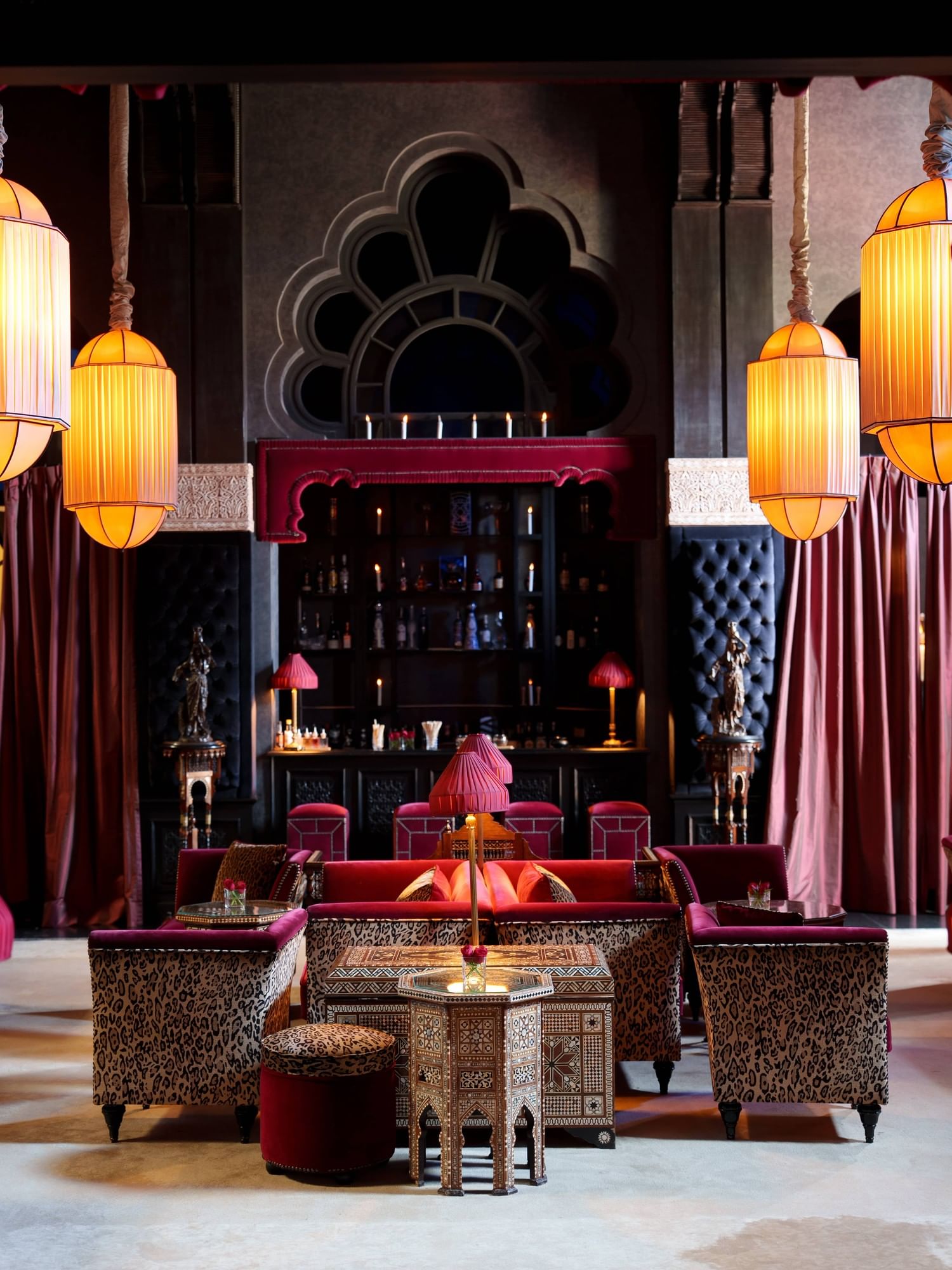
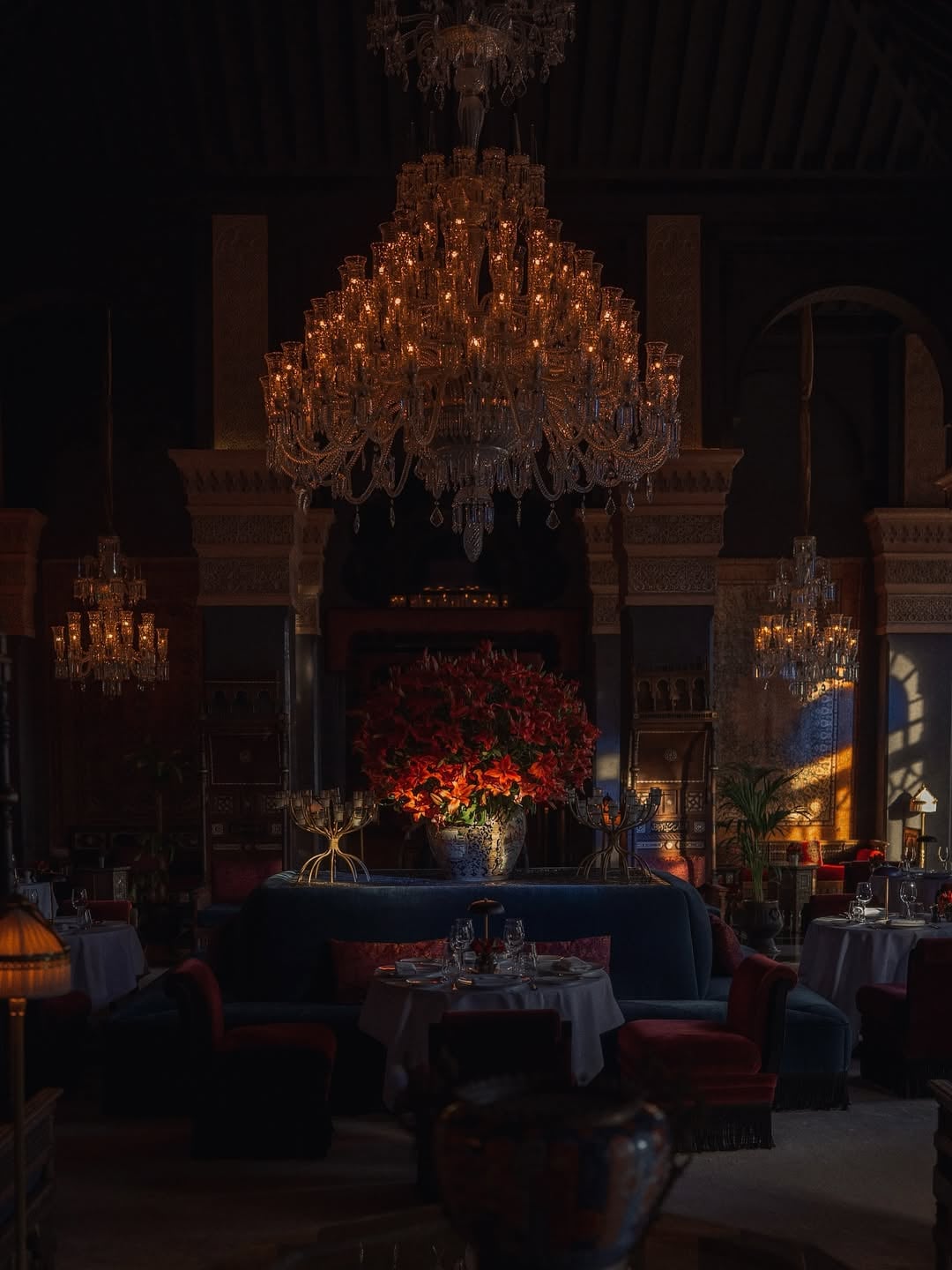
Selman belongs to the family of the most opulent and palatial Moroccan luxury, but it reads it more sensually. It is rich, decorative and theatrical, with velvets, dark woods, soft lighting and the atmosphere of a private palace.
Compared with La Mamounia it is less institutional; compared with the Royal Mansour it is less rarefied. It has something warmer, more intimate, more cinematic. It is a luxury that works above all on atmosphere: seductive, enveloping and strongly Moroccan.
Editor's Choice
Each of these places stands for a different idea of what makes this city iconic: El Fenn is boutique, design-led luxury, La Mamounia is historical grandeur, the Royal Mansour is exclusive perfection, La Sultana is historical Moroccan intimacy, the Four Seasons is contemporary polished luxury, Nobu is social high-energy luxury, Amanjena is balanced, meditative luxury, Jnane Rumi is artistic, natural luxury, the Mandarin Oriental is precise, cosmopolitan luxury, The Oberoi is monumental serenity, and Selman is sensual opulence.
Our three are the most social rooms of the eleven, and each is a different kind of social.
El Fenn, for the more relaxed and intimate kind of social. Easy, unforced and informal, it is the kind of place where the evening naturally stretches beyond sunset.
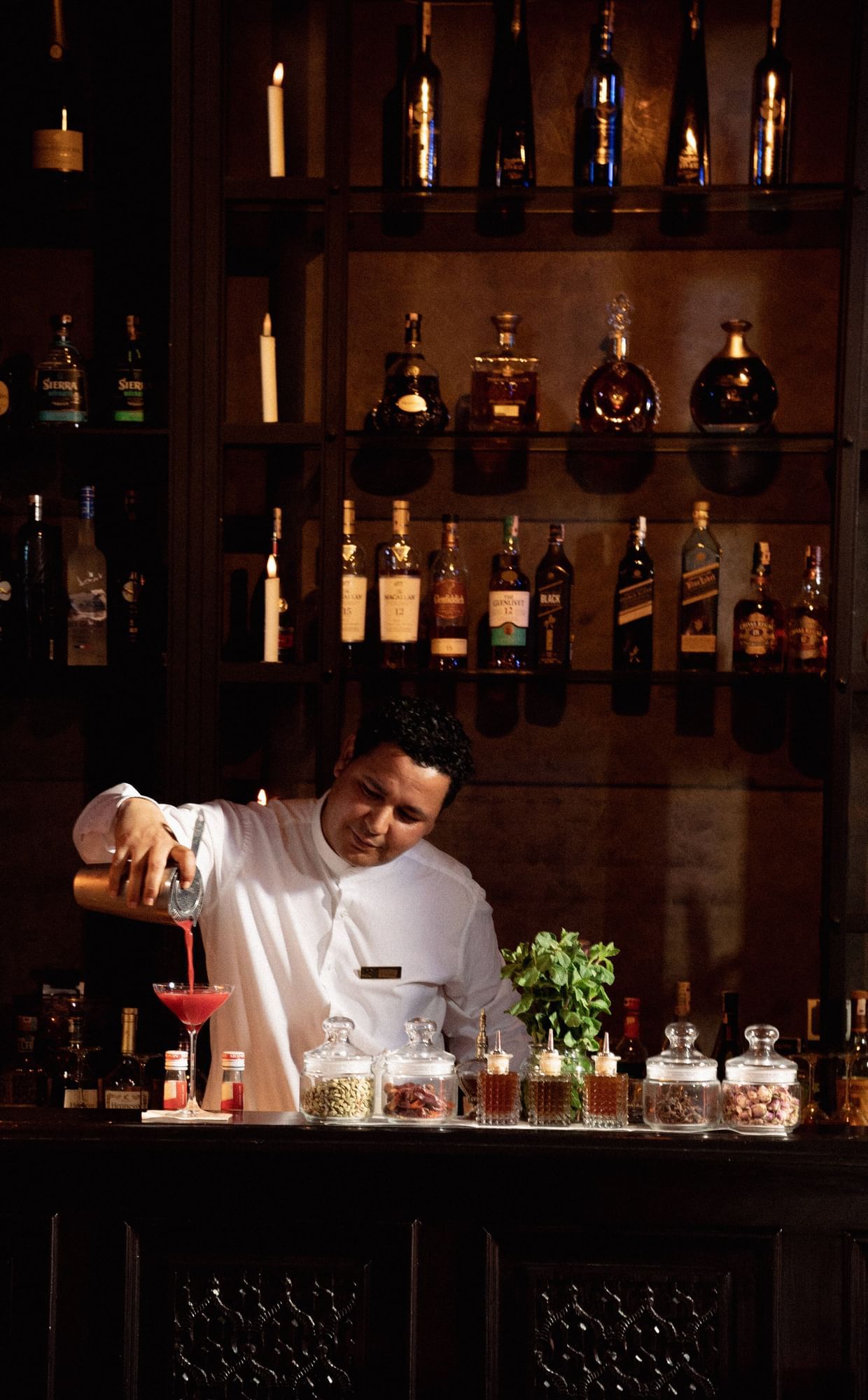
Le Bar Majorelle, for the more formal and scenographic kind of social. A grand room and garden terrace where luxury is part of the spectacle, and where seeing and being seen is part of the evening.
Ling Ling, for the most cosmopolitan and energetic kind of social. Music, cocktails and a polished international crowd make it a destination in its own right, beyond the hotel itself.
Three different souls of the same moment. The choice depends on the kind of evening.
You may also like…