Dinner and Show in Marrakech: 24 Festive Restaurants, from Belly Dancers to DJ Sets
Timence Guide Editors · Updated: 2 September 2026
From the palaces of Hivernage to the rooftops of the medina, a city that has never kept eating and celebrating apart: twenty-four addresses where dinner turns into the evening itself. In Marrakech something has been kept that most places have let slip: dinner and the party are not two separate parts of the same evening, they are the same thing changing shape while you sit there. You do not finish your food, pay, get up and go somewhere else. The room moves around you, at about half past ten, when the tagines go back to the kitchen, the Gnawa musicians take the floor of the 1930s villa at Comptoir Darna, and the people who were talking quietly an hour earlier are on their feet. This city has always done it this way, and it now does it with a range few places around the Mediterranean can match. Before you book, one thing nobody tells you, and it changes the whole night: many of these addresses run two seatings. The difference is not only the hour, it is that the show is not the same in both. Take the first and expect to give up the table when the second one arrives, and to move to the bar or on somewhere else entirely. Take the second and you walk into a room that is already warm, and you stay to the end. Shows generally start between nine and half past, so book for eight if you want to have dinner properly, and not eat while something happens around you. On price it is worth being clear, because this is the category where people get caught out. The band on each card is the average per person for food, drinks excluded: € up to 20 euro, €€ from 20 to 50, €€€ from 50 to 100, €€€€ from 100 to 150. Several of these places work from a set menu, and that figure covers the plate, not the cocktails that follow, which on nights like these tend to be several.They are listed alphabetically. Booking is never optional here and several rooms ask you to dress for it, which in Marrakech is part of the pleasure. Two addresses sit outside the walls on the Route de l'Ourika and three more are strung along Boulevard Mohamed VI in the southern city, so count on a taxi both ways. And if what you want is the same evening with the city underneath it, there are the rooftop terraces, bars and pools; if you want a long dinner in the open air with nothing staged at all, that is another list.
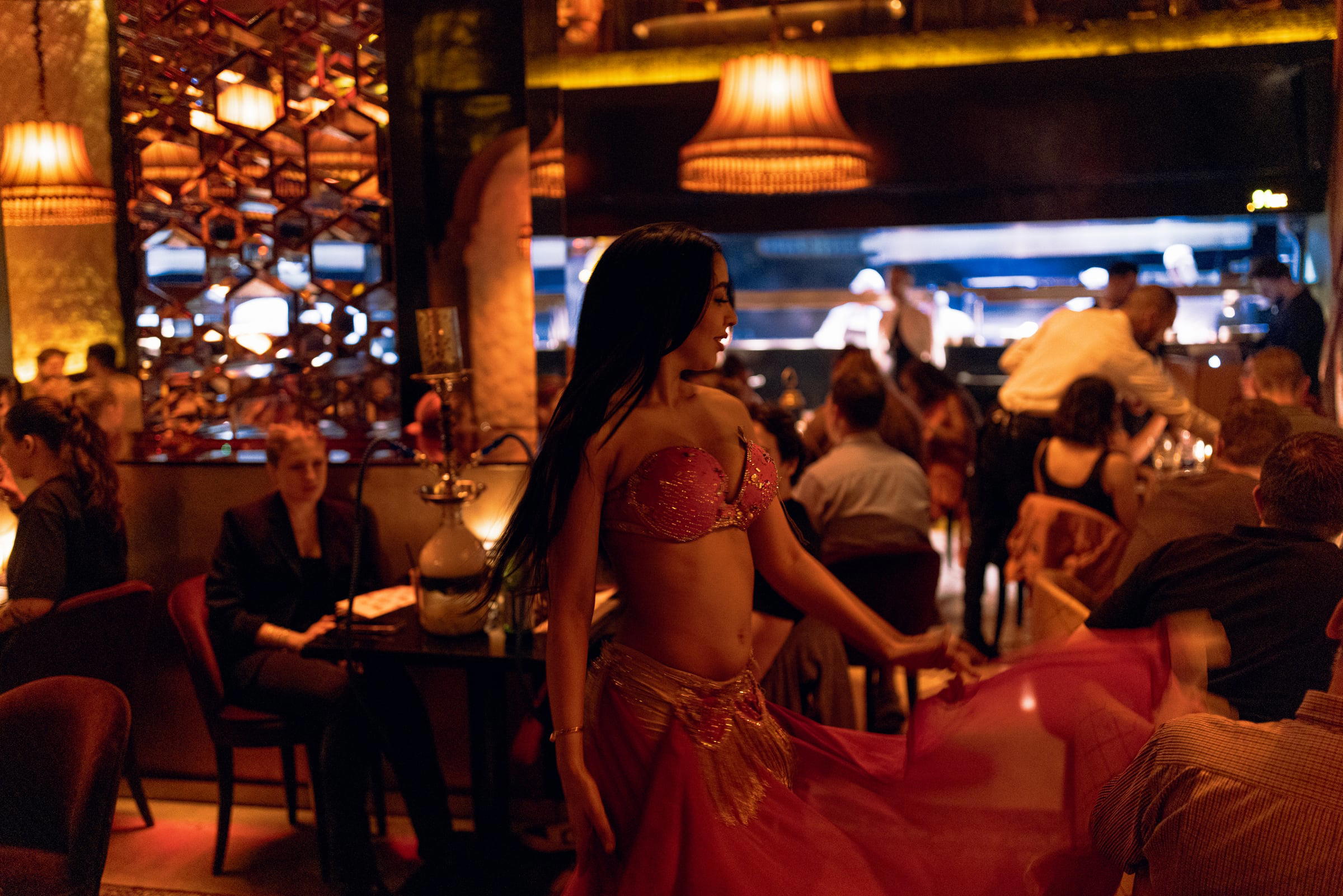
Nothing on Rue de Yougoslavie prepares you for what is behind the door, which is precisely the effect they were after. Inside, an oriental jewel box opens up: mirrored columns, extravagant fringed lampshades, quilted velvet walls and a red-tinged light that never quite lifts, spread over a ground floor and a mezzanine that both face the middle of the room. In the middle there is an oval counter, and that counter is the stage. The kitchen takes the tradition seriously, with generous mezze, charcoal-grilled meats and tagines made in house from seasonal local produce, while everything else in the room is built for the performance: belly dancers work it every evening and move between the tables, and if you come between Thursday and Saturday there is a live oriental orchestra as well, strings carrying over the voices.
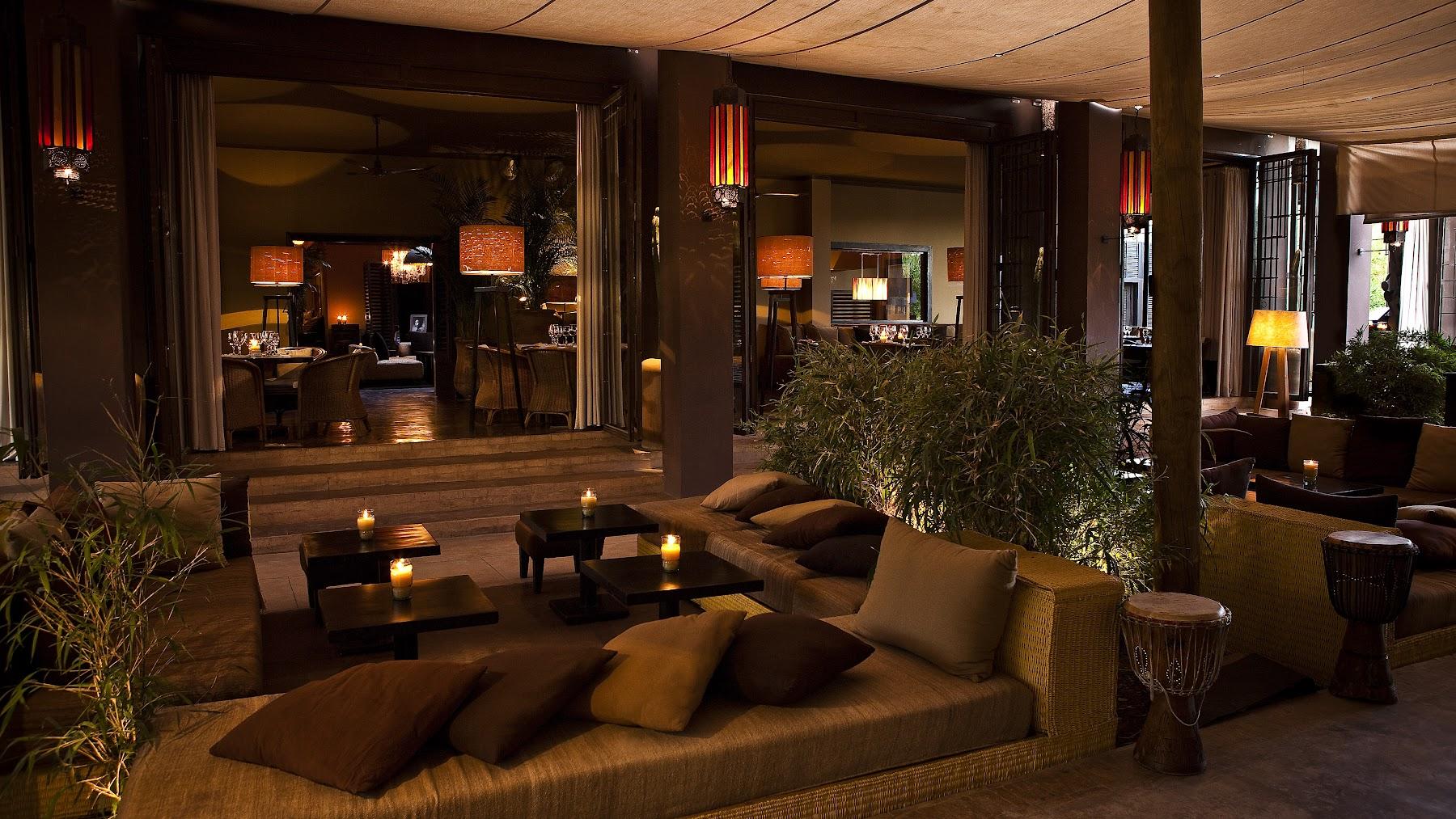
Just beyond the walls, a villa whose garden is strung with torches, fountains, tented lounges and small wooden bridges between islands of seating under the palms, while indoors there are warm salons with a contemporary fireplace for the months when Marrakech remembers it can be cold. The kitchen is pan-Asian and international, dim sum, wok-fired plates, teriyaki, Thai salads and satay, with grilled meats for anyone at the table still unconvinced. It opens every day, but midweek the evening stays calm: come from Thursday onward, when live percussion and guest DJs shift the lighting and the tempo, and above all when Le Salon du Bô Zin opens, the small club inside where the night carries on with the DJ after the garden has emptied.
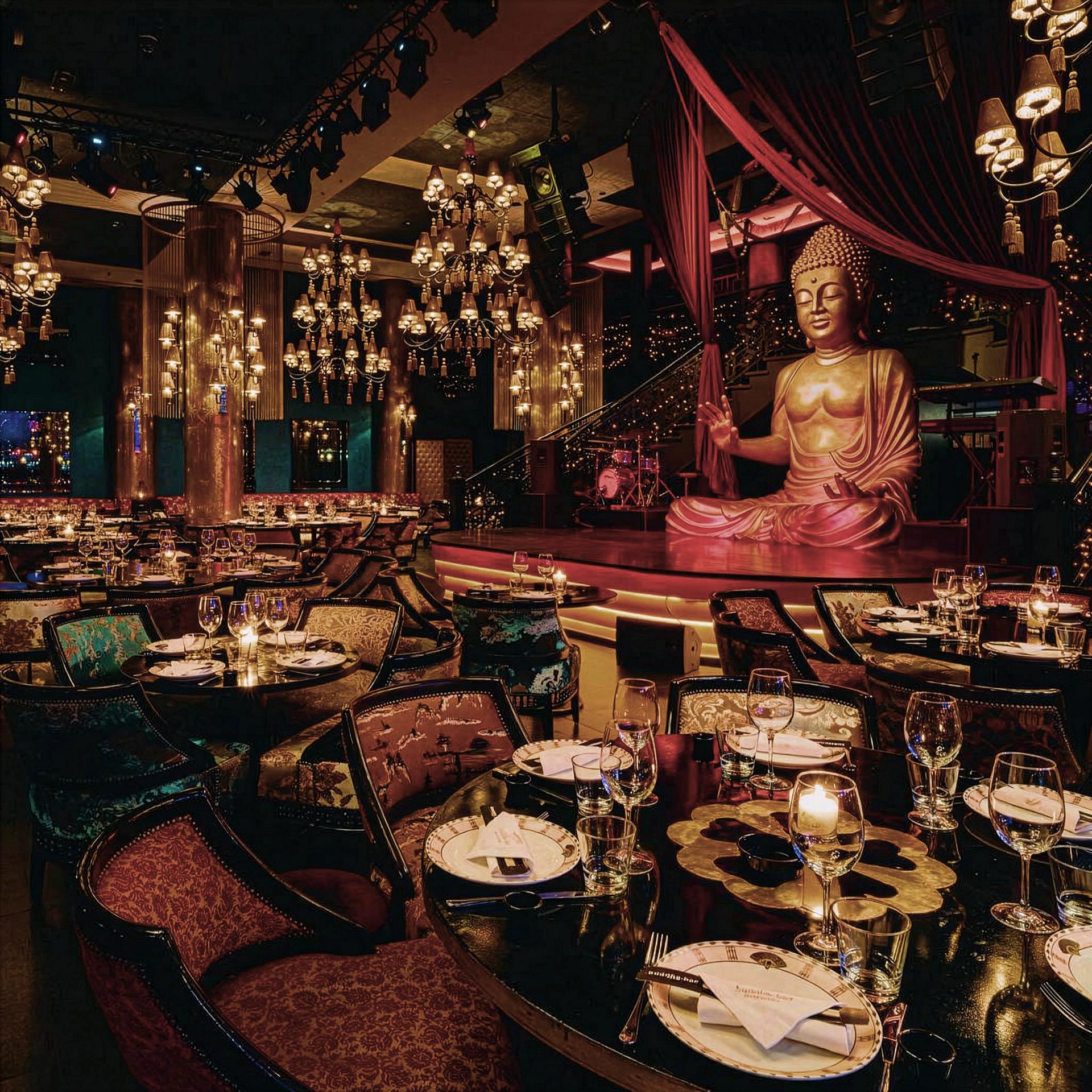
Fifteen hundred square metres over two levels and a four-metre Buddha imported from India to meet you at the door: the Marrakech chapter of the global brand makes no concessions on the formula and applies it with a conviction that ends up being its best argument. Carved wood, mirrors, filtered light, painted surfaces, a room designed to be looked at before it is lived in. The kitchen sends out a Pacific Rim menu holding together sushi, dim sum, wok-fired plates and curries, and the cocktails bring Moroccan ingredients into the international house style. The evening moves in short numbers, performers and dancers alternating so that they punctuate dinner without swallowing it, and in between the resident DJ threads through that lounge sound the brand has made recognisable across thirty cities.
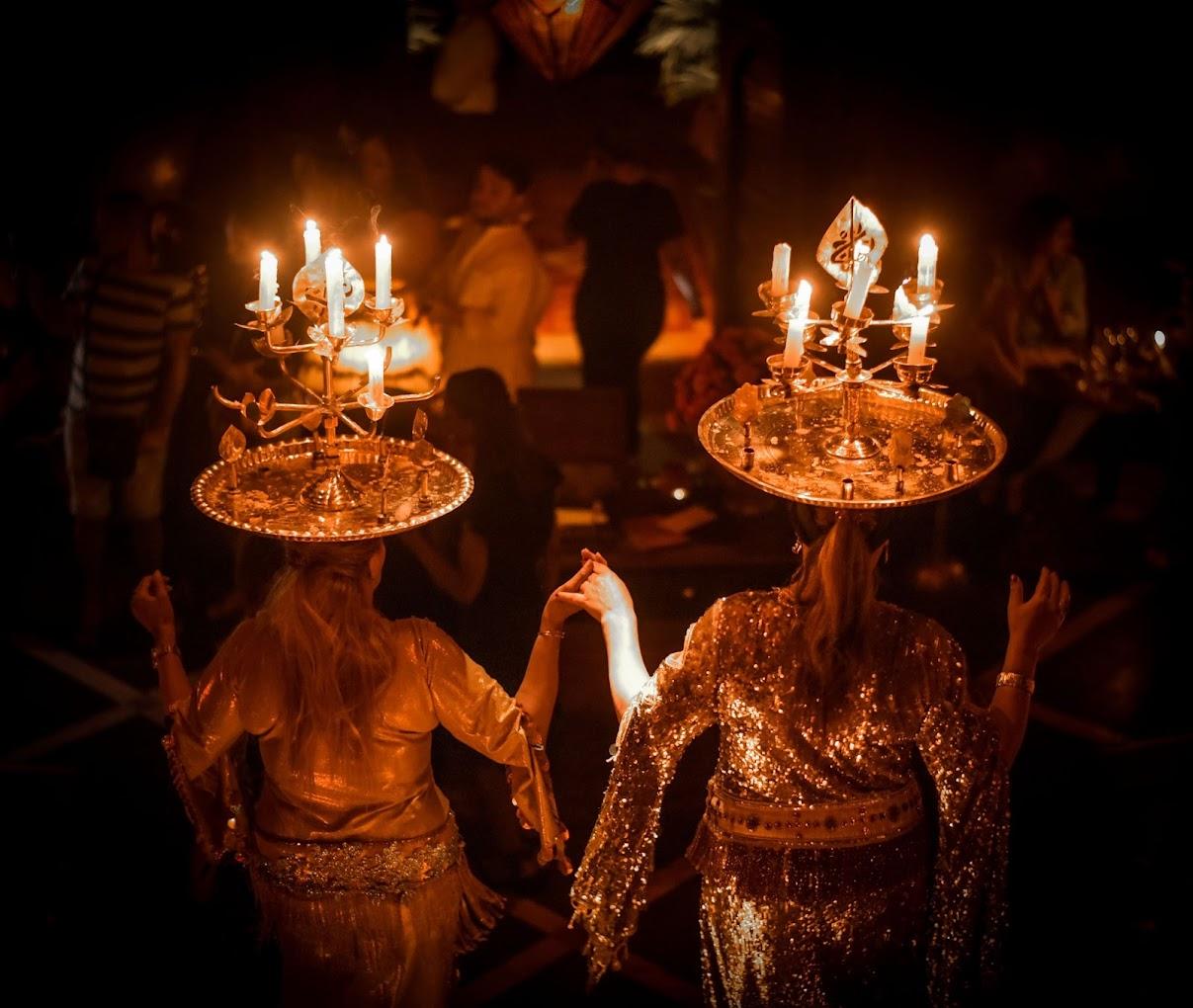
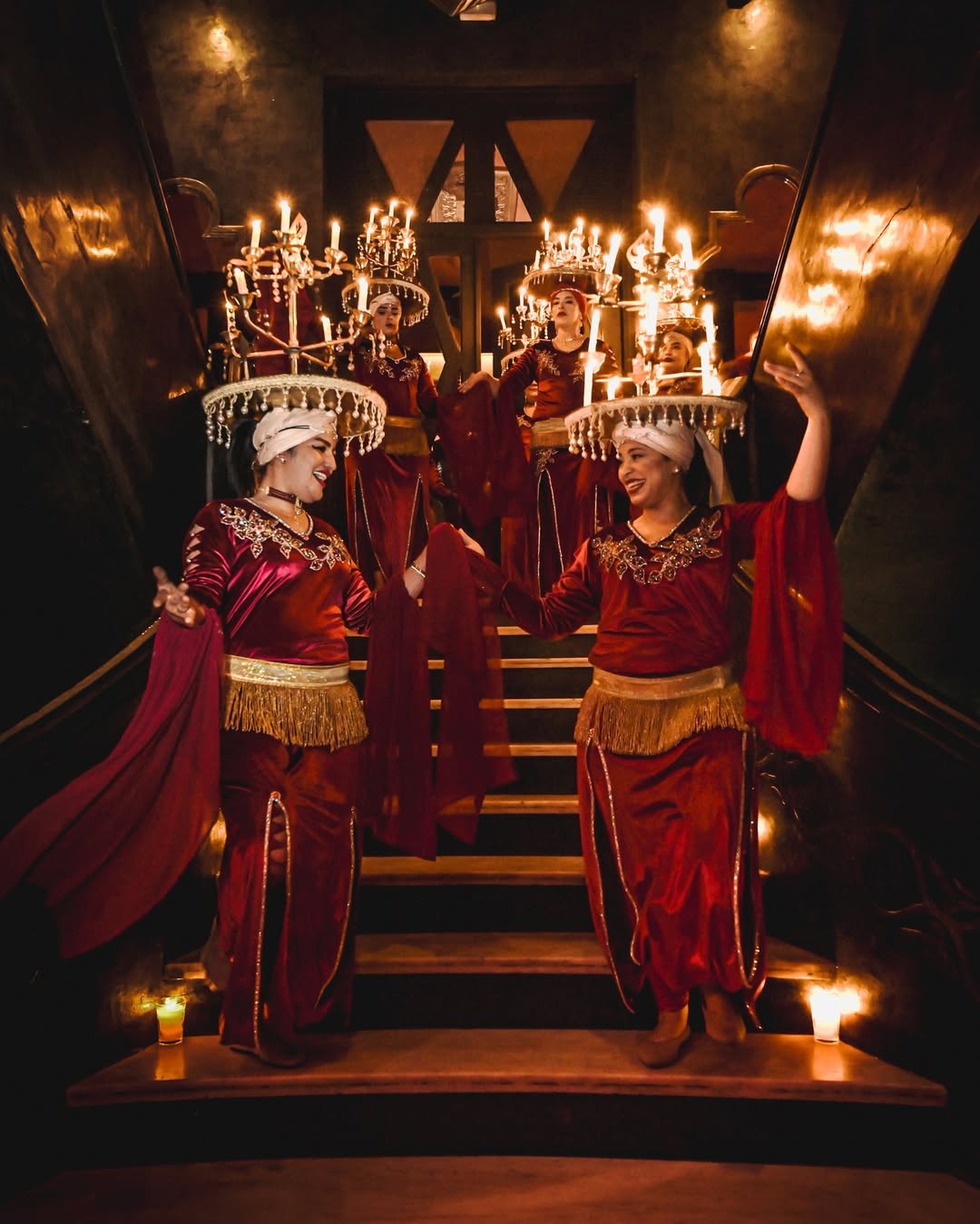
If you want to understand where all the rest of this comes from, start here. The 1930s villa on Avenue Echouhada has been setting the rhythm of Marrakech evenings since 1999, and it is the address that invented the category in this city without ever settling into looking back at it. Darna means our home, and the promise is kept with a theatricality you see at once: crimson walls, gilded accents, geometric arches, candles everywhere, palm shadows moving overhead. Dinner is Moroccan and Mediterranean, tagines that have been on the fire for hours, and anyone wanting a lower register can ask for the ground-floor terrace. There are two shows here, one per seating, so the evening you get depends on the hour you book: at about half past ten the musicians set the rhythm and the dancers take the floor, and from then on nobody is really eating.
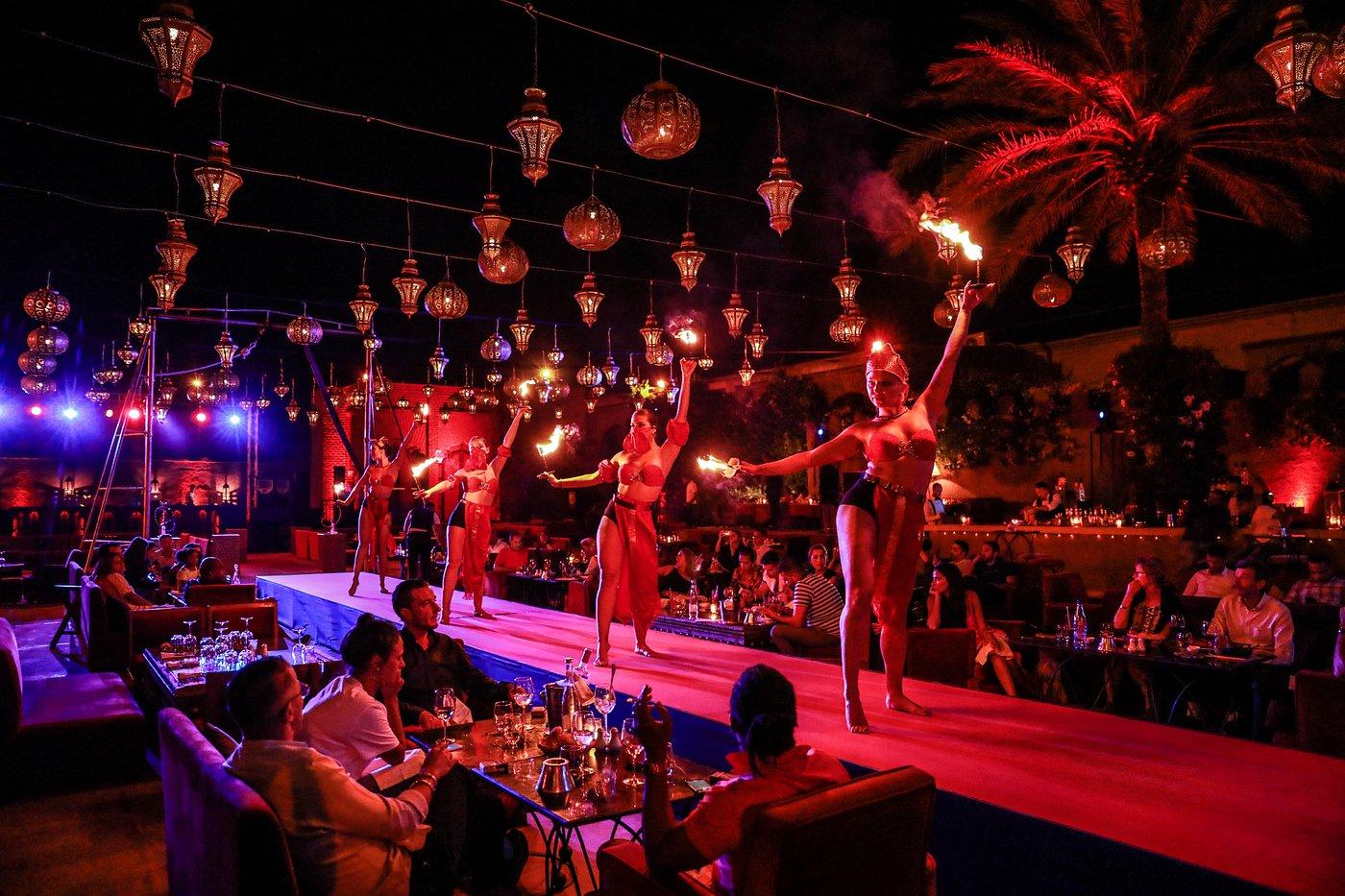
Ten minutes south of Jemaa El Fna stands a building that refined sugar for the Saadians in the sixteenth century, and the stonework and vaulted arches of the main hall still say so: soukkar, in Arabic, means sugar. Since 2016 that same space has been one of the most ambitious dinner shows in the city, and the first thing that hits you is the scale of everything, ochre brick, towering colonnades, chandeliers, a covered terrace and then another 1,200 square metres of terrace in the open air. The kitchen moves between Moroccan, Asian and Mediterranean and you can take it a la carte or as a set menu, but the heart of the evening is the central courtyard, where the programme never stops: oriental dance, Gnawa rhythms, fire, well past midnight. Dress for it, the room responds.
Km 3,5، Nouvelle Zone Touristique، Route de l'Ourika، مراكش 40000, Morocco
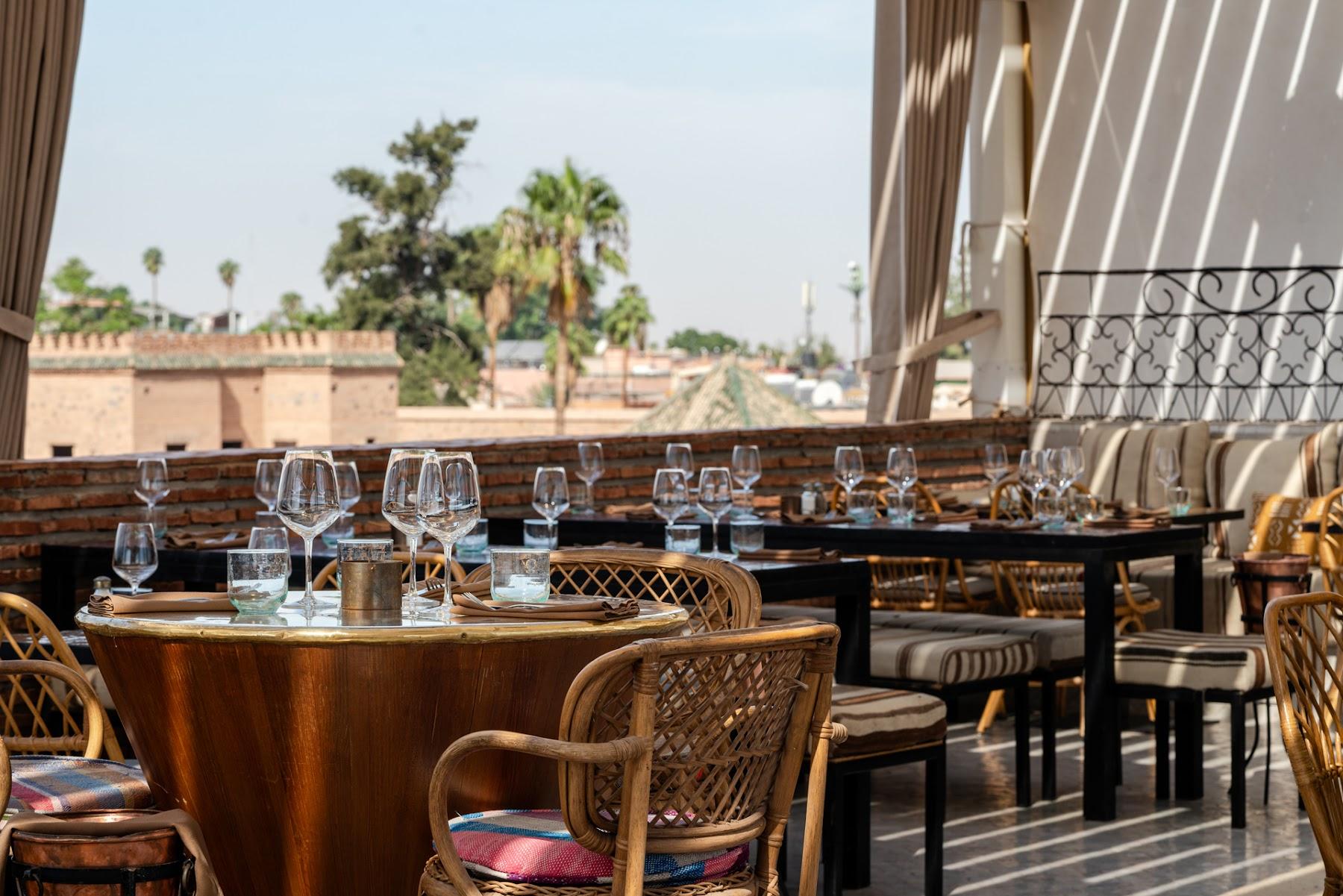
A few minutes on foot from Jemaa El Fna, one building on Riad Zitoun Lakdim stacks a restaurant, a cocktail bar and an open-air rooftop, and the rooftop is why you book: the Koutoubia minaret straight ahead, the medina roofline below, the Atlas closing the horizon, and one of the best sunsets in the city. Dardar is also one of the rare addresses inside the old walls licensed to serve alcohol, and it has earned the privilege with a cocktail list built on local botanicals and Mediterranean flavours. The Pink Couscous, which is how you will find it written on the menu, the tangia and a long run of sharing tapas are built to keep pace with a long evening. Musicians and performers arrive later, then the resident DJ carries the room to closing.
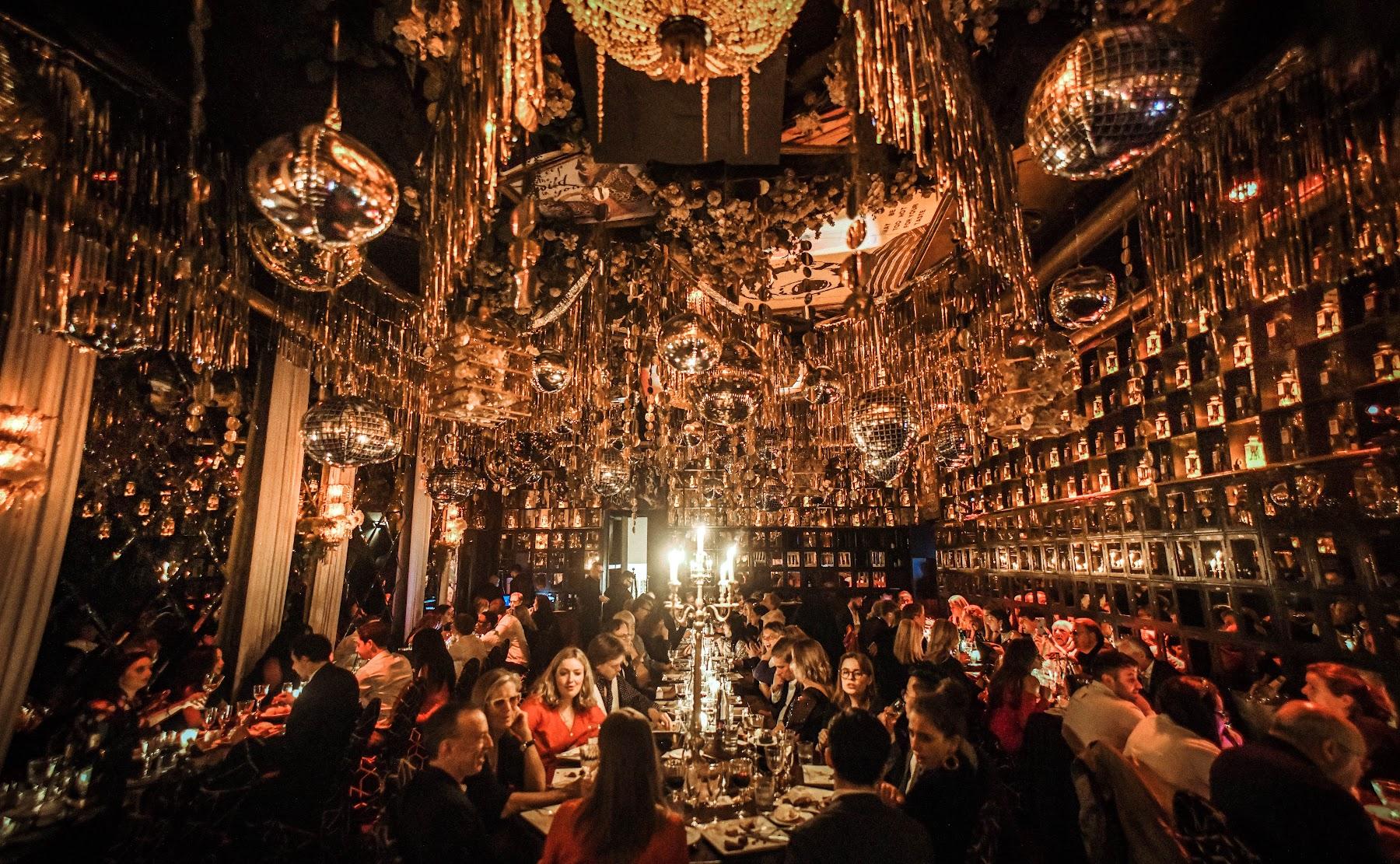
This is the one that runs latest of them all. You need a bit of nerve to walk through the Casino de Marrakech, inside the Es Saadi resort, and just as you start to think you have taken a wrong turn a room opens up in 1950s cocktail glamour, crystal chandeliers, large mirrors, mahogany, the light kept deliberately low. A second space opens onto the resort gardens, under illuminated palms. The cooking is international with French and Mediterranean leanings, indulgent, written for a table that has already decided to stay a while, and you can eat until three in the morning, which in this city is close to an anomaly. The resident band plays soul, funk and standards with enough force to move the room, the performances alternate with the DJ, and it runs to closing. One practical warning: no minors, and what you wear counts.
Rue Ibrahim El Mazini Es Saadi Marrakech Resort، Rue Hafid Ibrahim, Marrakech 40000, Morocco
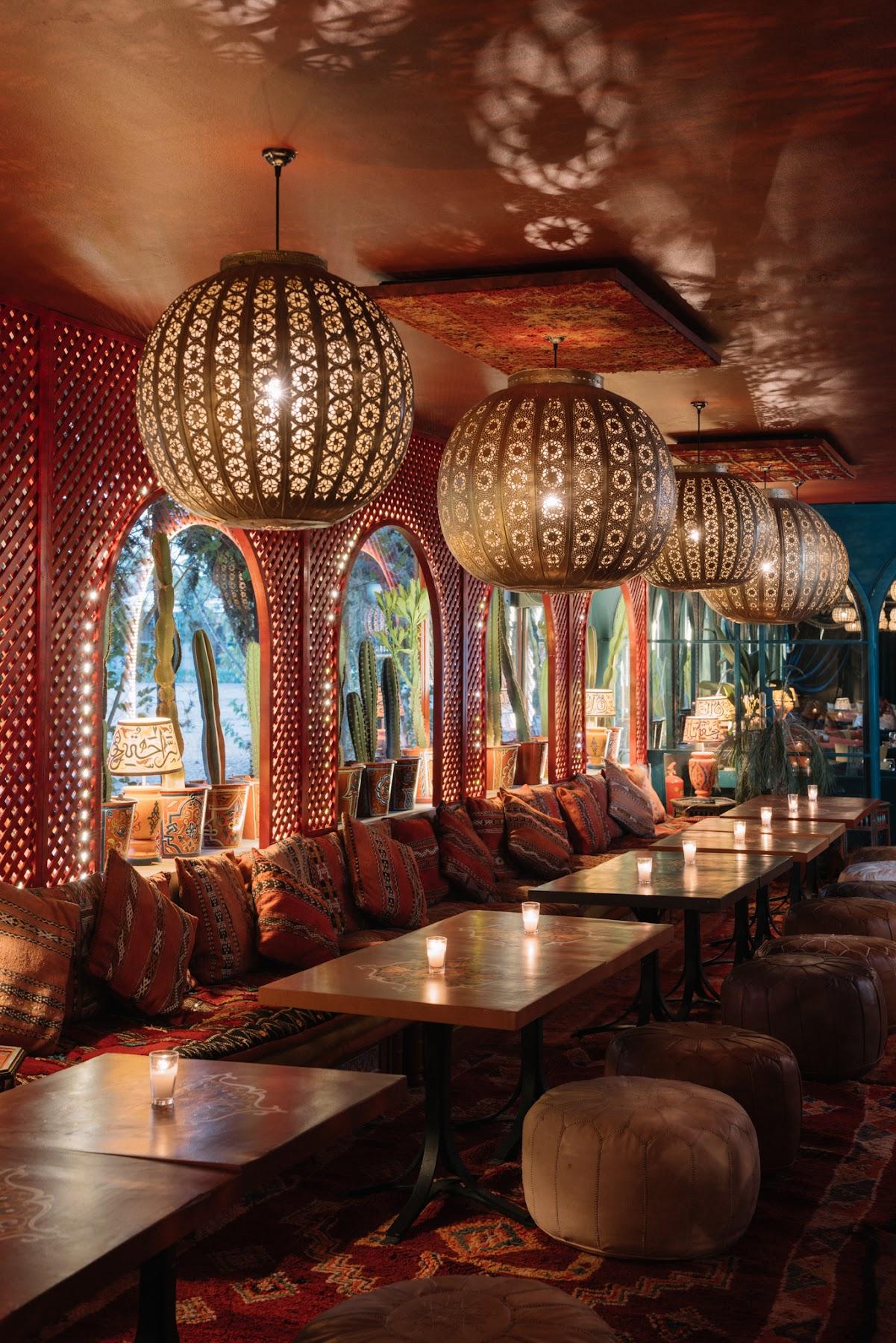
This is where Marrakchis book when there is a birthday to celebrate, and you can feel it as soon as you walk in. The room in central Gueliz is dressed like a desert kasbah, carved screens, layered carpets, lantern-lit banquettes arranged around a stage, and the evening arrives in orderly waves: a live band first, then Gnawa musicians with their krakebs and rolling bass lines, then belly dancers, then a DJ who pulls it into the early hours. The kitchen stays close to tradition, tagines, couscous, grilled meats, with a tasting menu beside the carte. What sets Folk apart from everything else here is the crowd, heavily local, and the way that crowd sits at a table: convivial, unself-conscious, in no hurry to leave. If you want to hear your own table, ask for the second room at the back.
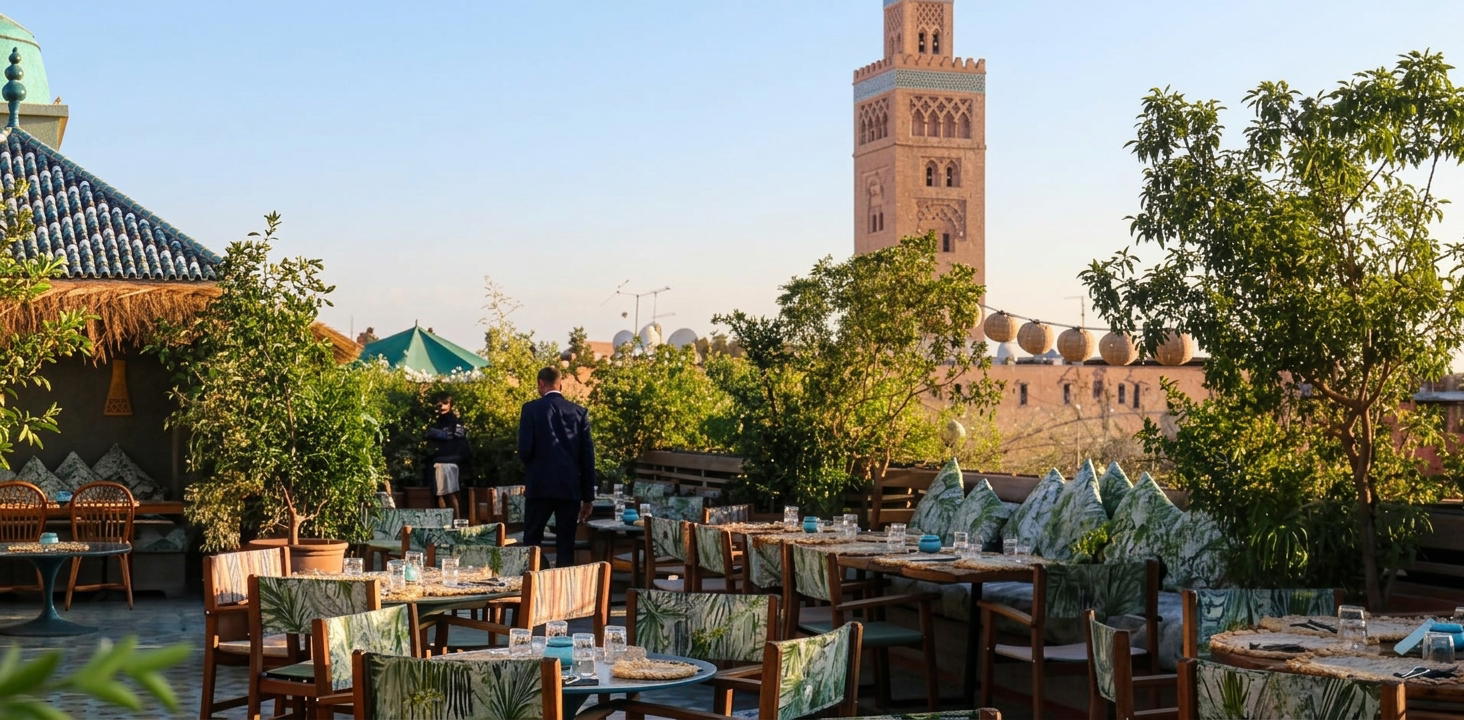
On this rooftop at the edge of the medina the lit Koutoubia minaret becomes the centrepiece of every table, and everything else is arranged to agree with it: palms, rattan furniture, jungle-print fabrics, brightly coloured banquettes, and an indoor cabana bar for when the air cools. An Ibiza-born chef directs a Mediterranean carte with Latin and Asian detours, sharing plates, sushi from a dedicated chef, tapas, and the truffle and parmesan fries people now order without reading the menu, while a full-time mixologist keeps an ambitious cocktail programme running behind the bar. The curated DJ sets build through the evening and the live nights rotate through jazz, salsa and electronic. Pick the one that sounds like you, because whichever night you choose you will find a crowd and an appetite for the party.
Kissariat Ben Khalid R'mila, 1 Rue Fatima Zahra, Marrakesh 40000, Morocco
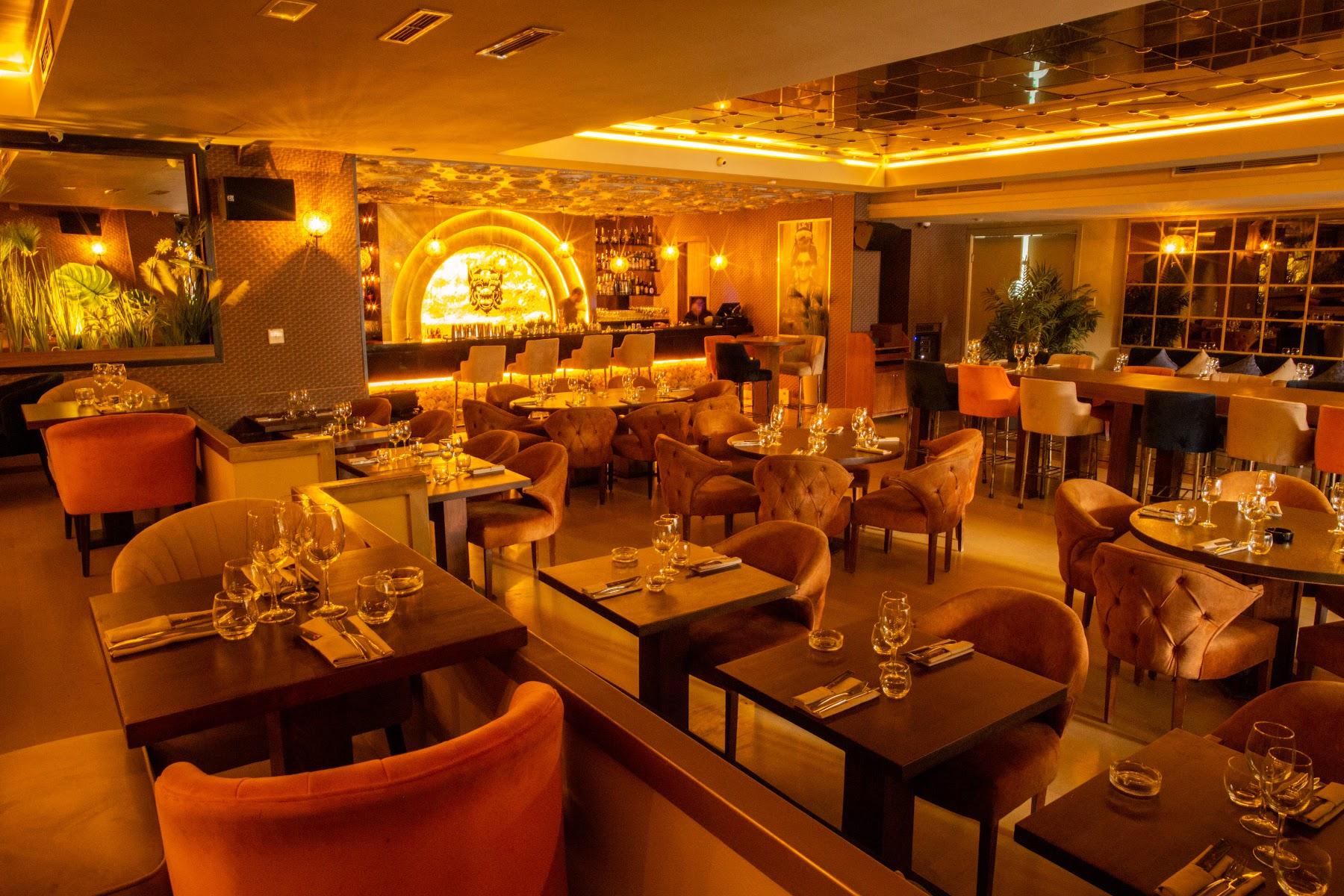
The name comes from the Koya-San massif in Japan, the menu from most of the continent: sushi, wok dishes, ceviches, sharing plates that reward a table ordering without caution. The room on Avenue Echouhada is dark, sleek and contemporary, and there is a terrace outside for the calmer half of the evening, because every night here follows the same deliberate arc from a seated dinner toward something a great deal louder. A resident DJ builds the soundtrack while live saxophone and percussion cut across the room, and at weekends Gnawa musicians add the Moroccan pulse this pan-Asian setting would otherwise lack entirely. Portions are refined, so plan on ordering more than you think you need.
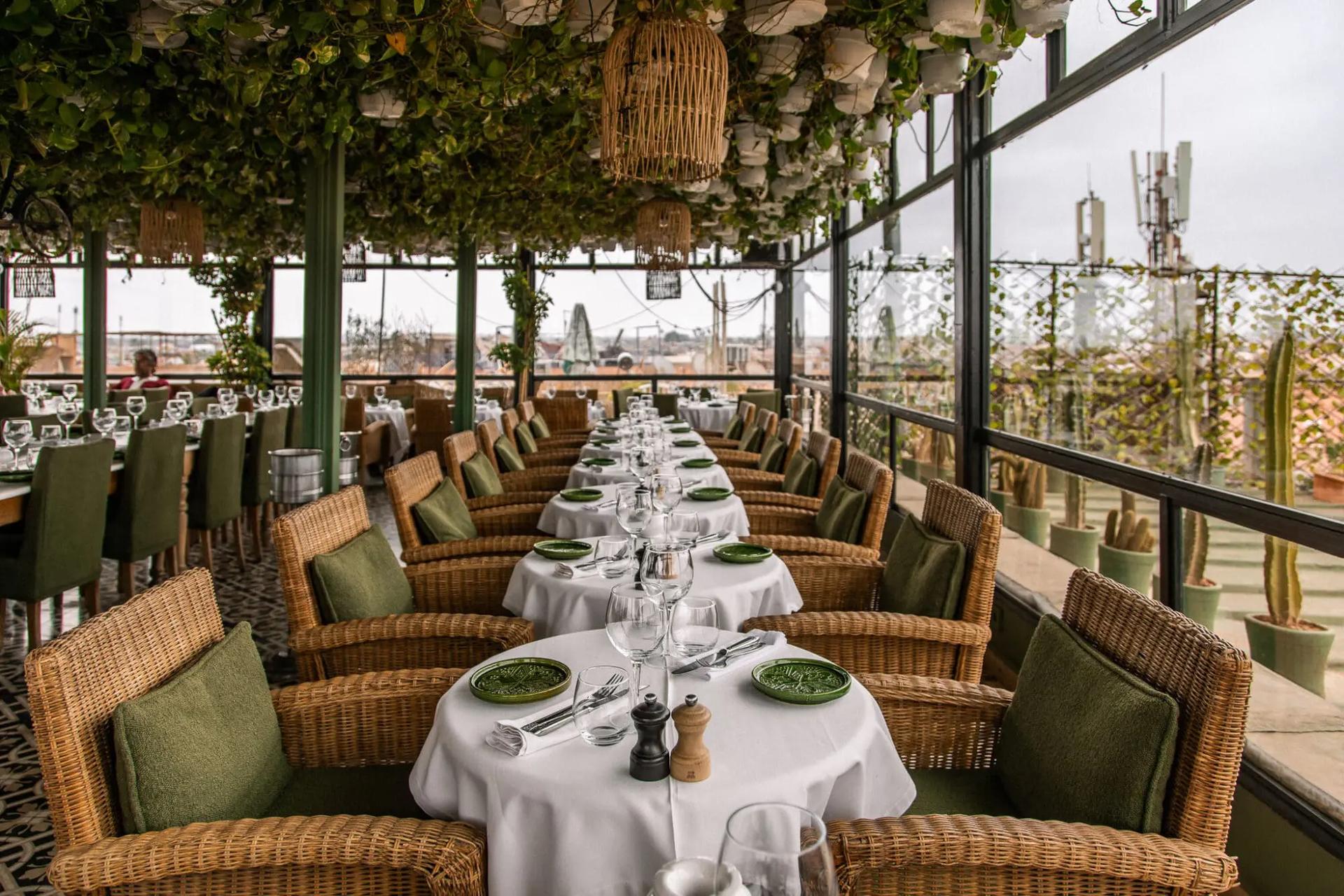
Three floors above Rue des Banques, a narrow turning a few steps from Jemaa el Fna, and each floor is a different evening you can pick according to your mood. The lower rooms are dressed for old Casablanca: moucharabieh screens, leather armchairs, a library wall, banana plants reaching for the ceiling, and a grand piano that a local musician plays as service opens. This is where you order the tanjia marrakchia, slow-cooked in its earthenware urn, or the lamb shoulder. Climb higher and the Sky Bar terrace runs out across the medina to the minarets and the Atlas behind them, with a house cocktail of gin, lemon juice and orange blossom water. As the night deepens the belly dancers move through the dining rooms, and the doors stay open until two, which very few addresses inside the medina can say.
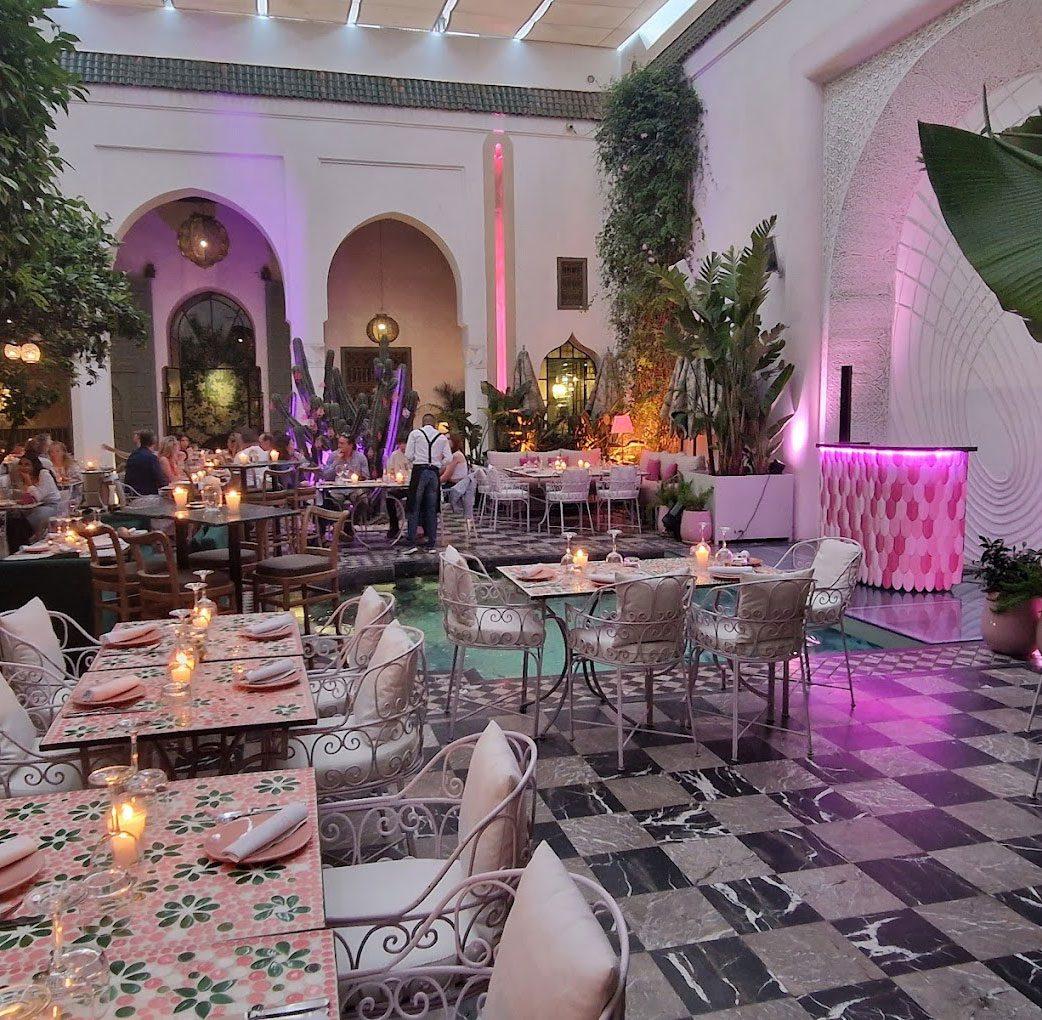
At the end of a narrow derb in Dar El Bacha, a valet is the only sign that a nineteenth-century princely residence sits behind the door, and once you are through it you understand why someone has to point it out. The patio is enormous: a black and white marble checkerboard, a square of orange trees at its centre, a pond flanked by towering cacti and living plant walls, low sofas in powder pink and soft green, a pink-arched bar under an oversized chandelier and a matching DJ booth looking over the tiled pool. Clarisse Jolicoeur, a Mexican-Canadian chef, brings her own heritage to the plate with conviction: panko and coconut shrimp tacos, tuna tostadas with spicy mayo, beef tartare with truffle, lobster rigatoni. By day it is a garden lunch with cold-pressed juices. After dark the resident DJ lays deep electro over the room and the live Gnawa-inflected sets begin.
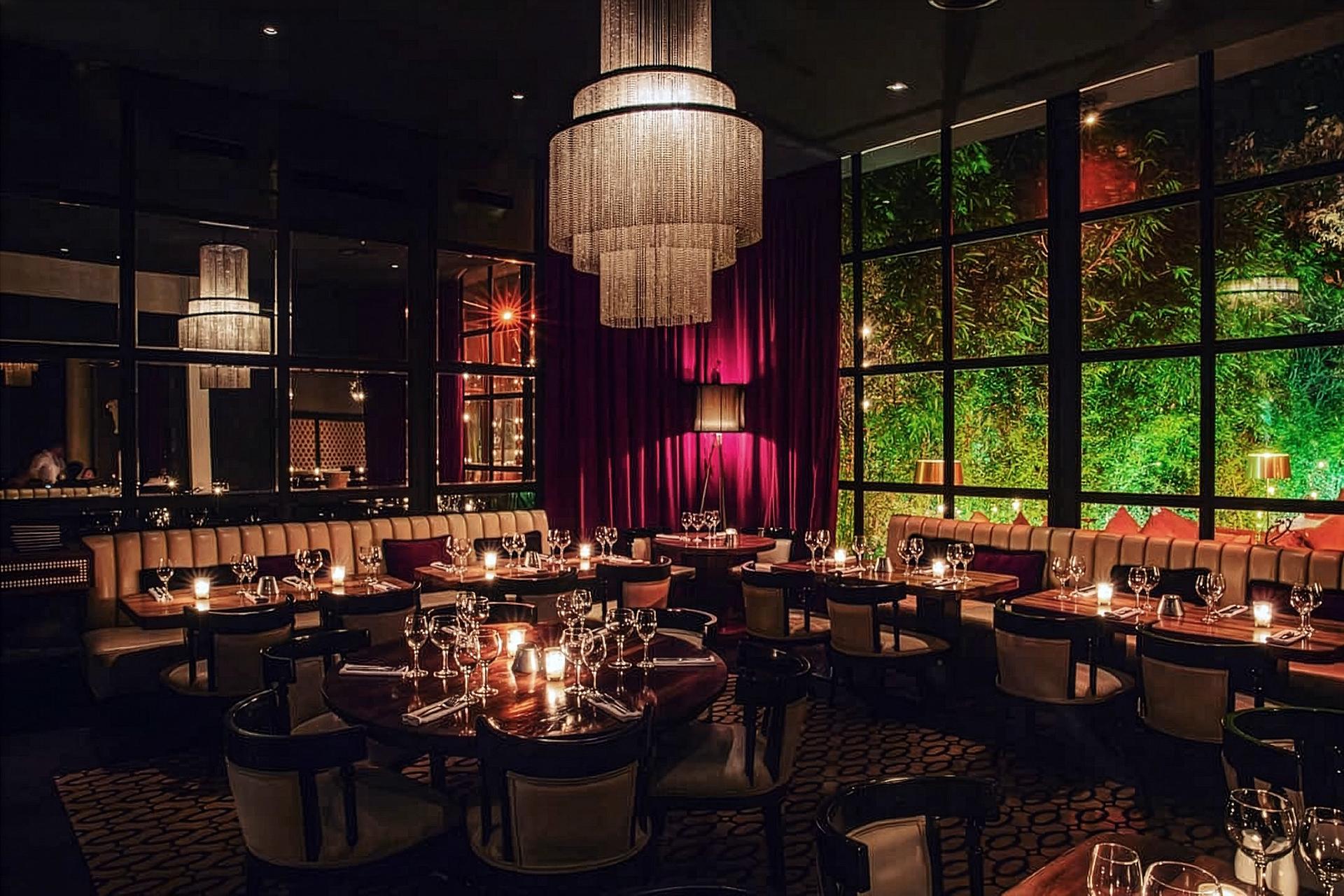
A 1930s villa on Rue Ahmed Chaouqi, running since 2009 and recently reworked by the designer Antoine Van Doorne, who sharpened the Art Deco bones without touching a formula that already worked. What you come for is the Revue Oh La La, and it is a properly built show rather than a few numbers slipped between courses: belly dancers, fire performers, aerialists, circus acrobats, singers and guitarists cycling through musical tableaux while the plates arrive. The plates, it should be said, are better than the format usually delivers, with sushi and sashimi alongside beef fillet carpaccio with black truffle, blue lobster and tarragon penne, John Dory, and a royal couscous with seven vegetables. The tiramisu with hazelnut cream is what the regulars come back for. When the revue ends the resident DJ takes over and the room shifts from cabaret to club.
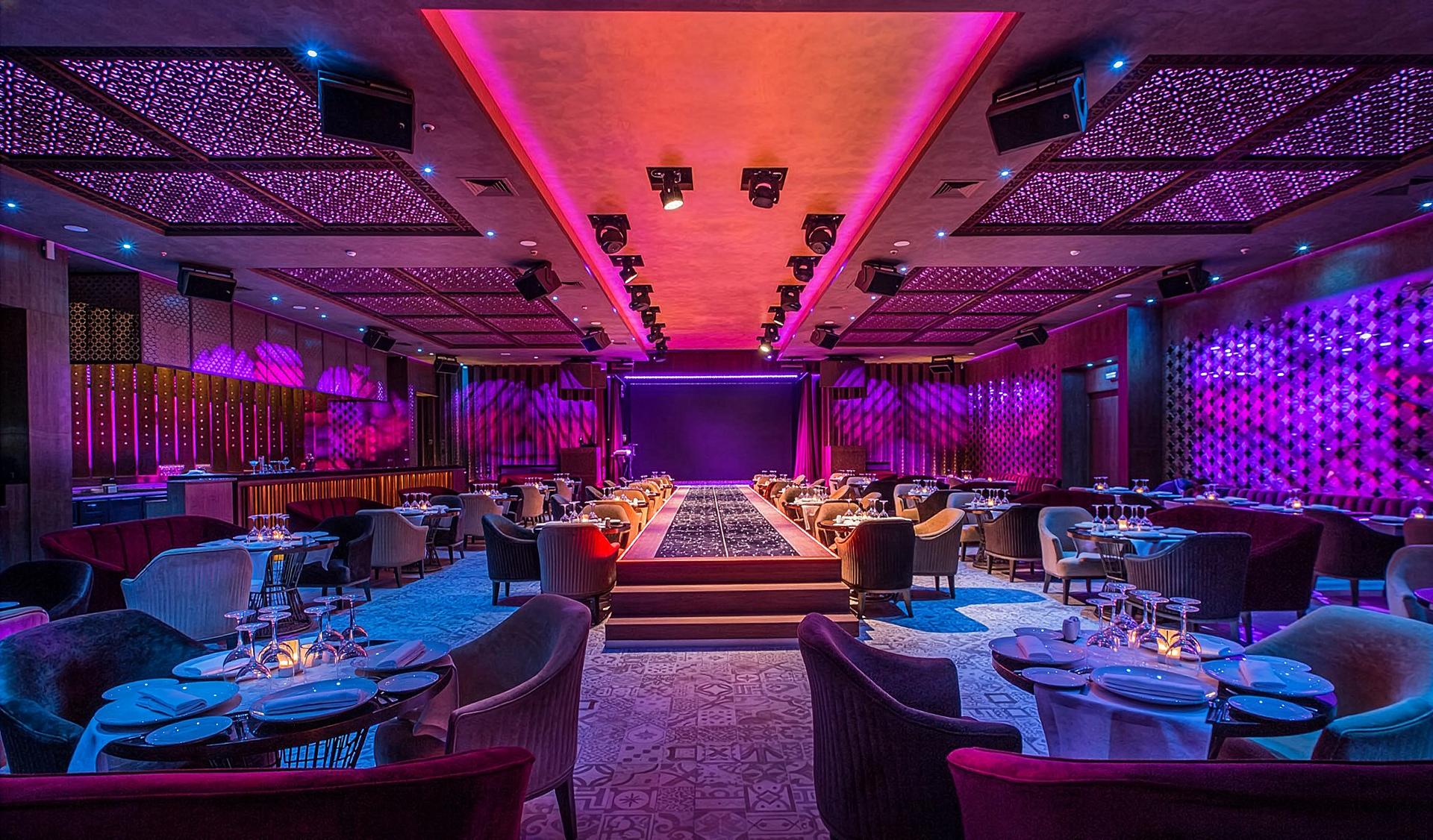
Behind this one is chef Zakia, who rewrites the set menu every week and almost always opens it with a pastilla worth the trip out to the corner of Boulevard Mohammed VI and Boulevard de la Menara on its own. You go up to the first floor, where the terrace gives you the Atlas on one side and the city lights on the other. The arrival is choreographed from the pavement, valets taking the car, attendants holding the lift, hostesses walking you in, and inside Art Deco glamour meets Moroccan warmth around a central stage. From there a live band alternates Arabic, French and English sets while dancers and performers work the room, and the food keeps arriving: beef fillet with cep jus, slow-cooked tanjia, duck in sweet sauce. For anyone not ready to call it a night there is the shisha lounge.
Intersection entre Bd Mohamed 6 et Bd de la Menara, 1er étage, N°16, Marrakesh 40001, Morocco
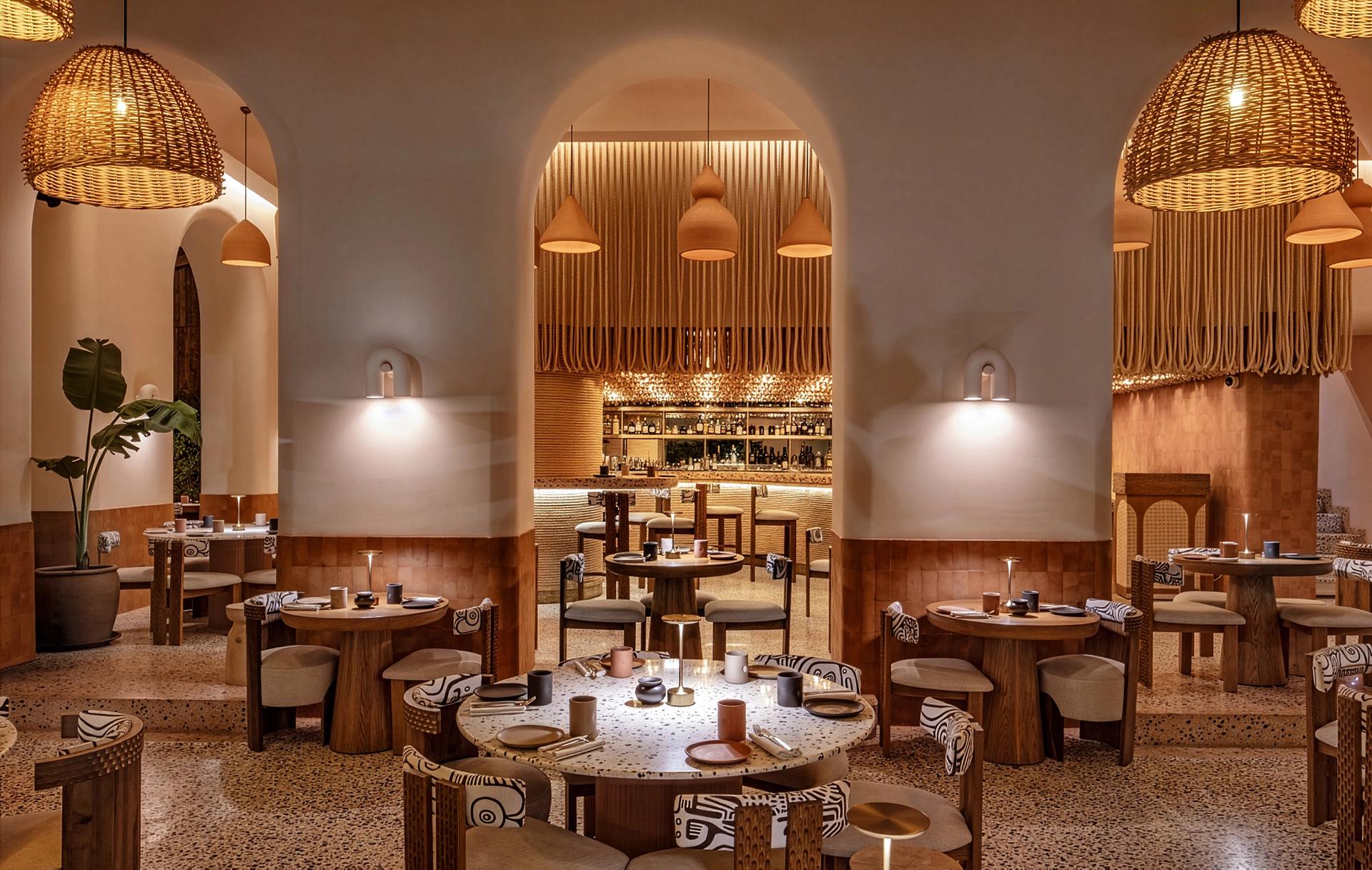
Mizaan opened on Avenue Mohammed V in September 2024, the second address from the team behind L'Mida in the medina, and the name means balance, which you can see before you sit down. Local artisans built the room in bejmat, wicker, clay and sculpted plaster over terrazzo floors, drawing on the city's vernacular architecture and staying well clear of the orientalist pastiche that would have been so easy here. Order widely and for the middle of the table: the Mizaan Roll, brioche filled with crab and prawns, the ceviche bar, the ravioles zaalouk, the salade folle, the naan au fromage, the pizzetta on tafernout bread, the grilled octopus with artichokes. The chocolate dessert is the best in the city. The early part of the evening is conversation, a DJ takes over after nine, and past eleven those who know the house walk through the kitchens and down to the speakeasy.
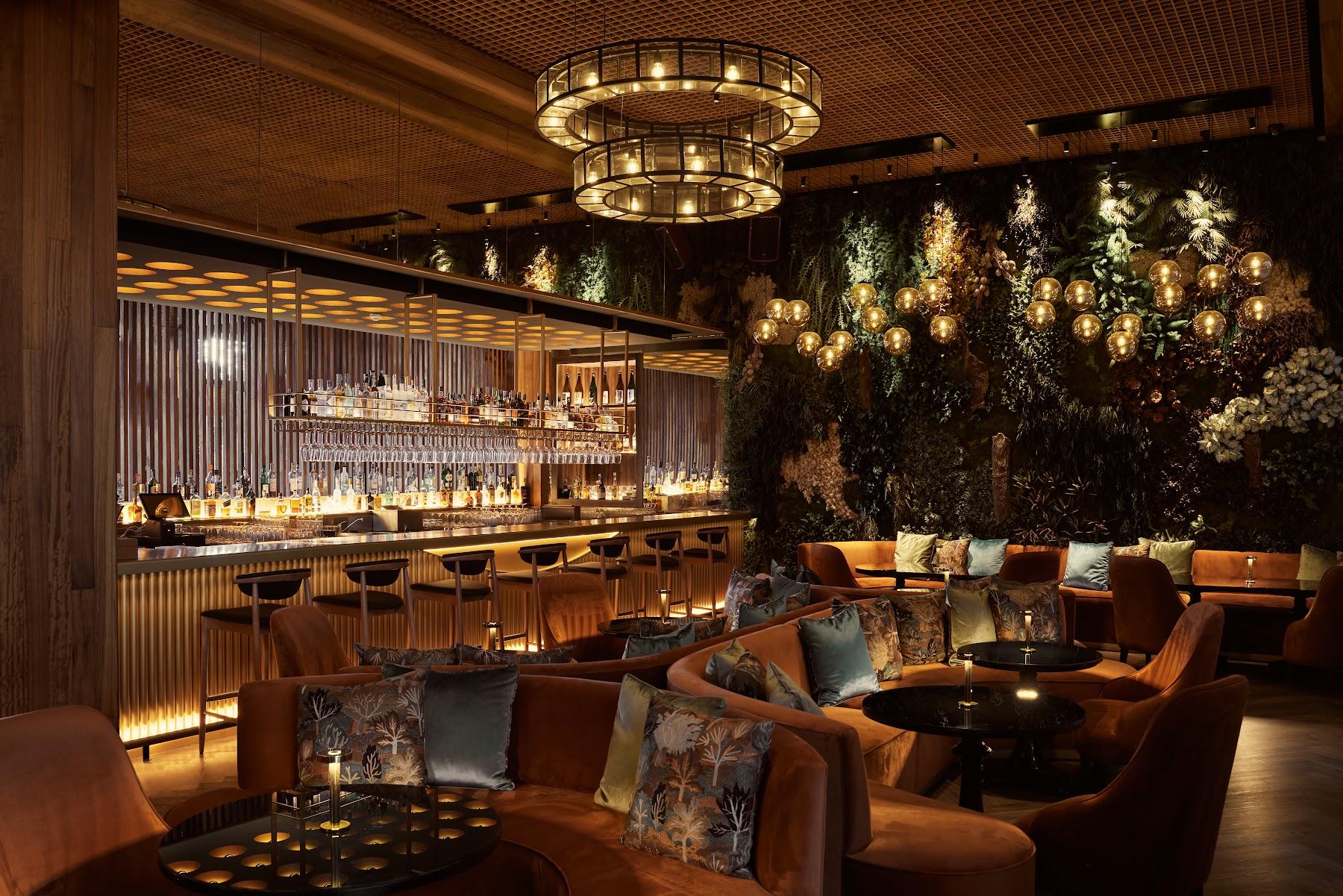
The first Nobu on the African continent takes an upper floor of the hotel, wood-clad and sleek, with the Atlas in the windows, and it delivers exactly what the name promises. The black cod miso, marinated in den miso for days before baking, arrives with the precision it has in London or Tokyo. The yellowtail sashimi with jalapeño keeps its clean edge. The rock shrimp tempura, tossed in creamy spicy sauce with yuzu and shiitake, is still the order you cannot get wrong. What lifts this one above straight replication is a thread of Moroccan ingredients running through the seasonal creations without disturbing the Japanese-Peruvian framework. The dining room stays a dining room all evening: if you want it to become something else, the Bar and Lounge is next door, tangerine sofas and low light, with DJs on Thursday, Friday and Saturday.
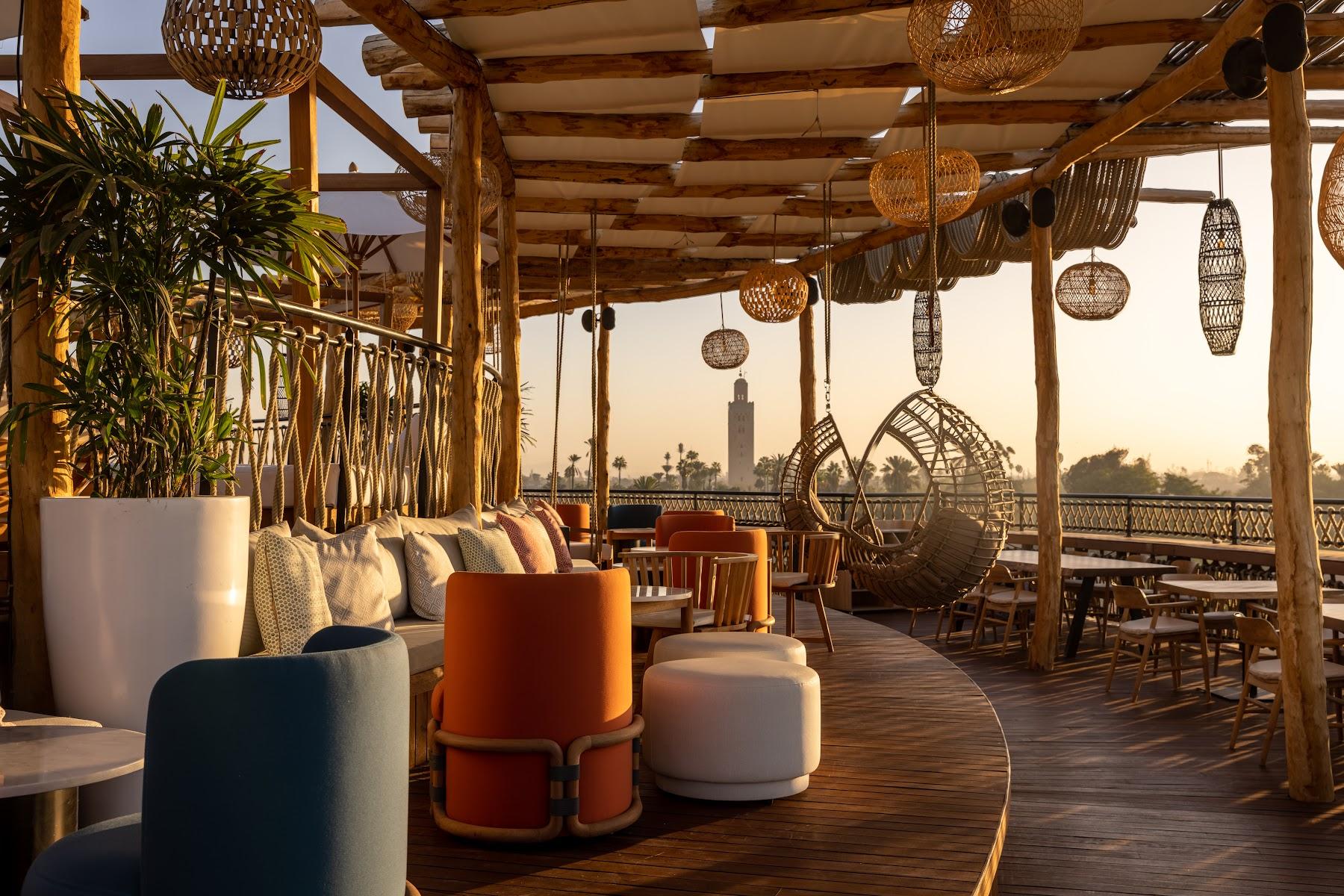
One floor above the restaurant, the same hotel runs a proposition that has almost nothing in common with it: a circular all-season pool at the centre, cabanas, a sundeck, lounge seating, and 360 degrees of the Red City with the Atlas range behind. Up here the kitchen turns Mediterranean and Moroccan, grilled fish, seasonal salads, locally inflected plates, with a dedicated sushi bar working through the afternoon. The drink in your hand is half of why you came, particularly at sunset when the light over the medina skyline softens and the music starts to climb: international and local DJs play through the evening and the terrace shifts from poolside to rooftop party. Non-residents can book. Elegant casual, and no shorts.
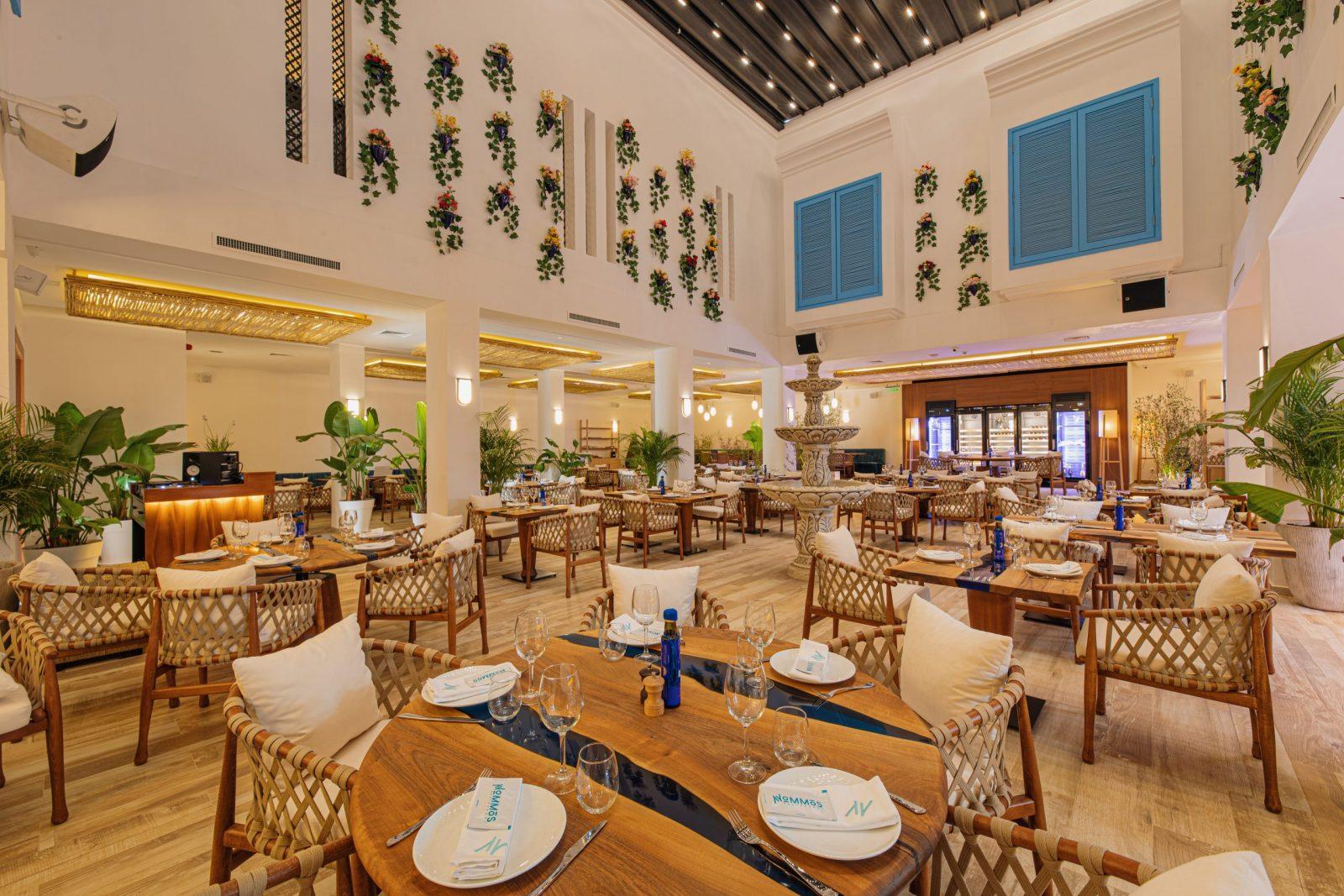
On Boulevard Mohamed VI the first show starts before the real one, and it is the open kitchen: a brigade working in full view, a sushiman at one end and aged Black Angus and Wagyu at the other, from Moroccan, French and Australian farms. Nommos sends a Mediterranean steakhouse and a sushi counter off the same pass, and for tables that land between the two there are truffle rigatoni, sesame-crusted salmon and grilled prawns in Thai sauce. Then the room fills with people: musicians, vocalists, dancers, percussionists, gnawa artists and acrobats rotate through all evening, and from Thursday to Sunday a violinist, a saxophonist and belly dancers join them. If the night is going well, go up a floor, where the Sky Lounge opens onto the roof with resident DJs, the panoramic view and a list written for what comes after midnight.
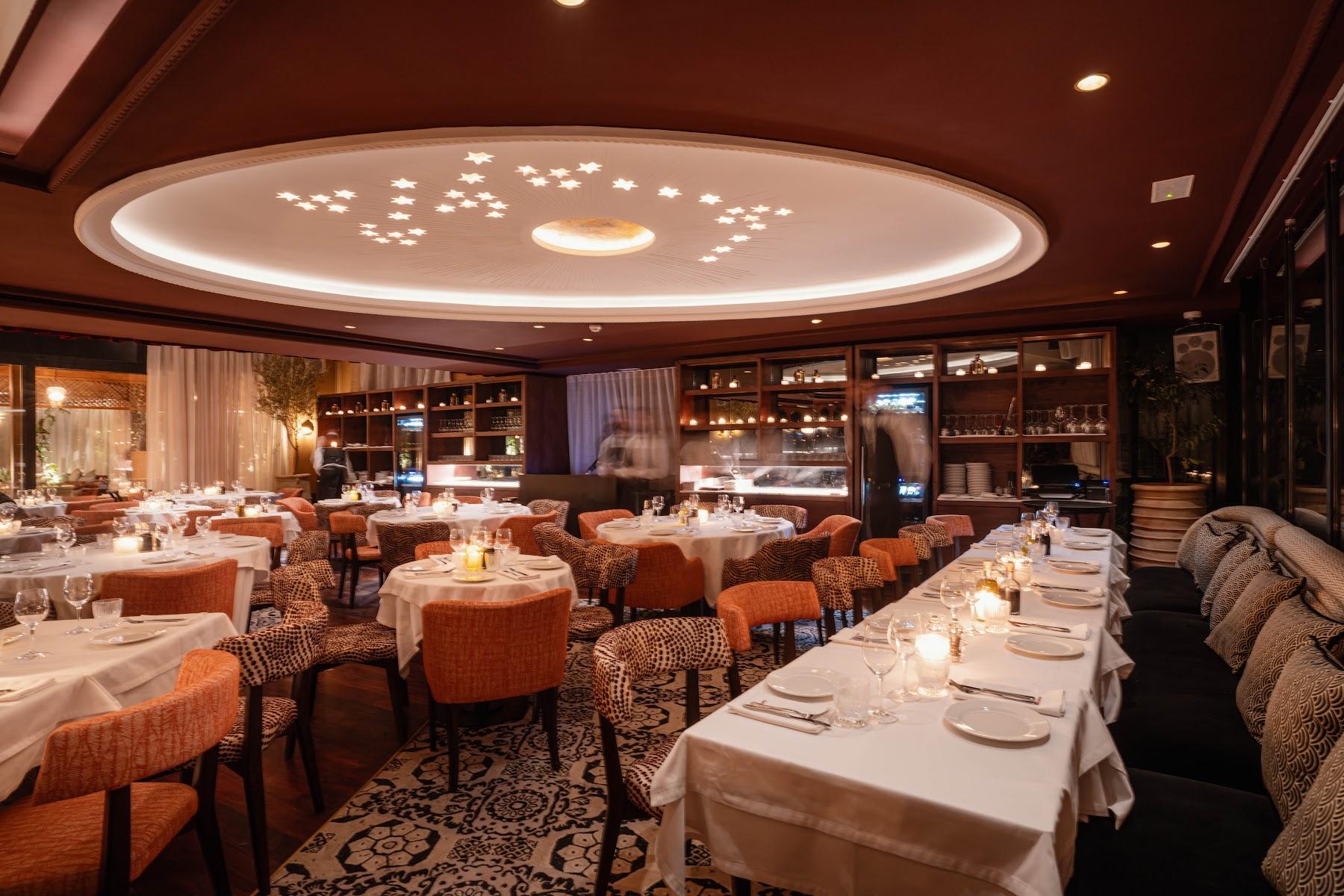
At the end of 2023 Moma Group brought the festive Italian formula it had already tested in Paris and Saint-Tropez to the garden level of Villa Yvette, and the result is one of the addresses that best explains what going out to dinner in Marrakech means now, when nobody wants to choose between eating well and dancing. Tables spread under an iroko pergola and among the trees of an enclosed garden, and indoors there is a second room in Art Deco lines, Curupau parquet, red velvet curtains. Emilio Giagnoni, Sardinian, built his technique at the George V before bringing it here: tagliolini al tartufo nero, saffron risotto with raw red prawns and Parmigiano Reggiano, a 300-gram burrata with Sicilian datterini, roasted lamb chops, and a tiramisu that settles the dessert question. Guitarists and vocalists play through the first service. Then the DJ arrives and the dining room stops being one.
Villa Yvette, angle avenue Ibn Khattib, Rue Abdelaziz Ettaalibi, Marrakech 40000, Morocco
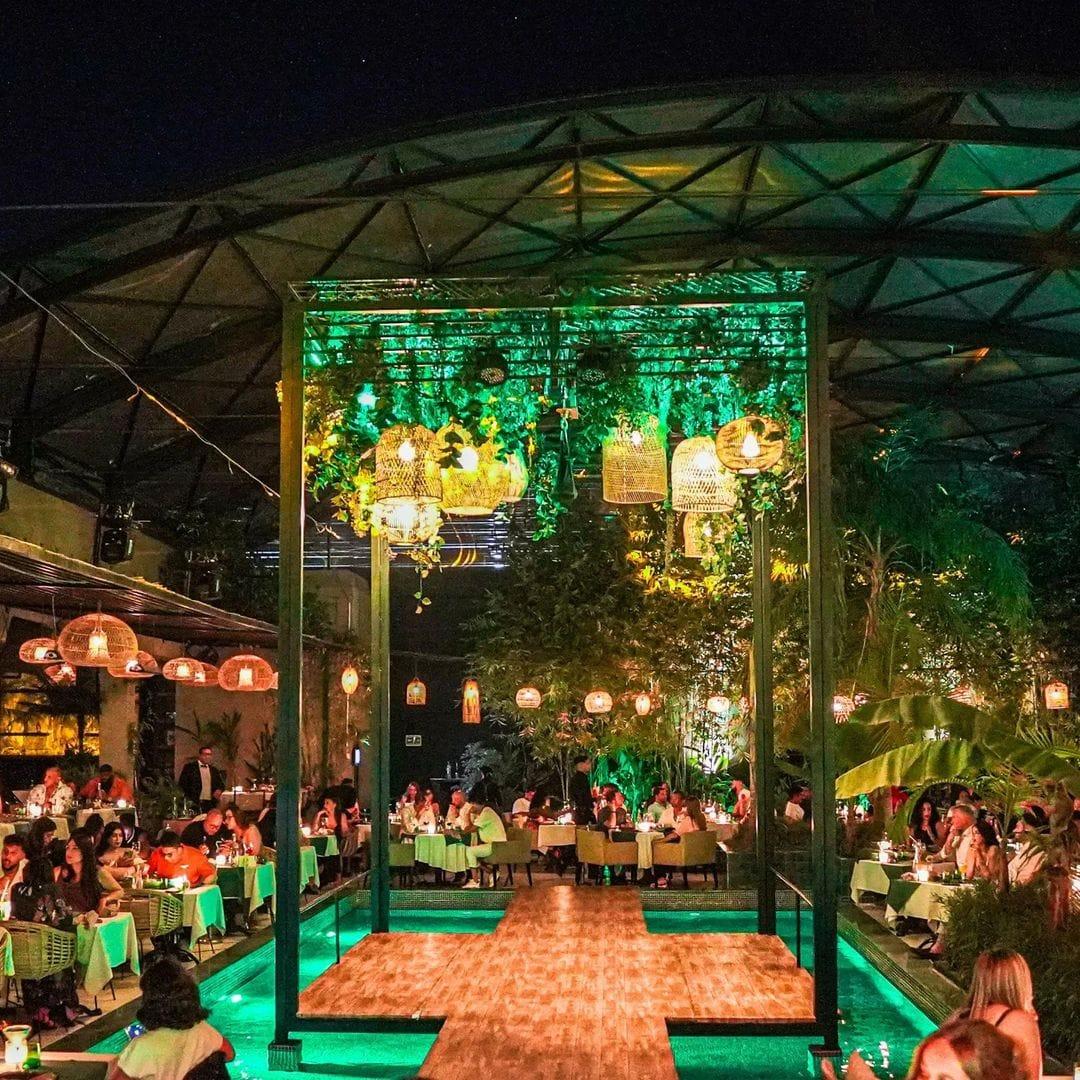
La Revue by Nouba starts around nine and runs for roughly two hours, and it is the most polished production on this list: aerial acrobats above the tables, dancers, oriental performers, fire, live vocalists, choreographed to a level nobody else on the same road reaches. Executive chef Ashish Purty cooks across international, Asian and Moroccan registers, with a sea bass ceviche in leche de tigre, a Taiwanese beef sha cha with noodles and tagines reworked in the plating, held together by a three-course set menu that gives the evening its shape. The garden does the other half of the work: tropical planting, water features, misting systems that make the terrace liveable on the hottest nights. When the revue ends a DJ carries the room past midnight. It is one of the three most expensive tables here, and worth choosing with that in mind.
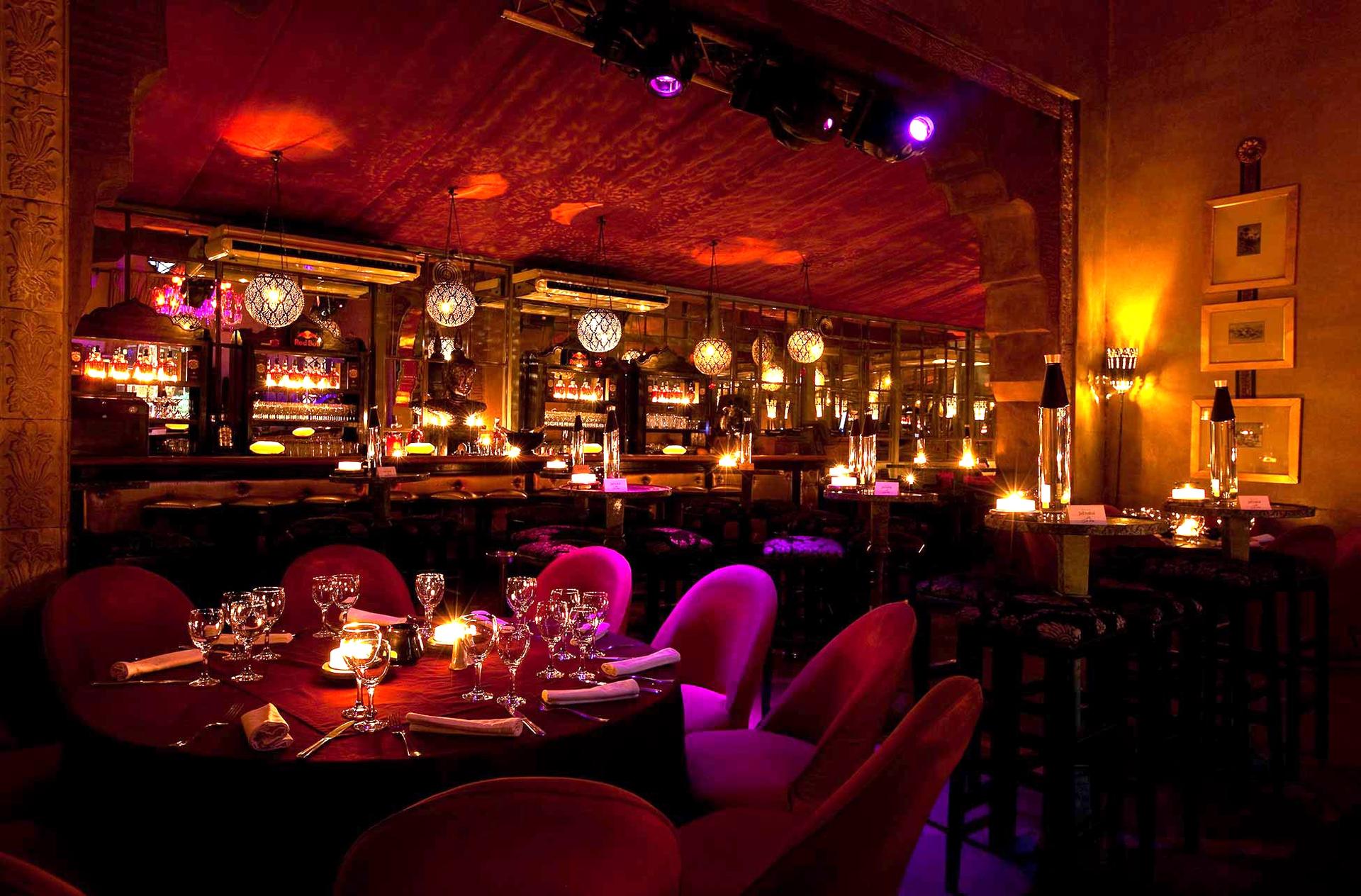
On Rue Haroun Errachid you get the plan of a traditional Moroccan palace, built around a central patio where the pools catch the light and the fountains keep up a low murmur from the moment you walk in. Jad Mahal layers carved wood panels, ornate ceilings and zellij-topped tables over that structure, then adds India to it, jewel-toned fabrics, shimmering lanterns, deep drapery: two decorative traditions that end up talking to each other. The carte runs Moroccan, French and Thai, from lamb tagine and confit shank to delicately spiced curries, with a wine list that travels from Moroccan vineyards to French terroirs. During the first service, fire-eaters, belly dancers and acrobats parade through the dining room in what has been the house signature for well over a decade, then a live band takes the stage, and for anyone with no intention of going to bed there is Babouchka, the club next door.
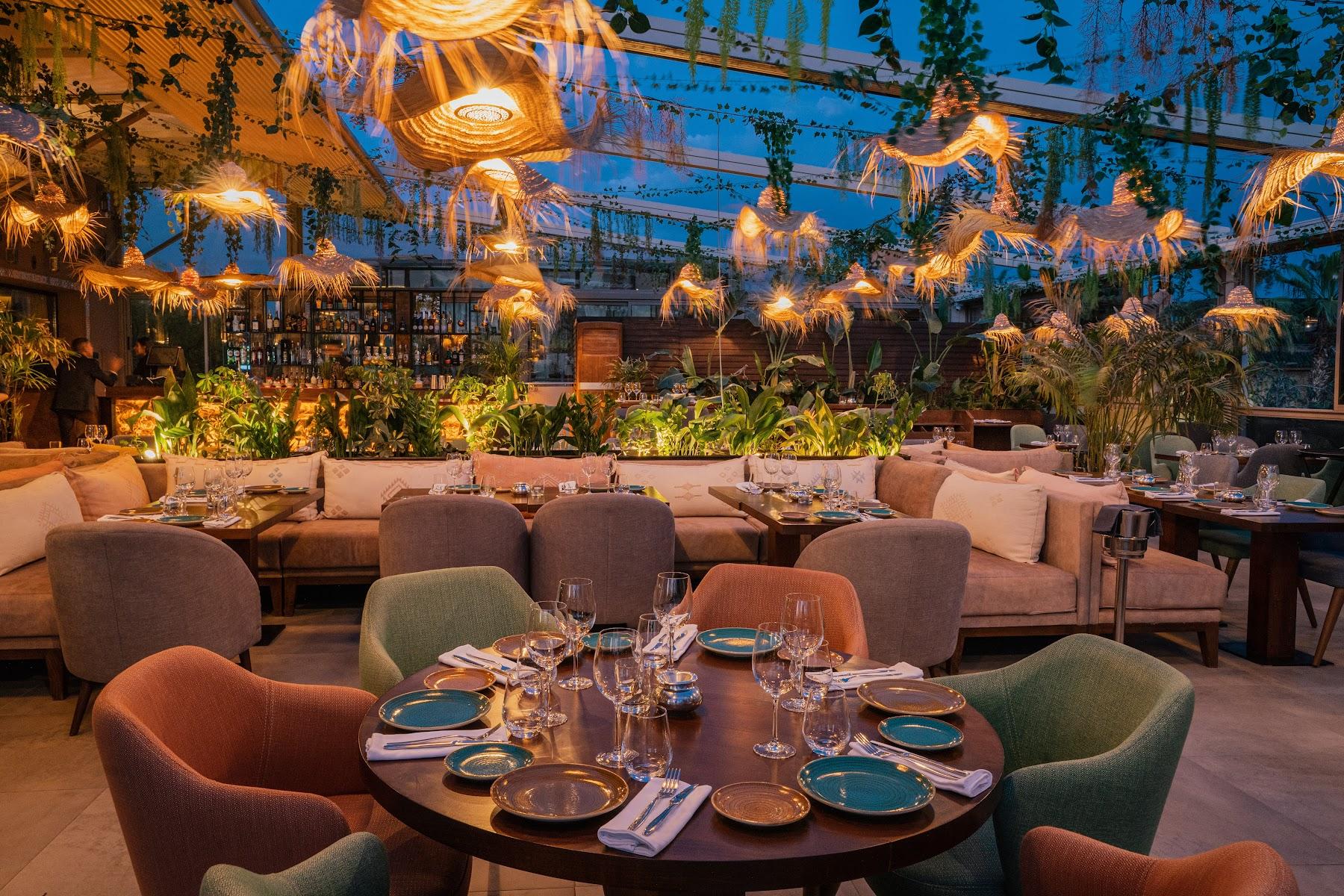
The Koutoubia minaret fills the skyline from this rooftop on Rue Jbel Lakhdar, which would be enough on its own, because a dinner show inside the medina is not what anyone expects to find. Then you look at who is in the kitchen and the surprise doubles: Mouhssine Nouni, trained at Yoshi in Monaco and Ledoyen in Paris, works with Abdelkrim Siklan, a Marrakech native who spent nearly a decade at the Royal Mansour, and together they treat the whole Mediterranean rim as one coastline and borrow along it, from lamb tagine with prunes and saffron seafood risotto to grilled octopus, prawn linguine and black cod saikyo miso. From around nine, Gnawa musicians, oriental dancers and folk performers take the floor and the terrace becomes one of the more electric rooms in the centre. Tables fill fast, so book ahead.
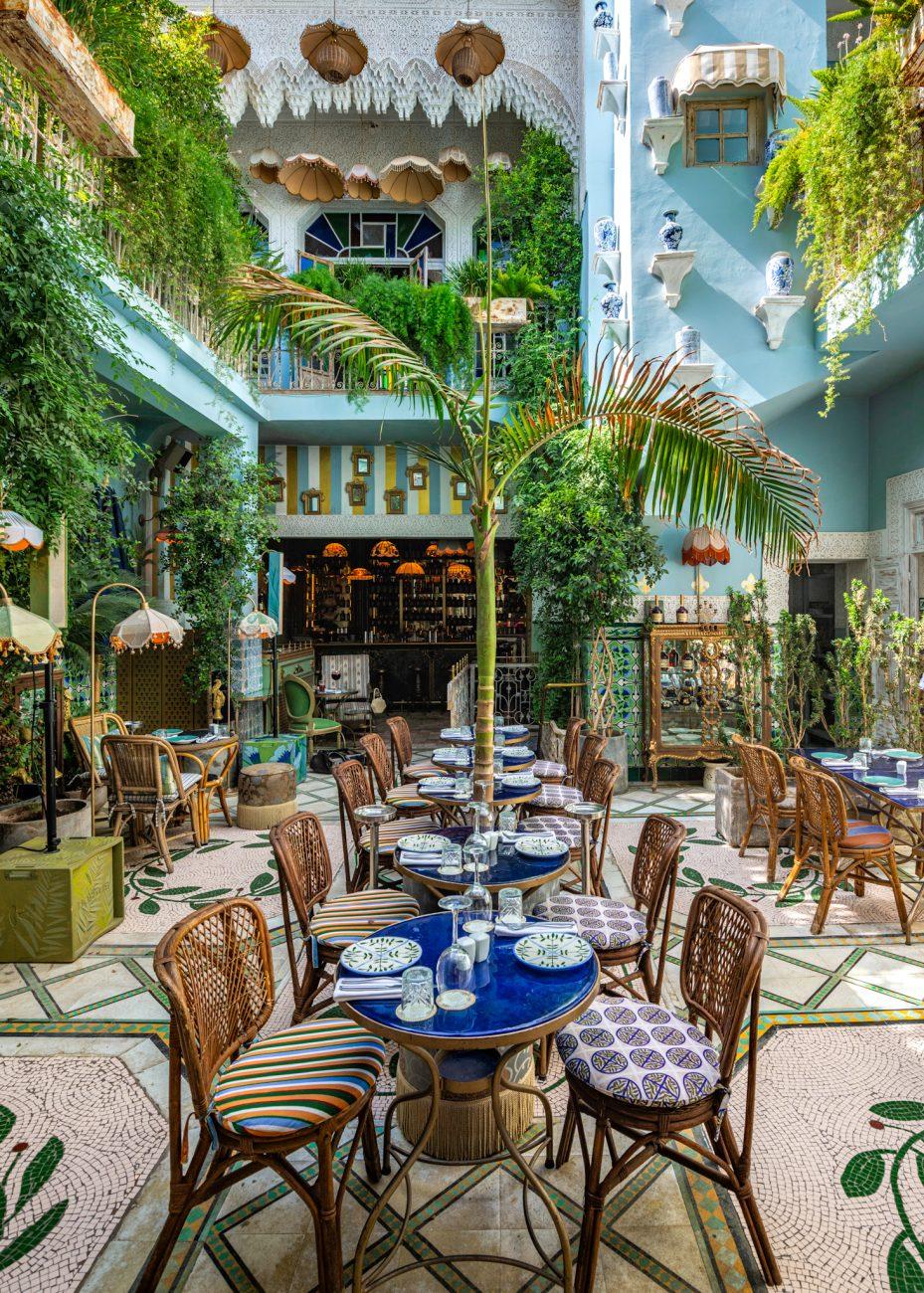
The house was built in 1936 for the Amzallagh family, near the Kasbah and a short walk from Jemaa el-Fna, and the Amazoz Group restored it with the original layout intact, while the designer Michèle-Rose worked around what was already there: mosaics, greenery, a vintage bar at the centre. Two storeys that still behave like a family home. Luisma Naranjo, a Spanish chef, cooks Mediterranean-Moroccan built for sharing, slow-cooked mechoui cannelloni, raviolis with chakchouka, subtly spiced pastrami, and a rice pudding with Madagascar vanilla, honeycomb caramel and fresh mango to finish. At midday the light does the work. Some evenings bring a double bass, a singer or a DJ, and if the music matters to you, aim for the weekend. Private parking, which is rare in this part of the city.
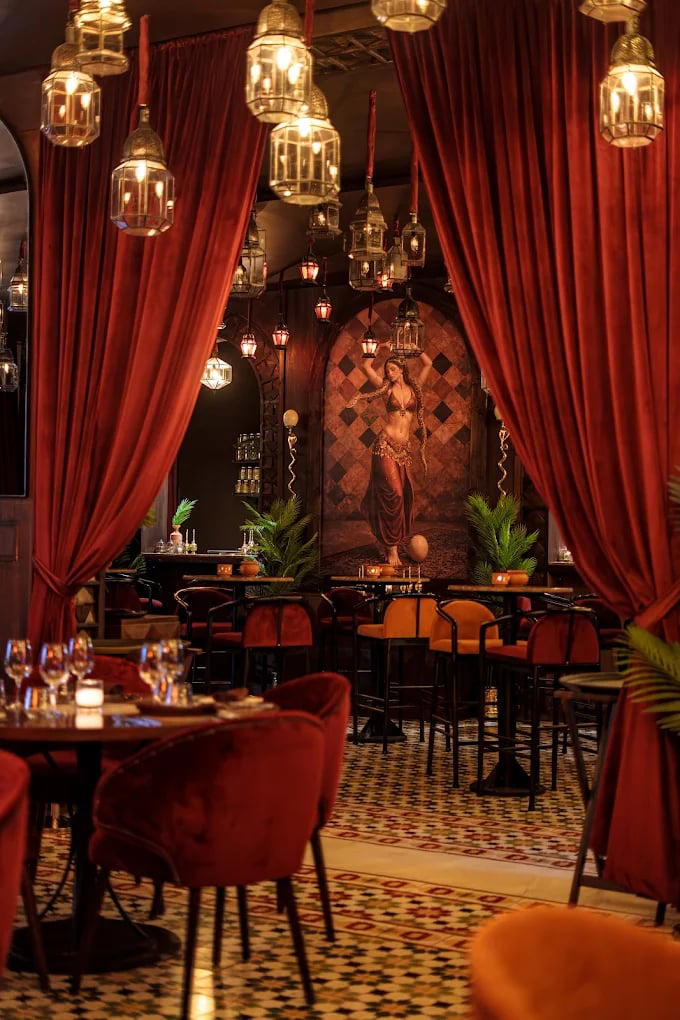
Zama Zama is fusion arabesque and runs the Arab world from Morocco to Lebanon, Levantine mezze and Moroccan classics reworked with a modern hand, generous, spice-forward, built for a full table that orders a lot and talks loudly. The drinks come from the Baromètre Marrakech team and go hard on Arab flavours and golden-age glamour, and as dinner goes on the room turns, literally: on the decks are the Sound Sisters, the resident all-female collective, playing Arabic deep house and reworked classics, with guests rotating through, the lighting dropping and the volume doing the opposite. It is the loudest table on this list and also one of the least expensive. Come with a group, on the night you want noise and colour.
You may also like…
BEST OF | EAT & DRINK
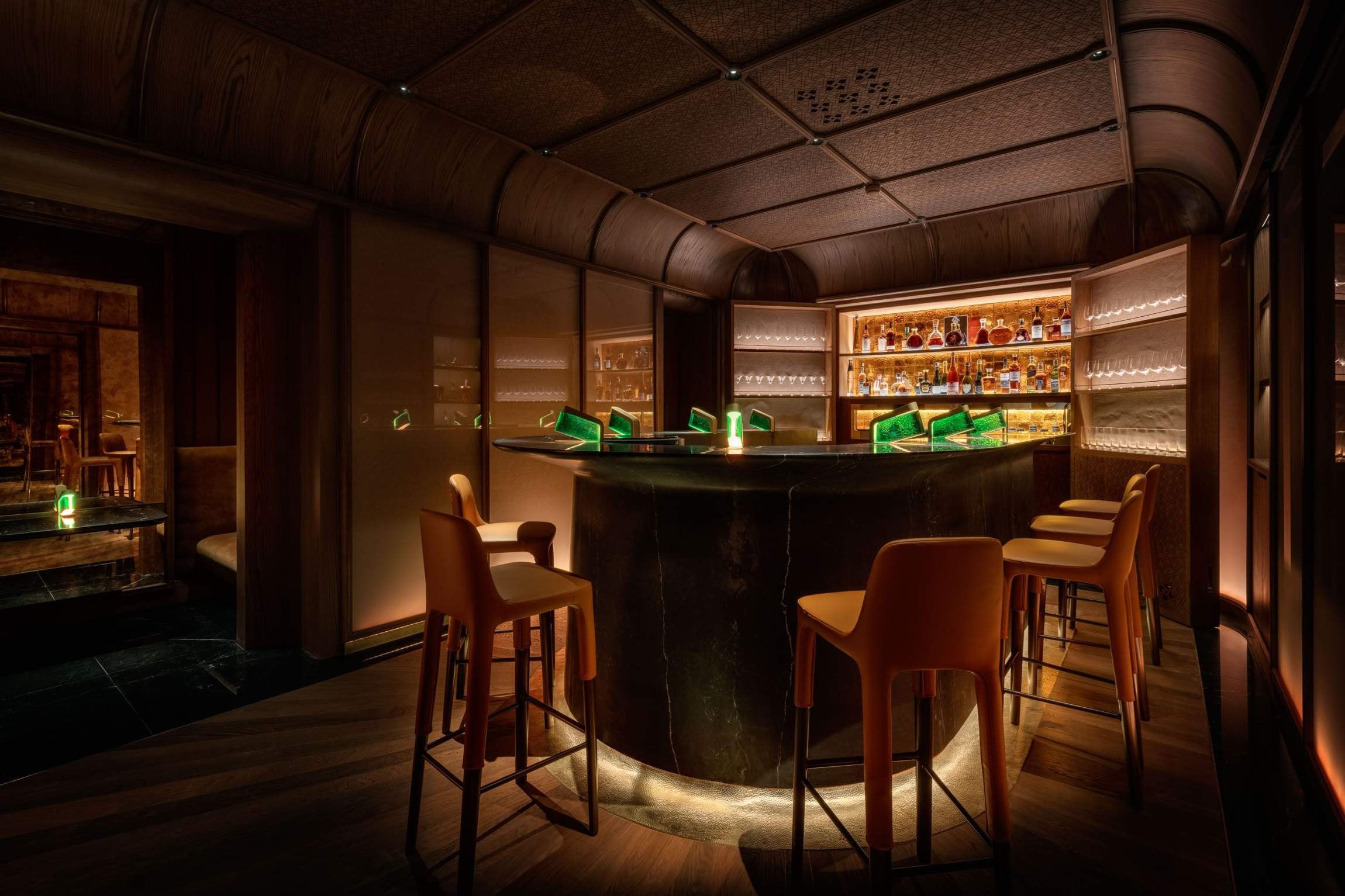
Marrakech's Most Iconic Hotel Bars
EAT & DRINK
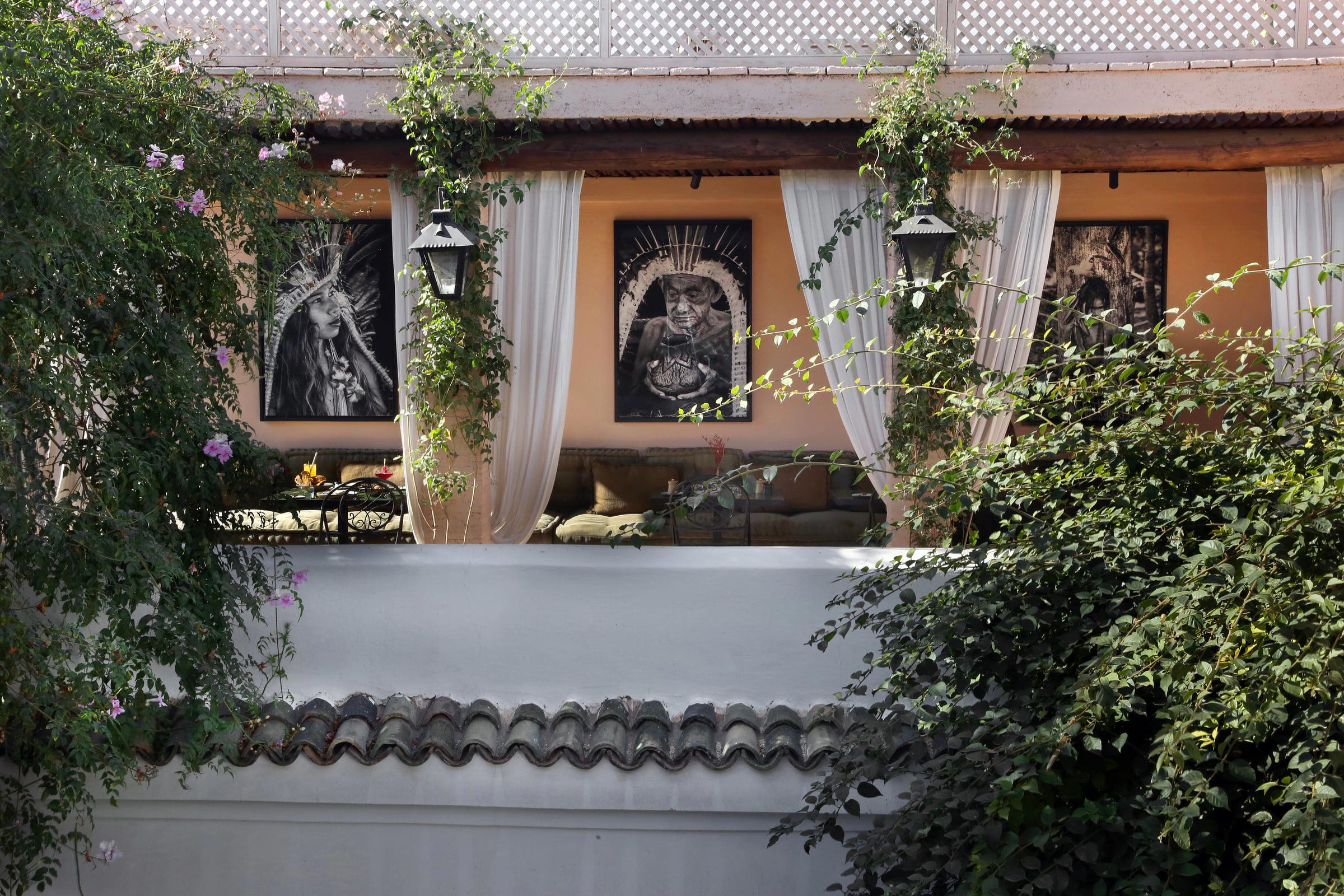
Eating Among Salgado's Amazonia: Noujoum at IZZA Marrakech
 Map
MapBEST OF | EAT & DRINK
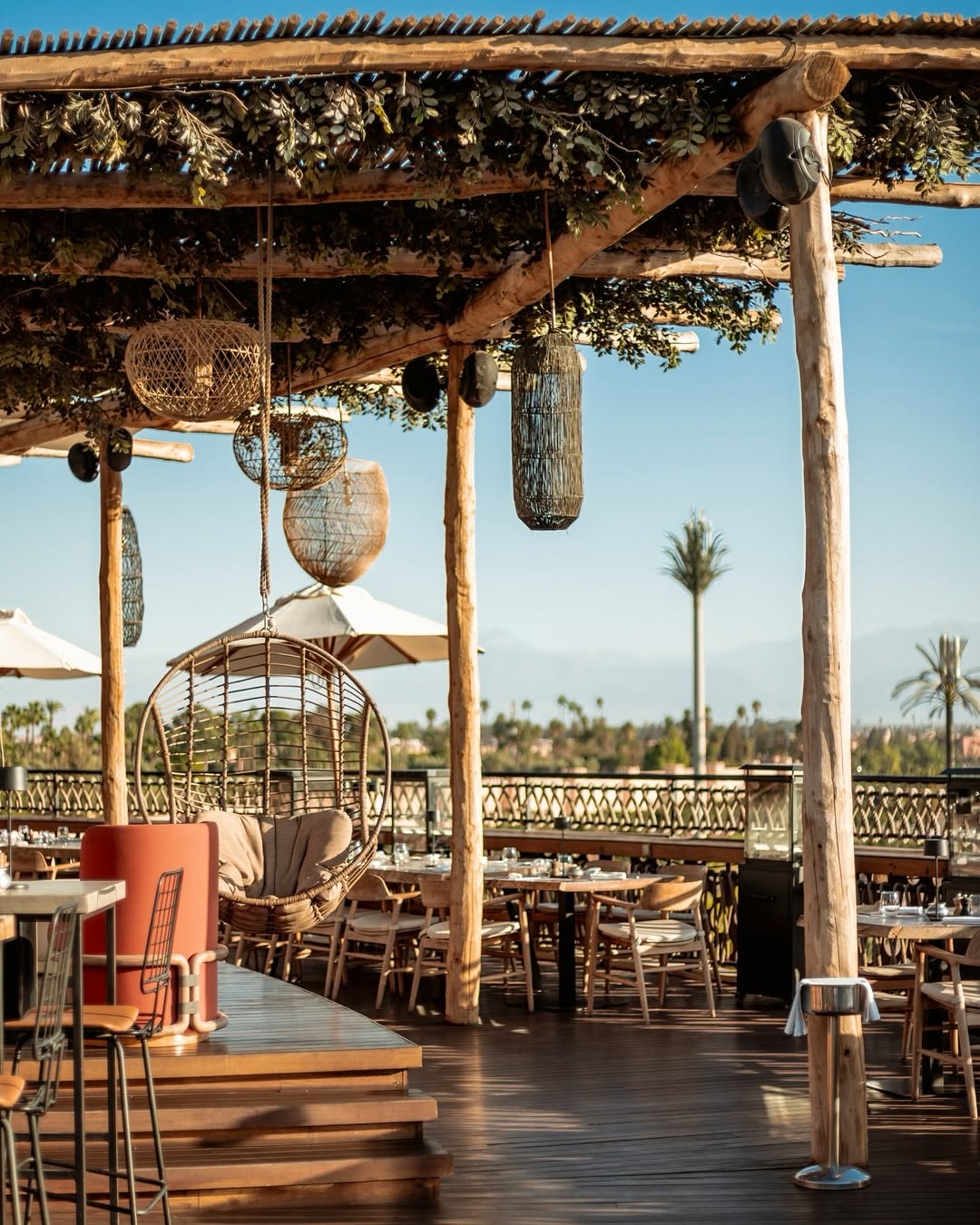
The Rooftop Guide to Marrakech: Restaurants, Cocktail Bars and Pools
EAT & DRINK