EAT & DRINK
Bacha Coffee Marrakech: A Pasha's Palace, Two Hundred Coffees, and the Art of Waiting
Inside the Dar el Bacha coffee room where a century of diplomacy, art, and Arabica converge in the northern medina.
Timence Guide Editors · 24 May 2026
The queue forms before the doors open. It coils through the narrow street off Rue Dar el Bacha, past the carved stone entrance, past the guards, past the ten-dirham museum ticket window. On a Friday in high season, the wait can stretch beyond two hours. This is not a complaint that Bacha Coffee Marrakech has failed to solve; it is a condition the place has absorbed into its identity. The queue is part of the architecture now, a threshold ritual that separates the pace of the medina from whatever lies on the other side of the courtyard.
The Palace Before the Coffee
Dar el Bacha, the House of the Pasha, was completed in 1910 for Thami el Glaoui, the man who would become Pasha of Marrakech under the French Protectorate two years later. El Glaoui was a figure of extraordinary power and controversy: a Berber lord from the Atlas who controlled the strategic Tizi n'Tichka pass, hosted European heads of state, and ran the city for over four decades. His guest book reads like a twentieth-century index of cultural influence: Colette, Maurice Ravel, Charlie Chaplin, Josephine Baker, Winston Churchill. They came for the politics, stayed for the coffee, and left through courtyards that had been designed to make the act of crossing a threshold feel like entering a different century.
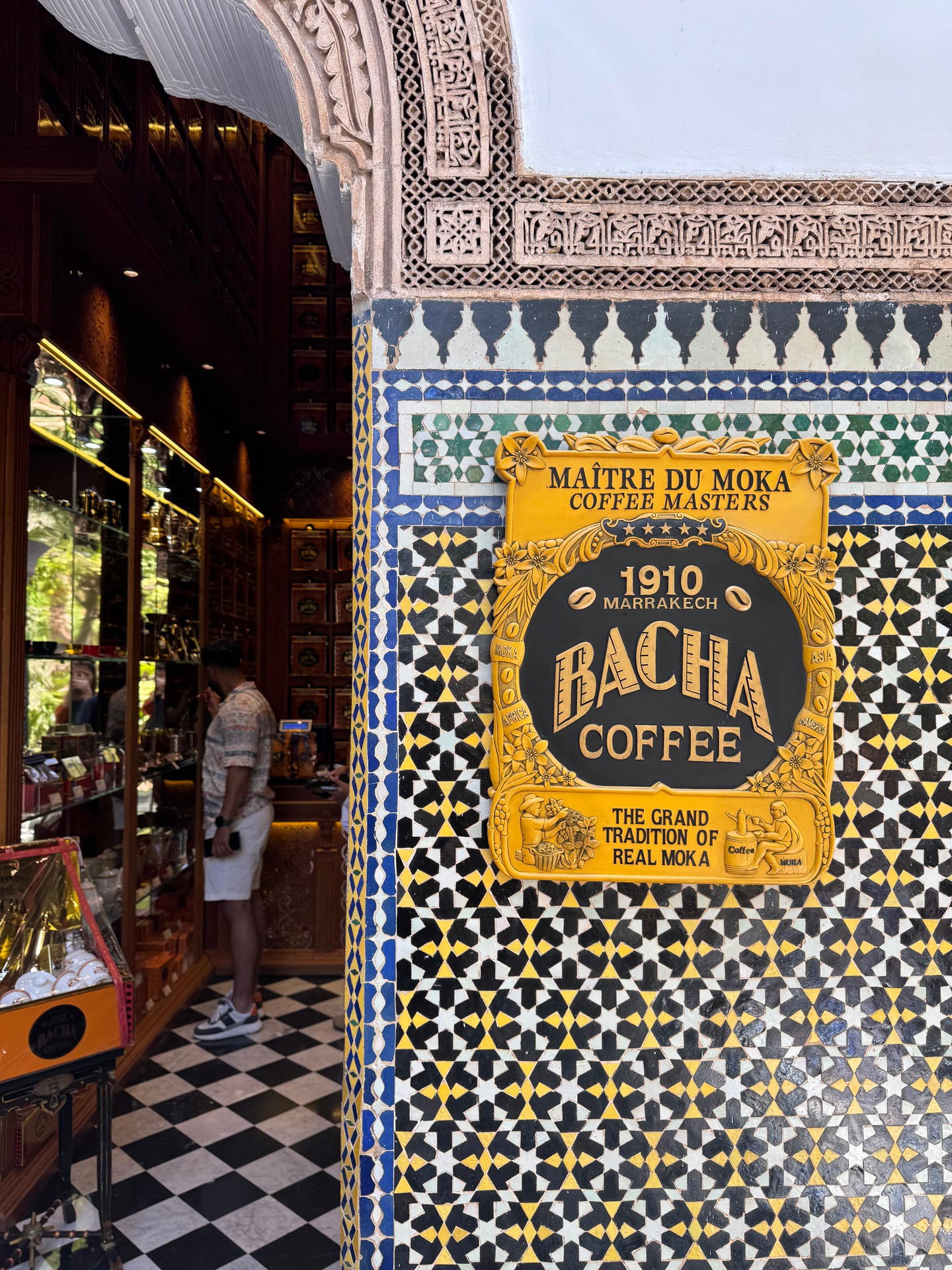
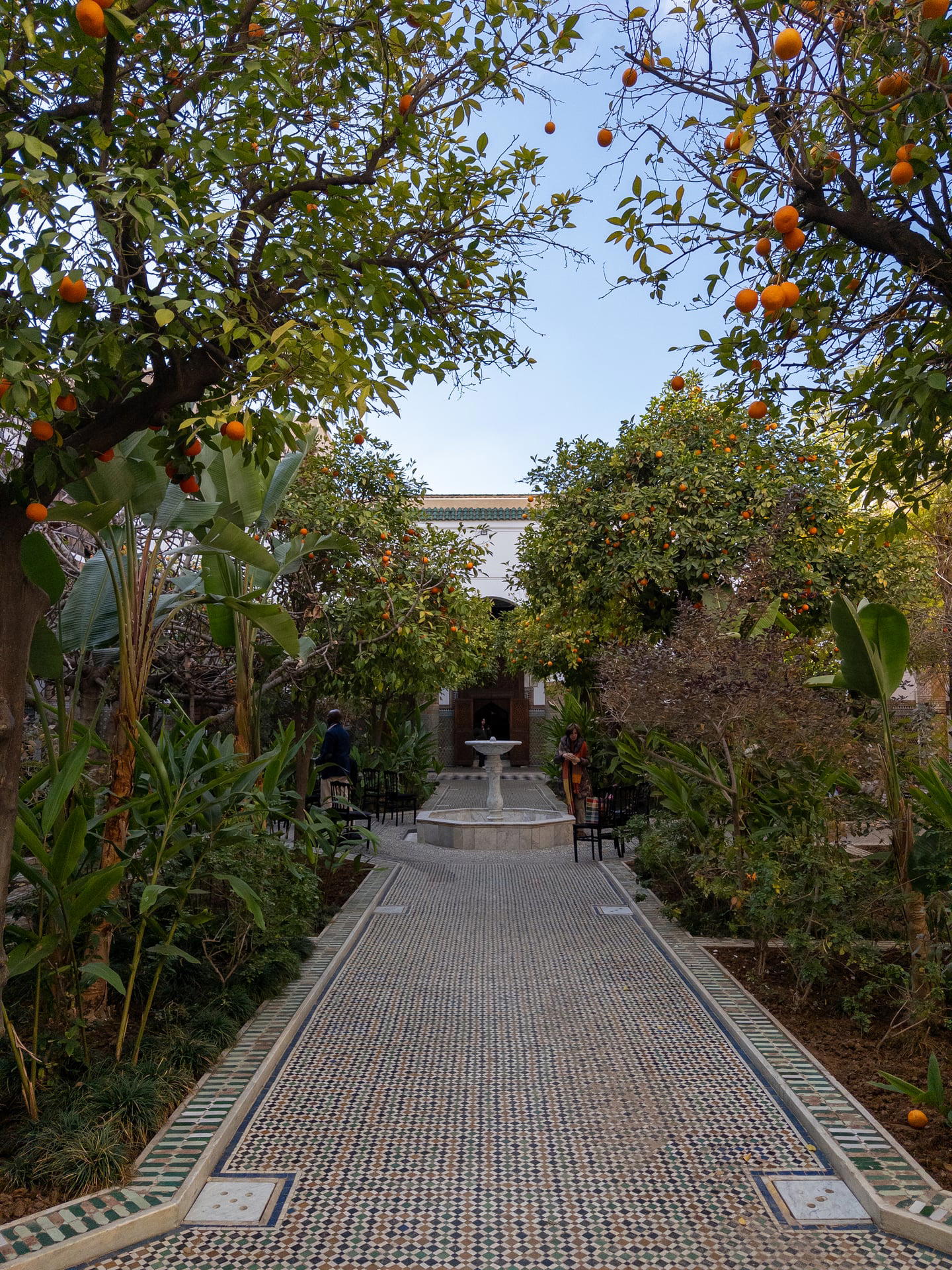
After el Glaoui's fall in 1955, the palace closed. For six decades it sat empty, its zellige and carved cedarwood darkening in silence. In 2017, the Fondation Nationale des Musées restored it and reopened it as the Musée des Confluences, a name that signals the building's purpose: to mark the points where cultures, religions, and artistic traditions meet. The coffee room arrived as part of that reopening, operated by Bacha Coffee, a Singapore-based brand that traces its origin story back to the palace itself.
The Room and Its Register
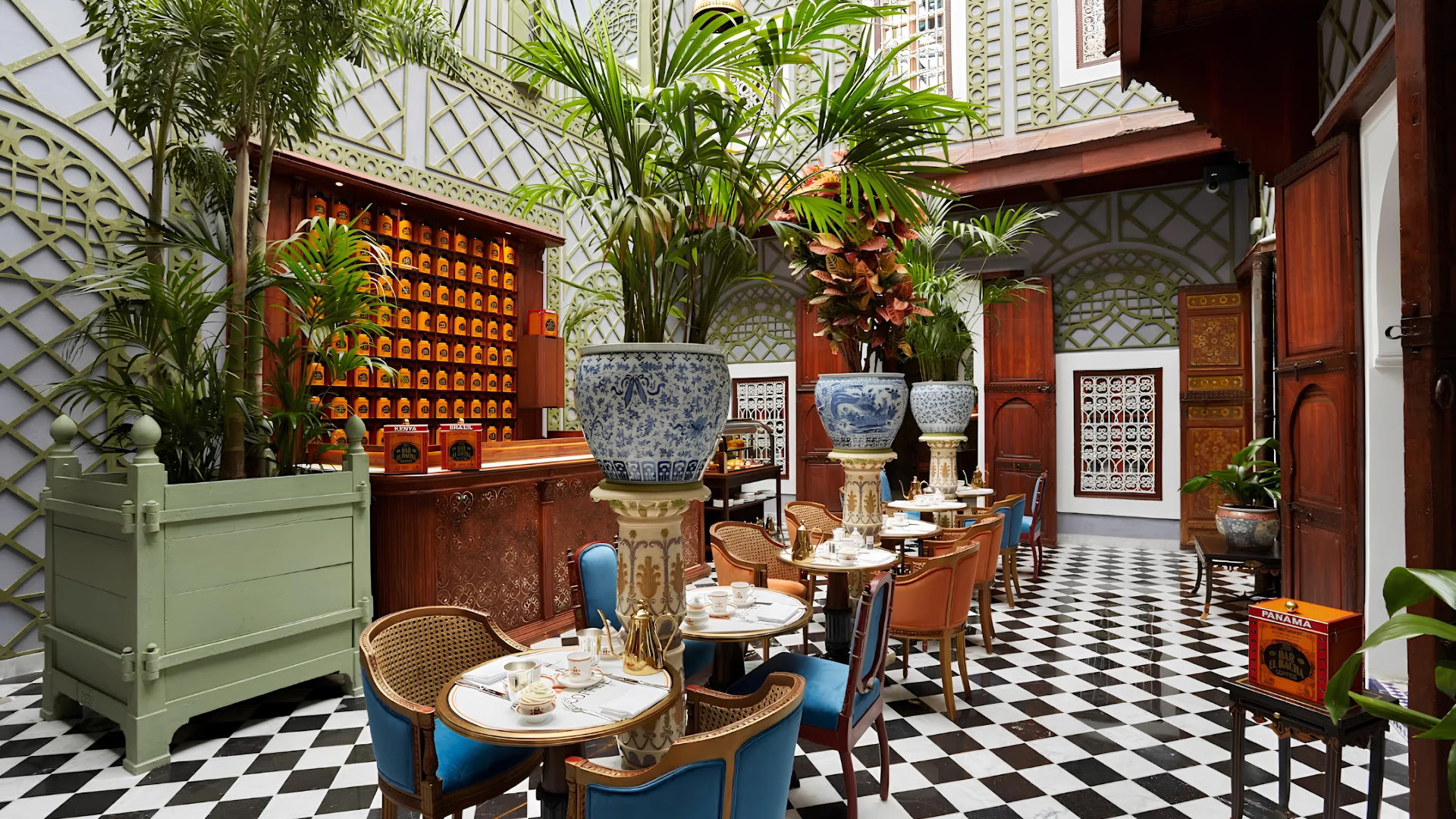
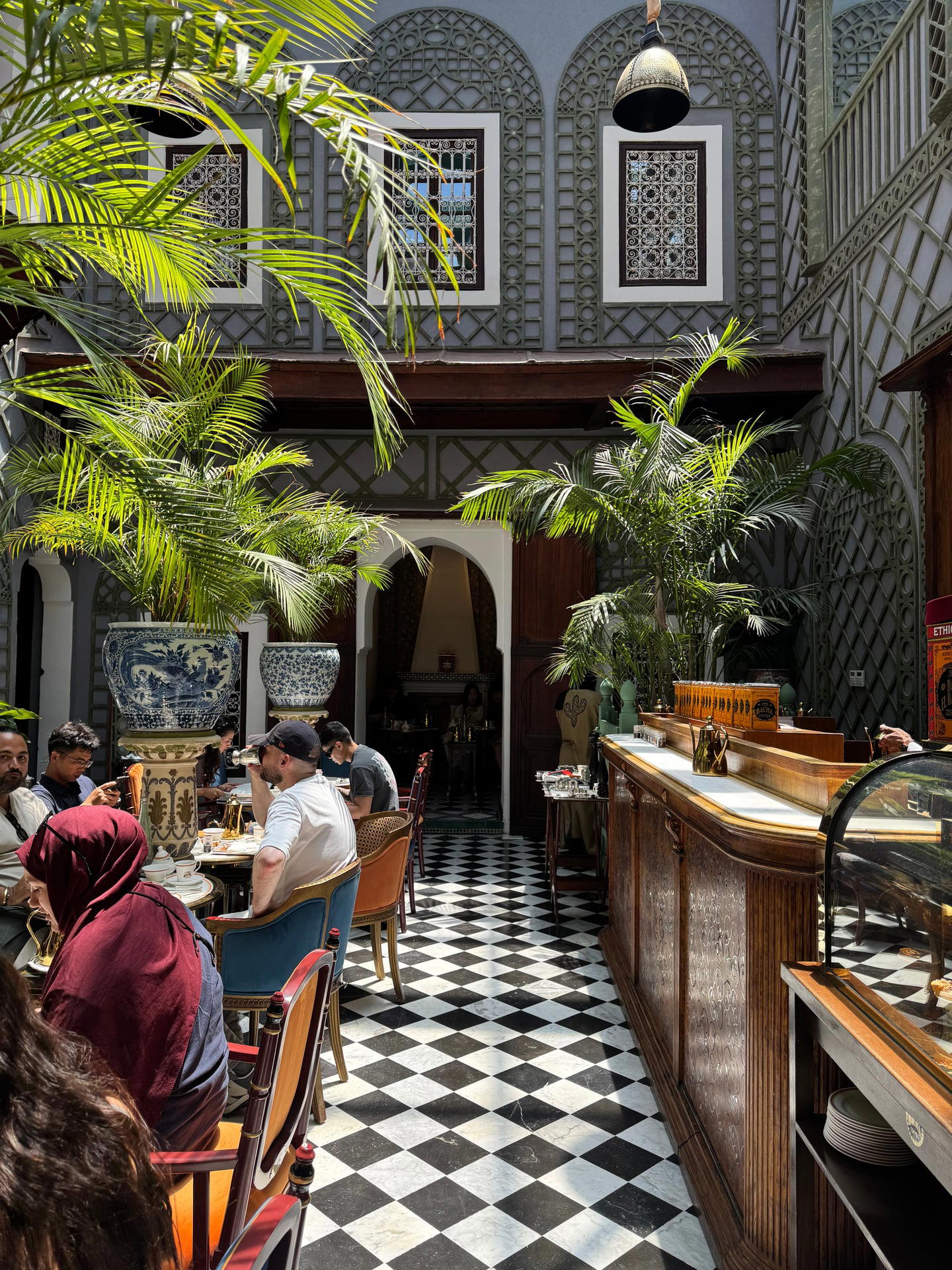
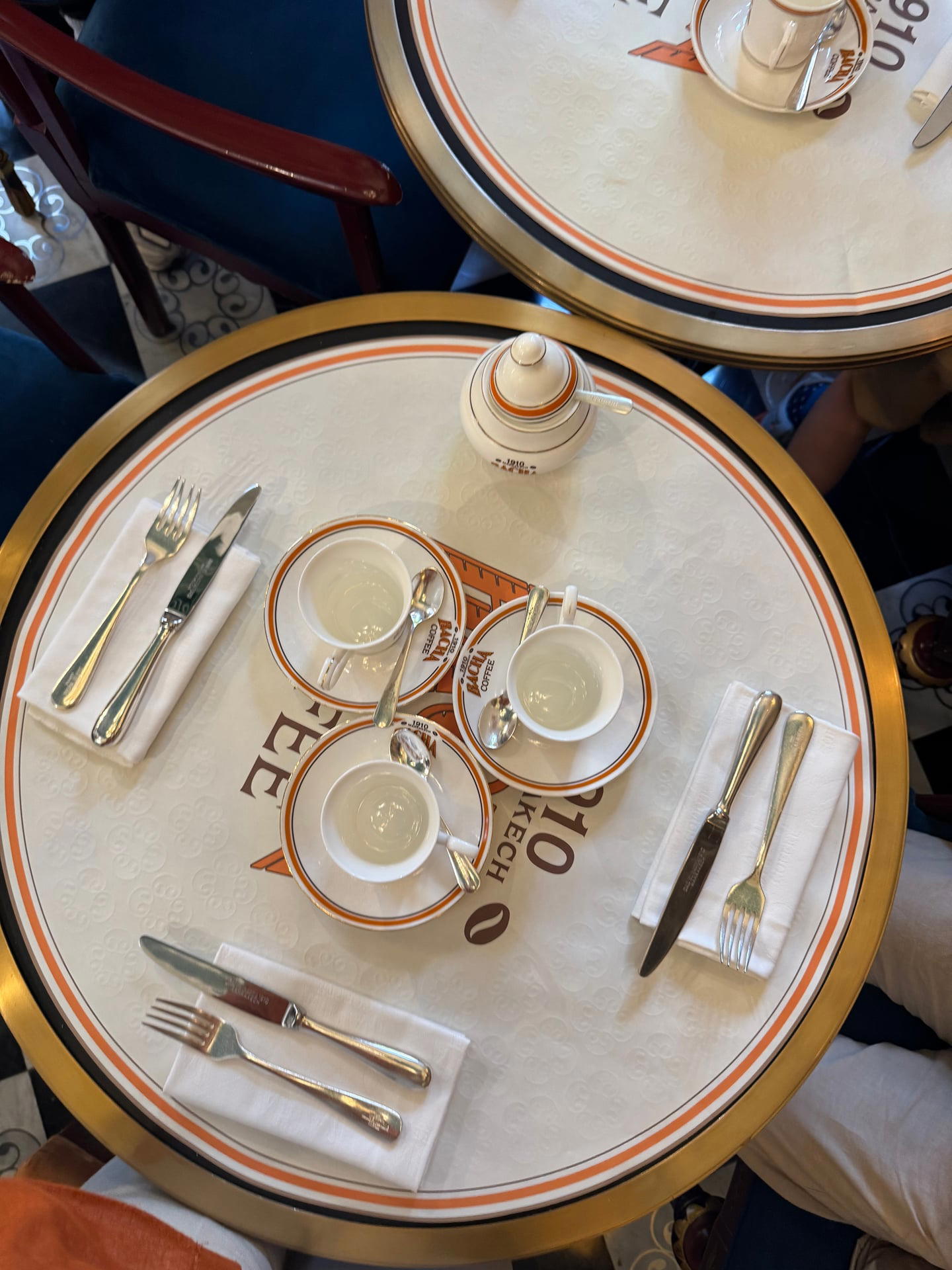
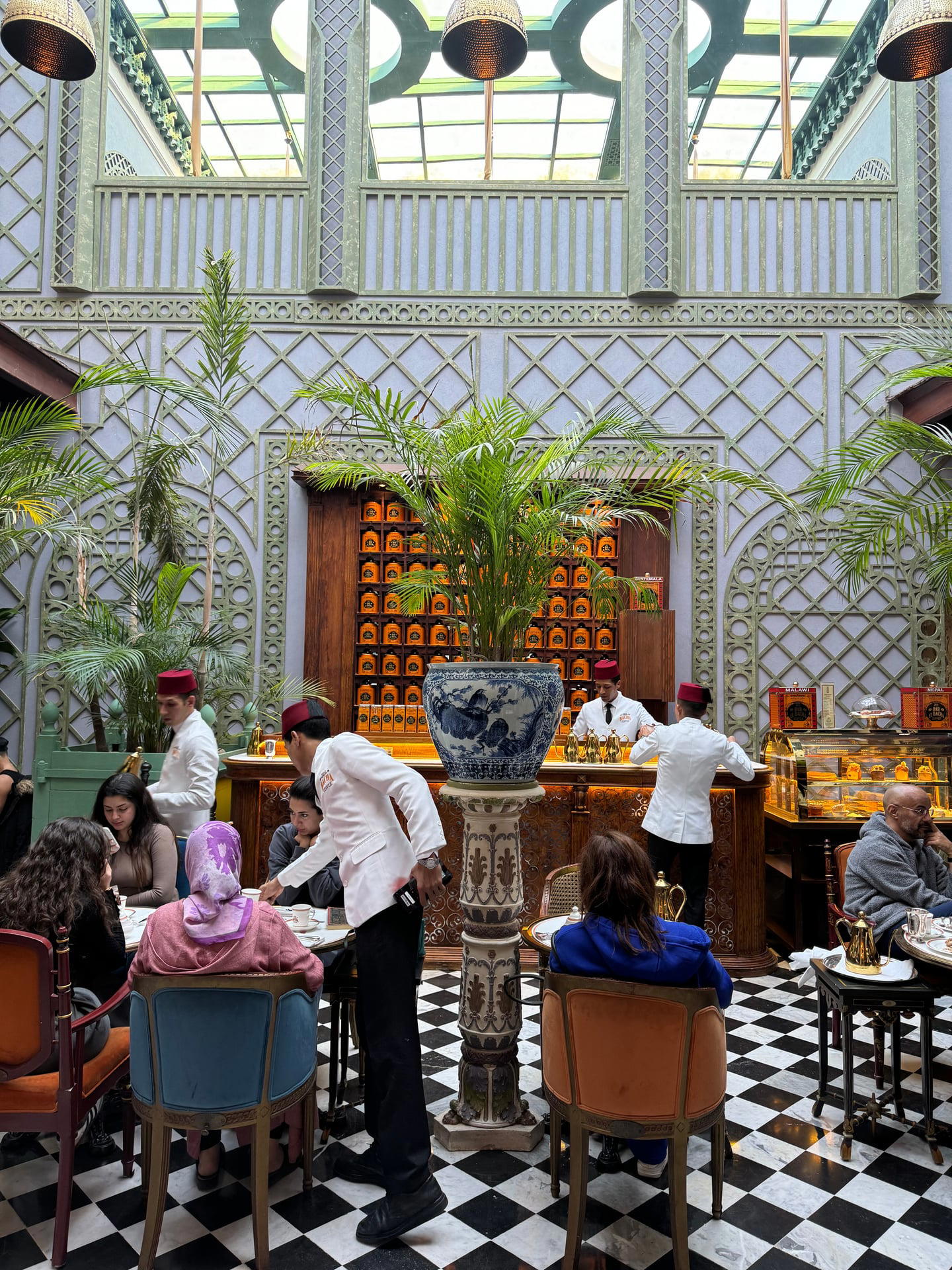
The coffee room occupies a series of salons within the palace, arranged around an Andalusian courtyard. Mosaic floors, carved wood ceilings, golden detailing, tadelakt walls that carry the particular density of a building that has absorbed a century of conversation. The tables are set with a formality that belongs more to a salon de thé than to a café: silver pots, the geometry of the service arranged as carefully as the zellige underfoot. Staff guide guests to their seats with a five-star hospitality that reads as deliberate rather than performative: the service matches the room.
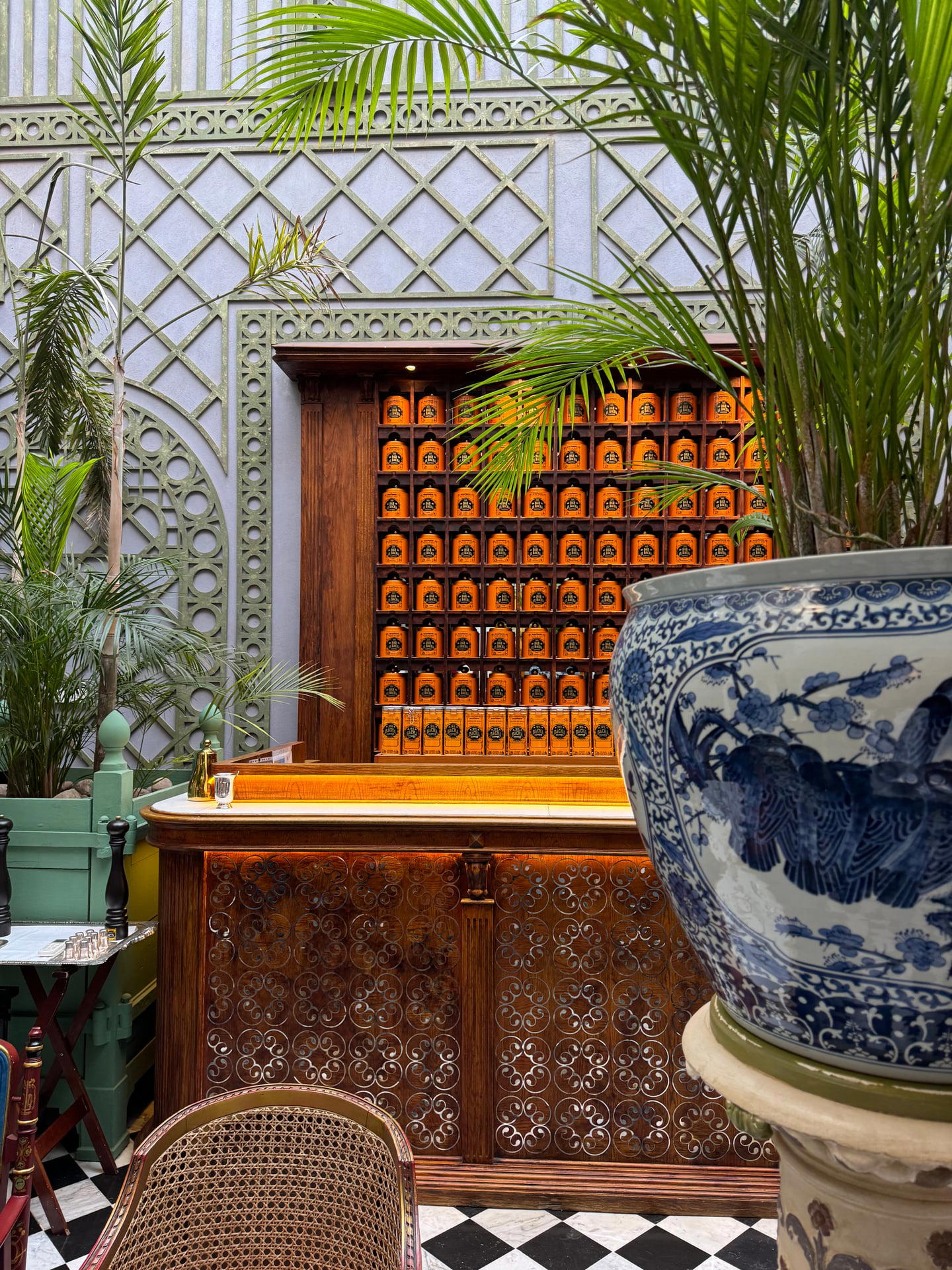
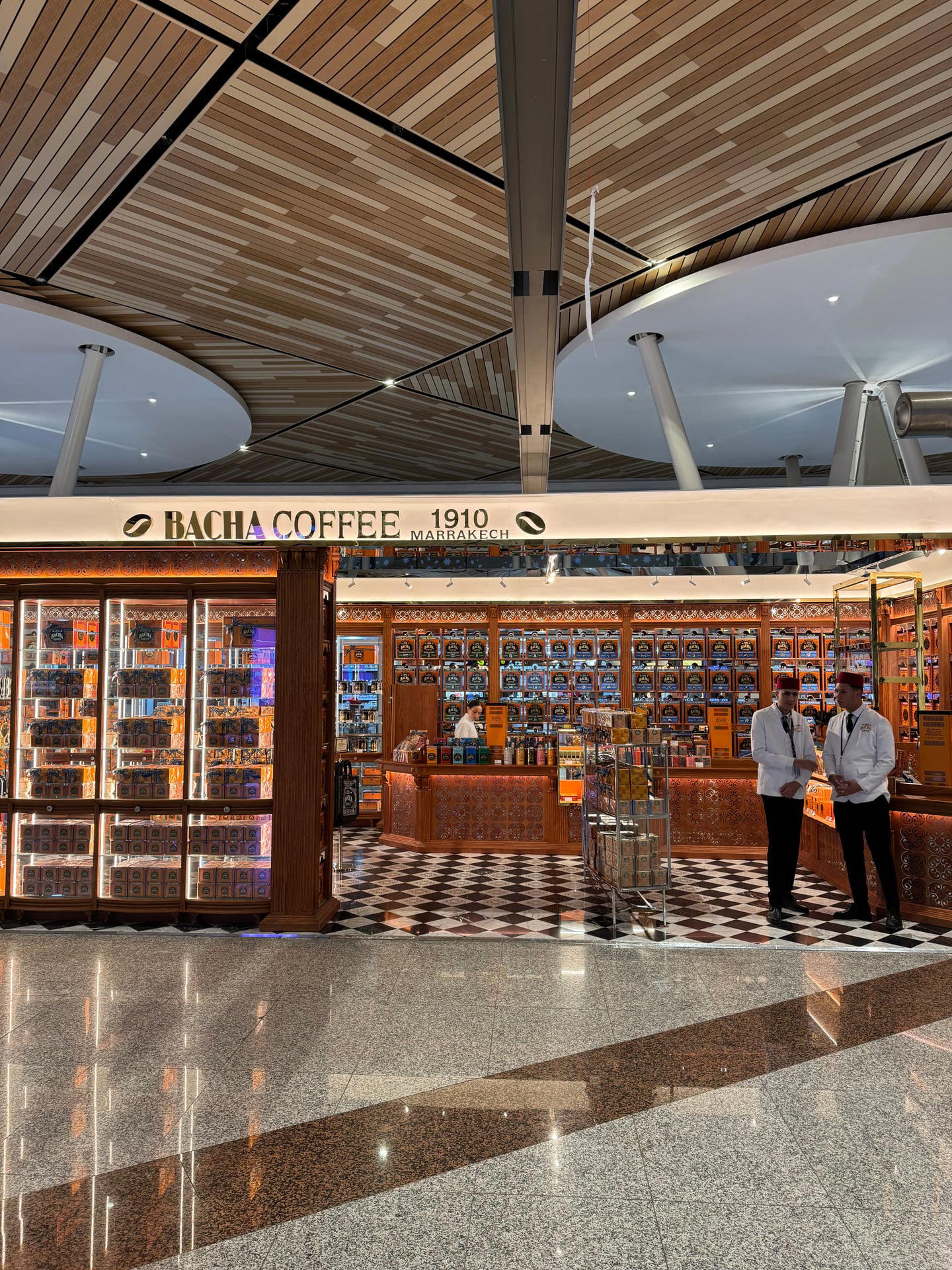
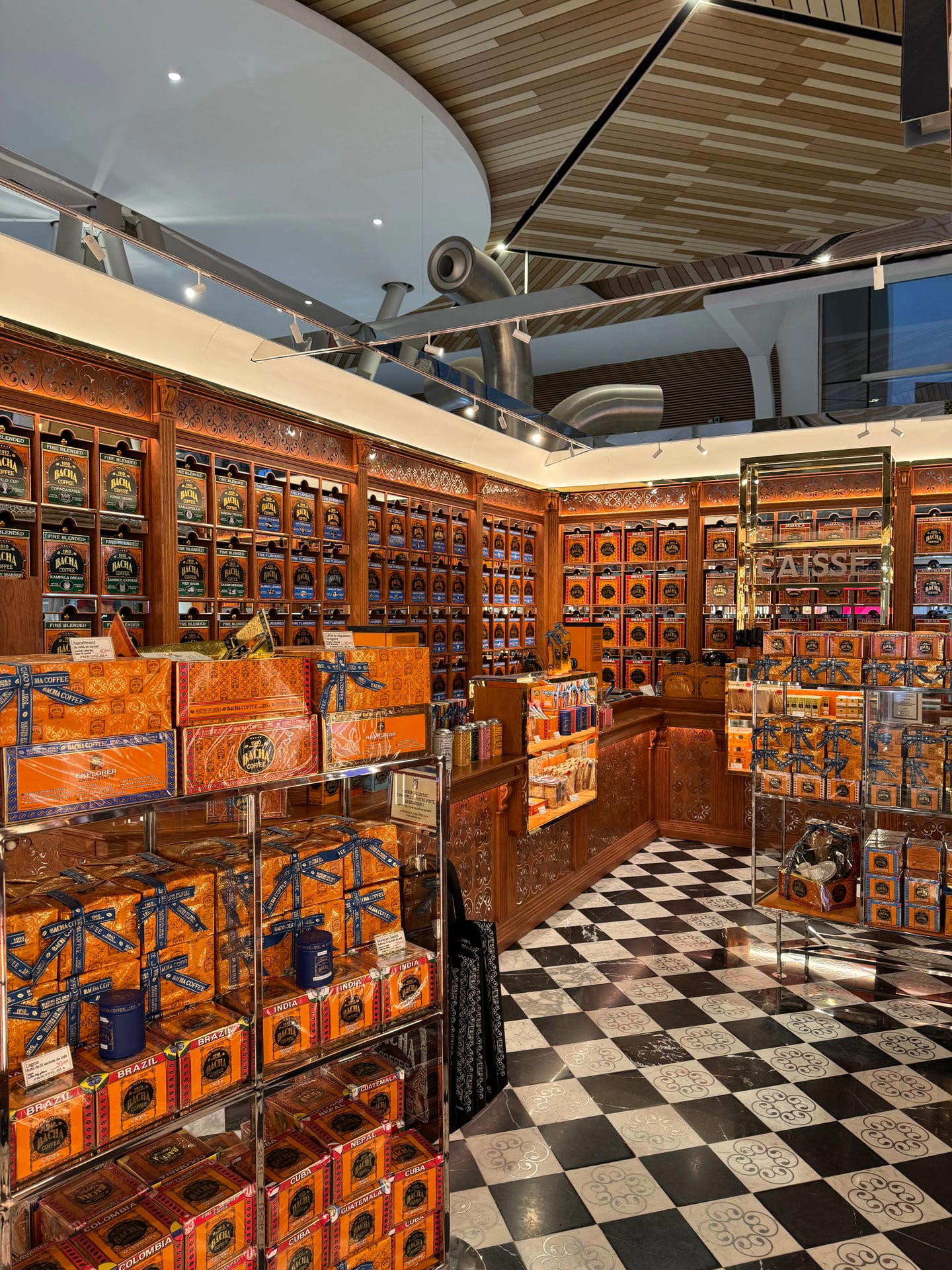
The boutique adjoining the coffee room stocks over two hundred single-origin Arabica coffees from thirty-five producing countries. Ethiopian highland, Jamaican Blue Mountain, Sumatran, Colombian, Kenyan: each displayed in Bacha's signature gold-and-orange packaging, available in beans or ground, to drink on-site or to carry home. The selection is genuinely global, and the staff walk visitors through origins and tasting profiles with an ease that suggests the curation is taken seriously, not performed for show.
What Arrives at the Table
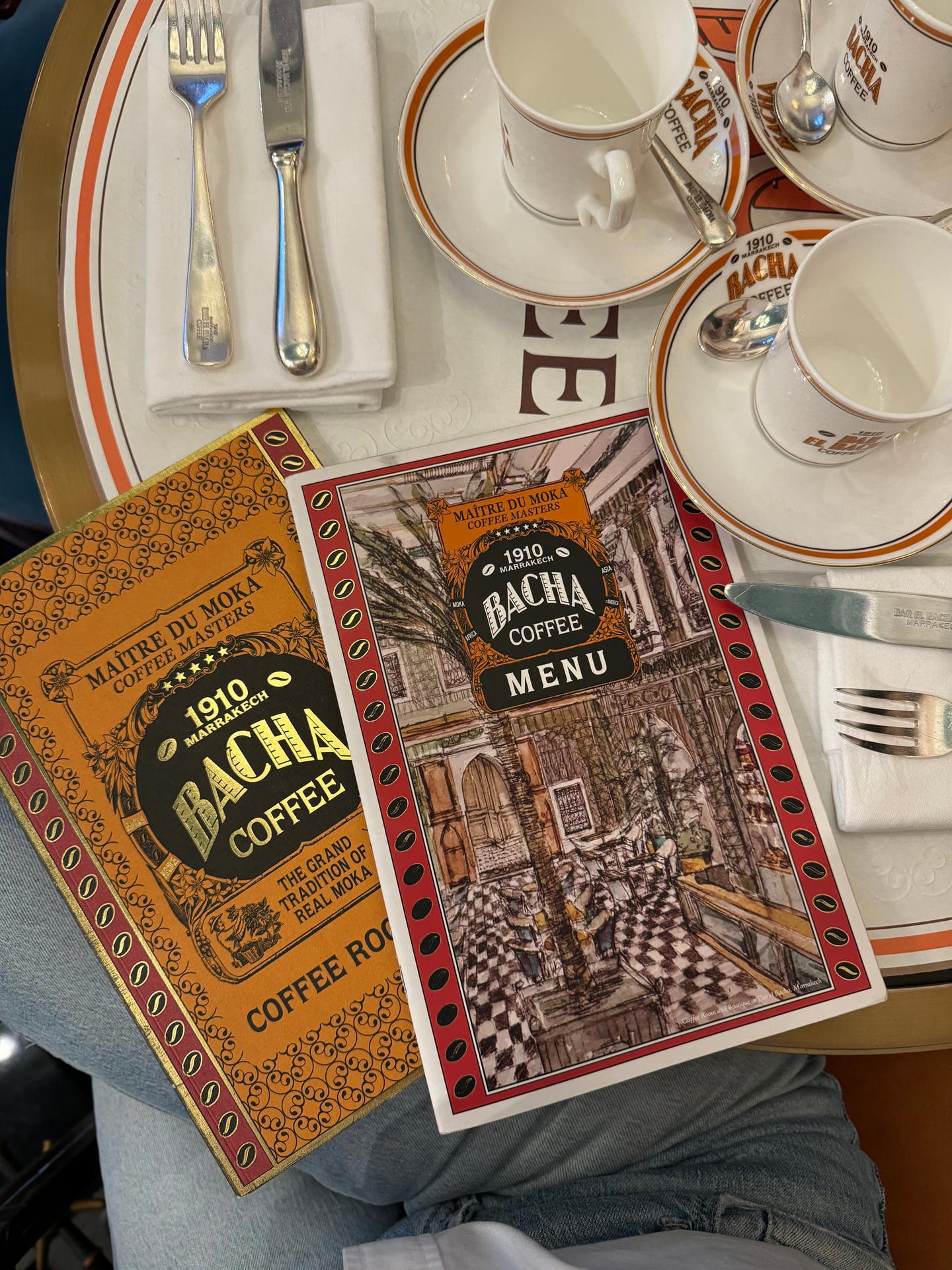
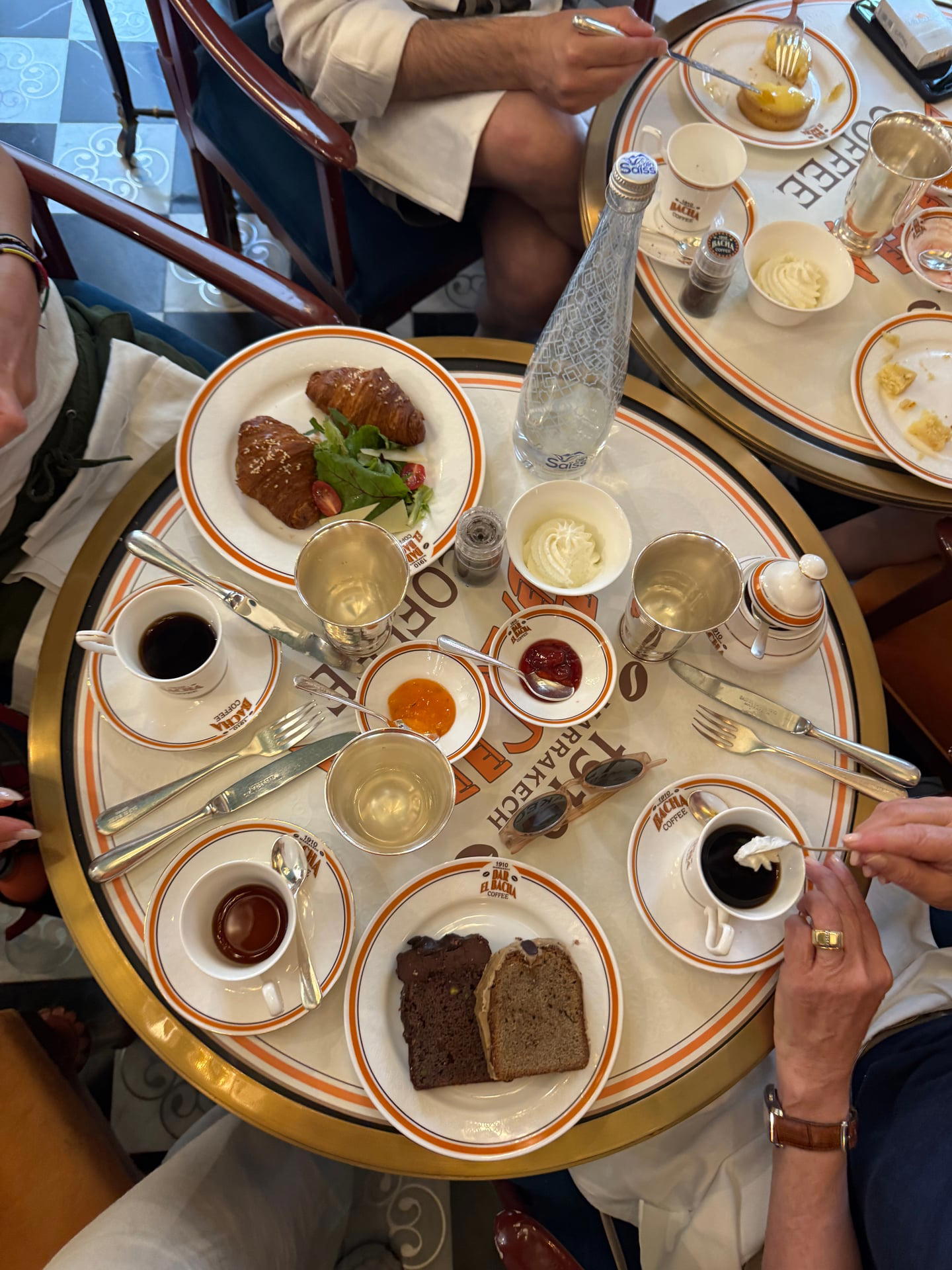
Two menus arrive at the table. The first is closer to a book: a bound catalogue that walks through the entire single-origin coffee collection, with cards for each variety: country of origin, altitude, tasting notes, processing method. Leafing through it is already part of the experience, an invitation to treat the choice of coffee with the same attention one might give a wine list. Staff guide the selection without hurry, and the pot arrives with chantilly cream, sugar sticks, and a small selection of dried fruits.
The second menu covers the food, and the range is broader than a salon de thé might suggest. It moves from savoury to sweet without interruption: full petit déjeuner sets, eggs, classic and savoury croissants, tartines, then the day's cakes, orange blossom churros, almond croissants. Nothing on the menu is complicated. The proposition is not culinary invention but calibrated atmosphere: the right coffee, in the right room, served at the right tempo.
The courtyard is where the experience resolves. Once seated, the queue is forgotten. The fountain's sound filters the medina's noise into something tolerable. The zellige walls hold the morning light in a way that changes by the hour: warm and amber before noon, cooler and sharper in the afternoon. It is a room that rewards sitting, which is perhaps why the queue exists in the first place: no one is in a hurry to leave.
A Palace That Became a Brand, and Survived
Bacha Coffee has expanded aggressively: Paris, Singapore, Tokyo, Shanghai, Riyadh. And with each new flagship the Marrakech original risks becoming a franchise origin story rather than a living place. But the palace resists that reading. Dar el Bacha was built to hold power, then emptied of it, then filled again with a different kind of authority: the authority of a room that knows exactly what it is. The coffee is excellent. The pastries are fine. The wait is real. And the courtyard, with its century of accumulated silence, remains the truest thing on the menu.
Rue Dar el Bacha, Medina, Marrakech
You may also like…