MARRAKECH NEIGHBORHOODS
Every district has its own rhythm, its own light, its own reasons to walk in. Marrakech rewards those who cross from one world to the next.
Medina
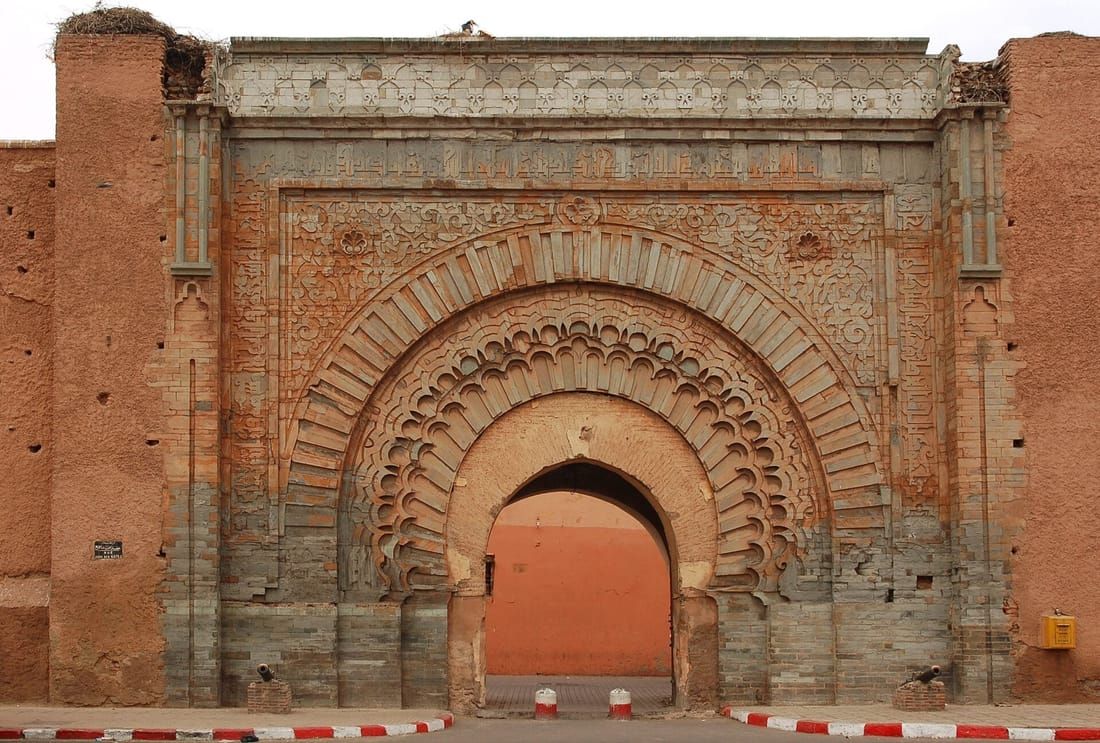
The Medina runs on its own compass. Narrow alleys twist without warning, sounds bounce off ochre walls, and the smell of cedarwood mixes with grilled meat and something sweet you can't quite place. This is the oldest heart of Marrakech: souks layered like geological strata, riads hidden behind unmarked doors, mosques whose minarets frame every rooftop view.
You'll find the densest concentration of traditional accommodation here, from simple guesthouses to some of the city's most refined riads. Jemaa el-Fna is the anchor point, but the deeper you go, the quieter it gets. The Medina rewards slow walking, wrong turns, and a willingness to get lost before you get found.
Best for: first-timers who want full immersion, couples looking for romantic riads, anyone who'd rather hear the call to prayer than traffic.
The best time to walk the souks is mid-morning, when the light cuts through the lattice roofs and the stallholders are still unhurried.
Kasbah
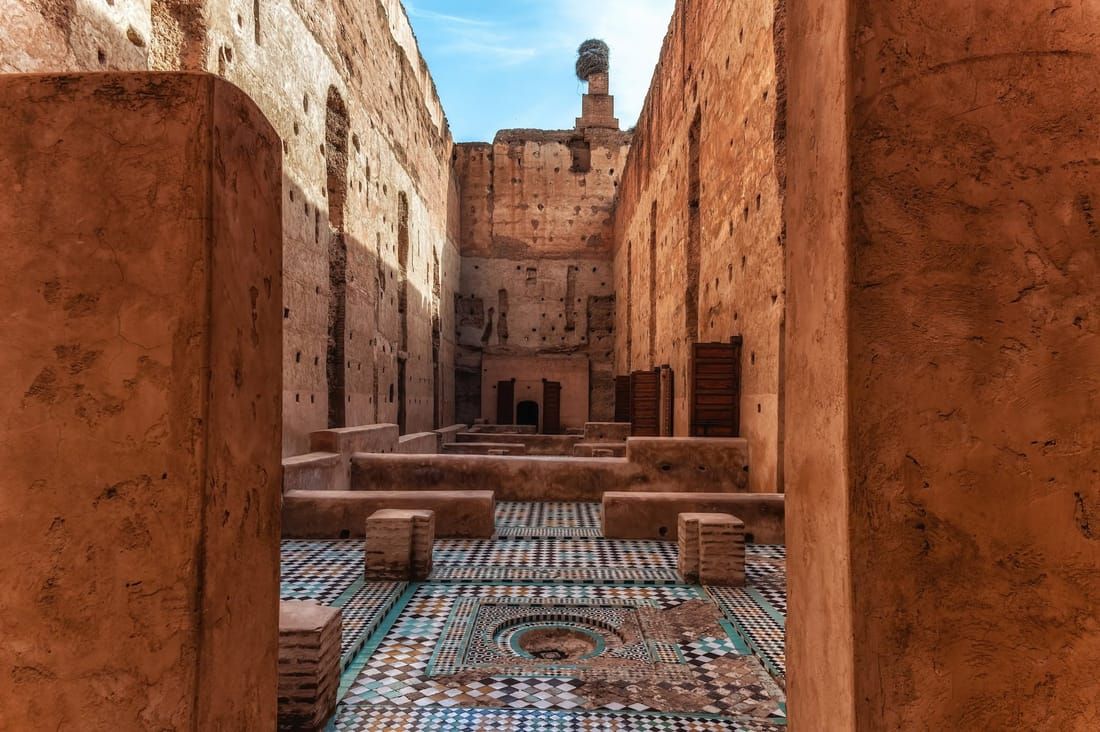
Technically still within the Medina walls, the Kasbah feels like a different city. The air opens up. The streets widen. The pace drops. This is the royal quarter, built around the ruins of the El Badi Palace and the Saadian Tombs, where Marrakech trades its commercial energy for something more solemn and spacious.
The architecture here is grander in scale: thick pisé walls, monumental gates, long avenues shaded by orange trees. Accommodation tends toward larger riads and boutique hotels with generous courtyards. It's a quieter base than the central Medina, but everything is still within walking distance.
Best for: travelers who want the Medina atmosphere without the Medina intensity, history lovers, those who prefer calm evenings.
The Kasbah mosque area at sunset is one of the most underrated walks in the city; few tourists, golden light, storks circling above.
Mellah
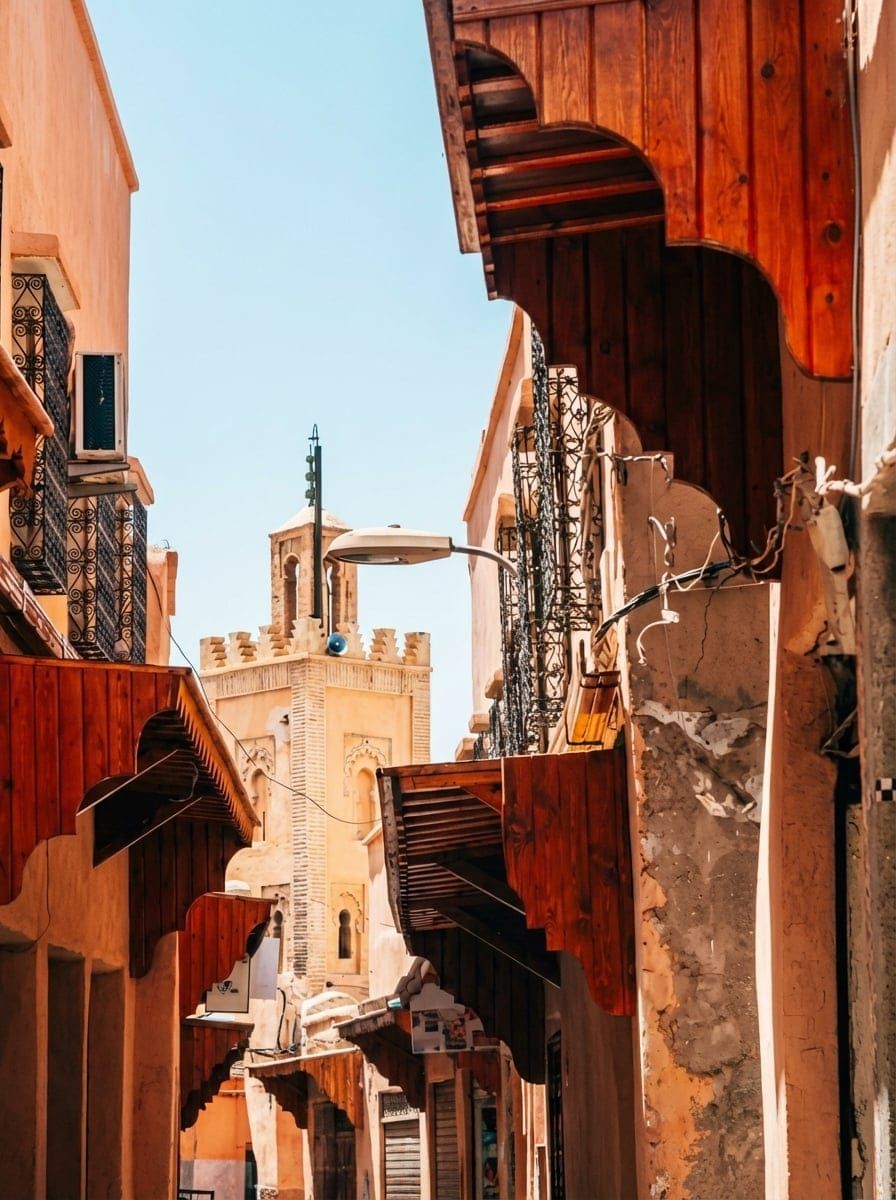
The old Jewish quarter sits between the Kasbah and the eastern Medina walls, and it carries a story you feel before you read about it. The streets are wider than in the rest of the Medina, the balconies are wooden and enclosed, the synagogues are discreet, and the Miaara cemetery stretches out in a field of white plaster tombs under open sky.
The Mellah has its own market, its own rhythm, and a melancholy that the rest of the Medina doesn't share. It's less polished than the Kasbah, more raw, and increasingly home to small guesthouses and art spaces. The spice souk along Rue Riad Zitoun el Kedim connects it to Jemaa el-Fna in a ten-minute walk.
Best for: travelers drawn to layered history, photographers, those who want a Medina address with fewer crowds.
Visit the Lazama Synagogue and the spice market in the same morning; they're steps apart and together they tell the Mellah's whole story.
Hivernage
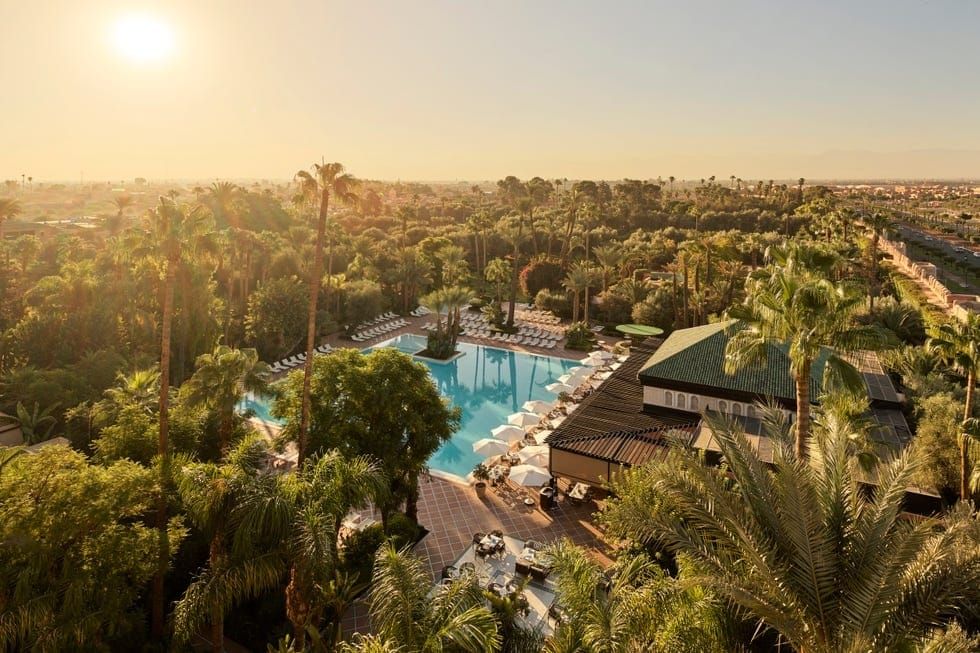
Between the Medina walls and the Ville Nouvelle, Hivernage is Marrakech's most manicured district. Wide avenues, clipped hedges, five-star hotels set behind gates, and restaurants with valet parking. It was designed as a garden neighborhood in the colonial era, and that sense of curated calm remains during the day.
After dark, Hivernage shifts gears. The stretch around Avenue Echouhada comes alive with upscale restaurants, cocktail bars, and the Casino de Marrakech. It's where a good part of the city's evening scene plays out: long dinners that turn into late nights, tables that fill as the temperature drops.
Best for: travelers who want Marrakech at its most polished, evening-out plans, anyone who appreciates dining well and staying out late.
Avenue Echouhada on a weekend night is the closest thing Marrakech has to a boulevard culture; pick a restaurant, settle in, and let the evening find its rhythm.
Guéliz
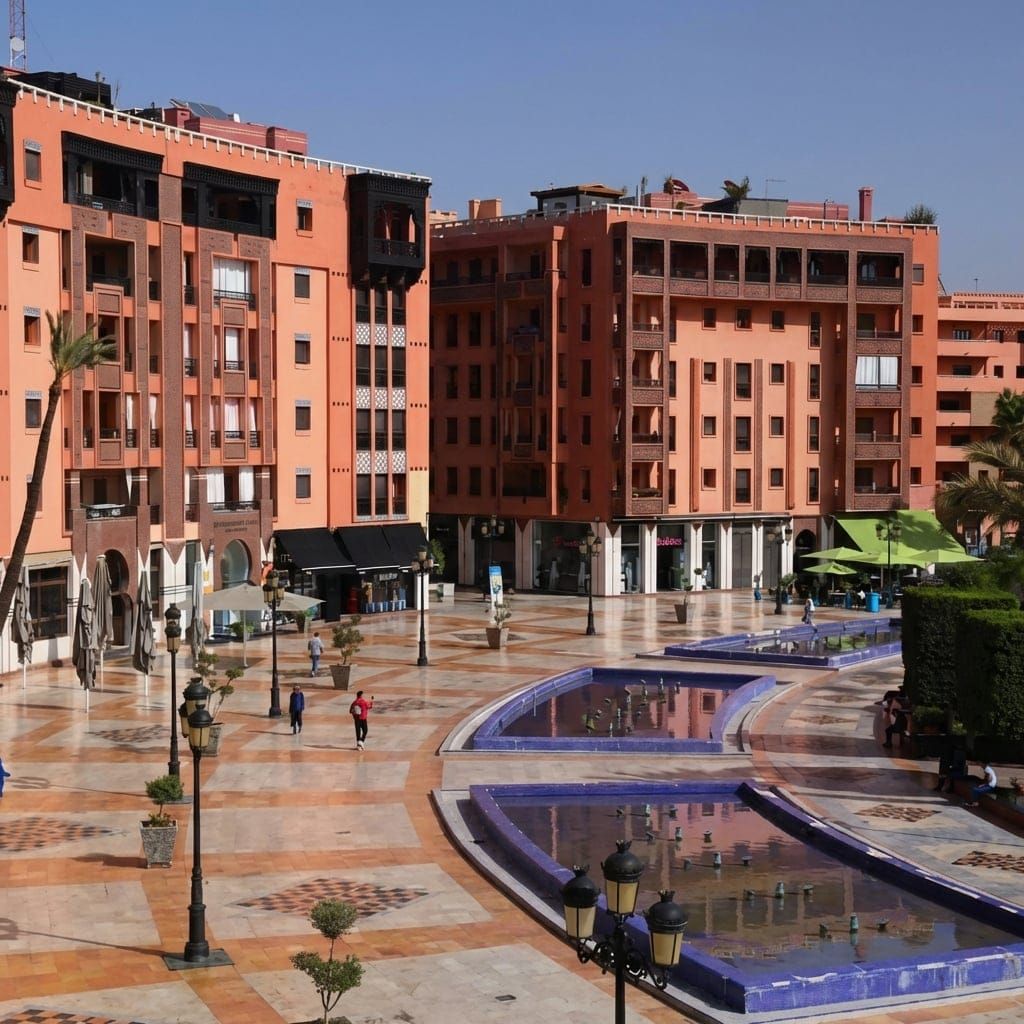
Guéliz is the Ville Nouvelle, the city the French built in the 1930s when the Medina proved too dense to administer. Today it's where Marrakech lives its modern, everyday life: cafés with terraces, bookshops, concept stores, a growing number of galleries, and the kind of restaurants where Marrakchis go out any night of the week.
The main artery is Avenue Mohammed V, which begins at the Koutoubia and cuts through the heart of the district. Around it, side streets hold wine bars, bakeries, pharmacies, and tailor shops. Majorelle Garden sits at its northern edge. Guéliz won't give you the postcard Marrakech, but it will give you the real one.
Best for: long-stay visitors, those who want a city-life rhythm, anyone who needs a break from the sensory overload of the Medina.
The café terraces along Mohammed V are perfect for a slow morning; order a nous-nous and watch the city go to work.
Palmeraie
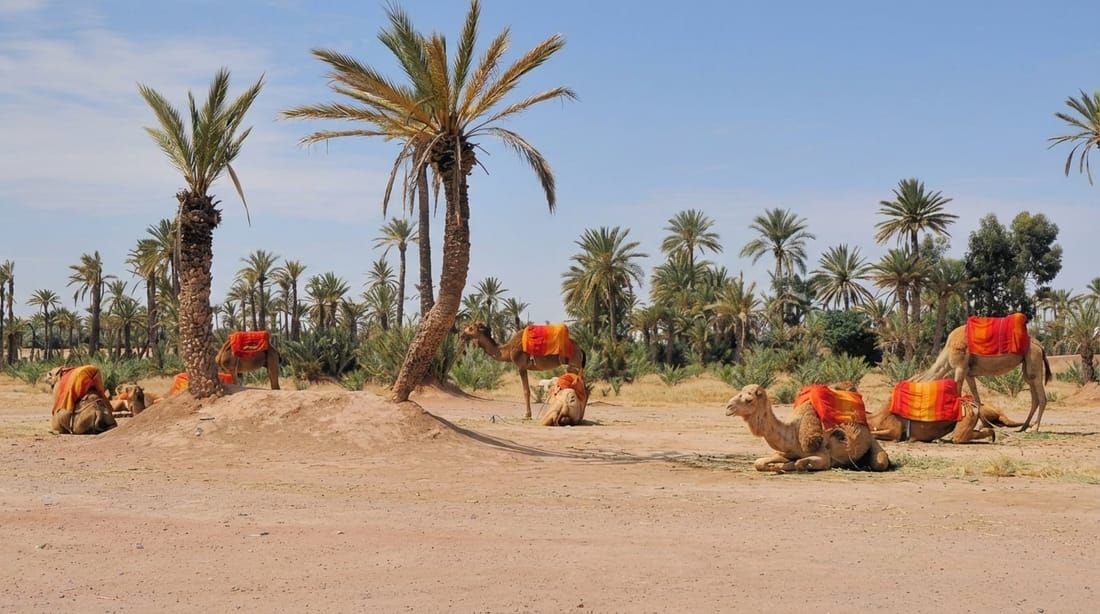
The Palmeraie is a belt of over 100,000 palm trees stretching northeast of the city, a landscape unlike anything else in Marrakech. Sandy tracks wind between tall date palms rising from dry, ochre earth; the light filters through the fronds in long diagonal lines; and on clear days the Atlas Mountains fill the southern horizon.
The accommodation here is larger, more private, and almost always comes with a pool and a garden. You'll need a car or taxi for everything, but if what you want is space and stillness with the city 20 minutes away, nothing else compares.
Best for: families with children, groups renting private villas, couples who want seclusion, anyone who values a pool over a souk.
Insist on seeing your villa or hotel location on a map before booking; the Palmeraie is vast and some properties are genuinely remote.
Sidi Ghanem
Five kilometers northwest of the Medina, past the last roundabouts and into a grid of concrete blocks, Sidi Ghanem doesn't look like a destination. It looks like what it was: an industrial zone built in the 1980s for factories and warehouses. Then the designers moved in.
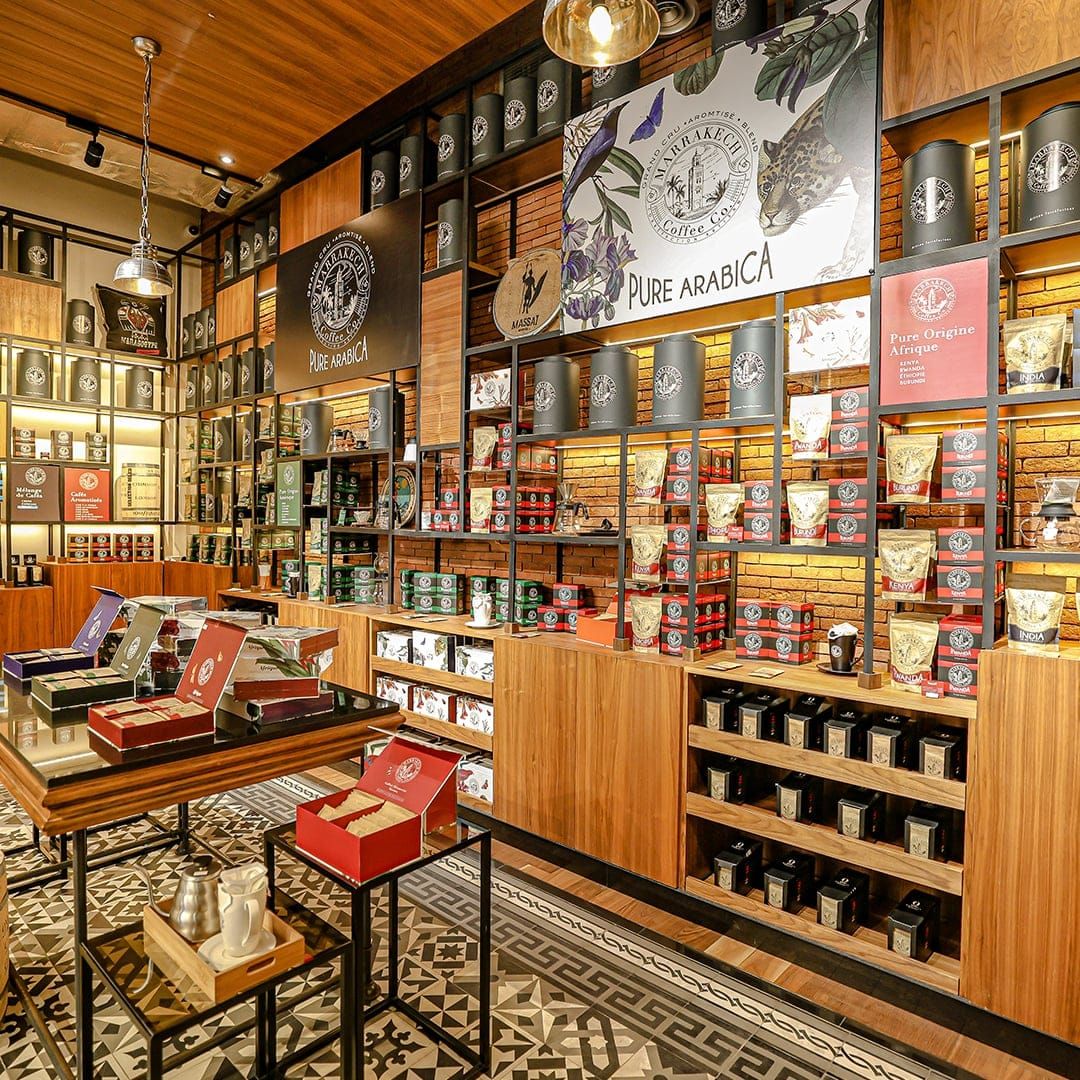
Today, behind roll-up metal doors, you'll find rug ateliers, ceramic workshops, furniture showrooms, contemporary art galleries, and concept stores. This is where Marrakech makes things. Artisans and creators work in the same spaces where they sell. No haggling, no pressure; prices are fixed and cards are accepted.
Best for: design lovers, serious shoppers looking beyond the souks, anyone furnishing a home or hunting for pieces you won't find anywhere else.
Go on a weekday morning when the workshops are in full production; Saturday afternoons are lively but Sundays most places close.