Where to Eat near Place des Epices: Six Restaurants in the Heart of the Medina
8 April 2026
Six tables within minutes of Marrakech's oldest spice market: restaurants near Place des Epices for every register and every appetite.

L'mida takes its name from the table: in Darija, the word carries all the warmth of the family meal. The restaurant occupies a riad-style building off Place Rahba Kedima, with the kitchen on the lower floors and a green terrace above, its worn terracotta tiles and trailing plants framing a view over the medina rooftops that improves with the hour. Chef Narjisse Benkabbou cooks a contemporary Moroccan menu: classical structures revisited with careful technique, seasonal produce sourced locally, a restraint that keeps the focus on flavour rather than spectacle. The Berber Gnocchi, a dish that fuses Italian technique with Moroccan seasoning, has become a signature: unexpected, precise, worth ordering. The tagines rotate with the season and are written on a daily slate rather than printed. The mocktails, freshly prepared with fruit and spice combinations, are among the better non-alcoholic options in the medina. The terrace at lunch is shaded and unhurried; at dusk, the light over the rooftops changes the room entirely, and the dinner hour at L'mida has a different, quieter quality than the busier midday service. The kitchen is often fully booked in peak season: plan ahead.
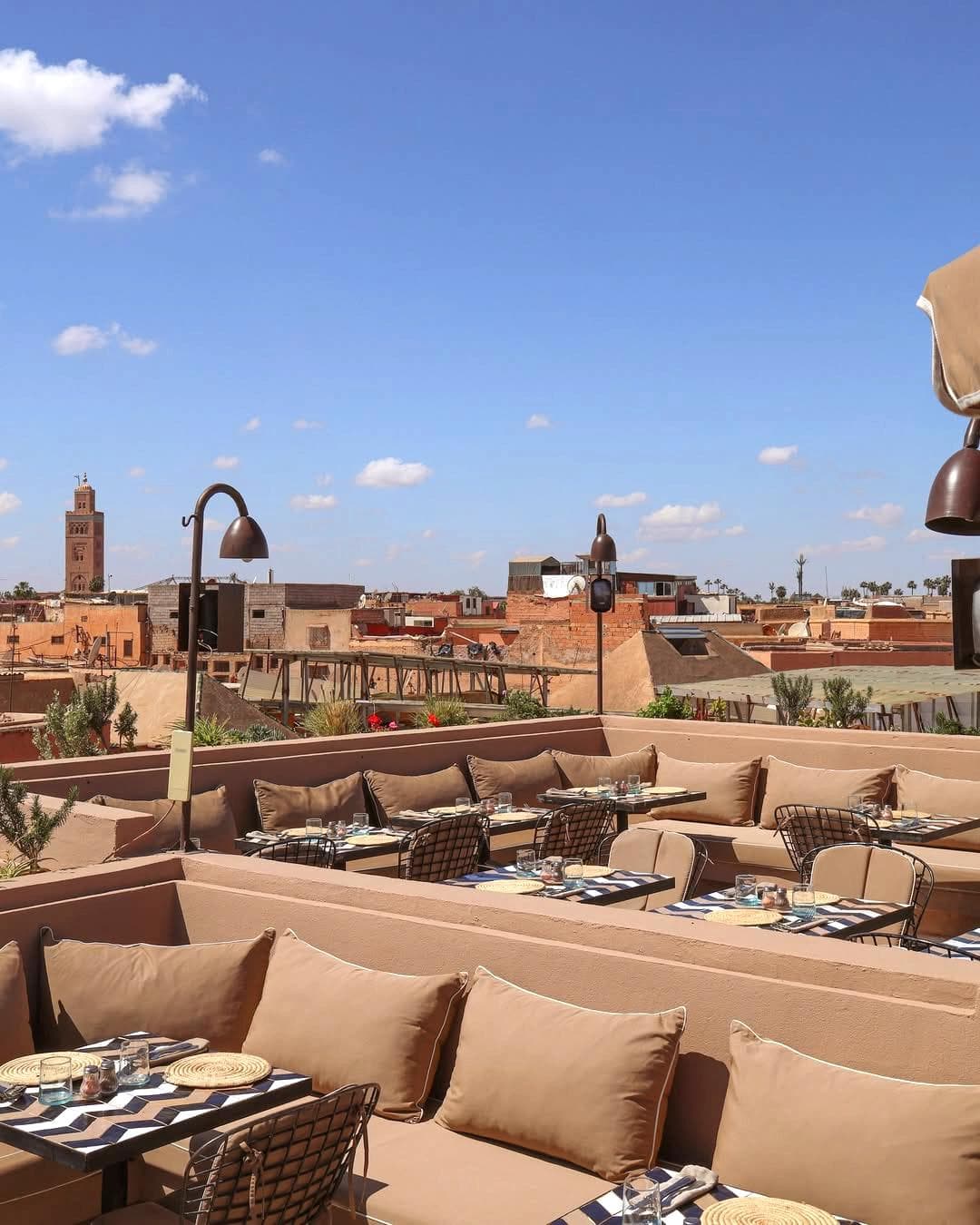
Nomad was one of the first restaurants in Marrakech to make a case for contemporary Moroccan cooking as something more than a dressed-up version of the classics. Since opening, it has influenced a generation of addresses that came after it, and remains, on its own terms, one of the most considered tables in the medina. The building rises four floors off Place des Epices, with two terraces opening over the square and the souk rooftops beyond, the Atlas Mountains as an occasional backdrop on clear mornings. The kitchen works Moroccan flavour through a modern lens: local produce, precise technique, dishes that hold their own against the view. Calamari from Agadir arrives with anchovy, ginger and harissa, braised eggplant and zucchini alongside. The chicken pastilla remains a consistent reference point. Booking ahead is recommended; the terrace fills quickly at lunch and across the evening.
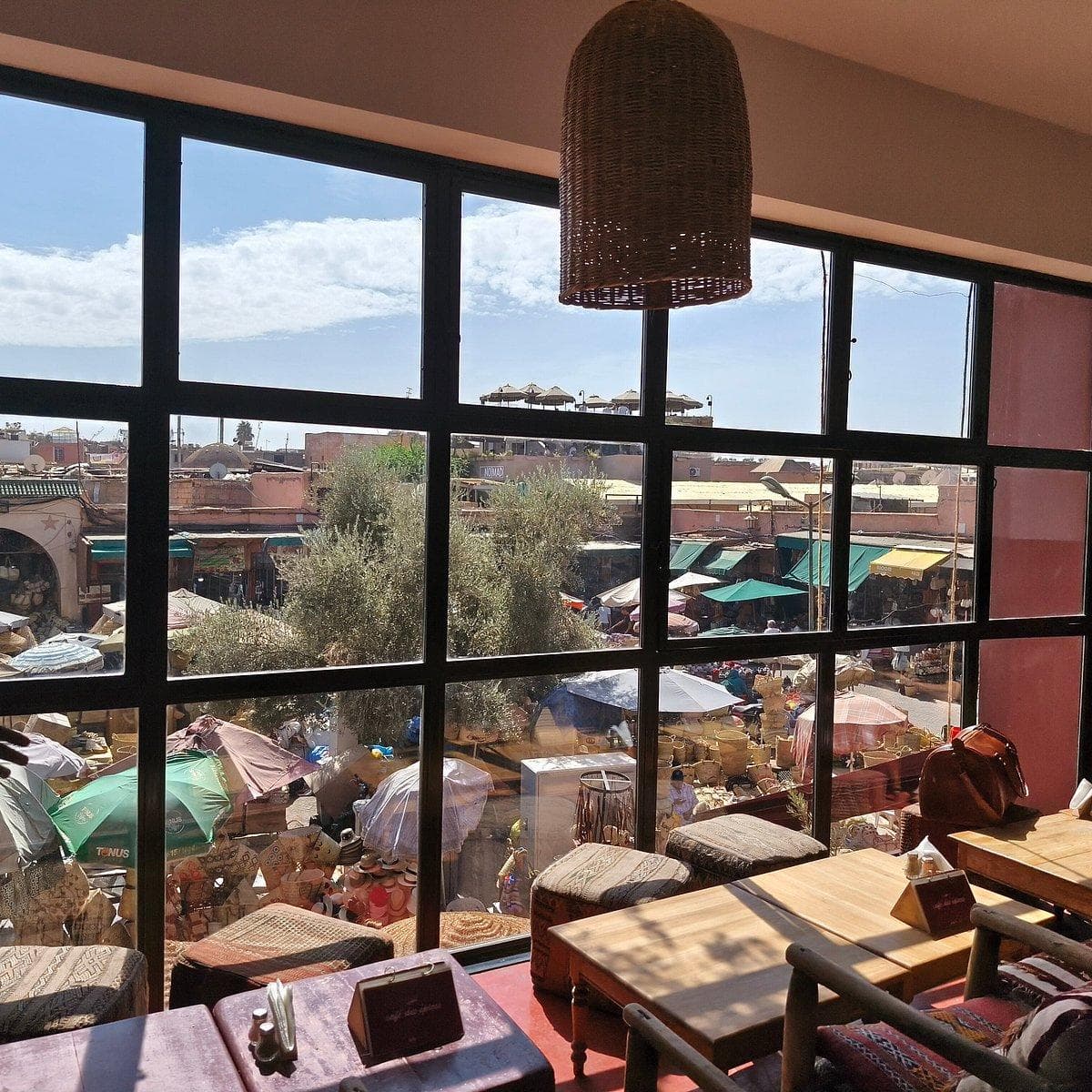
Cafe des Epices opened before the square around it became the scene it is today, and that timing shows in the ease with which it occupies its position. It sits directly on Place Rahba Kedima, its terrace looking out over the stalls and the slow rhythm of market life below. The menu is deliberately spare: freshly squeezed juices, Moroccan teas with cardamom and thyme, spiced coffees with cinnamon or ginger, salads, sandwiches, a Moroccan breakfast that arrives with crepes, barley bread and orange juice. This is not a destination for a full meal but for the kind of pause that belongs to a particular medina register: the tea between two souks, the lunch that becomes an afternoon, the view taken at the right pace. The house spice variations on coffee and tea are a small pleasure worth knowing about. In the morning the terrace is quiet; by noon the square fills and the cafe becomes its own theatre, with the spice sellers and the Atlas visible in the distance forming the backdrop. It is also, in the medina, a reliable meeting point that both sides of an appointment can find without difficulty. Open from 8am until late.
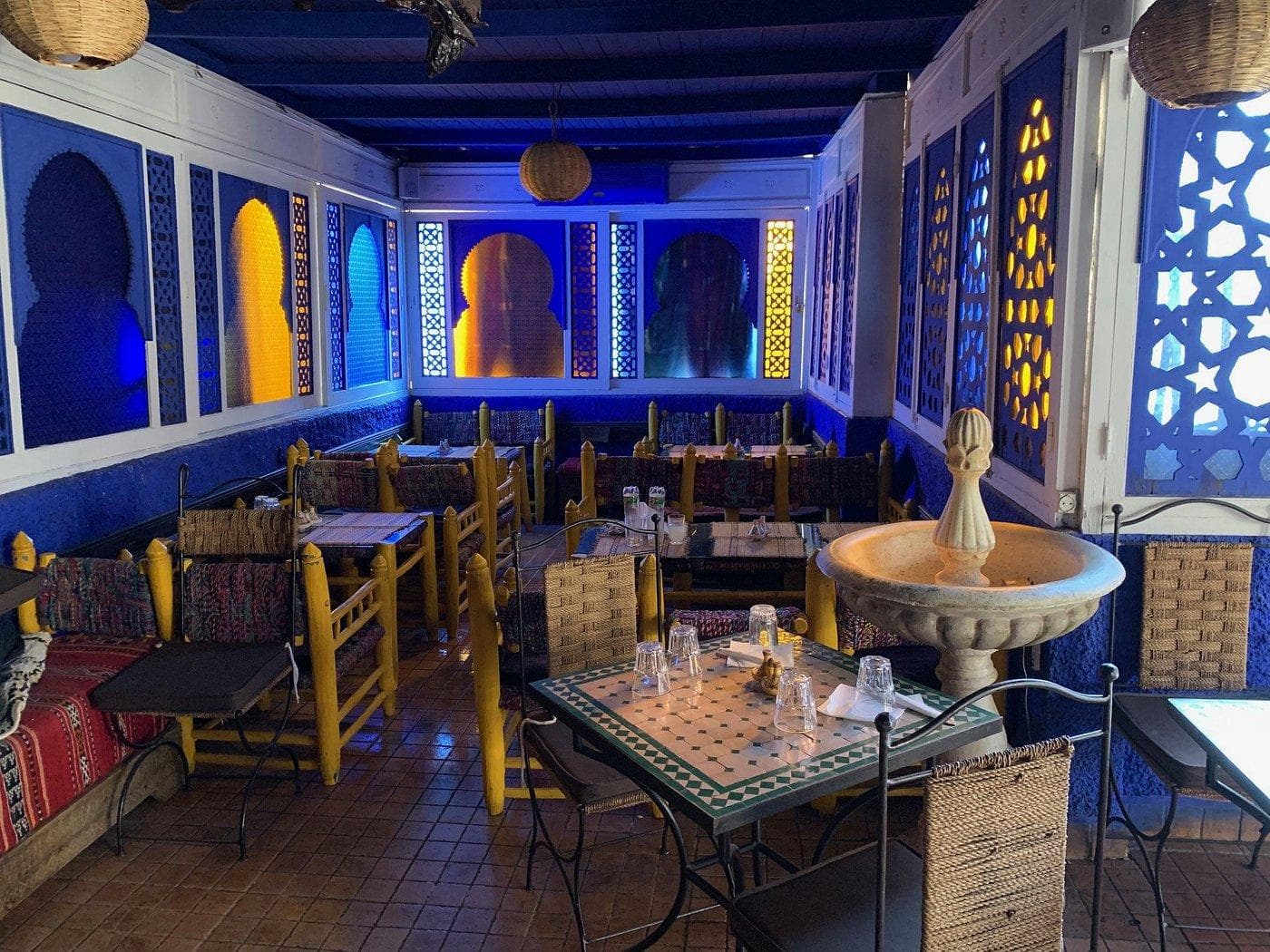
There is no design intent at Chez Brahim. The dining rooms occupy the upper floors of a building on Rue Dabbachi, lit by traditional Moroccan lamps, furnished simply, with a covered rooftop terrace that closes the meal with a view over the nearby rooftops. What brings people back, marrakchis and travellers alike, is the cooking: straightforward, generous, made with the assurance of a kitchen that has repeated these dishes many times and improved them by repetition. The tagines are the point of reference: chicken with olives and preserved lemon, lamb with prunes and almonds, beef with figs and walnuts, each served with the bread that makes the sauce worth finishing. The brochettes are chargrilled and honest. Set menus offer three courses at a price that makes the conversation about value unnecessary. The service is unhurried and warm. Chez Brahim does not perform authenticity; it simply provides a good traditional Moroccan meal at a table near the souks, and has done so long enough that the question of credentials no longer needs to be raised.
Jamaâ El Fna Rue derb dabachi n° 38, fondek El Massioui n° magasin 26، Marrakech 40000, Morocco

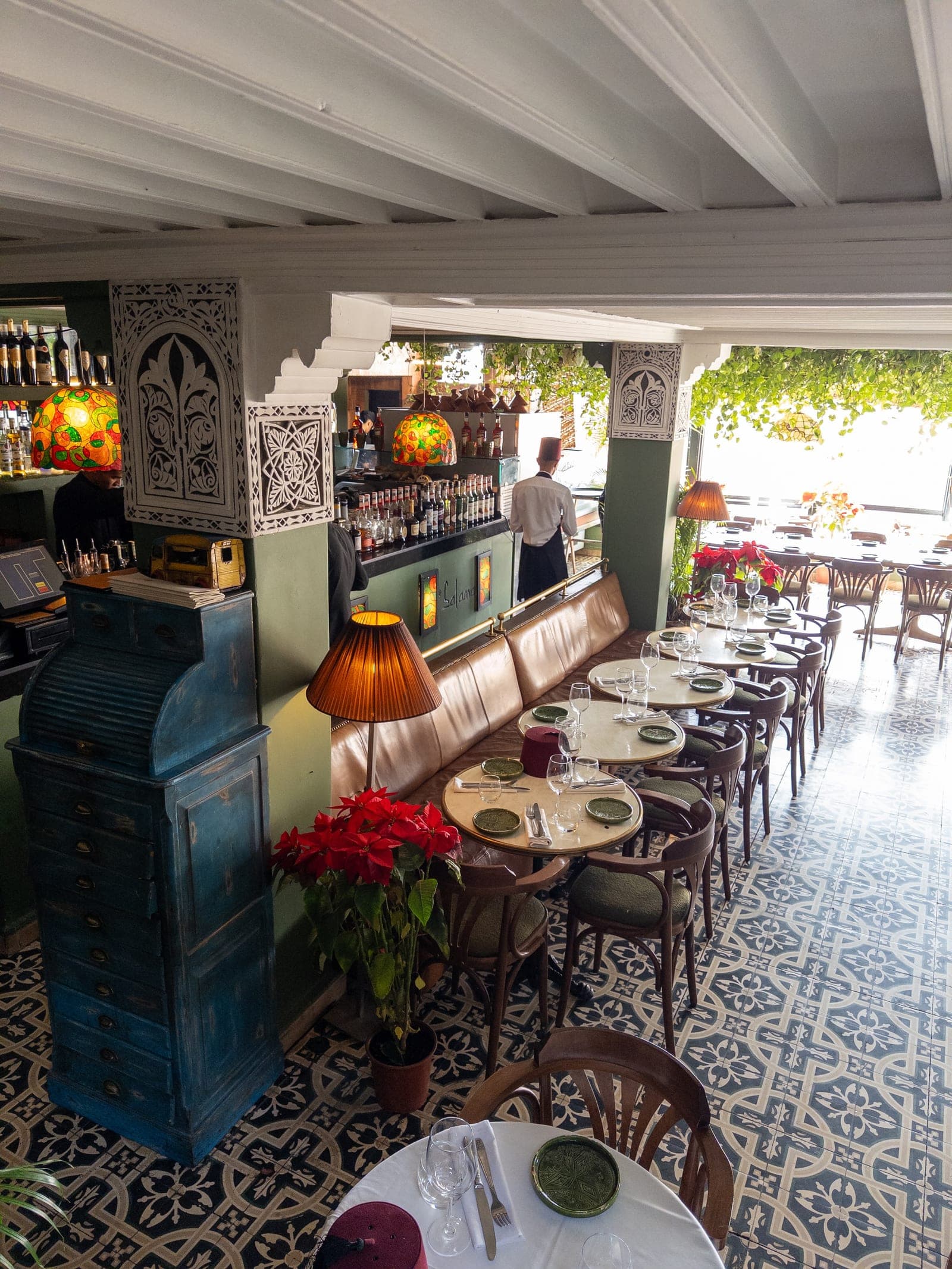
Le Salama occupies three floors on Rue des Banques, around the corner from Place des Epices, and manages to be simultaneously a serious Moroccan restaurant and one of the medina's more theatrical dining experiences. The first two floors carry a colonial warmth: dark wood, moucharabiehs, leather armchairs, a grand piano in the corner. The rooftop terrace is where the room opens: 360 degrees over the medina, the Atlas visible on clear days, the call to prayer arriving from multiple directions as the afternoon extends. The kitchen cooks traditional Moroccan with care: briouates filled with chicken, almonds and spice; lamb tagine slow-cooked with prunes, almonds and honey; couscous with chickpeas and slow-braised vegetables. Portions are generous and the pace allows for a meal that extends naturally into the late afternoon. In the evenings a pianist takes over the lower floor and the room shifts register, drawing a crowd that comes as much for the atmosphere as for the food. Le Salama suits a long, occasion-inflected dinner as readily as it suits a relaxed lunch with a good view. Booking ahead is recommended for dinner and for the rooftop in high season.
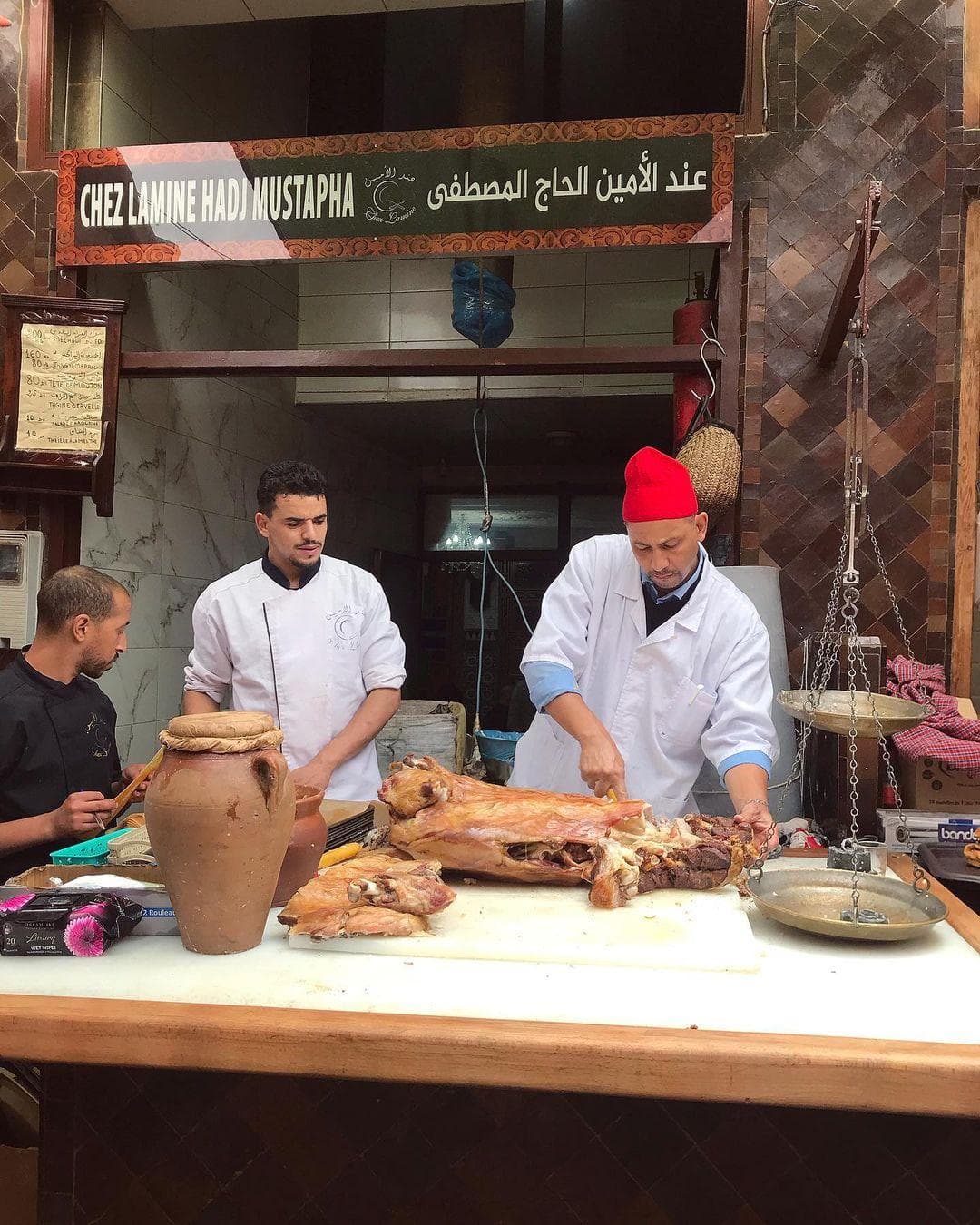
Every morning, well before the souks open, the underground wood-fired ovens beneath Chez Lamine Hadj Mustapha receive the day's carcasses: around forty whole lambs lowered in, left for three to four hours as the fire brings them to a state that is simultaneously crisp at the surface and yielding inside. By noon the mechoui is ready. By mid-afternoon it is often gone, and no amount of waiting will produce more. The operation runs on a logic that is indifferent to the restaurant calendar: the cook knows when the lamb is right, and the hour follows from there. The menu is three dishes, all lamb: mechoui, served on a board with ground cumin; tangia marrakechia, the clay-pot slow braise specific to this city; and tete de mouton, for those who know. There is no other register here. The address is in the Souk Ablouh Kessabine, a five-minute walk from Place des Epices toward Jemaa El Fna, and the meal is one of those experiences in Marrakech that makes all questions about authenticity feel beside the point. Come at noon. Come hungry. The restaurant closes when the lamb runs out.
You may also like…