Farmers Marrakech: Farm-to-Table in Gueliz
Where the Soil Speaks First — Inside the Gueliz restaurant that rewired the relationship between Marrakech and its own land
6 April 2026
Inside the Room on Rue Mohammed el Beqal
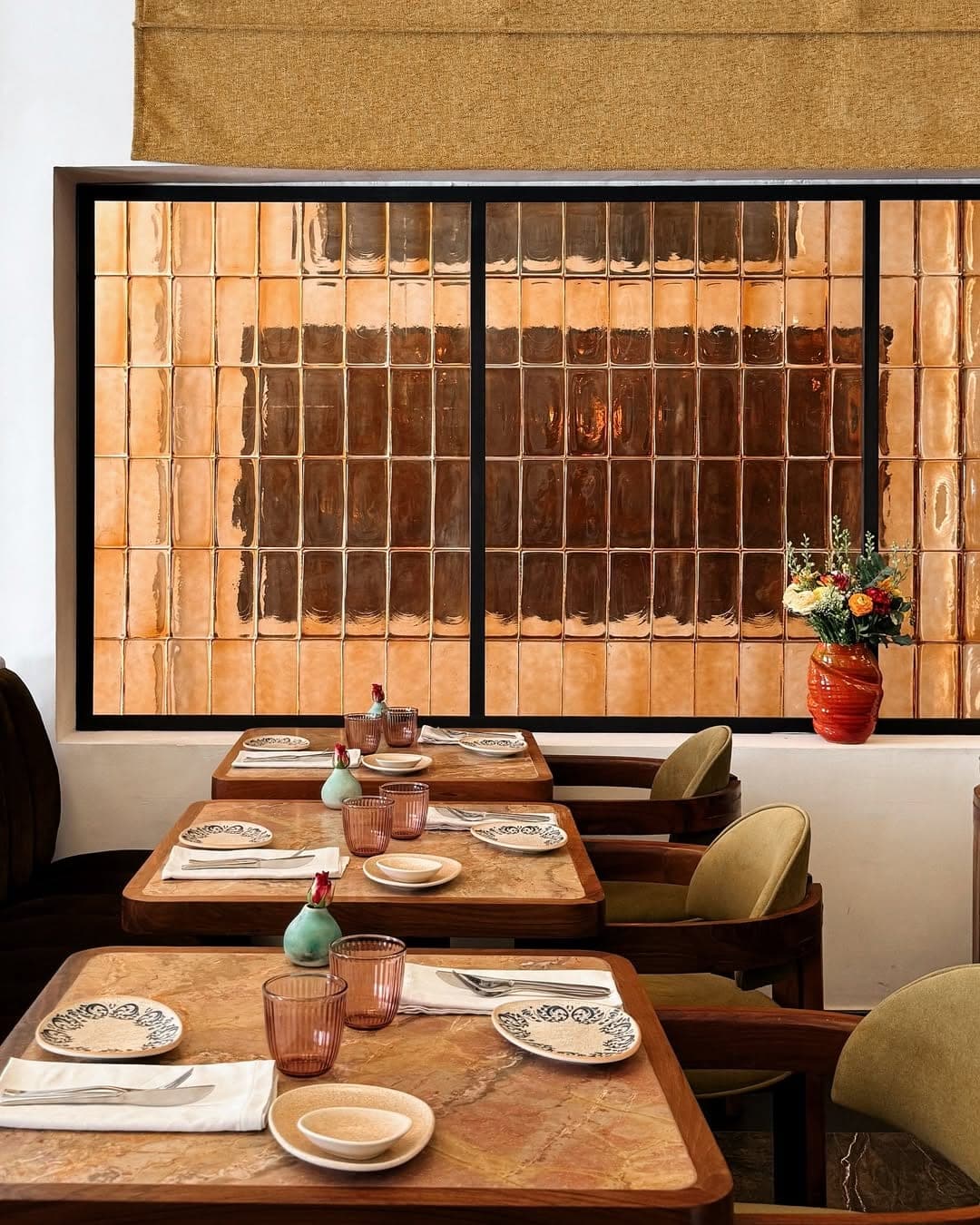
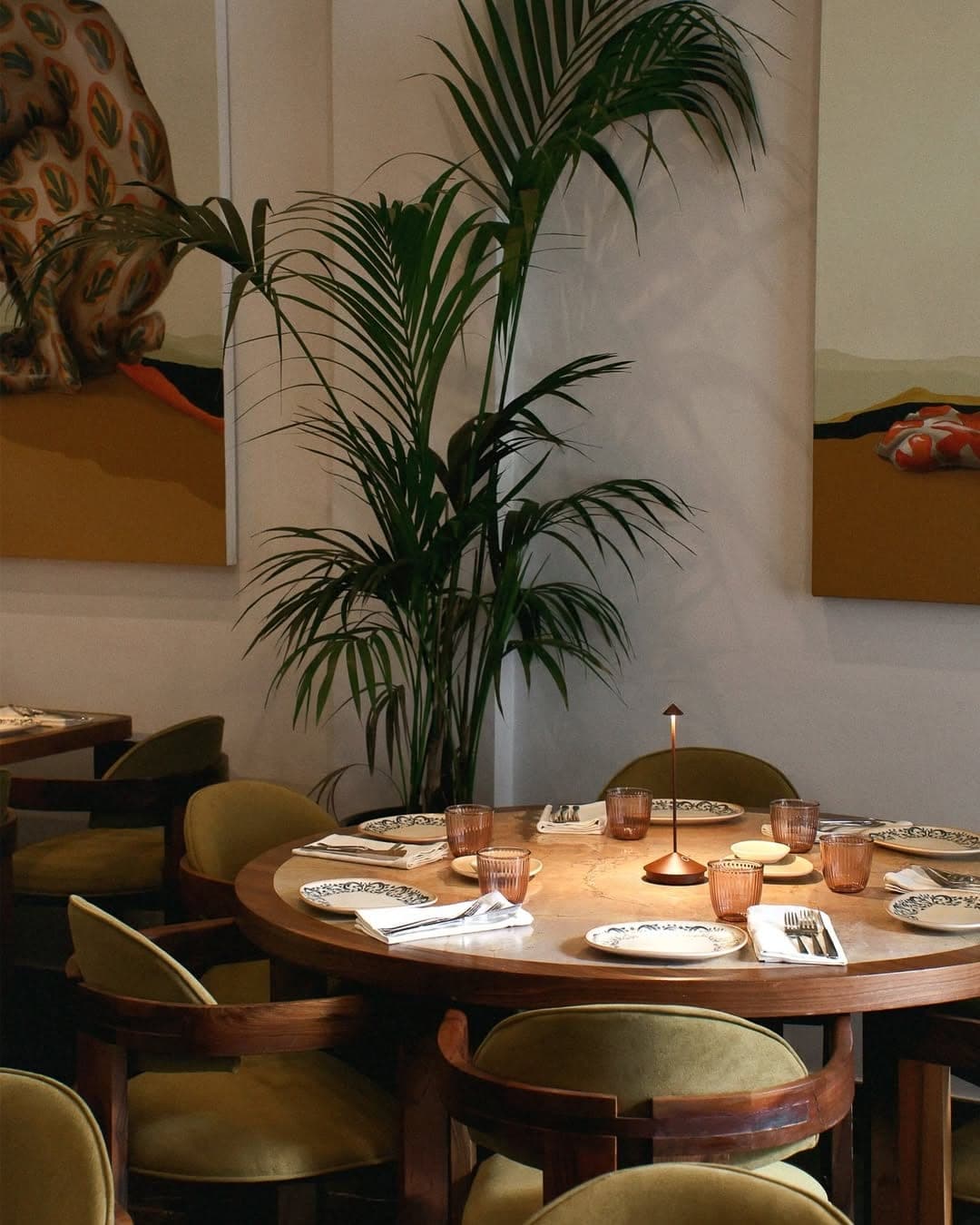
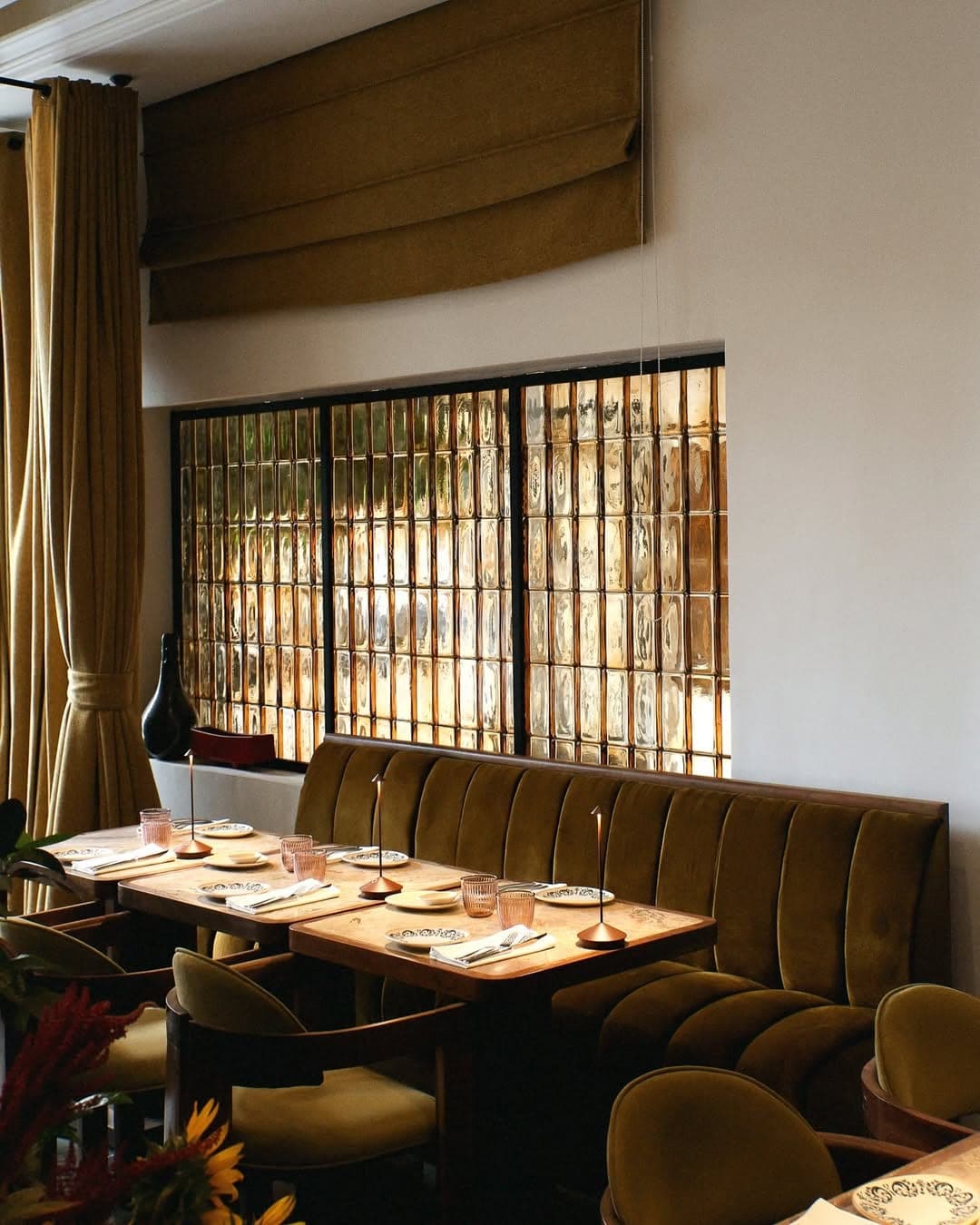
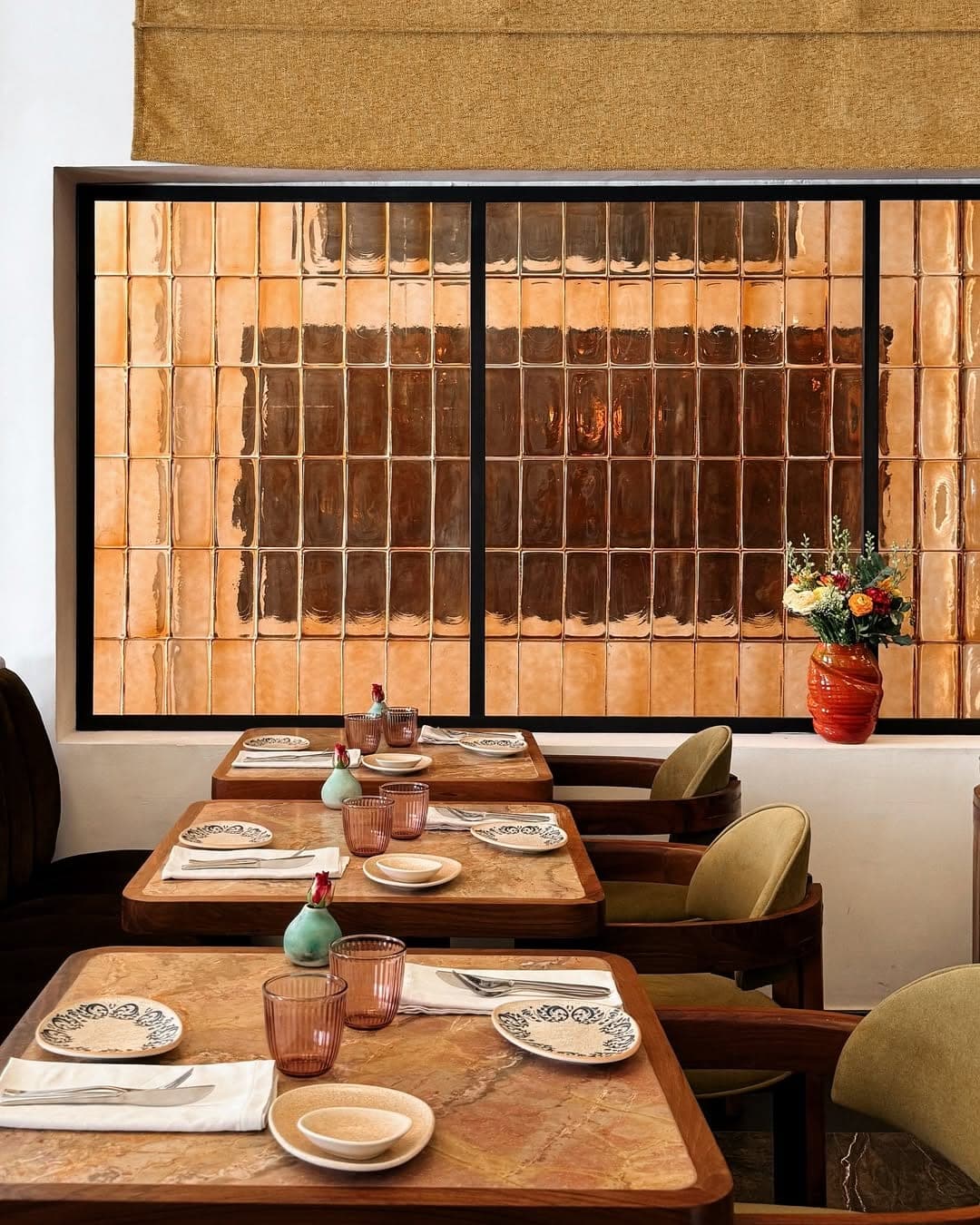
You enter through a repurposed Art Deco arcade on Rue Mohammed el Beqal, past the sourdough counter of Blue Ribbon and the quiet shelves of a farm shop selling honey and dried herbs in unmarked jars. The corridor narrows, then opens. The dining room at Farmers Marrakech arrives not as a grand reveal but as a controlled exhale: forty-four seats, an open kitchen at its center, marble underfoot, golden globe lights overhead casting warm pools across walnut tables. The air carries roasting vegetables and something herbaceous, unplaceable at first. There is no threshold fanfare, no hostess choreography. Just the immediate, almost physical sense that this room has been designed to recede, to let what arrives on the plate do the talking.
Farmers occupies a particular seam in Gueliz, the ville nouvelle district where French colonial geometry meets Marrakech's commercial pulse. This is not the medina's layered density, not the Palmeraie's performative seclusion. Gueliz operates at a different register, with avenues wide enough for afternoon light to fall unobstructed, storefronts that shift identity every few years, a neighborhood perpetually negotiating between local rhythm and cosmopolitan aspiration. It is here, inside Galerie El Beqal, a renovated shopping arcade whose name translates simply as "the grocer," that the restaurant opened in September 2024, the latest chapter in a project that began not in a kitchen but in depleted soil on the city's southeastern outskirts.
From Depleted Soil to Sanctuary Slimane
The origin story matters because at Farmers it is not metaphor: it is supply chain. Casablanca-born Aziz Nahas, a former financier, purchased ten hectares of barren land outside Marrakech around the year 2000. What he found was grim: nutrient-stripped earth, two surviving trees, no animal life to speak of. Over two decades, through permaculture principles (drip irrigation, companion planting, soil regeneration), the property became Sanctuary Slimane, a functioning farm that now hosts over five thousand trees, more than fifty raised beds, a ceramic studio, and an artist residency program. The farm produces organic vegetables, fruits, poultry, eggs, honey, olive oil, and fresh herbs. It employs twenty people. It sits roughly thirty minutes from the restaurant. And it is, in the most literal sense, where the menu begins.
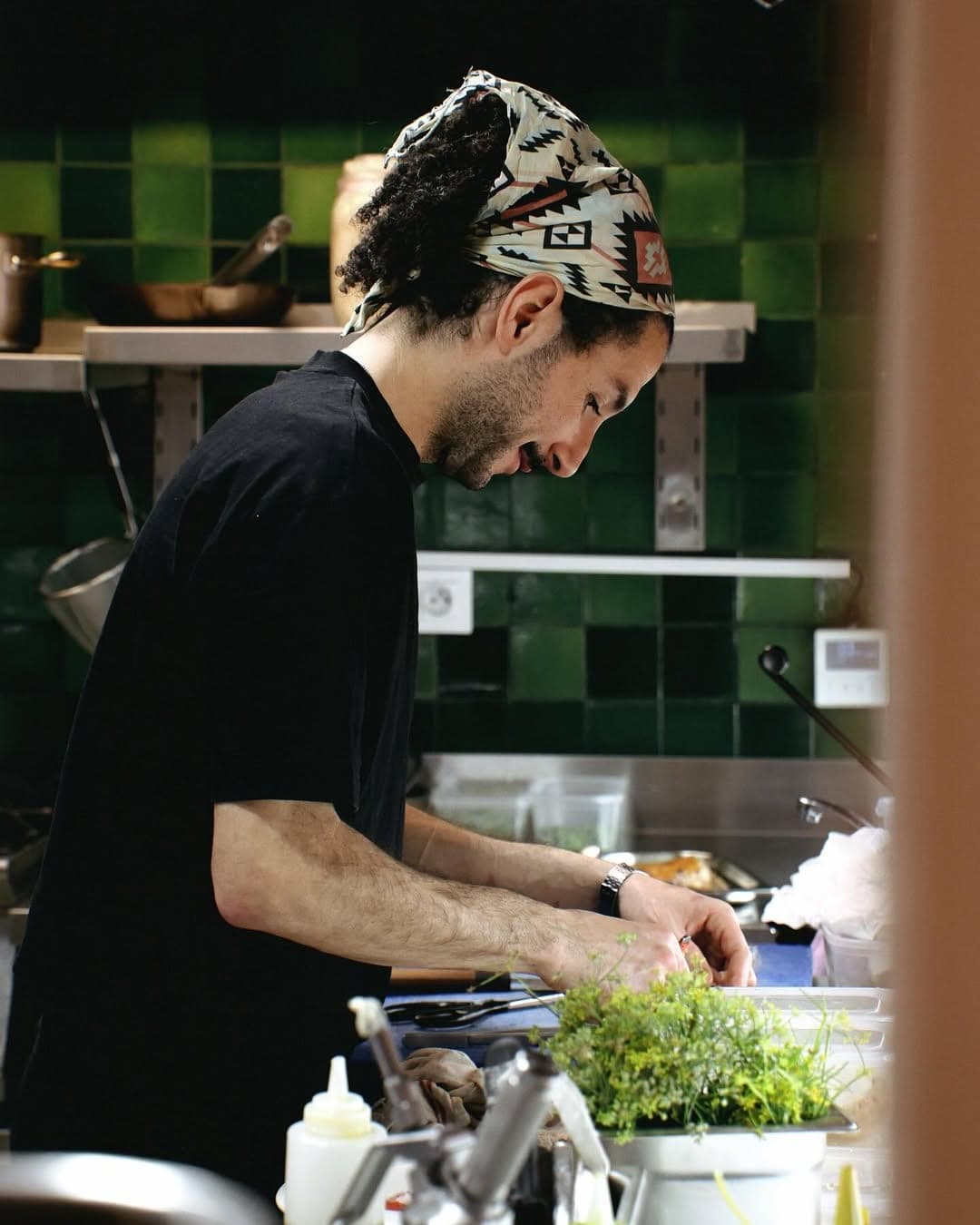
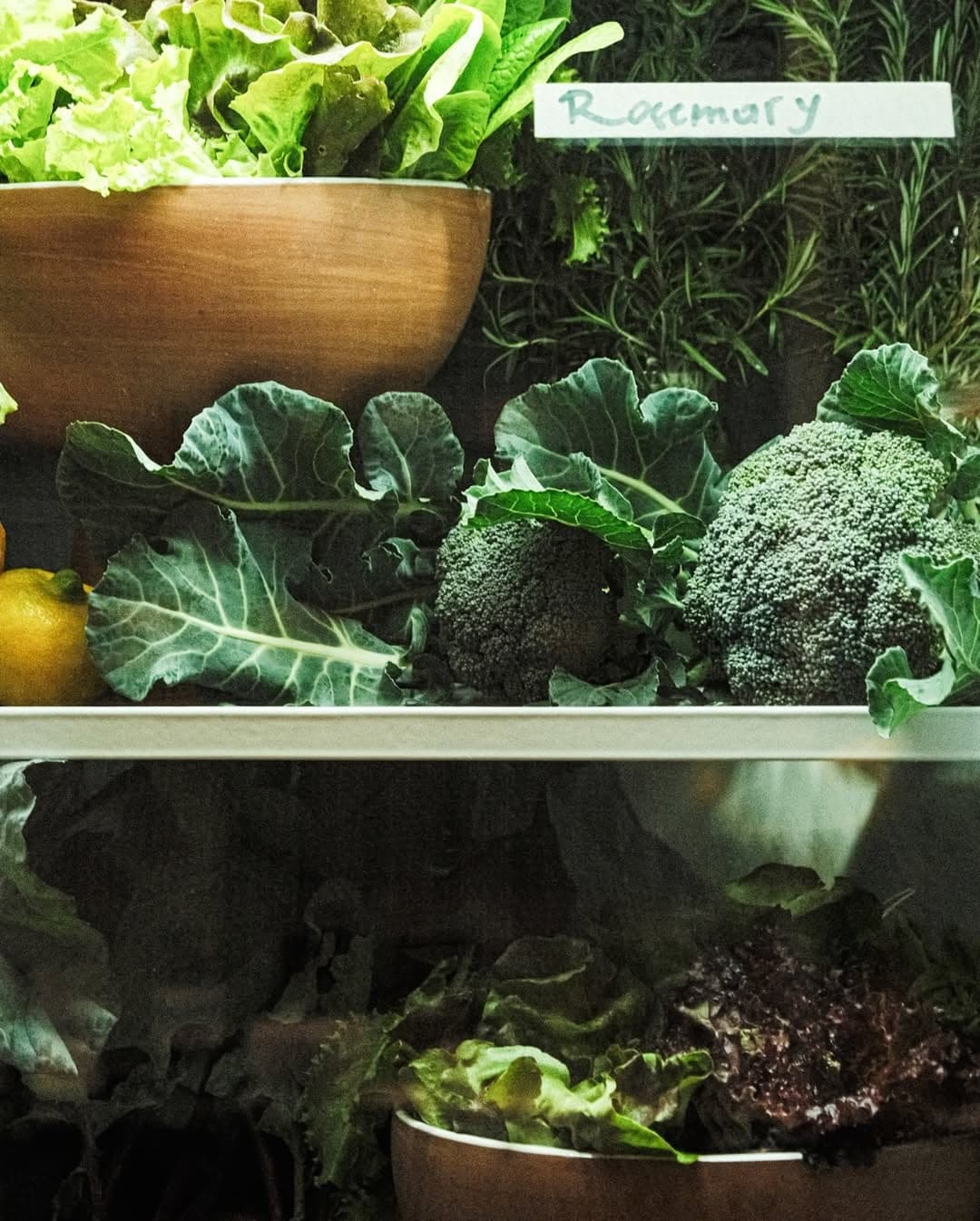
In 2021, Nahas partnered with Benjamin Pastor, a French restaurateur, to translate Slimane's yield into something edible and public. They started cautiously: Blue Ribbon, a bakery and café, opened in 2023 within the same arcade, serving sourdough, salads with halloumi, and bánh mì sandwiches. A farm shop followed, stocking Slimane's vegetables, dried herbs, and small-batch products. The restaurant came last, as if it needed the ecosystem around it to exist first. Chef Driss Aloui, self-trained and Moroccan, was given the kitchen. His mandate: a nature-to-table menu that would be cross-cultural in technique but rooted in Slimane's seasonal output.
The Room and Its Details
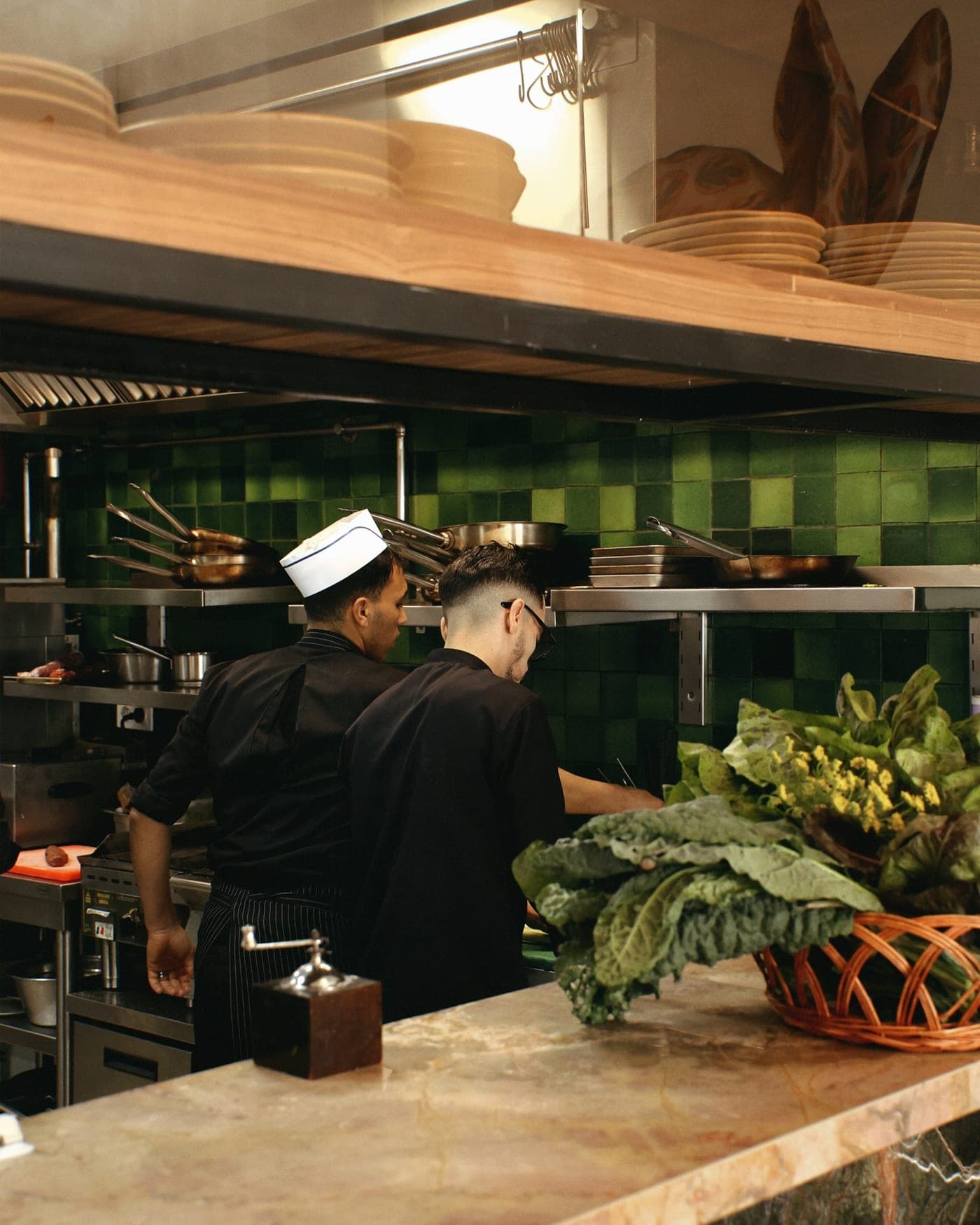
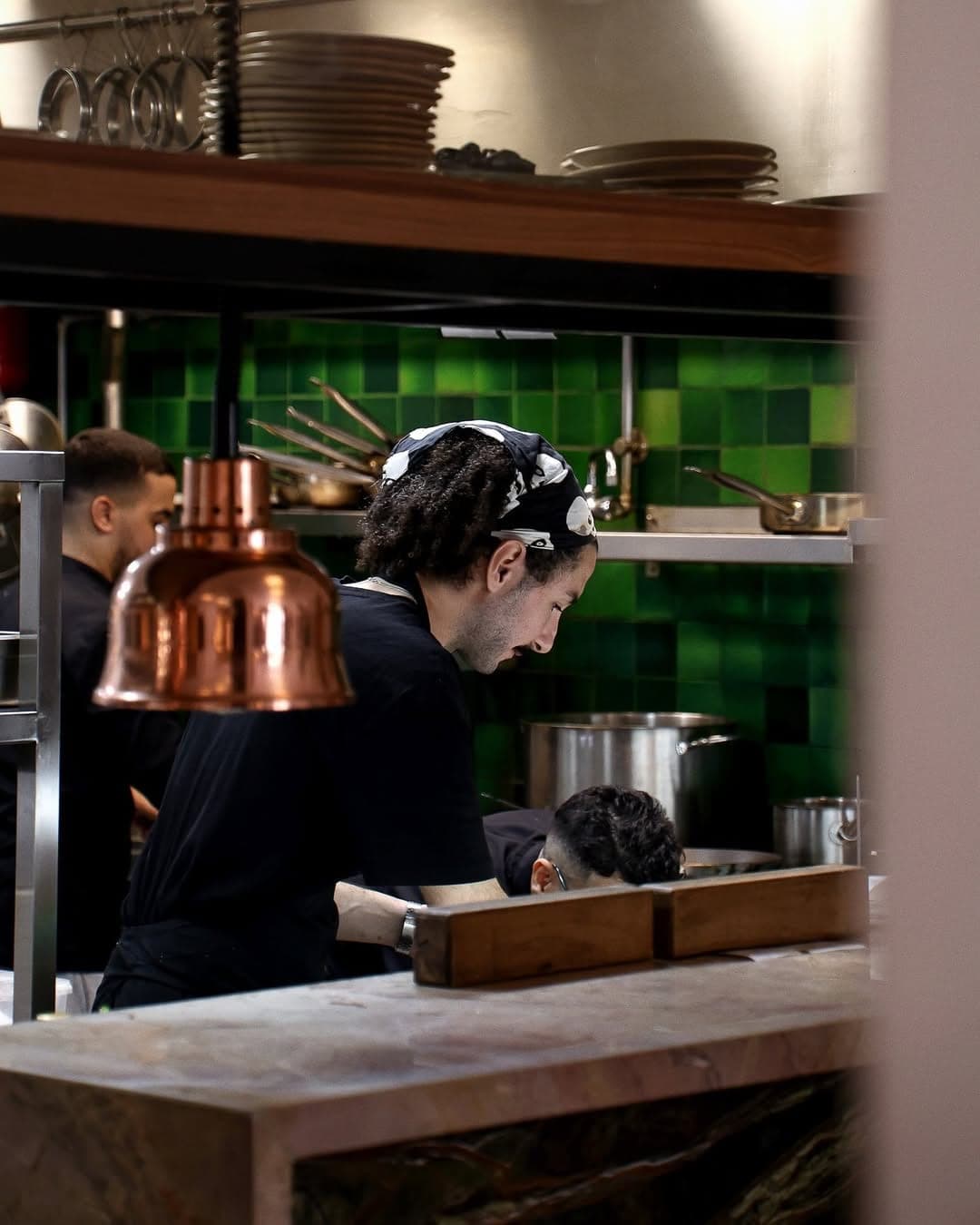
The room reflects this discipline. The interiors, installed within the arcade's former exhibition space, maintain a stripped-back palette: neutral tones, natural materials, surfaces that absorb rather than project. Wood and metal details reference the building's Deco bones without reproducing them. Artwork punctuates the walls: paintings by Sarah Edwards depicting the hares that live on the Slimane property, an irreverent touch that anchors the space to its agricultural source rather than to any generic notion of fine dining. Ceramics used for plating are made in collaboration with artisans connected to the farm. The open kitchen, visible from most seats, functions as both transparency and theater: you can watch the brigade work without feeling surveilled.
The Kitchen: Driss Aloui's Seasonal Logic
What arrives at the table carries the weight of that sourcing discipline. The menu shifts according to what Slimane produces, which means it is genuinely seasonal in a city where the word "seasonal" is often decorative. Aloui works with techniques that favor time over heat: slow roasting, fermenting, preserving, lacto-fermentation, methods that extract depth from ingredients grown for flavor rather than scale.
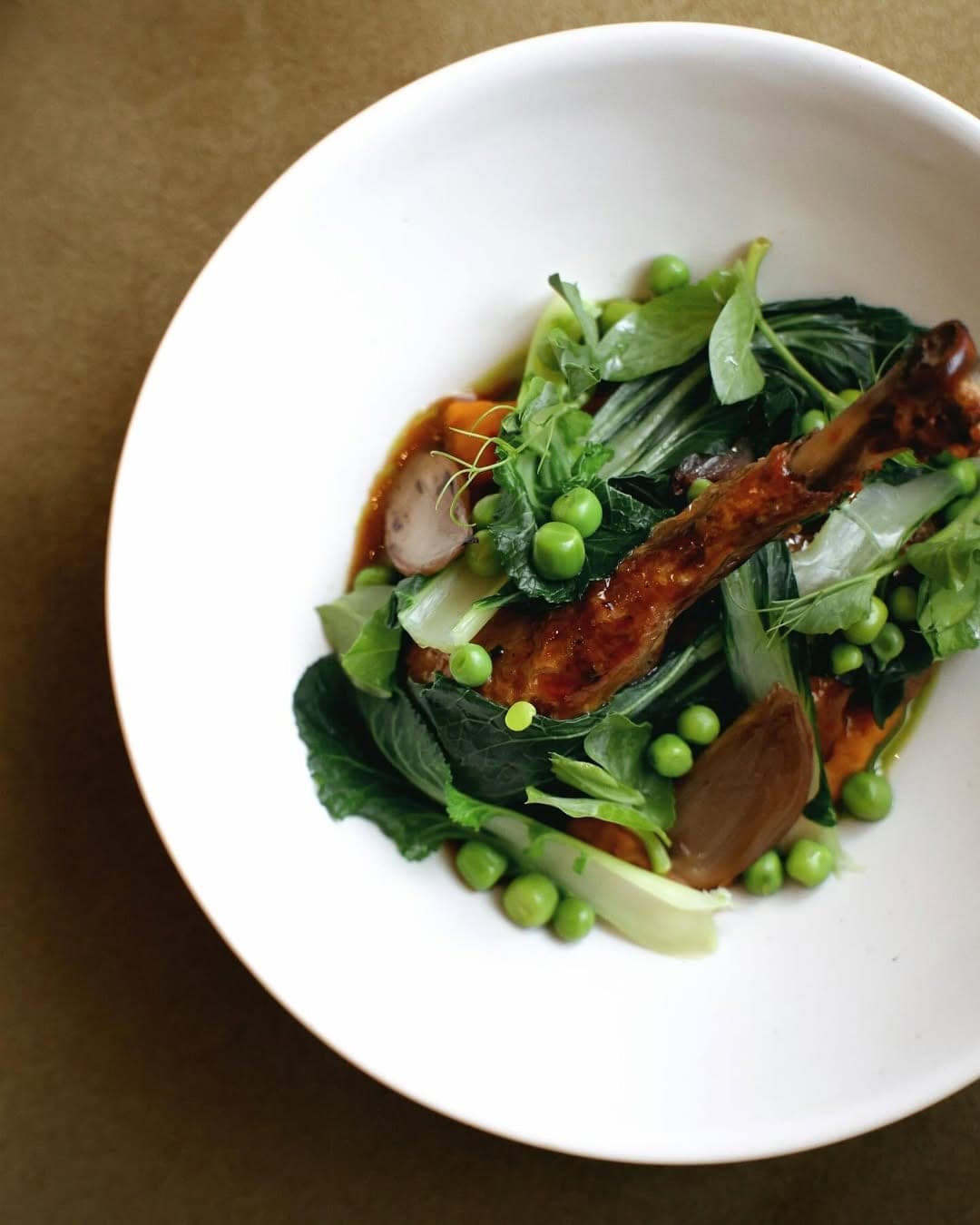
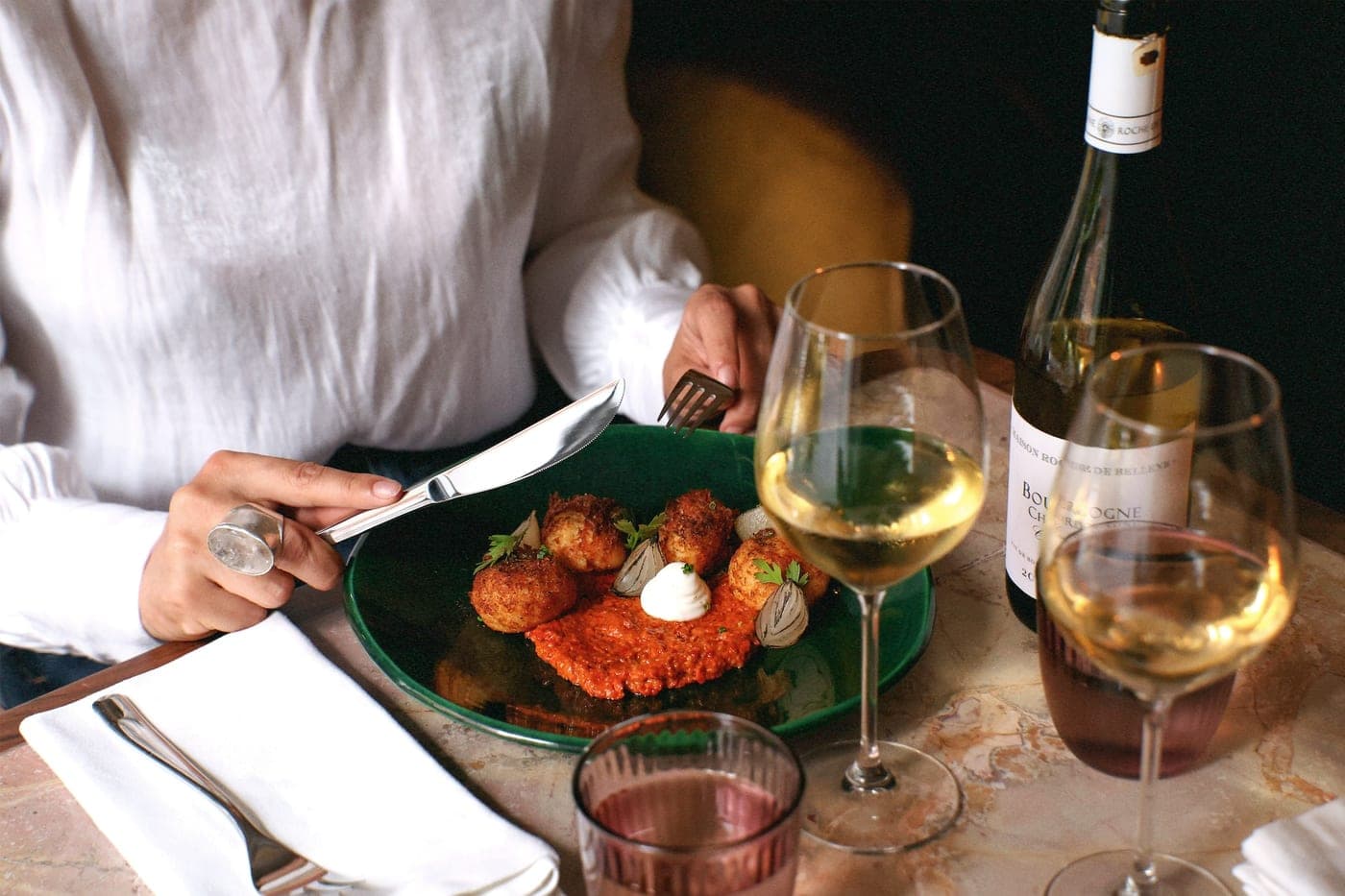
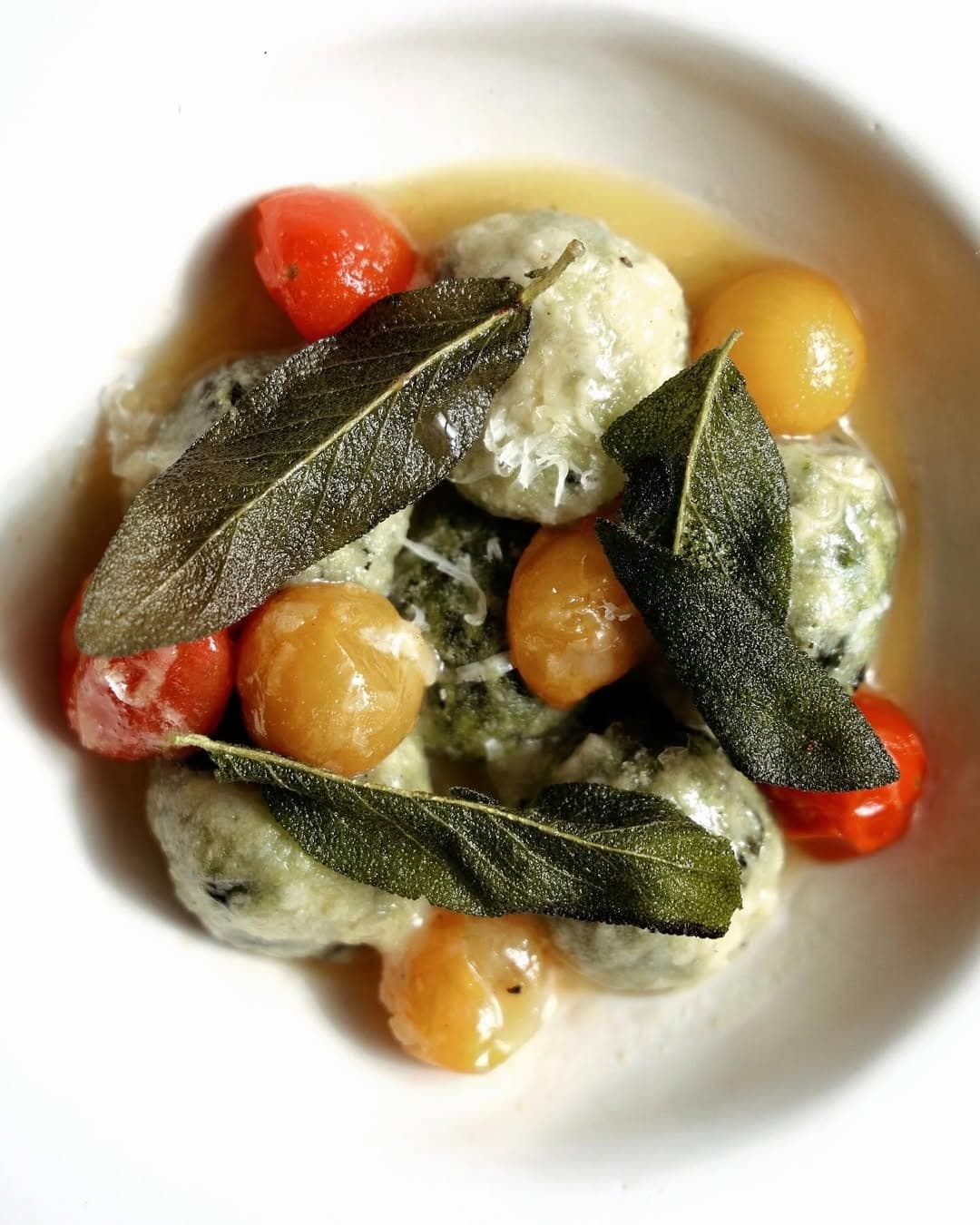
Past menus have featured monkfish with aromatic beurre blanc, saddle of lamb paired with an olive-almond salsa, and glazed aubergine finished with tahini, smoked onions, and black garlic aioli. Fried squash blossoms appear when the farm delivers them. The flatbread arrives with burnt kale pesto, pickled mushrooms, marinated aubergine, fermented chili, and anchovy. Leeks come dressed in a pan grattato with Atlas capers and pomegranate. An al pastor beef tenderloin with charred green onion, glazed mushroom, and mole negro signals the kitchen's willingness to travel beyond the Mediterranean basin without losing its center of gravity.
What the Farm Sends, the Menu Follows
Desserts maintain the same agricultural logic. A hibiscus-poached pear is served with geranium ice cream, both flavors drawn from Slimane's plantings. A mango lassi crème brûlée folds in coconut, vanilla, and coriander. Sticky toffee pudding uses the farm's dates. The kitchen makes its own ice creams, jams, and sauces from mint, basil, and lemon grown on-site. Sourdough bread is baked in-house from rye and barley sourced from a farm on Marrakech's periphery, the grains milled in small batches to preserve freshness. Under ten percent of the restaurant's ingredients are imported, a figure that, in a city increasingly populated by international dining concepts dependent on global supply chains, registers as a quiet form of dissent.
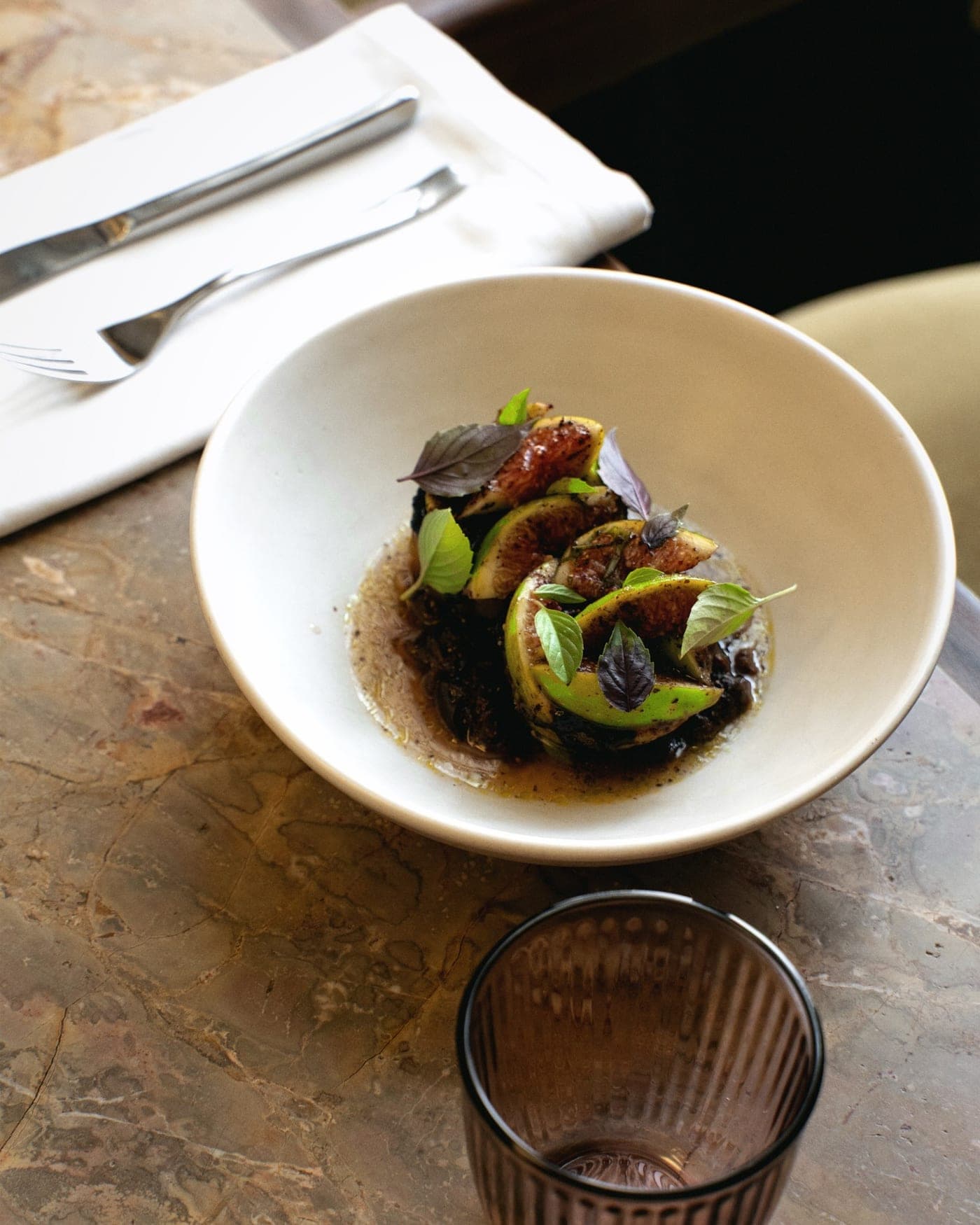
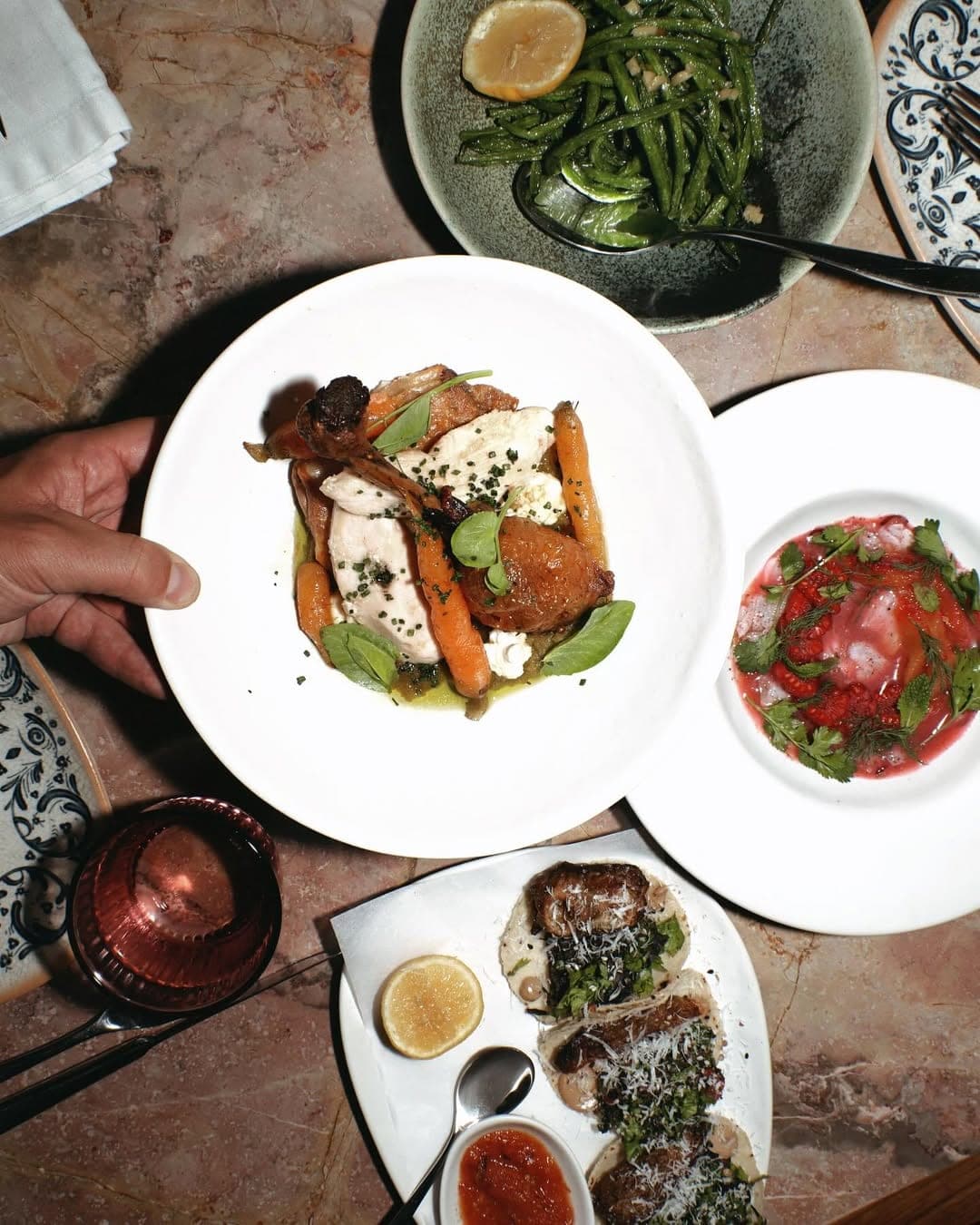
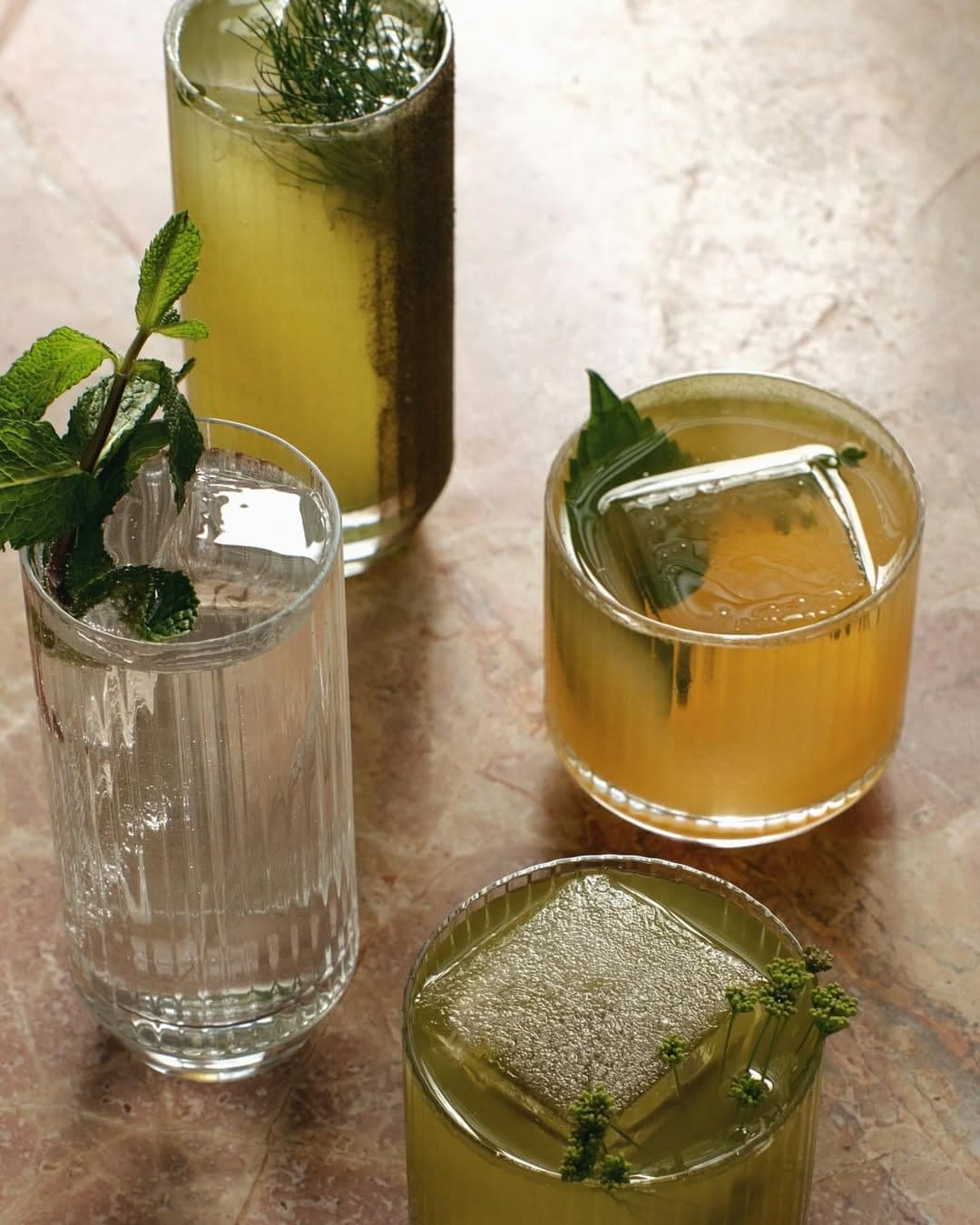
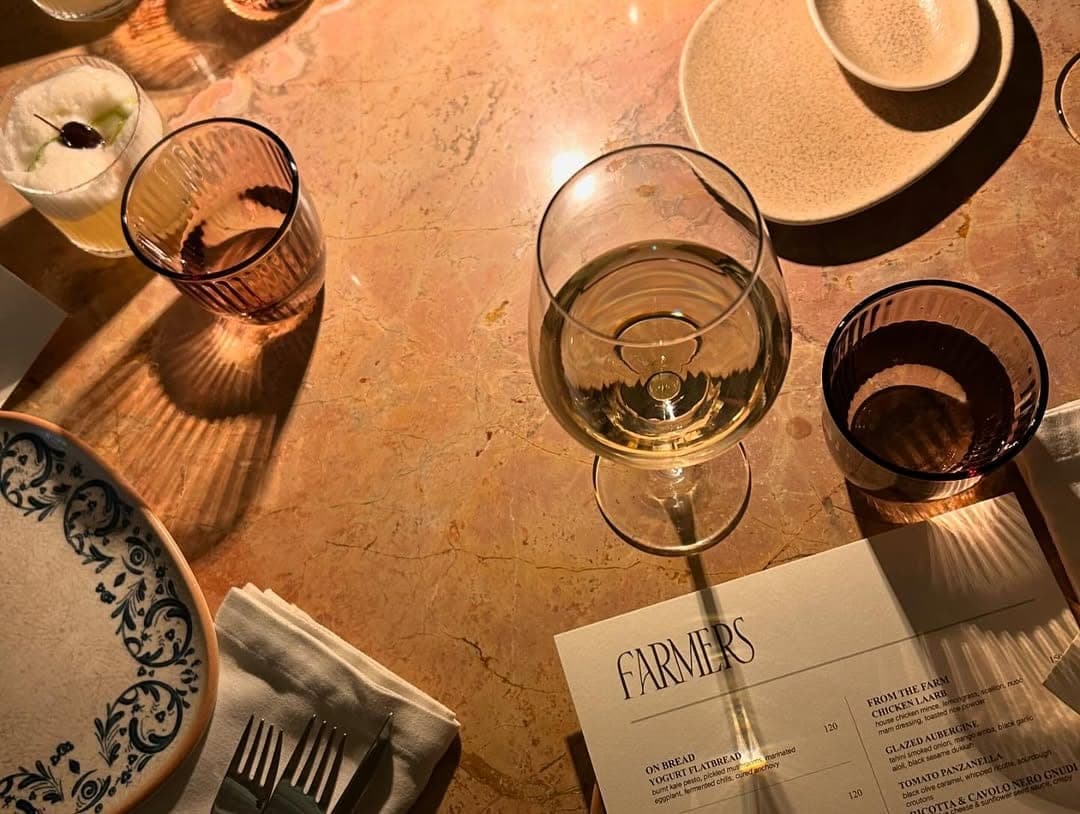
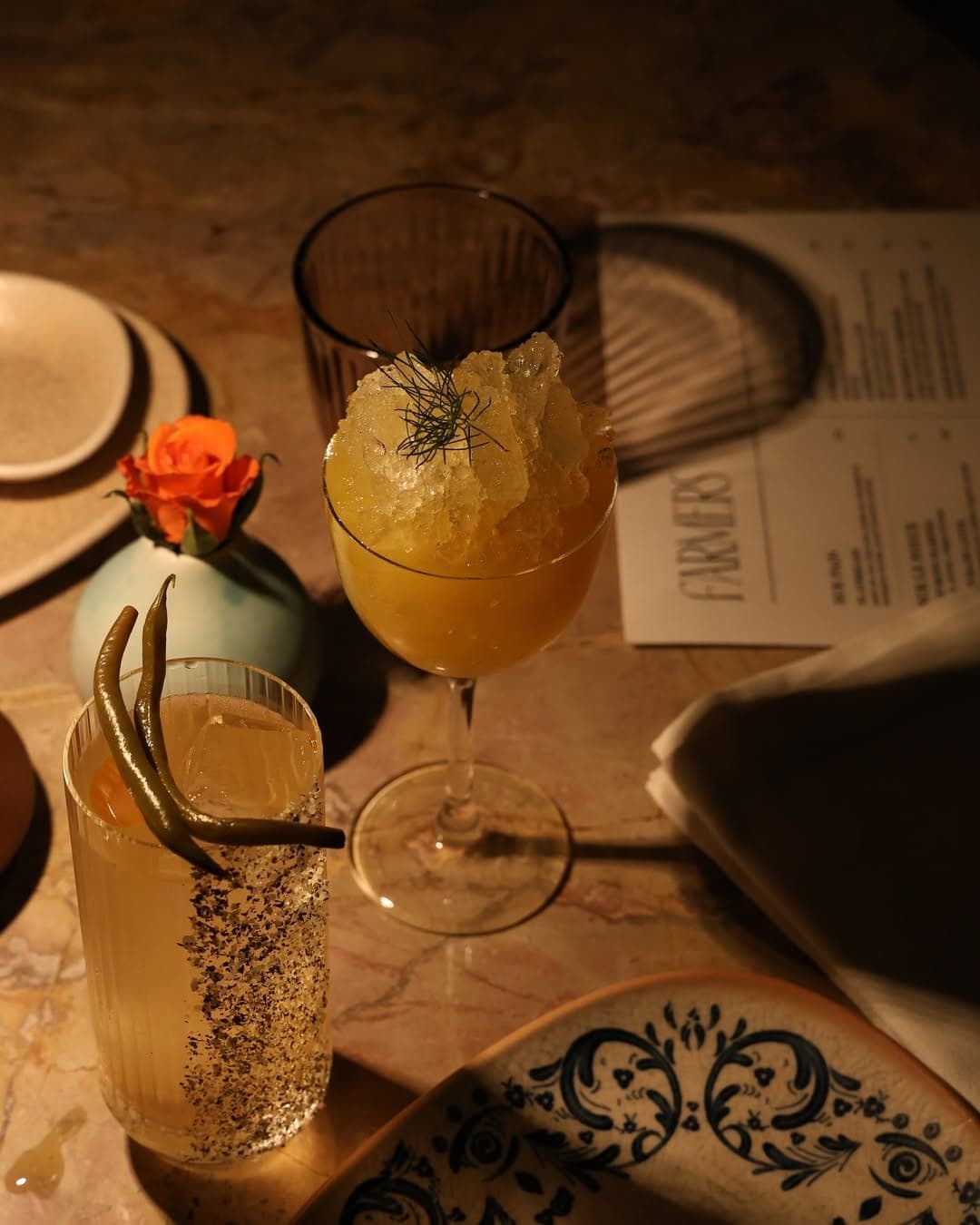
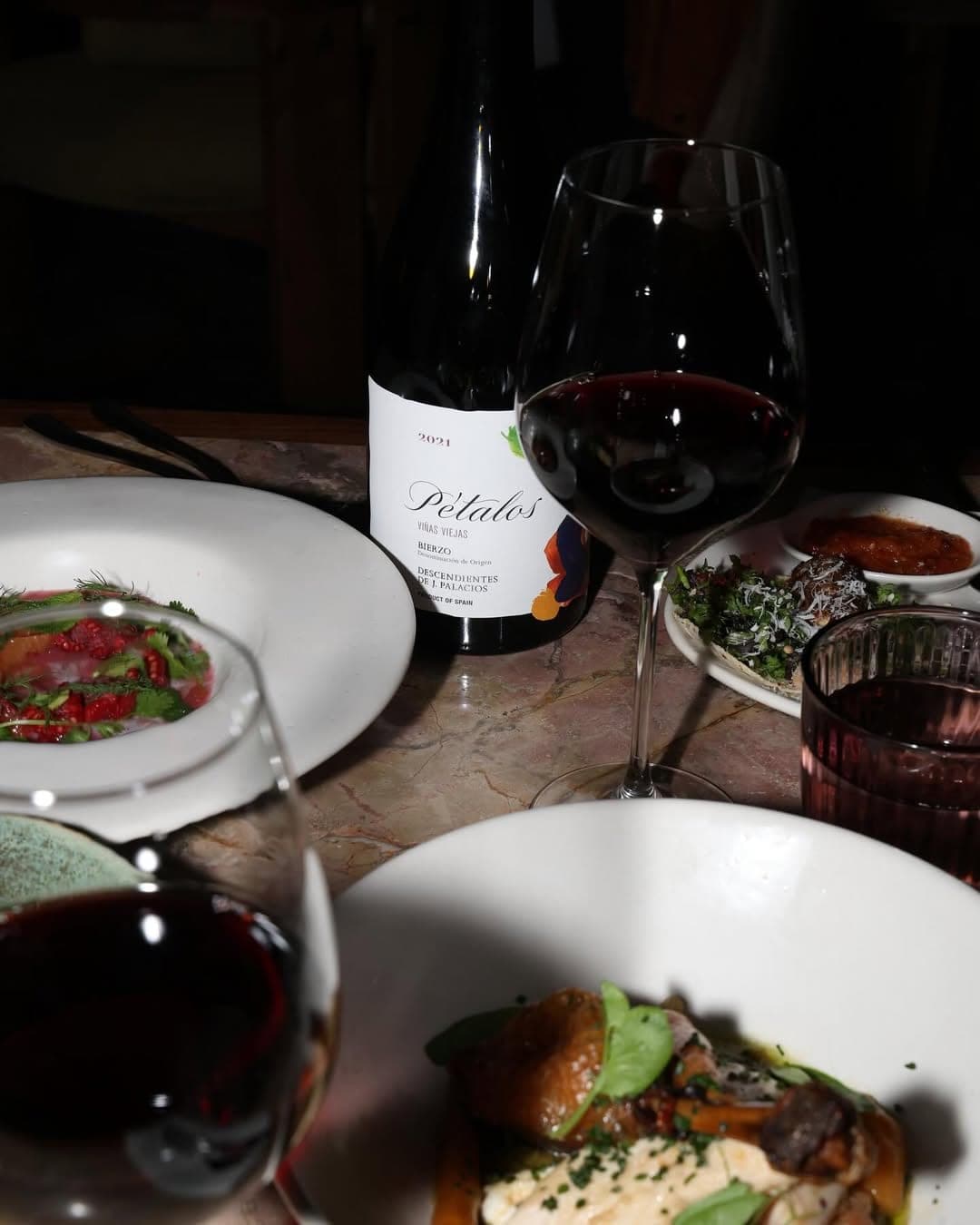
The beverage program extends this philosophy without overstatement. Natural and organic wines anchor the list, favoring small producers and selections that complement the menu's vegetable-forward lean. Cocktails incorporate farm-derived botanicals: the Midnight Corbusier combines date-distilled Moroccan mahia with ras el hanout, citrus, and fig. A sommelier, Simone, guides the pairing with evident knowledge but without ceremony.
Service and Atmosphere
The rhythm of service moves between two distinct registers. Lunch unfolds in natural light: sun on the walnut surfaces, an unhurried pace suited to two courses and conversation. Evening service deepens in atmosphere, the golden globes taking over, the tasting menu and wine pairings drawing a different crowd: regulars, visiting food professionals, couples willing to invest three hours in a multi-course progression. Staff explain provenance without lecturing. Courses are paced to arrive at temperature. The kitchen's visibility means the dining room never quite separates from the act of cooking: you hear the sear, catch the scent of herb oil being finished, notice the brigade's focus without needing to interpret it.
A Third Position in Marrakech's Dining Landscape
What Farmers represents within Marrakech's dining landscape requires some context. The city is not short on restaurants that reference local ingredients or invoke the idea of terroir. But most operate within a framework where Moroccan cuisine is either preserved in its traditional form (the canonical tagine, the pastilla, the couscous Friday) or reinterpreted through a lens imported from elsewhere, usually Paris or London.
Farmers occupies a third position. It does not perform Moroccan tradition, nor does it subordinate Moroccan ingredients to European technique. Aloui's cooking exists in a space where harissa and beurre blanc cohabit on the same plate because the farm produced both the chilies and the butter. The cross-cultural quality of the menu is not a concept applied from above; it emerges from the land itself, from what grows in Slimane's semi-arid soil when it is cared for with patience.
Recognition: TIME and MENA's 50 Best
The recognition has come swiftly. TIME named Farmers to its World's Greatest Places list in 2025. In February 2026, it entered MENA's 50 Best Restaurants at number forty-nine and received the Sustainable Restaurant Award, an acknowledgment not only of what happens in the kitchen but of the sourcing infrastructure behind it. The judges cited the traceability of ingredients, the partnership with Atlas mountain farmers, the on-site milling, the staff mentorship program, and the recycling collaboration with a local hotel that repurposes the restaurant's used glass into new objects.
Galerie El Beqal: Beyond the Restaurant
Nahas has continued to expand the Galerie El Beqal ecosystem. A wine bar has opened. Booklore, a bookstore focused on Morocco's multicultural heritage, now occupies another corner of the arcade, a space intended, by Nahas's account, to connect local youth with the country's layered literary and cultural history. The arcade is becoming, incrementally, something more than a commercial address: a small commons organized around food, knowledge, and the idea that a city's relationship with its hinterland need not be purely extractive.
In a Marrakech that builds faster than it reflects, Farmers proposes a different tempo. It asks that the soil be replenished before the plate is composed. That the grain be milled the week it will be baked. That the menu be written by the harvest, not by the trend cycle. It is not a loud restaurant, nor a performative one. Its conviction sits in the texture of a charred squash blossom, in the depth of a slow-roasted root vegetable, in the fact that the hares on the dining room walls are real animals living on a real farm thirty minutes east of here. In Gueliz's restless commercial grid, Farmers holds still, and that stillness, in this city, is its most radical gesture.
You may also like…