Dar Yacout Marrakech
A dinner inside an eighteenth-century riad in the northern medina, where Bill Willis shaped the interiors and the evening still unfolds as a five-course feast.
6 April 2026
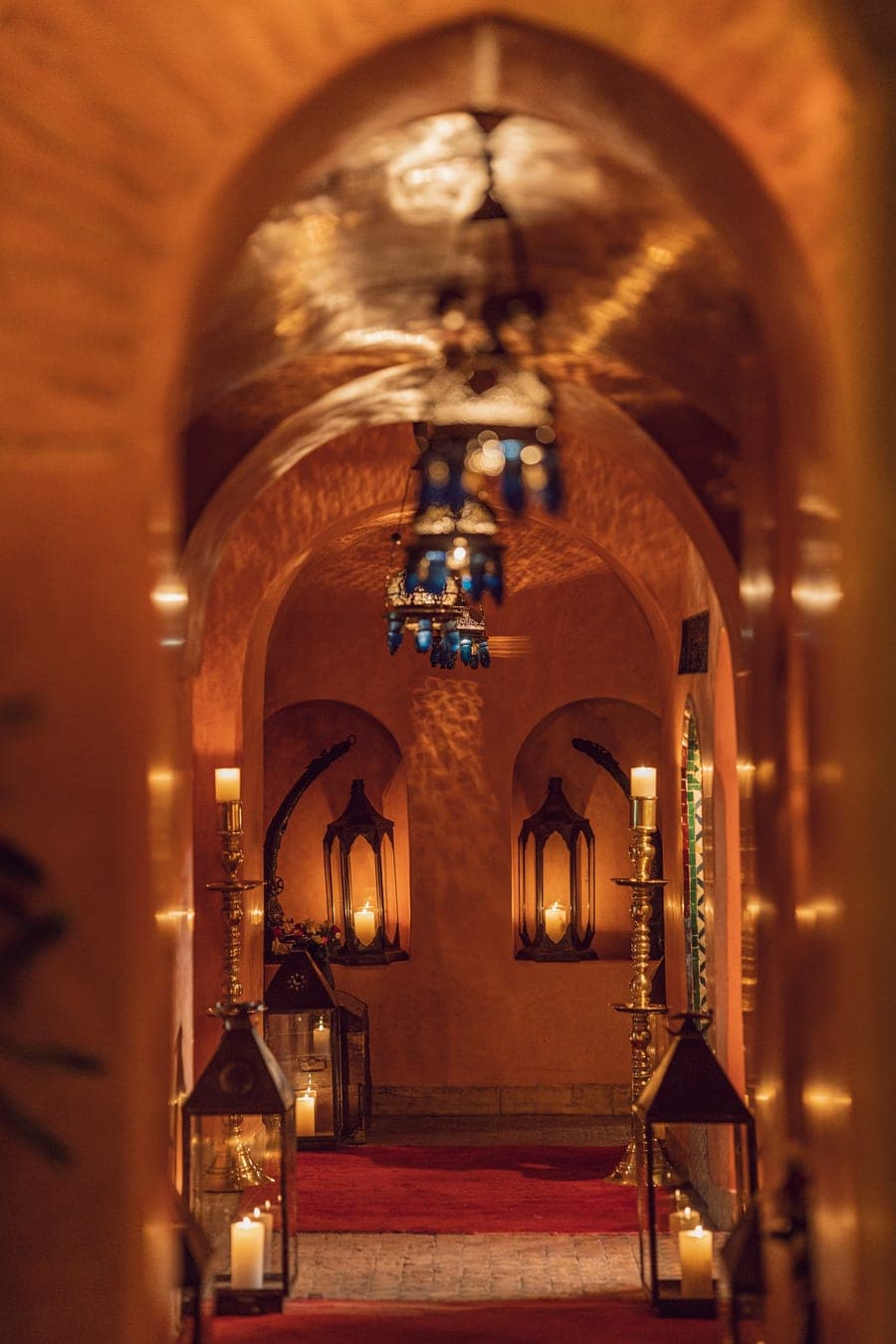
The lantern appears first. Carried by a guide who meets you at the unmarked door in derb Sidi Ahmed Soussi, it leads you through a darkened lane in the Bab Doukkala quarter, the northern medina where streets narrow and tourist circuits thin out. Then the door opens, and Dar Yacout Marrakech begins.
You are taken up to the rooftop before you ever see the dining rooms. This is the sequence the house imposes: aperitifs above the city, with the Koutoubia Mosque visible in the middle distance and the rooftops of the medina spreading out in every direction. The Atlas Mountains appear at the edge of clear evenings. The transition from street to terrace, from lane to panorama, is deliberate and precise. It sets the register for everything that follows.
The Hand Behind It
Dar Yacout is the creation of Mohamed Zkhiri, who transformed this palace into one of Marrakech's most celebrated dining addresses. The riad itself dates to the eighteenth century, and its interiors were shaped by Bill Willis, the American designer who spent decades in the city and left his mark across its most significant interiors. Willis understood the vocabulary of Moroccan craft, not as ornament to be replicated but as structural logic to be worked from within.
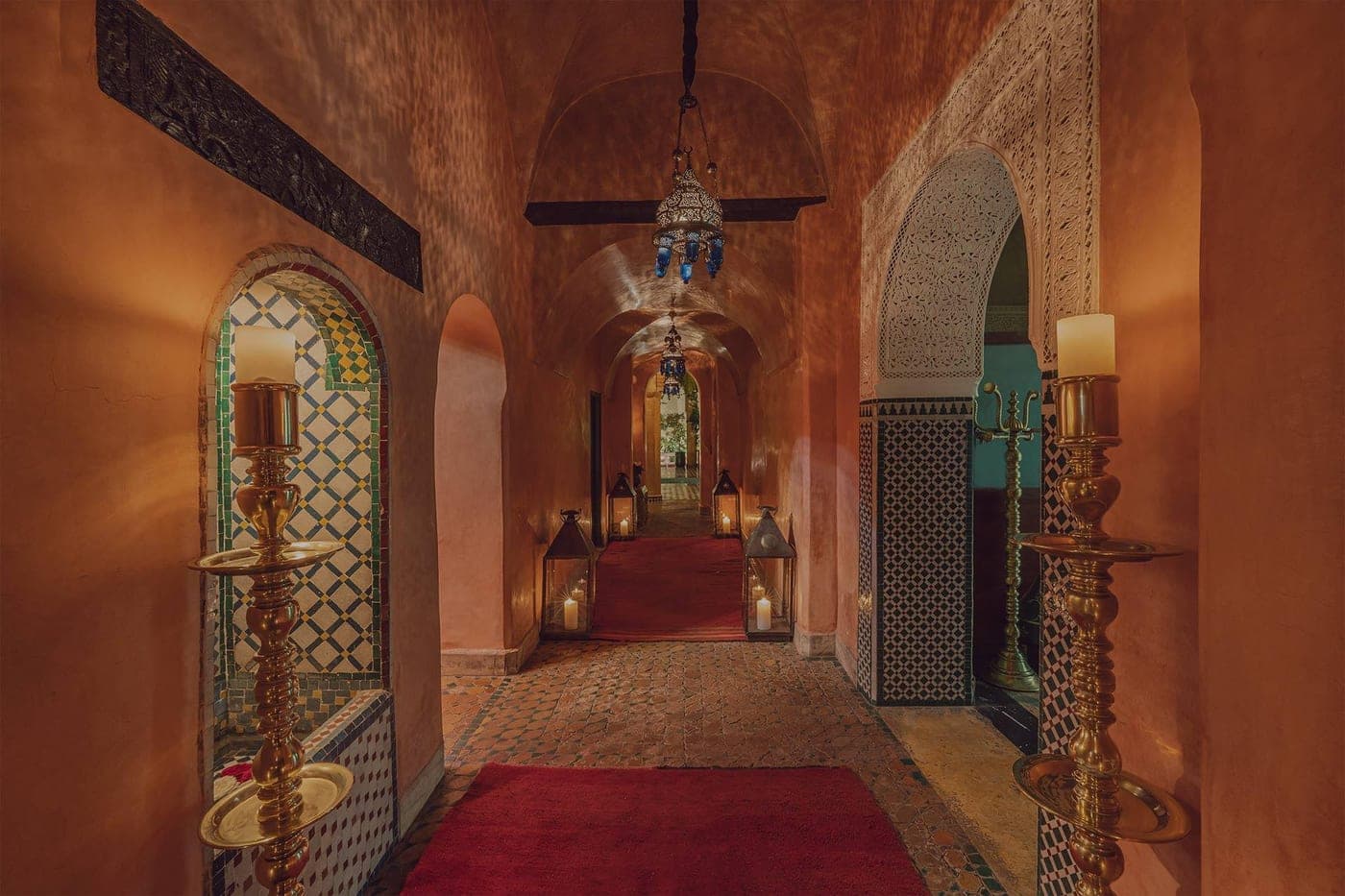
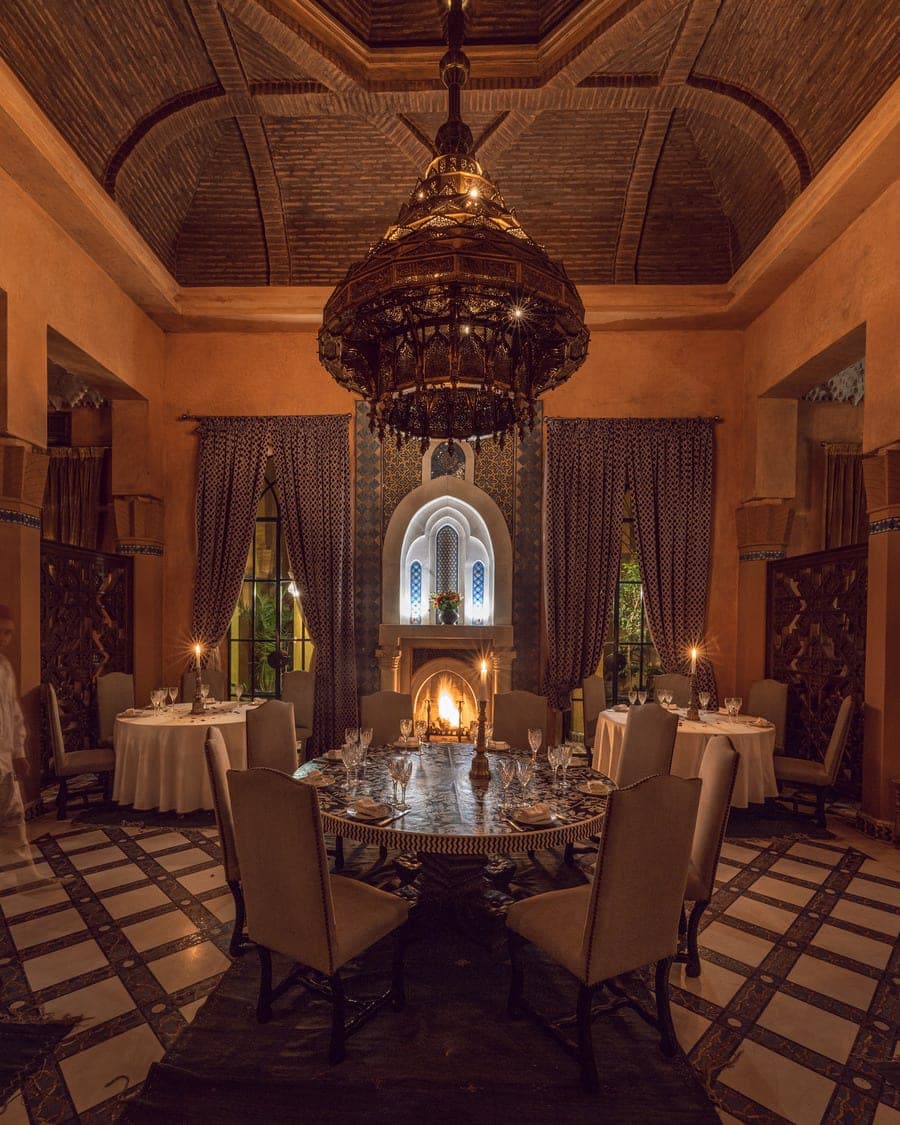
The result is a riad that reads as genuine rather than restored, accumulated rather than designed. The distinction matters. Willis drew from craftsmen who understood tadelakt, the polished plaster surface that absorbs light differently at every hour, and from tile-makers who still practiced the geometry of zellij. He placed vaulted brick ceilings above certain rooms and carved plaster above others, letting the architectural rhythm shift as you move through the house.
Zkhiri, who for years held the position of honorary British Consul, brought to Dar Yacout a particular relationship to ceremony. The place operates with the awareness that dinner here is not casual. You are a guest inside a palace, and the protocol of the evening reflects that.
The Rooms
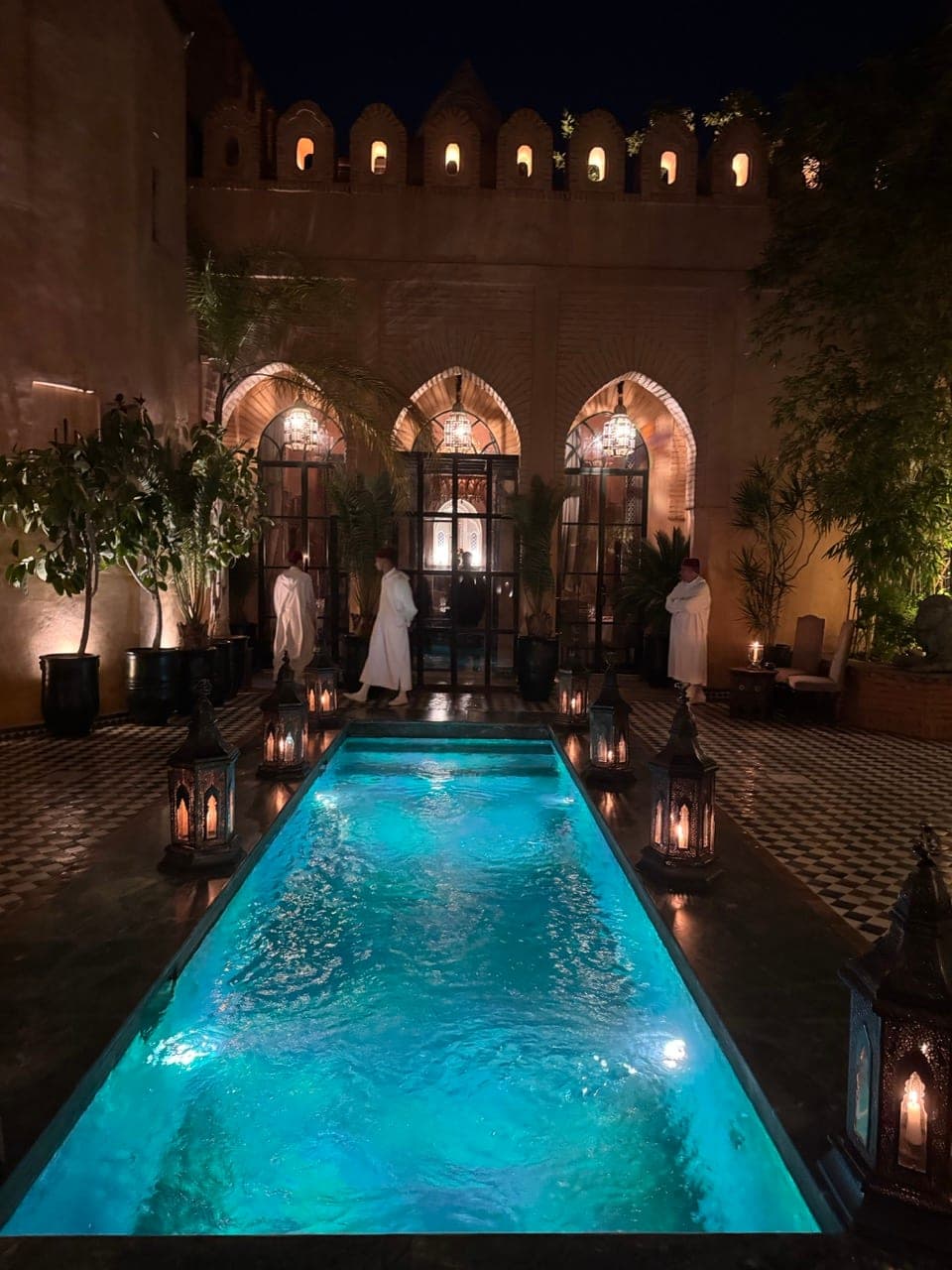
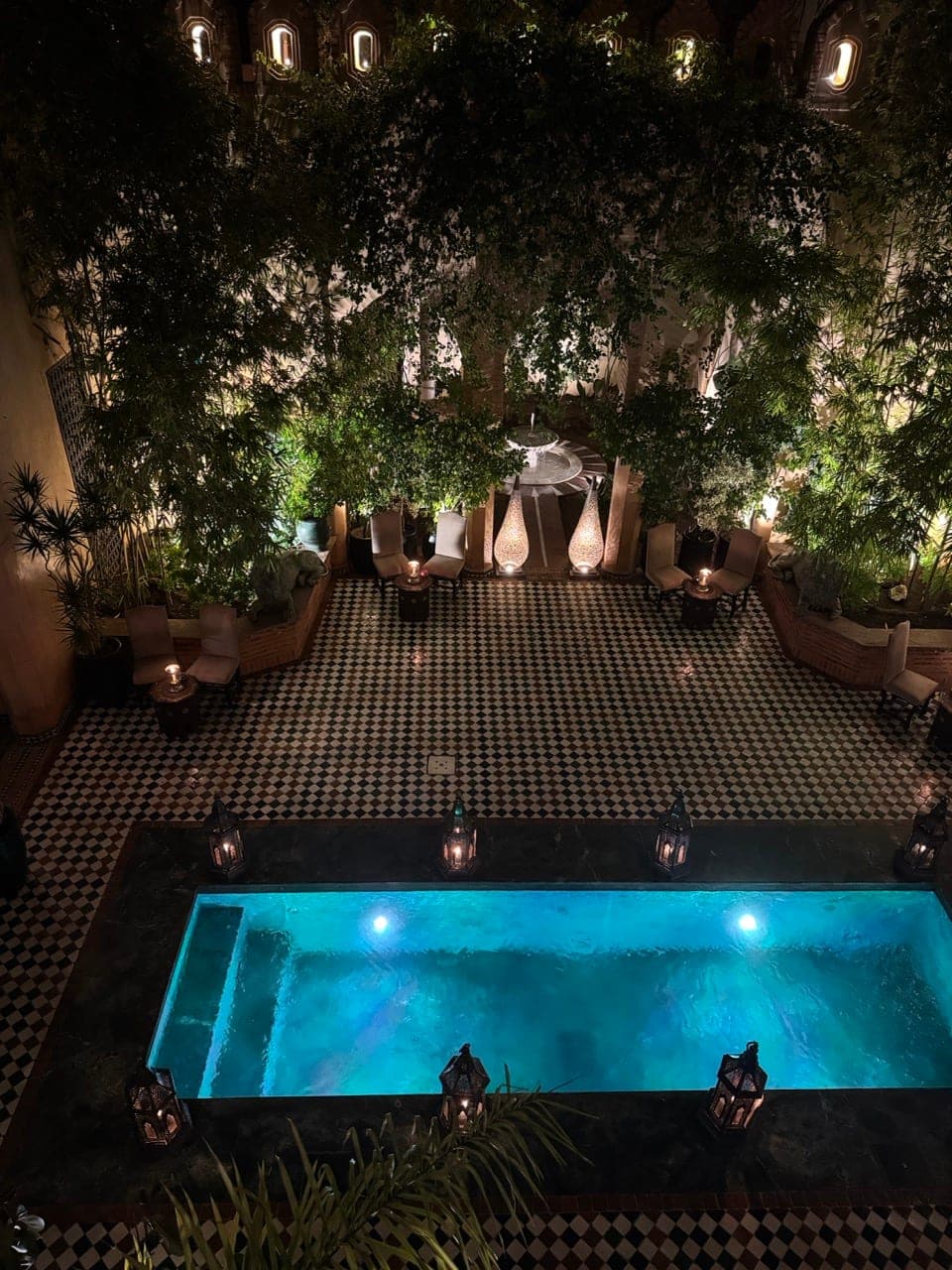
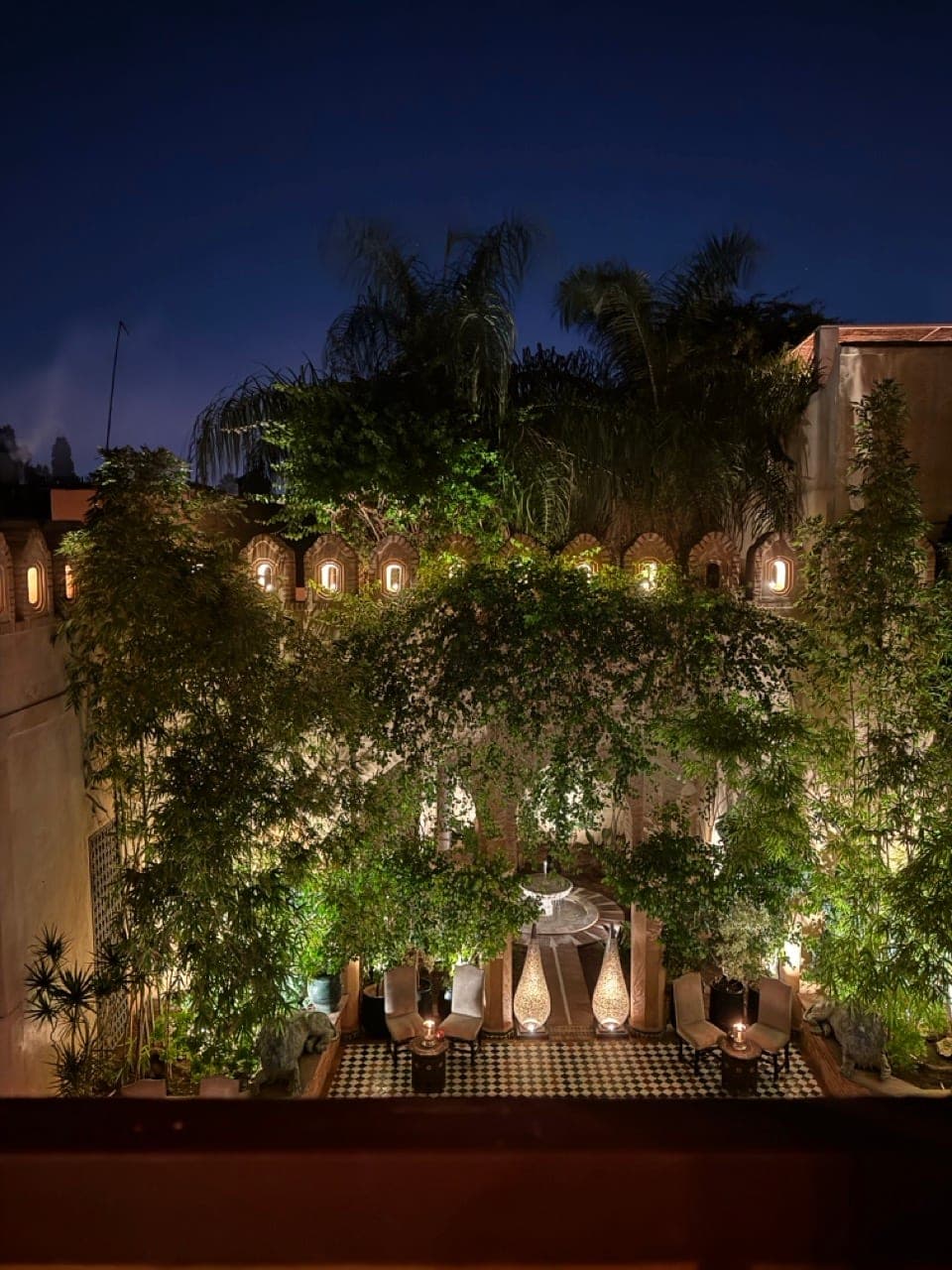
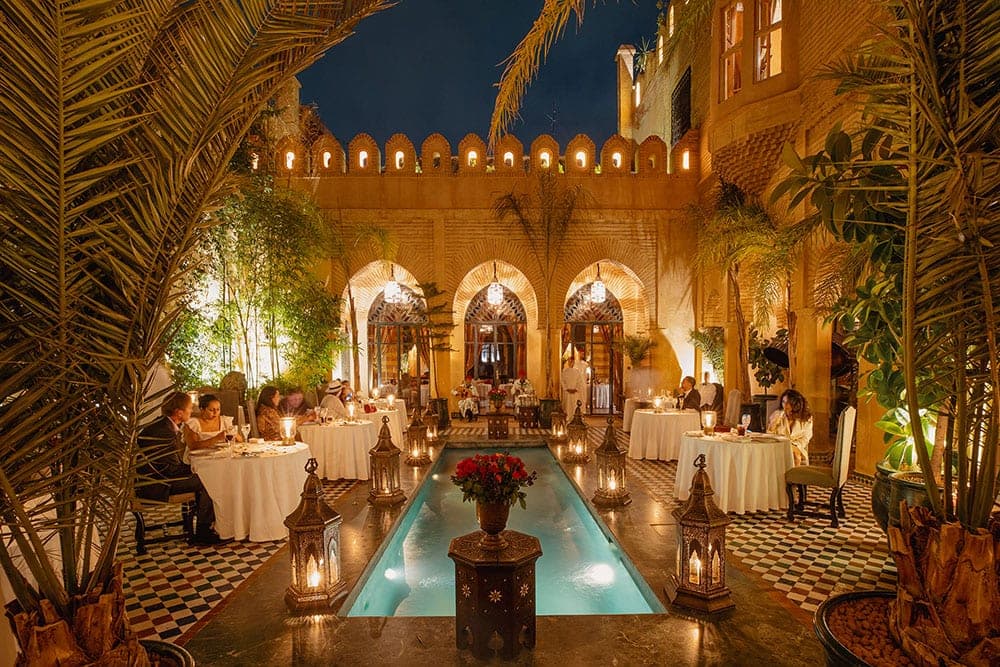
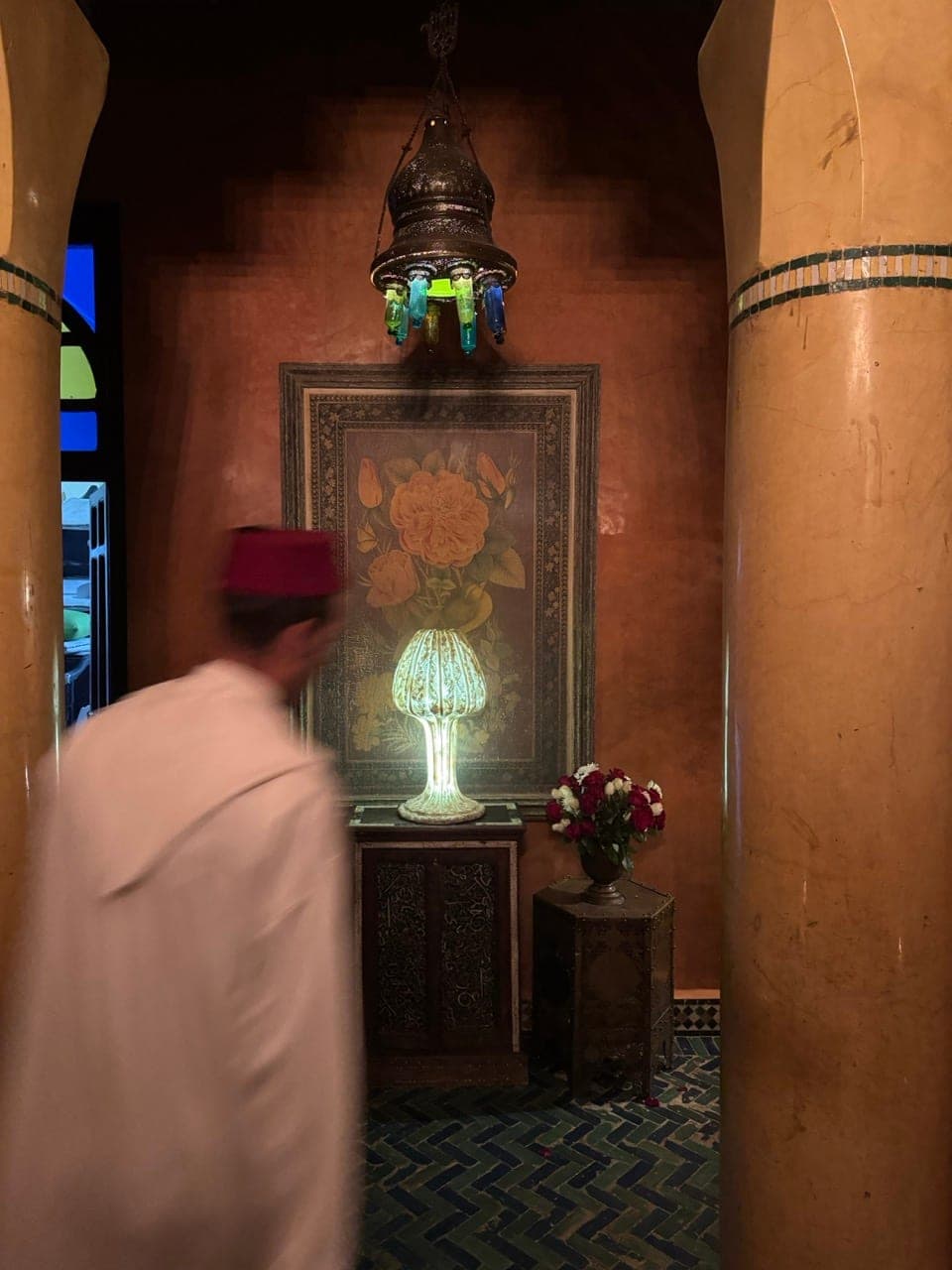
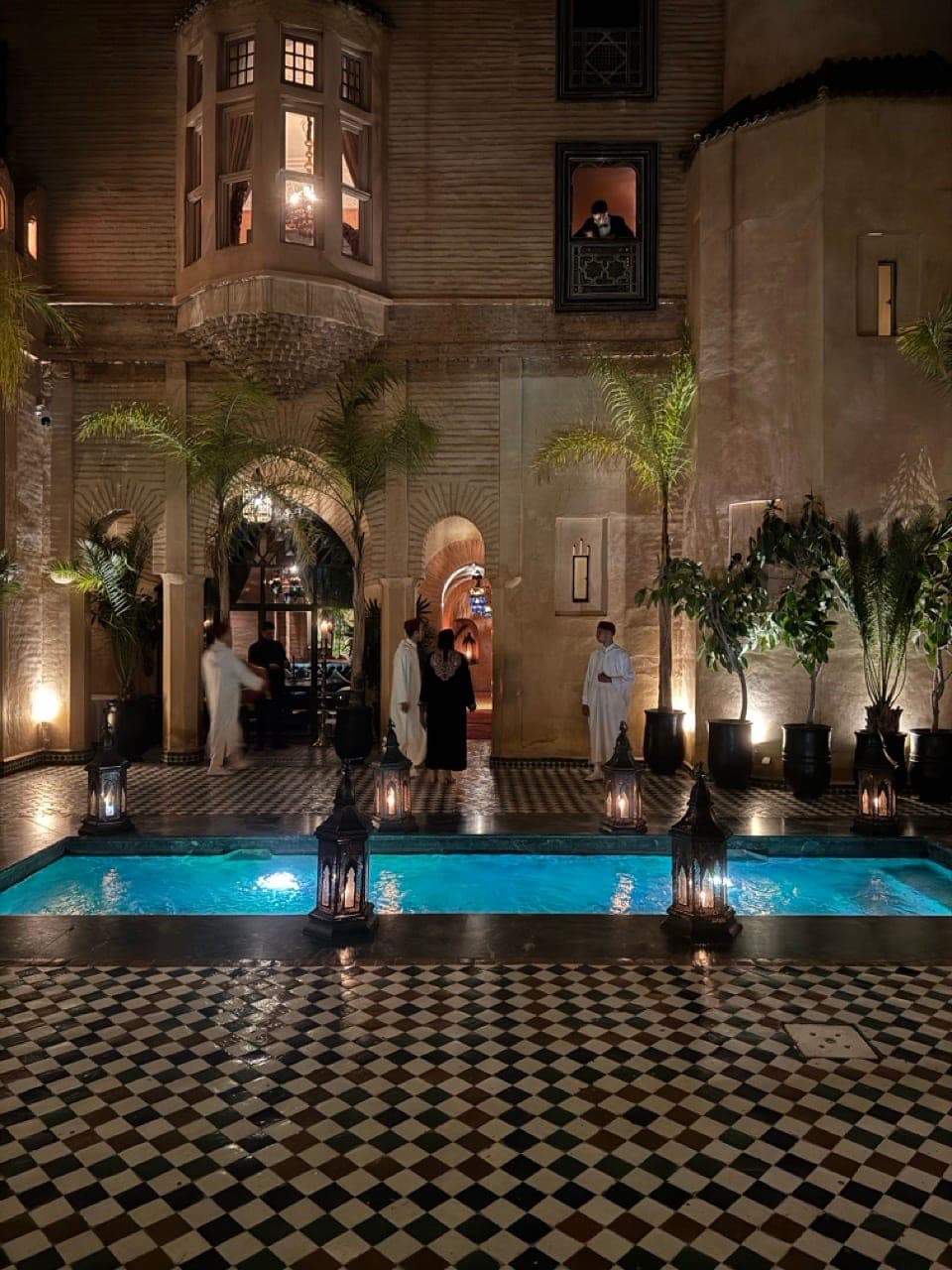
Below the rooftop, the riad organizes itself around a courtyard where a pool holds the center. Tables are placed around it on a lanterned terrace, the water catching candlelight in ways that make the space seem larger and more contained simultaneously. Stained glass windows filter color into the corridors. The carved cedar screens that separate spaces allow sound and light to pass without breaking the architecture into separate rooms.
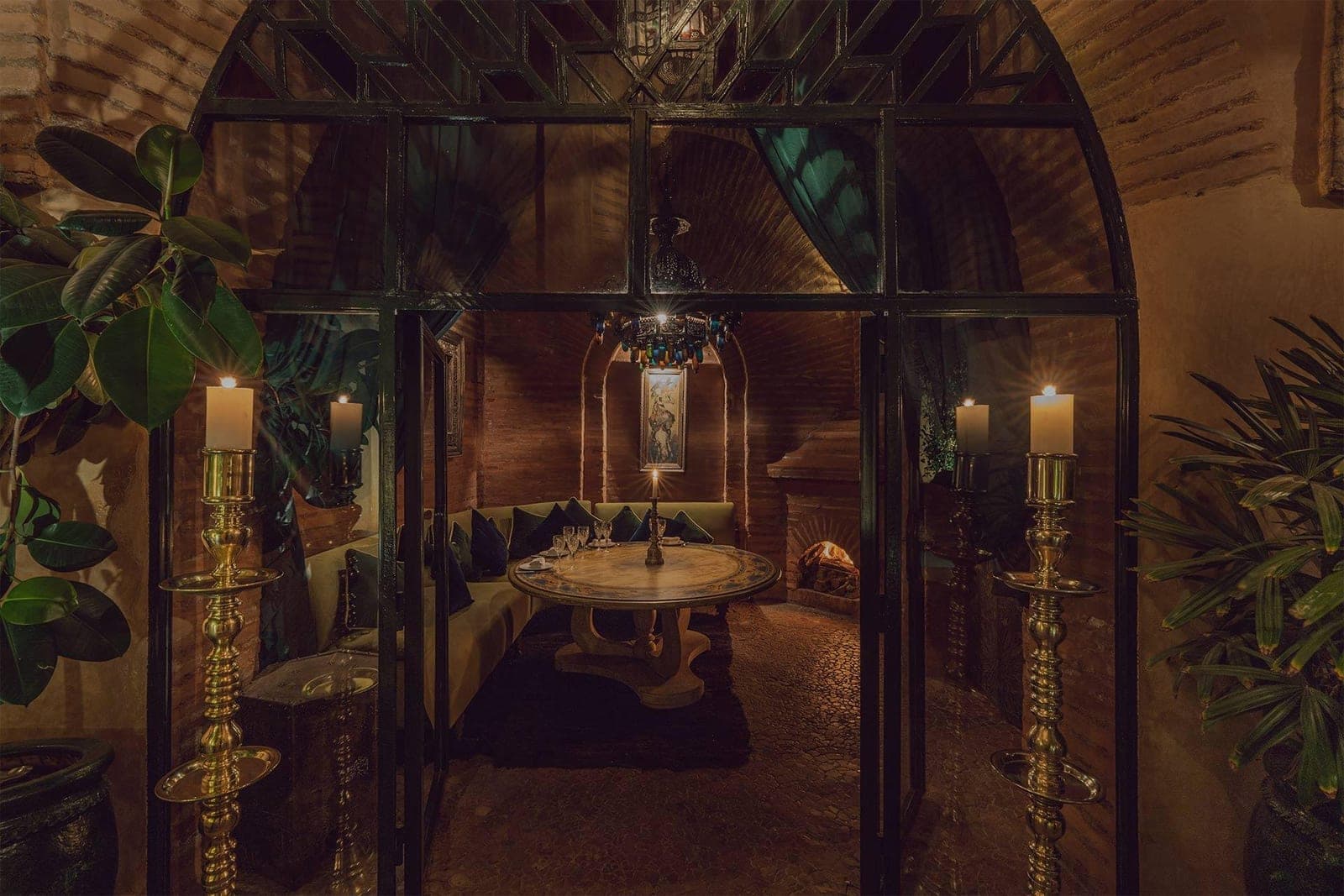
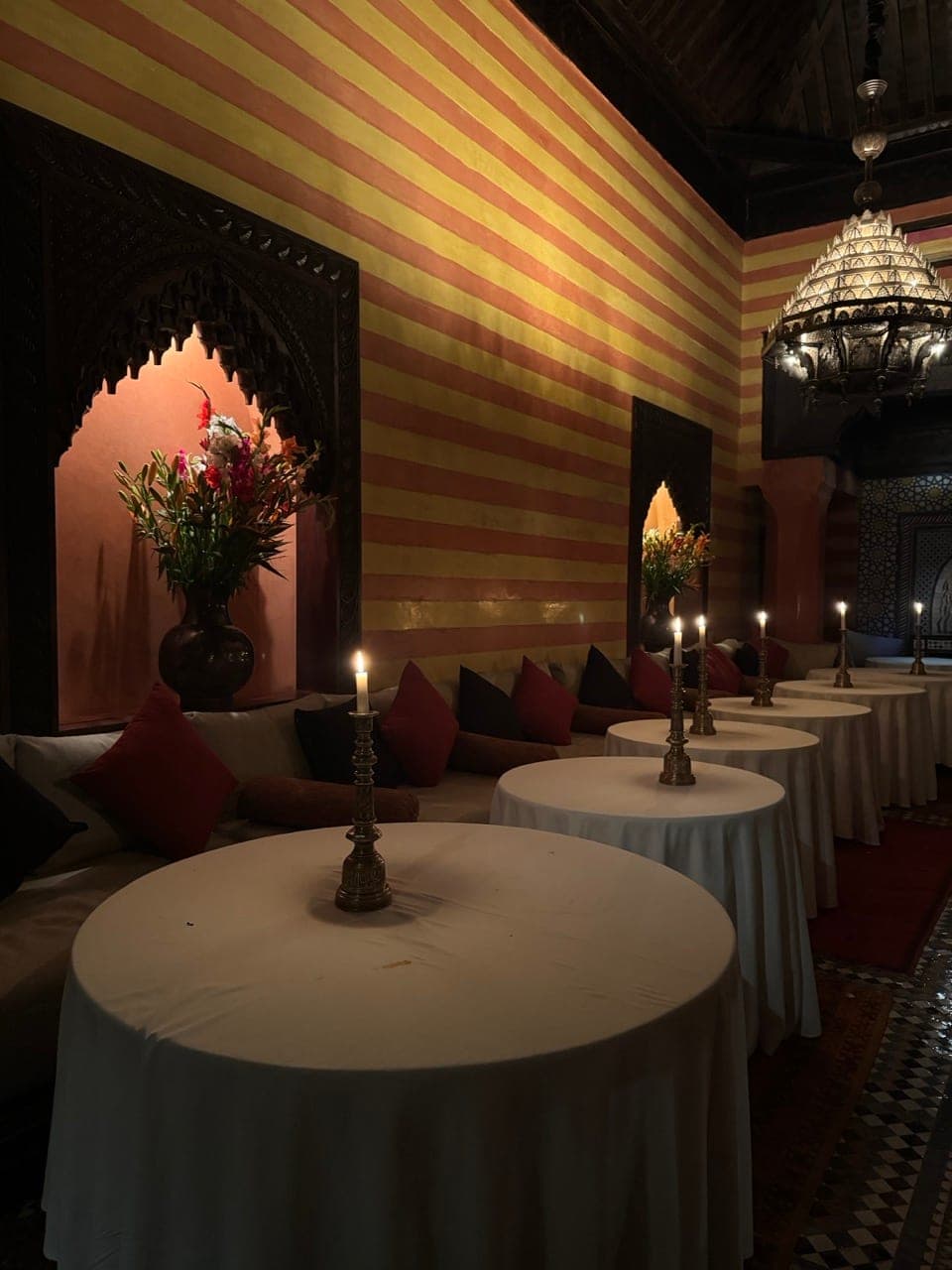
Intimate dining rooms open off the main courtyard, each with its own ceiling treatment and proportion. The main salon is furnished with cushioned banquettes and low tables, the geometry of the room demanding a certain ease of posture. The vaulted upstairs space offers a different relationship to the house, higher and quieter, with views down into the courtyard.
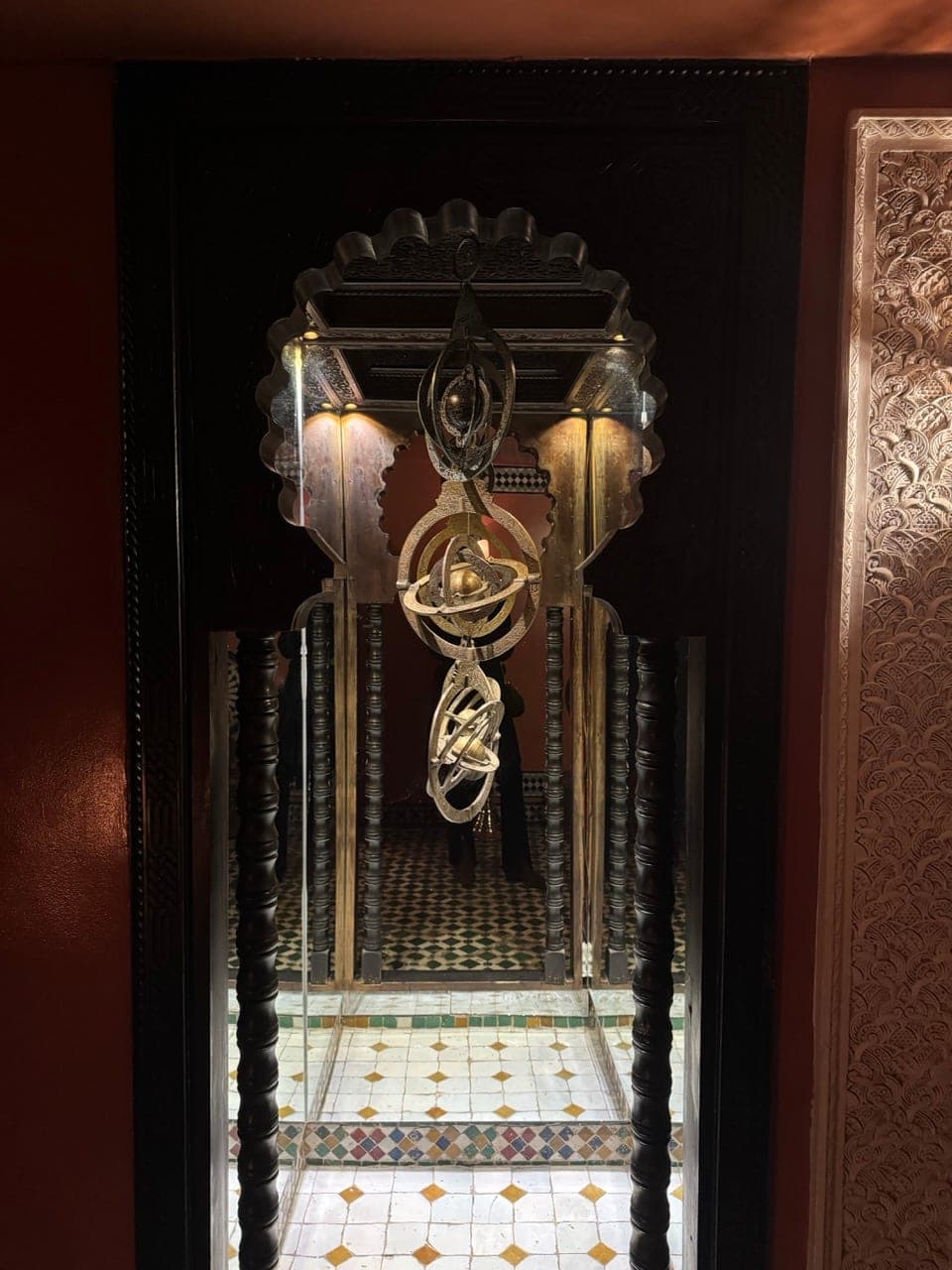
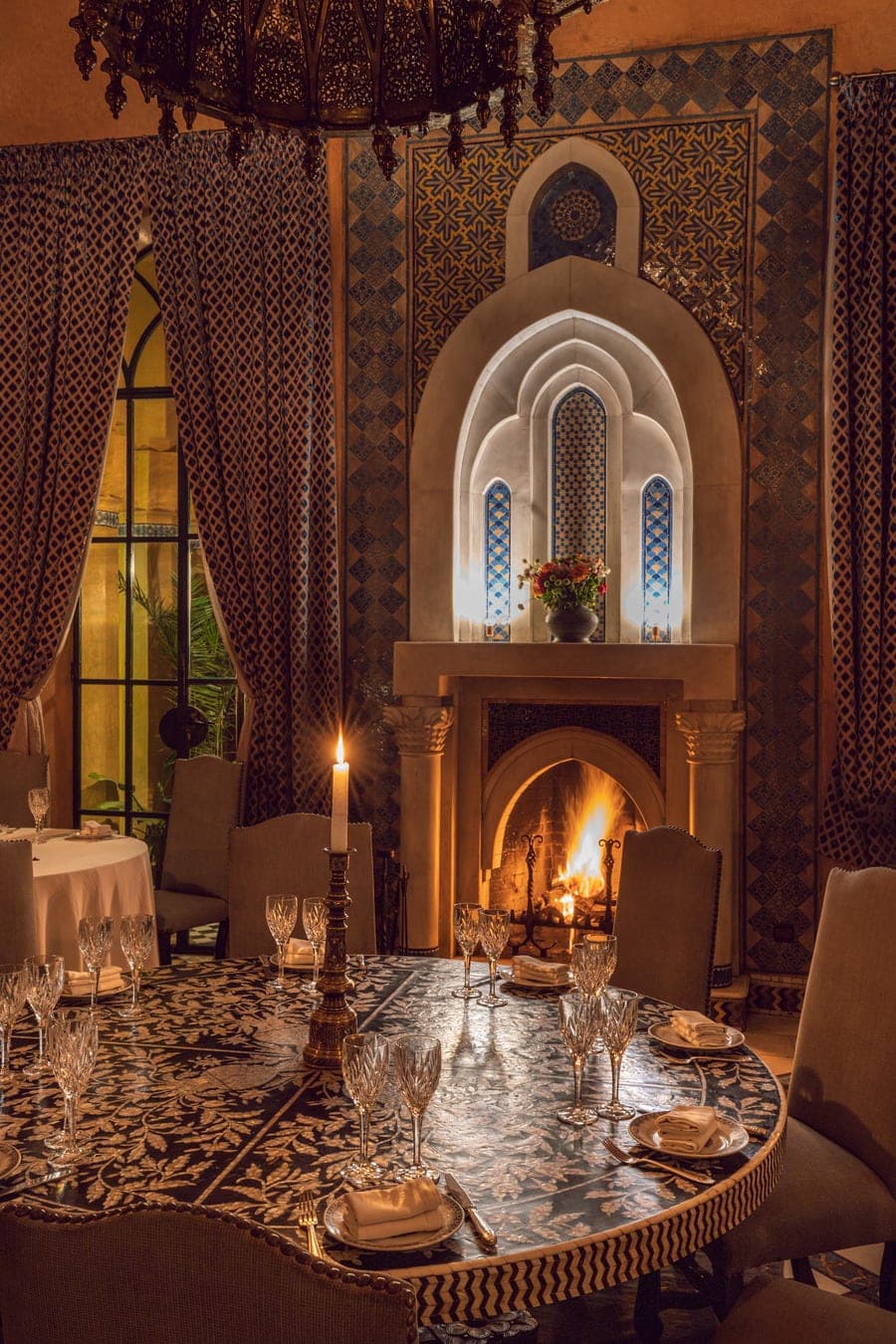
Zellij tiling covers surfaces that would be plain in a lesser riad. The patterns carry their own logic, mathematical and meditative, not decorative in any simple sense. Under Willis's direction, these elements were not treated as choices but as given conditions, as much a part of the architecture as the walls themselves.
The Evening
Dinner at Dar Yacout follows a fixed sequence. After the rooftop aperitif, guests descend to their table. The evening begins with Moroccan cold salads, eight to twelve small plates that demonstrate the kitchen's range before the main progression starts. The variety is not arbitrary. Each salad sits at a different point on the spectrum between sweet, sour, spiced, and preserved, collectively mapping the flavor logic that the rest of the meal will develop.
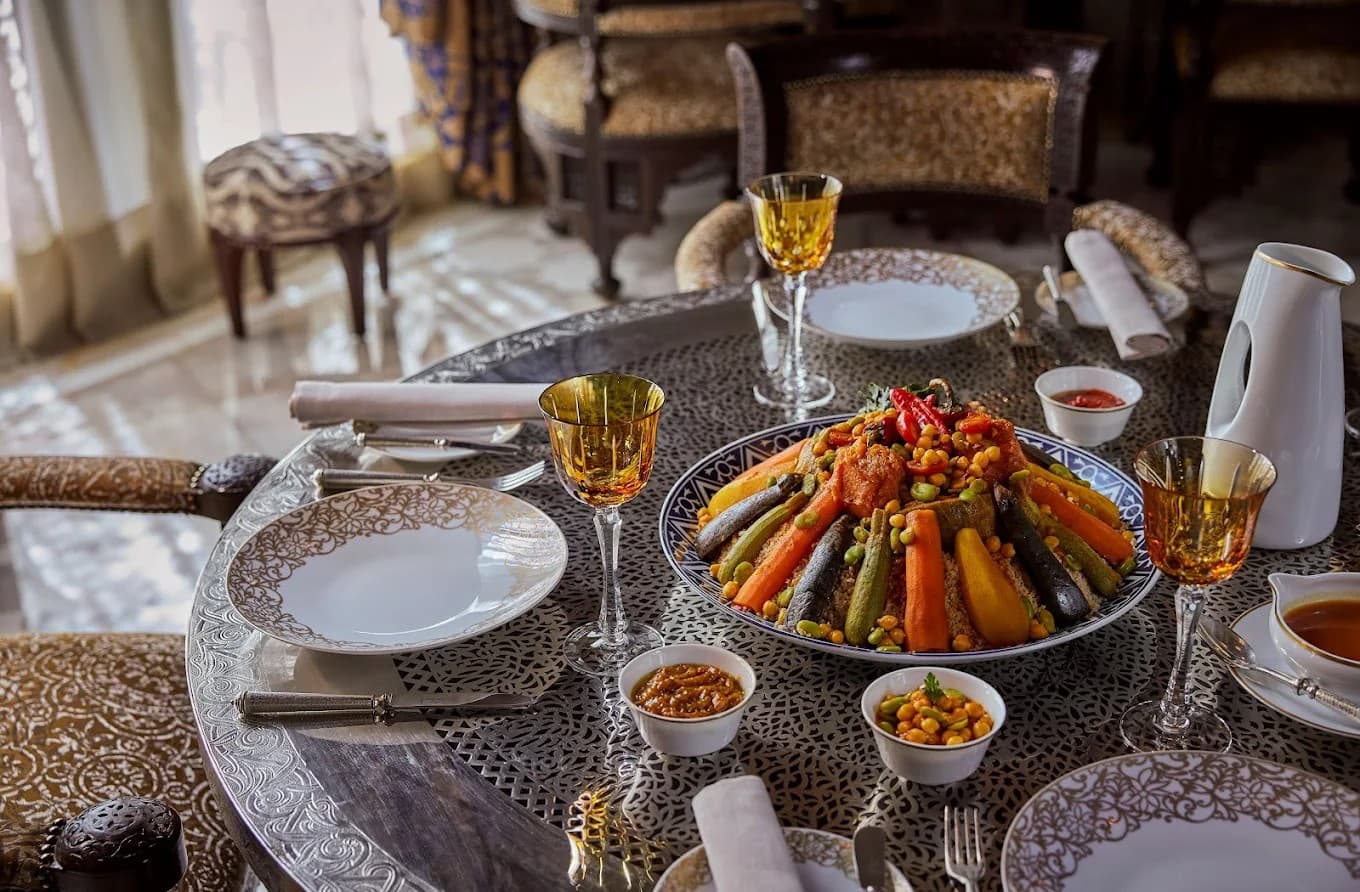
Pastilla follows. At Dar Yacout the pastry arrives as the technical centerpiece of the meal, its layered construction demanding attention to timing and heat that cannot be rushed. Then tagines, the slow-cooked combinations of meat and fruit that define Moroccan cuisine at its most considered. Lamb with prunes and preserved rind is a common presence. The couscous that follows is prepared with the care the grain requires, steamed in stages, never compressed.
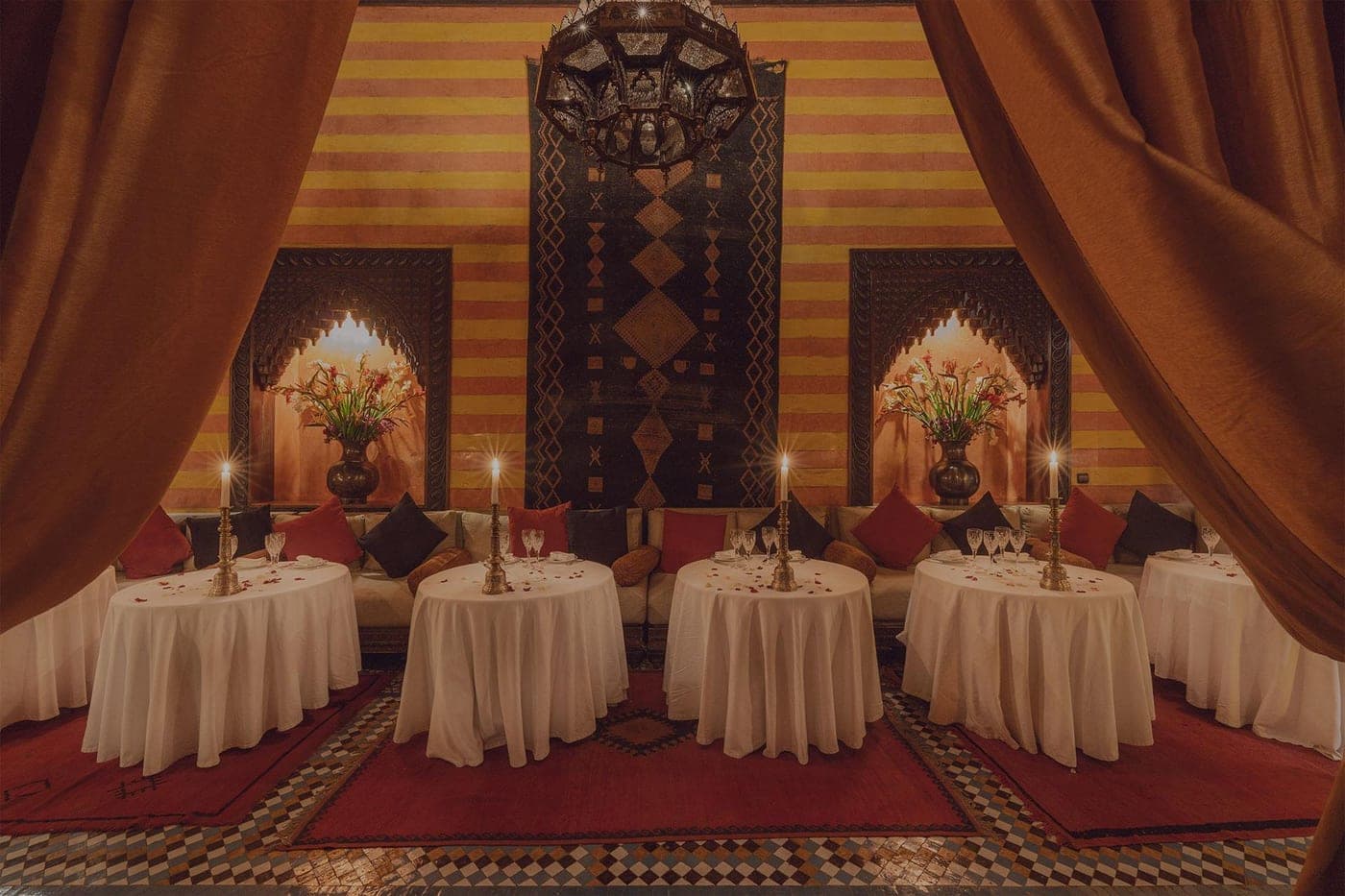
Desserts conclude the progression, a movement toward sweetness and mint tea that closes the evening deliberately. The fixed menu is priced at 700 dirhams per person. This is not a figure that invites spontaneous dining, but the premise of Dar Yacout has never been spontaneity. It is occasion dining, where the architecture and the menu and the sequence are all working toward the same end.
Three musicians in red Moroccan fezzes provide accompaniment throughout the meal. They circulate through the rooms, their presence felt without demanding attention. The music is not amplified or composed for effect. It belongs to the evening the way the lanterns do, not as decoration but as condition.
The Particularity of the Place
Dar Yacout is open every evening except Monday, from seven to eleven. Reservations are required. The restaurant has been operating long enough that the question of newness does not apply. What it offers is the weight of a place that has understood its own function for decades, that has refined without reinventing, that trusts the architecture and the menu and the sequence to be enough.
The northern medina does not deliver guests to the door with the efficiency of hotel concierge routes. Reaching derb Sidi Ahmed Soussi requires intention, usually a guide. This difficulty is part of what Dar Yacout is. The lantern at the door is not metaphor. It is a practical necessity, and also a way of marking the passage from the city outside to the world within.
Dar Yacout · Restaurant
Discover Dar Yacout→You may also like…