Arva at Amanjena: Italian Cooking in Cultivated Land
Inside the signature restaurant where a Tuscan chef, the produce of the season, and Ed Tuttle’s Aman architecture converge at the edge of the palmeraie.
5 April 2026
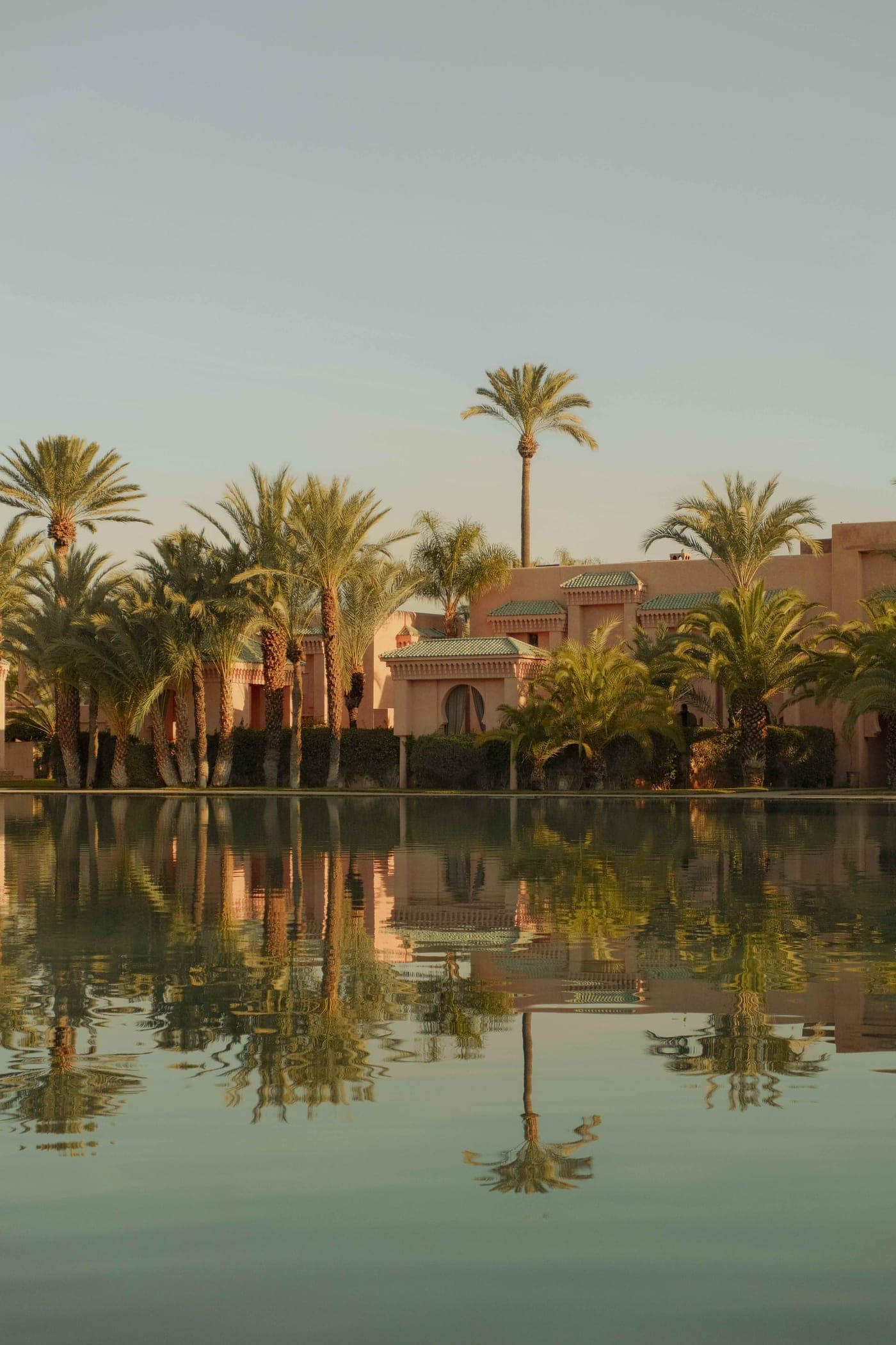
The first thing you see is the basin. Amanjena’s central reflecting pool, still and emerald under the afternoon sun, stretches between the colonnades that Ed Tuttle designed in 2000, drawing on the symmetry of the Alhambra and the geometry of the Menara Gardens. The restaurant sits at the edge of that water, shaded by the palmeraie’s olive trees, with alfresco tables oriented so that every seat holds the pool in its sightline. Before a plate arrives, something has already settled. It is not any single element but the sum of all of them: the proportion of the colonnades, the stillness of the water, the calibrated distance between tables. Aman built Amanjena with the understanding that architecture is already hospitality, and the restaurant at the edge of the basin inherits that logic before a menu is even opened.
The Name and What It Carries
Arva is Aman’s signature Italian restaurant, a concept that travels across the group’s properties. The name comes from the Latin for “cultivated land,” and the philosophy it carries is Cucina del raccolto, the cuisine of the harvest: seasonal, ingredient-led, rooted in the simplicity of Italian tradition rather than its spectacle. At Amanjena, that philosophy gains a particular resonance. The resort reopened in late 2025 after a quiet renovation that touched accommodation, wellness, and dining while preserving Tuttle’s original architectural language. Arva arrived as part of that reopening, replacing the previous dining format with something more focused, more Italian, and more deliberately connected to the land around it.
The Chef
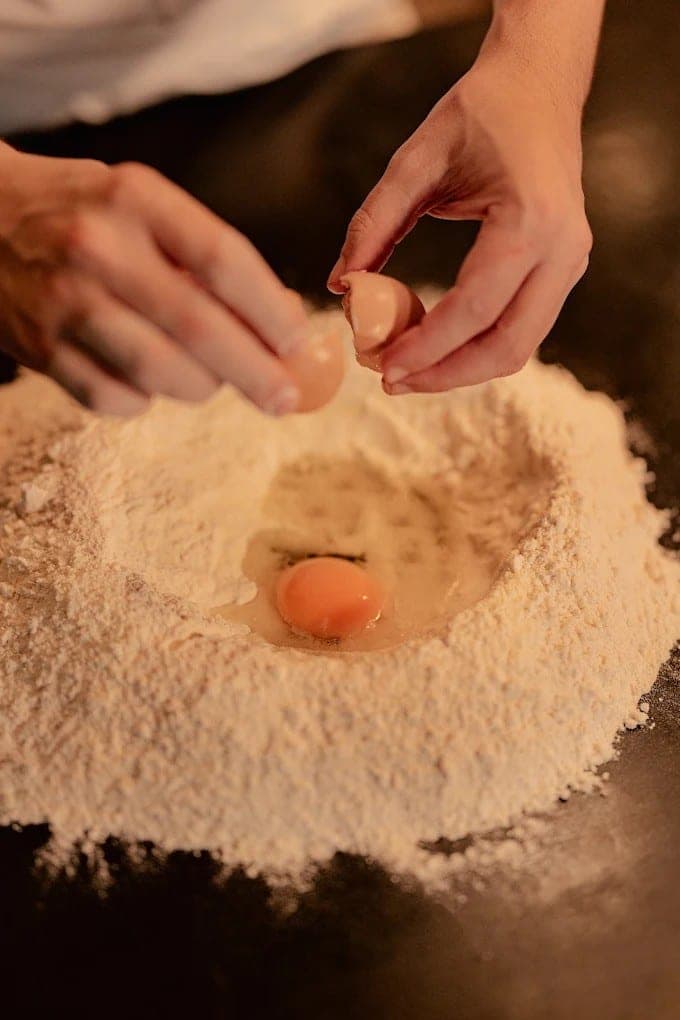
Chef Francesco Balloo comes from Porto Santo Stefano, on the Tuscan coast, and carries over fifteen years of experience across Michelin-starred kitchens in France, the United Kingdom, Italy, and Spain. Among his most formative positions was Mirazur, the three-starred restaurant in Menton that was named Best Restaurant in the World in 2019. What he brought from that trajectory is not a style of plating or a signature technique but a conviction: that the quality of the ingredient determines the ceiling of the dish, and that the cook’s job is to stay below that ceiling.
At Amanjena, Balloo works with a network of local producers. The most significant partnership is with Sanctuary Slimane, an organic garden located just a few kilometres from the resort, which supplies vegetables, herbs, and seasonal produce with a proximity that makes the term “farm-to-table” literal rather than aspirational.
What Arrives at the Table
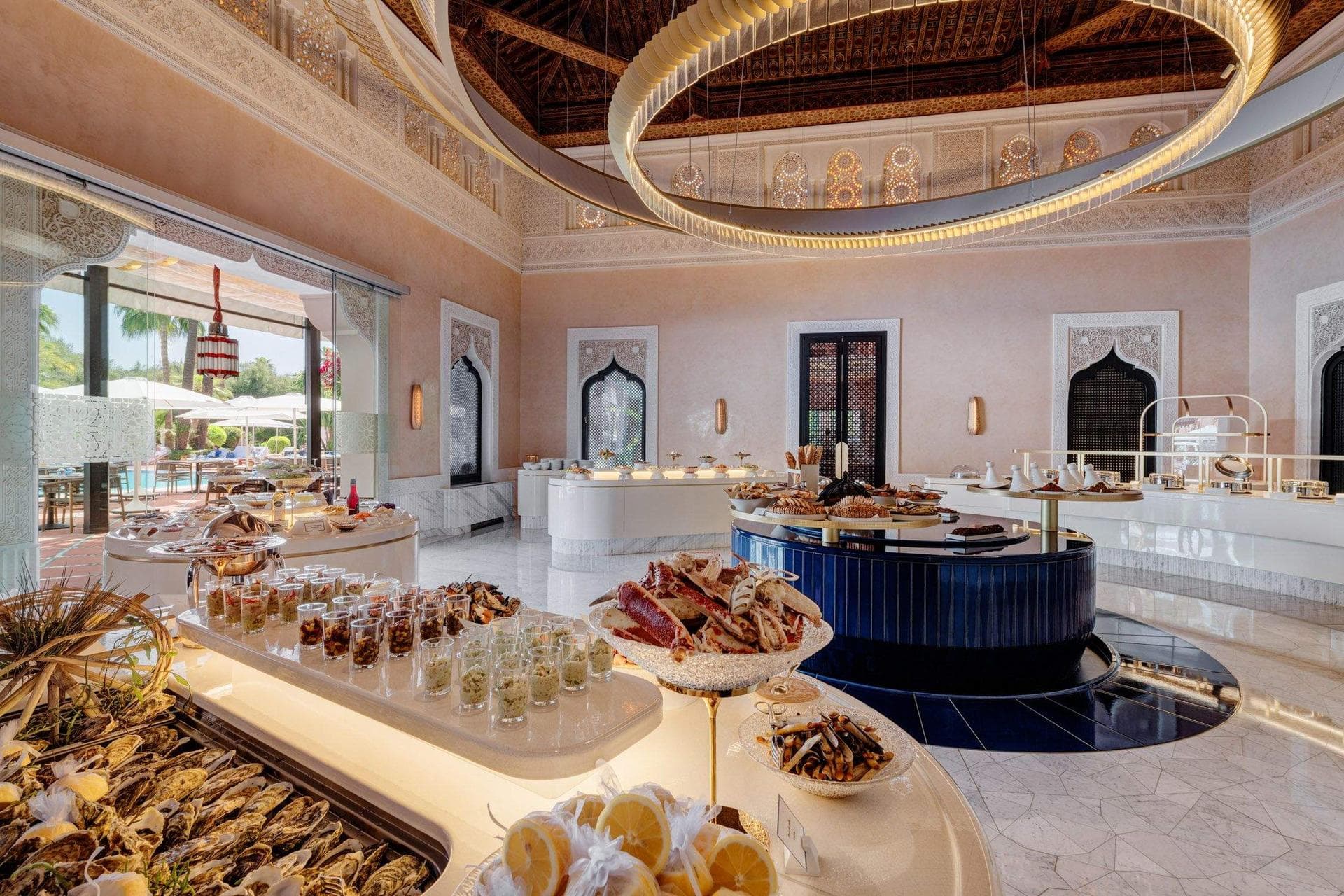
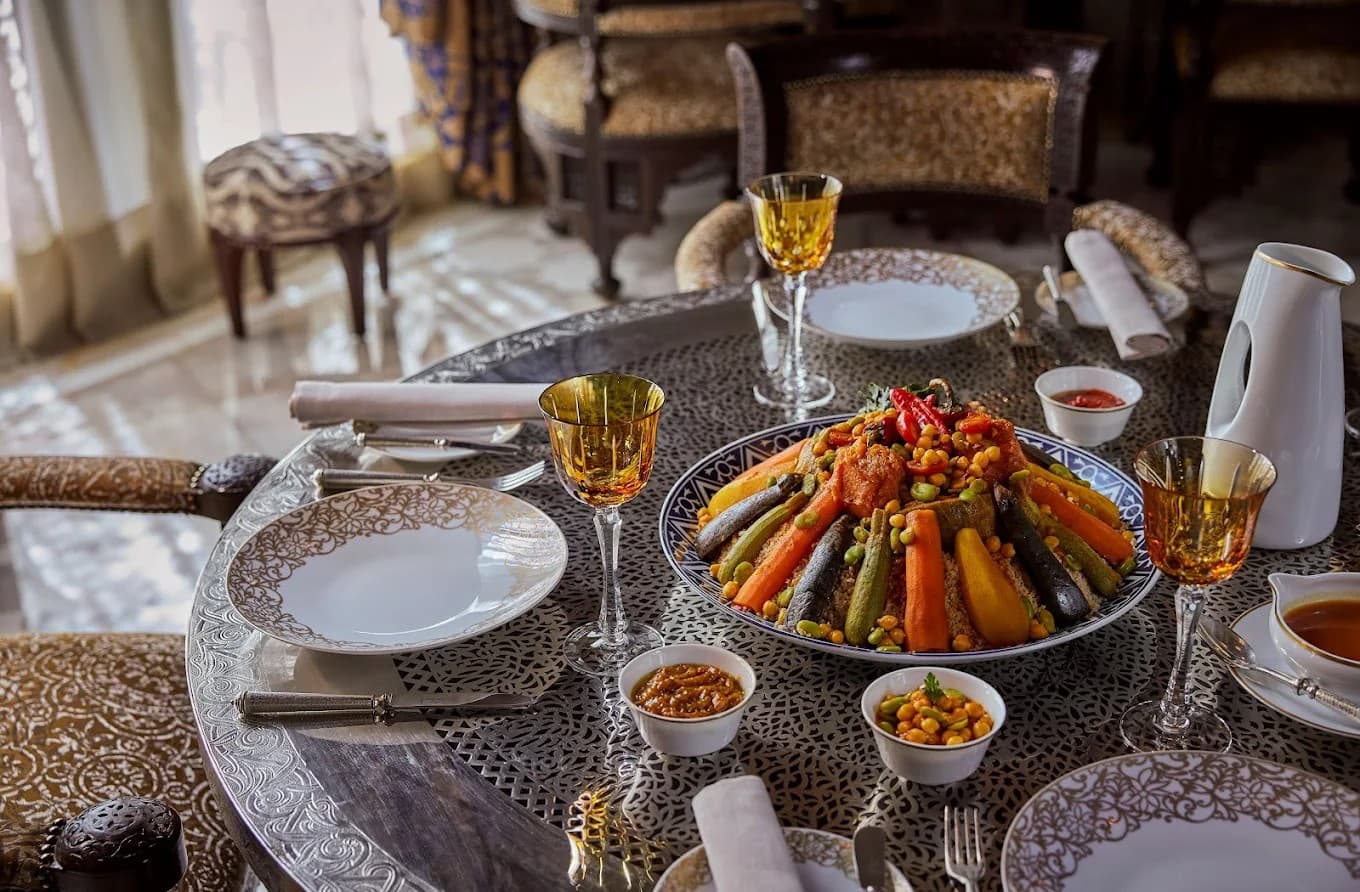
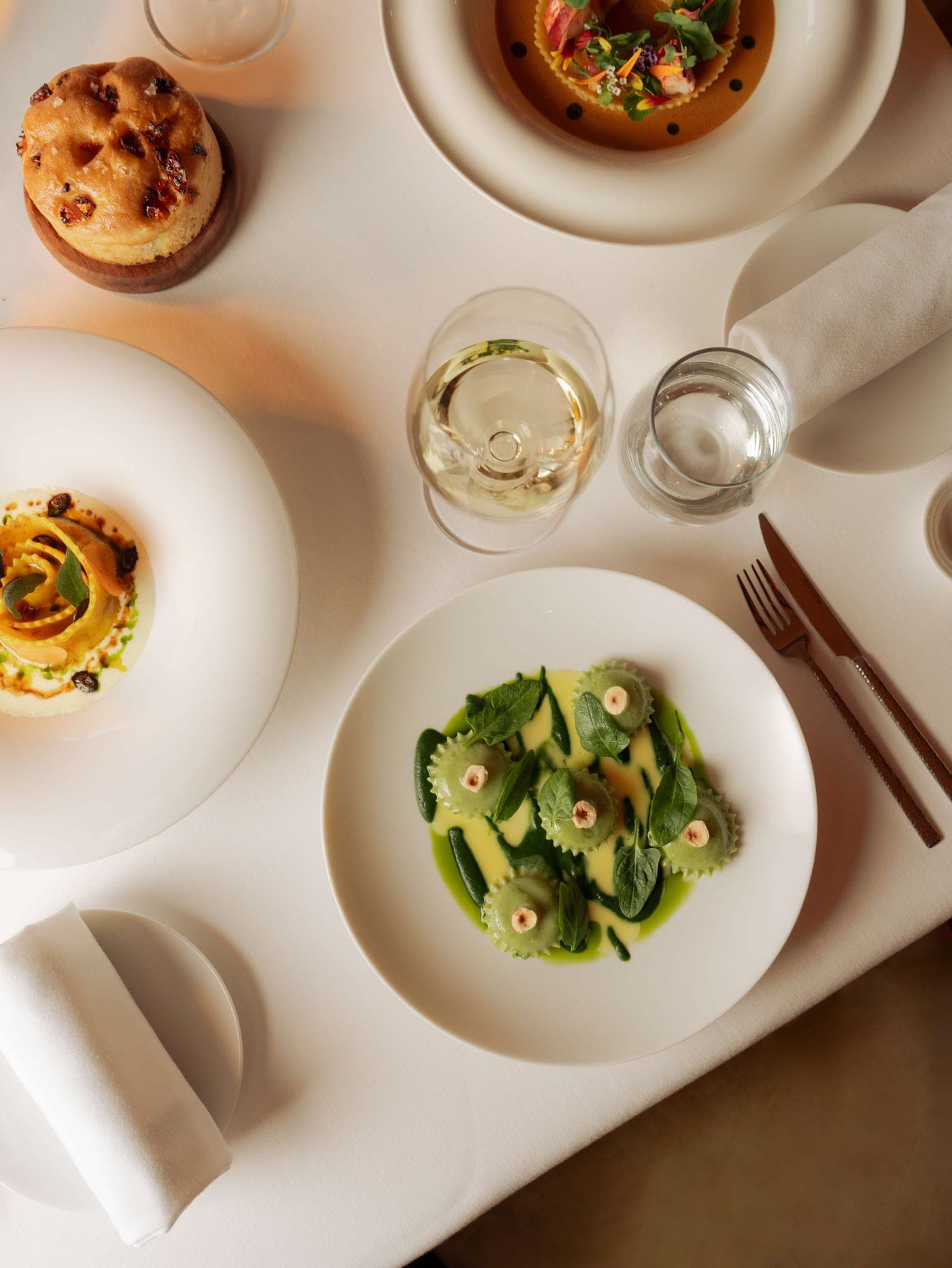
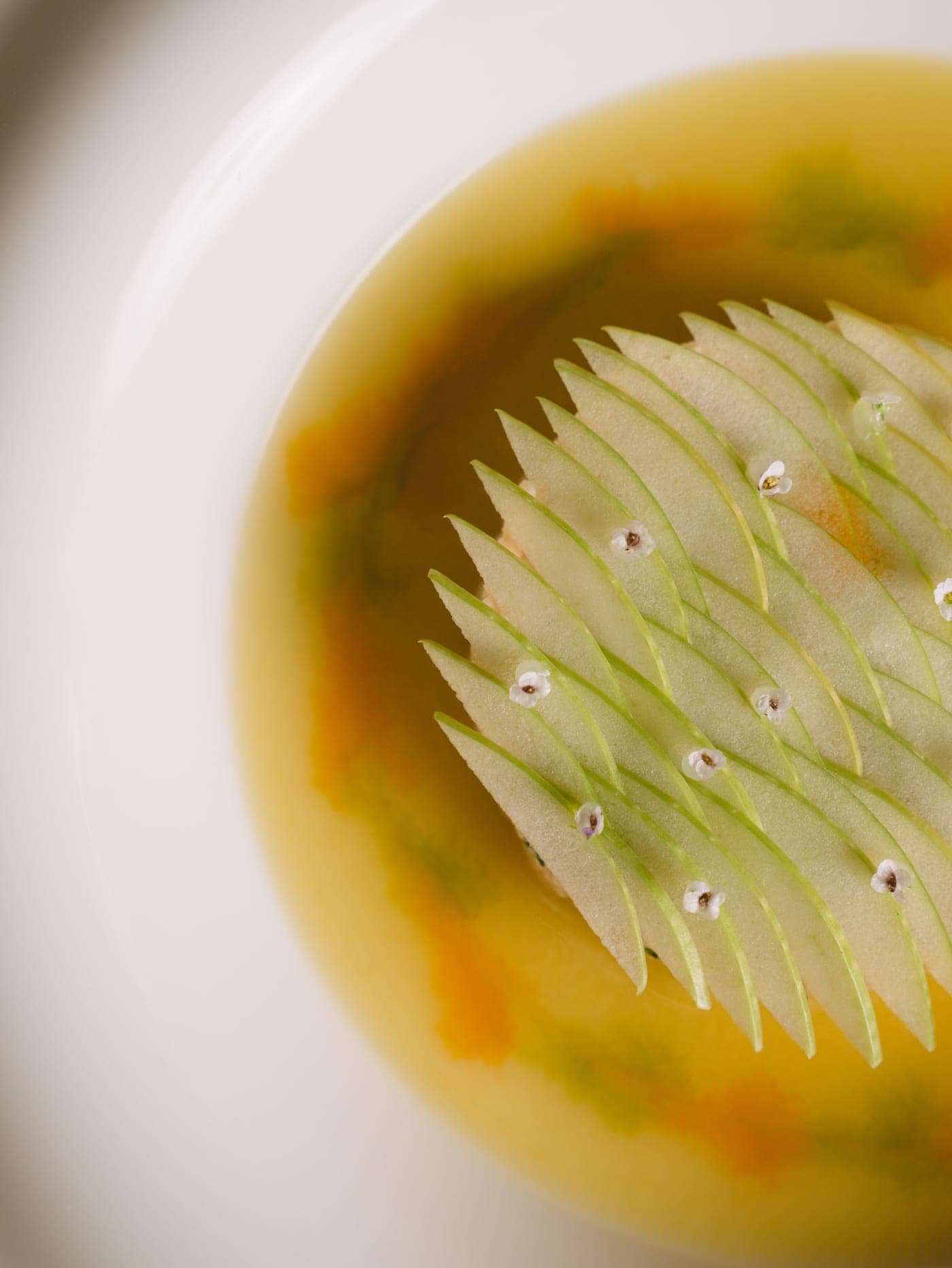
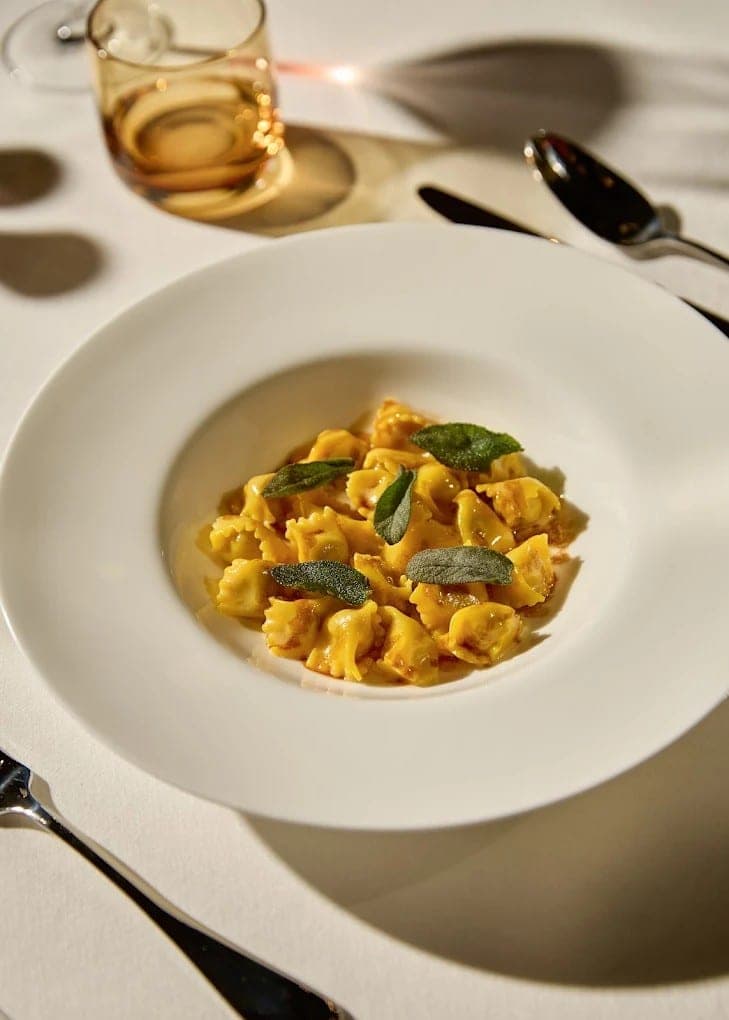
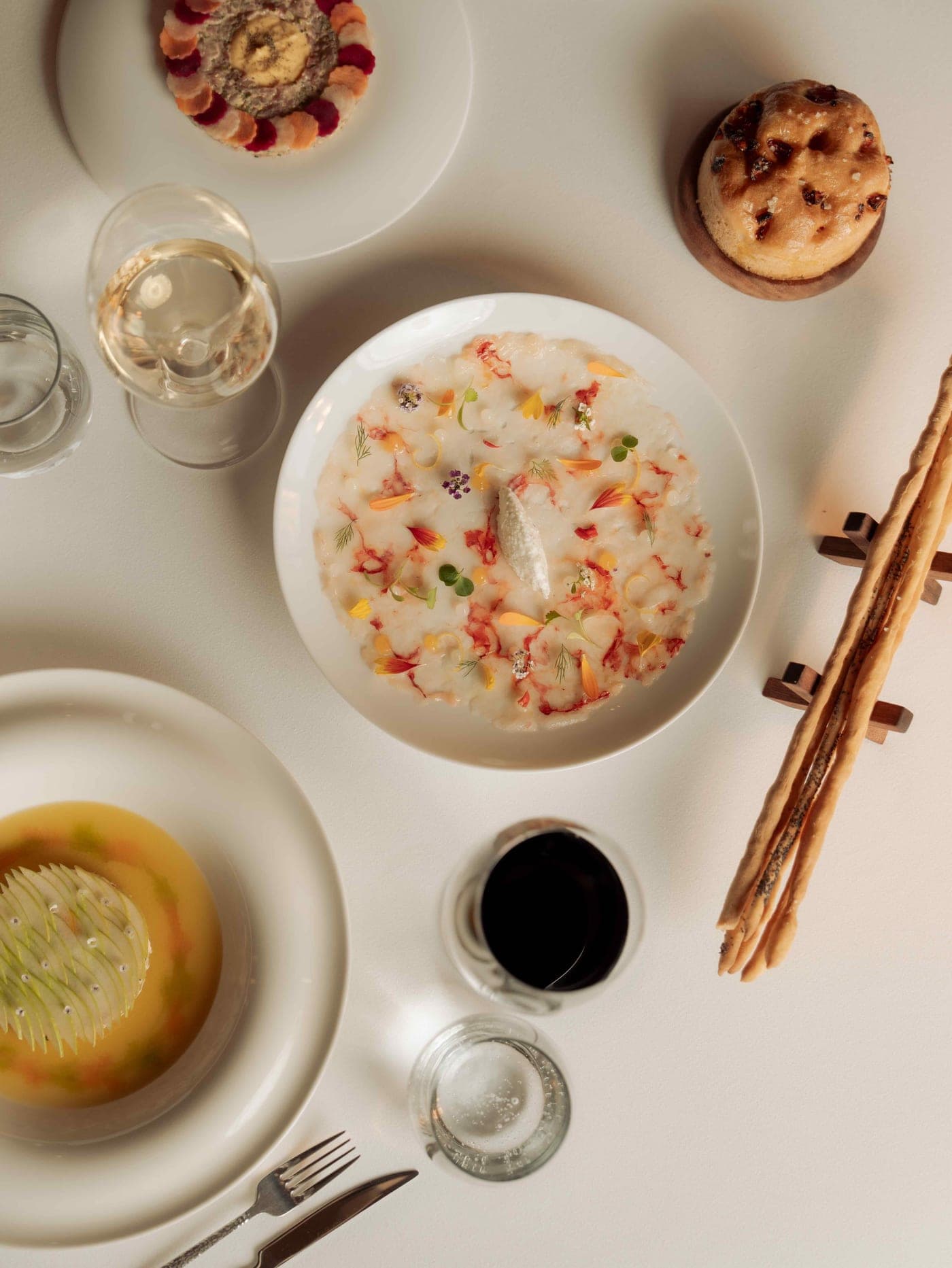
The menu is designed for sharing, and the dishes read as Italian in structure with Moroccan produce running through them. Sogliola alla Mugnaia, local sole pan-fried in the classic manner, is one of the plates that signals where the kitchen sits: familiar technique, local fish, no need to complicate. Agnello e Caponata takes Moroccan lamb and marries it with aubergine, peppers, and capers in a preparation that belongs to southern Italy but feels native to this latitude. Raviolo all’Astice brings Tuscan handmade pasta into the equation.
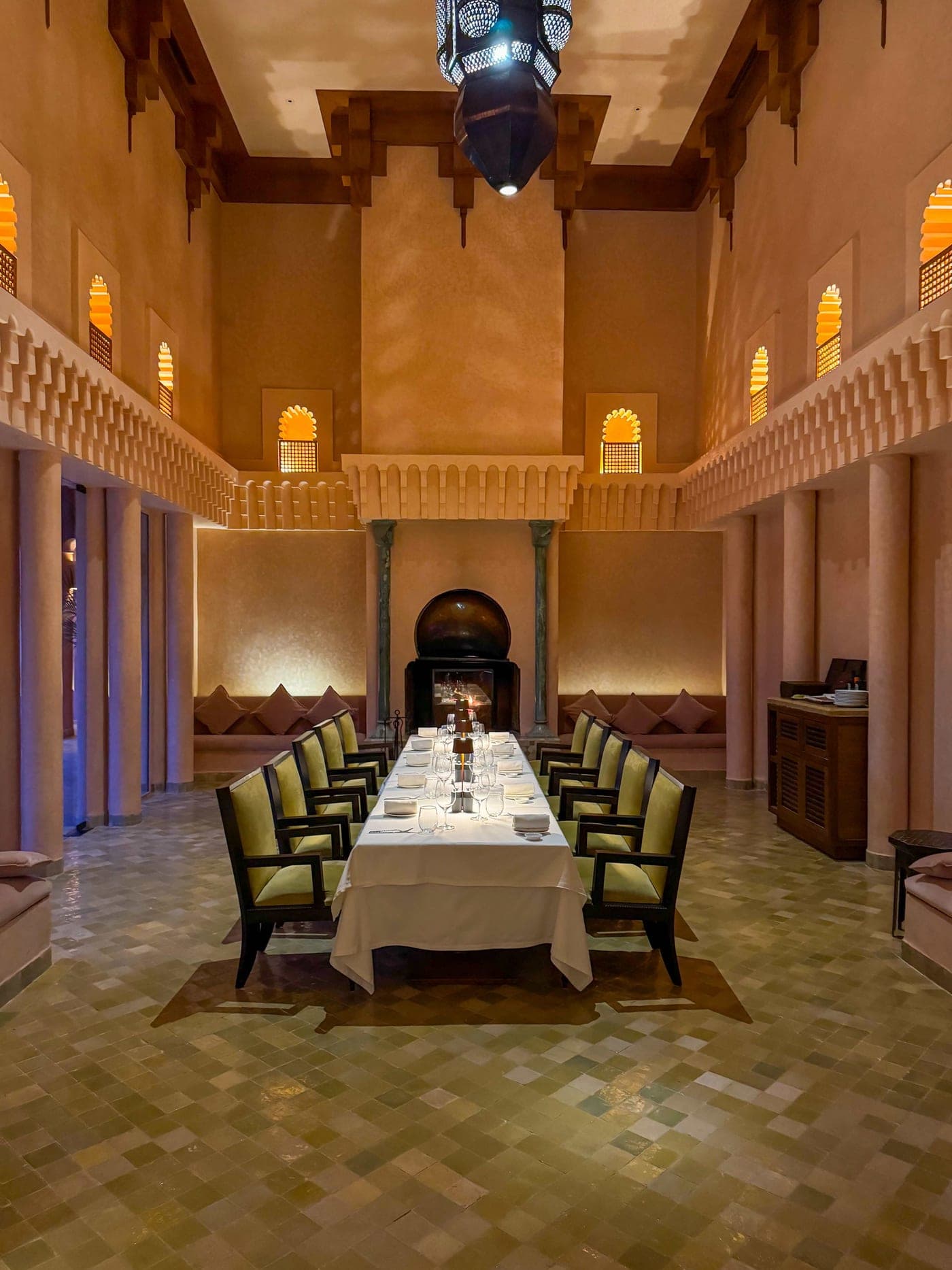
The tableside moments carry weight. Dorade en croûte de sel, filleted in front of guests, and affogato pressed to order bring a theatricality that the setting can absorb without tipping into performance. The private dining room, seating up to sixteen, accommodates those occasions where the meal is the event.
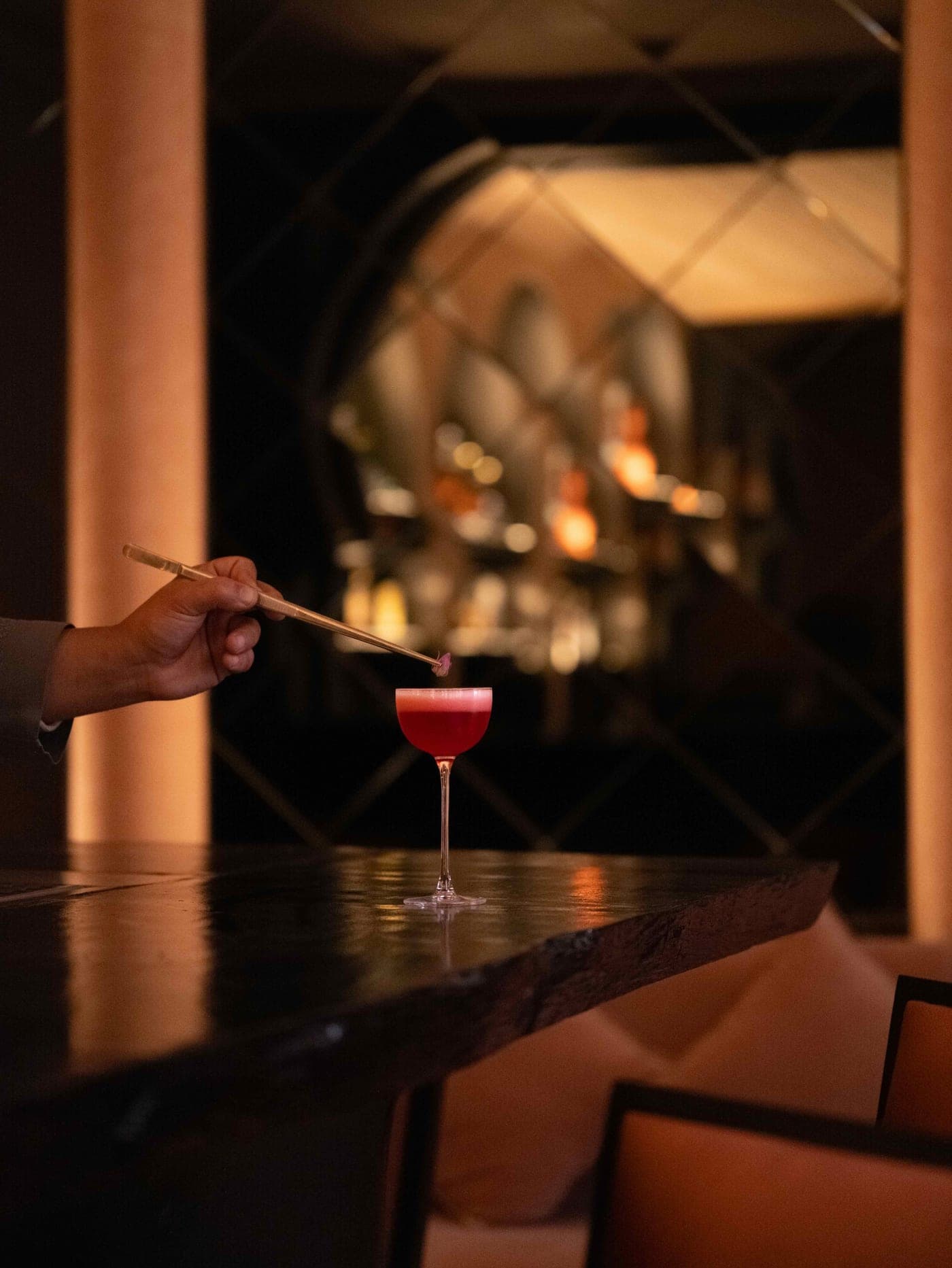
The Arva Bar, adjoining the restaurant, holds a wine list with close to fifty percent Italian references alongside Moroccan bottles from local vineyards. The cocktail list includes the Arva Negroni with saffron and fig, and the Fratello Basilico, blending basil, limoncello, and tequila. The drinks are composed with the same logic as the food: familiar foundations, local inflections.
The Room
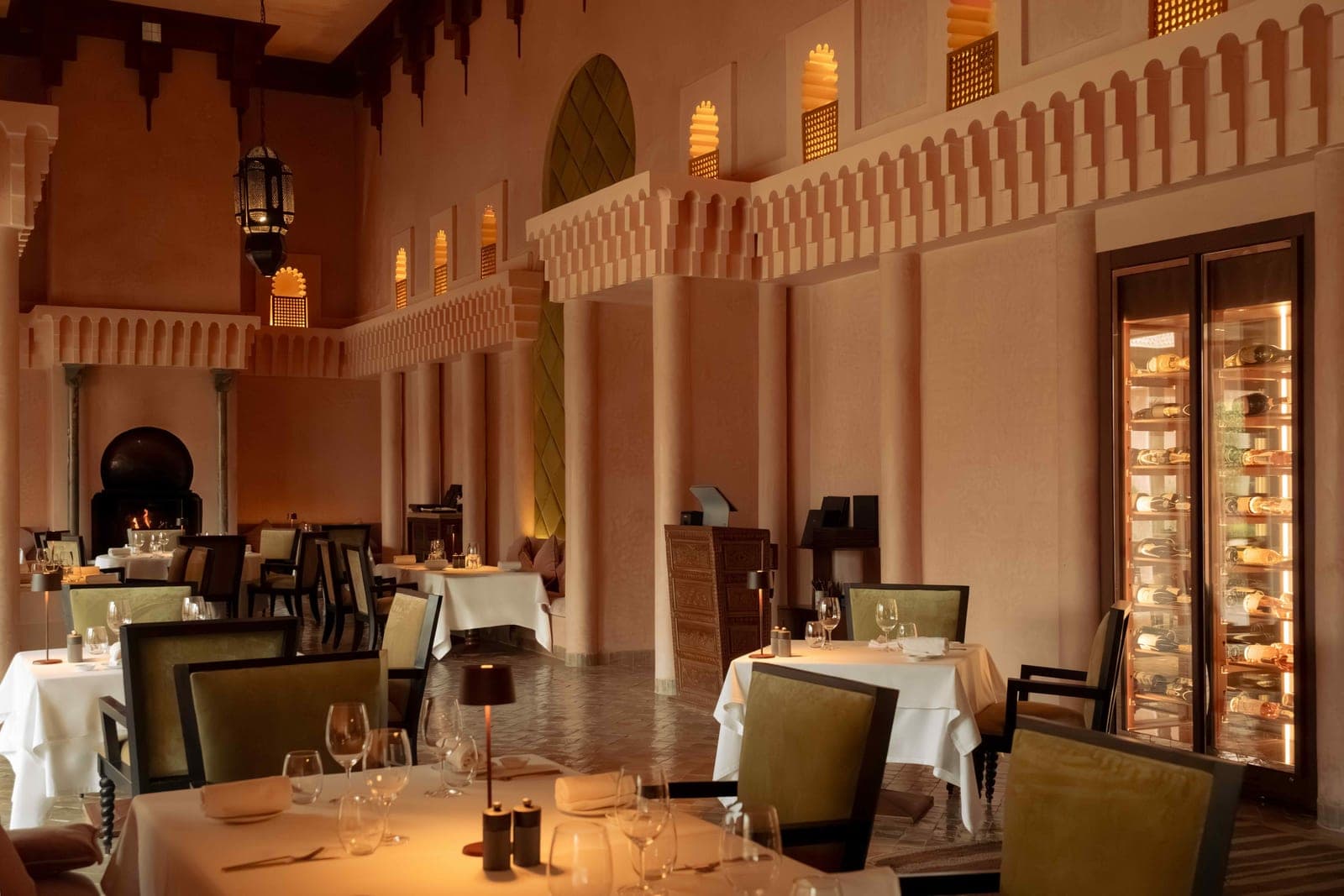
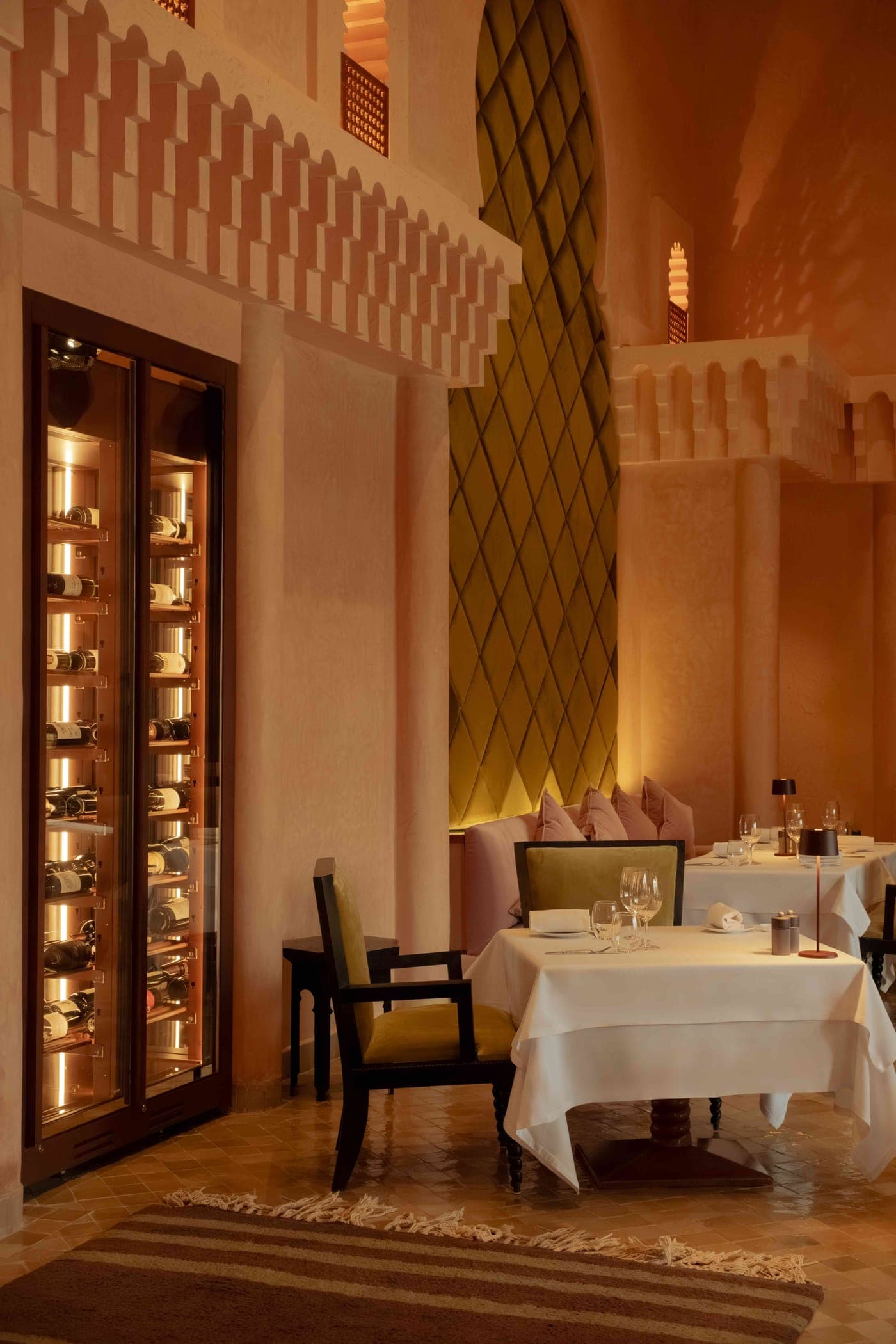
Inside, handcrafted tiles and tadelakt walls carry the warmth of materials that have been part of Marrakech construction for centuries. The lighting is soft, the palette muted, the scale intimate. It reads less as a hotel restaurant and more as a private dining room that happens to be inside one of the most architecturally considered resorts in the country. Outside, the terrace extends toward the pool and the palmeraie beyond, and the shift between indoor and outdoor dining is one of register rather than distance. The evening service, from half past six to half past ten, catches the transition from daylight to lantern light, and the room is calibrated for that hour.
Arva at Amanjena does not try to reinvent Italian cuisine in Morocco. It does something more precise: it places a kitchen with serious credentials inside the architectural setting that Ed Tuttle designed in 2000, connects both to the produce growing a few kilometres away, and lets the convergence speak for itself. The renovation gave the resort a new chapter. Arva gave it a table worth sitting at.
Arva at Amanjena · Restaurant
Discover Arva at Amanjena→You may also like…