CULTURE
Le MAP Marrakech: Inside the Monde des Arts de la Parure
A Kasbah museum where three thousand ornaments from more than fifty countries are arranged as the record of identity they have always been.
Timence Guide Editors · 14 July 2026
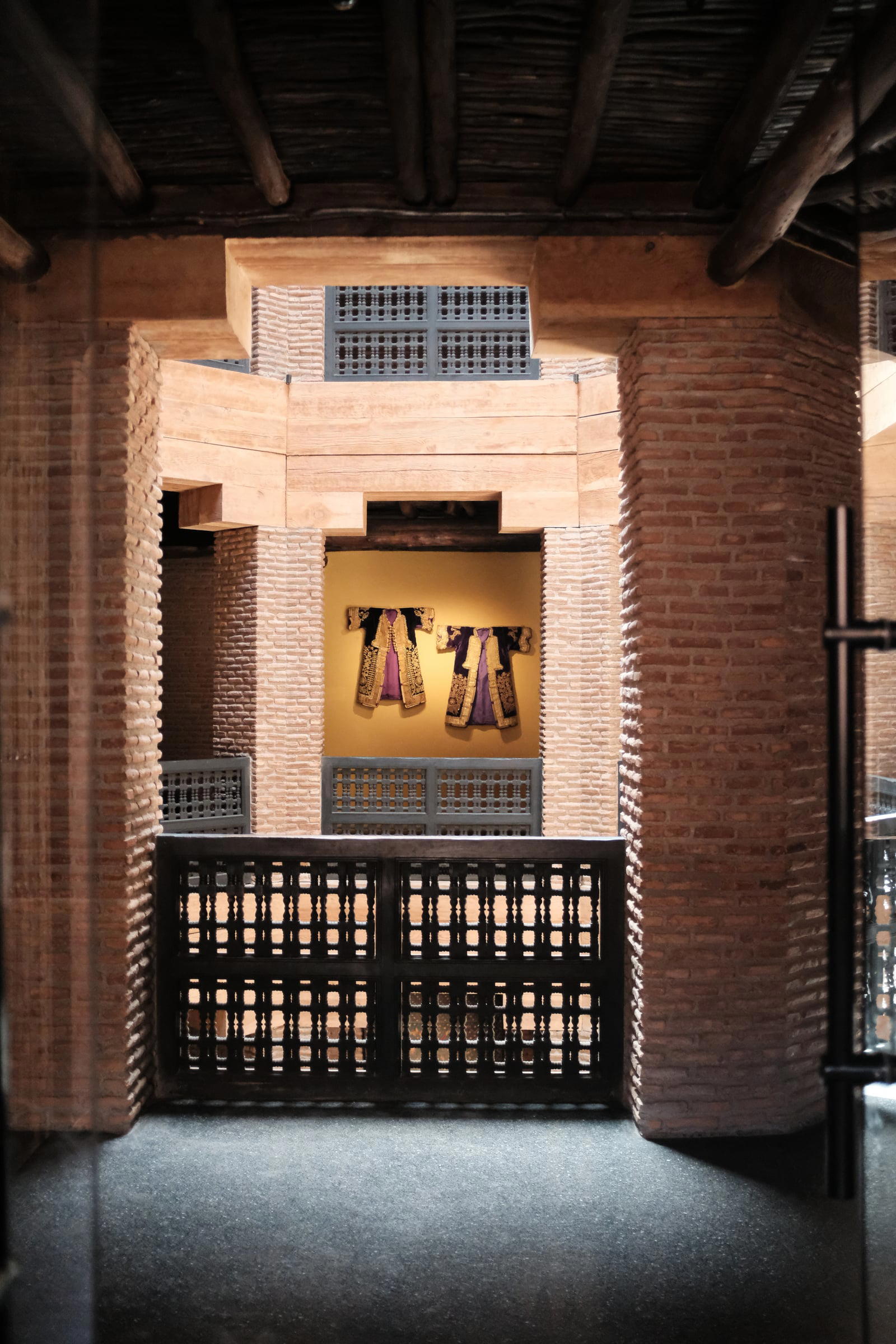
The building gives itself away slowly. From the lanes of the Kasbah, a short walk from the Saadian Tombs, Le MAP Marrakech reads as one more high terracotta wall until you step inside and stand under an octagonal shaft of light that falls three floors through the center of the house. The place was a rabbi's residence long before it held anything, and it took five years of restoration to turn it into the Monde des Arts de la Parure, the museum of adornment that opened in 2022 in the heart of the Medina.
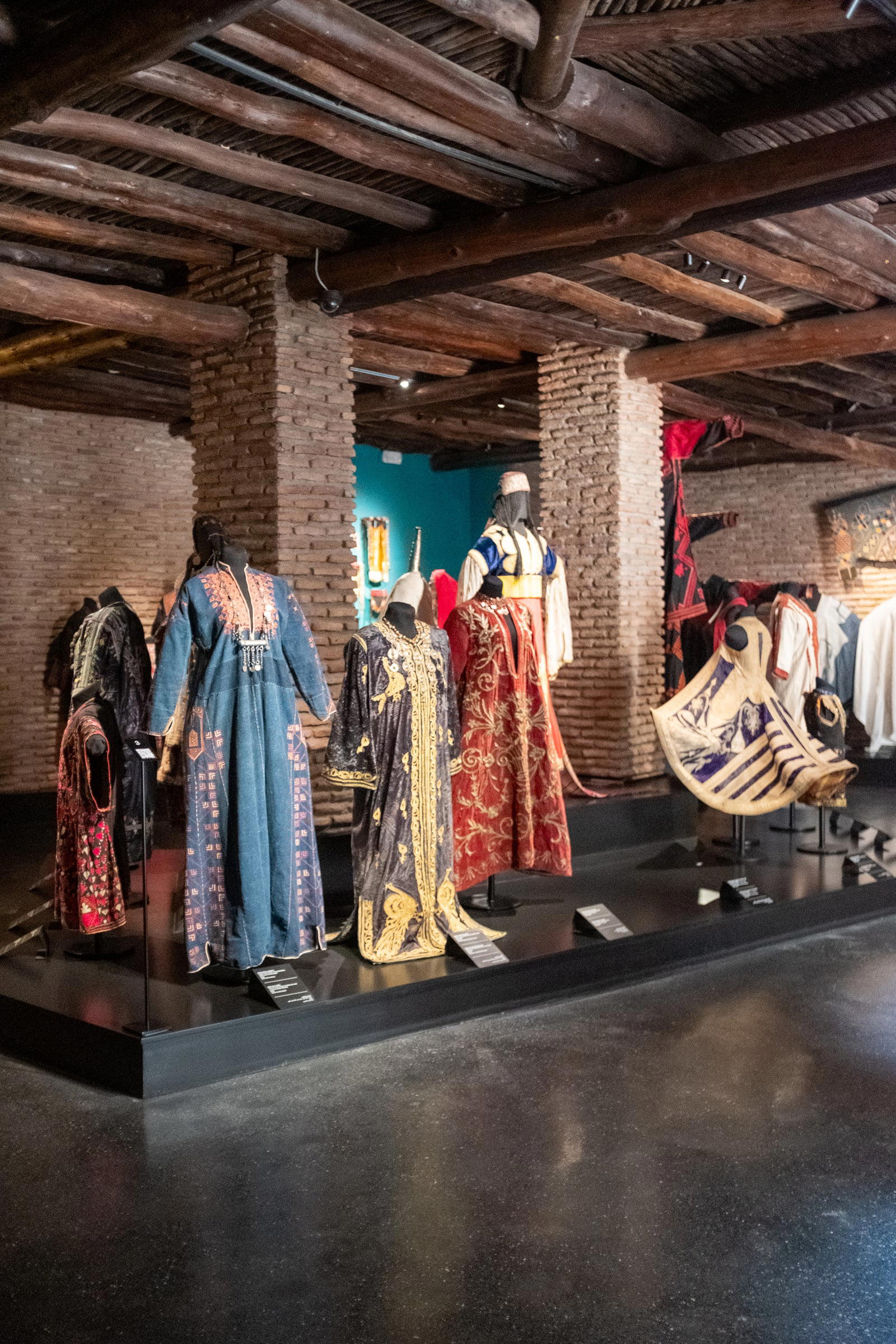
The collection belongs to Marlène and Paolo Ponce-Gallone, Swiss collectors who spent more than thirty years assembling it. He worked as a business lawyer, she as an antiques dealer, and together they gathered some seven thousand objects from more than fifty countries. About three thousand are on show at any time, spread across twenty-two rooms. The rest waits in reserve, which tells you the scale of what they were after.
The tour opens, oddly, with a horse. Mansour, the mascot of the first room, wears a full set of tack assembled from Turkey, Japan, Egypt, India and the Caucasus, saddle and bridle and muzzle ornaments that turn a working animal into a mirror of its rider's status. It is as clear a statement as the museum makes of its actual subject: not any single culture's jewelry, but adornment itself, the impulse that runs through fifty countries and outlives whatever borders separate them.
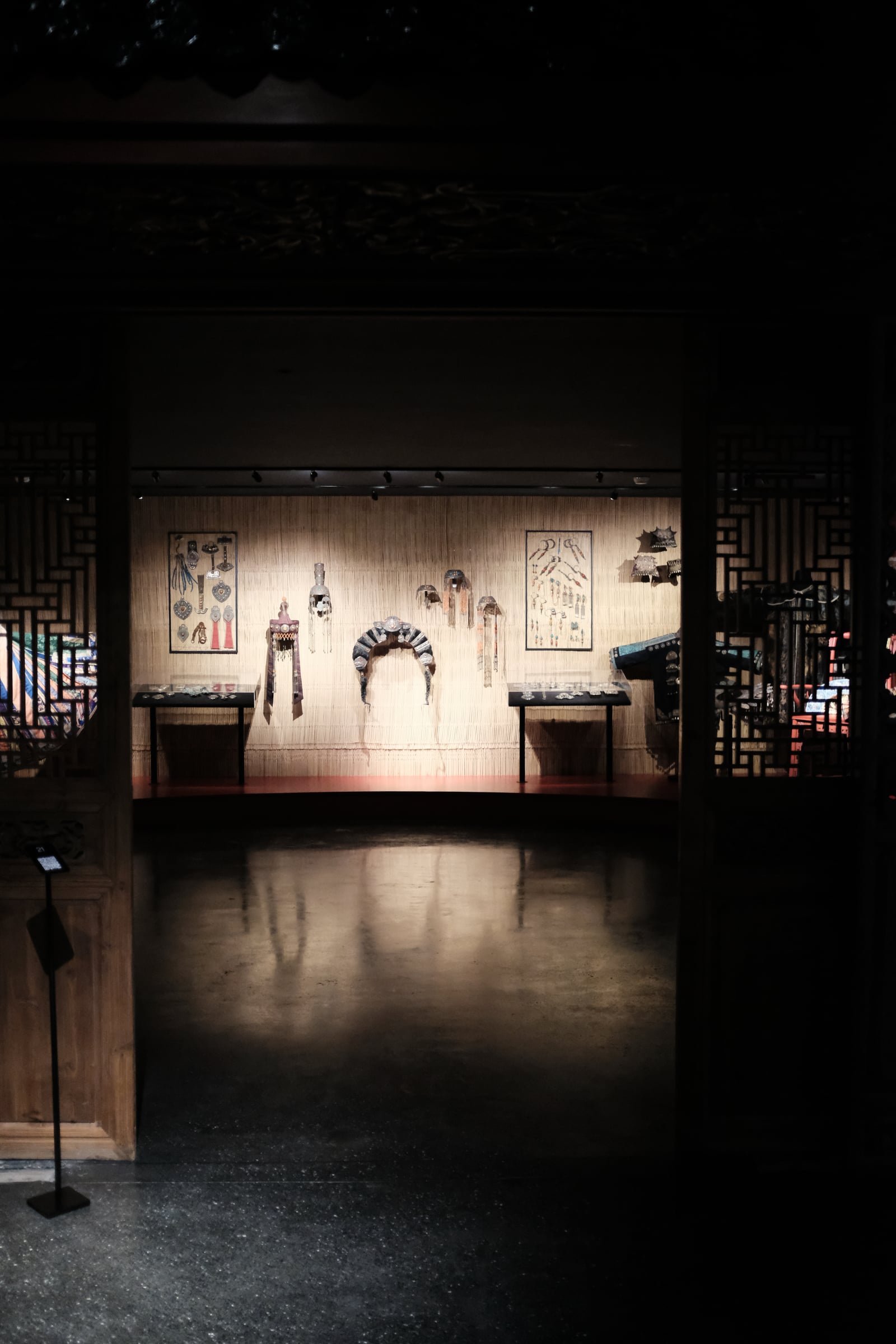
The museum has a floor below ground level too, given over to carpets. Nine of the twenty-two numbered rooms sit on the ground floor above it, a staircase then carrying the visit up to the first for the remaining thirteen. Some are organized by geography, the Sahara, the Amazigh world, the Arabian Peninsula, the Balkans. Others cut straight across it: a Treasure Room grouping glass, bronze and ivory by what they were for rather than where they came from, a Pearls Pit tracing coral and amber and shell back to one shared impulse, a final room devoted only to what people have worn on their heads.
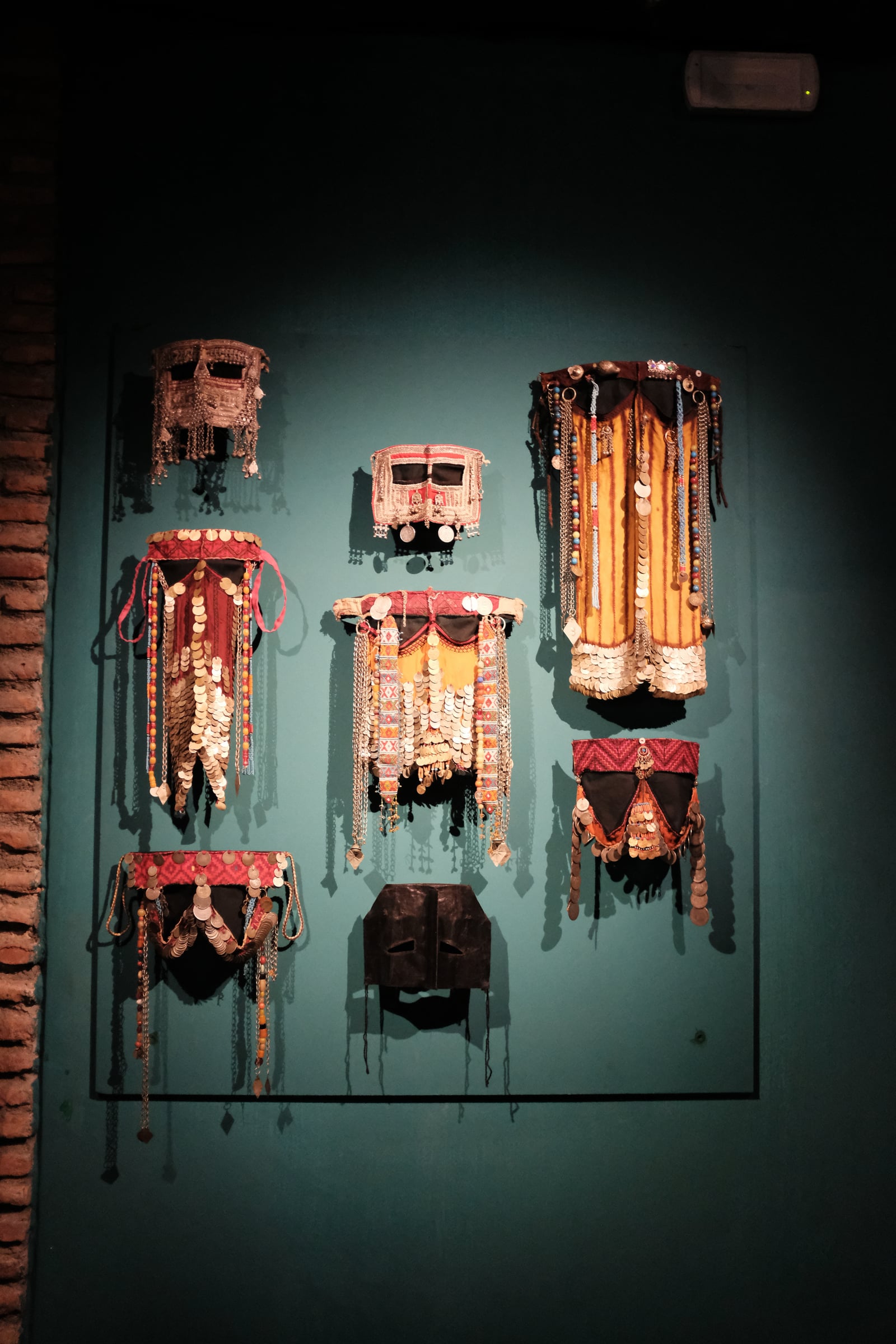
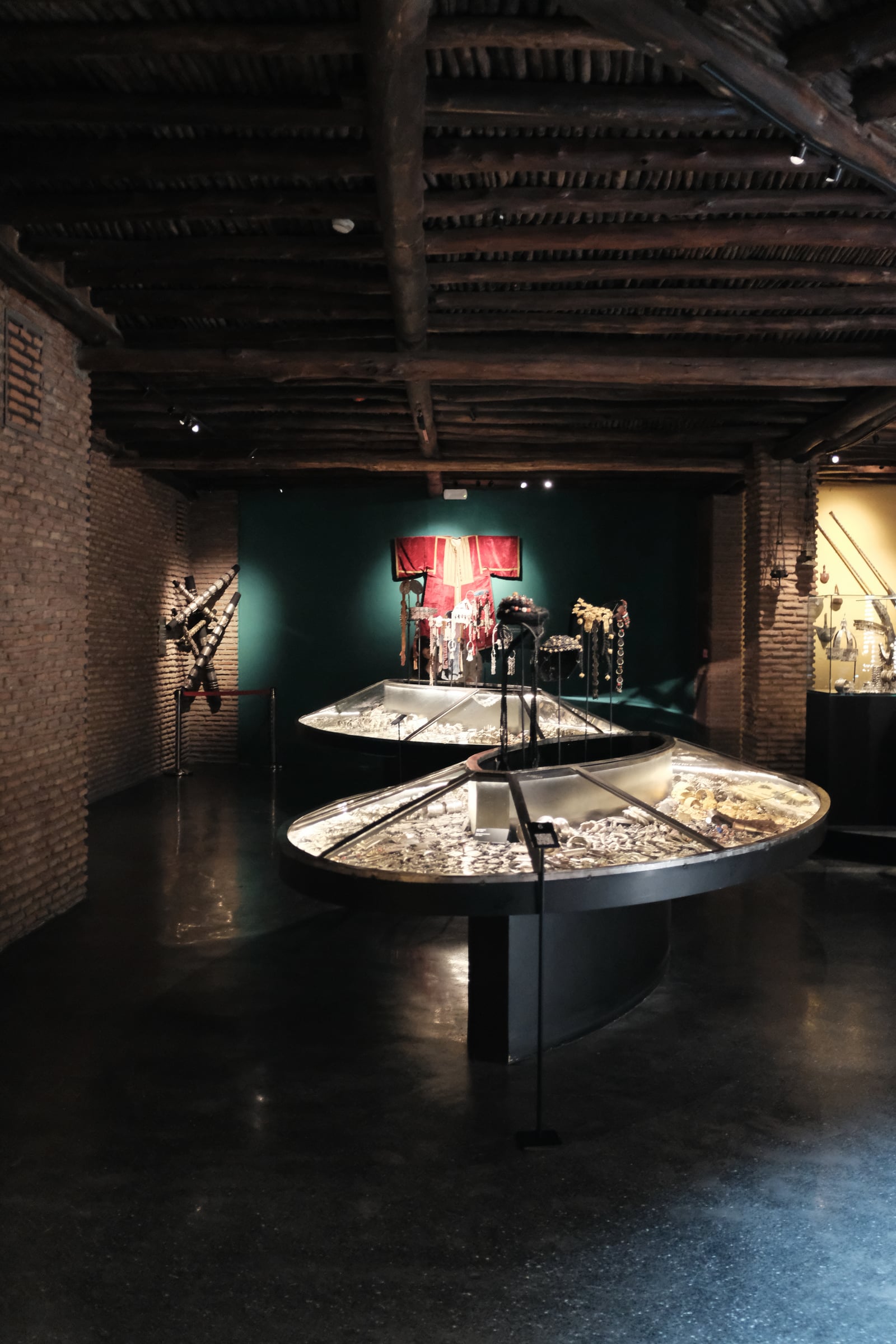
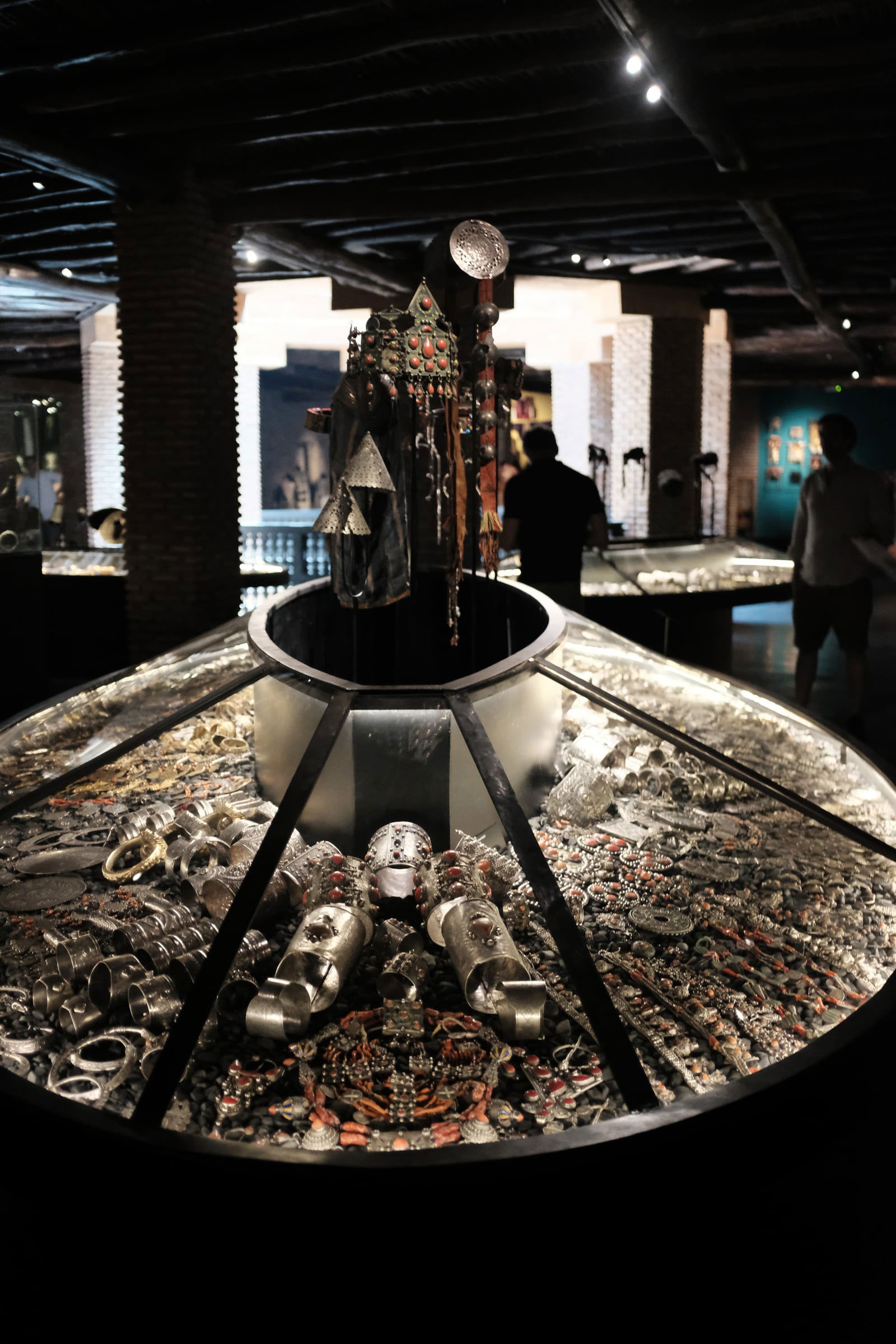
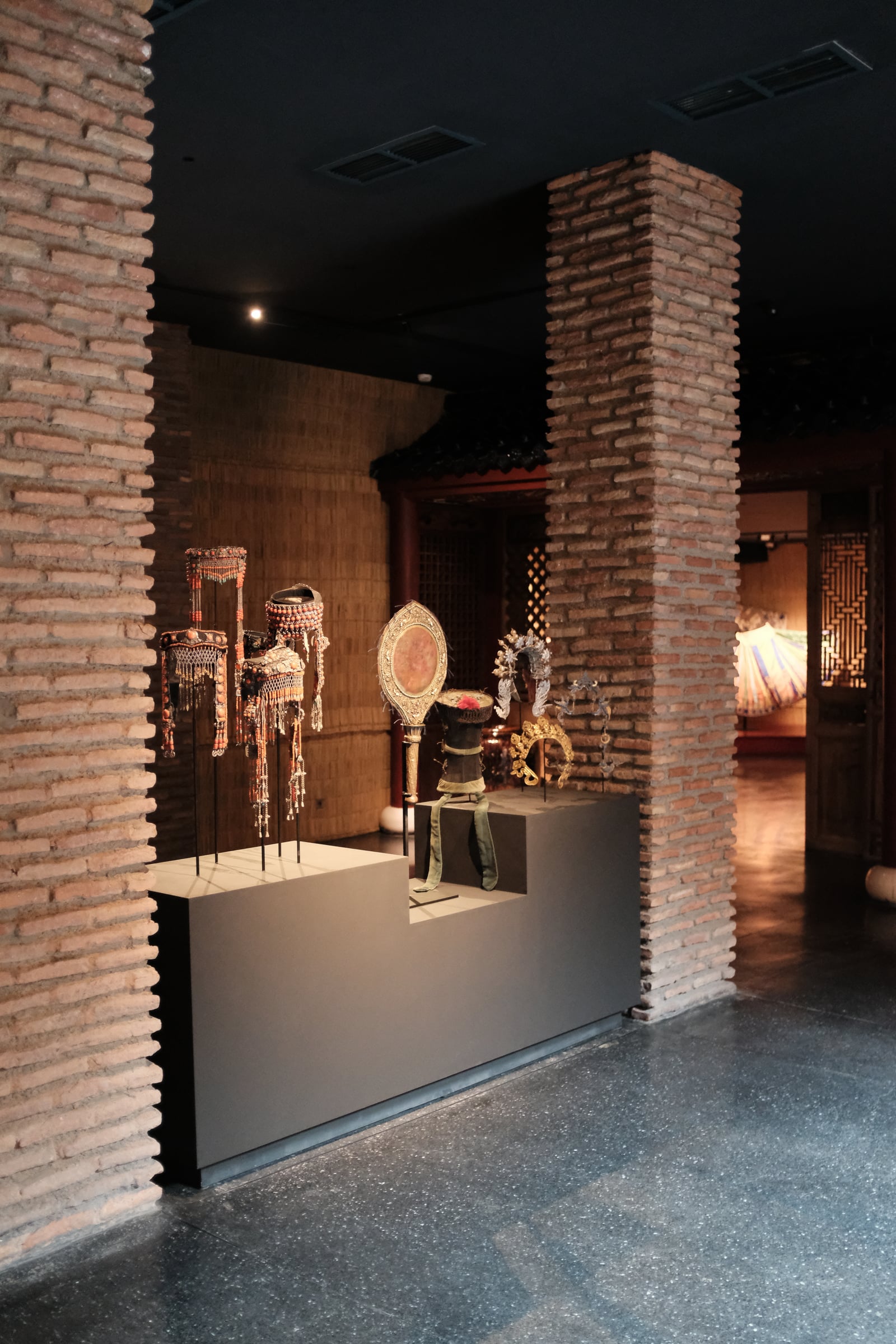
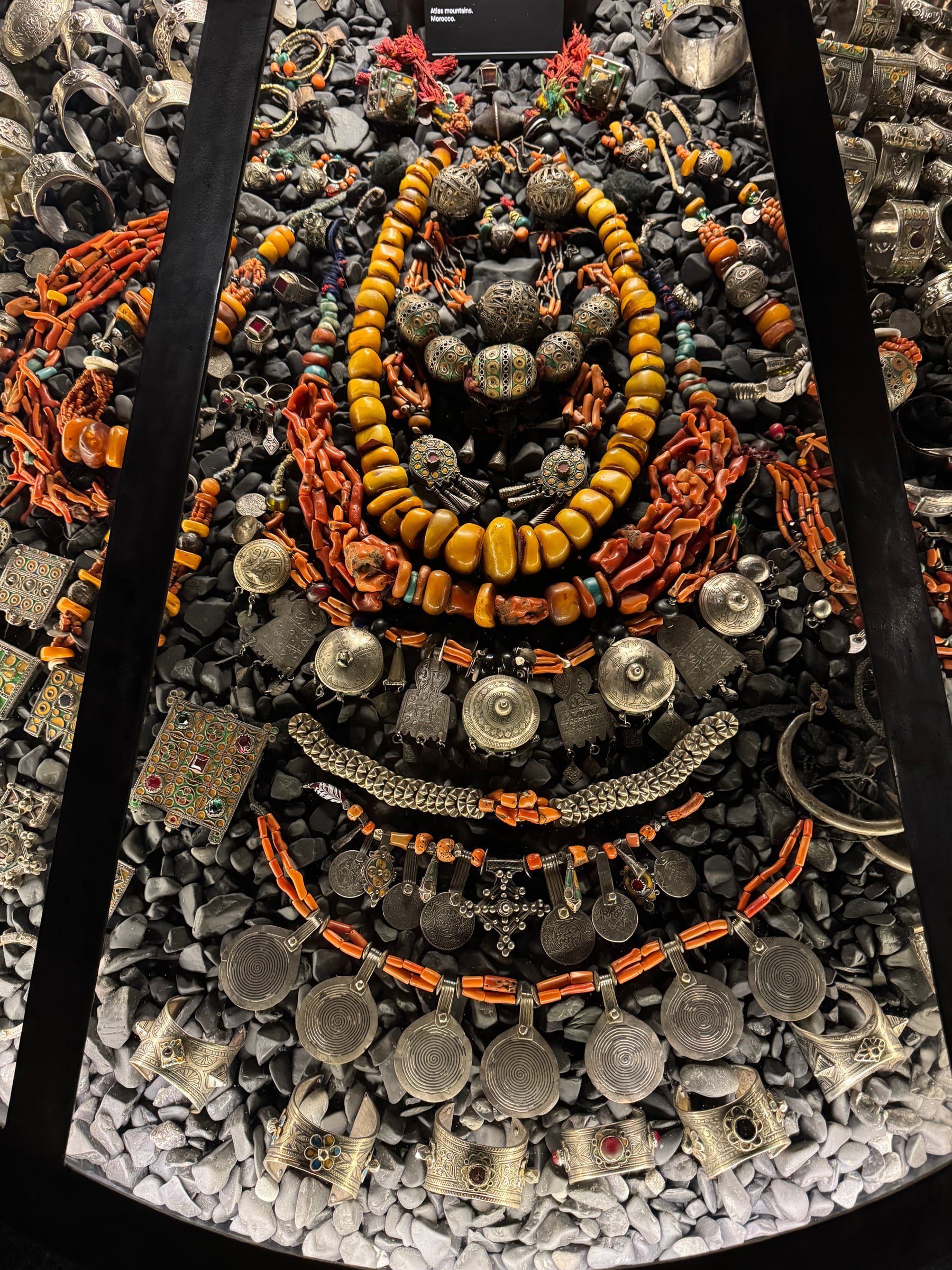
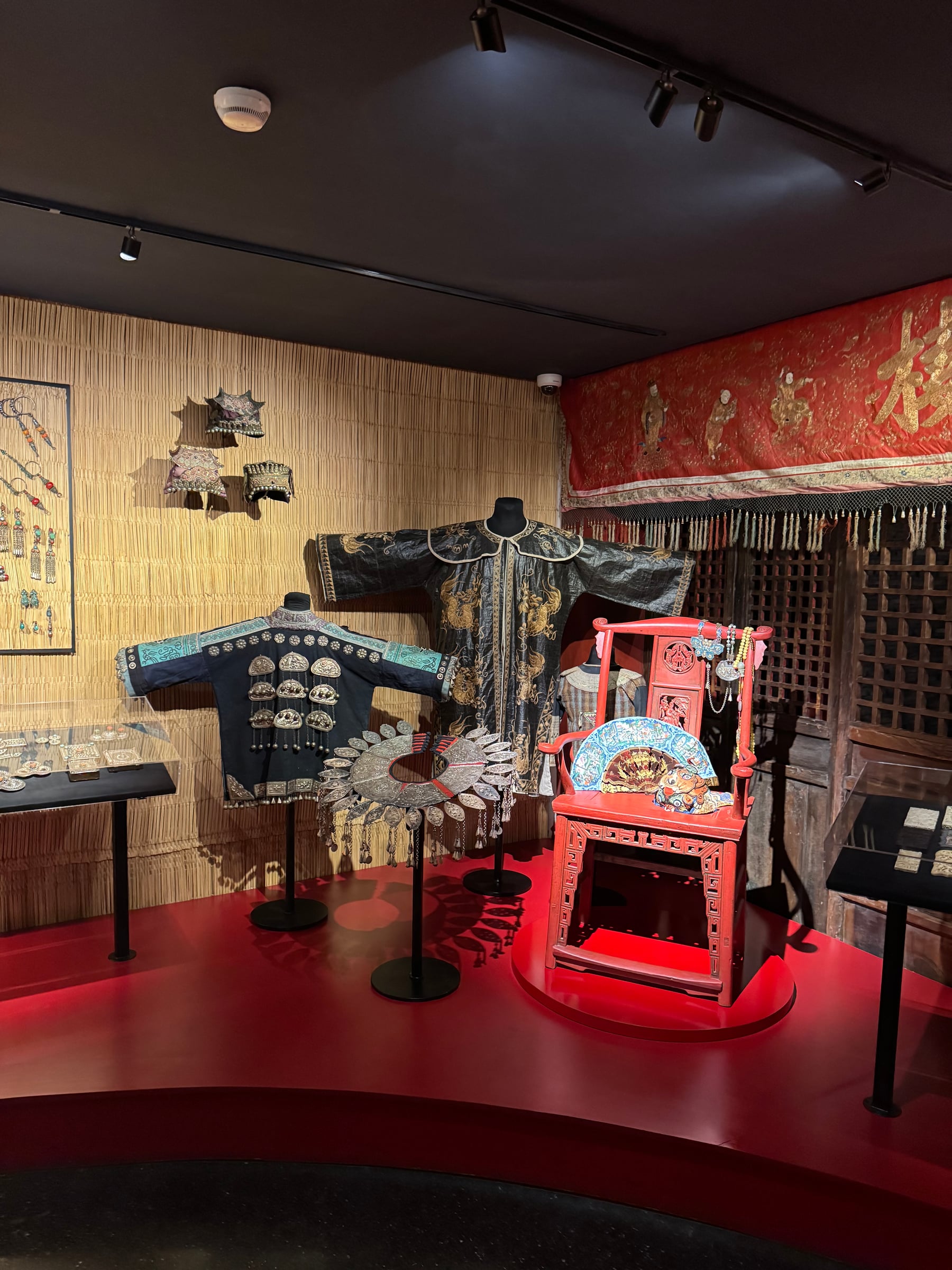
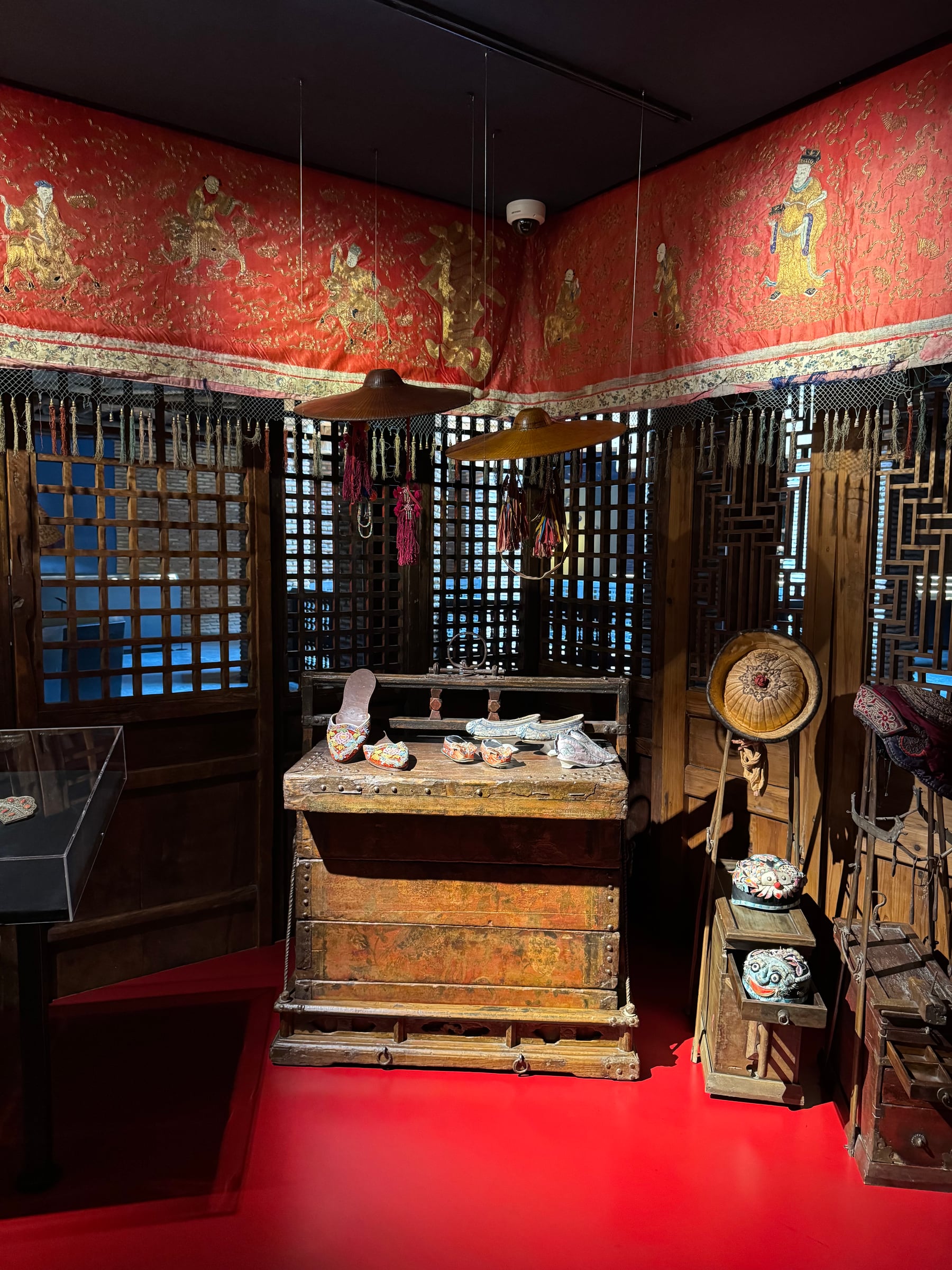
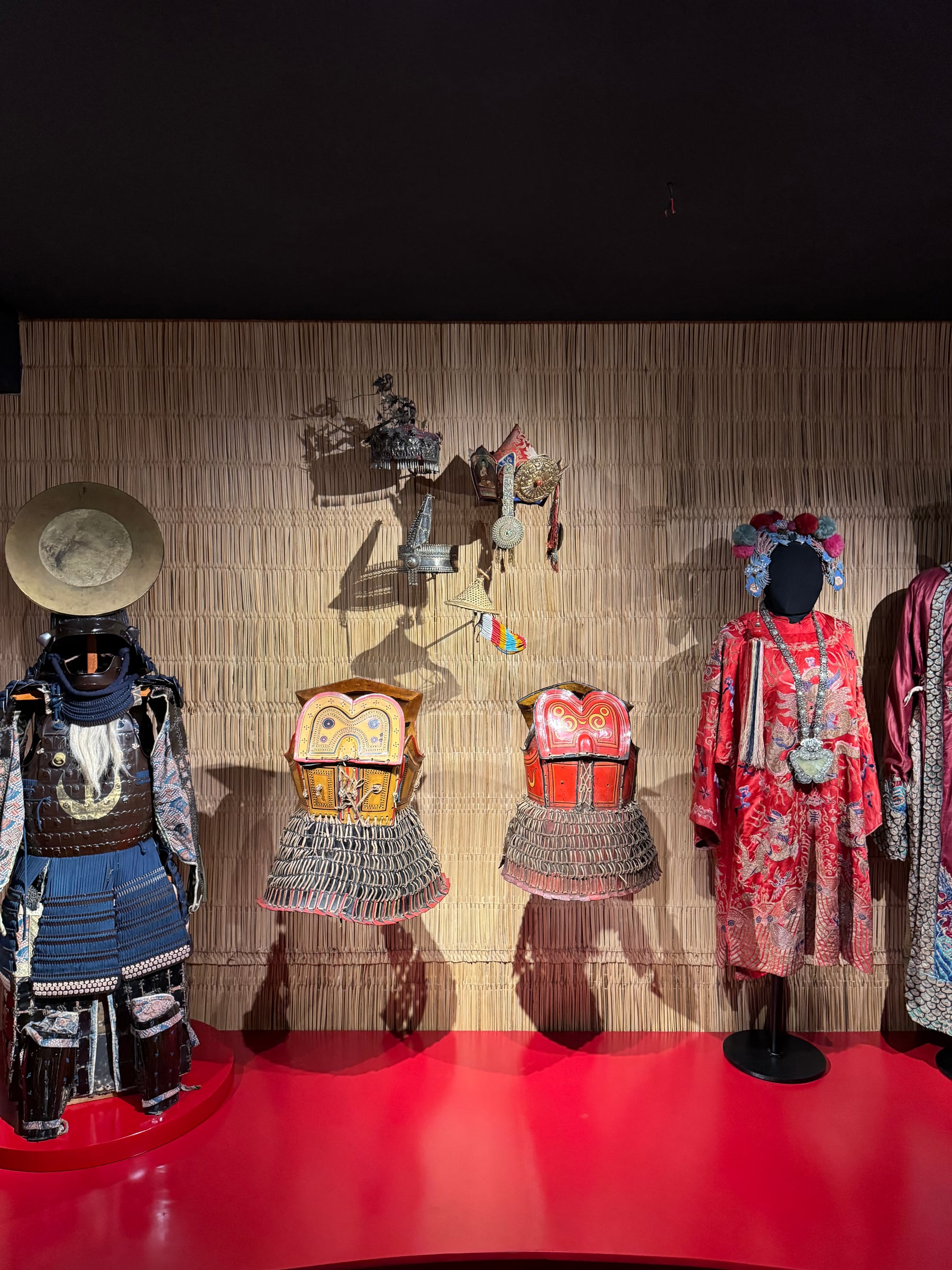
That Treasure Room states the museum's real argument plainly. A dagger and a gold cuff can share a case, because both are answers to the same question of status, worked in two different materials. Some of what is shown here made and marked a wedding; some of it, reworked into daggers and armor plate, marked a war. The glass case holding a single object under a spotlight strips out the reason it was made. Le MAP keeps putting it back.
A building that makes the same argument
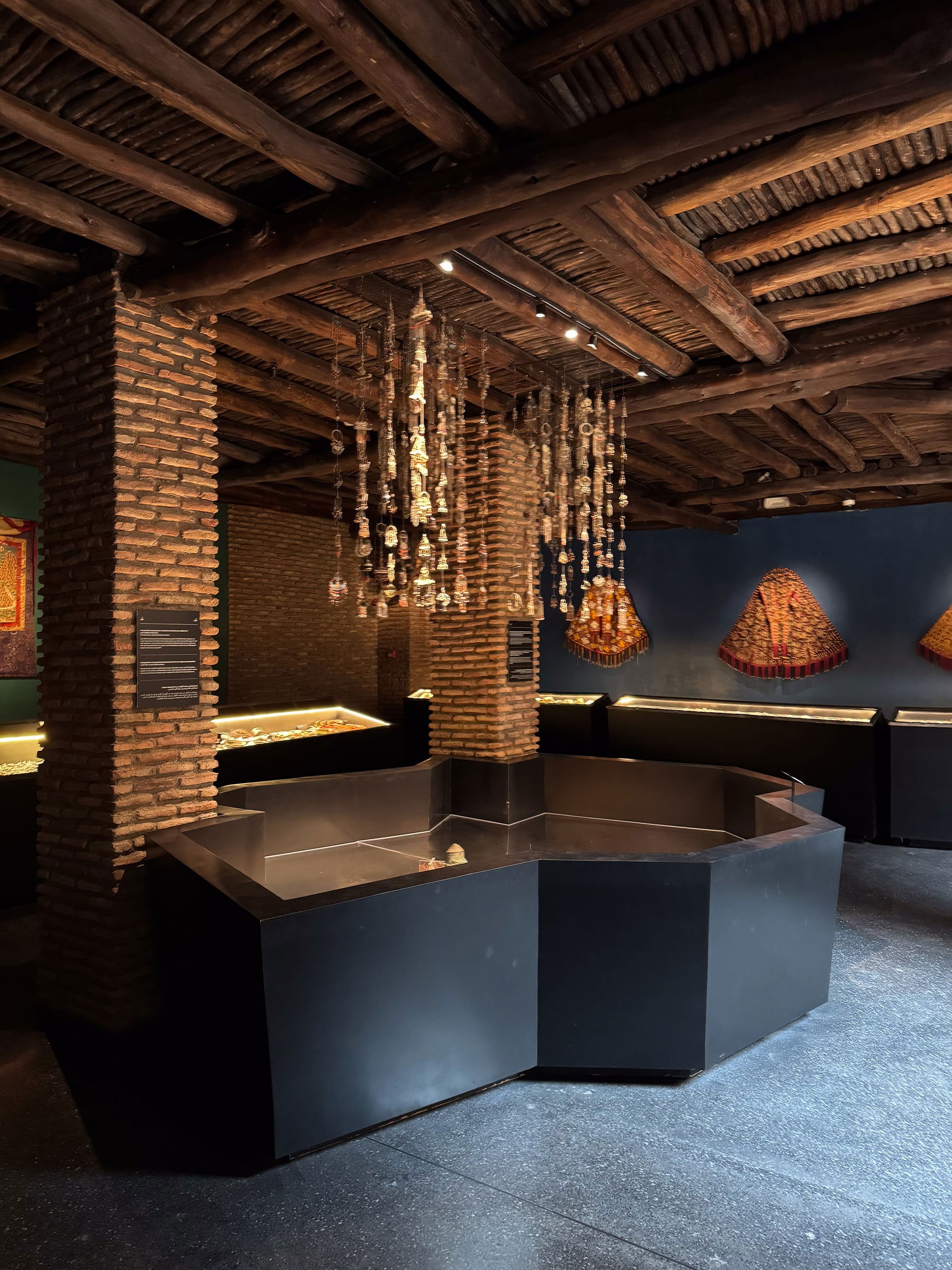
The interior is the work of Joseph Achkar and Michel Charrière, the Paris decorators who had recently completed the restoration of the Hôtel de la Marine on the Place de la Concorde. In Marrakech they worked in terracotta brick and solid cedar across three levels, with a clear debt to the Moroccan madrasas of the fifteenth century. The carved cedar, the filtered light, the geometry of the plan: the Ben Youssef Madrasa is the obvious reference, echoed without being copied.
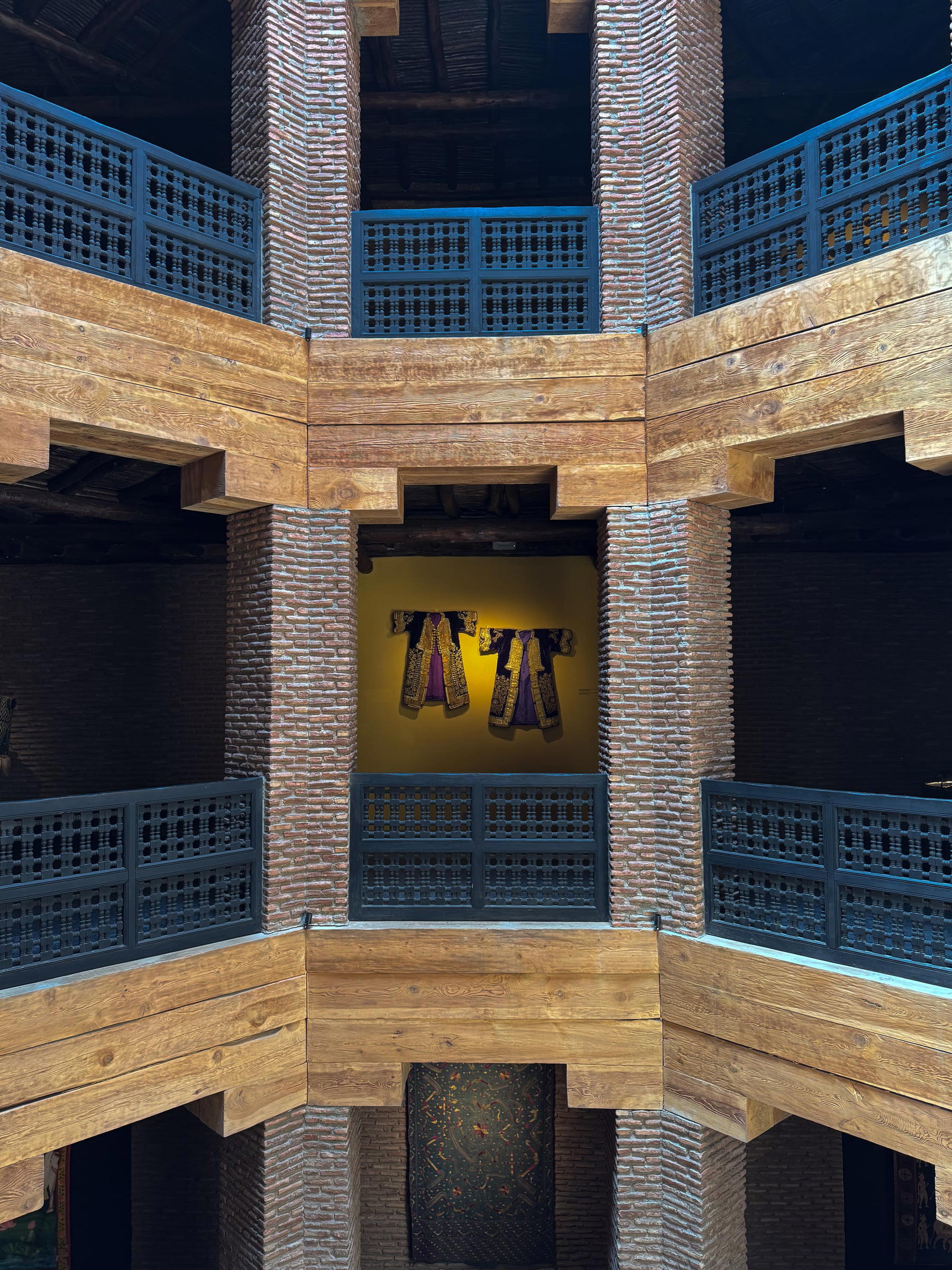
The Far East galleries, given over to Japan, China, Mongolia and Tibet, are staged inside a built reconstruction of a pagoda, a second building inside the first, the same trick repeated in miniature: a different kind of contemplation for a different part of the world. The octagonal skylight over the main stairwell does the wider work: it pulls daylight down through all three floors and changes the objects hour by hour, so that the same case looks one way at eleven and another at four.
Craft, and the roof
The granulated silver of southern Algeria and the filigree of Yemen both depend on a goldsmith's hand more than on the price of the metal, and Yemen's showcase holds a headdress pin whose spine is a porcupine quill. Further along, a black niello technique used on a fish-shaped pendant in the Near Middle East room arrived, the museum notes, with refugees from the Caucasus, a reminder that a technique can travel further than the people who first practiced it. Elsewhere the logic reverses: aluminum bracelets and ornaments in the African rooms turn out to be made from recycled cooking pots, the same instinct for adornment working with whatever metal was at hand.
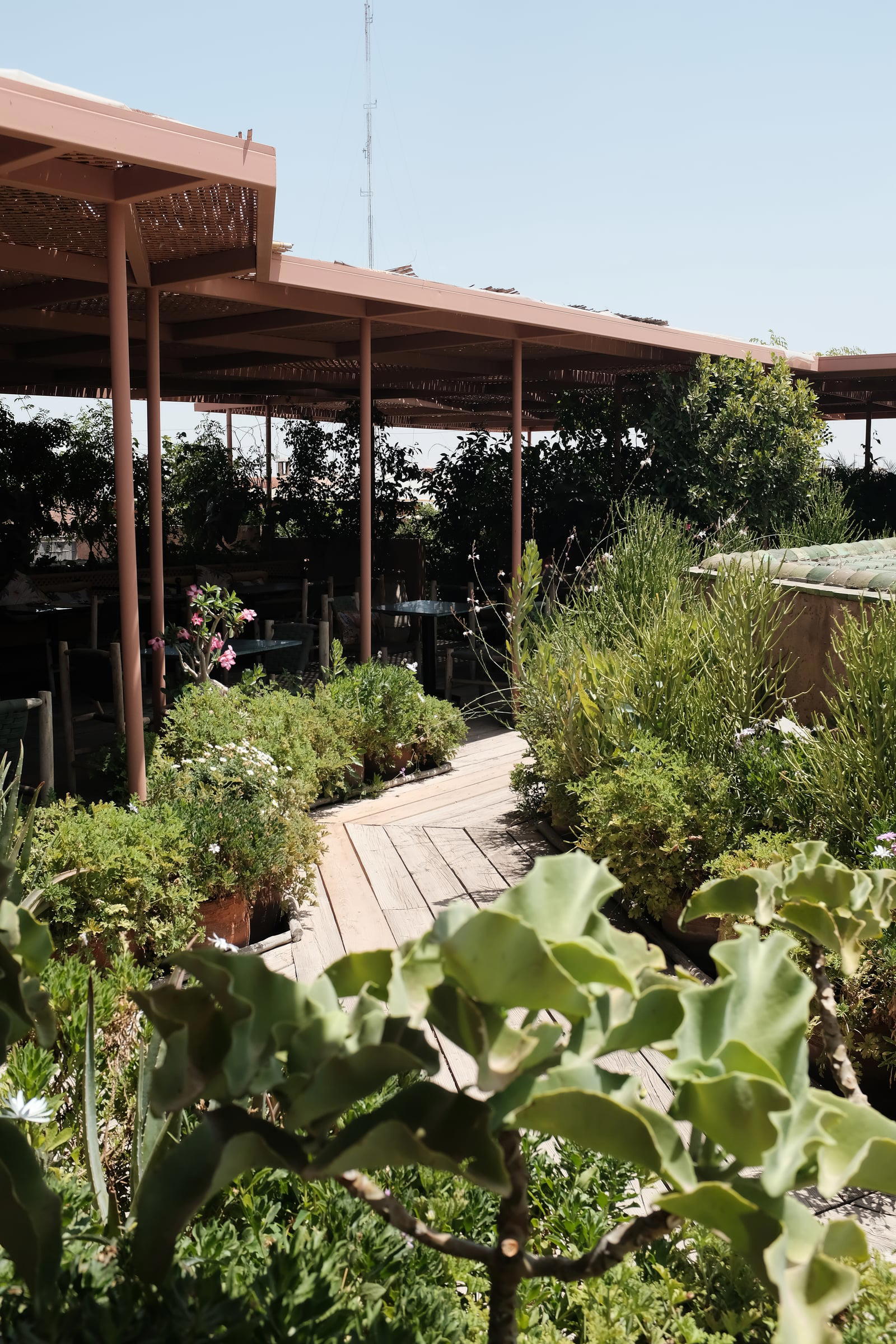
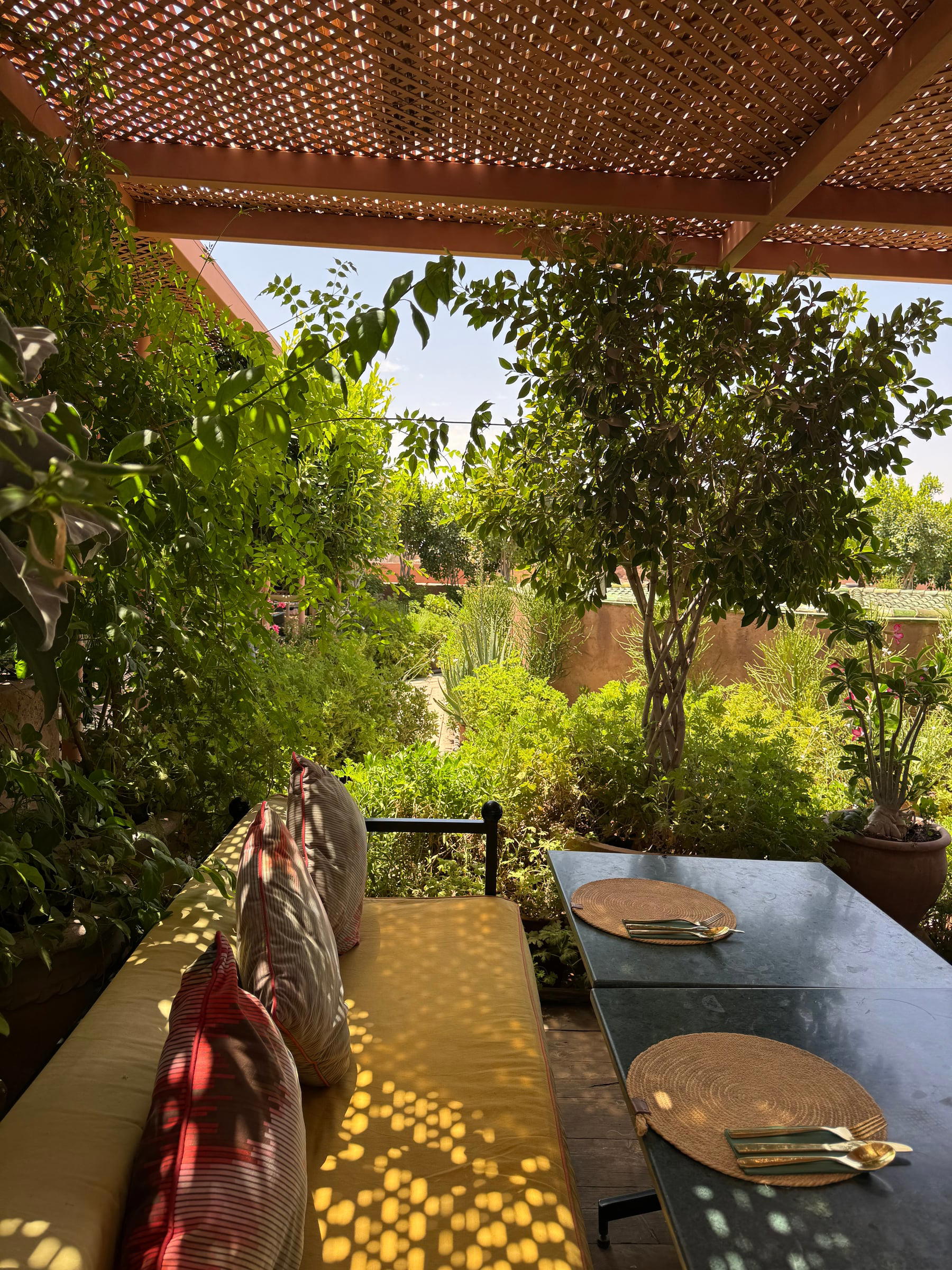
Past Crowned Heads, the last of the twenty-two rooms, where Chinese hairpins inlaid with kingfisher-blue feather sit near Mongolian ornaments heavy with red coral, a final flight of stairs opens onto SHAMS, the museum's own rooftop garden. Its restaurant serves Levantine and Mediterranean food at tables that look over the Medina rooftops toward the Atlas, with stork nests on the old walls in the middle distance. It is the one part of the visit with no vitrines, and most people end here.
Marrakech has no shortage of things to look at, from the contemporary galleries of the new city to the monuments on any list of places to visit. Le MAP is quieter than most and easy to walk past behind its wall. What it offers is a way of seeing: that a calf ornament made to protect a Toposa child from harm, or a chief's gold cuff, or a horse's harness can hold as much history as a manuscript, and that the people who made and wore them were composing something deliberate. You catch it first in Mansour's tack, then everywhere, and by the time you reach the roof you are reading the whole room that way.
You may also like…
 Map
MapCULTURE
26 Places to Visit in Marrakech: Monuments, Museums, Gardens and Souks Worth Your Time
CULTURE
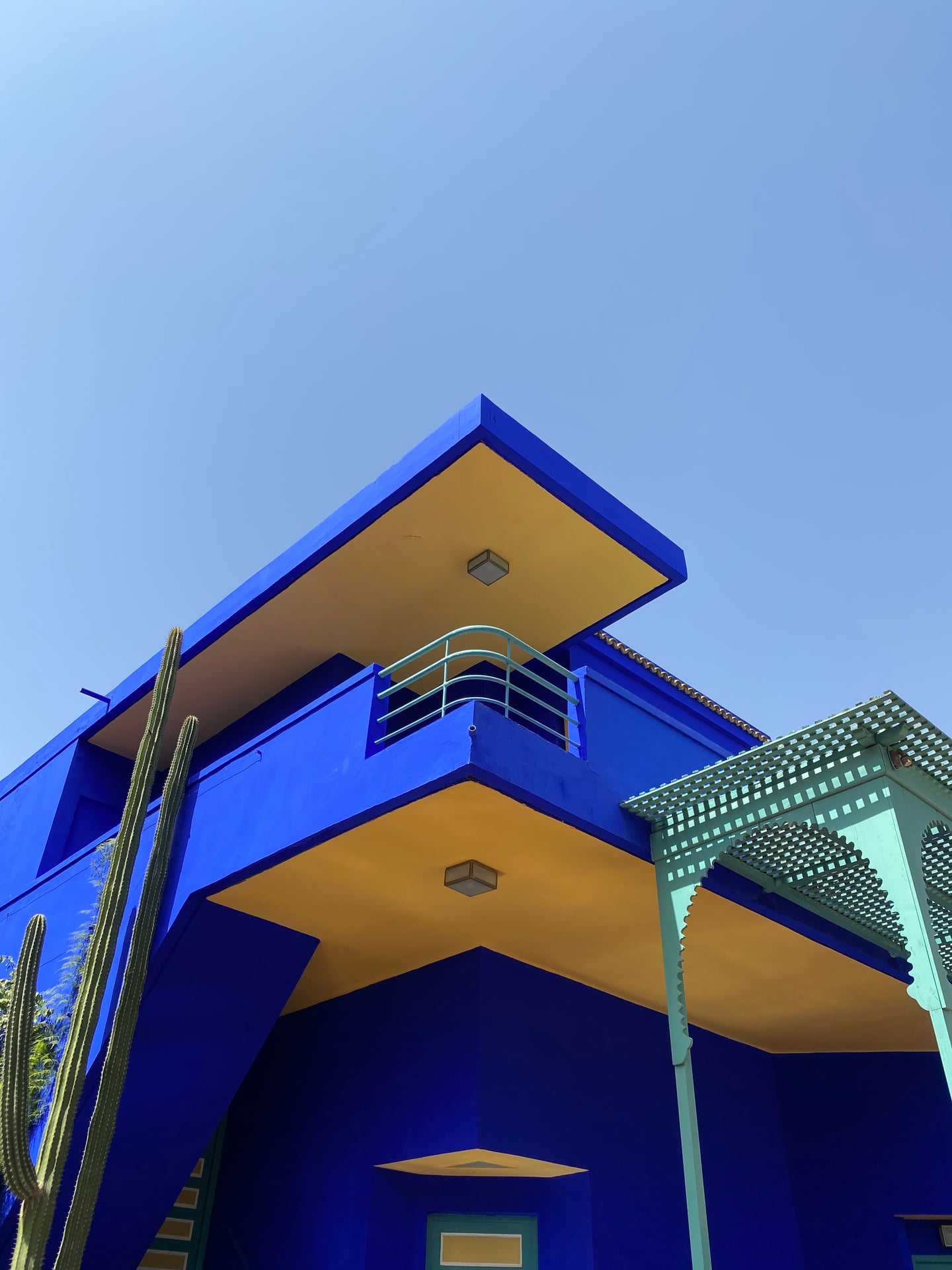
Villa Oasis: The Marrakech That Yves Saint Laurent Kept for Himself
CULTURE
Contemporary Art Galleries in Marrakech: Five Addresses Shaping the City's Creative Present
CULTURE