CULTURE
Villa Oasis: The Marrakech That Yves Saint Laurent Kept for Himself
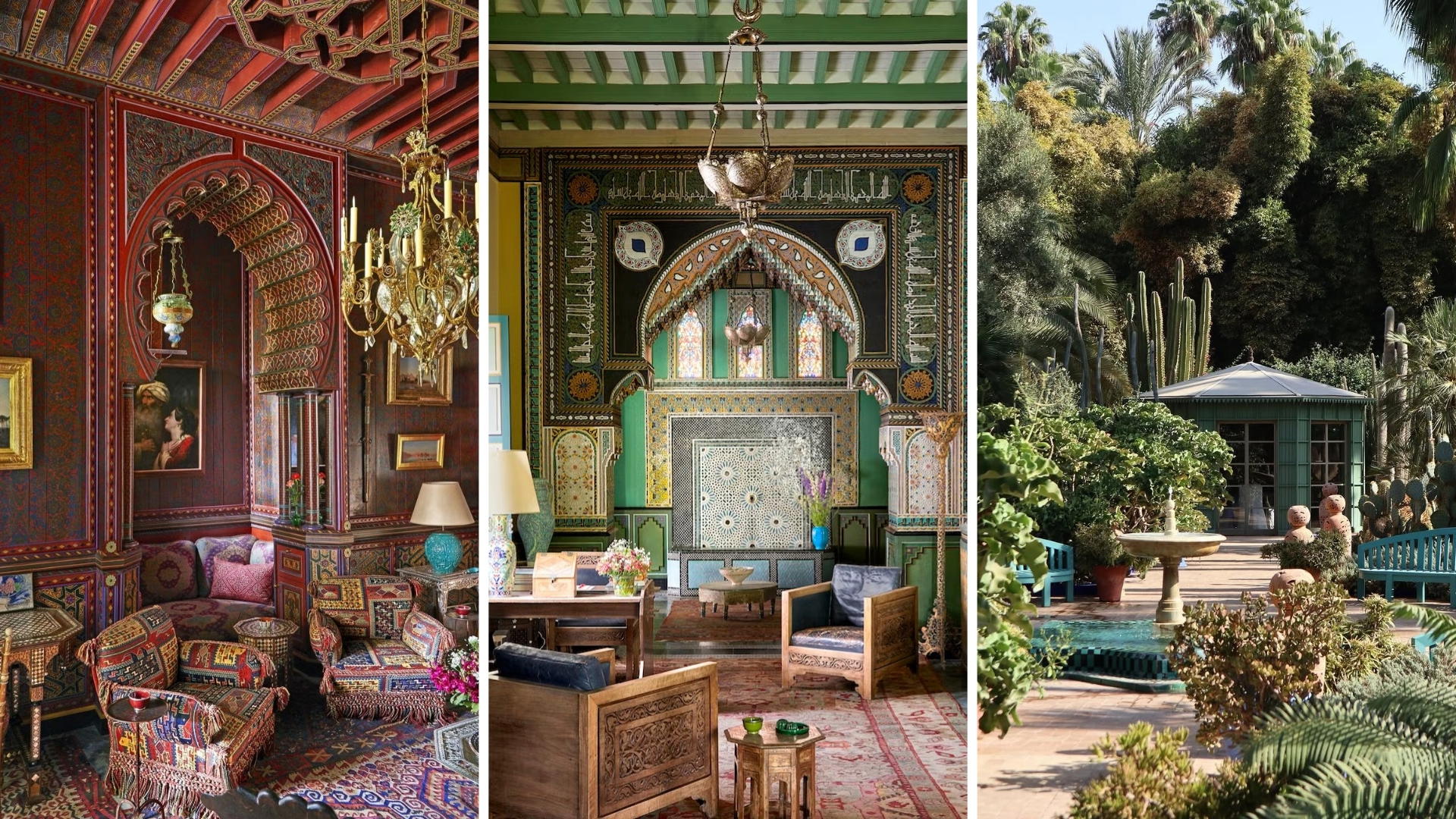
Behind the Jardin Majorelle, a private villa that was YSL's Marrakech sanctuary. It is now open to visit, by appointment, in groups of five.
Timence Guide Editors · 28 April 2026
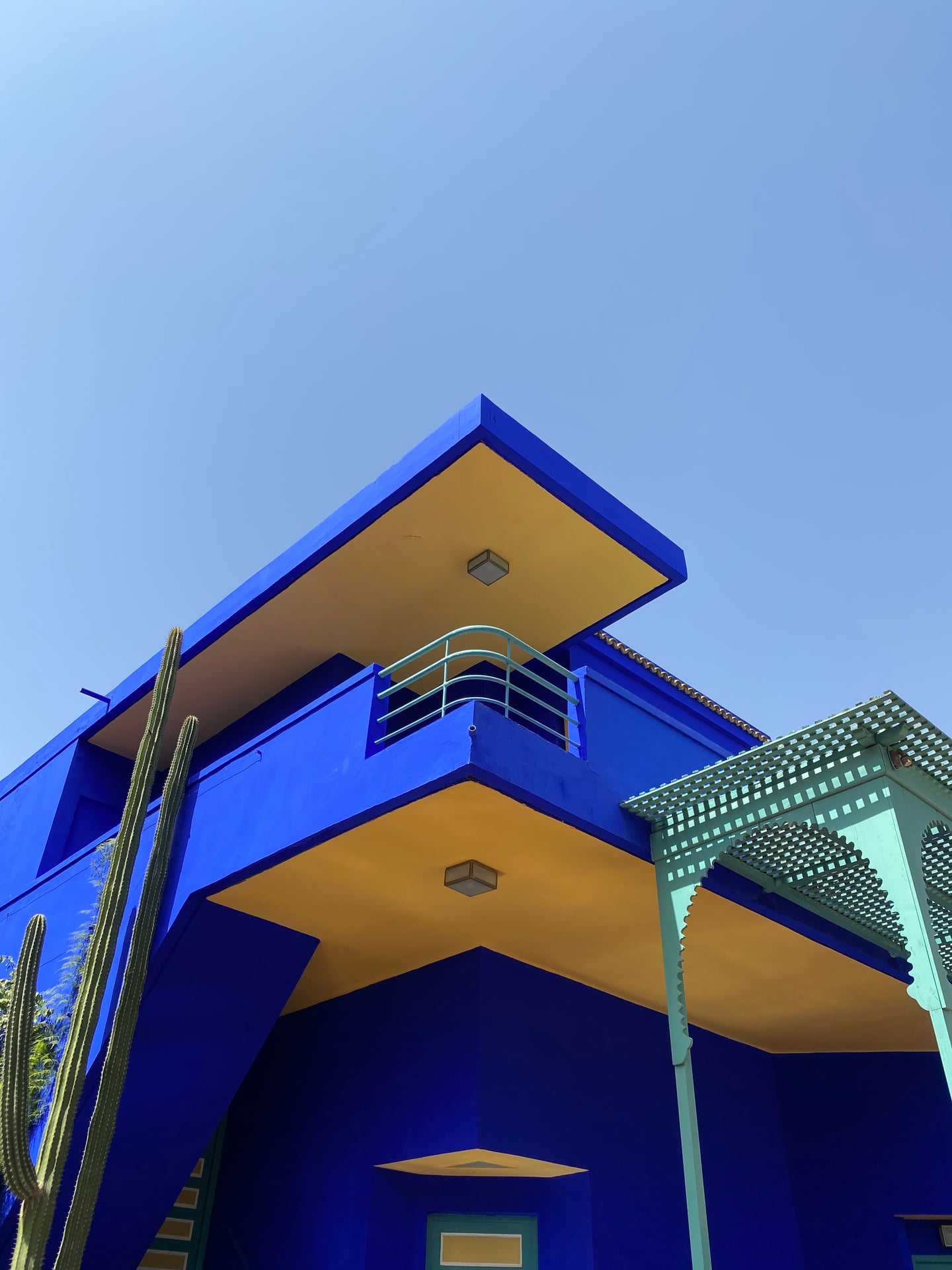
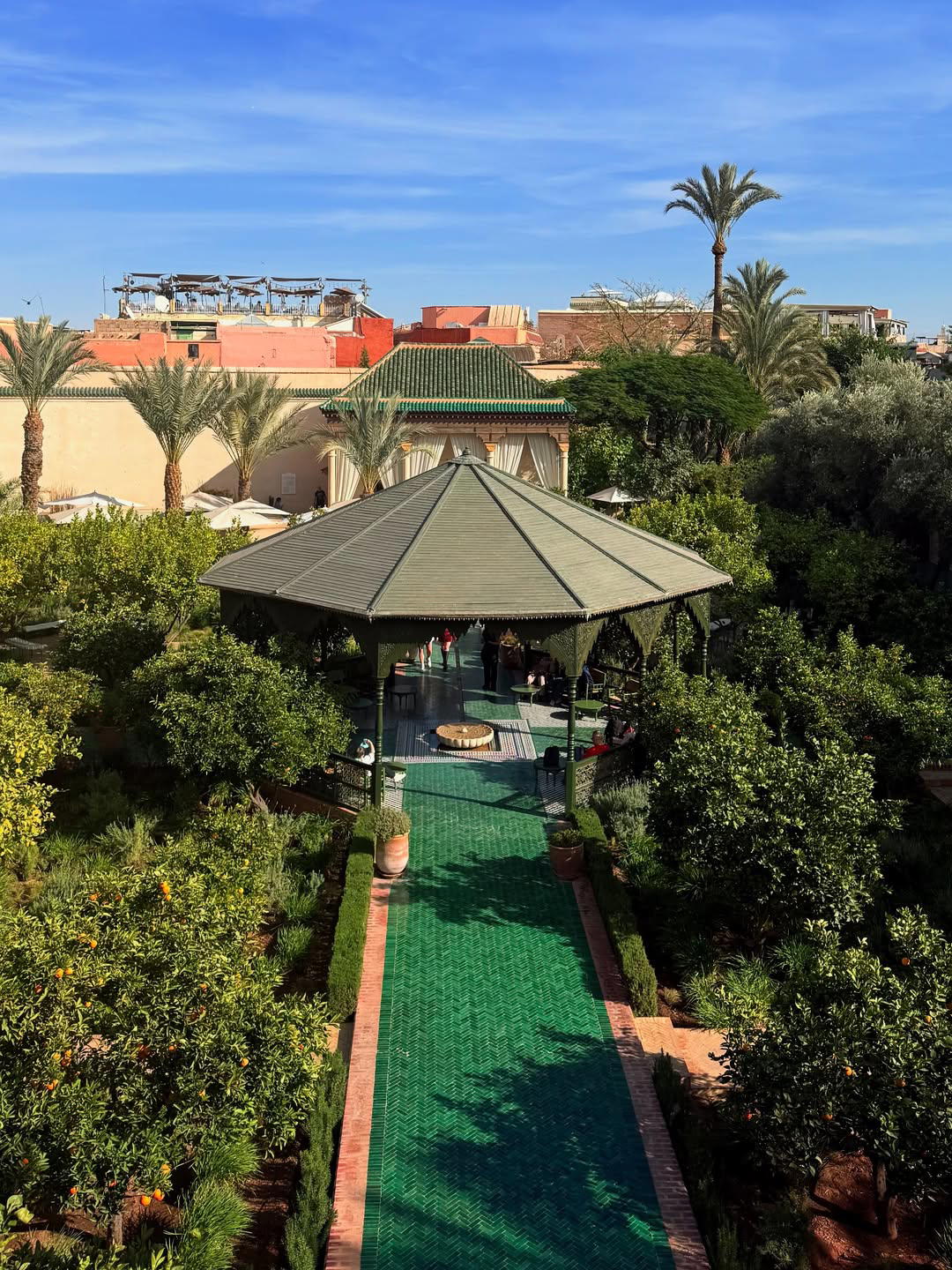
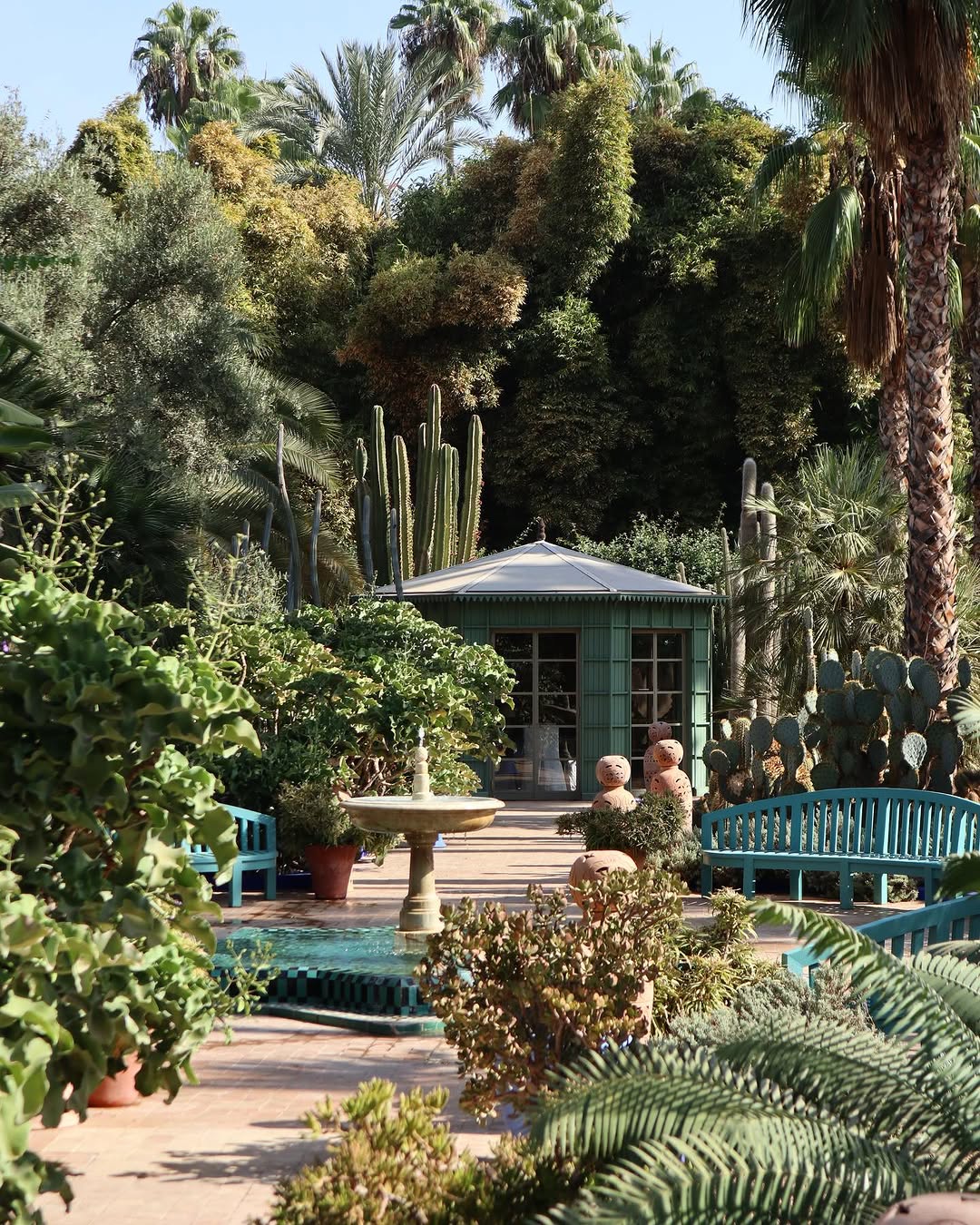
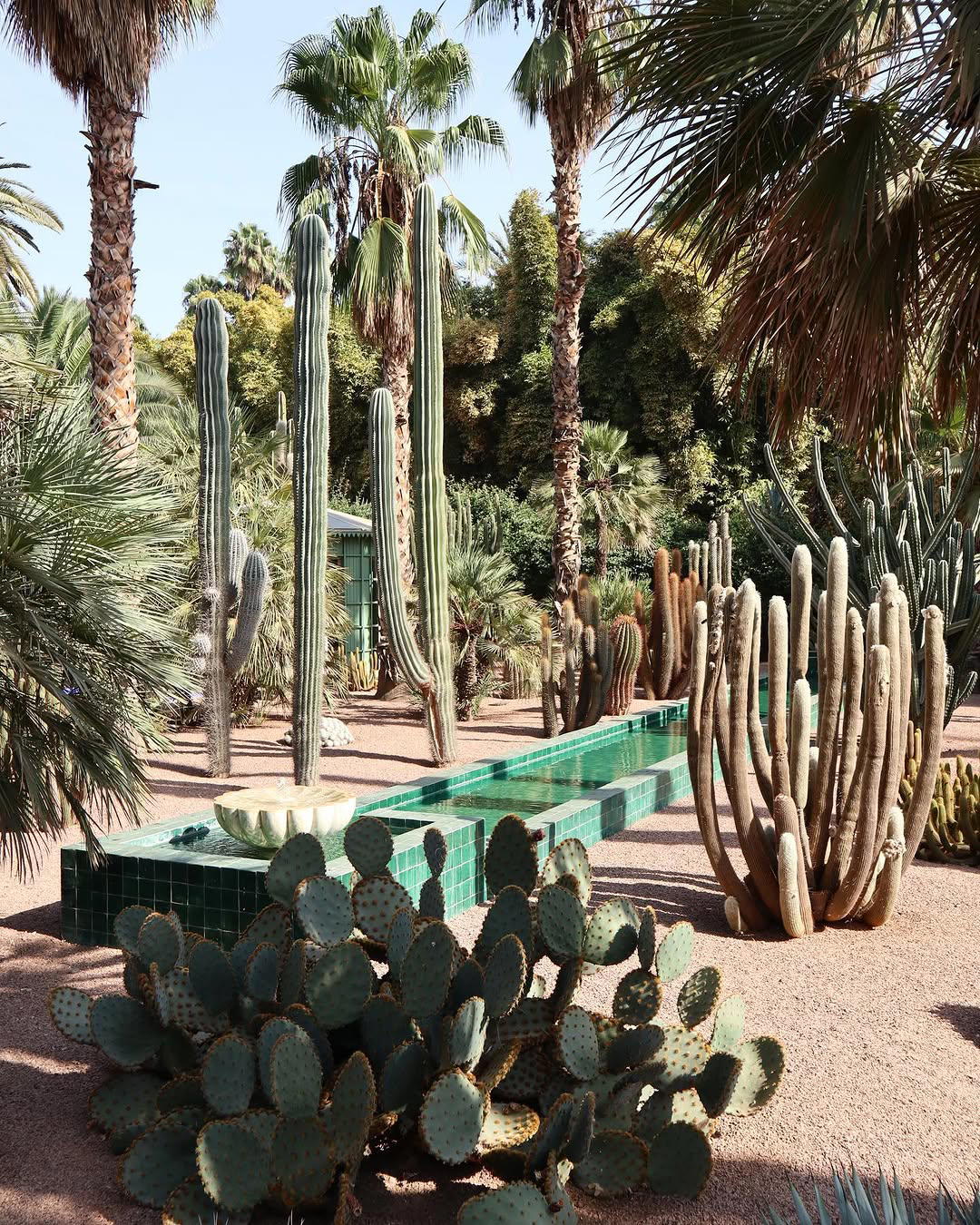
The Jardin Majorelle is one of the most visited places in Marrakech. Visitors come for the cobalt blue walls, the cactus collection, the quality of filtered light in the mid-morning. Most of them walk the length of the garden and leave without knowing that the villa visible through the palms, the pink building with the pointed roof in the shape of a minzah, is not a museum. It was, for decades, someone's home. And it remains, in the strictest sense, a private place.
What Majorelle Built
Jacques Majorelle arrived in Marrakech in 1919 and stayed. In 1924 he acquired a property outside the city walls and designed a studio residence according to his own plans. The conception was hybrid: he drew on the proportions and materiality of Moroccan architecture while shaping the whole through a vocabulary informed by his European training and his sustained interest in what he understood as the orientalist tradition. He named it Villa Bousafsaf. The studio became the first anchor of what would grow, over the following decades, into one of the most distinctive private gardens in Marrakech, a place that would eventually become a public institution.
Majorelle lived and worked there until his death in 1962. By 1980 the property had fallen into decline and was under threat from real estate development. The garden was not yet the public institution it would become. The villa was simply a building at risk of disappearing.
The Rescue and the Renovation
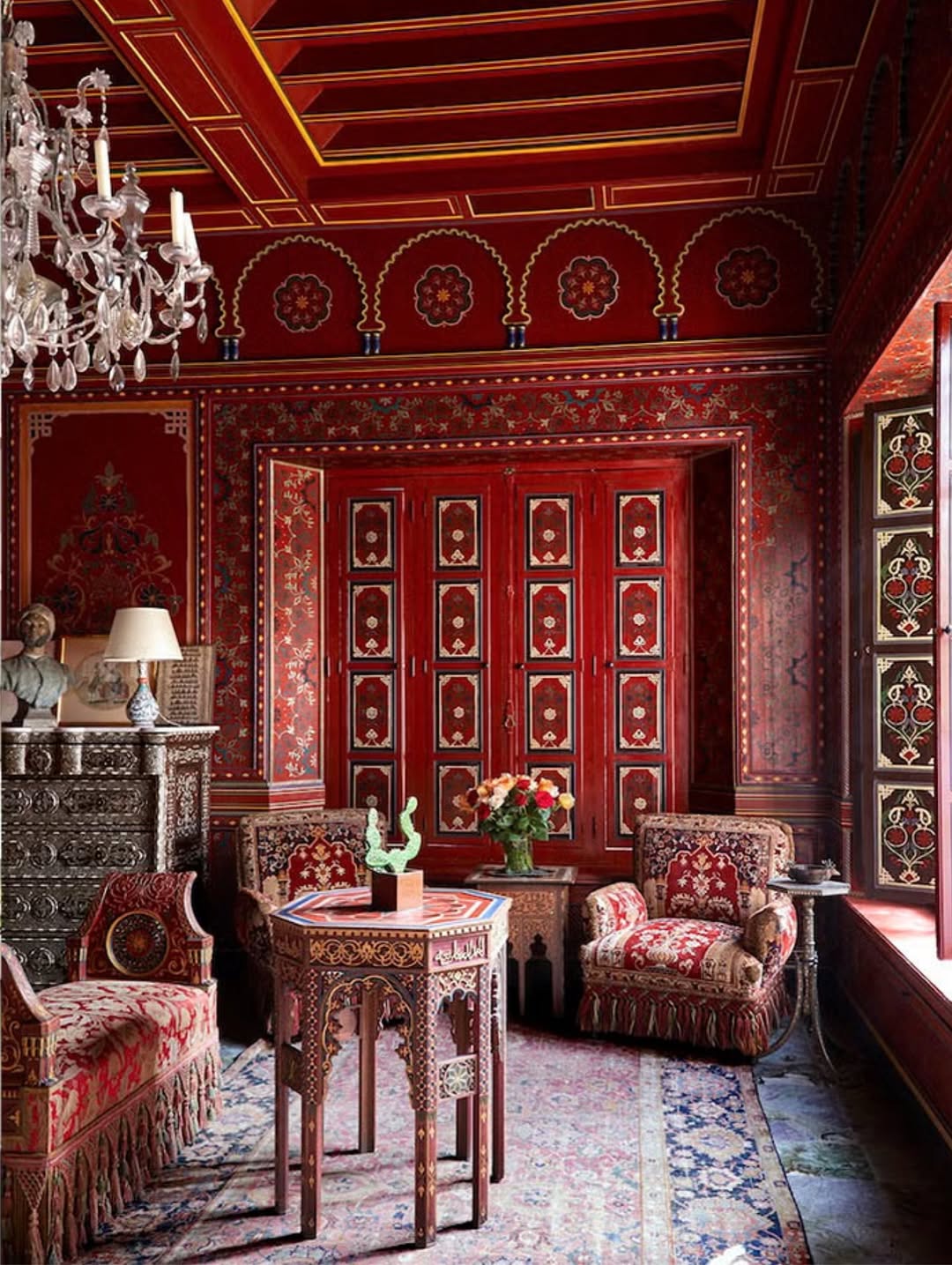
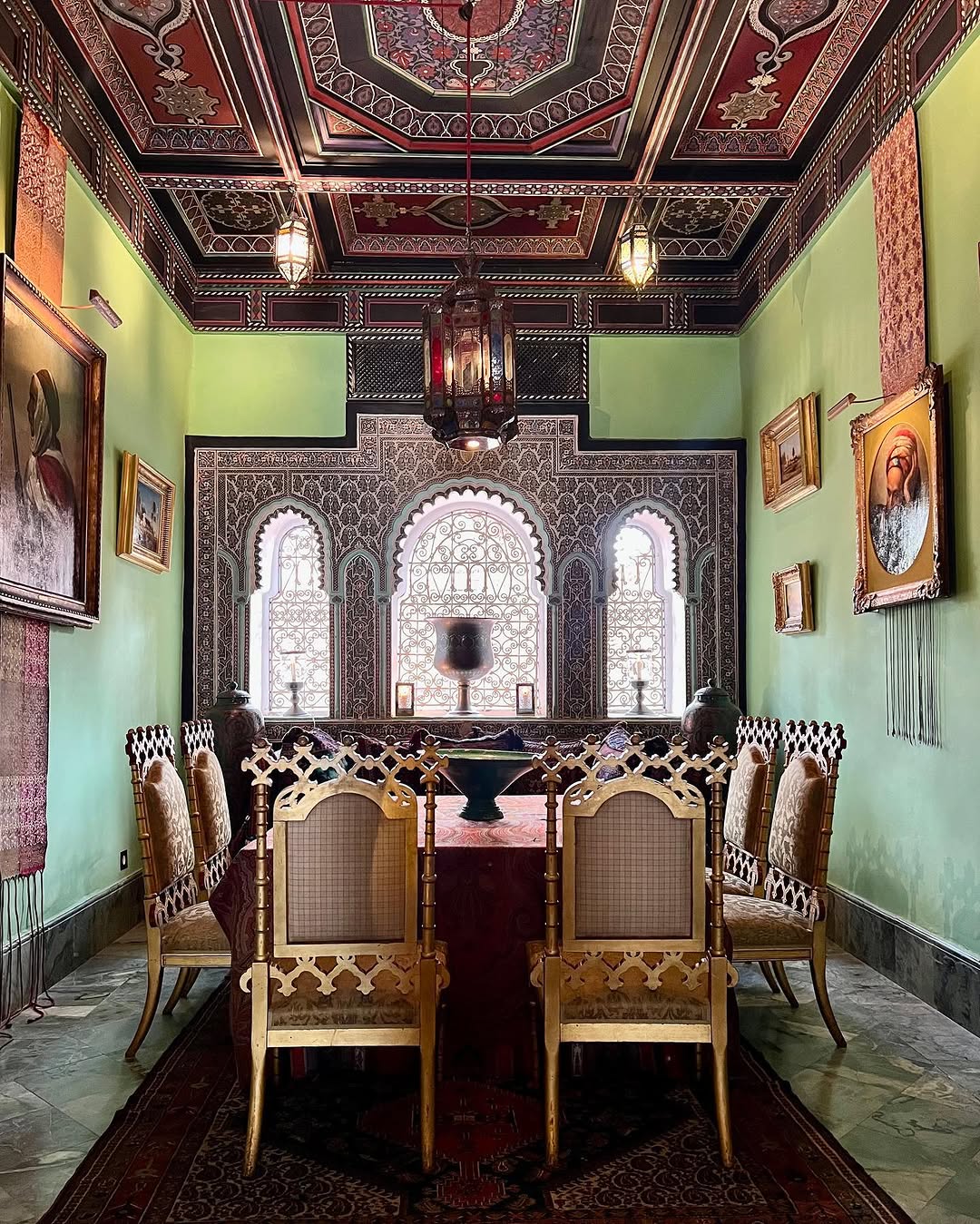
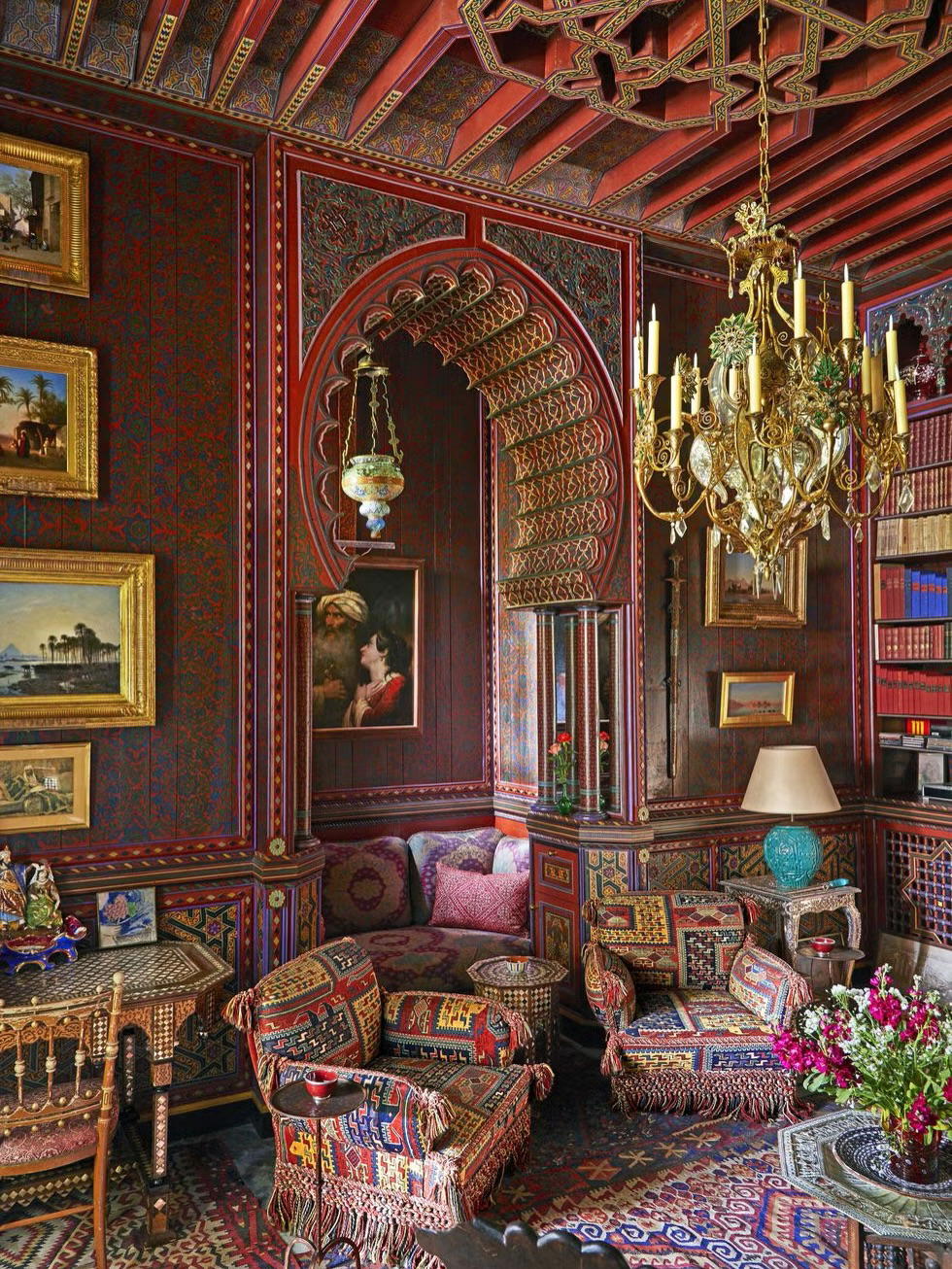
Pierre Bergé and Yves Saint Laurent acquired the property in 1980. The garden they would eventually open to the public; the villa they kept for themselves. The renovation that followed was led by Bill Willis, the American architect whose work in Marrakech had already shaped some of the most distinctive interiors of the postwar city, and Jacques Grange, the French interior decorator whose synthesis of periods and cultures defined a particular mode of luxury in the second half of the twentieth century. The result was neither a restoration nor a reconstruction. It was a transformation: a habitable work that layered Majorelle's original structure with new intentions, new materials, and the specific sensibility of the people who would live in it.
The renamed Villa Oasis carried its history without wearing it as a costume. The pointed roof, the garden terraces, the proportions of the rooms, retained the presence of what Majorelle had built. What Willis and Grange added was an interior logic that made the house work as a place for living at a high register, for entertaining, for the kind of extended creative retreat that Saint Laurent would use it for year after year.
A Creative Refuge
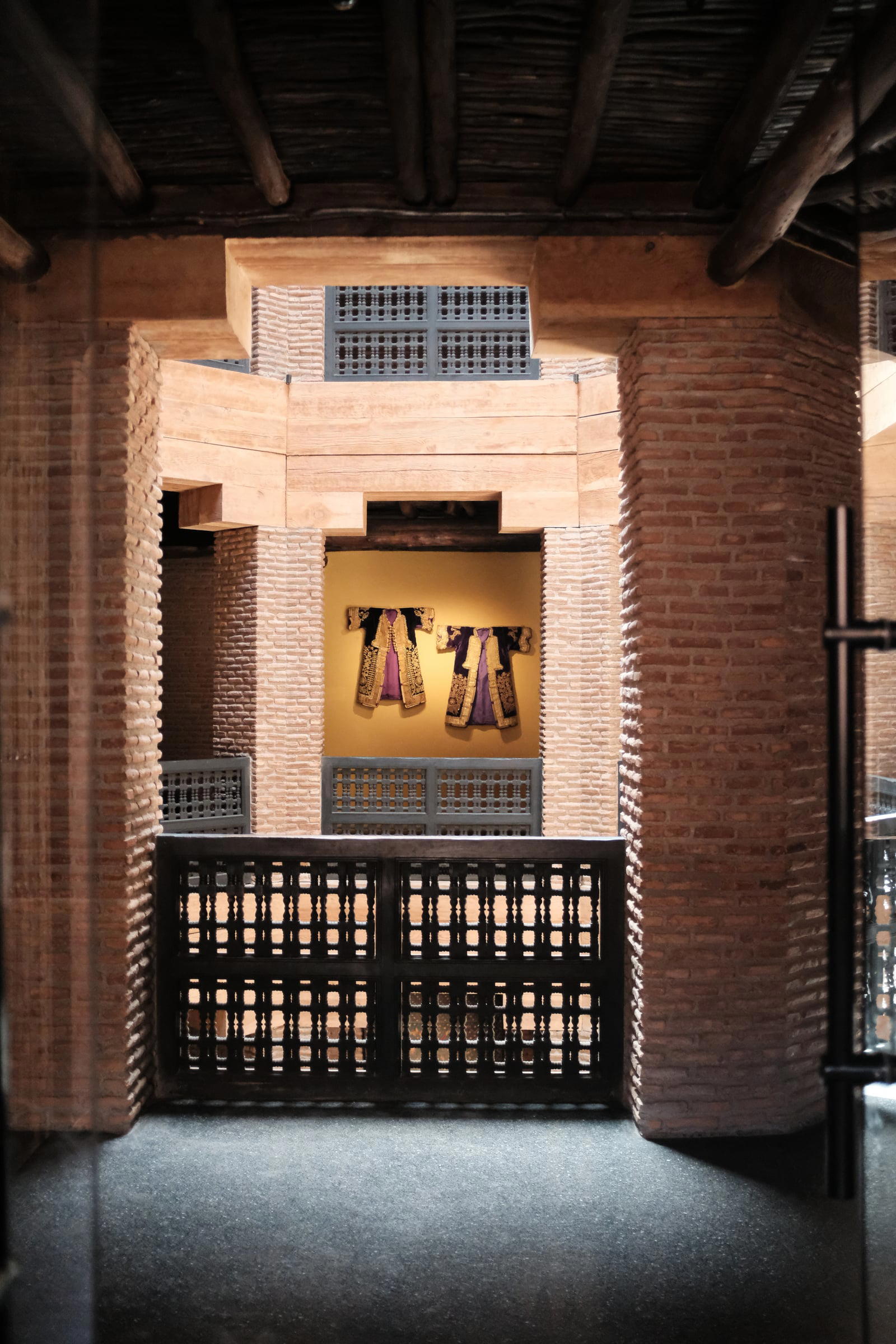
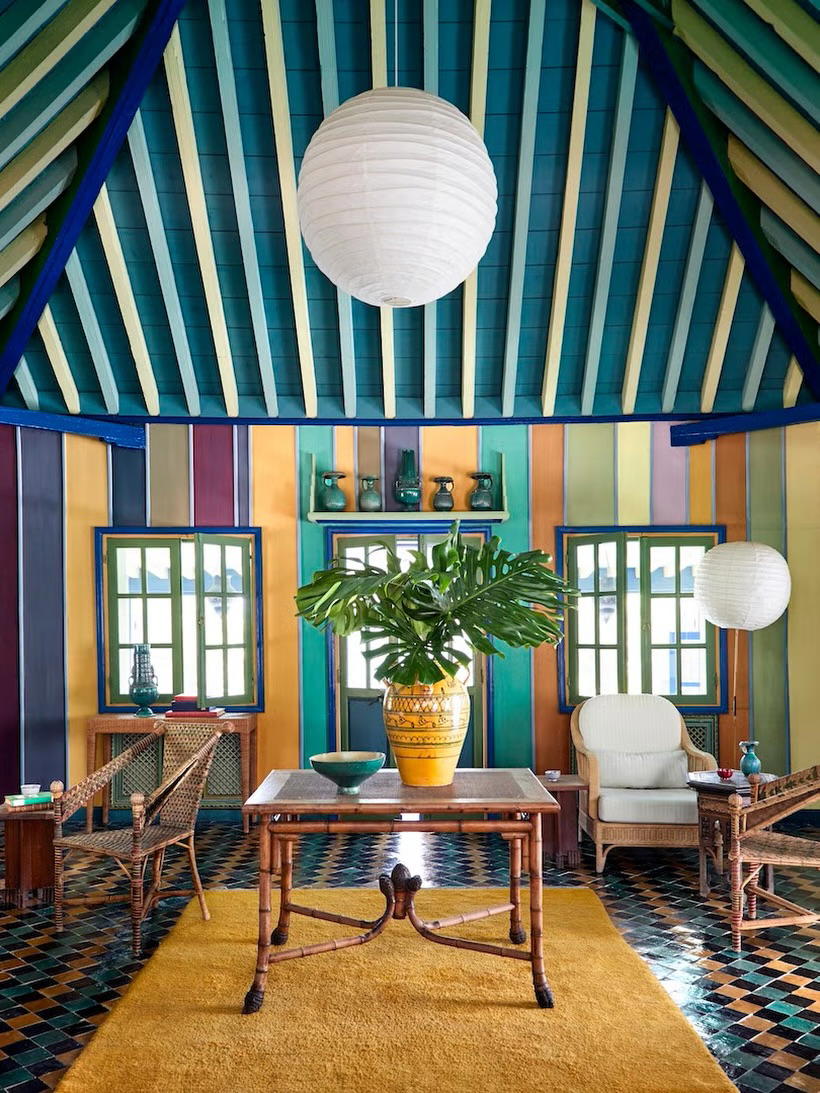
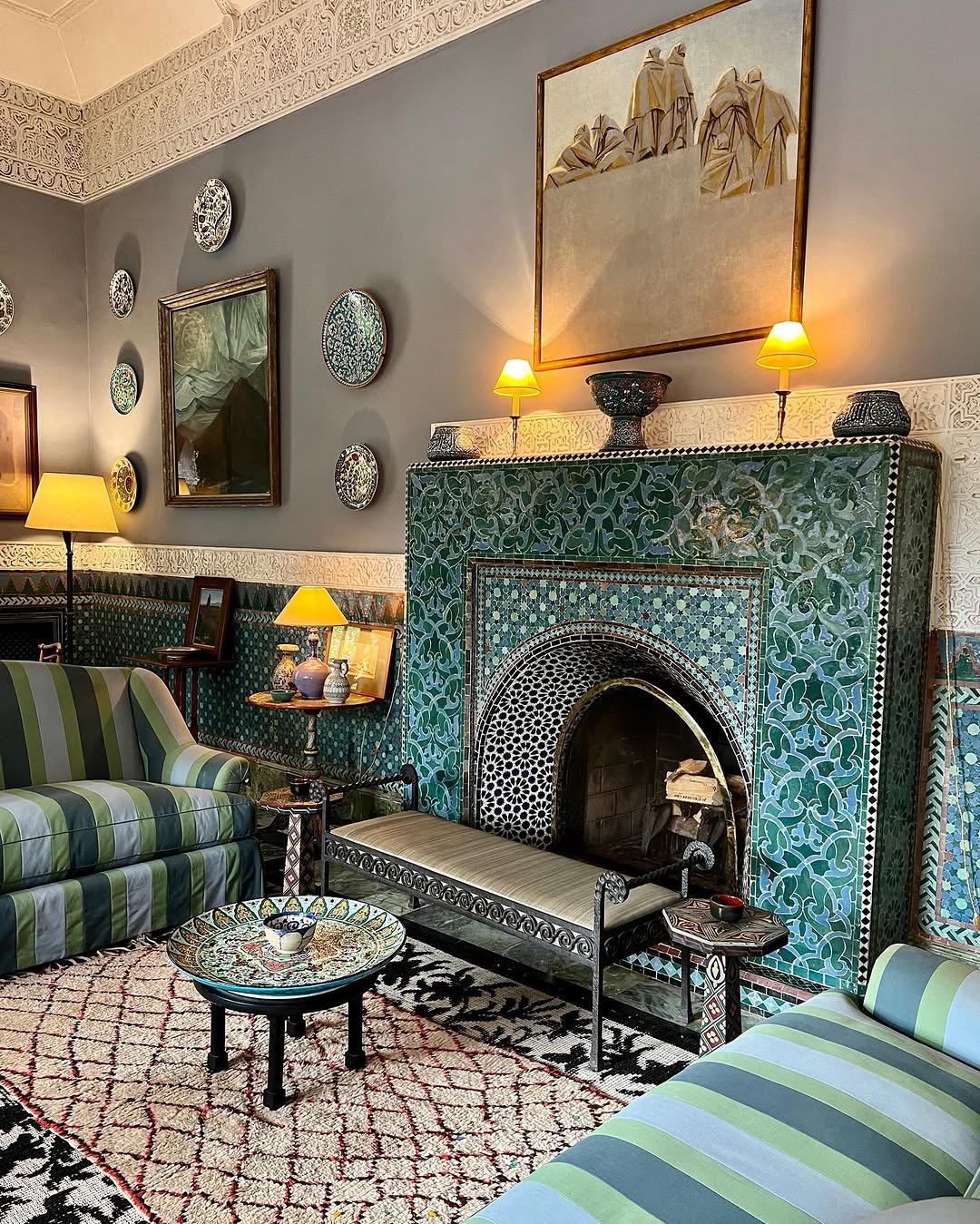
Yves Saint Laurent had first come to Marrakech in 1966. The city produced an effect on him that he described in direct terms: the light, the intensity of colour and pattern, the material culture of the medina, the quality of Moroccan craft, entered his work and changed it. He returned repeatedly, eventually spending extended periods every year at Villa Oasis. The collections he produced during those years carried the evidence: the blues of the Jardin Majorelle, the forms derived from Moroccan dress, the embroidery traditions of the craftspeople he encountered directly. The villa was not a backdrop to this influence. It was the condition that made it possible.
Saint Laurent died in 2008. Pierre Bergé, who managed the Fondation Jardin Majorelle until his death in 2017, oversaw the transformation of the broader estate into one of the city's principal cultural sites. The Musée Yves Saint Laurent Marrakech opened in 2017, directly adjacent to the garden. The Villa Oasis remained apart from all of this: maintained, preserved, and not open to the general public.
The Private Visit
A guided tour of Villa Oasis is available through the Fondation Jardin Majorelle, for groups of up to five people. The visit lasts approximately one hour and includes a collation. It is led by a guide from the Foundation, who covers the history of the property, the renovation carried out by Willis and Grange, and the role the villa played in Saint Laurent's creative life and working method. Reservations must be made at least two weeks in advance. Photography inside the villa is not permitted. Children under the age of twelve are not admitted.
Tours are available daily, subject to availability. Access is structured as a contribution to the Fondation Jardin Majorelle, with the funds returning to the conservation of the garden, the museums, and the Foundation's wider work. At certain periods of the year, the private garden adjacent to the villa is also opened to the public, briefly extending what is otherwise a closed perimeter.
Following the villa tour, the visit includes free access to the Jardin Majorelle, the Pierre Bergé Museum of Berber Arts, and the Musée Yves Saint Laurent Marrakech. The sequence is instructive: the garden, the Berber collections, the fashion archive, and the villa together form a picture of what the property has been and what it continues to mean. Each part illuminates the others.
The distinction between a visit to the Jardin Majorelle and a guided tour of Villa Oasis is not simply one of access. It is the difference between the public face of a legacy and its private interior. The garden was always meant to be seen. The villa was not. Entering it now, under palms that Majorelle planted a century ago, is to move through a space that was shaped by several layers of intention: a painter's studio, a couturier's refuge, an architect's careful restoration. It was made to be lived in. That quality is what the visit offers, and it is not something that can be replicated anywhere else in Marrakech.
You may also like…